What are AASHTO Standards?

What AASHTO Is
The American Association of State Highway and Transportation Officials (AASHTO) is a nonprofit, nonpartisan organization founded in 1914 that represents the Departments of Transportation (DOTs) of all 50 US states, the District of Columbia, and Puerto Rico. AASHTO’s primary function is to develop and publish consensus-based technical standards, specifications, and guidelines for the design, construction, maintenance, and inspection of highway and transportation infrastructure across the United States. The organization’s membership is composed of the chief transportation officials from each member jurisdiction, giving it a unique position as the collective voice of state transportation agencies.
AASHTO’s standards development activity is organized through a network of standing committees that cover every aspect of transportation infrastructure. The most technically significant committees for infrastructure design and inspection include the Committee on Bridges and Structures (COBS), the Committee on Materials and Pavements (COMP), the Committee on Construction, the Committee on Design, and the Committee on Maintenance. Each committee is further divided into technical sections and subcommittees focused on specific topics. For example, the Committee on Bridges and Structures has separate technical sections for steel design, concrete design, seismic design, bridge management, and bridge inspection. These committees meet annually to review proposed standards changes, discuss technical developments, and vote on new or revised standards.
AASHTO standards carry substantial legal and regulatory weight. The Federal Highway Administration (FHWA) routinely references AASHTO standards in its regulations, including the National Bridge Inspection Standards (NBIS), which mandate the use of the AASHTO Manual for Bridge Element Inspection and the AASHTO Manual for Bridge Evaluation. State DOTs adopt AASHTO standards as policy for their transportation programs, and federal-aid highway projects generally require compliance with applicable AASHTO standards. While AASHTO standards are not federal law themselves, they achieve the force of regulatory requirements when incorporated by reference into federal or state regulations.
The organization publishes its standards through the AASHTO Store (store.transportation.org), which offers print, PDF, and subscription-based access. Major publications are updated through a cycle of full editions (every 3 to 5 years) with interim revisions published in between. The full AASHTO catalog contains over 1,000 active publications spanning design specifications, construction specifications, materials test methods, recommended practices, and software products. The annual AASHTO Materials Standards compilation alone contains more than 400 individual standards covering aggregates, asphalt, concrete, soils, and metals.
AASHTO also provides significant technical services beyond standards publication. The AASHTO re:source division operates the AASHTO Accreditation Program (AAP), which accredits construction materials testing laboratories against ISO/IEC 17025 requirements using AASHTO test methods. The AASHTOWare program develops and distributes software products for bridge design, pavement design, project management, and safety analysis. AASHTO also operates technical service programs covering environmental management, safety hardware evaluation, equipment management, and technical training.
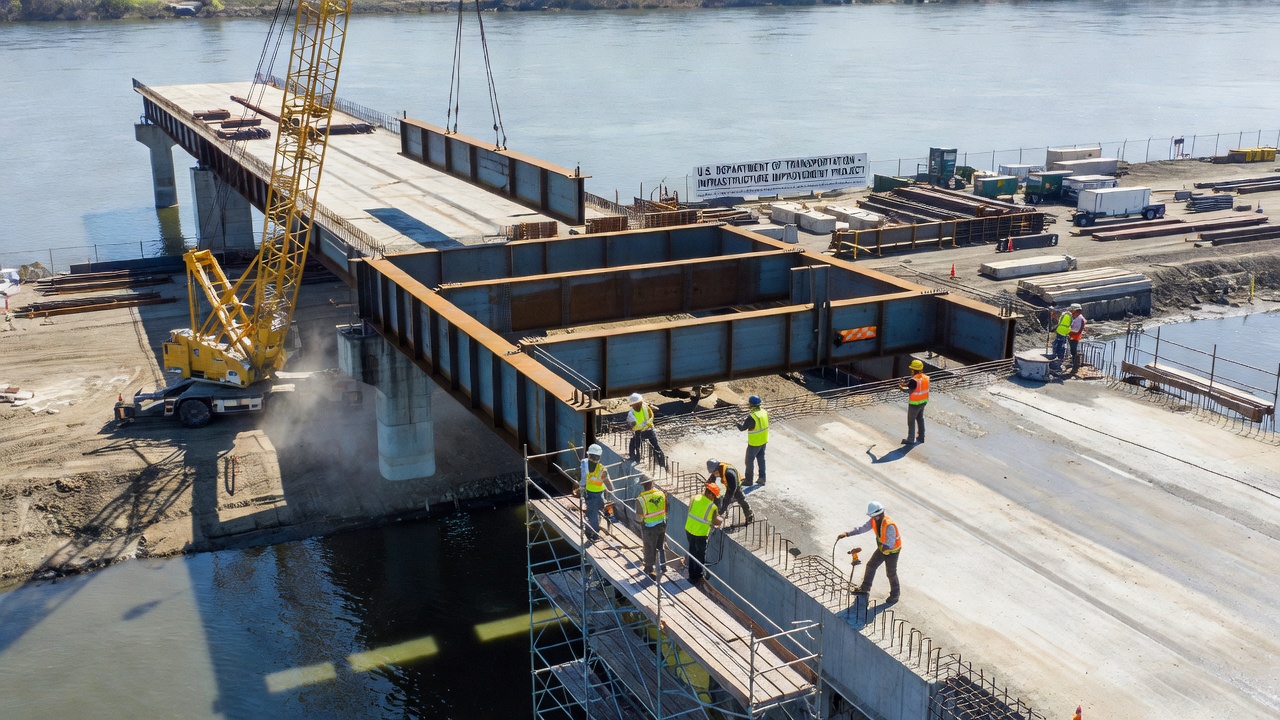
Key Pavement Publications
The AASHTO Guide for Design of Pavement Structures, originally published in its first edition in 1961 and most famously in the 1993 edition, is the most widely used pavement design method in the United States. The 1993 Guide provides procedures for designing new flexible pavements, new rigid pavements, overlays on existing flexible pavements, overlays on existing rigid pavements, and reconstruction projects. It is based on empirical equations developed from the AASHO Road Test conducted in Ottawa, Illinois, from 1958 to 1960, where researchers built hundreds of pavement test sections with controlled layer thicknesses and subjected them to millions of load repetitions using calibrated trucks.
For flexible pavement design, the 1993 Guide uses the Structural Number (SN) as the primary design output. The design equation relates the number of 18-kip equivalent single axle loads (ESALs) the pavement can carry to the structural number, subgrade resilient modulus (MR), reliability (R), overall standard deviation (So), and serviceability loss (delta-PSI). The equation must be solved iteratively for SN. Once the required SN is determined, the designer selects layer thicknesses using the formula SN = a1D1 + a2D2m2 + a3D3m3, where ai are layer coefficients representing the relative strength of each material, Di are layer thicknesses in inches, and mi are drainage coefficients for untreated base and subbase layers. Standard layer coefficient values range from a1 = 0.44 for dense-graded HMA down to a3 = 0.10 for granular subbase.
For rigid pavement design, the 1993 Guide uses the slab thickness (D) as the primary design output. The rigid pavement design equation relates ESALs to slab thickness, concrete flexural strength (MR), subgrade k-value (modulus of subgrade reaction), load transfer coefficient (J), drainage coefficient (Cd), reliability, standard deviation, and serviceability loss. Typical jointed plain concrete pavement (JPCP) thicknesses range from 8 to 14 inches depending on traffic loading and subgrade support. The design accounts for the effects of dowel bars, tied shoulders, and concrete shoulder load transfer.
The 1993 pavement overlay design procedures use the concept of structural deficiency. For flexible overlays on flexible pavements, the effective SN of the existing pavement (SN_eff) is determined through Falling Weight Deflectometer (FWD) backcalculation and compared to the required SN for future traffic. The overlay thickness is D_overlay = (SN_required minus SN_eff) / a_overlay. For rigid overlays, the existing slab thickness and condition are evaluated and the overlay thickness is determined based on the composite slab behavior.
The Mechanistic-Empirical Pavement Design Guide (MEPDG), developed through NCHRP Project 1-37A (completed 2004), represents the next-generation pavement design approach. It is implemented through the AASHTOWare Pavement ME Design software. Unlike the 1993 empirical method, the MEPDG uses layered elastic analysis to compute stresses, strains, and deflections within the pavement structure under traffic loads, then applies transfer functions to convert these mechanistic responses into predicted distresses. The design evaluates four key performance indicators: total rutting (inches), fatigue cracking (percent of lane area), thermal cracking (feet per mile), and International Roughness Index (IRI, inches per mile).
The MEPDG introduces several significant improvements over the 1993 Guide. It uses hourly climate data (temperature, precipitation, wind speed, percent sunshine, relative humidity) from over 800 weather stations nationwide to model seasonal changes in material properties, frost penetration, and moisture conditions. Traffic is characterized using axle load spectra (the full distribution of single, tandem, tridem, and quad axle loads by weight) rather than a single ESAL count. Materials are characterized through fundamental properties: dynamic modulus (|E*|) for HMA, flexural strength and modulus of elasticity for PCC, and resilient modulus for unbound materials. The MEPDG also provides direct reliability calculations for each distress type, allowing designers to see the probability of exceeding each performance criterion.
The Standard Specifications for Transportation Materials and Methods of Sampling and Testing (commonly called the AASHTO Materials Standards or the “Materials Book”) is an annual compilation of over 400 individual standard specifications and test methods. It is published in four volumes and is the essential reference for materials testing laboratories working on highway projects. The standards are organized by category: Volume 1 covers aggregates, soils, and asphalt materials, Volume 2 covers concrete, steel, and miscellaneous materials, Volume 3 covers asphalt mixture testing and pavement evaluation, Volume 4 covers quality assurance, statistical methods, and specific DOT supplementary requirements. Each standard is designated with an alphanumeric code: for example, AASHTO T 96 covers the Los Angeles Abrasion test for coarse aggregates, AASHTO T 166 covers bulk specific gravity of compacted HMA, and AASHTO T 307 covers resilient modulus testing of soils and aggregates.
The AASHTO Subcommittee on Materials oversees the development and maintenance of these standards through a formal balloting process. Each standard is reviewed on a regular cycle, with revisions proposed by state DOT materials engineers, industry representatives, and research organizations. Standards can be jointly owned with ASTM, AASHTO-owned, or ASTM-owned (with AASHTO adoption). The annual compilation ensures that all current standards are available in a single authoritative reference.
Key Bridge Publications
The AASHTO LRFD Bridge Design Specifications is the primary design code for highway bridges in the United States. The LRFD (Load and Resistance Factor Design) methodology applies statistically calibrated load factors (gamma) and resistance factors (phi) to achieve a target reliability index (beta) typically ranging from 3.5 for conventional bridges to 1.0 for extreme event limit states. The specifications replaced the earlier Standard Specifications for Highway Bridges (the LFD method) and have been mandatory for all new federally funded bridges since 2007 under FHWA policy.
The current edition is the 10th Edition (2023), which includes extensive revisions to nearly every section. The specifications are organized into 14 sections:
| Section | Title | Key Content |
|---|---|---|
| 1 | Introduction | Scope, definitions, notation |
| 2 | General Design Features | Bridge geometry, roadway width, railings |
| 3 | Loads | Dead load (DC, DW), live load (HL-93), wind, seismic, temperature, ice, collision, fatigue |
| 4 | Structural Analysis | Analysis methods, distribution factors, live load distribution |
| 5 | Concrete Structures | Reinforced concrete, prestressed concrete, shear design, strut-and-tie |
| 6 | Steel Structures | Steel girders, composite sections, stiffeners, connections, fatigue |
| 7 | Aluminum Structures | Aluminum bridge design |
| 8 | Wood Structures | Timber bridge design |
| 9 | Decks and Deck Systems | Concrete deck design, steel grid decks, orthotropic decks |
| 10 | Foundations | Spread footings, driven piles, drilled shafts, scour |
| 11 | Abutments and Retaining Walls | Earth pressure, abutment design, MSE walls |
| 12 | Buried Structures | Culverts, buried arches |
| 13 | Railings | Bridge railings, transitions, barriers |
| 14 | Joints and Bearings | Expansion joints, elastomeric bearings, pot bearings |
The HL-93 design live load consists of a combination of a design truck (three axles with specified spacing) or tandem (two axles), plus a uniformly distributed lane load of 640 lb/ft. The HL-93 loading represents the critical loading configuration for US highway bridges and was calibrated to represent the 75-year maximum traffic loading with permit trucks. The specifications provide multiple design trucks for special applications including: HL-93M (military loading), HL-93S (special permit), and HL-93K (alternative military loading).
Section 5 on Concrete Structures saw extensive revisions in the 10th edition, including updated shear design provisions based on the modified compression field theory (MCFT), expanded strut-and-tie modeling requirements, and new provisions for high-strength concrete up to 18 ksi compressive strength. Section 6 on Steel Structures was revised with updated fatigue provisions, new continuous-span girder design provisions, and revised stiffener requirements for slender webs. Section 10 on Foundations was substantially reorganized with new methods for estimating axial resistance of drilled shafts and driven piles, including the SHANSEP method for cohesive soils and updated resistance factors based on the level of analysis.
The AASHTO LRFD Bridge Construction Specifications provides the companion document to the design specifications, covering the construction requirements for bridges including materials, fabrication, erection, and quality control. It is referenced in state DOT standard specifications for bridge construction projects. Key sections address welding requirements (AWS D1.5 Bridge Welding Code), concrete placement and curing, post-tensioning procedures, bearing installation, and deck construction tolerances.
The Manual for Bridge Element Inspection (MBEI) is the standardized reference for element-level bridge inspection in the United States, now in its 2nd Edition with 2022, 2024, and 2025 Interim Revisions. The MBEI defines a standardized set of National Bridge Elements (NBEs), specific structural components that are inspected and rated by condition state at the element level. There are approximately 50 defined NBEs covering all major bridge types: steel elements (girders, bearings, truss members), concrete elements (decks, slabs, girders, piers, abutments), timber elements, masonry elements, and ancillary elements (joints, railings, approach slabs, drainage systems).
Each NBE is rated using up to four condition states:
- Condition State 1 (Good), The element is sound with only minor deterioration or no deterioration. Protective coatings are intact. No cracks, spalls, or section loss are present. No action is needed.
- Condition State 2 (Fair), The element shows minor deterioration such as surface cracking, delamination less than 5% of area, corrosion staining with no measurable section loss, or minor wear. Routine maintenance may be appropriate.
- Condition State 3 (Poor), The element has advanced deterioration such as spalling, delamination over 5% of area, measurable section loss less than 10%, or cracking exceeding thresholds. Rehabilitation may be needed.
- Condition State 4 (Severe), The element has extensive deterioration with significant section loss (10% or greater), structural cracking, loss of bearing area, or other conditions that affect structural capacity. Detailed structural analysis or replacement is warranted.
The MBEI defines specific defect types for each element, each with its own condition state definitions. For concrete elements, common defects include: delamination, spalling, cracking, efflorescence, exposed rebar, and scour. For steel elements: corrosion, cracking, fatigue, paint deterioration, and deformation. For bearings: corrosion, misalignment, loss of bearing area, and anchor bolt failure. Each defect’s quantity is measured by area (square feet), length (linear feet), or count (each), depending on the element type.
The Manual for Bridge Evaluation (MBE) provides the methodology for evaluating existing bridges for load capacity, fatigue resistance, and overall structural adequacy. The MBE is organized in three sections: Section 1 covers Load Rating using the Load and Resistance Factor Rating (LRFR) methodology, Section 2 covers Fatigue Evaluation of steel bridges, and Section 3 covers Material Testing and Structural Analysis for existing structures. The MBE defines the inventory rating (the live load level the bridge can safely carry for indefinite use) and the operating rating (the maximum permitted live load level for occasional use), both expressed in tons. Legal load ratings (for state legal vehicles) and permit load ratings (for oversize/overweight vehicles) are derived from these base ratings using the LRFR methodology with appropriate load and resistance factors.

AASHTO Materials Standards
The AASHTO Materials Standards compilation is the essential reference for quality assurance testing on highway construction projects. Published annually, it contains over 400 individual standard specifications, test methods, and recommended practices organized into four volumes. These standards form the technical basis for materials acceptance testing on state and federally funded highway projects, and are the standards against which construction materials laboratories are accredited through the AASHTO Accreditation Program (AAP).
The standards cover the following major material categories:
- Aggregates (M and T standards), Specifications for coarse and fine aggregates (M 43, M 80), test methods for gradation (T 27), specific gravity (T 84, T 85), abrasion resistance (T 96 Los Angeles Abrasion), soundness (T 104), durability index (T 210), and clay content (T 112). These tests are performed on aggregates for concrete, asphalt, base course, and subbase applications.
- Asphalt Binder and Asphalt Mixtures, Specifications for performance-graded asphalt binders (M 320, M 332), test methods for binder properties including penetration (T 49), viscosity (T 201, T 202), ductility (T 51), softening point (T 53), and thin-film oven aging (T 179, T 240). Mixture test methods include Marshall stability (T 245), Superpave gyratory compaction (T 312), theoretical maximum specific gravity (T 209), bulk specific gravity (T 166), and Hamburg wheel tracking (T 324).
- Portland Cement and Concrete, Specifications for portland cement types (M 85), test methods for compressive strength (T 22), flexural strength (T 97), air content (T 152, T 196), slump (T 119), setting time (T 131), and chloride permeability (T 277).
- Soils and Geotechnical, Test methods for moisture content (T 265), Atterberg limits (T 89, T 90), compaction (T 99, T 180), California Bearing Ratio (T 193), resilient modulus (T 307), and triaxial compression (T 226).
- Steel and Metals, Specifications for steel reinforcement (M 31 Grade 60), structural steel (M 270), and test methods for tension testing (T 244), bend testing (T 285), and hardness testing.
The standards are designated with alphanumeric codes: M for specification standards that establish material requirements, T for test method standards that define testing procedures, and R for recommended practices that provide guidance. For example:
- M 320, Standard Specification for Performance-Graded Asphalt Binder
- T 96, Standard Method of Test for Resistance to Degradation of Small-Size Coarse Aggregate by Abrasion and Impact in the Los Angeles Machine
- R 76, Standard Practice for Reducing Samples of Aggregate to Testing Size
Joint standards with ASTM International cover approximately 70% of AASHTO materials standards. The joint ownership designation means the standard is maintained by both organizations through a coordinated revision process. For each joint standard, AASHTO and ASTM publish identical technical content with different formatting and numbering. The AASHTO publication includes a cross-reference table showing the ASTM equivalent for each standard, which is essential for laboratories that must maintain accreditation for both AASHTO and ASTM methods.
The AASHTO Accreditation Program (AAP), administered by AASHTO re:source, provides the quality assurance framework for testing laboratories. Laboratories seeking AAP accreditation must demonstrate: (1) compliance with ISO/IEC 17025 (general requirements for competence of testing laboratories), (2) successful participation in the AASHTO Proficiency Sample Program (PSP), (3) documented quality management system meeting AASHTO quality system requirements, (4) properly calibrated equipment traceable to national standards, and (5) qualified and trained testing technicians. AAP accreditation is required by most state DOTs for any laboratory performing acceptance testing on highway construction materials. As of 2024, over 1,000 laboratories in the US and internationally hold AAP accreditation.
AASHTO and Inspection Criteria
AASHTO standards establish the fundamental framework for infrastructure condition assessment used by state DOTs, FHWA, and local agencies across the United States. The inspection criteria defined in AASHTO publications govern how bridge elements and pavement sections are evaluated for condition, how deterioration is quantified, and how structural capacity is assessed. These criteria form the basis for the National Bridge Inventory (NBI) data collected annually on all US highway bridges and for pavement management systems used at the network and project levels.
For bridge inspection, the AASHTO Manual for Bridge Element Inspection (MBEI) defines the condition assessment methodology that has been adopted as the standard under the FHWA National Bridge Inspection Standards (NBIS). The MBEI approach replaces the earlier NBIS condition rating system (0-9 scale) with a more detailed element-level methodology that captures the condition of individual bridge components. Each National Bridge Element (NBE) is inspected and quantified by the portion of the element in each of the four condition states. For example, a steel girder might be reported as 500 square feet in Condition State 1, 200 square feet in Condition State 2, 50 square feet in Condition State 3, and 0 square feet in Condition State 4. This quantitative approach enables transportation agencies to precisely track deterioration rates, prioritize maintenance actions, and predict future condition for budget planning.
The condition state criteria are defined with specific quantitative thresholds. For concrete deck elements, the condition state definitions are:
- CS 1 (Good): No delamination, spalling, or patching. Cracking width less than 0.012 inches (hairline).
- CS 2 (Fair): Delamination area less than 2% of the total deck area, spalls less than 1% of area, or cracks 0.012 to 0.05 inches wide. Isolated patching less than 10% of area.
- CS 3 (Poor): Delamination 2% to 10% of area, spalls 1% to 5% of area, cracks wider than 0.05 inches, or patching 10% to 25% of area. Exposed rebar with no measurable section loss.
- CS 4 (Severe): Delamination greater than 10% of area, spalls greater than 5% of area, patching greater than 25% of area, or exposed rebar with measurable section loss. Structural deterioration requiring analysis.
For pavement evaluation, AASHTO standard R 69 provides the methodology for using Falling Weight Deflectometer (FWD) testing to evaluate the structural capacity of in-service pavements. The procedure involves: measuring deflection basins at regular intervals, back-calculating layer moduli using layered elastic theory, computing the effective structural capacity (SN_eff for flexible pavements, effective slab thickness for rigid pavements), and comparing the effective capacity to the required capacity for future traffic. The pavement structural condition is then used in pavement management systems to compute remaining service life and to prioritize rehabilitation projects.
The AASHTO Pavement Management Guide provides the framework for integrating pavement condition data into network-level management decisions. The guide recommends that pavement condition be assessed using a combination of: (1) surface condition measured through visual survey (PCI, distress type/severity/extent) or automated pavement condition surveys using laser and camera systems, (2) structural capacity measured through FWD deflection testing, (3) roughness measured through inertial profilers (IRI), and (4) surface friction measured through locked-wheel or fixed-slip friction testers. The combination of these condition measures is weighted and combined to produce overall pavement health indices that guide maintenance, preservation, and rehabilitation decisions.
AASHTO vs ASTM
AASHTO and ASTM International (American Society for Testing and Materials) are the two dominant standards development organizations for construction materials testing in the United States. While they share the goal of standardizing test methods and material specifications, they differ fundamentally in scope, membership, and application.
| Aspect | AASHTO | ASTM International |
|---|---|---|
| Founded | 1914 | 1898 |
| Membership | State DOT officials (government) | Open to individuals and organizations globally |
| Scope | Transportation infrastructure only | All industries (construction, petroleum, metals, plastics, textiles, consumer products) |
| Standards | ~400 materials standards + design specs | ~13,000 active standards |
| Geographic focus | United States (primary) | Global |
| Primary users | State DOTs, federal agencies, highway contractors | Commercial testing labs, manufacturers, regulators |
| Accreditation | AASHTO Accreditation Program (AAP) | No direct accreditation (referenced by other bodies) |
The technical content of AASHTO and ASTM standards that cover the same test method is typically identical for jointly owned standards. Approximately 70% of AASHTO materials test methods have ASTM equivalents, and many are co-maintained through a formal joint standards agreement between the two organizations. For example, AASHTO T 27 (Sieve Analysis of Fine and Coarse Aggregates) is jointly owned with ASTM C136, and the technical procedures are identical. The differences are primarily in formatting, numbering conventions, and editorial style.
The practical differences that matter to construction materials testing laboratories include:
- Client requirements: State DOTs typically mandate AASHTO methods for acceptance testing on state-funded projects. Commercial projects may specify ASTM methods. Laboratories must maintain proficiency in both.
- Accreditation scope: The AAP specifically audits and accredits laboratories against AASHTO methods. The Construction Materials Engineering Council (CMEC) and other accreditation bodies may audit against ASTM methods.
- Procedural differences: Some test methods that are not jointly owned have genuine procedural differences. For example, AASHTO T 166 (Bulk Specific Gravity of HMA) differs from ASTM D2726 in the saturation time and drying procedures.
- Update cycles: AASHTO standards are updated annually through the Materials Standards compilation, while ASTM standards are reviewed on a 5-year cycle with revisions published continuously.
The choice between AASHTO and ASTM for a given project depends on the project funding source, the contracting agency’s specifications, and the applicable regulatory requirements. For highway projects funded through federal-aid programs, AASHTO standards are typically mandatory. For private sector work, ASTM standards are more commonly specified. Many commercial testing laboratories maintain dual accreditation to serve both markets.
AASHTO in TarmacView Context
AASHTO standards are directly relevant to TarmacView’s infrastructure inspection platform because they define the condition assessment criteria, structural evaluation methods, and data reporting standards that TarmacView’s users must follow. The platform processes inspection data collected according to AASHTO protocols and delivers condition assessments that conform to AASHTO element-level inspection requirements.
For pavement inspections conducted through TarmacView, the AASHTO 1993 Guide and MEPDG provide the structural evaluation framework. The platform can calculate Structural Numbers (SN) from layer thickness data and layer coefficients, compute required SN from traffic and subgrade inputs, and determine overlay thickness requirements. When integrated with FWD deflection testing data, TarmacView can process back-calculated layer moduli, compute SN_eff, and compare it to the required SN for overlay design, all following AASHTO R 69 procedures.
For bridge inspections, TarmacView’s element-level inspection module aligns with the AASHTO MBEI element definitions and condition state criteria. The platform allows inspectors to record defects on National Bridge Elements, assign quantities to each condition state by defect type, and generate standardized output compatible with FHWA NBI reporting requirements and bridge management systems (such as AASHTOWare Bridge Management, BrM). The condition state data can be aggregated to compute element health indices and bridge health indices that follow AASHTO-recommended formulas.
The platform’s automated inspection capabilities, including image-based defect detection using AI, drone-based visual inspection, and LIDAR scanning, produce data that must be validated against AASHTO criteria before it can be used for official condition ratings. TarmacView’s machine learning models for detecting pavement cracks, concrete spalls, steel corrosion, and other defects are trained to recognize defects at the severity levels defined by AASHTO condition state thresholds. The system’s output includes confidence metrics that indicate whether detected defects meet the AASHTO criteria for the assigned condition state.
AASHTOWare Software
AASHTOWare is AASHTO’s cooperative software development program that produces and distributes software tools for transportation infrastructure design, management, and analysis. The software products are developed through a collaborative process involving AASHTO, state DOTs, and private-sector development partners. AASHTOWare products are available through annual licensing arrangements to member agencies, private consultants, and academic institutions.
The primary AASHTOWare software products include:
AASHTOWare Pavement ME Design is the software implementation of the Mechanistic-Empirical Pavement Design Guide (MEPDG). It is a production-ready tool for pavement engineers to design new flexible and rigid pavements, as well as overlays. The software handles the complex iterative calculations required for the MEPDG approach, including: layered elastic analysis for critical stress and strain computations, hourly climate data integration from over 800 weather stations, traffic load spectra analysis, and material-specific distress prediction for fatigue cracking, rutting, thermal cracking, and IRI. The software allows batch processing for multiple design scenarios, sensitivity analysis, and database storage of designs and inputs. It is available through an International License for users outside the United States.
AASHTOWare Bridge encompasses two primary applications: Bridge Design and Rating (BrDR) for structural analysis and load rating of bridges, and Bridge Management (BrM) for bridge inventory and condition data management. BrDR performs structural analysis, live load distribution, and load rating computation following the AASHTO MBE LRFR methodology. BrM stores bridge inventory data (structure type, dimensions, materials), element-level inspection data following MBEI element definitions, condition assessments by condition state, maintenance history, and cost data. BrM generates the Federal Highway Administration’s required bridge reporting including the National Bridge Inventory (NBI) data submission.
AASHTOWare Project is a comprehensive transportation project management system that handles project planning, letting, construction management, contract administration, materials testing tracking, and financial management. It is used by state DOTs to manage their entire project lifecycle from concept through construction completion.
AASHTOWare Safety is a roadway safety analysis tool that supports network screening, hotspot identification, countermeasure analysis, and benefit-cost evaluation using the AASHTO Highway Safety Manual (HSM) methodology.
AASHTOWare PermitRoute provides routing and permit management for oversized and overweight vehicles, including bridge load effects analysis for specific permit vehicles. The software products are supported through dedicated help desks, user groups, annual user conferences, and task forces.
AASHTO International
While AASHTO standards are developed primarily for US transportation infrastructure, they have significant international adoption and influence. The AASHTO LRFD Bridge Design Specifications is referenced or adopted as a national design standard in Canada (where the Canadian Highway Bridge Design Code is partially based on AASHTO LRFD), Mexico, Saudi Arabia, United Arab Emirates, Qatar, Kuwait, Egypt, Jordan, the Philippines, and several Caribbean nations.
International adoption of AASHTO standards is driven by several factors. Many international engineering firms design bridges and highways to AASHTO standards because of US funding requirements (projects funded by US Agency for International Development, World Bank, or other international financial institutions may require compliance with US standards). Countries that send engineers to US universities for training often return with familiarity with AASHTO methods and continue using them in practice. The comprehensive and regularly updated nature of AASHTO standards makes them attractive for countries that do not have their own national bridge or pavement design codes.
AASHTOWare Pavement ME Design is available through an International License specifically for entities outside the United States that do not have AASHTO membership. The software allows international users to input local climate data, traffic spectra, and material properties while using the MEPDG analysis engine. Some countries have developed local calibration coefficients for the MEPDG transfer functions to match their specific materials and conditions.
The AASHTO re:source Proficiency Sample Program serves approximately 300 international laboratories in over 30 countries. The program provides inter-laboratory comparison testing that allows laboratories worldwide to verify the quality of their testing and maintain accreditation. The AASHTO Accreditation Program has accredited laboratories in Canada, Mexico, and several Middle Eastern countries.
AASHTO maintains formal international partnerships with organizations including the World Road Association (PIARC), the Transportation Association of Canada (TAC), the European Asphalt Pavement Association (EAPA), and the International Road Federation (IRF). These partnerships facilitate knowledge exchange, joint research, and harmonization of international standards where appropriate. International users of AASHTO standards must typically adapt the provisions for local conditions, including local vehicle loading configurations, climate data, material properties, and construction practices.
Updates and Committees
AASHTO standards are maintained through a continuous revision process managed by the organization’s committee structure. The revision cycle ensures that standards reflect current research, technological advancements, and lessons learned from infrastructure performance. Each standard has a defined lifecycle: development, balloting, publication, interim revision, and periodic full edition replacement.
The Committee on Bridges and Structures (COBS) is the governing body for all bridge-related standards. It is composed of the state bridge engineers from each member DOT, plus representatives from FHWA, industry, and academia. COBS meets annually at the AASHTO Bridge Conference to review and vote on proposed revisions to the LRFD Bridge Design Specifications, MBEI, MBE, and related publications. The committee operates through technical sections (T-sections) that develop specific content:
- T-1 (Steel), Steel bridge design and construction
- T-2 (Concrete), Concrete bridge design and construction
- T-3 (Construction), Bridge construction methods and specifications
- T-4 (Seismic), Seismic bridge design
- T-5 (Movable Bridges), Movable bridge design
- T-6 (Foundations), Foundation design and soil-structure interaction
- T-7 (Hydraulics and Hydrology), Scour, hydraulic analysis
- T-8 (Loads and Load Distribution), Live loads, distribution factors
- T-9 (Tunnels), Tunnel design and inspection
- T-10 (Bridge Management, Inspection, and Preservation), MBEI, MBE, preservation
The Committee on Materials and Pavements (COMP) oversees all materials standards, pavement design guides, and test methods. COMP operates through technical sections focused on specific material categories: aggregates, asphalt binders, asphalt mixtures, portland cement concrete, soils, and geotechnical engineering. COMP also oversees the AASHTO Materials Standards compilation and the AASHTO Subcommittee on Materials’ collaboration with ASTM.
The pavement design standards are under the purview of the AASHTO Joint Task Force on Pavements, which coordinates the development of pavement design procedures and the transition from the 1993 Guide to the MEPDG. The task force includes representatives from state DOTs, FHWA, industry associations, and research organizations such as the National Center for Asphalt Technology (NCAT).
Interim revisions are published between full editions to address urgent technical issues, incorporate research findings, or correct errors. For the LRFD Bridge Design Specifications, interim revisions are typically published annually and take effect on a specific date (often July 1 of the publication year). Users must track and implement interim revisions to maintain current design practice. The AASHTO Store provides interim revision packages for each major publication, and subscribers to the AASHTO Standards Subscription Service receive automatic updates.
AASHTO committee members participate through a formal balloting process that ensures consensus-based decision making. Proposed standards changes are initially developed by technical sections, then distributed to the full committee membership for review and comment. Ballots include a formal comment period during which members can vote to approve, approve with comments, or disapprove. Negative votes must include specific technical justification, and the originating technical section must respond to each negative vote before the standard can proceed to final approval. This structured process ensures that all member states have a voice in the standards that will govern their highway programs.
The special committees include the Special Committee on Research and Innovation (which coordinates the National Cooperative Highway Research Program, NCHRP), the Special Committee on AASHTOWare (which guides software development), and the Research Advisory Committee (which sets research priorities). NCHRP, administered through the Transportation Research Board (TRB) of the National Academies, funds research projects that directly support AASHTO standards development. Many of the updates to AASHTO standards, including the MEPDG, the LRFD specifications, and the MBEI, originated as NCHRP research projects before being adopted as AASHTO standards.
Frequently Asked Questions
- What is the difference between AASHTO and ASTM standards?
- AASHTO and ASTM are two distinct standards development organizations. AASHTO focuses exclusively on transportation infrastructure, highways, bridges, and related facilities, and its membership is limited to US state Departments of Transportation. ASTM International develops standards for a broad range of industries including metals, plastics, construction, petroleum, and consumer products, with global membership open to any individual or organization. While approximately 70% of AASHTO materials standards have ASTM equivalents (many jointly owned), AASHTO standards are typically tailored to transportation-specific applications. For construction materials testing, state DOTs often mandate AASHTO methods, while private-sector commercial testing may use ASTM standards. AASHTO also operates its own laboratory accreditation program (AAP) distinct from ASTM's certification programs.
- How does AASHTO define bridge element condition states?
- The AASHTO Manual for Bridge Element Inspection (MBEI) defines a standardized system of National Bridge Elements (NBEs), each with up to four condition states: Condition State 1 (Good), no deterioration or protective coatings are sound, Condition State 2 (Fair), minor deterioration such as superficial cracking, delamination, or corrosion staining, Condition State 3 (Poor), advanced deterioration such as section loss, spalling, or active corrosion, and Condition State 4 (Severe), extensive deterioration with significant structural section loss requiring detailed analysis. Each defect type within an element has specific condition state definitions. For example, for steel girder corrosion, Condition State 1 is no corrosion, Condition State 2 is corrosion staining with no measurable section loss, Condition State 3 is measurable section loss less than 10%, and Condition State 4 is measurable section loss 10% or greater. The MBEI standardizes how these condition states are quantified by area, length, or count depending on the element type.
- What is the AASHTO LRFD Bridge Design Specifications?
- The AASHTO LRFD Bridge Design Specifications is the primary design code for highway bridges in the United States, now in its 10th edition (2023). LRFD stands for Load and Resistance Factor Design, a methodology that applies statistically calibrated load factors and resistance factors to ensure target reliability levels. The specifications cover all major bridge types including steel girders, concrete box girders, prestressed concrete, trusses, arches, cable-stayed, and movable bridges. Key sections address: Section 3 (Loads) covering dead load, live load (HL-93 design truck), wind, seismic, temperature, and collision loads, Section 5 (Concrete Structures) for reinforced and prestressed concrete design, Section 6 (Steel Structures) for steel girder design and stiffener requirements, Section 10 (Foundations) for shallow and deep foundation design, and Section 11 (Abutments and Retaining Walls). The 10th edition included extensive revisions to concrete shear design provisions, steel fatigue requirements, and seismic design procedures based on post-earthquake investigations.
- Which AASHTO publication covers pavement design?
- The primary AASHTO pavement design document is the AASHTO Guide for Design of Pavement Structures (1993), which is the most widely used pavement design method in the US. It provides empirical equations derived from the AASHO Road Test (1958-1960) for flexible pavements (using Structural Number SN) and rigid pavements (using slab thickness D). The 1993 Guide covers new construction, reconstruction, and overlay rehabilitation. The Mechanistic-Empirical Pavement Design Guide (MEPDG), implemented through AASHTOWare Pavement ME Design software, represents the next generation of pavement design. It uses layered elastic analysis with hourly climate data, axle load spectra, and material-specific distress models to predict fatigue cracking, rutting, thermal cracking, and roughness over the design life. As of 2024, approximately 25 state DOTs have adopted or are transitioning to the MEPDG approach for routine design.
- What is the AASHTO re:source accreditation program?
- AASHTO re:source operates the AASHTO Accreditation Program (AAP), established in 1988, which formally recognizes the competence of construction materials testing laboratories to perform specific AASHTO standard test methods. The program includes on-site assessments every two years, proficiency sample testing through the Proficiency Sample Program (PSP), the largest construction materials proficiency program in the world, and compliance with AASHTO Quality System Requirements based on ISO/IEC 17025. AAP accreditation is required by most state DOTs for laboratories performing materials acceptance testing on state-funded highway projects. The program covers testing categories including aggregates, asphalt binder, hot mix asphalt, portland cement concrete, soils, and steel reinforcement.
- How are AASHTO standards developed and updated?
- AASHTO standards are developed through a formal consensus process managed by its committees. The primary technical committees include the Committee on Bridges and Structures (for bridge design and inspection standards), the Committee on Materials and Pavements (COMP, for materials standards and pavement design), the Committee on Construction, and the Committee on Design. Each committee has subcommittees and technical sections that draft and revise standards. The process includes: identification of a need by state DOT members or industry stakeholders, development of a draft standard by a technical section, balloting by the full committee membership, comment resolution and revision, final approval and publication. Revisions follow an interim revision process, with formal new editions published on a 3-4 year cycle for major documents.
- What AASHTO standards apply to bridge inspection?
- The primary AASHTO bridge inspection standards are: (1) AASHTO Manual for Bridge Element Inspection (MBEI), defines standardized element definitions, quantity calculations, and condition state criteria for National Bridge Elements used in element-level inspection, (2) AASHTO Manual for Bridge Evaluation (MBE), covers load rating, fatigue evaluation, and structural analysis of existing bridges, including the Load and Resistance Factor Rating (LRFR) methodology, (3) AASHTO Guide Specifications for Bridge Preservation, covers maintenance and preservation actions. The MBEI replaced the earlier AASHTO Guide to Commonly Recognized Structural Elements and is referenced by the FHWA National Bridge Inspection Standards (NBIS) as the standard methodology for element-level inspection.
- Can AASHTO standards be used outside the United States?
- Yes, AASHTO standards are used internationally, particularly in countries that follow US engineering practices. The AASHTO LRFD Bridge Design Specifications is adopted or referenced as a design standard in Canada, Mexico, Saudi Arabia, United Arab Emirates, Qatar, Kuwait, Egypt, and several Southeast Asian countries. AASHTOWare Pavement ME Design software is available through an International License for entities outside the US. The AASHTO re:source Proficiency Sample Program serves international laboratories. However, AASHTO standards are designed for US traffic loads, climate conditions, and construction practices, so international users typically apply them with additional local considerations such as different vehicle loading configurations or environmental factors.