What is Alkali-Silica Reaction (ASR)?
Alkali-Silica Reaction (ASR) in Concrete: Comprehensive Technical Reference
Definition and Fundamental Chemistry
Alkali-Silica Reaction (ASR) is a deleterious internal chemical reaction occurring in hardened concrete between reactive silica (SiO₂) minerals present in certain aggregate types and the alkali hydroxides, primarily sodium hydroxide (NaOH) and potassium hydroxide (KOH), dissolved in the concrete pore solution. The reaction produces an alkali-calcium-silicate-hydrate gel that is hygroscopic in nature: it absorbs water from the surrounding cement paste and ambient environment, expanding in volume and generating internal tensile stresses that progressively fracture the concrete from within.
The chemical process of ASR proceeds in two distinct stages, each governed by specific thermodynamic and kinetic parameters. The pore solution in Portland cement concrete is characterized by extremely high alkalinity, with pH values typically exceeding 13.2 and hydroxyl ion (OH⁻) concentrations reaching approximately 0.7 mol/L per percent equivalent Na₂O in the cement (at a water-cement ratio of 0.5). This highly alkaline environment is the direct result of alkali sulfates dissolving during cement hydration, releasing Na⁺ and K⁺ ions into solution while OH⁻ ions are produced to maintain charge balance.
Stage 1: Silica Dissolution
The first stage involves the attack of hydroxyl ions on the siloxane (Si–O–Si) bonds within reactive silica minerals. The hydroxyl ions disrupt the silica network through a nucleophilic substitution mechanism:
≡Si–O–Si≡ + OH⁻ → ≡Si–OH + ≡Si–O⁻
The formation of silanol groups (≡Si–OH) destabilizes the silica structure, and further hydroxyl attack leads to complete dissolution of silica into the pore solution as alkali silicate species. The simplified overall reaction can be expressed as:
SiO₂ + 2NaOH → Na₂SiO₃ + H₂O
In reality, the dissolved species exist as a complex distribution of silicate oligomers, monomers (H₃SiO₄⁻), dimers, trimers, and higher polymeric species, with speciation dependent on pH, concentration, and the Na/K ratio. The rate of silica dissolution increases exponentially with pH above approximately 12.5, which is why ASR is essentially limited to Portland cement concrete and is not observed in lower-pH cementitious systems.
Stage 2: Gel Formation and Swelling
In the second stage, the dissolved alkali silicate species react with calcium ions (Ca²⁺) derived from the dissolution of portlandite (Ca(OH)₂) present in the hydrated cement paste. This reaction produces an alkali-calcium-silicate-hydrate gel with variable composition:
Na₂SiO₃ + Ca(OH)₂ + H₂O → (Na,Ca)–Si–H gel
The gel composition varies considerably depending on the local chemical environment, but typically falls within the following compositional range:
| Component | Range (mass %) |
|---|---|
| SiO₂ | 40–65% |
| CaO | 10–40% |
| Na₂O | 5–15% |
| K₂O | 1–10% |
| H₂O | Variable |
According to research conducted under the Strategic Highway Research Program (SHRP), the ASR gel can be characterized as a two-component composite consisting of a precipitated alkali-calcium-silicate-hydrate phase with approximate stoichiometry 0.16 Na₂O · 1.4 CaO · SiO₂ · xH₂O, embedded within a swellable alkali-silica sol/gel matrix exhibiting a molar Na₂O/SiO₂ ratio of approximately 0.19.
The swelling mechanism of ASR gel is primarily driven by osmotic pressure. The gel functions as a semipermeable membrane: the high concentration of alkali ions within the gel creates an osmotic gradient that draws water molecules from the surrounding pore solution into the gel structure. This water absorption causes the gel to expand volumetrically, generating internal pressures that can reach 3 to 6 MPa, values that substantially exceed the tensile strength of conventional concrete (typically 2.5 to 4.0 MPa). The resulting tensile stresses initiate microcracks at the aggregate-paste interface, which propagate through the cement paste matrix and, in many cases, through the aggregate particles themselves.
The Critical Role of Calcium
Calcium plays a decisive dual role in ASR development. Without the presence of portlandite (Ca(OH)₂) in the hydrated cement paste, the dissolved alkali silicates remain as soluble species that can diffuse away from the reaction site without causing significant expansion. However, when Ca²⁺ ions are abundant, as they invariably are in Portland cement concrete due to the approximately 20–25% portlandite content by mass of hydrated cement paste, they react with the dissolved silica to form an insoluble calcium-rich ASR gel that precipitates at the aggregate–cement paste interface. This gel traps alkalis locally near the reactive aggregate surface and possesses the high swelling potential characteristic of damaging ASR. This mechanistic understanding explains why supplementary cementitious materials that consume portlandite through pozzolanic reaction are effective ASR mitigators.
The Three Required Conditions: The ASR Triangle
ASR can only occur when three conditions are simultaneously present. This concept, often referred to as the “ASR triangle,” is fundamental to both diagnosing and preventing the reaction. Eliminating any single condition prevents ASR from proceeding, regardless of the severity of the other two factors.
Condition 1: Reactive Silica in Aggregates
Not all silica is reactive. The crystallinity, degree of atomic ordering, specific surface area, and geologic history of silica minerals determine their susceptibility to dissolution in high-pH environments. The reactivity of silica forms, ranked from most to least reactive, is as follows:
Opal (amorphous hydrated silica, SiO₂·nH₂O) is the most reactive form due to its highly disordered atomic structure and extremely high specific surface area. Opal can cause severe ASR damage at concentrations as low as 0.5% by mass of total aggregate. Cristobalite and tridymite are high-temperature polymorphs of silica with more open crystal structures than quartz, making them substantially more reactive. Volcanic glass (obsidian, rhyolitic glass) contains disordered silica networks that are readily attacked by hydroxyl ions. Chert and flint, which are microcrystalline to cryptocrystalline forms of quartz, exhibit high reactivity due to the large surface area associated with their fine crystallite size (typically 1–10 μm). Strained quartz, quartz that has undergone plastic deformation in metamorphic or tectonically active geologic settings, contains lattice defects and dislocations that enhance reactivity. Finally, siliceous limestones and dolostones containing disseminated microcrystalline quartz or chalcedony can also be deleteriously reactive.
The particle size of reactive aggregate exerts a critical influence on ASR expansion. The classic “pessimum” effect, first described by Powers and Steinour, demonstrates that intermediate particle sizes (approximately 0.15 to 5 mm) tend to produce the greatest expansion. Very fine particles (<0.075 mm) of reactive silica can actually act as a pozzolan and suppress expansion, while very coarse particles present insufficient reactive surface area relative to their volume. This pessimum behavior has critical implications for aggregate processing and mix design.
Condition 2: Sufficient Alkalis
The primary source of alkalis in concrete is Portland cement, which contains sodium and potassium oxides (Na₂O and K₂O) originating from the clay minerals and feldspars in the cement raw materials. The total alkali content of cement is conventionally expressed as equivalent soda (Na₂Oeq):
Na₂Oeq (%) = Na₂O (%) + 0.658 × K₂O (%)
The factor 0.658 represents the molecular weight ratio of Na₂O to K₂O (61.98/94.20), converting potassium oxide to its sodium oxide equivalent in molar terms. ASTM C150 permits an optional “low-alkali” designation for Portland cement with Na₂Oeq ≤ 0.60%, which was historically considered the safe threshold for ASR prevention. However, extensive research and field experience have demonstrated that this threshold is not universally protective, aggregates containing highly reactive silica forms such as opal can exhibit damaging expansion at alkali levels well below 0.60%.
The critical parameter for ASR risk assessment is the concrete alkali loading, expressed as the mass of Na₂Oeq per cubic meter of concrete (kg/m³). This value accounts for both the cement alkali content and the cement content of the mixture:
Concrete alkali loading (kg/m³) = [Na₂Oeq (%) / 100] × cement content (kg/m³)
A concrete alkali loading of 3.0 kg/m³ is widely accepted as an upper threshold for most moderately reactive aggregates, though highly reactive aggregates may require limits as low as 2.0 kg/m³ or even 1.5 kg/m³. Additional alkali sources beyond Portland cement include supplementary cementitious materials (particularly high-calcium Class C fly ash), certain chemical admixtures, mixing water with high dissolved solids, aggregate sources that release alkalis over time (e.g., feldspathic sands, some volcanic rocks), seawater used in mixing, and, critically for airfield pavements, deicing and anti-icing chemicals, particularly potassium acetate, sodium acetate, and sodium formate formulations that introduce significant external alkali loading to the pavement surface.
Condition 3: Sufficient Moisture
Water serves two essential roles in ASR: it acts as the transport medium for dissolved ions (OH⁻, Na⁺, K⁺, Ca²⁺, and silicate species), enabling the chemical reactions to proceed, and it is absorbed by the ASR gel to drive the swelling and expansion process. Research has established that ASR-induced expansion is negligible at relative humidity (RH) levels below approximately 80% within the concrete pore system. Above this threshold, expansion rate and ultimate magnitude increase with increasing moisture availability, with submerged or nearly saturated conditions producing the most severe deterioration.
The moisture source can be external (rainfall, groundwater, surface water, snowmelt, drainage deficiencies) or internal (residual mixing water not consumed by cement hydration). In airport pavements, the combination of precipitation, poor subsurface drainage, and the hygroscopic nature of certain deicing chemicals creates moisture conditions that are highly conducive to ASR propagation. Joints and cracks serve as preferential pathways for water ingress, creating localized zones of high moisture availability that can accelerate ASR damage in the immediate vicinity, often manifesting as more severe cracking and deterioration at slab edges and joint interfaces.
The ASR Expansion Mechanism in Detail
The progression from initial chemical reaction to visible structural damage follows a predictable sequence governed by the interplay of reaction kinetics, gel formation, water transport, and stress development.
Phase 1, Induction Period: Following concrete placement, alkalis dissolve into the pore solution as cement hydrates, establishing the high-pH environment. Hydroxyl ions begin attacking reactive silica surfaces on aggregate particles, but no measurable expansion occurs during this period. The induction period varies from months to several years depending on temperature, aggregate reactivity, and alkali concentration.
Phase 2, Gel Accumulation: Dissolved silica reacts with calcium and alkali ions to precipitate ASR gel at the aggregate-paste interface and within pre-existing microcracks in the aggregate particles. The gel accumulates in these confined spaces, initially filling available void volume without generating expansive pressure. This phase may also last months to years.
Phase 3, Expansion Onset: Once the gel fills all available void space within the interfacial zone and aggregate microfractures, continued gel formation and water absorption generate internal pressure. When this pressure exceeds the tensile strength of the surrounding concrete (approximately 2.5–4.0 MPa), microcracking initiates, typically at the aggregate-paste interface. These microcracks initially propagate through the cement paste matrix following paths of least resistance.
Phase 4, Accelerated Deterioration: The development of microcracking creates new pathways for moisture and ion transport, accelerating both the chemical reaction and water absorption rates. This positive feedback loop can dramatically accelerate the rate of deterioration. Cracks propagate, coalesce, and eventually manifest on the concrete surface as visible map cracking. Continued expansion causes permanent, irreversible volumetric increase of the concrete element, leading to joint closure, structural misalignment, and in severe cases, complete disintegration of the concrete.
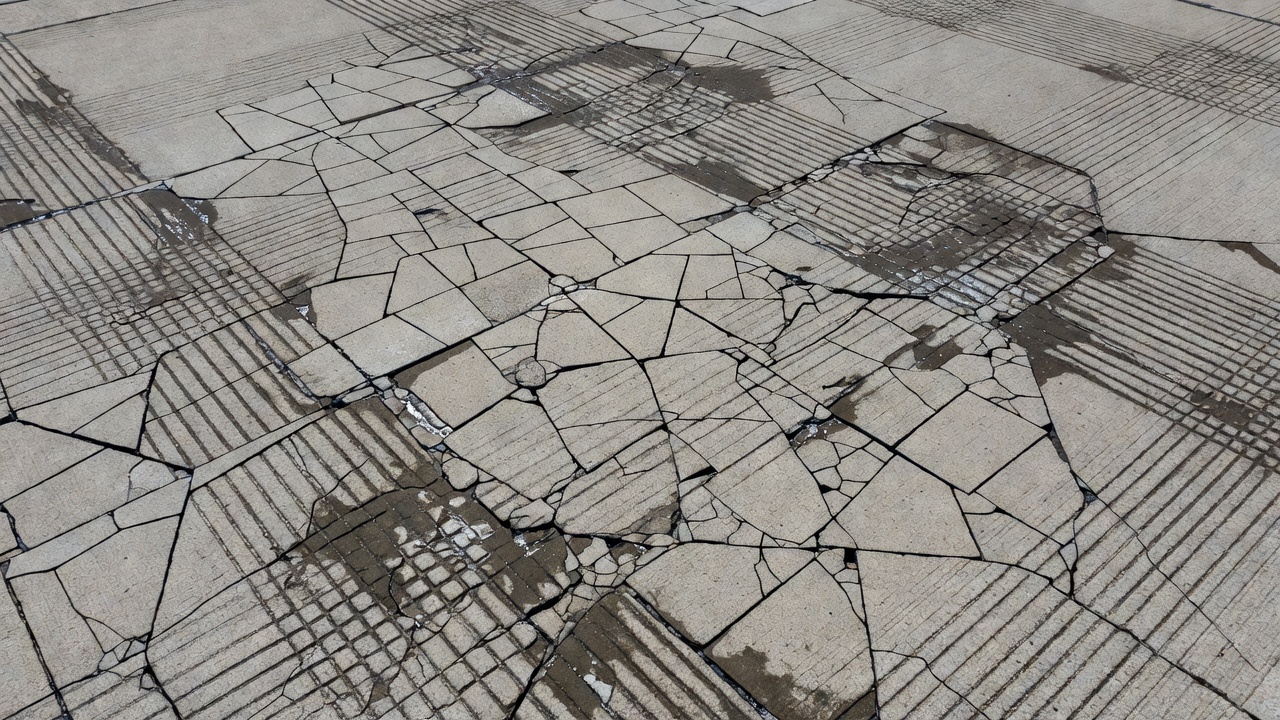
The expansive pressure generated by ASR gel is not uniform throughout the concrete mass. It varies with local aggregate reactivity, alkali concentration, moisture availability, and the degree of confinement. In reinforced concrete, the expansion is partially restrained by the steel reinforcement, which redistributes internal stresses and alters the cracking pattern. This restraint typically results in cracking that is preferentially oriented parallel to the direction of primary reinforcement, as the tensile stresses induced by expansion are redirected along planes of minimum restraint. In unreinforced or lightly reinforced concrete, typical of many jointed plain concrete pavements (JPCP) at airports, the cracking pattern is more random, producing the characteristic polygonal or “map” cracking pattern across the entire slab surface.
Visual Indicators and Field Identification
Field identification of ASR relies on recognizing characteristic visual symptoms that, while not individually unique to ASR, form a diagnostic pattern when observed in combination. The FHWA Alkali-Silica Reactivity Field Identification Handbook (FHWA-HIF-12-022), authored by Thomas, Fournier, Folliard, and Resendez, provides comprehensive guidance for field identification, supplemented by the FAA Advisory Circular AC 150/5380-8A specific to airfield pavements.
Map Cracking (Pattern Cracking)
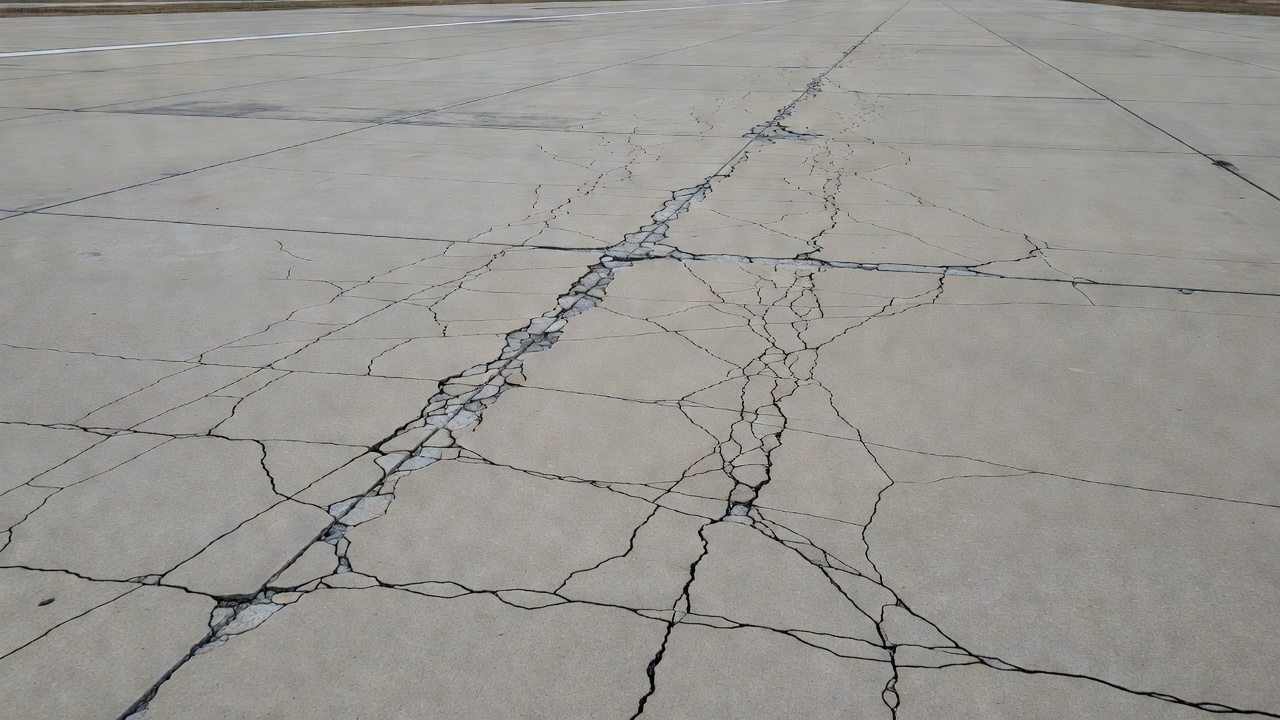
The most recognizable surface manifestation of ASR is polygonal map cracking, which consists of a network of interconnected cracks that divide the concrete surface into roughly polygonal pieces typically ranging from 50 mm to 300 mm across. The crack pattern is three-dimensional, extending through the full depth of the concrete element in advanced cases. In unreinforced concrete such as pavement slabs, the cracking pattern is generally isotropic, cracks radiate in all directions with no preferred orientation. In reinforced elements, cracks typically align parallel to the restraining reinforcement, creating a more linear or orthogonal pattern. The crack widths in ASR-affected concrete range from hairline (<0.05 mm) in early stages to 2 mm or greater in advanced deterioration. Crack surfaces within ASR-affected concrete often exhibit dark staining from moisture accumulation and gel deposition along the crack edges.
Gel Exudation and Surface Deposits
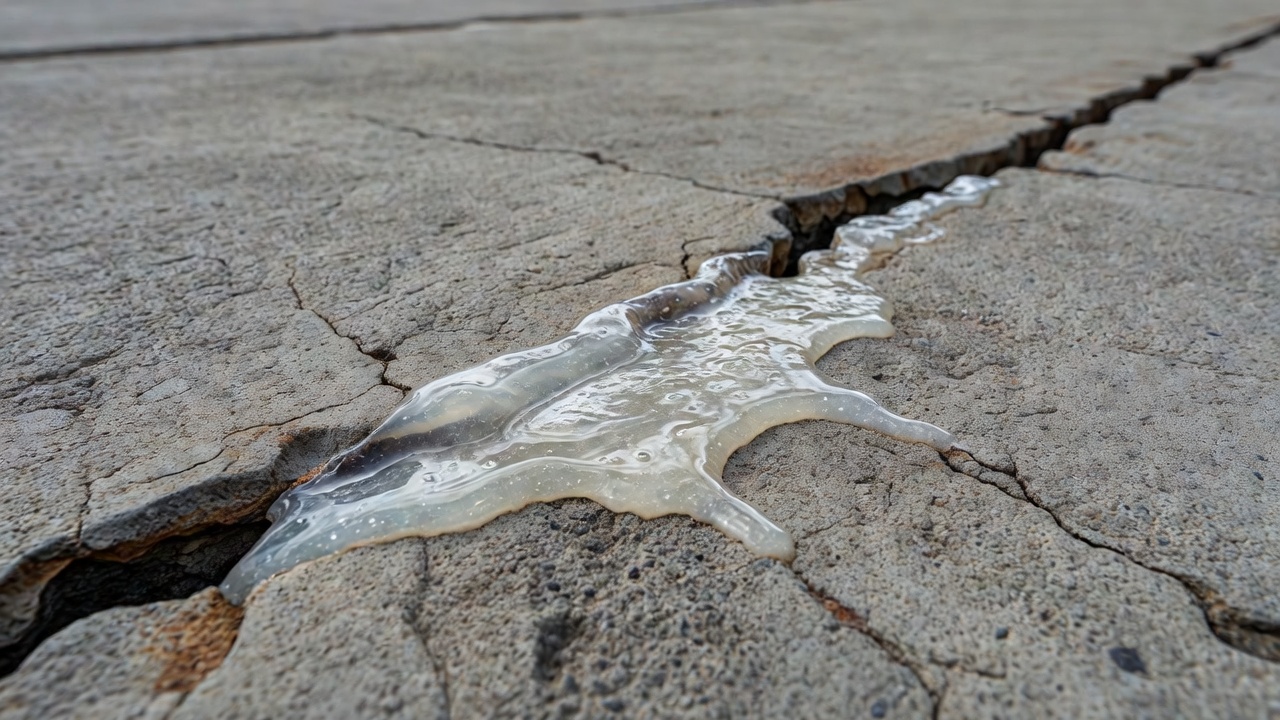
The exudation of ASR gel from cracks is perhaps the most definitive macroscopic indicator of an ongoing reaction. The gel appears as glossy, resinous deposits that may be clear, translucent white, pale yellow, or amber in color when fresh. As the gel ages and reacts with atmospheric carbon dioxide, it carbonates to a white, chalky, or powdery deposit that can be mistaken for efflorescence. The gel is most commonly observed seeping from cracks, but may also appear at joints, along aggregate particle boundaries at pop-out sites, and as surface discoloration patches. The presence of actively exuding, viscous gel (as opposed to dry, carbonated deposits) is a strong indicator that the ASR is ongoing and that further expansion can be anticipated.
Expansion-Related Deformations
ASR causes irreversible, permanent expansion of the affected concrete, which produces several distinctive macroscopic effects:
Joint closure is frequently the earliest observable sign of ASR in jointed concrete pavements. As adjacent slabs expand, expansion joints close completely, eliminating the designed gap. This closure can cause spalling at joint edges as compressive stresses crush the concrete at the contact points. In extreme cases, blowups can occur, a sudden, explosive buckling failure of the pavement at a closed joint, creating an immediate safety hazard and FOD source.
Extrusion of joint sealing material occurs when joint compression forces the sealant out of the joint reservoir. The extruded material may appear as a raised bead or loop above the pavement surface.
Relative displacement and misalignment at joints and cracks indicate differential expansion between adjacent concrete elements, often resulting in faulting, a vertical offset across a joint or crack that creates a tripping hazard and increases dynamic loading from aircraft gear.
Surface Pop-Outs
Pop-outs are small, conical fragments of concrete that break away from the surface, typically 10 to 50 mm in diameter and 5 to 20 mm deep. In ASR-affected concrete, pop-outs are caused by the expansion of a reactive aggregate particle located near the concrete surface. The expanding particle generates localized tensile stresses that exceed the bond strength between the particle and the surrounding paste, causing the overlying concrete to fracture and detach. The bottom of an ASR pop-out typically reveals the offending aggregate particle surrounded by gel deposits and a reaction rim, a darkened zone of altered paste around the aggregate.
Surface Discoloration
ASR-affected concrete often exhibits dark, damp-looking patches on the surface, particularly surrounding cracks and joints. This discoloration results from the persistent higher moisture content retained by the hygroscopic ASR gel within the cracked concrete. These darker areas may remain visible even after adjacent undamaged concrete surfaces have dried, providing a useful indicator for aerial or drone-based visual inspection. In advanced cases, rust-colored staining may develop if the cracking has extended to reinforcing steel, permitting corrosion to initiate.
Laboratory Testing and Analysis
Definitive diagnosis and quantification of ASR require laboratory testing. No single test method is universally adequate, a combination of methods is typically employed to establish the presence, severity, and likely future progression of ASR.
ASTM C295, Petrographic Examination of Aggregates
This standard is applied before construction to assess the potential reactivity of aggregate sources. A qualified petrographer examines thin sections of aggregate using optical microscopy (polarized light microscopy, PLM) to identify and quantify reactive mineral phases. The petrographer classifies the aggregate according to known reactivity of the identified minerals and provides recommendations regarding the aggregate’s suitability for use in concrete. While invaluable for screening, ASTM C295 alone cannot reliably predict the degree of expansion that will occur in concrete, as reactivity depends on particle size distribution, alkali loading, and exposure conditions.
ASTM C1260, Accelerated Mortar Bar Test (AMBT)
The AMBT is the most widely used screening test due to its relatively short duration (16 days). Aggregate is crushed to a specified gradation, mixed with a high-alkali cement (Na₂Oeq boosted to 1.25% with NaOH addition), cast into mortar bars, and immersed in 1N NaOH solution at 80°C. Length change is measured at intervals up to 14 days of immersion. The standard classification criteria are:
| Expansion at 14 Days | Classification |
|---|---|
| < 0.10% | Non-reactive (or innocuous) |
| 0.10–0.20% | Moderately reactive |
| > 0.20% | Potentially deleteriously reactive |
The principal limitation of ASTM C1260 is its tendency to produce false-positive results for certain aggregate types, as the aggressive test conditions (80°C, 1N NaOH) can cause expansion in aggregates that perform satisfactorily in field concrete. Aggregates testing reactive by C1260 should be further evaluated using ASTM C1293.
ASTM C1293, Concrete Prism Test (CPT)
The CPT is considered the most reliable laboratory test for predicting field ASR performance. Concrete prisms are fabricated using the candidate aggregate at a realistic job-mix design, with cement alkali content boosted to 1.25% Na₂Oeq to accelerate the reaction. Prisms are stored in sealed containers over water at 38°C and measured periodically for up to 24 months. The classification criteria are:
| Expansion at 1 Year | Classification |
|---|---|
| < 0.04% | Non-reactive |
| ≥ 0.04% | Potentially reactive |
A significant practical limitation of ASTM C1293 is its extended duration, one to two years, which makes it unsuitable for projects with compressed timelines. The concrete prism test also provides the basis for determining the required dosage of supplementary cementitious materials or lithium compounds for mitigation.
ASTM C1567, AMBT for SCM-Aggregate Combinations
This method follows the same procedure as ASTM C1260 but evaluates the effectiveness of supplementary cementitious materials (fly ash, slag, silica fume) or other pozzolanic materials in suppressing ASR expansion. The test uses the same accelerated conditions and the same 0.10% expansion criterion at 14 days to determine whether a given SCM dosage is adequate to control ASR for the specific aggregate under evaluation.
ASTM C856, Petrographic Examination of Hardened Concrete
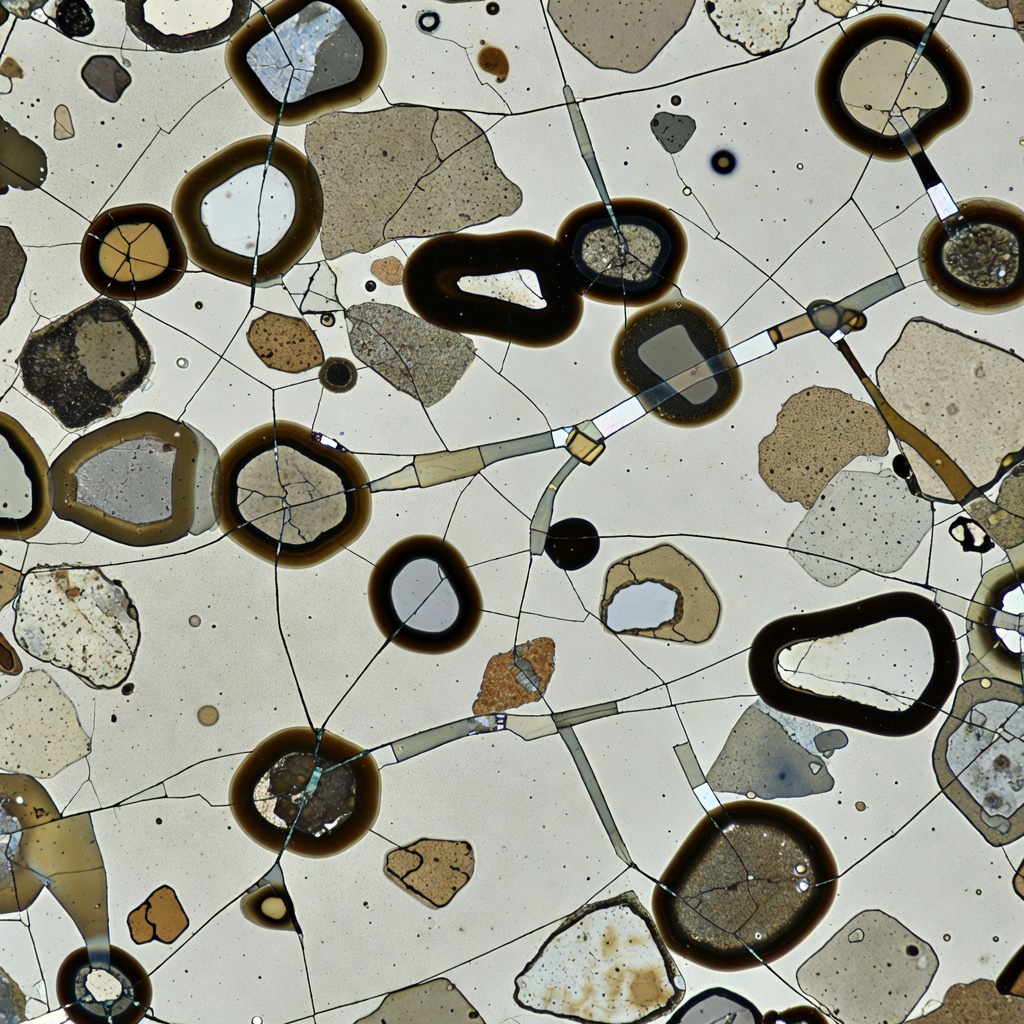
This standard is the definitive method for confirming ASR damage in existing structures. A petrographer examines polished sections and thin sections of concrete cores using stereomicroscopy and polarized light microscopy. Diagnostic features of ASR include:
Reaction rims, dark-colored zones surrounding reactive aggregate particles, representing silica-depleted aggregate boundaries where gel has precipitated. Gel-filled cracks, microcracks within aggregate particles and radiating into the cement paste, filled with isotropic or weakly birefringent gel material. Gel deposits in air voids and cracks, appearing as transparent to translucent isotropic material with a distinctive desiccation cracking pattern. Altered aggregate boundaries where the original aggregate mineralogy has been partially or completely replaced by reaction products.
ASTM C1723, SEM-EDS Analysis
Scanning electron microscopy with energy-dispersive X-ray spectroscopy (SEM-EDS) provides definitive identification of ASR gel through its morphological and compositional characteristics. Under SEM, ASR gel exhibits a distinctive “cracked dried mud” texture resulting from desiccation during sample preparation. EDS analysis confirms the elemental composition, primarily silicon and calcium, with lesser amounts of sodium and potassium. The ratio of (Na₂O+K₂O)/SiO₂ and CaO/SiO₂ can provide information about gel maturity and remaining swelling potential. Fresh, actively expanding gels are characterized by higher alkali content (Na₂O+K₂O typically 10–20%) and lower calcium content, while aged, carbonated gels show progressive calcium enrichment and alkali depletion.
ASR in Airport Concrete Pavements
Airport concrete pavements represent a uniquely challenging environment for ASR management due to the combination of heavy aircraft loads, critical safety requirements, chemical exposure from deicing fluids, and the high economic cost of pavement downtime for repair or replacement. ASR in airfield concrete has been recognized as a significant durability concern by the FAA, the National Academies’ Airport Cooperative Research Program (ACRP), and international aviation authorities.
Regulatory Framework
The FAA has issued specific guidance documents addressing ASR in airfield pavements. FAA AC 150/5380-8A, the Handbook for Identification of Alkali-Silica Reactivity in Airfield Pavements (though now cancelled, its technical content influenced subsequent guidance), provided comprehensive procedures for field identification and laboratory confirmation of ASR in airport concrete. Current FAA guidance for pavement design and construction is contained in AC 150/5320-6 (Airport Pavement Design and Evaluation) and AC 150/5370-10 (Standards for Specifying Construction of Airports), which include requirements for aggregate evaluation, alkali limits, and SCM usage to mitigate ASR risk.
The ACRP Research Report 25553 (Practices to Mitigate Alkali-Silica Reaction Affected Pavements at Airports) represents the most comprehensive study of ASR management specific to airport environments. This report documents the prevalence and severity of ASR at U.S. airports, evaluates the effectiveness of various mitigation strategies in airfield conditions, and provides decision-making frameworks for airport pavement engineers.
Unique Risk Factors for Airfield Pavements
Several factors make airport concrete pavements particularly vulnerable to ASR:
Airfield pavement deicers and anti-icers represent a significant external alkali source not present in highway pavements. Research conducted at the National Concrete Pavement Technology Center (CP Tech Center) has demonstrated that potassium acetate and sodium acetate/formate deicing formulations can dramatically exacerbate ASR expansion in concrete. These chemicals increase the pore solution alkali concentration and pH, accelerate silica dissolution kinetics, and provide additional alkali cations for expansive gel formation. Airports in cold climates that apply these deicers extensively during winter operations may experience accelerated ASR progression compared to equivalent concrete in non-deicing environments.
Ponding water on airfield pavements due to flat grades and drainage limitations creates persistent high-moisture conditions at the pavement surface, satisfying the moisture requirement for ASR and providing a reservoir for continued gel swelling. Joint sealant failures, common in aging airfield pavements, permit direct water ingress into the pavement structure, concentrating moisture at the slab edges where restraint is minimal and expansion can proceed unimpeded.
Foreign object debris (FOD) risk elevates the consequence of ASR damage from an engineering concern to a direct flight safety hazard. Concrete fragments generated by ASR-associated pop-outs, spalling, and crack deterioration can be ingested by jet engines, potentially causing compressor blade damage, engine failure, or catastrophic engine loss. The FAA classifies FOD control as a critical airfield safety function, and ASR-damaged pavements represent an ongoing FOD generation source demanding increased inspection frequency and sweeping operations.
The Wyoming IDEA Pavement Condition Index system for rigid pavements classifies ASR distress into three severity levels specific to airfield applications:
| Severity | Description |
|---|---|
| Low | Minimal to no FOD potential, surface cracks tight (<0.05 inch/1 mm), little to no evidence of movement |
| Medium | Some FOD potential requiring increased sweeping, evidence of slab movement, fragments at crack intersections, cracks predominantly >0.05 inch (1 mm), surface pop-outs present |
| High | Loose or missing concrete fragments posing high FOD potential, slab surface integrity significantly degraded, immediate repair required |
Structural and Operational Impacts
ASR-induced expansion and cracking in airfield pavements creates specific operational challenges beyond those encountered in highway applications. Joint closure from ASR expansion can reduce or eliminate the designed load transfer capacity at transverse contraction joints, increasing the effective stress on individual slabs under heavy aircraft loading. This can accelerate fatigue cracking and shorten pavement structural life. Surface roughness from differential expansion, faulting, and spalling increases dynamic loads on aircraft landing gear and can affect pilot control during takeoff and landing rolls. Reduced surface friction from cracking and gel deposits compromises braking performance, particularly in wet conditions where aircraft braking coefficients are already reduced.
Differentiation from Other Concrete Cracking Mechanisms
Accurate diagnosis of ASR requires distinguishing it from other cracking mechanisms that can produce superficially similar surface patterns. Misdiagnosis leads to inappropriate remediation strategies and wasted resources. The following systematic comparison identifies the critical differentiating features.
Drying Shrinkage Cracking
Drying shrinkage cracks are among the most common concrete cracks and are frequently mistaken for early-stage ASR. The key differentiators are:
Drying shrinkage cracks typically appear within days to weeks after concrete placement, whereas ASR cracking requires years to manifest, rarely appearing before 2–3 years and often taking 5–15 years to become clearly evident. Shrinkage cracks in unrestrained slabs tend to be parallel, roughly orthogonal, or diagonal across the slab, dividing it into large rectangular or triangular segments, whereas ASR produces fine polygonal map cracking dividing the surface into many small pieces. Shrinkage cracks are generally wider at the surface and narrow with depth, while ASR cracks extend through the full slab depth. Shrinkage does not produce gel exudation, reaction rims, or measurable volumetric expansion, joints remain open rather than closing. Petrographic examination of shrinkage-cracked concrete reveals no gel, no reaction rims around aggregate particles, and no cracking through aggregate particles, cracks in shrinkage-affected concrete travel around aggregate boundaries rather than through them.
Thermal Cracking
Thermal cracking results from temperature gradients or restrained thermal contraction. These cracks are characterized by their regular spacing (typically 3–8 meters for mass concrete, variable for pavements), their occurrence during early-age temperature cycles rather than years later, and the absence of gel, reaction rims, and aggregate-particle cracking. Thermal cracks in pavements typically initiate at the surface and may not penetrate the full depth. Crucially, thermal cracking does not cause the permanent irreversible expansion, joint closure, or structural deformations characteristic of advanced ASR.
Freeze-Thaw Damage
Freeze-thaw deterioration produces surface scaling, parallel cracking along joints and edges (particularly in D-cracking), and eventual disintegration of the cement paste. Freeze-thaw damage is typically most severe at joints and slab edges where water accumulates, while ASR cracking is distributed across the entire slab surface. Freeze-thaw damage does not involve aggregate reaction, the damage is confined to the cement paste, and petrographic examination reveals air void system characteristics rather than reaction products. The two mechanisms can coexist and interact: ASR cracking creates pathways for water ingress that exacerbate freeze-thaw damage, and freeze-thaw damage increases concrete permeability, potentially accelerating ASR by increasing moisture availability.
Sulfate Attack
External sulfate attack produces map cracking that can resemble ASR, but is distinguished by whitish surface deposits of ettringite or gypsum, a softened, mushy paste at the concrete surface, and expansion that is most pronounced at corners and edges where sulfate ingress is greatest. Petrographic examination reveals extensive formation of secondary ettringite in cracks and voids, needle-like crystals clearly distinguishable from ASR gel. Internal sulfate attack in the form of delayed ettringite formation (DEF) can coexist with ASR, particularly in concrete that experienced elevated curing temperatures (>65–70°C). DEF produces characteristic gaps around aggregate particles filled with ettringite crystals, whereas ASR produces gel-filled cracks within and radiating from aggregates.
Plastic Shrinkage Cracking
Plastic shrinkage cracks occur within hours of placement while concrete is still plastic or semi-plastic. They are typically short, discontinuous, parallel or diagonal cracks most common in slabs with high surface-to-volume ratios. They are easily distinguished from ASR by their very early appearance, their occurrence only at the surface (rarely exceeding 25–50 mm depth), and the complete absence of any chemical reaction products.
Mitigation Strategies
Prevention of ASR in new concrete construction is achieved by eliminating or sufficiently suppressing one or more of the three required conditions. The selection of mitigation strategies depends on aggregate reactivity classification, project criticality, exposure conditions, and economic considerations.
Supplementary Cementitious Materials (SCMs)
The use of SCMs is the most widely applied and extensively validated ASR mitigation approach. SCMs mitigate ASR through three complementary mechanisms:
Alkali dilution, SCMs generally contain lower alkali concentrations than Portland cement. When they replace a portion of the cement, the total alkali loading of the concrete mixture is reduced proportionally.
Reduction of pore solution pH, the pozzolanic reaction consumes portlandite (Ca(OH)₂) and reduces the OH⁻ concentration in the pore solution. As pH decreases, the rate of silica dissolution from reactive aggregates is exponentially reduced. The alkali-binding capacity of certain SCMs, particularly Class F fly ash and slag, further reduces the concentration of free alkali ions available for reaction.
Reduced permeability and water ingress, SCMs refine the pore structure of concrete, reducing permeability and limiting the rate of moisture ingress that supports ASR gel swelling.
The required SCM dosage rates for effective ASR mitigation vary with aggregate reactivity and SCM composition:
| SCM Type | Typical Dosage Range (mass replacement of cement) |
|---|---|
| Class F Fly Ash (low CaO) | 15–30% |
| Class C Fly Ash (high CaO) | 25–40% (may be ineffective for highly reactive aggregates) |
| Ground Granulated Blast-Furnace Slag (GGBFS) | 35–50% |
| Silica Fume | 5–10% |
| Metakaolin | 10–15% |
| Ternary blends (e.g., cement + fly ash + silica fume) | Variable, synergistic effects permit lower individual dosages |
The effectiveness of a specific SCM-aggregate combination must be verified by laboratory testing, typically using ASTM C1567 for initial screening and ASTM C1293 for definitive validation.
Lithium-Based Admixtures
Lithium compounds, primarily lithium nitrate (LiNO₃), suppress ASR by forming a non-expansive lithium-silicate gel (Li–Si–H) instead of the expansive sodium/potassium-silicate gel. The lithium-silicate gel has a different structure and significantly lower swelling potential. The standard dosage for lithium nitrate is expressed as the molar ratio:
Li / (Na + K) = 0.74
This ratio must be determined based on the total alkali content of the concrete mixture, including contributions from cement, SCMs, aggregates, and admixtures. At the recommended 0.74 molar ratio, lithium nitrate at 30% solution concentration is typically added at approximately 4–6 liters per cubic meter of concrete, depending on alkali loading. Lithium compounds are significantly more expensive than SCM-based mitigation, limiting their use to situations where SCMs are unavailable, insufficient, or incompatible with project requirements. Lithium admixtures are compatible with SCMs and can be used in combination for enhanced protection against highly reactive aggregates.
Low-Alkali Cement and Alkali Loading Limits
For moderately reactive aggregates, limiting the concrete alkali loading to 3.0 kg/m³ Na₂Oeq or less may provide sufficient protection. This limit can be achieved by specifying low-alkali cement (≤0.60% Na₂Oeq per ASTM C150) combined with a moderate cement content. For highly reactive aggregates, the alkali loading limit may need to be reduced to 2.0 kg/m³ or even 1.5 kg/m³, which may not be achievable with commercially available cement without SCM supplementation. The alkali loading approach alone is not recommended for aggregates containing opal, volcanic glass, or other highly reactive silica forms, these require SCMs or lithium regardless of alkali level.
Non-Reactive Aggregates
Where economically and logistically feasible, selecting aggregates shown to be non-reactive by both ASTM C1260 and ASTM C1293 eliminates the source of reactive silica and prevents ASR entirely, regardless of concrete alkali content or moisture exposure. Aggregate reactivity should be established by petrographic examination (ASTM C295) combined with expansion testing, and the aggregate source should be periodically re-tested to verify continued non-reactivity as quarry operations progress through different geologic strata.
Moisture Control
While moisture control alone cannot prevent ASR when reactive aggregates and sufficient alkalis are present, it can slow the rate of deterioration. Surface sealers and waterproofing treatments, including silanes, siloxanes, and high-build epoxy or methacrylate coatings, reduce water ingress and can extend the service life of ASR-affected concrete. Proper drainage design in new construction, including adequate pavement cross-slope, longitudinal grade, subsurface drainage, and joint sealing, minimizes moisture accumulation. For existing ASR-affected pavements, maintaining joint seal integrity and correcting drainage deficiencies can reduce the rate of further deterioration.
Detection by Imaging and Remote Sensing
Modern pavement inspection technologies enable detection and monitoring of ASR damage at scales and frequencies not achievable with traditional manual inspection methods. These technologies are particularly valuable for airport applications where runway closure for inspection is operationally disruptive and expensive.
High-Resolution Visual Imaging
Drone-mounted high-resolution cameras can capture detailed pavement surface imagery at resolutions of 1 mm/pixel or finer, enabling detection of map cracking patterns, gel exudation, and pop-outs that characterize ASR. Systematic aerial surveys of runway, taxiway, and apron pavements produce comprehensive georeferenced image datasets that can be compared over time to track crack propagation and expansion progression. Automated image analysis algorithms can be trained to recognize ASR-specific cracking patterns based on crack geometry (polygonality, crack density, intersection angles) and surface features (gel discoloration, staining patterns).
Thermal Infrared Imaging
ASR-affected concrete retains moisture differently than sound concrete due to the hygroscopic gel and the increased porosity from microcracking. Thermal infrared cameras detect these moisture variations as temperature differences, wetter ASR-affected areas exhibit different thermal inertia than dry, sound concrete, producing detectable thermal contrast particularly during the diurnal heating and cooling cycle. Thermal imaging is most effective when conducted during periods of rapid temperature change (early morning or late afternoon) when moisture-related thermal differences are maximized.
Multispectral and Hyperspectral Imaging
ASR gel deposits and the mineralogical alterations associated with reaction rims produce spectral signatures that differ from sound concrete. Multispectral sensors capturing reflectance in visible, near-infrared, and short-wave infrared bands can potentially detect these spectral differences, enabling identification of ASR-affected areas before cracking becomes visible at the surface. This capability is particularly valuable for early-stage ASR detection in critical infrastructure where preventative intervention can substantially extend service life.
Automated Pavement Condition Analysis
Integration of imaging data with artificial intelligence and machine learning algorithms enables automated detection and classification of ASR distress. Training datasets incorporating thousands of validated ASR and non-ASR crack images allow algorithms to distinguish ASR map cracking from other crack types with increasing accuracy. Automated analysis can quantify crack density, crack width distribution, and affected area percentage, metrics that support objective condition assessment and trend analysis for pavement management decision-making.
Summary
Alkali-Silica Reaction remains one of the most significant concrete durability challenges worldwide, with particular implications for airport pavement infrastructure where safety, operational continuity, and structural performance demands are exceptionally high. The chemical mechanism, dissolution of reactive silica by hydroxyl ions, precipitation of expansive alkali-calcium-silicate gel, and osmotic swelling, is well understood, as are the three necessary conditions for its occurrence. Laboratory testing protocols established by ASTM provide reliable methods for aggregate screening and diagnostic confirmation, while mitigation strategies centered on SCMs, lithium compounds, and alkali control offer proven protection for new construction. For existing ASR-affected pavements, systematic inspection using both conventional methods and emerging imaging technologies enables informed maintenance and rehabilitation decision-making.
Frequently Asked Questions
- What is alkali-silica reaction (ASR) in concrete?
- Alkali-silica reaction (ASR) is a chemical deterioration process in concrete where reactive silica minerals present in certain aggregates react with alkali hydroxides (sodium and potassium) dissolved in the cement pore solution. This reaction produces an alkali-calcium-silicate-hydrate gel that is hygroscopic, it absorbs water and swells. The expansive pressure generated by the swelling gel exceeds the tensile strength of the surrounding concrete (typically 2.5 to 4.0 MPa), causing internal microcracking that eventually manifests on the surface as characteristic polygonal map cracking, gel exudation, and progressive structural degradation. ASR requires three conditions to occur: reactive silica in the aggregate, sufficient alkalis (typically from Portland cement), and moisture above approximately 80% relative humidity.
- How is ASR different from other types of concrete cracking?
- ASR cracking is distinguished from other concrete cracking by several key features: (1) timing, ASR typically manifests years after construction, not during early curing, (2) pattern, ASR produces polygonal map cracking across the entire concrete surface in unrestrained elements, whereas drying shrinkage typically creates parallel or perpendicular cracks, (3) gel presence, ASR uniquely produces a characteristic white, amber, or translucent gel that exudes from cracks, (4) petrographic evidence, microscopic examination reveals reaction rims around aggregate particles, gel-filled cracks that pass through aggregates (not just around them), and characteristic gel morphology resembling dried mud under SEM, (5) expansion, ASR causes measurable irreversible expansion, often closing expansion joints and causing misalignment, which thermal or shrinkage cracking does not produce.
- What laboratory tests are used to identify ASR?
- The primary laboratory tests for ASR identification include: ASTM C1260 (Accelerated Mortar Bar Test, aggregates tested in 1N NaOH at 80°C for 16 days, with expansion ≤0.10% at 14 days considered non-reactive), ASTM C1293 (Concrete Prism Test, concrete prisms stored over water at 38°C for 12-24 months, with expansion ≤0.04% at 1 year considered non-reactive, the most reliable test), ASTM C295 (Petrographic Examination of Aggregates, identifies reactive mineral types before use), ASTM C856 (Petrographic Examination of Hardened Concrete, confirms ASR damage in existing structures by identifying gel, reaction rims, and microcracking), and ASTM C1723 (SEM-EDS analysis of hardened concrete, confirms ASR gel composition). For SCM-aggregate combinations, ASTM C1567 is used with the same criteria as C1260.
- How can ASR be prevented or mitigated in new concrete construction?
- ASR prevention in new concrete relies on eliminating one of the three required conditions. The most effective strategies include: (1) using supplementary cementitious materials (SCMs), Class F fly ash at 15-30% replacement, ground granulated blast-furnace slag at 35-50%, or silica fume at 5-10%, which reduce pore solution pH and consume portlandite, (2) limiting concrete alkali loading to below 3.0 kg/m³ Na₂O equivalent (or using low-alkali cement per ASTM C150 with ≤0.60% Na₂Oeq), (3) using lithium-based admixtures (LiNO₃ at a Li/Na+K molar ratio of 0.74) which form non-expansive lithium-silicate gel, (4) selecting non-reactive aggregates verified by petrographic examination and laboratory testing, and (5) controlling moisture ingress through waterproofing sealers and proper drainage design. For critical airport pavements, FAA AC 150/5370-10 mandates specific ASR mitigation requirements.
- What are the specific concerns of ASR in airport concrete pavements?
- ASR in airport concrete pavements presents critical safety and operational risks. Map cracking and pop-outs generate foreign object debris (FOD) that can be ingested by jet engines, causing catastrophic damage. Joint closure from ASR expansion can cause spalling, blowups, and loss of load transfer capacity at joints, compromising the structural integrity required for heavy aircraft loads. Surface cracking reduces friction characteristics essential for safe aircraft braking. Gel exudation can affect pavement markings and surface texture. The FAA has published specific guidance through AC 150/5380-8A (Handbook for Identification of ASR in Airfield Pavements) and ACRP Research Report 25553 (Practices to Mitigate ASR Affected Pavements at Airports). Airfield pavement deicers, particularly potassium acetate and sodium acetate/formate formulations, have been shown to exacerbate ASR expansion in concrete, making airfield pavements uniquely vulnerable compared to highway infrastructure.