What are ASTM International Standards?
What is ASTM International?

ASTM International, formerly known as the American Society for Testing and Materials, is the world’s largest voluntary consensus standards development organization, headquartered in West Conshohocken, Pennsylvania with regional offices in Belgium, Canada, China, Peru, Singapore, and Washington, D.C. Founded in 1898 by Charles B. Dudley, Ph.D., a chemist with the Pennsylvania Railroad, ASTM was created to address the critical need for standardized testing methods for railroad materials following a series of catastrophic rail failures in the late 19th century. The organization celebrated its 125th anniversary in 2023 and changed its name to ASTM International in 2001 to reflect its global scope, while retaining the well-recognized ASTM acronym.
Today, ASTM International publishes over 13,000 active standards that are developed by more than 30,000 technical experts and business professionals from 140+ countries working across 140+ technical committees. These standards are used worldwide to improve product quality, enhance health and safety, strengthen market access and trade, and build consumer confidence. The standards development process follows a rigorous five-step consensus process that adheres to the World Trade Organization (WTO) Technical Barriers to Trade (TBT) Agreement guidelines, ensuring openness, transparency, consensus, due process, and relevance. The five steps are: initiation of a project as a new Work Item (WK), standard drafting by a technical subcommittee task group, multiple rounds of peer review and voting at the subcommittee and main committee levels, final Society approval, and publication with an alphanumeric designation. Each standard is reviewed at least once every five years, if not updated or reapproved after eight years, it is removed from publication.
The Annual Book of ASTM Standards is the comprehensive collection of all active standards, organized into 15 main sections covering broad industry areas and 80+ topic-specific volumes. Section 04 (Construction) is the most relevant volume set for infrastructure professionals, containing 13 volumes covering cement, concrete and aggregates, road and paving materials, soil and rock, building constructions, and geosynthetics. The alphanumeric designation system assigns every standard a unique identifier: a letter prefix indicating the broad category, A for ferrous metals (steel, cast iron), B for nonferrous metals (aluminum, copper), C for cementitious, concrete, and masonry materials, D for miscellaneous materials (petroleum, plastics, rubber, soil, pavement, asphalt), E for analytical methods and NDT, F for materials for specific applications, and G for corrosion and degradation, followed by a sequentially assigned serial number and the year of adoption or revision. For example, ASTM C39/C39M-21 indicates the concrete category (C), serial number 39, with a metric version (C39M), adopted in 2021.
ASTM standards are classified into six distinct types based on their purpose and content. Test Methods are definitive procedures that produce a test result, such as C39 for compressive strength measurement. Specifications define an explicit set of requirements to be satisfied, such as C150 for portland cement composition and properties. Practices provide a set of instructions for performing operations that do not produce a test result, such as D6433 for conducting PCI surveys. Guides offer a compendium of information or series of options without recommending a specific course of action. Classifications organize materials into groups based on similar characteristics. Terminologies provide standardized definitions of terms, symbols, abbreviations, or acronyms. Understanding this classification system is essential for correctly interpreting and applying ASTM standards in construction materials testing and infrastructure inspection.
Pavement Condition Index Standards, ASTM D6433 and ASTM D5340
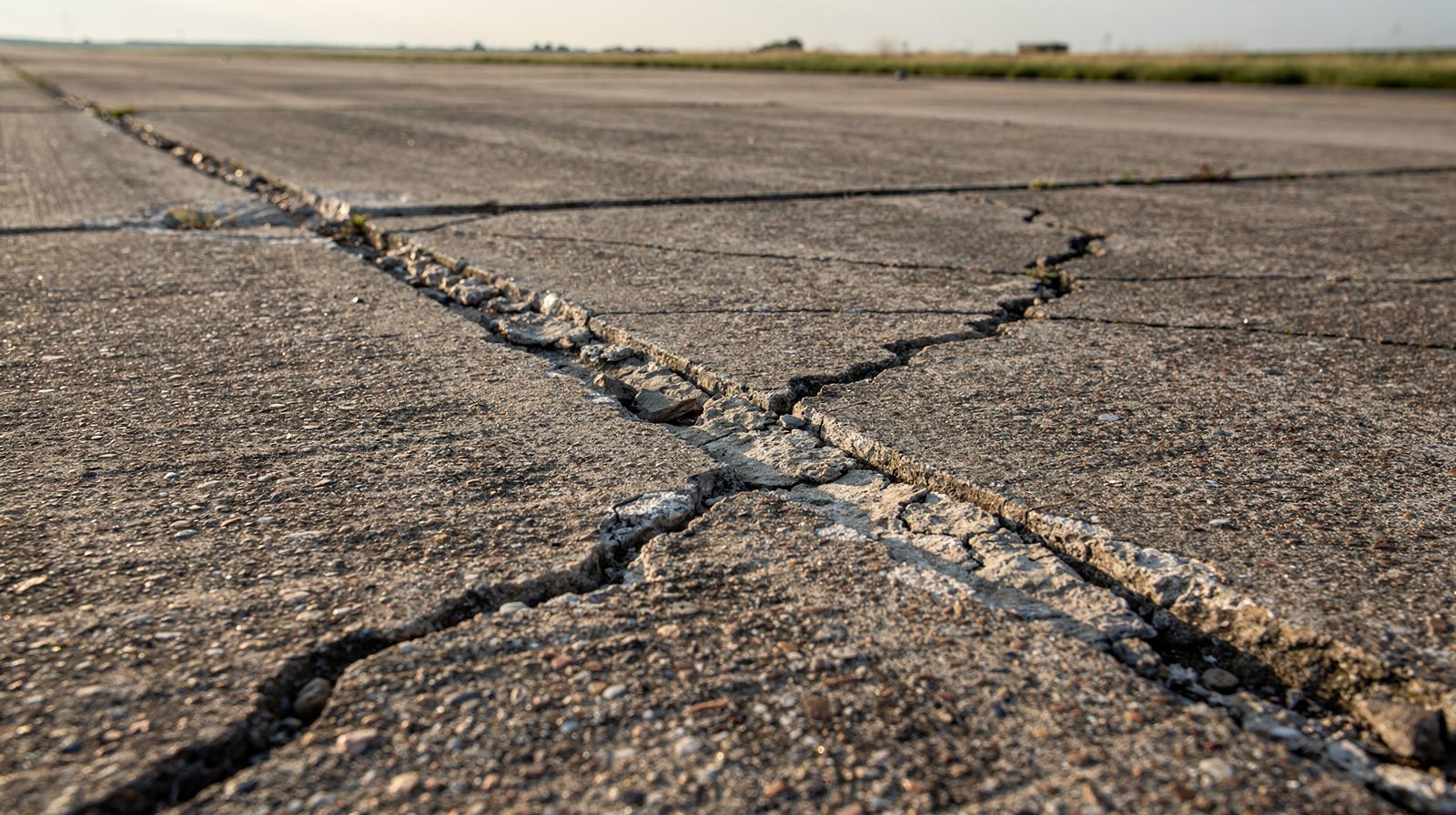
The Pavement Condition Index (PCI) is the most widely used methodology for quantifying pavement surface condition through visual surveys, standardized by ASTM in two complementary standards. ASTM D6433 (Standard Practice for Roads and Parking Lots Pavement Condition Index Surveys) covers highway and municipal road networks, while ASTM D5340 (Standard Test Method for Airport Pavement Condition Index Surveys) is specifically adapted for airfield pavements including runways, taxiways, and aprons. Both standards share the same core PCI methodology but are tailored to their respective operating environments.
The PCI methodology produces a numerical indicator ranging from 0 to 100 that rates pavement surface condition based on observed distress types, severity levels, and density. The rating scale classifies pavements into seven categories: 86-100 is Good (newly constructed or recently maintained), 71-85 is Satisfactory, 56-70 is Fair, 41-55 is Poor, 26-40 is Very Poor, 11-25 is Serious, and 0-10 is Failed. The PCI measures both structural integrity (how well the pavement carries loads) and surface operational condition (localized roughness and safety). It is important to note that PCI cannot directly measure structural capacity, skid resistance, or ride quality, it provides a surface condition indicator that must be complemented with structural testing such as FWD deflection analysis for a complete pavement evaluation.
The PCI survey methodology organizes a road network into a three-level hierarchy. A Branch is a single identifiable road or street (e.g., “Main Street”). A Section is a contiguous segment within a branch that shares the same construction history, traffic level, surface type, and condition. A Sample Unit is the actual area that inspectors survey on the ground, approximately 2,500 square feet (±1,000 ft²) for asphalt roads (typically one lane width by 100 feet length) or approximately 20 contiguous slabs (±8 slabs) for concrete roads. Standardized formulas exist for calculating the minimum number of sample units that must be inspected per section to achieve a 95% confidence level for the section PCI. Sample units can be randomly selected or systematically spaced, and the standard provides specific procedures for both approaches.
For asphalt concrete (AC) surfaces, ASTM D6433 defines 19 distress types that are recorded during the survey: alligator (fatigue) cracking, bleeding, block cracking, bumps and sags, corrugation, depression, edge cracking, joint reflection cracking, lane/shoulder drop-off, longitudinal and transverse cracking, patching and utility cuts, polished aggregate, potholes, railroad crossing, rutting, shoving, slippage cracking, swell, and weathering and raveling. Each distress is recorded by type, severity level (Low/Medium/High) , and quantity (measured in square feet, linear feet, or count depending on the distress). The PCI calculation process involves computing distress density as affected area divided by sample unit area, then determining Deduct Values from standardized curves specific to each distress type and severity level. A Corrected Deduct Value (CDV) procedure is applied using an iterative process that accounts for the interaction of multiple distress types occurring simultaneously. The final PCI is calculated as 100 minus the CDV. The standard was originally developed by the U.S. Army Corps of Engineers and has been adopted by the U.S. Department of Defense, the American Public Works Association (APWA), and the Federal Aviation Administration (FAA).
ASTM D5340 extends the PCI methodology to airport pavements with important adaptations. The standard was developed by the U.S. Army Corps of Engineers funded by the U.S. Air Force and is adopted by the FAA and U.S. Naval Facilities Engineering Command. Airport-specific distresses include jet blast erosion (surface erosion from jet engine exhaust), fuel spill damage (chemical softening of asphalt from petroleum spills), and rubber buildup (accumulation of tire rubber on runway surfaces from aircraft landings). The standard uses inch-pound units as its standard measurement system, whereas D6433 uses SI units. Sample unit sizes are adapted for airfield geometry, with runways often requiring full-width sample areas across the entire pavement width between shoulders. The PCI survey for airports is a critical component of airport pavement management systems (APMS) and is used for FAA compliance, maintenance prioritization, and capital improvement planning.
ASTM Concrete Testing Standards
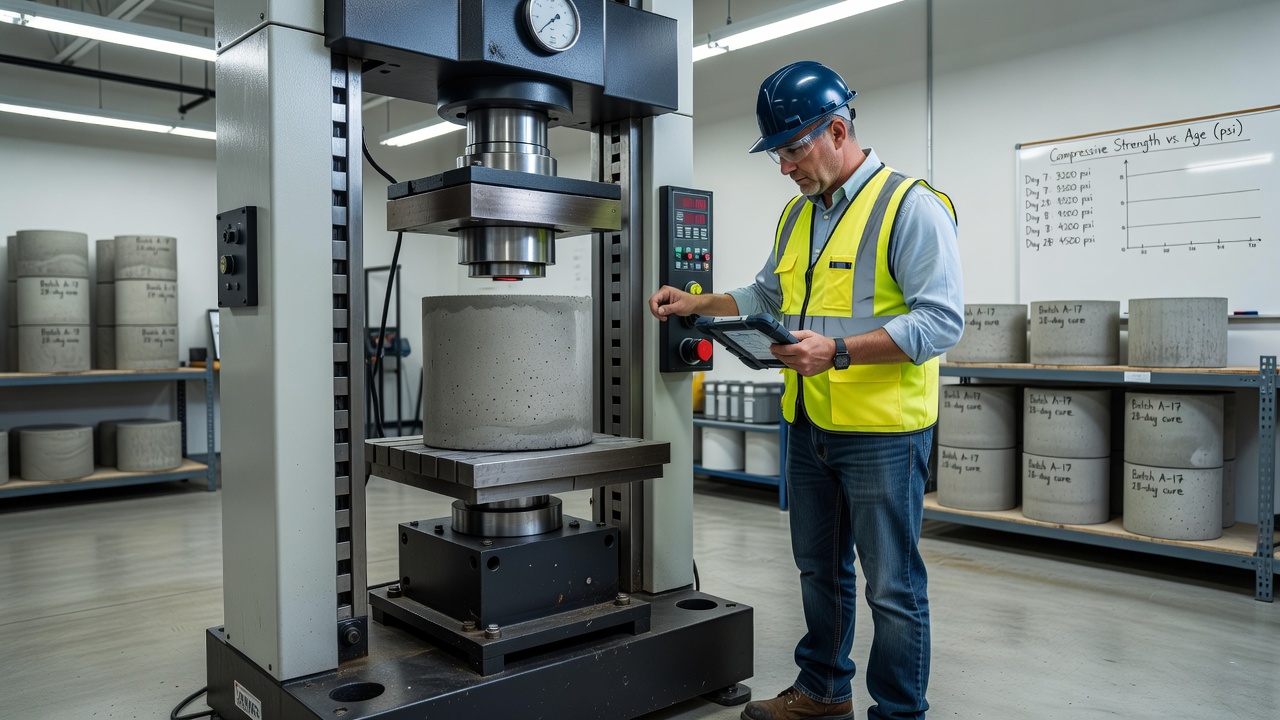
ASTM C39/C39M (Standard Test Method for Compressive Strength of Cylindrical Concrete Specimens) is the most fundamental and widely referenced concrete testing standard in the world. The standard determines the compressive strength of cylindrical concrete specimens, including molded cylinders and drilled cores, limited to concrete with density greater than 800 kg/m³ (50 lb/ft³). The standard specimen size for acceptance testing is 6 x 12 inches (150 x 300 mm), though 4 x 8 inch (100 x 200 mm) specimens are also permitted for special applications. Specimens must be prepared and cured in accordance with supporting standards: ASTM C31/C31M for field-made specimens, ASTM C192/C192M for laboratory-made specimens, ASTM C617/C617M for capping procedures with sulfur mortar or high-strength gypsum, and ASTM C1231/C1231M for unbonded elastomeric caps. The testing procedure requires placing the specimen on the lower bearing block aligned with the center of thrust, setting the load indicator to zero, and then applying the load continuously and without shock at a specified rate. The loading rate is 35 ± 7 psi/s (0.25 ± 0.05 MPa/s), and this rate must be maintained during the latter half of the loading phase. The loading rate significantly affects results, research has documented a 2.6% increase in measured strength when the rate increases from 0.14 MPa/s to 0.34 MPa/s.
Compressive strength is calculated as maximum load divided by cross-sectional area. The acceptance criteria follow ACI 318 requirements: the average of three consecutive tests must equal or exceed the specified f’c, and no individual test (average of two cylinders) may fall below f’c minus 500 psi (3.45 MPa) for concrete with f’c up to 5,000 psi. For concrete with f’c greater than 5,000 psi, no individual test may fall below 0.90 × f’c. Fracture patterns are identified and recorded as cone, cone and shear, shear, columnar, or other types. The standard also requires that personnel performing acceptance testing must meet concrete laboratory technician requirements per ASTM C1077, including an examination requiring performance demonstration.
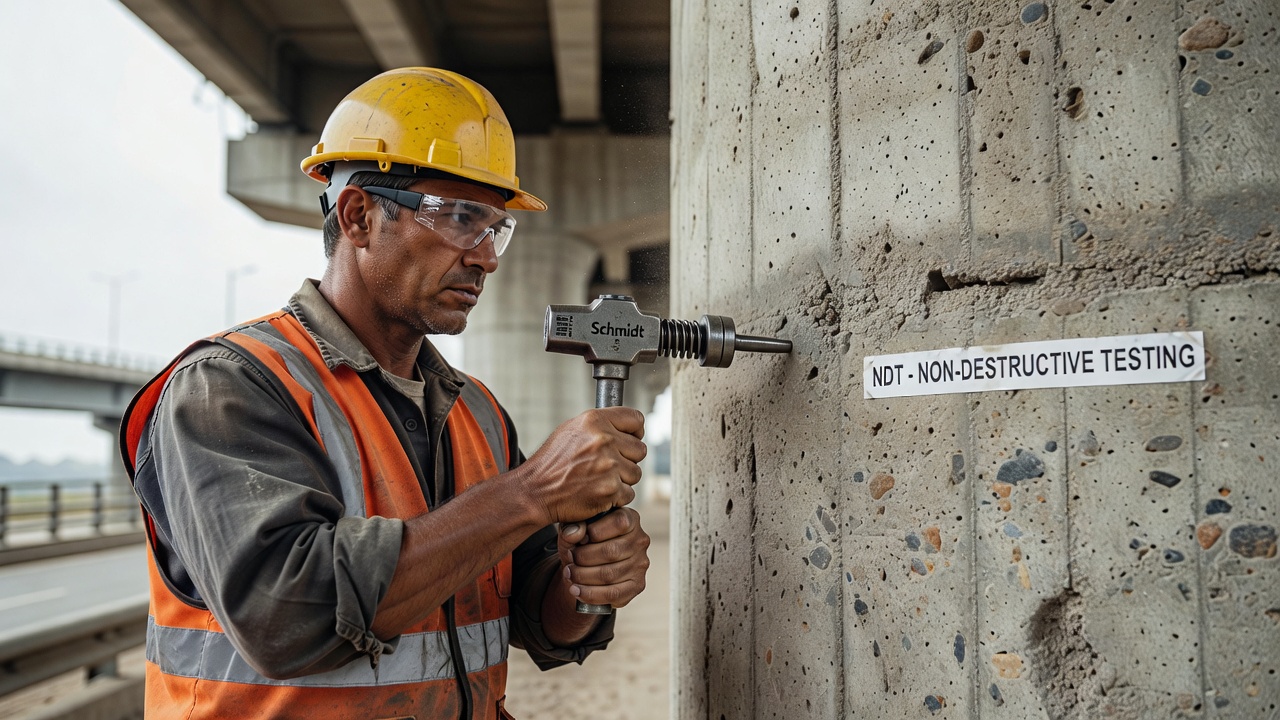
ASTM C805/C805M (Standard Test Method for Rebound Number of Hardened Concrete) specifies the procedure for determining the rebound number (R-value) using a spring-driven steel hammer, commonly known as the Schmidt hammer or rebound hammer. Invented in 1954 by Ernst O. Schmidt in Zurich, Switzerland, the test works by releasing a spring-loaded hammer mass that strikes a piston contacting the concrete surface. The hammer mass rebounds a certain distance, the ratio of rebound distance to extension is the rebound number. Higher R-values indicate harder and denser surface concrete, which is correlated to higher compressive strength. Two hammer types are standardized: Type N with 2.207 N·m (1.63 ft·lbf) impact energy for general testing of concrete thicker than 4 inches (100 mm) in the strength range of 1,450 to 10,152 psi (10 to 70 MPa), and Type L with 0.735 N·m (0.54 ft·lbf) for thin sections less than 4 inches and early-age concrete starting at 725 psi (5 MPa).
The ASTM C805 testing procedure requires a minimum of 10 rebound readings per test area on a surface that is smooth, clean, and dry. Readings must be spaced at least 1 inch (25 mm) apart. Readings differing from the average by more than 6 units are discarded and the remaining readings are averaged. Readings from areas with visible cracking, honeycombing, or near edges are not used. A critical limitation stated explicitly in the standard is that rebound values cannot be used as the sole basis to accept or reject concrete. The rebound number is an indicator of surface hardness uniformity, not a direct strength measurement. To estimate compressive strength from rebound numbers, a correlation must be established by testing cores or cylinders from the same concrete. The SONREB method combines Sonic (ultrasonic pulse velocity per C597) and Rebound (C805) data through an algorithm for improved strength estimation accuracy, leveraging the complementary nature of the two methods.
ASTM C876 (Standard Test Method for Corrosion Potentials of Uncoated Reinforcing Steel in Concrete) provides the standardized procedure for estimating the probability of corrosion activity in reinforced concrete structures using half-cell potential measurement. The test principle involves placing a reference electrode, typically copper/copper sulfate (CSE) or silver/silver chloride, on the concrete surface while making an electrical connection to the reinforcing steel. The potential difference (voltage) between the reference electrode and the rebar is measured, with more negative potentials indicating a higher probability of active corrosion. The interpretation criteria defined in ASTM C876 are: potentials greater than -200 mV versus CSE indicate less than 10% probability of corrosion activity, potentials in the range of -200 to -350 mV versus CSE represent uncertain corrosion activity, and potentials more negative than -350 mV versus CSE indicate greater than 90% probability of active corrosion.
The standard has several important limitations that must be understood when interpreting half-cell data. The method is not applicable to epoxy-coated reinforcement, as the coating electrically isolates the steel from the concrete electrolyte. Waterproofing membranes between the rebar and the concrete surface also prevent reliable measurements. Concrete cover greater than 3 inches (75 mm) can result in spatial averaging that reduces the ability to discriminate between active and passive areas. The valid temperature range is 22.2°C ± 5.5°C (72°F ± 10°F), outside this range, temperature dependency of the electrochemical potential must be accounted for. High concrete resistivity, common in dry interior environments or desert conditions, may hinder the electrical circuit, and coated or sealed concrete surfaces may not provide an acceptable circuit. ASTM C876 explicitly states that results should be interpreted together with complementary data including chloride content testing, carbonation depth measurement, delamination surveys, corrosion rate measurement, and environmental exposure conditions. The standard is published in BOS Volumes 03.02 and 04.02 under Committee G01 (Corrosion of Metals).
ASTM C597 (Standard Test Method for Ultrasonic Pulse Velocity Through Concrete) defines the procedure for measuring the propagation velocity of longitudinal ultrasonic stress wave pulses through concrete. A transmitting transducer generates ultrasonic pulses, typically in the frequency range of 20 to 150 kHz, while a receiving transducer detects the pulse after it travels through the concrete. The transit time is measured electronically, and the pulse velocity (V) is calculated as path length divided by transit time. The velocity is related to the concrete’s dynamic modulus of elasticity through the fundamental wave equation: V = √[E(1−μ) / ρ(1+μ)(1−2μ)] , where E is the dynamic modulus of elasticity, μ is the dynamic Poisson’s ratio, and ρ is the density.
Concrete quality is classified by pulse velocity using the following established thresholds: velocities above 4,500 m/s indicate excellent quality concrete, 3,500 to 4,500 m/s indicates good quality, 3,000 to 3,500 m/s indicates fair or doubtful quality, 2,000 to 3,000 m/s indicates poor quality, and below 2,000 m/s indicates very poor quality. The standard is used for assessing the uniformity and relative quality of concrete, indicating the presence of voids and cracks, evaluating the effectiveness of crack repairs, monitoring changes in concrete properties over time, and estimating the severity of deterioration or cracking. Key factors affecting pulse velocity measurements include concrete saturation (saturated concrete may show up to 5% higher velocity than dry concrete), reinforcing steel (steel parallel to the pulse path artificially increases velocity readings because steel velocity is approximately double that of concrete), and path length (the standard covers path lengths from approximately 50 mm minimum to 15 m maximum, with preferred transducer frequencies of 20-30 kHz for long paths and 50+ kHz for short paths). ASTM C597 explicitly states that results are not to be considered as a means of measuring strength or as an adequate test for modulus of elasticity compliance, the method indicates relative quality and uniformity, not absolute mechanical properties.
ASTM C856 (Standard Practice for Petrographic Examination of Hardened Concrete) provides the comprehensive procedure for microscopic analysis of hardened concrete to determine its composition, condition, and causes of distress. The examination uses multiple microscopy techniques: stereomicroscope examination at low power (up to 40× magnification) for general characterization of aggregate type, distribution, and visible deterioration, and petrographic (polarized light) microscope examination at high power (40× to 400× magnification) for detailed analysis of aggregate mineralogy, cement paste characteristics, air void system parameters, cracking patterns, and reaction products such as alkali-silica reaction (ASR) gel. When needed, Scanning Electron Microscopy (SEM) with Energy Dispersive X-ray (EDX) analysis provides elemental composition data for identifying deleterious materials and reaction products. Thin section preparation involves cutting a concrete slab or core to size, impregnating it with fluorescent epoxy for void detection, mounting it on a glass slide, and grinding it to a thickness of approximately 30 microns, the standard geological thin section thickness that allows light to pass through the mineral grains for polarized light analysis.
The air void analysis component of ASTM C856 determines the air void system parameters critical for freeze-thaw durability: total air content (percentage by volume), specific surface of air voids (mm²/mm³), spacing factor (the most critical parameter, expressed in mm, indicating the maximum distance from any point in the cement paste to the nearest air void), and air void size distribution. The standard is used for determining the cause of distress or failure, evaluating alkali-silica reaction (ASR) potential, assessing freeze-thaw damage, identifying improper curing or placement issues, verifying cement type and content, examining aggregate suitability and reactivity, qualitatively determining water-cement ratio, and investigating fire damage depth. Petrographic examination is published in BOS Volume 04.02 under Committee C09 (Concrete and Concrete Aggregates).
ASTM Asphalt Testing Standards
ASTM D6925 (Standard Test Method for Preparation and Determination of the Relative Density of Hot Mix Asphalt Specimens by Means of the Superpave Gyratory Compactor) governs the laboratory compaction of hot mix asphalt (HMA) specimens for mix design and quality control. The Superpave Gyratory Compactor (SGC) applies a vertical stress of 600 kPa (87 psi), a gyration angle of 1.16° (±0.02°), and a gyration rate of 30 gyrations per minute to compact 150 mm (6 inch) or 100 mm (4 inch) diameter specimens. The number of gyrations applied, referred to as Ndesign, varies by traffic level expressed in millions of equivalent single axle loads (ESALs). For traffic levels below 0.3 million ESALs (low-volume roads), Ninitial is 6, Ndesign is 50, and Nmaximum is 75 gyrations. For traffic levels of 0.3 to less than 3 million ESALs, the values are 7, 75, and 115 respectively. For traffic of 3 to less than 30 million ESALs, the values are 8, 100, and 160. For traffic of 30 million ESALs or greater (highest volume interstate highways), the values are 9, 125, and 200 gyrations. Specimen height is continuously measured during compaction to monitor the densification curve, and the bulk specific gravity (Gmb) is determined per ASTM D2726 or D6752. The relative density is calculated as (Gmb / Gmm) × 100%, where Gmm is the theoretical maximum specific gravity determined by the Rice test per ASTM D2041.
ASTM D5/D5M (Standard Test Method for Penetration of Bituminous Materials) is the classic test for measuring the consistency of semi-solid and solid bituminous materials, with penetration values up to 500 measurable. A standard needle with specified dimensions is allowed to penetrate a bitumen sample under controlled conditions: temperature of 25°C (77°F), total load of 100 grams (needle plus weight), and duration of 5 seconds. The sample container must be at least 55 mm in diameter and 35 mm in depth. Penetration is reported in tenths of a millimeter (0.1 mm units), for example, if the needle penetrates 8 mm, the result is 80 penetration units. Penetration grading classifies bitumen by consistency, with typical grades including 40/50 for hot climates and heavy traffic, 60/70 as the standard paving grade, 80/100 for cold climates and medium traffic, 120/150 for very cold climates, and 200/300 for low traffic and cold regions. The penetration test is the basis for the traditional penetration grade system, which has been largely supplemented by the Performance Grade (PG) system under Superpave for modern pavement design, though penetration grading remains widely used globally, particularly in Europe and Asia.
ASTM D2171/D2171M (Standard Test Method for Viscosity of Asphalts by Vacuum Capillary Viscometer) measures the apparent viscosity of asphalt binders at 60°C (140°F), the standard reference temperature that correlates with high-temperature rutting resistance. The test uses a Cannon-Manning or similar capillary viscometer, where heated asphalt is poured into the instrument and a controlled vacuum is applied to draw the sample through the capillary. The flow time between two calibration marks is measured, and viscosity is calculated as calibration factor multiplied by flow time. Results are reported in Poises (P) or Pascal-seconds (Pa·s), where 1 Poise equals 0.1 Pa·s. The viscosity grade (AC) classification system assigns grades based on viscosity ranges: AC-2.5 (250 ± 50 Poises) for low traffic, AC-5 (500 ± 100 Poises) for medium traffic, AC-10 (1,000 ± 200 Poises) for general paving, AC-20 (2,000 ± 400 Poises) for heavy traffic, AC-30 (3,000 ± 600 Poises) for very heavy traffic, and AC-40 (4,000 ± 800 Poises) for extreme traffic. Absolute viscosity at 60°C is a critical rutting resistance indicator, higher viscosity corresponds to stiffer binder and greater resistance to permanent deformation at high pavement temperatures. This standard is published in BOS Volume 04.03 under Committee D04 (Road and Paving Materials).
ASTM Non-Destructive Testing Standards
ASTM E709 (Standard Guide for Magnetic Particle Testing) provides comprehensive techniques for detecting cracks and other discontinuities at or near the surface in ferromagnetic materials, iron, steel, nickel, cobalt, and their alloys. The method cannot be used on austenitic stainless steel, aluminum, or copper. The principle involves magnetizing the part by an electric current or magnetic field, then applying magnetic particles, either dry powder or wet suspension, to the surface. At discontinuities such as cracks, laps, and seams, magnetic flux leakage occurs, and the particles are attracted to and collect at the leakage points, forming visible indications. The best sensitivity is achieved when the magnetic field orientation is approximately 90 degrees to the suspected discontinuity. The standard covers multiple techniques: dry magnetic powder applied during or after magnetization, wet magnetic particle with fine particles suspended in oil or water carrier, magnetic slurry or paint for vertical and overhead surfaces, and polymer magnetic particle methods for improved sensitivity. Magnetic particle testing detects both surface and near-surface discontinuities, is fast and relatively low-cost, can inspect parts with irregular shapes, and portable equipment is available for field use. Personnel qualification follows ASNT SNT-TC-1A, ANSI/ASNT CP-189, or NAS 410 requirements. The standard is published in BOS Volume 03.03 under Committee E07 (Nondestructive Testing).
ASTM E1417 (Standard Practice for Liquid Penetrant Testing) covers the standardized procedure for detecting surface-breaking discontinuities in non-porous materials using liquid penetrants. The five-step process begins with pre-cleaning to remove all contaminants such as oil, grease, scale, and paint from the test surface. Penetrant application follows, where a liquid penetrant with either visible dye or fluorescent additive is applied by spray, brush, or immersion. The dwell time allows the penetrant to seep into surface-breaking discontinuities, typically ranging from 5 to 30 minutes depending on the material and defect type. Excess removal is carefully performed using water-washable, solvent-removable, or post-emulsifiable methods, the removal technique must not draw the penetrant out of the discontinuities. Developer application involves applying a thin layer of developer (powder or suspension) that draws the penetrant back to the surface through a blotting action. Inspection is performed after sufficient development time (typically 7 to 30 minutes): visible dye penetrant appears as red indications against white developer under white light, while fluorescent dye appears as green-yellow fluorescence against a dark background under ultraviolet (UV-A) light. Fluorescent penetrant offers higher sensitivity due to the greater contrast of fluorescence against a dark background. The standard identifies critical limitations: the method only detects surface-breaking discontinuities, requires clean and dry non-porous surfaces, does not work on porous materials such as concrete or wood, can be time-consuming for large areas, and requires controlled lighting conditions. This standard is published in BOS Volume 03.03 under Committee E07.
ASTM E2583 (Standard Test Method for Measuring Deflections with a Light Weight Deflectometer) governs the use of the Light Weight Deflectometer (LWD) , also referred to as a Portable Falling-Weight Deflectometer (PFWD) , for determining surface deflections of paved and unpaved surfaces. The LWD is a hand-portable device weighing 15 to 30 kg that applies loads in the range of approximately 1.5 to 15 kN (300 to 3,000 lbf) through a drop weight of 5 to 20 kg onto plates of 100 to 300 mm diameter. The depth of influence is typically 0.3 to 1.0 meters, making the LWD suitable for quality control and quality assurance (QC/QA) of compacted layers, subgrade evaluation, and stiffness modulus determination. The testing procedure requires placing the LWD on the test surface, dropping the weight from a specific height onto a buffer system that transmits the load through a plate, measuring peak deflection at the center of the load plate with a central geophone or accelerometer, performing multiple drops (typically 3 seating drops plus 3 recording drops), and averaging the recorded deflections for reporting. Since pavement and subgrade materials may be stress dependent, the applied stress should closely match the stress from the design wheel load. Caution is required when interpreting LWD results for thicker pavement systems because the device affects a smaller volume of material compared to heavy moving wheel loads. The standard is published in BOS Volume 04.03 under Committee E17 (Vehicle-Pavement Systems).
ASTM Standards and Inspection Data Quality
The relationship between ASTM standards and inspection data quality is fundamental to the value of infrastructure condition assessment. ASTM standards establish the definitive test methods, sampling protocols, measurement procedures, and acceptance criteria that ensure inspection data is collected consistently, repeatably, and comparably across different inspectors, agencies, and time periods. Without the framework provided by ASTM standards, pavement condition data collected by different organizations would be incomparable, and the ability to track deterioration trends over time would be compromised.
For example, ASTM D6433 specifies the minimum number of sample units that must be inspected to achieve a 95% confidence level, ensuring that PCI survey data has statistically meaningful precision for network-level pavement management decisions. The standard defines the formulas for calculating required sample sizes based on the variability of distress within each pavement section, preventing both under-sampling (which produces unreliable data) and over-sampling (which wastes inspection resources). Similarly, ASTM C39 defines the precise loading rate of 35 ± 7 psi/s, a deviation from this rate can introduce up to 2.6% error in compressive strength measurement. ASTM C876 specifies the temperature range within which half-cell potential measurements are valid, requiring practitioners to account for temperature dependency outside of 22.2°C ± 5.5°C or risk incorrect corrosion probability assessments.
In the context of modern digital inspection platforms such as TarmacView, ASTM standards serve as the data quality framework that transforms raw field observations into actionable engineering information. The structured data collection forms defined by ASTM D6433 and D5340, including distress type codes, severity levels, and quantity units, map directly to digital survey interfaces, ensuring that the data captured in the field conforms to the industry-standard methodology. The PCI calculation algorithm, including the Corrected Deduct Value iterative procedure, is implemented in software to eliminate calculation errors and ensure consistent application of the methodology across all inspected sections. The integration of ASTM-compliant data with Pavement Management Systems (PMS) enables lifecycle cost analysis, treatment selection optimization, and budget planning based on standardized condition metrics that are recognized and accepted by funding agencies and regulatory authorities.
ASTM vs AASHTO vs ISO, Comparison and Relationships
ASTM International, AASHTO (American Association of State Highway and Transportation Officials), and ISO (International Organization for Standardization) represent three complementary tiers of standards development that infrastructure professionals must navigate. ASTM International, with over 13,000 active standards, covers the broadest scope of materials, products, systems, and services across all industries. The organization has 30,000+ individual members from 140+ countries and operates through an open consensus process involving manufacturers, users, government agencies, and academic researchers. AASHTO, founded in 1914 with headquarters in Washington, D.C., is narrowly focused on transportation infrastructure, highways, bridges, airports, rail, and transit. Its membership is limited to state Departments of Transportation (voting members) and federal agencies, producing approximately 1,500+ standards that address the specific requirements of state and local transportation departments. ISO, founded in 1947 with headquarters in Geneva, Switzerland, has 167+ member countries represented through their national standards bodies (ANSI for the USA, DIN for Germany, BSI for the UK) and publishes over 25,000 standards covering virtually all technical and non-technical fields.
The relationship between ASTM and AASHTO is characterized by frequent cross-referencing and adoption. AASHTO often references ASTM standards directly or adopts them with transportation-specific modifications. For example, ASTM C39 (compressive strength of concrete cylinders) is very similar to AASHTO T22, both define the same test method, but AASHTO T22 builds in specific requirements for state highway project acceptance. In typical US construction practice, manufacturing specifications reference ASTM standards (e.g., ASTM C150 for portland cement), while transportation project specifications reference AASHTO standards (e.g., AASHTO M85 for cement on state highway projects). When conflicts arise, the contract documents specify the order of precedence, typically with the project’s special provisions taking precedence over AASHTO, which takes precedence over ASTM.
ASTM and ISO standards represent different philosophical approaches to standardization. ASTM standards are detailed, procedure-specific documents that define exact test parameters, the loading rate, specimen dimensions, equipment specifications, and calculation methods, leaving minimal discretion to the user. ISO standards tend to be broader and principle-based, defining performance requirements and general procedures while allowing member countries to adopt specific details through their national annexes. For example, ISO 1920-4 for concrete compressive strength testing uses different specimen sizes, loading rates, and reporting requirements than ASTM C39. On international projects, the contract typically specifies which standards body’s requirements apply, and engineers working across jurisdictions must be proficient in navigating both systems.
ASTM Standards in the TarmacView Context
TarmacView integrates multiple ASTM standard methodologies into its unified digital platform for infrastructure condition assessment. The platform’s PCI survey module implements ASTM D6433 (roads and parking lots) and ASTM D5340 (airport pavements) methodologies, including the complete distress catalog with type codes, severity levels, and quantity measurement units for all 19 asphalt distress types and concrete pavement distresses. The automated PCI calculation engine implements the Corrected Deduct Value (CDV) iterative procedure per the ASTM-defined algorithm, eliminating manual calculation errors and ensuring consistent, auditable results across the entire inspected network. The standardized data structure maps directly to ASTM-defined sample unit geometry, section hierarchy, and branch organization, enabling integration with existing Pavement Management Systems that reference PCI data.
For concrete infrastructure evaluation, TarmacView supports the integration of data from ASTM C876 half-cell potential surveys, ASTM C805 rebound hammer testing, ASTM C597 ultrasonic pulse velocity measurements, and ASTM C856 petrographic examination results. The platform’s geospatial data model correlates NDT test results with visual inspection data, enabling multi-layer condition assessment that combines surface distress indicators (PCI) with subsurface condition data (corrosion probability, internal cracking, concrete quality). This integration is essential for developing comprehensive rehabilitation strategies that address both functional deficiencies (roughness, cracking) and structural deterioration (corrosion, delamination, alkali-silica reaction).
Structural deflection testing data from FWD surveys per ASTM D4694 and LWD surveys per ASTM E2583 is integrated with PCI data within TarmacView’s pavement management framework. The combination of surface condition data (PCI) and structural capacity data (back-calculated layer moduli, remaining life estimates) enables the treatment selection matrices that distinguish between pavements requiring surface treatment (high PCI, high structural capacity), structural overlay (high PCI, low structural capacity), surface rehabilitation (low PCI, high structural capacity), and full reconstruction (low PCI, low structural capacity). This ASTM-based data integration framework ensures that infrastructure investment decisions are founded on standardized, repeatable, and auditable condition data that meets industry and regulatory requirements.
Accessing ASTM Standards and the Annual Book Structure
ASTM standards can be accessed through multiple channels depending on the user’s needs and budget. Individual standard purchase from the ASTM online store is the most direct method, with prices ranging from approximately $50 to $200 per standard depending on length and complexity. For example, ASTM C39 (compressive strength) costs $86, ASTM C597 (ultrasonic pulse velocity) costs $64, ASTM C876 (corrosion potentials) costs $86, ASTM D6433 (PCI for roads) costs $136, ASTM D5340 (PCI for airports) costs $136, ASTM D4694 (FWD) costs $77, ASTM E2583 (LWD) costs $77, ASTM E709 (magnetic particle testing) costs $113, and ASTM D5 (penetration) costs $77. Format options include PDF (locked, single-user license), print (being phased out), and redline versions showing changes between current and previous editions.
ASTM Compass is ASTM’s subscription platform providing access to individual volumes or the entire Annual Book of ASTM Standards. Compass includes redline comparisons, internal notes, bookmarking, and access to the ASTM Digital Library containing 35,000+ chapters, journal articles, and technical papers. Per-volume subscriptions range from approximately $500 to $2,000 per year, while a full 80+ volume subscription ranges from $15,000 to $30,000+ per year. The ASTM Reading Room provides free read-only access to select standards that are Incorporated by Reference (IBR) in U.S. federal regulations, though this is limited to older versions and downloading or printing is not permitted.
The Annual Book of ASTM Standards is organized into 15 main sections and 80+ topic-specific volumes. Section 04 (Construction) is the most relevant for infrastructure professionals, containing 13 volumes: 04.01 (Cement, Lime, Gypsum), 04.02 (Concrete and Aggregates), containing C39, C597, C805, C856, and C876, 04.03 (Road and Paving Materials), containing D6433, D5340, D4694, D5, D6925, D2171, and E2583, 04.04 (Roofing and Waterproofing), 04.05 (Chemical-Resistant Materials), 04.06 (Building Constructions), 04.07 (Weathering and Durability), 04.08 (not assigned), 04.09 (Soil and Rock I), 04.10 (Soil and Rock II), 04.11 (Geosynthetics), 04.12 (Masonry), and 04.13 (Geotextiles). Standards can be found by designation number (e.g., “C39”), by keyword or topic, by technical committee, or by navigating the relevant volume. Each standard’s document summary page includes the full title and designation, current active version and available editions, BOS volume and committee information, DOI (Digital Object Identifier), ICS code (International Classification for Standards), price and format options, and links to related standards. PDF standards are typically locked to a single computer or user account, and purchased standards provide perpetual access to that specific version. Historical editions of standards are available through the ASTM Digital Library for research and legal reference purposes.
Frequently Asked Questions
- What does ASTM stand for and what is its full name?
- ASTM originally stood for the American Society for Testing and Materials, founded in 1898 by Charles B. Dudley, a chemist with the Pennsylvania Railroad. In 2001, the organization changed its name to ASTM International to reflect its global scope and membership. Today, ASTM International is headquartered in West Conshohocken, Pennsylvania, with regional offices in Belgium, Canada, China, Peru, Singapore, and Washington, D.C. Despite the name change, the ASTM acronym was retained due to its worldwide brand recognition, with the organization now operating under the tagline 'Helping our world work better.'
- How many ASTM standards are currently active?
- ASTM International publishes over 13,000 active standards that are used worldwide. These standards are developed by more than 30,000 technical experts and business professionals from 140+ countries, working across 140+ technical committees. Each standard is reviewed at least once every five years, if not updated or reapproved after eight years, it is removed from publication. The standards cover virtually every industry sector including construction, petroleum, metals, plastics, textiles, medical devices, consumer products, and environmental technology.
- What is the difference between ASTM and AASHTO standards?
- ASTM and AASHTO serve different but complementary roles in the US infrastructure landscape. ASTM International has a broad industry scope covering all materials and industries, with over 13,000 standards developed through an open consensus process involving manufacturers, users, government, and academics. AASHTO (American Association of State Highway and Transportation Officials) has a narrow focus on transportation infrastructure only, highways, bridges, airports, rail, and transit. AASHTO membership is limited to state Departments of Transportation and federal agencies. AASHTO often references or adopts ASTM standards for transportation applications, sometimes with modifications. For example, ASTM C39 and AASHTO T22 both address concrete compressive strength testing and are very similar, but AASHTO T22 is specifically tailored for transportation project specifications. On federally funded transportation projects, AASHTO standards are typically required, while manufacturing specifications often cite ASTM.
- What is the ASTM standard structure and how are standards designated?
- Every ASTM standard is identified by a unique alphanumeric designation: a letter prefix indicating the broad category, a sequentially assigned serial number, and the year of adoption or revision. The letter prefixes include: A for ferrous metals (steel, cast iron), B for nonferrous metals (aluminum, copper), C for cementitious, concrete, and masonry materials, D for miscellaneous materials (petroleum, plastics, pavement, asphalt), E for analytical methods and NDT, F for materials for specific applications (medical devices, fasteners), and G for corrosion and deterioration. For example, ASTM C39/C39M-21 means the C category (concrete), serial number 39, with metric version (C39M), adopted in 2021. Standards come in six types: Test Methods (definitive procedure producing a test result), Specifications (requirements to be satisfied), Practices (instructions for performing operations), Guides (compendium of options), Classifications (grouping by characteristics), and Terminologies (definitions).
- What are the most commonly used ASTM standards for pavement evaluation?
- The most commonly used ASTM standards for pavement evaluation are: ASTM D6433 (Standard Practice for Roads and Parking Lots Pavement Condition Index Surveys) which defines the PCI methodology for road networks including the 0-100 rating scale and 19 asphalt distress types, ASTM D5340 (Standard Test Method for Airport Pavement Condition Index Surveys) which adapts the PCI method for airfield pavements including runways, taxiways, and aprons with airport-specific distresses such as jet blast erosion, ASTM D4694 (Standard Test Method for Deflections with a Falling Weight Deflectometer) which governs FWD structural deflection testing for pavement layer modulus back-calculation, ASTM E2583 (Standard Test Method for Measuring Deflections with a Light Weight Deflectometer) for portable LWD testing of compacted layers, and ASTM D6433 which also covers concrete pavement distress evaluation for roads and parking areas.
- What ASTM standards govern concrete compressive strength testing?
- The primary standard for concrete compressive strength testing is ASTM C39/C39M (Standard Test Method for Compressive Strength of Cylindrical Concrete Specimens). This standard specifies the testing procedure for molded cylinders and drilled cores with density greater than 800 kg/m³ (50 lb/ft³). The standard specimen sizes are 6 x 12 inches (150 x 300 mm) for acceptance testing or 4 x 8 inches (100 x 200 mm). The loading rate is specified at 35 ± 7 psi/s (0.25 ± 0.05 MPa/s), maintained continuously without shock during the latter half of loading. The compressive strength is calculated as maximum load divided by cross-sectional area. Per ACI 318 acceptance criteria referenced by C39, the average of three consecutive tests must equal or exceed the specified f'c, and no individual test (average of two cylinders) may fall below f'c minus 500 psi for concrete up to 5,000 psi. Supporting standards include C31/C31M (field-made specimens), C192/C192M (laboratory-made specimens), and C617/C617M (capping procedures).
- How can I access ASTM standards and what do they cost?
- ASTM standards can be accessed through several methods. Individual standards can be purchased as PDF downloads from the ASTM online store, with prices ranging from approximately $50 to $200 per standard. For example, ASTM C39 costs $86, C597 costs $64, D6433 costs $136, D4694 costs $77, and E709 costs $113. The ASTM Compass subscription platform provides access to volumes or the entire Annual Book with included updates, redline comparisons, and access to the ASTM Digital Library with 35,000+ chapters and technical papers. Per-volume subscriptions range from $500 to $2,000 per year, while a full set subscription ranges from $15,000 to $30,000+ per year. Free read-only access is available through the ASTM Reading Room for standards Incorporated by Reference (IBR) in U.S. federal regulations. Third-party platforms such as Techstreet, IHS Markit (Accuris), and Nimonik also offer multi-publisher subscriptions.
- What is the difference between ASTM D6433 and ASTM D5340 for PCI surveys?
- Both standards use the same core Pavement Condition Index (PCI) methodology, the 0-100 rating scale, distress density calculations, deduct value curves, and Corrected Deduct Value (CDV) procedure, but are tailored for different pavement contexts. ASTM D6433 is classified as a Standard Practice and covers roads and parking lots, with the three-level network hierarchy of Branch-Section-Sample Unit. It defines 19 distress types for asphalt concrete surfaces. ASTM D5340 is classified as a Standard Test Method and covers airport pavements including runways, taxiways, and aprons. It was developed by the U.S. Army Corps of Engineers funded by the U.S. Air Force and adopted by the FAA. D5340 includes airport-specific distresses such as jet blast erosion, fuel spill damage, and rubber buildup that are not present on road pavements. The standard uses inch-pound units as standard while D6433 uses SI units as standard. D5340 also includes adapted sample unit sizes for airfield geometry including full-width runway sample areas.
- What ASTM standards are used for asphalt binder characterization?
- Three key ASTM standards govern asphalt binder characterization. ASTM D5/D5M (Standard Test Method for Penetration of Bituminous Materials) measures the hardness of bitumen by allowing a standard needle to penetrate the sample under controlled conditions of 25°C temperature, 100g load, and 5 seconds duration. Penetration is reported in tenths of a millimeter (0.1 mm units), with typical grades including 40/50 for hot climates, 60/70 for standard paving, and 80/100 for cold climates. ASTM D2171/D2171M (Standard Test Method for Viscosity of Asphalts by Vacuum Capillary Viscometer) measures apparent viscosity at 60°C (140°F) as an indicator of rutting resistance, with results reported in Poises. Viscosity grades include AC-10 (1,000 ± 200 Poises) for general paving to AC-40 (4,000 ± 800 Poises) for extreme traffic. ASTM D6925 (Standard Test Method for Preparation and Determination of the Relative Density of Hot Mix Asphalt Specimens by Means of the Superpave Gyratory Compactor) governs specimen preparation using the SGC at 600 kPa vertical stress, 1.16° gyration angle, and 30 gyrations per minute, with density levels determined at Ninitial, Ndesign, and Nmaximum gyrations based on traffic level.