What is a Base Course in Pavement Structures?
Base Course, Definition and Structural Role
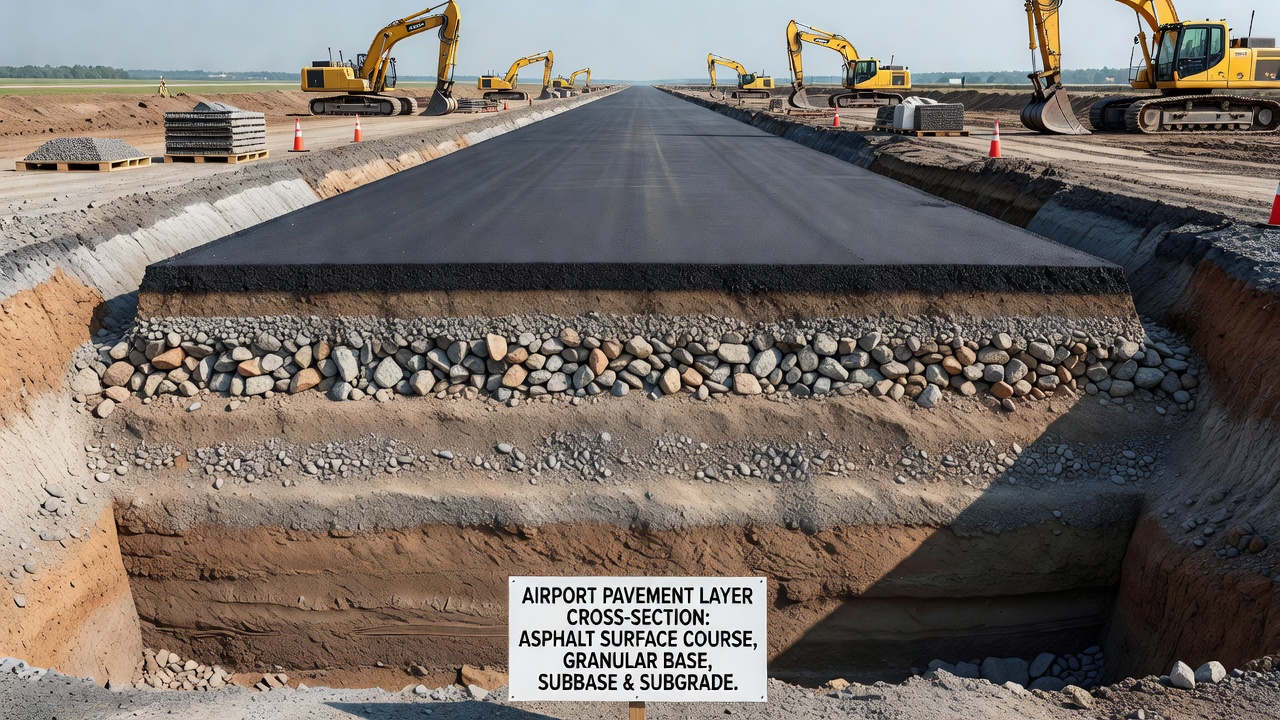
The base course is the principal structural layer of a pavement system, positioned directly beneath the surface wearing course (asphalt concrete or Portland cement concrete) and above the subbase or prepared subgrade. It is the layer primarily responsible for distributing concentrated wheel and landing gear loads from aircraft over a sufficiently wide area to prevent overstressing the underlying subgrade. The base course provides the fundamental structural capacity that determines whether a pavement can safely support the design aircraft traffic over its intended service life.
In layered pavement theory, loads applied at the surface propagate downward through each successive layer at an increasing angle of distribution, typically assumed at 45 degrees for granular materials and steeper angles for bound materials. A wheel load applied to a thin surface over a robust base spreads from a concentrated contact pressure of 1.0 to 1.5 MPa (150 to 220 psi) for aircraft tires to a subgrade stress typically limited to 0.02 to 0.05 MPa (3 to 7 psi), depending on the subgrade California Bearing Ratio (CBR). The base course accomplishes this load distribution through a combination of aggregate interlock (mechanical particle-to-particle interaction) in unbound materials, or through beam action (flexural stiffness) in cement-treated and asphalt-treated stabilized materials. In rigid pavements, the concrete slab provides the primary load distribution, and the base course serves to provide uniform support, prevent pumping, and facilitate drainage.
The structural role of the base course is quantitatively expressed through the layer’s resilient modulus (Mr), the elastic stiffness of the material under repeated loading conditions. For unbound granular bases used in airfield pavements, Mr typically ranges from 150 to 450 MPa (22,000 to 65,000 psi) depending on aggregate quality, gradation, density, and moisture content. Cement-treated bases achieve Mr values of 4,100 to 6,900 MPa (600,000 to 1,000,000 psi), 10 to 20 times higher than unbound granular materials, allowing significantly thinner base layers for the same structural capacity. The FAA FAARFIELD pavement design software, based on layered elastic theory, computes the critical stresses and strains in each layer of the pavement structure, using the base course modulus as a primary input variable.
Historically, the importance of the base course was recognized as early as Roman road construction (circa 500 BC), where multiple layers of broken stone were used to distribute cart and chariot loads. The modern understanding of base course structural behavior was formalized during World War II when the U.S. Army Corps of Engineers developed the CBR design method for military airfields supporting B-17 and B-29 bombers. The Corps’ research established that the required thickness of a pavement structure is inversely related to the CBR of the subgrade and the structural contribution of the base course, expressed through pavement thickness design charts that remained the international standard for airfield pavement design for over 60 years.
FAA Advisory Circular AC 150/5320-6G defines the base course as an essential component of both flexible and rigid pavement structures. For flexible pavements, the base course is the primary load-carrying layer, with the asphalt surface functioning primarily as a waterproof wearing course and contributing limited structural value. For rigid pavements, the base course provides uniform support to minimize slab bending stresses, acts as a drainage layer to remove infiltrated water, and prevents subgrade pumping under heavy aircraft traffic. The base course must extend beyond the pavement edge, typically 0.9 to 1.2 m (3 to 4 feet), to provide adequate support for paving equipment and to facilitate lateral drainage.
ICAO Doc 9157, Aerodrome Design Manual Part 3, Pavements, provides additional international guidance on base course design, emphasizing that the quality of the base course is particularly critical for airport pavements due to the high magnitude and unique gear configuration of aircraft loads compared to highway vehicles. The manual specifies that the base course must be constructed to achieve a minimum compacted thickness of 150 mm (6 inches) for airport pavements, with a recommended range of 150 to 300 mm depending on traffic classification and subgrade strength.
Base Course Types
Five principal categories of base course materials are used in airport pavement construction, each with specific performance characteristics, cost implications, and application requirements defined by FAA standard specifications.
Unbound granular base, also referred to as aggregate base course (ABC), is the most widely used type, consisting of crushed or uncrushed aggregate blended with fine materials to achieve a dense-graded particle size distribution that maximizes density and interlock. FAA Item P-208 (Aggregate Base Course) specifies this material for pavements designed for gross aircraft loads of 60,000 pounds (27,200 kg) or less, such as general aviation runways, taxiway shoulders, and access roads. The aggregate must have a Los Angeles abrasion loss not exceeding 45% at 500 revolutions (ASTM C 131), a liquid limit not exceeding 25, and a plasticity index not exceeding 6 (ASTM D 4318). The P-208 gradation requires 100% passing the 2-inch sieve, 55% to 85% passing the 1-inch sieve, 30% to 60% passing the No. 4 sieve, and 5% to 15% passing the No. 200 sieve, with the fraction passing No. 200 not exceeding one-half the fraction passing No. 40. The compacted layer thickness is limited to between 75 mm (3 inches) and 150 mm (6 inches).
FAA P-209 (Crushed Aggregate Base Course) is specified for pavements subjected to aircraft gross loads exceeding 60,000 pounds, the standard for commercial service air carrier airports serving aircraft such as the Boeing 737, Airbus A320, and larger types. P-209 requires that all aggregate be crushed (not uncrushed gravel), with a minimum of 60% of material retained on the No. 4 sieve having two or more fractured faces and 75% having at least one fractured face. The Los Angeles abrasion requirement is reduced to a maximum of 40% at 500 revolutions, reflecting the higher quality required for heavy aircraft loading. Gradation bands are tighter than P-208, and the plasticity index is limited to 4 or less. P-209 material must achieve 100% of maximum dry density as determined by ASTM D698 (Standard Proctor), a requirement significantly more stringent than the 95% to 98% typically specified for highway pavements.
Cement-treated base (CTB), FAA Item P-210, is a stabilized base material produced by mixing aggregate or soil with 2% to 5% portland cement by weight and water, compacted and cured to form a rigid slab-like base layer. CTB offers 7-day compressive strengths of 300 to 800 psi (2.1 to 5.5 MPa) and flexural strengths of 100 to 200 psi (0.7 to 1.4 MPa). The modulus of elasticity ranges from 4,100 to 6,900 MPa (600,000 to 1,000,000 psi), providing beam strength that unbound granular materials cannot achieve. CTB is particularly valuable for airport aprons, heavy-duty taxiways, and runway ends where aircraft turn or stop, subjecting the pavement to high shear stresses. The material gains strength continuously through continued cement hydration, providing reserve structural capacity that accommodates future traffic growth. CTB must be cured for a minimum of 7 days before the surface course is placed, with curing achieved through fog spray, wet burlap, or bituminous curing compound. The PCA Guide to Cement-Treated Base (EB236) provides comprehensive design and construction guidance.
Asphalt-treated base (ATB), FAA Item P-403, consists of dense-graded aggregate mixed with asphalt cement in a hot-mix plant and placed as a bound base layer. ATB provides structural properties intermediate between unbound granular base and CTB, with typical resilient moduli of 2,000 to 4,000 MPa (290,000 to 580,000 psi). The asphalt content typically ranges from 3.5% to 5.5% by weight of aggregate, depending on the gradation and traffic level. ATB offers the advantage of being placeable with the same equipment used for asphalt surface courses, and it provides a smooth, uniform surface for subsequent paving operations. ATB layers are typically designed with lower-grade asphalt binders (PG 58-28 or PG 64-22) than surface courses, as the ATB is protected from direct exposure to traffic and weather. The FAA also specifies P-401 (Hot Mix Asphalt for Surface Course) which may be used as a base course for heavy-duty pavements when required thicknesses exceed practical construction lift limits in a single layer.
Lean concrete base (LCB), sometimes called econocrete, is a Portland cement concrete mixture with lower cement content than structural concrete, typically 270 to 350 pounds per cubic yard (160 to 210 kg/m³), producing compressive strengths of 750 to 1,200 psi (5.2 to 8.3 MPa). LCB is primarily used under rigid (concrete) pavement surfaces and provides the highest stiffness of any base type, with modulus values approaching 20,000 MPa (2,900,000 psi). Unlike CTB, LCB is produced in a concrete batch plant and placed using concrete paving equipment (slipform paver or fixed forms), offering excellent surface tolerance control to ± 6 mm (¼ inch) of design profile grade. LCB does not require contraction joints as shrinkage cracking is expected but does not reflect through the overlying concrete slab. The surface of LCB must be treated with a bond breaker (two coats of wax-based curing compound) before placing the surface concrete to prevent composite action that could cause cracking.
Permeable base, FAA P-212 (Permeable Base Course), is specifically designed to provide rapid lateral drainage of water infiltrating through the pavement surface. Permeable bases use open-graded aggregate (typically uniform gradation with minimal fines) stabilized with either asphalt cement (1.6% to 1.8% by mass) or cement to provide stability while maintaining high permeability. Typical permeability targets for permeable bases are 500 to 1,500 feet per day (0.18 to 0.53 cm/sec), compared to dense-graded aggregate base permeability of 20 to 150 feet per day. The FHWA Tech Brief on Bases and Subbases for Concrete Pavements notes that the best practice has shifted away from ultra-high-permeability bases (8,000 to 10,000 ft/day) used in the 1990s toward moderate-permeability bases (500 to 800 ft/day) that provide better stability while still achieving adequate drainage.
| Base Type | FAA Item | Typical Modulus (MPa) | Typical Thickness (mm) | Application |
|---|---|---|---|---|
| Unbound Aggregate | P-208 | 150-300 | 100-200 | Light aircraft, shoulders |
| Crushed Aggregate | P-209 | 200-450 | 150-300 | Commercial aircraft pavements |
| Cement-Treated (CTB) | P-210 | 4,100-6,900 | 150-300 | Heavy-duty pavements, aprons |
| Asphalt-Treated (ATB) | P-403 | 2,000-4,000 | 75-200 | Flexible pavement base |
| Lean Concrete (LCB) | – | ~20,000 | 100-200 | Under concrete pavements |
| Permeable Base | P-212 | Variable | 100-150 | Drainage layer under pavements |
Material Specifications and Quality
The material quality of the base course directly governs pavement structural performance and service life. FAA Advisory Circular AC 150/5370-10H, Standard Specifications for Construction of Airports, prescribes detailed material requirements for each base course type, including aggregate physical properties, gradation envelopes, binder content, and acceptance testing protocols.
Aggregate quality is quantified through the Los Angeles Abrasion test (ASTM C 131), which measures the percentage of material that wears away when the aggregate is tumbled with steel balls in a rotating drum. For airport base courses, the maximum L.A. abrasion loss is 45% for P-208 (light loads) and 40% for P-209 (heavy loads). This requirement ensures that aggregates are hard, durable, and resistant to degradation under construction compaction equipment and repeated aircraft loading. Weaker aggregates that crush or break down during compaction reduce the base course density and modulus, leading to premature pavement failure. The sodium sulfate soundness test (ASTM C 88), conducted over five cycles, limits loss to 12% or less, ensuring aggregate resistance to freeze-thaw weathering.
Gradition control is critical because the particle size distribution determines the packing density, interlock characteristics, and permeability of the base course. The FAA specifies multiple gradation bands within P-208 and P-209 (Gradations A through F for P-208) that allow selection based on available local materials while maintaining structural performance. The key gradation requirements include: maximum particle size not exceeding two-thirds of the compacted layer thickness, a well-graded distribution (not gap-graded) to achieve maximum density, fines content (passing No. 200 sieve) between 5% and 15% for P-208 and 5% to 12% for P-209, and the fraction passing No. 200 limited to one-half the fraction passing No. 40, preventing excessive silt and clay that would weaken the base and increase frost susceptibility.
Plasticity limits control the behavior of the fine fraction of the base material. The liquid limit (LL) must not exceed 25, and the plasticity index (PI) must not exceed 6 for P-208 and 4 for P-209 (ASTM D 4318). These limits are essential because plastic fines (silt and clay) become weak and unstable when saturated, losing the shear strength necessary for aggregate interlock. When the PI exceeds these limits, the base course becomes susceptible to pumping, the migration of fine particles under cyclic pore water pressure generated by passing aircraft loads. The FHWA Tech Brief emphasizes that limiting fines content is the single most important criterion for preventing pumping, base erosion, and frost action.
For cement-treated bases, the aggregate requirements can be relaxed compared to unbound bases, up to 35% passing the No. 200 sieve and a PI of 10 are permissible, because the cement binder stabilizes the fines and prevents pumping. However, the cement content must be increased to fully stabilize the higher fines fraction. The 7-day unconfined compressive strength (ASTM D 1633) is the primary acceptance criterion for CTB. FAA P-210 specifies a minimum 7-day compressive strength of 300 psi (2.1 MPa) for cement-treated base, with an upper limit of 800 psi (5.5 MPa) to prevent excessive stiffness that could cause reflective cracking. The PCA Soil-Cement Laboratory Handbook (EB052) provides comprehensive guidance on determining the optimum cement content and moisture content through the ASTM D 558 moisture-density relationship test.
For asphalt-treated bases (P-403) , the Marshall mix design method (AASHTO T 245) is used to determine the optimum asphalt content by testing specimens at various binder contents and measuring stability, flow, air voids, and voids in mineral aggregate (VMA). Typical air void targets for ATB are 3% to 8%, which is higher than surface course targets (3% to 5%) to provide some permeability for drainage. The aggregate gradation for ATB is typically a dense-graded 25 mm (1-inch) nominal maximum size, with a lower-quality binder grade than surface courses since the ATB is protected from direct traffic abrasion and weathering.
Compaction and Density Requirements
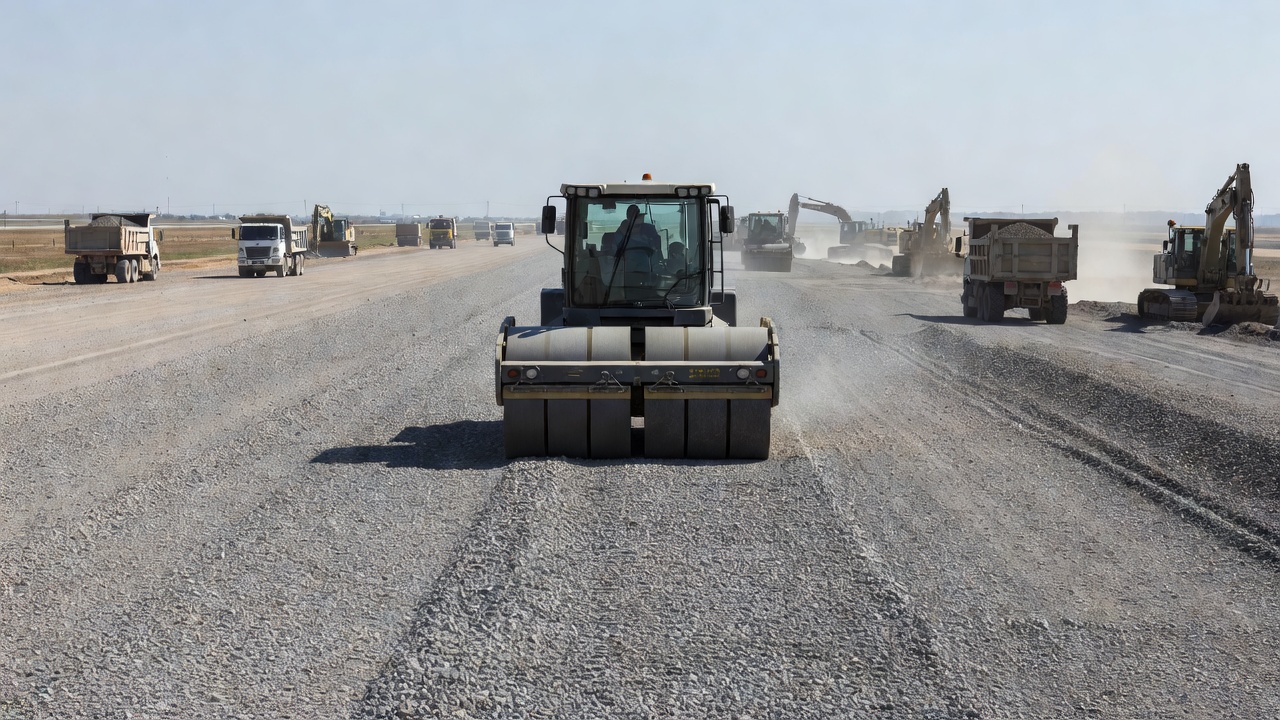
Compaction is arguably the single most critical construction quality control parameter for base course performance. Inadequate compaction, whether due to insufficient roller passes, incorrect moisture content, or excessive layer thickness, produces a base course that will progressively densify under traffic loading, causing surface rutting and structural failure long before the pavement’s design life is reached.
FAA standard specifications require base course compaction to 100% of maximum dry density as determined by ASTM D698 (Standard Proctor), the most stringent density requirement in pavement construction. For comparison, highway base courses typically require 95% to 98% of Standard Proctor density. The 100% requirement recognizes that airport pavements must support aircraft loads significantly higher than highway truck loads, with tire pressures reaching 1.5 MPa (220 psi) for aircraft compared to 0.7 MPa (100 psi) for trucks. Each compacted layer of base course must not exceed 150 mm (6 inches) in compacted thickness, the maximum depth to which standard compaction equipment can effectively densify granular material. When design thickness exceeds 150 mm, the base course is constructed in multiple lifts, each independently compacted and tested.
Moisture content control during compaction is essential. The material must be conditioned to within 2 percentage points of the optimum moisture content (OMC) determined by the Proctor test. At OMC, water acts as a lubricant between aggregate particles, allowing them to slide into the densest possible arrangement under compaction energy. Below OMC, particle interparticle friction is too high and the material cannot be fully densified. Above OMC, excess water creates pore pressure that pushes particles apart, preventing density gain and potentially creating unstable, “pumping” layers during compaction. In-situ moisture testing is required at a minimum frequency of one test per 750 m² (900 square yards) of placed material.
Compaction equipment for base courses includes vibratory smooth-drum rollers (typically 10 to 18 tonnes), pneumatic-tired rollers for sealing the surface and finishing, and vibratory plate compactors for restricted areas. The number of roller passes required to achieve 100% density is established through a test strip constructed before production rolling begins. The test strip, a minimum of 30 m (100 feet) in length at the specified lift thickness, is compacted with increasing numbers of roller passes, and density is measured after each pass increment until 100% density is achieved. This establishes the compaction pattern (number of passes, roller speed, vibration frequency, and amplitude) for production. Typical granular base compaction requires 6 to 10 passes of a 10 to 12-tonne vibratory roller.
Acceptance testing for density follows a lot-based statistical sampling plan. Each lot equals one day’s production (not exceeding 2,250 m² or 2,400 square yards), divided into two equal sublots. Field density is determined by nuclear density gauge (ASTM D6938), sand cone (ASTM D1556), or rubber balloon (ASTM D2167) methods. Each sublot requires one random test location, and the lot is accepted when the average density equals or exceeds 100% of the laboratory maximum dry density. If density is below 100%, the contractor must rework and recompace the failed area at no cost to the agency. This uncompromising standard ensures that the base course will not undergo significant additional densification under traffic, preventing the surface rutting that occurs when weakly compacted base consolidates beneath aircraft loads.
For cement-treated bases, compaction requirements are equally stringent. The CTB mixture must be compacted to 98% of maximum dry density as determined by ASTM D 558 (Moisture-Density Relations of Soil-Cement Mixtures) within 3 hours of mixing. The time limitation is critical because cement begins hydrating immediately upon water addition, and delayed compaction cannot overcome the strength gain that occurs during setting. Construction scheduling must account for material delivery, placement, spreading, compaction, and finishing, all within this working window. In hot, windy, or dry conditions, the working time may be further reduced, requiring the use of set retarders or more rapid construction sequencing.
Base Drainage Function
Water within the pavement structure is widely recognized as the primary cause of premature pavement failure, and the base course serves a critical drainage function in removing infiltrated water from the pavement system. Water enters the pavement through cracks in the surface course, through the pavement edges, from a rising water table through capillary action, and through permeable joints in concrete pavements. Once trapped within the pavement structure, water causes subgrade softening, pumping of fine particles, frost heave in cold climates, accelerated asphalt stripping, and concrete pavement joint deterioration.
The FAA P-212 drainage layer specification provides for an open-graded permeable base course with a target permeability of 500 to 1,500 feet per day (152 to 457 m/day), designed to achieve 85% drainage within 24 hours for runway pavements. The drainage layer is typically 100 to 150 mm (4 to 6 inches) thick and consists of uniform, open-graded aggregate with little or no fines, stabilized with asphalt cement (1.6% to 1.8% by mass) or Portland cement to provide stability while maintaining high permeability. The drainage layer discharges collected water through edge drains, perforated pipes installed in a gravel-filled trench along the pavement edge, or through daylighted base where the base extends beyond the pavement edge and water drains directly into the adjacent soil or drainage ditch.
The drainage function of the base course is characterized by the time to drain, the time required for the base to drain from a fully saturated condition to a moisture content equilibrium state. The FHWA time-to-drain criterion specifies that the base should achieve at least 50% drainage within 2 hours and 85% drainage within 24 hours for airport pavements. This criterion considers the frequency of rainfall events, the permeability of the base material, the drainage length (distance water must travel laterally through the base to reach the edge drain), and the cross-slope of the pavement surface.
The relationship between base permeability and drainage performance follows Darcy’s Law: Q = k × i × A, where Q is the flow rate, k is the coefficient of permeability, i is the hydraulic gradient (determined by the pavement cross-slope), and A is the cross-sectional area of flow. For a typical airport pavement with a 1.5% cross-slope and a 15 m (50-foot) drainage length (half the pavement width to the edge drain), a dense-graded base with permeability of 20 ft/day would require several days to drain, while a permeable base with 1,000 ft/day permeability drains in hours. The PCA Guide to Cement-Treated Base notes that cement-treated bases naturally provide superior moisture protection because the cement binder reduces permeability and maintains strength even when saturated, while unbound granular bases lose significant modulus upon saturation.
Daylighted base construction, extending the base course laterally beyond the pavement edge to discharge water directly into the adjacent soil, provides the simplest and most reliable drainage system, requiring no pipes or maintenance. The daylighted base must be at least 300 mm (12 inches) below finished grade to prevent surface water entry and must be protected with a filter fabric or graded filter to prevent migration of fines from the adjacent soil into the base material. For airports with high water tables or poor natural drainage, edge drain systems with collector pipes and outlet structures are required, with cleanout access points at intervals not exceeding 100 m (300 feet).
Base Course in Airport Pavements, FAA Thickness Design
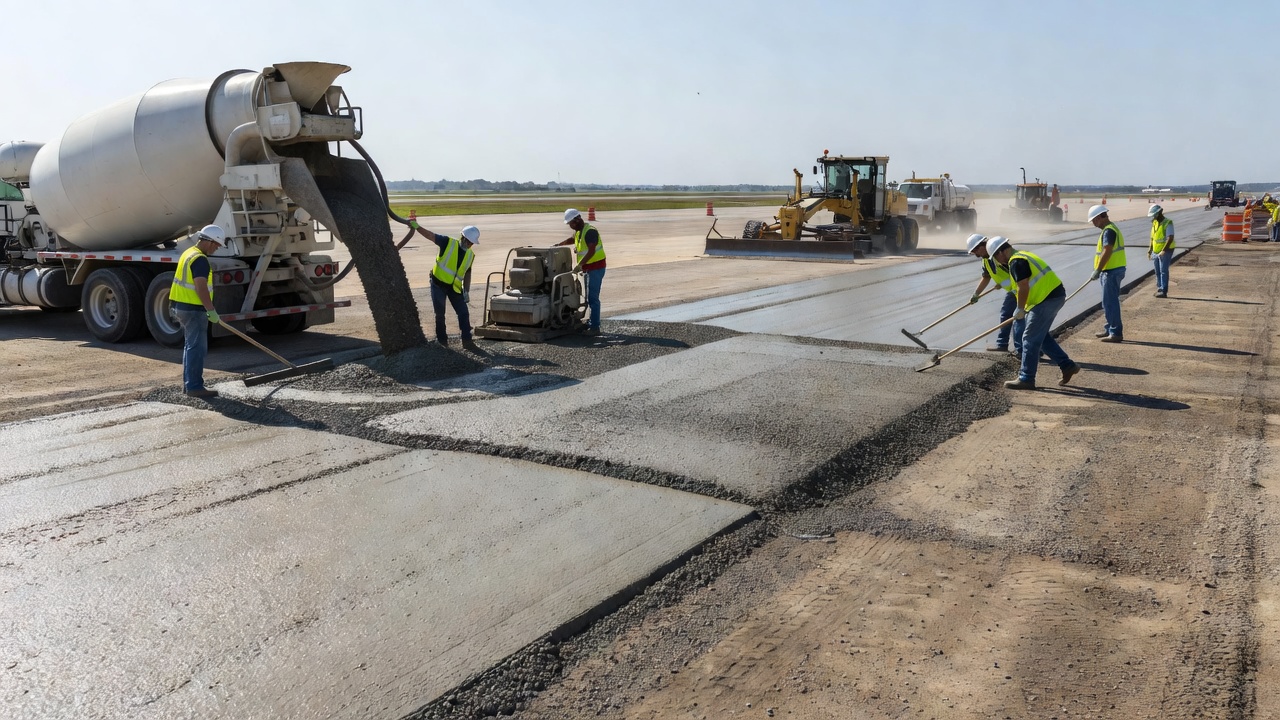
Airport pavement thickness design in the United States and most ICAO member states follows procedures defined in FAA AC 150/5320-6G (Airport Pavement Design and Evaluation) , which has replaced the legacy AC 150/5320-6F. The design is performed using FAARFIELD (FAA Rigid and Flexible Iterative Elastic Layered Design) software, which employs layered elastic theory (LET) to compute the critical stresses and strains within each pavement layer under aircraft loading. The base course thickness is determined through an iterative process to ensure that computed strains remain below allowable limits for the specified number of aircraft load applications.
FAARFIELD models the pavement structure as a multi-layer elastic system: the asphalt or concrete surface course (with known modulus and Poisson’s ratio), the base course (with material-specific modulus), the subbase (if present), and the subgrade (with an assumed semi-infinite depth). For flexible pavements, the critical design criteria are the horizontal tensile strain at the bottom of the asphalt surface (controlling fatigue cracking) and the vertical compressive strain at the top of the subgrade (controlling rutting). For rigid pavements, the critical criterion is the tensile stress at the bottom of the concrete slab, with the base course modulus affecting the effective modulus of subgrade reaction (k-value).
The FAA design procedure provides standard cross-sections for both flexible and rigid pavements. For flexible pavements, the minimum base course thickness is 150 mm (6 inches) for the highest traffic category (20,000 or more annual departures of aircraft weighing over 60,000 pounds). For lower traffic categories, minimum base thickness decreases to 100 mm (4 inches). The FAARFIELD software may recommend greater thickness based on the specific aircraft mix and subgrade CBR value. FAA Table 3-3 in AC 150/5320-6G specifies the minimum base course thickness for each traffic area category.
The equivalent thickness concept allows substitution of higher-quality base materials with reduced thickness while maintaining equivalent structural capacity. The relative strength of different base materials is expressed through the layer coefficient, a dimensionless factor representing the material’s structural contribution per unit thickness. A typical unbound granular base has a layer coefficient of approximately 0.14, while cement-treated base (CTB) has a coefficient of 0.20 to 0.28, and asphalt-treated base (ATB) has a coefficient of 0.34 to 0.40. Using these coefficients, a 150 mm CTB layer provides structural capacity equivalent to approximately 200 to 300 mm of unbound granular base, allowing airport designers to reduce total pavement thickness while maintaining structural capacity.
FAA Item P-208 (aggregate base course) is explicitly limited to pavements designed for gross aircraft loads of 60,000 pounds (27,200 kg) or less, essentially limiting its use to general aviation, reliever airports, and air taxi operations. For commercial service airports serving aircraft such as the Boeing 737 (maximum takeoff weight ~177,000 lbs) or Airbus A320 (~172,000 lbs), Item P-209 (crushed aggregate base course) is required. For the heaviest aircraft, Boeing 777 (~660,000 lbs) and Airbus A380 (~1,235,000 lbs), stabilized bases (CTB, ATB, or lean concrete) are typically specified, as unbound granular materials would require impractical thickness to limit subgrade stresses to acceptable levels.
Base Failure Indicators
Base course distress modes directly affect the condition and appearance of the pavement surface, making accurate identification of base-related problems essential for pavement condition assessment. The three primary failure mechanisms are pumping, settlement, and stripping, each with distinct surface indicators.
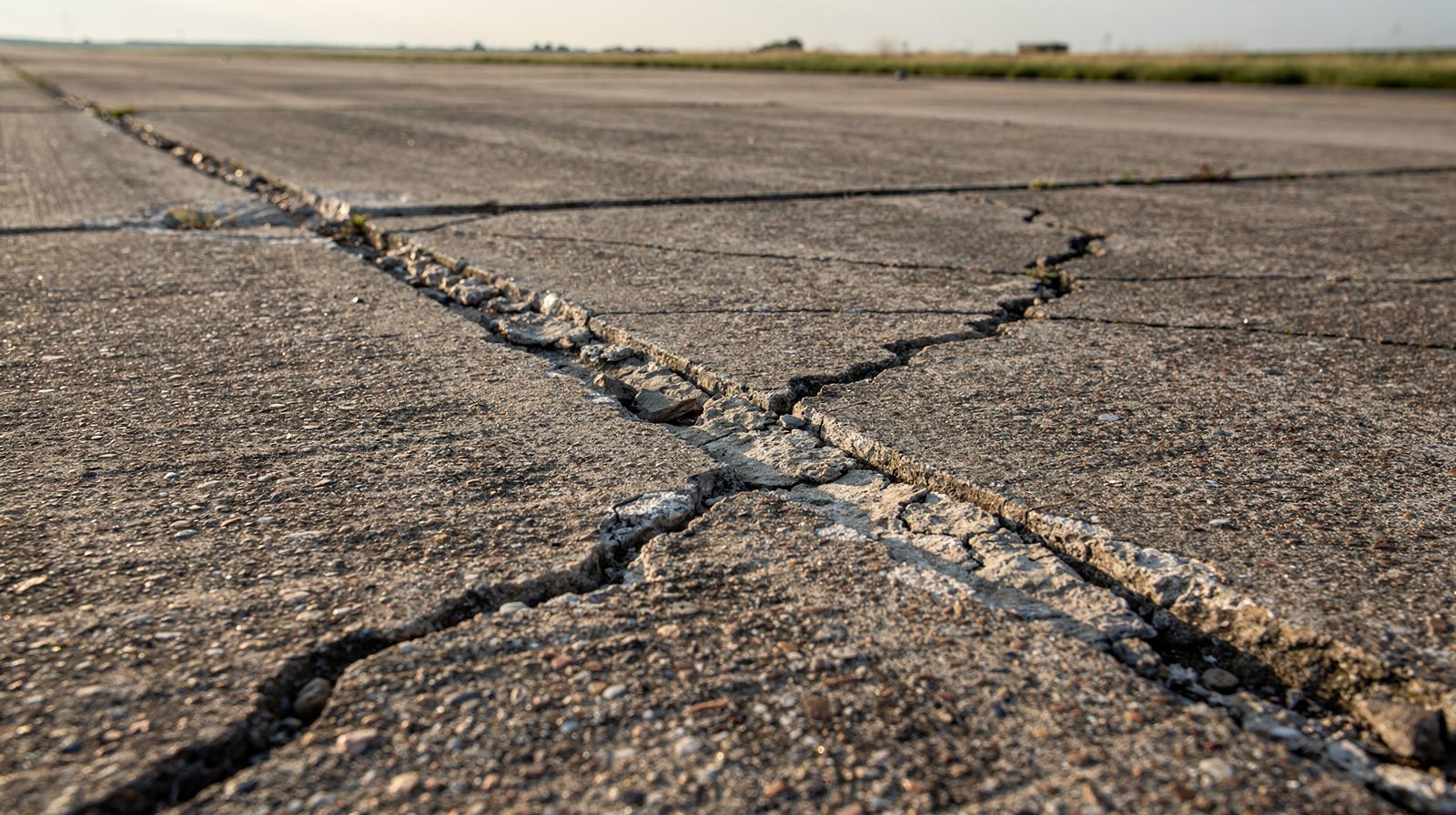
Pumping is the ejection of fine particulate material (base or subgrade soil) through pavement joints, cracks, or pavement edges under the action of traffic loading. The mechanism involves water trapped within the pavement structure, aircraft wheels passing over joints or cracks, deflecting the pavement slab, and compressing the water within the base. The pressurized water carries fine base or subgrade particles in suspension, ejecting them through joint openings as the traffic load passes. Over time, pumping creates voids beneath the pavement surface, loss of uniform support, and progressive deterioration of the pavement structure. In rigid pavements, pumping produces visible mud stains along transverse and longitudinal joints, accompanied by slab faulting (vertical displacement at joints) and corner cracking. In flexible pavements, pumping manifests as surface staining adjacent to cracks and localized depression areas. The presence of pumping indicates inadequate base drainage, excessive fines in the base material, or a base material with a plasticity index higher than specification limits. FAA AC 150/5320-6G Section 3.6 specifically addresses base and subbase contamination and pumping, recommending corrective actions including edge drain installation, slab stabilization grouting, and in severe cases, base replacement.
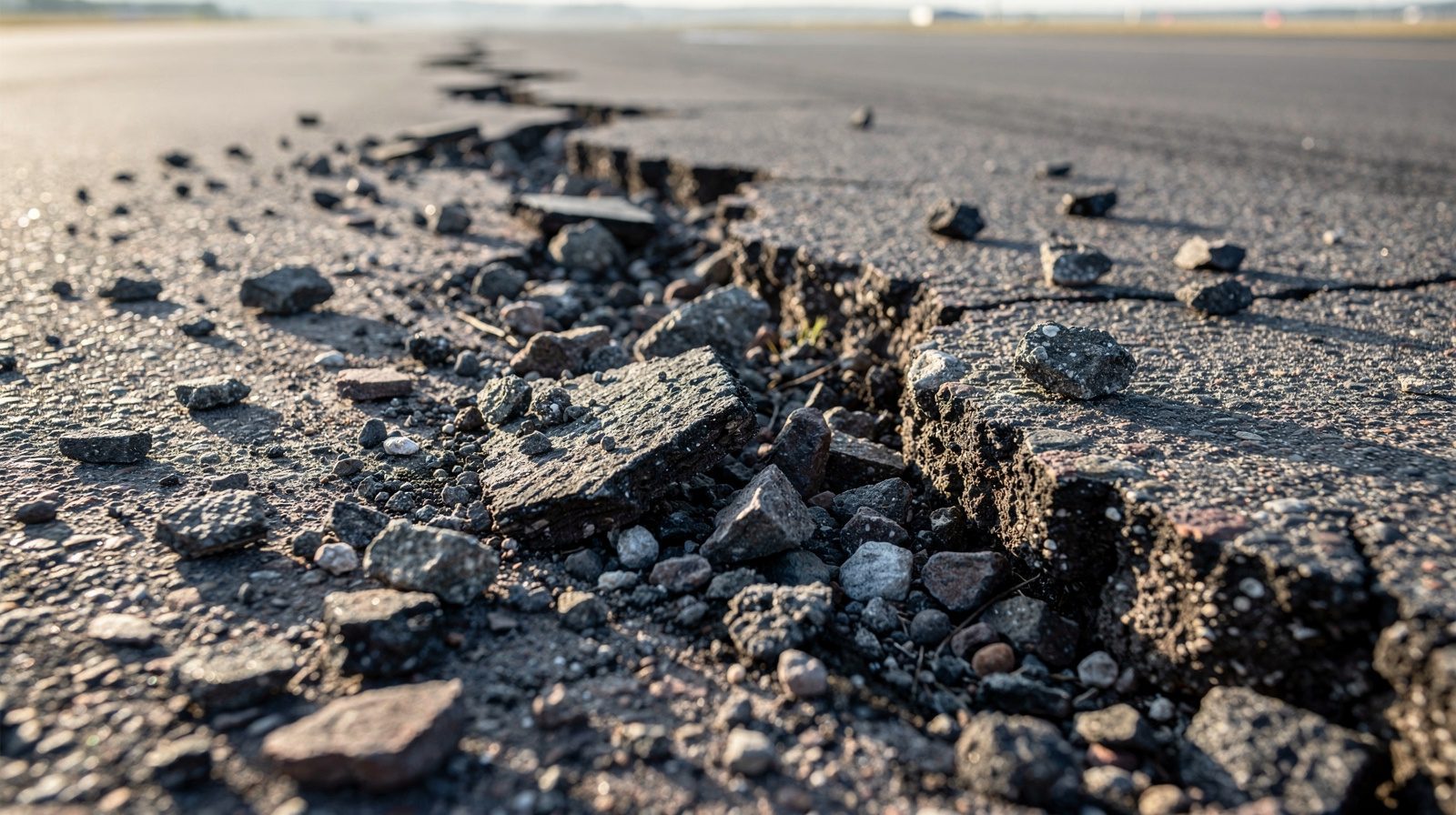
Settlement occurs when the base course consolidates under repeated aircraft loading, typically as a result of inadequate compaction during construction, saturation and strength loss of the base material, or subgrade failure beneath the base. Settlement manifests as surface depressions that may be localized (around a specific wheel path crossing) or widespread (over an entire pavement area). In flexible pavements, settlement produces rutting in the wheel paths, longitudinal depressions, and “bird bath” areas where water ponds after rainfall. In rigid pavements, settlement results in slab faulting, lack of slab support causing corner and edge cracking, and roughness that affects ride quality for aircraft operations. Differential settlement, where the base consolidates more in some areas than others, is particularly problematic for airfield pavements because it creates uneven surfaces that can affect aircraft ground handling, especially for high-speed taxiing and takeoff operations.
Stripping applies specifically to asphalt-treated bases (ATB) and refers to the loss of adhesion between the asphalt binder and the aggregate surface due to moisture damage. Stripping occurs when water infiltrates the ATB layer and displaces the asphalt film from the aggregate, leaving uncoated aggregate particles that lose the structural contribution of the asphalt binder. Stripping in the base course manifests on the surface as localized raveling (loss of surface aggregate), patches of fine aggregate loss, and in advanced cases, structural cracking in the wheel paths. Stripping is accelerated by high water tables, poor drainage, freeze-thaw cycles, and the use of moisture-susceptible aggregates. Anti-strip additives (hydrated lime or liquid anti-strip agents) are commonly added to ATB mixtures in wet climates or where aggregates show moisture sensitivity in the boiling test or Hamburg wheel tracking test.
Base Condition Assessment
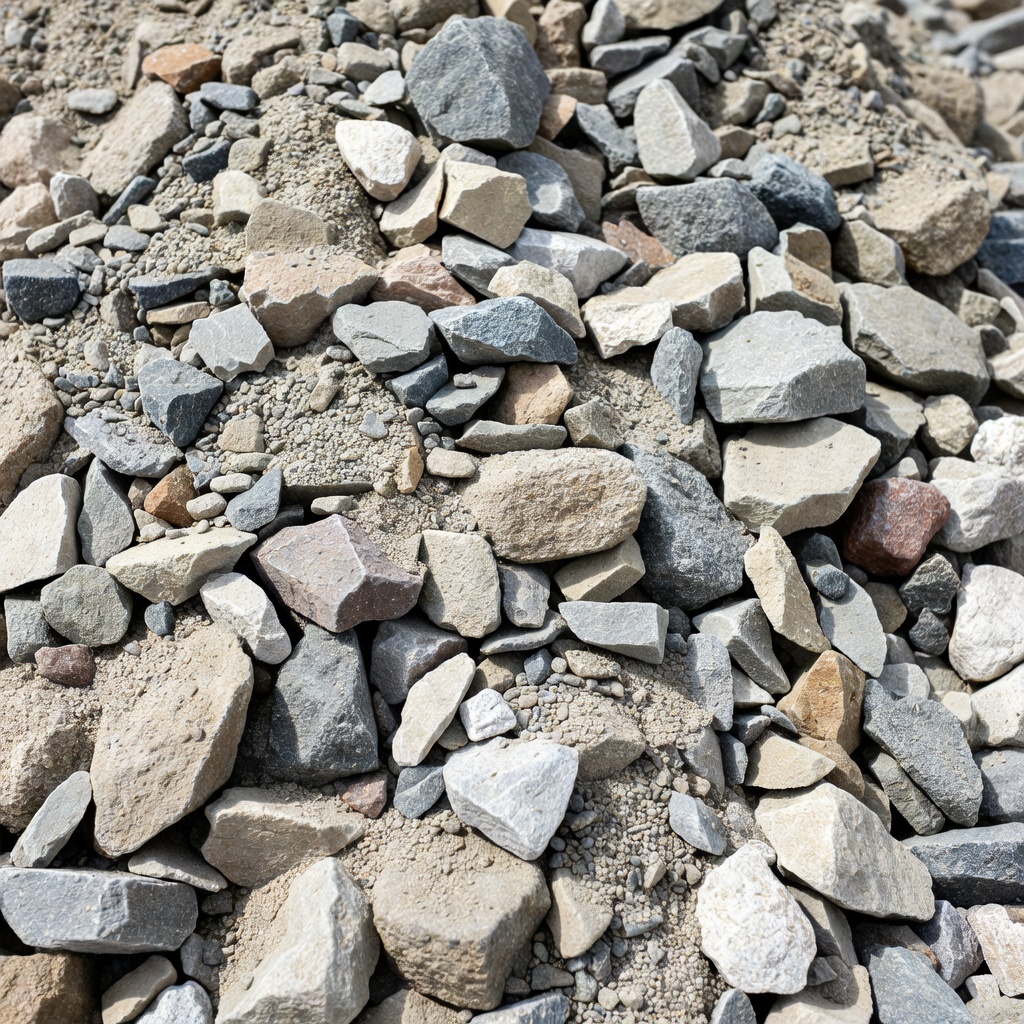
Assessing the condition of the base course in existing airport pavements requires a combination of non-destructive testing (NDT) and destructive investigation techniques, as the base course cannot be directly observed beneath the surface layer. The evaluation aims to determine the current structural capacity of the base, identify areas of deterioration, moisture damage, or contamination, and establish the remaining service life of the pavement structure.
Falling Weight Deflectometer (FWD) and Heavy Weight Deflectometer (HWD) testing is the primary NDT method for base course assessment. The HWD applies an impulse load of 30 to 320 kN (6,700 to 72,000 lbf), simulating aircraft wheel loads, and measures the resulting surface deflections at multiple sensor positions (deflection basin). The measured deflection basin is analyzed through back-calculation, an iterative mathematical process that determines the elastic modulus of each pavement layer (surface, base, subbase, subgrade) that would produce the measured deflections. A low back-calculated base modulus relative to the design value indicates base deterioration, moisture damage, or loss of interlock. FAA AC 150/5320-6G Appendix C provides detailed procedures for FWD/HWD deflection data analysis and back-calculation. The Base Damage Index (BDI), defined as the deflection difference between the sensor at 300 mm and 600 mm (D300 − D600), provides a direct indicator of base layer condition without requiring full back-calculation.
Ground Penetrating Radar (GPR) provides high-resolution imaging of the base course condition. Air-launched GPR antennas operating at 1.0 to 2.0 GHz can detect: variations in base layer thickness indicating construction variability or erosion, moisture accumulation within the base (water has a dielectric constant of 81 compared to 4 to 6 for dry aggregate, causing strong radar reflections), voids beneath the pavement surface caused by pumping, and delamination between the base and surface course. FAA AC 150/5320-6G Appendix E provides guidance on GPR application for airport pavement evaluation, including data collection protocols, interpretation criteria, and reporting requirements.
Pavement coring provides direct physical evidence of base condition. Cores through the full pavement thickness (surface, base, and into the subgrade) are extracted at representative locations and visually examined for: base material contamination (subgrade soil intrusion), moisture content and evidence of saturation, base material degradation under load, interlayer bonding conditions, and structural integrity of stabilized bases (cement or asphalt bound). The cores provide calibration data for NDT results, confirming back-calculated moduli and GPR interpretations.
Dynamic Cone Penetrometer (DCP) testing provides rapid in-situ strength measurement of unbound base layers. The DCP consists of a 16 mm (0.63-inch) diameter rod with a 60-degree cone tip, driven into the pavement by dropping an 8 kg (17.6 lb) hammer from a 575 mm (22.6-inch) drop height, a standard configuration specified in ASTM D6951. The penetration rate (mm per blow) is inversely correlated with the in-situ CBR of the base material. A high penetration rate indicates weak, low-density, or saturated base material requiring further investigation. FAA AC 150/5320-6G Appendix D provides detailed DCP testing procedures and CBR correlation equations specifically for airport pavement evaluation.
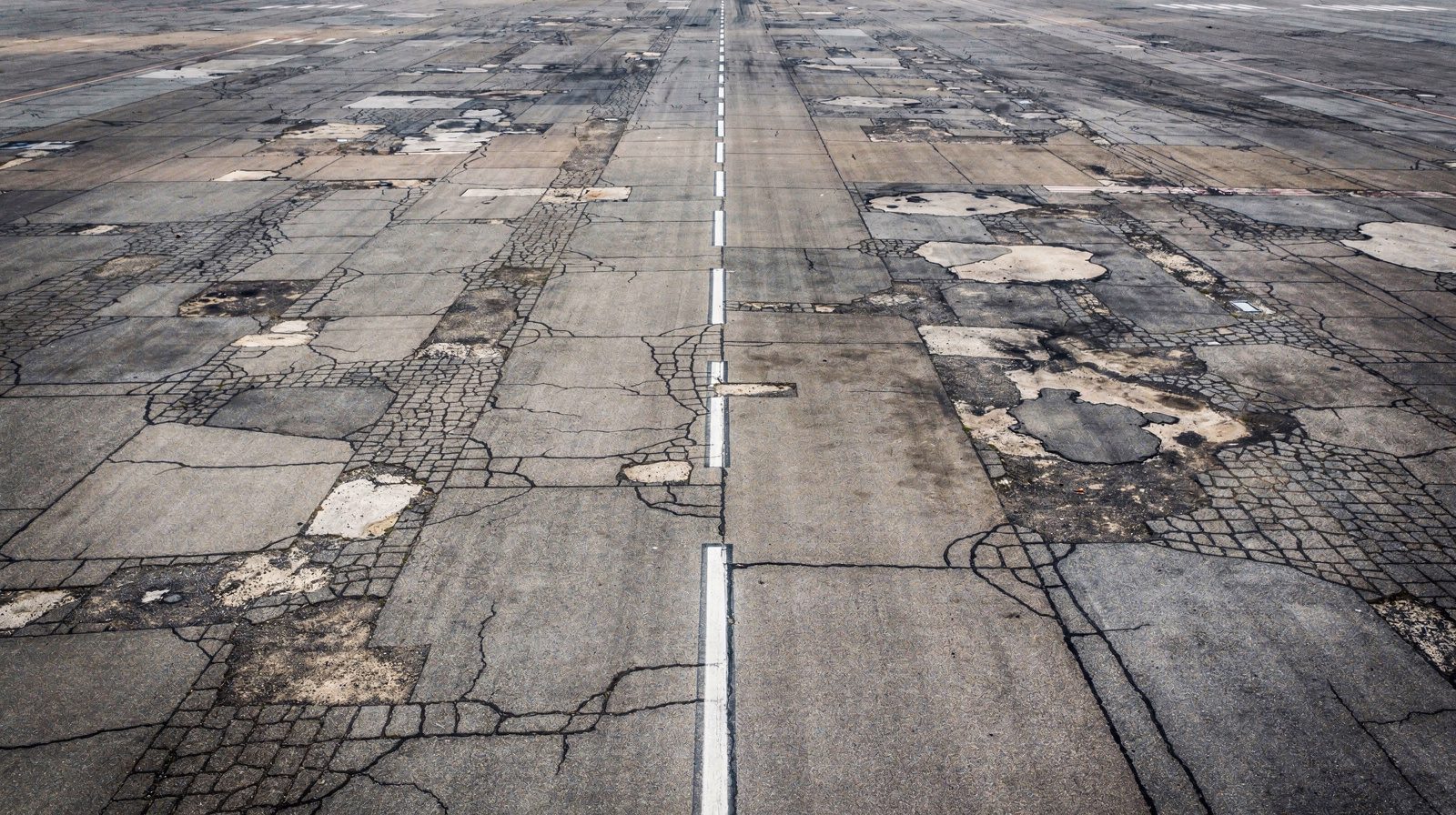
Surface distress patterns observed during visual inspection provide the first indication of base course problems. Alligator (fatigue) cracking in flexible pavements, characterized by interconnected cracks forming small polygons resembling alligator skin, indicates base support failure, typically caused by base weakening due to moisture damage or inadequate thickness for current traffic. Longitudinal cracking in the wheel paths of flexible pavements may indicate base consolidation or shear failure in the base. Faulting (vertical displacement at joints) in rigid pavements indicates loss of base support, typically from pumping. Corner breaks in concrete slabs are strongly associated with void development beneath the slab corner due to base pumping. Edge cracks at 300 to 600 mm (12 to 24 inches) from the pavement edge suggest base support loss from moisture damage at the pavement edge.
The Pavement Condition Index (PCI) survey method, standardized by ASTM D5340 for airfield pavements, classifies and quantifies surface distresses, but its interpretation must account for base-related causes. A flexible pavement section with low PCI primarily due to alligator cracking requires base investigation and possible base rehabilitation, not just surface treatment. A section with high PCI but low FWD back-calculated base modulus requires structural evaluation even though the surface appears sound.
Stabilized Bases for Heavy Loads
For the heaviest aircraft loads, including Code F aircraft (Airbus A380, Boeing 747-8) and high-frequency Code E operations (Boeing 777, 787, Airbus A350), stabilized base courses (CTB, ATB, or LCB) are generally specified in preference to unbound granular bases. The structural economics become compelling at high load levels: a stabilized base 150 mm thick can provide the structural capacity of 250 to 400 mm of unbound granular base, reducing total pavement thickness by 100 to 250 mm, translating to millions of cubic meters of aggregate savings on a major runway project.
Cement-treated base (CTB) for heavy aircraft loads is designed with compressive strengths of 400 to 800 psi (2.8 to 5.5 MPa) at 7 days, with higher strengths at the upper end of this range for the heaviest loads. The PCA Guide to CTB recommends that thicknesses exceeding 300 mm (12 inches) be constructed in multiple lifts, with the first lift compacted, cured, and scarified before placing the second lift to ensure interlayer bonding. For airport pavements, CTB thicknesses up to 375 mm (15 inches) have been constructed in two lifts. The FAARFIELD software models CTB as a stabilized base layer with a modulus of 4,100 to 6,900 MPa, and designs the pavement structure to keep the tensile stress at the bottom of the CTB layer below the material’s modulus of rupture (100 to 200 psi).
Asphalt-treated base (ATB) for heavy aircraft loads is designed with Marshall stability values of at least 8.9 kN (2,000 lbs) and flow values of 8 to 14 (0.25 mm units). The ATB modulus of 2,000 to 4,000 MPa provides structural capacity superior to unbound aggregate while maintaining flexibility that resists the reflective cracking that can occur under CTB layers. For Code F aircraft pavements, ATB thickness of 150 to 250 mm is typical, placed in one or two lifts. The binder grade selection must account for the base course position, being protected from direct temperature extremes, a lower high-temperature grade (PG 58-28 or PG 64-22) can be used, while the low-temperature grade must match the climate to prevent thermal cracking during construction.
Lean concrete base (LCB) for heavy aircraft rigid pavements provides the highest modulus of subgrade reaction (k-value) of any base type, typically 800 to 1,200 pci (220 to 330 MN/m³) for a 150 mm LCB layer over a CBR 6 subgrade. The LCB compressive strength of 750 to 1,200 psi (5.2 to 8.3 MPa) is intentionally kept below that of the overlying pavement concrete (typically 4,000 to 6,000 psi) to ensure that cracking occurs in the LCB rather than reflecting through the pavement slab. The LCB surface must be treated with a bond breaker, two coats of wax-based curing compound, to prevent composite action with the pavement concrete. Without a bond breaker, the LCB and pavement concrete would act as a single, thicker monolithic slab, developing higher bending stresses and cracking prematurely.
For existing pavements being strengthened to accommodate heavier aircraft, rubbilization of existing concrete pavement, converting the existing concrete slab into a high-quality, interlocked aggregate base, is an increasingly common technique. FAA Item P-215 (Rubblized Concrete Base Course), introduced in AC 150/5370-10H, provides the specification for rubblizing existing concrete pavement to create a base for a new asphalt or concrete overlay. The rubblization process uses a resonant frequency breaker (or multi-head breaker) to fracture the existing concrete slab into pieces typically 150 to 300 mm (6 to 12 inches) in maximum dimension, producing a base layer with modulus of 700 to 1,400 MPa (100,000 to 200,000 psi), intermediate between unbound aggregate and CTB. The rubblized base eliminates reflection cracking potential, provides a uniform support layer, and enables the existing pavement material to be reused in the pavement structure rather than being removed and disposed of.
Base course quality and condition directly determine the structural capacity and service life of airport pavements. The inspection and evaluation of base-related distress patterns, pumping, settlement, alligator cracking, faulting, provide essential data for pavement management decisions. Understanding base course design, material specifications, compaction requirements, and failure mechanisms enables accurate pavement condition assessment and cost-effective rehabilitation planning.
Frequently Asked Questions
- What is a base course in pavement construction?
- A base course is the structural layer of a pavement system located directly beneath the surface wearing course (asphalt or concrete) and above the subbase or subgrade. It is constructed from high-quality materials such as crushed stone, gravel, cement-treated aggregate, or asphalt-treated aggregate. The base course serves as the primary load-distributing element of the pavement structure, spreading concentrated wheel loads over a wider area to prevent overstressing the underlying subgrade. In airport pavements, base course thickness typically ranges from 100 mm to 300 mm (4 to 12 inches) depending on traffic loads, subgrade strength, and material type.
- What is the difference between FAA P-208 and P-209 base course?
- FAA Item P-208 (Aggregate Base Course) is specified for pavements designed for gross aircraft loads of 60,000 pounds (27,200 kg) or less. It can use crushed or uncrushed aggregates with a maximum loss of 45% at 500 revolutions in the Los Angeles abrasion test. Item P-209 (Crushed Aggregate Base Course) is for heavier aircraft loads exceeding 60,000 pounds and requires crushed aggregates with at least 60% of material retained on the No. 4 sieve having two or more fractured faces. P-209 requires stricter gradation control and a maximum L.A. abrasion loss of 40% for the heavier loading conditions at major commercial airports.
- Why is base course compaction critical for airport pavements?
- Base course compaction is critical because inadequate density leads to permanent deformation (rutting) under repeated aircraft loads, loss of support causing surface cracking, and increased permeability allowing water infiltration that weakens the pavement structure. FAA standards require base course compaction to 100% of maximum dry density as determined by ASTM D698 (Standard Proctor) for airport pavements, a more stringent requirement than the 95% typically specified for highway pavements. Each compacted layer must not exceed 150 mm (6 inches) in loose thickness, and moisture content must be controlled within 2 percentage points of optimum during compaction.
- What is cement-treated base (CTB) used in airport pavements?
- Cement-treated base (CTB) is a stabilized base material produced by mixing aggregate or soil with measured amounts of portland cement (typically 2% to 5% by weight) and water, which hardens after compaction to form a strong, durable, frost-resistant base layer. CTB provides significantly higher stiffness than unbound granular base, typical 7-day compressive strengths of 300 to 800 psi (2.1 to 5.5 MPa) and moduli of 600,000 to 1,000,000 psi (4,100 to 6,900 MPa). CTB is particularly valuable for airport pavements as it virtually eliminates rutting, resists moisture intrusion, prevents subgrade pumping, and continues gaining strength over time. FAA FAARFIELD design software treats CTB as a stabilized material with its own layer coefficient.
- How does base course drainage affect airport pavement performance?
- Base course drainage is critical because water trapped within the pavement structure is the primary cause of premature pavement failure. Inadequate drainage leads to subgrade saturation and strength loss, pore pressure buildup causing pumping of fine particles under aircraft loads, frost heave in cold climates, accelerated asphalt stripping, and concrete pavement joint faulting. FAA standards recommend drainage layers achieving 85% drainage within 24 hours for runways, with target permeabilities of 500 to 1,500 ft/day. Daylighted bases (extending beyond the pavement edge to discharge water laterally), permeable base layers with edge drains, and properly graded aggregate base all serve critical drainage functions.
- What are the common failure modes of base course in airport pavements?
- Common base course failure modes include: (1) Pumping, the ejection of fine base or subgrade particles through pavement joints or cracks under moving loads, creating voids beneath the surface and leading to slab cracking or joint faulting, (2) Settlement, consolidation of poorly compacted base under traffic, resulting in surface depressions, roughness, and potential ponding, (3) Stripping, separation of asphalt binder from aggregate in asphalt-treated base due to moisture damage, (4) Rutting, permanent deformation in unbound granular base due to inadequate density or shear strength, (5) Erosion, loss of base material at pavement edges due to inadequate drainage or jet blast.
- How is base course condition assessed in existing airport pavements?
- Base course condition is assessed through several methods: Falling Weight Deflectometer (FWD) or Heavy Weight Deflectometer (HWD) testing measures deflection basins used to back-calculate base layer moduli, a low back-calculated modulus indicates base deterioration. Ground Penetrating Radar (GPR) detects moisture accumulation, voids, and layer thickness variations within the base. Pavement coring provides direct visual examination of base material condition, moisture content, and interlayer bonding. Dynamic Cone Penetrometer (DCP) testing measures in-situ strength of granular base layers. Surface distress patterns such as alligator cracking (flexible pavements), pumping stains (rigid pavements), and edge settlement all provide indirect indicators of base condition.