What is Blast Erosion?
Blast Erosion – Damage from Jet Exhaust in Airport Infrastructure
Overview
Blast erosion is the progressive and often rapid physical damage to airport infrastructure caused by the high-velocity, high-temperature exhaust streams from jet engines. This phenomenon primarily affects runways, taxiways, aprons, and maintenance areas where aircraft engines operate at moderate to high thrust settings while stationary or moving slowly. The destructive force of jet blast not only deteriorates paving materials but also poses significant hazards to ground support equipment, adjacent facilities, and personnel.
What is Jet Blast?
Jet blast is the rearward, high-speed, turbulent flow of exhaust gases expelled from jet engines such as turbojets and turbofans. At full power, exhaust velocities can exceed 200–300 mph (90–135 m/s), and temperatures may surpass 500°C (932°F) near the nozzle exit. The reach and intensity of jet blast depend on the engine type, thrust setting, and environmental conditions. For widebody aircraft at takeoff thrust, hazardous zones can extend over 600 meters behind the aircraft.
Jet blast is not only a function of engine size but also of installation geometry and orientation. High-bypass turbofan engines, while quieter, can create broad, diffuse blast zones due to their large exhaust diameters.
Physics and Engineering Behind Blast Erosion
Blast erosion arises from the interplay of mechanical and thermal forces:
- Mechanical Abrasion: The kinetic energy of the high-velocity exhaust can lift and dislodge loose pavement, shift aggregates, and even overturn vehicles or equipment.
- Thermal Degradation: Hot exhaust rapidly heats surface materials, causing thermal expansion, softening of asphalt binders, and eventual rutting or cracking.
- Bernoulli’s Principle: The fast-moving jet blast creates low-pressure zones above surfaces, lifting or sucking up poorly bonded material.
- Combined Effects: Repeated cycles of thermal and mechanical loads can cause rapid, localized damage, sometimes within a single engine run-up.
To prevent blast erosion, engineers specify high-quality, well-compacted asphalt, reinforced concrete, or polymer-modified surfaces in vulnerable areas. Effective drainage is also vital, as water weakens pavement bonds, increasing susceptibility to erosion.
Manifestations and Types of Damage
Blast erosion manifests in several forms:
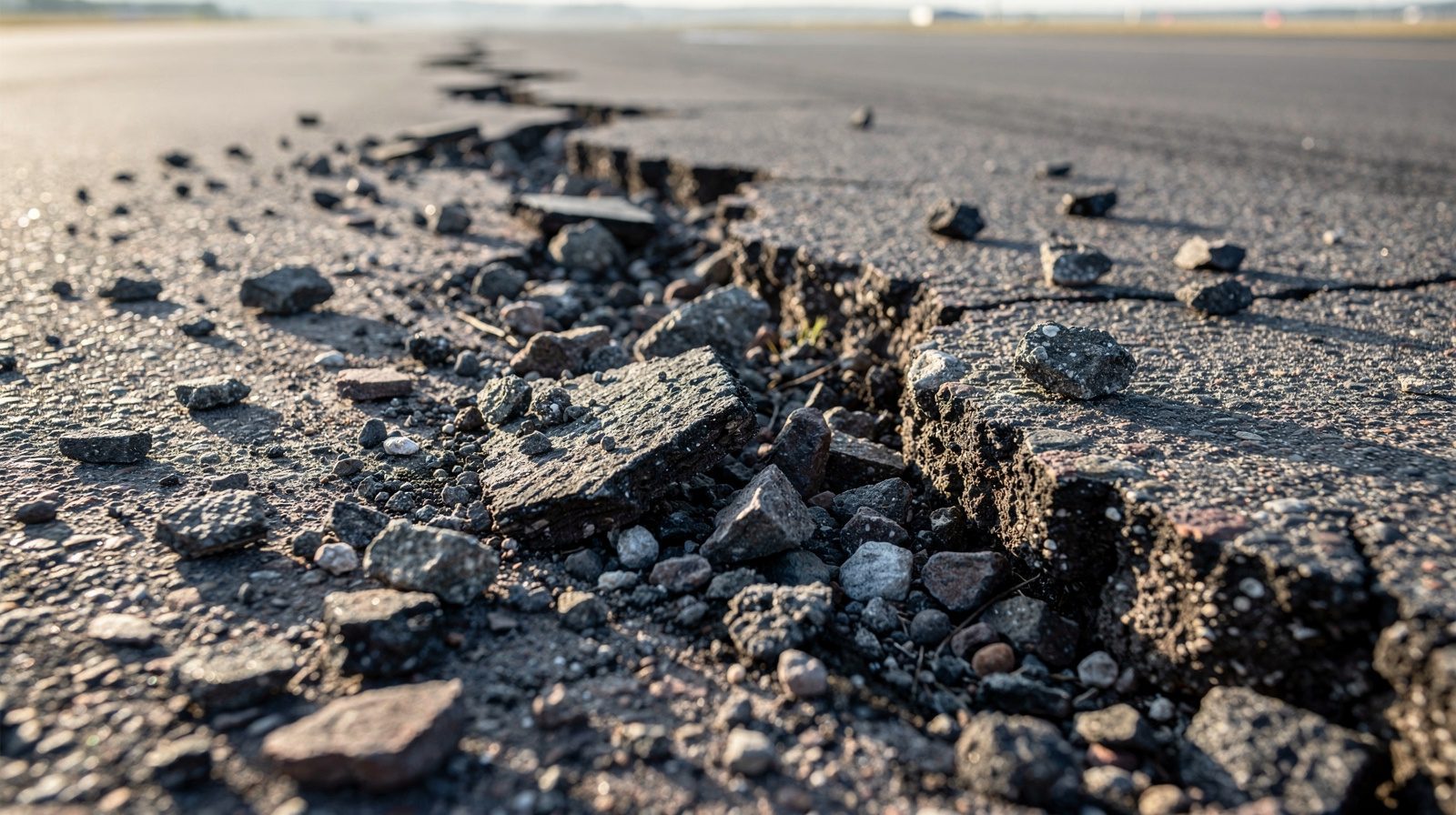
- Surface Erosion: Loss of fine aggregate and binder, leading to grooves, ruts, and depressions.
- Foreign Object Debris (FOD): Dislodged materials become hazardous debris that can damage aircraft, vehicles, or injure personnel.
- Equipment and Structural Damage: Jet blast can overturn ground support vehicles, shatter glass, and damage signage or building facades.
- Personnel Hazards: The aerodynamic force can knock down or injure workers, with documented cases of serious injuries and fatalities.
- Thermal Pavement Failure: Repeated high-temperature exposure leads to binder degradation, rutting, and even melting of asphalt.
Incident Statistics
Data from NASA, FAA, and ICAO highlight:
- Aircraft Involvement: 85% of jet blast incidents affect other aircraft, particularly small or light planes.
- Structural and Equipment Damage: 11% involve vehicles, structures, or equipment (e.g., overturned carts, shattered signage).
- Personnel Injury: 4% result in injuries, ranging from minor to fatal.
- Location: Most incidents occur on ramps/aprons (53%), followed by taxiways and runways.
The cost impact includes both direct repair expenses and indirect effects such as operational delays and investigations.
Real-World Examples
- Princess Juliana International Airport (Saint Maarten): Tourists have been blown into fences or structures by departing aircraft, resulting in injuries and fatalities.
- Sialkot International Airport (Pakistan): A Boeing 737-400 engine run-up uplifted interlocking bricks, which struck the aircraft.
- Halfpenny Green Airport (UK): Jet display caused misbonded asphalt to be lifted and scattered by blast.
- Routine Incidents: Overturned baggage carts, damaged vehicles, and injuries to personnel are common at major airports.
Airport Planning and Operational Use Cases
Blast erosion is central to airport planning and daily operations:
- Apron and Stand Design: Layouts account for the jet blast footprint of the largest aircraft. ICAO recommends minimum separations to prevent FOD and damage.
- Taxiway Alignment: Designed to avoid directing blast toward occupied areas or sensitive equipment.
- Maintenance Run-Up Bays: Reinforced zones with jet blast deflectors for high-power engine tests.
- Ramp Management: Equipment is parked outside of known blast zones, with clear marking and signage.
- Simulation and Modeling: Software tools (e.g., AviPLAN) model jet blast footprints to inform design and operational changes.
Operational Hazards and Risk Factors
- Confined Spaces: Older airports may have layouts not designed for modern, powerful jets, increasing blast exposure.
- Close Proximity: Light aircraft and vehicles parked near large jets are at greater risk.
- High Power Settings: Taxiing or engine run-ups at high thrust dramatically increase blast intensity.
- Unsecured Surfaces: Damaged or poorly maintained pavement is especially vulnerable.
- Visibility/Communication Issues: Night or low-visibility operations increase the risk of accidental exposure.
Mitigation and Engineering Solutions
Jet Blast Deflectors (JBDs)
Jet blast deflectors are barriers that intercept and redirect jet exhaust to prevent damage and injury:
- Fixed Deflectors: Permanently installed, made of reinforced steel or concrete.
- Mobile Deflectors: Temporary, modular, easily repositioned.
- Adjustable/Carrier-Based Deflectors: Used in multi-use areas or on aircraft carriers.
Effective JBDs withstand mechanical, thermal, and environmental stresses and may include cooling or noise attenuation features.
| Deflector Type | Mobility | Cooling | Application | Typical Use Case |
|---|---|---|---|---|
| Fixed | Static | Passive | Airports | Taxiways, maintenance pads |
| Mobile | Portable | Passive | Temporary/Military | Construction, events |
| Adjustable | Variable | Passive | Int’l Airports | Multi-aircraft stands |
| Carrier-Based | Retractable | Active | Aircraft Carriers | Catapult launches |
Operational Controls
- Thrust Restrictions: SOPs require minimum necessary thrust for taxiing and pushback.
- Engine Run-Up Areas: High-power checks are confined to protected zones.
- Layout Modifications: Reconfiguration of aprons and stands, installation of blast fences.
- Ground Crew Training: Personnel are trained to avoid blast zones and follow safe equipment parking procedures.
Simulation and Advanced Planning
- Static Jet Blast Charts: Manufacturer-provided diagrams help mark dangerous zones.
- Dynamic Modeling: Simulation tools predict blast footprints and risk under various scenarios.
Regulatory Guidelines and Best Practices
- ICAO, FAA, and EASA provide comprehensive guidelines for blast hazard assessment and mitigation.
- Safety Recommendations:
- Flight Crews: Notify ATC before high-power checks, minimize ground thrust.
- Ground Personnel: Avoid working behind operating jets unless authorized, secure all equipment.
Summary
Blast erosion represents a critical challenge to airport safety and operations. It demands robust engineering, strategic planning, and strict operational discipline to safeguard surfaces, equipment, and personnel. With the increasing size and power of modern aircraft, effective blast erosion management is more important than ever.
Frequently Asked Questions
- What causes blast erosion at airports?
- Blast erosion is caused by the high-speed, high-temperature exhaust gases expelled from jet engines. These gases create strong mechanical and thermal forces that can rapidly dislodge, abrade, or degrade pavement surfaces, especially where aircraft operate at high thrust while stationary or at low speeds.
- How does blast erosion differ from regular pavement wear?
- Unlike general wear-and-tear, blast erosion is highly localized and can occur rapidly, even within a single high-power engine run. It is specifically caused by the forceful impact of jet exhaust, leading to focused damage, material uplift, and increased risk of foreign object debris (FOD).
- What are the common signs of blast erosion on airport surfaces?
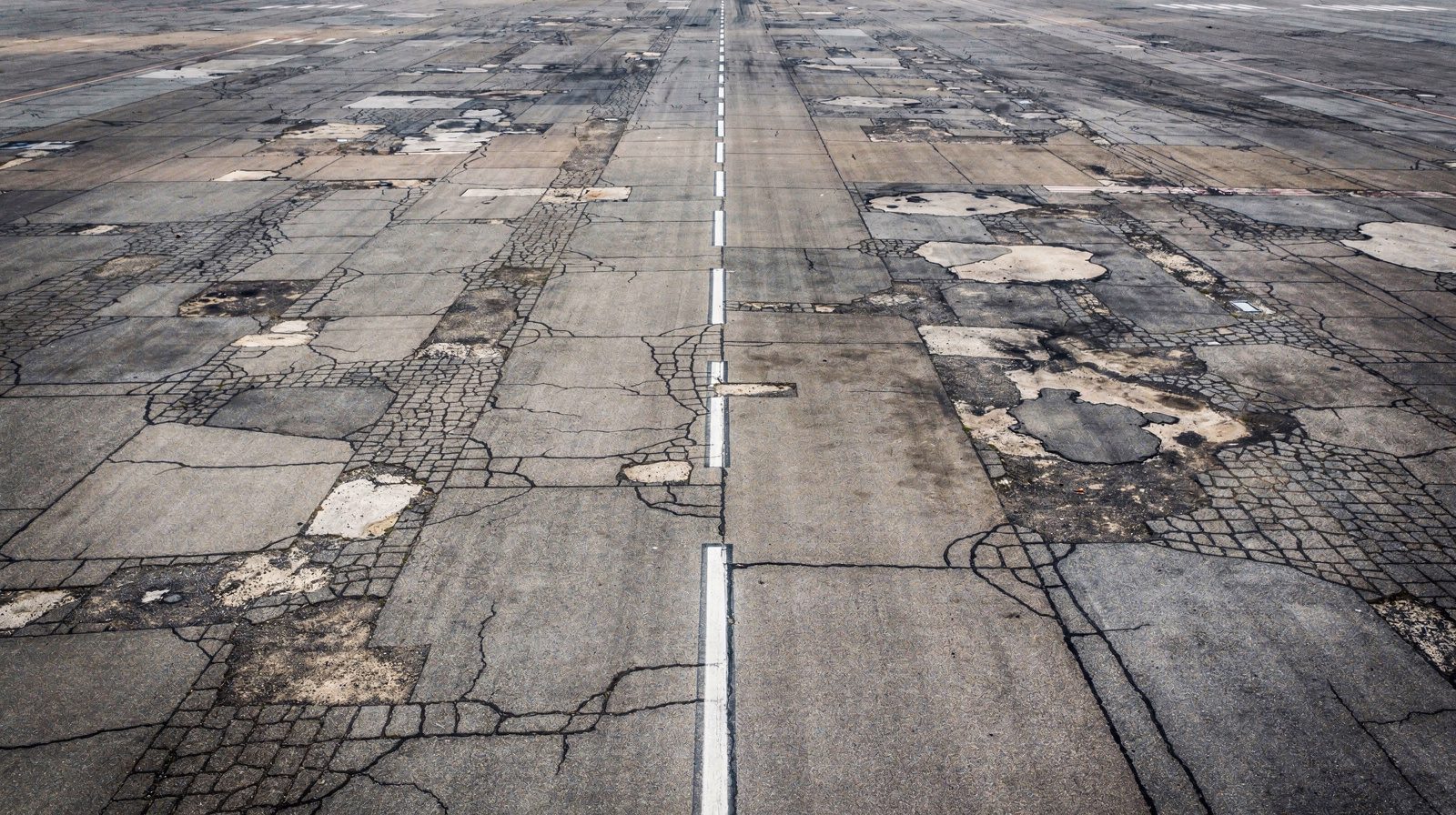
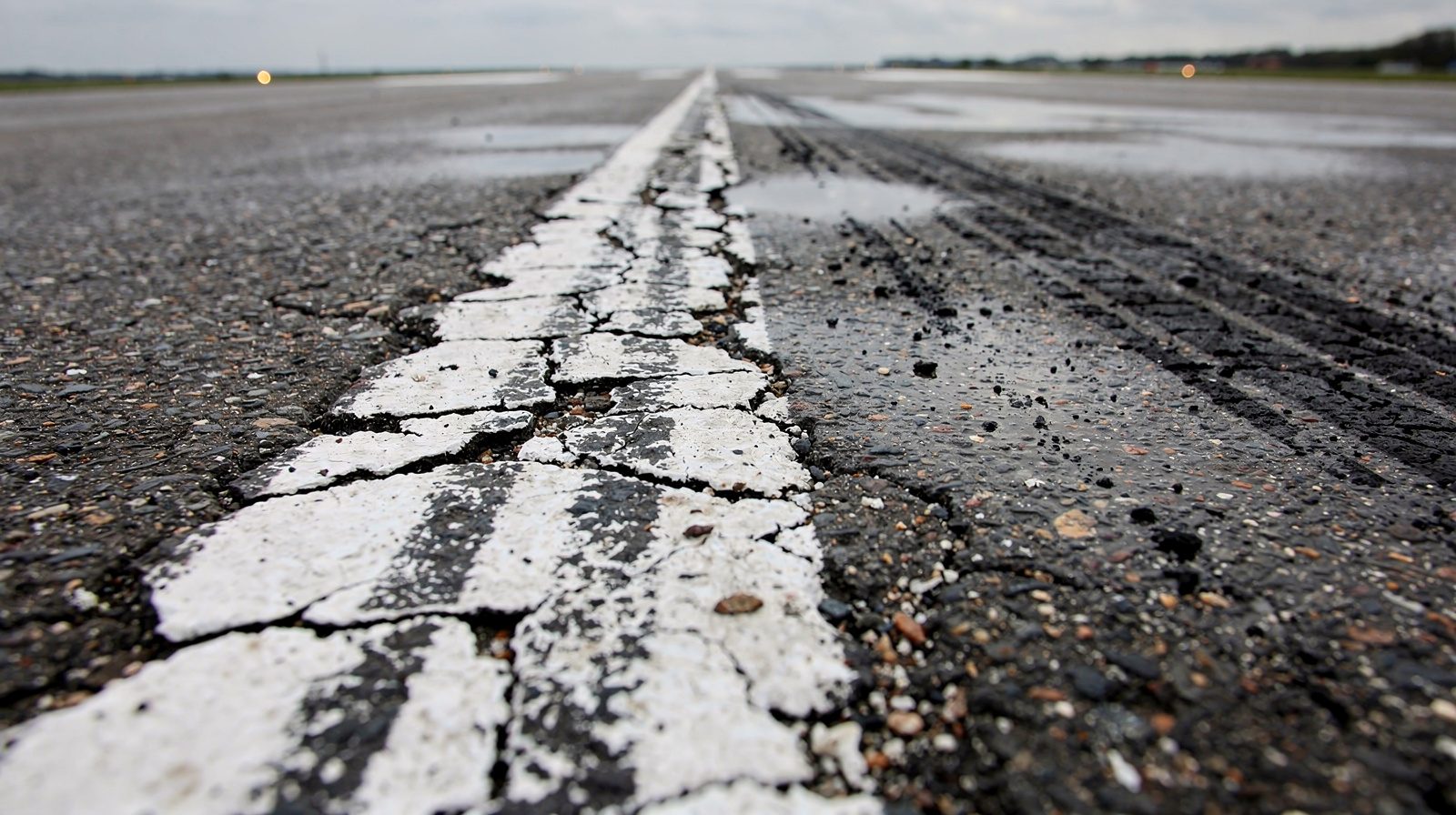
- Common signs include scoured or pitted pavement, uplifted or dislodged blocks, rutting, cracking, and the accumulation of debris in jet blast paths. These issues can quickly escalate into safety hazards and operational disruptions if not addressed.
- How do airports mitigate blast erosion?
- Airports use a combination of robust surface materials, reinforced pavement, proper drainage, and engineered jet blast deflectors. Operational controls, such as thrust restrictions and designated engine run-up areas, are also implemented. Simulation tools and regulatory guidelines help in planning and risk mitigation.
- What are jet blast deflectors and how do they work?
- Jet blast deflectors are barriers designed to intercept and redirect the force of jet engine exhaust away from vulnerable areas. They are made from heat-resistant materials and may be fixed, mobile, or adjustable depending on the location and operational needs.
This is a reference entry. TarmacView provides drone inspection services and doesn't sell the equipment or materials described in this glossary.