What is a blast pad?
Blast Pad
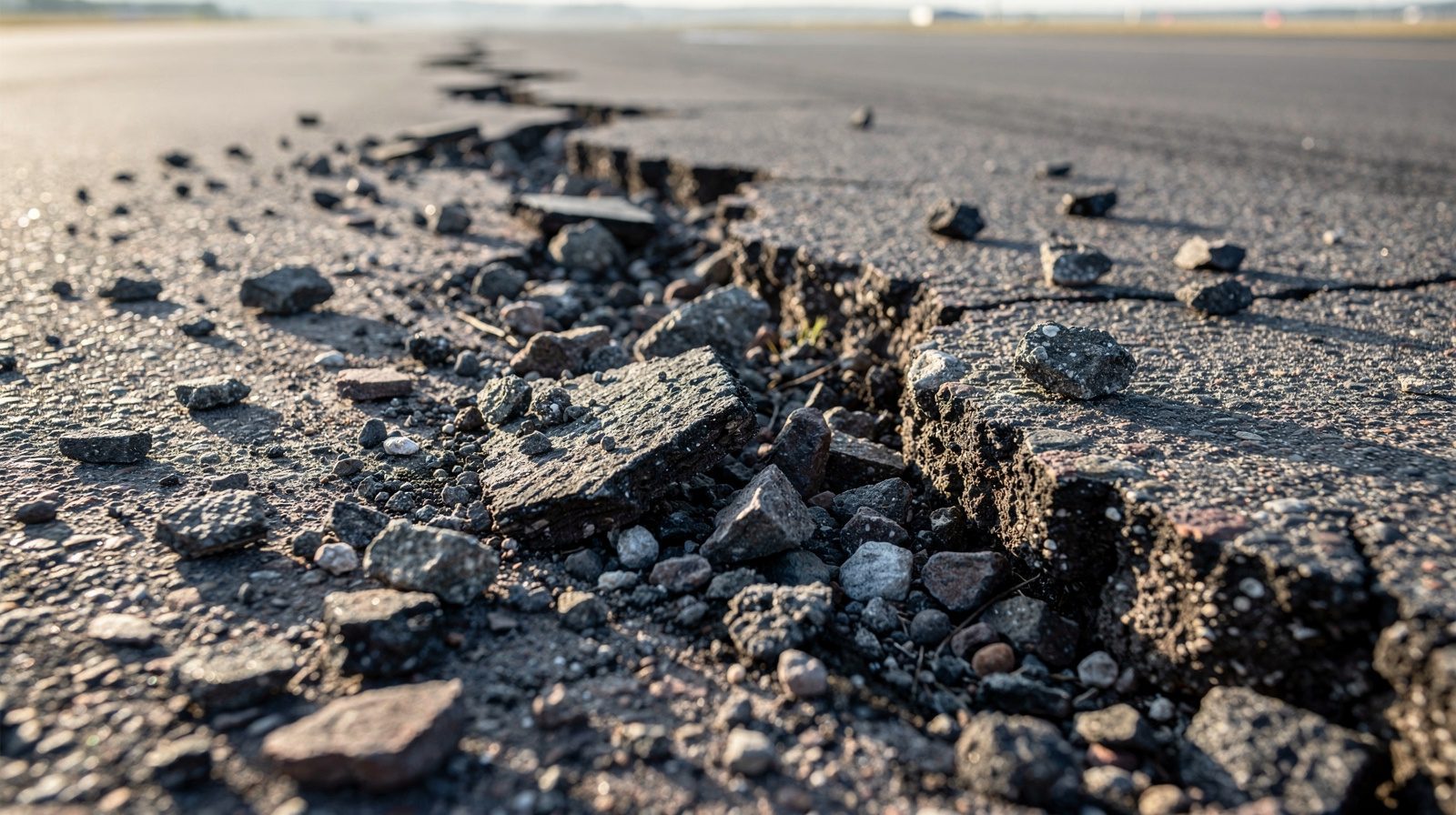
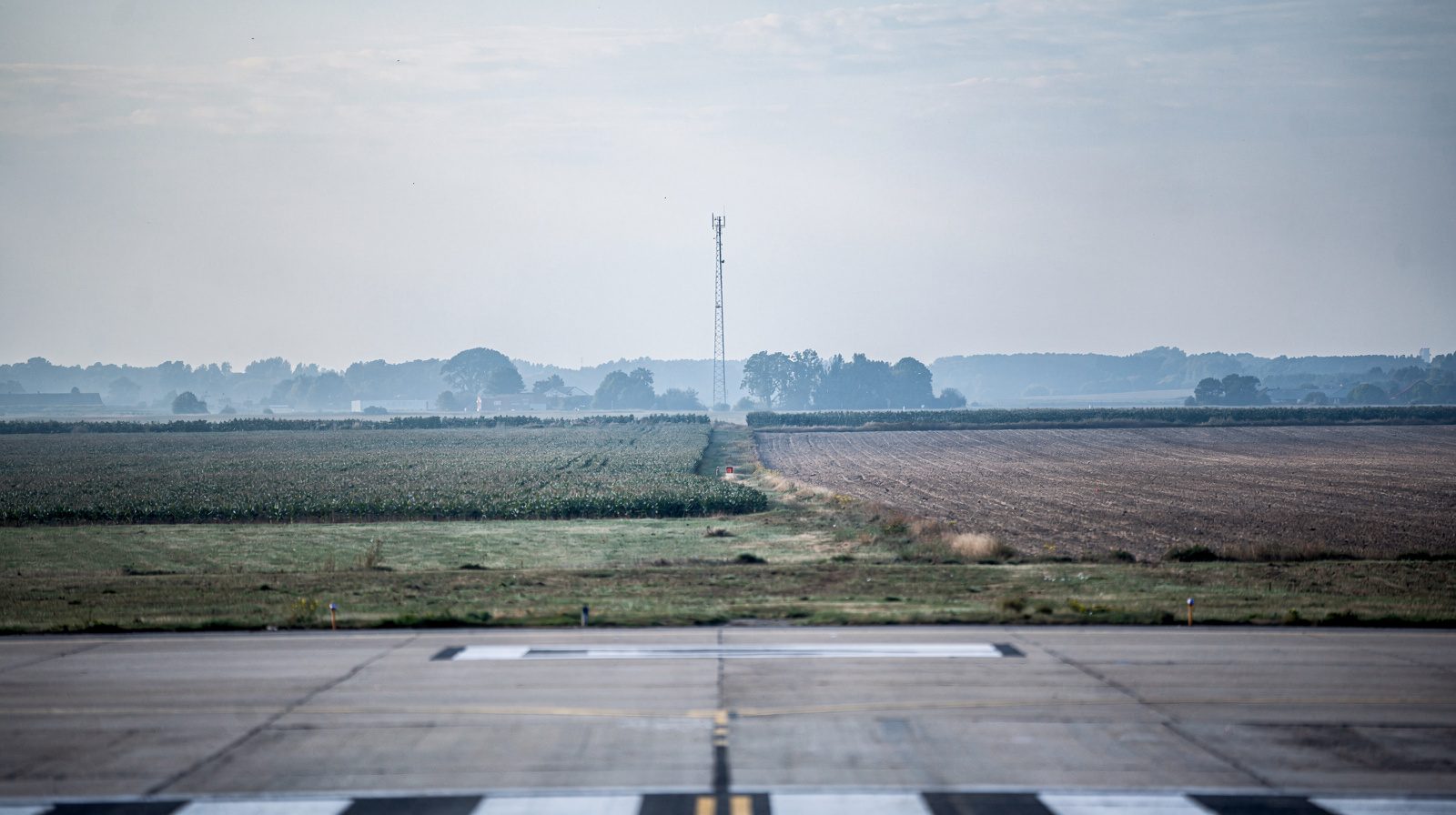
A blast pad is a purpose-built, non-load-bearing surface located at the ends of airport runways, engineered to absorb and resist the intense erosive forces generated by jet engine exhaust and propeller wash. Its primary function is to prevent soil displacement, pavement degradation, and foreign object debris (FOD) formation, protecting both the runway infrastructure and critical lighting or navigational aids installed near the runway extremities.
Definition and Functional Purpose
A blast pad is not designed to support the static or dynamic loads of aircraft, instead, it serves as a protective buffer between the operational runway and the surrounding environment. According to both ICAO Annex 14, Volume I, and FAA Advisory Circular 150/5300-13B, the blast pad is a dedicated safety feature. It keeps jet and propeller exhaust from eroding soil, damaging pavement, and creating hazardous debris. This is vital for airports serving modern jetliners whose engine exhaust can exceed 100 knots at full thrust, which is strong enough to dislodge gravel, soil, or weak pavement.
Key blast pad functions include:
- Preventing ground erosion and FOD: Maintains the integrity of the runway end and reduces the risk of debris ingested by engines or striking aircraft.
- Protecting infrastructure: Shields approach lighting, instrument landing systems (ILS), and navigational aids from high-velocity exhaust.
- Reducing maintenance: Minimizes the frequency and cost of runway edge repairs and FOD removal.
- Enhancing visual safety: Chevron markings clearly demarcate non-operational areas, reducing pilot confusion.
Regulatory Standards and Guidance
United States (FAA)
The FAA’s AC 150/5300-13B requires federally funded airports to design, mark, and maintain blast pads to specific criteria. The dimensions and materials are determined by the needs of the critical design aircraft for each runway, taking into account the Airport Reference Code (ARC).
- Minimum length: As required by the critical aircraft and site needs. Must extend across the full width of the runway.
- Markings: Large yellow chevrons per FAA AC 150/5340-1M.
- Materials: Asphalt concrete or Portland cement concrete for major airports, stabilized soil possible for smaller fields.
- Maintenance: Regular inspections for erosion, cracks, and debris.
International (ICAO)
ICAO Annex 14, Volume I, sets the global standard:
- Minimum prepared area: 30 meters beyond the runway end.
- Chevron marking: Required if the paved area before a threshold is over 60 meters and not for aircraft use.
- Visual distinction: Chevrons must be highly visible and correctly oriented.
Comparison Table
| Standard | Minimum Length | Marking Requirement | Load-Bearing Requirement |
|---|---|---|---|
| FAA AC 150/5300-13B | Per runway/ARC | Yes, chevrons per 3.21 | Not designed for aircraft loads |
| ICAO Annex 14 | 30m | Yes, chevrons if paved >60m | Not designed for aircraft loads |
Design and Construction
Dimensions
Blast pad size is determined by:
- The size and thrust of the largest aircraft using the runway
- Proximity of sensitive infrastructure (lights, equipment)
- Local environmental factors (soil type, rainfall)
For busy airports with widebody jets, blast pads may be 60 meters or longer. The width always matches or exceeds the runway.
Surface and Materials
- Asphalt concrete: Most common at major airports for strength and flexibility.
- Portland cement concrete: Used where greater durability and chemical resistance is needed.
- Stabilized soil or turf: Acceptable at smaller airports with lower jet thrust requirements.
The surface must be coarse to reduce FOD and promote drainage. The subgrade is compacted and stabilized prior to surfacing, and drainage is carefully engineered to prevent standing water and erosion.
Construction and Maintenance
- Subgrade compacted and stabilized
- Drainage sloped away from runway
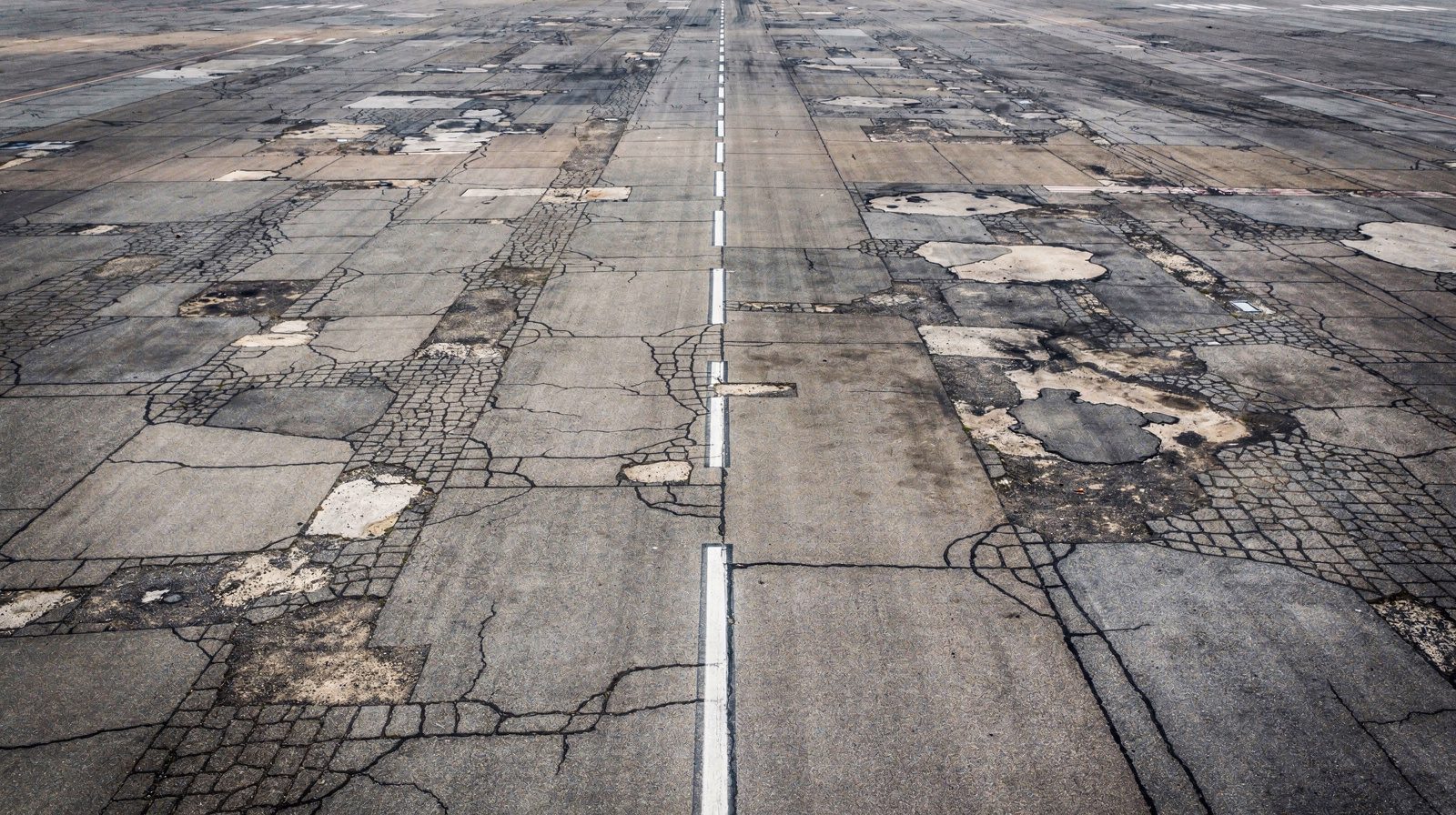
- Routine inspections for cracks, rutting, or debris
- Immediate repair of surface defects to prevent FOD
Visual Markings and Conventions
Blast pads are marked by yellow chevrons, elongated, V-shaped stripes pointing away from the runway threshold, spanning the full width of the blast pad. No numbers, threshold bars, or touchdown markings are present.
- ICAO/FAA standards: Chevrons must be large, retroreflective, and highly visible under all lighting conditions
- Purpose: Visually prohibits aircraft operations, reinforces the area’s non-load-bearing status
Blast Pad vs. Stopway vs. Runway Safety Area
| Feature | Primary Function | Structural Capability | Marking | Aircraft Operations Permitted | Reference |
|---|---|---|---|---|---|
| Blast Pad | Jet blast erosion control | Not load-bearing | Yellow chevrons | No (except emergency) | FAA/ICAO |
| Stopway | Deceleration area | Load-bearing | Runway edge markings | Yes (aborted takeoff only) | FAA/ICAO |
| Runway Safety Area | Excursion safety margin | May be load-bearing | None (graded/clear) | No (except emergency) | FAA/ICAO |
Blast pads are never included in declared runway lengths and are not designed to support aircraft weight. Their function is purely protective and visual. Stopways are structurally capable of supporting aircraft in rejected takeoffs, while runway safety areas provide clear zones for accidental excursions.
Operational and Safety Significance
Blast pads help:
- Prevent FOD ingestion: By stabilizing the surface, they reduce the risk of debris entering engines.
- Protect lighting/navigational aids: Prevents misalignment and damage from high-velocity exhaust.
- Maintain pavement and soil integrity: Reduces the need for costly repairs and operational downtime.
- Ensure regulatory compliance: Proper design and marking are required for airport certification.
Examples and Use Cases
Major Airports
- London Heathrow (EGLL) and Los Angeles International (KLAX): Blast pads up to 60 meters, reinforced concrete, protect approach lighting and navigational arrays.
- General aviation airports: Shorter or turf blast pads, but fulfilling the same protective function for smaller aircraft.
Use Case Scenario
A Boeing 777 at a major airport applies maximum thrust during takeoff. The blast pad absorbs the jet exhaust, protecting the soil, lighting, and runway edge. The chevrons ensure pilots do not use the area for takeoff or landing, maintaining safety and pavement quality.
Construction Methods
- Subgrade preparation: Compacted and stabilized
- Surface layer: Asphalt, concrete, or stabilized soil
- Drainage: Sloped for rapid water removal
- Quality control: Compaction tests, surface profiling, and maintenance inspections required
International Differences and Variations
- ICAO: Chevron marking required only for paved areas >60m before the threshold
- FAA: Chevron marking required for all blast pads, regardless of length
- Materials: Asphalt/concrete at major airports, stabilized soil or turf at smaller fields
- Adaptation for new large aircraft: Larger blast pads, stronger surfaces where necessary
Role in Airport Planning
Blast pads are included in the Airport Layout Plan (ALP) and are a required feature for airport certification and federal funding. Their size, location, and marking must be documented and maintained as part of the airport’s safety and pavement management programs.
Summary
A blast pad is an essential component of modern runway design, ensuring the safety, durability, and compliance of airport operations. Properly designed, constructed, and marked blast pads protect infrastructure, reduce debris risk, and reinforce airfield safety, making them a universal standard at airports worldwide.
References
- FAA AC 150/5300-13B – Airport Design
- FAA AC 150/5340-1M – Standards for Airport Markings
- ICAO Annex 14, Volume I – Aerodrome Design and Operations
Related terms: Stopway , Runway Safety Area , Foreign Object Debris (FOD) , Runway End Safety Area (RESA)
Frequently Asked Questions
- What is the primary purpose of a blast pad at an airport?
- A blast pad’s primary purpose is to protect the ground and infrastructure at the ends of runways from the erosive force produced by jet engine exhaust and propeller wash, reducing foreign object debris (FOD) and preserving runway edge integrity. It is not constructed to support aircraft loads and must not be used for takeoff, landing, or taxiing.
- How is a blast pad visually distinguished from other runway features?
- Blast pads are marked with large yellow chevrons stretching the entire width and length of the paved area beyond the runway. These markings, set by ICAO and FAA standards, warn pilots and ground personnel that the area is not load-bearing and must not be used for aircraft movement.
- Are blast pads included in the declared runway length for takeoff or landing?
- No. Blast pads are not included in the declared runway distances (TORA, TODA, LDA, ASDA) and may not be used for takeoff, landing, or taxiing, except in emergencies. Their purpose is solely protective.
- What materials are used for constructing blast pads?
- Blast pads may be constructed from asphalt concrete, Portland cement concrete, or compacted and stabilized soil, depending on site requirements and operational needs. Major airports prefer hard surfaces for durability, while smaller airports may use stabilized turf or soil.
- What is the regulatory guidance for blast pads?
- In the US, the FAA’s AC 150/5300-13B mandates blast pad design, marking, and maintenance for federally funded airports. Internationally, ICAO Annex 14, Volume I, provides similar standards for blast pad construction, marking, and operational use.
- How do blast pads differ from stopways and runway safety areas?
- Unlike stopways, which are load-bearing and may be used for aborted takeoffs, or runway safety areas (RSAs), which provide a graded safety margin for excursions, blast pads are not designed to support aircraft loads and are used exclusively to resist jet blast erosion. They are visually distinguished by yellow chevrons and are not included in operational runway distances.
This is a reference entry. TarmacView provides drone inspection services and doesn't sell the equipment or materials described in this glossary.