What is Bleeding (Flushing) in Asphalt Pavements?
Definition and Visual Characteristics
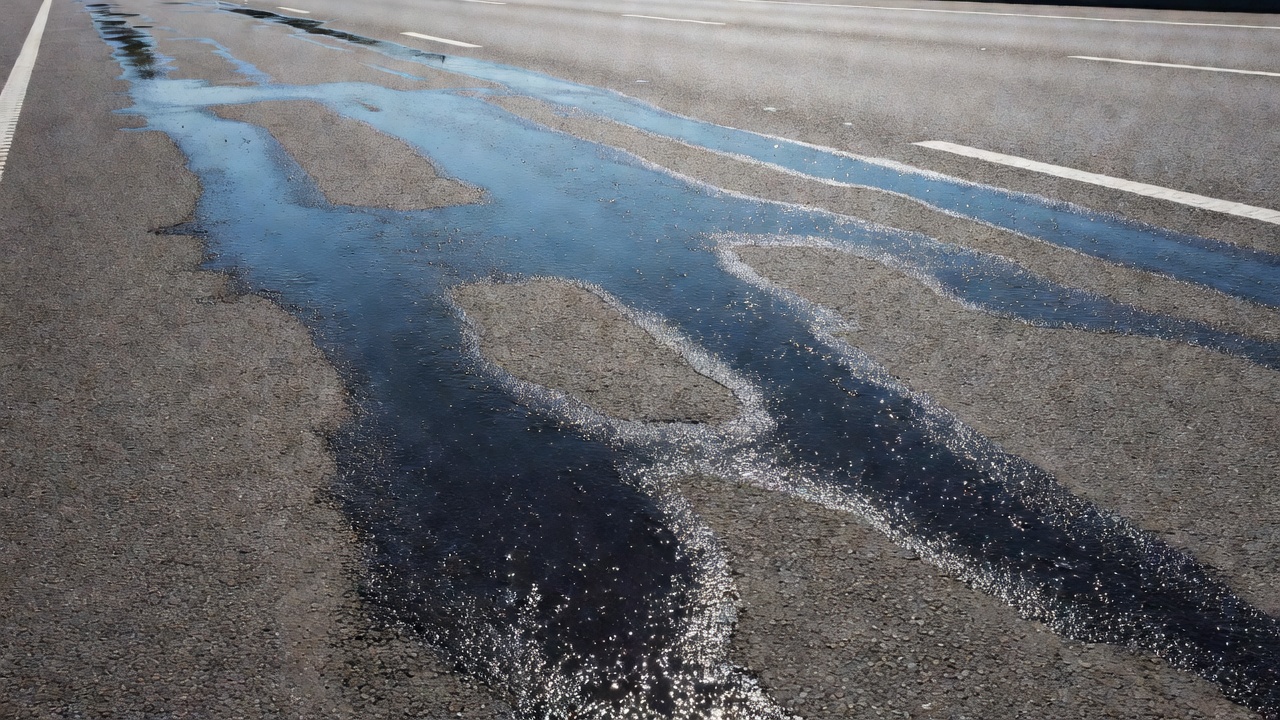
Bleeding, also referred to as flushing, is a pavement surface defect characterized by the upward migration of excess asphalt binder to the pavement surface, forming a continuous film that creates a shiny, glass-like, reflective appearance. The FHWA Long-Term Pavement Performance (LTPP) Distress Identification Manual classifies bleeding as Distress Type ACP 11 under the Surface Defects category for asphalt concrete-surfaced pavements. The manual describes bleeding as a condition where a film of asphalt binder appears on the pavement surface, producing a shiny, glass-like reflecting surface that can become sticky, particularly during hot weather conditions.
The visual characteristics of bleeding evolve with severity. At low severity, the pavement surface shows slight discoloration with a darkening of the surface in wheel paths, and a thin binder film is present but aggregate texture remains partially visible. At moderate severity, the surface becomes distinctly darker with a noticeable shiny appearance, aggregate particles become partially obscured by the binder film, and the surface may feel sticky to the touch during warm weather. At high severity, the binder film completely obscures the aggregate particles, creating a smooth, mirror-like reflective surface that remains sticky or tacky even at moderate temperatures. The pavement texture is virtually eliminated, and standing water may appear darker on the surface due to the lack of macro-texture drainage.
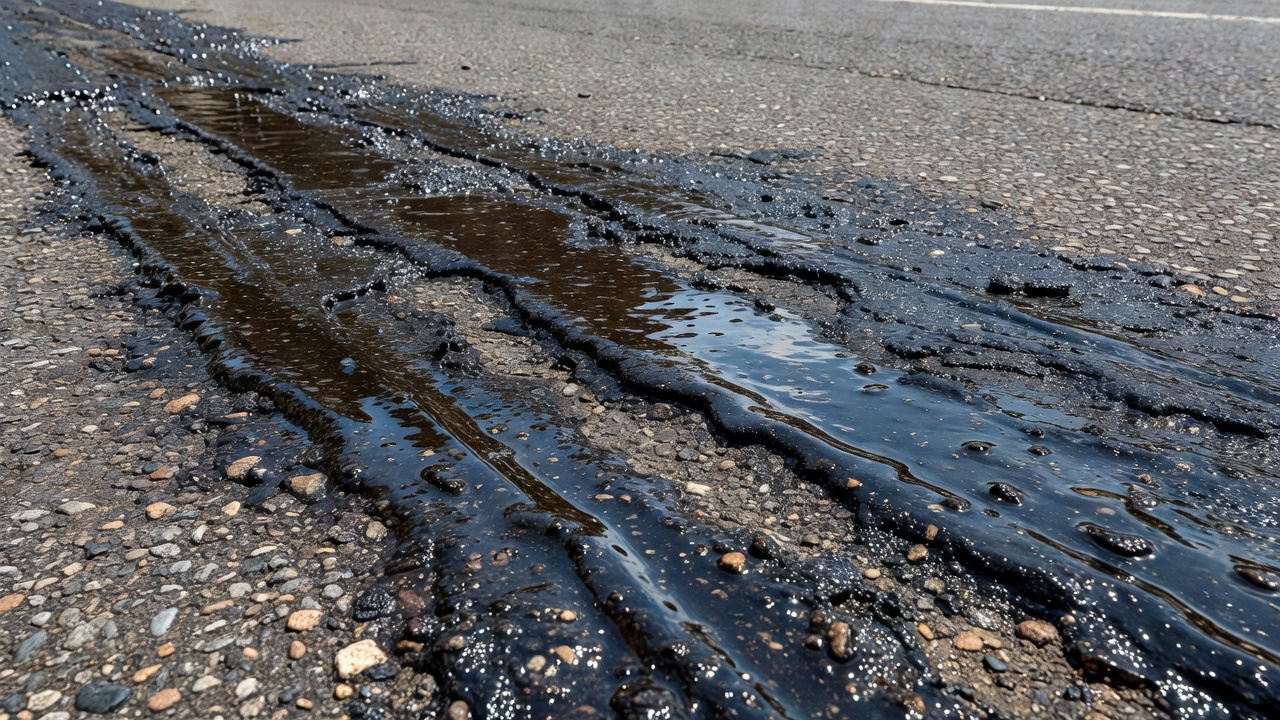
Bleeding is most commonly observed in wheel paths where traffic loading applies repeated compaction and kneading action to the pavement. The combination of traffic-induced densification and high summer temperatures creates conditions that force binder to the surface. On seal coat and surface treatment pavements, bleeding typically appears in the wheel paths first, then may spread laterally across the lane as severity increases. In hot mix asphalt (HMA) pavements, bleeding may appear as localized patches or may cover entire wheel path areas depending on the uniformity of the underlying cause.
The phenomenon is not thermally reversible, once binder has migrated to the surface, cooling temperatures do not cause it to re-absorb into the pavement structure. Each hot season adds incremental binder accumulation, making bleeding a progressive distress that worsens over successive summers. This irreversibility is a critical characteristic distinguishing bleeding from other temporary surface conditions such as water bleeding or surface moisture films.
Bleeding vs Flushing Terminology
The terms bleeding and flushing are frequently used interchangeably in pavement engineering, but the Texas Tech University and Texas Department of Transportation research report (FHWA/TX-06/0-5230-1) provides a meaningful distinction between the two based on timing and maintenance urgency.
Bleeding describes the active process where asphalt binder is actively migrating from within the pavement structure to the surface. This is a dynamic condition occurring during hot weather when binder viscosity decreases sufficiently for it to flow upward under traffic loading. Bleeding is characterized by the appearance of fresh binder on the surface, often occurring within hours or days of a high-temperature event. From a maintenance perspective, bleeding represents an immediate concern that may require corrective or even emergency treatment to restore surface friction and prevent safety hazards.
Flushing describes the resulting condition, a pavement surface that has already experienced bleeding and now exhibits a binder-rich film on the surface. Flushed pavement is the legacy condition of previous bleeding events. The surface may appear dark and shiny but may not be actively producing additional binder at the time of observation. Flushed pavement, while problematic from a friction standpoint, is typically not a maintenance emergency requiring immediate intervention. The TxDOT Pavement Manual uses the term “flushing” for its distress classification, defining it as “the presence of excess asphalt on the pavement surface.”
The FHWA LTPP Distress Identification Manual uses only the term bleeding, without distinguishing between active and passive conditions. Most state highway agencies in the United States follow FHWA terminology and use bleeding as the standard term. Internationally, flushing is more commonly used, particularly in British English-influenced regions and in ICAO documentation for airport pavements.
From a practical inspection standpoint, the distinction matters for maintenance timing. An actively bleeding pavement requires immediate attention (aggregate blotting, cooling, or removal), while a flushed pavement with stable binder can be scheduled for planned rehabilitation (milling, overlay, or surface treatment) within a normal maintenance cycle.
Causes of Bleeding
Bleeding results from the interaction of mix design parameters, construction practices, traffic loading, and environmental conditions. Understanding each causal factor is essential for both prevention and remediation.
Excessive Asphalt Binder Content
The most fundamental cause of bleeding is an excess of asphalt binder relative to the void space available in the aggregate skeleton. In HMA mix design, the binder content is selected to provide a target film thickness around aggregate particles while leaving sufficient air voids (typically 3-5% for dense-graded mixes) to accommodate binder thermal expansion. When binder content exceeds the design optimum by 0.3-0.5% or more, the excess binder has nowhere to go except upward to the surface under traffic and temperature.
In seal coats and surface treatments, bleeding is directly related to the binder application rate. If the application rate exceeds what the existing surface texture and aggregate embedment can accommodate, the excess binder will remain on the surface after chip embedment. TxDOT research indicates that seal coat bleeding is often the result of application rates that are too high for the wheel path areas where traffic has already polished or densified the existing surface.
Low Air Void Content
The air void content of compacted HMA is the primary volumetric parameter that determines whether a mix has sufficient room for binder thermal expansion. Asphalt binder is a viscoelastic material that expands when heated. On a typical summer day, pavement surface temperatures can reach 60-70°C (140-160°F), causing the binder to expand by approximately 0.5-1.0% in volume. If the in-place air void content falls below approximately 3%, the expanded binder has insufficient void space to occupy and is forced to the surface.
The target air void content for dense-graded HMA at construction is typically 6-8%. Under traffic loading, these voids are reduced through densification (secondary compaction). A well-designed mix should retain approximately 3-5% air voids after years of traffic. Mixes that compact to below 3% air voids, whether due to excessively high binder content, weak aggregate structure, or over-compaction during construction, are at high risk for bleeding.
High Temperatures
Temperature is the primary environmental trigger for bleeding. Asphalt binder viscosity decreases exponentially with increasing temperature. At typical service temperatures (40-60°C / 104-140°F), binder viscosity is low enough to permit flow under the shear stresses induced by traffic loading. During extreme heat events where pavement surface temperatures exceed 70°C (158°F), even mixes with adequate design air voids may experience temporary bleeding.
The phenomenon is exacerbated in regions with high annual temperature ranges. Pavements in hot climates (southwestern US, Middle East, Australia) are more susceptible to bleeding than those in temperate regions. Additionally, the temperature susceptibility of the binder grade plays a role, binders with high temperature susceptibility and low high-temperature PG grade are more prone to bleeding than stiff, polymer-modified binders.
Over-Compaction During Construction
Over-compaction during HMA placement reduces the in-place air void content below target values. This can occur when the compaction effort (roller passes, pattern, or weight) exceeds what is necessary to achieve design density. Common scenarios include excessive pneumatic tire roller passes on tender mixes, or vibratory compaction on mixes that are already at target density.
The TxDOT Pavement Manual notes that compaction control is critical for bleeding prevention. Mixes with low asphalt contents are generally more difficult to compact because of inadequate lubrication, leading contractors to increase compactive effort. Conversely, mixes with slightly high binder content compact easily and may be over-compacted by standard roller patterns intended for lower-binder mixes. Field quality control testing of in-place density (nuclear gauge or core sampling) is essential to prevent over-compaction.
Moisture Damage in Lower Lifts
A less recognized cause of bleeding is moisture damage in lower HMA lifts. When moisture enters the pavement structure through cracks or poor drainage, it can cause stripping of the binder from aggregate in the lower lifts. The stripped binder, now free within the pavement structure, can migrate upward under traffic loading and temperature, appearing on the surface as bleeding. This mechanism is particularly problematic because the source of the excess binder is not in the surface mix but in underlying layers, making the distress difficult to diagnose and treat.
Excessive Tack Coat
Tack coat is applied between HMA lifts to ensure bond. If the tack coat application rate exceeds the absorptive capacity of the underlying layer, the excess tack can migrate upward through the fresh HMA layer during compaction, appearing as bleeding on the finished surface. This is most common when tack coat is applied to a dense, low-absorption existing surface at rates intended for more textured surfaces.
FHWA LTPP and TxDOT Classification
FHWA LTPP Distress Identification Manual (DIM)
The FHWA LTPP Distress Identification Manual, currently in its 5th edition (FHWA-HRT-13-092, revised May 2014), classifies bleeding as Distress Type ACP 11 under the Surface Defects category for asphalt concrete-surfaced pavements. The LTPP DIM defines bleeding as “a film of asphalt binder on the pavement surface that creates a shiny, glass-like reflecting surface that may become sticky.”
In the LTPP distress surveying protocol, bleeding is measured by affected area as a percentage of the total pavement surface area being evaluated. Unlike many other distresses in the LTPP manual (such as fatigue cracking or rutting), bleeding in the LTPP DIM does not have defined severity levels (low, moderate, high). Instead, the inspector records the presence and extent of the distress based on visual observation. The LTPP manual includes photographic reference examples showing discoloration, loss of surface texture, and complete obstruction of aggregate by binder film, but these serve as visual guides rather than formal severity thresholds.
The LTPP data collection protocol specifies that bleeding should be recorded in the wheel path and non-wheel path areas separately, as the distress is typically more pronounced in the wheel paths where traffic loading and secondary compaction are concentrated. The recorded quantity is the percent of total area affected, rounded to the nearest 5%.
TxDOT Flushing Classification
The Texas Department of Transportation (TxDOT) Pavement Manual provides a more structured severity classification for flushing. In TxDOT’s visual pavement condition survey procedures, flushing (the term TxDOT uses) is defined as “the presence of excess asphalt on the pavement surface” and is rated by degree of severity (low, medium, high) and extent (percent of lane total wheel path length affected).
The TxDOT severity levels for flushing are:
| Severity | Description | Visual Indicators |
|---|---|---|
| Low | Slight darkening, texture visible | Surface appears slightly darker or discolored, aggregate texture remains visible, minimal friction reduction |
| Medium | Distinct shiny, aggregate partially obscured | Noticeably dark and shiny, especially in wheel paths, aggregate particles partially covered, surface feels sticky in warm weather, measurable friction loss |
| High | Black reflective surface, aggregate completely obscured | Black, glossy, mirror-like appearance, aggregate fully covered by binder film, sticky even at moderate temperatures, severe friction reduction |
TxDOT measures extent as the percent of the lane total wheel path length affected by flushing. This recognizes that flushing is not uniformly distributed across the lane width but is concentrated in the wheel tracks where traffic loading is highest. The combination of severity and extent allows TxDOT pavement managers to prioritize maintenance treatments.
Other Agency Classification Systems
Several other state DOTs and international agencies have their own classification approaches for bleeding.
The Asphalt Institute classifies bleeding into three levels based on visual appearance: slight (thin film, aggregate still visible), moderate (noticeable film, partial aggregate coverage), and severe (thick film, aggregate completely obscured).
ASTM D6433 (Standard Practice for Roads and Parking Lots Pavement Condition Index Surveys) includes bleeding as a distress type in its PCI methodology. The PCI deduct value system assigns penalty points based on the density (percent of area affected) and severity level of bleeding.
AASHTO PP68 provides standards for pavement image collection that can be used for automated bleeding detection, though it does not specify bleeding-specific severity criteria.
Effects on Skid Resistance and Safety
Bleeding has a direct and measurable impact on pavement skid resistance, which is the primary safety concern associated with this distress. The mechanism is straightforward: the excess binder film fills the macro-texture voids between aggregate particles, reducing the surface ability to drain water and maintain tire-pavement contact.
Friction Reduction Mechanism
Pavement surface friction is provided by two components: micro-texture (the fine-scale roughness of aggregate particles) and macro-texture (the larger-scale voids between aggregate particles that provide water drainage channels). Bleeding primarily affects macro-texture by filling the void spaces with binder. At high severity, the binder film also covers aggregate particles, reducing micro-texture contribution.
When a bleeding pavement surface becomes wet, the binder film combined with water creates a lubricating layer between the tire and the pavement. This can reduce the friction coefficient (measured as FN or mu) from typical values of 0.40-0.65 for properly textured HMA to values below 0.30, which is generally considered the threshold for safe operation on highways. At friction values below 0.20, the risk of hydroplaning on wet surfaces increases dramatically.
Safety Consequences
FHWA research on pavement safety performance has established clear correlations between skid resistance and crash rates. Studies have shown that low skid resistance is a contributing factor in 15-20% of wet-weather crashes. The relationship is non-linear, the crash risk increases exponentially as friction values decrease below critical thresholds.
On highways, bleeding-induced friction loss is most dangerous at:
- Intersections where vehicles are braking or turning
- Curves where lateral friction demand is high
- Downgrades where stopping distances are increased
- High-speed sections where available friction demand is lower
Airport Runway Implications
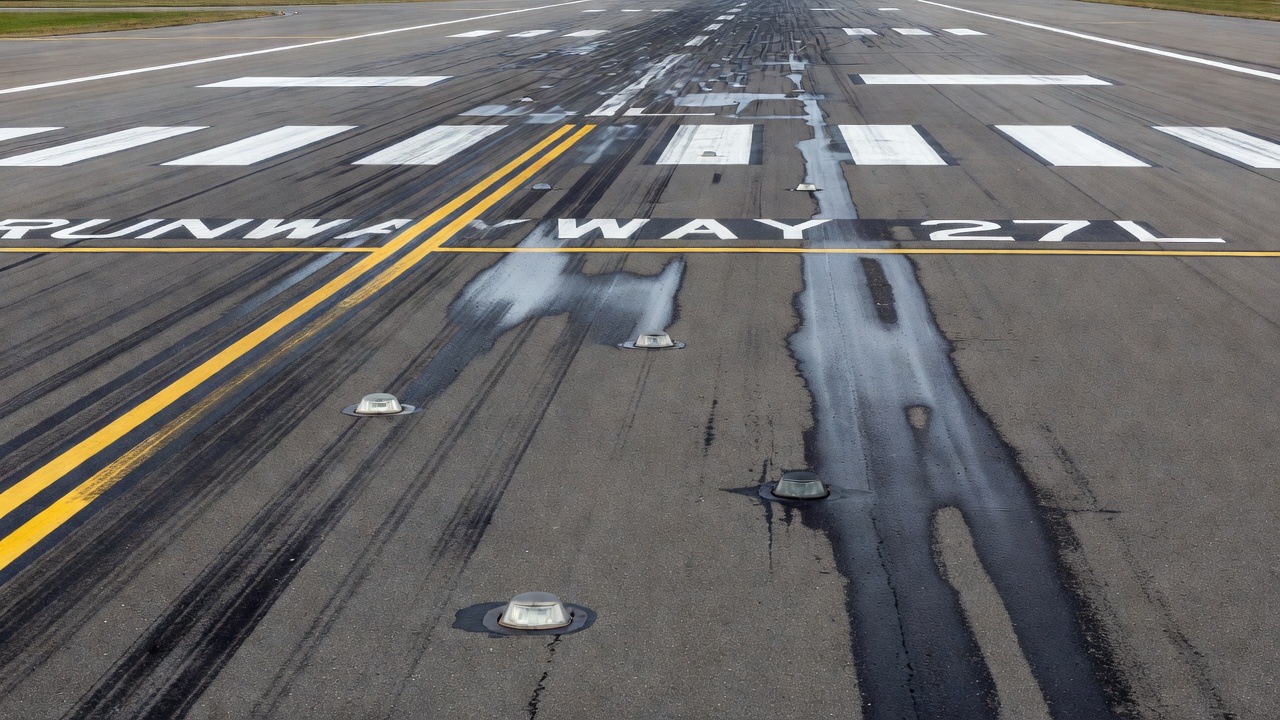
On airport runways, the consequences of bleeding are even more critical. Aircraft operations during landing require adequate friction for braking and directional control. ICAO Annex 14, Volume I, Chapter 10 (Aerodrome Maintenance) requires that runway surfaces be maintained in a condition that provides adequate friction characteristics. When bleeding occurs on runways:
- Landing distance increases as braking effectiveness decreases
- Directional control is compromised during crosswind landings
- Hydroplaning risk increases during wet runway operations
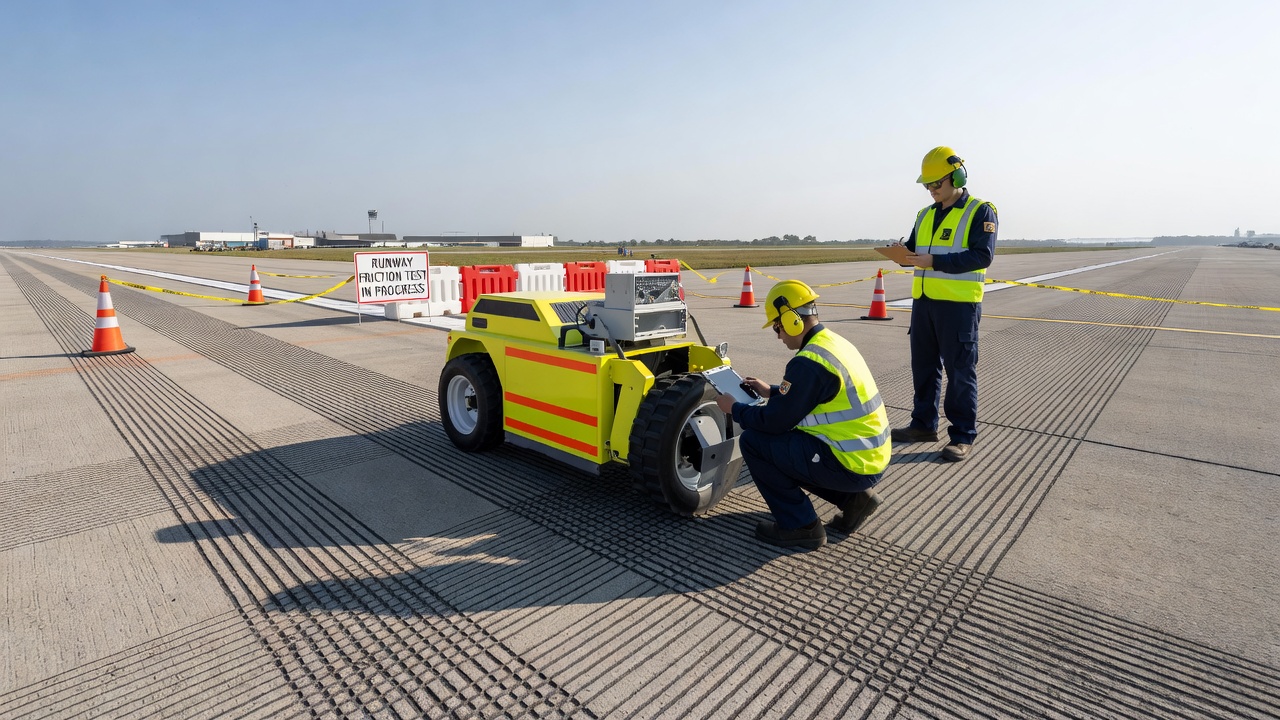
- ICAO friction testing (using devices such as the Mu-Meter, GripTester, or Surface Friction Tester) may show values below the maintenance planning level
The FAA Advisory Circular 150/5320-12C provides guidance on runway surface friction and texture requirements. For runways, the FAA recommends a minimum macro-texture depth (MTD) of 1.14 mm and requires friction testing when surface conditions change, including when bleeding is observed.
Bleeding in Airport Pavements
Airport pavements present a unique set of considerations for bleeding detection and management due to the stringent safety requirements and operational constraints of aviation facilities. ICAO, FAA, and national aviation authorities worldwide have established specific standards for runway surface condition that directly relate to bleeding.
ICAO Standards
ICAO Annex 14, Volume I (Aerodrome Design and Operations) establishes Standards and Recommended Practices (SARPs) for aerodrome physical characteristics. Section 10 of Annex 14 addresses aerodrome maintenance, requiring that the surface of runways be maintained to prevent the formation of harmful irregularities and to restore friction characteristics when they fall below specified levels.
ICAO Doc 9157 (Aerodrome Design Manual) Part 4 provides detailed guidance on visual aids and surface characteristics. While Doc 9157 does not specifically mention bleeding as a standalone condition, the macro-texture and friction requirements it prescribes are directly affected by bleeding. The manual recommends minimum surface texture depths and friction levels that bleeding can degrade below acceptable thresholds.
ICAO Doc 9137 (Airport Services Manual) Part 2 (Pavement Surface Conditions) provides guidance on identifying and assessing surface conditions including bleeding. The manual describes bleeding as “the presence of excess bituminous binder on the pavement surface” and notes that it is particularly problematic on runways because of the high-speed operations and the critical nature of braking performance.
FAA Standards
The FAA Advisory Circular 150/5320-12C (Airport Pavement Design and Evaluation) provides guidance on pavement surface characteristics, including friction and texture requirements. The FAA requires friction testing on runways using FAA-approved continuous friction measuring equipment (CFME). When bleeding is observed, the FAA recommends:
- Immediate friction testing to quantify the safety impact
- Surface texture measurement (volumetric patch technique or laser profilometry)
- Scheduling of rehabilitation to restore friction characteristics
- Interim measures such as rubber removal or hydroblasting
The FAA Pavement Condition Index (PCI) survey method, based on ASTM D5340, includes bleeding as a distress type for airport pavements. In the PCI system, bleeding deduct values are assigned based on density (percent of area affected) and severity level, with higher deducts reducing the overall PCI score.
Airport-Specific Detection and Remediation
At airports, bleeding detection is typically conducted during PCI surveys, annual friction testing, and daily runway inspections (per ICAO Annex 14, daily inspections of the runway surface are required). The FAA requires that airport pavements undergo a comprehensive PCI survey at least once every three years for paved runways.
Airport-specific remediation options include:
- Hydroblasting (ultra-high pressure water cutting) to remove the excess binder film without damaging the aggregate structure, this is often the preferred method on runways because it preserves surface texture and can be completed during night operations
- Cold milling to remove the surface binder film, followed by a thin overlay or surface treatment
- Grooving (cutting longitudinal grooves into the runway surface) to provide water drainage channels and improve friction, though this does not address the underlying bleeding condition
- Friction course overlay, a permeable friction course (PFC) or porous asphalt overlay that provides a high-friction surface independent of the underlying binder condition
Detection by Optical Imaging
Modern pavement inspection has advanced from manual visual surveys to automated detection systems using optical imaging and laser-based technologies. Bleeding is particularly well-suited to optical detection because of its distinctive visual signature, the dark, shiny, reflective surface formed by the binder film.
Laser Crack Measurement System (LCMS)
The Pavemetrics Laser Crack Measurement System (LCMS-2) is one of the leading commercial systems for automated bleeding detection. The LCMS uses two 3D laser profilers mounted on a survey vehicle to capture high-resolution 3D surface data and 2D intensity images of the full lane width at highway speeds (up to 100 km/h). The system collects:
- 3D profile data at 1 mm longitudinal resolution and 1 mm transverse resolution
- 2D intensity data (reflectivity) at the same resolution, capturing the optical characteristics of the surface
The bleeding detection algorithm in LCMS-2 analyzes the 2D intensity and 3D texture data in the wheel path areas. Bleeding appears as areas of low reflectivity (darker) in the intensity images and reduced texture amplitude in the 3D profile data. The algorithm classifies bleeding into three severity levels (light, medium, severe) based on the percentage of the wheel path area affected, with user-customizable thresholds.
Surface Reflectivity Analysis
The fundamental principle behind optical bleeding detection is surface reflectivity. Normal asphalt pavement with exposed aggregate has a matte, diffuse reflection pattern. When binder bleeds to the surface, it creates a smooth film that exhibits specular reflection (mirror-like). The change from diffuse to specular reflection is detectable using:
- Visible spectrum cameras, bleeding appears as dark, glossy areas that reflect light differently from surrounding pavement
- Infrared imaging, bleeding areas have different thermal emissivity due to the binder film, allowing detection by thermal cameras
- Multi-spectral imaging, different spectral bands can differentiate between clean aggregate and binder-covered aggregate
Automated Classification Algorithms
Modern pavement management systems use machine learning and deep learning algorithms to classify bleeding from optical images. Convolutional neural networks (CNNs) trained on thousands of labeled pavement images can detect bleeding with accuracy exceeding 90% in controlled conditions. These systems:
- Segment the pavement image into wheel path and non-wheel path zones
- Extract texture features (coarseness, contrast, directionality)
- Analyze color and intensity characteristics
- Classify severity based on extent and intensity of the binder film
- Geo-tag detected bleeding locations for maintenance planning
The AASHTO PP68 standard provides guidelines for pavement image collection, ensuring that images are captured under consistent lighting and perspective conditions to support automated analysis.
Remediation and Repair
Remediation strategies for bleeding range from simple blotting treatments for minor cases to full structural rehabilitation for severe, recurrent bleeding. The choice of treatment depends on severity, extent, traffic level, and the underlying cause.
Minor Bleeding, Sand Application and Blotting
For minor bleeding (low severity, isolated areas), the simplest treatment is application of coarse sand or fine aggregate to blot up the excess binder. The sand absorbs the free binder, and excess material is swept away. This treatment is temporary and may need to be repeated, particularly during hot weather when additional binder bleeding occurs.
The TxDOT research report (0-5230-1) describes several blotting materials:
- Grade 5 aggregate (small size), applied to bridge over liquid asphalt
- Blotter sand, fine material that absorbs free binder
- Lime water application, cools the pavement surface and causes the binder to crust over, reducing stickiness
Blotting treatments are suitable for low-volume roads and as emergency measures on higher-volume roads. They do not address the underlying cause and must be repeated as the binder continues to bleed.
Moderate Bleeding, Cold Milling and Heater Planing
For moderate to severe bleeding, mechanical removal of the excess binder film is required. Two primary methods are used:
Cold milling uses a rotating drum with carbide cutting teeth to remove a thin layer (typically 1-2 cm) of the binder-rich surface. The milled surface exposes fresh aggregate and restores texture. After milling, a new surface treatment or thin overlay is typically applied to seal the milled surface and provide long-term texture.
Heater planing uses a propane-fired heating unit to soften the pavement surface, followed by a planing blade that removes the heated binder-rich material. The heater planer can remove the binder film to a controlled depth of 3-10 mm. This method has the advantage of preserving the underlying pavement structure while selectively removing the excess binder.
Severe Bleeding, Overlay and Structural Rehabilitation
When bleeding is severe and widespread, or when the underlying cause is excessive binder content or low air voids in the entire HMA layer, structural rehabilitation is required:
- Thin overlay (2.5-5 cm) of new HMA provides a fresh surface with controlled binder content and air voids. The overlay must be designed with adequate air voids (6-8%) and appropriate binder content to prevent recurrence
- Permeable friction course (PFC) overlay provides high macro-texture and excellent friction characteristics, and the porous structure allows water drainage through the pavement, reducing hydroplaning risk
- Microsurfacing (polymer-modified emulsion with aggregate) provides a thin, high-friction surface treatment that can be applied directly over flushed pavement
- Full-depth removal and replacement, for pavements where the underlying mix has fundamentally incorrect volumetric properties (excessive binder, inadequate voids), the entire HMA layer must be removed and replaced with a properly designed mix
Preventive Measures
The most effective approach to managing bleeding is prevention through proper mix design and construction control:
| Parameter | Specification |
|---|---|
| Binder content | Within ±0.3% of design optimum |
| In-place air voids | 6-8% at construction, minimum 3% after trafficking |
| Compaction | Controlled to target density, avoid over-compaction |
| Binder grade | Select PG grade appropriate for climate and traffic |
| Tack coat rate | Apply at specified rate per surface condition |
The TxDOT research concludes that “there is no better advice for dealing with bleeding and flushed pavements than to avoid the problem from the outset” through proper design, material selection, and construction quality control.
Remediation Decision Matrix
| Severity | Recommended Treatment | Urgency | Expected Life |
|---|---|---|---|
| Low (minor discoloration) | Sand blotting, aggregate application | Low | 6-12 months (temporary) |
| Low-Medium | Cold milling + surface treatment | Medium | 2-4 years |
| Medium (distinct shiny surface) | Heater planing or thin microsurfacing | Medium-High | 3-5 years |
| Medium-High | Thin HMA overlay (2.5-4 cm) | High | 5-8 years |
| High (complete aggregate obscuration) | Cold milling + overlay or full-depth replacement | Immediate | 8-15 years |
The interaction between bleeding and other surface distresses should also be considered. Bleeding often occurs concurrently with polished aggregate (ACP 12) and can accelerate raveling (ACP 13) when the excess binder bleeds out of the mix, leaving the remaining binder film too thin to retain aggregate. In rutted pavements, bleeding in the rut troughs exacerbates friction loss and hydroplaning risk, creating a compounding safety hazard that requires comprehensive rehabilitation addressing both distresses.
Frequently Asked Questions
- What is the difference between bleeding and flushing in asphalt pavements?
- Bleeding and flushing are often used interchangeably, but the Texas Tech/TxDOT research report (0-5230-1) distinguishes them based on timing. Bleeding refers to the active process where excess asphalt binder is actively migrating upward to the pavement surface, typically occurring during hot weather when binder viscosity decreases. Flushing describes the resulting condition after bleeding has occurred, the pavement surface already has a binder-rich film that has accumulated over time. Bleeding is an immediate maintenance concern requiring corrective or emergency treatment, while flushed pavement, though problematic, is generally less urgent. In practical terms, bleeding is the active verb describing the ongoing mechanism, while flushed is the past-tense condition. Most agencies including FHWA and TxDOT treat them as the same distress type.
- How does bleeding affect skid resistance and safety?
- Bleeding directly reduces pavement surface texture by filling the macro-texture voids between aggregate particles with excess binder. This creates a smooth, polished-like surface with significantly reduced micro-texture and macro-texture. When wet, the binder film combined with water creates a lubrication layer that can reduce friction coefficients by 30-50% or more compared to properly textured pavement. Studies by FHWA have shown that low skid resistance is a contributing factor in 15-20% of wet-weather crashes. On runways, ICAO Annex 14 requires maintaining minimum friction levels, and bleeding is one of the conditions that can cause friction to fall below these thresholds, potentially leading to runway excursions during landing or takeoff in wet conditions.
- What causes bleeding in asphalt pavements?
- Bleeding is caused by one or a combination of factors: (1) Excessive asphalt binder content in the HMA mix design or manufacturing process, where the binder volume exceeds the void space in the aggregate skeleton. (2) Low air void content in the compacted pavement (typically below 3-4%), leaving insufficient room for thermal expansion of the binder during hot weather. (3) Over-compaction during construction, which densifies the mix beyond design air voids. (4) High ambient temperatures that reduce binder viscosity, allowing it to flow upward under traffic loading. (5) Soft binder grades (low PG or penetration grades) that are more susceptible to temperature-induced flow. (6) Excessive tack coat application between lifts, which can migrate upward. (7) Moisture damage in lower lifts that releases trapped binder. (8) In seal coats, excessive binder application rate or inadequate cover aggregate.
- How is bleeding classified by FHWA LTPP and TxDOT?
- The FHWA LTPP Distress Identification Manual (5th edition, FHWA-HRT-13-092, revised May 2014) classifies bleeding as Distress Type ACP 11 under Surface Defects for asphalt concrete-surfaced pavements. In the LTPP protocol, bleeding is measured by affected area as a percentage of total pavement surface area, with no defined severity levels, it is simply recorded as present or not. TxDOT classifies flushing (the term TxDOT uses) into three severity levels: low (slight discoloration, texture visible), medium (distinct darkening, aggregate partially obscured), and high (black shiny reflective surface, aggregate completely obscured, severe friction reduction). TxDOT measures extent as percent of lane total wheel path length affected.
- How is bleeding treated and remediated?
- Bleeding remediation strategies range from temporary to permanent solutions. Short-term treatments include applying blotter materials like coarse sand or stone screenings to absorb excess binder, applying lime water to oxidize and crust over the asphalt surface, or cooling the pavement with water. For moderate severity, cold milling or heater planing removes the binder-rich surface layer. For severe cases, structural rehabilitation with thin overlay, permeable friction course (PFC), or microsurfacing is required. At airports, hydroblasting with ultra-high pressure water cutting is often preferred because it preserves aggregate structure and can be completed during night operations. The appropriate treatment depends on bleeding severity, traffic conditions, and the underlying cause.