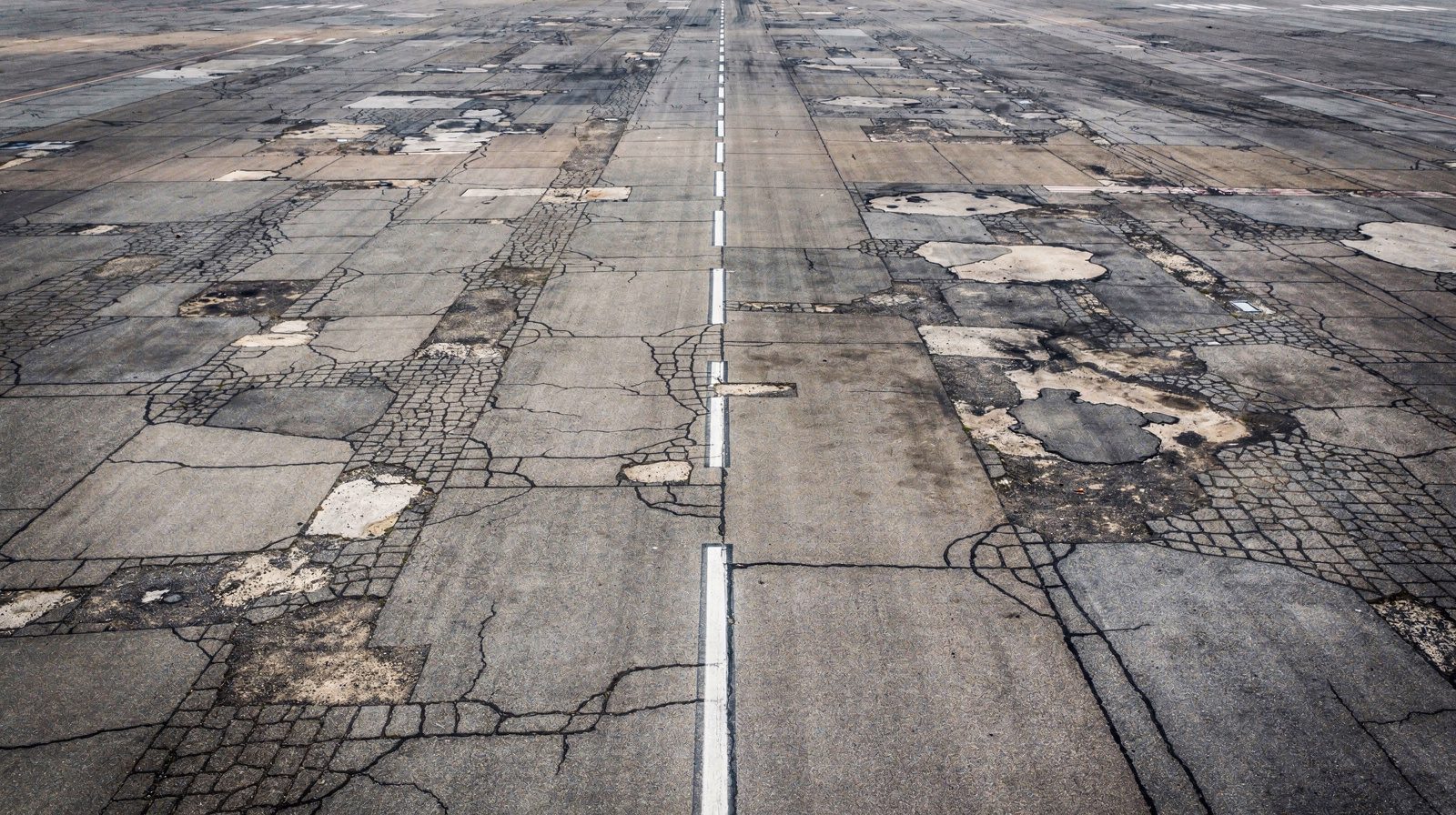
What is Block Cracking?
Definition and Pattern Characteristics
Block cracking is a pavement surface distress defined as a pattern of interconnected cracks that divide the asphalt concrete (AC) surface into approximately rectangular pieces. According to the FHWA Long-Term Pavement Performance (LTPP) Distress Identification Manual (Fifth Revised Edition, FHWA-HRT-13-092), block cracking, classified as distress type ACP 2, produces rectangular blocks that range in size from approximately 0.1 to 10 square meters (roughly 0.3 m × 0.3 m to 3 m × 3 m). The U.S. Army Corps of Engineers’ PAVER™ Distress Identification Manual for airfield pavements specifies a similar range, defining blocks as ranging from approximately 1 by 1 foot to 10 by 10 feet (0.3 m × 0.3 m to 3 m × 3 m), and assigns it distress code 43 within the PAVER system.
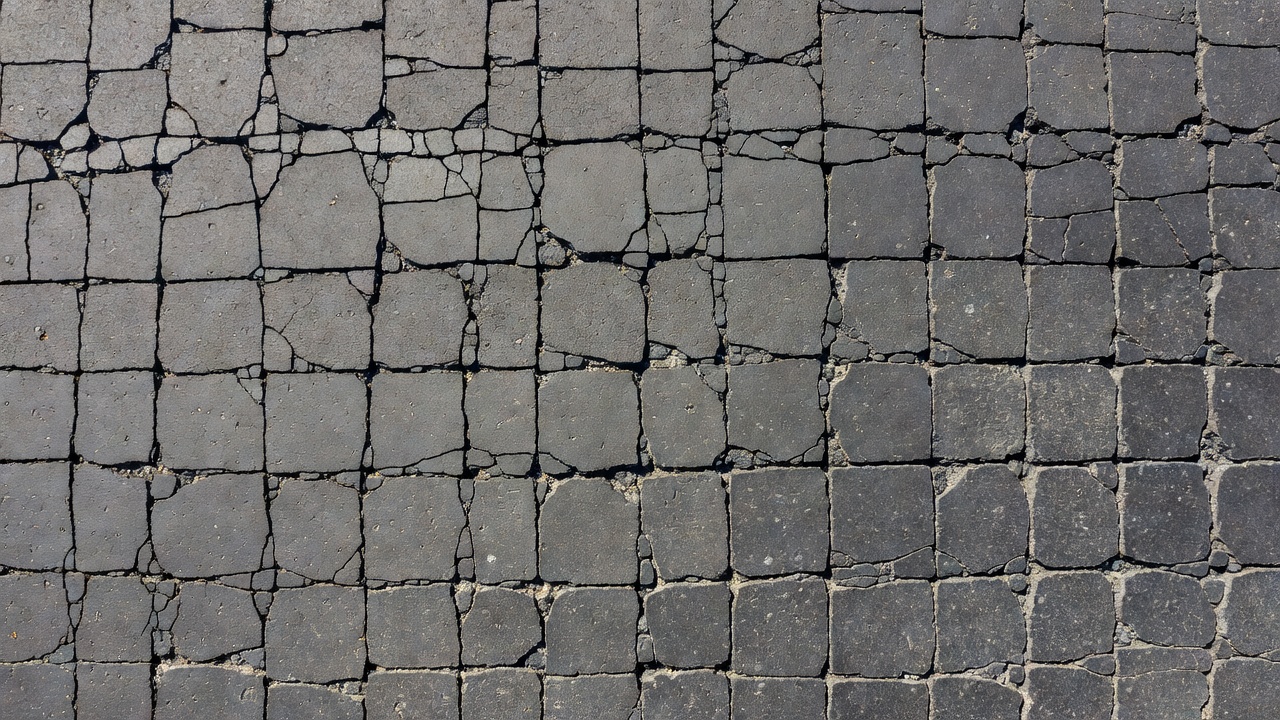
The defining characteristic that distinguishes block cracking from other crack types is the rectangular geometry and large block size. The crack pattern resembles a coarse grid or network dividing the pavement surface into blocks that are roughly equidimensional, neither predominantly longitudinal nor transverse, but forming a two-dimensional tessellation. This distinguishes it from longitudinal cracking (predominantly parallel to centerline) and transverse cracking (predominantly perpendicular to centerline), both of which are essentially one-dimensional linear features.
The FHWA LTPP manual specifies that an occurrence of block cracking must be at least 15 meters long before it is rated as block cracking. This minimum length criterion ensures that isolated, small-scale crack networks are not erroneously classified as systematic block cracking. Additionally, longitudinal boundary cracks within a block cracking area are not rated separately, they are considered integral components of the block cracking pattern itself. If fatigue cracking exists within the block cracking area, the measured area of block cracking is reduced by the area of fatigue cracking, preventing double-counting of distress.
Block cracking normally occurs over a large proportion of the pavement area, sometimes covering the entire lane width or extending across multiple lanes. However, it will sometimes manifest only in non-traffic areas such as parking lanes, shoulders, or medians, a key diagnostic feature confirming its non-load-associated nature. This spatial distribution pattern is fundamentally different from fatigue cracking, which is strictly confined to wheel paths.
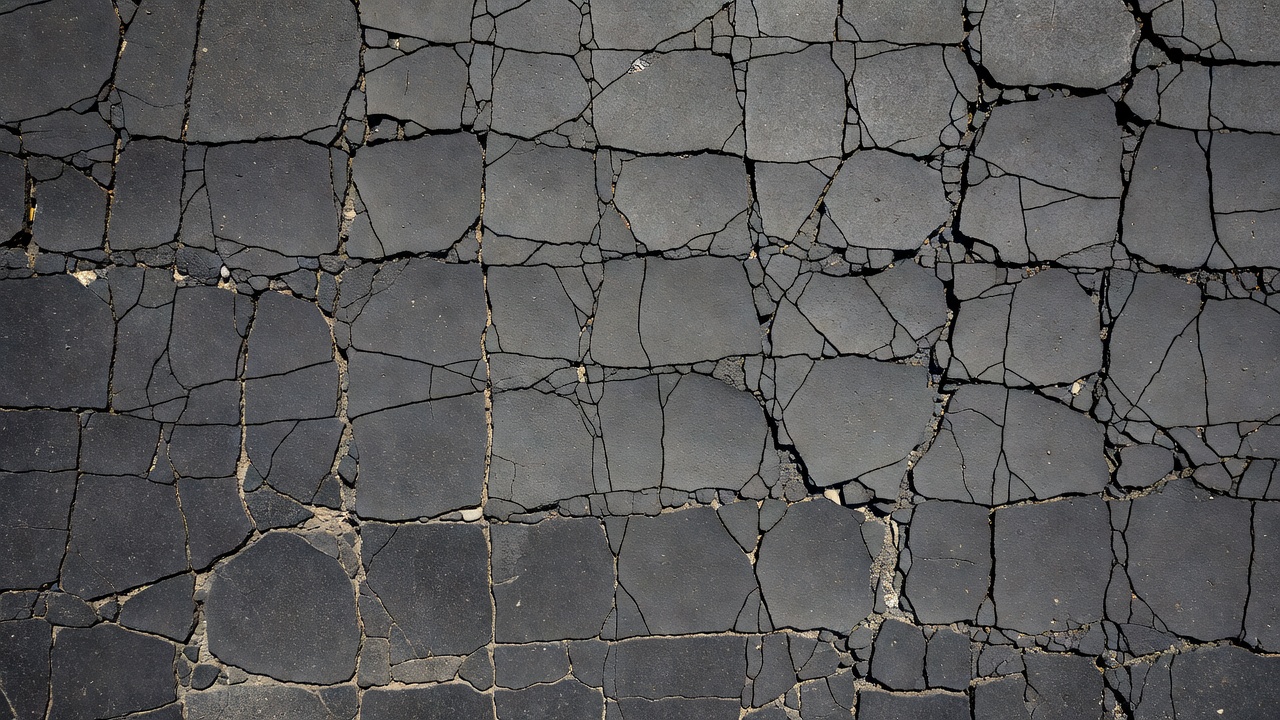
The crack pattern typically exhibits a hierarchy of cracks, where larger primary cracks define the major block boundaries and finer secondary cracks may appear within individual blocks as the distress progresses. The edges of the cracks may be vertical (unspalled) in early stages, but as the distress advances through thermal cycling and moisture infiltration, crack faces may ravel, progressively widening and losing material from the edges. In advanced stages, random cracking may develop adjacent to the primary block-defining cracks, an indication that the distress is crossing from moderate to high severity.
Causes: Binder Aging, Thermal Contraction, and Volume Change
Block cracking originates from the thermo-volumetric behavior of aged asphalt concrete, not from traffic-induced structural fatigue. Three interrelated mechanisms drive the formation and propagation of block cracking: (1) oxidative aging of the asphalt binder, (2) thermal contraction stresses from diurnal temperature cycling, and (3) volumetric shrinkage of the asphalt mixture over time.
Oxidative Aging of Asphalt Binder
The asphalt binder, the hydrocarbon-based cement that coats aggregate particles and binds the mixture together, undergoes a progressive chemical transformation when exposed to atmospheric oxygen. This process, termed oxidative aging, occurs in two distinct phases: short-term aging during hot-mix production, transportation, and placement (where binder is exposed to high temperatures of 150–180 °C and thin-film conditions), and long-term aging over the service life of the pavement (years to decades at ambient temperatures). Long-term aging is the dominant contributor to block cracking.
The chemistry of oxidative aging involves the reaction of oxygen molecules with reactive sites on asphalt hydrocarbons, particularly benzylic carbon atoms adjacent to aromatic rings and sulfur-containing functional groups. This oxidation forms polar oxygen-containing functional groups, primarily ketones (C=O) and sulfoxides (S=O), which significantly alter the colloidal structure of the binder. The asphalt transitions from a sol-type dispersion (where asphaltene micelles float relatively freely in the maltene phase) toward a gel-type structure (where asphaltenes form an increasingly rigid, interconnected network). The practical consequence is a dramatic increase in binder stiffness (complex shear modulus G*) and a corresponding decrease in phase angle (δ), indicating a shift from viscoelastic toward elastic-brittle behavior.
Key laboratory metrics that track this aging progression include the Penetration Index, Softening Point, Dynamic Shear Rheometer (DSR) G*/sinδ parameter, and Bending Beam Rheometer (BBR) creep stiffness and m-value at low temperatures. Aged binders exhibit higher softening points, lower penetration values, higher DSR rutting parameters, and critically, higher BBR stiffness values with lower m-values, indicating reduced capacity for stress relaxation at low temperatures. When the BBR stiffness exceeds 300 MPa or the m-value falls below 0.300 at the design low temperature plus 10 °C (per Superpave specifications), the binder is considered excessively aged and susceptible to thermal cracking.
Volatilization of lighter hydrocarbon fractions (saturates and some aromatics) further contributes to binder hardening, particularly in hot climates and for pavements with high air-void contents that permit greater oxygen diffusion. The FHWA’s Asphalt Binder Oxidative Aging Chemo-Mechanical Model (FHWA-HRT-15-052) quantifies this process using carbonyl area growth as a function of temperature, oxygen pressure, and time, enabling prediction of binder stiffening rates under specific climatic conditions.
Thermal Contraction Stresses
Asphalt concrete, like all materials, expands when heated and contracts when cooled. The coefficient of thermal contraction for typical dense-graded asphalt mixtures ranges from approximately 2.0 × 10⁻⁵ to 3.5 × 10⁻⁵ per °C, meaning that a 30 °C drop in temperature produces a thermal strain of 600–1050 microstrain. For a fresh, flexible binder, these thermal strains are accommodated through viscoelastic relaxation, the binder flows and dissipates the accumulated stress. However, as the binder ages and stiffens, its stress relaxation capacity diminishes, and thermal contraction strains generate tensile stresses that can exceed the reduced fracture resistance of the aged material.
Diurnal temperature cycling, the daily oscillation between daytime highs and nighttime lows, creates a repetitive fatigue-like mechanism at the material level. Each cooling cycle induces thermal tensile stress, each warming cycle partially relieves it. Over thousands of cycles, micro-damage accumulates at the binder-aggregate interface and within the binder film itself, eventually coalescing into visible cracks. This mechanism is most pronounced in climates with large diurnal temperature ranges (e.g., desert and high-altitude environments), where daily temperature swings of 20–30 °C are common.
The cracking initiates at the pavement surface where (a) the binder ages fastest due to direct exposure to oxygen, ultraviolet radiation, and heat, (b) thermal gradients are steepest during cooling, and (c) tensile stresses are highest due to the differential cooling rate between the surface and the underlying layers. Once initiated, cracks propagate downward through the asphalt layer, creating the characteristic full-depth cracks of block cracking. The interconnected nature of the pattern arises because thermal stresses are biaxial, acting simultaneously in both longitudinal and transverse directions, producing a crack network rather than unidirectional cracks.
Volumetric Shrinkage
Beyond reversible thermal contraction, asphalt concrete undergoes irreversible volumetric shrinkage as the binder ages and densifies. This shrinkage, while small in absolute magnitude (typically on the order of 0.1–0.5% linear strain over decades), introduces permanent tensile stresses in the restrained pavement layer. These shrinkage stresses are additive to cyclic thermal stresses and accelerate the onset of block cracking, particularly in pavements with low aggregate interlock or high binder contents that provide more material subject to shrinkage.
Influence of Mix Design and Construction
The susceptibility of an asphalt pavement to block cracking is strongly influenced by mix design parameters. The Performance Grade (PG) of the binder is the most critical factor, using a binder with a low-temperature PG grade appropriate for the climate (e.g., PG XX-28 or XX-34 for cold regions) provides superior resistance to thermal cracking. Air void content at the time of construction also plays a significant role: higher in-place air voids (above 8%) permit greater oxygen diffusion throughout the pavement depth, accelerating oxidative aging. Effective binder content (the volume of binder not absorbed into aggregate pores) and film thickness around aggregate particles determine the binder’s capacity to absorb strain before fracture, thinner films age faster and provide less crack resistance. Finally, aggregate gradation affects thermal properties: gap-graded and open-graded mixtures generally exhibit lower thermal conductivity and different thermal stress distributions compared to dense-graded mixtures.
FHWA LTPP Severity Classification
The FHWA LTPP program, the world’s most extensive pavement performance database, defines a rigorous three-tier severity classification for block cracking that is used as the reference standard by most highway agencies worldwide. These severity levels are based on mean crack width and the presence of adjacent random cracking.
Low Severity (L)
Low-severity block cracking is defined by two conditions: (1) cracks with a mean width ≤ 6 mm (approximately 1/4 inch), or (2) sealed cracks where the sealant material is in good condition and the original crack width cannot be determined. At this stage, the crack edges are vertical and unspalled, the blocks remain fully interlocked, and there is no loss of pavement material. The distress is primarily cosmetic at this point, though the cracks provide pathways for moisture infiltration that can accelerate subgrade deterioration if left untreated.
Moderate Severity (M)
Moderate-severity block cracking encompasses: (1) cracks with a mean width > 6 mm and ≤ 19 mm (approximately 1/4 to 3/4 inch), or (2) any crack with a mean width ≤ 19 mm that exhibits adjacent low-severity random cracking within 0.3 m (approximately 1 foot) of the primary crack. Random cracking is considered adjacent when it is within 0.3 m of the primary distress. At this severity, crack edges may show slight raveling, secondary cracking is beginning to develop within blocks, and the pavement roughness has measurably increased. The structural integrity of the pavement layer is beginning to be compromised, though full interlock between blocks is generally still maintained.
High Severity (H)
High-severity block cracking is defined by: (1) cracks with a mean width > 19 mm (approximately 3/4 inch), or (2) any crack with a mean width ≤ 19 mm that exhibits adjacent moderate to high severity random cracking within 0.3 m of the primary crack. At this severity, crack edges are typically raveled or spalled, the blocks may exhibit some independent movement under traffic loading, secondary and tertiary cracking is extensive within individual blocks, and there may be loose material at crack edges presenting a Foreign Object Debris (FOD) hazard on airfield pavements. High-severity block cracking represents a significant pavement deterioration state requiring structural rehabilitation rather than preventive maintenance.
Airfield PAVER Severity Classification
The U.S. Army Corps of Engineers’ PAVER system, used for airfield pavement management under STANAG 7181 and ASTM D5340, uses a slightly different severity classification with emphasis on FOD potential:
| Severity | PAVER Criterion |
|---|---|
| Low | Blocks defined by cracks that are non-spalled or only lightly spalled, causing no FOD potential. Non-filled cracks have ≤ 6 mm mean width, filled cracks have filler in satisfactory condition. |
| Moderate | Blocks defined by either: (1) filled or non-filled cracks that are moderately spalled (some FOD potential), (2) non-filled cracks > 6 mm mean width with no or minor spalling, or (3) filled cracks with no or minor spalling but filler in unsatisfactory condition. |
| High | Blocks defined by cracks that are severely spalled, causing a definite FOD potential. |
The FOD emphasis is critical for airfield applications: loose aggregate particles from spalled crack edges can be ingested into jet engines, causing catastrophic damage. This concern elevates the urgency of block cracking repairs on airfields compared to highway applications.
How to Measure
Under the FHWA LTPP protocol, block cracking is recorded as the affected area in square meters at each severity level. If different severity levels coexist within a single area and cannot be reliably distinguished, the entire area is rated at the highest severity present. Where block cracking and edge cracking overlap, both are rated separately. A critical measurement rule: if fatigue cracking exists within the block cracking area, the block cracking area is reduced by the area of the fatigue cracking to prevent double-counting. The PAVER system similarly measures block cracking in square feet (or square meters) of surface area.
The crack width measurement itself follows the LTPP standard illustrated in Figure 1 of the Distress Identification Manual: a crack gauge or comparator card is placed perpendicular to the crack at several representative locations, and the mean width is calculated. For sealed cracks, the sealant condition assessment considers bonding to crack walls, presence of gaps or debonding, oxidation or hardening of the sealant, and subsidence below the pavement surface.
Differentiation from Alligator and Shrinkage Cracking
Correct identification of block cracking versus similar-appearing distresses is essential because each distress type indicates fundamentally different pavement conditions, requires different repair strategies, and carries different implications for remaining service life.
Block Cracking vs. Alligator (Fatigue) Cracking
The distinction between block cracking and alligator cracking is one of the most critical differential diagnoses in pavement condition assessment. The following table summarizes the key differentiating characteristics:
| Characteristic | Block Cracking | Alligator (Fatigue) Cracking |
|---|---|---|
| Block size | Large: 0.3–3 m per side (> 1 ft²) | Small: < 0.3 m per side (< 1 ft²) |
| Block shape | Approximately rectangular, coarse grid | Many-sided, sharp-angled polygons (“chicken wire”) |
| Location | Large areas including non-traffic zones, parking lanes, shoulders | Strictly in wheel paths, traffic-loaded areas only |
| Cause | Binder aging + thermal cycling (non-load-associated) | Structural fatigue from repeated traffic loading |
| Implication | Surface/superficial distress, may not indicate structural deficiency | Structural failure of the asphalt layer or underlying support |
| Crack initiation | Surface-down (thermal contraction) | Bottom-up or top-down (tensile strain at layer bottom or surface) |
| Progression | Gradual, over years to decades | Accelerating, rapid deterioration once interconnected pattern forms |
| Associated distresses | Often accompanied by raveling, oxidation | Often accompanied by rutting, pumping, potholes |
| FHWA LTPP type | ACP 2 | ACP 1 |
The spatial location of the cracking is the most reliable field differentiator. If the interconnected cracking exists in the wheel paths, it should be carefully evaluated for classification as fatigue cracking, especially if the block size is small and the angles are acute. If the same cracking pattern exists across the entire lane width including areas between wheel paths and on the lane edges where traffic loading is minimal, block cracking is the correct classification. The FHWA LTPP manual specifically addresses the scenario where both distresses coexist: the block cracking area is reduced by the fatigue cracking area, and both are recorded at their respective severity levels.
Block Cracking vs. Shrinkage Cracking
Shrinkage cracking, sometimes called transverse shrinkage cracking or desiccation cracking when caused by moisture loss in underlying layers, can superficially resemble block cracking. Differentiation points include:
- Shrinkage cracks in asphalt typically present as a network of fine, shallow hairline cracks that may not penetrate the full asphalt layer depth. In contrast, block cracks are generally full-depth through the asphalt layer.
- Shrinkage cracking is often associated with cement-treated bases (CTB) or lime-stabilized subgrades where drying shrinkage of the treated layer propagates upward. Block cracking originates within the asphalt layer itself.
- Shrinkage crack patterns may be more irregular and polygonal than the distinctly rectangular pattern of block cracking.
- Shrinkage cracking typically appears earlier in pavement life (within the first 1–3 years for CTB-related shrinkage) compared to block cracking, which develops after years of binder aging.
Block Cracking vs. Longitudinal and Transverse Cracking
When blocks become extremely large (> 3 m per side or approximately 10 ft), the distress transitions from block cracking into separate longitudinal and transverse cracking classifications. The FHWA LTPP manual establishes this boundary implicitly through the 0.1–10 m² block size range. Larger blocks indicate that the thermal stress field has not yet produced sufficient crack density to form a true block pattern, and individual longitudinal and transverse cracks should be rated independently rather than as a unified block cracking distress.
Measurement: Block Size, Crack Width, and Affected Area
Quantitative measurement of block cracking involves three primary parameters, each contributing to severity classification and pavement condition index calculations.
Mean Crack Width
Crack width is the primary determinant of severity level under both FHWA LTPP and PAVER systems. Measurement follows a standardized procedure: a crack width gauge, comparator card, or digital imaging system is used at multiple representative locations along the crack length, and the arithmetic mean is computed. The FHWA LTPP manual specifies that crack width should be measured perpendicular to the crack face, as illustrated in Figure 1 of FHWA-HRT-13-092. For cracks with highly variable width, measurements should be taken at regular intervals (e.g., every 0.5 m) along the crack, and the mean width used for severity assignment. Research has shown that crack width measurement using calibrated high-resolution imagery can achieve accuracy within ±1 mm, comparable to field gauge measurements.
Block Size
Block size, typically expressed as block area in square meters or square feet, is used primarily for classification rather than severity rating. Blocks smaller than approximately 0.1 m² (1 ft²) suggest that the distress should be evaluated as possible fatigue cracking rather than block cracking. Blocks larger than approximately 10 m² (100 ft²) suggest that the cracking is better classified as separate longitudinal and transverse cracks. The most common block sizes observed in field surveys fall in the range of 0.5–5 m² (5–50 ft²), representing the equilibrium crack spacing for typical asphalt mixtures subjected to thermal stresses.
The average block size within a distressed area provides insight into the severity of binder aging and thermal stress history. Research using the LTPP database has shown that block size tends to decrease over time as secondary cracks develop within existing blocks, a phenomenon analogous to the progressive subdivision of cooling basalt flows or drying mud. A pavement that initially exhibits blocks of 3–5 m² may, after an additional 5–10 years of aging, develop blocks of 0.5–1 m² as new cracks bisect the original blocks.
Affected Area
The total area affected by block cracking, measured in square meters (FHWA LTPP) or square feet (PAVER), is the primary input into the Pavement Condition Index (PCI) calculation under ASTM D5340 (airfields) and ASTM D6433 (roads and parking lots). The affected area is the area of the pavement section within which the block cracking pattern exists, recorded separately for each severity level. The following procedural rules apply:
- The area is delineated based on the extent of the interconnected crack pattern, not the sum of individual crack lengths.
- If different severity levels exist in distinguishable sub-areas, they are recorded separately.
- If severity levels cannot be reliably distinguished, the entire area is rated at the highest severity present.
- Areas of fatigue cracking within the block cracking area are excluded from the block cracking measurement.
- An occurrence must be at least 15 m in longitudinal extent to be rated as block cracking.
For PCI calculation, the measured distress density (affected area as a percentage of total section area) for each severity level is used to determine deduct values from the standard deduct value curves. For block cracking, the deduct values are relatively modest compared to structural distresses like alligator cracking or rutting, reflecting its characterization as a surface rather than structural defect.
Implications for Pavement Condition
Block cracking carries specific implications for pavement performance, safety, and remaining service life that differ from other cracking distresses.
Structural Implications
Block cracking is classified as a non-load-associated distress, meaning it does not directly indicate structural inadequacy of the pavement system. A pavement exhibiting block cracking may still possess adequate structural capacity to support traffic loads, provided that the cracking has not progressed to a severity where moisture infiltration has caused subgrade weakening. This is a crucial distinction from alligator cracking, which directly signifies structural failure.
However, as block cracking progresses to moderate and high severity, several mechanisms can transition a non-structural surface distress into a structural problem: (1) moisture infiltration through wide, unsealed cracks saturates and weakens the base and subgrade, reducing structural support, (2) crack spalling and edge raveling reduce the effective thickness of the asphalt layer, (3) loss of aggregate interlock across crack faces eliminates load transfer, increasing tensile strains in the remaining intact asphalt. For this reason, agencies typically treat low-severity block cracking as a maintenance issue but escalate moderate and high-severity block cracking to rehabilitation priority.
Roughness and Ride Quality
Block cracking increases pavement roughness as measured by the International Roughness Index (IRI). The crack edges, even when not visibly spalled, create discontinuities in the pavement surface profile that are detected by inertial profilers. The roughness contribution is generally moderate, significantly less than that from potholes, shoving, or severe rutting, but increases nonlinearly with crack width. Studies on LTPP data have shown that high-severity block cracking can increase IRI by 0.2–0.5 m/km, a measurable but not dramatic increase.
Skid Resistance and Safety
Cracked pavement surfaces exhibit reduced skid resistance compared to intact surfaces, particularly in wet conditions where water ponds in cracks and reduces the micro-texture contact between tire rubber and pavement surface. Additionally, raveled crack edges produce loose aggregate on the pavement surface, further reducing friction. On airfield pavements, loose particles from spalled block cracking present a critical FOD hazard to jet engines. The U.S. Air Force and Navy airfield pavement management programs specifically flag high-severity block cracking for immediate repair based on FOD risk, regardless of the calculated PCI.
Maintenance Timing and Cost
The economic significance of block cracking lies in its progressive nature and the escalating cost of deferred maintenance. Low-severity block cracking can be effectively and inexpensively treated with crack sealing at a cost of approximately $1–3 per linear meter of crack. If left untreated, the cracks widen, secondary cracking develops, moisture damage accumulates in the base, and the required repair escalates from crack sealing to partial-depth patching to full-depth mill-and-overlay, with costs increasing by factors of 5 to 20. Life-cycle cost analyses consistently demonstrate that early intervention for block cracking yields significant net present value savings.
Detection by Computer Vision
The automated detection and classification of block cracking from digital imagery has become a mature field within pavement engineering, driven by advances in computer vision, machine learning, and the availability of high-resolution pavement surface data from automated survey vehicles and drones.
Image-Based Feature Extraction
Traditional computer vision approaches to crack pattern classification rely on engineered feature extraction followed by machine learning classification. For block cracking, the discriminating features include:
- Steerable filter responses: Gaussian steerable filters oriented at multiple angles (0°, 45°, 90°, 135°) detect crack edges and their orientations. Block cracking produces significant filter responses at orthogonal orientations (0° and 90°), while longitudinal cracking produces dominant responses at a single orientation.
- Projection integrals: Horizontal projection integrals (HPI) and vertical projection integrals (VPI) computed from edge-filtered images reveal the distribution of crack mass along each axis. Block cracking produces strong, distributed projection profiles in both horizontal and vertical directions, reflecting the two-dimensional nature of the crack network.
- Connected component analysis: After binary thresholding of crack pixels, connected component labeling identifies crack segments. The aspect ratio distribution of the enclosed regions differentiates block cracking (regions with aspect ratios near 1.0) from linear cracking (regions with high aspect ratios).
- GLCM texture features: Gray-level co-occurrence matrix statistics, including contrast, correlation, energy, and homogeneity, capture the textural signature of block-cracked pavement surfaces. Block cracking elevates contrast and reduces homogeneity compared to intact pavement.
Deep Learning Approaches
Convolutional neural networks (CNNs) have become the dominant approach for automated pavement crack classification, achieving accuracy rates above 93% for multi-class crack pattern recognition. Hoang and Nguyen (2023), publishing in the Journal of Soft Computing in Civil Engineering, demonstrated a system using Light Gradient Boosting Machine (LightGBM), Deep Neural Network (DNN), and CNN architectures to classify 12,000 pavement image samples into six categories including non-crack, longitudinal, transverse, diagonal, minor fatigue, and severe fatigue cracks. The LightGBM achieved the highest performance with accuracy > 96% and Cohen’s Kappa coefficient > 0.88.
Modern detection systems employ architectures such as U-Net and DeepLab for semantic segmentation of crack pixels, followed by post-processing classification of the segmented crack patterns into distress types. The classification logic for block cracking typically evaluates:
- Crack density: The ratio of crack pixels to total pixels within a region of interest.
- Crack connectivity: The degree to which detected crack segments form closed polygons.
- Region geometry: The area, perimeter, circularity, and rectangularity of the regions enclosed by cracks.
- Orientation entropy: The diversity of crack orientations, block cracking exhibits high orientation entropy (cracks at many angles), while longitudinal cracking exhibits low entropy (predominantly one angle).
Drone-Based Detection for Airfields and Roads
Unmanned aerial vehicles (UAVs) equipped with high-resolution RGB cameras offer a transformative approach to block cracking detection, particularly for large-area surveys such as airfield pavements. Flying at altitudes of 10–30 meters, drones can capture imagery at ground sampling distances (GSD) of 1–3 mm/pixel, sufficient to resolve cracks as narrow as 3–6 mm. Orthomosaic stitching using structure-from-motion photogrammetry produces seamless pavement surface maps that can be analyzed by automated crack detection algorithms. This approach reduces survey time from days to hours for a major airfield and eliminates the safety risks associated with manual surveys on active runways and taxiways.
Maintenance Approaches
The maintenance strategy for block cracking is determined by severity, extent, and the functional requirements of the pavement facility. The decision framework follows a progressive escalation from preventive to corrective to structural intervention.
Crack Sealing (Low Severity)
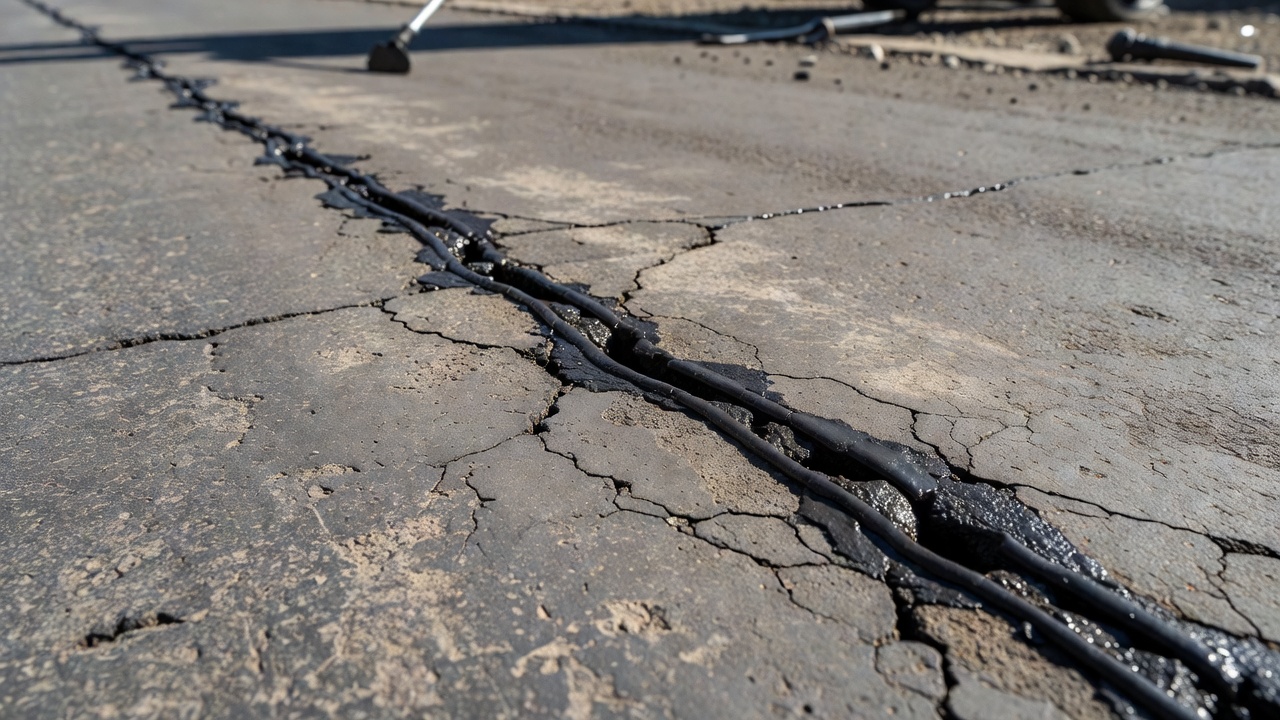
For low-severity block cracking (cracks ≤ 6 mm wide, or cracks ≤ 12 mm in some agency specifications), crack sealing is the standard preventive maintenance treatment. The procedure involves:
- Routing (optional but recommended): A vertical-spindle router or carbine-tipped saw creates a clean, uniform reservoir approximately 12–19 mm wide and 12–25 mm deep along the crack path. Routing removes deteriorated crack faces, provides a regular bonding surface, and creates a proper width-to-depth ratio (typically 1:1 to 2:1) for the sealant reservoir.
- Cleaning: High-pressure compressed air (minimum 90 psi at the nozzle) or hot-compressed air lancing removes dust, debris, and moisture from the routed reservoir. The crack faces must be clean and dry for proper sealant adhesion. Hot-air lancing provides the additional benefit of preheating the crack faces, improving sealant wetting and bond.
- Sealant application: A hot-pour, polymer-modified asphalt sealant meeting ASTM D6690 or ASTM D3405 specifications is applied using a heated applicator wand. The sealant should slightly overfill the crack (overband) by approximately 3 mm to allow for thermal contraction. The sealant must maintain flexibility at the lowest service temperature, typical PG grades for crack sealants range from -20 °C to -34 °C low-temperature specification.
- Curing: The sealant cools and cures within 15–30 minutes, after which the pavement can be returned to traffic. Full cure and maximum adhesion develop over 24–48 hours.
Effective crack sealing for block cracking can extend pavement service life by 3–7 years, primarily by preventing moisture infiltration. The Washington Asphalt Pavement Association notes that HMA can provide years of satisfactory service after developing small cracks if they are kept sealed (Roberts et al., 1996).
Crack Filling (Low-to-Moderate Severity)
Crack filling is a less intensive alternative to crack sealing, typically used for cracks 6–19 mm wide where routing is not performed. The crack is cleaned and filled with a less expensive, lower-performance material (often meeting ASTM D5078 specifications). Crack filling provides adequate short-term performance (2–4 years) at lower initial cost but does not accommodate thermal movement as effectively as a properly designed sealant reservoir.
Milling and Overlay (Moderate-to-High Severity)
For moderate-to-high severity block cracking, where crack widths exceed 19 mm, crack edges are raveled or spalled, secondary cracking is extensive, or moisture damage to underlying layers is suspected, structural rehabilitation is required. The standard approach involves:
- Cold milling: The upper portion of the cracked asphalt layer (typically 40–75 mm) is removed by a cold planer. Milling eliminates the most severely aged and cracked material, removes surface irregularities, and provides a uniform textured surface for the overlay bond.
- Tack coat application: A polymer-modified emulsified asphalt tack coat (typically SS-1hP or CSS-1h at 0.15–0.25 L/m² residual) is applied to the milled surface to ensure monolithic bonding between the existing pavement and the overlay.
- Asphalt overlay: A new asphalt layer, typically dense-graded HMA with a Performance Graded binder selected for the local climate, is placed and compacted. The overlay thickness depends on traffic loading and structural requirements, but a minimum of 40–50 mm is typical for highway applications and 75–100 mm for airfield applications.
The overlay restores the pavement surface to a crack-free condition and addresses the underlying cause by providing fresh, flexible binder capable of accommodating thermal strains. For pavements where block cracking is the dominant distress (i.e., no significant structural deficiency exists), a non-structural overlay or thin overlay (25–40 mm) may be sufficient.
Surface Treatments
For moderate-extent block cracking where a full overlay is not justified, surface treatments can provide an intermediate rehabilitation option:
- Chip seal: An application of asphalt emulsion followed by a layer of cover aggregate (chips). The chip seal fills and bridges cracks up to approximately 6 mm wide, provides a new wearing surface, and restores skid resistance. Service life: 4–7 years.
- Micro-surfacing: A polymer-modified, cold-applied mixture of dense-graded aggregate, asphalt emulsion, water, and mineral filler placed in a thin layer (6–10 mm). Micro-surfacing fills cracks up to approximately 12 mm wide and provides superior crack reflection resistance compared to chip seals. Service life: 6–10 years.
- Slurry seal: Similar to micro-surfacing but without the polymer modification, providing a shorter service life (3–5 years) at lower cost. Suitable for low-traffic roads and parking areas.
Airfield-Specific Considerations
Airfield block cracking maintenance introduces additional requirements beyond highway practice, driven primarily by FOD prevention and fuel resistance:
- All repair materials used within 30 meters of runway centerlines or on aprons and taxiways must be resistant to hydrocarbon fuels (jet fuel, aviation gasoline) and hydraulic fluids. Fuel-resistant sealants meeting AMS 3277 or equivalent specifications are mandatory in these areas.
- Spalled crack edges producing loose aggregate must be repaired immediately regardless of the calculated PCI, as even small FOD can cause catastrophic engine damage. Temporary repairs using cold-mix asphalt or rapid-setting patch materials may be applied pending permanent repair.
- The U.S. Air Force and Navy specifications (UFGS 32 01 13.63, UFC 3-270-08) require that all crack repair materials and procedures be approved for airfield use. Hot-applied sealants must demonstrate fuel immersion resistance (maximum 4% weight change after 24-hour immersion in JP-8 at 60 °C per ASTM D5329).
Preventive Strategies
Preventing block cracking begins at the design stage. Selecting a Performance Graded binder with a low-temperature grade one or two grades colder than the design low pavement temperature provides a significant margin against thermal cracking. For example, a climate with a design low pavement temperature of -22 °C might use a PG XX-34 binder instead of the minimum PG XX-28, gaining approximately a 6 °C safety margin for thermal crack resistance. Additional preventive measures include:
- Polymer modification: SBS (styrene-butadiene-styrene) or other elastomeric polymer modification improves binder flexibility at low temperatures and resistance to oxidative aging. Polymer-modified binders typically provide 3–5 additional years before block cracking initiates compared to unmodified binders in the same climate.
- Rejuvenators and recycling agents: For pavement preservation treatments, spray-applied asphalt rejuvenators containing maltene-rich fractions can partially reverse oxidative aging in the upper portion of the pavement, restoring flexibility and delaying the onset of block cracking by 2–4 years.
- Compaction quality: Achieving in-place air voids of 6–8% (rather than 8–10%) during construction reduces the rate of oxidative aging by limiting oxygen diffusion pathways. Density specifications requiring 92–95% of maximum theoretical density (or 91–93% of Gmm) are common targets.
- Fog seals and seal coats: Periodic application of fog seals (diluted asphalt emulsion sprayed on the pavement surface) every 3–5 years can reduce the rate of surface oxidation and provide modest crack prevention benefits.
Summary
Block cracking is a distinctive and readily identifiable asphalt pavement distress that develops from the progressive hardening of the asphalt binder through oxidative aging, coupled with the repetitive thermal stresses of diurnal temperature cycling. Its rectangular block geometry, occurrence in both trafficked and non-trafficked areas, and gradual development over years to decades distinguish it clearly from load-associated fatigue cracking and other crack types. The FHWA LTPP and U.S. Army Corps of Engineers PAVER classification systems provide standardized severity criteria based on crack width and adjacent cracking, enabling consistent condition assessment and maintenance prioritization across agency boundaries. Timely crack sealing of low-severity block cracking represents one of the highest-return investments in pavement preventive maintenance, while the progression to high severity necessitates structural rehabilitation. Automated detection using computer vision and drone-based imagery is transforming the speed, safety, and consistency of block cracking surveys, supporting data-driven pavement management decisions that optimize life-cycle costs.
Frequently Asked Questions
- What causes block cracking in asphalt pavements?
- Block cracking is primarily caused by the hardening and embrittlement of the asphalt binder through oxidative aging (a chemical reaction between asphalt molecules and atmospheric oxygen), coupled with daily temperature cycling that subjects the pavement to repetitive thermal expansion and contraction stresses. As the binder loses its flexibility and ability to accommodate thermal strains, the pavement shrinks and cracks in a roughly rectangular grid pattern. Poor binder selection during mix design can accelerate this process. Unlike alligator (fatigue) cracking, block cracking is not associated with traffic loading – it frequently appears in parking lanes, shoulders, and other non-traffic areas.
- How is block cracking different from alligator cracking?
- Block cracking and alligator cracking differ in five fundamental ways: (1) Block cracks form large rectangular pieces (0.3–3 m per side), while alligator cracks form small, sharp-angled polygons (< 0.3 m per side), (2) Block cracking occurs over large areas including non-traffic zones, while alligator cracking is confined to wheel paths, (3) Block cracking is caused by binder aging and thermal cycling, while alligator cracking results from structural fatigue under repeated traffic loading, (4) Block cracking is generally a non-structural distress, while alligator cracking indicates structural failure, (5) Under the FHWA LTPP classification, block cracking is distress type ACP 2 measured in square meters, while fatigue cracking is ACP 1.
- What are the FHWA LTPP severity levels for block cracking?
- The FHWA LTPP Distress Identification Manual defines three severity levels for block cracking: Low severity – cracks with a mean width ≤ 6 mm, or sealed cracks with sealant in good condition where width cannot be determined, Moderate severity – cracks with mean width > 6 mm and ≤ 19 mm, or any crack ≤ 19 mm wide with adjacent low-severity random cracking within 0.3 m, High severity – cracks with mean width > 19 mm, or any crack ≤ 19 mm wide with adjacent moderate to high severity random cracking within 0.3 m. Block cracking is measured in square meters of affected area at each severity level.
- How is block cracking repaired?
- Maintenance strategies for block cracking depend on severity and extent. Low-severity cracks (< 12 mm wide) are treated by crack sealing – routing the crack, cleaning with compressed air, and filling with a hot-pour rubberized sealant that bonds to the crack walls and accommodates thermal movement. High-severity cracks (> 12 mm wide, with raveled edges or spalling) typically require removal of the cracked layer through milling followed by an asphalt overlay. In some cases, crack sealing may be combined with a surface treatment such as a chip seal or micro-surfacing. Airfield applications follow the same principles but may require fuel-resistant sealants and compliance with Foreign Object Debris (FOD) prevention requirements.
- Can block cracking be detected by automated computer vision systems?
- Yes, automated detection of block cracking using computer vision and machine learning is an active area of research and deployment. Convolutional neural networks (CNNs), light gradient boosting machines (LightGBM), and deep neural networks trained on labeled pavement image datasets can classify crack patterns including block cracking with accuracy rates exceeding 93%. Modern systems analyze features such as crack connectivity, block geometry (rectangularity, area, aspect ratio), steerable filter responses, and projection integrals to distinguish block cracking from other crack types. Drone-mounted high-resolution cameras combined with semantic segmentation models enable rapid, automated pavement condition surveys across large areas.