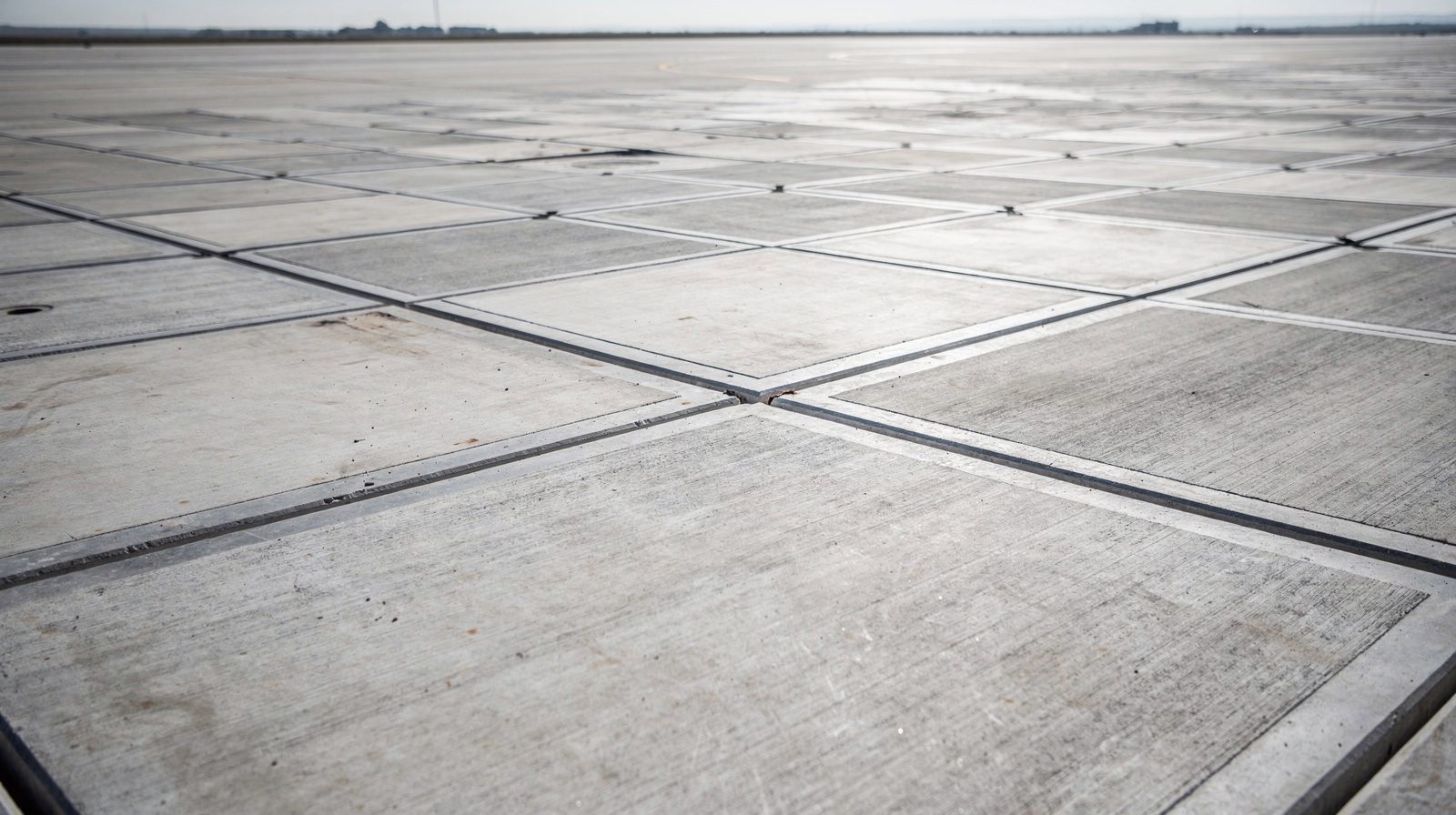
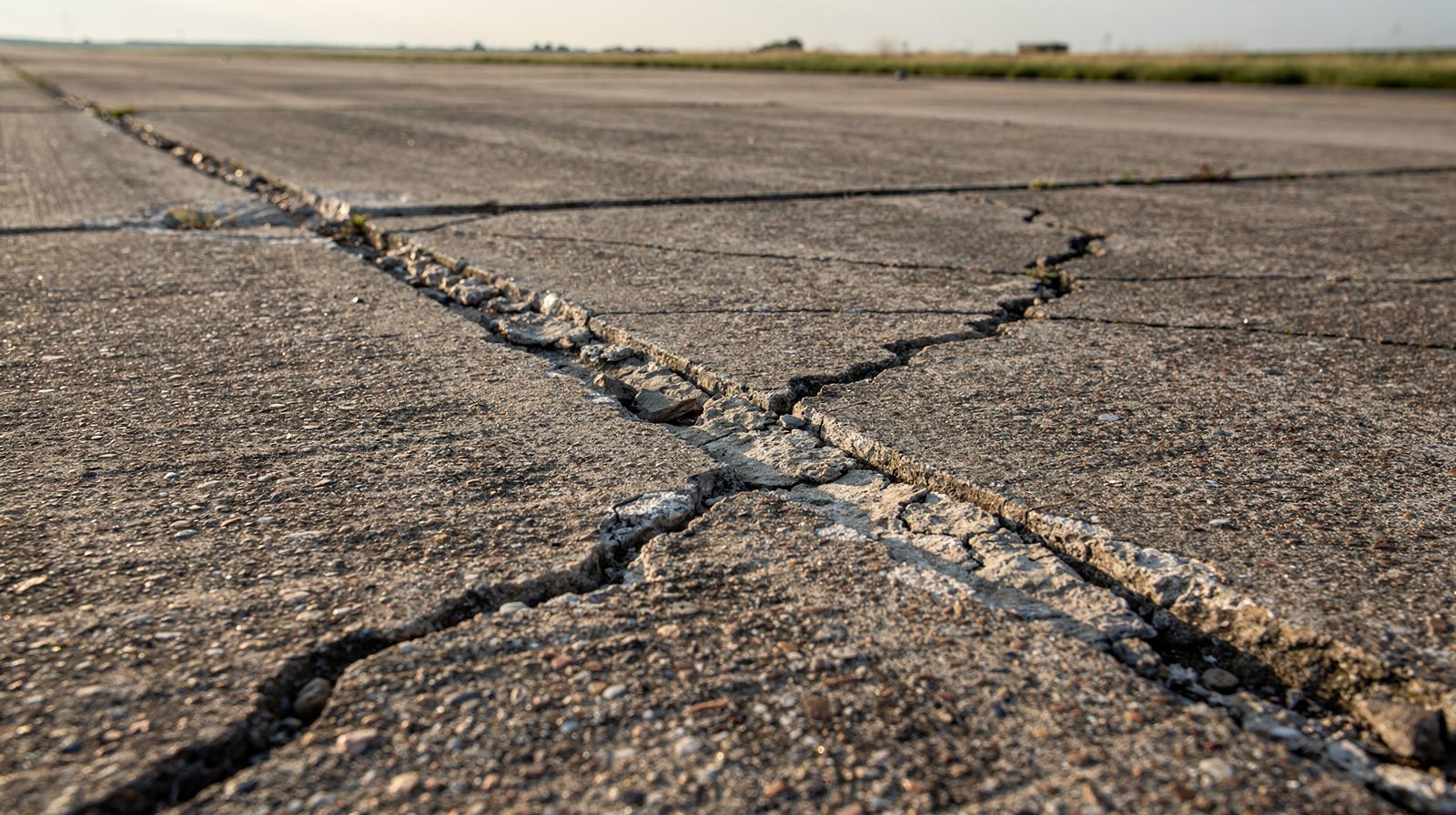
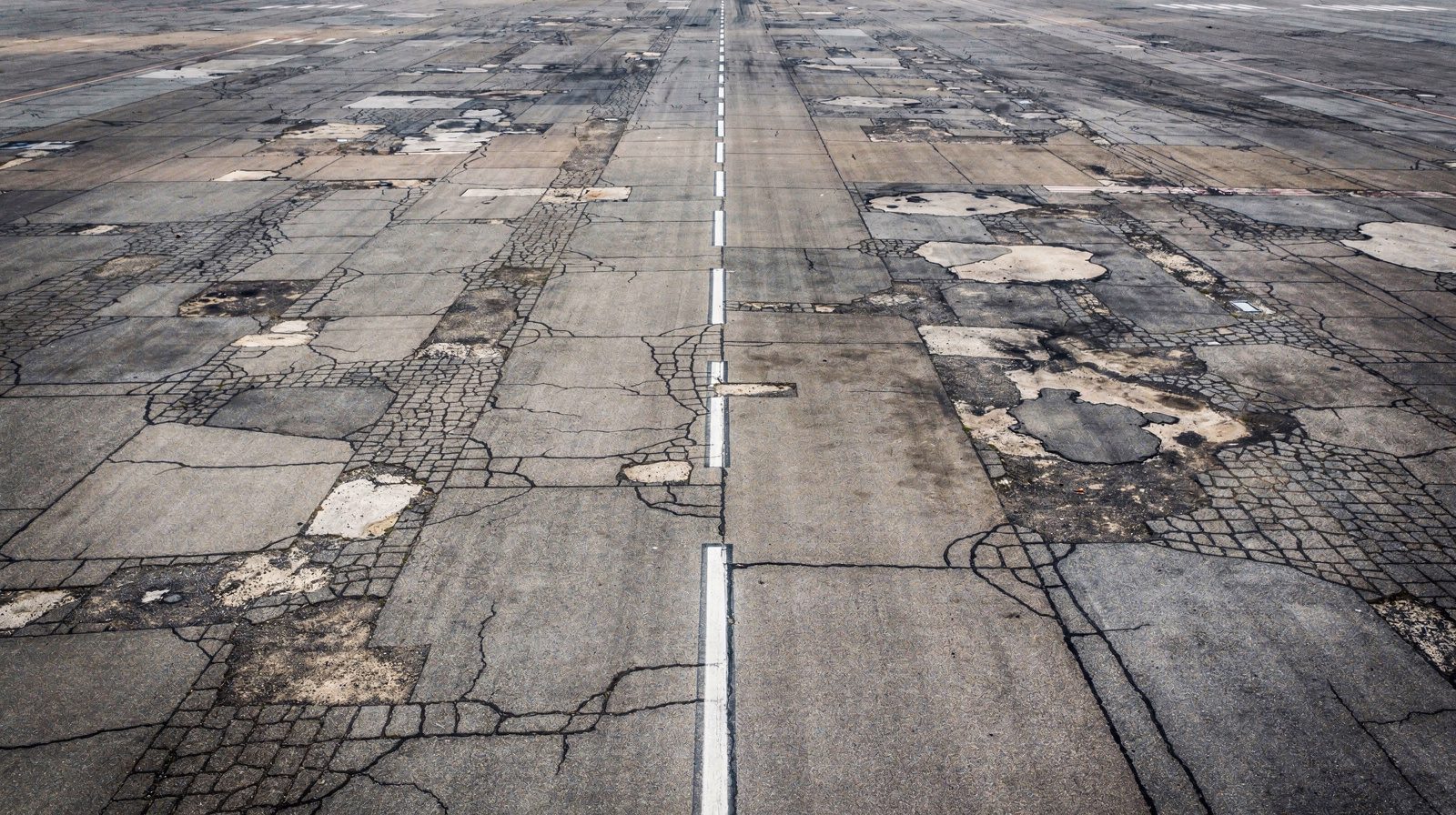
What is Concrete Strength?
Concrete Strength: Definition and Significance
Concrete strength is the fundamental property that defines how well concrete can withstand different types of forces, crushing (compression), pulling apart (tension), and bending (flexure). These strengths are evaluated separately because concrete, as a composite material of cement, aggregates, and water, behaves differently under various loads. Compressive strength is the most commonly specified and acts as the baseline for design and quality control in most projects. This property not only dictates slab thickness, reinforcement size, and spacing, but also the ability to resist loads imposed by vehicles, aircraft, or structural components.
Concrete strength also affects long-term performance, including resistance to abrasion, freeze-thaw cycles, chemical attack, and fatigue. Regulatory bodies like the International Civil Aviation Organization (ICAO) often require higher minimum compressive strengths for airport pavements than for residential construction. For instance, ICAO recommends a minimum compressive strength of 35 MPa (5,000 psi) for runway concrete, reflecting the intense loading from aircraft.
Strength development is time-dependent, concrete gains much of its ultimate strength in the first 28 days, but may continue strengthening for months, especially with supplementary cementitious materials (SCMs) like fly ash or slag. Consistent quality control and representative sampling are vital, as variations can occur due to differences in compaction, curing, and material distribution.
Compressive Strength
Compressive strength is measured by crushing cylindrical or cube specimens in a laboratory, following standards like ASTM C39 or EN 12390-3. Most residential concrete has compressive strengths of 20–30 MPa (3,000–4,500 psi), while commercial and infrastructure projects demand 35–60 MPa (5,000–8,500 psi) or higher. Ultra-high-performance concrete (UHPC) can reach compressive strengths above 150 MPa (22,000 psi), allowing for innovative, slender structures.
Tensile Strength
Tensile strength, typically 8–12% of compressive strength, is crucial for understanding cracking behavior. Concrete is inherently weak in tension, so reinforcement or fibers are added to control cracks. Tensile strength is usually tested indirectly via splitting tensile (Brazilian) or flexural tests, which simulate real-world loading conditions.
Flexural Strength
Flexural strength (modulus of rupture) is especially important for pavements, slabs, and beams under bending. It determines allowable span, thickness, and joint spacing. Conventional concrete reaches 3.5–6 MPa (500–900 psi), while UHPC can surpass 20 MPa (3,000 psi). Regulatory guidelines often require flexural strength data for critical infrastructure like runways.
Other Strength Properties
- Modulus of Elasticity: Indicates stiffness and affects deformation under load (typically 25–35 GPa for normal-weight concrete).
- Bond Strength: Measures adhesion between concrete and embedded steel, affecting load transfer and crack control.
- Shear Strength: Critical in short, deep beams and connections.
Load-Bearing Capacity: Definition and Application
Load-bearing capacity is the maximum force or weight a concrete element or structure can sustain before failure, encompassing both ultimate strength and serviceability (limiting deflection or cracking). In aviation and civil engineering, this determines the suitability of concrete for runways, aprons, columns, and more.
Structural codes like ACI 318 and Eurocode 2 use limit state design, applying load and resistance factors to account for uncertainties. For pavements, FAA AC 150/5320-6 provides specific thickness, strength, and subgrade requirements to support various aircraft.
Engineers analyze dead loads (self-weight), live loads (vehicles, people), environmental loads (wind, seismic), and dynamic loads (impacts, fatigue) using prescribed load combinations. The resulting forces are compared to the structural resistance, ensuring adequate safety margins.
For example, a residential driveway slab with 3,500 psi concrete supports passenger vehicles, while airport aprons may require 12–16 inches of high-strength concrete and robust reinforcement. Critical locations, like aircraft touchdown zones, are designed with higher safety factors and enhanced durability.
Service life considerations (50–100 years) require accounting for creep, shrinkage, fatigue, and environmental degradation. Regular inspection and testing ensure in-service capacity matches design expectations.
Load Types in Concrete Structures
Concrete must withstand various loads, each influencing design and performance:
- Dead Loads: Permanent weight of the structure and fixtures.
- Live Loads: Movable forces, people, vehicles, aircraft, equipment.
- Environmental Loads: Wind, snow, rain, temperature changes, seismic activity.
- Dynamic Loads: Impacts, vibrations, and cyclic loading (fatigue), especially relevant in airport environments.
Design codes specify load combinations, such as:
U = 1.2D + 1.6L + 0.5(E or S)
(U = ultimate load, D = dead load, L = live load, E = earthquake, S = snow)
This ensures safety under realistic and extreme conditions.
Materials: Ingredients and Their Influence on Strength
Performance begins with materials selection and mix proportioning:
Cement
The main binder, cement reacts with water to form a hardened matrix. Ordinary Portland Cement (OPC) is standard, but blended cements with SCMs like fly ash or slag improve durability and long-term strength. Cement content, type, and fineness profoundly influence strength and workability.
Aggregates
Making up 60–80% of concrete’s volume, aggregates (fine and coarse) affect strength, shrinkage, and durability. Well-graded, clean, and strong aggregates are preferred. Aggregate-paste bond and resistance to abrasion are critical, especially for pavements.
Water
Water quality and quantity (water-cement ratio) are pivotal. Low w/c ratios (0.35–0.45 for high strength) produce dense, strong, and durable concrete, but may require plasticizers for workability. Impurities in water can compromise strength and durability.
Admixtures and Additives
- Water reducers improve workability.
- Air-entraining agents increase freeze-thaw resistance.
- Retarders/accelerators control setting time.
- Fibers (steel, polypropylene, glass) enhance toughness and crack resistance.
Reinforcement
Steel rebar provides tensile strength and ductility, transforming concrete into a composite material. Proper detailing ensures effective load transfer and crack control. UHPC and specialized concretes use high fiber volumes for exceptional performance.
Measurement and Testing Methods
Reliable testing is crucial for specification compliance and quality assurance.
Key Standards
- ASTM C39/C39M: Compressive strength of cylinders
- ASTM C496/C496M: Splitting tensile strength
- ASTM C78/C293: Flexural strength (modulus of rupture)
- ACI 318: Structural requirements and quality control
These standards specify specimen preparation, curing, testing setup, and reporting, ensuring results are reproducible and accepted by regulators.
Compressive Strength Testing
Concrete is sampled into cylinders or cubes and cured under controlled conditions. After 7, 14, or 28 days, the sample is crushed in a hydraulic press, the peak load divided by area gives compressive strength. Field-cured specimens provide in-place strength data.
Tensile and Flexural Strength Testing
Tensile strength is measured via the splitting tensile test, where a cylinder is loaded diametrically to induce tension. Flexural strength is evaluated using beam specimens subjected to bending, simulating real-world slab conditions.
Quality Control and Acceptance
Strength variations can signal problems with materials, mixing, or curing. Regular sampling, machine calibration, and documentation are essential. Non-destructive evaluation (e.g., rebound hammer, ultrasonic pulse velocity) supplements core testing, especially for in-service structures.
Concrete Strength in Practice: Applications and Implications
Aviation Infrastructure
Runways, taxiways, and aprons demand higher strength and durability due to severe loading and environmental exposure. Mixes often incorporate SCMs, robust aggregates, and advanced admixtures to meet 35–50 MPa minimum requirements and resist rutting, fatigue, and chemical attack.
Buildings and Bridges
High-rise buildings, bridges, and industrial floors require concrete with tailored strengths for columns, beams, slabs, and footings. Design balances strength, ductility, and economy, often using post-tensioning or pre-stressing for long spans.
Pavements and Roads
Pavement concrete must withstand repeated wheel loads, environmental cycles, and deicing chemicals. Flexural strength, abrasion resistance, and proper joint design are emphasized for service life and safety.
Repair and Retrofitting
For repairs, matching or exceeding the original concrete strength is essential. High-strength mortars or fiber-reinforced overlays are used to restore load-bearing capacity and durability.
Advancements in High-Strength and Durable Concrete
- Ultra-High Performance Concrete (UHPC): Exceeds 150 MPa compressive strength with superior durability and toughness.
- Self-Consolidating Concrete (SCC): Flows easily, reducing labor and improving finish, often used in precast and complex forms.
- Green Concrete: Incorporates recycled materials, reduces carbon footprint, and maintains required strength and performance.
Summary
Concrete strength is the cornerstone of safe, durable, and efficient construction, from residential driveways to airport runways and high-rise towers. It dictates load-bearing capacity, influences design and detailing, and ensures compliance with rigorous codes and standards. Achieving specified strength requires careful material selection, proportioning, curing, and testing. As technology advances, concrete continues to evolve, delivering ever-higher performance for the world’s infrastructure needs.
Frequently Asked Questions
- What is concrete strength?
- Concrete strength is a measure of how much load or force concrete can withstand before failing. It typically refers to compressive strength (resistance to crushing), but also includes tensile and flexural strength, which are relevant for cracking and bending. These properties are vital for designing safe, durable structures like runways, pavements, and buildings.
- How is concrete strength measured?
- Concrete strength is primarily measured through standardized laboratory tests. Compressive strength is tested using cylindrical or cube specimens loaded until failure (ASTM C39 or EN 12390-3). Tensile strength is assessed via splitting tensile (ASTM C496) or flexural tests (ASTM C78). Results, commonly reported at 28 days, guide design and quality control.
- What factors influence concrete strength?
- Concrete strength depends on the water-cement ratio, cement type and content, aggregate quality, admixtures, curing conditions, and mix proportions. Lower water-cement ratios, high-quality aggregates, proper curing, and the use of supplementary cementitious materials like fly ash or slag generally increase strength and durability.
- Why is compressive strength important in concrete?
- Compressive strength is the most commonly specified property because concrete is much stronger in compression than in tension. It defines the load-bearing capacity, thickness, and reinforcement needs of structural elements, and is crucial for safety, durability, and compliance with codes, especially in high-load areas like runways and industrial floors.
- How does load-bearing capacity relate to concrete strength?
- Load-bearing capacity refers to the maximum weight or force a concrete element can safely support. It’s determined by the element’s compressive, tensile, and flexural strengths, along with its geometry, reinforcement, and support conditions. Accurate assessment ensures structures remain safe and serviceable under all expected loads.
- What are the key standards for testing concrete strength?
- Key standards include ASTM C39 for compressive strength, ASTM C496 for splitting tensile strength, ASTM C78 and C293 for flexural strength, and ACI 318 for structural requirements. These ensure consistent, reliable testing and quality control across projects.
This is a reference entry. TarmacView provides drone inspection services and doesn't sell the equipment or materials described in this glossary.