What is the FHWA SNBI Bridge Component Condition Rating (0-9)?
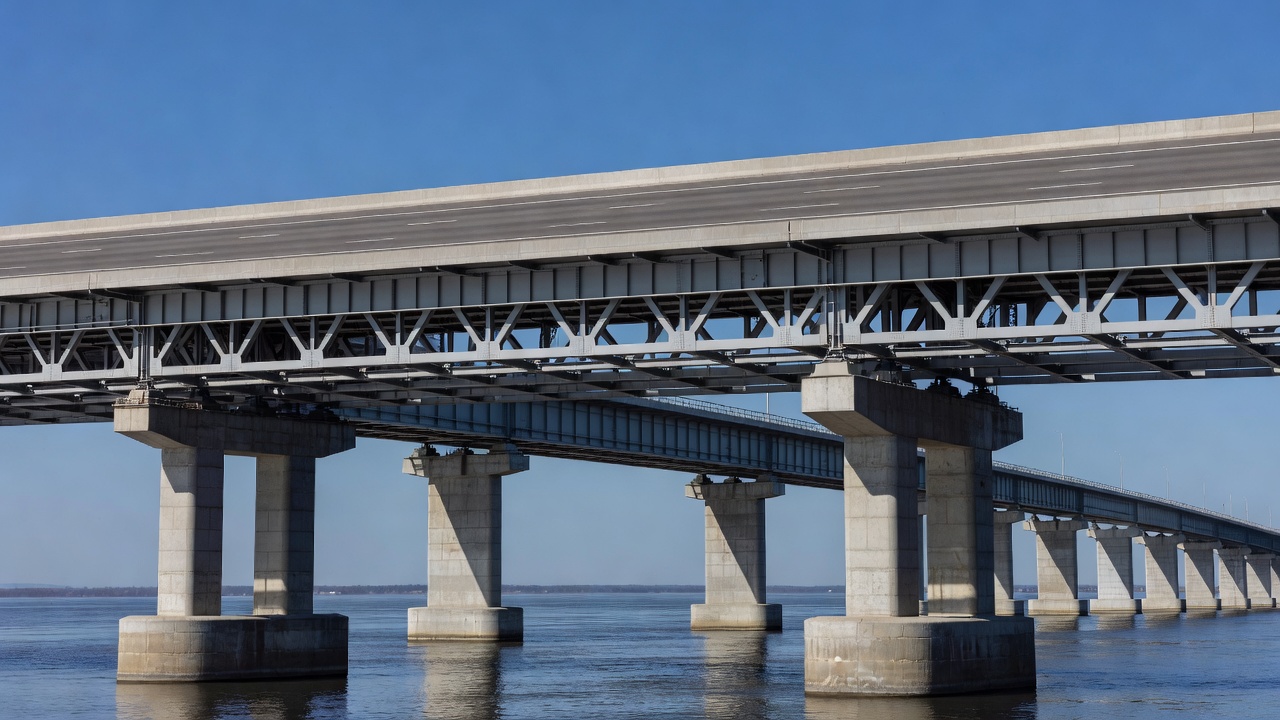
Scope note. This entry describes the FHWA and AASHTO bridge component condition rating scale used for the US National Bridge Inventory. It is a structures metric, not a pavement metric, and it is not a synonym for the Pavement Condition Index. The two scales differ in range, in direction of derivation, and in what they describe: SNBI runs 0 to 9 and is assigned by inspector judgement to a whole bridge component, while PCI runs 0 to 100 and is computed from measured distress densities on a pavement sample unit. For runway, taxiway and apron condition, see PCI and ASTM D5340 .
SNBI vs Legacy NBI: The Evolution of Component Condition Rating
The FHWA Specifications for the National Bridge Inventory (SNBI), published as FHWA-HIF-22-017 in March 2022 and incorporated by reference into the National Bridge Inspection Standards (NBIS) at 23 CFR 650.317, represents the most significant modernization of bridge condition data reporting in the United States since the original Recording and Coding Guide for the Structure Inventory and Appraisal of the Nation’s Bridges was established in the 1970s. The legacy NBI system recorded condition ratings under Item 58 (Deck), Item 59 (Superstructure), Item 60 (Substructure), and Item 62 (Culvert) using a 0-9 scale with relatively coarse definitions that had remained largely unchanged for decades. The SNBI retains the familiar 0-to-9 numerical scale but fundamentally restructures how these ratings are defined, applied, and supplemented with element-level data.
Under the legacy NBI Coding Guide, the condition rating was a single inspector-assigned number for each component, supported by brief general descriptions. For example, a deck rated 6 was described simply as “Satisfactory Condition”, with minimal guidance on what specific defect patterns differentiated a 6 from a 5 or a 7. The SNBI replaced these vague descriptors with precisely defined defect severity and extent criteria. The SNBI’s Table 20, reproduced in every state bridge inspection manual, requires inspectors to evaluate three distinct dimensions: the type of defect (inherent, minor, moderate, or major), the location and severity of defects, and the extent (isolated, some, or widespread) to which defects exist throughout the component. A condition rating code applies only when the entire code description is satisfied.
The SNBI also expanded the number of components receiving condition ratings. Bridge bearings (B.C.07) and bridge joints (B.C.08), which were previously subsumed within the superstructure and deck ratings respectively, now have dedicated condition fields with their own 0-to-9 codes. Bridge railings (B.C.05) and railing transitions (B.C.06) moved from a binary “Meets/Does Not Meet Standards” assessment to the full 0-to-9 condition scale. New fields were added for channel protection condition (B.C.10), scour condition (B.C.11), NSTM inspection condition (B.C.14), and underwater inspection condition (B.C.15). The SNBI also introduced calculated fields: Bridge Condition Classification (B.C.12) automatically classifies the bridge as Good, Fair, or Poor based on the lowest component rating, and Lowest Condition Rating Code (B.C.13) outputs the numerical minimum.

The Complete SNBI Condition Rating Scale 0-9 with Full Definitions
The SNBI component condition rating scale is defined in Table 20 of the Specification and applies uniformly to all component-level condition items (B.C.01 through B.C.07, B.C.14, and B.C.15). The scale comprises eleven codes: N (Not Applicable) and ten numerical ratings from 9 (Excellent) down to 0 (Failed). Each code carries a condition label and a precise description that must be fully satisfied for the code to apply.
| Code | Condition | Description |
|---|---|---|
| N | NOT APPLICABLE | Component does not exist on the structure. |
| 9 | EXCELLENT | Isolated inherent defects only. |
| 8 | VERY GOOD | Some inherent defects. |
| 7 | GOOD | Some minor defects. |
| 6 | SATISFACTORY | Widespread minor or isolated moderate defects. |
| 5 | FAIR | Some moderate defects, strength and performance of the component are not affected. |
| 4 | POOR | Widespread moderate or isolated major defects, strength and/or performance of the component IS affected. |
| 3 | SERIOUS | Major defects, strength and/or performance of the component is seriously affected. Condition typically necessitates more frequent monitoring, load restrictions, and/or corrective actions. |
| 2 | CRITICAL | Major defects, component is severely compromised. Condition typically necessitates frequent monitoring, significant load restrictions, and/or corrective actions in order to keep the bridge open. |
| 1 | IMMINENT FAILURE | Bridge is closed to traffic due to component condition. Repair or rehabilitation may return the bridge to service. |
| 0 | FAILED | Bridge is closed due to component condition, and is beyond corrective action. Replacement is required to restore service. |
The term defect as used in these definitions encompasses deterioration, damage, or inherent defects characteristic of the material or resulting from normal construction practices. The SNBI defines defect severity in graduated terms: a minor defect is one where damage or deterioration has initiated but is not yet considered significant, a moderate defect is significant deterioration that does not yet affect strength or performance, a major defect affects strength and/or performance as determined by structural and/or hydraulic review. For joints, bearings, railings, and railing transitions specifically, a major defect prevents the component from functioning as intended. Defect extent is also codified: isolated means occurring in one or a few concentrated locations, some means more than isolated and less than widespread, and widespread means present in many separate areas of the component.
A critical distinction in the 4-to-5 boundary is whether strength and/or performance is affected. At rating 5 (Fair), moderate defects exist but the component retains full structural capacity. At rating 4 (Poor), the same defect types become consequential, strength or performance is affected, triggering the Poor classification under the federal Good-Fair-Poor system. Any component rated 4 or below classifies the entire bridge as Poor. Ratings of 3 (Serious) and below automatically trigger Critical Finding documentation requirements under NBIS.
Rated Components: Deck, Superstructure, Substructure, and Culvert
The four primary bridge components that receive condition ratings under both legacy NBI and SNBI are the deck (B.C.01), superstructure (B.C.02), substructure (B.C.03), and culvert (B.C.04). Each has distinct inspection procedures and considerations defined in the SNBI.
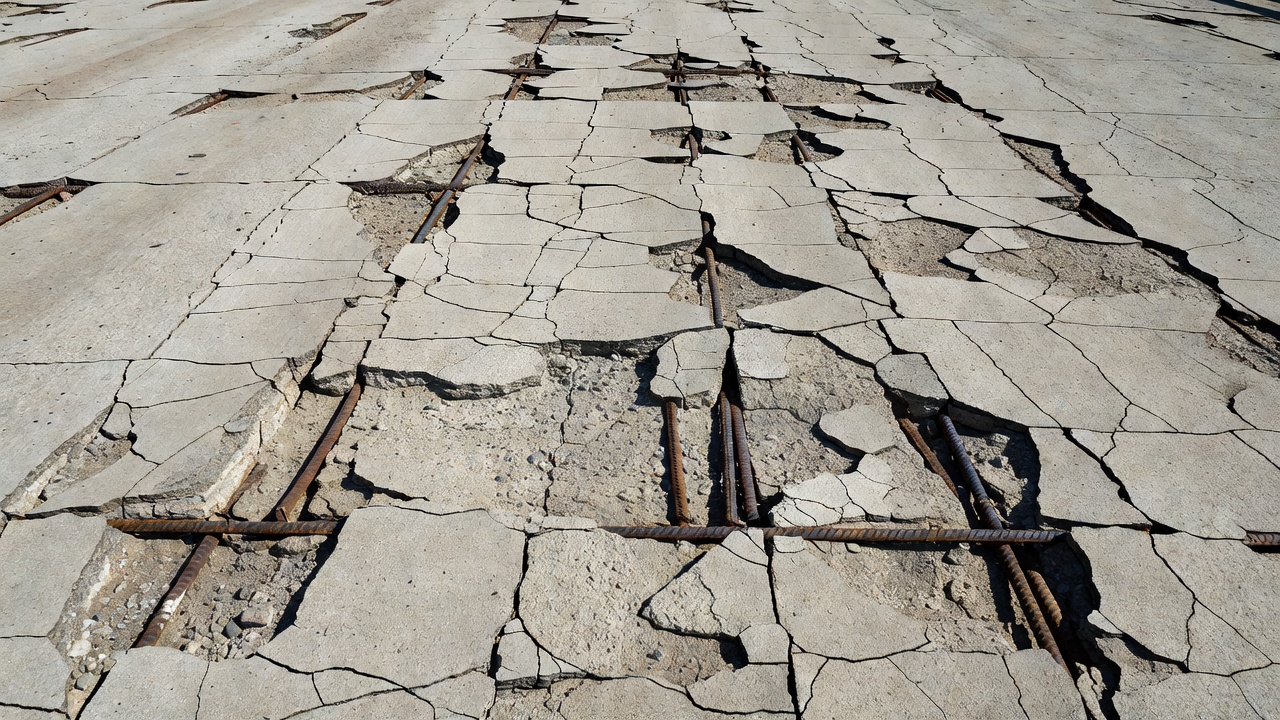
Deck Condition Rating (B.C.01): This item represents the condition of the deck as determined from inspection of all deck surfaces, top, underside, and edges. The inspector evaluates the full deck area including overhang portions. Visual assessments may be supplemented with non-destructive or destructive testing results such as chain dragging, hammer sounding, ground penetrating radar, or core sampling. When deck surfaces are not visible (e.g., covered by asphalt overlay), inspectors must use destructive or non-destructive testing results, visual condition indicators of the covering material, or evidence from past inspection reports and repair records. Non-monolithic wearing surfaces (overlays), stay-in-place deck forms, joint assemblies, expansion devices, bridge rails, and scuppers are not considered when determining the deck condition rating, except insofar as they indicate the condition of the deck itself. For adjacent box beam structures without a separate concrete deck, the top flange of the adjacent box beams is treated as a deck. If box beams are covered by asphalt wearing surface, the deck rating may be based on the known condition of the beam tops before overlay placement, the condition of the underside of the superstructure, or, critically, the wearing surface condition, as the deck condition typically should not be higher than the wearing surface condition unless strong evidence supports otherwise. The deck and superstructure condition ratings are identical for solid slab bridges. For bridges with integral decks and top flanges (rigid frames, decked girders, tee beams, voided slabs, box girders), the deck condition may affect the superstructure rating, but the superstructure condition does not affect the deck rating. A value of N is reported for bridges under fill where no deck exists.
Superstructure Condition Rating (B.C.02): This item addresses the condition of all superstructure members, the primary load-carrying components above the bearings. Primary load-carrying members are the focus, secondary members (diaphragms, cross-frames, lateral bracing) are considered only if they adversely impact primary members. The superstructure includes members above bearings for non-integral bridges, girders and beams for integral superstructures, members above the spring line for arch bridges, slabs of concrete rigid frame bridges, and legs, knees and girders for concrete and steel rigid K-Frame or Delta-Frame bridges. Headwalls and spandrel walls integral with the superstructure are considered. Bearings are excluded from the superstructure rating except when they cause distress in the superstructure itself. Protective coating condition is excluded, though a well-formed patina on weathering steel is considered a protective coating and not a defect. Drift, debris, and soil accumulation are excluded unless causing distress. For structures without substructures (e.g., certain foundation types), scour must be considered in the superstructure condition rating when observed conditions are inconsistent with design assumptions. The SNBI provides special rating guidance for non-composite prestressed concrete adjacent box beams, where the overall superstructure rating is based on the lowest condition rating of any single beam considering strand exposure percentage and deterioration type.
Substructure Condition Rating (B.C.03): This item addresses the condition of piers, abutments, piles, footings, and other substructure members. For bridges where substructures are not visible for inspection, appropriate visual condition indicators from the superstructure or surrounding foundation materials must be used. Integral abutment wingwalls are considered to the first construction or expansion joint. The substructure includes backwalls and members below bearings (for non-integral construction), members below girders (for integral construction), thrust blocks and members below the spring line (for arch bridges), legs of concrete rigid frame bridges, abutments and footings below leg bearings (for rigid K-Frame or Delta-Frame bridges), and foundation piles exposed by erosion or scour. Protective coatings, fenders, and substructure protection systems are excluded except when they indicate distress. Drift, debris, and soil accumulation are excluded unless causing distress. Scour is considered in the substructure rating when observed conditions are inconsistent with design assumptions, and the condition rating must be consistent with the scour condition rating (B.C.11) whenever B.C.11 is 2 or less. A value of N is reported for culverts.
Culvert Condition Rating (B.C.04): This item addresses the condition of culverts including footings, piles, and other foundation members. For culverts with components not visible for inspection, visual condition indicators from the roadway or surrounding foundation materials must be used. Integral wingwalls and headwalls are considered to the first construction or expansion joint. The culvert includes buried pipe or box, footings below walls of three-sided boxes, and foundation piles exposed by erosion or scour. Scour provisions mirror those for the substructure. Stone masonry arches are coded using Appendix G guidance. A value of N is reported for structures other than culverts.
Rating Methodology and Inspector Guidance
The methodology for assigning component condition ratings under SNBI is fundamentally a defect-based assessment that requires the inspector to correlate field observations with Table 20’s definitions by evaluating three factors: defect type, defect severity, and defect extent. The SNBI uses the term defect broadly to encompass deterioration (e.g., corrosion, spalling, cracking, decay), damage (e.g., impact, overstress, fire, flood), and inherent defects characteristic of the material or construction practice.
The SNBI establishes several critical principles for rating methodology. Temporary repairs, supports, braces, or shoring that are not permanently installed, must not be considered when determining condition ratings. A repair is considered permanent only when it has returned the damaged or deteriorated element to a condition as good as or better than the remainder of the bridge. However, any repair that remains in place without further project activity for a period of four years is considered permanent and the structure must be evaluated accordingly. Load posting alone, for an existing bridge designed for less than current legal loads, is not considered a defect and does not affect the condition rating.
Inspectors must evaluate portions of bridge components that are supported or strengthened by temporary members also considering the condition of the temporary members themselves. The condition rating must reflect the actual observed physical condition at the time of inspection, not the known presence of chlorides in concrete or low compressive strengths from core samples unless these have manifested as observable deterioration.
For components with multiple elements, the overall component rating must be the least of the element ratings comprising that component. For example, if a superstructure has primary girders in good condition but cross-frames that are severely deteriorated, the superstructure rating must reflect the worse condition. The SNBI and state supplements provide additional guidance: the TxDOT Bridge Inspection Manual specifies that “the summary Component Rating must be the least of the element ratings comprising that component.”
The SNBI also addresses the use of condition indicators when direct visual assessment is not possible. When deck surfaces are covered by wearing surfaces, stay-in-place forms, or other obscuring materials, inspectors must rely on evidence from non-destructive testing, past inspection records, or the condition of covering materials themselves. The condition of non-monolithic wearing surfaces can indicate the condition of the underlying deck, a badly deteriorated overlay on a deck that cannot be directly viewed should lead the inspector to assign a lower condition rating unless strong contrary evidence exists from other sources.
Element-Level vs Component-Level Ratings
One of the most important conceptual distinctions in SNBI bridge inspection is the difference between component-level condition ratings (the 0-to-9 scale discussed throughout this article) and element-level condition states (the CS1-through-CS4 system defined in the AASHTO Manual for Bridge Element Inspection). These are two fundamentally different assessment methodologies that serve complementary but distinct purposes.
Component-level ratings provide a single overall condition score for an entire bridge component, deck, superstructure, substructure, or culvert, based on the inspector’s holistic judgment of the component’s general condition. The rating integrates all observable defects across all surfaces and members of that component into a single number from 0 to 9. This is a qualitative, summary-based assessment designed to support federal program management, the Good-Fair-Poor classification system, and congressional reporting on national bridge conditions.
Element-level condition states, by contrast, provide a quantitative, quantity-based assessment. Every structural element defined in the AASHTO element catalog (over 100 National Bridge Elements, Bridge Management Elements, and Agency-Developed Elements) is assigned a total quantity measured in appropriate units (square feet for decks, linear feet for girders, each for bearings). That quantity is then distributed across four condition states: CS1 (Good, no defects), CS2 (Fair, minor defects), CS3 (Poor, moderate defects), and CS4 (Severe, major defects affecting structural capacity). The fundamental validation rule is CS1 + CS2 + CS3 + CS4 must equal the Total Quantity.
For example, a concrete deck (Element 12) on a National Highway System bridge might be inspected and found to have 10,000 square feet total area. The inspector would allocate: 6,500 sq ft in CS1 (sound concrete), 2,500 sq ft in CS2 (hairline cracking, minor scaling), 800 sq ft in CS3 (delamination, spalling, exposed reinforcement), and 200 sq ft in CS4 (section loss, holes through deck). This element-level data enables bridge management systems (such as AASHTOWare BrM) to model deterioration curves, calculate condition indices, estimate remaining service life, and optimize maintenance and rehabilitation planning.
The critical point is that component-level ratings cannot be algorithmically derived from element-level data, nor vice versa. They represent fundamentally different assessment philosophies. A component could have significant deterioration in a small area (warranting a lower component rating due to isolated major defects) while still having most of its element quantity in CS1 and CS2. Conversely, a component with widespread minor defects (rating 6, Satisfactory) might have almost all element quantity in CS2 (Fair). The relationship between the two systems is loose and inspector-dependent, which is why both are required in SNBI reporting for NHS bridges.
AASHTO Element Condition States (1-4)
The four AASHTO element condition states (CS1 through CS4) form the backbone of element-level bridge inspection data collection. These states are defined in the AASHTO Manual for Bridge Element Inspection (MBEI), currently in its Second Edition with 2022, 2024, and 2025 interim revisions. The MBEI provides standardized element definitions, quantity calculation rules, and condition state definitions for all National Bridge Elements.
| Condition State | Label | Description |
|---|---|---|
| CS 1 | Good | No defects. Element is in as-built or as-rehabilitated condition. Protected surfaces may have some weathering or oxidation but no active corrosion. Protective coatings are sound and functioning. |
| CS 2 | Fair | Minor defects present. For concrete: hairline cracks, minor scaling, efflorescence, delamination not requiring action. For steel: minor surface corrosion, staining. For timber: minor checking, splitting. Structural capacity is essentially intact. |
| CS 3 | Poor | Moderate defects present. For concrete: active corrosion, measurable section loss from spalling, open cracks. For steel: active corrosion with pitting, measurable section loss less than 10%. For timber: moderate decay, section loss. Structural capacity is essentially intact but deterioration is progressing and requires attention. |
| CS 4 | Severe | Major defects affecting structural capacity. For concrete: advanced corrosion with significant section loss, holes, exposed and corroded reinforcement. For steel: significant section loss exceeding 10%, cracks, broken members, large deformations. For timber: advanced decay with significant section loss. Typically triggers structural review and load rating evaluation. |
The element catalog includes several categories. National Bridge Elements (NBEs) are mandatory for reporting on NHS bridges and include elements such as Element 12 (Reinforced Concrete Deck), Element 107 (Steel Open Girder/Beam), Element 109 (Prestressed Concrete Girder), Element 110 (Steel Stringer), Element 205 (Reinforced Concrete Column), Element 215 (Concrete Abutment), Element 301 (Pourable Joint Seal), Element 310 (Elastomeric Bearing), Element 330 (Metal Bridge Railing), and Element 331 (Reinforced Concrete Bridge Railing). Bridge Management Elements (BMEs) include secondary components such as approach slabs, scour countermeasures, and protective coatings. Agency-Developed Elements (ADEs) allow individual agencies to define elements specific to their inventory needs.
For NHS bridges, element-level data has been reported to FHWA since April 2015. The SNBI mandates continued element-level reporting for NHS bridges and accepts it for non-NHS bridges. The SNBI data fields B.CS.01 through B.CS.04 capture element quantities in each condition state.
SNBI and Load Rating Relationship
The relationship between component condition ratings and bridge load ratings is nuanced and often misunderstood. Condition ratings and load ratings serve fundamentally different engineering purposes. A condition rating reflects the observed physical state of a bridge component at the time of inspection, deterioration, damage, and defects that can be seen and measured. A load rating is an analytical determination of the safe load-carrying capacity of a bridge, expressed as an Operating Rating and an Inventory Rating in tons, calculated using the AASHTO Manual for Bridge Evaluation (MBE).
Condition ratings and load ratings are not directly interchangeable. A bridge can have excellent condition ratings (all components rated 7 or above) but be load-posted due to an original design for lower legal loads. Conversely, a bridge can have poor condition ratings (components rated 4 or below) but still pass a load rating analysis if the remaining sound material can carry the required loads, though typically such a bridge would require load restrictions.
However, the two systems are linked in practice. The SNBI requires that load posting alone (for a bridge designed for less than current legal loads) is not considered a defect and does not affect the condition rating. But when condition ratings reach 4 (Poor) or below, the inspector must consider whether observed defects affect strength and performance, which may trigger a re-evaluation of the load rating. Ratings of 3 (Serious) almost always require load restrictions and corrective actions. The NBIS requires that any bridge with a component rated 3 or below must be evaluated for load posting.
The SNBI data items related to load rating include B.LR.01 (Operating Rating), B.LR.02 (Inventory Rating), B.LR.03 (Load Rating Date), B.LR.04 (Legal Load Configuration), B.LR.05 (Routine Permit Loads), B.PS.01 (Posting Status), B.PS.02 (Posting Status Change Date), B.PS.03 (Posting Type), and B.PS.04 (Posting Value). These fields together with the condition ratings provide a complete picture of both structural health and load capacity.
Transition from NBI to SNBI
The transition from the legacy NBI Recording and Coding Guide to the SNBI follows a phased implementation timeline established by FHWA. The key milestones are:
- May 6, 2022: NBIS Final Rule published with SNBI incorporated by reference at 23 CFR 650.317.
- July 2022: FHWA published the Data Crosswalk, the mapping document that translates legacy NBI data fields into SNBI fields.
- October 2022: FHWA published the Data Submittal Schema and initial Data Submittal Validation Logic.
- April 2023: FHWA made the Transition Tool available online for agencies to convert their legacy data.
- October 2024: FHWA made NBI NextGen (the National Bridge and Tunnel Inventory System) available online for data validation.
- March 15, 2025: Last submittal in the legacy 1995 Coding Guide format. After this date, FHWA will no longer accept the old format.
- January 1, 2026: FHWA made NBI NextGen available for data submittals. Agencies began verifying transitioned data and collecting new SNBI data for inspected bridges.
- March 15, 2026: First SNBI submittal, transitioned/hybrid dataset. All bridges submitted with at minimum transitioned data, except for specified fields required to manage FHWA programs, which must have collected or verified SNBI data.
- June 2026: Sunset of the Transition Tool.
- March 15, 2027: Second SNBI submittal, continued verification and collection.
- March 15, 2028: Third SNBI submittal, 100% populated and verified data. No temporary codes permitted. This is the first complete SNBI dataset with collected and verified SNBI data for all bridges.
The FHWA Data Crosswalk is the critical document that enables this transition. It maps each legacy NBI data field to its corresponding SNBI field, specifying whether the mapping is direct (one-to-one), requires transformation (many-to-one or one-to-many), or requires new data collection. For condition ratings, the crosswalk is relatively straightforward, NBI Items 58, 59, 60, and 62 map directly to SNBI fields B.C.01, B.C.02, B.C.03, and B.C.04 with the same 0-to-9 scale. However, new fields such as B.C.05 (Bridge Railing), B.C.06 (Railing Transitions), B.C.07 (Bridge Bearings), and B.C.08 (Bridge Joints) require new data collection as they have no direct legacy equivalents. The SNBI also introduced 54 new data items beyond element data, including critical fields for bridge name, metropolitan planning organization, emergency evacuation designation, fatigue details, fracture-critical members, complex feature designation, seismic vulnerability, and scour plan of action.
AI-Assisted Bridge Rating
The inspection and rating of over 600,000 highway bridges across the United States represents a massive data collection and analysis challenge. Traditional bridge inspection relies on human inspectors visually assessing every surface of every component, documenting defects on paper forms or digital tablets, and manually assigning condition ratings based on their engineering judgment. This process is time-consuming, subjective, and inherently limited by human visual acuity and consistency.
AI-assisted bridge rating is emerging as a transformative approach that supplements traditional inspection with computer vision, machine learning, and automated defect detection. Systems like TarmacView use high-resolution cameras mounted on drones or inspection vehicles to capture visual data across entire bridge decks, superstructures, and substructures. These images are processed through trained neural network models that can detect, classify, and quantify defects, cracks, spalls, delaminations, corrosion, exposed reinforcement, section loss, with consistency and repeatability that human inspection alone cannot achieve.
The application of AI to the SNBI component condition rating scale is particularly promising. AI systems can be trained on thousands of labeled bridge inspection images to recognize the defect patterns that correspond to each condition rating level. For example, the distinction between rating 6 (Satisfactory, widespread minor defects) and rating 5 (Fair, some moderate defects) requires assessing both defect severity and extent across the entire component surface. AI vision systems can systematically analyze the entire visible surface area, quantify the percentage of surface area affected at each defect severity level, and provide objective data to support the inspector’s condition rating determination.
AI-assisted systems do not replace the professional engineer or certified bridge inspector, they augment human capabilities by providing more comprehensive, quantitative, and consistent defect data. The AI system identifies and measures defects, the inspector reviews the AI output, validates findings, applies engineering judgment for conditions the AI may not recognize (such as inherent material defects versus deterioration), and assigns the final condition rating. This human-machine collaboration has the potential to significantly improve the accuracy, consistency, and efficiency of bridge condition assessment across the national inventory.
Data Submission and Bridge Management
The ultimate purpose of SNBI condition ratings is to populate the National Bridge Inventory (NBI), the FHWA’s centralized database of all highway bridges in the United States. Data submission follows a rigorous annual cycle. Each NBIS Agency (state transportation department, federal agency, or tribal government) must submit its bridge inventory data to FHWA by March 15 of each year. Data is submitted through NBI NextGen (NBTIS, National Bridge and Tunnel Inventory System), the FHWA’s online data submission and validation platform that replaced legacy submission methods.
The data submission process includes multiple validation steps. The SNBI defines a Data Submittal Schema and Data Submittal Validation Logic that automated systems use to check submitted data for completeness, consistency, and compliance. Validation rules include: condition rating codes must be within the valid range (N, 0-9), required fields must not be blank, logical consistency between fields (e.g., a bridge with a deck rating of N should not have a deck width reported), and element-level quantity allocations must sum to total quantities.
The submitted data supports multiple FHWA programs and reports. The Bridge Condition by Highway System report, published by June 15 of each year, provides national statistics on the number and percentage of bridges rated Good, Fair, or Poor. Congress uses this data for infrastructure investment decisions. State transportation departments use SNBI data for bridge management systems (BMS) that prioritize maintenance, rehabilitation, and replacement projects. The AASHTOWare BrM (Bridge Management) software is the most widely used BMS, integrating SNBI condition data with cost models to optimize life-cycle management.
Federal funding programs directly tie to SNBI condition ratings. The National Highway Performance Program (NHPP) and Surface Transportation Block Grant Program (STBG) use bridge condition data to allocate funds. Bridges classified as Poor (any component rated 4 or below) are eligible for replacement or rehabilitation funding. The SNBI’s more granular component ratings, including bearings, joints, railings, and transitions, provide asset managers with earlier warning of deterioration in these maintenance-critical components, enabling more cost-effective preservation strategies before defects escalate to the Poor threshold.
The transition to full SNBI compliance by March 15, 2028 will give the United States the most comprehensive, detailed, and actionable bridge condition dataset in its history, a vital tool for managing the nation’s aging infrastructure through data-driven decision making.
Frequently Asked Questions
- What does SNBI stand for and how does it relate to NBI?
- SNBI stands for Specifications for the National Bridge Inventory. It is the FHWA document (FHWA-HIF-22-017, March 2022) that replaced the legacy NBI Recording and Coding Guide. While NBI refers to the database itself, SNBI is the specification that defines exactly what data must be collected and how it is formatted for submission to the National Bridge Inventory. SNBI retains the 0-9 component condition rating scale but expands the number of rated components and introduces element-level data requirements.
- What is the difference between a condition rating of 4 (Poor) and 3 (Serious)?
- The critical distinction lies in how defects affect the component. A rating of 4 (Poor) indicates widespread moderate or isolated major defects where strength and/or performance of the component IS affected, but the bridge can remain open with monitoring. A rating of 3 (Serious) indicates major defects where strength and/or performance is SERIOUSLY affected, typically necessitating more frequent monitoring, load restrictions, and/or corrective actions. Ratings of 3 or below automatically trigger a Critical Finding workflow under NBIS.
- Which NBI items correspond to the condition ratings?
- Under the legacy NBI Coding Guide, condition ratings were recorded under Item 58 (Deck), Item 59 (Superstructure), Item 60 (Substructure), and Item 62 (Culvert). Under SNBI, these became B.C.01 (Deck), B.C.02 (Superstructure), B.C.03 (Substructure), and B.C.04 (Culvert). SNBI added new rated components: B.C.05 (Bridge Railing), B.C.06 (Railing Transitions), B.C.07 (Bridge Bearings), B.C.08 (Bridge Joints), B.C.09 (Channel), B.C.10 (Channel Protection), B.C.11 (Scour Condition), B.C.14 (NSTM Inspection Condition), and B.C.15 (Underwater Inspection Condition).
- How does a component condition rating of 4 or below affect a bridge's federal classification?
- Under the Pavement and Bridge Condition Performance Measures final rule (23 CFR 490, Subpart D), any bridge with a component (deck, superstructure, substructure, or culvert) rated 4 or below is classified as Poor. Bridges with lowest component ratings of 5 or 6 are classified as Fair, and 7 to 9 are classified as Good. This Good-Fair-Poor classification replaced the legacy Structurally Deficient and Functionally Obsolete terminology in 2018.
- Can element-level condition states be directly converted to component condition ratings?
- No. Component condition ratings (0-9) and element-level condition states (CS1-CS4) are fundamentally different assessment methods. Component ratings provide a single overall condition score for an entire bridge component based on inspector judgment across all surfaces. Element-level data quantifies the specific quantity of each element in each condition state (e.g., 800 sq ft of deck in CS1, 200 sq ft in CS2). While there are crosswalk references between the two systems, one cannot be algorithmically derived from the other.
- What is the timeline for full SNBI implementation?
- March 15, 2025 was the last submittal in the legacy 1995 Coding Guide format. Starting January 1, 2026, FHWA made NBI NextGen available for data submittals. March 15, 2026 was the first SNBI submittal using transitioned/hybrid data. March 15, 2028 is the deadline for the first complete SNBI dataset with 100% populated and verified data, no temporary codes permitted after this date.
- What happens when a component rating reaches 3 or below?
- A Critical Finding is automatically triggered. The inspector must provide a detailed text description of the critical defect, record the immediate action taken (such as lane closure, load posting, or temporary shoring), and attach photographic evidence. This information flows directly to the bridge owner and FHWA, ensuring safety-critical conditions receive immediate attention rather than waiting for routine reporting cycles.