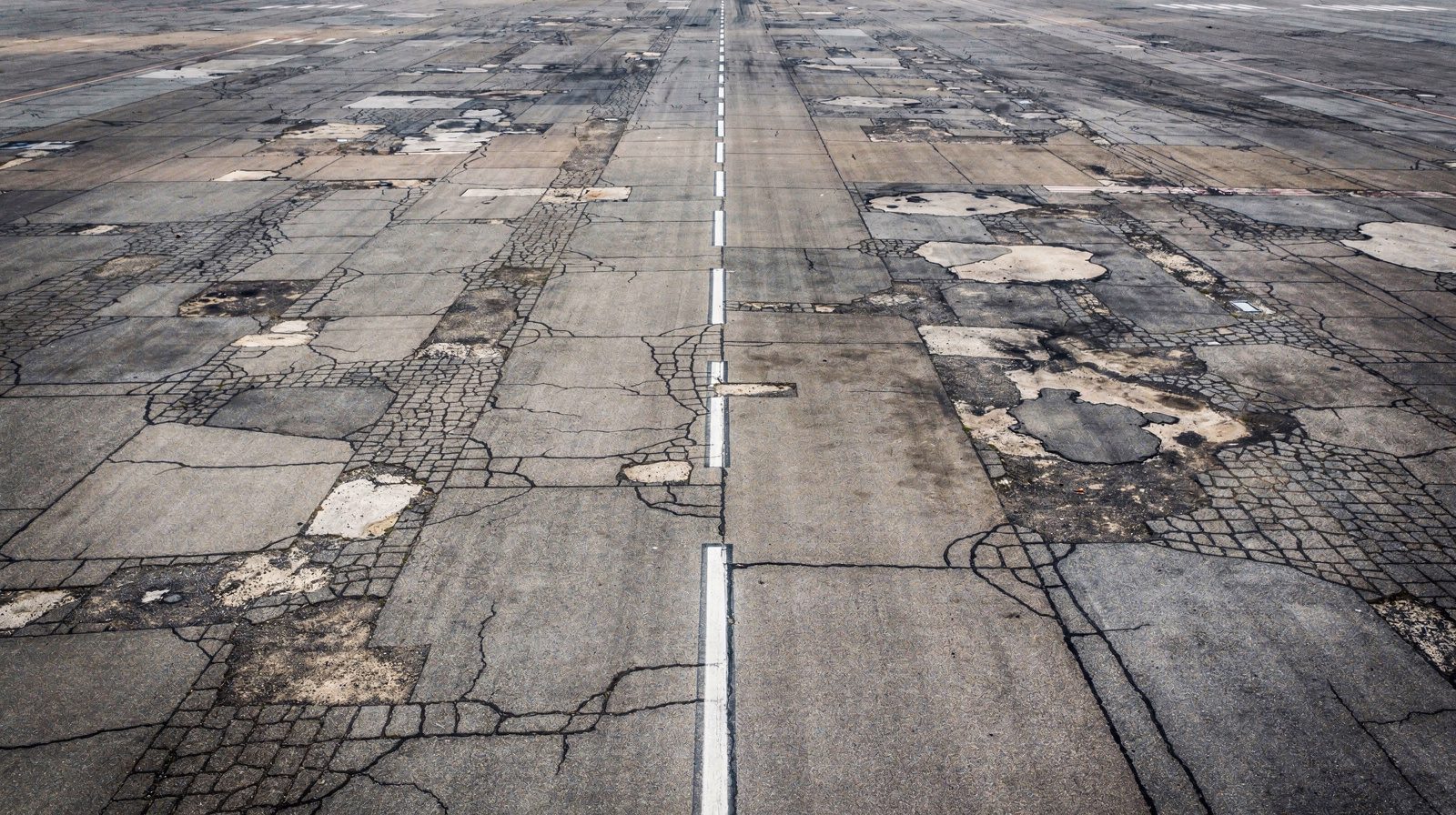
What is Crack Filling in Pavements?
Crack Filling in Pavements
Definition and Distinction from Crack Sealing
Crack filling is a pavement maintenance treatment defined by the Federal Highway Administration (FHWA) as the placement of ordinary treatment materials into non-working cracks to substantially reduce infiltration of water and to reinforce the adjacent pavement. The key differentiator from crack sealing lies in the nature of the crack being treated: crack filling addresses non-working cracks, while crack sealing addresses working cracks.
The distinction between working and non-working cracks is quantified by the annual horizontal movement of the crack faces. According to FHWA guidelines published in the Manual of Practice (FHWA-RD-99-147), a crack is classified as working when it undergoes horizontal movement of 3 mm (0.12 inches) or more annually due to thermal expansion and contraction. Non-working cracks exhibit movement of less than 3 mm annually. This criterion is also adopted by the American Association of State Highway and Transportation Officials (AASHTO) and most state departments of transportation.
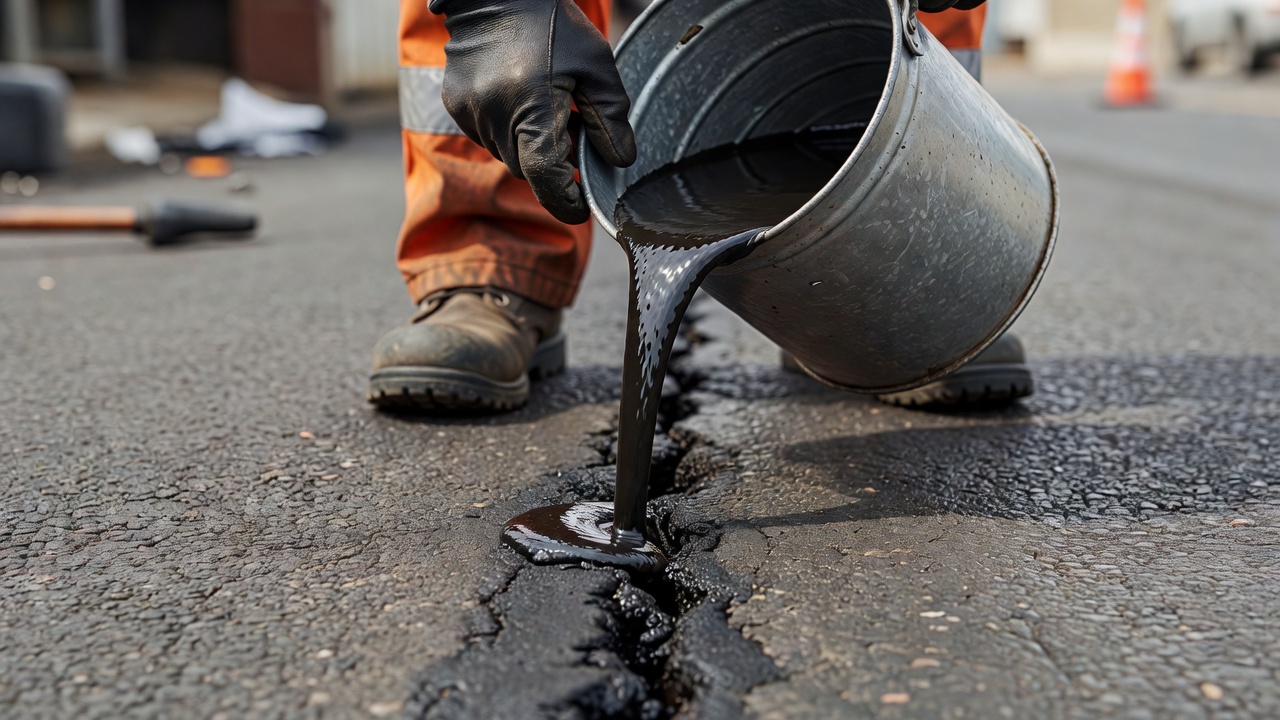
Crack filling does not require routing or reservoir preparation. The filler material is placed directly into the cleaned crack without creating a reservoir channel. This differs fundamentally from crack sealing, where a routed reservoir with a minimum 1:1 width-to-depth ratio (typically 12 mm wide and 12 mm deep) is cut to accommodate the elastomeric sealant and provide the necessary shape factor for proper performance. The absence of routing in crack filling significantly reduces labor time, equipment requirements, and overall treatment cost, typically 30% to 50% less expensive per linear meter than crack sealing.
The materials used for crack filling are classified as ordinary treatment materials rather than specialized elastomeric sealants. These fillers generally have lower elongation properties and are not designed to accommodate significant crack movement. FHWA categorizes crack filler materials into five types: asphalt emulsions, polymer-modified emulsions, fiberized asphalt, cutback asphalts, and hot-pour rubberized fillers. The selection depends on crack condition, climate, traffic levels, and cost considerations.
The service life of crack filling is generally shorter than crack sealing. According to the National Center for Asphalt Technology (NCAT), crack filling typically provides 1 to 4 years of effective service life depending on pavement condition at the time of treatment. The Caltrans Maintenance Technical Advisory Guide (MTAG) reports that crack filling on pavements in good condition can extend pavement life by 2 to 4 years, while on fair-to-poor pavements the extension may be only 1 to 2 years.
| Parameter | Crack Filling | Crack Sealing |
|---|---|---|
| Crack Type | Non-working (<3 mm annual movement) | Working (≥3 mm annual movement) |
| Annual Horizontal Movement | <3 mm (0.12 inches) | ≥3 mm (0.12 inches) |
| Preparation | Cleaning only (compressed air or hot air lance) | Routing/sawing to create reservoir |
| Materials | Asphalt emulsions, cutbacks, hot-pour fillers | Elastomeric sealants (rubberized, polymer-modified) |
| Application Method | Direct placement into crack, squeegee finish | Reservoir filling with specialized application equipment |
| Service Life | 1–4 years | 3–7 years |
| Relative Cost per Linear Meter | Low to Moderate | Moderate to High |
| Crack Width Range | 3–25 mm (0.12–1.0 in) | 3–19 mm (0.12–0.75 in) |
| Edge Deterioration Tolerance | ≤50% of crack length | ≤25% of crack length |
Non-Working Crack Identification
Proper identification of non-working cracks is the most critical step in deciding whether crack filling is the appropriate treatment. The annual horizontal movement threshold of 3 mm established by FHWA serves as the primary technical criterion. However, few maintenance crews directly measure crack movement over the course of a full year. Instead, practitioners rely on crack type classification and visual indicators to infer whether a crack is working or non-working.
Non-working crack types suitable for crack filling include:
Longitudinal Reflective Cracks: These cracks run parallel to the pavement centerline and are caused by cracks or joints in an underlying pavement layer reflecting through an HMA overlay. They typically exhibit limited horizontal movement because the underlying slab or base restricts thermal expansion. Longitudinal reflective cracks are among the most common candidates for crack filling.
Longitudinal Cold Joint Cracks: Occurring at longitudinal construction joints between adjacent paving lanes, these cracks develop where the HMA density is lower and air void content is higher. They exhibit minimal annual movement because they form at the interface of two pavement lanes that expand and contract together.
Longitudinal Edge Cracks: Located within 0.6 m (2 ft) of the unbound pavement edge, these cracks are caused by inadequate shoulder support, poor drainage, or frost action. Edge cracks generally show limited horizontal movement because the unrestrained edge allows stress relief in other directions.
Distantly Spaced Block Cracks: Block cracks that are spaced more than 1.2 m (4 ft) apart and cover limited areas can be considered non-working. These cracks result from age hardening and thermal shrinkage and do not undergo significant additional movement after initial formation.
Working crack types that should be sealed rather than filled include:
Transverse Thermal Cracks: Perpendicular to the pavement centerline, these cracks undergo significant horizontal movement (often 3–6 mm or more annually) as the pavement contracts in cold weather and expands in warm weather. The opening and closing action requires an elastomeric sealant with high elongation recovery.
Transverse Reflective Cracks: Reflective cracks oriented perpendicular to the centerline over underlying transverse joints also exhibit working behavior due to the thermal movement of the underlying slab.
Working Longitudinal Cracks: Some longitudinal cracks, particularly those not associated with reflective or joint mechanisms, may be working cracks if they show measurable seasonal width variation.
The FHWA criteria table for crack treatment selection specifies additional parameters beyond crack type. Crack filling is appropriate when edge deterioration affects no more than 50% of the crack length, and crack sealing is reserved for cases where edge deterioration is limited to 25% or less. Crack widths between 3 mm and 25 mm are suitable for crack filling, cracks narrower than 3 mm do not allow sufficient filler penetration, while cracks wider than 25 mm typically require patching rather than simple filling.
The Pavement Condition Index (PCI), as defined by ASTM D6433, provides additional guidance. Crack filling is most effective when applied to pavements with PCI values between 55 and 85. Below PCI 55, structural deterioration is typically too advanced for simple crack filling to be effective. At PCI above 85, crack density is generally low enough that targeted crack filling can be highly effective.
Crack Filling Materials
Crack filler materials fall into two broad categories based on application temperature: cold-pour and hot-pour materials. Each category includes multiple subtypes with distinct performance characteristics, application requirements, and service lives.
Cold-Pour Crack Fillers
Cold-pour crack fillers are asphalt emulsions that remain liquid at ambient temperature and cure through water evaporation. They consist of asphalt cement emulsified in water with an emulsifying agent, typically between 55% and 65% asphalt residue by weight. The emulsion can be further modified with polymers, rubber latex, or other additives to improve adhesion, cohesion, and flexibility.
Polymer-modified asphalt emulsions represent the highest-performing category of cold-pour fillers. The addition of styrene-butadiene rubber (SBR) latex or styrene-butadiene-styrene (SBS) polymer at concentrations of 2% to 5% by weight significantly improves elastic recovery and low-temperature flexibility. These modified emulsions can achieve elongation values of 200% to 500% at low temperatures, though they still lack the elastomeric properties of hot-applied sealants used for crack sealing.
Application characteristics of cold-pour fillers include:
- Ambient temperature application (typically above 4°C or 40°F)
- Curing time of 30 minutes to 2 hours depending on humidity and temperature
- Limited working time, emulsions must be applied before the water phase separates
- Lower bonding strength compared to hot-pour materials
- Lower material cost per liter
- Simplified clean-up with water
Cold-pour fillers are best suited for low-traffic pavements, temporary repairs, and colder climate applications where heating equipment is impractical. Their service life ranges from 1 to 3 years depending on crack condition and traffic levels.
Hot-Pour Crack Fillers
Hot-pour crack fillers are rubberized asphalt compounds that require heating to 180°C to 200°C (350°F to 400°F) for application. These materials consist of asphalt cement blended with ground tire rubber (typically 5% to 15% by weight), polymers, and other modifiers. When heated, the material becomes fluid enough to penetrate cracks and adheres strongly to crack walls upon cooling.
ASTM D6690 is the governing specification for hot-applied joint and crack sealants used in both concrete and asphalt pavements. The standard defines four types of sealant:
| ASTM D6690 Type | Description | Typical Use |
|---|---|---|
| Type I | Joint and crack sealant for portland cement concrete and asphaltic concrete pavements | General crack sealing and filling |
| Type II | Joint and crack sealant with enhanced low-temperature flexibility | Cold climate applications |
| Type III | Joint and crack sealant for concrete pavements | Rigid pavement joints |
| Type IV | Joint and crack sealant with enhanced fuel resistance | Airport aprons and fuel storage areas |
Hot-pour fillers used for crack filling (as opposed to sealing) generally fall under Types I and II of ASTM D6690. The specification requires minimum cone penetration values (typically 50–90 dmm), softening points (82°C to 93°C), bond testing at -18°C (0°F) to -29°C (-20°F), and resilience testing after oven aging.
Application characteristics of hot-pour fillers include:
- Pre-heating time of 1 to 4 hours in a jacketed kettle
- Application temperature maintained at 190°C ± 10°C (375°F ± 20°F)
- Rapid cooling and traffic-readiness within 15 to 30 minutes
- Strong adhesion to crack walls
- Higher material cost per kilogram
- Specialized heating and application equipment required
- Cleaning requires hydrocarbon solvents
Hot-pour fillers provide superior performance compared to cold-pour emulsions, with service lives of 2 to 4 years on appropriate cracks. The MnDOT study on clean-and-seal versus rout-and-seal techniques (Report 2019-26) found that clean-and-seal (filling without routing) using hot-pour materials provided an average service life of approximately 3 years before failure and up to 6 years on lower-traffic pavements.
Other Filler Materials
Cutback asphalts are asphalt cements dissolved in petroleum solvents. They flow readily at ambient temperature and harden as the solvent evaporates. Cutbacks are less commonly used today due to environmental concerns about volatile organic compound (VOC) emissions and slower curing compared to emulsions. They remain in limited use for crack filling in remote areas where heating equipment cannot be transported.
Fiberized asphalt incorporates short reinforcing fibers (typically polypropylene or glass fibers at 0.5% to 2.0% by weight) into an asphalt binder. The fibers provide reinforcement and reduce drainage of the filler from wider cracks. Fiberized asphalt is used as both a cold-pour and hot-pour material and is particularly effective for cracks wider than 6 mm.
Application Without Routing
The defining procedural characteristic of crack filling is the absence of routing or sawing. The crack preparation sequence for crack filling consists of three steps: cleaning, treatment, and finishing.
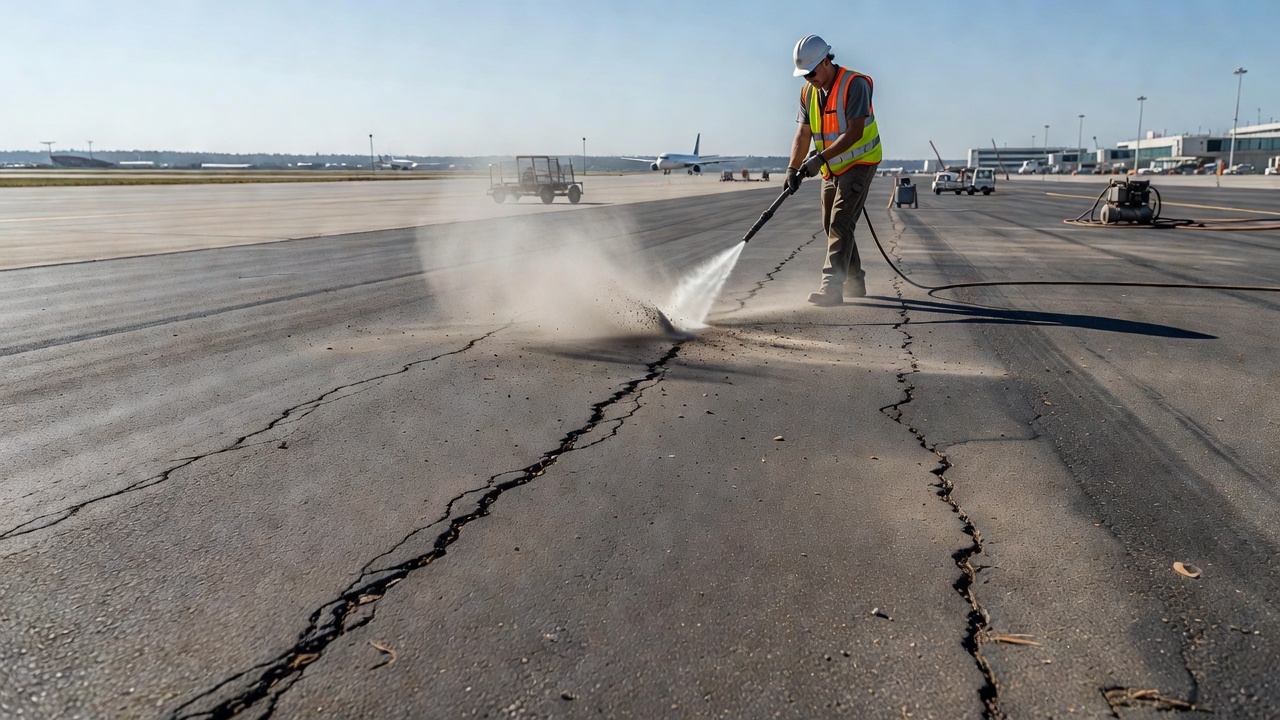
Step 1: Crack Cleaning. The crack is cleaned using compressed air at 6 to 8 bar (90 to 120 psi) to remove loose debris, dust, vegetation, and old filler material. A hot air lance operating at 100°C to 200°C (200°F to 400°F) simultaneously dries the crack walls and removes moisture, improving filler adhesion. The hot air lance also melts any residual asphalt along the crack walls, creating a better bond interface. The crack must be thoroughly cleaned to the full depth where filler penetration is desired, typically 12 to 25 mm (0.5 to 1.0 inches).
Step 2: Material Application. The filler is placed into the cleaned crack using appropriate equipment:
- Pour pots for small-scale cold-pour applications: hand-held containers with a directional spout that allows controlled pouring into the crack.
- Kettle and wand systems for hot-pour applications: the material is melted in a heated kettle (trailer-mounted or truck-mounted) and delivered through a heated hose with a wand tip that dispenses material directly into the crack.
- Pressure-fed applicators for high-production crack filling: these systems pump cold-pour emulsion or hot-pour filler through a wand at controlled rates for consistent fill.
The material is applied to slightly overfill the crack, creating a small bead of excess material above the pavement surface. This overfill compensates for material settling and ensures complete crack filling.
Step 3: Finishing. A squeegee (typically U-shaped rubber on a handle) is drawn over the filled crack to wipe excess material flush with the pavement surface and spread a thin film approximately 25 mm (1 inch) wide on either side of the crack. The finished surface should be flush to slightly recessed, never raised above the pavement surface. Raised filler can be picked up by traffic, create ride quality issues, and fail prematurely.
Crack width limitations apply: cracks narrower than 3 mm generally cannot be effectively filled because the filler cannot penetrate to sufficient depth. Cracks wider than 25 mm require more extensive repair such as patching. Cracks between 3 mm and 25 mm with appropriate edge deterioration (<50% of crack length) are suitable candidates for filling.
Temperature constraints differ between crack filling and crack sealing. Since non-working cracks do not change width significantly with temperature, crack filling applications can proceed at any time of year when weather conditions allow. This is a significant operational advantage over crack sealing, which must be performed when the crack is at its midpoint-to-widest opening (typically spring, fall, or winter). However, ambient temperature must remain above 4°C (40°F) for cold-pour emulsions to cure properly, and the pavement surface must be dry.
Performance and Limitations
The performance of crack filling depends on pavement condition at time of treatment, filler material quality, crack preparation quality, traffic loading, and climate conditions.
The Pavement Preservation Group Study conducted by the National Center for Asphalt Technology (NCAT) in partnership with MnROAD provides the most comprehensive field performance data on crack filling. Test sections on Lee Road 159 in Alabama, monitored over eight years, evaluated crack filling versus untreated cracks. The study found that the life-extending benefit of crack filling depends strongly on pretreatment pavement condition:
| Pretreatment Condition | Cracked Area Before Treatment | Median Time to Failure (MTTF) Benefit |
|---|---|---|
| Good | <5% | >4.7 years (upper bound not reached) |
| Fair | 5–20% | 2.0–3.5 years |
| Poor | >20% | 1.0–2.0 years |
The study concluded that crack filling applied to pavements in good condition provides the greatest life-extending benefit, with sealed sections not expected to reach median failure within 10 years. When combined with a chip seal treatment, crack filling provided an additional 1.4 to 2.0 years of life extension beyond the chip seal alone.
Clean-and-seal versus rout-and-seal comparisons from the MnDOT study (Report 2019-26) on Minnesota roadways found that crack filling without routing (clean-and-seal) provided:
- Average service life of 3 years before failure at mean performance index
- Up to 6 years service life on low-volume roads
- No statistically significant difference from rout-and-seal in short-term performance
- Higher failure rates on pavements over clay and silt subgrades
Filler material performance ranking from multiple studies indicates:
- Hot-pour rubberized fillers (ASTM D6690 Type II) provide the longest service life among crack filling materials, with 2–4 year typical service.
- Polymer-modified cold-pour emulsions provide 1.5–3 years of service life.
- Unmodified asphalt emulsions provide 1–2 years of service life.
- Cutback asphalts provide 6–18 months of service life.
Primary failure modes for crack filling include:
- Adhesion failure: The filler separates from the crack wall, typically due to inadequate cleaning or moisture at the bond interface.
- Cohesion failure: The filler material fractures internally, caused by thermal cycling or traffic loading that exceeds the material’s tensile strength.
- Debonding: The filler lifts away from the pavement surface, often caused by snowplow damage, tire pickup, or insufficient curing time before traffic exposure.
- Tracking: Filler material adheres to vehicle tires and is pulled from the crack, occurring when the material has not adequately cured or when the material overfills the crack.
Limitations of crack filling include:
- Cannot treat structurally failed pavements or fatigue cracking (alligator cracking)
- Limited ability to handle cracks with significant edge deterioration
- Shorter service life compared to crack sealing
- May track onto adjacent pavement when improperly applied
- Less effective in cold climates where freeze-thaw cycling accelerates failures
Crack Filling in Airport Pavements
Crack filling in airport pavements follows the same technical principles as highway applications but with more stringent requirements due to the safety-critical nature of airfield surfaces. The Federal Aviation Administration (FAA) addresses crack repair in Advisory Circular 150/5380-6C, Guidelines and Procedures for Maintenance of Airport Pavements.
The FAA classifies crack filling as a routine preventive maintenance activity under its maintenance framework. The AC states: “Typical preventive and regular or recurring pavement maintenance includes: routine cleaning, filling, and/or sealing of cracks, patching pavement, seal coating, grading pavement edges, maintaining pavement drainage systems, and restoring pavement markings.”
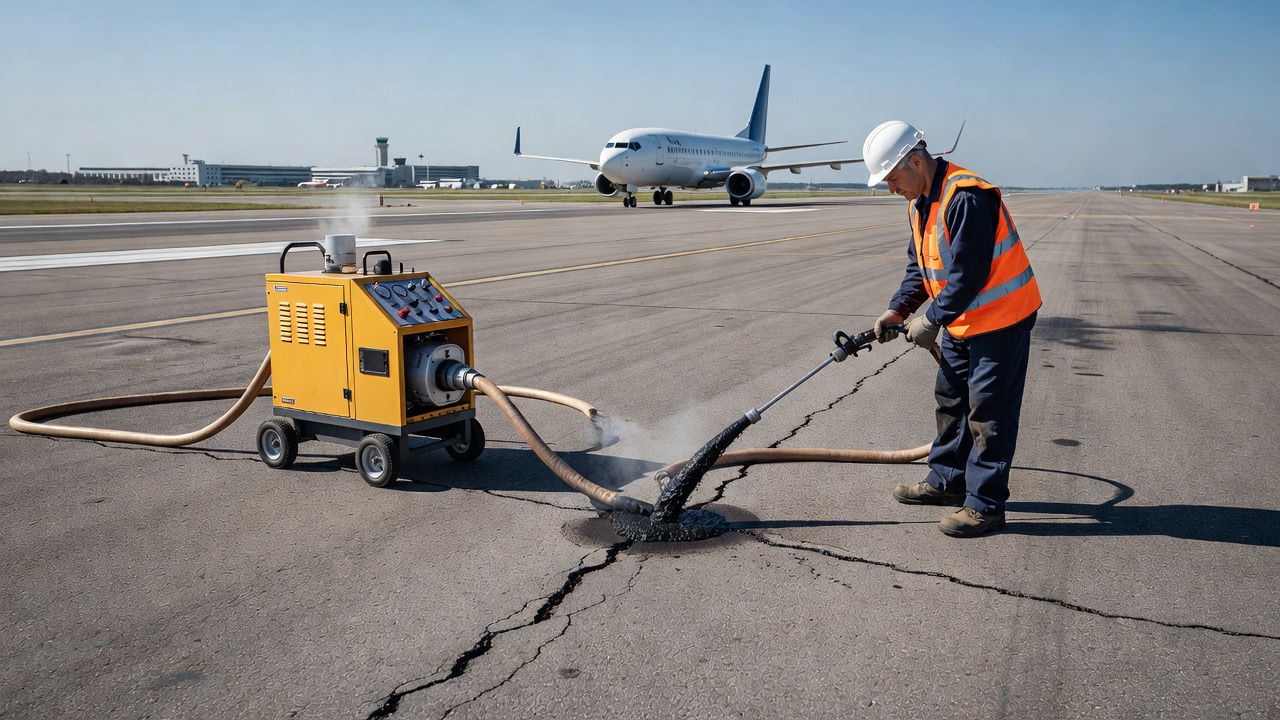
FAA Appendix A, Repair Procedure A1, provides the standard procedure for crack repair of flexible pavement at airports. The procedure specifies:
- Clean all loose material from the crack openings.
- Remove vegetation growing in cracks.
- Dry cracks with compressed air.
- Apply crack filler slightly above the pavement surface.
- Strike off flush with a squeegee.
- Allow proper curing before opening to traffic.
The FAA distinguishes between crack filling and crack sealing in its Quick Guide for Maintenance and Repair of Common Flexible Pavement Surface Problems (Table 6-1), noting that crack filling is appropriate for longitudinal and transverse cracks that show minimal movement and have limited spalling.
Airport-specific considerations for crack filling include:
- Foreign Object Debris (FOD) prevention: Crack filler that fails or protrudes above the surface creates FOD that can be ingested by jet engines or damage propellers. Materials must be properly struck off flush and monitored after application.
- Fuel resistance: ASTM D6690 Type IV sealants are specified for areas subject to jet fuel spillage such as aprons and refueling areas. Standard filler materials may degrade rapidly when exposed to aviation fuels.
- Tire tracking: Aircraft tires operating at high pressures can pick up poorly cured filler and track it across runways. Adequate curing time before traffic is essential.
- Rubber removal operations: Runway rubber removal (chemical or high-pressure water) can dislodge crack filler. Coordination between crack filling and rubber removal schedules is important.
- Operational constraints: Runway closures for maintenance are costly. Crack filling must be scheduled to minimize disruption to air traffic, often during nighttime or low-traffic periods.
The ICAO Aerodrome Design Manual, Part 3, Pavements (Doc 9157) provides additional guidance on pavement maintenance, recommending that crack filling be performed as part of a comprehensive pavement maintenance program. ICAO emphasizes that “early detection and repair of pavement defects is the most important preventive maintenance procedure” and that crack treatment should be applied before cracks become sufficiently severe to require patching or reconstruction.
Pavement Management Programs (PMP) at airports, as described in FAA AC 150/5380-7, typically include crack filling as a standard maintenance activity. The PMP approach uses PCI surveys to identify cracks suitable for filling and prioritizes treatments based on cost-effectiveness. Airports receiving federal grant funding through the Airport Improvement Program (AIP) are required to maintain an effective PMP.
Condition Assessment
Effective condition assessment for crack filling requires systematic evaluation of crack characteristics, pavement condition, and treatment timing. The assessment process follows established protocols from ASTM, FHWA, and state transportation agencies.
Crack measurement parameters that must be assessed include:
- Crack width: Measured at the pavement surface to the nearest millimeter. Cracks between 3 mm and 25 mm are candidates for filling. The measurement should be taken at several points along the crack length to account for variability.
- Crack length: Measured in linear meters for quantity estimation and material requirement calculation.
- Edge deterioration percentage: The proportion of crack length showing spalling, secondary cracking, or raveling. Cracks with less than 50% edge deterioration are candidates for filling, above 50%, more extensive repair such as patching should be considered.
- Crack depth: Estimated from visual inspection or probing. Cracks extending through the full HMA layer depth require special consideration for filler quantity and adhesion.
- Annual horizontal movement: The critical parameter distinguishing working from non-working cracks. Measured by marking reference points on either side of the crack and measuring width changes seasonally over at least one year.
The Pavement Condition Index (PCI) survey methodology (ASTM D6433) provides a standardized framework for distress identification and severity rating. For crack filling decisions, the following PCI distress types are relevant:
| PCI Distress Type | Suitable for Crack Filling? | Remarks |
|---|---|---|
| Longitudinal crack (non-wheel path) | Yes | Non-working movement typical |
| Transverse crack (non-thermal) | Conditionally | Must verify <3 mm annual movement |
| Block crack (low severity) | Yes | Distantly spaced only |
| Edge crack | Yes | Non-working movement typical |
| Reflection crack | Conditionally | Longitudinal reflection cracks are candidates |
| Fatigue (alligator) crack | No | Structural failure, requires patching |
| Transverse thermal crack | No | Working crack, requires sealing |
Timing assessment is critical for cost-effective crack filling. The optimal “window of opportunity” for crack filling occurs when:
- The pavement is structurally sound (no base or subgrade failures)
- Crack density is below 20% of pavement surface area
- Crack widths are between 3 mm and 25 mm
- Edge deterioration affects less than 50% of crack length
- No significant moisture damage is present at crack edges
- Previous sealant or filler is not debonding from crack walls
The lifecycle cost analysis for crack filling decisions should consider:
- Treatment cost per linear meter (materials, labor, equipment, traffic control)
- Expected service life in years (based on local experience and material selection)
- Pavement condition trajectory (rate of deterioration without treatment)
- Cost of deferred treatment (more expensive repairs if filling is not performed)
- Alternative treatment cost (crack sealing, patching, overlay)
Research demonstrates that crack filling provides the highest return on investment when applied to pavements in fair to good condition (PCI 60–85). Waiting until PCI drops below 55 significantly reduces the cost-effectiveness of crack filling and may necessitate more expensive treatments.
Crack Filling as Temporary vs Long-Term Strategy
Crack filling occupies a dual role in pavement maintenance strategy: it serves as both a temporary, cost-effective stop-gap measure and a planned component of long-term preventive maintenance.
As a temporary strategy, crack filling is employed when:
- Budget constraints prevent more expensive treatments such as crack sealing or overlays
- Pavement is scheduled for reconstruction or major rehabilitation within 1–3 years
- Weather conditions prevent application of hot-pour sealants for crack sealing
- Emergency water infiltration prevention is needed during winter months
- The crack condition is evolving and requires monitoring before committing to permanent treatment
The stop-gap performance of crack filling, as documented by the Road Resource Consortium, provides 1–3 years of life extension when applied to pavements in poor condition (PCI 55–70). In this role, crack filling functions as a “band-aid” that prevents accelerated deterioration until more comprehensive treatments can be applied.
As a long-term strategy, crack filling is integrated into a comprehensive pavement preservation program that includes:
| Year | Activity | Purpose |
|---|---|---|
| Year 0 | New pavement construction or overlay | Base condition established |
| Year 3–5 | Initial crack filling | Treat early non-working cracks before water infiltration |
| Year 5–7 | Second crack filling cycle | Maintain crack integrity on aging cracks |
| Year 7–10 | Crack sealing (if cracks become working) | Transition to sealing for active cracks |
| Year 10–15 | Fog seal or chip seal | Surface treatment for broader protection |
| Year 15+ | Structural overlay or reconstruction | Major rehabilitation when warranted |
The lifecycle benefit of a systematic crack filling program is substantial. According to FHWA, each dollar spent on pavement preservation (including crack filling) can save $3 to $8 in future reconstruction costs. The NCAT preservation group study confirmed that crack filling on pavements in good condition extends service life by more than 4.7 years, delaying the need for expensive overlays or reconstruction.
Material selection for long-term strategy favors hot-pour rubberized fillers meeting ASTM D6690 Type II for maximum durability, particularly for pavements with moderate traffic volumes and in freeze-thaw climates. Cold-pour polymer-modified emulsions are selected for lower-traffic pavements or where heating equipment is unavailable.
Limitations of crack filling as a permanent solution include:
- Cannot arrest structural deterioration caused by base or subgrade failure
- Does not restore structural capacity to the pavement
- Requires periodic reapplication (typically every 2–4 years)
- Does not seal cracks as effectively as routed and sealed treatments
- May create an overband residue that affects pavement friction when improperly applied
The most effective pavement maintenance programs use crack filling as one element within a treatment sequence that may include fog seals, chip seals, slurry seals, micro surfacing, and thin overlays. Crack filling prepares the pavement by sealing individual cracks before area-wide surface treatments are applied. FAA Advisory Circular 150/5380-6C emphasizes this sequential approach: “It is always desirable to seal and/or fill open cracks before the application of a surface treatment.”
Integration with Pavement Management Systems (PMS) allows agencies to track crack filling performance, monitor re-treatment intervals, and calculate actual service life for their specific conditions. The data collected through PMS enables continuous improvement of crack filling material selection, application procedures, and timing decisions.
In conclusion, crack filling is an essential, cost-effective pavement maintenance treatment for non-working cracks that reduces water infiltration, reinforces adjacent pavement, and extends pavement service life. Its lower cost compared to crack sealing makes it an attractive option for agencies managing extensive pavement networks with constrained budgets. However, proper crack assessment, appropriate material selection, and correct application procedures are critical to achieving optimal performance. When applied within a comprehensive pavement preservation program, crack filling represents one of the highest-return maintenance investments available to pavement managers.
Frequently Asked Questions
- What is crack filling in pavement maintenance?
- Crack filling is the placement of ordinary treatment materials, such as asphalt emulsions, cutback asphalts, or hot-pour fillers, into non-working cracks in asphalt pavement. Non-working cracks exhibit less than 3 mm (0.12 inches) of annual horizontal movement. Crack filling primarily reduces water infiltration into the pavement structure and does not require routing or reservoir preparation, unlike crack sealing.
- What is the difference between crack filling and crack sealing?
- Crack filling treats non-working cracks (<3 mm annual movement) with ordinary filler materials applied without routing. Crack sealing treats working cracks (≥3 mm annual movement) with specialized elastomeric sealants placed into a routed reservoir. Crack sealing requires more preparation and cost but offers longer service life (3-7 years) compared to crack filling (1-4 years). Crack filling is suitable for longitudinal reflective cracks, cold joint cracks, and edge cracks with moderate edge deterioration.
- What types of cracks can be treated with crack filling?
- Crack filling is appropriate for non-working cracks including longitudinal reflective cracks, longitudinal cold joint cracks, longitudinal edge cracks, and distantly spaced block cracks. These crack types typically exhibit minimal annual horizontal movement. Cracks should have moderate to no edge deterioration (less than 50% of crack length) and widths between 3 mm and 25 mm (0.12 to 1 inch).
- What materials are used for crack filling?
- Crack filling materials include cold-pour asphalt emulsions (polymer-modified, latex-modified), hot-pour rubberized asphalt fillers meeting ASTM D6690, cutback asphalts, and fiberized asphalt. Cold-pour emulsions are applied at ambient temperature and require curing time. Hot-pour fillers are heated to approximately 190°C (375°F) and harden within 30 minutes. Material selection depends on crack width, climate, traffic level, and budget.
- How is crack filling applied?
- Crack filling is applied by first cleaning the crack with compressed air or hot air lance to remove debris and moisture. No routing or sawing is performed. The filler material is then applied using a pour pot (for cold-pour) or a heated kettle with a hose wand (for hot-pour). The material is slightly overfilled and then struck flush with a squeegee. Application can proceed year-round since non-working cracks do not change width significantly with temperature.
- How long does crack filling last?
- Crack filling typically provides 1 to 4 years of service life depending on pavement condition, material quality, traffic loads, and climate. When applied to pavements in good condition (PCI 85-100), crack filling may extend pavement life by 2-4 years. On fair condition pavements (PCI 70-85), 1-3 years of life extension is typical. Crack filling on poor condition pavements (PCI 55-70) should be considered a stop-gap measure providing only 1-2 years.