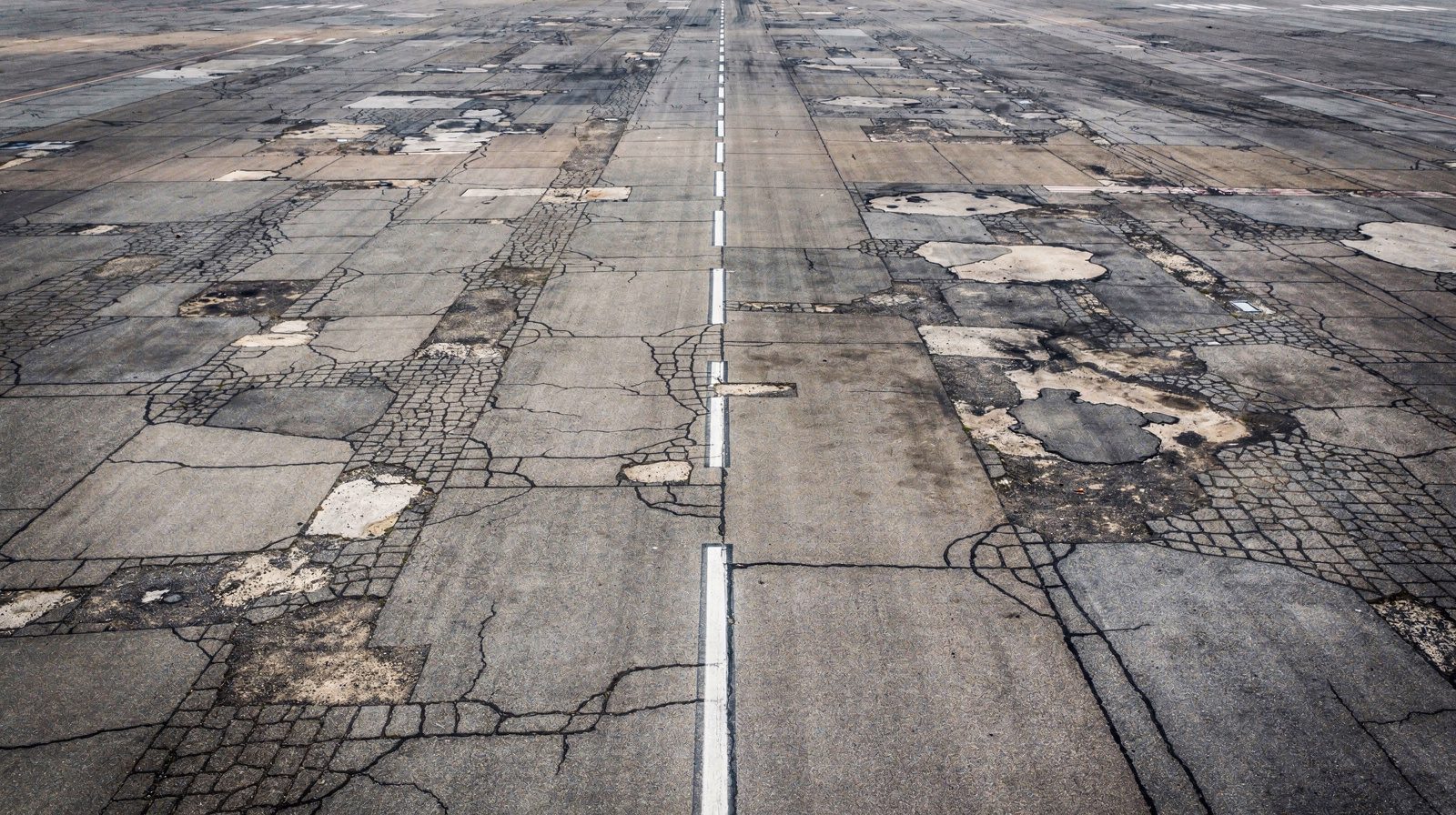
What is Crack Sealing in Asphalt and Concrete Pavements?
Crack Sealing in Asphalt and Concrete Pavements
1. Definition and Distinction from Crack Filling
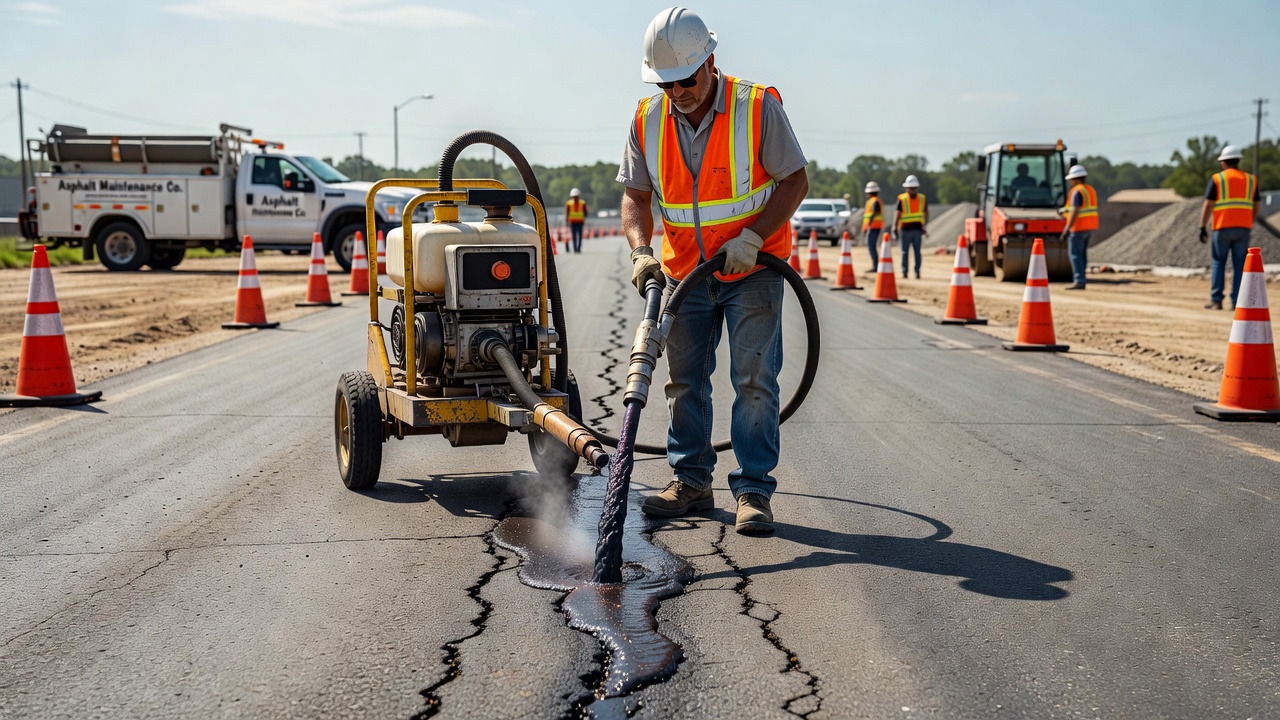
Crack sealing is a preventive pavement maintenance treatment defined as the placement of specialized sealant materials into or above working cracks using unique configurations to prevent the intrusion of water and incompressible materials. The Federal Highway Administration (FHWA) and the Strategic Highway Research Program (SHRP) established the formal distinction between crack sealing and crack filling based on crack movement characteristics, reservoir preparation requirements, and sealant material specifications.
The defining characteristic of crack sealing is the creation of a routed reservoir over the crack prior to sealant installation. This reservoir, typically a uniform rectangular channel measuring 3/4 inch by 3/4 inch (19 mm x 19 mm) or 1/2 inch by 1/2 inch (13 mm x 13 mm), provides a controlled geometry for the sealant to bond to clean, square walls. The reservoir accommodates the thermal expansion and contraction of the pavement, allowing the sealant to stretch and compress without losing adhesion. Crack sealing is specifically indicated for working cracks, those that experience annual horizontal movement of more than 3 mm (0.1 inches).
Crack filling, by contrast, involves the direct application of ordinary treatment materials into non-working cracks after cleaning, without routing a reservoir. Non-working cracks are defined as those with annual horizontal movement of 0.1 inches or less. Crack filling materials are typically placed flush with the pavement surface, whereas crack sealing materials may be applied flush, recessed, or overbanded (extending 1 to 3 inches on either side of the crack). The SHRP H-106 study quantified that crack sealing in routed, working cracks provides service lives of 5 to 9 years, while crack filling in unrouted, non-working cracks delivers 2 to 4 years of satisfactory performance.
The terms are frequently misused interchangeably in the pavement maintenance industry, but the technical distinction has significant implications for material selection, installation cost, performance expectations, and warranty specifications. ASTM D6690 and AASHTO MP-25 establish performance standards specifically for hot-poured crack sealants, while crack filling materials may meet less stringent requirements. The Illinois Center for Transportation pooled fund study FHWA TPF-5(225) validated that proper treatment selection based on crack movement classification is the single most important factor determining treatment success.
2. When to Seal vs Fill
The decision to seal versus fill pavement cracks is governed by crack type, crack movement characteristics, edge deterioration condition, and crack width. The SHRP H-106 study developed a decision matrix that remains the industry standard for treatment selection, updated in the FHWA Manual of Practice (FHWA-RD-99-147) and the Illinois Center for Transportation guidelines (ICT-17-008).
Crack sealing is recommended when the annual horizontal crack movement exceeds 0.1 inches (3 mm). Working cracks include transverse thermal cracks (caused by low-temperature contraction of the asphalt layer), transverse reflective cracks (propagating from underlying pavement joints or cracks through an overlay), longitudinal reflective cracks, and longitudinal cold-joint cracks (occurring at construction joints between paving lanes). Working cracks typically exhibit seasonal opening and closing, opening in winter, closing in summer, that can exceed 0.25 inches (6 mm) in cold climates. The crack width for sealable cracks should range from 0.2 to 0.7 inches (5 to 18 mm). Edge deterioration, spalling or secondary cracking along the crack edges, must be minimal, affecting no more than 25 percent of the crack length.
Crack filling is appropriate when annual horizontal crack movement is 0.1 inches or less. Non-working cracks include longitudinal edge cracks (occurring near the pavement edge where support is variable), longitudinal reflective cracks with minimal movement, thermal cracks in stabilized base sections where movement is restrained, and distantly spaced block cracks. Crack filling can accommodate wider cracks, from 0.2 to 1.0 inches (5 to 25 mm), with moderate edge deterioration of up to 50 percent of crack length. For cracks exceeding 1 inch in width, neither sealing nor filling is recommended, mastic materials or partial-depth patching should be used instead.
The timing of treatment significantly affects the outcome. Spring and fall are the optimal seasons for both sealing and filling, when ambient temperatures are between 40°F and 80°F (4°C to 27°C) and cracks are partially open. Sealing during extreme summer heat when cracks are fully closed may result in sealant being compressed and extruded from the reservoir upon cooling. Sealing during extreme winter cold when cracks are fully open may overstress the sealant during subsequent expansion. The NCAT/MnROAD Pavement Preservation Group Study demonstrated that pavements treated while in good condition (less than 5% area cracked) achieved life-extending benefits exceeding 7.7 years for sealed sections, while pavements in poor condition (over 20% area cracked) showed minimal benefit.
Pavements not suitable for crack sealing include those with fatigue (alligator) cracking, severe block cracking, web cracking (interconnected cracks forming a pattern), cracks with severe branching or spalling extending beyond the reservoir width, and pavements with structural deficiencies requiring reconstruction or overlay. The crack density threshold for sealing suitability is linear crack length of less than 440 feet per 330-foot pavement section (moderate density). High-density cracking exceeding this threshold is more cost-effectively addressed by surface treatments such as chip seals, slurry seals, or thin overlays.
3. Crack Preparation, Routing, Cleaning, and Drying
Crack Routing
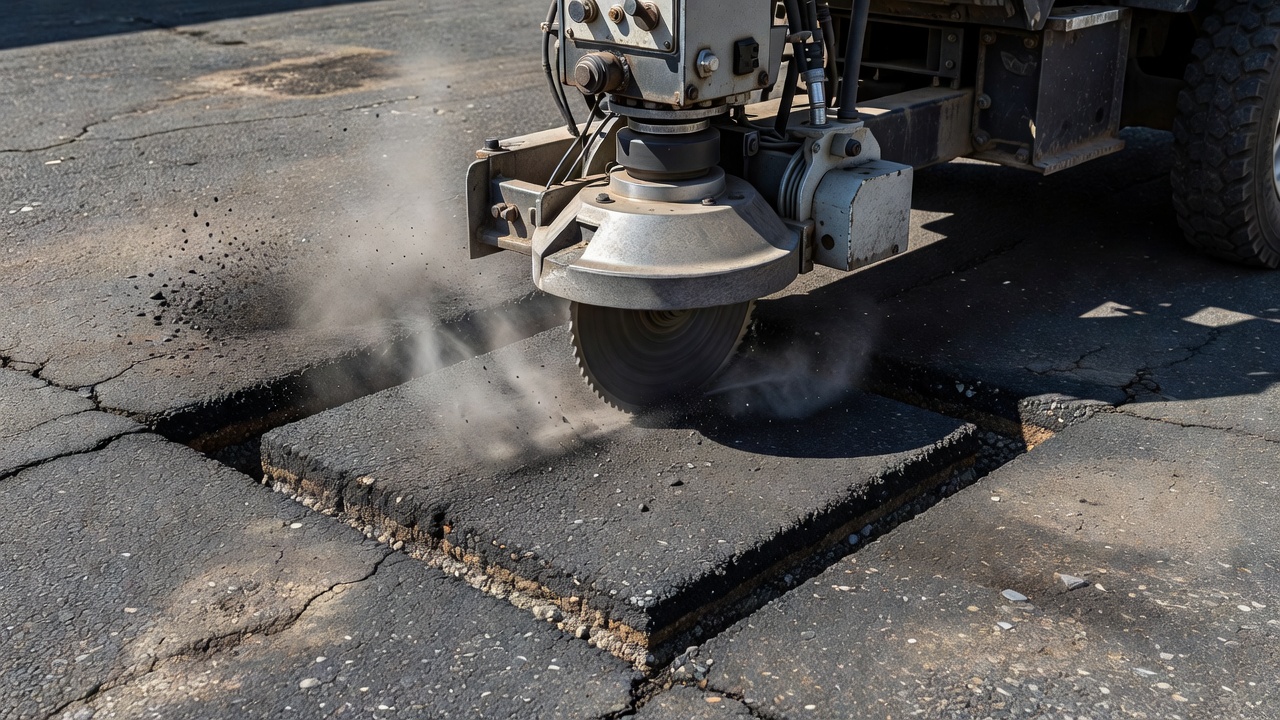
Crack routing is the mechanical cutting of a uniform rectangular reservoir over and around an existing crack to create clean, square walls for sealant adhesion and to provide adequate sealant volume for accommodating crack movement. The routing operation is performed using a specialized crack routing machine equipped with diamond-tipped or carbide-tipped cutting blades. Modern routers include rotary impact routers (using multiple carbide-tipped cutters) and diamond-blade saws (using water-cooled or dry-cut diamond blades). Self-propelled routers with vacuum attachments improve productivity and reduce cleanup requirements.
The standard reservoir dimensions specified by the FHWA and state highway agencies are either 3/4 inch by 3/4 inch (19 mm x 19 mm) for standard sealant applications or 1/2 inch by 1/2 inch (13 mm x 13 mm) for thinner overlays or where profile depth is limited. The reservoir must be centered over the crack, extending at least 1/8 inch below the crack on each side to ensure the sealant contacts solid pavement material. For wide cracks (0.5 to 0.7 inches), a wider single blade or multiple passes may be required. The width-to-depth ratio of the reservoir influences sealant performance, a ratio of approximately 1:1 provides optimal stress distribution at the sealant-pavement interface.
Routing quality issues directly impact sealant performance. Rounded or V-shaped routs resulting from worn blades, incorrect blade spacing, or misaligned cutters must be avoided. The Illinois Center for Transportation study identified three routing challenges: wavy cracks (which may be missed by the router operator, leaving pavement pieces between the rout and crack that later spall), zigzag cracks (requiring wider routs or alternative treatment methods to capture the crack pattern), and partially developed cracks (where routs cut for full lane width despite the crack only partially appearing at the surface). Excessive spalling during routing, affecting more than 10 to 20 percent of the total crack length, indicates that crack filling or alternative treatment should be considered. Trial cuts before production routing are essential to verify rout geometry, blade condition, and machine settings.
Crack Cleaning and Drying
Crack cleaning and drying is the second critical step in the crack sealing process, performed immediately after routing and immediately before sealant installation. The objective is to remove all dust, debris, moisture, and loose particles from the reservoir to achieve clean, dry, and warm reservoir walls that maximize sealant adhesion. The FHWA and ICT guidelines specify a multi-stage cleaning process:
Stage 1, Pavement surface cleaning using a mechanical sweeper, large vacuum system, or leaf blower to remove dust and debris generated by routing. This prevents material from being blown back into the reservoir by construction vehicle movement or wind. The pavement surface within a 3-foot radius of each crack should be cleaned.
Stage 2, Reservoir cleaning using compressed air at a minimum of 100 psi (690 kPa) at the nozzle with a minimum blast flow of 150 cubic feet per minute. The air compressor must be equipped with oil and moisture filters to provide dry, oil-free air. Filters must be inspected for cleanliness and replaced if damaged. The hot air lance should be directed into the reservoir at a 45-degree angle to dislodge debris while simultaneously drying and warming the reservoir walls.
Stage 3, Final cleaning immediately before sealant placement, using a hot air lance operating at 1,800°F to 2,200°F (980°C to 1,200°C). The hot air lance performs triple duty: it removes any remaining dust particles, dries the reservoir walls by vaporizing moisture, and thermally conditions the pavement surface to improve the thermodynamic bond with the hot sealant. The hot air lance should be passed along the reservoir at a speed of approximately 2 feet per second, ensuring the reservoir walls reach a temperature of at least 70°F (21°C) above ambient temperature.
Sealant installation must not be performed on wet pavement surfaces or when rain is imminent. If the pavement is damp from overnight moisture or morning dew, the hot air lance drying cycle must be extended until the reservoir is completely dry. The total elapsed time between cleaning and sealant placement should not exceed 30 seconds to prevent recontamination of the reservoir. In dusty environments, a two-person cleaning crew, one operating the hot air lance and one following immediately with the sealant applicator, ensures optimal bond quality.
4. Sealant Reservoir Geometry
The geometry of the routed reservoir is a primary determinant of crack sealant performance. The reservoir must provide sufficient sealant volume to accommodate tensile and compressive strains without exceeding the sealant’s elongation capacity or causing adhesive failure at the sealant-pavement interface. The SHRP and ICT research established that reservoir geometry influences stress distribution, strain demand, and bond line integrity.
Standard reservoir shapes are square or rectangular in cross-section. The square configuration (equal width and depth, typically 3/4 inch x 3/4 inch) is the most common specification because it provides balanced performance across a range of crack movements. The rectangular configuration (wider than deep, typically 3/4 inch wide x 1/2 inch deep) is sometimes specified for thinner pavements or where profile depth is constrained. The reservoir shape must have vertical sidewalls and a flat bottom, angles at the reservoir-pavement interface should approach 90 degrees. V-shaped routs produce higher stress concentrations at the sealant-pavement interface and reduce service life by 30 to 50 percent.
Reservoir dimensions are determined by crack width, sealant type, pavement thickness, and expected crack movement. The minimum reservoir depth is 1/2 inch (13 mm) for standard hot-poured sealants. The minimum reservoir width is 1/2 inch (13 mm), but 3/4 inch (19 mm) is preferred because it provides more sealant volume and better accommodates the applicator wand. For cracks wider than 1/2 inch, the reservoir width should exceed the crack width by at least 1/4 inch on each side. The shape factor, the ratio of sealant width to sealant depth, influences performance. A shape factor of approximately 1.0 (square reservoir) distributes strain uniformly through the sealant cross-section, minimizing stress concentrations at the bond line.
Reservoir-to-crack alignment is critical. The reservoir must be centered precisely over the crack so that the sealant contacts solid pavement on both sides of the crack. Misalignment of more than 1/8 inch reduces the effective bond area and may cause the crack to propagate around the sealant. For wavy or wandering cracks, the reservoir width may need to be increased to ensure the crack is fully captured within the reservoir. When cracks deviate more than 1/4 inch from the reservoir centerline over a 10-foot length, the crack is considered unsuitable for sealing and alternative treatments should be evaluated.
Inspection of reservoir geometry should be performed continuously during routing operations. A quality control tool, typically an aluminum block machined to the specified reservoir dimensions, is inserted into each rout to verify width and depth. Any rout that does not pass the gauge check must be recut or repaired before sealant placement. The ICT guidelines recommend that at least 10 percent of routs be checked per production shift, with corrective action taken immediately if rejections exceed 5 percent.
5. Sealant Types
Crack sealants are classified into three primary families based on their chemistry and application temperature: hot-applied thermoplastic bituminous materials, cold-applied thermoplastic bituminous materials, and chemically-cured thermosetting materials. Each family has distinct performance characteristics, application requirements, and service life expectations.
Hot-Applied Rubberized Asphalt Sealants
Hot-applied rubberized asphalt sealants are the most widely used crack sealing materials in the pavement maintenance industry, accounting for approximately 85 percent of all crack sealant applications. These materials consist of asphalt cement modified with styrene-butadiene-styrene (SBS) block copolymer, styrene-butadiene rubber (SBR), crumb rubber from recycled tires, or other elastomeric polymers. The polymer modification enhances elasticity, adhesion, cohesion, and temperature susceptibility compared to unmodified asphalt.
The American Society for Testing and Materials (ASTM) standard ASTM D6690 classifies hot-applied crack sealants into four types based on service temperature and performance requirements:
| Type | Climate Range | Low Temperature Test | Extension | Former Standard |
|---|---|---|---|---|
| Type I | Moderate climates | -18°C (0°F) | 50% | ASTM D1190 |
| Type II | Most climates | -29°C (-20°F) | 50% | ASTM D3405 |
| Type III | Wet, most climates | -29°C (-20°F) | 50% | Federal SS-S-1401C |
| Type IV | Very cold climates | -29°C (-20°F) | 200% | Low-modulus D3405 |
Type III sealants include additional water-immersed bond testing and aged resilience testing, making them suitable for regions with high rainfall or prolonged wet conditions. Type IV sealants with 200 percent extension capability are required in cold climate regions where thermal crack movements are extreme, such as northern US states (Minnesota, North Dakota, Montana) and Canadian provinces.
The performance-based grading system (AASHTO MP-25) provides an alternative classification using the Sealant Grade (SG) system. SG 52-34 indicates a sealant suitable for a high service temperature of 52°C (126°F) and a low service temperature of -34°C (-29°F). This system allows engineers to match sealant properties to site-specific pavement temperature conditions using LTPP Bind data.
Cold-Applied Sealants
Cold-applied sealants include asphalt emulsions, polymer-modified liquid asphalts, and solvent-based materials that are applied without heating. While less expensive and simpler to apply than hot-applied sealants, cold-applied materials generally provide shorter service lives, typically 1 to 3 years compared to 5 to 9 years for hot-applied rubberized sealants. Cold-applied sealants are suitable for low-traffic pavements, temporary repairs, or situations where heating equipment is not available.
Emulsion-based crack sealers consist of asphalt emulsion (asphalt droplets suspended in water) with polymer modifiers. They cure by water evaporation and may require multiple applications to fill the crack. Performance is limited by the low solids content and the absence of chemical crosslinking. Recent innovations include cold-applied sealants that meet ASTM D6690 specifications, such as Perma-Patch 6690 ColdFuze, which combines a two-part chemical cure system to achieve hot-pour performance characteristics without heating.
Silicone Sealants
Self-leveling silicone sealants conforming to ASTM C920 (Standard Specification for Elastomeric Joint Sealants) are increasingly specified for concrete pavement joints and airport applications. Silicone sealants offer exceptional UV resistance, thermal stability across a wide temperature range (-50°C to +150°C), and resistance to jet fuel, hydraulic fluids, and de-icing chemicals. Silicone sealants cure through a moisture-activated crosslinking reaction and require clean, dry, primed joint faces for proper adhesion.
Silicone sealants are preferred for airport concrete pavements because they maintain elastic properties over decades of service, resist fuel immersion without degradation, and accommodate significant joint movement (up to ±50 percent of the joint width). The FAA Advisory Circular AC 150/5380-6C recognizes silicone sealants as acceptable materials for airport pavement crack and joint sealing. The primary limitations of silicone sealants are higher material cost (typically 2 to 3 times that of hot-applied rubberized sealants) and the requirement for surface-applied primer on concrete substrates.
Selection Criteria
The FHWA identifies ten critical factors for sealant selection: short preparation time, quick and easy placement (good workability), short cure time, adhesiveness (bond strength to pavement), cohesiveness (internal strength), resistance to softening and flow at high temperatures, flexibility at low temperatures, elasticity (ability to return to original shape), resistance to aging and weathering, and abrasion resistance. No single sealant type excels in all categories, the selection must balance competing requirements based on climate, traffic, pavement type, and crack characteristics.
6. Application Equipment and Technique
Kettle Systems
Crack sealant kettles are heating vessels that melt, homogenize, and maintain hot-poured sealant at the manufacturer’s specified application temperature. Kettles range in capacity from 10 gallons (hand-pour models) to 400 gallons (truck-mounted production units). Two heating technologies are used: direct-fire kettles (with burners directly heating the sealant chamber) and oil-jacketed kettles (with burners heating oil that in turn heats the sealant chamber). Oil-jacketed systems provide more uniform temperature distribution and reduce the risk of localized overheating that can degrade polymer-modified sealants.
Temperature control is critical. Most hot-applied rubberized sealants require heating to 350°F to 400°F (177°C to 204°C). Exceeding the manufacturer’s maximum temperature, even briefly, can cause polymer degradation, reduced elasticity, and premature sealant failure. All modern kettles should be equipped with thermostatic temperature controllers and digital temperature displays. The sealant should be agitated continuously during heating and application to maintain homogeneity and prevent polymer separation.
Application Wands and Shoes
Sealant is applied to the reservoir using application wands, heated hoses with trigger-operated nozzles that pump sealant from the kettle to the crack. Wand tips vary by application configuration:
- Round tip, for filling the reservoir flush to the pavement surface
- Flat tip (shoe), for overband applications where sealant is spread 1 to 3 inches on either side of the crack
- Recessed tip, for silicone applications where the sealant is placed below the pavement surface
The applicator should fill the reservoir from the bottom upward, ensuring complete filling without air pockets. For overband applications, the sealant should extend 1 to 2 inches (25 to 50 mm) on each side of the crack with a thickness of approximately 1/8 inch (3 mm) at the edges, tapering to a feathered edge.
Application Configurations
The FHWA and SHRP recognize four standard sealant application configurations:
Flush fill, Sealant is placed level with the pavement surface, filling the entire reservoir and crack volume. Suitable for moderate traffic pavements where tracking is a concern.
Overband, Sealant fills the reservoir and extends 1 to 3 inches (25 to 75 mm) on each side of the crack as a thin band. The overband configuration provides additional sealant mass at the crack entrance, accommodates wider crack movements, and protects the reservoir edges from raveling. The ICT study found that overband applications extended sealant life by 20 to 40 percent compared to flush fills in working cracks.
Recessed, Sealant is placed 1/8 to 1/4 inch (3 to 6 mm) below the pavement surface. This configuration is used for silicone sealants in concrete joints and for airport pavements where the sealant must not interfere with aircraft tire contact.
Capped, A thin layer of sealant covers the reservoir and adjacent pavement, similar to overband but with a thicker cap. This configuration is sometimes used for wide cracks or where additional protection from water infiltration is needed.
Traffic Control and Curing
After sealant installation, the treated area must be protected from traffic until the sealant has cooled and gained sufficient strength. The minimum cooling time before traffic opening is 15 minutes at ambient temperatures above 60°F (16°C), and 30 minutes at cooler temperatures. Longer cooling times improve tracking resistance. For overband applications, the application of blotting material (fine sand, limestone dust, or paper towels) over the fresh sealant can prevent tracking onto adjacent pavement and vehicle tires. Traffic control measures must comply with local regulations and the Manual on Uniform Traffic Control Devices (MUTCD).
| Equipment | Primary Function | Key Specifications |
|---|---|---|
| Router | Cutting reservoir | Diamond/carbide blades, variable depth control |
| Hot air lance | Cleaning and drying | 1,800–2,200°F, 100+ psi, oil/moisture filters |
| Leaf blower/vacuum | Surface cleaning | Minimum 150 cfm airflow |
| Kettle | Melting and heating | Oil-jacketed preferred, thermostatic control |
| Applicator wand | Sealant placement | Heated hose, trigger-operated, multiple tips |
| Squeegee | Finishing and leveling | Rubber blade, width varies |
7. Crack Sealing in Airport Pavements
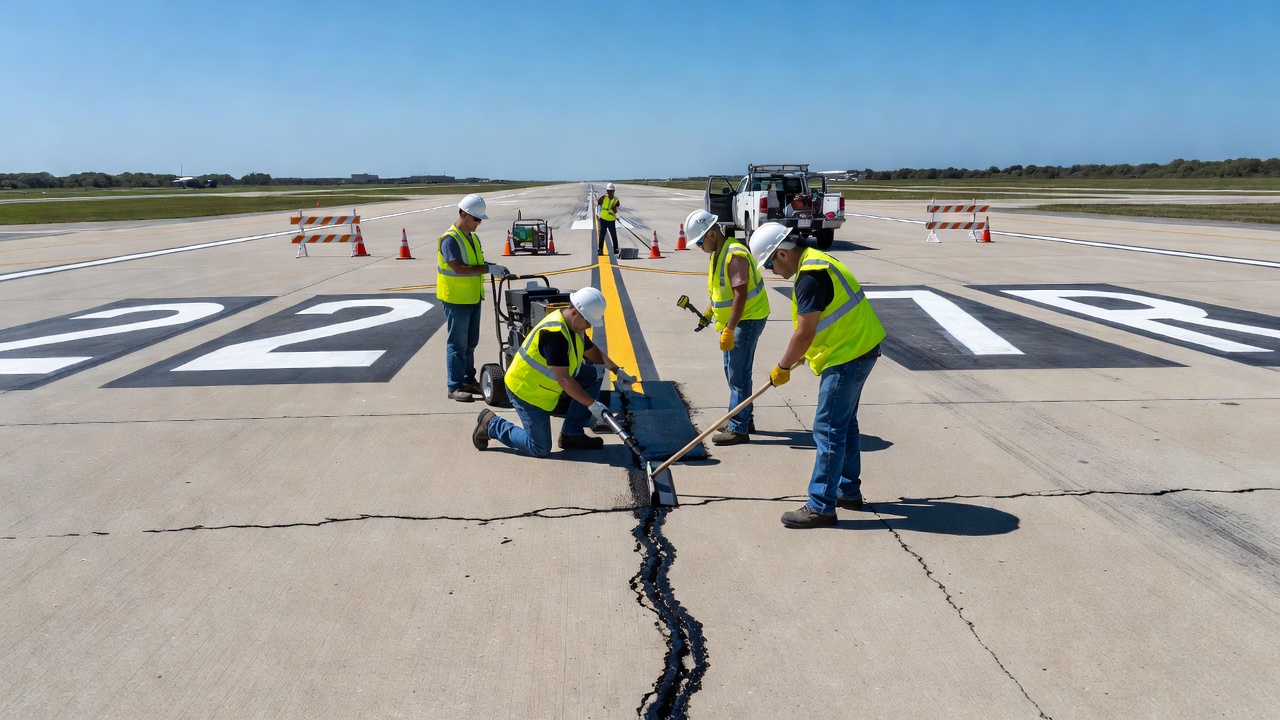
Airport pavement crack sealing is governed by FAA Advisory Circular AC 150/5380-6C (Guidelines and Procedures for Maintenance of Airport Pavements) and the ICAO Aerodrome Design Manual Part 3, Pavements. Airport pavements present unique challenges for crack sealing: they must withstand extreme loads from aircraft tires (tire pressures exceeding 200 psi for large commercial aircraft), resist jet fuel and hydraulic fluid degradation, provide high friction surfaces for braking, and minimize foreign object debris (FOD) potential.
Preventive maintenance for airport pavements, as defined by the FAA, includes routine cleaning, filling, and sealing of cracks as the primary defense against pavement deterioration. The FAA mandates that crack sealing be included in an Airport Pavement Management System (APMS) as a standard preventive maintenance activity. For airport pavements, crack sealing should be performed on cracks with less than 25 percent edge deterioration, width of 0.2 to 0.7 inches, and annual horizontal movement exceeding 0.1 inches.
Material requirements for airport crack sealing are more stringent than for highway applications. Sealants used on airfield pavements must resist immersion in jet fuel (Jet A, Jet A-1), hydraulic fluids (Skydrol), and aircraft de-icing fluids (ethylene glycol, propylene glycol). The FAA specifies that sealants must not track onto aircraft tires, must remain flexible at low temperatures, and must not degrade under UV exposure. Two-part silicone sealants meeting ASTM C920 are widely used for concrete airport pavements, while polymer-modified hot-poured sealants meeting ASTM D6690 Type III or Type IV are used for asphalt airport pavements.
Application on runways and taxiways requires coordination with air traffic control to schedule work during operational closures, typically nighttime hours for commercial airports. The crack sealing crew must operate within strict time constraints, often completing sealing operations within 4 to 6 hour windows. All materials and equipment must be removed from the movement area before the airport reopens. Every sealed crack must be inspected for FOD after completion, and any excess sealant or debris must be removed.
Quality assurance for airport crack sealing includes continuous inspection of rout geometry, verification of sealant temperature at the applicator wand, bond testing (pull-out tests on test strips), and final inspection of the completed work. The FAA requires documentation of all maintenance activities, including crack sealing quantities, materials used, dates of application, and inspection results. Airport operators retain this documentation for review during FAA Part 139 certification inspections.
8. Condition Assessment of Sealed Cracks
Condition assessment of sealed cracks is an essential component of pavement management programs, providing data on sealant performance, remaining service life, and the need for maintenance intervention. The assessment follows standardized methodologies, including the ASTM D6433 (Pavement Condition Index) procedure and the SHRP crack sealant condition rating system.
Sealed crack condition is evaluated based on the following distress modes:
Adhesive failure, The sealant loses bond with the reservoir wall, creating a gap through which water and incompressibles can enter. Adhesive failure appears as a clean separation between the sealant and the pavement, visible as a light-colored line along one or both sides of the sealant. Minor adhesive failure (less than 25 percent of the sealant length) is acceptable for continued service, but failure exceeding 50 percent requires re-treatment.
Cohesive failure, The sealant tears internally, creating a fissure through the sealant itself. Cohesive failure indicates that the sealant’s tensile strength or elongation capacity has been exceeded. Unlike adhesive failure, the sealant remains bonded to the pavement walls but has split along its length or in a transverse direction. Cohesive failure typically progresses from the center of the sealant toward the edges and becomes visible as a hairline crack that widens with time.
Tracking, The sealant adheres to passing vehicle or aircraft tires and is pulled from the reservoir. Tracking appears as sealant material missing from the reservoir and transferred to the pavement surface adjacent to the crack. Tracking is caused by inadequate sealant cooling before traffic opening, improper sealant formulation (excessive tackiness), or overband thickness exceeding acceptable limits. Tracking creates FOD hazard on airport pavements and must be addressed immediately.
Exudation, The sealant flows out of the reservoir under high temperature conditions, creating a raised bead or spill-over on the pavement surface. Exudation occurs when the sealant’s softening point is too low for the service temperature, the reservoir is overfilled, or the sealant viscosity decreases due to overheating during application.
Re-cracking, New cracks develop adjacent to the sealed crack, parallel to the reservoir edges. Re-cracking indicates that the pavement is experiencing structural or thermal stresses that exceed the sealant’s ability to accommodate movement, or that the reservoir was cut too narrow to capture the crack path. Re-cracking at distances greater than 1 inch from the reservoir edge suggests broader pavement deterioration requiring structural evaluation.
Inspection intervals for sealed cracks should be 6 to 12 months for highway pavements and 3 to 6 months for airport pavements. Inspections should be performed during dry weather with good lighting conditions. The inspector records the percentage of sealed crack length exhibiting each distress mode, the severity of distress (low, medium, high), and the overall rating of the sealed crack section. Sealed cracks with more than 50 percent total distress should be scheduled for re-treatment in the next maintenance cycle.
9. Performance Life
The performance life of crack sealing treatments varies significantly based on sealant material, installation quality, pavement condition at treatment, climate, traffic volume, and crack characteristics. The SHRP H-106 study established the following expected service life ranges based on extensive field testing across multiple climate regions in North America:
| Treatment Method | Configuration | Service Life Range |
|---|---|---|
| Rubberized asphalt sealant in routed cracks | Overband | 5 to 9 years |
| Rubberized asphalt sealant in routed cracks | Flush | 4 to 7 years |
| Rubberized asphalt sealant in unrouted cracks | Overband | 2.5 to 5 years |
| Self-leveling silicone in routed/sawn cracks | Recessed | 4 to 6 years |
| Fiber-modified asphalt in unrouted cracks | Overband | 1 to 2 years |
| Emulsion/cement filler in unrouted cracks | Flush | 2 to 4 years |
The NCAT/MnROAD Pavement Preservation Group Study, published in 2020, provided the most recent large-scale validation of crack sealing performance. The study tracked test sections on Lee Road 159 in Alabama for 8 years, comparing sealed sections with unsealed controls. Key findings:
- Pavements sealed while in good condition (less than 5 percent area cracked) achieved life-extending benefits exceeding the 10-year analysis period for the crack sealing treatment. The median time to failure (MTTF) for sealed sections exceeded 7.7 years, while unsealed sections failed within 3.5 years.
- Pavements sealed while in fair condition (5 to 20 percent area cracked) achieved life-extending benefits of 1.4 to 2.0 years for crack sealing combined with chip seal.
- Pavements sealed while in poor condition (over 20 percent area cracked) showed no statistically significant benefit from crack sealing, the severity of existing deterioration overwhelmed any benefit from the treatment.
- Survival analysis confirmed that the life-extending benefit depends more heavily on pretreatment pavement condition than on the specific sealing technique (rout-and-seal vs clean-and-seal) for pavements in good condition.
The Illinois Center for Transportation pooled fund study (FHWA TPF-5(225)) monitored 17 conventional sealants at five sites across North America and developed performance prediction models. The study found that sealant grade (SG) selection based on pavement temperature zone was the strongest predictor of field performance. Sealants selected using the performance-based grading system showed 40 to 60 percent lower failure rates than those selected using the conventional ASTM D6690 type system.
Performance prediction models developed from the NCAT/MnROAD data indicate that crack sealing treatment extends pavement service life by up to 3.6 years under typical conditions. The models incorporate variables including pretreatment condition index, traffic loading (equivalent single axle loads), climate zone (wet-freeze, wet-no freeze, dry-freeze, dry-no freeze), and sealant type. The predicted performance can be used to optimize the timing of crack sealing within a pavement preservation program schedule.
10. Cost-Effectiveness
Crack sealing is among the most cost-effective pavement preservation treatments available, with benefit-cost ratios ranging from 6:1 to 10:1 when applied at the optimal time. The US Department of Transportation and the FHWA have identified crack sealing as one of the highest-value preventive maintenance activities in the pavement preservation toolbox.
Cost components for crack sealing include:
- Material cost: Hot-applied rubberized sealant costs $1.50 to $3.00 per pound, a typical 3/4-inch by 3/4-inch routed crack requires approximately 0.3 pounds of sealant per linear foot, yielding material costs of $0.45 to $0.90 per linear foot.
- Labor cost: A three-person crew (router operator, hot air lance operator, applicator operator) can seal 500 to 1,500 linear feet per production day, depending on crack spacing, routing complexity, and traffic control requirements. Labor costs range from $0.25 to $0.50 per linear foot.
- Equipment cost: Crack routing machines cost $15,000 to $50,000, sealant kettles cost $10,000 to $80,000. Amortized equipment costs add $0.10 to $0.30 per linear foot.
- Traffic control cost: For highway applications, traffic control can add $0.50 to $2.00 per linear foot for short projects, but decreases to less than $0.10 per linear foot for large-scale continuous operations.
The total installed cost for crack sealing typically ranges from $0.35 to $0.75 per linear foot for highway-scale projects ($5,000 to $15,000 per lane mile) and $0.75 to $1.50 per linear foot for airport projects requiring more stringent quality control and operational coordination. These costs compare favorably with alternative treatments: chip seals cost $3 to $8 per square yard, thin overlays cost $15 to $30 per square yard, and pavement reconstruction costs $50 to $150 per square yard.
Optimal timing is the critical factor in maximizing cost-effectiveness. Research from multiple studies demonstrates that crack sealing applied when the pavement condition index (PCI) is between 81 and 89 produces the highest benefit-cost ratio. Applying crack sealing too early (PCI above 90, low crack density) wastes resources that could be deployed elsewhere. Applying crack sealing too late (PCI below 70, high crack density, significant edge deterioration) provides minimal life extension and no economic benefit.
The ReseachGate publication “Cost Effectiveness and Optimal Timing of Crack Sealing in Asphalt Concrete Overlays” (Mazumder et al., 2019) analyzed data from multiple state highway agencies and found that crack sealing extended overlay service life by 2.8 years on average when applied at the optimal PCI range of 81 to 89. Delaying treatment until PCI dropped below 70 reduced the life extension to 0.5 years or less, a six-fold reduction in treatment effectiveness.
Network-level benefits of crack sealing in a comprehensive pavement preservation program are substantial. Crack sealing preserves the pavement structure, delays the need for more expensive rehabilitation treatments, reduces user delay costs associated with construction, and maintains pavement condition within acceptable performance thresholds. The FHWA estimates that every $1 invested in crack sealing at the optimal time eliminates $6 to $10 in future pavement rehabilitation costs. For an airport with 10,000 linear feet of sealable cracks (representing approximately 100 acres of pavement), the net present value savings over a 20-year analysis period can exceed $500,000 compared to a run-to-failure maintenance strategy.
Summary
Crack sealing is a technically sophisticated preventive pavement maintenance treatment that requires proper crack classification, reservoir routing, surface preparation, sealant selection, and application technique. When correctly applied to working cracks in pavements with good structural condition, crack sealing provides 5 to 9 years of service life and extends overall pavement life by 3 to 5 years at a benefit-cost ratio of 6:1 to 10:1. The distinction from crack filling is fundamental, sealing addresses moving cracks through routed reservoirs and specialized elastomeric materials, while filling addresses stationary cracks through direct sealant application. Airport pavement crack sealing must meet additional requirements for fuel resistance, FOD prevention, and operational coordination per FAA AC 150/5380-6C. Regular condition assessment of sealed cracks identifies maintenance needs before moisture damage propagates to the pavement structure. Successful crack sealing programs integrate appropriate material selection per ASTM D6690 or AASHTO MP-25, trained installation crews, quality control inspection, and systematic retreatment scheduling within a broader pavement management system.
For technical consultation on crack sealing specifications, sealant selection, application quality assurance, or pavement preservation program development, contact our team or schedule a consultation .
Frequently Asked Questions
- What is the difference between crack sealing and crack filling?
- Crack sealing and crack filling are distinct pavement preservation techniques. Crack sealing is applied to working cracks (annual horizontal movement greater than 3 mm or 0.1 inches) and requires routing a reservoir, cleaning with hot air, and installing a specialized rubberized sealant that bonds to the reservoir walls to accommodate movement. Crack filling is applied to non-working cracks (movement of 0.1 inches or less annually) and involves placing ordinary treatment materials directly into the crack without routing. Crack sealing is the more technically demanding and longer-lasting treatment, typically providing 5 to 9 years of service life, compared to 2 to 4 years for crack filling.
- When should crack sealing be performed?
- Crack sealing is most effective when applied to pavements still in good structural condition with isolated cracks exhibiting less than 50% edge deterioration. It should be performed before winter or rainy seasons when moisture infiltration is most damaging. The ideal ambient temperature range for sealant installation is between 40°F and 80°F (4°C to 27°C). Spring and fall are optimal seasons when cracks are partially open, not at their extreme closure in summer or maximum opening in winter. Cracks should have little or no branching and should not exceed 25 mm (1 inch) in width. Pavements with severe fatigue cracking, alligator cracking, or block cracking are not suitable candidates.
- What sealant types are used in crack sealing?
- Crack sealants fall into three families: hot-applied thermoplastic bituminous materials, cold-applied thermoplastic bituminous materials, and chemically-cured thermosetting materials. Hot-applied rubberized asphalt sealants are the most widely used and are classified under ASTM D6690 into four types: Type I (moderate climates, -18°C), Type II (most climates, -29°C), Type III (wet climates with immersed bond testing), and Type IV (very cold climates, 200% extension at -29°C). Polymer-modified sealants incorporating SBS or other elastomers provide superior adhesion and flexibility. Self-leveling silicone sealants conforming to ASTM C920 are increasingly used for concrete pavement joints and airport applications requiring fuel resistance.
- What is crack routing and why is it necessary?
- Crack routing is the process of cutting a uniform rectangular reservoir over a crack using a specialized mechanical routing machine with diamond or carbide blades. The reservoir typically measures 3/4 inch by 3/4 inch (19 mm x 19 mm) or 1/2 inch by 1/2 inch (13 mm x 13 mm), depending on the sealant type and crack characteristics. Routing creates clean, square walls for the sealant to bond to, provides adequate sealant volume to accommodate thermal expansion and contraction, and removes deteriorated crack edges. Properly routed cracks produce sealant service lives 2 to 7 times longer than unrouted applications. The reservoir must be square or rectangular, V-shaped or rounded routs resulting from worn blades must be avoided.
- How long does crack sealing last and is it cost-effective?
- Research from the Strategic Highway Research Program (SHRP) and the NCAT/MnROAD Pavement Preservation Group Study demonstrates that properly installed crack sealing in routed working cracks extends pavement life by 2 to 5 years. Rubberized asphalt sealants placed in routed cracks provide 5 to 9 years of service life. The cost-effectiveness of crack sealing is optimal when applied to pavements in good condition (pretreatment condition index of 81 to 89). When applied to pavements in good condition, the life-extending benefit may exceed 10 years. Crack sealing costs typically range from $0.35 to $0.75 per linear foot. The cost-benefit ratio is highly favorable compared to reconstruction or structural overlays, with every dollar spent on crack sealing potentially saving $6 to $10 in future rehabilitation costs.
- How is crack sealing applied to airport pavements?
- Airport pavement crack sealing follows FAA Advisory Circular AC 150/5380-6C (Guidelines and Procedures for Maintenance of Airport Pavements) and ICAO-recommended practices. For airfield applications, sealants must resist jet fuel, hydraulic fluids, and de-icing chemicals. Airport crack sealing typically uses hot-applied rubberized sealants meeting ASTM D6690 or silicone sealants meeting ASTM C920. The FAA mandates that crack sealing on runways and taxiways be performed during scheduled maintenance closures with strict quality control. Runway crack sealing requires careful scheduling to minimize operational disruption, often performed during overnight or low-traffic periods. All sealed cracks on airfield pavements must be inspected for FOD potential immediately after installation and periodically throughout service life.
- What are the signs that a sealed crack has failed?
- Sealed crack failure manifests in several modes: adhesive failure (sealant detaches from reservoir walls allowing water infiltration), cohesive failure (sealant tears internally), loss of bond at the interface, tracking (sealant adheres to tires and is pulled from the reservoir), exudation (sealant bleeds to the surface under heat), and re-cracking adjacent to the sealant. Field inspections should check for sealant missing from the reservoir, cracks extending beyond sealed areas, spalling of the reservoir edges, and visible vegetation growth through the sealant. Failed sealed cracks should be re-routed and re-sealed or repaired through other pavement maintenance techniques. Regular inspection intervals of 6 to 12 months are recommended to identify and address sealant failures before moisture damage progresses.