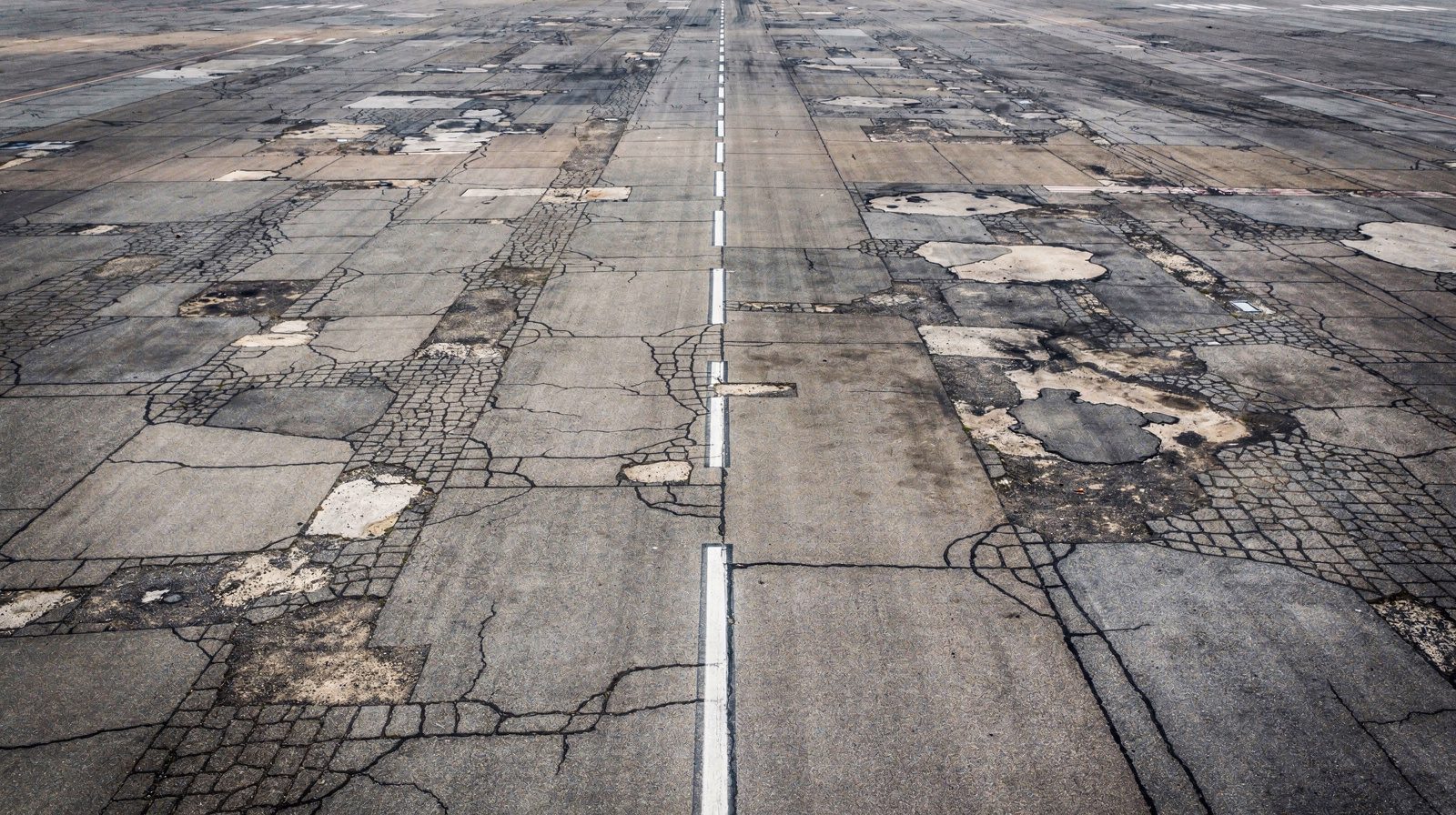
What is a Crack or Fracture in Materials?
Crack – Fracture in Material: Materials Science Explained
1. Definition: Crack and Fracture in Materials
A crack is a physical separation or discontinuity within a material’s structure, typically manifesting as a thin, elongated void. Cracks may initiate internally or at the surface, and their presence signifies a localized failure in the material’s integrity. The formation of cracks lowers the effective cross-sectional area, concentrating stress at the crack tip and making further propagation more likely under applied loads. Cracks can be either microscopic (microcracks), which may not be immediately apparent but can grow under continued loading, or macroscopic, visible to the naked eye and often indicative of imminent failure. The presence of cracks is a critical concern across all engineering materials, including metals, polymers, ceramics, and composites. In the context of industrial applications and safety-critical structures, the detection, characterization, and management of cracks are paramount to prevent catastrophic failures.
A fracture entails the complete or partial separation of a material into two or more distinct parts due to the application of tensile, compressive, or shear stresses exceeding the material’s strength. The fracture process encompasses both the initiation of a crack and its subsequent propagation, culminating in the loss of load-bearing capacity. In engineering, fractures are classified by the mode of material separation (ductile, brittle, fatigue, or environmental) and by the nature of the crack path (transgranular, intergranular). The resistance of a material to fracture is governed by its fracture toughness, microstructural features, and environmental conditions.
Within the context of materials science, cracks and fractures are not merely defects but fundamental phenomena governing the durability, safety, and lifecycle of engineered components. The study of fracture mechanics emerged in response to major failures in early 20th-century engineering, linking microscopic flaws to macroscopic failure and providing a scientific basis for design, inspection, and maintenance to mitigate fracture risk.
2. Fundamental Concepts
Crack Formation
Crack formation begins at points of stress concentration such as inclusions, voids, second-phase particles, or surface defects. For polycrystalline materials, grain boundaries often act as preferred sites for crack nucleation, especially under cyclic or corrosive environments. The initiation stage may be driven by pre-existing microstructural flaws, manufacturing-induced defects, or service-induced damage (e.g., thermal cycling, impact, abrasion). Once initiated, crack growth depends on the local stress field, component geometry, and intrinsic material toughness.
Crack propagation is governed by the interplay between the applied load and the resistance of the matrix. Crack growth may be stable (incremental, controlled) or unstable (rapid, leading to sudden failure). The orientation and mode of loading, Mode I (tensile opening), Mode II (in-plane shear), and Mode III (out-of-plane tearing), dictate the stress intensity at the crack tip and influence direction. Mode I is typically the most critical, as materials generally offer the least resistance to opening-mode fractures.
The mechanisms of crack initiation and propagation are central to fracture mechanics. Even microscopic cracks can drastically reduce component strength, so early detection and control are essential in safety-critical industries like aerospace, energy, and transportation.
Fracture
Fracture is the ultimate consequence of stress-induced material separation, marking the inability of a structure to serve its intended function. The process starts with local plastic deformation, which may concentrate at a flaw or stress concentrator. With continued loading, this region evolves into a crack, which propagates according to the local stress intensity and the material’s fracture toughness.
A material’s stress-strain curve provides insight into fracture behavior. The fracture point is where the material can no longer sustain the applied load. For ductile materials, substantial plastic deformation (necking) precedes fracture. Brittle materials fracture with little or no plastic deformation.
Fracture mechanisms are further categorized by crack path: transgranular (through grains) or intergranular (along grain boundaries), governed by composition, microstructure, loading rate, and temperature.
3. Types of Fractures
Ductile Fracture
Ductile fracture involves significant plastic deformation prior to failure, requiring considerable energy input. This provides warning, such as necking or distortion, before complete separation. On a macroscopic scale, ductile fractures exhibit a cup-and-cone morphology with a fibrous, rough appearance. Microscopically, microvoid coalescence leads to a dimpled surface.
Ductile fracture occurs in tough metals/alloys, especially above their ductile-to-brittle transition temperature. The process begins with void nucleation at inclusions, void growth, and coalescence to form a crack. This tortuous path absorbs energy, making ductile fracture preferable in engineering for safety.
Brittle Fracture
Brittle fracture involves minimal plastic deformation and rapid crack propagation, often with little warning. The fracture surface is typically flat and granular, with features like river patterns or cleavage facets.
Brittle fracture is common in high-strength steels, ceramics, glasses, and some alloys, particularly at low temperatures or high strain rates. Stress concentrators and embrittling elements increase the risk. It often propagates along cleavage planes with little energy absorption.
Fatigue Fracture
Fatigue fracture results from cyclic stresses, often below ultimate tensile strength. Cracks nucleate at surface defects or stress concentrators, growing incrementally with each cycle. Fatigue failures may occur after long service with little warning.
Macroscopically, fatigue fractures display beach marks or ratchet marks, microscopically, they show fine striations. Fatigue is a major concern in rotating machinery, aircraft, and automotive parts.
Environmental Fracture
Environmental fracture, or environmentally assisted cracking, accelerates crack initiation and growth due to service environment. Principal types:
- Stress Corrosion Cracking (SCC): Synergy of tensile stress and corrosive environment (e.g., chlorides for stainless steels). Cracks may be intergranular or transgranular.
- Hydrogen Embrittlement: Absorption of hydrogen lowers ductility, leading to premature fracture, often along grain boundaries.
- Creep Fracture: Under sustained load at high temperature, time-dependent plastic deformation leads to microvoids and cracking.
Preventing environmental fracture involves material selection, protective coatings, environmental control, and stress minimization.
4. Mechanisms and Theoretical Models
Plastic Deformation
Plastic deformation is permanent change in shape when stress exceeds yield strength. In fracture context, it absorbs energy and can blunt cracks, raising the energy needed for propagation. Highly ductile metals exhibit extensive plastic deformation before fracture, enhancing toughness.
Griffith Theory of Brittle Fracture
The Griffith theory (1920s) quantifies brittle fracture, positing that microscopic flaws determine strength. The critical stress ((\sigma_c)) for crack extension:
[ \sigma_c = \sqrt{\frac{2E\gamma}{\pi c}} ]
where (E) is elastic modulus, (\gamma) is specific surface energy, and (c) is half crack length. Larger flaws drastically reduce strength.
Fracture Mechanics and Fracture Toughness
Fracture mechanics quantifies crack initiation/propagation. Key parameters:
- Stress Intensity Factor (K): Magnitude of stress near crack tip.
- Fracture Toughness ((K_{IC})): Material’s resistance to crack propagation under Mode I loading.
- Energy Release Rate (G): Energy required for crack growth.
High fracture toughness enables materials to tolerate larger flaws safely.
Stress Intensity Factor
Defined as:
[ K = Y \sigma \sqrt{\pi c} ]
where (Y) is geometry factor, (\sigma) is applied stress, (c) is crack length. Unstable crack growth occurs when (K \geq K_{IC}).
Crack Growth and Propagation
Crack growth depends on the applied K and material resistance. Subcritical growth (fatigue, SCC, creep) follows empirical laws (e.g., Paris’ Law for fatigue). At or above (K_{IC}), rapid fracture occurs.
5. Fracture Surface Features
Macroscopic Features
Fracture surfaces reveal failure mode and origin. Ductile fractures have fibrous, dimpled surfaces and shear lips, brittle fractures are flat and shiny with river or chevron markings. Fatigue fractures show beach or ratchet marks.
Microscopic Features
Ductile fractures: Microvoid coalescence, dimples. Brittle fractures: Cleavage facets, river patterns. Intergranular fractures: Crack along grain boundaries. Fatigue fractures: Striations and secondary cracks.
Fractography
Fractography analyzes fracture surfaces (macroscopically and microscopically) to determine cause, sequence, and mechanism of failure. It’s essential in root cause analysis and materials development.
6. Causes and Contributing Factors
Stress Concentrations
Stress concentrations arise from geometry changes, defects, or inclusions, greatly increasing local stress and crack risk. Design aims to minimize these through smooth transitions and careful manufacturing.
Material Properties
Toughness, strength, and ductility govern fracture behavior. Microstructure (grain size, phase distribution, inclusions) also plays a crucial role. Fine grains and uniform structure enhance toughness.
Environmental Effects
Corrosive environments, hydrogen, and temperature changes can reduce toughness and promote cracks. Many metals show a ductile-to-brittle transition at low temperatures.
Manufacturing and Service Conditions
Manufacturing processes can introduce residual stresses, microstructural variations, and defects. Welding, improper heat treatment, and surface flaws increase fracture risk. Service loads, impacts, and vibration also contribute.
7. Prevention and Control of Cracks
- Material Selection: Use high-toughness, defect-resistant materials for critical applications.
- Design: Avoid sharp corners, notches, and stress concentrators, use generous radii and smooth transitions.
- Manufacturing Control: Employ quality control, inspection, and proper heat treatment to minimize defects.
- Inspection and Monitoring: Use non-destructive testing (NDT) to detect cracks before they grow.
- Maintenance: Regular inspection, repair, and replacement of at-risk components.
- Environmental Protection: Apply coatings, control operating environments, and avoid exposure to embrittling agents.
8. Conclusion
Cracks and fractures are central concerns in materials science and engineering. Understanding their mechanisms, types, and prevention strategies is critical to the safe design, manufacturing, and maintenance of structural components in all industries.
For more information on fracture mechanics or to discuss crack prevention strategies for your application, contact us or schedule a demo .
Further Reading
- Anderson, T.L. (2017). Fracture Mechanics: Fundamentals and Applications.
- Dieter, G.E. (2013). Mechanical Metallurgy.
- Hertzberg, R.W. (2012). Deformation and Fracture Mechanics of Engineering Materials.
Related Terms
- Fracture Toughness
- Fatigue
- Stress Concentration
- Non-Destructive Testing
Frequently Asked Questions
- What is a crack in materials science?
- A crack is a physical separation or discontinuity in a material's structure. Cracks can initiate at the surface or internally due to stress, manufacturing defects, or environmental factors. They act as stress concentrators and can lead to further propagation and eventual fracture of the material.
- How do cracks lead to fractures?
- Cracks concentrate stress at their tips, making it easier for them to grow when a material is loaded. When a crack reaches a critical size and the stress intensity factor exceeds the material's fracture toughness, rapid propagation occurs, resulting in fracture.
- What are the main types of fractures?
- The main fracture types are ductile fracture (with significant plastic deformation), brittle fracture (with little deformation), fatigue fracture (from cyclic loading), and environmental fracture (aided by factors such as corrosion or hydrogen embrittlement).
- How are cracks detected and managed in engineering?
- Cracks are detected using non-destructive testing methods such as ultrasonic testing, radiography, dye penetrant inspection, and magnetic particle testing. Fracture mechanics principles help determine safe tolerances and maintenance intervals to manage cracks and prevent catastrophic failure.
- What is fracture toughness and why is it important?
- Fracture toughness is a material property that quantifies resistance to crack propagation. Materials with high fracture toughness can tolerate larger flaws without failing, making this property crucial for ensuring the safety and reliability of structural components.
This is a reference entry. TarmacView provides drone inspection services and doesn't sell the equipment or materials described in this glossary.