What is Data Link Technology?
Data Link – Communication Channel – Technology
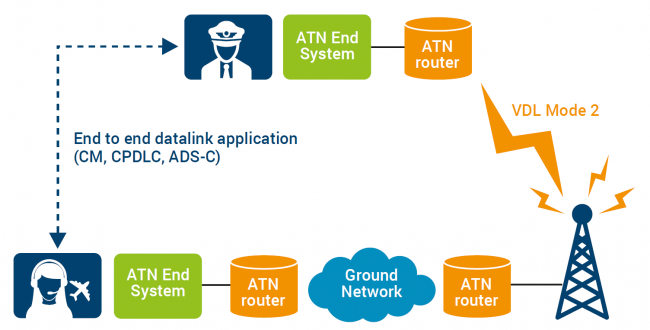
What is Data Link Technology?
Data link technology is the suite of protocols, systems, and mechanisms that enable structured, reliable, and secure digital information exchange between two or more endpoints. As the foundation of Layer 2 in the OSI model, it prepares, manages, and validates data transmission over physical or wireless media, ensuring accuracy and robustness even in noisy or complex environments.
A data link involves both the physical channel, like copper wires, fiber optics, or radio spectrum, and the protocols that group bits into frames, handle addressing, detect/correct errors, and manage session establishment and termination. In aviation, for instance, data link systems such as ACARS and CPDLC enable efficient, text-based communication between aircraft and ground control, reducing radio congestion and increasing safety.
Reliability, security, efficiency, and scalability are core goals of data link technology. Error detection (e.g., CRC), flow control, and frame sequencing are integral for data integrity. In regulated domains like aviation and defense, authorities (ICAO, FAA, EASA) mandate data link usage to ensure global, interoperable, and fail-safe communications.
Data link technology is vital in industrial control (like SCADA), enterprise networking, remote operations, and any application where timely, clear, and unambiguous data transfer is critical. With ongoing advances, such as IP integration and stronger encryption, data links remain essential as industries require higher bandwidth, lower latency, and robust cybersecurity.
Fundamental Concepts: Data Link, Communication Channel, and Protocols
Data Link
The data link is the logical and physical system by which data is exchanged between devices. It encompasses the tangible medium (e.g., cable, radio frequency) and the rules/protocols that format, frame, address, and manage data flow. In OSI Layer 2, it ensures node-to-node transfer, error correction, and flow control, segmenting data, managing access, and guaranteeing delivery within local or wide area networks.
Communication Channel
A communication channel is specifically the medium that carries data signals, such as copper wires, fiber, or radio frequencies (VHF, UHF, L-band, Ku-band, etc.). Channel characteristics like bandwidth, latency, noise, and interference directly impact data reliability. In aviation, VHF channels are used for short-range, while SATCOM provides global coverage, including remote regions.
Protocols
Protocols are standardized sets of rules defining data formatting, transmission, reception, acknowledgment, error handling, security (encryption, authentication), and session management. Aviation examples include VDL2, SATCOM protocols, and ATN, codified in ICAO SARPs and RTCA/EUROCAE standards, ensuring global interoperability.
The interplay between data links, channels, and protocols forms the backbone of reliable digital communication, abstracting physical complexities and supporting efficient, secure exchange across diverse media.
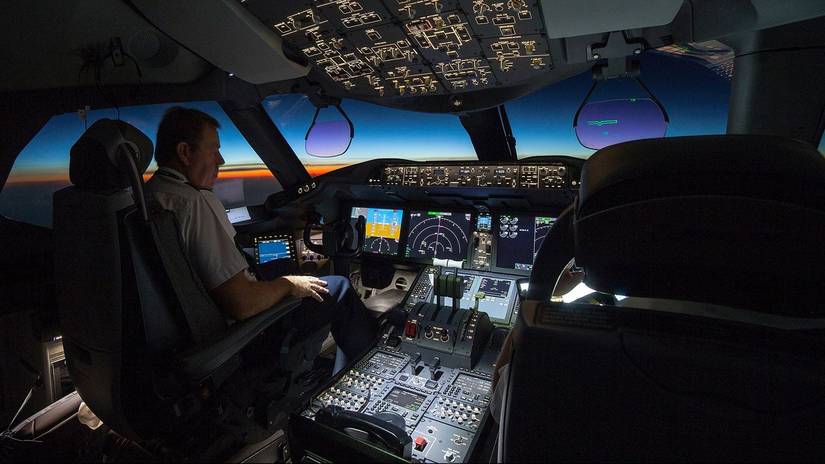
Types of Data Link Communication
Simplex, Half-Duplex, and Full Duplex
- Simplex: One-way communication only, e.g., broadcast radio or telemetry.
- Half-Duplex: Two-way, but only one direction at a time (e.g., walkie-talkies).
- Full Duplex: Simultaneous two-way data transfer, doubling throughput and minimizing latency (e.g., Ethernet, modern aviation data links).
In aviation, full duplex is essential for real-time, safety-critical exchanges (CPDLC), supporting parallel message flow.
Physical and Logical Data Links
Physical Data Link: The actual medium (cables, fibers, RF spectrum) plus hardware (antennas, NICs).
Logical Data Link: The protocol layer that manages framing, addressing, error checking, and flow control over the physical medium. It supports point-to-point, multipoint, or broadcast communication, and overlays standards like ATN for global interoperability.
| Aspect | Physical Data Link | Logical Data Link |
|---|---|---|
| Definition | Transmission medium/hardware | Protocols for framing, addressing |
| Example | VHF radio, fiber, antennas | VDL2, ACARS, CPDLC |
| Scope | Local or wide area | Virtual circuits, sessions, addressing |
Key Technologies and Protocols
ACARS (Aircraft Communications Addressing and Reporting System)
- Purpose: Digital data link for short message exchange between aircraft and ground (flight status, maintenance, weather, etc.).
- Operation: Uses VHF or SATCOM, with standardized message formats and unique addressing.
- Benefits: Reduces pilot workload, improves efficiency, provides audit trails.
- Standards: ICAO Doc 9705, ARINC 618/620.
CPDLC (Controller Pilot Data Link Communications)
- Purpose: Two-way, text-based ATC messaging.
- Operation: Messages are composed/sent/received via cockpit display, with logging and error handling.
- Technical Standards: ICAO Doc 4444, Doc 10037, RTCA DO-219, EUROCAE ED-110.
- Benefits: Reduces congestion, minimizes misunderstanding, supports advanced airspace operations.
VDL2 (VHF Digital Link Mode 2)
- Purpose: ICAO-standard digital radio protocol for aviation data exchange in VHF band.
- Details: 31.5 kbps, 25 kHz channels, D8PSK modulation, TDMA channel sharing.
- Deployment: Mandated in Europe for CPDLC, interoperable with legacy ACARS.
- Standards: ICAO Annex 10 Vol. III, ARINC 631/753.
SATCOM, LDACS, AeroMACS
- SATCOM: Global coverage for data/voice via satellites (L-band, Ku/Ka-band), essential for remote/oceanic operations.
- LDACS: New digital system in L-band, high data rates, low latency, OFDM for efficiency, robust security.
- AeroMACS: WiMAX-based broadband for airport surface (C-band), supporting EFB updates, weather, surveillance, and A-CDM.
Industry Applications
Aviation
- Uses: ATC clearances (CPDLC), flight status (ACARS), global tracking (SATCOM), airport surface (AeroMACS).
- Benefits: Real-time data, reduced voice dependency, enhanced safety, operational efficiency.
Military and Defense
- Needs: Secure, resilient, low-latency data links for command/control, situational awareness, and asset coordination.
- Technologies: Tactical Data Links (Link 16, Link 22, SADL), frequency hopping, encryption, anti-jamming.
Industrial and Remote Operations
- SCADA: Remote monitoring/control of critical infrastructure over various links (wired, wireless, satellite).
- Mining/Oil & Gas: Harsh environment connectivity for sensors, machinery, predictive maintenance.
Business and Enterprise Networks
- Secure Internal Communication: VLANs, VPNs, encrypted links for confidential operations.
- IoT/Asset Monitoring: Real-time data for logistics, automation, compliance.
Key Features and Advantages
Reliable Connectivity
Engineered for continuous, deterministic communication even in challenging conditions. Achieved via redundancy, robust error handling, and dynamic rerouting. Vital for safety-critical aviation, defense, and automation applications.
Secure Communication
Security is integral, multi-layered encryption (e.g., AES, TLS), authentication, and access controls protect against cyber threats, espionage, and sabotage.
Efficiency and Scalability
Data link protocols optimize bandwidth, minimize latency, automate routine exchanges, and support high-density environments (e.g., busy airports, military operations).
Interoperability
Strict adherence to global standards (ICAO, RTCA, ARINC, EUROCAE) ensures seamless operation between diverse equipment, networks, and regions.
Compliance
Regulatory requirements in aviation, defense, and industry necessitate certified, auditable data link systems.
Emerging Trends
- IP Integration: Moving data link protocols over IP for greater flexibility, bandwidth, and convergence with enterprise IT.
- Cybersecurity: Enhanced focus on encryption, authentication, and threat detection.
- Automation and AI: Smarter routing, predictive maintenance, and autonomous management of data link resources.
- Next-Generation Standards: Adoption of LDACS, AeroMACS, and expanded SATCOM for future-proof, high-capacity communications.
Conclusion
Data link technology is the unsung hero of modern digital communications, ensuring reliable, secure, and efficient data flow across critical sectors like aviation, defense, and industry. As operational demands and security requirements evolve, so too will the protocols, standards, and technologies driving the future of data links.
For organizations seeking to enhance their communications infrastructure, investing in advanced data link solutions delivers measurable improvements in safety, efficiency, and operational resilience.
Sources:
- ICAO Doc 9705, 4444, 10037
- ARINC 618/620/631/753
- EUROCAE ED-110, RTCA DO-219
- EUROCONTROL, FAA Data Comm, EASA DLS
- Industry publications on SATCOM, LDACS, AeroMACS
Frequently Asked Questions
- What is a data link in communication technology?
- A data link is the combination of physical media and protocols that facilitate reliable and structured data transmission between two or more endpoints. It ensures data is framed, addressed, checked for errors, and delivered correctly, forming the essential Layer 2 of the OSI model.
- Why are data link technologies critical in aviation?
- They enable secure, timely, and auditable data exchange between aircraft and ground systems, supporting air traffic control, flight operations, and safety. Technologies like ACARS, CPDLC, and VDL2 reduce radio congestion, minimize errors, and enhance operational efficiency.
- How do data link protocols ensure data integrity?
- Protocols use mechanisms like error detection (e.g., cyclic redundancy checks), acknowledgement, retransmission, and flow control to ensure data is delivered accurately, even in noisy or unreliable environments.
- What are some examples of data link technologies?
- Examples include VDL2 (VHF Digital Link Mode 2), SATCOM (satellite data links), LDACS, AeroMACS, ACARS, CPDLC, and industrial Ethernet. Each serves different operational needs, from aviation to industrial automation.
- How does a communication channel differ from a data link?
- A communication channel is the physical or wireless medium (like cables, fiber optics, or radio spectrum) through which data travels. A data link comprises both the channel and the protocols that manage data formatting, addressing, and error control.
This is a reference entry. TarmacView provides drone inspection services and doesn't sell the equipment or materials described in this glossary.