What is Day Marking?
Day Marking – Visual Markings Visible in Daylight
Introduction
Day markings are highly visible, color-coded symbols and lines applied to airport surfaces, runways, taxiways, aprons, ramps, to direct aircraft and ground vehicles safely during daylight. Designed to be universally recognizable, they form the visual backbone of airfield surface navigation, preventing accidents and supporting efficient airport operations. Their application and upkeep are strictly regulated by international (ICAO) and national (FAA, EASA, etc.) standards to ensure pilots, air traffic controllers, and ground personnel share a common visual language, regardless of location.
Day markings are crafted from weather-resistant, non-slip, often reflective paints or thermoplastic materials. Their contrast and color are optimized for maximum daylight visibility. The color white is used for runways, yellow for taxiways and aprons, while red, black, and other colors denote specific warnings or locations. Routine inspections and maintenance ensure markings remain clear, with prompt removal or obscuration of outdated markings.
Baseline Knowledge
Color Codes
- White: Reserved for all runway markings, providing high contrast for takeoff and landing guidance.
- Yellow: Used for taxiways, aprons, and holding positions, easily distinguished from runway markings.
- Red background, white text: Mandatory instruction signs (e.g., runway hold short).
- Black background, yellow text/border: Location signs, indicating current position.
- Yellow background, black text/arrows: Direction or destination signs.
- Other combinations: For special information or distance remaining.
These color schemes are specified in ICAO Annex 14 and FAA AC 150/5340-1M to ensure rapid, error-free recognition even in complex airport layouts.
Naming Conventions
- Runways: Numbered according to magnetic heading, e.g., “09” for 090°. Parallel runways have “L,” “C,” or “R” suffixes.
- Taxiways: Designated by letters (Alpha, Bravo, etc.), pronounced phonetically over radio.
- Aprons/Stands: Typically use combined letters and numbers for precise locations.
Standardized naming is essential for rapid, unambiguous communication and aligns with all signage, maps, and electronic navigation aids.
Regulatory Context
- ICAO Annex 14: Sets global standards for marking types, colors, dimensions, and maintenance.
- FAA Advisory Circulars: Provide detailed US guidance (e.g., AC 150/5340-1M).
- Local Authorities: May impose additional requirements, but always within ICAO/FAA frameworks.
- Enforcement: Includes inspections, audits, and certification renewal. Outdated or non-compliant markings must be promptly removed or corrected.
Runway Markings
Runway Designator Numbers
Large white numbers (e.g., “09,” “27L”) at each runway end indicate the magnetic heading in tens of degrees. Dimensions are typically 60 feet tall by 20 feet wide (major airports), with high reflectivity for visibility at all approach angles and daylight conditions.
These numbers are the primary runway identifier for both pilots and ATC, referenced in all clearances and crucial for approach alignment and cross-checking with cockpit instruments.
Runway Centerline Markings
A continuous series of white dashed lines (each dash 120 feet, with 80-foot gaps, 36 inches wide) runs along the center of the runway. The centerline provides essential guidance for aircraft alignment during takeoff, landing, and rollout, particularly in crosswinds or reduced visibility.
Runway Threshold Markings
Uniformly spaced white stripes at the start of the landing portion of the runway indicate the threshold. The number of stripes matches runway width (e.g., 12 stripes for 150 feet). These markings guide pilots to the correct touchdown zone and are vital for runway identification from the air.
Runway Threshold Bar
A solid white bar, 10 feet wide, spanning the full width of the runway at a displaced threshold. It unmistakably marks the beginning of the usable landing surface when the threshold is not at the pavement’s end.
Displaced and Relocated Thresholds
- Displaced Threshold: Marked by white arrows leading to a new threshold bar and arrowheads. The area before the threshold may be used for takeoff or rollout but not for landing.
- Relocated Threshold: Temporary, area before the bar is closed to aircraft except for taxiing, often marked with yellow arrowheads and “X”s.
Both types are always documented in NOTAMs and airport diagrams.
Runway Aiming Point Markings
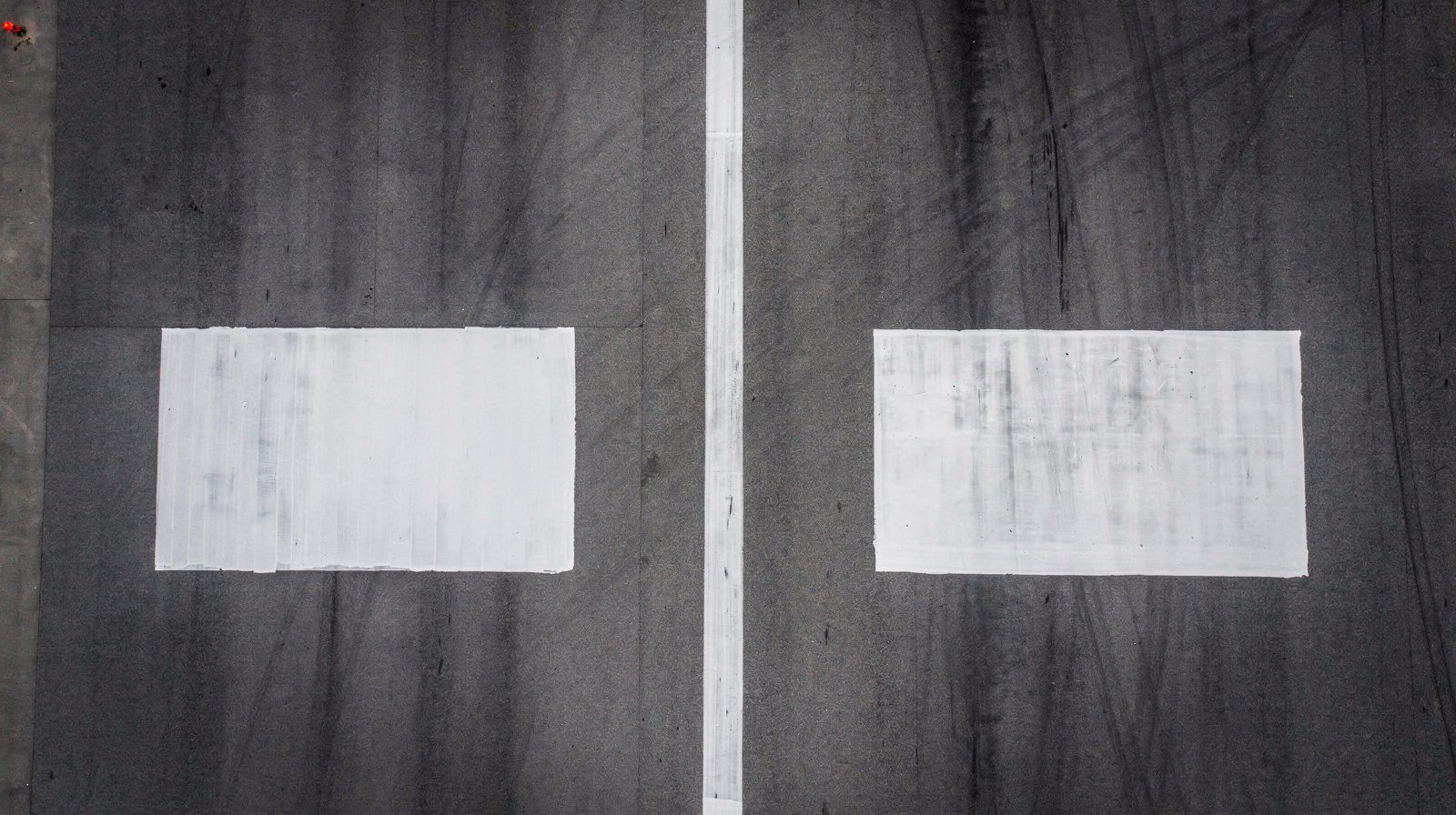
Two large white rectangles, 1,000 feet from the threshold, provide a visual target for ideal touchdown, enhancing approach precision and safety.
Touchdown Zone Markings
Pairs of white bars starting after the aiming point, spaced every 500 feet up to 3,000 feet from the threshold, give pilots distance cues and help ensure safe, precise landings.
Runway Side Stripe Markings
Continuous white lines, 3 feet wide, running the full length of both runway edges, delineate the usable surface, especially vital in low visibility.
Runway Shoulder Markings
Yellow chevrons or herringbone patterns on runways’ paved shoulders warn pilots that these areas are not for taxi, takeoff, or landing.
Demarcation Bars and Blast Pads
- Demarcation Bar: Solid yellow, 3 feet wide, marks the boundary between usable runway/taxiway and blast pad/stopway.
- Blast Pad/Stopway: Covered with large yellow chevrons, indicating an area not for routine aircraft operations but available for emergencies or jet blast dissipation.
Taxiway Markings
Taxiway Centerline Markings
A solid yellow line, 6–12 inches wide, guides aircraft along taxiways. Enhanced centerlines (alternating yellow/black) appear near runway holding positions for added conspicuity.
Taxiway Edge Markings
- Continuous Double Yellow Lines: Define the edge of full-strength pavement.
- Dashed Double Yellow Lines: Indicate where the adjacent surface is usable for aircraft but not intended for taxiing.
Taxiway Holding Position Markings
A combination of double solid and double dashed yellow lines across the taxiway at runway intersections. Aircraft must stop before the solid lines unless cleared to proceed by ATC.
Surface Painted Holding Position Signs
Red rectangles with white runway numbers/codes painted directly on the taxiway, supplementing physical signage for improved visibility.
ILS Critical Area Markings
Yellow ladder-style marking indicating the boundary of the Instrument Landing System protected area, where aircraft must hold to avoid disrupting navigation signals.
Taxiway Direction, Location, and Destination Signs
- Direction Signs: Yellow with black letters/arrows, indicating the direction to taxiways, runways, or aprons.
- Location Signs: Black with yellow outlines and letters, showing current position.
- Destination Signs: Yellow with black inscriptions, guiding pilots to terminals, aprons, or cargo areas.
Apron and Ramp Markings
Apron Safety Lines
Bold yellow lines and lead-in lines guide aircraft to gates and parking stands, with red lines or hashed areas marking “no entry” or restricted zones.
Stand/Spot Numbers
Large alphanumeric pavement markings designate each parking position, matching signage and electronic displays for ground handling coordination.
Vehicle Roadway Markings
White lines, zebra crossings, and stop bars indicate vehicle routes across aprons and ramps, minimizing the risk of aircraft-vehicle conflicts.
Maintenance, Inspection, and Removal
Day markings must retain high visibility and contrast. Airports inspect markings regularly, measuring retroreflectivity and repainting as needed. When markings become obsolete, they are either physically removed or thoroughly obscured to prevent ghosting, ensuring no misleading visual cues remain.
Regulatory References
- ICAO Annex 14, Volume I: Aerodrome Design and Operations
- FAA AC 150/5340-1M: Standards for Airport Markings
- Aeronautical Information Manual (AIM), Chapter 2, Section 3
Summary
Day markings are the critical visual infrastructure underpinning safe, efficient airport operations in daylight. Their standardized design, placement, and maintenance ensure pilots and ground personnel worldwide can navigate, communicate, and operate with confidence, regardless of airport size, complexity, or location.
Further Reading
Related Terms
- Runway Incursion
- Taxiway
- Hold Short Line
- Apron
Note: For full operational guidance and compliance, always reference the latest versions of ICAO, FAA, and national aviation authority documents.
Frequently Asked Questions
- Why are day markings critical at airports?
- Day markings are essential for safe aircraft and vehicle movement on airport surfaces, especially under bright light conditions. They provide standardized, highly visible guidance, helping prevent runway incursions, miscommunication, and accidents. International standards ensure that pilots recognize and interpret these markings consistently, regardless of location.
- How are day markings maintained and regulated?
- Day markings must meet stringent requirements set by authorities like ICAO and FAA. This includes specific paint types, reflectivity, colors, and dimensions. Airports regularly inspect, repaint, and, when necessary, remove outdated markings to maintain clarity and compliance.
- What is the difference between runway and taxiway markings?
- Runway markings use white paint for maximum contrast and clarity, indicating landing, takeoff, and safety zones. Taxiway markings use yellow to distinguish themselves from runways, guiding aircraft to and from aprons, gates, and runways.
- What happens when day markings are no longer needed?
- When markings become obsolete, they are either completely removed or effectively obscured to prevent confusion. 'Ghost markings', remnants of old markings, are strictly avoided, as they can mislead pilots and ground crews.
- How are day markings standardized internationally?
- ICAO Annex 14 and FAA Advisory Circulars set the global standards for airport markings, including color codes, shapes, sizes, and placement. This ensures pilots and operators have a consistent, safe experience at airports worldwide.
This is a reference entry. TarmacView provides drone inspection services and doesn't sell the equipment or materials described in this glossary.