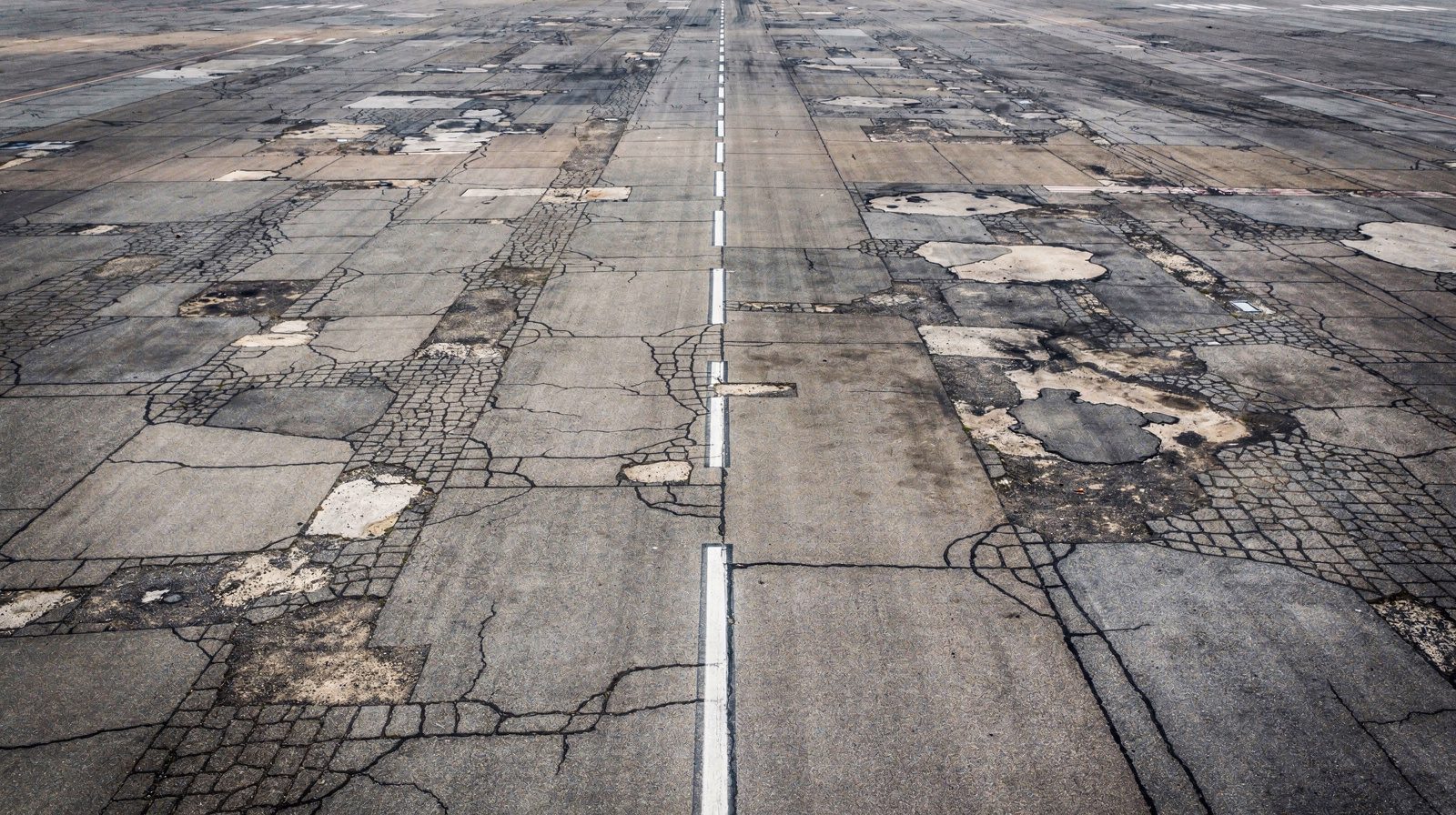
What is Dry Pack Mortar?
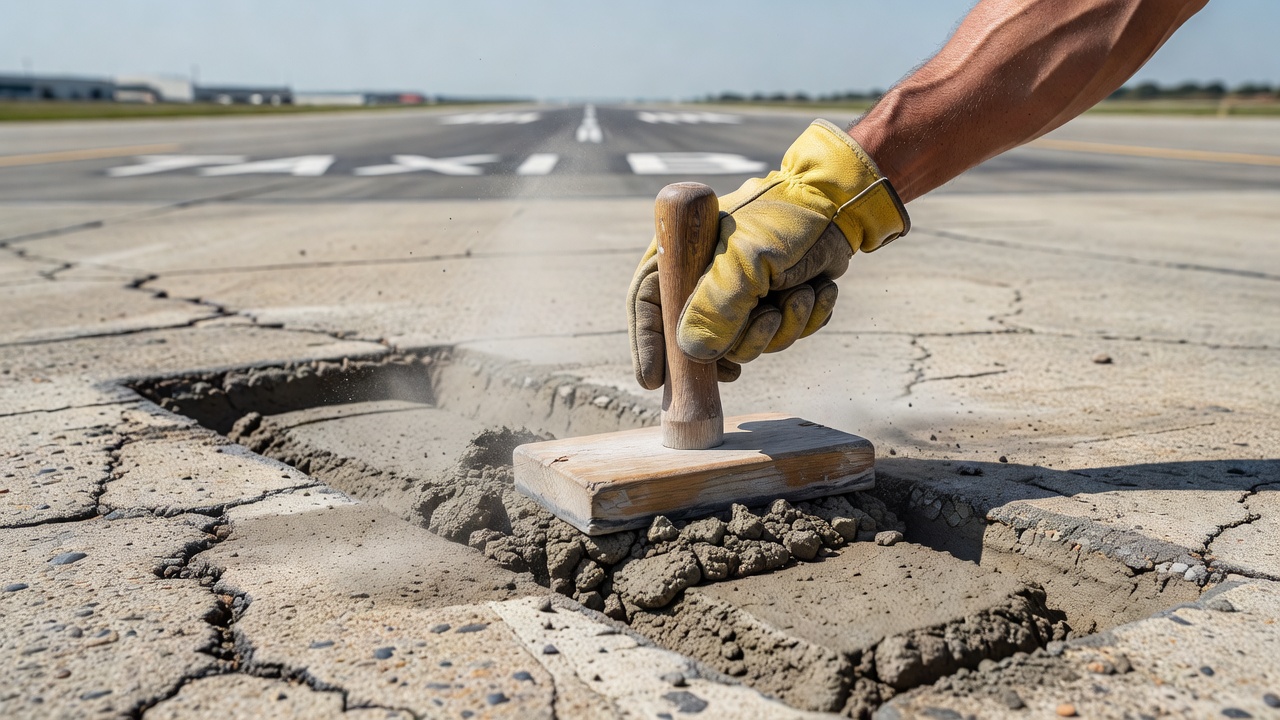
Definition and Properties
Dry pack mortar is a very stiff, zero-slump portland cement mortar consisting of cement, fine aggregate, and the minimum amount of water necessary for cement hydration. It is mixed to a consistency resembling damp beach sand, the mixture holds its shape when molded into a ball by hand but leaves no visible moisture film on the palm. This extremely low water content, typically corresponding to a water-cement ratio (w/c) of 0.25 to 0.35, distinguishes dry pack from conventional cement mortar (w/c 0.40 to 0.55) and pourable grout (w/c 0.35 to 0.50).
The defining physical property of dry pack mortar is its zero slump, it does not flow or deform under its own weight. This characteristic allows the material to be placed in confined cavities, narrow slots, and vertical or overhead pockets without formwork. The mortar is compacted by hand tamping or ramming using a wooden or metal tool, which densifies the material and forces it into intimate contact with the prepared concrete substrate. The compaction energy applied during placement, typically 25 to 30 blows per square inch using a 1- to 2-pound ramming tool, produces a dense, low-porosity microstructure that minimizes drying shrinkage and maximizes bond strength.
The compressive strength of properly proportioned and compacted dry pack mortar ranges from 21 to 45 MPa (3,000 to 6,500 psi) at 28 days for standard field-mixed formulations, with controlled laboratory mixes using optimized gradation and binder content reaching up to 65 MPa (9,400 psi) per research published in academia. The ACI 546R-96 Concrete Repair Guide notes that a 1:3 cement-to-sand ratio by volume (Type I/II portland cement to clean, sharp sand) is the most commonly specified proportion. A 1:2.5 ratio produces higher strength for structural repairs, while 1:4 is used for non-structural fill applications where strength requirements are lower.
The density of compacted dry pack mortar is approximately 2,100 to 2,240 kg/m³ (130 to 140 lb/ft³), which is comparable to conventional concrete. The porosity is significantly lower than that of wet-mixed mortars due to the low water content and the mechanical compaction that forces entrapped air out of the mix. This dense microstructure produces low permeability, the coefficient of water absorption is typically less than 0.1 kg/m²·h⁰·⁵ when tested per ASTM C1585, making the material resistant to moisture intrusion and freeze-thaw damage when properly cured.
The drying shrinkage of dry pack mortar is markedly lower than that of conventional cement mortar because the volume of free water available for evaporation after hydration is minimal. For a properly proportioned 1:3 mix, linear drying shrinkage measured per ASTM C596 is typically 0.03 to 0.06 percent at 28 days, compared to 0.06 to 0.12 percent for conventional mortar. This low shrinkage is critical in confined repair applications because the repair material is restrained by the surrounding concrete. If shrinkage stresses exceed the bond strength or the tensile capacity of the mortar, the repair will debond or crack at the interface, the most common cause of dry pack repair failure.
| Property | Dry Pack Mortar (Typical) | Conventional Cement Mortar | Pourable Cement Grout |
|---|---|---|---|
| Water-cement ratio | 0.25–0.35 | 0.40–0.55 | 0.35–0.50 |
| Slump | Zero (hand-formed) | 2-5 inches | 8-12 inches (flowable) |
| Compressive strength (28d) | 21–45 MPa (3,000-6,500 psi) | 17–35 MPa (2,500-5,000 psi) | 35–70 MPa (5,000-10,000 psi) |
| Drying shrinkage (28d) | 0.03–0.06% | 0.06–0.12% | 0.05–0.10% |
| Density (compacted) | 2,100–2,240 kg/m³ | 1,900–2,100 kg/m³ | 2,000–2,200 kg/m³ |
| Placement method | Hand tamping/ramming | Trowel or form placement | Gravity flow or pump |
| Formwork required | No | Sometimes | Yes (for non-vertical) |
| Maximum single-layer depth | 50 mm (2 inches) | 25 mm (1 inch) | Not limited by method |
The setting time of dry pack mortar depends on ambient temperature, cement type, and the use of chemical admixtures. For Type I/II portland cement at 70°F (21°C), initial set occurs at approximately 2 to 4 hours and final set at 4 to 8 hours after mixing. Accelerating admixtures (calcium chloride at 1-2% by weight of cement, where permitted) can reduce set time by approximately 50% for emergency repairs. Retarding admixtures may be specified for hot-weather placement exceeding 90°F (32°C) to prevent flash setting before compaction is complete.
The Bureau of Reclamation Guide to Concrete Repair (Second Edition, 2015) devotes an entire section (I-D-2-c) to dry pack and bonded dry pack, classifying it as a thin repair method suitable for depths from 1/2 inch to 2 inches. The guide specifies that dry pack mortar should be proportioned per the requirements of the repair with the cement content, water content, and aggregate characteristics optimized for the specific application. The American Concrete Institute’s ACI 546R-96 (Reapproved 2001) Concrete Repair Guide similarly addresses dry pack as a specialized placement technique for small-volume repairs where formwork is impractical.
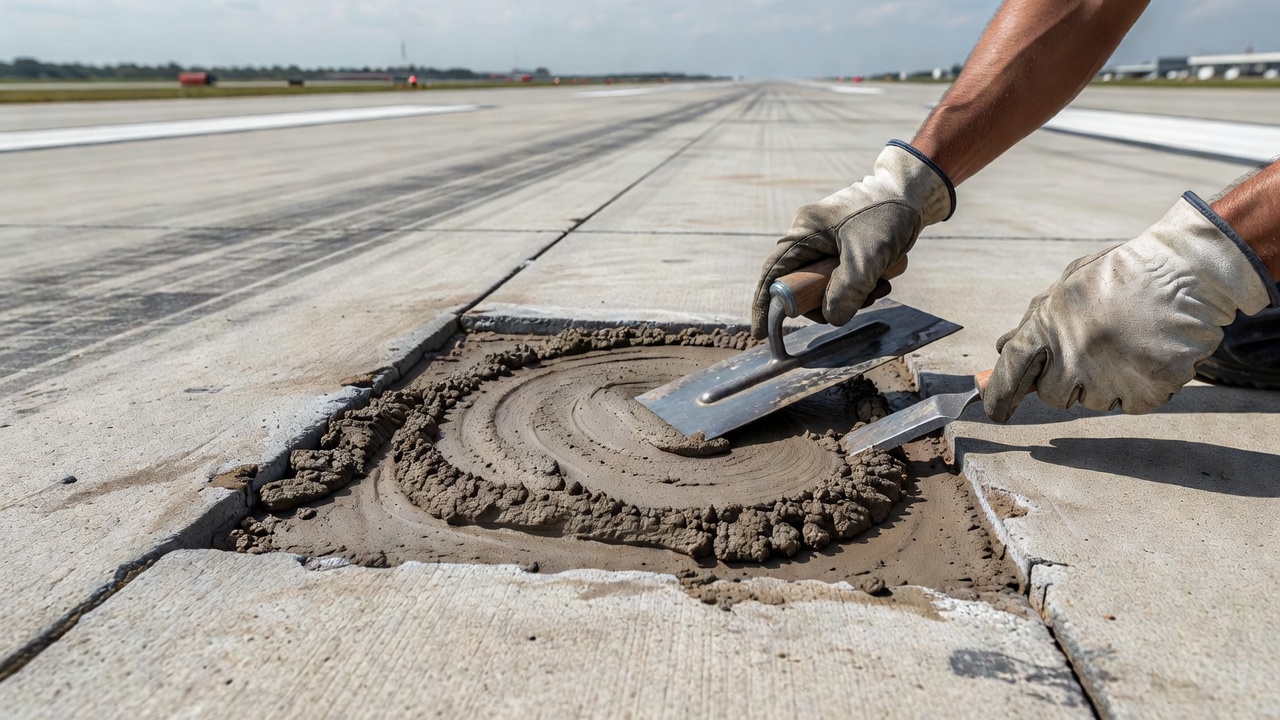
Mix Proportioning
The mix proportioning of dry pack mortar requires precise control of three variables: cement-to-sand ratio, water content, and aggregate gradation. Unlike conventional concrete where mix design follows standardized procedures (ACI 211), dry pack proportioning relies heavily on field judgment and hand-feel testing because the water content is too low for conventional slump or flow testing to be meaningful.
Cement-to-Sand Ratio
The standard dry pack mortar mix ratio is 1 part portland cement to 3 parts clean, sharp sand by volume. This proportion is specified by ACI 546R-96, the Bureau of Reclamation Guide to Concrete Repair, and the FAA AC 150/5380-6C for airport pavement joint spall repairs. The 1:3 ratio produces a balanced combination of compressive strength, workability during ramming, and dimensional stability.
For structural repairs requiring higher strength, such as load-bearing concrete elements, bridge abutment repairs, and pavement patch repairs subject to aircraft or heavy vehicle traffic, a 1:2.5 ratio (cement-to-sand by volume) is recommended. This richer mix increases 28-day compressive strength from approximately 3,000-4,500 psi (1:3 ratio) to 5,000-6,500 psi (1:2.5 ratio), depending on the cement type and sand characteristics.
For non-structural fill applications, such as filling voids behind precast elements, patching minor honeycombing, or filling drill holes, a 1:4 to 1:6 ratio may be used. These leaner mixes have lower strength (1,500-3,000 psi) and higher porosity but reduce material cost and heat of hydration in mass fill situations. The Bureau of Reclamation notes that ratios up to 1:6 may be used for some applications but warns that leaner mixes are more difficult to compact and more prone to shrinkage cracking.
Water Content Determination
Water content is the single most critical variable in dry pack mix proportioning. Too little water prevents complete cement hydration, leaving unhydrated cement particles that contribute nothing to strength and increase porosity. Too much water produces a wet mix that slumps under its own weight, cannot be properly compacted by ramming, and shrinks excessively during drying, leading to debonding and cracking at the repair perimeter.
The target consistency is described in ACI terminology as damp, not wet. Four field tests are used to verify correct water content:
The ball test, A handful of mixed mortar is squeezed firmly in the palm. A properly proportioned mix forms a cohesive ball that holds its shape when the hand is opened. If the ball crumbles upon opening, the mix is too dry. If water exudes between the fingers or leaves a wet film on the palm, the mix is too wet.
The drop test, A ball of mortar is dropped from waist height (approximately 36 inches) onto a clean, hard surface. A properly proportioned mix breaks into several large fragments. A mix that is too wet flattens into a patty. A mix that is too dry shatters into individual sand particles.
The hand-imprint test, A handful of mortar is compressed in the palm, then the hand is opened. If the mortar retains a clear imprint of the skin lines without showing free water, the water content is correct. Water film on the hand indicates excessive water.
The squeeze-and-release test, Mortar compressed into a 1-inch diameter ball and placed on a flat surface should support its own weight without slumping or spreading. The ball diameter after 60 seconds should not increase by more than 10% of the original diameter.
The target water content by weight is typically 6 to 9 percent of the total dry materials weight (cement plus sand). For a 1:3 mix using 42.5 kg (94 lb) of portland cement and 127 kg (280 lb) of dry sand, the water addition is approximately 3.0 to 4.5 liters (6.5 to 10 pints) . Water should be added gradually, start with 80% of the estimated quantity, mix thoroughly, evaluate consistency, and incrementally add the remaining water until the target damp-sand condition is achieved.
Aggregate Requirements
The sand used in dry pack mortar must be clean, sharp, well-graded, and hard. The ASTM C33 specification for concrete fine aggregate provides the applicable gradation requirements. The sand should pass a No. 4 sieve (4.75 mm) , with not more than 5% retained on the No. 4 sieve. The fineness modulus should be in the range of 2.5 to 3.1 for optimal workability and compaction density. Sands finer than 2.5 increase water demand. Sands coarser than 3.1 produce a harsh, difficult-to-compact mix.
The maximum particle size should not exceed one-third of the minimum repair depth. For a repair depth of 0.5 inches (12.5 mm), the maximum aggregate size should be limited to 1/6 inch (4 mm), equivalent to a No. 4 sieve. For deeper repairs exceeding 1 inch, aggregate up to 3/8 inch (9.5 mm) may be used provided the cavity geometry permits full compaction.
Sand should be tested for organic impurities per ASTM C40 (colorimetric test). Organic contamination from silt, clay, or vegetable matter retards cement hydration and reduces bond strength. The sand moisture content should be accounted for in the batch water calculation. Using saturated-surface-dry (SSD) sand eliminates moisture variability in field batching.
Cement Types and Admixtures
Type I portland cement per ASTM C150 is the standard cement for dry pack mortar. Type II (moderate sulfate resistance) is specified for repairs in sulfate-bearing soils or water. Type III (high early strength) may be used when rapid turnaround is required, achieving approximately 70% of 28-day strength at 7 days. Type I/II (a dual-purpose cement meeting both Type I and Type II requirements) is commonly specified for airport pavement repairs because it provides good general-purpose performance with moderate sulfate resistance appropriate for airfield environments.
White portland cement is specified for architectural or color-matched repairs where visual appearance is important. It uses raw materials low in iron and manganese, producing the same strength characteristics as gray cement.
Blended cements, Type IS (portland blast-furnace slag cement) and Type IP (portland-pozzolan cement) per ASTM C595, may be used for dry pack but require longer curing periods and may produce slower strength development at low temperatures. Fly ash (Class C or F per ASTM C618) can replace 15-25% of portland cement to reduce heat of hydration and improve workability, but the replacement reduces early-age strength.
Chemical admixtures are used selectively. Accelerating admixtures (calcium chloride, non-chloride accelerators based on calcium formate or calcium nitrate) speed setting and early strength gain for emergency repairs or cold-weather placement. Calcium chloride is limited to 2% by weight of cement per ACI 318 and is prohibited in prestressed or sulfate-exposed concrete. Water-reducing admixtures (Type A or Type D per ASTM C494) can improve workability at the same water content or allow reduction of water without sacrificing workability. Air-entraining admixtures (ASTM C260) improve freeze-thaw resistance but must be used cautiously because the entrained air reduces compressive strength by approximately 5% per 1% air content.
Placement Technique
The successful placement of dry pack mortar depends entirely on proper compaction by hand ramming. The technique differs significantly from conventional concrete placement because the material is not poured, vibrated, or troweled in the usual sense. Each particle of mortar must be mechanically forced into intimate contact with both the substrate and adjacent mortar particles.
Cavity Preparation
The repair cavity must be prepared according to established concrete repair procedures before any dry pack placement begins. Per the Bureau of Reclamation Guide to Concrete Repair, the cavity perimeter should be sawcut to a minimum depth of 3/4 inch (19 mm) with the sawcut line forming a rectangular or circular shape with rounded corners, sharp interior corners concentrate stress and promote crack initiation. The cavity should be undercut or keyed at approximately 5 degrees to create a mechanical lock that helps retain the repair material. The minimum depth for dry pack repair is 1/2 inch (12.5 mm) per Caltrans specifications and the Bureau of Reclamation guidance. Feather-edging is not acceptable because thin edges break off under load and provide insufficient surface area for bond.
All deteriorated, delaminated, and unsound concrete must be removed by chipping hammers (maximum 15 lb), hydrodemolition (10,000-20,000 psi), needle scalers, or abrasive blasting to expose sound concrete with open aggregate particles. The substrate is then cleaned, first with oil-free compressed air to remove loose debris, then by high-pressure water jetting at a minimum of 3,000 psi (21 MPa) to remove dust, laitance, and residue. The cavity must be saturated-surface-dry (SSD) at the time of placement, the surface is visibly damp with no standing water. Standing water in the cavity dilutes the mortar at the interface and prevents bond formation.
Bond Preparation
The interface between existing concrete and dry pack mortar is the weakest link in the repair system. Three bond preparation methods are specified in the Bureau of Reclamation Guide:
Method 1 (Standard Dry Pack), No bonding agent is applied. The substrate is maintained in SSD condition, and the dry pack mortar is rammed directly against the damp surface. Mechanical interlock from the undercut cavity and the compaction pressure provide the primary bond mechanism. This method is suitable for repairs in compression zones where the mechanical key is sufficient to retain the repair material.
Method 2 (Bonded Dry Pack with Neat Cement Grout), Immediately before placement, a layer of neat cement grout (portland cement mixed with sufficient water to form a thick slurry with a consistency of heavy cream) is brushed onto the SSD substrate. The grout application should cover all exposed surfaces of the cavity, including the sides, bottom, and any exposed reinforcement. The dry pack mortar is placed while the grout is still tacky, typically within 5 to 10 minutes of application. This method provides significantly enhanced bond strength by filling microscopic surface pores and providing a cement-rich transition zone between the substrate and the repair material.
Method 3 (Bonded Dry Pack with Commercial Bonding Agent), A commercial latex-based or epoxy-based bonding agent is applied per manufacturer instructions. Latex bonding agents (polyvinyl acetate, styrene-butadiene, or acrylic formulations) improve adhesion and reduce water loss from the dry pack into the substrate. Epoxy bonding agents provide the highest bond strength but require careful proportioning and temperature control. Manufacturer recommendations for application rate, open time, and substrate condition must be followed precisely.
Layer-by-Layer Compaction
Dry pack mortar must be placed in thin, successive layers, not dumped into the cavity in a single mass. Each layer should be 1/4 to 3/8 inch (6 to 10 mm) thick, thin enough that the ramming tool can transmit compaction energy through the full layer depth to the substrate interface.
Step 1, Initial fill: The first layer of mortar is spread across the cavity bottom and pressed firmly into contact with the bonding grout (if used) or the SSD substrate. The ramming tool, typically a blunt wooden rod (3/4 to 1-1/2 inch diameter), a section of 2x4 lumber, or a steel tamping rod with a flat face, is used to deliver firm, vertical blows across the entire surface. Each square inch of surface should receive a minimum of 25 to 30 tamping blows. The compaction should proceed systematically from one side of the cavity to the other, with each tamp overlapping the previous tamp by approximately 50%.
Step 2, Intermediate layers: Subsequent layers are placed in the same manner, with each layer compacted before the next is added. The compaction of each layer should densify the material to the point where the surface appears shiny, indicating that the cement paste has been forced to the surface by the compaction pressure. This surface sheen is the field indicator of adequate compaction. If the surface remains dull after ramming, additional compaction effort is required.
Step 3, Final surface: The last layer is placed slightly higher than the surrounding pavement surface (approximately 1/16 to 1/8 inch proud). After full compaction with the ramming tool, the surface is struck off using a straightedge or screed board held flush with the surrounding pavement. The final finish is applied with a wooden float (for texture matching the surrounding concrete) or a steel trowel (for smooth finish surfaces). The surface should be level within 1/8 inch (3 mm) of the surrounding pavement surface per FAA AC 150/5380-6C.
Tooling for Vertical and Overhead Applications
For vertical faces (such as abutment walls, columns, or retaining walls), the dry pack mortar must be pressed into the cavity with sufficient force to stay in place against gravity. The mortar should be formed into puck-shaped masses approximately 2 to 3 inches in diameter and 1/2 to 3/4 inch thick, then pressed firmly into the cavity using the palm of the hand or a padded ramming tool. Each puck must be thoroughly compacted before the next is placed adjacent to it.
For overhead applications, the mortar must be forced upward into the cavity using a backing plate or form held against the underside. The ramming tool is used through an access opening to compact the mortar against the overhead surface. This is the most difficult dry pack application and requires significant experience to achieve proper compaction and bond. Bonded dry pack (Method 2 or 3) is strongly recommended for overhead repairs.
Curing
Proper curing is essential for dry pack mortar because the low water content provides minimal margin for water loss during hydration. If the mortar dries out before cement hydration is substantially complete (typically 7 days at 70°F/21°C), the hydration reaction stops, leaving unhydrated cement that contributes nothing to strength and a porous microstructure susceptible to freeze-thaw damage.
Curing methods specified in the Bureau of Reclamation Guide include:
Wet burlap with polyethylene cover, Woven burlap fabric (minimum 4-ply weight) is saturated with clean water, placed directly against the finished repair surface, and covered with clear polyethylene sheeting (minimum 4-mil thickness) to prevent evaporation. The burlap must be re-wetted daily or more frequently in hot, dry, or windy conditions. The polyethylene sheeting should extend at least 6 inches beyond the burlap on all sides and be weighted at the edges to maintain contact.
Continuous water application, A soaker hose, drip irrigation line, or fogging nozzle delivers a continuous supply of water to the repair surface and surrounding concrete. This method is effective in hot weather but requires a reliable water source and proper drainage to prevent water accumulation in adjacent areas.
Liquid membrane-forming curing compounds, Compounds meeting ASTM C309 (liquid membrane-forming compounds for curing concrete) are applied by brush or spray at the manufacturer-specified coverage rate (typically 200 to 300 ft² per gallon). The compound forms a continuous barrier that retains moisture in the mortar. White-pigmented compounds are used in hot weather to reflect solar radiation and reduce surface temperature.
Minimum curing duration is 7 days at temperatures above 50°F (10°C). For Type III (high early strength) cement, the minimum may be reduced to 3 days if strength testing confirms adequate hydration. For cold-weather placement below 50°F, the curing period should be extended until the mortar has accumulated a minimum of 500°F-days (degree-days above 32°F).
Temperature control during placement and curing is critical. The ambient temperature should be maintained above 40°F (4°C) during placement and for the full curing period per ACI 306 (Cold Weather Concreting). In hot weather above 90°F (32°C), the mortar temperature should be kept below 90°F by using cool mixing water, shading the materials, and placing during the coolest part of the day. Ice may be used as part of the mixing water, provided the ice is fully melted before placement begins.
Suitable Repair Types
Dry pack mortar is applicable to a specific range of concrete repair scenarios distinguished by confined geometry, small volume, and the absence of formwork. Understanding the appropriate application envelope is essential for successful use.
Joint Spall Repairs in Rigid Pavements
Joint spalls are breaks, chips, or fractures that occur at or near pavement joints, typically within 1 to 2 feet of the joint face. They are caused by excessive stresses at the joint from wheel loads, incompressible debris filling the joint, dowel bar misalignment, or concrete deterioration from freeze-thaw action. The FAA AC 150/5380-6C (Guidelines and Procedures for Maintenance of Airport Pavements) identifies joint spall repair as a primary application for partial-depth patching using mortar placement methods.
The repair procedure per the FAA Advisory Circular involves sawcutting the perimeter of the spalled area to a minimum depth of 3/4 inch, removing all unsound concrete within the sawcut boundary to a maximum depth of one-third the pavement thickness, cleaning the cavity, applying a bonding agent if specified, and placing the dry pack mortar in thin compacted layers. The repair area is typically limited to less than 2 square feet per patch for dry pack methods. Larger spalls extending more than one-third through the slab thickness require full-depth repair using conventional concrete per item P-501 (portland cement concrete pavement) in AC 150/5370-10H.
Cone Bolt Hole Filling
Cone bolt holes are the conical voids left in concrete pavement after form tie bolts or taper bolts are removed. In airport pavement construction and repair, these holes range from 1 to 3 inches in diameter at the surface and taper inward to 1/2 to 1 inch at a depth of 2 to 4 inches. Cone bolt holes must be filled completely to prevent water accumulation, freeze-thaw damage, and foreign object debris (FOD) generation.
Dry pack mortar is the preferred method for filling cone bolt holes because the confined geometry prevents the use of formwork, and the low-shrinkage characteristics of dry pack produce a durable fill that does not pull away from the sides of the hole. The hole is cleaned of dust and debris using compressed air, dampened to SSD condition, and filled in a single continuous compaction operation. The mortar is rammed into the hole using a metal rod slightly smaller than the hole diameter, working from the bottom upward to eliminate air pockets. The final surface is struck off flush and finished to match the surrounding surface texture.
Small Spalls and Pop-Outs
Spalls are shallow depressions in the concrete surface resulting from localized mechanical damage, reinforcing steel corrosion, freeze-thaw action, or aggregate pop-out (the loss of a near-surface aggregate particle due to internal expansive forces). Spalls ranging from 1/2 inch to 2 inches in depth and up to 1 square foot in area are candidates for dry pack repair.
The Bureau of Reclamation Guide classifies dry pack as a thin repair method suitable for depths from 1/2 inch to 2 inches. The repair cavity should be prepared with undercut sides, cleaned to remove all loose material, and kept in SSD condition until placement. For corrosion-induced spalls where reinforcing steel is exposed, the steel must be cleaned to near-white metal per SSPC-SP10/NACE No. 2 (abrasive blasting) and coated with a corrosion-inhibiting primer before the bonding grout and dry pack are placed.
Honeycomb and Rock Pocket Repair
Honeycombing, voids in concrete caused by mortar failing to fill spaces between coarse aggregate particles during placement, and rock pockets, aggregate nests lacking mortar, are construction defects that require repair when they extend to the surface or compromise structural cover over reinforcement. Dry pack mortar is well-suited for filling honeycomb cavities because the hand-ramming method can force mortar into irregular voids that would trap air and produce incomplete filling with pourable grouts.
For honeycomb repairs, the loose aggregate and unsound material must be removed by chipping, and the cavity must be cleaned and prepared per standard procedures. The dry pack mortar is forced into all void areas using small ramming tools sized to reach into the irregular cavity geometry. Bonded dry pack (Method 2 or 3) is recommended for honeycomb repairs because the irregular void surfaces provide limited mechanical interlock.
Narrow Slots and Keyways
Slots, narrow rectangular cavities typically 1/2 to 2 inches wide and 1 to 4 inches deep, are cut into concrete for dowel bar installation, tie bar retrofitting, or anchor bolt placement. The confined geometry of slots makes formwork impractical and pourable grout difficult to place without air entrapment. Dry pack mortar is the standard material for filling these narrow cavities.
The slot is prepared with clean, parallel sides and a flat bottom. The SSD substrate receives a bonding grout application, and the dry pack mortar is pressed into the slot in thin layers using a narrow ramming tool (slightly smaller than the slot width). Compaction proceeds from one end of the slot to the other, ensuring complete filling without voids. Overfill material is struck off flush after compaction.
Anchor Bolt and Dowel Bar Encapsulation
When anchor bolts or dowel bars are set into drilled holes in existing concrete, the annular space between the bar and the hole wall must be completely filled to transfer load through the connection. Dry pack mortar is rammed into the hole around the bar through a small access opening, achieving full encapsulation without the shrinkage gaps that can occur with pourable grout in deep, narrow holes.
The hole diameter should be at least 1/4 inch larger than the bar diameter to provide adequate space for mortar placement. The hole is cleaned, the bar is positioned and supported at the correct alignment, and the dry pack mortar is tamped into the annular space in small increments using a rod that fits between the bar and the hole wall. The mortar must be forced to the bottom of the hole first, then built upward in layers to ensure complete filling around the full bar circumference.
Bond Preparation
The interface between the existing concrete substrate and the dry pack repair material is the most critical factor in repair durability. ACI 546R-96 emphasizes that “premature failures of repair systems are often traced to improper surface preparation.” The bond must resist tensile and shear stresses from differential thermal movement, drying shrinkage of the repair material, applied loads, and environmental exposure.
Substrate Surface Profile
The surface of the existing concrete must be prepared to achieve a concrete surface profile (CSP) of 3 to 5 per the ICRI Guideline No. 03732 (Selecting and Specifying Concrete Surface Preparation for Sealers, Coatings, and Polymer Overlays). CSP 3 corresponds to a light abrasive blast or acid etch profile with very light surface texture. CSP 5 corresponds to a medium abrasive blast profile with visible surface roughness exposing small aggregate.
For dry pack repairs, a minimum CSP of 5 is recommended. This roughness provides sufficient surface area for mechanical interlock between the substrate and the repair mortar. Higher CSP values (6-9) are not necessary for cementitious mortars and may reduce the effective cross-section of thin repair sections.
The prepared surface must expose sound concrete with open aggregate particles across the entire repair area. Laitance, the weak, porous layer of fine particles and bleed water that accumulates on concrete surfaces during placement, must be completely removed. The requirement for exposure of sound concrete is verified by chipping test, if a chisel struck with a 2-lb hammer causes aggregate particles to break rather than dislodge from the paste, the surface preparation is adequate.
Saturated-Surface-Dry (SSD) Condition
The SSD condition is the standard moisture state for cementitious repairs. The substrate is pre-wetted with clean water for a minimum of 2 hours prior to placement, or until the surface stops absorbing water visibly. At the time of placement, the surface should be damp with no standing water or visible sheen. Excess standing water is removed by blotting with a clean sponge or by compressed air (oil-free).
The SSD condition serves two functions. First, it prevents the dry substrate from absorbing water from the fresh mortar, water loss to a dry substrate can increase the effective w/c ratio at the interface by up to 0.10, reducing bond strength by 30-50%. Second, it provides the moisture environment necessary for proper cement hydration at the interface.
The SSD condition is maintained by continuous misting or fogging during the period between surface preparation and placement. If the prepared surface dries out before placement, it must be re-wetted for at least 1 hour to restore the SSD condition.
Bonding Grout Application
For bonded dry pack repairs (Method 2), the neat cement grout is mixed to a creamy consistency using portland cement and clean water, typically at a w/c ratio of 0.35 to 0.40. The grout should be mixed in small batches sufficient for 15-20 minutes of application, larger batches will stiffen before use and must be discarded.
The grout is applied with a stiff-bristled brush, a 3-4 inch masonry brush or a concrete surface brushing brush is preferred, and worked vigorously into the prepared surface to ensure penetration of all surface pores and irregularities. The grout layer should be thin (approximately 1/16 to 1/8 inch) but continuous across the entire repair area. The dry pack mortar must be placed while the grout is still wet and tacky, typically within 5 to 10 minutes of application in normal temperature conditions. If the grout dries to a hard, glossy film before mortar placement, it must be removed by wire brushing and reapplied.
For commercial bonding agents (Method 3), the manufacturer’s instructions for substrate condition, application rate, open time, and curing are followed precisely. Epoxy bonding agents typically require a dry substrate (not SSD), while latex bonding agents may permit a damp substrate. Using the wrong moisture condition for a specific bonding agent will cause bond failure.
Reinforcement Preparation
When exposed reinforcing steel is present in the repair cavity, it must be prepared before the substrate is cleaned and the bonding grout is applied. The exposed rebar is cleaned to near-white metal per SSPC-SP10/NACE No. 2 using abrasive blasting, pressure washing with rust inhibitors, or needle scaling. All rust, mill scale, paint, grease, and corrosion products must be removed. After cleaning, the reinforcement should be inspected for section loss, if corrosion has reduced the bar diameter by more than 20%, structural evaluation is required before repair proceeds.
The cleaned reinforcement is coated with a corrosion-inhibiting primer or epoxy coating before the bonding grout and dry pack mortar are placed. The coating should extend at least 1 inch beyond the exposed rebar into the sound concrete on each side.
Inspection of Dry Pack Repair
Inspection of dry pack repair follows the procedures outlined in the FAA AC 150/5380-6C for airport pavement repairs and the general concrete repair inspection guidance in ACI 546R-96. The inspection verifies that the repair is sound, properly bonded, and dimensionally stable.
Bond Integrity Assessment
Bond between the dry pack mortar and the existing substrate is evaluated by acoustic sounding, tapping the repair surface with a hammer (a 1-lb ball peen or geologist’s hammer) or dragging a chain (a 3- to 5-foot length of heavy steel chain) across the area. A solid, ringing sound indicates sound bond. A dull, hollow, or drummy sound indicates debonding, the mortar has separated from the substrate at the interface.
The sounding test should be performed at a grid spacing of not more than 6 inches in each direction across the repair area. All hollow-sounding areas should be marked with chalk or marker and recorded on the inspection form. Individual debonded areas exceeding 1 square inch or totaling more than 10% of the repair area are cause for rejection and removal.
For critical repairs in airport pavements subject to aircraft loads, bond testing per ASTM C1583 (Standard Test Method for Tensile Strength of Concrete Surfaces and the Bond Strength or Tensile Strength of Concrete Repair and Overlay Materials by Direct Tension, Pull-off Method) is recommended. A 50 mm (2 inch) diameter metal disk is bonded to the repair surface with high-strength epoxy, and a portable pull-off tester applies a direct tensile load until failure. The bond strength is reported in MPa or psi. A minimum bond strength of 1.5 MPa (220 psi) is typically specified for structural repairs.
Shrinkage Cracking Inspection
The repair perimeter and surface are inspected for shrinkage cracks using a 10x illuminated magnifier or a crack comparator gauge. Cracks wider than 0.25 mm (0.01 inches) at the interface between the repair and the existing concrete are unacceptable and indicate either excessive water in the mix, inadequate compaction, or insufficient curing. Surface shrinkage cracks (map cracking or pattern cracking) narrower than 0.25 mm are cosmetic in nature but may indicate poor compaction or poor curing conditions that warrant further investigation.
Cracks that form a complete perimeter ring around the repair (de-bonding at the entire interface) require complete removal and replacement regardless of crack width. Partial-perimeter cracks extending more than 25% of the repair perimeter are evaluated for cause and may require repair by epoxy injection or removal and replacement.
Soundness and Hardness Assessment
The surface hardness of the repair is evaluated using a scratch test, a hardened steel tool (such as a screwdriver or awl) is drawn across the repair surface with moderate pressure. A properly cured and compacted repair resists scratching and produces a metallic ring when tapped. A repair that can be easily scratched or gouged indicates low surface hardness from inadequate curing, insufficient cement content, or excessive water in the surface layer.
The rebound hammer (ASTM C805, Standard Test Method for Rebound Number of Hardened Concrete) may be used for comparative hardness assessment. Rebound numbers from the repair should be within 80-120% of rebound numbers from the adjacent sound concrete. Values significantly below adjacent concrete indicate inadequate strength development.
Dimensional Inspection
The repair surface elevation is checked against the surrounding pavement surface using a straightedge, a 4-foot (1.2 m) aluminum or steel straightedge placed across the repair and the adjacent pavement. The FAA AC 150/5380-6C specifies that partial-depth spall repairs must be flush with the surrounding surface within 1/8 inch (3 mm) . High spots create tripping hazards and foreign object debris (FOD) risk. Low spots collect water and accelerate freeze-thaw deterioration at the repair perimeter.
The repair boundaries are inspected for edge spalling, chips or fractures at the sawcut perimeter caused by over-compaction or under-compaction at the edges. Edge spalling wider than 1/4 inch (6 mm) reduces the effective repair width and creates initiation points for future deterioration.
Coring and Destructive Testing
For acceptance testing on critical repairs, concrete cores (ASTM C42) 2 to 4 inches (50 to 100 mm) in diameter are extracted through the repair into the existing substrate. The core is examined for:
- Bond line continuity, a continuous, well-bonded interface with no separation
- Void content, visible voids from incomplete compaction
- Layer consolidation, well-consolidated layers with no visible layer boundaries
- Material uniformity, consistent color and texture throughout the repair depth
The core may be tested for compressive strength (ASTM C39) if the geometry (height-to-diameter ratio of 1.75 to 2.00) permits. The minimum acceptable compressive strength is typically specified as 21 MPa (3,000 psi) at 7 days for Type I/II cement.
Dry Pack vs Pourable Grout vs Epoxy Mortar
The selection among dry pack mortar, pourable cementitious grout, and epoxy mortar depends on repair geometry, strength requirements, time constraints, cost considerations, and environmental conditions.
| Parameter | Dry Pack Mortar | Pourable Cementitious Grout | Epoxy Mortar |
|---|---|---|---|
| ASTM Standard | ASTM C387 | ASTM C1107 | ASTM C881 |
| Placement method | Hand tamping/ramming | Gravity flow, pump, or tremie | Trowel, cast, or injection |
| Formwork required | No | Yes (for most applications) | Usually yes |
| Slump/Flow | Zero (hand-formed shape) | 8-12 inch flow (ASTM C939) | Variable, paste to self-leveling |
| Water content | Minimal (6-9% of dry wt) | Moderate (12-16% of dry wt) | Zero (resin/hardener system) |
| Compressive strength (28d) | 21-45 MPa (3,000-6,500 psi) | 35-70 MPa (5,000-10,000 psi) | 55-85+ MPa (8,000-12,000+ psi) |
| Drying shrinkage | Very low (0.03-0.06%) | Moderate (0.05-0.15%) | Near zero (0.001-0.005%) |
| Tensile bond strength | 1.5-2.5 MPa (with bonding grout) | 1.0-2.0 MPa | 2.0-4.0 MPa+ |
| Cure time to service | 3-7 days | 1-3 days | 2-24 hours |
| Maximum single lift depth | 50 mm (2 inches) | Not limited by method | Typically 25-50 mm per lift |
| Minimum repair depth | 12.5 mm (0.5 inch) | 25 mm (1 inch) | 6 mm (0.25 inch) |
| Featheredge capability | No (minimum depth required) | No | Yes (some formulations) |
| Relative material cost | 1x (baseline) | 1.5-2.5x | 5-10x |
| Labor intensity | High (skilled hand work) | Low to moderate | Moderate |
| Temperature sensitivity | Low | Low | High (manufacturer range) |
| Moisture tolerance | High (SSD substrate required) | High (SSD substrate required) | Low (dry substrate typically required) |
| Freeze-thaw resistance | Good (with proper curing) | Good | Excellent |
When to Use Dry Pack Mortar
Dry pack mortar is the correct choice when all of the following conditions exist:
- Repair area is small (less than 2 square feet per application)
- Repair depth is 0.5 to 2 inches (12.5 to 50 mm)
- Formwork cannot be placed or is not economically justified
- The repair cavity is confined by adjacent concrete on at least two sides, providing confinement for the ramming action
- The ambient temperature is above 40°F (4°C)
- Multiple hours are available for placement and initial curing (3-7 days for full curing)
- Material cost is the primary budget constraint
- Skilled labor with dry pack experience is available
When to Use Pourable Cementitious Grout
Pourable cementitious grout meeting ASTM C1107 (Standard Specification for Packaged Dry, Hydraulic-Cement Grout (Non-shrink)) is the correct choice when:
- Repair volume exceeds 1 cubic foot (0.028 m³)
- Formwork can be installed around the repair area
- Self-leveling placement is desired to reduce labor requirements
- Higher early strength is needed (1,000-3,000 psi at 24 hours for rapid-hardening formulations)
- The repair area is accessible for gravity flow or pump placement
- A non-shrink formulation is specified to minimize gap formation at the interface
When to Use Epoxy Mortar
Epoxy mortar meeting ASTM C881 (Standard Specification for Epoxy-Resin-Base Bonding Systems for Concrete) is the correct choice when:
- Rapid turnaround is required, aircraft or vehicle traffic must resume within hours
- High bond strength is essential, repairs in tension zones or subject to cyclic loading
- Thin sections (less than 0.5 inch / 12.5 mm) must be repaired
- The repair must be impermeable to water or chemicals
- Near-zero shrinkage is required, precision equipment bases, dowel bar retrofits
- The budget allows for material costs 5-10 times higher than cementitious alternatives
- The substrate can be maintained in a dry condition (per manufacturer requirements)
Airport Concrete Repair Applications
Dry pack mortar has specific applications in airport pavement maintenance as defined by the FAA Advisory Circular 150/5380-6C (Guidelines and Procedures for Maintenance of Airport Pavements, October 2014) and AC 150/5370-10H (Standards for Specifying Construction of Airports).
Joint Spall Repair
Joint spalls on airport runways, taxiways, and aprons are repaired using partial-depth patching procedures. The FAA AC 150/5380-6C Table 6-2 (Quick Guide for Maintenance and Repair of Common Rigid Pavement Surface Problems) lists “Spalling at Joints or Cracks” as a common rigid pavement surface problem and recommends “partial-depth patching” as the repair method.
The spall repair procedure per the FAA guidance requires:
- Sawcutting the spalled area perimeter to a clean, rectangular or square shape with rounded corners
- Removing all unsound concrete within the sawcut to a depth not exceeding one-third of the pavement slab thickness
- Cleaning the cavity with high-pressure air and water jetting
- Applying a bonding agent (cementitious grout or epoxy bonding agent) if specified in the project documents
- Placing the dry pack mortar in layers not exceeding 25 mm (1 inch) each, with each layer thoroughly compacted by tamping
- Curing the repair for a minimum of 7 days or until the repair material reaches specified compressive strength
- Inspecting the repair for bond (sounding test), levelness (straightedge check within 1/8 inch tolerance), and cracking
The FAA specifically notes that dry pack repair is suitable for spall depths up to 50 mm (2 inches) . Spalls deeper than one-third of the slab thickness require full-depth slab replacement per P-501 concrete pavement specifications.
Cone Bolt Hole Filling on Airfields
Cone bolt holes in airport pavements present a FOD hazard if left unfilled or improperly filled. Loose aggregate or fragmented filler material can be ingested by jet engines or damage propeller blades. The FAA specifies that all cone bolt holes must be filled with a non-shrink cementitious material that is compacted to produce a dense, durable fill flush with the surrounding pavement surface.
Dry pack mortar is the preferred cone bolt hole fill material because:
- The confined geometry prevents the use of formwork
- The low shrinkage prevents the fill from separating from the hole walls
- The high density from rammed compaction produces a FOD-resistant surface
- The material cost is low for the small volumes required per hole
Repair of Pavement Surface Defects
Surface defects on airport pavements, including pop-outs, surface mortar loss, and shallow scaling, are repaired using thin repair methods. The FAA AC 150/5380-6C distinguishes between temporary patching (using cold-mix asphalt or rapid-setting materials for immediate operational needs) and permanent patching (using cementitious materials including dry pack mortar for long-term repairs).
Permanent repairs using dry pack are specified for surface defects that:
- Are confined to the surface layer (less than 2 inches deep)
- Have well-defined boundaries that can be sawcut and prepared
- Are not caused by ongoing deterioration mechanisms (corrosion, alkali-silica reaction, D-cracking) that would damage the new repair
- Will be subjected to aircraft loading within the rated strength capacity of the mortar
FOD Prevention
Foreign Object Debris (FOD) prevention is a primary consideration in airport pavement maintenance. The FAA AC 150/5380-6C states that pavement maintenance “is essential in … minimizing the potential for foreign object debris (FOD).” Dry pack repairs, when properly executed, produce a dense, well-bonded surface that resists spalling, chipping, and aggregate loss under aircraft traffic and jet blast.
Inspection of dry pack repairs for FOD risk specifically examines:
- Edge raveling, loose particles at the repair perimeter from incomplete edge compaction
- Surface wear, exposed aggregate or surface mortar loss from abrasion
- Debonding, loose repair sections that could dislodge under tire suction or jet blast
- Elevation differential, raised edges that can chip under tire impact
The minimum specified compressive strength for airfield dry pack repairs is typically 21 MPa (3,000 psi) at the time of opening to traffic, with a target 28-day strength of 35 MPa (5,000 psi) for high-traffic areas such as runway touchdown zones and taxiway intersections.
Limitations
Dry pack mortar, while effective for its intended applications, has well-defined limitations that must be understood by inspectors, engineers, and contractors.
Small Area Restriction
Dry pack is limited to small repair areas, typically less than 2 square feet (0.19 m²) per application. The manual hand-ramming method cannot efficiently compact larger areas, and the time required to place multiple thin layers over a large area would exceed the working time of the mortar before initial set. For larger repairs, shotcrete (pneumatically applied mortar), replacement concrete, or preplaced aggregate concrete are more appropriate methods.
Depth Limitation
The maximum single-layer depth for dry pack is 2 inches (50 mm) . Deeper repairs require multiple layers, with each layer placed and compacted before the next. For repairs exceeding 2 inches in total depth, alternative methods such as replacement concrete (for depths exceeding 4 inches) or shotcrete (for depths of 2 to 6 inches in vertical applications) are more practical.
The minimum depth for dry pack is 1/2 inch (12.5 mm) per the Bureau of Reclamation Guide and Caltrans specifications. Thinner sections cannot be properly compacted and are prone to debonding and edge breakage.
Confinement Requirement
Dry pack requires lateral confinement to achieve proper compaction. The ramming action densifies the mortar by compressing it against the sides of the cavity. If the repair area is not confined on at least two sides, the mortar will displace laterally during ramming rather than densifying. This confinement requirement limits dry pack to cavities bounded by existing concrete, steel, or formwork.
Labor Intensity and Skill Dependency
Dry pack is highly labor-intensive compared to pourable grout or shotcrete. A single square foot of properly placed dry pack requires approximately 15 to 30 minutes of hand tamping time, depending on cavity geometry and layer thickness. The quality of the repair depends directly on the skill and diligence of the individual performing the ramming. Inconsistent compaction produces variable density and bond strength across the repair area.
Temperature Sensitivity
Dry pack placement is restricted to ambient temperatures above 40°F (4°C) . Below this temperature, cement hydration slows to the point where the mortar does not achieve strength gain within a reasonable period, and freeze damage can occur if the mortar freezes before reaching minimum strength (typically 3,500 psi/24 MPa per ACI 306). In hot weather above 90°F (32°C), the mortar may flash-set before compaction is complete unless retarding admixtures or cold mixing water are used.
Vibration and Impact Sensitivity
Dry pack repairs in areas subject to high-frequency vibration (such as bridge decks, machinery foundations, and helipads) require bonded dry pack (Method 2 or 3) to prevent fretting at the interface. Standard dry pack (Method 1, relying on mechanical interlock only) may debond under sustained vibration. The minimum bond strength for vibration-exposed repairs should be 2.0 MPa (290 psi) per ASTM C1583 pull-off testing.
Not Suitable for Saturated Freeze-Thaw Conditions
Dry pack mortar, while relatively dense, has higher permeability than well-compacted structural concrete. In saturated freeze-thaw conditions, where the repair is continuously exposed to water and temperatures cycle through freezing, the repair may deteriorate faster than the surrounding concrete. The use of air-entrained dry pack (with air-entraining admixture) is recommended for freeze-thaw exposed repairs, but the air content should not exceed 6% to avoid excessive strength reduction.
Curing Dependency
The low water content of dry pack makes it critically dependent on proper curing. If curing is interrupted or inadequate, the repair will not achieve design strength and will be susceptible to shrinkage cracking and debonding. This curing dependency is more acute for dry pack than for conventional concrete or pourable grout because there is no reserve water in the mix to sustain hydration during brief curing interruptions.
Frequently Asked Questions
- What is dry pack mortar?
- Dry pack mortar is a very stiff, zero-slump mixture of portland cement and sand with only enough water for hydration. It is compacted by hand tamping or ramming into confined cavities in concrete, such as spall pockets, cone bolt holes, and narrow repair slots. The material achieves high density and low shrinkage, reaching compressive strengths of 3,000 to 9,400 psi at 28 days. It is specified in ACI 546R-96, the Bureau of Reclamation Guide to Concrete Repair, and FAA AC 150/5380-6C for small-volume concrete repairs where formwork is impractical.
- What is the proper mix ratio for dry pack mortar?
- The typical mix ratio for dry pack mortar is 1 part portland cement to 3 parts clean, sharp sand by volume. Ratios of 1:2.5 to 1:4 are also common depending on the specific application. Some specifications allow up to 1:6 for non-structural fills. Water content is the critical variable, only enough water is added to bring the mixture to a damp-sand consistency where a handful molded into a ball holds its shape but leaves no water film on the hand. The water-cement ratio is typically between 0.25 and 0.35, significantly lower than conventional mortar.
- Where is dry pack mortar used in concrete repair?
- Dry pack mortar is used for small, confined concrete repairs where formwork cannot be placed or is not economical. Typical applications include joint spall repairs on airport runways and taxiways, cone bolt hole filling in concrete pavements, small-area patch repairs in bridge decks and abutments, rock pocket and honeycomb void filling in new construction, narrow slot and keyway repairs, and filling around dowel bars and anchor bolts. The maximum recommended repair depth for dry pack is 2 inches per layer, and the maximum area is typically limited to a few square feet per application.
- How is dry pack mortar placed?
- Dry pack mortar is placed by the hand-ramming method. After mixing to the correct damp consistency, the mortar is forced into the prepared cavity in thin layers typically 1/4 to 3/8 inch thick. Each layer is compacted using a wooden or metal tamping tool, a blunt rod, a piece of 2x4 lumber, or a specialized ramming tool. The ramming action densifies the mortar, forcing it into intimate contact with the prepared substrate. A minimum of 25 to 30 tamping blows per square inch is recommended for adequate compaction. For vertical repairs, the mortar is pressed in firmly and built up in successive layers. The final surface is struck off flush and floated smooth.
- What is the difference between dry pack and bonded dry pack?
- Standard dry pack relies on mechanical interlock achieved by cutting a slight key or undercut into the repair cavity to help hold the repair in place. Bonded dry pack adds a bonding agent, typically a neat cement grout or a latex-based bonding slurry, applied to the saturated-surface-dry (SSD) substrate immediately before placing the dry pack mortar. The Bureau of Reclamation Guide to Concrete Repair specifies three methods: Method 1, no bonding agent, substrate in SSD condition, Method 2, neat cement grout brushed onto the SSD substrate, Method 3, bonding agent applied per manufacturer instructions. Bonded dry pack provides superior adhesion in areas subject to vibration or freeze-thaw cycling.
- How is dry pack mortar cured?
- Dry pack mortar must be kept continuously moist for a minimum of 7 days after placement. The low water content makes proper curing especially critical, if the mortar dries out before hydration is complete, the material will not achieve its design strength and will be prone to shrinkage cracking. Curing methods include wet burlap covered with polyethylene sheeting, continuous water spray or fogging, liquid membrane-forming curing compounds meeting ASTM C309, or wet coverings kept damp by periodic sprinkling. In hot weather, curing should begin immediately after the mortar has stiffened sufficiently to resist surface damage. The ambient temperature should be maintained above 40°F (4°C) during placement and for the full curing period.
- How is dry pack repair inspected?
- Dry pack repair is inspected for bond integrity, shrinkage cracking, and soundness. Bond is evaluated by sounding the repair area with a hammer or chain drag, a hollow, drummy sound indicates debonding. Shrinkage cracks wider than 0.01 inches at the repair perimeter indicate incomplete compaction or excessive water in the mix. Surface hardness is checked by scratching. Cores may be extracted for direct bond observation and compression testing. The FAA AC 150/5380-6C specifies that partial-depth spall repairs must be inspected for edge bond, surface levelness (no more than 1/8 inch deviation from the surrounding pavement surface), and absence of cracking before being placed back in service.
- What are the limitations of dry pack mortar?
- Dry pack mortar has several important limitations. It is only suitable for small repair areas, typically less than 2 square feet per application, because hand ramming is too labor-intensive for larger volumes. Maximum layer thickness is 2 inches per lift, deeper repairs require multiple lifts or alternative methods. It is not suitable for vertical or overhead repairs exceeding a few inches unless enclosed by formwork, though careful ramming can support some vertical applications. Dry pack repairs cannot be featheredged, a minimum depth of 1/2 inch is required per Caltrans and USBR specifications. The method is highly labor-intensive and skill-dependent compared to pourable grouts. It should not be used where rapid strength gain is required unless accelerated cement or admixtures are specified. In airport pavement applications subject to aircraft impact and jet blast, loose or poorly bonded dry pack can become foreign object debris (FOD).
- How does dry pack compare to pourable grout and epoxy mortar?
- Dry pack mortar, pourable grout, and epoxy mortar serve different repair scenarios. Dry pack achieves 3,000-9,400 psi compressive strength with near-zero shrinkage and requires no formwork but is labor-intensive and limited to small areas. Pourable cementitious grout (ASTM C1107) uses higher water content or fluidifying admixtures for self-leveling, achieving 5,000-10,000 psi, but requires formwork and has higher drying shrinkage. Epoxy mortar (ASTM C881) bonds aggressively to all substrates including damp concrete, reaches 8,000-12,000+ psi, and cures in hours rather than days, but costs 5-10 times more than cementitious materials, requires precise proportioning of two or three components, and is temperature-sensitive during application. The selection depends on area size, strength requirements, cost constraints, and operational downtime available.