What is an Edge Light?
Edge Light – Marking the Lateral Boundaries of Runways, Taxiways, and Aprons
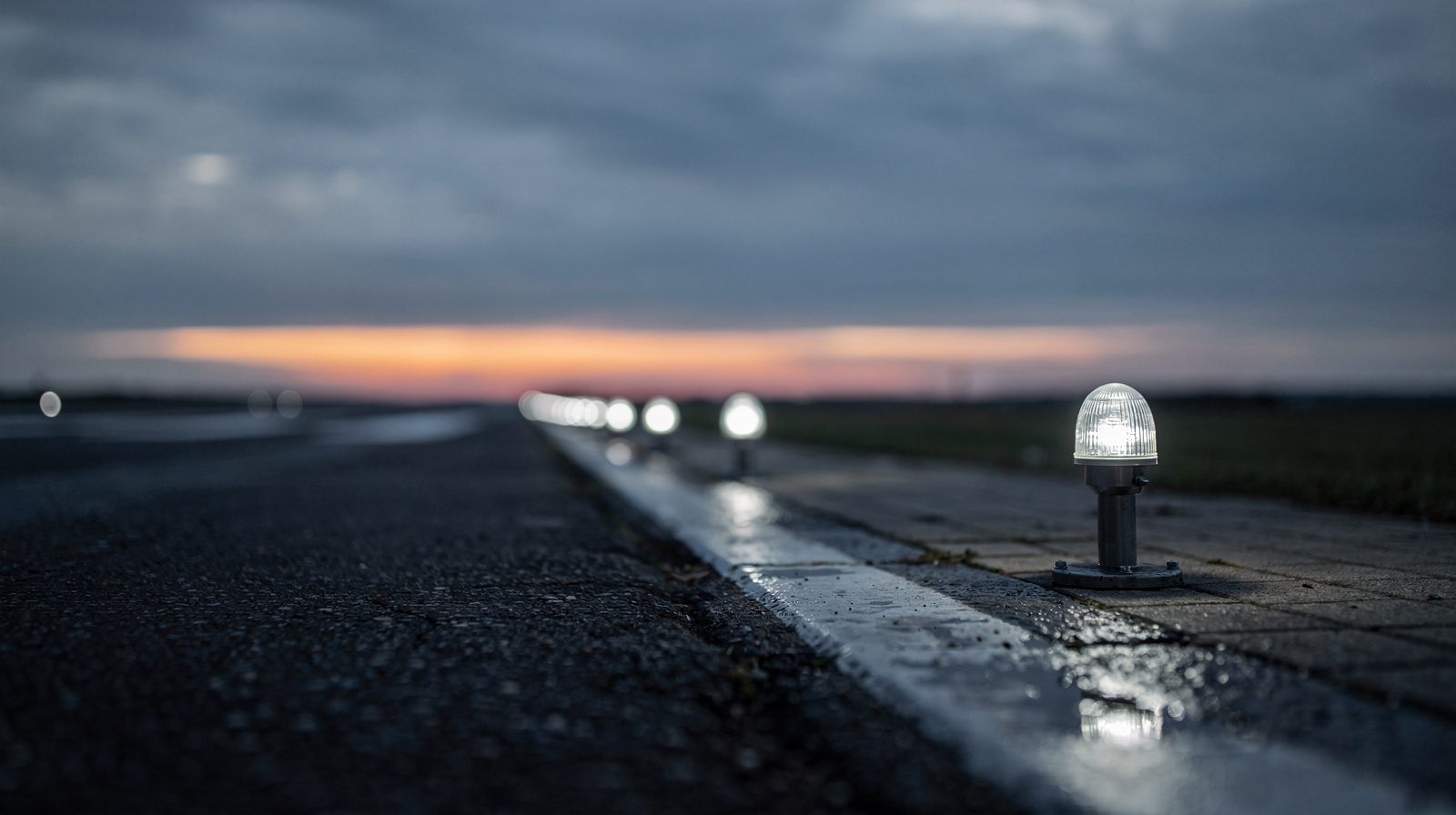
Edge lights are essential components of airfield lighting systems, providing critical visual guidance to pilots and ground vehicle operators by clearly marking the boundaries of runways, taxiways, and aprons. Their function is regulated by international and national aviation authorities, including the International Civil Aviation Organization (ICAO) and the Federal Aviation Administration (FAA), to ensure safety and operational consistency worldwide.
Definition and Scope
Edge lights are installed along the lateral limits of airport movement areas:
- Runway Edge Lights (REL): Outline the usable width of runways.
- Taxiway Edge Lights (TEL): Define the edges of taxiways.
- Apron Edge Lights: Mark the boundaries of apron areas where aircraft are parked and serviced.
Their deployment is mandatory for airports supporting night operations or low-visibility procedures, as outlined in ICAO Annex 14, Volume I, and FAA Advisory Circulars. These standards specify requirements for color, intensity, placement, frangibility, and fixture type to ensure universal clarity and safety.
Purpose and Function
Edge lights serve multiple essential roles:
- Visual Guidance: They delineate movement areas, ensuring pilots and ground vehicles maintain correct alignment during taxi, takeoff, and landing, especially in darkness or adverse weather.
- Surface Identification: By using color-coded lights, edge lighting systems enable immediate recognition of runways, taxiways, and aprons, reducing the risk of runway incursions or surface excursions.
- Regulatory Compliance: ICAO, FAA, and EASA mandate the use and maintenance of edge lights, harmonizing operational standards globally.
- Support for Low-Visibility Operations: Edge lights are integral to advanced surface movement guidance and control systems (SMGCS), working with centerline lights, stop bars, and signage to enable safe operations under low-visibility procedures.
Technical Characteristics
Color Coding
Color is the most immediate visual cue provided by edge lights:
| Surface | Edge Light Color | Purpose |
|---|---|---|
| Runway | White/Yellow* | Runway boundary, caution zone |
| Taxiway | Blue | Taxiway boundary |
| Apron | Blue | Apron boundary |
*Yellow (amber) is used for caution zones near runway ends on instrument runways.
- Runway Edge Lights: White for most of the length, yellow (alternating with white) for the last 600 meters or half the runway, indicating caution as the end approaches.
- Taxiway Edge Lights: Always blue, to prevent confusion with runways.
- Apron Edge Lights: Typically blue, with lower intensity tailored to apron operations.
Light Intensity and Directionality
- Runway Edge Lights: Available in high (HIRL), medium (MIRL), and low (LIRL) intensity. HIRL are used at airports with precision runways, allowing ATC-controlled variable intensity for changing visibility. Intensity and beam spread are regulated for visibility and glare reduction.
- Taxiway/Apron Edge Lights: Lower intensity to minimize confusion and glare, omnidirectional to ensure visibility from any ground approach.
Physical Construction and Placement
- Elevated Fixtures: Most common, mounted on frangible bases (break away if struck). Runway lights typically ≤350 mm (14 in) high, taxiway and apron lights are lower.
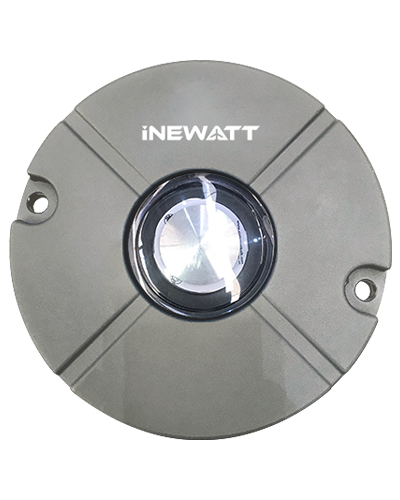
- Inset (Recessed) Fixtures: Used where clearance is needed, such as intersections or snow-prone areas.
| Light Type | Construction | Application |
|---|---|---|
| Runway Edge | Elevated/Inset | Straight edges/Intersections |
| Taxiway Edge | Elevated/Inset | Edges/Curves/Intersections |
| Apron Edge | Elevated/Inset | Edges/For snow or equipment access |
Spacing:
- Runways: ≤60 meters (200 ft) apart.
- Taxiways: 15–60 meters (50–200 ft), closer at curves/intersections.
- Aprons: As needed, based on layout and operational requirements.
Lamp Technology and Durability
- Incandescent: Traditional, with lens heating useful in snow/ice climates.
- LED: Modern standard, offering >50,000 hours lifespan, energy savings, and consistent color.
Fixtures are robust and weather-sealed, with frangible mounts for safety. LEDs are rapidly replacing incandescent lamps due to efficiency and longevity.
Energy Efficiency and Maintenance
- LEDs: Up to 80% less energy than incandescent. Reduce maintenance and operational costs.
- Maintenance: Includes cleaning, alignment, photometric checks, color verification, and prompt lamp or fixture replacement. Regular records are required for regulatory compliance.
Regulatory Standards
Edge lights are governed by strict standards:
- ICAO Annex 14, Volume I: Specifies color, intensity, chromaticity, beam spread, frangibility, placement, durability, and photometric testing.
- FAA AC 150/5340-30 and AIM: Closely aligned with ICAO, with some U.S.-specific details.
- EASA and other national bodies: May add jurisdictional requirements.
Compliance is mandatory for airport certification and subject to regular audit.
Operational Details
Installation & Spacing
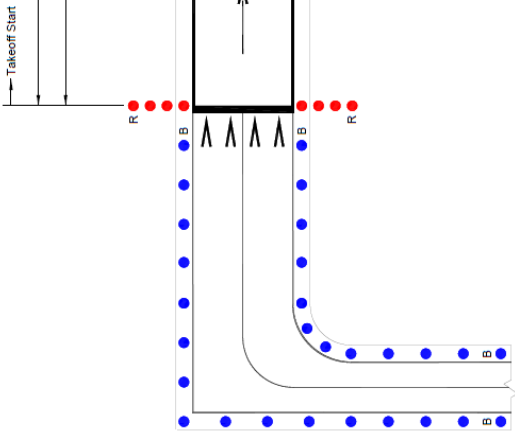
- Runways: Lights are symmetrically installed 2–3 m (6.5–10 ft) from the edge, spaced ≤60 m (200 ft). Threshold and end lights (green/red) indicate runway start/end.
- Taxiways: Placed along both edges at 15–60 m (50–200 ft) intervals, denser at curves/intersections.
- Aprons: Customized to layout, with priority on clear movement area delineation.
Integration with Other Lighting
Edge lights work alongside:
- Centerline Lights: White (runway), green (taxiway).
- Stop Bar/Guard Lights: Mark holding positions with red or alternating yellow.
- Lead-on/Lead-off & Clearance Bars: Indicate taxi routes and holding points.
- Floodlighting: General apron illumination (not for edge delineation).
This integration is key to advanced movement guidance systems (A-SMGCS).
Special Use Cases
- Curves/Intersections: Closer spacing for continuous guidance.
- Snow/Ice Airports: Inset fixtures facilitate snow removal, incandescent lamps help melt snow on lenses.
- Small Airports: May use reflectors instead of powered lights for cost savings, where regulations allow.
Safety and Situational Awareness
Edge lights are vital for:
- Runway Incursion and Excursion Prevention: Distinct colors and placement minimize confusion.
- ATC Coordination: Lighting intensity and patterns can be remotely controlled for changing conditions.
- Incident Reduction: Properly maintained lighting is proven to reduce accidents, as seen in historical incident analysis.
Maintenance and Inspection
- Routine Inspections: Check operation, color, intensity, and alignment.
- Cleaning: Keep lenses and housings clear of debris.
- Lamp Replacement: Promptly replace failed lamps or LEDs.
- Fixture Checks: Inspect frangible mounts and housings after impacts.
- Electrical Testing: Ensure reliable power and control systems.
Maintenance records must be retained and are subject to regulatory review.
Best Practices
- Verify Operation Before Night/Low-Vis Operations
- Strictly Adhere to Spacing and Color Standards
- Choose LED for Most Applications, Incandescent Where Needed
- Integrate with Centerline, Stop Bar, and Other Lighting
- Review and Update Layouts Based on Operational Feedback
Related Terms
- Centerline Light: Marks center of runways/taxiways (white/green).
- Stop Bar Light: Red lights at holding positions.
- Runway Guard Light: Alternating yellow at runway/taxiway intersections.
- Threshold Light: Green, marks start of runway for landing.
- Retroreflective Marker: Reflective, unlit markers (some taxiways/aprons).
Visual Gallery
Summary Table: Edge Light Types
| Light Type | Color | Intensity Levels | Common Locations | Technology |
|---|---|---|---|---|
| Runway Edge | White/Yellow | HIRL, MIRL, LIRL | Runway edges | LED, Incandescent |
| Taxiway Edge | Blue | Low | Taxiway edges/curves | LED, Incandescent |
| Apron Edge | Blue | Low | Aprons, stands, ramps | LED, Incandescent |
Edge lights are a fundamental safety feature of airport operations, with their design, deployment, and maintenance tightly regulated to provide reliable visual cues for safe aircraft and vehicle movement. Their ongoing evolution, especially with LED technology, continues to improve efficiency, sustainability, and safety for airports worldwide. For engineering specifics, operational procedures, or compliance, consult ICAO Annex 14 and applicable national standards.
Frequently Asked Questions
- What is the purpose of edge lights at airports?
- Edge lights mark the physical boundaries of runways, taxiways, and aprons, providing visual guidance for pilots and ground vehicles in darkness or low-visibility, thereby preventing accidental excursions and runway incursions.
- How are edge lights color-coded?
- Runway edge lights are white, with yellow near runway ends, taxiway and apron edge lights are blue. This standardized color coding helps pilots instantly identify each movement surface, as mandated by ICAO and FAA.
- What are the technical requirements for edge lights?
- Edge lights must meet strict ICAO/FAA criteria for color, intensity, beam spread, and frangibility. They are spaced at regular intervals, use robust weatherproof housings, and increasingly feature energy-efficient LED technology.
- How often are edge lights maintained?
- ICAO Annex 14 requires periodic inspections, cleaning, lamp replacement, and functional checks. Maintenance records must be kept, and all failed or damaged lights must be promptly repaired or replaced to ensure safety.
- What is the difference between elevated and inset edge lights?
- Elevated edge lights are mounted above the pavement on frangible bases, commonly used along straight edges. Inset lights are recessed into the surface for areas requiring low clearance, such as intersections or snow-prone zones.
- Are LED edge lights better than incandescent?
- LED edge lights offer longer lifespan, lower energy use, and more consistent color output than incandescent. However, incandescent lamps may still be used in snow-prone airports for their incidental lens heating.
This is a reference entry. TarmacView provides drone inspection services and doesn't sell the equipment or materials described in this glossary.