What is Efflorescence?
Efflorescence on Concrete and Masonry Surfaces
Definition and Chemistry
Efflorescence is a white or off-white crystalline deposit of water-soluble salts that forms on the surface of concrete, masonry, brick, natural stone, stucco, and other Portland cement-based materials. The term derives from the French verb effleurir, meaning “to blossom” or “to flower out,” which describes the visual appearance of salt crystals emerging on a surface as if blooming from within the material.
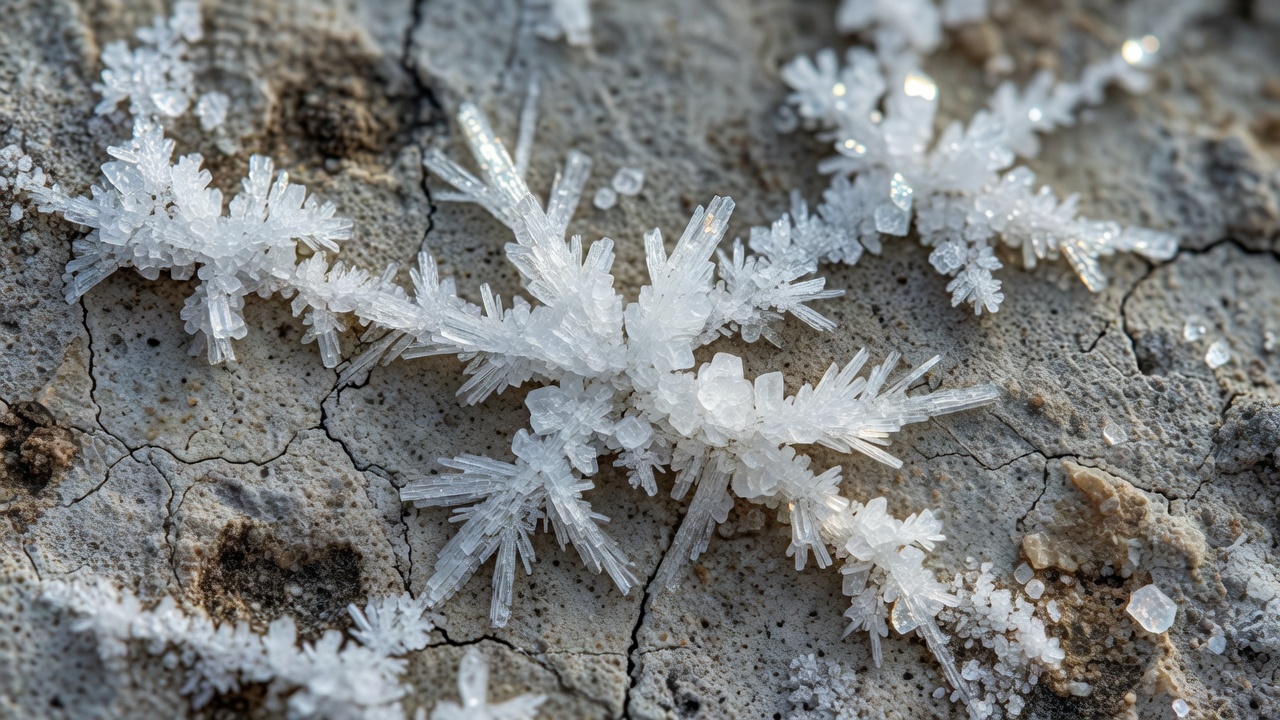
At the chemical level, efflorescence is the result of a multi-step process involving dissolution, capillary transport, and precipitation. The most common chemical pathway begins with the hydration of Portland cement. When cement reacts with water during curing, it produces calcium silicate hydrate (C-S-H) gel, the primary binding phase, and calcium hydroxide (Ca(OH)₂, also known as portlandite or hydrated lime) as a byproduct. Calcium hydroxide constitutes approximately 15–25% of the mass of fully hydrated cement paste and is moderately soluble in water (approximately 1.7 g/L at 20°C). When water percolates through the concrete’s interconnected capillary pore system, it dissolves this calcium hydroxide along with other soluble compounds present in the matrix.
Once the calcium hydroxide solution reaches the exposed surface, it encounters atmospheric carbon dioxide (CO₂). A carbonation reaction occurs: Ca(OH)₂ + CO₂ → CaCO₃ + H₂O. The product, calcium carbonate (CaCO₃), is substantially less soluble in water than calcium hydroxide, only about 0.013 g/L at 25°C, and therefore precipitates as a white crystalline solid on the surface. Because calcium carbonate is nearly insoluble, it does not wash away easily with subsequent water exposure and can form tenacious, difficult-to-remove deposits. This is why efflorescence that has been allowed to age and fully carbonate is considerably harder to clean than fresh deposits.
Beyond the calcium hydroxide–carbonate pathway, numerous other salt species contribute to efflorescence. Sulfates of sodium (Na₂SO₄), potassium (K₂SO₄), magnesium (MgSO₄), calcium (CaSO₄), and iron (FeSO₄) are frequently detected in efflorescence samples. Carbonates and bicarbonates of sodium (Na₂CO₃, NaHCO₃) and potassium (K₂CO₃, KHCO₃) also appear commonly. These salts may originate from cement itself, modern Portland cements typically contain 0.2–1.5% alkali sulfates as a percentage of cement mass, or from aggregates, mixing water, admixtures, soil contact, deicing chemicals, or atmospheric pollutants. Although these salts appear in chemical analysis as only a few tenths of one percent by mass of the concrete, this concentration is sufficient to produce visible efflorescence because the salts become concentrated at the surface through repeated wetting and drying cycles. Research by the Brick Industry Association has demonstrated that as little as 0.02 ounces of calcium carbonate per square yard (approximately 0.7 g/m²) of surface area is enough to cause a perceptible color shift on darker substrates.
The morphology of efflorescence crystals varies with the salt species and environmental conditions during crystallization. Calcium carbonate typically forms rhombohedral calcite crystals, sodium sulfate forms acicular (needle-like) thenardite crystals or the hydrated mirabilite form (Na₂SO₄·10H₂O) depending on temperature and relative humidity, and potassium sulfate produces prismatic arcanite crystals. Under scanning electron microscopy (SEM), these distinctive crystal habits can identify the predominant salt species and help trace the source of the problem.
The pH environment strongly influences efflorescence chemistry. Pore water in young concrete typically has a pH of 12.5–13.5 due to dissolved alkali hydroxides. As carbonation progresses from the surface inward, pH decreases to approximately 8.3, the equilibrium pH of calcium carbonate in water. This pH gradient influences which salts are soluble at which depths and affects the spatial distribution of efflorescence deposits across the surface.
| Salt Species | Chemical Formula | Water Solubility at 20°C (g/L) | Common Source |
|---|---|---|---|
| Calcium hydroxide | Ca(OH)₂ | ~1.7 | Cement hydration |
| Calcium carbonate | CaCO₃ | ~0.013 | Carbonation product |
| Sodium sulfate | Na₂SO₄ | ~195 | Cement alkalis, soil, deicers |
| Potassium sulfate | K₂SO₄ | ~111 | Cement alkalis |
| Magnesium sulfate | MgSO₄ | ~355 | Aggregates, groundwater |
| Sodium carbonate | Na₂CO₃ | ~215 | Cement alkalis, soil |
| Calcium sulfate (gypsum) | CaSO₄·2H₂O | ~2.4 | Cement, aggregates, soil |
| Sodium chloride | NaCl | ~359 | Deicing salts, marine exposure |
Primary vs Secondary Efflorescence
Distinguishing between primary and secondary efflorescence is essential for diagnosis because each type has different causes, timelines, and implications for structural health.
Primary efflorescence occurs during the initial curing and hardening period of cement-based materials, typically within the first hours, days, or weeks after placement. It results from bleed water, the water that rises to the surface of freshly placed concrete as heavier solid particles settle, carrying dissolved calcium hydroxide and other soluble salts from the cement paste to the exposed surface. As this bleed water evaporates or is absorbed into formwork, the salts are deposited on the surface and subsequently carbonate. Primary efflorescence is most pronounced under conditions that slow evaporation: low temperatures, high relative humidity, poor air circulation, and condensation on the surface. In precast concrete production, primary efflorescence appears most frequently during winter manufacturing when slower curing and reduced evaporation rates allow more time for salt migration to the surface. Primary efflorescence is generally a self-limiting, one-time phenomenon because as the concrete continues to hydrate and gain density, the capillary pore network becomes increasingly discontinuous and tortuous, reducing permeability by orders of magnitude. Concrete with a low water-cement ratio (below 0.45), adequate cement content, and proper curing exhibits dramatically less primary efflorescence because the pore structure is finer and less interconnected. The phenomenon that some in the construction industry call “new building bloom” refers to the initial appearance and natural weathering-away of primary efflorescence during the first conditioning cycle of a structure.
Secondary efflorescence occurs in hardened, mature concrete or masonry long after initial curing, sometimes months or years after construction. It is triggered by external water penetrating the material from sources such as rain, groundwater, leaking plumbing, irrigation overspray, defective flashing, or condensation from humidity. This water dissolves salts from within the concrete matrix or transports salts from external sources (soil, deicing chemicals, atmospheric deposition) into the material, then migrates to the surface where evaporation deposits the salts. Secondary efflorescence is fundamentally different from primary efflorescence in that it indicates an ongoing or recurring moisture ingress problem. Each cycle of wetting and drying can mobilize additional salts and deposit fresh efflorescence. When secondary efflorescence recurs after cleaning, it is a reliable diagnostic signal that water continues to enter the wall assembly or structural element through some pathway that must be identified and sealed.
A critical further distinction within secondary efflorescence concerns the origin of the salts. Endogenous secondary efflorescence involves salts that were always present within the material, cement hydration products, aggregate-derived salts, or residual admixture components. These are finite in quantity, eventually the available salt reservoir may deplete if water ingress is stopped. Exogenous secondary efflorescence involves salts from external sources: deicing chemicals (sodium chloride, calcium chloride, magnesium chloride), soil sulfates drawn upward by capillary rise in foundations, marine spray deposition in coastal environments, or atmospheric pollutants such as sulfur dioxide that react with the alkaline concrete surface to form sulfate salts. Exogenous efflorescence is particularly concerning because the salt reservoir is essentially unlimited and may include aggressive species like chlorides that directly attack reinforcement.
The timing of efflorescence appearance provides important diagnostic clues. Efflorescence that appears within 24–72 hours of concrete placement and diminishes over subsequent weeks is almost certainly primary. Efflorescence that appears seasonally, for example, only during winter or rainy periods, points to secondary, weather-driven moisture ingress. Efflorescence that appears in a linear pattern along cracks, joints, or at the interface between different materials suggests a defined water pathway that should be investigated. Efflorescence concentrated at the base of walls, in a horizontal band rising one to two feet above grade, typically indicates capillary rise of groundwater carrying soil salts through foundations that lack adequate damp-proofing.
Formation Mechanism, Water Migration, Capillary Action, and Carbonation
The formation of efflorescence depends on the simultaneous presence of three essential conditions, often described as the “efflorescence triangle”: soluble salts must be present in or on the material, sufficient water must be available to dissolve those salts, and a pathway must exist for the salt-laden solution to migrate to an exposed surface where evaporation can occur. If any one of these three conditions is absent, efflorescence cannot form.
Capillary action is the dominant transport mechanism for salt-laden water through concrete and masonry. The capillary pore system in cement paste consists of interconnected voids ranging from approximately 10 nanometers (gel pores within the C-S-H structure) to several micrometers (capillary pores remaining from the original water-filled space between cement grains). Water in these capillaries develops a curved meniscus due to surface tension, and the resulting pressure differential, capillary suction or capillary pressure, draws water through the pore network. The capillary pressure is described by the Young-Laplace equation, which shows that smaller pore diameters generate higher suction pressures. This is why fine-pored materials like dense concrete, clay brick, and natural stone can wick water significant distances against gravity. The height of capillary rise in a given material can be estimated by Jurin’s Law: h = (2γ cosθ) / (ρgr), where γ is surface tension, θ is the contact angle, ρ is fluid density, g is gravitational acceleration, and r is the pore radius. For concrete with typical pore sizes in the micrometer range, capillary rise can reach several meters, though this occurs over extended time periods.
Evaporation at the exposed surface is the driving force that sustains water movement. As water evaporates from the surface pores, it creates a moisture content gradient that draws more water from the interior through capillary action, analogous to a wick drawing fuel to a flame. The rate of evaporation is controlled by ambient temperature, relative humidity, wind speed, and solar radiation. Conditions that produce slow, sustained evaporation, cool temperatures, high humidity, and low wind, are most conducive to efflorescence formation because they allow time for dissolved salts to migrate to the surface before the water evaporates completely. This explains why efflorescence is more prevalent during winter and in shaded locations: rapid summer evaporation tends to deposit salts within the near-surface pores rather than on the visible surface, a phenomenon sometimes called “crypto-efflorescence” or sub-surface efflorescence that can cause internal damage without being visually obvious.
The carbonation reaction that converts soluble calcium hydroxide to insoluble calcium carbonate is pH-dependent and follows a moving front that progresses from the exposed surface inward at a rate proportional to the square root of time. The carbonation depth after time t can be estimated as d = k√t, where k is the carbonation coefficient (typically 2–8 mm/year⁰·⁵ for normal-quality concrete exposed to ambient CO₂, depending on water-cement ratio, cement type, and relative humidity). Carbonation is optimal at relative humidities of 50–70%, high enough to provide water for the reaction but low enough to allow CO₂ diffusion through partially saturated pores. Below 40% RH, insufficient water is available for the reaction, above 90% RH, water-filled pores block CO₂ ingress. This range explains why efflorescence carbonation is most active in temperate climates with moderate humidity.
An important secondary mechanism in efflorescence formation is cyclic dissolution and recrystallization. As surfaces undergo repeated wetting (rain, dew, condensation) and drying, salts already deposited can partially dissolve and recrystallize, with each cycle potentially producing larger, more interlocked crystal formations that are harder to remove. In severe cases, cyclic salt crystallization within the pore structure immediately below the surface, rather than on the surface, can generate crystallization pressures exceeding the tensile strength of the material, contributing to surface scaling, spalling, and a condition known as salt weathering that is particularly destructive in historic masonry and porous natural stone.
Visual Characteristics and Detection
Efflorescence presents with distinctive visual characteristics that, when properly interpreted, provide information about its composition, age, and significance. The deposit is typically white or off-white, though variations in color can occur depending on the salt species and substrate: sodium and potassium sulfates tend toward a brighter, purer white, calcium carbonate deposits may appear slightly grayish or cream-colored, iron sulfates can impart yellowish, brownish, or even rust-colored tones, and vanadium salts, rare but occasionally found in certain clay brick types, produce a characteristic greenish-yellow efflorescence.
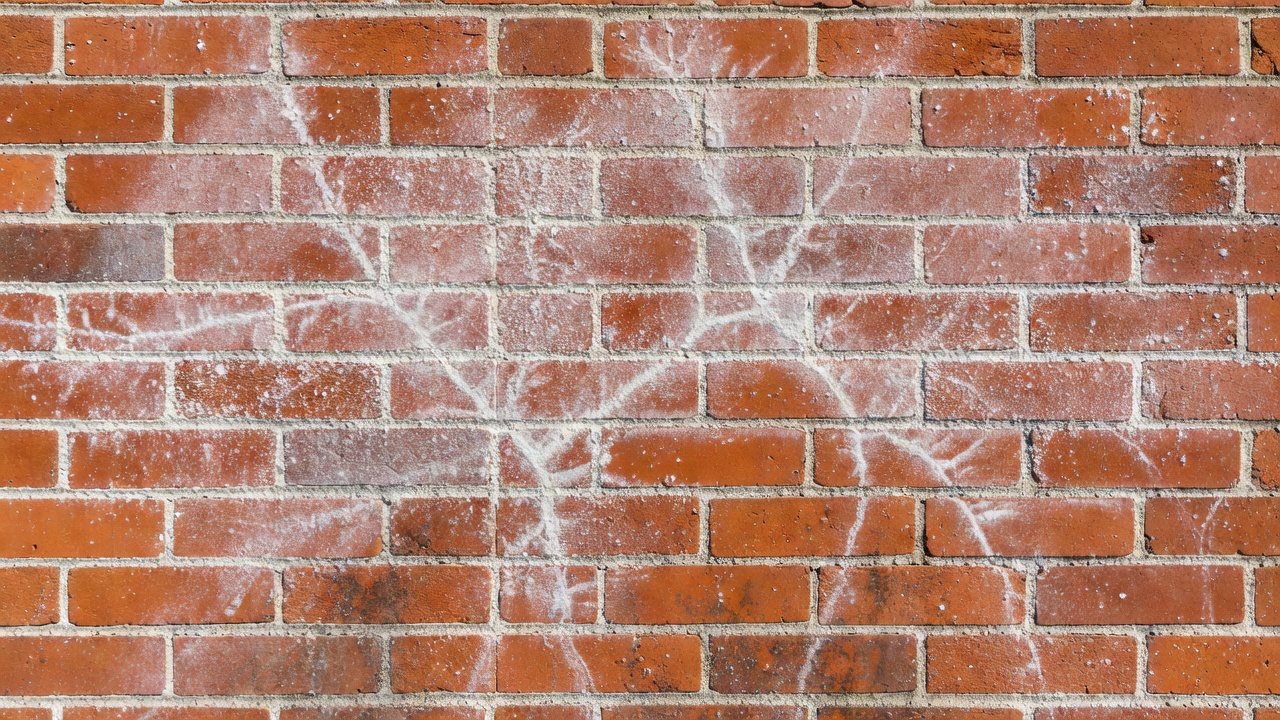
The texture of efflorescence provides clues about its nature. Fresh, uncarbonated efflorescence is typically fluffy, powdery, and easily brushed off with a dry finger, it feels like fine dust. This is characteristic of recently deposited soluble salts that have not yet undergone significant carbonation. Aged, carbonated efflorescence is harder, crustier, and may be firmly adhered to the substrate, sometimes requiring mechanical or chemical intervention to remove. In severe cases of long-term deposition, efflorescence can build up in layers resembling mineral crusts, and in the most extreme instances, particularly with calcium carbonate from lime run, it can form small stalactite-like deposits on the underside of horizontal surfaces.
The spatial distribution of efflorescence across a surface is a powerful diagnostic indicator. Uniform, widespread efflorescence covering entire wall panels or slabs is typically primary efflorescence from initial curing or consistent material properties. Efflorescence concentrated at mortar joints in masonry walls suggests that the mortar is the primary salt source and that water is preferentially moving through the more porous mortar rather than through the masonry units themselves. Linear efflorescence following cracks indicates a direct water pathway where the crack serves both as an ingress route and an evaporation surface. Efflorescence forming a horizontal band rising from grade level strongly suggests capillary rise of groundwater. Efflorescence radiating from specific points, around pipe penetrations, anchor bolts, or at the base of downspouts, identifies localized water entry points that require sealing.
For automated visual inspection using computer vision and machine learning systems, such as TarmacView’s multi-domain defect detection pipeline, efflorescence presents both opportunities and challenges. Its high-contrast white appearance against typically gray concrete or red/brown brick backgrounds makes it readily detectable by image segmentation algorithms using color thresholding in RGB, HSV, or LAB color spaces. The texture characteristics, crystalline, granular patterns distinct from the smooth appearance of intact concrete or the fibrous appearance of mold, can be classified using convolutional neural networks (CNNs) trained on labeled defect datasets. However, several factors complicate automated detection: varying lighting conditions can change the apparent brightness and contrast of efflorescence, surface wetness temporarily makes efflorescence disappear, partial coverage or thin deposits may fall below detection thresholds, and similarity to other white surface features (laitance, paint, lime run, hard water stains) requires sophisticated multi-class classification rather than simple binary detection.
Advanced detection approaches combine visible-spectrum imaging with multispectral or infrared thermography. Because efflorescence deposits have different thermal emissivity and heat capacity compared to bare concrete, they may appear as slightly different temperature regions in thermal images, particularly during transitional heating or cooling periods. Hyperspectral imaging in the short-wave infrared (SWIR) range, where many minerals have distinctive absorption features, can chemically identify specific salt species based on their spectral signatures, enabling discrimination between benign calcium carbonate efflorescence and potentially aggressive chloride-bearing deposits.
Significance for Structural Health
Efflorescence occupies a nuanced position in structural health assessment: the deposit itself is inert and does not directly compromise structural integrity, but its presence, particularly when persistent or recurring, is a valuable sentinel indicator of conditions that can lead to serious deterioration. Understanding what efflorescence signals, and when it warrants concern versus when it is merely cosmetic, is an essential skill in concrete and masonry inspection.
The primary concern signaled by efflorescence is moisture ingress. For water to carry dissolved salts to the surface in visible quantities, the concrete or masonry must be experiencing moisture movement at rates that exceed simple ambient humidity exchange. This moisture can activate or accelerate several deterioration mechanisms. In reinforced concrete, moisture provides the electrolytic medium necessary for electrochemical corrosion of embedded steel reinforcement. While concrete’s high pH (typically 12.5–13.5) passivates steel by forming a protective gamma-Fe₂O₃ film on the rebar surface, two processes can destroy this passivation: carbonation, which reduces pH below approximately 9.5 at the depth of the reinforcement, and chloride ingress, which can break down the passive film even at high pH when chloride concentration at the rebar exceeds a critical threshold (typically 0.4–1.0% chloride by mass of cement, depending on concrete quality and exposure conditions). Because efflorescence demonstrates that water is moving through the cover concrete, the protective layer between the environment and the reinforcement, it signals that conditions exist for both carbonation progression and chloride transport.
Freeze-thaw damage is another deterioration mechanism intimately connected to the moisture conditions that produce efflorescence. When water-saturated concrete freezes, the approximately 9% volumetric expansion of water turning to ice generates hydraulic and osmotic pressures within the pore system that can exceed the tensile strength of the cement paste, causing microcracking. Repeated freeze-thaw cycles accumulate damage, manifesting first as surface scaling and progressing to deeper deterioration. Efflorescence indicating saturated conditions in climates with freeze-thaw cycling should trigger evaluation of the concrete’s air-void system, properly air-entrained concrete contains a distributed network of microscopic air bubbles (typically 4–8% air content with bubble spacing factor less than 0.2 mm) that provide pressure relief during freezing.
Sulfate attack represents a chemically aggressive form of deterioration that can be heralded by efflorescence containing sulfate salts. External sulfate sources, groundwater, soil, industrial environments, can react with calcium hydroxide and calcium aluminate phases in the cement paste to form ettringite (3CaO·Al₂O₃·3CaSO₄·32H₂O) and gypsum, both of which involve substantial volumetric expansion that causes cracking, softening, and disintegration of the cement matrix. The presence of sulfate efflorescence on concrete exposed to sulfate-bearing soil or water is a warning sign that should prompt chemical analysis of both the deposit and the underlying concrete.
The cyclic crystallization pressure mechanism mentioned earlier, where salts crystallize within subsurface pores rather than on the surface, can cause direct mechanical damage independent of corrosion or chemical attack. As salt crystals grow in confined pore spaces, they can exert crystallization pressures reported in the literature to reach 10–20 MPa for sodium sulfate and up to 40 MPa for sodium chloride under certain conditions, exceeding the typical tensile strength of concrete (2–5 MPa). This “salt scaling” phenomenon is well-documented in concrete pavements exposed to deicing salts and in masonry in marine or arid environments.
A structured approach to evaluating efflorescence severity considers several factors:
- Recurrence: Efflorescence that appears once during initial curing and does not return after cleaning is typically benign. Efflorescence that recurs after removal indicates an active, ongoing moisture problem.
- Location: Efflorescence at cracks, joints, or construction interfaces where water could reach reinforcement is more concerning than efflorescence on massive unreinforced sections.
- Associated distress: Efflorescence accompanied by cracking, spalling, rust staining, or delamination indicates active deterioration beyond the cosmetic.
- Salt species: Laboratory identification of chlorides in efflorescence raises immediate corrosion concerns, identification of sulfates signals chemical attack risk.
- Rate of accumulation: Rapid reappearance of heavy efflorescence after cleaning suggests substantial water flow, potentially from a leak or drainage defect.
Differentiation from Mold, Paint, and Other White Surface Deposits
Misidentification of efflorescence can lead to inappropriate remediation measures, treating mold as efflorescence ignores health risks, while treating efflorescence as paint failure leads to ineffective recoating that fails rapidly. Accurate differentiation requires understanding the physical, chemical, and biological characteristics of each type of surface deposit.
Efflorescence versus Mold: This is the most common and consequential misidentification in building inspection. Mold is a biological organism, a fungus that grows as multicellular filaments called hyphae, forming a mass (mycelium) that can appear white, gray, green, black, or other colors depending on species. The definitive field test is the water solubility test: apply a small amount of clean water to the deposit. Efflorescence, being composed of water-soluble salts, dissolves and temporarily disappears when wetted, then reappears as the water evaporates and the salts re-crystallize. Mold does not dissolve in water, it remains visibly intact when wetted. The touch test provides additional discrimination: efflorescence crumbles to a fine, dry powder when pressed between fingers, mold feels soft, may smear rather than crumble, and can feel slightly damp or slimy depending on humidity. A magnification test using a hand lens or digital microscope at 10–40× magnification reveals efflorescence as angular, geometric crystalline structures whereas mold appears as a tangled network of thread-like hyphae with possible spore-bearing structures. An odor test can also help, mold typically produces a musty, earthy smell from microbial volatile organic compounds (MVOCs), while efflorescence is odorless. A chemical test using dilute hydrochloric acid (HCl) causes calcium carbonate efflorescence to effervesce (fizz) due to CO₂ release, while mold shows no reaction. Finally, the growth pattern distinguishes them: mold grows in roughly circular colonies that expand over time and requires organic nutrients, efflorescence follows water migration paths and does not “grow” in the biological sense.
Efflorescence versus Lime Run (Lime Bloom): Lime run is closely related to efflorescence but has distinct characteristics. Both originate from calcium hydroxide, but lime run occurs when calcium hydroxide solution reaches the surface in sufficient concentration and quantity that, upon carbonation, it forms a hard, continuous calcium carbonate crust rather than a powdery deposit. The key discriminator is solubility: carbonated lime run forms calcium carbonate that is essentially insoluble and will not dissolve when wetted, whereas fresh efflorescence dissolves readily. Lime run can, in severe cases, form small stalactites or thick crusts that require mechanical removal. From a chemical standpoint, lime run and carbonated primary efflorescence are identical in composition (both are calcium carbonate), but they differ in the quantity and morphology of the deposit, lime run represents a more massive, continuous deposit from high-concentration calcium hydroxide solution, while efflorescence represents dispersed crystallization from more dilute solutions.
Efflorescence versus Hard Water Stains: Hard water contains dissolved calcium and magnesium bicarbonates. When hard water evaporates on a surface, it leaves behind calcium and magnesium carbonate deposits that appear white and can be visually indistinguishable from efflorescence. The key differentiator is the deposition mechanism: hard water stains result from external water evaporating on the surface, leaving behind whatever minerals were dissolved in that water, while efflorescence results from internal water migrating through the material from within. Hard water stains typically appear where water regularly stands or drips, around plumbing fixtures, on surfaces below leaking pipes, on irrigation-sprinkled walls, and often form tide lines or drip marks. Chemical testing of the deposit can sometimes distinguish them: hard water deposits are almost exclusively calcium and magnesium carbonates, while efflorescence may contain a wider spectrum of ions including sodium, potassium, and sulfates.
Efflorescence versus Sealer Blush: Film-forming concrete sealers and coatings can develop a white, cloudy appearance known as blushing or blooming when moisture becomes trapped beneath the coating during application or curing. This is not a salt deposit but an optical effect caused by moisture or solvent entrapment within the sealer film. Sealer blush does not brush off as powder and does not dissolve in water, it is within the coating layer rather than on top of it. The color often changes with viewing angle and may appear iridescent. Application of a small amount of xylene or the manufacturer’s recommended solvent on a test area can temporarily clear sealer blush by re-dissolving the film, a reaction that does not occur with efflorescence.
Efflorescence versus Latex Migration (Polymer Leaching): Polymer-modified cementitious products such as some tile grouts, repair mortars, and waterproof coatings can exhibit a white surface film caused by migration and deposition of latex polymers rather than salts. This phenomenon occurs when the polymer emulsion breaks prematurely, often due to excessive water, improper curing, or incompatible primers, and the polymer particles migrate to the surface. The deposit may appear similar to efflorescence but is organic rather than mineral. It can be distinguished by its behavior under heat: latex deposits soften and may become tacky when heated with a hot air gun, while salt deposits are unaffected.
| Deposit Type | Water Solubility | Touch Response | HCl Reaction | Pattern | Origin |
|---|---|---|---|---|---|
| Fresh efflorescence | Dissolves | Powdery, dry | Fizzes (if carbonate) | Follows water paths | Internal salts |
| Carbonated efflorescence | Insoluble | Crusty, hard | Fizzes | Follows water paths | Internal salts, aged |
| Lime run | Insoluble | Hard crust | Fizzes vigorously | Concentrated, thick | High-concentration Ca(OH)₂ |
| Mold | Insoluble | Soft, may smear | No reaction | Circular colonies | Biological growth |
| Hard water stain | Partially soluble | Mineral scale | Fizzes | Tide lines, drip marks | External water minerals |
| Sealer blush | Insoluble | Within coating | No reaction | Diffuse cloudiness | Coating failure |
| Latex migration | Insoluble | Rubbery/plastic | No reaction | Film-like | Polymer leaching |
Efflorescence in Airport and Airfield Structures
Airport pavements, taxiways, aprons, and related concrete infrastructure present unique conditions that influence efflorescence formation, significance, and management. These structures are subjected to loading regimes, environmental exposures, and operational requirements that differ substantially from conventional building applications.
Pavement-Specific Efflorescence Mechanisms: Airfield concrete pavements are typically constructed as jointed plain concrete pavements (JPCP) or jointed reinforced concrete pavements (JRCP) with slabs 300–500 mm thick and designed for 20–30+ year service lives under heavy aircraft loading. The joints between slabs, whether contraction joints, expansion joints, or construction joints, create preferential pathways for water infiltration. Water entering through unsealed or deteriorated joint sealants percolates through the joint faces, dissolves calcium hydroxide from the cement paste, and emerges at the slab edges and joint reservoirs as efflorescence. This joint-associated efflorescence is particularly significant because the joint is also the primary entry point for deicing chemicals applied to the pavement surface. At airports in cold climates, large quantities of potassium acetate, sodium acetate, sodium formate, or urea-based deicers are applied to runways, taxiways, and aprons during winter operations. These chemicals, dissolved in meltwater, enter joints and can combine with concrete-derived salts to produce complex efflorescence compositions.
Alkali-Silica Reaction (ASR) and Efflorescence: Airfield concrete containing reactive aggregates is susceptible to ASR, a chemical reaction between alkali hydroxides in the pore solution and certain forms of reactive silica in aggregates that produces an expansive alkali-silica gel. This gel can absorb water and swell, causing map cracking. The gel itself is often white and can be extruded from cracks onto the pavement surface, where it may be mistaken for conventional efflorescence. ASR gel can be distinguished from ordinary efflorescence by its translucent, glassy appearance when fresh (before drying), its tendency to form in association with characteristic map-cracking patterns, and its persistence, ASR gel does not readily dissolve in water and does not effervesce with acid. In the context of automated pavement inspection, distinguishing between benign efflorescence and detrimental ASR gel exudation is critical because their structural implications are entirely different.
Deicing Chemical Interactions: Airfield deicing and anti-icing operations introduce chemicals that interact with concrete in ways relevant to efflorescence assessment. Potassium acetate and sodium acetate deicers are known to accelerate alkali-silica reaction in susceptible concretes. Calcium magnesium acetate (CMA) is less aggressive but can contribute calcium to efflorescence deposits. Urea-based deicers can hydrolyze to ammonia and carbon dioxide, potentially accelerating carbonation of near-surface concrete. The visible white residues left on pavement surfaces after deicing operations can be confused with efflorescence, however, these are typically unreacted deicer residues that will dissolve completely in the next rain, whereas true efflorescence from concrete salts persists or reforms.
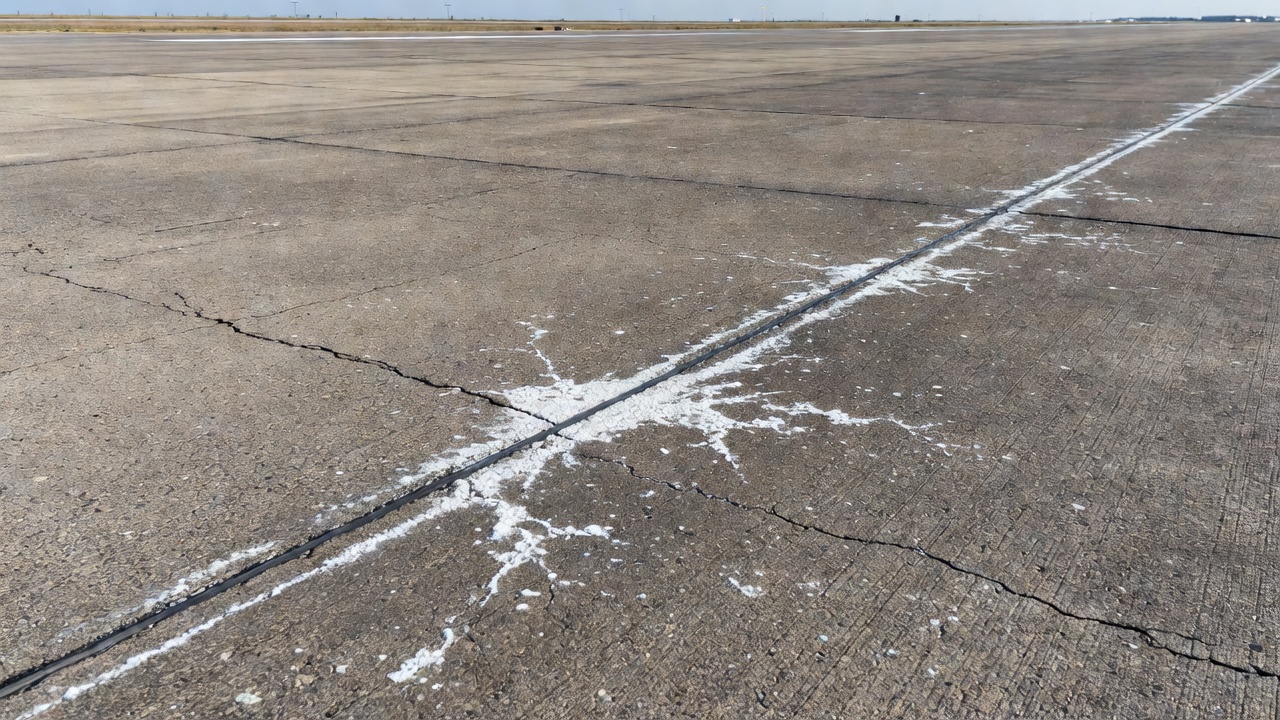
FAA and ICAO Pavement Distress Classification: The FAA’s “Concrete Surfaced Airfields Distress Manual” does not list efflorescence as a separate distress type in the Pavement Condition Index (PCI) methodology, but efflorescence is noted as a secondary indicator accompanying several classified distresses. In joint seal damage (FAA distress code 62 in rigid pavements), efflorescence at joints often accompanies sealant failure and signals moisture penetration through the joint system. In durability cracking (“D” cracking, FAA distress code 58), efflorescence may appear in association with the fine crack pattern characteristic of aggregate freeze-thaw susceptibility. ICAO’s Aerodrome Design Manual (Doc 9157, Part 3, Pavements) addresses the importance of sub-surface drainage and joint sealing in preventing moisture-related deterioration, directly relevant to efflorescence control in airfield pavements. The Pavement Condition Index standard (ASTM D5340 for airfields) includes evaluation of joint seal condition and moisture-related distress as part of the overall condition assessment.
Inspection Considerations for Airfield Concrete: Visual inspection of airfield concrete for efflorescence is complicated by operational constraints, inspections typically occur during limited time windows between aircraft movements, often at night under artificial lighting that can alter the apparent contrast and visibility of white deposits. Pavement surface treatments, including curing compounds, penetrating sealers, and periodic rubber removal from runway touchdown zones (using high-pressure water, chemical solvents, or mechanical grinding), can affect the appearance of efflorescence and its detectability. Rubber removal operations in particular can abrade the concrete surface, potentially exposing fresh paste with different efflorescence characteristics. Automated inspection systems deployed on airfield surfaces must be robust to these operational artifacts and capable of distinguishing efflorescence from rubber deposits, paint markings, sealant residues, and deicer remnants.
Prevention and Remediation
Effective management of efflorescence follows a hierarchical approach: prevention during design and construction is preferable to remediation after the fact, and when efflorescence does occur, identifying and addressing the moisture source is more important than merely cleaning the surface deposit.
Prevention Strategies
Material Selection: The first line of defense against efflorescence is minimizing the available soluble salts in the concrete or masonry system. Use of low-alkali Portland cement (meeting ASTM C150 optional limit of 0.60% Na₂O equivalent) reduces the sodium and potassium available for sulfate and carbonate efflorescence. Clean, washed aggregates meeting ASTM C33 or equivalent standards eliminate salt contributions from aggregate sources, unwashed sands, particularly those from marine or evaporite deposits, can contain significant chloride and sulfate contamination. Mixing water should meet ASTM C1602 requirements for total dissolved solids, potable water is generally acceptable, while seawater or brackish water is unacceptable for reinforced concrete due to chloride content. Supplementary cementitious materials (SCMs) such as fly ash (Class F, meeting ASTM C618), ground granulated blast-furnace slag (GGBFS, meeting ASTM C989), and silica fume (meeting ASTM C1240) react with calcium hydroxide through pozzolanic reactions, consuming the primary efflorescence precursor and simultaneously densifying the microstructure to reduce permeability. Concrete containing 15–30% fly ash or 30–50% slag replacement of cement typically exhibits substantially reduced primary efflorescence.
Mix Design and Placement: A low water-cementitious materials ratio (w/cm), below 0.45 for general exposure and below 0.40 for severe exposure, reduces both the volume of capillary pores and their interconnectivity, limiting water transport. Water-reducing and high-range water-reducing admixtures (superplasticizers meeting ASTM C494 Type A and F) enable low w/cm ratios while maintaining workability. Proper consolidation through mechanical vibration eliminates entrapped air voids that could serve as water reservoirs. Adequate curing, maintaining continuous moisture and favorable temperature for a minimum of 7 days at temperatures above 10°C, or longer for concrete containing slag or fly ash, ensures complete hydration of cement particles, reducing residual calcium hydroxide availability. For precast concrete, accelerated curing methods including steam curing can significantly reduce primary efflorescence by promoting rapid hydration and early carbonation.
Moisture Management in Design: Preventing water ingress into completed structures requires integrated design detailing. Effective roof overhangs, drip edges, and copings deflect rainwater away from wall surfaces. Through-wall flashing at shelf angles, lintels, window heads, and the base of walls intercepts downward-migrating water and directs it to the exterior through weep holes. Cavity wall construction with a minimum 50 mm (2-inch) air gap and proper weep hole spacing (every 600–800 mm, or 24–32 inches, at the base of the cavity) provides drainage and ventilation that prevents moisture accumulation. Below-grade, a properly installed damp-proof course (DPC) or waterproofing membrane prevents capillary rise of groundwater into foundations and walls. In pavement construction, an adequately sloped subgrade and permeable base course with edge drains prevents water accumulation beneath slabs. Joint sealants in pavements and wall expansion joints must be maintained to prevent water entry, silicone, polysulfide, and polyurethane sealants have typical service lives of 10–20 years before requiring replacement.
Surface Treatments: Penetrating water repellents based on silane, siloxane, or silane-siloxane blends can significantly reduce water absorption into concrete and masonry while maintaining vapor permeability, allowing internal moisture to escape as vapor rather than being trapped beneath a film-forming coating. These treatments work by chemically bonding to the silicate substrate, creating a hydrophobic molecular layer on pore walls without blocking the pores themselves. The contact angle of water on treated surfaces typically exceeds 100°, causing water to bead rather than spread. Properly applied silane treatments can reduce water absorption by 80–95% depending on substrate porosity and application rate. These treatments must be applied to clean, dry surfaces for proper penetration and bonding, application to surfaces with active efflorescence may trap salts beneath the treatment. Film-forming coatings, acrylic, epoxy, urethane, are generally not recommended for efflorescence control on exterior concrete because they can trap moisture and exacerbate sub-surface salt crystallization.
Remediation Methods
Dry Brushing: Light, fresh efflorescence on smooth surfaces can often be removed by dry brushing with a stiff nylon or natural fiber brush, followed by vacuum collection of the dislodged powder to prevent re-deposition. This method is appropriate for powdery, uncarbonated deposits but is ineffective on hardened, carbonated efflorescence. The surface should be dry during brushing to prevent smearing the salts into the pores.
Water Washing: After dry brushing to remove the bulk deposit, pressurized water washing (1,000–3,000 psi, or approximately 7–21 MPa) can dissolve and remove remaining water-soluble salts. The surface must then be thoroughly dried, using air blowers, wet vacuums to remove standing water, and allowing adequate ventilation, to prevent the rinse water from simply re-depositing the dissolved salts as new efflorescence. Warm water is more effective than cold water for dissolving salts due to higher solubility at elevated temperatures. This method is effective for fresh, water-soluble efflorescence but will not remove carbonated calcium carbonate deposits.
Chemical Cleaning: For stubborn, carbonated efflorescence that resists water washing, acidic cleaners are required to dissolve the calcium carbonate. A dilute solution of muriatic acid (hydrochloric acid, HCl) at a concentration of 5–10% (corresponding to diluting commercial 30–32% HCl with 3–6 parts water) is a traditional treatment. Critical safety precautions are mandatory: always add acid to water (never the reverse) to avoid violent exothermic splashing, wear full personal protective equipment including acid-resistant gloves, eye protection, and respiratory protection, pre-wet the surface to limit acid absorption into the concrete, apply the solution with a low-pressure sprayer or brush, allow 2–5 minutes of dwell time with light scrubbing, and rinse copiously with clean water. The reaction is: CaCO₃ + 2HCl → CaCl₂ + H₂O + CO₂↑. Commercial proprietary cleaners based on phosphoric acid, glycolic acid, or citric acid are less aggressive alternatives that present lower risk of surface etching and are preferred for colored concrete.
Assessment Before Treatment: A small test area should always be treated first to confirm effectiveness and verify that the cleaning method does not damage or discolor the substrate. Acidic cleaners can etch polished or smooth concrete surfaces, alter the color of integrally colored concrete, and dissolve certain natural stone types (particularly calcareous stones like limestone and marble). For historic masonry and culturally significant structures, cleaning methods should be specified by a conservation professional, as aggressive techniques can cause irreversible damage to aged materials.
Addressing the Root Cause: The most critical step in efflorescence remediation is identifying and correcting the moisture source. Cleaning efflorescence without addressing water ingress is futile, the deposits will recur, potentially with greater severity as each wet-dry cycle mobilizes additional salts from deeper within the material. A systematic investigation should evaluate: roof and wall drainage systems for blockages or defects, grading and surface drainage adjacent to the structure, plumbing systems for leaks, particularly in concealed spaces, irrigation systems that may be wetting walls or pavements, condensation patterns associated with HVAC or temperature differentials, and joint sealants, flashings, and waterproofing membranes for deterioration. Once the moisture source is identified and corrected, the concrete or masonry should be allowed to dry thoroughly, this may require weeks or months depending on material thickness, ambient conditions, and the extent of saturation, before any protective surface treatment is applied.
Crypto-Efflorescence Remediation: When salts have crystallized within subsurface pores rather than on the surface (crypto-efflorescence), surface cleaning alone is inadequate. Specialized poultice treatments can draw subsurface salts to the surface where they can be removed. A poultice consists of an absorbent material (clay, diatomaceous earth, cellulose, or paper pulp) mixed with water or a solvent that is applied as a thick paste to the affected area. As the poultice dries, capillary action draws moisture, and dissolved salts, from the substrate into the poultice, where the salts are trapped as the water evaporates from the poultice surface. Multiple poultice applications may be necessary for heavily salt-laden materials. This technique is standard practice in stone and masonry conservation but is applicable to any porous cement-based material with subsurface salt accumulation.
Frequently Asked Questions
- What causes efflorescence on concrete?
- Efflorescence is caused by three essential factors occurring simultaneously: the presence of water-soluble salts within or on the concrete, sufficient moisture to dissolve those salts into a solution, and a pathway for the salt-laden water to migrate to the surface where it evaporates. The salts most commonly originate from the hydration products of Portland cement, primarily calcium hydroxide, which reacts with atmospheric carbon dioxide to form insoluble calcium carbonate. Additional salt sources include aggregates contaminated with soluble minerals, mixing water containing dissolved salts, soil in contact with foundations, and deicing chemicals applied to pavements. The water that mobilizes these salts may come from rain, groundwater, condensation, irrigation, or internal bleed water during initial curing.
- Is efflorescence a sign of structural damage?
- Efflorescence itself is not structural damage, it is a symptom of water movement through the material. However, its presence, particularly when persistent or recurring, signals that moisture is penetrating the concrete or masonry in quantities sufficient to dissolve and transport salts. This moisture can, over time, initiate or accelerate several deterioration mechanisms: corrosion of embedded steel reinforcement (especially when chlorides are present), freeze-thaw damage in saturated concrete, alkali-silica reaction (ASR), sulfate attack, and leaching of calcium hydroxide which increases porosity. The appearance of efflorescence at joints, cracks, or along reinforcement paths is of elevated concern and warrants investigation into the source of water ingress.
- How can you tell the difference between efflorescence and mold?
- Several field tests can distinguish efflorescence from mold. The water solubility test is the most definitive: spray a small amount of clean water on the deposit, efflorescence dissolves and temporarily disappears because the salts are water-soluble, while mold remains intact. Efflorescence crumbles to a fine powder when pressed between fingers and has a salty taste, mold feels soft or fuzzy and does not dissolve. Efflorescence is strictly inorganic, forming crystalline structures visible under magnification, whereas mold is organic and will grow when provided moisture and nutrients. Efflorescence typically appears in patterns following water migration paths, at mortar joints, cracks, and edges, while mold grows in circular colonies in consistently damp areas. A laboratory analysis using a moisture meter and pH testing can provide definitive confirmation when visual methods are inconclusive.
- What is the difference between primary and secondary efflorescence?
- Primary efflorescence occurs during the initial curing and hardening of cement-based materials, typically within the first days to months after placement. It results from bleed water rising to the surface during hydration, carrying dissolved calcium hydroxide from the cement paste. This calcium hydroxide then reacts with atmospheric carbon dioxide to form calcium carbonate deposits. Primary efflorescence is usually a one-time occurrence that diminishes as the concrete gains density and lower permeability. Secondary efflorescence occurs long after the material has hardened, caused by external water penetrating the concrete or masonry, from rain, groundwater, leaking pipes, irrigation, or condensation, and dissolving salts from within the material or from external sources such as deicing chemicals or soil. Recurring secondary efflorescence indicates an ongoing moisture ingress problem that requires investigation and remediation.
- How is efflorescence removed and prevented?
- Removal methods depend on the type and age of the efflorescence. Fresh, water-soluble efflorescence can often be removed by dry brushing followed by rinsing with clean water and thorough drying. For stubborn or carbonated deposits, a mild acid solution such as diluted muriatic acid (5–10% concentration) or proprietary cleaners like phosphoric acid-based products may be needed, applied with scrubbing and followed by copious rinsing. Prevention focuses on eliminating one or more of the three required conditions: use low-alkali cement and clean, washed aggregates to reduce available salts, employ a low water-cement ratio (below 0.45) and supplementary cementitious materials such as fly ash or silica fume to reduce permeability, install proper drainage, waterproofing membranes, and vapor barriers to prevent water ingress, and apply penetrating silane or siloxane sealers after complete curing to reduce moisture absorption while maintaining vapor permeability.