What is Asphalt Emulsion?
Definition and Chemistry of Asphalt Emulsion
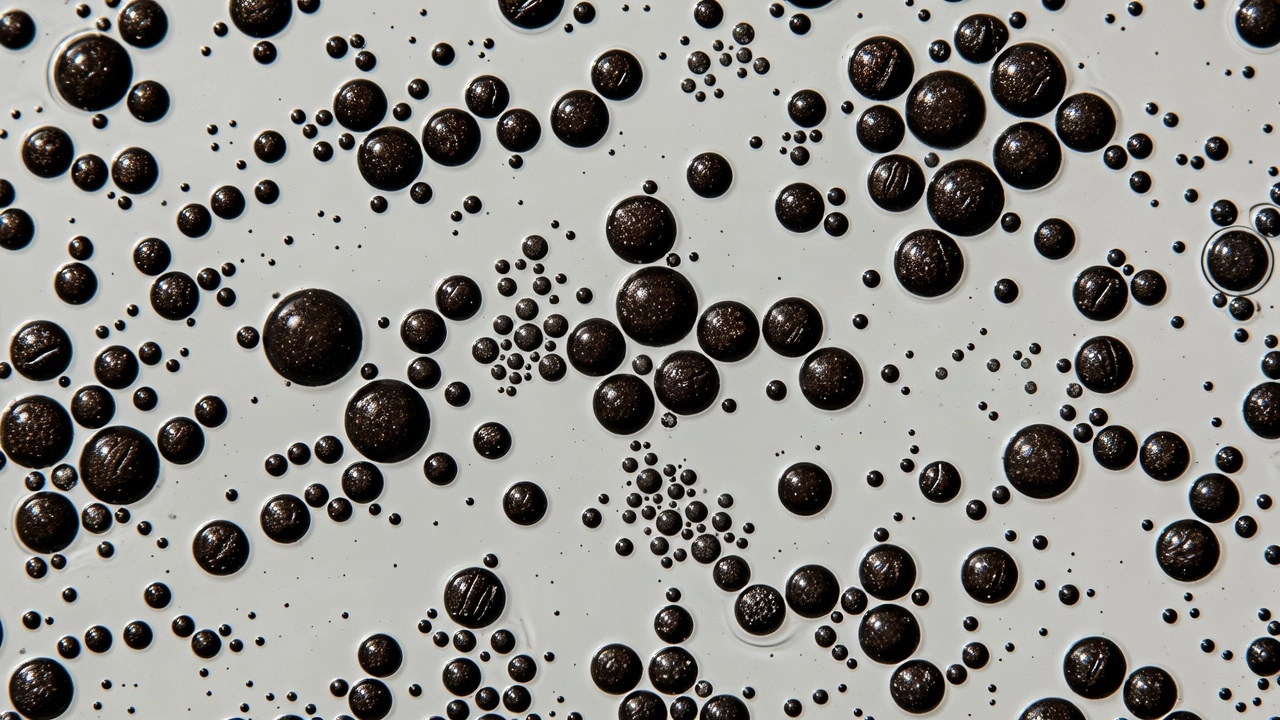
Asphalt emulsion (also known as bitumen emulsion) is a colloidal dispersion of microscopic asphalt binder droplets suspended in water, stabilized by a chemical emulsifying agent. The emulsion exists as a liquid at ambient temperatures, typically with the consistency of chocolate milk or thin cream, allowing it to be sprayed, mixed, or poured without the need for high-temperature heating. The asphalt content of an emulsion typically ranges from 50% to 70% by weight, with water comprising 30% to 50% and the emulsifying agent making up only 0.1% to 2.0% of the total formulation.
The fundamental principle behind emulsion technology is that two immiscible liquids, asphalt and water, are made to form a stable mixture through the application of mechanical shear and chemical stabilization. Asphalt (a hydrophobic hydrocarbon) does not naturally mix with water. By passing hot asphalt (typically at 120-150°C) and heated water (40-70°C) containing dissolved emulsifying agents through a colloid mill at high shear rates, the asphalt is broken into microscopic droplets ranging from 0.1 to 50 micrometers in diameter, with the majority falling between 1 and 10 micrometers. These droplets are then surrounded by the emulsifier molecules, which orient themselves with the hydrophobic (water-repelling) tail embedded in the asphalt droplet and the hydrophilic (water-loving) head extending into the water phase. This orientation creates a stable barrier that prevents the asphalt droplets from coalescing back into a continuous mass.
The emulsifying agent is the critical component that makes emulsion technology possible. Most commercial emulsifiers are surface-active agents (surfactants) derived from fatty amines, quaternary ammonium compounds, lignin derivatives, tall oil, or synthetic chemicals. The emulsifier determines not only the stability of the emulsion but also its electrical charge (cationic or anionic) and its setting characteristics. The concentration of emulsifier must be carefully controlled: too little results in an unstable emulsion that breaks prematurely, while too much can delay the break beyond acceptable limits or create an emulsion that is resistant to breaking altogether.
The droplet size distribution is a critical quality parameter determined by the colloid mill gap setting, the temperature differential between asphalt and water phases, the feed rates, and the emulsifier chemistry. Smaller droplets (sub-micron to 5 microns) produce more stable emulsions with better storage life but slower breaking characteristics. Larger droplets (10-50 microns) break more quickly but may have poorer storage stability and can produce coarser, less uniform coating. A well-designed emulsion balances droplet size to achieve the required storage stability while delivering the setting speed needed for the intended application.
Asphalt emulsion is classified under the broader category of oil-in-water emulsions (O/W type), where the asphalt (oil) is the dispersed phase and water is the continuous phase. This is in contrast to water-in-oil emulsions (W/O) sometimes encountered in industrial applications. The oil-in-water nature of asphalt emulsion means that water is the external phase, allowing the emulsion to be diluted with additional water, cleaned up with water before breaking, and applied to damp surfaces in some cases. Once the water evaporates, the asphalt droplets coalesce into a continuous binder film, returning the asphalt to its original state.
Emulsion Types and Classification System
Asphalt emulsions are classified according to a standardized nomenclature system defined by ASTM D977 (for anionic emulsions) and ASTM D2397 (for cationic emulsions), with equivalent specifications under AASHTO M140 and AASHTO M208. The classification is based on two primary characteristics: the electrical charge of the asphalt droplets (ionic type) and the rate of setting (how quickly the emulsion breaks).
Electrical Charge Classification
Anionic emulsions carry a negative electrical charge on the asphalt droplets, imparted by anionic emulsifiers such as fatty acid soaps, lignosulfonates, or tall oil derivatives. These emulsions are designated by the absence of the letter “C” in their grade designation (e.g., SS-1, RS-1, MS-2). Anionic emulsions are typically formulated with alkaline water (pH 10-12) and perform best with basic or calcareous aggregates such as limestone, dolomite, and slag. They are more sensitive to damp and cool conditions compared to cationic emulsions and have historically been favored in Europe and Australia.
Cationic emulsions carry a positive electrical charge on the asphalt droplets, imparted by cationic emulsifiers such as fatty amines, imidazolines, or quaternary ammonium compounds. These emulsions are designated by the prefix “C” (e.g., CSS-1, CRS-2, CQS-1). Cationic emulsions are formulated with acidic water (pH 2-6) and represent the dominant emulsion type used in North America today. The positive charge provides an electrostatic attraction to the negatively charged surface of most mineral aggregates, particularly siliceous aggregates like quartz, granite, basalt, and natural gravels, promoting superior adhesion and coating. Cationic emulsions are also less sensitive to moisture and cool temperatures and can be successfully applied under conditions where anionic emulsions would fail.
Important constraint: Anionic and cationic emulsions must never be mixed together under any circumstances. The opposite charges cause immediate neutralization and destabilization, resulting in instantaneous breaking and the formation of a non-homogeneous, unusable mass. Equipment used for anionic emulsion cannot be used for cationic emulsion without thorough cleaning.
Setting Speed Classification
The setting speed describes how quickly the emulsion breaks, meaning how rapidly the asphalt droplets coalesce into a continuous film and the water separates. ASTM D977 and D2397 define four setting classifications:
| Setting Grade | Designations | Typical Break Time (20°C) | Min. Residue (%) | Primary Applications |
|---|---|---|---|---|
| Rapid-Setting (RS) | RS-1, RS-2, CRS-1, CRS-2 | 15-45 minutes | 55-67 | Chip seals, tack coats, surface treatments |
| Medium-Setting (MS) | MS-1, MS-2, CMS-2 | 30-90 minutes | 58-67 | Cold mixes, stockpile patching |
| Slow-Setting (SS) | SS-1, SS-1h, CSS-1, CSS-1h | 60-240 minutes | 57 minimum | Tack coats, prime coats, fog seals, dust control |
| Quick-Setting (QS) | QS-1, QS-1h, CQS-1, CQS-1h | 10-30 minutes | 57 minimum | Slurry seals, microsurfacing, rapid tack coats |
The “h” suffix (e.g., SS-1h, CSS-1h, CQS-1h) indicates that a harder base asphalt was used in manufacturing. Harder asphalts have lower penetration values (typically 40-90 dmm at 25°C) and higher softening points, producing a residual binder that is less temperature-susceptible and more resistant to rutting. The “P” suffix denotes polymer modification (e.g., SS-1hP, PMCRS-2).
High-Float Emulsions
High-float emulsions (designated HFMS-1, HFMS-2, HFMS-2h, or HFRS-2) are a special category that form a thick, gel-like consistency during and after breaking. When tested by the ASTM D244 emulsion residue test, the high-float emulsion produces a residue that exhibits a characteristic “ball” or “float” on a hot water bath, indicating the formation of a gel structure. High-float emulsions provide a thicker binder film on aggregate particles and are used for cold mixes, stockpile patching, and chip seals where enhanced binder film thickness is desired.
Manufacturing Process of Asphalt Emulsion
The production of asphalt emulsion requires specialized equipment and precise control of multiple process variables. The heart of the emulsion manufacturing plant is the colloid mill, a high-shear device that disperses the molten asphalt into fine droplets within the water phase. The colloid mill consists of a high-speed rotor (typically rotating at 3,000-6,000 RPM) that spins within a stationary stator, with a precisely controlled gap of 0.1-0.5 mm between them. The hot asphalt and emulsifier water solution are fed simultaneously into the mill, where the intense shear forces generated by the rotor-stator gap break the asphalt into microscopic droplets.
The manufacturing process involves several distinct stages:
Preparation of soap solution: The emulsifying agent (surfactant) is dissolved in water, typically at a concentration of 0.5-2.0% by weight of the final emulsion. For cationic emulsions, the water is acidified (typically with hydrochloric acid) to pH 2-6 to activate the emulsifier. For anionic emulsions, the water is made alkaline (pH 10-12) using sodium hydroxide or potassium hydroxide. Other additives such as stabilizers (e.g., calcium chloride, ammonium chloride), anti-stripping agents, and latex polymers may be incorporated into the soap solution.
Asphalt preparation: The base asphalt binder is heated to 120-150°C (248-302°F) to reduce its viscosity to a range suitable for emulsification, typically 100-500 centipoise. The asphalt must be compatible with the emulsifier chemistry. Not all asphalt sources produce stable emulsions, some asphalts are naturally “difficult to emulsify” and may require special emulsifier formulations.
Emulsification: The hot asphalt and soap solution are pumped simultaneously into the colloid mill at precisely controlled rates to achieve the target asphalt content. Typical mill throughput ranges from 5 to 50 tons per hour depending on mill size. The mill discharge temperature is typically 85-95°C (185-203°F). Higher temperatures can cause premature boiling of the water phase, lower temperatures may result in incomplete dispersion.
Cooling and storage: The freshly produced emulsion exits the colloid mill at 85-95°C and must be cooled to storage temperature (50-70°C) to prevent degradation. Cooling is typically achieved through heat exchangers or simply by storage tank mass. The emulsion is then transferred to heated storage tanks where it is gently circulated to maintain uniformity.
Quality control testing: Every production batch is tested for residue content, viscosity, sieving, storage stability, and particle charge before being approved for shipment.
Breaking and Curing Process
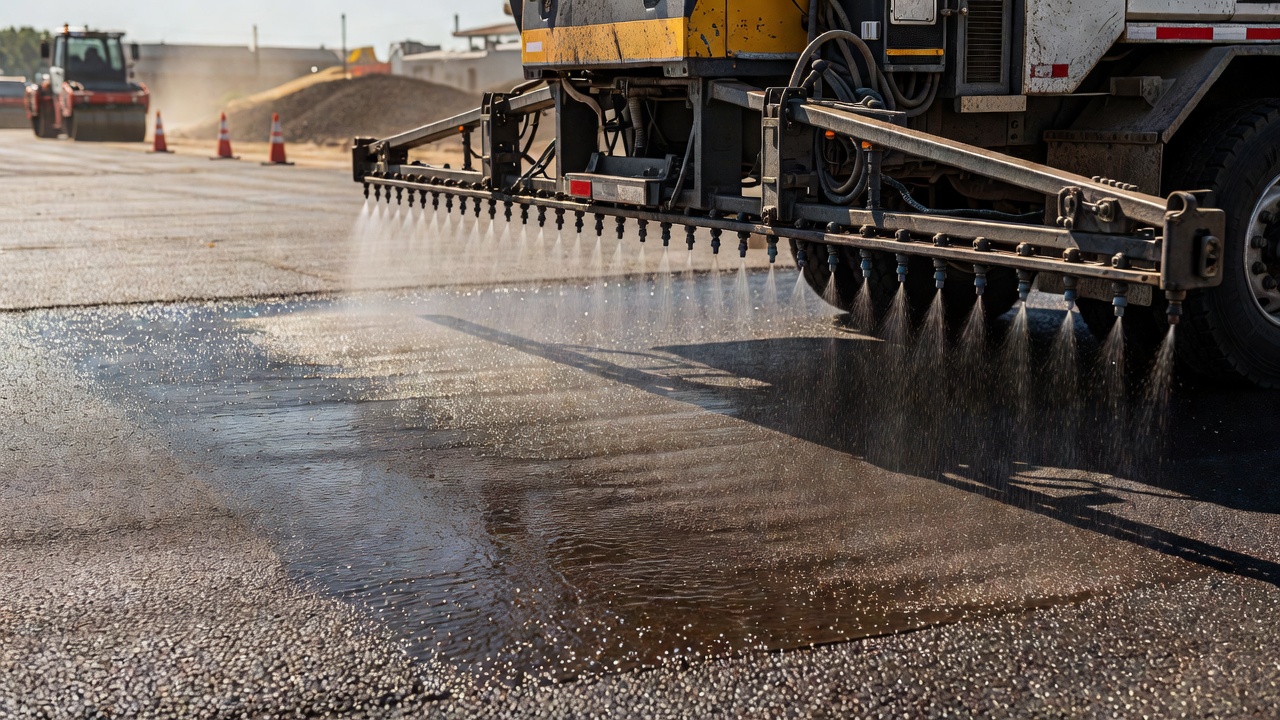
The transformation of liquid emulsion into a functional asphalt binder film involves two distinct processes: breaking and curing.
Breaking (also called setting) is the chemical and physical process by which the asphalt droplets in the emulsion coalesce and the water begins to separate from the asphalt phase. During breaking, the emulsifier coating on each droplet is disrupted, allowing the droplets to merge into larger masses. Visually, the break is observed as a color change from the milky brown color of the wet emulsion to a uniform black color characteristic of asphalt. At the break point, the asphalt droplets have coalesced sufficiently to form a continuous film, but some water may still remain trapped within or beneath the film.
The breaking mechanism differs depending on the application:
For surface treatments and tack coats: Breaking is triggered primarily by water evaporation and chemical interaction with the pavement surface. As water evaporates from the thin emulsion film, the concentration of asphalt droplets increases until they contact each other and coalesce. The chemical nature of the existing pavement surface, particularly its charge and chemical composition, also influences the break rate. Cationic emulsions break faster on siliceous surfaces due to electrostatic attraction.
For aggregate mixes (slurry seals, cold mixes): Breaking is triggered by chemical reaction between the emulsion and the aggregate surface. Fine aggregates, particularly those containing clay or dust, often accelerate the break through catalytic effects. The water in the emulsion is absorbed by the aggregate fines and by capillary action into the aggregate pore structure, concentrating the asphalt droplets until they coalesce. The demulsibility of the emulsion, measured by ASTM D6936, quantifies how rapidly it breaks when mixed with standard fine aggregate.
Curing is the subsequent process of water evaporation from the broken emulsion film. During curing, the remaining water within the asphalt film diffuses to the surface and evaporates, and the asphalt droplets fuse into a continuous, load-bearing binder film between aggregate particles. Full cure is achieved when the water content of the emulsion residue has been reduced to the natural water content of the base asphalt (typically less than 0.5%). At full cure, the binder has regained its full physical properties, viscosity, adhesion, cohesion, and temperature susceptibility.
Factors Affecting Break and Cure Time
| Factor | Effect on Break Time | Effect on Cure Time |
|---|---|---|
| Temperature (air/pavement) | Higher temp accelerates break significantly | Higher temp accelerates evaporation |
| Relative humidity | High humidity slows break | High humidity slows evaporation |
| Wind speed | Higher wind accelerates break | Higher wind accelerates evaporation |
| Film thickness | Thicker films break slower | Thicker films take longer to cure |
| Emulsion type | RS breaks faster than SS | Same ranking as break |
| Aggregate type/chemistry | Reactive aggregates accelerate break | Minimal direct effect |
| Surface moisture | Damp surfaces slow cationic break | Wet surfaces prevent cure |
In summer conditions (30°C, low humidity, sunny), slow-setting emulsions break in 30-60 minutes and cure in 2-4 hours. Rapid-setting emulsions break in 10-20 minutes under these conditions. In cool weather (10°C, overcast, high humidity), slow-setting emulsions may require 4-8 hours to break and 12-24+ hours to fully cure.
Emulsion Selection by Application
The selection of the appropriate emulsion type and grade for a specific application depends on the treatment type, aggregate characteristics, climate conditions, construction window, and performance requirements.
Tack Coats
Tack coats require emulsions that provide uniform coverage, adequate bond strength, and acceptable curing times. Slow-setting emulsions (SS-1, SS-1h, CSS-1, CSS-1h) are the most widely specified tack coat materials because of their low viscosity, good sprayability, and ability to be diluted with water up to 1:1 for improved coverage. The minimum residual asphalt content of 57% provides assurance that adequate binder remains after water evaporation. Recommended residual application rates range from 0.02 to 0.08 gallons per square yard depending on surface condition.
Rapid-setting emulsions (CRS-1, CRS-2, RS-1) are used for tack coat applications requiring faster break times, such as night paving, cool weather construction, or projects with short lane closure windows. CRS-2 has a higher viscosity and minimum 65% residue, making dilution impossible and uniform coverage more challenging.
Quick-setting emulsions (CQS-1, QS-1) are increasingly specified for tack coat applications where rapid curing and resistance to tracking are required. These emulsions contain special additives that accelerate breaking while maintaining good spray characteristics.
Polymer-modified and trackless (NT/TT) tack emulsions are specified for high-traffic projects, airport pavements, and applications where construction traffic will traverse the tacked surface before overlay placement. These emulsions develop tack-free surfaces within 30-60 minutes while maintaining excellent bond strength.
Prime Coats
Prime coats require emulsions that can penetrate into the granular base while coating and binding surface particles. Medium-setting emulsions (MS-1, MS-2, CMS-2) were traditionally used for prime coats because they provide sufficient working time for penetration while breaking before the base is covered. However, many agencies now use slow-setting emulsions diluted with water (up to 1:3 or even 1:5) to achieve adequate penetration into granular bases. The emulsion must have low enough viscosity to flow into the base pore structure but sufficient binder content to leave residual asphalt deep in the base. Application rates typically range from 0.15 to 0.40 gallons per square yard depending on base porosity and traffic.
Chip Seals
Chip seals require emulsions that coat the aggregate, bond to the existing surface, and develop sufficient cohesion quickly to retain the embedded aggregate under traffic. Rapid-setting emulsions (CRS-2, CRS-2P, RS-2, RS-2P) are the standard for chip seals because of their fast break times (10-30 minutes) and high residual asphalt content (63-67%). The high residue minimizes the amount of water that must evaporate before the chip seal can be opened to traffic. Polymer modification (CRS-2P, RS-2P) provides improved aggregate retention, reduced temperature susceptibility, and longer service life, particularly on high-traffic roads and airport pavements.
High-float emulsions (HFMS-2, HFMS-2h) are used for chip seals in cooler climates and for double chip seals where thicker binder films are needed. The gel-like structure of high-float residues provides improved film thickness on each aggregate particle.
Recommended chip seal emulsion rates range from 0.20 to 0.60 gallons per square yard depending on aggregate size, traffic level, and existing surface condition. The residual binder application rate is typically 60-70% of the aggregate application rate by weight.
Slurry Seals and Microsurfacing
Slurry seals and microsurfacing require quick-setting emulsions (QS-1, QS-1h, CQS-1, CQS-1h, or specialized polymer-modified versions) that break in 5-15 minutes when mixed with fine aggregate and mineral filler. These emulsions are specially formulated to provide adequate mixing time in the continuous-flow pugmill (typically 2-5 minutes) followed by rapid breaking once the slurry is placed on the pavement surface.
For slurry seals: Standard quick-setting emulsions (QS-1, CQS-1) with minimum 57% residue are used. The emulsion is mixed with graded fine aggregate, mineral filler (cement or lime), and water to produce a flowable slurry that is spread at thicknesses of 3-10 mm.
For microsurfacing: Polymer-modified quick-setting emulsions are mandatory. Typically formulated with 2-3% SBR or natural rubber latex polymer (by weight of residual asphalt), these emulsions produce a more durable, elastic binder that can withstand higher traffic volumes and heavier loads. Microsurfacing emulsions typically have higher residue content (60-65%) and specially formulated emulsifier systems that provide controlled break times of 10-20 minutes.
Cold Mixes and Patching
Cold-mix asphalt for patching and low-volume road construction uses medium-setting or slow-setting emulsions (MS-2, CMS-2, SS-1, CSS-1) designed to coat aggregate thoroughly and maintain workability for extended periods. For stockpile mixes that may be stored for weeks or months before use, specially formulated slow-setting emulsions with anti-stripping agents and controlled break inhibitors are used. The emulsion content in cold mixes typically ranges from 5% to 9% by weight of dry aggregate.
Fog Seals
Fog seals, a light application of diluted emulsion sprayed to rejuvenate an oxidized surface or seal a chip seal, use slow-setting emulsions (SS-1, CSS-1) diluted with 3-5 parts water to 1 part emulsion. The low-viscosity diluted emulsion penetrates into surface cracks and porosity, restoring flexibility to the aged binder. Application rates range from 0.05 to 0.15 gallons per square yard diluted.
Crack Sealing and Filling
For crack sealing and filling, specialized emulsion-based crack fillers are available that contain high-residue slow-setting emulsions (typically 60-65% asphalt) often modified with polymers for improved elasticity and adhesion. These products are applied at ambient temperature and cure through water evaporation. While not as durable as hot-applied crack sealants, emulsion-based crack fillers offer easier application, safer handling, and adequate performance for low-to-moderate traffic pavements.
Storage and Handling of Asphalt Emulsion
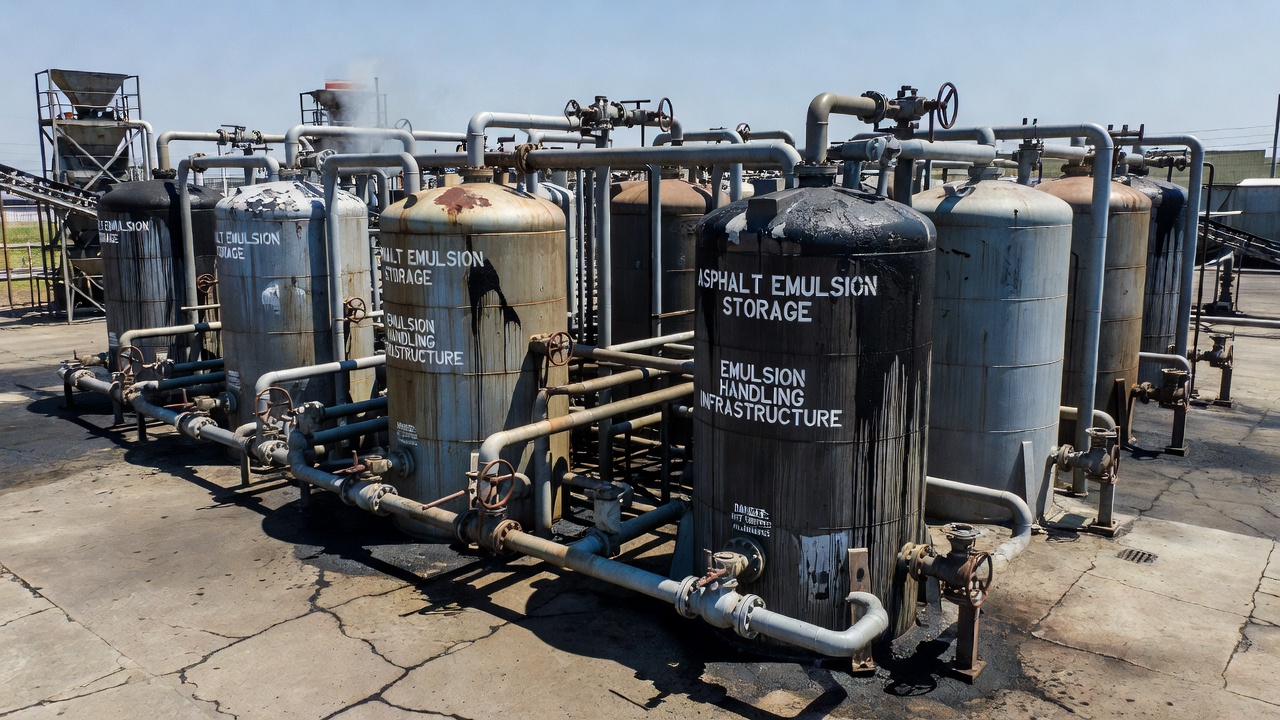
Asphalt emulsion is a metastable colloidal system that requires proper storage and handling to maintain its quality and performance characteristics. Improper storage is one of the most common causes of emulsion failure.
Storage temperature is the single most critical storage parameter. Emulsion must be maintained within the temperature range specified by the manufacturer, typically 50-85°C (120-185°F) for most grades. Below 50°C, the emulsion viscosity increases and may cause pumping difficulties. Below 0°C (32°F), the water phase freezes, and the expanding ice crystals rupture the emulsifier coating on the asphalt droplets, causing irreversible breaking of the emulsion. Frozen emulsion cannot be recovered and must be discarded. Above 85°C, the emulsion may begin to boil (water boils at 100°C at sea level), causing foaming, rapid water loss, and premature breaking.
Storage tanks should be designed specifically for emulsion storage with the following features:
- Insulated and heated (typically with thermostatically controlled electric immersion heaters or hot oil circulation)
- Cone-shaped or dished bottom to facilitate complete drainage
- Bottom draw-off valve to prevent accumulation of settled material
- Recirculation pump system capable of gently circulating the emulsion for 15-30 minutes every 2-4 weeks to maintain uniformity
- Ventilation to allow release of any accumulated vapors
- Level indication system (sight glass, radar level, or load cells)
- Sampling ports at multiple heights to verify uniformity
Recirculation and agitation are necessary to prevent settlement of asphalt droplets. However, excessive or aggressive circulation can cause mechanical destabilization, the shear forces from running pumps can break the emulsion prematurely. Circulation should be gentle and intermittent. Many manufacturers recommend circulating the tank contents for 15-30 minutes at 2-4 week intervals using a pump operating at minimum speed.
Shelf life varies with emulsion type and storage conditions:
| Emulsion Type | Typical Shelf Life (proper storage) |
|---|---|
| SS-1, CSS-1, SS-1h, CSS-1h | 2-4 months |
| RS-1, RS-2, CRS-1, CRS-2 | 1-3 months |
| QS-1, CQS-1, QS-1h | 4-8 weeks |
| Polymer-modified (SS-1hP, CRS-2P) | 2-6 weeks |
| High-float (HFMS-2, HFMS-2h) | 1-3 months |
Contamination prevention is essential. Emulsion tanks, pipes, pumps, and distributor trucks must be dedicated to either anionic or cationic emulsion, never both without thorough cleaning. Residual anionic emulsion contamination in a cationic system will cause a violent reaction and complete destabilization. Water used for dilution must be potable quality, hard water, brackish water, or water with high mineral content can destabilize the emulsion. Equipment should be cleaned with hot water and steam before switching between emulsion types.
Health and safety considerations: Asphalt emulsion is non-flammable (flash point typically above 200°C for the water-based product) but hot emulsion can cause severe thermal burns. Emulsion at 50-85°C can adhere to skin and continue to transfer heat. Proper personal protective equipment (PPE) including heat-resistant gloves, face shields, long sleeves, and safety boots is required. Emulsion spills create slippery surfaces and must be cleaned promptly. Spills should be contained with sand or absorbent material and disposed of according to local environmental regulations.
Emulsion Quality Testing
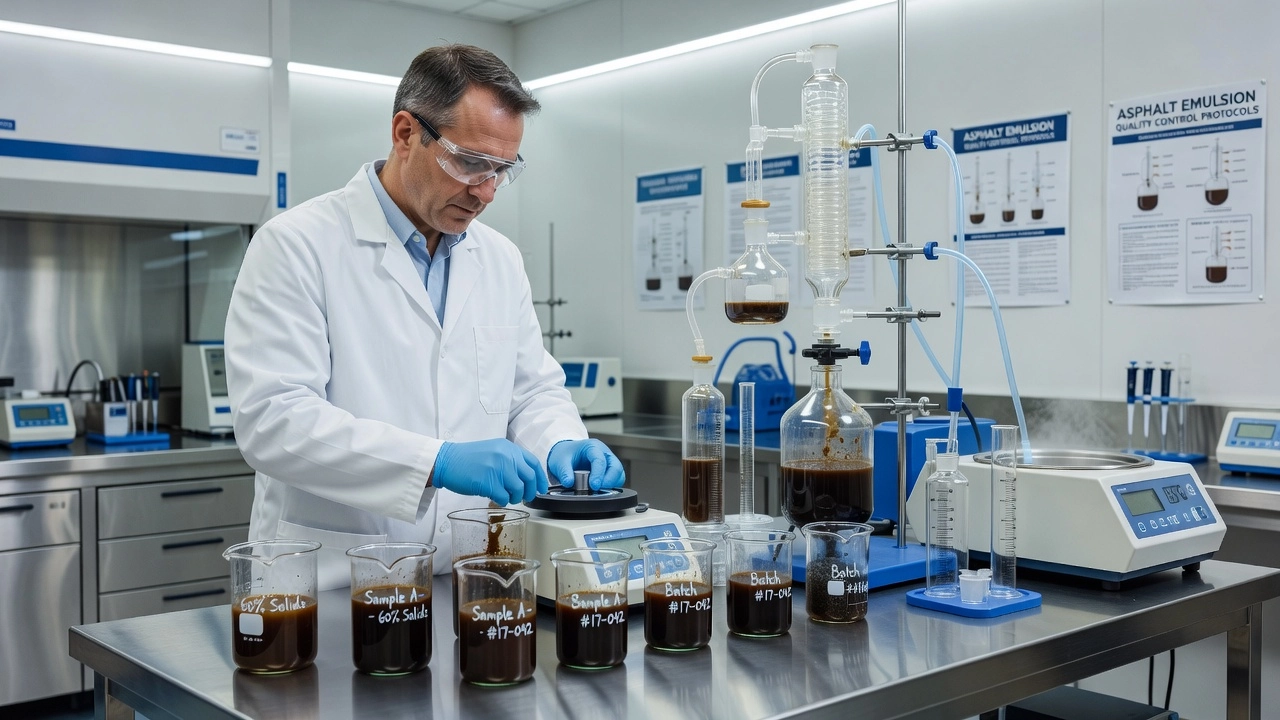
Emulsion quality is verified through a standardized suite of tests defined in ASTM D244 (Standard Test Methods and Practices for Emulsified Asphalts), supplemented by specific tests in ASTM D977, D2397, and AASHTO M140, M208. These tests characterize both the liquid emulsion properties and the properties of the recovered asphalt residue.
Residue by Distillation (ASTM D6998/D7497)
This is the most fundamental test, determining the actual asphalt binder content of the emulsion. A measured sample of emulsion (typically 200g) is heated in an aluminum distillation apparatus to 260°C (500°F) under controlled conditions. The water is driven off as vapor and condensed, while the asphalt residue remains. The residue percentage is calculated as (weight of residue / original sample weight) × 100. This test is critical for calculating correct application rates.
Saybolt Furol Viscosity (ASTM D7496)
This test measures the flow characteristics of the emulsion by timing how long it takes for 60 mL of emulsion to flow through a calibrated orifice at a standard temperature (25°C for SS grades, 50°C for RS grades). The viscosity is reported in Saybolt Furol seconds (SFS). Slow-setting emulsions typically have viscosities of 15-50 SFS at 25°C, while rapid-setting emulsions range from 50-400 SFS at 50°C. Viscosity outside specification indicates manufacturing or quality problems.
Sieve Test (ASTM D6933)
This test measures the coarse particles content by passing the emulsion through a No. 20 sieve (850 μm opening). The material retained on the sieve is washed, dried, and weighed. ASTM D977 and D2397 require a maximum of 0.1% retained. High sieve values indicate poor emulsification (large droplets), contamination, or the presence of skin or gel particles from improper storage.
Particle Charge Test (ASTM D7402)
This test confirms whether the emulsion is cationic or anionic. A DC electrical current is passed through the emulsion between two electrodes. For cationic emulsions, asphalt droplets migrate to the negative electrode (cathode), for anionic, they migrate to the positive electrode (anode). This test is essential for verifying that the delivered emulsion matches the specification and prevents accidental mixing of incompatible types.
Storage Stability (ASTM D6930)
This test measures the tendency of the emulsion to settle during storage. A sample is placed in a graduated cylinder and allowed to stand undisturbed for 24 hours. The percentage of settlement (measured as the volume of clear liquid that separates at the top or the amount of sediment at the bottom) is reported. A maximum of 1% settlement is typically required. Higher settlement indicates an unstable emulsion that may separate in the storage tank.
Demulsibility (ASTM D6936)
This test measures how rapidly the emulsion breaks when mixed with a standard fine aggregate (or in some cases, a chemical reagent). A sample of emulsion is mixed with standard Ottawa sand under controlled conditions, and the amount of emulsion that breaks within a specified time (typically 35 seconds) is measured. Demulsibility values typically range from 40-80% for slow-setting emulsions to 80%+ for rapid-setting emulsions.
Freeze-Thaw Test (ASTM D6934)
This test subjects the emulsion to a freeze-thaw cycle (-17.8°C for 18 hours, followed by thawing at 25°C for 6 hours) to verify that the emulsion can survive freezing conditions during transport or storage. Emulsions that survive the test without breaking or significant viscosity increase are considered freeze-thaw stable. Many emulsions, particularly slow-setting grades, will fail this test because freezing destabilizes the system.
Residue Property Tests (on recovered binder from distillation)
| Test | Standard | Typical Values |
|---|---|---|
| Penetration at 25°C | ASTM D5 | SS-1: 100-250 dmm, SS-1h/CSS-1h: 40-90 dmm |
| Ductility at 25°C | ASTM D113 | Minimum 40 cm (most grades) |
| Softening Point (Ring & Ball) | ASTM D36 | 39-57°C (typical), higher for polymer-modified |
| Solubility in Trichloroethylene | ASTM D2042 | Minimum 97.5% |
| Float Test (high-float only) | ASTM D139 | 60-200+ seconds at 60°C |
Emulsion for Tack Coats and Prime Coats
Tack coats and prime coats represent two of the most common applications of asphalt emulsion in pavement construction. While both involve spraying emulsion onto a pavement surface, their functions, material requirements, and application techniques differ fundamentally.
Tack Coats
A tack coat is a light spray application of diluted or undiluted asphalt emulsion applied to an existing pavement surface (asphalt or concrete) before placing a new overlay. Its function is to create a structural bond between the old and new layers, ensuring the composite pavement acts as a monolithic structural unit.
For tack coat applications, slow-setting emulsions (SS-1, SS-1h, CSS-1, CSS-1h) are the standard choice because:
- Low viscosity allows uniform spray application
- Ability to dilute with water (up to 1:1) improves coverage on milled or porous surfaces
- Adequate working time before break allows proper coverage of the entire area
- Dries to a tacky film that provides optimal adhesion for the overlay
Application rate determination is critical. The specification should always be expressed as residual asphalt rate (the amount of binder remaining after water evaporation). Recommended residual rates per the Asphalt Institute and NCHRP Report 712 are:
| Surface Condition | Residual Rate (gal/yd²) |
|---|---|
| New asphalt (freshly placed) | 0.02-0.05 |
| Existing asphalt (weathered) | 0.04-0.07 |
| Milled asphalt surface | 0.04-0.08 |
| Portland cement concrete | 0.03-0.05 |
Calculation example: To achieve 0.04 gal/yd² residual using CSS-1 containing 57% residue, the undiluted emulsion rate = 0.04 / 0.57 = 0.07 gal/yd². If diluted 1:1 with water, the diluted rate doubles to 0.14 gal/yd².
Prime Coats
A prime coat is applied to an untreated granular base course (crushed aggregate, gravel, or stabilized base) before the first layer of asphalt pavement is placed. Unlike a tack coat, the prime coat must penetrate into the granular base to a depth of at least 5-10 mm, coating the aggregate particles near the surface, binding loose fines, filling capillary voids, and creating a waterproof barrier that prevents moisture infiltration into the base.
Prime coats traditionally used medium-setting emulsions (MS-1, MS-2, CMS-2) or cutback asphalts (MC-30, MC-70) because of their ability to penetrate. However, environmental concerns over cutback solvent emissions and the limited penetration of standard emulsions have led to several developments:
- Diluted emulsions: Slow-setting emulsions diluted with 3-5 parts water to 1 part emulsion provide the low viscosity needed for penetration while retaining the environmental benefits of emulsion technology.
- Penetrating emulsions: Specially formulated emulsions with controlled droplet size distributions (predominantly sub-micron droplets) that penetrate more readily.
- Emulsion-modified bases: The prime coat is replaced by mixing the emulsion directly into the upper layer of the base material during construction.
Prime coat application rates range from 0.15 to 0.40 gal/yd² depending on base porosity. The correct rate is determined by field trials: apply a test strip at varying rates and observe penetration depth. The surface should show the emulsion has penetrated, leaving a darkened but not glossy surface.
Emulsion for Surface Treatments
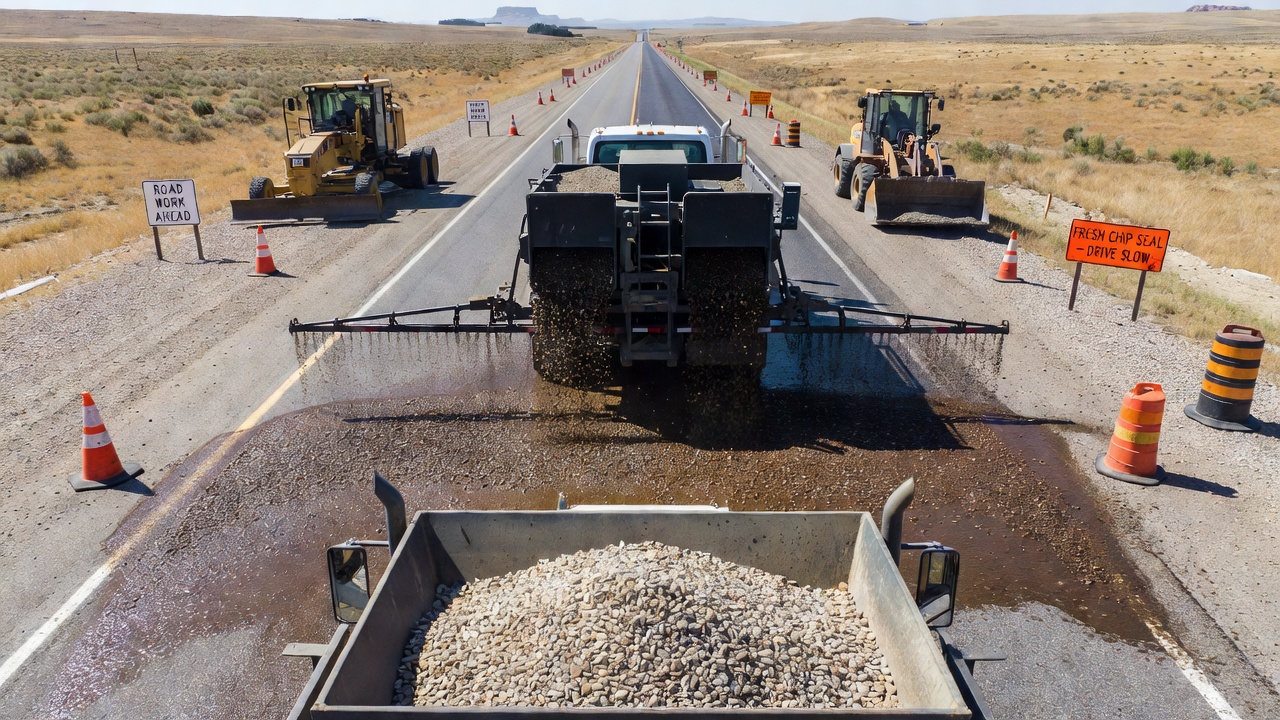
Asphalt emulsion is the foundational binder system for virtually all pavement surface treatment technologies. These treatments apply a thin layer of emulsion and aggregate to restore surface properties, seal against moisture infiltration, improve skid resistance, and extend pavement service life.
Chip Seals
A chip seal (also called a seal coat or surface dressing) is the most widely used emulsion-based surface treatment worldwide. The process involves spraying a layer of emulsion onto the prepared pavement surface, immediately covering it with a single layer of clean aggregate chips, and rolling the aggregate into the emulsion. After the emulsion breaks and cures, the excess aggregate is swept away, leaving a new wearing surface.
Emulsion selection for chip seals is typically CRS-2 or CRS-2P (cationic rapid-setting, polymer-modified) for high-traffic roads and RS-2 or RS-2P (anionic equivalents) where anionic emulsions are preferred. Key emulsion properties for chip seals include:
- High residual asphalt content (63-67%) to minimize water evaporation time
- Rapid break (10-30 minutes) to allow traffic return within 1-4 hours
- Proper viscosity for uniform spray application without dripping
- Sufficient cohesion to retain aggregate under traffic
- Polymer modification for improved aggregate retention in high-traffic applications
Application rates for chip seal emulsion are determined by aggregate size and traffic level:
| Aggregate Size | Emulsion Rate (gal/yd²) | Aggregate Rate (lb/yd²) |
|---|---|---|
| 3/8 inch (9.5 mm) | 0.30-0.45 | 20-25 |
| 1/2 inch (12.5 mm) | 0.35-0.50 | 25-30 |
| 5/8 inch (16 mm) | 0.40-0.55 | 30-35 |
| 3/4 inch (19 mm) | 0.45-0.60 | 35-40 |
Double chip seals apply two layers of emulsion and aggregate (typically a larger aggregate followed by a smaller aggregate) to provide a thicker, more durable wearing surface. Each layer uses a separate emulsion application at approximately 60-70% of the single-chip rate.
Slurry Seals
A slurry seal is a mixture of quick-setting emulsion, fine aggregate, mineral filler (cement, lime, or fly ash), and water, mixed in a continuous-flow pugmill and spread on the pavement surface at a thickness of 3-10 mm. Slurry seals provide a uniform, dense, skid-resistant wearing surface that seals cracks, restores surface texture, and protects the underlying pavement from oxidation and moisture.
Emulsion selection for slurry seals is QS-1, QS-1h, CQS-1, or CQS-1h, quick-setting emulsions specifically formulated for slurry applications. These emulsions:
- Provide 2-5 minutes of mixing time in the pugmill before breaking
- Break uniformly within 5-15 minutes after placement
- Develop sufficient early cohesion to allow traffic within 30-60 minutes
- Contain emulsifier systems tuned for compatibility with the specific aggregate being used
Slurry seal mix design (per ISSA A105) specifies the emulsion content as percent residual binder by weight of dry aggregate, typically ranging from 7.5% to 13.5% depending on aggregate gradation and absorption. The water content of the slurry (including water from the emulsion plus added water) is adjusted to achieve the desired consistency, typically 12-20% total water by weight of dry aggregate.
Microsurfacing
Microsurfacing is a polymer-modified slurry seal system that can be applied in thicknesses of 5-15 mm and is capable of correcting surface irregularities, filling ruts up to 40 mm deep, and providing long-term durability on high-traffic roads and airport pavements. The key distinction from slurry seal is the mandatory use of polymer-modified quick-setting emulsion and a more carefully controlled mix design.
Emulsion for microsurfacing contains:
- Polymer modification (typically 2-3% SBR or natural rubber latex by weight of residual asphalt)
- Higher residual asphalt content (60-65%)
- Specially formulated emulsifier system providing controlled break of 10-20 minutes
- Harder base asphalt (penetration 40-90 dmm at 25°C) for rut resistance
Microsurfacing applications include:
- Rut filling: Applied in multiple 5-10 mm lifts to fill ruts up to 40 mm deep
- Surface course: Single or double-layer application for a new wearing surface
- Bridge deck protection: Thin, impermeable overlay for bridge decks
- Airport pavements: Runway and taxiway surfacing and preservation
ISSA A143 provides the standard mix design method for microsurfacing.
Fog Seals
A fog seal is a light application of diluted emulsion sprayed on an existing pavement surface to seal surface cracks, retard oxidation, and restore flexibility to aged binder. Fog seals use SS-1, SS-1h, CSS-1, or CSS-1h emulsions diluted with 3-5 parts potable water to 1 part emulsion. The dilution is essential to achieve the low viscosity needed for the emulsion to flow into surface cracks and porosity.
Application rates for fog seals range from 0.05 to 0.15 gal/yd² of diluted emulsion. Higher rates may cause a reduction in surface friction. The fog seal should be applied as a fine mist, not a wet spray, and traffic should be kept off the treated surface until the emulsion has fully broken and cured (typically 1-4 hours depending on weather).
Polymer-Modified Emulsions
Polymer-modified asphalt emulsions (PMAEs) represent a significant advance in emulsion technology, incorporating polymer additives into the asphalt binder before emulsification to enhance the mechanical properties of the residual binder film. Polymer modification typically involves adding 2-5% polymer by weight of the residual asphalt, either as pre-blended polymer-modified asphalt (produced at the refinery or terminal) or as latex added to the soap solution during emulsification.
Types of polymers used:
| Polymer | Typical Addition Rate | Key Benefits |
|---|---|---|
| Styrene-Butadiene-Styrene (SBS) | 2-4% | Elastic recovery, high-temperature stability, fatigue resistance |
| Styrene-Butadiene Rubber (SBR) Latex | 2-3% | Elasticity, adhesion, low-temperature flexibility |
| Natural Rubber Latex (NRL) | 2-3% | Elasticity, aggregate retention, aging resistance |
| Ethylene-Vinyl Acetate (EVA) | 3-5% | High-temperature stiffness, workability |
| Chloroprene Rubber (Neoprene) | 2-4% | Chemical resistance, durability |
| Polybutadiene (PBD) | 2-3% | Low-temperature properties |
Benefits of polymer modification include:
- Improved elastic recovery: The binder returns to its original shape after load deformation, reducing permanent deformation (rutting)
- Increased cohesion: Stronger internal bonding within the binder, improving aggregate retention
- Enhanced temperature susceptibility: Maintains flexibility at low temperatures while resisting flow at high temperatures
- Better adhesion: Improved bond to aggregate surfaces, reducing stripping and raveling
- Greater fatigue resistance: Ability to withstand repeated loading without cracking
- Longer service life: Field studies show polymer-modified emulsions extend surface treatment life by 30-50% compared to unmodified emulsions
Applications requiring polymer modification:
- Microsurfacing (mandatory, all microsurfacing emulsions are polymer-modified)
- High-traffic chip seals (>10,000 ADT on highways, airport pavements)
- Trackless tack coats (reduced tracking through polymer modification with harder base asphalt)
- Spray-applied membrane interlayers (SAMIs) for reflective crack control
- Crack sealants and fillers requiring elasticity
- Bridge deck waterproofing membranes
Designation of polymer-modified emulsions follows the standard nomenclature with the addition of a “P” suffix. Examples include:
- SS-1hP: Slow-setting, hard base, polymer-modified
- CRS-2P: Cationic rapid-setting, polymer-modified
- CQS-1P: Cationic quick-setting, polymer-modified (used in microsurfacing)
- PMCRS-2: Polymer-modified cationic rapid-setting (equivalent to CRS-2P)
Storage and handling of PMAEs require more care than unmodified emulsions. Polymer-modified emulsions have shorter shelf lives (2-6 weeks), higher sensitivity to temperature, and a greater tendency to form surface skin or “gel” during storage. Gentle circulation every 1-2 weeks (rather than every 2-4 weeks for standard emulsions) is recommended.
Emulsion for Cold-Mix Asphalt
Cold-mix asphalt (also called emulsion cold mix or cold-lay asphalt) uses asphalt emulsion as the binder to produce asphalt concrete that can be mixed, placed, and compacted at ambient temperatures. Cold mixes are used for patching, temporary repairs, low-volume road construction, and as a sustainable alternative to hot mix asphalt when heating is impractical.
Emulsion types for cold mixes depend on the required workability and storage duration:
- MS-2 and CMS-2 (medium-setting): Standard for plant-produced cold mixes that will be placed within days of production
- SS-1 and CSS-1: Used for stockpile mixes requiring weeks or months of storage
- High-float emulsions (HFMS-2, HFMS-2h): Provide thicker binder films for enhanced durability
Cold-mix design considerations:
- Emulsion content typically ranges from 5% to 9% by weight of dry aggregate
- Pre-wetting water (1-3% by weight) is added to coat the aggregate before emulsion addition
- Mineral filler (cement, lime, fly ash) at 0.5-2% improves cohesion and accelerates curing
- The mix must remain workable during placement and compaction, yet break and cure sufficiently to develop strength
- Cold mixes gain strength more slowly than hot mixes, traffic may be restricted for 24-72 hours
Open-graded cold mixes (emulsion-treated permeable base, cold recycled mixes using RAP) use higher emulsion contents (6-12%) to provide the binder film thickness needed in porous structures while maintaining permeability.
Environmental and Safety Aspects
Asphalt emulsion offers substantial environmental advantages over both hot asphalt and cutback asphalt, making it the preferred binder system in an increasingly sustainability-focused construction industry.
VOC and Emissions Reduction
Cutback asphalts contain 30-50% petroleum solvents (naphtha, kerosene, or mineral spirits) that evaporate during curing, releasing significant volatile organic compounds (VOCs) into the atmosphere. A typical MC-70 cutback prime coat application at 0.30 gal/yd² releases approximately 0.10-0.15 gal/yd² of solvent directly into the air, equivalent to hundreds of kilograms of VOCs per lane-mile treated.
Asphalt emulsions contain only water as the volatile phase, releasing zero solvent VOCs during curing. The only emission is water vapor. This represents an 85-95% reduction in VOC emissions compared to cutback binders for equivalent applications. The EPA’s AP-42 emission factors document that emulsified asphalt operations produce negligible VOC emissions compared to cutback asphalt.
Many state DOTs and federal agencies (including the FAA) have restricted or banned the use of cutback asphalt for most applications, making emulsion the required cold-applied binder system. The Clean Air Act and state air quality regulations have driven this transition.
Energy Consumption
Asphalt emulsion requires significantly less energy to produce and apply compared to hot mix asphalt:
- Hot mix asphalt: Produced at 150-180°C, requiring substantial fuel consumption for aggregate drying and asphalt heating
- Emulsion manufacturing: Asphalt heated to 120-150°C, water heated to 40-70°C, total energy consumption is 40-60% lower than HMA
- Application: Emulsion is applied at ambient pressure and 50-85°C versus hot asphalt at 150-180°C and cutbacks at ambient temperature
Life cycle assessment (LCA) studies consistently show that emulsion-based treatments have significantly lower greenhouse gas emissions than equivalent hot-applied treatments.
Safety Benefits
Asphalt emulsion provides several safety advantages:
- Non-flammable: Water-based formulation has no flash point (unlike cutbacks which are highly flammable with flash points as low as 38°C)
- Lower temperature burns: Maximum handling temperature of 85°C versus 180°C for hot asphalt, significantly reduced burn risk
- No solvent fumes: Elimination of hydrocarbon solvent exposure for workers
- Water cleanup: Equipment can be cleaned with water before the emulsion breaks, no solvents required
- Safer transport: Classified as non-hazardous for transportation (compared to flammable cutbacks)
Recycling and Sustainability
Emulsion technology enables cold in-place recycling (CIR) and full-depth reclamation (FDR), processes that mill and process existing asphalt pavement, mix it with emulsion, and place it as a new base or surface course without heating. These processes:
- Reuse 100% of the existing pavement material
- Eliminate hauling of old material to landfills and new material from quarries
- Reduce total energy consumption by 50-70% compared to hot mix reconstruction
- Lower greenhouse gas emissions by 30-50%
- Preserve aggregate resources and reduce landfill demand
Regulatory Standards
The primary standards governing asphalt emulsion quality and application include:
| Standard | Title | Scope |
|---|---|---|
| ASTM D977 | Standard Specification for Emulsified Asphalt | Anionic emulsions |
| ASTM D2397 | Standard Specification for Cationic Emulsified Asphalt | Cationic emulsions |
| ASTM D244 | Standard Test Methods for Emulsified Asphalts | All quality tests |
| AASHTO M140 | Emulsified Asphalt | Anionic (US equivalent to D977) |
| AASHTO M208 | Cationic Emulsified Asphalt | Cationic (US equivalent to D2397) |
| AASHTO T59 | Testing Emulsified Asphalts | Test methods |
| ISSA A105 | Recommended Performance Guidelines for Emulsified Asphalt Slurry Seal | Slurry seal mix design |
| ISSA A143 | Recommended Performance Guidelines for Micro Surfacing | Microsurfacing mix design |
| ICAO Doc 9157 Part 3 | Aerodrome Design Manual, Pavements | References emulsion standards for airport work |
| FAA AC 150/5370-10 | Standard Specifications for Construction of Airports | Items P-603 (tack), P-604 (prime), P-608 (chip seal) |
ICAO Provisions for Asphalt Emulsion in Aerodrome Pavements
The International Civil Aviation Organization (ICAO) addresses asphalt emulsion through its aerodrome design and maintenance guidance. ICAO Annex 14, Aerodromes, Volume I establishes the requirement that aerodrome pavements must be maintained in a condition that does not impair the safety of aircraft operations. Emulsion-based surface treatments and tack coats are recognized maintenance practices for achieving this standard.
ICAO Doc 9157, Aerodrome Design Manual, Part 3, Pavements provides guidance on flexible pavement construction and maintenance, including the use of asphalt emulsions for tack coats, prime coats, and surface treatments. The manual references ASTM and AASHTO standards for emulsion quality and application.
ICAO Doc 9137, Airport Services Manual, Part 9, Airport Maintenance Practices directly addresses pavement inspection and maintenance, recognizing emulsion-based surface treatments as standard maintenance procedures. The manual recommends emulsion-based treatments for:
- Surface sealing and waterproofing
- Crack prevention and treatment
- Skid resistance restoration
- Pavement preservation
The FAA provides more specific guidance through AC 150/5370-10, which includes standard specifications for emulsion-based tack coats (Item P-603), prime coats (Item P-604), and chip seals (Item P-608) for airport pavements. These specifications are referenced by ICAO as acceptable standards for aerodrome pavement work.
Quality Assurance and Field Testing for Emulsion Applications
Field quality assurance for emulsion applications involves verification of application parameters and post-application performance testing.
Catch-can testing is the standard field method for verifying emulsion application rates. Pre-weighed metal pans or paper pads are placed on the pavement surface, the distributor truck runs over them at normal operating speed, and the collected material is weighed to calculate the actual application rate. Rates should be within ±10% of the specified target.
Non-destructive bond testing (for tack coats) uses devices that measure the torque or pull-off force required to separate the new overlay from the existing pavement. AASHTO TP-114 provides a standardized interlayer shear strength (ISS) test protocol for field-extracted cores. ISS values of 40 psi or greater are considered satisfactory.
Macrotexture and skid resistance testing verifies that chip seals, slurry seals, and microsurfacing provide adequate surface friction. The ASTM E965 sand patch test and ASTM E274 locked-wheel skid trailer test are the standard evaluation methods.
Visual inspection remains an essential quality control tool. The inspector should verify:
- Uniform emulsion coverage (no streaks, gaps, or puddles)
- Complete break before proceeding with subsequent operations
- Proper embedment of aggregate in chip seals (50-70% embedment)
- No tracking of emulsion onto adjacent surfaces
- No bleeding (excess binder appearing on the surface) after curing
- Uniform appearance of slurry seal or microsurfacing surface
Conclusion
Asphalt emulsion is the cornerstone of modern pavement preservation and cold-application construction technology. Its ability to deliver asphalt binder at ambient temperatures through a water-based colloidal system eliminates the environmental and safety drawbacks of hot asphalt and cutback alternatives while enabling a diverse range of surface treatments, from thin tack coats to structural microsurfacing applications. The careful selection of emulsion type by charge, setting speed, and polymer modification, combined with rigorous quality control through standardized ASTM and AASHTO testing, ensures that emulsion-based treatments deliver reliable, long-lasting pavement performance. For airport pavements, compliance with ICAO Annex 14 and FAA AC 150/5370-10 standards is essential. As environmental regulations continue to tighten and the demand for sustainable pavement solutions grows, emulsion technology will remain an indispensable tool for pavement engineers and maintenance professionals worldwide.
Frequently Asked Questions
- What is the difference between asphalt emulsion and cutback asphalt?
- Asphalt emulsion is a dispersion of asphalt in water stabilized by an emulsifying agent, while cutback asphalt is asphalt dissolved in petroleum solvents (naphtha, kerosene, or mineral spirits). Cutback asphalts rely on solvent evaporation to harden, releasing significant volatile organic compounds (VOCs) into the atmosphere, typically 30-50% solvent by volume. Emulsions release only water vapor during curing, producing 85-95% fewer VOC emissions. Emulsions can also be applied at lower temperatures (50-85°C) compared to cutbacks (ambient to 70°C) and hot asphalt (150-180°C). For environmental reasons, many state DOTs and aviation authorities have restricted or banned cutback asphalt use, making emulsion the preferred cold-applied binder system.
- How long does it take for asphalt emulsion to cure after application?
- Curing time varies dramatically with emulsion type, application rate, weather conditions, and treatment type. For tack coats, slow-setting emulsions (SS-1, CSS-1) typically break in 60-240 minutes and fully cure in 2-24 hours depending on temperature and humidity. Rapid-setting emulsions (CRS-2, RS-1) break in 15-45 minutes. For chip seals, traffic is typically allowed within 1-4 hours after aggregate placement. Slurry seals and microsurfacing open to traffic within 30-60 minutes. In cool conditions (below 15°C), curing times can extend to 24 hours or more. High humidity, low wind, and overcast conditions all slow the evaporation of water from the emulsion film.
- Can asphalt emulsion be applied in cold weather or rain?
- Asphalt emulsion should not be applied in wet weather, when rain is imminent, or when the pavement surface is damp or has standing water. Moisture prevents the emulsion from properly wetting and bonding to the surface. Most specifications require a minimum ambient temperature of 50°F (10°C) and rising for emulsion application, with the pavement surface temperature above 60°F (15°C) for cationic emulsions. Cationic emulsions are less sensitive to damp conditions than anionic emulsions. For cold-weather applications, rapid-setting emulsions are preferred as they break faster and are less affected by low temperatures. Quick-setting emulsions (CQS-1, QS-1) contain special additives that accelerate the breaking process, making them suitable for marginal weather conditions.
- What is the shelf life of asphalt emulsion?
- Asphalt emulsion has a limited shelf life ranging from several weeks to several months depending on storage conditions. At temperatures above 85°C, emulsions can degrade rapidly. At freezing temperatures, the water phase freezes and the emulsion is destroyed, frozen emulsion is not recoverable. Recommended storage temperature is 50-85°C (120-185°F) with gentle circulation every 2-4 weeks to maintain uniformity. Under proper conditions, cationic emulsions can be stored for 1-3 months, anionic emulsions for 2-4 months. Polymer-modified emulsions have shorter shelf lives, typically 2-6 weeks. Storage stability testing (ASTM D6930) measures settlement after 24 hours, less than 1% settlement indicates good storage stability. Emulsion that shows signs of settlement, separation, or skin formation should be tested before use.
- What is the difference between cationic and anionic asphalt emulsion?
- Cationic emulsions carry a positive electrical charge on the asphalt droplets (indicated by the prefix 'C', e.g., CSS-1, CRS-2), while anionic emulsions carry a negative charge (SS-1, RS-1). The charge is imparted by the type of emulsifying agent used during manufacturing. Cationic emulsions are generally preferred in North America because positively charged droplets are electrostatically attracted to the negatively charged surface of most aggregates (particularly siliceous aggregates like quartz, granite, and gravel), promoting better adhesion. Anionic emulsions work well with basic or calcareous aggregates (limestone, dolomite). Cationic emulsions are also less sensitive to moisture and cool temperatures at time of application. The two types must never be mixed together as they will immediately destabilize and break.
- What is the typical asphalt content of an emulsion?
- Asphalt emulsion typically contains 50-70% asphalt binder by weight, 30-50% water, and 0.1-2.0% emulsifying agent. Slow-setting grades (SS-1, CSS-1) have a minimum of 57% residual asphalt per ASTM D977 and D2397. Rapid-setting grades: RS-1 minimum 55%, RS-2 minimum 63%, CRS-2 minimum 65%. Quick-setting grades (QS-1, CQS-1) minimum 57%. High-float emulsions are typically 60-65%. The exact asphalt content is determined by residue distillation testing (ASTM D6998) and should be verified before each use because it directly affects application rate calculations. The residual asphalt is the same material that remains after water evaporation and is what actually functions as the binder.
- What is polymer-modified asphalt emulsion?
- Polymer-modified asphalt emulsion (PMAE) incorporates polymer additives, typically 2-5% by weight of the residual asphalt, to enhance the physical properties of the binder. Common polymers include styrene-butadiene-styrene (SBS) block copolymer, styrene-butadiene rubber (SBR) latex, natural rubber latex, and ethylene-vinyl acetate (EVA). Polymer modification improves elasticity, cohesion, temperature susceptibility, and resistance to rutting and cracking. PMAE is used in high-stress applications such as microsurfacing, high-traffic chip seals, spray-applied membrane interlayers, and trackless tack coats. Polymer-modified emulsions are designated with a 'P' suffix (e.g., SS-1hP, PMCRS-2, PMRS-2h). They require higher manufacturing temperatures, more careful handling, and have shorter storage life compared to unmodified emulsions.
- How do you calculate emulsion application rates for different treatments?
- All emulsion application rates must be calculated based on residual asphalt content. For example, if a chip seal requires 0.35 gal/yd² of residual binder and the emulsion has 65% residue, the undiluted emulsion rate = 0.35 / 0.65 = 0.54 gal/yd². For tack coats requiring 0.04 gal/yd² residual with 57% emulsion: 0.04 / 0.57 = 0.07 gal/yd². If diluted 1:1 with water: 0.07 × 2 = 0.14 gal/yd² of diluted emulsion. For slurry seals and microsurfacing, the rate is expressed as the weight of residual binder per weight of dry aggregate (typically 7.5-13.5%). The emulsifier and water content of the emulsion must be accounted for in the job mix formula. Always verify the actual residue percentage by ASTM D6998 testing before calculating application rates.
- What are the environmental benefits of using asphalt emulsion instead of hot asphalt?
- Asphalt emulsion offers several significant environmental advantages including: (1) up to 85-95% reduction in VOC emissions compared to cutback asphalt, (2) 40-60% reduction in energy consumption since emulsions are produced at lower temperatures (95-120°C) than hot mix asphalt (150-180°C), (3) elimination of hot asphalt fumes and worker exposure to high-temperature burn risks, (4) ability to use reclaimed asphalt pavement (RAP) materials in cold-mix applications, (5) reduced greenhouse gas emissions from lower fuel consumption for heating, (6) no solvent-based products that require special disposal or create hazardous waste, and (7) water-based formulation that is non-flammable and safer to transport and handle. These benefits have led many agencies to adopt 'green procurement' policies favoring emulsions over cutbacks or hot-applied binders.
- What are the different setting grades of asphalt emulsion and how are they used?
- Asphalt emulsions are classified into setting grades that define how quickly the emulsion breaks (water separates from asphalt). Rapid-setting (RS, CRS) emulsions break in 15-45 minutes and are used for chip seals, tack coats with short construction windows, and night work. Medium-setting (MS, CMS) emulsions break in 30-90 minutes and are used for cold mixes, stockpile patching materials, and some surface treatments. Slow-setting (SS, CSS) emulsions break in 60-240 minutes and are the most common tack coat materials, offering uniform application with dilution capability. Quick-setting (QS, CQS) emulsions break in 10-30 minutes and are formulated for slurry seals and microsurfacing where rapid traffic return is needed. High-float (HFMS) emulsions maintain a thick gel-like structure during curing and are used for cold mixes and some chip seal applications.
- What quality tests are performed on asphalt emulsion?
- Asphalt emulsion quality is verified through a battery of standardized tests per ASTM D244. Key tests include: residue by distillation (ASTM D6998/D7497) determines actual asphalt content, Saybolt Furol viscosity (ASTM D7496) measures flow characteristics at 25°C or 50°C, sieve test (ASTM D6933) measures coarse particles retained on No. 20 sieve (max 0.1%), particle charge test (ASTM D7402) confirms cationic or anionic type, storage stability (ASTM D6930) measures settlement after 24 hours, demulsibility (ASTM D6936) tests how quickly emulsion breaks when mixed with fine aggregate, freeze-thaw test (ASTM D6934) verifies emulsion survives freeze-thaw cycling, and evaporation residue tests (penetration, ductility, softening point) characterize the recovered binder properties.