What is Epoxy-Coated Rebar?
Epoxy-Coated Reinforcing Steel for Corrosion Resistance
Definition and Manufacturing of Epoxy-Coated Rebar
Epoxy-coated rebar (ECR), also formally designated as fusion-bonded epoxy-coated reinforcing steel (FBECR), is carbon steel reinforcing bar with a factory-applied thermosetting epoxy powder coating that serves as a physical barrier against corrosion. The coating prevents chloride ions, moisture, and oxygen, the essential ingredients of the electrochemical corrosion cell, from reaching the steel substrate. ECR is one of the most widely specified corrosion protection systems for reinforced concrete structures exposed to deicing salts, seawater, or other chloride-bearing environments.
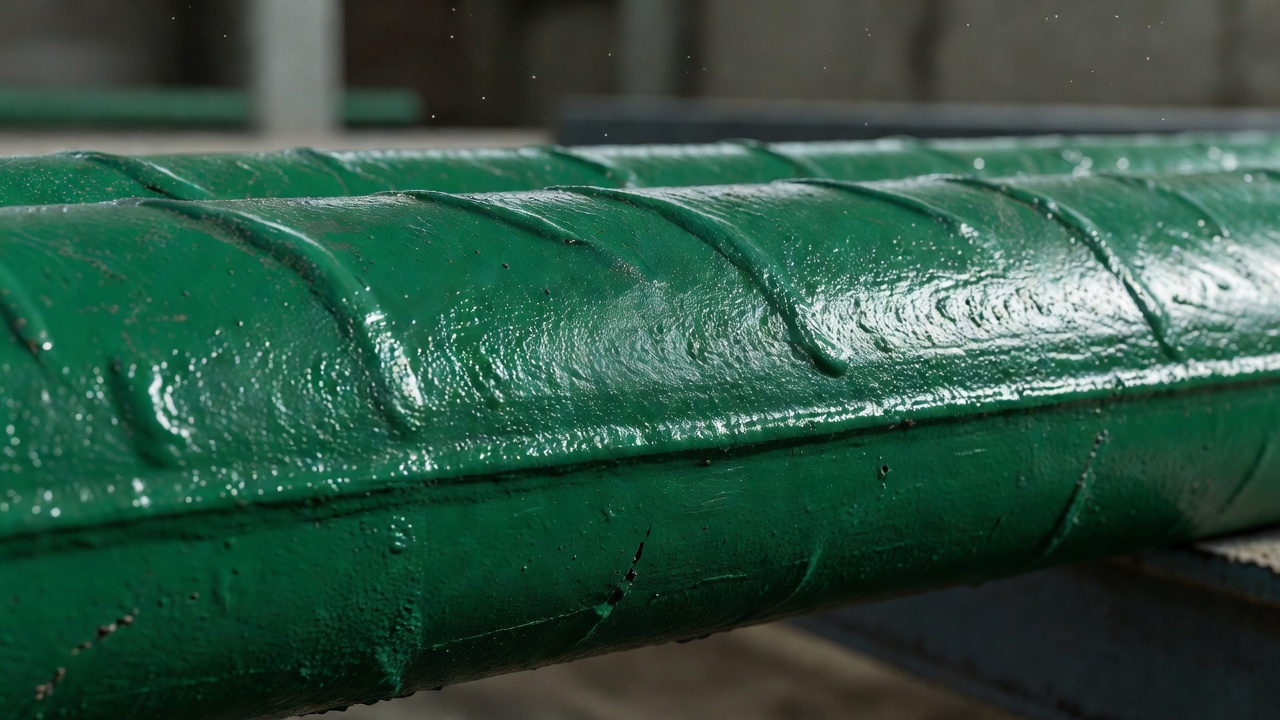
The manufacturing process for ECR involves several precisely controlled steps. The reinforcing bars, typically fabricated from ASTM A615 Grade 40 to Grade 100 steel or ASTM A706 low-alloy steel for seismic and weldable applications, are first thoroughly cleaned to remove mill scale, rust, dirt, oil, and other contaminants. Surface preparation is accomplished through abrasive blast cleaning to a near-white metal finish (SSPC-SP10 / NACE No. 2 standard), creating a surface profile of 25 to 75 micrometers (1 to 3 mils) that promotes mechanical adhesion of the epoxy coating.
After cleaning, the bars are induction-heated to approximately 232°C (450°F) , the precise temperature depending on the specific epoxy powder formulation and bar size. The heated bars then pass through an electrostatic spray booth where negatively charged epoxy powder particles (typically 30 to 150 micrometers in diameter) are sprayed toward the grounded, positively charged bars. The electrostatic charge creates a strong attraction between the powder particles and the steel surface, enabling uniform coverage even on the ribs and deformations of the bar.
Upon contact with the hot steel surface, the powder particles melt, flow together, and undergo a chemical cross-linking (curing) reaction. This fusion bonding process transforms the powdered thermoplastic into a continuous, thermoset coating that is chemically and mechanically bonded to the steel. The entire cycle from powder contact to full cure takes approximately 30 to 60 seconds. The coated bars then pass through a water quench or ambient air cooling to bring them below the glass transition temperature of the epoxy (typically 100°C to 120°C) before handling.
The resulting coating thickness is typically 175 to 300 micrometers (7 to 12 mils) , with ASTM A775/A775M requiring a minimum average thickness of 175 micrometers (7 mils) for bars #3 through #6 and 200 micrometers (8 mils) for bars #7 and larger. The minimum spot thickness allowed is 130 micrometers (5 mils). Excessive coating thickness above 300 micrometers (12 mils) is avoided because thicker coatings become increasingly brittle and more susceptible to cracking during bending or under thermal stress.
Quality control in the coating plant includes continuous monitoring of coating thickness using magnetic gauges, holiday detection using a 67.5-volt wet-sponge detector per ASTM G62 to identify pinholes or thin spots, and visual inspection for surface defects. The Concrete Reinforcing Steel Institute (CRSI) operates a voluntary certification program for epoxy coating plants, with certified facilities undergoing periodic audits to ensure compliance with ASTM standards and industry best practices.
ECR was first introduced in the United States in 1973 on a bridge deck project in Pennsylvania. By the 1980s, it had become the standard corrosion protection for highway bridge decks across North America. Over 30 years of field performance data from Federal Highway Administration (FHWA) studies, state Department of Transportation evaluations, and independent research institutions provide an extensive body of knowledge on the long-term behavior of this material.
Coating Specifications: ASTM A775 and ASTM A934
Two primary ASTM standards govern the manufacture and performance of epoxy-coated rebar:
ASTM A775/A775M, Standard Specification for Epoxy-Coated Steel Reinforcing Bars covers deformed and plain steel reinforcing bars with fusion-bonded epoxy coating applied by the electrostatic spray method in straight lengths. This standard addresses bars that are fabricated (cut and bent) either before or after coating, although it is most commonly associated with bars coated in straight lengths before fabrication. Key requirements include: minimum average coating thickness of 175 µm (#3-#6) or 200 µm (#7+), coating flexibility verified by bending around a mandrel of specified diameter without cracking, adhesion measured by a knife test, and corrosion resistance evaluated by salt spray or cyclic corrosion testing. The standard also specifies allowable patch limits and repair procedures.
ASTM A934/A934M, Standard Specification for Epoxy-Coated Prefabricated Steel Reinforcing Bars covers epoxy-coated bars that have been fabricated (cut and bent) prior to the application of the coating. This standard was developed to address the specific challenges of coating pre-bent bars, where the bending process itself can create stress concentrations that the coating must accommodate. A934 bars typically use a more flexible epoxy powder formulation. The purple-colored epoxy often (but not always) seen on A934 bars is a visual identifier of this product. The flexibility, adhesion, and bend performance requirements are tailored for the pre-fabricated configuration.
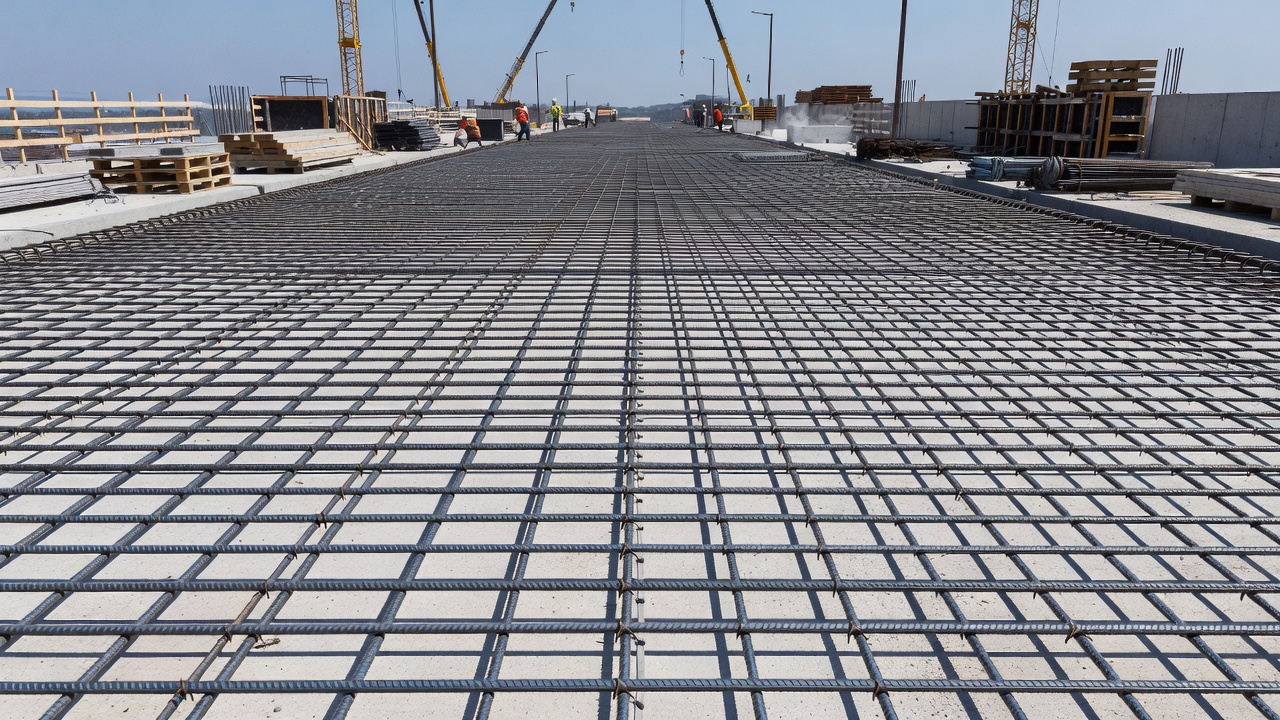
The key performance differences between A775 and A934 can be summarized in the following comparison:
| Property | ASTM A775 | ASTM A934 |
|---|---|---|
| Coating applied | Before or after fabrication | After fabrication only |
| Bar condition when coated | Primarily straight lengths | Pre-cut and pre-bent shapes |
| Typical color | Green (most common) | Purple or dark green |
| Epoxy formulation | Standard flexibility | Enhanced flexibility |
| Bend test | Bend after coating | Pre-bent, then coated |
| Impact resistance | Standard requirements | May differ based on shape |
| Typical applications | Standard bridge decks, pavements | Complex reinforcing cages, tight bends |
In addition to these product standards, ASTM D3963, Standard Specification for Epoxy-Coated Steel Reinforcing Bars and Connections provides the standard practice for handling, storage, and installation of ECR. It covers field repair procedures, acceptable patch materials, and quality assurance requirements.
Handling and Placement Requirements
Epoxy-coated rebar requires significantly more careful handling than uncoated black bar. The coating system is only effective if it remains intact and continuous from the coating plant through final concrete placement. ASTM D3963 establishes the protocols for handling, storage, and installation that are incorporated into project specifications.
During transportation, ECR bundles must be placed on padded supports (wood bunks or rubber-padded steel) with non-abrasive straps or ropes. Chains, steel cables, or other abrasive binding materials are prohibited because they can cut through the coating. Bars must be lifted using fabric slings or padded spreader beams, chains or uncoated steel hooks must never contact the coated surfaces directly.
At the jobsite, ECR must be stored on elevated supports (at least 150 mm or 6 inches above ground level) to prevent mud, standing water, and ground moisture from contacting the bars. If storage exceeds 30 days, the bars must be covered with opaque (light-blocking) tarps to protect against ultraviolet (UV) radiation, which degrades the epoxy polymer over time, causing chalking, embrittlement, and loss of adhesion. The tarp must also prevent condensation by allowing ventilation underneath.
Any cutting or bending of ECR in the field, if permitted by the engineer, must be done using padded dies and supports that do not damage the coating. Bar cutters must have rubber or plastic inserts. Bending must use mandrels with rubber-coated surfaces, and the speed of bending must be controlled to prevent sudden, sharp impacts that could spall the coating.
Tying of ECR mats uses plastic-coated tie wire or stainless steel wire to avoid abrading the coating at the tie points. Standard black annealed tie wire is not permitted because it can cut through the epoxy when tightened. Bar supports (chairs, bolsters, spacers) must also be plastic-coated or made of non-abrasive material such as plastic, rubber, or stainless steel.
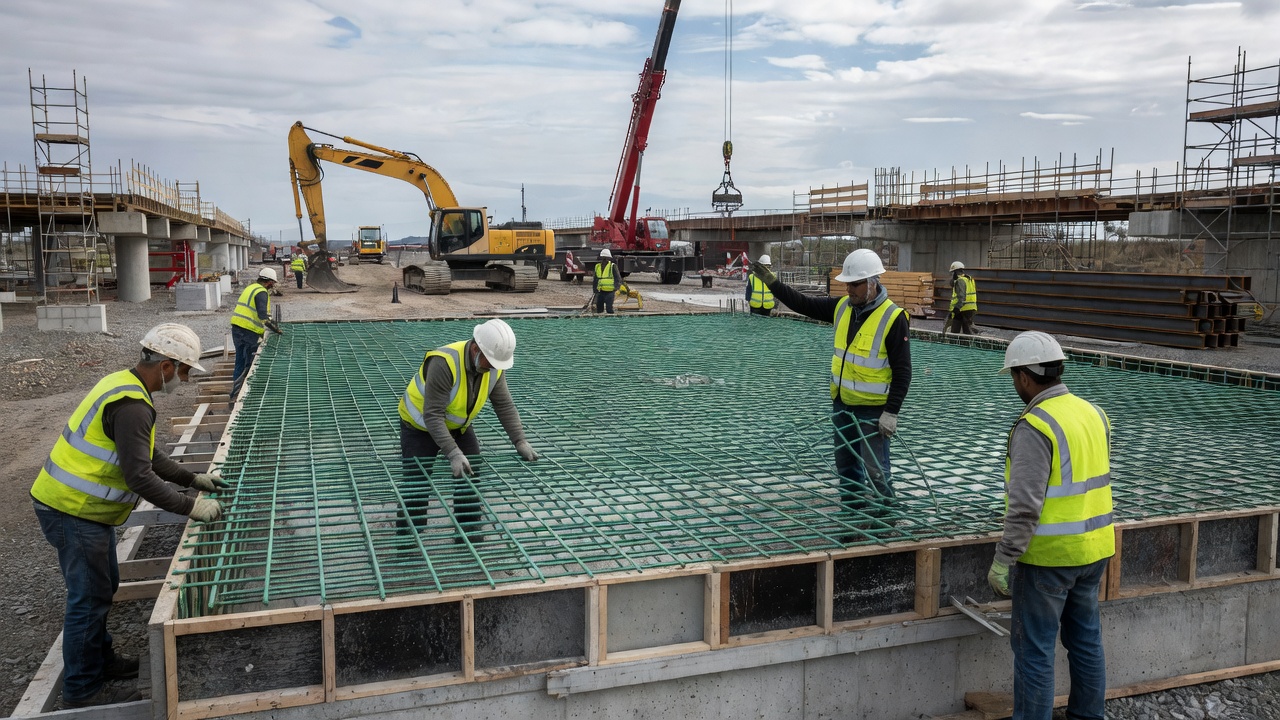
During concrete placement, workers walking on the rebar mats must wear soft-soled shoes to avoid damaging the coating. Concrete hoses must not be dragged across coated bars, and vibrators must use rubber heads. The concrete mix design must use aggregates that do not abrade the coating during placement.
The bond strength between ECR and concrete is reduced compared to uncoated bars because the epoxy surface has a lower coefficient of friction. ACI 318 (Building Code Requirements for Structural Concrete) requires development length and splice length modifications for ECR. For bars with concrete cover less than 3 bar diameters or clear spacing less than 6 bar diameters, the development length factor is 1.5. For all other bars, the factor is 1.2. This means that ECR requires 20% to 50% longer embedment lengths compared to uncoated bars to develop the same design stress. Design engineers must account for these increases in their reinforcing layouts.
Coating Damage and Repair
Despite best handling practices, some degree of coating damage during transportation, handling, and placement is inevitable. ASTM A775 and ASTM D3963 require that all visible coating damage be repaired before concrete placement. Damage includes cuts, scratches, abrasions, chips, and crush marks that expose the underlying steel substrate.
The repair process uses a two-part liquid epoxy patching compound specifically formulated for this purpose. The patch material must meet the performance requirements of ASTM A775, including adhesion, flexibility, chemical resistance, and corrosion protection characteristics. Field patching follows these steps:
- Clean the damaged area to bare steel using a non-metallic abrasive pad or sandpaper to remove rust, dirt, and loose coating. Solvent cleaning (acetone or MEK) removes oil or grease.
- Feather the edges of the existing coating around the damage to create a smooth transition zone for the patch.
- Mix the two-part epoxy according to manufacturer instructions, being careful to achieve a uniform color indicating complete blending.
- Apply the patch material in multiple thin coats (typically 2 to 3 coats) using a clean brush or applicator, building up to the specified coating thickness (minimum 175 µm / 7 mils). Each coat must be allowed to become tack-free before the next is applied.
- Allow full cure per manufacturer instructions (typically 24 hours at 23°C / 73°F, longer at lower temperatures).
The maximum allowable patched area is cumulatively not more than 2% of the bar surface area per linear foot. If damage exceeds this threshold, the bar must be rejected and replaced unless the engineer specifically approves additional patching on a case-by-case basis. In practice, projects with poor handling practices often require extensive field patching, which is labor-intensive and introduces potential quality issues if not performed correctly.
Patching materials should be from approved sources, and their shelf life must be verified before use. Expired or improperly stored materials may not achieve adequate cure or adhesion. Some DOTs maintain approved product lists for ECR patching compounds. Contractors must submit their proposed patch materials for approval as part of the quality control plan.
Long-Term Performance and Disbondment Issues
The long-term performance of ECR in concrete has been extensively studied. The FHWA Long-Term Performance of Epoxy-Coated Reinforcing Steel in Heavy Salt-Contaminated Concrete study (Publication No. FHWA-HRT-04-090, June 2004) is one of the most comprehensive investigations. This study exposed test slabs to aggressive cyclic wetting with 15 weight percent NaCl solution and drying for up to 96 weeks (the Southern Exposure test), followed by outdoor exposure for an additional 4 years.
Key findings from this and other studies include:
ECR in both mats (top and bottom) performed exceptionally well. When straight ECR was used in both the top and bottom reinforcement mats, the mean macrocell current density was no greater than 2% of the highest black bar case, even when the rebar coatings contained intentional pre-existing defects (holidays and damaged areas). This level of corrosion resistance approaches that of stainless steel reinforcement. The improvement is attributed to three factors: (1) reduction in available cathodic area, (2) higher electrical resistance between mats, and (3) reduced cathodic reaction kinetics.
ECR in the top mat only with black bar bottom mat reduced corrosion susceptibility to at least 50% of the black bar case, even when top-mat coating contained damage. However, bent ECR in the top mat coupled with black bar bottom mat performed the worst among all ECR configurations. The bent bars developed more coating damage at the bend points, creating localized corrosion initiation sites.
Coating disbondment, the loss of adhesion between the epoxy coating and the steel substrate, was observed in specimens with high macrocell current densities. The disbonded areas showed hairline coating cracks, blisters, and underlying steel corrosion. However, a critical finding from the FHWA research is that adhesion loss does not directly correlate with corrosion performance. Bars with significant disbondment but intact coating still provided excellent corrosion protection because the coating remained as a physical barrier. The FHWA concluded that “adhesion appeared to be a poor indicator of long-term performance of the coated bars in chloride contaminated concrete.”
Factors affecting long-term performance include: the extent of initial coating damage (pre-existing holidays, scratches, and thin spots), whether ECR is used in one or both mats, concrete cover depth, concrete quality (permeability, w/c ratio), crack width and density in the concrete, chloride exposure level (salt application rates, marine environment), and the presence of supplementary protection systems.
After 30 years of service, field studies on Minnesota bridge decks found ECR in “good to very good” overall condition with no or modest levels of corrosion activity. The MnDOT study confirmed that all-epoxy rebar decks outperform mixed rebar decks (ECR top, black bottom), showing less cracking on both the top and underside of decks. Mixed rebar decks deteriorated at a quicker rate, particularly on bridges with steel beams compared to prestressed concrete beams.
A significant concern is disbondment from cathodic protection. Research from the Virginia Transportation Research Council (Report 98-R5) found that cathodic polarization of epoxy coatings in concrete leads to disbondment at the periphery of coating defects. While the levels of delamination in laboratory studies did not affect mechanical performance (tensile splitting failure characteristics), the potential for increased CP current demands over time must be considered when designing cathodic protection systems for structures with ECR.
ECR vs Stainless Steel vs Galvanized Rebar
The selection of corrosion-resistant reinforcement requires balancing performance, cost, handling requirements, and expected service life. The three primary options in the market are:
Epoxy-Coated Rebar (ECR) offers the most cost-effective corrosion protection for most applications. The cost premium over black bar is approximately 30% to 50%, depending on bar size and quantity. ECR requires careful handling, UV protection during storage, and field patching of coating damage. Development lengths must be increased by 20% to 50%. Service life extension of 15 to 30 years over black bar in chloride environments is achievable when properly specified and installed.
Stainless Steel Rebar (typically ASTM A955, grades 316LN or 2205 duplex) offers the highest corrosion resistance. Stainless steel relies on a self-healing passive film (chromium oxide) that repairs itself if damaged. It is virtually immune to chloride-induced corrosion in normal concrete environments. The cost premium is 500% to 1,000% over black bar (5 to 10 times the cost), making it prohibitive for most projects. However, for critical infrastructure in extreme marine environments where long-term reliability is paramount (e.g., coastal bridges in Florida, causeways in the Middle East), stainless steel is specified. Stainless does not require coating patching or special handling.
Galvanized Rebar (ASTM A767, hot-dip galvanized) provides zinc coating that offers sacrificial (cathodic) protection. The zinc corrodes preferentially, protecting the steel even at scratches and cut ends where the zinc is breached. Galvanized rebar is more tolerant of handling damage than ECR, requires no UV protection, and does not require patching of minor coating damage. The zinc coating forms calcium hydroxy-zincate crystals when reacting with fresh concrete, creating a protective crystalline layer that improves bond strength. The cost premium is similar to ECR (30% to 50% over black bar). The corrosion products of zinc are less expansive than iron oxides, reducing the risk of concrete spalling.
| Property | ECR (ASTM A775) | Galvanized (ASTM A767) | Stainless (ASTM A955) |
|---|---|---|---|
| Cost vs black bar | +30-50% | +30-50% | +500-1000% |
| Protection mechanism | Barrier coating | Sacrificial (zinc) | Passive film |
| Handling sensitivity | High (requires patching) | Low (self-protecting) | Very low |
| UV sensitivity | Yes (must cover) | No | No |
| Bond strength | Reduced (1.2-1.5 factor) | Normal (enhanced) | Normal |
| Field repair needed | Yes (epoxy patch) | Minimal (zinc-rich paint) | No |
| Service life in chlorides | 20-40 years | 30-50 years | 75-100+ years |
| Cut end protection | Exposed steel | Zinc protects | Passive film self-heals |
Some agencies have moved away from ECR for specific applications. The Province of Quebec, Virginia DOT, and Florida DOT were early adopters of restrictions on ECR use in marine substructure elements. New York and New Jersey now specify galvanized bar for bridge projects. The Federal Highway Administration has noted that “epoxy-coated rebar in a marine substructure application is more susceptible to corrosion than bare bar” in some instances, due to the difficulty of maintaining coating integrity in the complex geometries of substructure cages and the inability to achieve full coverage at tight bend points.
However, for bridge decks, as opposed to marine substructures, ECR continues to perform well and remains the standard for most DOTs. The FHWA research definitively shows that ECR in both mats performs nearly identically to stainless steel in deck applications. The key is proper specification, quality assurance of the coating, and diligent field inspection.
ECR in Bridge Decks
Bridge decks are the single largest application for epoxy-coated rebar in North America. The deck is directly exposed to deicing salts carried by traffic spray, and the top reinforcement mat lies only 50 to 75 mm (2 to 3 inches) below the wearing surface. Without corrosion protection, black bar in a bridge deck will typically begin corroding within 5 to 15 years in salt environments, leading to cracking, spalling, and delamination that require costly repairs or deck replacement.
The typical bridge deck reinforcement configuration consists of a top mat (transverse bars sitting on longitudinal distribution bars) and a bottom mat (main longitudinal bars supporting the load). In older construction (1970s-1990s), it was common to use ECR only in the top mat and black bar in the bottom mat, the so-called mixed rebar configuration. The logic was that only the top mat was close to the salt source and needed protection.
The MnDOT study published in 2019 (Report 2019-09) evaluated 506 bridges with mixed reinforcement decks and 35 control decks with all-epoxy rebar, built between 1973 and 1990. The findings were definitive: all-epoxy rebar decks outperformed mixed rebar decks in every metric. All-epoxy decks showed less cracking on the top surface and less cracking and spalling on the underside. Mixed rebar decks deteriorated at a quicker rate, particularly on bridges with steel beams.
The mechanism for the poor performance of mixed decks is well understood electrochemically. When chlorides reach the top mat through cracks in the concrete surface, they initiate corrosion at coating defect sites on the top ECR. Because the coating has defects (holidays, scratches, thin spots), micro corrosion cells form. The uncoated black bar bottom mat, with its large, conductive surface area, acts as an efficient cathode in the macrocell corrosion circuit. The result is accelerated corrosion at the coating defect sites on the top bars, often concentrated in narrow bands around each defect.
When both mats use ECR, the available cathodic area is dramatically reduced because both the anode and cathode surfaces are coated. The electrical resistance between mats is also higher. The macrocell current drops to less than 2% of the black bar case, essentially reaching the corrosion resistance level of stainless steel.
The practical implications for bridge design and maintenance are significant. MnDOT now specifies all-epoxy rebar in bridge decks wherever high chloride exposure is anticipated. The research also recommended enhanced inspection procedures that include a specific rating for crack density on the underside of decks, as cracking there is an early indicator of bottom-mat corrosion in mixed-rebar decks.
Inspection of ECR Condition
Inspection of epoxy-coated rebar occurs at three critical stages: at the coating plant, upon delivery to the jobsite, and immediately before concrete placement. The pre-concrete placement inspection is the most important quality assurance step, and it requires trained inspectors who understand the performance implications of coating defects.
At the coating plant, inspection includes verification of: coating thickness (magnetic gauge measurements on a statistically valid sample), coating continuity (67.5-volt wet-sponge holiday detector per ASTM G62), flexibility (bend tests on representative samples), adhesion (knife test to verify the coating does not peel or flake), and visual appearance (smooth, uniform, free of runs, sags, blisters, or bare spots). Certification documentation from the coating plant should include lot numbers, test results, and CRSI certification status.
Upon delivery to the jobsite, inspection verifies that transportation damage is within acceptable limits. Bars with damage exceeding 2% per linear foot should be rejected and returned. This inspection also verifies that handling equipment (slings, pads, supports) conforms to ASTM D3963 requirements.
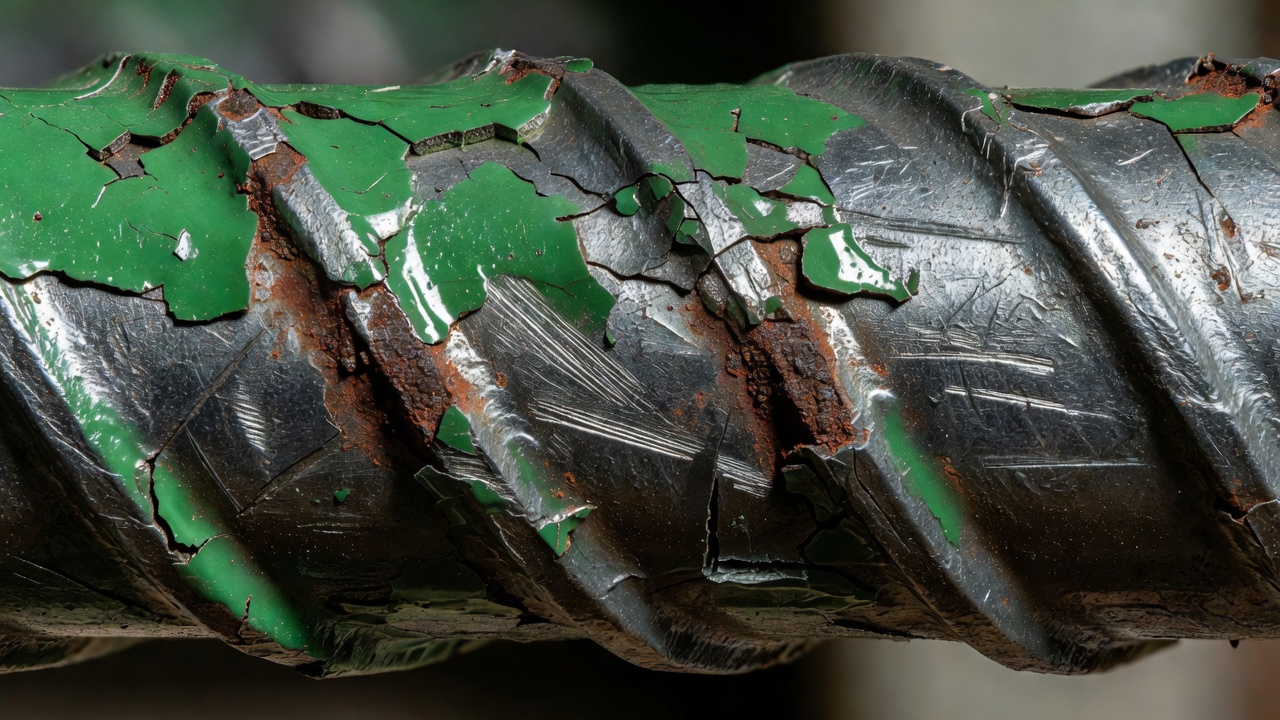
Immediately before concrete placement, the complete reinforcing cage is inspected for:
- Coating damage, all cuts, scratches, abrasions, and bare spots identified and marked for repair
- Patch quality, completed patches must be fully cured, uniform in appearance, and of adequate thickness
- Tie wire, only plastic-coated or stainless steel tie wire used, black wire rejected
- Bar supports, all supports must be plastic-coated or non-abrasive material
- Cut ends, any bars cut in the field must have cut ends coated with the approved two-part epoxy patching compound
- Coating adhesion, suspect areas checked with a knife to ensure the coating does not peel
- Spacing and cover, verify that bar spacing and concrete cover dimensions conform to the approved shop drawings
The guidelines from the Epoxy Interest Group and CRSI emphasize that the pre-pour inspection should be documented with photographs and written reports. Any repairs made during this inspection must be completed and cured before concrete placement. No concrete shall be placed until the inspector signs off on the ECR condition.
After concrete placement, no further inspection of the coating is possible. The performance of the ECR system is therefore entirely dependent on the quality of the initial installation. This is why DOTs invest significant resources in ECR inspection training and quality assurance programs.
Field inspection of existing ECR in service (retrospective condition assessment) is more challenging because the bars are embedded in concrete. Techniques used for condition assessment include: half-cell potential mapping to identify areas of active corrosion, concrete cover depth measurement (covermeter/pachometer surveys), chloride content testing on concrete cores taken from suspect areas, impact-echo and ground-penetrating radar to detect delamination and cracking, and destructive autopsy (breaking out concrete) for direct examination of bar condition when detailed assessment is required.
ECR with Supplementary Protection
Epoxy-coated rebar can be used in combination with other corrosion protection systems to provide multi-layer defense for particularly aggressive environments or critical structures.
Cathodic Protection (CP) can be applied to structures with ECR as a rehabilitation strategy when corrosion has already initiated at coating defect sites. However, the interaction between CP currents and epoxy coatings requires careful engineering. Research shows that cathodic polarization can accelerate coating disbondment at the periphery of defects. The Virginia Transportation Research Council study (98-R5) demonstrated that the CP levels tested were effective in preventing further corrosion but that disbondment occurred around defect edges. Engineers must design CP systems for ECR structures with appropriate current density limits and monitoring protocols.
Impressed Current Cathodic Protection (ICCP) systems for ECR structures use titanium or mixed-metal oxide anodes embedded in the concrete or installed in slots cut into the surface. Sacrificial Anode Cathodic Protection using zinc or aluminum anodes is also used, typically for localized protection (e.g., around patch repairs or at specific corrosion hot spots).
Concrete Sealers and Penetrating Sealers (silanes, siloxanes, methacrylates) applied to the concrete surface reduce chloride ingress by making the concrete hydrophobic or by blocking surface pores. While sealers do not directly protect the rebar, they reduce the rate of chloride accumulation at the ECR level, extending the time-to-corrosion. Sealers are particularly effective when combined with ECR because they reduce the number of chlorides reaching any coating defect sites.
Corrosion-Inhibiting Admixtures (calcium nitrite, amino alcohols, organic inhibitors) can be added to the concrete mix to provide a secondary line of defense. These chemicals work by stabilizing the passive film on the steel or by interfering with the cathodic reaction. When used with ECR, they provide protection at coating defect sites where the steel is exposed. The combination of ECR plus corrosion inhibitor is sometimes called the belt-and-suspenders approach.
High-Performance Concrete (low w/c ratio, supplementary cementitious materials like fly ash or slag, reduced permeability) reduces the rate of chloride transport through the concrete cover. A low-permeability concrete cover (w/c ≤ 0.40, minimum 75 mm or 3 inches cover) significantly enhances the performance of ECR by reducing both the number of chlorides reaching the rebar and the moisture content at the bar surface.
Stainless Steel Clad Rebar is a hybrid product where a thin layer of stainless steel is metallurgically bonded to a carbon steel core. This provides the corrosion resistance of stainless steel at a fraction of the cost of solid stainless bars. However, it is still significantly more expensive than ECR and is used only in the most demanding applications.
The decision to use supplementary protection with ECR depends on the expected service life, exposure severity, and the consequences of corrosion failure. For a bridge deck with a 75-year design life in a severe salt environment, the combination of ECR in both mats, low-permeability concrete (w/c ≤ 0.40), minimum 75 mm cover, and a penetrating sealer reapplied every 5 to 10 years provides a robust multi-layer system that has been demonstrated to achieve the required service life.
For airport pavements, runways, taxiways, and aprons, the use of ECR is less common than in highway bridges because the primary reinforcement in concrete pavements is often steel dowel bars at joints rather than continuous mats. However, where continuous reinforcement is specified (continuously reinforced concrete pavement, CRCP) or where deicing chemicals are used extensively, ECR can provide similar corrosion protection benefits. The cover requirements and exposure conditions in airfield pavements differ from bridges, and the design should follow the guidance of ICAO Annex 14 (Aerodromes) and the FAA Advisory Circulars (AC 150/5370 series) for pavement design and construction.
The future of ECR continues to evolve. Research into improved epoxy formulations with higher flexibility, better UV resistance, and enhanced adhesion is ongoing. The development of dual-layer coatings (zinc-rich primer plus epoxy topcoat) offers the potential for combined barrier and sacrificial protection. However, for the near term, properly specified, handled, and installed ECR remains one of the most reliable and cost-effective corrosion protection solutions for reinforced concrete infrastructure exposed to chlorides.
Frequently Asked Questions
- What is epoxy-coated rebar and how does it work?
- Epoxy-coated rebar (ECR) is steel reinforcing bar coated with a fusion-bonded epoxy powder that forms a protective barrier. The coating prevents chloride ions, moisture, and oxygen from reaching the steel surface, thereby preventing the electrochemical corrosion reaction. It is applied in a factory using electrostatic spray onto bars heated to approximately 232°C (450°F), where the powder melts, flows, and cures into a continuous coating with a typical thickness of 175 to 300 micrometers (7 to 12 mils).
- What are the ASTM standards for epoxy-coated rebar?
- Two primary ASTM standards govern ECR: ASTM A775/A775M covers fusion-bonded epoxy-coated steel reinforcing bars in straight lengths, applied before fabrication. ASTM A934/A934M covers epoxy-coated prefabricated steel reinforcing bars that have been cut and bent prior to coating. Both specify coating thickness, continuity, flexibility, adhesion, and patching requirements. Bars meeting A775 typically have the familiar green color, while A934 bars are often produced in purple.
- What are the main causes of epoxy coating damage?
- Epoxy coating damage occurs primarily during handling, transportation, and placement. Common causes include: dragging bars across rough surfaces, dropping bundles, impact from tools, abrasion from tie wire, bending or cutting after coating, UV exposure from prolonged uncovered storage (exceeding 30 days), and thermal cycling in service. ASTM D3963 provides standard practices for handling and storage of ECR.
- How is damaged epoxy coating repaired?
- All visible coating damage must be repaired before concrete placement per ASTM D3963. Repair uses a two-part liquid epoxy patching compound meeting the performance requirements of ASTM A775. Damaged areas are cleaned to bare metal, the patch material is applied in multiple thin coats to achieve the specified dry film thickness (typically 175-300 µm), and allowed to cure. Patch coverage may not exceed 2% of the bar surface area per linear foot unless otherwise approved by the engineer.
- How does epoxy-coated rebar compare to stainless steel or galvanized rebar?
- Stainless steel rebar offers the highest corrosion resistance but costs 5-10 times more than ECR. Galvanized rebar (ASTM A767) provides sacrificial zinc protection that is more tolerant of handling damage but offers less long-term chloride resistance. ECR offers the best balance of cost and corrosion resistance for most applications. FHWA research shows ECR in both top and bottom mats performs nearly as well as stainless steel, reducing macrocell current to less than 2% of black bar levels.
- When should epoxy-coated rebar be inspected?
- ECR should be inspected at three critical stages: (1) at the fabrication plant after coating application per ASTM A775, (2) upon delivery to the jobsite to verify no transportation damage, and (3) immediately before concrete placement to identify and repair any installation-related damage. The pre-concrete placement inspection is the most critical quality assurance step.
- Can epoxy-coated rebar be used with cathodic protection?
- Yes, but with caution. Cathodic protection (CP) can be used to rehabilitate structures with ECR where coating damage has led to corrosion. However, research from the Virginia Transportation Research Council shows that cathodic polarization of epoxy coatings can lead to disbondment (adhesion loss) at the periphery of coating defects. CP current demands may increase over time as disbondment progresses. Protective CP levels that minimize film delamination should be used.
- What is coating disbondment in epoxy-coated rebar?
- Disbondment refers to the loss of adhesion between the epoxy coating and the steel substrate. It can occur from corrosion at coating defect sites, from cathodic protection currents, from thermal cycling, or from long-term moisture exposure. FHWA research found that adhesion loss does not necessarily correlate with corrosion performance - bars with significant disbondment can still provide corrosion protection if the coating remains physically intact and bonded at critical locations.
- Why should all-epoxy rebar decks perform better than mixed rebar decks?
- When only the top mat uses ECR and the bottom mat uses black (uncoated) bars, a macrocell corrosion cell can form. Chlorides reach the top mat through cracks, and even though the top bars are coated, corrosion microcells form at coating defect sites. The large uncoated bottom mat serves as an efficient cathode, driving anodic corrosion at defect sites in the top mat. When both mats are epoxy-coated, both anode and cathode areas are limited, reducing the macrocell current to less than 2% of the black bar case.
- Are there states or agencies that have discontinued epoxy-coated rebar?
- Several agencies have moved away from ECR in specific applications, citing difficulties in ensuring defect-free installation. The Province of Quebec, Virginia DOT, and Florida DOT were among the first to restrict or discontinue ECR use in certain marine substructure elements. New York and New Jersey now specify galvanized bar in bridge projects. However, for bridge decks (as opposed to marine substructures), ECR continues to perform well and remains the standard for many DOTs, particularly when used in both top and bottom mats.
- What is the proper UV protection for epoxy-coated rebar?
- Per ASTM D3963, epoxy-coated rebar stored outdoors must be covered with opaque (light-blocking) tarps to protect the coating from ultraviolet radiation. Direct UV exposure can cause the epoxy to degrade, chalk, and become brittle over time. If storage exceeds 30 days, the bars should be elevated off the ground, covered, and stored in well-ventilated conditions to minimize condensation and moisture accumulation.
- What coating thickness is required for epoxy-coated rebar?
- ASTM A775/A775M and ASTM A934/A934M require a minimum average coating thickness of 175 micrometers (7 mils) for bars #3 through #6, and 200 micrometers (8 mils) for bars #7 and larger. The minimum spot thickness is 130 micrometers (5 mils). Maximum thickness is typically 300 micrometers (12 mils) as thicker coatings may become brittle and more susceptible to handling damage.
- Does epoxy coating affect the bond strength between rebar and concrete?
- Yes. The epoxy coating reduces the coefficient of friction between the bar and concrete compared to uncoated steel. ACI 318 requires that development and splice lengths for epoxy-coated bars be increased by a factor of 1.2 to 1.5 depending on coating thickness and cover. For bars with cover less than 3 bar diameters or clear spacing less than 6 bar diameters, the factor is 1.5. For all other cases, the factor is 1.2. This is a critical design consideration when specifying ECR.
- What is the maximum allowable patched area on epoxy-coated rebar?
- ASTM A775 permits patching of damaged areas up to a cumulative total of 2% of the bar surface area per linear foot. If damage exceeds this threshold, the bar should be rejected unless the engineer specifically approves additional patching. All patches must use approved liquid epoxy patching materials and be applied to achieve the same nominal coating thickness as the original factory application.
- How is coating continuity tested on epoxy-coated rebar?
- Coating continuity is verified using a low-voltage (67.5-volt) wet-sponge holiday detector per ASTM G62. The test identifies pinholes, voids, and thin spots in the coating where the steel substrate is exposed. Any holidays detected must be marked and repaired. The test is performed on each bar during the coating qualification process and is also used for field inspection of fabricated cages if specified.
- What is the difference between green and purple epoxy-coated rebar?
- The green coating (typically green or light green) is associated with ASTM A775 bars coated before fabrication in straight lengths. The purple color (also sometimes dark green) is associated with ASTM A934 bars coated after fabrication (cut and bent). The color difference comes from different powder formulations optimized for each process. The purple formulation (A934) provides additional flexibility to accommodate pre-existing bends without cracking. Performance characteristics are similar, and the colors serve as a visual identifier for the fabrication process.
- How long has epoxy-coated rebar been in use?
- Fusion-bonded epoxy-coated rebar was first used in 1973 on a bridge deck project in Pennsylvania. Over the following decades, it became the standard corrosion-resistant reinforcement for highway structures across the United States. More than 30 years of field performance data are now available from FHWA studies, MnDOT research, and other state DOT evaluations. While early production had quality control issues, modern CRSI-certified facilities produce consistent, high-quality ECR.