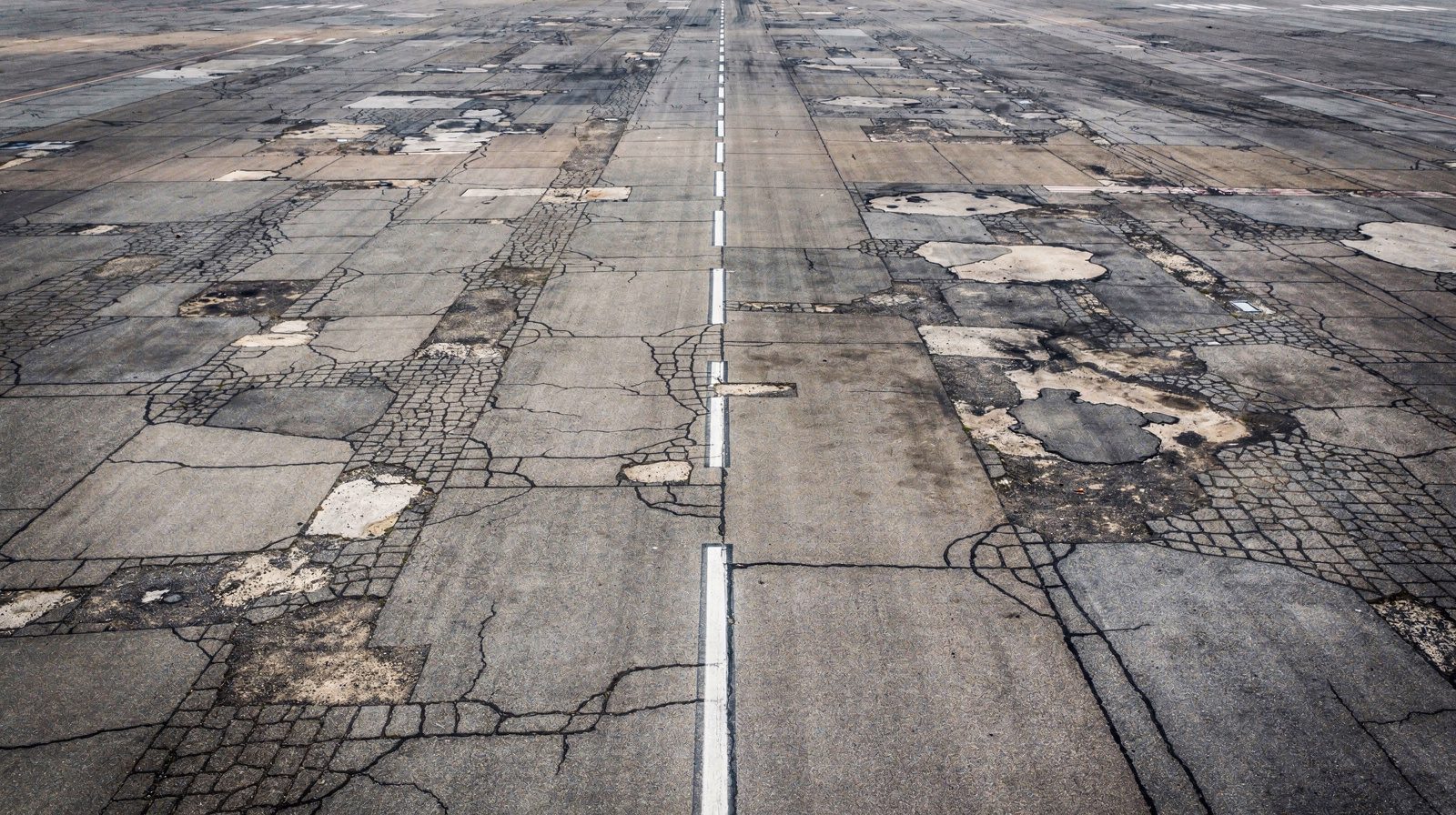
What is Epoxy Injection for Structural Crack Repair?
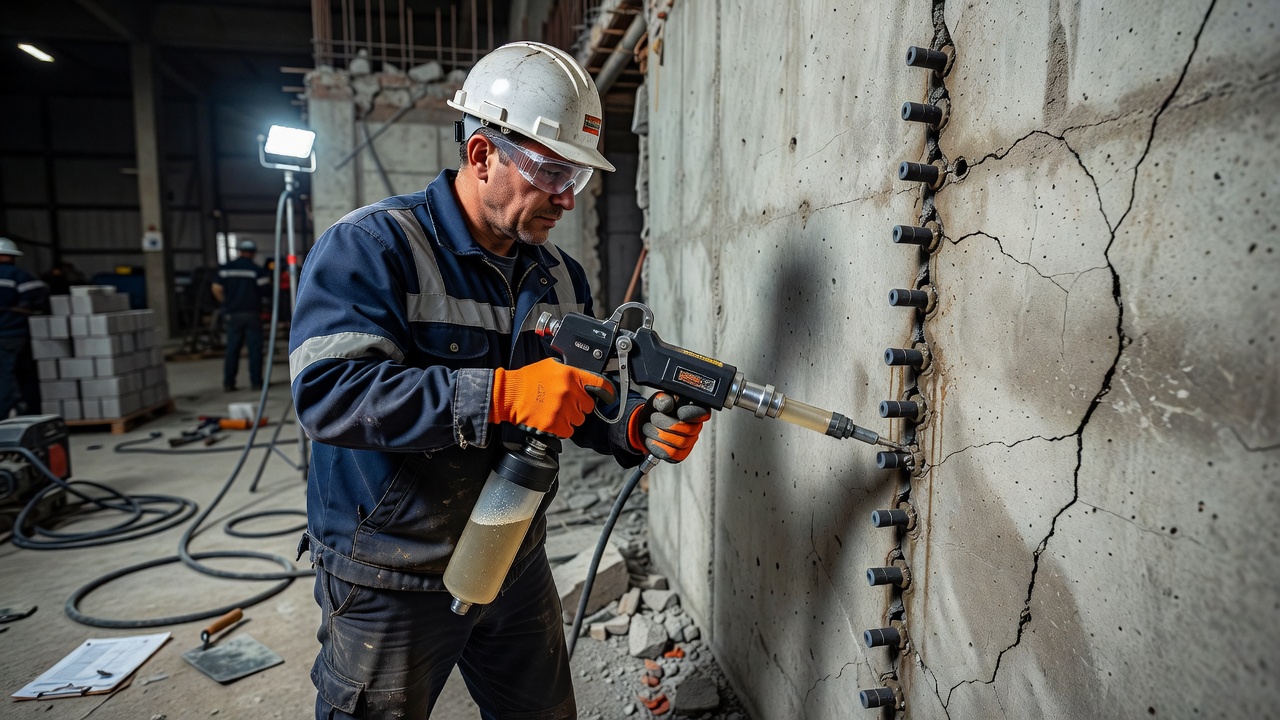
Epoxy injection is a structural concrete repair technique in which low-viscosity epoxy resin is forced under pressure into cracks in concrete to bond the crack faces together, restore structural continuity, and seal the member against moisture and chloride penetration. The method is defined and governed by ACI Committee 503’s Specification for Crack Repair by Epoxy Injection (ACI 503.7-07), ASTM C881 Standard Specification for Epoxy-Resin-Base Bonding Systems for Concrete, and ICRI Technical Guideline No. 03734 (now ICRI 210.1R-2016) for verifying performance of epoxy injection repairs. Epoxy injection has been successfully used for decades on buildings, bridges, dams, parking structures, tunnels, marine structures, and industrial facilities worldwide.
Purpose of Epoxy Injection
The primary objective of epoxy injection is to restore structural integrity to a cracked concrete member. When properly executed, the injected epoxy develops a bond strength that exceeds the tensile strength of the surrounding concrete, meaning that in subsequent loading, failure will occur in the concrete itself rather than at the epoxy-concrete interface. This is often described as “welding the crack back together.” According to ACI RAP-1 (Field Guide to Concrete Repair Application Procedures), the secondary objective is to reduce moisture penetration through the crack, thereby protecting embedded reinforcing steel from corrosion.
Epoxy injection is classified as a structural repair method because it re-establishes the composite action of the concrete section. This distinguishes it from non-structural methods such as crack filling with sealants or routing and sealing, which only seal the surface against water ingress without restoring load-carrying capacity. The method restores the original design strength of the member provided that the crack is dormant, the cause of cracking has been addressed, and the injection procedure follows the material manufacturer’s specifications and applicable ACI or ICRI guidelines.
Cracks in concrete are inevitable. According to ACI 224.1R-07, typical causes include drying shrinkage, thermal contraction or expansion, settlement, lack of appropriate control joints, overload conditions producing flexural, tensile, or shear cracks, and restraint of movement. Epoxy injection does not address the root cause of the crack, it repairs the crack after the cause has been identified and corrected. If the underlying cause (such as foundation settlement or thermal movement) is still active, the epoxy repair will fail by re-cracking adjacent to the injection.
Suitable vs. Unsuitable Cracks for Epoxy Injection
Not every crack in concrete is a candidate for epoxy injection. The distinction between dormant (non-moving) cracks and active (moving) cracks is the single most important factor in determining suitability.
| Crack Condition | Suitable for Epoxy Injection? | Reason |
|---|---|---|
| Dormant (non-moving), dry | Yes | Epoxy bonds permanently to cured concrete |
| Dormant, damp but dryable | Yes, with moisture-tolerant epoxy | Special formulations accommodate residual moisture |
| Active (thermal, settlement, or live load movement) | No | New cracks will form adjacent to the repair |
| Actively leaking water | No | Water prevents epoxy adhesion and flushes out uncured resin |
| Cracks from corroding rebar | No | Ongoing corrosion will cause new cracking |
| Hairline cracks ≥ 0.002 in. (0.05 mm) | Yes | Low-viscosity epoxy penetrates by capillary action |
| Cracks > 1/4 in. (6 mm) | Limited | Epoxy may flow out before curing, consider grouting first |
Per ACI 224.1R-07, cracks as narrow as 0.002 inches (0.05 mm) can be bonded by epoxy injection. TxDOT’s Concrete Repair Manual notes that while 0.002 inches is theoretically injectable, it is often difficult to effectively fill cracks narrower than 0.005 inches (0.13 mm) in practice. The practical upper limit for routine epoxy injection is approximately 1/4 inch (6 mm), wider cracks may require a filler material or a gel-viscosity epoxy to prevent drainage before cure.
Cracks caused by corroding reinforcing steel should not be repaired by epoxy injection because the corrosion process will continue within the sealed crack, generating expansive forces that cause new cracks to form adjacent to the original repair. These cracks require removal of the delaminated or spalled concrete, cleaning and treating the reinforcing steel, and restoring the section with a cementitious repair mortar or concrete.
Active cracks, those that exhibit movement under service loads, thermal cycling, or ongoing settlement, will re-crack after epoxy injection. The epoxy creates a rigid bond that is stronger than the surrounding concrete, so any subsequent movement concentrates stress at the boundaries of the repair, causing new cracks to form immediately adjacent to the injection line. This phenomenon is well documented in ACI 224.1R-07 and ICRI literature.
Surface Preparation for Epoxy Injection
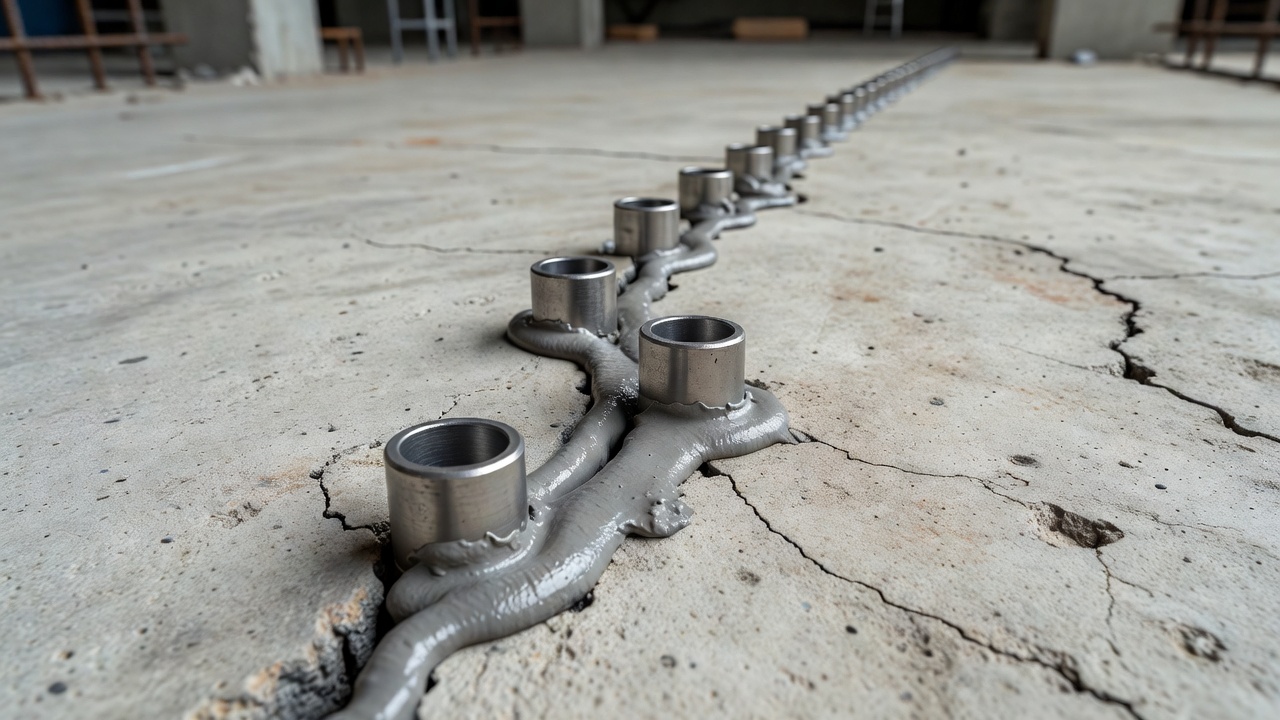
Surface preparation is the most critical step in the epoxy injection process. According to ACI RAP-1, the surface area approximately 1/2 inch (13 mm) wide on each side of the crack must be cleaned to ensure that the cap seal (the material that contains the epoxy during injection) bonds properly to the concrete.
Cleaning Methods
Wire brushing is the recommended method for cleaning the concrete surface along the crack. Mechanical grinders are not recommended according to ACI RAP-1 because they may force grinding dust into the crack, which can block epoxy penetration. TxDOT’s Concrete Repair Manual reinforces this caution: “Unless the manufacturer or the Engineer specifically requires otherwise, do not grind the concrete around the crack to remove contaminants or provide a V-shaped groove along the crack.”
Contaminants can be removed by:
- High-pressure water, effective for removing loose debris, but requires subsequent drying
- Oil-free compressed air, blows out crack interiors, air must be oil-free to avoid contaminating the bonding surface
- Power vacuums, removes dust without forcing it deeper into the crack
- Heated air, accelerates drying of water-cleaned cracks before injecting moisture-sensitive epoxies
For cracks that extend completely through a concrete section, cleaning from both sides is recommended. Vertical cracks should be cleaned from the bottom upward to allow debris to fall out rather than being pushed deeper.
V-Grooving
Where concrete surfaces adjacent to the crack are deteriorated, ACI RAP-1 permits V-grooving the crack until sound concrete is reached. V-grooves are also used when high injection pressures require a stronger cap seal. However, TxDOT advises that if a V-groove is cut, the resulting dust must be carefully removed using compressed air or high-pressure water blasting, and the crack must be completely dry before proceeding with the surface sealer application or injection work.
Drilling for Port Installation
In some cases where the crack interior is blocked by debris near the surface, holes may be drilled at an angle to intersect the crack below the debris layer. The TxDOT Concrete Repair Manual specifies that these holes must be drilled at an angle so the injection ports intersect the crack beneath the surface, away from the contaminated zone. When using compressed air for cleaning, care must be taken not to force debris deeper into the crack.
Epoxy Selection per ASTM C881
The selection of the appropriate epoxy formulation is governed by ASTM C881 / C881M-20a, which classifies epoxy-resin-base bonding systems for concrete into seven types, three grades, and six classes. For epoxy injection of hardened concrete to hardened concrete, the relevant specifications are found in Types I through IV.
ASTM C881 Types
| Type | Application | Minimum Compressive Strength (7 days) | Minimum Tensile Strength (7 days) |
|---|---|---|---|
| Type I | Non-load-bearing applications | 8,000 psi (55 MPa) | 5,000 psi (34 MPa) |
| Type II | For bonding freshly mixed concrete to hardened concrete | 8,000 psi | 5,000 psi |
| Type III | For bonding skid-resistant materials to concrete | 8,000 psi | 5,000 psi |
| Type IV | Load-bearing structural applications | 10,000 psi (69 MPa) | 7,000 psi (48 MPa) |
| Type V | For sealing surface cracks (cap seal) | 4,000 psi | 2,000 psi |
| Type VI | For bonding, with extended working time | 5,000 psi | 2,500 psi |
| Type VII | For wet or damp surface applications | Varies | Varies |
For structural crack repair, Type IV, Grade 1 epoxy is the standard specification used by TxDOT and most transportation agencies. Type IV epoxy provides higher compressive yield strength (10,000 psi vs 8,000 psi minimum at 7 days), higher tensile strength (7,000 psi vs 5,000 psi), higher compression modulus (200,000 psi minimum vs 150,000 psi), and requires a minimum heat deflection temperature of 120°F (49°C), essential for structures exposed to elevated temperatures or direct sunlight.
ASTM C881 Grades (Viscosity)
| Grade | Viscosity Range | Applications |
|---|---|---|
| Grade 1 (Low-Viscosity) | Maximum 2,000 cps | For injection into narrow cracks ≤ 0.010 in. (0.3 mm), typical injection epoxies are 500 cps or less |
| Grade 2 (Medium-Viscosity) | 2,000 to 10,000 cps | For wider cracks > 0.010 in. or one-side-access injection |
| Grade 3 (Non-Sagging) | Consistency ≤ 1/4 in. | For vertical and overhead surface applications, cap seals |
The appropriate viscosity depends on crack width, section thickness, and injection access. ACI RAP-1 specifies that for crack widths 0.010 inches (0.3 mm) or smaller, a low-viscosity epoxy of 500 centipoise (cps) or less must be used. For wider cracks, or where injection access is limited to one side, a medium to gel-viscosity material may be more suitable.
ASTM C881 Classes (Moisture Tolerance)
| Class | Description |
|---|---|
| Class A | Dry surface application, temperatures 60-80°F (16-27°C) |
| Class B | Dry surface application, temperatures below 60°F (16°C) |
| Class C | Damp surface application, temperatures 60-80°F (16-27°C) |
| Class D | Damp surface application, temperatures below 60°F (16°C) |
| Class E | Dry surface application, extended working time |
| Class F | Dry surface application, very short working time |
Additional Selection Criteria
Beyond the ASTM C881 classification, the following product characteristics must be considered per ACI RAP-1:
- Modulus of elasticity (rigidity), affects load transfer across the repaired crack
- Working life (gel time), must be long enough for complete injection but short enough for practical sequencing, minimum 30 minutes per ASTM C881
- Moisture tolerance, critical for damp cracks that cannot be fully dried
- Color, may affect cosmetic appearance of the final repair
- Compressive, flexural, and tensile strengths, must meet or exceed the concrete’s own properties
For concrete sections greater than 12 inches (305 mm) thick, the working time may need to be increased and the viscosity decreased as the crack gets narrower.
Injection Procedure
The epoxy injection procedure follows a systematic sequence: port installation, cap seal application, mixing and injection, and port removal.
Port Installation
Injection ports (also called port adapters) are tubelike devices that transfer epoxy resin under pressure into the crack. Two types are available per ACI RAP-1:
- Surface-mounted ports, adequate for most cracks, bonded directly over the crack
- Socket-mounted ports, used when cracks are blocked, such as by calcified concrete, installed in drilled holes that intersect the crack
Proprietary injection guns with special gasketed nozzles are also available and can be used without separate port adaptors.
Port spacing is typically 8 inches (200 mm) on center, with increased spacing at wider cracks. TxDOT specifies that port spacing should not exceed the depth of the crack. If the crack depth is unknown, port spacing should follow the resin manufacturer’s recommendations. If the crack extends through the entire concrete section, the interval between ports should not exceed the section depth.
Cap Seal Installation
The cap seal contains the epoxy as it is injected under pressure. For cracks that penetrate completely through a section, cap seals should be installed on both sides to ensure containment. Cap seal materials include epoxies, polyesters, paraffin wax, and silicone caulk. Selection criteria per ACI RAP-1 include non-sag consistency (for vertical or overhead work), moisture tolerance, working life, and rigidity (modulus of elasticity).
The cap seal is typically applied 1 inch wide x 3/16 inch thick (25 x 5 mm) over the entire length of the crack, bridging between ports. It must be fully cured before injection begins. Prior to installing the cap seal, the widest portion of the crack should be marked because this is where injection will start.
Concrete temperature changes after cap seal installation but before injection may cause the cap seal to crack. If this occurs, the cap seal must be repaired before proceeding.
Mixing and Injection
Epoxy components must be batched and mixed strictly in accordance with the manufacturer’s requirements. Proper batching is critical: inaccurate ratios will compromise cure and bond strength. Small batches keep material fresh and dissipate heat from the exothermic curing reaction.
For horizontal cracks, injection starts at the widest section. For vertical cracks, injection starts at the lowest port and works upward, allowing the epoxy to fill from the bottom and push air ahead of it.
Injection pressure is typically maintained at 50 to 100 psi (0.3 to 0.7 MPa) for standard cracks. For hairline cracks (narrower than 0.010 inch), pressure may be increased to approximately 200 psi (1.3 MPa) held for up to 5 minutes per port. Higher pressure can be used for very narrow cracks or to increase injection rate, but must be managed carefully to prevent blowout of the cap seal or ports.
The sequence is:
- Inject at the starting port until epoxy emerges from the adjacent port (refusal)
- Cap the initial port and continue injection at the adjacent port
- If an adjacent port does not bleed, re-evaluate, ports may need closer spacing or debris may need clearing
- If resin emerges from a non-adjacent port, temporarily plug that port and continue
- Continue the sequence until all ports have been injected and held at pressure
- Cap each port immediately after injection
ACI RAP-1 describes the end point as “pumping to refusal”, the point at which no more epoxy can be injected and the port remains pressurized. For hairline cracks that do not reach refusal, the alternative is to inject at increased pressure (approximately 200 psi) for 5 minutes.
Port and Cap Seal Removal
After the epoxy has fully cured (typically 24 to 72 hours depending on formulation and temperature), the ports and cap seal are removed by heat, chipping, or grinding. If the appearance is acceptable, the cap seal can be left in place. If complete removal is required for a subsequent cosmetic coating, the surface is prepared by grinding.
Inspection After Epoxy Injection
Quality assurance verification is essential to confirm that the epoxy has fully penetrated the crack and achieved the intended structural bond. ACI RAP-1 and ICRI Guideline 03734 describe two categories of verification methods.
Core Verification
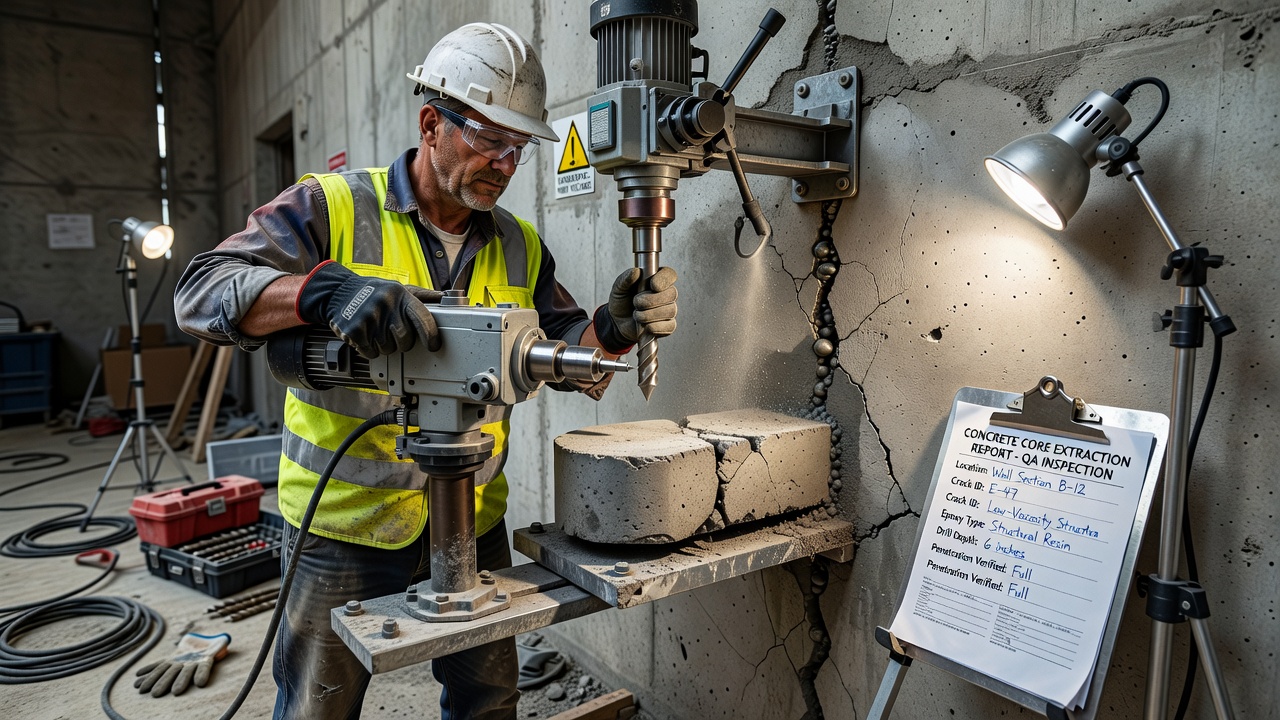
The most direct method is to extract 2-inch (50 mm) diameter core samples through the repaired crack at selected locations. Per ACI RAP-1:
- Core locations should avoid cutting reinforcing steel and areas of high stress
- Core holes below the waterline must be avoided or properly sealed
- The epoxy must be fully set before extracting a core
- The core is visually inspected to determine epoxy penetration into the crack
- Cores can be tested per ASTM C42 for compressive and split tensile strength to quantitatively verify bond quality
- After extraction, the core hole is patched with an expansive cementitious or epoxy grout compatible with the substrate
ICRI Guideline 03734 (now ICRI 210.1R-2016) specifies that a successfully injected crack should show complete fill of the crack plane with epoxy, no voids or unbonded areas, and the epoxy should be visible as a continuous film across the crack. The core should not exhibit re-cracking adjacent to the injection line or debonding at the epoxy-concrete interface.
Nondestructive Evaluation Methods
When coring is impractical or undesirable, three NDE methods are available per ACI RAP-1:
- Impact Echo (IE), uses impact-generated stress waves to detect voids, delaminations, and unbonded areas in the repaired crack plane
- Ultrasonic Pulse Velocity (UPV), measures the velocity of ultrasonic waves through the concrete, changes in velocity indicate the presence of voids or lack of bond
- Spectral Analysis of Surface Waves (SASW), analyzes surface wave dispersion to evaluate the condition of the repaired crack at depth
ICRI 210.1R-2016 identifies five QA/QC methods in total: visual inspection, laboratory testing (ASTM C42), field testing (pull-off tests), core sampling, and NDT (IE, UPV, SASW). The standard recommends that at least one verification method be specified in the repair contract documents.
Epoxy Injection in Bridge Repair
Bridge structures present unique challenges and opportunities for epoxy injection. According to research published by Purdue University’s Joint Transportation Research Program (JTRP), epoxy injection helps extend the service life of bridge decks and reduces the need for emergency bridge deck patching, improving both structural performance and road user safety.
TxDOT’s Concrete Repair Manual devotes an entire section (Section 5: Crack Repair, Pressure-Injected Epoxy) to bridge crack repair using TxDOT Type IX low-viscosity epoxy resin (which conforms to ASTM C881 Type IV, Grade 1). The manual specifies that injection of concrete cracks with epoxy resin “takes a great deal of skill and expertise” and recommends that the repair crew receive hands-on training from a technical representative from the resin manufacturer before proceeding.
Bridge-Specific Considerations
- Chloride ingress prevention, Bridge decks are exposed to deicing salts. Epoxy injection seals cracks against chloride penetration, protecting the reinforcing steel from corrosion-induced damage.
- Overlaid bridge decks, Epoxy injection can be performed through existing concrete overlays, provided the overlay is sound and bonded to the substrate.
- Underwater or marine bridge elements, Moisture-tolerant epoxy formulations are available for tidal zone and splash zone repairs on bridge piers and abutments.
- Load-bearing requirements, All bridge structural crack repairs require Type IV (load-bearing) epoxy as specified by AASHTO and transportation agency standards.
The TxDOT Concrete Repair Manual requires the resin manufacturer’s technical representative to provide hands-on training to the repair crew before proceeding, or the contractor must retain a specialty firm to perform the work. This reflects the high level of skill required for successful structural epoxy injection.
Epoxy Injection vs. Routing And Sealing
Epoxy injection and routing and sealing are fundamentally different repair methods serving different purposes.
| Feature | Epoxy Injection | Routing and Sealing |
|---|---|---|
| Purpose | Structural restoration | Waterproofing only |
| Crack width range | 0.002 to 0.25 inches | Typically > 0.02 inches |
| Bond strength | Restores full structural capacity | No structural bond |
| Penetration | Full crack depth | Surface only (typically 0.5–1 inch) |
| Materials | Low-viscosity epoxy resin | Flexible sealants (silicone, polyurethane, hot-applied rubber) |
| Cost per linear foot | $50–$150+ | $5–$20 |
| Crack movement tolerance | None (dormant cracks only) | Accommodates thermal movement |
| Application complexity | High (requires skilled labor, pressure equipment) | Low (hand application, minimal equipment) |
Routing and sealing involves cutting a shallow reservoir (typically 0.5 to 1 inch deep and 0.25 to 0.75 inches wide) along the crack, cleaning it, and placing a flexible sealant. The sealant forms a waterproof cap but does not restore structural continuity. The method is suitable for non-structural cracks where water ingress prevention is the primary concern.
Epoxy injection, by contrast, restores the structural integrity of the member by bonding the crack faces across the full depth of the section. The epoxy develops a bond strength that exceeds the tensile strength of the concrete itself. This makes epoxy injection the appropriate method when the crack has compromised the load-carrying capacity of the structure.
The choice between the two methods depends on the structural significance of the crack, the need for load transfer across the crack plane, and whether the crack is dormant or active. Industry guidance (ACI 224.1R-07) recommends a condition assessment and structural evaluation by a licensed professional engineer before selecting a repair method.
Limitations of Epoxy Injection
Despite its effectiveness for structural crack repair, epoxy injection has several important limitations that must be understood before selecting this method.
Active or Moving Cracks
Epoxy injection is not suitable for active cracks that expand, contract, or exhibit movement over time. The rigid epoxy bond creates a monolithic section that cannot accommodate subsequent movement. If movement occurs, the concrete will crack again immediately adjacent to the repaired area. This is the most common cause of epoxy injection failure. Causes of active cracking include thermal cycling, ongoing foundation settlement, volumetric changes from alkali-silica reaction (ASR), and live load-induced fatigue.
Moisture and Temperature Conditions
Epoxy resins are temperature-sensitive. Most formulations require ambient and substrate temperatures above 40°F (4°C) for proper cure. Low temperatures slow the curing reaction and may prevent full strength development. High temperatures accelerate the reaction and reduce working life. ASTM C881 addresses this through Class B (below 60°F) formulations with modified cure characteristics.
Standard epoxies require dry substrates. Moisture at the bond interface prevents adhesion and can cause the epoxy to blush or become cloudy. While moisture-tolerant formulations (ASTM C881 Class C and D) exist, they are less effective than dry-substrate products. Actively leaking cracks cannot be repaired with epoxy because flowing water prevents adhesion and washes out the uncured resin. Polyurethane injection is the appropriate method for active water leaks.
Corrosion-Related Cracks
Cracks caused by corroding reinforcing steel should not be repaired by epoxy injection. The corrosion process continues within the sealed crack, generating expansive forces that create new cracks adjacent to the original repair. These cracks require removal of the delaminated concrete, cleaning and treating the reinforcing steel, and restoring the section with a compatible repair mortar.
Practical Limitations
- Crack width range, While cracks as narrow as 0.002 inches can theoretically be injected, practical limitations often require cracks wider than 0.005 inches. Wider cracks (above 1/4 inch) may require pre-filling or gel-viscosity epoxy.
- Skill requirements, Epoxy injection requires trained, experienced personnel. The TxDOT Concrete Repair Manual explicitly states that the method “takes a great deal of skill and expertise.”
- Equipment needs, Positive displacement pumps, air-actuated caulking guns, or paint pressure pots are required, along with proper personal protective equipment.
- Cosmetic appearance, The cap seal and port removal process may leave surface blemishes that require additional finishing.
Re-Cracking After Repair
If a properly injected crack re-cracks after repair, the cause is almost always unresolved movement, the crack was not truly dormant. According to ACI 224.1R-07, re-cracking typically occurs adjacent to the repair rather than through the epoxy itself, because the epoxy-concrete bond is stronger than the surrounding concrete. This pattern (cracking next to the repair line) is diagnostic of an active crack that was not suitable for epoxy injection.
Applicable Standards
Epoxy injection for structural crack repair is governed by a comprehensive set of industry standards:
| Standard | Title | Scope |
|---|---|---|
| ACI 503.7-07 | Specification for Crack Repair by Epoxy Injection | Standard specification for materials, procedures, and quality control |
| ACI 224.1R-07 | Causes, Evaluation, and Repair of Cracks in Concrete Structures | Guidance on crack evaluation and repair method selection |
| ACI RAP-1 | Field Guide to Concrete Repair Application Procedures: Structural Crack Repair by Epoxy Injection | Step-by-step field procedures for epoxy injection |
| ASTM C881 / C881M-20a | Standard Specification for Epoxy-Resin-Base Bonding Systems for Concrete | Material classification: types, grades, classes, and property requirements |
| ICRI 210.1R-2016 (formerly Guideline 03734) | Guide for Verifying Performance of Epoxy Injection of Concrete Cracks | QA/QC verification methods including cores and NDE |
| ACI 546R-96 | Concrete Repair Guide | Comprehensive repair guidance including crack repair |
| ACI 503R-93 | Use of Epoxy Compounds with Concrete | General guidance on epoxy materials for concrete |
| ASTM C42 | Standard Test Method for Obtaining and Testing Drilled Cores and Sawed Beams of Concrete | Core testing for bond verification |
The American Concrete Institute (ACI) and International Concrete Repair Institute (ICRI) jointly publish the Concrete Repair Application Procedures (RAP) bulletins, of which RAP-1 is the definitive field guide for epoxy injection. These standards should be specified in contract documents and followed by the repair contractor, engineer, and owner’s quality assurance team.
Summary
Epoxy injection is a proven structural repair method that restores cracked concrete members to their original strength and seals them against moisture and chloride ingress. The method requires careful assessment of crack conditions, only dormant, dry or dryable cracks free from ongoing corrosion are suitable candidates. Surface preparation, proper material selection per ASTM C881, systematic injection from the widest or lowest point, and quality assurance verification through core sampling or NDE are essential for successful outcomes. When correctly applied following ACI and ICRI standards, epoxy injection produces a repair that is stronger than the surrounding concrete, with bond strengths exceeding 1,500 psi at 14 days of moist cure for Type IV materials. The method’s limitations, particularly its incompatibility with active movement and wet conditions, must be respected to avoid premature failure and re-cracking.
Frequently Asked Questions
- What is the minimum crack width that can be repaired with epoxy injection?
- According to ACI 224.1R-07 and ACI RAP-1, epoxy injection can bond cracks as narrow as 0.002 inches (0.05 mm). However, TxDOT guidelines note that it is often difficult to effectively fill cracks narrower than 0.005 inches (0.13 mm) due to practical limitations in achieving full penetration. For cracks below 0.010 inches (0.3 mm), a low-viscosity epoxy of 500 cps or less must be used.
- Can epoxy injection be used on actively leaking or wet cracks?
- Epoxy injection requires dry or nearly dry crack conditions. Most standard epoxies cannot bond properly to damp surfaces. For cracks that are damp but cannot be dried out, moisture-tolerant epoxy formulations are available (ASTM C881 Class C or D). Actively leaking cracks cannot be repaired with epoxy because the flowing water prevents adhesion and washes out uncured resin. Polyurethane injection is the appropriate method for actively leaking cracks.
- What is the difference between Type I and Type IV epoxy per ASTM C881?
- Type I epoxy is for non-load-bearing applications while Type IV is for load-bearing structural repairs. Type IV requires higher compressive yield strength (10,000 psi vs 8,000 psi minimum at 7 days), higher tensile strength (7,000 psi vs 5,000 psi), higher compression modulus (200,000 psi vs 150,000 psi), and must achieve a minimum heat deflection temperature of 120°F. Both types are available in three viscosity grades.
- How do you verify that an epoxy injection repair was successful?
- Quality assurance methods include (1) visual inspection of the repair surface, (2) extracting 2-inch diameter core samples at selected locations to visually examine epoxy penetration into the crack, (3) laboratory testing of cores per ASTM C42 for compressive and split tensile strength, and (4) nondestructive evaluation methods such as Impact Echo (IE), Ultrasonic Pulse Velocity (UPV), and Spectral Analysis of Surface Waves (SASW). ICRI Guideline 03734 provides detailed procedures for these verification methods.
- What are the limitations of epoxy injection for crack repair?
- Epoxy injection is not suitable for (1) active or moving cracks that expand, contract, or undergo thermal cycling, (2) cracks caused by ongoing reinforcing steel corrosion, (3) actively leaking or wet cracks without moisture-tolerant formulations, (4) cracks wider than approximately 1/4 inch where the epoxy may flow out before curing, (5) application below 40°F (4°C) unless specialized cold-weather formulations are used, and (6) very shallow surface cracks where the epoxy cannot develop adequate bond length.