What is Foamed Asphalt?
The Foaming Process: From Hot Bitumen to Low-Viscosity Foam
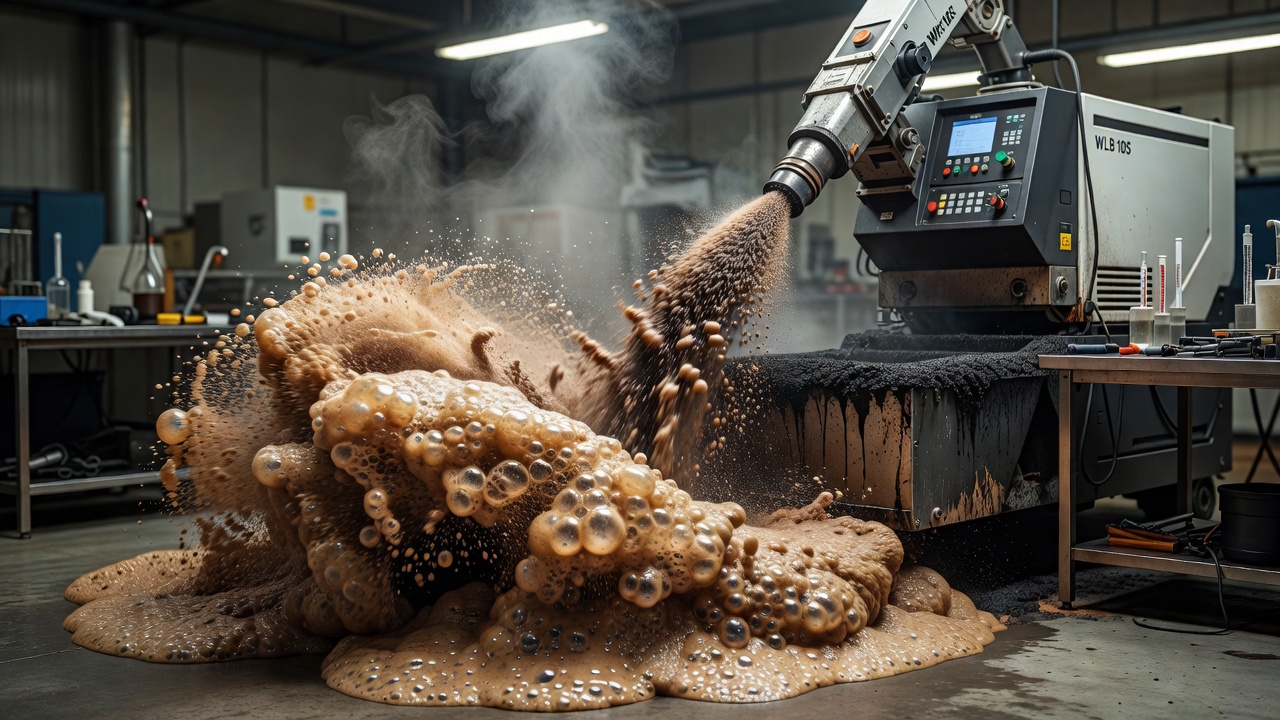
Foamed asphalt (also known as foamed bitumen) is produced by injecting small quantities of cold water and compressed air into hot bitumen under high pressure within a specially designed expansion chamber. The fundamental physical phenomenon underlying foaming is the explosive vaporization of water upon contact with hot bitumen. When water at ambient temperature meets bitumen at 160°C to 180°C, it instantaneously converts to steam, experiencing a volume expansion of approximately 1,600 times at atmospheric pressure. This steam becomes entrapped within the viscous bituminous phase, creating a foam structure composed of thousands of thin-walled bitumen bubbles filled with steam and air.
The foaming process takes place in expansion chambers integrated into the binder injection system of recycling machines. According to Wirtgen Group specifications, air and water are injected at a pressure of approximately 5 bar (500 kPa) into bitumen heated to between 160°C and 180°C (320-347°F). The hot bitumen is continuously fed through the expansion chamber where the injected water, typically 1% to 3% by mass of the bitumen, and compressed air cause the bitumen to rapidly expand to approximately 10 to 20 times its original volume. The entire expansion and collapse cycle occurs within seconds to minutes, making the foaming process a strictly temporary state.
The foaming mechanism dramatically reduces the apparent viscosity of the bitumen. In its hot, unfoamed state, bitumen has a viscosity of approximately 0.1 to 0.5 Pa·s at 180°C depending on the penetration grade. During foaming, the bitumen is transformed into a thin-film cellular structure with enormous surface area, reducing its apparent viscosity to a fraction of the unfoamed value. The reduced viscosity and increased surface area enable the uniform dispersion of very small quantities of binder, as low as 1.5% by mass of aggregate, throughout the cold, moist aggregate skeleton. The spot-weld bonding mechanism that results from this dispersion is fundamentally different from the full-coating achieved by hot mix asphalt or emulsion, making foamed asphalt uniquely suited for recycling applications where minimal binder addition is desired while maintaining structural integrity.
A useful analogy for understanding the foaming process compares foamed bitumen to a baker beating an egg into a foam before mixing it with flour. The beaten egg increases in volume and decreases in viscosity, allowing it to be evenly distributed throughout the flour in small quantities. Similarly, foamed bitumen expands to a large volume and low viscosity state, enabling it to be dispersed through aggregate as thin films at particle contact points without fully coating every particle surface. After the foam collapses, the bitumen remains concentrated at these contact points, effectively spot-welding the aggregate particles together into a cohesive mass.
Wirtgen WLB 10 S mobile laboratory foamed bitumen plant is the industry-standard device for producing foamed bitumen in the laboratory for mix design and quality control. This microprocessor-controlled unit allows precise control and variation of water quantity (foaming water content), air pressure, and bitumen temperature. The WLB 10 S is typically connected to a WLM 30 twin-shaft compulsory mixer with a batch capacity of approximately 25-30 kg for producing test specimens. Caltrans California Test Method 313 and Australian Standard AGPT/T301 formalize the laboratory procedures for determining the foaming characteristics of bitumen.
Foam Characteristics: Expansion Ratio and Half-Life
The quality of foamed bitumen is characterized by two primary parameters, expansion ratio (ER) and half-life (t1/2), plus the derived foam index (FI) . These parameters are measured immediately after the foam exits the expansion chamber nozzle using standardized procedures.
Expansion Ratio is defined as the ratio of the maximum volume achieved by the bitumen in its foamed state to the volume of the same mass of bitumen once the foam has completely subsided to its original liquid state. Mathematically, ER = Vmax(foamed) / Vinitial(unfoamed) . The expansion ratio is a measure of the apparent viscosity of the foamed bitumen and directly correlates with its wettability, the ability to wet aggregate particle surfaces. Higher ER values indicate better dispersion potential because the foam has expanded more and will spread more readily through the aggregate mass. Typical ER values for paving-grade bitumens range from 8 to 20, with a minimum of 10 commonly specified for production applications per Wirtgen and AASHTO guidelines.
Half-Life is the time, measured in seconds, from the moment the foamed bitumen reaches its maximum volume until it decays to half of that maximum volume. Half-life is a measure of foam stability and indicates the time window available for mixing the foamed bitumen with aggregate before the foam collapses. A longer half-life provides more working time for the foam to disperse through the aggregate. Typical half-life values range from 6 to 40 seconds, with a minimum of 8 to 12 seconds commonly specified for production applications. The optimal half-life depends on the mixing time required by the specific recycling equipment, longer mixing trains require longer half-lives.
| Parameter | Typical Range | Minimum for Production | Measurement Method |
|---|---|---|---|
| Expansion Ratio (ER) | 8-20 | ≥ 10 | Volume of foam / volume of bitumen at maximum expansion |
| Half-Life (t1/2) | 6-40 seconds | ≥ 8 seconds | Time from max volume to half-max volume |
| Foam Index (FI) | Varies by binder | Area-based parameter | Area under decay curve above ER = 4 |
The Foam Index is a composite parameter that considers both expansion ratio and half-life simultaneously. It is defined as the area under the foam decay curve above a minimum expansion ratio threshold, conventionally ER = 4. The foam index provides a single-value characterization of overall foam quality and is particularly useful for comparing the foaming behavior of different binders under varying conditions. A higher foam index indicates better overall foaming performance.
Measurement of these parameters in the laboratory follows standardized procedures. The bitumen is heated to the target temperature (typically 160-180°C), water and air are injected under controlled conditions, and the foam is collected in a standardized container. The maximum foamed volume is measured immediately by reading the height of foam in a graduated container, and a stopwatch is started simultaneously. The time elapsed until the foam collapses to half of the maximum height is recorded as the half-life. Australian standard AGPT/T301 (Determining the Foaming Characteristics of Bitumen) and California Test Method 313 formalize these measurement procedures with precision requirements. AASHTO TP 101 provides the standardized test method for foamed asphalt mix design including foam characterization.
Factors Affecting Foam Quality
Foam quality is influenced by a complex interaction of factors related to the binder chemistry, physical conditions during foaming, and potential contaminants. Understanding these factors is essential for achieving consistent foam quality in both laboratory mix design and field production.
Bitumen Temperature is one of the most critical parameters controlling foam quality. Higher bitumen temperatures generally increase the expansion ratio because more thermal energy is available to convert the injected water to steam, generating greater vapor pressure and more extensive bubble formation. However, higher temperatures simultaneously decrease the half-life because the bitumen viscosity is lower at elevated temperatures, allowing the steam bubbles to escape more readily and the foam structure to collapse faster. The optimal temperature range is typically 160°C to 180°C for most paving-grade bitumens. Below 155°C, foaming becomes poor due to insufficient steam generation, the water does not vaporize rapidly enough to create a stable foam structure. Above 190°C, excessive steam flash-off can destabilize the foam, create safety concerns from hot bitumen spattering, and accelerate oxidative aging of the binder. Each binder has an optimal foaming temperature that must be determined experimentally.
Foaming Water Content (FWC), expressed as a percentage of the bitumen mass, directly influences both foam parameters in a systematic manner. Higher water content (2-3%) increases the expansion ratio because more steam is generated per unit mass of bitumen, creating more internal pressure and larger bubble expansion. However, this increase in expansion ratio comes at the expense of reduced half-life, the additional water creates a more extensive bubble network that collapses more quickly. Lower water content (1-1.5%) produces a longer half-life but a lower expansion ratio. Research published in Construction and Building Materials (ScienceDirect, 2018) on 35/50 penetration-grade binder found half-life values ranging from approximately 40 seconds at 1.5% FWC to 20 seconds at 3.5% FWC, demonstrating the strong inverse relationship between water content and foam stability. The optimal FWC balances these competing effects to achieve both sufficient wettability (ER ≥ 10) and adequate working time (half-life ≥ 8 seconds).
Binder Type and Source significantly affects foaming behavior due to differences in chemical composition. The penetration grade of the binder influences foaming, softer binders (e.g., 160/220 pen) generally foam more readily than harder grades (e.g., 40/50 pen) because their lower viscosity allows easier bubble formation and expansion. Performance Grade (PG) binders specified for foamed asphalt applications include PG 64-10 (commonly used by Caltrans) and PG 64-22 (specified by TxDOT). In Australia, Class 170 bitumen is the standard binder for foamed asphalt applications. The crude oil source from which the bitumen is refined has a profound effect on foaming behavior, bitumens from different crude sources (e.g., Venezuelan, Arabian, Canadian, or North Sea crudes) can display markedly different foaming characteristics even when graded identically. This source dependency means that a change in binder supplier or crude source without requalification of the foaming properties can lead to unexpected changes in foam quality during production.
Polymer-modified binders (PMBs) often exhibit reduced foaming characteristics compared to unmodified binders. The polymer network, particularly SBS (styrene-butadiene-styrene) block copolymers, creates an elastic three-dimensional structure within the bitumen that inhibits bubble nucleation and growth. The polymer network also increases the effective viscosity of the binder film surrounding each bubble, altering the foam collapse dynamics. Some polymer-modified binders require higher foaming water contents or higher temperatures to achieve acceptable foam quality. Specialized foaming nozzles with modified geometries may be necessary for PMB foaming.
Anti-Foaming Agents and Contaminants can severely impair or completely prevent bitumen foaming. Silicone-based anti-foaming agents, widely used in industrial processes including petroleum refining and asphalt handling, are particularly problematic. Trace contamination from silicone residues in bitumen transport, storage tanks, or pipelines can render bitumen completely unable to foam, the silicone compounds concentrate at the bubble surfaces and destabilize the foam structure, causing immediate collapse. Other contaminants that can affect foaming include certain chemical additives, rejuvenators, and improperly cleaned equipment. Foam-enhancing additives (surfactants or foaming agents) are sometimes used to improve the foaming characteristics of marginal binders. In Australia, chemical additives are occasionally added to improve the foaming characteristics of Class 170 bitumen.
Air Pressure and Water Temperature are secondary but important factors. Higher air pressure (typically 5 bar) increases the expansion ratio by providing additional energy for bubble formation but can reduce half-life if excessive. The air-to-water ratio in the injection system must be optimized for each binder. Colder water can cause thermal shock when it contacts the hot bitumen, potentially reducing foam quality, ambient or slightly elevated water temperature is generally preferred. The injection nozzle geometry, specifically the orifice diameter and spray pattern, significantly influences the droplet size of the injected water and therefore the foam quality. Worn or partially blocked nozzles are a common cause of foam quality degradation during production.
Foamed Asphalt in Cold In-Place Recycling (CIR)
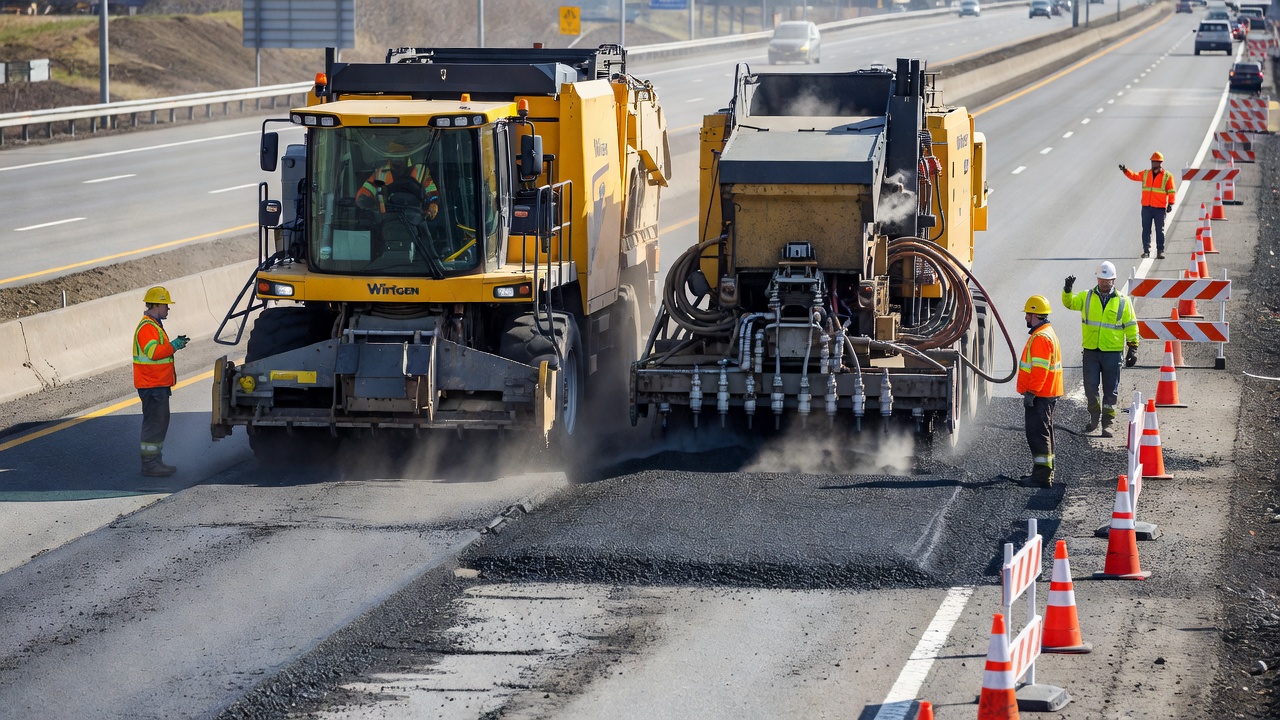
Cold In-Place Recycling (CIR) with foamed asphalt is a pavement rehabilitation technique in which the existing asphalt pavement is milled, the milled material is processed, mixed with foamed asphalt binder and active fillers, and then placed and compacted, all in a single pass without the application of heat. The entire train moves forward at operating speeds of 10 to 30 feet per minute, processing the full lane width in one pass. CIR with foamed asphalt is one of the most cost-effective and environmentally sustainable pavement rehabilitation methods available, typically reducing costs by 40-60% compared to conventional mill-and-fill reconstruction while achieving comparable structural performance.
The CIR train using foamed asphalt typically consists of four to five primary components operating in sequence. A cold planer/milling machine mills the existing pavement to the specified depth, typically 3 to 6 inches (75 to 150 mm), producing Reclaimed Asphalt Pavement (RAP) material. A crushing and screening unit processes the RAP to a specified maximum particle size, typically 1.5 to 2.0 inches (37.5 to 50 mm) with controlled fines content. The processed RAP is conveyed to a recycling machine (e.g., Wirtgen 2200 CR, 3800 CR, or WR series) that houses the foamed asphalt injection system. In this unit, hot bitumen stored in an onboard heated tank is foamed through the injection nozzles and mixed with the RAP in a twin-shaft pugmill mixer. Active fillers (cement or lime) are spread onto the RAP stream before mixing, either as dry powder or as slurry. After mixing, the foamed-asphalt-treated material is deposited in a windrow or directly into a paving screed that spreads it to the specified width and profile. Finally, compaction rollers, typically a combination of pneumatic-tired, vibratory, and static steel rollers, compact the material to the specified density.
Typical binder contents for CIR with foamed asphalt range from 1.5% to 3.0% foamed asphalt binder by dry weight of RAP. This is significantly lower than hot mix asphalt binder contents (typically 4-6%) because the foamed asphalt does not fully coat all aggregate particles but instead creates a spot-weld bonding mechanism at particle contact points. The spot-weld mechanism is the defining characteristic of foamed-asphalt-treated materials, the foam selectively concentrates at aggregate particle contacts where capillary forces draw the binder during compaction, creating strong, discrete bonds that build a cohesive structure while leaving most aggregate surfaces uncoated. This selective bonding is highly efficient in terms of binder utilization.
Active fillers, typically cement or hydrated lime at 0.5% to 1.5% by dry weight of RAP, serve multiple critical functions in CIR with foamed asphalt. Cement provides early strength gain through hydration reactions that begin within hours of compaction, while the foamed asphalt bonds develop more slowly as compaction moisture evaporates over days to weeks. Cement significantly enhances moisture resistance, the Tensile Strength Ratio (TSR) typically increases from below 0.60 without cement to 0.70-0.85 with 1% cement addition. Cement accelerates the curing process by consuming some of the mix water through hydration reactions and by raising the pH of the aqueous phase, which can affect the foamed asphalt dispersion. The combination of cement and foamed asphalt produces a composite binder system, the Heidelberg Materials classification terms this QVE (Quick Visco-Elastic) when cement is present and SVE (Slow Visco-Elastic) when only bitumen is used.
Curing of CIR mixtures is required before the material develops full structural strength and before placing a wearing course (typically a hot mix asphalt overlay of 2-4 inches). During curing, compaction moisture evaporates and the foamed asphalt bonds develop their full strength. The National Center for Asphalt Technology (NCAT) at Auburn University established the standard laboratory curing protocol through extensive field validation: 72 hours at 40°C in a forced-draft oven followed by 24 hours at room temperature. This protocol was found to correlate with approximately 100 days of field curing under temperate conditions. Field curing time depends on weather conditions, warm, dry, windy weather accelerates curing, while cool, damp, calm weather extends it. Traffic can be allowed on the CIR layer during curing, but heavy loads should be restricted until sufficient strength has developed.
Foamed Asphalt in Full-Depth Reclamation (FDR)
Full-Depth Reclamation (FDR) with foamed asphalt extends the recycling concept beyond the asphalt layers to include a portion of the underlying base materials. In FDR, the entire asphalt pavement structure and a predetermined depth of the underlying base (typically 8 to 12 inches or 200 to 300 mm total depth) are pulverized, mixed with foamed asphalt and active fillers, and recompacted as a new, stabilized base layer. The University of California Pavement Research Center (UCPRC) conducted a comprehensive study on FDR with foamed asphalt for Caltrans (UCPRC-RR-2008-07), providing the foundational research for this technology.
The FDR process with foamed asphalt begins with site investigation including coring of the existing pavement, sampling of base and subgrade materials, assessment of drainage conditions, and traffic analysis. A mix design is performed using the RAP and base aggregate blend to determine the foamed asphalt content, active filler type and content, and optimum compaction moisture content. Before pulverization, the pavement surface is pre-shaped if cross-slope corrections are required. A reclaimer (e.g., Wirtgen WR 250 or 3800 CR) pulverizes the full depth in one or two passes, mixes the pulverized material with foamed asphalt and active filler, and windows the treated material. The material is then spread and compacted using a rolling pattern established during a control strip constructed at the beginning of the project. After a curing period during which the material gains strength as moisture evaporates, a wearing course, typically 2 to 5 inches of hot mix asphalt, is placed.
The UCPRC study produced several critical findings for FDR with foamed asphalt. Regarding traffic suitability, FDR with foamed asphalt is appropriate for highways with Annual Average Daily Traffic (AADT) not exceeding 20,000 vehicles, though higher traffic volumes can be considered if adequate structural strength is achieved. Subgrade and drainage emerged as the single most important factor controlling long-term performance, the study found that weak subgrades and poor drainage were the primary causes of premature failure in FDR projects. The moisture content in the pavement structure influenced foamed asphalt layer stiffness by as much as 40% between wet and dry seasons, highlighting the critical importance of drainage for FDR project success. Cementitious filler was found to be essential, projects using foamed asphalt without active filler showed significantly poorer performance than those with cement or lime addition.
FDR of thick asphalt pavements, pavements with multiple overlays over weak granular bases, presents unique challenges. These pavements typically have high RAP content (approximately 90% of the reclaimed material) with little granular base material, which can create a high-fines, binder-rich mix that is difficult to compact and prone to instability if not correctly proportioned. The high RAP content also means that aged binder from the existing pavement becomes part of the new binder system, requiring careful consideration of the total binder content (existing aged binder plus new foamed asphalt). The UCPRC study found that foamed asphalt layers exhibit temperature sensitivity with an average coefficient of 1.3 psi/°F (0.016 MPa/°C), meaning that the structural contribution of the FDR layer varies significantly between summer and winter, a factor that must be considered in structural design.
Mix Design for Foamed Asphalt Treated Materials
The mix design for foamed-asphalt-treated materials aims to determine the optimum foamed asphalt content, optimum compaction moisture content, and active filler content required to achieve target mechanical properties. Several standardized approaches exist, with AASHTO PP 94 / AASHTO TP 101 being the primary standard in the United States.
The mix design process begins with foamability testing of the proposed binder. Using a WLB 10 S laboratory foaming unit or equivalent, the binder is tested at various temperatures (typically 160°C, 170°C, and 180°C) and foaming water contents (typically 1.5%, 2.0%, 2.5%, and 3.0%) to identify the combination that yields ER ≥ 10 and half-life ≥ 8 seconds. This optimal foaming condition is used for all subsequent specimen preparation.
The optimum water content (OWC) for compaction is determined by compacting the RAP or aggregate blend at varying water contents using modified Proctor effort (AASHTO T 180–56,000 ft-lbf/ft³). The OWC corresponds to the water content that produces the maximum dry density. This OWC is used for all foamed asphalt test specimens because proper compaction density is essential for achieving target mechanical properties.
Specimen preparation follows a standardized sequence. The RAP or aggregate at OWC is mixed with the foamed asphalt at a minimum of three trial binder contents, typically 1.5%, 2.0%, 2.5%, and 3.0% by dry mass of aggregate. The specified active filler (cement or hydrated lime at the target content, typically 0.5-1.5%) is added dry to the aggregate before foamed asphalt addition. Mixing time is controlled to match the mixing time in the field recycling equipment. After mixing, specimens are compacted using either:
- Superpave Gyratory Compactor (SGC) at 30 gyrations, providing realistic aggregate orientation and density comparable to field cores
- Marshall hammer at 75 blows per side, producing specimens with densities comparable to field compaction per Maryland SHA research (MD-13-SP909B4E)
Curing of compacted specimens follows the NCAT protocol: specimens are placed in a forced-draft oven at 40°C ± 1°C for 72 hours, then cooled at 25°C ± 1°C for 24 hours. This curing protocol simulates approximately 100 days of field curing under temperate conditions.
Indirect Tensile Strength (ITS) testing (ASTM D6931) is the primary performance indicator. Cured specimens are divided into two subsets. The dry subset is tested for ITS at 25°C without soaking. The soaked subset is immersed in a 25°C water bath for 24 hours, then tested for ITS. The Tensile Strength Ratio (TSR) is calculated as the ratio of soaked ITS to dry ITS, expressed as a percentage.
Strength requirements per AASHTO PP 94 and industry practice:
| Property | Minimum Requirement | Typical Values with 1% Cement |
|---|---|---|
| Dry ITS | ≥ 45 psi (310 kPa) | 60-100 psi (415-690 kPa) |
| Soaked ITS (24h) | Varies by specification | 40-75 psi (275-515 kPa) |
| Tensile Strength Ratio (TSR) | ≥ 0.70 (70%) | 0.70-0.85 |
The optimum foamed asphalt content is defined as the minimum binder content that achieves the specified dry ITS and TSR requirements. If all trial binder contents meet the requirements, the lowest binder content is selected. If no binder content meets the requirements, adjustments to active filler content, binder grade, or aggregate blend may be necessary.
Triaxial testing (AASHTO T 307) is sometimes performed for structural design purposes, particularly for high-traffic projects. The cohesion and friction angle parameters from triaxial testing can be used in mechanistic-empirical pavement design procedures (e.g., AASHTOWare Pavement ME). Wirtgen data for Bitumen-Stabilized Material with 2.2% bitumen and 1% cement shows typical cohesion values of 200-300 kPa (29-43.5 psi) and friction angles of 40-49°, compared to untreated aggregate cohesion of 30-55 kPa (4.4-8 psi), a 5- to 6-fold increase in cohesion while maintaining the frictional properties of the aggregate skeleton.
Mechanical Properties of Foamed-Asphalt-Treated Bases
Foamed-asphalt-treated bases, also referred to as Bitumen-Stabilized Materials (BSM) or Foamed Asphalt Stabilized Base (FASB), exhibit a distinctive combination of mechanical properties that make them suitable for pavement structural layers. These properties are fundamentally different from both untreated granular materials and hot mix asphalt, requiring specific design approaches.
Indirect Tensile Strength (ITS) is the primary design parameter and quality control indicator for foamed-asphalt-treated materials. Dry ITS values of 45 to 100 psi (310 to 690 kPa) are typical for well-designed mixes containing 1.5-2.5% foamed asphalt and 1% cement. The soaked ITS after 24-hour water immersion is typically 30-60% lower than the dry ITS, with the TSR serving as the critical moisture susceptibility indicator. The spot-weld bonding mechanism means that ITS is strongly influenced by the fines content of the aggregate, materials with higher fines content (passing the No. 200 sieve) develop higher ITS because the foamed asphalt preferentially coats the fine particles, creating more extensive spot-weld networks. Active filler addition significantly increases both dry and soaked ITS through the formation of cementitious hydration products that supplement the bituminous bonds.
Resilient Modulus (Mr) is the key structural design parameter for mechanistic pavement design. The Maryland State Highway Administration research recommends default design values of 300,000 to 400,000 psi (2,070 to 2,760 MPa) for foamed-asphalt-stabilized bases. The AustStab Airport Specification (2024) uses more conservative design moduli of 800 to 1,500 MPa, varying with climatic conditions. The modulus is stress-dependent, it decreases as the stress level increases, requiring nonlinear characterization for accurate structural design. The temperature sensitivity of foamed asphalt layers, with an average coefficient of 1.3 psi/°F (0.016 MPa/°C), means that layer stiffness varies significantly between summer and winter, producing seasonal changes in pavement structural capacity that must be considered in life-cycle analysis.
Cohesion and Friction Angle values from triaxial testing demonstrate the fundamental difference between foamed-asphalt-treated and untreated materials. Untreated granular aggregates derive their strength solely from interparticle friction, with cohesion typically less than 55 kPa (8 psi). Foamed asphalt treatment dramatically increases cohesion to 200-300 kPa (29-43.5 psi) while maintaining the aggregate’s friction angle of 40-51°. This combination, high cohesion from the bituminous spot welds plus high friction from the aggregate interlock, produces a material with significantly improved load distribution capability and reduced stress on the subgrade.
Moisture Susceptibility is the most critical durability concern for foamed-asphalt-treated bases. The UCPRC study found that moisture content in the pavement structure can influence foamed asphalt layer stiffness by as much as 40% between wet and dry seasons. The TSR (Tensile Strength Ratio from ITS testing) is the standard indicator of moisture resistance, with values of 0.70 or higher considered acceptable. Cement addition at 1% typically increases TSR from approximately 0.55-0.65 (cement-free) to 0.70-0.85 (with cement), making active filler addition essential for wet environments. Poor drainage is consistently identified as the primary cause of premature failure in foamed-asphalt-treated pavements, emphasizing that the material must be treated as a drainage-sensitive structural layer, it requires effective subsurface drainage to achieve its design life.
Rutting and Cracking Resistance has been documented through full-scale field test sections. The NCAT test sections on US 280 in Alabama, which carried 2.3 million ESALs over 3.5 years, showed no cracking and less than 0.25 inches (6 mm) of rutting in foamed-asphalt CIR sections. Flow number tests at 54.5°C confirm the materials’ resistance to permanent deformation at high temperatures. The fatigue cracking resistance of foamed-asphalt-treated bases is generally superior to cement-treated bases because the bituminous binder provides some flexibility, but inferior to hot mix asphalt because of the spot-weld bonding mechanism and higher air void content.
Inspection of Foamed-Asphalt-Stabilized Layers
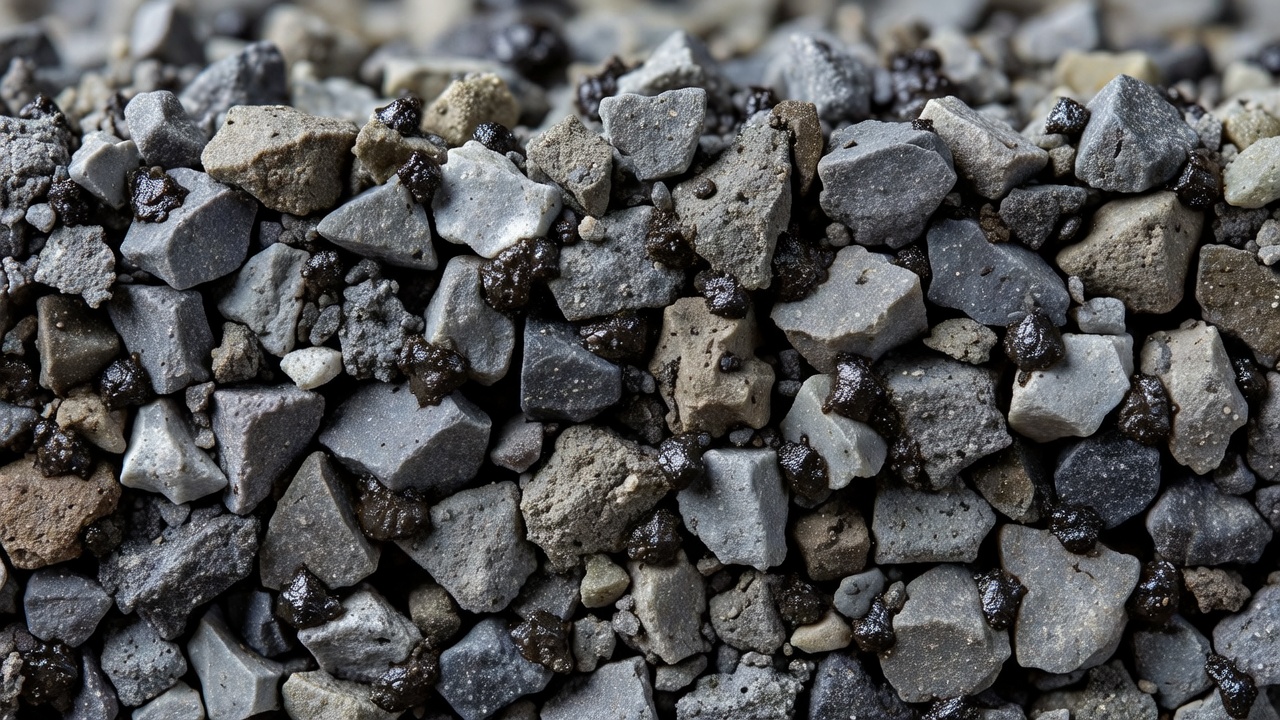
Inspection of foamed-asphalt-stabilized layers spans pre-construction verification, during-construction quality control, and post-construction acceptance testing. The Asphalt Recycling and Reclaiming Association (ARRA) and RoadResource.org provide comprehensive QC/QA guidelines, while agency-specific specifications (Caltrans, TxDOT, AustStab) define the acceptance criteria and testing frequencies.
Pre-construction inspection begins with verification of the mix design. The inspector confirms that the mix design was performed by an accredited laboratory on representative samples of the RAP and aggregate that will be encountered on the project. The binder to be used is verified to produce acceptable foaming characteristics (ER ≥ 10, half-life ≥ 8 seconds) at the specified foaming temperature and water content. A control strip, typically a minimum of 300 feet (90 meters) in length and one full lane width, is constructed at the start of the project to establish the rolling pattern, compaction procedures, and target density. Density achieved in the control strip becomes the standard for acceptance on the remainder of the project.
During-construction inspection focuses on several critical parameters. Foam quality is verified at regular intervals, the expansion ratio and half-life are measured using a calibrated foaming nozzle and graduated bucket to ensure they remain within specified limits. Nozzle condition is checked frequently, plugged or partially blocked nozzles are a common cause of foam quality degradation. Mixing quality is verified by visual inspection, the reclaimed mixture should have uniform color and texture without streaks of uncoated material or visible binder balls. The pulverization depth is checked against the specified depth using depth gauges or occasional trenching. The binder application rate is verified through periodic checks using the recycler’s calibrated flow meters and confirmed by the fuel consumption method (tracking bitumen tank volume change against area treated). The active filler application rate is verified by monitoring the cement spreader calibration and checking spread width and density. Total water content in the mix is monitored to maintain the optimum moisture range for compaction.
Weather restrictions are enforced per specification requirements. The Caltrans Partial Depth Recycling specification requires minimum pavement temperature of 60°F (16°C) , minimum ambient temperature of 50°F (10°C) and rising, and prohibits construction if freezing temperatures are forecast within 3 days. These restrictions ensure that the foam has adequate temperature to form properly and that the compacted layer will cure before freezing conditions develop.
Compaction control follows the rolling pattern established in the control strip. The inspector verifies that the specified roller types, weights, and pass counts are followed. Density is measured using nuclear gauge (ASTM D6938) or sand cone (ASTM D1556 / AASHTO T 191) methods at the frequency specified in the project documents, typically one test per 500 to 2,000 square yards of treated area. Target density is typically 98% of the maximum dry density achieved in the control strip or 98% of the laboratory maximum dry density from modified Proctor testing. If density falls below the target, the rolling pattern is adjusted until compliance is achieved.
Post-construction acceptance includes density testing, layer thickness verification, and surface tolerance measurements. The layer thickness is verified through core extraction or depth measurements at a specified frequency, typically one test per 1,000 to 2,000 lane feet. The cured surface is checked for uniformity, absence of loose material, and compliance with grade and cross-slope tolerances. Proof rolling with a heavy roller is sometimes performed to identify areas of inadequate support that require corrective action. Before placing the wearing course (typically a hot mix asphalt overlay of 2-5 inches), the cured surface must be clean, dry, and free of loose material.
The TxDOT Special Specification 3063 for FDR with foamed asphalt incorporates contractor quality control testing for acceptance, TxDOT validation of contractor test results, and minimum 2 years of supervisory experience required for contractor personnel with certification through the Soils & Base Certification Program (SB 102). The AustStab Airport Specification (2024) introduces performance-based quality control where the resilient modulus is the primary mixture design property and compositional consistency during production demonstrates conformance with the approved mix design, with contractor targets exceeding design values to account for production variability.
Foamed Asphalt vs Asphalt Emulsion
The choice between foamed asphalt and asphalt emulsion for cold recycling and stabilization applications depends on project-specific factors including binder availability, equipment requirements, construction window, traffic requirements, environmental conditions, and performance objectives.
| Property | Foamed Asphalt | Asphalt Emulsion |
|---|---|---|
| Nature | Physical foam (water expands to steam, then condenses) | Chemical emulsion (surfactant-stabilized dispersion) |
| Water role | Foaming agent, mostly evaporates or remains as compaction moisture | Carrier fluid, must break and evaporate for binder to function |
| Typical binder content | 1.5-3.0% by dry aggregate mass | 2.0-4.0% residual asphalt by dry aggregate mass |
| Manufacturing temperature | 160-180°C (bitumen) | 50-85°C |
| Additives required | None required (water + air only) | Surfactants/emulsifiers required at 0.1-2.0% |
| Curing time | Short, hours to days, strength develops as water evaporates | Longer, days to weeks, requires chemical break then evaporation |
| Storage life | Must be used immediately, foam collapses in seconds to minutes | Can be stored for weeks to months in heated tanks |
| Supply chain | On-site production required, specialized equipment needed | Central plant manufacturing, transportable |
| Temperature sensitivity | Lower, suitable for cool weather and nighttime construction | Higher, requires warmer temperatures for proper break and cure |
Advantages of foamed asphalt include rapid strength gain, mixtures develop close to full strength immediately after placement and compaction as compaction moisture evaporates, unlike emulsion which requires a chemical breaking process and may need days to weeks of curing. The UCPRC study notes that strength gain in foamed asphalt mixtures occurs as compaction moisture dries back, which can happen rapidly in favorable weather. Nighttime construction is feasible, unlike emulsion (which requires warmer temperatures for proper breaking and curing), foamed asphalt can be used in nighttime construction per Caltrans guidance. No emulsifiers are required, foamed asphalt uses only water, air, and standard road-grade bitumen, eliminating chemical emulsifier costs and environmental concerns associated with surfactant production. Lower binder consumption, typical foamed asphalt contents (1.5-2.5%) are lower than emulsion residual contents (2.5-4.0%), reducing material costs. Better early-life trafficability, because foamed asphalt does not rely on a chemical breaking process, the material can support construction traffic almost immediately after compaction.
Advantages of asphalt emulsion include better aggregate coating, emulsions can provide more complete coating of aggregate particles, especially with finer materials, which can be advantageous for some mix types. Longer workability time, emulsions can be engineered (via emulsifier chemistry) for controlled breaking times, allowing extended working windows for large-volume placement. Rejuvenation of aged binder, certain engineered emulsions contain rejuvenating agents that can soften the aged RAP binder, restoring some of its rheological properties. Storage and transport, emulsions can be produced at a central plant and transported to the job site, whereas foamed asphalt must be produced on-site with specialized equipment. Established supply chain, emulsions are widely available from numerous suppliers worldwide, while foamed asphalt requires specialized recycling equipment. Better for thin treatments, for surface treatments (e.g., slurry seals, microsurfacing), emulsions are the only practical option.
Application scenarios for foamed asphalt include CIR and FDR projects requiring immediate traffic reopening, nighttime or cold-weather construction, thick FDR (8-12 inches) where rapid binder penetration and fast curing are beneficial, environmental/low-emission projects where zero VOCs and lower CO₂ are priorities, and projects where the supply chain for emulsion is not available.
Standards and Guidelines
Foamed asphalt technology is governed by a comprehensive framework of standards, specifications, and guidelines developed by national and international organizations, state transportation agencies, and industry bodies.
AASHTO Standards, AASHTO PP 94 (Standard Specification for Determination of Optimum Asphalt Content of Cold Recycled Mixture with Foamed Asphalt) and AASHTO TP 101 (Standard Method of Test for Determination of Optimum Asphalt Content of Cold Recycled Mixture with Foamed Asphalt) provide the primary mix design standards in the United States. AASHTO T 245 (Marshall Compaction Method) is used for foamed asphalt specimen preparation at 75 blows per side. AASHTO T 167 (Compressive Strength of Bituminous Mixtures) is referenced for mechanical testing.
ASTM Standards, ASTM D6931 (Indirect Tensile Strength of Bituminous Mixtures) is the standard test method for ITS of foamed asphalt specimens. ASTM D6857 (Maximum Specific Gravity and Density of Bituminous Paving Mixtures) and ASTM D6938 (In-Place Density by Nuclear Gauge) are referenced for density determination.
State Transportation Agency Specifications, Caltrans Non-Standard Special Provision PDR-FA specifies Partial Depth Recycling with Foamed Asphalt using PG 64-10 binder, with California Test Method 313 governing expansion ratio and half-life measurement. TxDOT Special Specification 3063 provides a statewide specification for Full Depth Reclamation with Foamed Asphalt using PG 64-22 binder, incorporating contractor quality control for acceptance. The Maryland State Highway Administration developed foamed asphalt stabilized base (FASB) design values with ER ≥ 10 and half-life ≥ 8 seconds.
Australian Standards, AGPT/T301 (Determining the Foaming Characteristics of Bitumen), AGPT/T302 (Mixing of Foamed Bitumen Stabilized Materials), AGPT/T303 (Compaction of Test Cylinders, Dynamic using Marshall Drop Hammer), and AGPT/T305 (Resilient Modulus of Foamed Bitumen Stabilized Materials) provide a comprehensive testing framework. The AustStab Airport Foamed Bitumen Stabilisation Specification (v1, December 2024) provides the most comprehensive airport-specific standard, including design moduli for different climatic zones with alignment to FAA AC 150/5370-10H.
ICAO and FAA Provisions, ICAO Annex 14, Aerodromes, Volume I and ICAO Doc 9157, Aerodrome Design Manual, Part 3, Pavements reference national standards for foamed asphalt in airport pavement recycling. The AustStab Airport Specification provides design moduli of 800-1,500 MPa depending on climatic conditions for airport foamed bitumen stabilized base layers:
| Climate Zone | Design Modulus | Conditions |
|---|---|---|
| Arid areas, dry season construction | 1,500 MPa | Low moisture exposure |
| Non-arid, no traffic reopening between work periods | 1,000 MPa | Moderate moisture exposure |
| Non-arid, traffic reopened between work periods | 800 MPa | High moisture exposure |
Industry Guidance Documents, The Wirtgen Cold Recycling Technology Manual is the definitive practical guide for foamed bitumen construction, covering equipment operation, mix design, and quality control procedures. The Basic Asphalt Recycling Manual (BARM), published by ARRA and FHWA, is the foundational US reference for all cold recycling technologies. ARRA FDR301 (Recommended Quality Control Sampling and Testing Guidelines for FDR Using Bituminous Stabilizing Agents) and ARRA FD101 (Recommended Construction Guidelines for FDR Using Bituminous Stabilizing Agents) provide detailed QC/QA protocols. The South African CSIR Guidelines for the Design and Use of Foamed Bitumen Treated Materials provides pioneering design methodology from one of the earliest adopters of the technology. The University of California Pavement Research Center Interim Guidelines (UCPRC-GL-2008-01) provide California-specific FDR guidelines for project selection, mix design, structural design, and construction.
Heidelberg Materials Performance Grade Classification provides a systematic categorization of foamed asphalt materials based on long-term stiffness and workability characteristics:
| Grade | Type | Long-Term Stiffness | Workability Time | Equivalent to |
|---|---|---|---|---|
| B1 | SVE | 1,900 MPa | Up to 21 days | HRA/DBM 160/220 |
| B2 | SVE | 2,500 MPa | Up to 21 days | DBM 100/150 |
| B3 | QVE | 3,100 MPa | Up to 4 hours | HRA 40/60 |
| B4 | QVE | >4,700 MPa | Up to 4 hours | DBM/HDM 40/60 |
SVE (Slow Visco-Elastic) designates materials using bituminous binder only without Portland cement, providing extended workability time. QVE (Quick Visco-Elastic) designates materials using bituminous binder combined with Portland cement, providing higher long-term stiffness but shorter workability time. This classification system aids in material selection based on project requirements for strength development rate and construction logistics.
Foamed asphalt technology, with over 50 years of successful application worldwide, continues to evolve through advances in foaming equipment design, binder formulation, mix design methodology, and quality control technology. The expanding body of standards and specifications, from AASHTO and ASTM to ICAO and airport-specific guidelines, provides a robust framework for engineers, inspectors, and materials specialists to specify, design, and control foamed-asphalt-treated pavements that deliver reliable, long-term performance while maximizing the environmental and economic benefits of pavement recycling.
Frequently Asked Questions
- What is the difference between foamed asphalt and asphalt emulsion?
- Foamed asphalt is produced by injecting cold water and compressed air into hot asphalt binder, causing a physical expansion through steam generation. Asphalt emulsion is a chemical dispersion of asphalt droplets suspended in water through emulsifying agents (surfactants). Foamed asphalt must be produced and used immediately on-site with specialized equipment, while emulsion can be manufactured at a central plant, stored for weeks, and transported. Foamed asphalt typically uses lower binder contents (1.5-3.0%) compared to emulsion (2.5-4.0% residual). Foamed asphalt achieves faster strength gain and is less temperature-sensitive, making it suitable for cold weather and nighttime construction. Emulsion provides more complete aggregate coating and can incorporate rejuvenating agents for aged RAP binder. Foamed asphalt generates zero volatile organic compounds, emulsion also has very low VOCs but requires chemical emulsifiers in its production.
- What are expansion ratio and half-life in foamed asphalt?
- Expansion Ratio (ER) is the ratio of the maximum volume achieved by the bitumen in its foamed state to the volume of the bitumen once the foam has completely subsided. It is a measure of the apparent viscosity of the foamed bitumen and directly correlates with its wettability and ability to coat aggregate particles. Higher ER values indicate better dispersion potential. Typical ER values range from 8 to 20, with a minimum of 10 commonly specified for production. Half-Life (t1/2) is the time, measured in seconds, from the moment the foamed bitumen reaches its maximum volume until it decays to half of that maximum volume. Half-life measures foam stability and indicates the time window available for mixing. Typical half-life values range from 6 to 40 seconds, with a minimum of 8 seconds commonly specified. Both parameters are measured using standardized methods such as AASHTO TP 101, California Test Method 313, or Australian AGPT/T301.
- How is foamed asphalt used in Cold In-Place Recycling?
- In Cold In-Place Recycling (CIR) with foamed asphalt, the existing asphalt pavement is milled to a depth of 3-6 inches (75-150 mm), the milled material is crushed and screened to a specified maximum particle size, mixed with foamed asphalt binder (typically 1.5-3.0% by dry weight of RAP) together with active fillers such as cement or hydrated lime (0.5-1.5%), and then placed and compacted, all in a single pass. The foamed asphalt creates a spot-weld bonding mechanism at particle contact points rather than fully coating all aggregate. Active fillers improve early strength gain, enhance moisture resistance, and accelerate curing. After compaction, the material requires a curing period during which moisture evaporates and strength develops, typically 72 hours at 40°C in the laboratory simulates approximately 100 days of field curing per NCAT research.
- What factors affect foamed asphalt quality?
- Five primary factors affect foamed asphalt quality: (1) Bitumen temperature, higher temperatures (typically 160-180°C) increase expansion ratio but decrease half-life, below 155°C foaming becomes poor. (2) Foaming water content (FWC), higher water content (2-3% by bitumen mass) increases expansion ratio but reduces half-life, lower water content (1-1.5%) produces longer half-life but lower expansion ratio. (3) Binder type and source, softer penetration grades foam more readily than harder grades, polymer-modified binders often exhibit reduced foaming characteristics, crude oil source chemistry significantly affects foaming behavior. (4) Anti-foaming agents, silicone-based contaminants can severely impair or completely prevent foaming. (5) Air pressure and water temperature, higher air pressure (typically 5 bar) increases expansion ratio but can reduce half-life if excessive, colder water can cause thermal shock and reduce foam quality.
- What is the mix design process for foamed asphalt treated materials?
- The mix design for foamed-asphalt-treated materials follows AASHTO PP 94 / AASHTO TP 101. The process begins with foamability testing of the binder at various temperatures and water contents to identify conditions yielding ER ≥ 10 and half-life ≥ 8 seconds. The RAP or aggregate is then compacted at varying water contents using modified Proctor effort to determine optimum water content (OWC) for compaction. Test specimens are prepared at OWC with three to four trial foamed asphalt contents (typically 1.5%, 2.0%, 2.5%, 3.0%) and the specified active filler content. Specimens are compacted using either the Superpave Gyratory Compactor at 30 gyrations or the Marshall hammer at 75 blows per side. Compacted specimens are cured at 40°C for 72 hours in a forced-draft oven, then cooled at 25°C for 24 hours. Dry and soaked (24-hour water bath) Indirect Tensile Strength (ITS) is measured. The optimum foamed asphalt content is the minimum binder content meeting strength requirements, typically dry ITS ≥ 45 psi (310 kPa) with TSR ≥ 0.70.
- What mechanical properties does foamed asphalt treated base have?
- Foamed-asphalt-treated bases (also called Bitumen-Stabilized Materials or BSM) exhibit Indirect Tensile Strength (ITS) values of 45-100 psi (310-690 kPa) for dry specimens and minimum Tensile Strength Ratio (TSR) of 0.70 after 24-hour soaking. Resilient Modulus (Mr) values range from 300-400 ksi (2,070-2,760 MPa) per Maryland SHA research for highway applications, while AustStab Airport Specification recommends conservative design moduli of 800-1,500 MPa depending on climatic conditions. The material shows dramatic cohesion improvement, from 4.4-8 psi (30-55 kPa) for untreated aggregate to 29-43.5 psi (200-300 kPa) for BSM with 2.2% bitumen and 1% cement, representing a 5-6× improvement while maintaining the aggregate's frictional angle (40-51°). The material exhibits temperature sensitivity of approximately 1.3 psi/°F (0.016 MPa/°C), meaning layer stiffness varies seasonally. NCAT field test sections on US 280 in Alabama showed no cracking and less than 0.25 inches of rutting after 3.5 years and 2.3 million ESALs.
- What quality control tests are performed during foamed asphalt construction?
- Quality control during foamed asphalt construction includes: (1) Foam quality verification, expansion ratio and half-life are checked regularly using a calibrated foaming nozzle and measurement bucket to ensure they remain within specified limits (typically ER ≥ 10, half-life ≥ 8 seconds). (2) Binder application rate verification, periodic checks using calibrated flow meters on the recycler. (3) Moisture content monitoring, total water content in the mix is verified to maintain optimum compaction moisture range. (4) Active filler spreader calibration, cement or lime application rates are confirmed. (5) Compaction control, rolling pattern from the control strip is followed and density is verified using nuclear gauge (ASTM D6938) or sand cone (ASTM D1556). (6) Layer thickness and uniformity, visual inspection and occasional trenching or coring. (7) Weather compliance, Caltrans specifies minimum pavement temperature of 60°F (16°C) and minimum ambient temperature of 50°F (10°C) and rising, with no construction if freezing temperatures are forecast within 3 days.
- What are the advantages of foamed asphalt over emulsion for CIR and FDR?
- Foamed asphalt offers several advantages over emulsion for CIR and FDR applications: (1) Rapid strength gain, mixtures develop close to full strength immediately after placement and compaction as moisture evaporates, unlike emulsion which requires a chemical breaking process and may need days to weeks of curing. (2) Nighttime and cold weather construction feasible, foamed asphalt is significantly less temperature-sensitive than emulsion, which requires warmer conditions for proper breaking. (3) No emulsifiers required, foamed asphalt uses only water, air, and standard road-grade bitumen, eliminating chemical emulsifier costs and environmental concerns. (4) Lower binder consumption, typically 1.5-2.5% foamed asphalt versus 2.5-4.0% emulsion residual, reducing material costs. (5) Better early-life trafficability, the material can support construction traffic almost immediately because it does not rely on chemical breaking. (6) Suitable for high-plasticity materials, foamed asphalt can effectively treat materials with some plasticity where emulsion may struggle. (7) Environmental benefits, zero volatile organic compounds, ≥40% reduction in CO₂ emissions compared to hot mix.
- What standards govern foamed asphalt materials and construction?
- Key standards include: AASHTO PP 94, Standard Specification for Determination of Optimum Asphalt Content of Cold Recycled Mixture with Foamed Asphalt, AASHTO TP 101, full standard method for foamed asphalt mix design, California Test Method 313, Determining Application Rates of Foamed Asphalt (expansion ratio, half-life measurement), Caltrans PDR-FA Specification, Partial Depth Recycling with Foamed Asphalt using PG 64-10 binder, TxDOT Special Specification 3063, Full Depth Reclamation with Foamed Asphalt using PG 64-22 binder, Australian AGPT/T301, Determining the Foaming Characteristics of Bitumen, AustStab Airport Specification (2024), comprehensive airport foamed bitumen stabilized base specification with design moduli of 800-1,500 MPa, Wirtgen Cold Recycling Technology Manual, the definitive practical guide, ARRA BARM (Basic Asphalt Recycling Manual), foundational US reference, and South African CSIR Guidelines for the Design and Use of Foamed Bitumen Treated Materials. For airport pavements, ICAO references ASTM and FAA standards through Annex 14 and Doc 9157 Part 3.
- What is the role of cement in foamed asphalt mix design?
- Active fillers (cement or hydrated lime) are typically added at 0.5-1.5% by dry weight of RAP or aggregate in foamed asphalt mixes. Cement serves multiple critical functions: it improves early strength gain by providing initial cementitious hydration bonds that develop within hours of compaction, while the foamed asphalt bonds develop more slowly as moisture evaporates. Cement significantly enhances moisture resistance, the Tensile Strength Ratio (TSR) typically increases from below 0.60 without cement to 0.70-0.85 with cement addition at 1%. Cement accelerates the curing process by consuming some of the mix water through hydration reactions and by raising the pH of the aqueous phase. The University of California Pavement Research Center (UCPRC) study for Caltrans found that projects using foamed asphalt without active filler showed significantly poorer performance. The Heidelberg Materials classification system distinguishes between SVE (Slow Visco-Elastic, bituminous binder only, no cement) and QVE (Quick Visco-Elastic, bituminous binder plus Portland cement) performance grades.