What Is an Automated FOD Detection System?
What Is an Automated FOD Detection System?
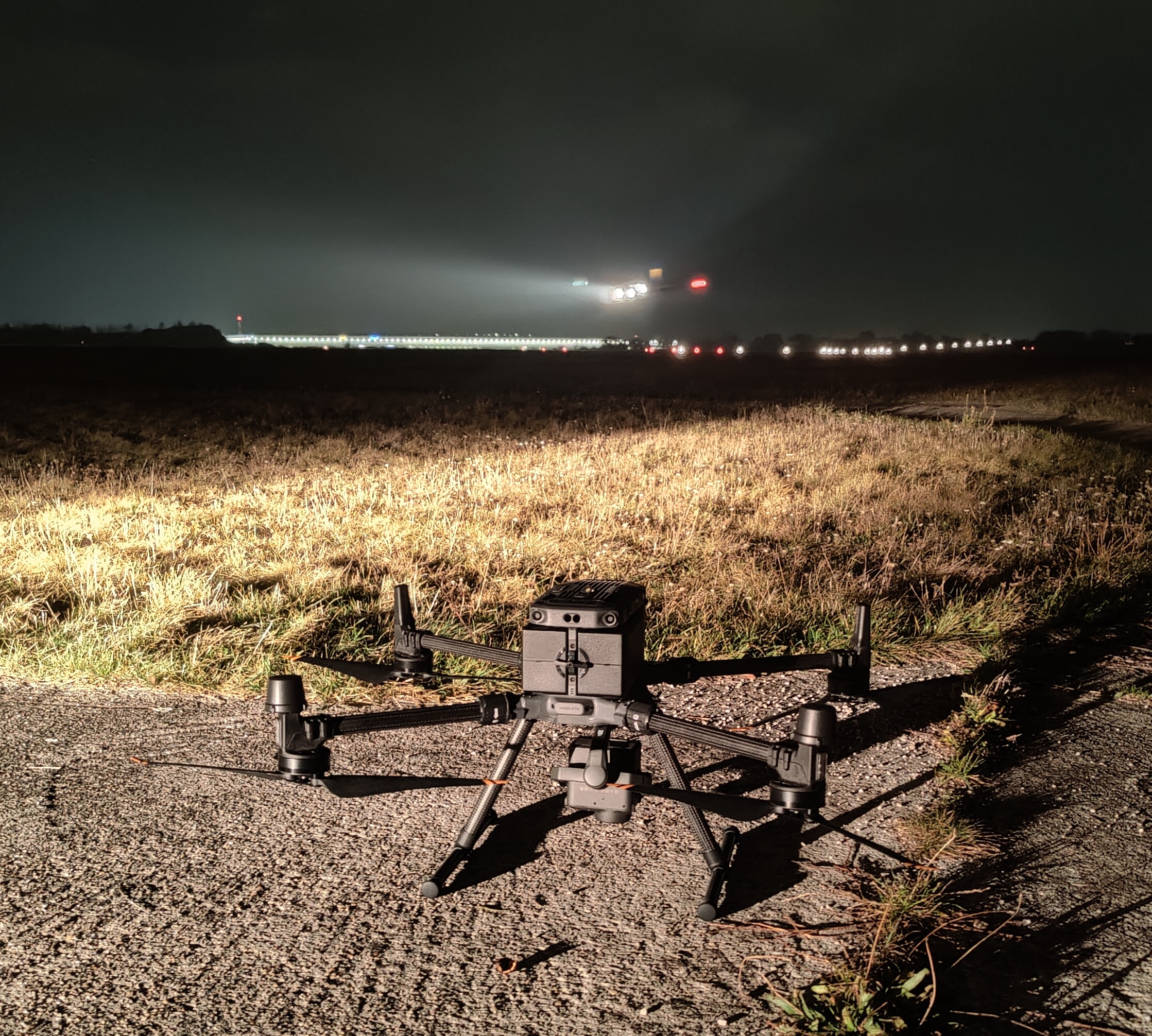
An automated Foreign Object Debris (FOD) detection system is a fixed or mobile sensor installation that continuously monitors airport movement areas, runways, taxiways, and aprons, for the presence of debris capable of damaging aircraft, injuring personnel, or impairing aircraft system operation. These systems replace or supplement manual FOD inspections by personnel walking the runway, reducing detection time from 30–60 minutes to under 90 seconds per full runway scan while providing 24/7/365 monitoring coverage.
Four principal technology categories have emerged: stationary millimeter-wave radar, stationary electro-optical (camera-based), hybrid radar-plus-electro-optical fusion, and mobile radar systems. The global FOD detection equipment market was valued at $153.8 million in 2024 and is projected to reach $317.1 million by 2034, growing at a compound annual growth rate (CAGR) of 7.5% according to Global Insight Services. Radar-based systems hold the largest market share at 45%, followed by electro-optical at 30% and hybrid systems at 25%.
The FAA AC 150/5220-24 provides minimum performance specifications for four system types: stationary radar must detect a standard reference cylinder (38 mm diameter × 31 mm height metal cylinder) at 1,000 m range with location accuracy within 5 m, stationary electro-optical must detect a 20 mm object at 300 m, stationary hybrid must detect 20 mm objects at runway full width, and mobile radar must detect the reference cylinder across a 183 m × 183 m scan area while operating at speeds up to 48 km/h.
Purpose and Airport Need
FOD on airport runways constitutes the second most significant safety threat in aviation after bird strikes. Foreign Object Debris is defined by the FAA as “any object, live or not, located in an inappropriate location in the airport environment that has the capacity to injure airport or air carrier personnel and damage aircraft.” ICAO Annex 14, Volume I, Section 10.2.1 prescribes that “the surface of pavements (runways, taxiways, aprons and adjacent areas) shall be kept free of loose stones or other objects that might cause damage to aircraft structures or engines, or impair the operation of aircraft systems.”
The financial impact of FOD is severe and extensively documented. Annual global FOD damage costs are estimated between $4 billion (Flight Safety Foundation, 2011) and $22.7 billion (FAA comprehensive cost-benefit analysis in 2023 USD). The Boeing Company and the National Aerospace FOD Prevention Inc. (NAFPI) estimate approximately $4 billion in direct aircraft damage annually. QinetiQ’s estimate reaches $12 billion when including indirect costs such as flight delays, cancellations, and aircraft downtime. According to FAA AC 150/5220-24, over 60% of FOD items are made of metal, 18% are rubber, and nearly 50% of collected FOD items are dark-colored, making them difficult to spot during visual inspections. Common FOD dimensions are 3 cm × 3 cm or smaller, comparable to a standard aircraft fastener or lug nut.
The single most transformative event in FOD detection history was the 2000 crash of Air France Flight 4590 (Concorde) at Paris Charles de Gaulle Airport. A titanium alloy wear strip that had fallen from a McDonnell Douglas DC-10 that took off four minutes earlier struck the Concorde’s tire during takeoff at 190 knots. The tire exploded, and a 4.5 kg rubber fragment punctured fuel tank No. 5, causing a massive fire that led to engine failure. The aircraft crashed into a hotel in Gonesse, killing all 109 on board and 4 people on the ground. This disaster directly catalyzed global investment in automated FOD detection technology and led to the first operational systems being deployed at Vancouver International Airport in 2006.
ICAO requires that all airports conduct routine FOD inspections at least four times daily for high-traffic airports, after each known FOD incident, after construction or maintenance work, and following severe weather events. ICAO Doc 9137 (Airport Services Manual), Parts 2, 8, and 9, provides detailed guidance on pavement surface conditions, FOD inspection frequencies, and runway maintenance practices. PANS-Aerodromes (Doc 9981) requires regular inspection of movement areas for surface conditions, while Assembly Resolution A37 explicitly recognizes FOD as a significant safety issue.
Fixed Radar Systems
Fixed radar FOD detection systems use millimeter-wave (MMW) radar operating in the E-band (71–86 GHz) or W-band (92–100 GHz) frequency range. The short wavelength of 3.0–3.9 mm provides the high spatial resolution necessary to detect small debris on the runway surface. The predominant architecture is Frequency-Modulated Continuous-Wave (FMCW) radar, which transmits a continuous signal whose frequency is linearly modulated (chirped) over time. The reflected signal from a target is mixed with a copy of the transmitted signal, and the frequency difference (beat frequency) between transmitted and received signals is proportional to the target’s distance: R = (c × Δf) / (2 × S) where S is the chirp rate.
| Parameter | Typical Value | Notes |
|---|---|---|
| Operating frequency | 76–77 GHz, 92–100 GHz | 76 GHz is FCC unlicensed band (Part 15) |
| Wavelength | 3.0–3.9 mm | Enables small target detection |
| Range resolution | 5–30 cm | Proportional to available bandwidth |
| Detection range | 1,000 m+ | For FAA reference cylinder target |
| Azimuth scan angle | 180–200° | Motorized positioner assembly |
| Sweep time per scan | 60–90 seconds | Full runway coverage cycle |
| Grazing angle | ~2° optimal | Minimizes ground clutter |
FMCW radar offers several critical advantages for FOD detection. It operates with very low transmit power in the milliwatt range, causing no harm to airport personnel, passengers, or aircraft systems. It provides all-weather operation, penetrating fog, rain, and snow significantly better than optical systems, a critical requirement since FOD hazards exist regardless of visibility conditions. It enables day and night operation as radar is completely unaffected by ambient lighting. It offers simultaneous range and velocity measurement, allowing the system to distinguish moving objects (vehicles, wildlife) from stationary debris.
The primary technical challenge for FOD radar is distinguishing small targets from ground clutter, radar reflections from the runway surface itself, including pavement texture, markings, joint seals, and edge lights. The standard detection approach uses Clutter Map Constant False Alarm Rate (CM-CFAR) processing. The radar builds a statistical model of the background clutter for each resolution cell by averaging returns over many scans. A detection threshold is set dynamically as Threshold = μ_clutter × CFAR_factor, where μ_clutter is the mean clutter power and the CFAR factor is tuned to maintain a constant false alarm rate, typically 10⁻⁶ per resolution cell. Any return exceeding the threshold by a statistically significant margin is flagged as potential FOD.
Advanced clutter rejection techniques include Iterative Adaptive Approach (IAA) for interference suppression and false alarm reduction (PMC7916495), time-domain constant false alarm ratio processing combined with runway edge detection for region-of-interest extraction (PMC8199731, Chinese Academy of Sciences), and deep learning classification networks that augment CFAR by classifying detected anomalies as FOD versus false alarm based on radar signature features. Polarimetric methods using full-polarization scattering measurements help distinguish FOD from pavement texture, while optimal grazing angle modeling at approximately 2 degrees minimizes clutter while maximizing runway coverage.
The FAA defines a standard reference target for performance testing: a metal cylinder 38 mm (1.5 in) in diameter and 31 mm (1.2 in) high, unpainted, with a radar cross-section (RCS) of approximately −20 dBsm. A compliant stationary radar system must detect this target at ranges up to 1,000 m (0.62 mi) from the sensor with location accuracy within 5 m (16 ft).
Deployment configuration per FAA AC 150/5220-24 requires sensors located 50 m (165 ft) or more from the runway centerline, with recommended installation at approximately 125 m from the runway side edge at 8 m height. A typical installation uses 2–3 sensors per runway depending on length: 1 radar for runways up to 1,829 m (suitable for regional airports serving A319/B737 aircraft), 2 radars for runways up to 4,000 m (international airports with B747/A380 operations), and 3 radars for runways up to 5,500 m (high-altitude or ultra-long runways).
Electro-Optical Systems
Electro-optical (EO) FOD detection systems use visible-spectrum cameras, infrared (IR) cameras, or combined sensor arrays to visually monitor runway surfaces. These systems rely on sophisticated computer vision and machine learning algorithms to identify debris in runway imagery.
Visible-light cameras use high-resolution multi-megapixel sensors with telephoto lenses, typically 1920×1080 resolution or higher at 30+ frames per second. They operate with natural illumination during daytime. Infrared and thermal cameras operate in the long-wave infrared (LWIR) band (8–14 μm), detecting thermal contrast between debris objects and the runway surface. They are effective at night without visible illumination and are less affected by shadows and lighting changes than visible-spectrum cameras. Near-infrared (NIR) systems use active NIR illumination for enhanced night capability without visible light pollution.
Under FAA AC 150/5220-24, stationary electro-optical systems must detect a 2.0 cm (0.8 in) object at ranges up to 300 m (985 ft) using only ambient lighting. Sensors must be located 150 m or more from the runway centerline, with 5–8 sensors typically required per runway depending on airport requirements. The system must support continuous surveillance.
Image processing for EO FOD detection employs multiple computational layers. Background subtraction and change detection compares current image frames to a reference clean-runway baseline, flagging significantly deviating pixels as potential FOD. Methods include frame differencing, Gaussian mixture models (GMM) for background modeling, and improved region growth algorithms. Feature-based detection extracts hand-crafted features from image regions including Histogram of Oriented Gradients (HOG), Scale-Invariant Feature Transform (SIFT), color histograms, texture features, and Gabor wavelet features combined with Support Vector Machine (SVM) classification (Niu et al., Beihang University).
Modern EO FOD systems increasingly use convolutional neural networks (CNNs) for object detection (Faster R-CNN, YOLO, SSD adapted for small object detection), semantic segmentation (U-Net, DeepLabv3+) for pixel-level FOD segmentation, and weakly supervised learning trained on airport datasets with image-level labels. Random Forest approaches using Pixel Visual Features (PVF) with learned weights and receptive fields (PMC9002671) outperform both traditional random forests and DeepLabv3+ in precision and recall for FOD detection on optical runway images.
Key challenges for EO-only systems include false alarms from shadows, tire marks, runway markings, pavement cracks, splice joints, and holes. Performance degrades significantly in rain, fog, snow, and low-light conditions. The iFerret Changi Airport evaluation data provides quantitative evidence: day range for 4 cm objects drops from 1,100 m (clear) to 890 m at 16 mm/hr rainfall, a 19% reduction. Night range drops from 600 m to 520 m in 22 mm/hr rain (13% reduction). For 1 cm objects, night range falls to 310 m and degrades further in rain. Detection of objects smaller than 5 cm × 5 cm remains difficult for pure optical systems at long ranges.
Hybrid Systems (Radar + Camera Fusion)
Hybrid FOD detection systems combine millimeter-wave radar and electro-optical cameras to overcome the individual limitations of each technology. Radar and EO sensors are fundamentally complementary: radar provides all-weather, day/night, long-range detection but lacks the resolution to visually identify objects, EO cameras provide high-resolution visual identification but degrade significantly in adverse weather and darkness.
| Aspect | Millimeter-Wave Radar | Electro-Optical Camera |
|---|---|---|
| Day operation | Excellent | Excellent |
| Night operation | Excellent | Requires IR or active lighting |
| Fog, rain, snow | Good to excellent | Poor to fair |
| Small object detection | Good (down to ~1 cm RCS) | Excellent at near range |
| Object classification | Limited (radar return only) | Excellent (visual identification) |
| Maximum range | 1,000 m+ (FAA reference target) | 300–1,100 m (size/condition dependent) |
| False alarm sources | Clutter, runway edges, lights | Shadows, markings, pavement features |
| Installation density | 2–3 per runway | 5–8 (EO-only) or per-edge-light (hybrid) |
The typical operational flow in a hybrid system begins with radar detecting an anomaly via CFAR processing. The system calculates GPS coordinates of the anomaly and directs the EO camera via pan-tilt-zoom to the target location. An AI/ML vision algorithm analyzes the camera image to confirm or reject the detection. Confirmed FOD generates an alert, false alarms are suppressed without disrupting operations.
Three levels of sensor fusion are possible. Sensor-level fusion combines radar and camera data at the raw data level before detection algorithms run. Feature-level fusion combines features extracted from each modality (radar signatures, visual features) into a joint feature vector for classification. Decision-level fusion allows each modality to independently detect FOD, with decisions combined via voting or confidence-based weighting.
The practical benefits of fusion include dramatically reduced false alarm rates, hybrid systems typically achieve less than 1 false alarm per day with visual confirmation, compared to up to 3 per day for radar-only systems per FAA specifications. Visual validation before runway closure prevents unnecessary operational disruptions. Operators can see the FOD object before dispatching crews, enabling threat-level assessment and appropriate response prioritization.
The Xsight RunWize platform, deployed at Boston Logan, Seattle-Tacoma, Bangkok Suvarnabhumi, and Beijing Capital International Airports, represents the leading commercial hybrid implementation. Sensors are collocated with runway edge lights, leveraging existing power and data infrastructure to minimize installation costs. Each sensor unit contains both millimeter-wave radar and a high-definition EO camera. An AI-powered fusion engine combines radar returns and visual data for superior detection performance across all weather conditions, providing full 24/7/365 continuous monitoring.
Commercial Systems
Tarsier (QinetiQ / Moog)
Tarsier was the world’s first fully automatic FOD detection system, developed by QinetiQ (a British defence technology company) with Moog as the exclusive licensee since approximately 2019. It operates at 94.5 GHz in the W-band using FMCW radar technology. The system achieves 100% detection of the FAA reference cylinder out to 3,168 ft (965 m) and was selected by the FAA as the benchmark for radar-based FOD detection systems.
The system features a day/night MIL-SPEC camera for visual confirmation with high-resolution optics and near-infrared illumination. The recommended optimal grazing angle is approximately 2 degrees, minimizing ground clutter while maximizing runway coverage. Deployment uses hexagonal steel towers at 3–24 m height depending on line-of-sight requirements. The radar is protected by a weatherproof radome.
The first installation was at Vancouver International Airport (YVR) in 2006. London Heathrow’s installation in 2007 has resulted in zero significant FOD-related emergencies since deployment. The system performs approximately 1,000 inspections per day compared to the 4 daily human inspections previously conducted. Other deployments include Dubai International, Doha Hamad International, and Providence T.F. Green Airport.
Beyond debris detection, Tarsier can detect pavement cracks, changes in surface height, and movement of in-pavement light fixtures. It operates in zero-visibility conditions including fog, rain, and sandstorms. QinetiQ claims it is the only FOD detection system meeting all major global safety specifications.
FODetect and RunWize (Xsight Systems)
FODetect, manufactured by Xsight Systems (Israel), is a hybrid system combining millimeter-wave radar with electro-optical HD imaging. It can detect objects as small as 0.8 in (2 cm) and scans the entire runway in less than 60 seconds. The system uses Surface Detection Units (SDUs) integrated into runway edge lights or mounted on separate structures, typically deployed on every edge light or alternate lights.
The system includes a unique laser guide beam that can be activated to direct ground personnel to the exact FOD location. GPS coordinates are calculated and transmitted for precise retrieval. Ascription capabilities support post-incident investigation and FOD pattern meta-analysis for trend identification and hotspot mapping.
RunWize is Xsight’s comprehensive runway threat detection platform that extends beyond FOD detection. Component modules include FODetect (core FOD detection), BirdWize (bird and wildlife detection on runways), SnowWize (runway contamination monitoring for snow and ice), and ViewWize (full video coverage and situational awareness). The platform integrates sensors into runway edge lights and uses AI-powered detection across multiple threat types.
Deployments include Seattle-Tacoma International, Boston Logan International ($1.7 million installation, approximately 50% FAA-funded), Tel-Aviv Ben Gurion International, Bangkok Suvarnabhumi International, Beijing Capital International, and Beijing Daxing International. Of all systems evaluated by the FAA in one study, only FODetect met or exceeded all requirements per the Thales/ITAFSC report.
iFerret (Stratech Systems)
iFerret, manufactured by Stratech Systems (Singapore), is the world’s first intelligent vision-based FOD detection system. It uses purely electro-optical technology with no radar component, a passive system with no transmitted radiation, eliminating electromagnetic interference (EMI/EMC) concerns and health hazards.
The system uses self-calibrating cameras with intelligent vision software providing detection ranges of up to 1,100 m for 4 cm objects in daytime clear conditions, 890 m at 16 mm/hr rainfall, 780 m for 2 cm objects in daytime, and 310 m for 1 cm objects at night. Location accuracy is within 1 meter. Average detection time is 2 minutes during daytime and 4 minutes at night.
iFerret was developed in collaboration with the Civil Aviation Authority of Singapore (CAAS) and underwent extensive FAA evaluation at Singapore Changi Airport. The 15-month pilot was completed in July 2007, followed by full-scale implementation in February 2008. It was the first FOD detection system deployed on taxiways (Chicago O’Hare pilot evaluation) and the first on aprons (Düsseldorf International Airport). The node-based architecture is scalable and modular, allowing deployment on runways, taxiways, aprons, and even aircraft carriers. If one node fails, adjacent nodes cover the gap through overlapping coverage.
FOD Finder (Trex Aviation Systems)
FOD Finder by Trex Aviation Systems (USA) is unique as the only FAA-certified mobile FOD detection system. It operates at 78–81 GHz in the FCC unlicensed band, avoiding spectrum licensing requirements and interference with airport communications and navigation systems. The XM (mobile) model detects objects as small as 25 mm × 25 mm across a 183 m × 183 m scan area while operating at speeds up to 30 mph (48 km/h). The XF (fixed) model provides stationary installation.
The system features dual-sensor technology combining millimeter-wave radar with photographic documentation. Automated upload to an internet-based data management system enables remote monitoring and analysis. The FOD Finder XM-M is the only mobile debris detecting and clearing equipment in the world. Both V2 models (Fixed and Mobile) are available and available on GSA for US domestic sales.
ELVA-1 provides OEM millimeter-wave FMCW radar sensors at 76–77 GHz (E-band) with detection of the FAA reference cylinder up to 1,000 m. These are delivered as raw data sensors requiring connection to an airport control or monitoring system for data processing and visualization via Ethernet (UDP).
Detection Performance
Detection performance is measured by three critical metrics: minimum detectable object size, maximum detection range, and false alarm rate. The FAA AC 150/5220-24 defines the following minimum performance specifications:
| Parameter | Specification |
|---|---|
| Reference object (metal cylinder) | 38 mm dia × 31 mm height, unpainted |
| Reference object (sphere) | Golf ball size, 4.3 cm diameter (white, gray, or black) |
| Detection requirement | At least 9 out of 10 specified objects detected |
| Location accuracy | Within 5 m (16 ft) of actual object location |
| False alarm rate (with visual) | ≤ 1 per day |
| False alarm rate (without visual) | ≤ 3 per day |
| Operation | Continuous, must operate on wet, dry, and snow-covered pavement |
Cross-system performance comparison shows substantial variation:
| System | Technology | Min Object | Max Range | Scan Time |
|---|---|---|---|---|
| Tarsier | 94.5 GHz radar + camera | ~31 mm × 38 mm cylinder | 965 m | 70–90 sec |
| FODetect | Radar + EO hybrid | ~20 mm (0.8 in) | Runway-length (multiple SDUs) | < 60 sec |
| iFerret | EO-only (visible + enhanced) | 10 mm (1 cm) | 1,100 m (day clear, 4 cm) | 2–4 min |
| FOD Finder (Mobile) | 78–81 GHz radar + photo | 25 mm × 25 mm | 183 m sweep | Vehicle speed up to 48 km/h |
| ELVA-1 | 76–77 GHz FMCW radar | 31 mm × 38 mm cylinder | 1,000 m | Loop scan (180°) |
False alarms are the critical operational metric. Too many false alarms erode operator trust and cause unnecessary runway closures and operational disruptions. Radar systems use CFAR algorithms to maintain a fixed false alarm probability. The CM-CFAR method maintains a running estimate of background clutter power per cell and sets the detection threshold as T = α × P_clutter where α is the CFAR scaling factor. Hybrid systems inherently reduce false alarms by requiring visual confirmation before alerting, achieving the FAA-specified ≤ 1 false alarm per day threshold.
Outstanding MMW radar systems detect FOD with a minimum radar cross-section of −20 dBsm. The academic literature notes the critical challenge of detecting low-RCS targets beyond 660 m. The key operational insight from fod-detection.com is that “a system with 90% probability of detection and 1 minute detection time may be equally effective as a system with 95% probability of detection and 7 minutes detection time, both reduce risk to roughly 10–13% of baseline.”
Integration with Airport Operations
When FOD is detected, the system executes a defined workflow. The sensor detects an anomaly on the runway surface and classifies it by size, location, and confidence level. For hybrid systems, camera pans to the location for visual confirmation. The alert is sent to the operations center and ATC tower via audio and visual alarms. The user interface displays GPS coordinates, object image, and risk level. Ground crew is dispatched to the precise FOD location, potentially guided by a laser pointer from the sensor (FODetect). After retrieval, the system re-scans the runway to confirm FOD removal. All data is logged for post-event analysis, trend analysis, and regulatory compliance.
Runway closure protocols differ significantly between manual and automated systems. Without automated detection, full runway closure is required for manual inspection, with crews physically walking or driving the entire runway surface, typically 30–60 minutes of closure per inspection. With automated systems, only the affected runway area may need closure. Visual validation allows operators to assess threat level before deciding on closure. Retrieval time is significantly reduced as crews go directly to the FOD location. FODetect claims replacing a 30+ minute closure with a quick, pinpointed collection operation.
Modern FOD detection systems integrate with Air Traffic Control (ATC) systems displaying FOD alerts on ATC screens, Airport Operations Center primary alert consoles, Airport Management Software via API/SDK integration for data sharing, digital surface movement radar to supplement existing surveillance systems, and NOTAM generation systems for automated runway status updates. Integration with the airport’s Safety Management System (SMS) enables FOD incidents to feed into hazard identification and risk assessment processes. The FAA FOD Database (fod.faa.gov) encourages airports to submit FOD data for industry-wide trend analysis.
Regulatory Status
ICAO
ICAO Annex 14, Volume I (Aerodrome Design and Operations, 7th Edition, 2016), Chapter 10, Section 10.2.1 requires that “the surface of pavements (runways, taxiways, aprons and adjacent areas) shall be kept free of loose stones or other objects that might cause damage to aircraft structures or engines, or impair the operation of aircraft systems.” ICAO Doc 9137 (Airport Services Manual), Part 2 (Pavement Surface Conditions), Part 8 (Airport Operational Services), and Part 9 (Airport Maintenance Practices) provide detailed guidance on FOD inspection frequency, detection procedures, and runway surface maintenance. PANS-Aerodromes (Doc 9981) requires regular inspection of movement areas for surface conditions. ICAO recommends runway inspection at least four times daily.
FAA
14 CFR Part 139 (Certification of Airports), §139.305(a)(4) requires that “mud, dirt, sand, loose aggregate, debris, foreign objects, rubber deposits, and other contaminants must be removed promptly and as completely as practicable.” §139.327 requires a self-inspection program with daily inspections of movement areas. However, the FAA’s September 2023 Report to Congress states that FOD detection technologies are not currently a viable replacement for manual inspections under Part 139.
FAA AC 150/5220-24 (September 30, 2009) provides minimum performance specifications for procuring FOD detection equipment covering stationary radar, stationary electro-optical, stationary hybrid, and mobile radar systems. Compliance is advisory for general airport operations but mandatory for all systems acquired through the Airport Improvement Program (AIP) or Passenger Facility Charge (PFC) Program under Grant Assurance No. 34 and Assurance No. 9.
FAA AC 150/5210-24A (February 8, 2024, updated May 20, 2024) provides guidance for developing and managing a complete airport FOD management program organized around four pillars: Prevention (awareness, training, education, maintenance programs), Detection (risk assessment, human and automated detection operations), Removal (equipment characteristics, performance, operations), and Evaluation (data collection, analysis, continuous program improvement).
The FAA Airport Technology Research and Development Branch (AAS-100) conducts performance evaluations of FOD detection systems at airports, testing location accuracy, detection speed, alert triggering, performance against reference targets, and false alarm rate measurement.
EASA
The European Union Aviation Safety Agency (EASA) regulations align closely with ICAO without a specific certification process for FOD detection systems as standalone equipment. EU Regulation 139/2014 requires aerodrome certification including runway inspections. CS-ADR-DSN (Certification Specifications for Aerodrome Design) contains specific FOD-related requirements for runway surface conditions. AMC/GM to Part-ADR.OPS.B.025 provides Acceptable Means of Compliance for runway surface condition monitoring including FOD inspection. The EASA Concept Paper on AI (2024) addresses Level 1 and 2 machine learning applications relevant to AI-based FOD detection systems.
| Authority | Document | Status | Key Requirement |
|---|---|---|---|
| FAA | AC 150/5220-24 | Advisory (mandatory for AIP/PFC) | Performance specs for detection equipment |
| FAA | AC 150/5210-24A | Advisory (mandatory for AIP/PFC) | Complete FOD management program |
| FAA | 14 CFR Part 139 | Regulatory | Airport certification, safety self-inspection |
| ICAO | Annex 14, Vol. I | Standard (SARPs) | Pavements free of FOD |
| ICAO | Doc 9137 | Guidance | FOD detection procedures |
| EASA | Reg. 139/2014 | Regulatory | Aerodrome certification |
| EASA | CS-ADR-DSN | Certification Specs | Runway surface conditions |
Automated FOD Detection and Pavement Inspection Complementarity
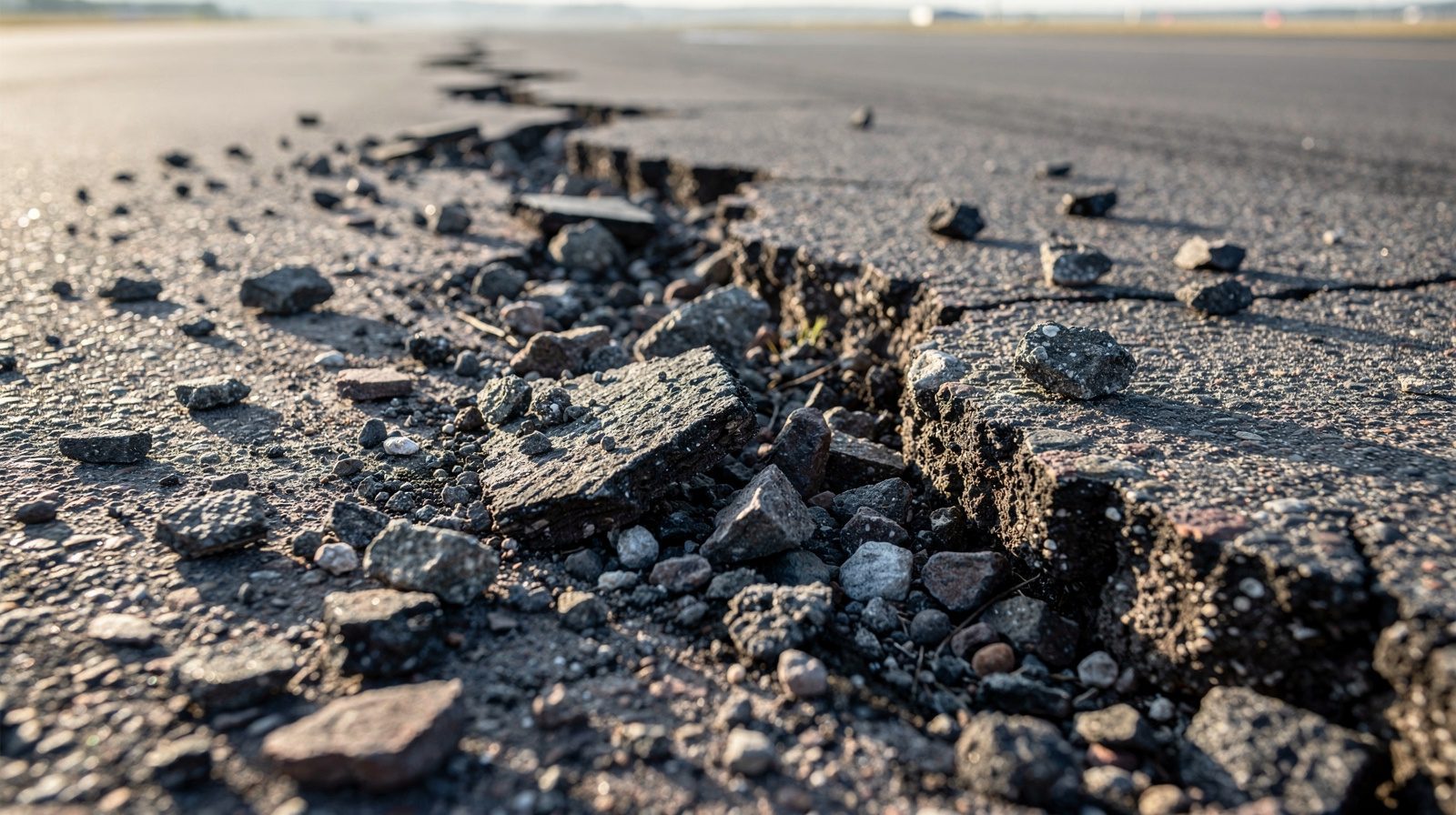
A critical but often underappreciated relationship exists between pavement condition and FOD generation. Automated FOD detection systems generate valuable secondary data about runway pavement condition that directly supplements formal pavement condition inspections.
| Pavement Distress Type | FOD Generated | Frequency |
|---|---|---|
| Joint spalling | Concrete/aggregate fragments | High |
| Raveling / aggregate loss | Loose stones, fines | High |
| Cracking (alligator, block) | Asphalt fragments | Medium |
| Potholes | Asphalt chunks | High |
| Rubber buildup | Tire rubber fragments | Medium |
| Patching failure | Patch material fragments | Medium |
| Light fixture damage | Glass, metal, plastic parts | Low to medium |
Tarsier’s radar can detect pavement cracks, changes in surface height, and movement of in-pavement light fixtures, not just discrete debris. ELVA-1 explicitly notes their radar can detect defects in concrete or asphalt pavement on runways and taxiways and remove them from the radar picture as permanent elements, building a pavement condition database over time.
FOD pattern analysis enables predictive maintenance: locations with high FOD frequency often indicate underlying pavement distress. Repeated FOD from the same location signals active pavement deterioration such as joint spalling or raveling progressing. Concrete and asphalt chunks found as FOD indicate active material degradation requiring immediate investigation. Rubber buildup patterns identify touchdown zone wear patterns for friction management. Hotspot mapping prioritizes inspection and rehabilitation zones for Pavement Condition Index (PCI) surveys.
The Pavement Condition Index operates on a 0–100 scale. At PCI 70–100, preventive maintenance including crack sealing and surface sealing is appropriate. At PCI 40–69, corrective maintenance such as mill-and-overlay and partial patching is needed. At PCI 0–39, reconstruction is required at 6–8 times the cost of preventive treatment. Addressing pavement distress at PCI 65–75 reduces FOD generation by 30–45% on treated sections according to iFactory data.
A documented case study demonstrates the financial impact: an airport identified three taxiway sections generating 40% of annual FOD events due to undiagnosed joint spalling. The treatment cost was $280,000, while previous FOD damage costs over two years totaled $600,000. The ROI was achieved in under one year through FOD-pavement correlation analysis, and the proactive treatment eliminated recurring FOD sources.
The trend is toward comprehensive runway management platforms such as RunWize and XenomatiX XenoTrack that combine real-time FOD detection, periodic pavement condition monitoring, friction testing, contamination monitoring (snow, ice, water), and bird/wildlife detection into integrated decision support systems. Systems like XenomatiX XenoTrack use LiDAR for crack detection and precise positioning, evenness analysis (depressions, potholes, faulting), drainage performance evaluation, runway light protrusion detection, macrotexture (MPD) measurement for wet skid resistance, and automated PCI calculation on both asphalt and concrete pavements.
FAA PAVEAIR, the FAA’s Airport Pavement Management System, can integrate FOD detection data to provide a more complete picture of runway surface condition. The combined analysis optimizes rehabilitation timing and FOD prevention investment, transforming FOD detection from a reactive safety activity into a proactive pavement management intelligence source.
Cost-Benefit
System installation costs vary significantly based on technology, airport size, and configuration. Stationary radar systems (2–3 units) range from $1 million to $5+ million including central processing infrastructure. Stationary electro-optical systems (5–8 units) range from $1 million to $3 million. Hybrid edge-light systems with per-edge-light sensor units range from $3 million to $8+ million for full runway coverage. Mobile radar systems range from $250,000 to $500,000 per vehicle. ELVA-1 radar sensors as OEM components range from $50,000 to $150,000 per unit, excluding integration and processing infrastructure.
The FAA conducted a comprehensive Cost-Benefit Analysis for FOD Detection Systems via the Airport Technology R&D Branch. All six cost-benefit models created with varied component cost assumptions showed a net financial benefit. All six models showed break-even within a reasonable timeframe. Inputs included stakeholder interviews, literature review, safety and operational databases, and airport FOD detection records. The FAA concluded that over a life-cycle of 12 years, FOD detection systems offer net positive value to airports and airlines.
Operational savings accrue from multiple sources. Single engine FOD ingestion costs $2 million to $10 million per event for engine repair or replacement. Tire damage costs up to $5,000 per tire replacement. Aircraft downtime costs $50,000 to $500,000 per hour for wide-body aircraft. Flight delay costs $75 to $150 per minute per aircraft. Manual inspection requires runway closure for 30–60 minutes with 2–4 personnel, while automated detection enables targeted 5–15 minute retrieval. Manual inspections cover approximately 1% of flights (per Moog data) while automated systems cover 100% of flights continuously.
The typical payback period is 2–5 years for medium to large airports. Airports with FOD detection systems installed over 12+ months detected and collected more FOD than human-inspected-only runways. A 40% reduction in FOD generation was observed on treated pavement sections where proactive maintenance was applied based on FOD trend data. The global market growth rate of 7.5% CAGR (2024–2034) reflects positive ROI perception across the aviation industry.
The environmental performance comparison across detection technologies is summarized below:
| Condition | Radar (MMW) | Electro-Optical (Visible) | Electro-Optical (IR/NIR) | Hybrid |
|---|---|---|---|---|
| Clear day | Excellent | Excellent | Excellent | Excellent |
| Night | Excellent | Poor (without lighting) | Good | Excellent |
| Light rain (<4 mm/hr) | Good | Moderate | Moderate | Good |
| Heavy rain (>16 mm/hr) | Moderate | Poor | Poor | Moderate |
| Fog | Moderate to good | Poor | Poor | Moderate |
| Snow | Moderate | Poor | Poor | Moderate |
| Sandstorm | Good | Very poor | Very poor | Good |
| Zero visibility | Good | None | None | Good (radar primary) |
Automated FOD detection systems represent a mature technology category with proven safety benefits, regulatory recognition, and documented financial returns. The convergence of millimeter-wave radar, electro-optical sensors, and artificial intelligence has produced systems that monitor runway surfaces more thoroughly and frequently than any human inspection regime can achieve, while simultaneously generating data valuable for pavement condition assessment and proactive infrastructure management.
Frequently Asked Questions
- What is the smallest object an automated FOD detection system can detect?
- Detection capability varies by system type and environmental conditions. The FAA reference standard specifies a metal cylinder 38 mm (1.5 in) in diameter and 31 mm (1.2 in) high at 1,000 m range for stationary radar systems. Electro-optical systems like iFerret can detect objects as small as 1 cm under ideal daytime conditions at ranges up to 780 m, but performance degrades in rain and darkness. Hybrid systems like FODetect claim detection of objects as small as 10 mm (0.39 in) metal fittings. Stationary EO systems per FAA AC 150/5220-24 must detect 20 mm objects at 300 m.
- How do automated FOD detection systems differ from manual FOD walks?
- Manual FOD walks require full runway closure for 30-60 minutes with personnel walking the entire runway surface, typically performed 4 times daily at high-traffic airports. Automated systems run continuously 24/7/365, scanning the runway in 60-90 seconds per cycle. A single Tarsier installation performs approximately 1,000 inspections per day compared to 4 human inspections. Automated systems also provide precise GPS coordinates of debris, photographic evidence, trend analysis, and can operate in zero-visibility conditions where manual inspections are impossible. The FAA reports that automated systems provide positive ROI over a 12-year lifecycle.
- What is the difference between radar-based and electro-optical FOD detection?
- Millimeter-wave radar systems (operating at 76-81 GHz or 94.5 GHz) transmit radio waves and analyze reflections to detect objects. They work in all weather conditions including fog, rain, snow, and darkness but cannot visually identify objects. Electro-optical systems use visible and infrared cameras with image processing algorithms to detect debris visually. They provide photographic evidence and positive identification but degrade significantly in rain (range reduction of 19-41% depending on conditions), fog, and darkness. Hybrid systems combine both technologies: radar provides primary all-weather detection while cameras provide visual validation, dramatically reducing false alarm rates to less than 1 per day.
- Which airports have installed automated FOD detection systems?
- Major installations include: London Heathrow (Tarsier, since 2007, zero major FOD emergencies since installation), Vancouver International (Tarsier, first installation 2006), Dubai International, Doha Hamad International, Boston Logan (FODetect, $1.7M installation), Seattle-Tacoma (FODetect), Singapore Changi (iFerret, 2007 pilot plus full-scale 2008), Bangkok Suvarnabhumi, Beijing Capital and Beijing Daxing (FODetect), Chicago O'Hare (iFerret, first FOD detection on taxiways), Düsseldorf (iFerret, first apron deployment), and Providence T.F. Green (Tarsier).
- Are automated FOD detection systems required by regulation?
- ICAO Annex 14 requires that pavements be kept free of debris and recommends inspections at least 4 times daily. FAA 14 CFR Part 139 requires self-inspection programs including daily movement area inspections. However, FAA's September 2023 Report to Congress states that FOD detection technologies are not currently a viable replacement for manual inspections under Part 139. Automated systems are recommended (not mandatory) under FAA AC 150/5220-24 and AC 150/5210-24A, but compliance is mandatory for equipment acquired through Airport Improvement Program (AIP) or Passenger Facility Charge (PFC) funds. EASA Regulation 139/2014 requires runway inspections but does not mandate specific technologies.
- Can FOD detection systems help with pavement condition assessment?
- Yes. FOD detection systems generate valuable secondary data about pavement condition. Radar systems can detect pavement cracks, surface height changes, and in-pavement light fixture movement. Repeated FOD from the same location indicates underlying pavement deterioration such as joint spalling or raveling. Concrete and asphalt chunks found as FOD signal active material degradation. This data feeds into Pavement Condition Index (PCI) assessments and helps prioritize maintenance. One case study showed a $280,000 pavement treatment eliminated $600,000 in recurring FOD damage over two years, an ROI achieved in under one year.