What is FOD (Foreign Object Debris)?
FOD (Foreign Object Debris) on Airport Surfaces – Airport Safety
Foreign Object Debris (FOD) is a foundational concept in aviation safety, encompassing all objects, organic or inorganic, living or inert, that are found in inappropriate locations on airport surfaces and pose a risk to personnel, aircraft, and ground support equipment. This entry provides an in-depth look into FOD, from its definition and sources to detection, removal, preventative strategies, and regulatory frameworks.
Definition of FOD
Foreign Object Debris (FOD) refers to any article or substance alien to the aircraft operating environment, as defined by the International Civil Aviation Organization (ICAO) and the Federal Aviation Administration (FAA). FOD is not limited to obvious trash or hardware, natural materials, wildlife, and even substances like ice or volcanic ash are included. The definition is intentionally broad, as even small objects can cause catastrophic aircraft damage or injury.
Key areas under FOD management:
- Runways
- Taxiways
- Aprons
- Helipads
- Adjacent maneuvering and operational zones
The risk arises because small FOD items, when ingested by engines or struck at high speed, can cause significant, even fatal, damage. ICAO Annex 14 and Doc 9137 require airports to maintain movement areas free from FOD, mandating regular inspections and swift removal.
Origins and Types of FOD
Common Types of FOD
FOD can be:
- Loose hardware: Nuts, bolts, screws, washers, often dropped during maintenance
- Tools and parts: Wrenches, pliers, spare parts left inadvertently after servicing
- Personal items: Sunglasses, pens, ID badges, hats, phones
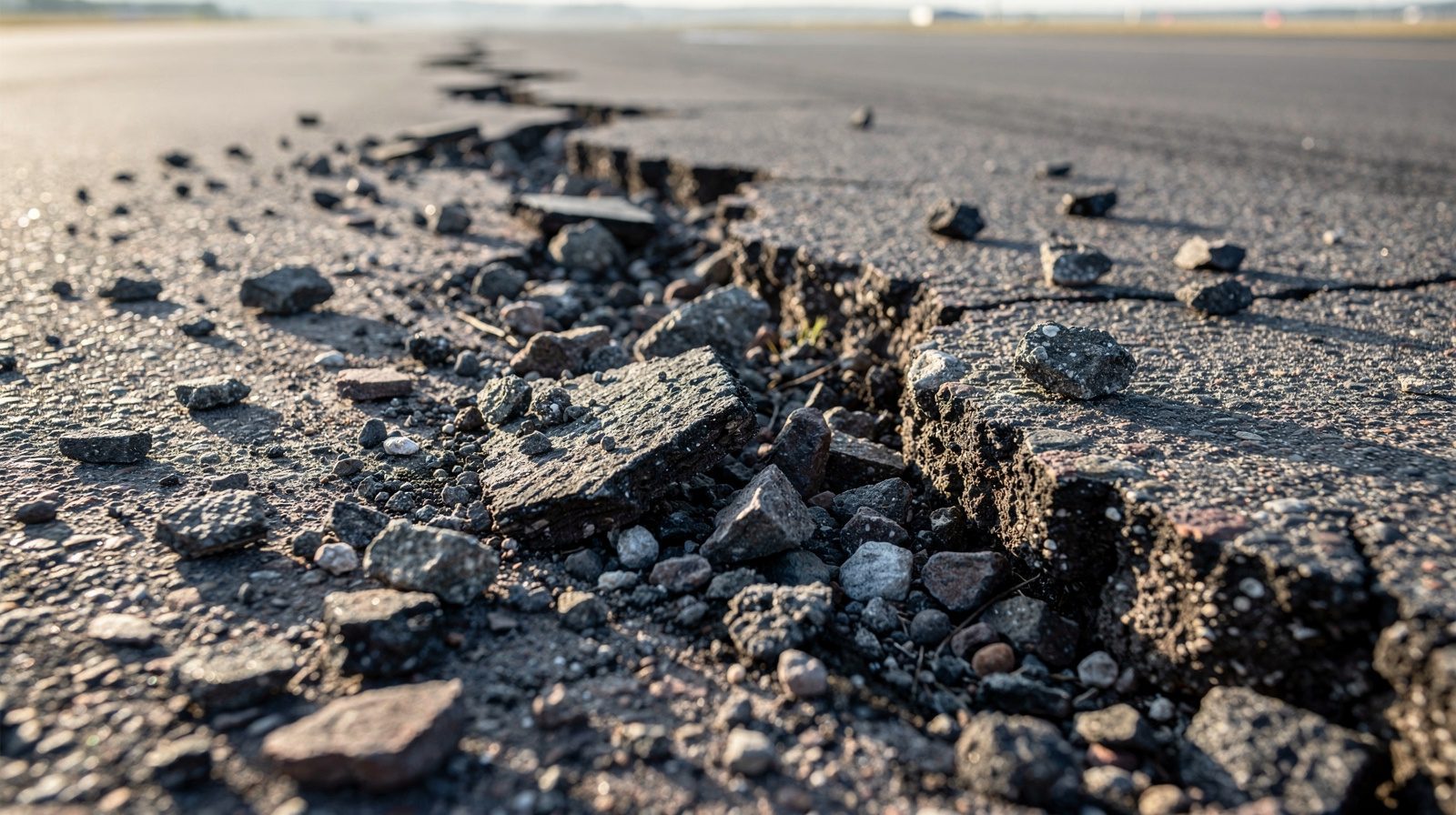
- Pavement fragments: Asphalt or concrete pieces from runway/taxiway wear
- Construction material: Gravel, sand, plastic sheeting, nails, screws
- Wildlife and remains: Birds, mammals, feathers, nests
- Natural debris: Grass clippings, twigs, leaves, snow, ice, volcanic ash, dust
- Litter: Food wrappers, bottles, cups, bags
- Technological debris: Drone parts, batteries
Sources of FOD
- Maintenance operations: The most common source, tools or parts dropped or left behind
- Vehicle traffic: Debris carried onto surfaces by tires/undercarriages
- Personnel: Dropped belongings or improperly discarded waste
- Environmental factors: Wind, storms, snow, flooding moving debris onto runways
- Wildlife activity: Remains, feathers, or nests left on surfaces
- Aging infrastructure: Deteriorating pavement, lights, or signage
ICAO and FAA emphasize a layered approach to FOD risk assessment, detection, and mitigation, given the diversity of sources.
FOD vs. Foreign Object Damage
- Foreign Object Debris (FOD): Any object present where it shouldn’t be in the operational environment
- Foreign Object Damage (FOD): The actual harm caused by debris, such as engine or airframe destruction
Example: A metal strip on a runway (debris) is sucked into an engine, causing compressor failure (damage).
Proactive FOD management focuses on preventing debris from becoming damage, as remediation is always more costly.
Why FOD is a Critical Issue in Aviation
FOD is one of aviation’s most preventable hazards, yet its consequences are severe:
- Small debris can be ingested by engines, damaging fan blades or causing complete engine failure.
- Tires can be punctured, risking control loss during takeoff/landing.
- Even small items like plastic bags can block sensors, causing system errors.
- Ramp personnel are at risk from flying debris, especially with jet blast.
Human vigilance is essential, as procedural lapses are often at the root of FOD incidents.
FOD Impacts: Safety, Financial, and Operational
Safety: FOD has caused fatal accidents (e.g., Air France Concorde 2000, US Airways 1549), engine failures, and tire blowouts.
Financial: FOD imposes substantial direct and indirect costs on the industry, covering engine and airframe repair, aircraft out of service time, delays, and lost productivity. The widely quoted figure of roughly $4 billion a year in direct damage traces to a Boeing analysis repeated by the FAA. It dates from the early 2000s and should be treated as an order-of-magnitude estimate rather than a current measurement, and published totals vary by an order of magnitude depending on whether indirect costs such as delays and cancellations are included.
Operational: FOD events lead to aircraft groundings, delayed/canceled flights, runway closures, and emergency response activations.
Notable Incidents:
- Air France Concorde 4590: Metal strip on runway ruptured tire, led to fatal crash.
- US Airways 1549: Bird strike (biological FOD) caused dual engine failure, successful ditching in Hudson River.
- Military FOD: On 15 March 2023 at Luke Air Force Base, Arizona, a maintainer left a handheld flashlight on the lip of an F-35A engine inlet and it was ingested during a ground run. The US Air Force Accident Investigation Board report, released in January 2024, put the damage at $3,933,106.
Regulatory Guidance and Standards
International and national standards enforce FOD management:
- ICAO Annex 14 & Doc 9137 (Part 8): Require regular inspection, cleaning, and staff training.
- FAA Advisory Circular 150/5210-24: Mandates FOD management programs for US airports, including inspections and corrective actions.
- FAA Advisory Circular 150/5220-24: Guidance on FOD detection equipment.
- 14 CFR Part 139: Requires certified airports to implement comprehensive FOD management as a safety requirement.
Non-compliance can result in fines, operational restrictions, or loss of certification.
FOD Detection: Methods and Technologies
Manual Inspection
- Visual sweeps: Conducted by trained staff, on foot or in vehicles, at regular intervals and after disruptive events.
- FOD walks: Group inspections that reinforce a safety culture.
- Tools: Mirrors, flashlights, checklists, and digital reporting devices.
Manual inspection is essential but limited by human factors (fatigue, visibility).
Automated Detection Systems
- Radar-based systems: E.g., Tarsier, detect objects regardless of weather/lighting.
- Optical/camera-based systems: E.g., iFerret, identifies FOD by image processing.
- Hybrid systems: Combine radar and optical with AI to reduce false positives.
- Digital platforms: Centralize reporting, geo-tagging, and trend analysis.
Automated systems offer continuous, accurate coverage but require significant investment.
FOD Removal: Tools and Procedures
Manual Removal
- Hand collection: For small/localized debris, especially in hard-to-reach areas.
- FOD bins: Strategically placed for safe, temporary debris storage.
Mechanical and Specialized Equipment
- Sweepers: Airport-grade, with brushes, vacuums, and magnetic bars for efficient large-area cleaning.
- Vacuum trucks: High suction for lightweight and heavy debris.
- Blowers: Use air jets to clear dust, sand, and organic debris.
- Magnetic bars: Collect ferrous metal items.
- FOD mats/trackout mats: At vehicle entry points to minimize debris introduction.
Regular maintenance and operator training are crucial for maximum effectiveness.
FOD Prevention Strategies and Best Practices
Procedural Controls
- Routine and event-driven inspections: Mandated by ICAO/FAA.
- Tool/part accountability: Tool control systems, shadow boards, checklists.
- FOD walks: Foster shared responsibility.
- Comprehensive reporting: Digital platforms for real-time data, geo-tagging, and analysis.
Engineering and Technological Controls
- Quality pavement/infrastructure: Prevents debris generation.
- Vehicle/personnel access controls: FOD mats, cleaning stations, security.
- Wildlife management: Habitat modification, deterrents, and monitoring.
- Drainage systems: Designed to prevent buildup and movement of debris.
Organizational and Cultural Controls
- Staff training and awareness: Regular programs for all airport personnel.
- Clear assignment of responsibilities: Leadership, operations, maintenance, and ground handling.
- Continuous improvement: Data analysis, trend identification, and program refinement.
Case Studies and Real-World Applications
- Concorde Crash (2000): Led to global FOD management reforms.
- Military aviation: Strict tool accountability, regular FOD walks, and advanced sensors.
- Major airports: Adoption of automated detection, digital reporting, and integrated response protocols.
The Future of FOD Management
- Artificial Intelligence (AI): Enhances detection and data analysis.
- Integration with airport management systems: Streamlines response and documentation.
- Drones and robotics: Emerging as inspection and collection tools.
- Global harmonization: ICAO and IATA promoting common standards worldwide.
Conclusion
FOD is a universal aviation hazard with potentially catastrophic consequences. Its prevention requires a comprehensive, systematic approach: regular inspections, robust detection and removal technologies, engineering controls, staff awareness, and adherence to international standards. As aviation evolves, so too do FOD risks, demanding continuous vigilance and innovation from every stakeholder in the airport ecosystem.
Protecting your airport, your aircraft, and your people starts with effective FOD management.
Further Reading
- ICAO Doc 9137 – Airport Services Manual, Part 8
- FAA Advisory Circular 150/5210-24
- IATA Guidance Material
Glossary References
- ICAO Annex 14: Aerodromes
- FAA 14 CFR Part 139
- IATA FOD Prevention Program
Stay informed, stay vigilant, and make FOD management a cornerstone of your airport’s safety culture.
Frequently Asked Questions
- What does FOD stand for in aviation?
- FOD stands for Foreign Object Debris, which includes any object, material, or substance on an airport surface that is not part of the normal environment and poses a risk to aircraft, ground equipment, or personnel.
- Why is FOD so dangerous for airports and aircraft?
- FOD can cause severe damage to aircraft engines, tires, and structures, potentially leading to catastrophic failures. It also endangers ground personnel and disrupts airport operations, resulting in costly repairs and delays.
- How is FOD detected and removed from runways?
- FOD detection uses a combination of manual inspections, radar, optical sensor systems, and digital reporting tools. Removal is achieved through hand collection, mechanical sweepers, vacuum trucks, blowers, and magnetic bars.
- What are some examples of FOD?
- Common FOD examples include loose hardware (nuts, bolts), tools, pavement fragments, wildlife remains, litter, construction materials, and even natural debris like ice, sand, or volcanic ash.
- What regulations govern FOD management?
- FOD management is mandated by ICAO (Annex 14, Doc 9137), FAA Advisory Circulars (150/5210-24, 150/5220-24), and 14 CFR Part 139, which require airports to implement inspection, reporting, and removal programs.