What is Foreign Object Debris (FOD)?
What is Foreign Object Debris (FOD) on Airfield Pavements?
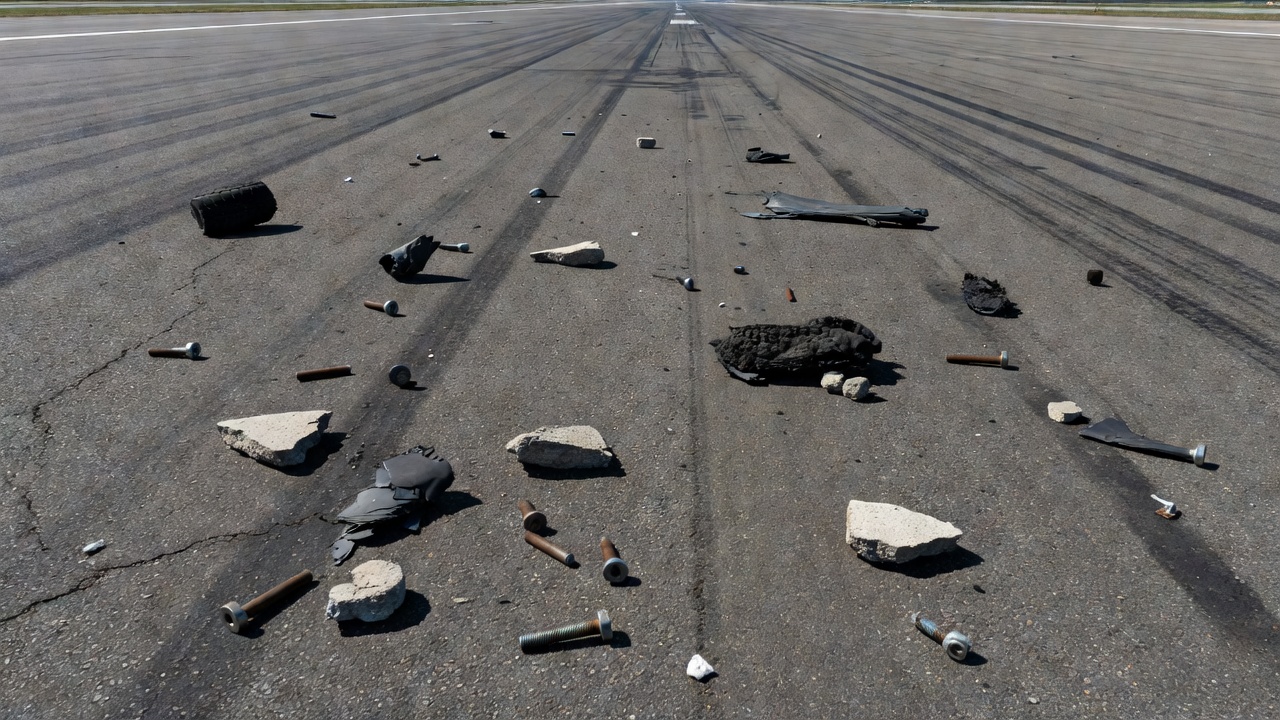
Foreign Object Debris (FOD) is any object, natural or man-made, living or inert, located on an airport movement area where it does not belong and where it has the potential to cause damage to aircraft, injure personnel, or disrupt operations. The International Civil Aviation Organization (ICAO) defines FOD in Annex 14, Volume I, as a substance, debris, or article alien to a vehicle or system that would potentially cause damage. The United States Federal Aviation Administration (FAA) expands this definition in Advisory Circular 150/5210-24A to include any object that could create a hazard to aircraft operations, ground support equipment, or personnel working in the airfield environment. FOD is not limited to runways, it encompasses taxiways, aprons, holding bays, runway end safety areas (RESAs), and any paved surface where aircraft operate.
Definition and Types of FOD
The conceptual framework for FOD divides the universe of potential debris into several major categories based on origin, material composition, and hazard profile. Hardware and mechanical debris includes nuts, bolts, screws, washers, rivets, safety wire, lockwire, cotter pins, springs, bearings, and fasteners of every description. These items are typically dropped during aircraft maintenance or ground servicing operations. The aviation industry standard, the National Aerospace FOD Prevention Standard (NAS 412), classifies FOD into specific types: foreign object debris (the object itself) and foreign object damage (the damage resulting from the object interacting with an aircraft system). Within the debris category, items are further classified by size and hazard potential, a 3-mm diameter steel ball bearing ingested into a turbine engine can cause damage disproportionate to its size due to the high kinetic energy at impact velocities approaching 300 meters per second.
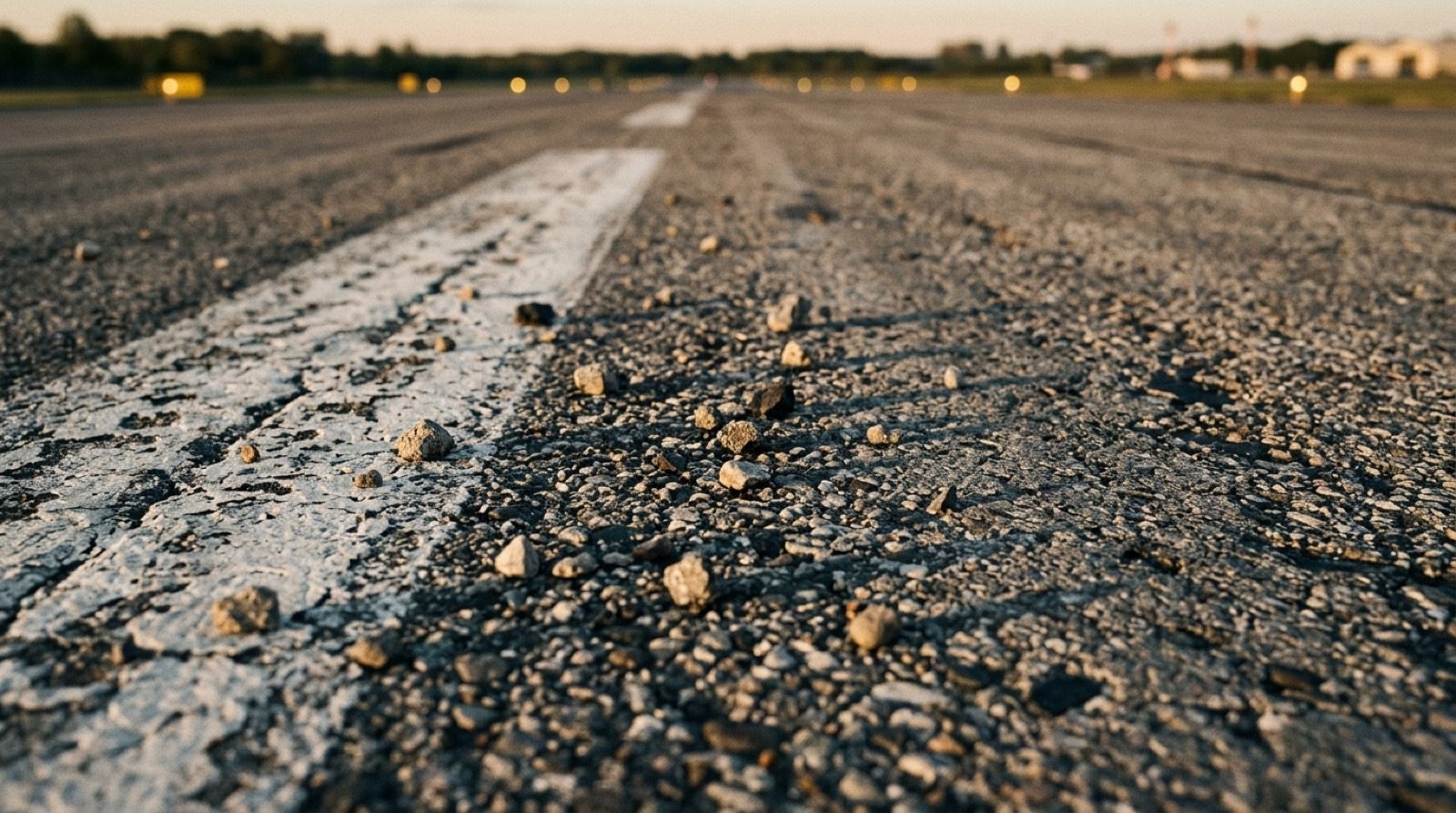
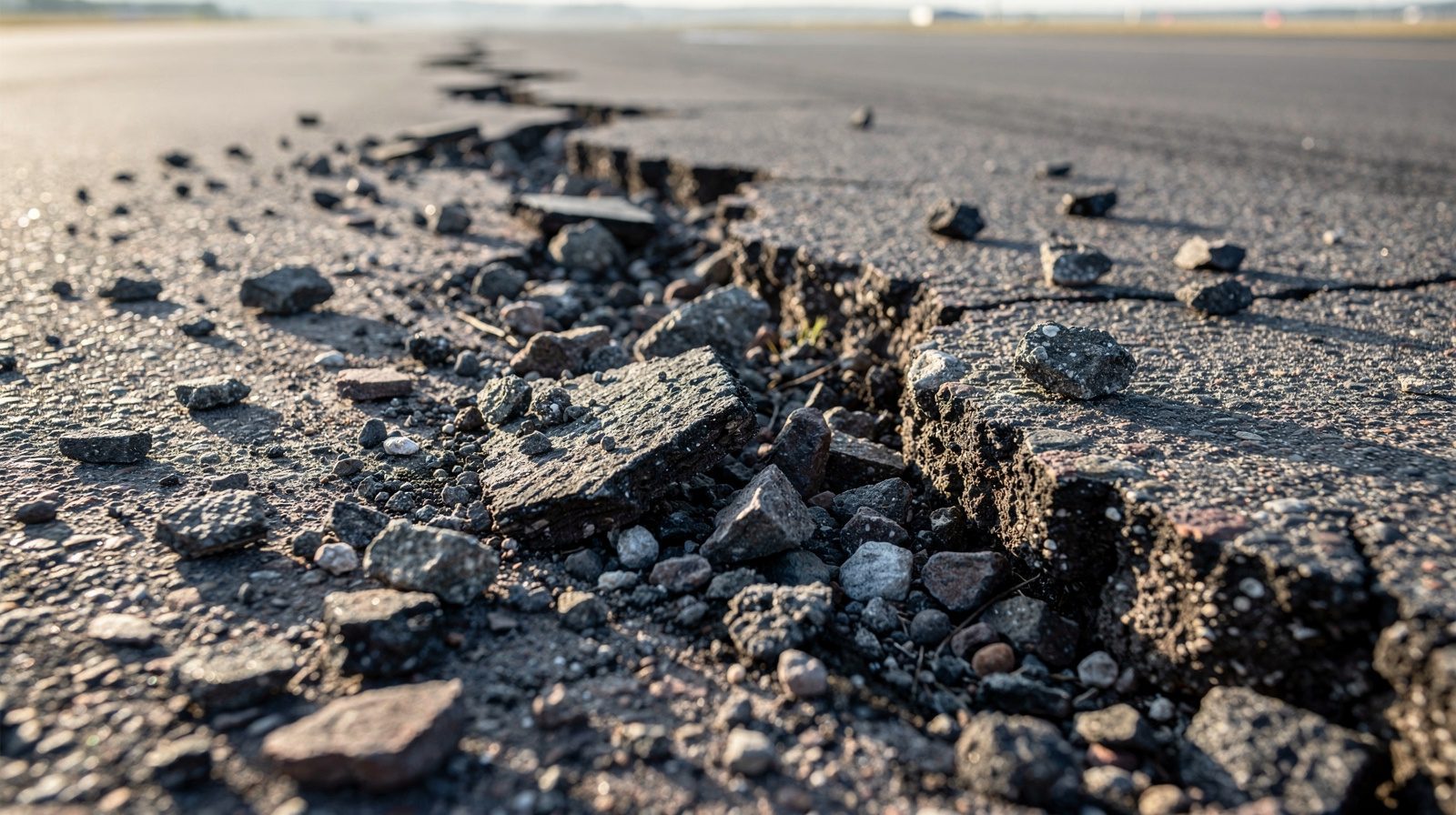
Pavement-derived debris is generated directly from the deterioration of the airfield pavement surface itself. This includes loose aggregate particles from raveling asphalt, concrete spalls from joint deterioration, surface mortar fragments from scaling concrete, broken pavement fragments from impact damage or freeze-thaw cycling, and fragments of pavement marking material (paint, thermoplastic, or preformed tape) that have become detached. Pavement-derived FOD is unique among debris sources because it is self-generating, a pavement surface in poor condition continuously produces new debris particles as traffic continues to stress the deteriorating surface. The FAA Advisory Circular 150/5210-24A explicitly identifies deteriorated pavement surfaces as a primary FOD source, stating that FOD management programs must include pavement condition assessment and timely maintenance to address this source.
Construction and maintenance debris enters the movement area during airfield construction, resurfacing, marking, lighting maintenance, and general repair work. This category includes gravel and loose stones tracked from unpaved areas, pieces of wire and cable from electrical work, concrete and asphalt fragments from saw-cutting operations, aggregate from fresh seal coats before chip embedment is complete, construction signage and barricades that are not properly secured, and general construction litter. The period during and immediately following pavement construction or maintenance presents the highest risk of construction-related FOD, and ICAO Doc 9137 (Airport Services Manual, Part 8) requires that construction areas be isolated from active movement areas and that thorough cleaning be performed before reopening to aircraft traffic.
Wildlife debris encompasses all organic material from animal sources present on airfield surfaces. Bird remains are the most common wildlife FOD item, ranging from whole carcasses to feathers and bone fragments. The presence of bird remains on a runway also attracts scavengers such as larger birds, foxes, and coyotes, potentially creating a cascading FOD and wildlife hazard. Rodent and small mammal remains, insect swarms that are crushed on pavement surfaces creating slippery slurry conditions, and animal nests constructed in cracks, joints, or equipment enclosures all constitute wildlife FOD. Wildlife remains that are not promptly removed can become embedded in tire treads and subsequently flung into engine inlets.
Organic and environmental debris includes leaves, grass clippings, twigs, pine needles, seed pods, and other vegetative material that accumulates on paved surfaces. Snow and ice fragments that become mobile on the surface, volcanic ash deposited during eruptions, sand and dust transported by wind from adjacent unpaved areas, and standing water on the surface that can obscure other debris are also included. While organic debris is generally less hazardous than metal objects, large accumulations of organic matter can clog engine inlet screens, block cooling vents, and create slippery surface conditions. Volcanic ash, in particular, presents a severe FOD hazard because fine ash particles are highly abrasive to engine compressor blades and can melt and solidify as glass deposits on turbine components.
Personal items and operational waste includes objects dropped or discarded by passengers and airport personnel: cell phones, sunglasses, hats, airport ID badges, pens, food wrappers, beverage containers, luggage straps, baggage tags, and clothing items. While individually these items may appear innocuous, a plastic shopping bag on a runway can be ingested into an engine inlet and disrupt airflow to the compressor, potentially causing compressor stall. Luggage straps and cargo netting fragments can become entangled in landing gear mechanisms, interfering with retraction and extension operations.
FOD Sources: Deteriorating Pavements, Construction, Wildlife, and Human Factors
Pavement Deterioration as a FOD Source
The relationship between pavement condition and FOD generation is direct and quantifiable. ICAO Doc 9137, Part 2 (Pavement Surface Conditions) and Part 8 (Airport Operations) establish that the movement area surface must be maintained in a condition that does not generate debris. Raveling in asphalt pavements, the progressive dislodgement of aggregate particles due to binder oxidation, age-hardening, or moisture-induced stripping, produces loose stone particles ranging from fine sand-sized material (sub-2 mm) to coarse aggregate fragments exceeding 10 mm. Research published through the NCHRP IDEA Program (Project 163) has shown that raveling severity correlates directly with the volume of loose aggregate generated on the surface, with moderate to high severity raveling producing measurable debris accumulation within hours of cleaning.
Spalling in concrete pavements occurs when the surface mortar or concrete near joints and cracks fractures and separates from the underlying sound concrete. Joint spalling at transverse contraction joints is the most common concrete FOD source, producing fragments that range from thin mortar flakes (2–5 mm thick) to larger chunks (25–50 mm across) that include coarse aggregate. The FAA Advisory Circular 150/5380-6B (Guidelines and Procedures for Maintenance of Airport Pavements) specifies that joint spalling exceeding 100 mm in width or 50 mm in depth constitutes a FOD hazard requiring immediate repair. Corner breaks at concrete slab corners produce angular fragments that are particularly hazardous because their sharp edges can cut aircraft tires on impact.
Cracking in both asphalt and concrete pavements serves as an indirect FOD source. Cracks provide pathways for water infiltration that accelerates underlying deterioration, and the edges of cracks progressively ravel and spall through traffic-induced stress concentrations, producing debris particles. Longitudinal cracks in asphalt pavements, when subjected to shear forces from turning aircraft, produce edge raveling that generates a continuous supply of fine aggregate debris. Faulting at concrete pavement joints, the differential vertical displacement of adjacent slabs, creates an uneven surface where slab edges chip and spall under traffic, producing concrete fragments on the down-track side of the faulted joint.
The FAA Airport Pavement Management System (APMS) requirements under AC 150/5380-7A mandate that airport operators conduct regular pavement condition inspections that specifically identify and document FOD-generating defects. Pavement Condition Index (PCI) surveys according to ASTM D5340 (Standard Test Method for Airport Pavement Condition Index Surveys) include raveling, spalling, joint spalling, and weathering as measurable distress types directly linked to FOD potential. A pavement section with a PCI below 70 is considered to be at elevated risk for FOD generation and should be prioritized for maintenance. Sweeping removes only the material that has already come loose, so FOD that comes from the pavement itself is dealt with by locating the raveling, joint spalling and corner breaks that produce it and sealing those first.
Construction Operations
Construction and maintenance activities on or adjacent to active movement areas present the highest episodic risk of FOD introduction. The FAA requires that construction safety plans include specific FOD control measures: daily cleaning of work zones before reopening to traffic, use of track-out control mats at construction vehicle egress points, covering of exposed aggregate stockpiles in windy conditions, and barricading to prevent construction debris from being blown or tracked onto active surfaces. A single construction vehicle can track several kilograms of gravel and soil onto an adjacent active taxiway during a single pass, and the jet blast from departing aircraft can then propel this material across the movement area.
Wildlife
Wildlife FOD extends beyond the immediate hazard of animal remains. Birds nesting in open structure steelwork above movement areas, in the joint systems of concrete pavements, or in lighting fixture housings introduce nesting material, twigs, grass, feathers, and fecal matter, to the pavement surface. Small mammal activity in roadside ditches and grassed areas adjacent to runways results in soil and debris being carried onto paved surfaces. The movement of animals across runways during periods of low traffic (typically dawn and dusk) leaves dispersed organic material that may not be visible from a control tower but accumulates over time.
Human Factors
Human factors account for the majority of individual FOD incidents that are not pavement-derived. Maintenance and servicing operations are the most common human-source FOD events: tools left on engine access panels, fasteners not torqued to specification and subsequently vibrating loose, safety wire not properly trimmed, and consumable materials (rags, tape, packaging) discarded or left in place. The tool control system requirement under aviation maintenance standards (ISO 9001:2015 and AS9100D) mandates tool accountability procedures, shadow boards, tool inventories before and after each maintenance task, and designated storage for tools and parts. Despite these procedures, tool-related FOD events continue to occur, with the FAA reporting that loose hardware from maintenance operations is the most commonly detected type of FOD on airport runways.
Consequences of FOD: Engine Ingestion, Tire Damage, and Structural Impact
The consequences of FOD on airfield pavements range from minor surface abrasion to catastrophic aircraft loss. The damage mechanism varies with the type, size, and location of the debris and the specific aircraft system affected.
Engine Ingestion
Jet engine ingestion of FOD represents the most severe damage scenario. Modern turbofan engines have inlet diameters ranging from 1.5 to 3.5 meters and generate inlet air velocities at takeoff thrust that can exceed 150 meters per second. Any object loose on the pavement within the engine intake hazard zone, extending approximately 5 meters forward and 3 meters laterally of the inlet during taxi operations, and substantially larger during takeoff roll, can be drawn into the engine. The hazard zone expands dramatically: at 100% N1 fan speed, an inlet intake area can capture debris from a width 2 to 4 times the inlet diameter and a forward distance of 10 to 15 meters ahead of the engine.
Once ingested, debris travels through the fan stage, which rotates at speeds up to 3,500 RPM in high-bypass turbofans. Hard objects such as steel bolts, aggregate particles, and concrete fragments impact fan blades at velocities approaching Mach 0.5, causing blade nicking, bending, cracking, and in extreme cases, blade liberation. A released fan blade can breach the engine casing (uncontained engine failure) and penetrate the aircraft fuselage, wing fuel tanks, or flight control systems. The Air France Flight 4590 (Concorde) crash of July 25, 2000, is the most catastrophic FOD event in aviation history: a titanium alloy strip (41 cm × 3 cm × 1.4 mm) that had fallen from a Continental Airlines DC-10 engine during takeoff from Paris-Charles de Gaulle Airport was run over by the Concorde during its takeoff roll. The metal strip punctured the Concorde’s tire, sending a large rubber fragment (approximately 4.5 kg) into the aircraft belly at high velocity. This fragment struck the fuel tank, causing a fuel leak that ignited, leading to the loss of all 109 people on board and 4 people on the ground.
Tire Damage
Tire damage from FOD is the most common form of foreign object damage on airfield pavements. Aircraft tires operate at pressures ranging from 1.4 MPa (approximately 200 psi) for narrow-body aircraft to 1.6 MPa (approximately 230 psi) for wide-body aircraft, with contact patch pressures concentrated over small areas. When an aircraft tire rolls over a sharp object, a piece of metal, a spalled concrete fragment, a broken bolt, the concentrated stress at the contact point can exceed the tire’s puncture resistance. Tire tread separation occurs when debris punctures the tread layer and the resulting damage propagates through belt edge separation. Sidewall cuts from contact with vertical-sided pavement defects (spalled joint edges, broken pavement corners) can cause rapid deflation.
The loss of tire pressure on takeoff or landing, particularly on high-speed rejected takeoffs, can lead to loss of directional control, runway excursion, and collapse of the landing gear strut. The FAA reports that tire failures from FOD account for a substantial percentage of runway excursion incidents at US airports. The Boeing 767 KLM Flight 867 incident of December 15, 1999, at Amsterdam Schiphol Airport involved a tire punctured by runway debris during takeoff roll, resulting in debris fragments being ingested by the number 3 engine, causing engine failure and an aborted takeoff.

Fuselage and Structural Impact
FOD thrown up by landing gear tires can impact the aircraft fuselage, wing lower surfaces, flaps, and control surfaces at velocities equal to the aircraft ground speed plus the tangential velocity of the tire surface, potentially exceeding 200 meters per second at takeoff speeds. Rubber debris from tire fragments (as in the Concorde case) can puncture fuel tanks, hydraulic lines, and control cables. Stone and aggregate thrown by tires at high speed can erode fuselage skin, damage flap tracks, and fracture antennae. Dents and scratches from debris impact may not immediately compromise structural integrity but can initiate fatigue cracks that propagate over subsequent flight cycles, potentially leading to catastrophic failure.
Economic Impact of FOD
The economic cost of FOD to the global aviation industry is substantial. Boeing estimates direct FOD costs at $4 billion per year industry-wide, including engine repair and replacement, tire replacement, airframe structural repairs, and aircraft downtime. A cost-benefit analysis conducted for the FAA by QinetiQ assessed the total annual cost of FOD, including indirect costs such as flight delays, cancellations, passenger rebooking, runway closures, emergency response activation, litigation, and reputational damage, at $12 to $22.7 billion per year. An individual engine FOD event can cost between $500,000 and $10 million for engine teardown inspection and repair, depending on the extent of damage and engine type. Military FOD events are particularly expensive: in 2023, a misplaced flashlight left in an F-35 engine intake caused approximately $4 million in damage, a single incident costing what some small airports budget for an entire year of operations.
FOD Detection Methods
Manual Inspection (FOD Walks)
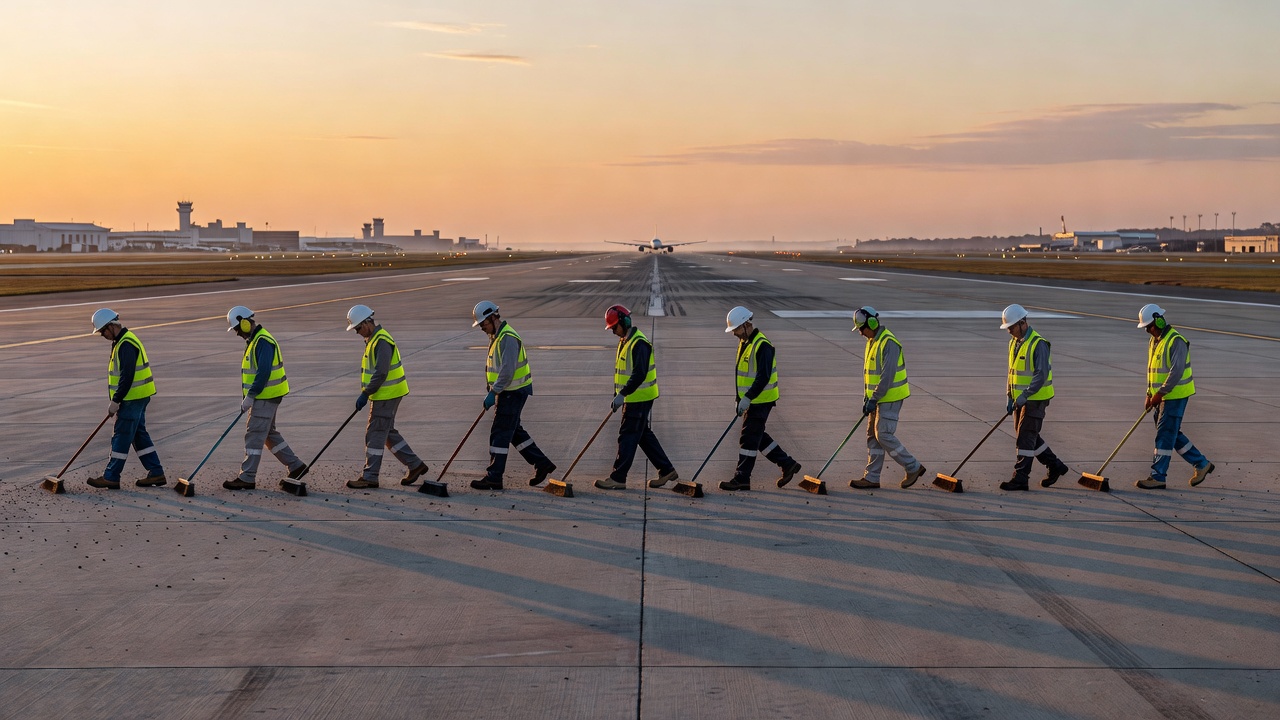
The traditional and still most widely used FOD detection method is the FOD walk, a systematic visual inspection of the movement area by trained personnel walking in a line across the pavement surface. A standard FOD walk procedure, as described in ICAO Doc 9137 Part 8 and FAA AC 150/5210-24A, involves a team of 15 to 30 personnel spaced at intervals of 3 to 5 meters depending on visibility conditions and pavement width. The team walks the full length of the runway in a straight line, scanning the pavement surface for debris items. The walk speed is controlled, typically 2 to 3 km/h, to ensure adequate visual coverage.
FOD walks are conducted at specified intervals based on airport classification and traffic volume. 14 CFR Part 139 requires that Class I and II airports conduct at least three runway inspections per day during periods of aircraft operations, with at least one of those inspections being a physical FOD walk. Additional walks are required after known FOD events (engine ingestion reports, tire failures), after severe weather events, after construction activities adjacent to movement areas, and on an as-needed basis based on reported observations from pilots, ground crew, and air traffic controllers.
The limitations of manual FOD walks are well documented. Human visual detection of small objects on a pavement surface is constrained by visual acuity, lighting conditions, fatigue, and distraction. The typical human observer can reliably detect an object larger than 15 to 25 mm on an asphalt surface under good lighting conditions at walking speed, smaller objects may be missed entirely. At night or in low-visibility conditions, detection capability degrades substantially. The FAA estimates that manual inspections can only guarantee safety for approximately 1% of flights, meaning that 99% of flights operate without having had a physical sweep of the runway surface since the previous aircraft movement.
Vehicle-Mounted Inspection
Vehicle-based inspection uses slow-moving vehicles (typically pickup trucks or specialized FOD inspection vehicles) equipped with trained observers who drive along the runway surface at low speed (10 to 25 km/h). This method covers more area per unit time than foot-based walks but at reduced detection sensitivity due to the higher speed. Some airports use vehicles equipped with underbody mirrors that allow inspection of the pavement surface immediately beneath the vehicle, improving detection of small debris.
Automated FOD Detection Systems
Automated FOD detection systems (AFODDS) represent a transformative advance in FOD detection capability, providing continuous surveillance of runway surfaces between manual inspections. These systems are classified into three technology categories: radar-based, optical (electro-optical), and hybrid systems.
Tarsier (manufactured by Moog, formerly QinetiQ) is a millimeter-wave radar-based system operating at 94.5 GHz (W-band frequency). The radar sensors are mounted on towers set back from the runway edge, outside obstacle limitation surfaces, and scan the runway surface in sectors. Tarsier achieved best-in-class performance in the FAA’s comparative evaluation of four tested automated FOD detection systems. The system provides 100% detection of FOD objects within 3,168 feet (965 meters) of the sensor location, a detection range that far exceeds human visual capability. Tarsier can detect metallic and non-metallic objects including plastic, rubber, glass, and organic matter. The system is unaffected by fog, rain, snow, or darkness, as millimeter-wave radar penetrates weather conditions that would defeat optical systems. The radar’s minimum detectable object size is approximately 20 mm RCS (radar cross-section) at maximum range. Tarsier provides continuous runway monitoring with each sensor completing a full scan cycle in under 60 seconds, providing nearly 1,000 inspections per day per runway compared to the 3–4 manual inspections achievable with human personnel.
FODetect (manufactured by Xsight Systems) is a hybrid system that fuses millimeter-wave radar with electro-optical (EO) high-definition imaging for superior detection performance. The radar component provides initial detection and location of potential FOD items, the EO camera then provides visual verification and classification. FODetect scans runway surfaces in less than 60 seconds with no blind spots due to full redundancy in sensor coverage. A distinctive feature of FODetect is its laser guidance system, when FOD is detected, the system can activate a visible laser beam from the sensor location to the precise FOD location, guiding ground crews directly to the debris item for removal. This feature reduces the time spent locating confirmed debris from the typical 10–20 minutes during a manual sweep to under 2 minutes, significantly reducing runway closure time. FODetect includes ascription capabilities for post-incident investigation and meta-analysis of FOD patterns, recording the GPS coordinates, time, and image of each detected item for trend analysis across months and years of operation.
iFerret (developed by Trex Aviation Systems) is an optical-based system that uses fixed high-definition cameras mounted on existing infrastructure (approach lighting towers, runway edge light poles) to monitor the runway surface. The system applies artificial intelligence and machine learning algorithms for real-time image processing to identify FOD items. iFerret can detect objects as small as 1 cm in size at ranges up to 1,200 meters from the camera and provides location accuracy within 1 meter. The system operates effectively during daylight and, with near-infrared illumination, during night conditions. The AI algorithms are trained on extensive datasets of FOD images to distinguish genuine debris items from false positives such as pavement markings, shadow patterns, and surface texture variations.
The FAA’s comparative evaluation of the four commercial AFOD systems (Tarsier, FODetect, iFerret, and a fourth unnamed system) established performance benchmarks including: minimum detectable object size of 1.2 inches (30.5 mm) for radar systems, 0.8 inches (20.3 mm) for electro-optical systems, and a maximum false alarm rate of one per 10 scan cycles. Systems were evaluated on detection probability, false alarm rate, location accuracy, weather performance, and operational reliability. The FAA selected Tarsier as the reference standard for radar-based FOD detection systems based on its overall performance across all evaluation criteria.
Pavement Condition and FOD Risk
The relationship between pavement condition and FOD generation is governed by the physical mechanisms of pavement deterioration and the operational demands placed on the surface. Pavement surface quality directly determines the rate of FOD generation from the pavement itself. The key pavement distress mechanisms that produce FOD are:
| Pavement Distress | FOD Generated | Typical Particle Size | Relative Hazard Level |
|---|---|---|---|
| Asphalt Raveling | Loose aggregate particles | 2–15 mm | Moderate |
| Concrete Joint Spalling | Mortar and concrete fragments | 5–50 mm | High |
| Concrete Corner Break | Angular concrete chunks | 50–300 mm | Very High |
| Asphalt Cracking (edge raveling) | Fine aggregate from crack edges | 1–5 mm | Low-Moderate |
| Weathering (asphalt) | Fine sand and binder particles | <2 mm | Low |
| Blast Erosion | Stripped binder and fine aggregate | 1–10 mm | Low-Moderate |
ICAO Annex 14, Section 9.4 requires that the surface of all paved runways, taxiways, and aprons be maintained in a condition to provide good friction characteristics and low rolling resistance, free of any defect that could adversely affect the safe operation of aircraft. This requirement implicitly mandates that pavement surfaces not generate FOD. The FAA Airport Pavement Management System (APMS) guidelines (AC 150/5380-7A) require that pavement condition data be integrated into the airport’s FOD management program, a direct acknowledgment that pavement deterioration is a FOD source that must be actively managed.
The pavement condition index (PCI) survey methodology (ASTM D5340) provides a quantitative measure of pavement surface condition that correlates with FOD generation potential. The distress types recorded during PCI surveys that are directly FOD-relevant include: raveling and weathering (in asphalt), joint spalling and corner breaks (in concrete), and alligator cracking (in both). PCI thresholds for FOD risk are established by individual airport operators based on local experience and regulatory guidance. A common industry practice is to flag any pavement section with a PCI below 70 (rated “Fair” or worse on the PCI scale) as an elevated FOD risk requiring accelerated inspection frequency. Sections with PCI below 55 (rated “Poor”) are considered active FOD generators requiring immediate maintenance or rehabilitation.
The continuous friction measuring equipment (CFME) surveys conducted at airports according to ICAO Annex 14, Attachment A, Section 11, provide complementary data on pavement surface condition relevant to FOD risk. A declining friction trend, particularly a Mu value trending below 0.50 on a well-maintained runway, can indicate progressive surface texture degradation from raveling or weathering that is generating fine FOD particles. The correlation between friction degradation and FOD generation is strong enough that many airport operators use friction trend data as a leading indicator of pavement-derived FOD risk.
FOD Prevention Through Pavement Maintenance
Surface Maintenance and Rehabilitation
The most effective FOD prevention strategy is maintaining the pavement surface in a condition that does not generate debris. Preventive maintenance treatments applied before significant deterioration develops are the most cost-effective approach. Fog seals (light applications of diluted asphalt emulsion) applied to asphalt pavements showing early signs of oxidation and fine aggregate loss can extend the service life by 2 to 4 years while preventing the onset of FOD-generating raveling. Crack sealing prevents water infiltration that accelerates joint spalling and edge raveling, cracks wider than 1 mm (approximately 1/16 inch) in asphalt pavements that are left unsealed can develop edge raveling within a single season of traffic. Joint sealing in concrete pavements prevents the intrusion of incompressible materials that cause spalling at transverse contraction joints.
Rehabilitative treatments for pavements that have already developed FOD-generating defects include: micro-surfacing (a polymer-modified cold emulsion applied in layers 6–10 mm thick) that covers deteriorated surfaces and prevents further aggregate loss, thin hot-mix overlays (25–50 mm) that provide a new wearing surface free of existing defects, and mill and fill operations that remove the deteriorated surface layer entirely before placing new material. For concrete pavements, partial-depth spall repair using rapid-setting polymer concrete can restore joint integrity and prevent the generation of concrete fragments within hours, allowing pavement sections to be reopened to traffic in the same maintenance window.
Sweeping and Mechanical Removal
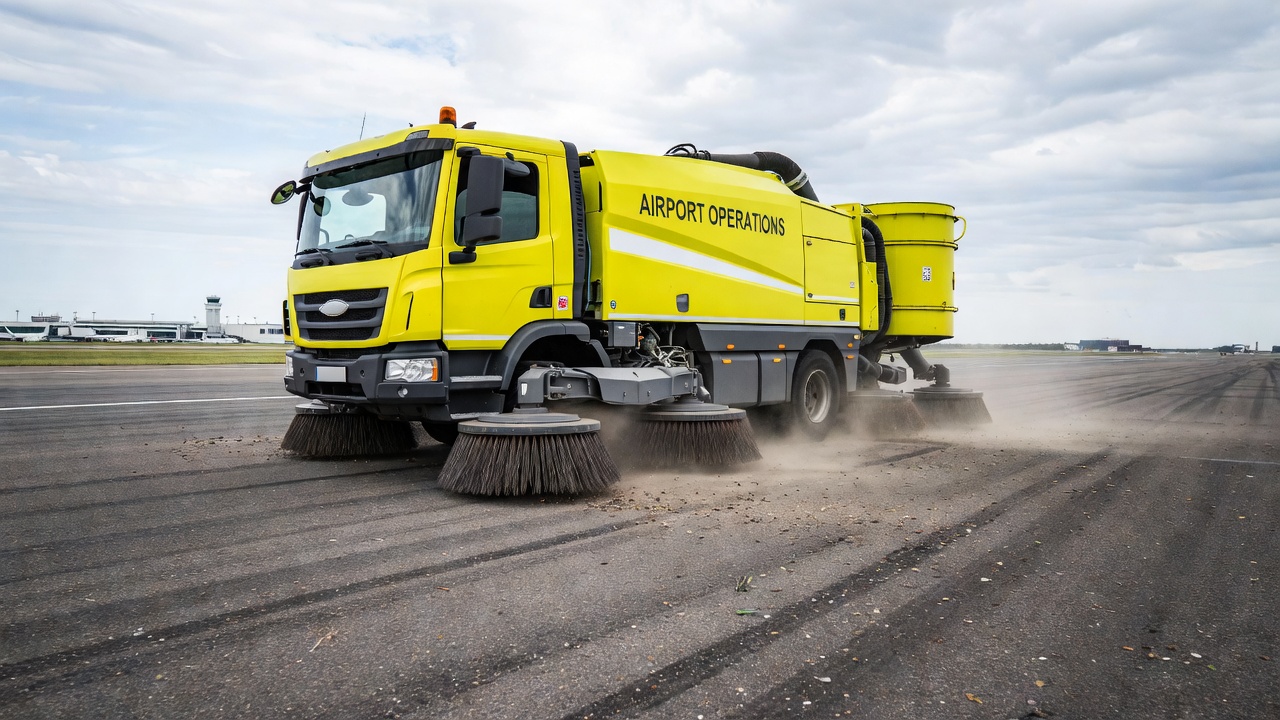
Regular mechanical sweeping is the primary method for removing FOD from airfield surfaces between inspections. Airport-grade runway sweepers are specialized vehicles equipped with rotating brooms, vacuum systems, and magnetic bars that collect debris from the pavement surface. The FAA recommends that runways be swept at least weekly, with high-traffic runways requiring daily or even multiple-times-daily sweeping during periods of heavy use or adjacent construction activity. The sweeping pattern should cover the full runway width plus shoulders, because debris on shoulders can be mobilized onto the active runway by jet blast. Magnetic bars mounted on sweeping vehicles collect ferrous metal debris, nuts, bolts, screws, and wire fragments, that may be too small for the broom or vacuum system to capture. Vacuum sweepers with high-efficiency particulate air (HEPA) filtration are preferred over mechanical broom sweepers because they capture fine particulate matter without redistributing it into the air.
Track-out control mats (FOD mats) placed at vehicle entry points to movement areas trap debris from vehicle tires and undercarriages before it reaches active surfaces. These mats are constructed of abrasive rubber or polymer grids that scrape debris from tire treads. They should be installed at all access points from construction areas, maintenance facilities, and unpaved access roads onto paved movement areas.
Automated FOD Detection Systems: Detailed Technology Profile
The three major certified automated FOD detection systems, Tarsier, FODetect, and iFerret, represent the state of the art in runway surveillance technology. Each system uses a different sensing modality, and each has distinct performance characteristics that make it suitable for different airport environments.
Tarsier (Moog)
Tarsier’s millimeter-wave radar operates at 94.5 GHz (W-band), which provides a balance between atmospheric attenuation (which increases with frequency) and angular resolution (which improves with frequency). The W-band frequency provides sufficient resolution to detect small FOD items while maintaining adequate range performance even in rain, fog, and snow. Each radar sensor covers a sector of the runway surface, and multiple sensors are deployed to achieve full runway coverage, typically one sensor per 1,000 to 1,200 meters of runway length on each side. The sensors are mounted on poles 8 to 15 meters high, positioned 30 to 60 meters from the runway edge outside the obstacle limitation surfaces.
The radar’s advanced digital signal processing (DSP) algorithms distinguish FOD items from background clutter including pavement texture, pavement markings, drain grates, and lighting fixtures. The DSP applies moving target indication (MTI) filtering to suppress stationary clutter and highlight objects that could be FOD, a differentiation between “known” surface features and “unknown” objects that should not be present. When a potential FOD item is detected, the system cues a co-mounted electro-optical camera, a military-specification day/night camera with near-infrared illumination, to provide visual verification to the operator in the air traffic control tower or airport operations center. The operator can assess the image and determine whether a ground crew needs to be dispatched.
Tarsier has been operational at London Heathrow Airport since 2007, covering all active runways. Heathrow reported that since Tarsier installation, the airport’s airfields have not been significantly impacted by unexpected FOD-related emergencies, a record of over 18 years of enhanced safety for one of the world’s busiest airports handling over 80 million passengers annually. The system conducts approximately 1,000 inspections per runway per day, compared to the 3–4 manual inspections achievable with human personnel.
FODetect (Xsight Systems)
FODetect is a hybrid millimeter-wave radar + electro-optical system that combines the all-weather detection capability of radar with the visual classification capability of high-definition cameras. The system architecture places sensor units on existing runway infrastructure, approach lighting towers, runway edge light poles, and existing masts, eliminating the need for dedicated tower construction in many installations. Each sensor unit contains both a radar transceiver and a pan-tilt-zoom (PTZ) HD camera.
The FODetect system completes a full runway scan in under 60 seconds, with scan data processed in real time to detect objects of interest. The laser guidance feature is unique to FODetect: a visible laser pointer in the sensor unit can be directed at the exact location of detected FOD, projecting a visible spot on the pavement that guides removal crews directly to the item. This reduces the time from detection to removal by eliminating the need for crews to search the surface for the reported debris after arriving at the general area. The system achieves sub-meter location accuracy through GPS integration.
FODetect includes an ascription and analytics platform that records every detection event with time, date, GPS coordinates, and camera imagery. This database enables post-incident investigation, when an aircraft reports FOD damage after landing, the system can be queried to determine whether debris was present on the runway at the time of landing, and if so, what the debris was and where it was located. The analytics capabilities also enable identification of FOD patterns: specific runway zones with higher debris accumulation, temporal patterns (times of day or days of week with higher FOD occurrence), and correlation with maintenance activities.
iFerret (Trex Aviation Systems)
iFerret is an artificial intelligence-based optical system that uses fixed cameras and machine learning for FOD detection. The system employs multiple fixed high-definition cameras mounted on existing infrastructure, providing overlapping coverage of the runway surface. Each camera feeds real-time video to an AI processing unit that applies deep learning algorithms, specifically trained convolutional neural networks (CNNs), to identify FOD items in the video stream.
The AI training process for iFerret involves supervised learning on datasets containing thousands of annotated images of common FOD items on runway surfaces, bolts, screws, tire fragments, pavement pieces, tools, and wildlife remains, in varying lighting conditions, surface textures, and weather conditions. The training dataset also includes negative examples (pavement markings, shadow patterns, surface texture features, drain grates) to minimize false alarms from non-FOD surface features. The system can detect objects as small as 1 cm and distinguish between genuine FOD items and false positives with high reliability.
iFerret’s advantage is its ability to learn and improve over time, as the system operates and the airport operations team confirms or rejects its detections, the AI model is continuously refined through additional training. Detected items are classified by type (metal, plastic, rubber, organic, pavement), enabling the airport to analyze debris type distributions and tailor prevention strategies accordingly. The system operates 24/7 with near-infrared illumination for night operations.
Airport FOD Management Programs
A comprehensive FOD management program, as described in FAA Advisory Circular 150/5210-24A, is organized around four pillars: prevention, detection, removal, and evaluation. These pillars form a continuous cycle: prevention activities reduce the introduction of FOD, detection activities identify FOD that is present despite prevention efforts, removal activities clear detected FOD, and evaluation activities analyze the program’s effectiveness and identify improvement opportunities.
Prevention encompasses all activities that reduce the probability of FOD introduction to movement areas. Key prevention elements include: pavement condition management (maintaining surfaces to minimize FOD generation), tool control and material accountability during maintenance, construction area management and debris control, personnel training and awareness programs, contractor management during airfield projects, vehicle maintenance to minimize the shedding of parts, and wildlife management to reduce animal presence on airfields. The prevention pillar is the most cost-effective element of FOD management because it addresses FOD at its source rather than after it has already become a hazard.
Detection encompasses all activities that identify FOD on movement areas. Detection methods include: scheduled FOD walks (frequency based on airport class and traffic volume), event-driven inspections after known FOD incidents or construction activity, continuous automated surveillance using AFODDS (where installed), pilot reports of debris observations (PIREPS and FOD reports), vehicle operator observations during routine movement area travel, and foreign object damage reports from maintenance personnel.
Removal encompasses all activities that clear FOD from movement areas. Removal methods include: manual collection during FOD walks, mechanical sweeping (runway sweepers, vacuum trucks), magnetic sweeping for ferrous metal debris, FOD collection containers placed at strategic locations, and immediate response procedures for high-priority debris items. The FAA recommends that airports maintain dedicated FOD removal equipment on standby during flight operations and that removal response times be documented and tracked as a performance metric.
Evaluation encompasses all activities that assess FOD management program effectiveness. Evaluation activities include: trend analysis of FOD detection data (type, location, time, source), cost-benefit analysis of FOD incidents and program expenditures, periodic program audits, benchmarking against industry best practices, incident investigation for significant FOD events, and continuous improvement planning based on evaluation findings. The evaluation pillar closes the management loop by ensuring that lessons learned from FOD incidents are fed back into prevention and detection planning.
FOD Reporting and Investigation
Standardized FOD reporting is essential for effective program management. FOD occurrence reports should document: date and time of detection, location on the movement area (runway designation, zone, distance from threshold, distance from centerline), description of the FOD item (type, material, size, mass), source of the FOD (if known), aircraft or equipment involved (if damage occurred), damage assessment, and corrective actions taken. The FAA FOD Reporting System (FODRS) provides a standardized format for documenting FOD occurrences that can be integrated with airport incident management systems.
Investigation of significant FOD events follows a structured root cause analysis methodology. The investigation seeks to answer: what was the FOD item? where did it come from? how did it get onto the movement area? why was it not detected and removed before it caused damage? and what systemic changes are needed to prevent recurrence? The investigation may involve review of security camera footage, maintenance records, construction activity logs, traffic pattern data, and weather conditions at the time of the event.
The National Aerospace FOD Prevention, Incorporated (NAFPI) organization maintains a database of FOD incidents and best practices that is accessible to member organizations. NAFPI also publishes the NAS 412 standard, the industry reference for FOD prevention programs. The standard defines FOD program requirements for aerospace manufacturing, maintenance, and operations facilities, including facility cleanliness standards, tool control procedures, personnel training requirements, and program auditing criteria. While NAS 412 was developed primarily for manufacturing environments, its principles are directly applicable to airport FOD management and are referenced by the FAA and ICAO as industry best practice.
Conclusion
Foreign Object Debris on airfield pavements is a persistent and universal aviation safety hazard that demands systematic management from every airport operator. FOD originates from diverse sources, deteriorated pavement surfaces, maintenance operations, construction activities, wildlife, and human activity, and its consequences range from minor tire damage to catastrophic aircraft loss. The global cost of FOD to the aviation industry is measured in billions of dollars annually, making FOD management not only a safety imperative but also an economic necessity.
Effective FOD management requires integration of pavement condition management with FOD detection, removal, and prevention programs. Pavements in good condition generate less FOD, and practical experience demonstrates that preventive pavement maintenance is the most cost-effective FOD prevention measure available to airports. Automated FOD detection systems have transformed the operational capability of airports to maintain safe movement areas, providing continuous 24/7 runway monitoring that far exceeds the coverage achievable with manual inspections alone. The combination of pavement management for source control, automated detection for continuous monitoring, and systematic removal for rapid debris clearance creates a defense-in-depth approach that maximizes airfield safety while minimizing operational disruption.
The regulatory framework established by ICAO Annex 14 and FAA 14 CFR Part 139 provides clear requirements for FOD management programs. Compliance with these requirements is a condition of aerodrome certification, and airports that fail to maintain adequate FOD control risk enforcement action, including fines, operational restrictions, or loss of certification. Beyond regulatory compliance, however, effective FOD management is fundamental to the safety culture of any aviation organization, it reflects a commitment to protecting the flying public, the aviation workforce, and the substantial capital investment represented by aircraft and airport infrastructure.
Frequently Asked Questions
- What does FOD stand for in aviation?
- FOD stands for Foreign Object Debris, which refers to any object, material, substance, or wildlife present on an airport movement area, runways, taxiways, aprons, and helipads, that does not belong there and poses a risk to aircraft, ground equipment, or personnel. The term is defined by ICAO Annex 14 and FAA Advisory Circular 150/5210-24A.
- How does pavement deterioration create FOD?
- Pavement deterioration mechanisms such as raveling (loss of aggregate particles), spalling (fracture and displacement of concrete fragments), and cracking produce loose debris that becomes FOD on airfield surfaces. Raveling dislodges aggregate particles that can be ingested by jet engines. Spalling at concrete joints produces sharp fragments large enough to cause tire punctures or structural damage. Proper pavement maintenance is a primary FOD prevention strategy.
- What automated FOD detection systems are available?
- Three major automated FOD detection systems are certified for airport use: Tarsier (millimeter-wave radar system by Moog, 100% detection within 3,168 feet), FODetect (hybrid millimeter-wave radar and electro-optical system by Xsight Systems, with laser guidance for removal crews), and iFerret (AI-powered optical system using high-definition cameras and machine learning). These systems provide continuous monitoring between manual inspections.
- How much does FOD cost the aviation industry annually?
- Boeing estimates the global cost of FOD to the aviation industry at $4 billion annually. Independent studies commissioned by the FAA and conducted by QinetiQ have estimated the figure as high as $12 to $22.7 billion per year when indirect costs such as flight delays, cancellations, aircraft downtime, runway closures, and reputational damage are included.
- What are the regulatory requirements for FOD management?
- ICAO Annex 14, Volume I, Section 9.4 requires that aerodrome movement areas be maintained free of FOD through regular inspections and prompt removal. FAA 14 CFR Part 139 mandates that certified airports implement a FOD management program covering prevention, detection, removal, and evaluation. FAA Advisory Circular 150/5210-24A provides detailed guidance on developing these programs.