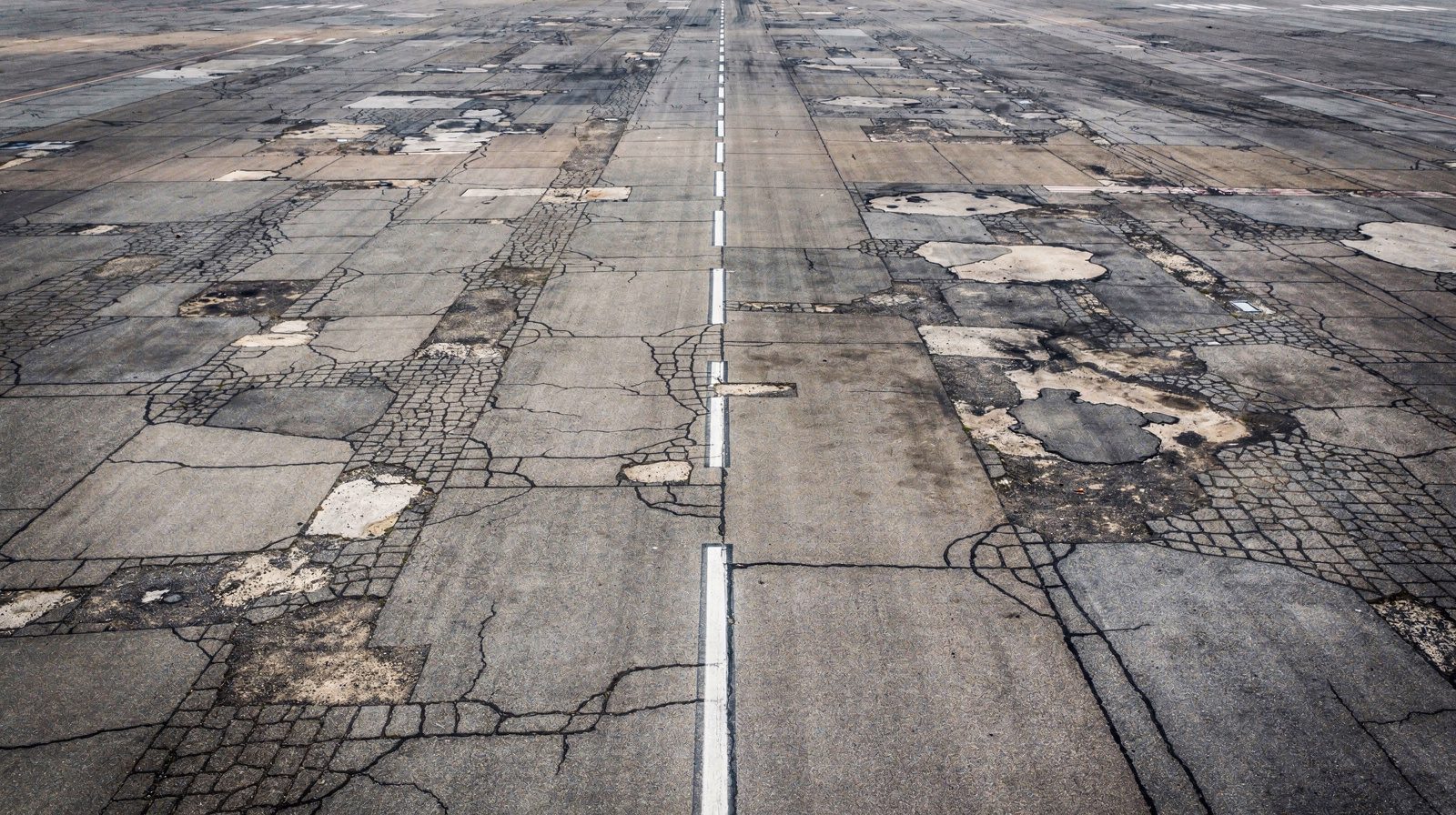
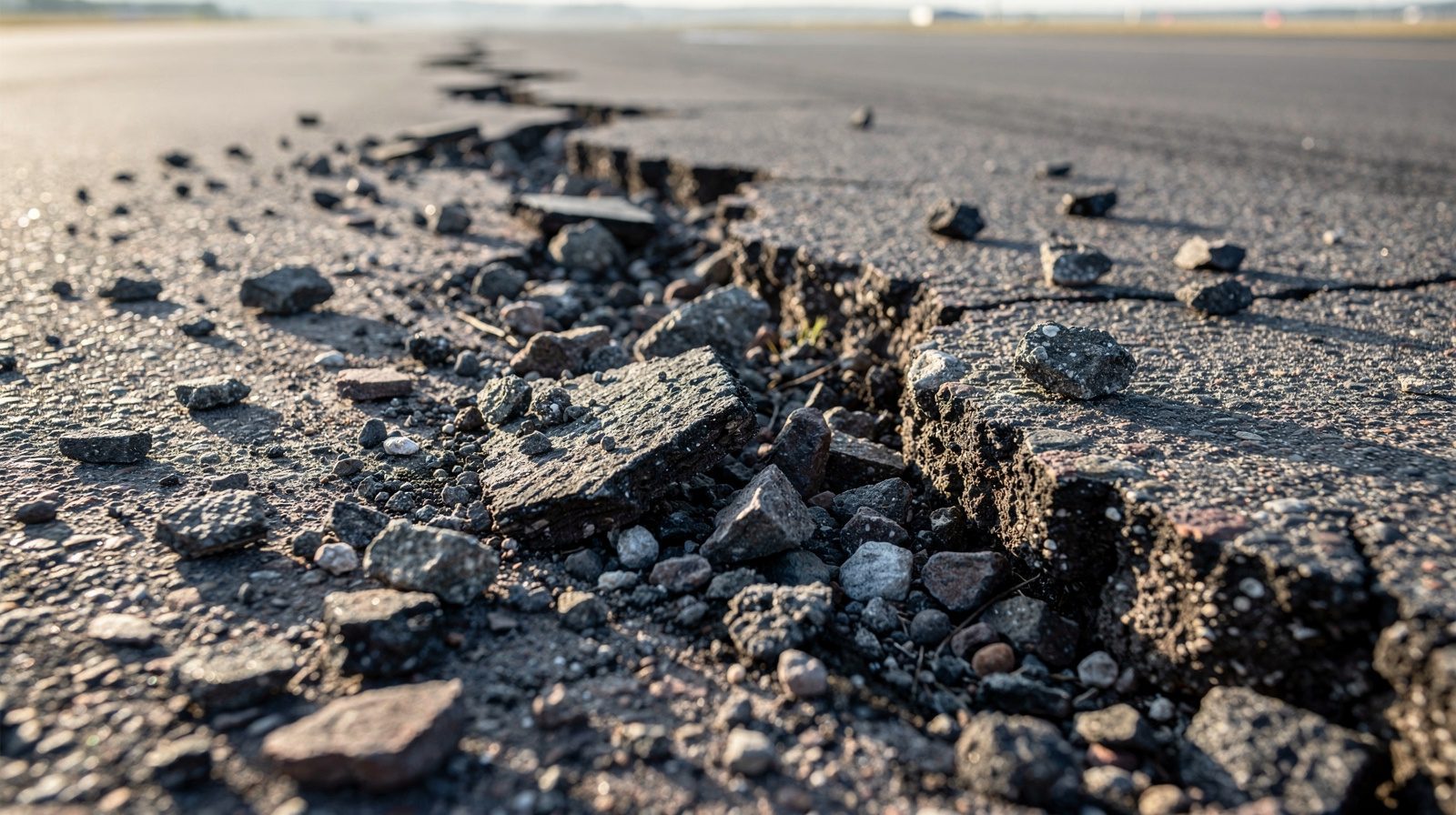
What is Frost Heave in Pavements?
Frost Heave, Definition and Mechanism
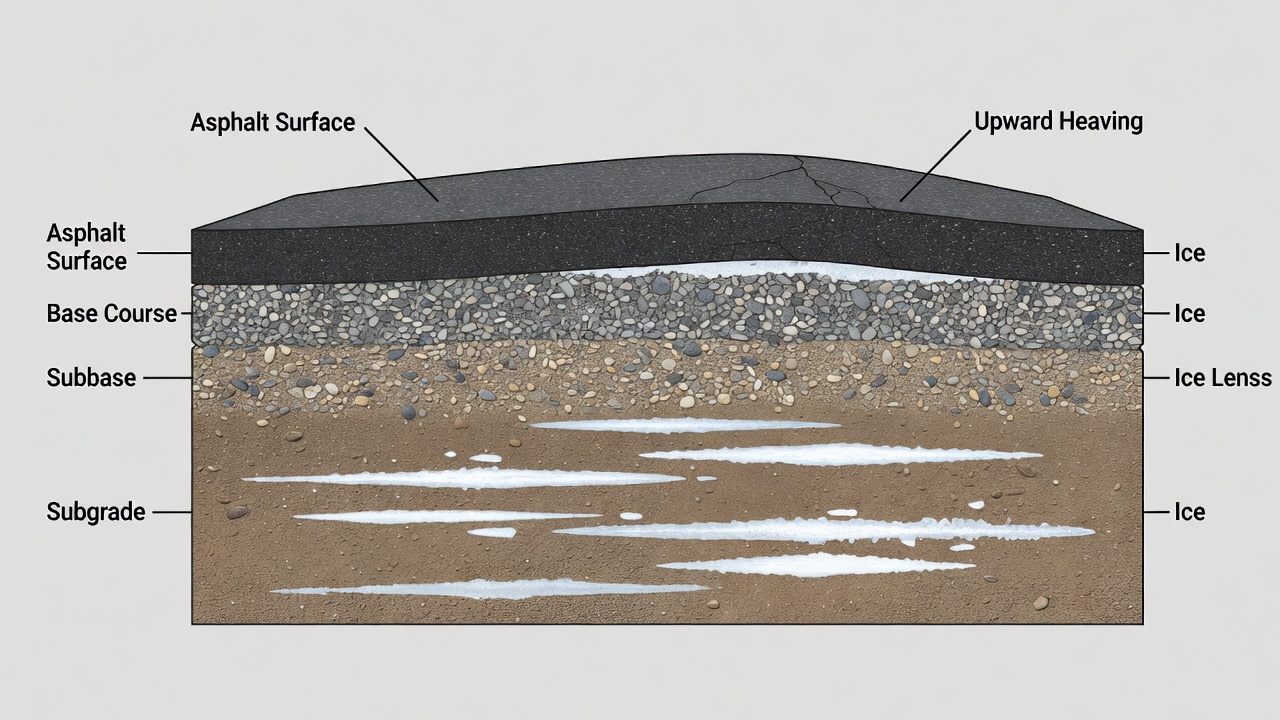
Frost heave is the upward displacement of a pavement surface caused by the formation of segregated ice lenses within frost-susceptible subgrade soils during freezing conditions. The phenomenon is distinct from simple soil freezing expansion (the 9% volumetric expansion when pore water freezes in place) in that frost heave involves water migration, the continuous movement of water from unfrozen soil zones toward the freezing front, where it accumulates and forms distinct horizontal layers of ice called ice lenses. These ice lenses can grow to many times the thickness of the original soil pores, generating uplift forces sufficient to raise the pavement surface by several centimeters.
The Three Required Conditions
Frost heave requires the simultaneous presence of three conditions, as established by the US Army Corps of Engineers Cold Regions Research and Engineering Laboratory (CRREL) and codified in FAA Advisory Circular AC 150/5320-6G and ICAO Doc 9157 Part 3. The absence of any single condition prevents frost heave from occurring:
Freezing temperatures penetrating into the subgrade: The frost front must descend below the pavement structure into the subgrade soil. The depth and duration of freezing determine the thickness of the frozen zone and the potential for ice lens growth. Frost penetration depth is quantified by the Freezing Index (FI), the cumulative number of degree-days below 0°C over the freezing season. The modified Berggren equation relates the freezing index to frost depth through soil thermal properties and moisture content.
Frost-susceptible soil: The subgrade must contain a sufficient percentage of fine particles (silt and clay sizes) to create capillary pathways that draw water upward toward the freezing front. The critical particle size is 0.02 mm, soils with more than 3% of particles finer than this threshold are considered frost-susceptible per the Casagrande criteria. Soils classified as ML (silt), CL (low-plasticity clay), and certain SM (silty sand) groups under the Unified Soil Classification System (USCS) are most susceptible. Clean sands and gravels with less than 3% fines are generally non-frost-susceptible.
Continuous water supply from groundwater or capillary sources: The water table must be within capillary rise distance of the freezing front. For silty soils, capillary rise can exceed 2 to 3 meters, allowing water migration from a relatively deep water table. The suction potential developed at the freezing front can exceed 100 kPa, drawing water upward through the unfrozen soil matrix toward the growing ice lens.
Capillary Rise and Water Migration
The mechanism of water migration during frost heave is governed by the suction gradient created at the freezing front. As pore water freezes within the soil matrix, the remaining unfrozen water develops a negative pressure (suction) due to the difference in chemical potential between ice and water at temperatures below 0°C. This suction, described by the Clapeyron equation relating pressure and temperature, draws water from the warmer unfrozen soil below the freezing front toward the frozen zone.
The rate of water migration depends on several soil properties: the hydraulic conductivity (permeability) of the unfrozen soil, the suction potential of the frozen fringe (the partially frozen zone immediately above the freezing front where ice lenses nucleate), the temperature gradient across the frozen fringe, and the proximity of the water table. Silty soils are most susceptible because they combine moderate hydraulic conductivity (higher than clays) with high suction potential (higher than sands). The resulting water flux can supply enough water to an ice lens to grow it by several millimeters per day under sustained freezing conditions.
The capillary rise height, the maximum height to which water can rise through soil pores against gravity, is inversely proportional to the pore size. In coarse sands with large pores, capillary rise is limited to a few centimeters. In silts with small pores, capillary rise can reach 2 to 3 meters or more. This means that for a given water table depth, silty subgrades are far more vulnerable to frost heave than sandy subgrades. The FAA design guidance requires evaluation of both the frost susceptibility of the subgrade and the depth to the water table during pavement design for cold regions.
Ice Lens Formation, Primary and Secondary Heave
Ice lens formation proceeds through two distinct mechanisms known as primary heave and secondary heave, both first described systematically by Taber (1929) and later refined by Miller (1972) and other researchers at CRREL and the University of Ottawa.
Primary heave occurs in the initial stages of freezing when pore water freezes in place, creating a thin frozen layer. The freezing front advances downward through the soil at a rate controlled by the surface temperature and the thermal properties of the pavement and soil. As the freezing front advances, the unfrozen water content in the frozen fringe decreases, and the suction potential increases. When the suction exceeds the overburden pressure (the weight of the pavement and overlying soil), water is drawn toward the freezing front and a discrete ice lens begins to form. The lens grows parallel to the freezing front (perpendicular to the direction of heat flow) and perpendicular to the direction of maximum uplift force. Once a continuous ice lens forms, heat transfer through the lens is reduced because ice has a lower thermal conductivity than the surrounding soil, slowing the advance of the freezing front below the lens. This allows more time for water migration and additional lens growth.
Secondary heave occurs after a continuous ice lens has formed and the freezing front has advanced below it. Water continues to migrate through the frozen fringe below the ice lens, feeding the lens growth from below. The frozen fringe, a zone of partially frozen soil several millimeters to centimeters thick, acts as a membrane through which water is drawn by the strong suction gradient. The rate of secondary heave depends on the temperature gradient across the frozen fringe and the permeability of the fringe material. Under sustained cold conditions, secondary heave can produce ice lenses exceeding 10 cm in thickness, which can lift the pavement surface by an equivalent amount.
The segregation potential (SP), a parameter developed by Konrad and Morgenstern (1981) at the University of Alberta, quantifies the rate of water migration to the freezing front under a unit temperature gradient. The segregation potential is defined as the ratio of the water migration velocity to the temperature gradient in the frozen fringe. Soils with a high SP (greater than approximately 5 × 10⁻⁵ mm²/s·°C) are highly susceptible to frost heave. Silts typically have SP values in the range of 10⁻⁴ to 10⁻³ mm²/s·°C, while clean sands have SP values approaching zero. The segregation potential concept is widely used in frost heave prediction models including the CRREL frost heave model and the University of Ottawa model.
The ice lens nucleation temperature, the temperature at which a discrete ice lens begins to form, is typically between -0.1°C and -0.5°C in frost-susceptible soils. The final lens thickness is controlled by the duration of freezing at that temperature, the availability of water, and the overburden pressure. Higher overburden pressures suppress ice lens growth, which is why frost heave is typically more severe under thinner pavement sections and less severe under thicker pavements where the weight of the structure resists uplift.
Frost-Susceptible Soils
The classification of frost-susceptible soils is fundamental to pavement design in cold regions. The presence of frost-susceptible subgrade determines whether frost heave mitigation measures are required. Soils are classified based on their grain size distribution, particularly the percentage of particles finer than specific sieve sizes, and their plasticity characteristics.
Casagrande Criteria
The Casagrande criteria, developed by Arthur Casagrande (1931) based on extensive field observations of frost heave in European and North American soils, remain the most widely used first-level frost susceptibility classification. According to the original criteria:
- Soils with more than 3% of grains finer than 0.02 mm (20 micrometers) by weight and a uniformity coefficient (Cu = D60/D10) less than 5 are frost-susceptible.
- Soils with more than 10% of grains finer than 0.02 mm are frost-susceptible regardless of the uniformity coefficient.
The 0.02 mm threshold corresponds to the fine silt particle size, where capillary rise becomes significant. The uniformity coefficient criterion addresses the packing of soil particles, well-graded soils with a wide range of particle sizes typically have lower permeability and less frost susceptibility than uniformly graded soils with the same fines content.
Casagrande later refined the criteria based on CRREL research, establishing that for non-plastic soils (soils with liquid limit less than 25 and plasticity index less than 5), the threshold for significant frost heave is approximately 3% finer than 0.02 mm. For plastic soils (plasticity index greater than 5), the threshold increases to approximately 5% finer than 0.02 mm because the plasticity of the clay fraction reduces water migration.
FAA Frost Susceptibility Classification
The FAA frost susceptibility classification system, detailed in FAA Advisory Circular AC 150/5320-6G (Airport Pavement Design and Evaluation) , classifies soils into four groups (FG-1 through FG-4) based on their potential for frost heave. This classification is the standard for airport pavement design in the United States and is referenced by ICAO Doc 9157 Part 3.
| FAA Group | Soil Classification (USCS) | % Finer Than 0.02 mm | Frost Susceptibility |
|---|---|---|---|
| FG-1 | GW, GP, SW, SP (with less than 3% fines) | Less than 3% | Negligible |
| FG-2 | GM, SM, GC, SC (with 3-15% fines) | 3% to 15% | Low to Moderate |
| FG-3 | ML, MH, CL, CH (silts and clays) | 15% to 50% | Moderate to High |
| FG-4 | ML, MH (highly frost-susceptible silts) | More than 50% | Very High |
FG-1 soils, clean gravels (GW, GP) and clean sands (SW, SP) with less than 3% fines, are considered non-frost-susceptible. These materials have negligible capillary water migration and minimal ice lens formation. They are the preferred materials for subbase and base construction in cold regions where frost mitigation is required. When such materials are used as replacement for frost-susceptible subgrade, drainability must still be ensured to prevent water from accumulating within the pavement structure.
FG-2 soils, gravelly or sandy soils with 3% to 15% fines (GM, SM, GC, SC), have low to moderate frost susceptibility. The percentage of particles finer than 0.02 mm in this group typically ranges from 3% to 15%. These soils can exhibit noticeable frost heave under sustained freezing and high water table conditions. Mitigation measures are typically required for FG-2 subgrades under pavements serving critical aircraft.
FG-3 soils, silts (ML), low-plasticity clays (CL), and related materials with 15% to 50% finer than 0.02 mm, have moderate to high frost susceptibility. This group represents the most problematic soils for frost heave because they combine moderate hydraulic conductivity (higher than clays) with high suction potential. The capillary rise in FG-3 soils can exceed 2 meters, and ice lenses can form rapidly even under moderate freezing conditions. Most documented cases of severe pavement frost heave involve FG-3 subgrade soils.
FG-4 soils, highly frost-susceptible silts (ML, MH) with more than 50% finer than 0.02 mm, have very high frost susceptibility. These soils produce the most severe ice lens formation and the greatest heave magnitudes. However, they are less common as pavement subgrades because their high fines content also makes them problematic for construction, compaction, and drainage in their own right.
US Army Corps of Engineers Criteria
The US Army Corps of Engineers (USACE) frost susceptibility criteria, published in Engineer Manual EM 1110-1-1905, provide an alternative classification system widely used for both military and civilian pavements. The USACE system classifies soils into three groups:
- F1: Soils with more than 3% grains finer than 0.02 mm and a uniformity coefficient less than 5
- F2: Soils with more than 10% grains finer than 0.02 mm
- F3: Soils with more than 20% grains finer than 0.02 mm
The USACE criteria are more conservative than the original Casagrande criteria, classifying a wider range of soils as frost-susceptible. This reflects the USACE’s experience with heavy military aircraft loading on airfield pavements in arctic and subarctic regions.
Effect of Soil Plasticity on Frost Susceptibility
The plasticity characteristics of the fine fraction influence frost susceptibility. Plastic soils (clays with plasticity index greater than 7) typically exhibit lower frost heave rates than non-plastic silts with the same fines content, despite having higher total fines percentages. This is because the structured clay particles reduce the pore channel size and limit water migration rates, even though the total capillary suction potential may be high. The CRREL frost heave test (CRREL Special Report 80-40) is the standard laboratory method for direct measurement of frost heave susceptibility, measuring the heave rate under controlled freezing conditions.
Depth of Frost Penetration
The depth of frost penetration, the maximum depth below the pavement surface to which freezing temperatures extend during winter, is a critical parameter for pavement design in cold regions. It determines the depth to which frost-susceptible subgrade must be removed and replaced with non-frost-susceptible materials, the required depth of insulation, and the depth of drainage systems.
The Freezing Index
The depth of frost penetration is primarily controlled by the Freezing Index (FI), the cumulative number of degree-days below 0°C over the freezing season, expressed in degree-days (°C-days or °F-days). The freezing index is calculated by summing the difference between the mean daily temperature and the freezing point for all days when the mean temperature is below freezing. The design freezing index for pavement engineering is typically the average freezing index from the three coldest winters in the most recent 30-year period, or the 100-year return period freezing index for critical infrastructure.
The freezing index varies dramatically across cold-climate regions. In the northern United States and southern Canada, the design freezing index typically ranges from 500 to 2,500 °C-days. In arctic regions, it can exceed 5,000 °C-days. The FAA Airport Design Software includes a database of freezing index values for airport locations across the United States, derived from NOAA climate data.
Modified Berggren Equation
The standard analytical method for calculating frost penetration depth is the modified Berggren equation, developed by Aldrich (1956) and refined by the US Army Corps of Engineers. The equation accounts for the heat released during the phase change of water (latent heat of fusion), which significantly slows the advance of the freezing front. The equation is:
z = λ × √(2 × k × FI / (L × w × γ_d))
Where:
- z = depth of frost penetration (m)
- λ = dimensionless correction factor (Berggren coefficient, typically 0.6 to 0.9 depending on thermal properties)
- k = thermal conductivity of the frozen soil (W/m·°C)
- FI = freezing index (°C-days)
- L = latent heat of fusion of water (334 kJ/kg)
- w = water content (decimal fraction)
- γ_d = dry density of soil (kg/m³)
The Berggren coefficient λ accounts for the non-steady-state nature of freezing and the effect of thermal gradients in the frozen zone. For design purposes, λ values of 0.7 to 0.8 are commonly used for pavement subgrade soils.
Factors Influencing Frost Penetration
Several factors influence frost penetration depth beyond the surface freezing index:
Soil thermal conductivity is the most important material property affecting frost penetration. Frozen soils have higher thermal conductivity than unfrozen soils because ice has a thermal conductivity approximately four times that of water. Sandy and gravelly soils with high density and moderate moisture content have higher thermal conductivity than clayey or organic soils. The thermal conductivity of pavement materials (asphalt and concrete) is generally higher than that of soil, accelerating heat loss from the pavement surface.
Snow cover is a critical insulating factor. A snow layer of even 30 cm can reduce frost penetration by 30% to 50% compared to bare ground, due to the low thermal conductivity of snow (approximately 0.1 to 0.3 W/m·°C compared to 1.5 to 2.5 W/m·°C for frozen soil). However, airport runways and taxiways are typically cleared of snow, eliminating this insulating effect and allowing deeper frost penetration into the pavement subgrade than into adjacent snow-covered areas.
Moisture content has dual effects: higher moisture content increases the latent heat that must be removed to freeze the soil (slowing frost penetration) but also increases thermal conductivity (accelerating frost penetration). For pavement design, the worst-case moisture content (typically at or near saturation) is used for frost penetration calculations.
Pavement color and albedo: Asphalt pavements absorb more solar radiation than concrete, maintaining higher surface temperatures under clear winter conditions and reducing frost penetration. However, this effect is only significant during periods of direct sunlight and is negligible during continuous cold weather.
Measured Frost Depths
The Long-Term Pavement Performance (LTPP) program, administered by the Federal Highway Administration (FHWA) and supported by the American Association of State Highway and Transportation Officials (AASHTO), established the Seasonal Monitoring Program (SMP) from 1991 to 2007, which measured frost penetration depths at 41 pavement test sections across the United States and Canada. These sections included both flexible and rigid pavements in a range of cold climates.
Measured maximum frost depths from the LTPP SMP ranged from 0.336 m (at a site in Colorado with a freezing index of 165 °C-days) to 2.386 m (at a site in northern Minnesota with a freezing index of 2,420 °C-days). The data showed that frost penetration depth follows an approximately square-root relationship with the freezing index, consistent with the modified Berggren equation. The data also demonstrated the critical influence of soil type, sites with silty subgrades showed up to 20% greater frost penetration than sites with clayey subgrades at the same freezing index, due to differences in thermal conductivity and latent heat effects.
For airport pavement design, FAA AC 150/5320-6G provides guidance on determining the design frost depth based on the freezing index and soil type. Where specific frost depth data is not available, FAA recommends using the modified Berggren equation with input values appropriate for the pavement materials and local soils.
Visual Indicators of Frost Heave
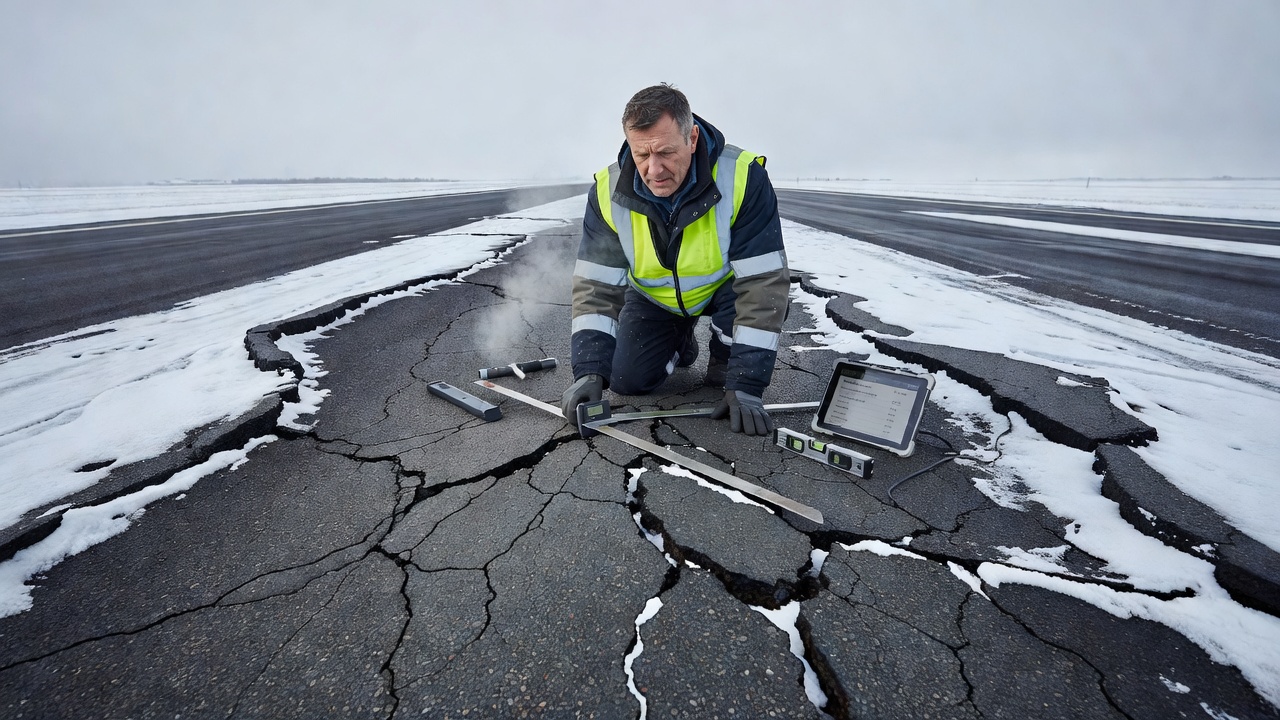
Frost heave produces distinctive visual indicators on pavement surfaces that are readily identifiable during winter and early spring pavement inspections. Recognizing these indicators allows inspectors to distinguish frost heave damage from other forms of pavement distress caused by traffic loading, thermal cracking, or subgrade settlement.
Heaved Pavement Surface
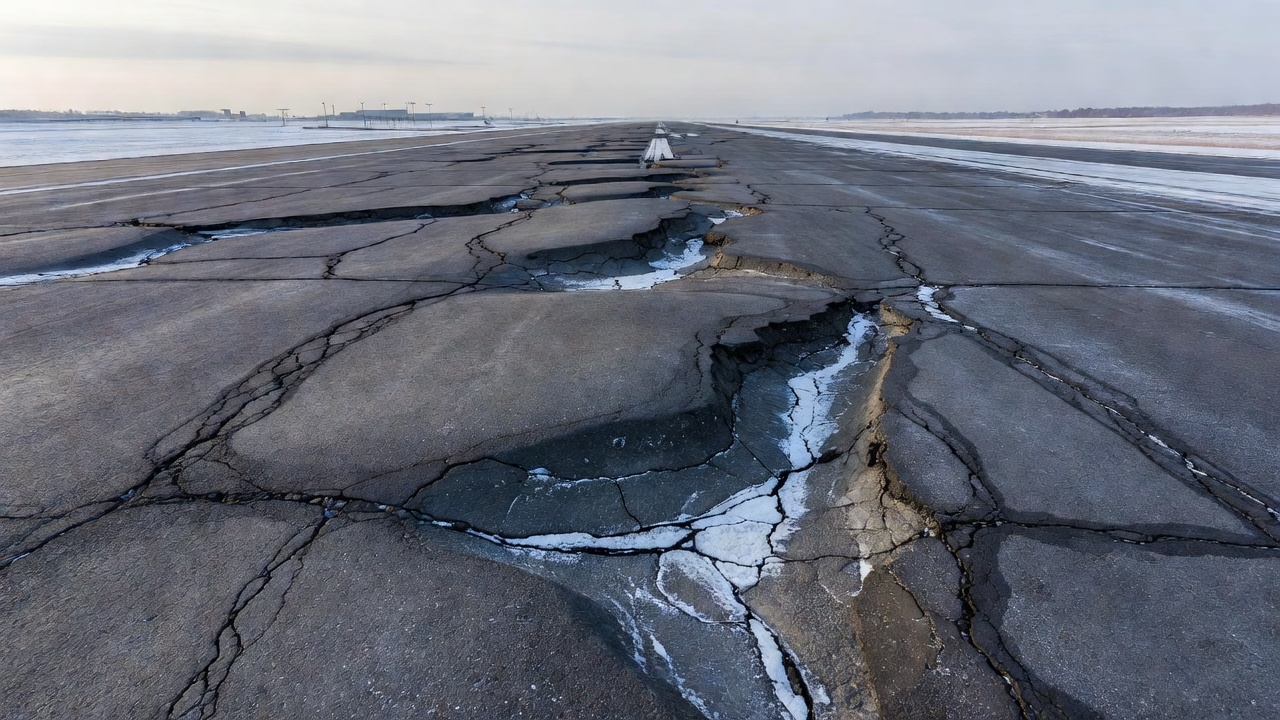
The most direct visual indicator of frost heave is a visibly uneven pavement surface during the winter months when the ground is frozen. The pavement may exhibit a wavy or undulating surface profile, with localized high points (where ice lenses have formed beneath) and corresponding low points (where no ice lens growth has occurred or where the pavement has settled after previous thaw cycles). The magnitude of differential heave can range from a few millimeters to over 10 centimeters in severe cases, depending on the frost susceptibility of the subgrade, the severity of the winter, and the availability of water.
The heave pattern typically reflects the distribution of frost-susceptible soils beneath the pavement. Areas where the subgrade soil type changes (such as transitions from silt to sand or gravel) often show sharp changes in heave magnitude, producing an abrupt surface step that creates high stresses in the pavement structure. Heave is typically more pronounced at pavement edges and shoulders, where frost penetration is greater due to the lack of insulating pavement structure and the proximity of snow banks that can release meltwater into the subgrade during daytime thawing.
Transverse and Longitudinal Cracking
Transverse cracking, cracks oriented approximately perpendicular to the pavement centerline, is one of the most characteristic indicators of frost heave in flexible (asphalt) pavements. These cracks form as tensile stresses develop when the pavement surface is forced into a convex curvature over a growing ice lens. The cracks typically extend across the full width of the pavement lane and may be spaced at regular intervals corresponding to the longitudinal variation in frost penetration or subgrade frost susceptibility. Transverse frost heave cracks can be distinguished from thermal cracks (caused by thermal contraction of the asphalt) by their timing: frost heave cracks develop during mid-winter when freezing is at its maximum and ice lenses are growing, while thermal cracks form during the coldest periods when the asphalt embrittles and contracts.
Longitudinal cracking, cracks oriented approximately parallel to the pavement centerline, indicates differential heave occurring across the pavement width. This commonly occurs in the wheelpath areas where traffic compaction has altered the subgrade density and frost susceptibility, or along the pavement edge where frost penetration is deeper. Longitudinal frost heave cracks frequently follow the line of maximum heave gradient, where the pavement transitions from a heaved area to an adjacent area with less heave.
Edge Lift and Shoulder Heave
Edge lift, the upward displacement of the pavement edge relative to the pavement center, is a common manifestation of frost heave on roadways and runways with granular shoulders. The shoulder area, which has thinner or no pavement structure, allows deeper frost penetration and often greater ice lens formation than the paved area. The differential heave between the shoulder and the paved area creates longitudinal cracks at the pavement edge and may also cause the pavement edge to tilt upward, creating an unsafe condition for vehicles crossing the edge of the pavement.
Shoulder heave affecting the unpaved shoulder material itself is also a concern for airport operations, as uneven shoulders can create tripping hazards for airport service vehicles and affect the drainage of surface water from the paved surface to the shoulder and beyond.
Spring Breakup Weakening
Spring breakup, also called spring thaw weakening or simply breakup, is the period during which the visible effects of frost heave become most apparent, and the pavement is most vulnerable to traffic damage. During spring thaw, the ice lenses that formed during winter begin to melt, releasing large volumes of water into the subgrade while the underlying soil layers remain frozen and impermeable. This creates a trapped, saturated layer of weakened soil at the thawing front, with the subgrade modulus dropping to 10% to 30% of its summer value.
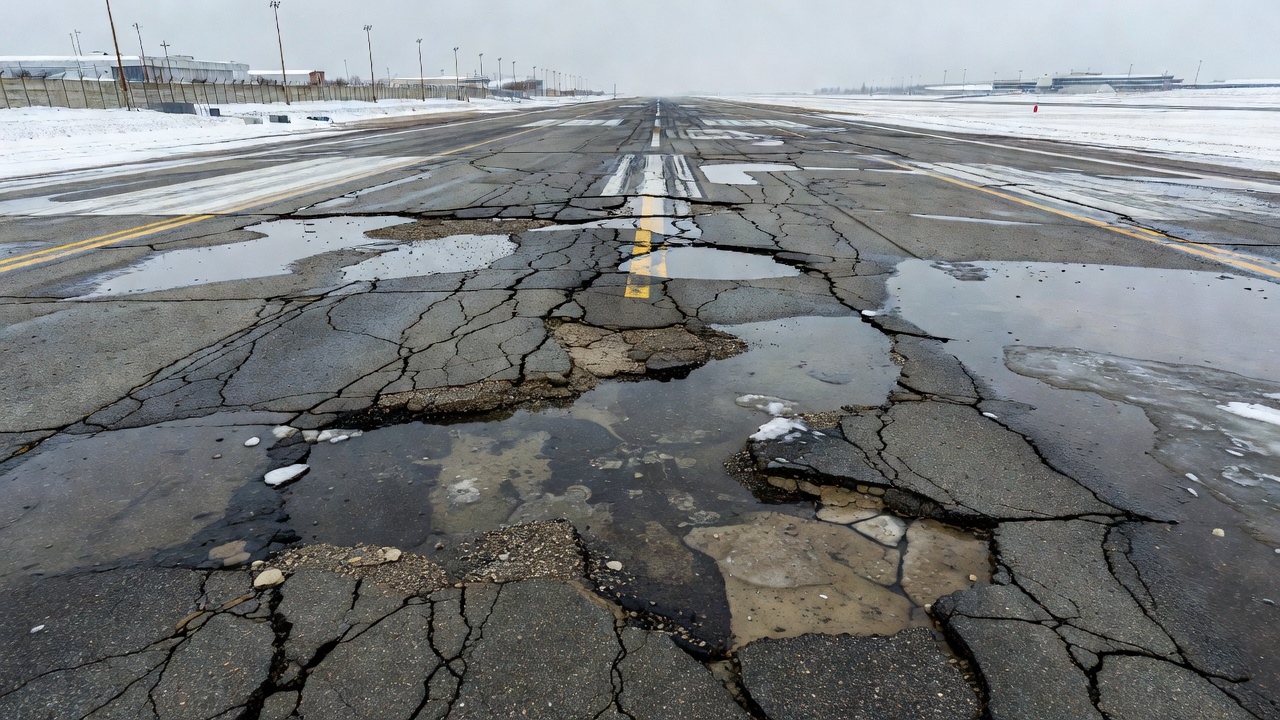
The visual progression during spring breakup follows a characteristic sequence:
- The heaved pavement surface begins to subside as ice lenses melt
- Water seeps through cracks in the pavement or emerges at pavement edges, indicating a saturated subgrade
- Traffic loading causes accelerated cracking, rutting, and localized depressions at crack intersections
- Potholes may develop where the pavement structure has been severely weakened
The severity of spring breakup depends on the magnitude of the preceding frost heave, the rate of thaw (rapid thaws are more damaging than gradual thaws), and the volume of traffic during the critical period. In regions where heavy spring rains coincide with the thaw period, the weakening can be particularly severe.
Frost Heave in Airport Pavements
Frost heave presents unique challenges for airport pavements because of the stringent surface evenness requirements for safe aircraft operations, the high loads imposed by aircraft landing gear, and the operational constraints that limit pavement rehabilitation windows.
Impact on Runway Surface Evenness
ICAO Annex 14, Aerodromes, Volume I specifies maximum allowable surface irregularities on runways. The standard requires that the deviation of the paved surface from a 3-meter straightedge placed parallel to the runway centerline shall not exceed 3 mm for runways serving code letter D, E, and F aircraft (wingspan 36 m and above). For runways serving smaller aircraft, the tolerance is 5 mm over a 3-meter straightedge. Frost heave can easily produce differential displacements exceeding these tolerances, creating an unsafe condition for aircraft operations.
The severity of the roughness experienced by aircraft depends on the wavelength of the heave undulation relative to the aircraft’s wheelbase and speed. Short-wavelength roughness (heave features with wavelengths less than 10 m) produces high-frequency vertical accelerations that can affect pilot control and passenger comfort. Long-wavelength roughness (wavelengths of 30 m to 100 m) produces low-frequency accelerations that can cause a pitch response in large aircraft and affect takeoff rotation. The Boeing Bump Criteria, the industry standard for evaluating runway evenness, specifies allowable vertical acceleration limits that frost-heave-affected runways may exceed.
Effect on Pavement Classification Rating
Under the ACR/PCR (Aircraft Classification Rating / Pavement Classification Rating) system that became mandatory for all ICAO member states from September 2024, frost heave and the subsequent thaw weakening can affect the reported PCR of a pavement. During winter when the subgrade is frozen, the effective structural capacity of the pavement increases because frozen subgrade has significantly higher modulus than unfrozen subgrade, typically 5 to 20 times higher. However, during spring thaw when the subgrade modulus drops to its minimum, the structural capacity is at its lowest. The PCR is determined for the worst-case seasonal condition, typically the spring thaw period, which means that airport pavements in cold climates may have a PCR limited by the spring thaw condition.
The FAA’s FAARFIELD design program accounts for seasonal effects on subgrade modulus using the concept of seasonal adjustment factors. If FWD testing is conducted during the spring thaw period, the measured subgrade modulus is used directly for PCR calculation. If testing is conducted at other times, seasonal adjustment factors derived from the LTPP Seasonal Monitoring Program or local calibration are applied to estimate the spring thaw subgrade modulus.
Runway Closure Considerations
Severe frost heave may require runway closure for safety until the pavement is either restored to an acceptable condition through thawing or repaired. The decision to close a runway for frost heave is based on measured surface irregularities, the type of aircraft operating, and the rate of deterioration. Runway closures during the spring thaw period can be operationally disruptive and economically costly for airlines and airports.
FAA Advisory Circular AC 150/5200-30C (Airport Winter Safety and Operations) provides guidance on monitoring and responding to frost heave and spring thaw conditions on airport movement areas. The AC recommends that airport operators implement a frost heave monitoring program that includes regular surface elevation surveys, crack monitoring, and coordination with the airport engineering staff to assess structural condition during the thaw period.
Frost Heave Prevention
Frost heave prevention in pavement design focuses on eliminating one or more of the three required conditions: frost-susceptible soil, freezing temperatures in the subgrade, or a continuous water supply. The choice of prevention strategy depends on the severity of the local climate, the frost susceptibility of the available subgrade materials, the water table depth, the pavement type (flexible vs. rigid), and the criticality of the pavement.
Non-Frost-Susceptible Subbase Replacement
The most common and most reliable frost heave prevention method is the replacement of frost-susceptible subgrade with non-frost-susceptible materials (NFSM) to a depth sufficient to prevent the freezing front from reaching the underlying frost-susceptible soil. The required replacement depth depends on the frost penetration depth:
- Full-depth replacement: The frost-susceptible subgrade is removed and replaced with NFSM to the full design frost penetration depth. This provides complete protection but is expensive for deep frost penetrations exceeding 1.5 to 2 meters.
- Partial replacement: NFSM is placed to a depth of 50% to 75% of the design frost penetration depth. This reduces the heave magnitude to acceptable levels (typically less than 25 mm) even if some frost reaches the susceptible subgrade, because the overlying NFSM layer provides an insulating effect and reduces the temperature gradient in the frost-susceptible zone.
- Minimum thickness per FAA AC 150/5320-6G: A minimum of 600 mm of NFSM is required for frost protection under airport pavements serving aircraft with gross weights exceeding 30,000 kg. For lighter aircraft, a minimum of 300 mm is specified.
The NFSM materials used for replacement are typically GW, GP, SW, or SP soil groups with less than 3% passing the No. 200 sieve (0.075 mm) and less than 3% finer than 0.02 mm. These materials must also be free-draining to prevent water accumulation within the pavement structure. The NFSM is compacted to at least 95% of the maximum dry density per AASHTO T99 or T180, and the layer is capped with a geotextile separation layer to prevent intrusion of fines from the underlying subgrade.
Subsurface Drainage
Effective subsurface drainage reduces frost heave by lowering the water table, intercepting capillary water rising toward the freezing front, and removing meltwater from ice lenses during spring thaw. The drainage system must be designed to keep the water table below the frost penetration zone throughout the freezing season.
The standard drainage approach for frost heave mitigation includes:
- Edge drains: Perforated pipes (typically 150 mm to 300 mm diameter) installed along the pavement edge at or below the frost penetration depth, discharging to a suitable outlet. The pipes are wrapped in geotextile filter fabric to prevent clogging by fines.
- Underdrains: Perforated pipes installed in trenches across the pavement width at regular intervals, typically every 30 to 100 m, connecting to edge drains. Underdrains are particularly effective at intercepting lateral groundwater flow.
- Daylighted base layers: The base and subbase layers are extended laterally beyond the pavement edges with free-draining material to allow water to exit the pavement structure without porous pipes. A drainage layer with a minimum slope of 2% to 3% is required to ensure positive drainage.
- Capillary barriers: A layer of clean, coarse sand or fine gravel (typically 150 mm to 300 mm thick) placed between the subgrade and the frost-susceptible soil to interrupt capillary water rise. The capillary barrier effect is most effective when the barrier material has a much coarser pore size than the overlying soil.
The design of subsurface drainage for frost heave mitigation follows the principles in FAA AC 150/5320-6G and ICAO Doc 9157 Part 3, which specify minimum drainage layer thicknesses, filter criteria to prevent soil migration, and outlet spacing to ensure positive drainage.
Insulation Layers
Insulation layers placed within the pavement structure reduce the depth of frost penetration by increasing the thermal resistance between the pavement surface and the subgrade. Extruded polystyrene (XPS) and expanded polystyrene (EPS) foam insulation boards are the most common materials used for this purpose.
FAA AC 150/5320-6G provides design guidance for insulation layers in airport pavements:
- Insulation thickness: Typically 75 mm to 120 mm of extruded polystyrene (XPS) with a minimum compressive strength of 413 kPa (60 psi) at 10% deformation per ASTM D1621.
- Placement depth: The insulation is placed at a depth of 300 mm to 450 mm below the finished pavement surface, within the base or subbase layer. Placing the insulation too shallow can cause stress concentrations under traffic loading, while placing it too deep reduces its effectiveness in preventing frost penetration.
- R-value requirement: The insulation is designed to provide an R-value sufficient to reduce the frost penetration below the insulation to zero or to an acceptable depth. The required R-value is calculated from the freezing index and the thermal properties of the pavement materials.
- Moisture protection: The insulation must be placed above a drainage layer and protected from water infiltration, as moisture significantly reduces the thermal performance of foam insulation. A polyethylene vapor barrier is typically placed above the insulation.
The use of insulation is most cost-effective when the frost penetration depth is too deep for economical NFSM replacement (greater than 1.5 m to 2 m), or when the pavement is being rehabilitated and the existing structure must be preserved.
Polymer Injection and Chemical Stabilization
Polymer injection is a relatively recent technique for frost heave mitigation in existing pavements where replacement or insulation is impractical or too costly. A low-viscosity polymer resin is injected into the subgrade through drilled holes, where it expands to fill voids, displaces water, and bonds soil particles together. The treatment reduces the hydraulic conductivity of the subgrade, limiting water migration to the freezing front, and also reduces the frost susceptibility by altering the pore structure.
Field trials on road pavements in Canada and the northern United States have demonstrated up to 83% reduction in heave magnitude following polymer injection treatment. The treatment is most effective in silty subgrades (FG-3 materials) where the polymer can penetrate the soil matrix. In clayey subgrades (FG-4), the penetration is more limited and the treatment is less effective.
Chemical stabilization with lime (3% to 7% by weight) or Portland cement (3% to 7% by weight) reduces frost susceptibility by altering the soil’s physical and chemical properties. Lime treatment reduces the plasticity index and increases the workability of plastic soils, while cement treatment creates a cemented soil matrix with reduced permeability. Both treatments reduce the hydraulic conductivity of the soil, limiting water migration toward the freezing front, and also increase the soil strength, reducing the damage caused by the ice lens growth that does occur. However, chemical stabilization is most effective when applied during construction, as treating existing subgrade through injection is challenging and less reliable.
Geosynthetic Separation Layers
Geotextile separation layers placed between the subgrade and the base course prevent the intrusion of fine subgrade particles into the coarser base material, preserving the drainage characteristics of the base and preventing the formation of a capillary pathway for water migration. High-strength, nonwoven geotextiles with an apparent opening size (AOS) of 0.15 mm to 0.30 mm are typically specified for this application.
Geogrids with high tensile stiffness can reinforce the pavement structure and reduce the magnitude of differential heave by distributing the uplift forces over a wider area. The geogrid layer is typically placed at the base-subgrade interface and connected to the pavement edges to provide lateral restraint.
Detection Methods
Detection of frost heave and assessment of its severity require a combination of direct observation, subsurface geophysical methods, and structural testing. The detection program should be designed to identify the extent and magnitude of frost heave during winter, monitor the progression of damage during spring thaw, and assess the recovery and residual effects during summer.
Ground Penetrating Radar
Ground Penetrating Radar (GPR) is the most effective geophysical method for detecting subsurface ice lenses in pavements. GPR transmits high-frequency electromagnetic pulses into the pavement and records the reflections from interfaces between materials with different dielectric properties. Ice lenses produce strong reflections because ice has a dielectric constant of approximately 3 to 4, while unfrozen soil has a dielectric constant of 10 to 30 depending on moisture content. The contrast between ice and unfrozen soil produces a clear radar signature.
GPR surveys for frost heave detection typically use ground-coupled antenna systems with frequencies of 250 MHz to 900 MHz. Lower frequencies (250-400 MHz) penetrate deeper (up to 3-4 m) but provide lower resolution, suitable for identifying the freezing front depth and major ice lenses. Higher frequencies (900 MHz) provide higher resolution but shallower penetration (up to 1-1.5 m), suitable for identifying thin ice lenses and detailed layer structures.
Time-lapse GPR surveys, repeated surveys over the same test locations at intervals throughout the freezing season, provide the most comprehensive data on ice lens formation and evolution. By comparing successive GPR profiles, the operator can track the advance of the freezing front, identify where ice lenses are forming, and quantify the rate of ice accumulation. The FHWA LTPP Seasonal Monitoring Program successfully used time-lapse GPR to monitor frost penetration at pavement test sections across North America.
Falling Weight Deflectometer
The Falling Weight Deflectometer (FWD) is used to assess the structural condition of pavements during and after the frost heave and thaw period. FWD testing during the spring thaw period provides the most critical structural data, as this is when the subgrade modulus is at its minimum and the pavement is most vulnerable.
FWD testing for frost heave assessment follows a seasonal protocol:
- Winter testing (ground frozen): Measures maximum subgrade modulus, verifying frost penetration depth and identifying areas of concentrated ice lens formation that cause differential heave.
- Spring testing (during thaw): Measures minimum subgrade modulus, identifies areas of most severe thaw weakening, and determines the load restrictions required.
- Summer testing (fully recovered): Measures the normal subgrade modulus, establishing the baseline condition and assessing any permanent structural damage from the previous frost season.
The FWD-derived parameters used for frost heave assessment include the surface curvature index (SCI), which indicates the stiffness of the upper pavement layers, the base damage index (BDI), which reflects base and subbase condition, and the subgrade modulus backcalculated from far-field sensors. A significant decrease in subgrade modulus between winter and spring testing indicates active thaw weakening, while areas with the lowest summer subgrade modulus may have experienced permanent structural damage from frost heave.
Differential Global Positioning System Surveys
Differential Global Positioning System (DGPS) elevation surveys provide accurate measurement of pavement surface elevation changes over time, allowing quantification of frost heave magnitude and spatial distribution. Real-time kinematic (RTK) DGPS systems with base station correction can achieve vertical accuracy of 2-3 cm under field conditions, sufficient to detect frost heave of practical significance.
The survey method involves establishing a network of monitoring points along the pavement at regular intervals (typically 15-30 m for airport runways), precisely surveying the elevation of each point in late fall (before freezing begins), repeating the survey at regular intervals throughout the winter (weekly or bi-weekly), and continuing through the spring thaw until recovery is complete. The elevation change at each point relative to the fall baseline directly measures the heave magnitude.
Automated total station systems can provide even higher accuracy (1-2 mm vertical precision) for critical areas where precise heave measurement is required, such as runway pavement joints or instrument landing system (ILS) critical areas where heave can affect navigation equipment calibration.
Thermistor Strings and Frost Depth Monitoring
Thermistor temperature sensors installed at multiple depths below the pavement surface provide direct measurement of the temperature profile and freezing front location. A thermistor string typically consists of 8 to 16 sensors spaced at 150 mm to 300 mm intervals from the pavement surface to a depth of 2 to 3 meters. The sensors are read by a data logger at regular intervals (hourly to daily), and the data is transmitted to a central database for analysis.
The freezing front depth is determined from the thermistor data by identifying the deepest sensor reading a temperature at or below 0°C. By tracking the advance of the freezing front over time, the frost penetration depth, rate of freezing, and duration of subfreezing conditions at each depth can be determined. This data is essential for validating frost penetration calculations and assessing the actual frost exposure of the pavement.
Time-Domain Reflectometry
Time-Domain Reflectometry (TDR) is used to measure volumetric water content and frost depth simultaneously. TDR probes installed at multiple depths measure the dielectric constant of the soil, which changes dramatically when pore water freezes (from approximately 80 for liquid water to 3 to 4 for ice). This phase-change signature provides a distinct indication of the freezing front arrival at each probe depth.
TDR systems are particularly useful for monitoring the unfrozen water content in the frozen fringe, the thin zone between the advancing freezing front and the growing ice lens where water continues to migrate even though the temperature is below 0°C. The unfrozen water content in this zone is a critical parameter for frost heave prediction models and is directly related to the segregation potential of the soil.
Thaw Weakening and Load Restrictions
Thaw weakening, the reduction in pavement structural capacity during the spring thaw period, is the most operationally significant consequence of frost heave. During spring thaw, the ice lenses formed during winter melt from the surface downward, releasing large volumes of water into the subgrade. This trapped water saturates the thawed subgrade layer while the underlying soil remains frozen and impermeable, creating conditions of extreme vulnerability.
Mechanism of Thaw Weakening
The thaw weakening process follows a characteristic sequence:
Surface thawing begins: As air temperatures rise above freezing in spring, the pavement surface and the upper portion of the pavement structure begin to thaw. The thaw front progresses downward from the surface.
Ice lens melting: As the thaw front reaches the depth of each ice lens, the ice melts and releases water into the previously frozen soil. Because the underlying soil is still frozen and impermeable, the meltwater cannot drain downward. Lateral drainage is limited by the low permeability of the subgrade and the fact that the thawed zone near the surface may still be frozen at the pavement edge.
Saturated, weakened layer formation: The thawed subgrade layer becomes saturated to near 100%, with the pore spaces filled with water released from melting ice lenses. The effective stress in the soil drops to near zero (effective stress = total stress - pore water pressure), and the soil strength is drastically reduced. The subgrade resilient modulus during this period is typically 10% to 30% of the summer modulus.
Traffic damage acceleration: Under traffic loading, the saturated weakened subgrade undergoes rapid plastic deformation, causing rutting and cracking in the pavement surface. The pore water pressure generated by traffic loading can approach the total stress, creating conditions of zero effective stress and loss of bearing capacity.
The severity of thaw weakening is quantified by the Thaw Weakening Ratio (TWR), the ratio of the subgrade modulus during summer to the modulus during spring thaw. TWR values of 3:1 to 10:1 are typical for frost-susceptible subgrades, with higher ratios indicating more severe weakening. The LTPP Seasonal Monitoring Program documented TWR values ranging from 2:1 (sandy subgrades with good drainage) to over 20:1 (silty subgrades with poor drainage).
Load Restrictions for Roads
For road pavements, Seasonal Load Restrictions (SLR) are imposed during the spring thaw period to prevent structural damage. The restrictions typically reduce the maximum allowable axle load by 40% to 50% compared to the normal legal limit, and may include speed restrictions to reduce the dynamic load component.
The trigger criteria for implementing SLRs vary among transportation agencies but commonly include:
- Thaw depth: SLRs are imposed when the thaw depth reaches 300 mm to 600 mm below the pavement surface, depending on the pavement structure and traffic level.
- Cumulative thawing index: The cumulative number of degree-days above 0°C required to initiate thaw weakening. A cumulative thawing index of 30 to 50 °C-days is typically required for SLR implementation on flexible pavements.
- FWD testing: Direct measurement of subgrade modulus reduction below a threshold value, typically 50% of the normal summer modulus.
- Observed pavement distress: The appearance of pumping water through cracks, visible rutting, or cracking during spring conditions.
The duration of load restrictions depends on the rate of thaw and the drainage characteristics of the pavement structure. SLRs typically remain in effect for 6 to 8 weeks, though this can extend to 12 weeks for pavements with poor drainage or deep frost penetration. The restrictions are lifted when the subgrade modulus has recovered to at least 70% of the normal summer value, as confirmed by FWD testing, or when the cumulative thawing index exceeds a threshold value (typically 150 to 200 °C-days).
Load Restrictions for Airport Pavements
For airport pavements, load restrictions during spring thaw are less commonly imposed than for road pavements, because the weight of individual aircraft is determined by operational requirements rather than legal limits. However, airport operators may impose operational restrictions during severe thaw weakening:
- Aircraft type restrictions: Prohibiting certain heavy aircraft types from operating during the thaw period, or restricting operations to aircraft with lower ACN values.
- Gross weight restrictions: Limiting the maximum takeoff or landing weight of aircraft, reducing the load per gear.
- Frequency restrictions: Limiting the number of daily operations of heavy aircraft to reduce cumulative damage.
- Runway closure: In extreme cases, closing the affected runway until the subgrade recovers.
The cumulative damage concept underlying these restrictions is critical: a single heavy aircraft operation during severe thaw weakening can cause 10 to 50 times more structural damage than the same operation under normal summer conditions. This exponential damage relationship means that even a few overload operations during the critical thaw period can cause damage that shortens the pavement service life by years.
Seasonal Inspection Patterns
A systematic seasonal inspection program is essential for managing frost heave and thaw weakening on pavements in cold climates. The inspection program must be adapted to the local climate, the pavement type and condition, and the operational requirements of the facility.
Fall Inspection (Pre-Freeze Baseline)
The fall inspection, conducted in late October to early November (or before the first sustained freezing temperatures), establishes the baseline condition against which winter and spring changes are measured:
- Surface elevation survey: Establish the baseline pavement profile using DGPS or automated total station, including permanent reference points at 15-30 m intervals.
- Visual condition survey (PCI): Document existing distresses, cracks, rutting, patches, and other defects, that may be exacerbated by frost heave. This pre-freeze PCI serves as the baseline for winter and spring change assessment.
- Drainage system inspection: Verify that edge drains, underdrains, and outlet pipes are clear of debris and functioning properly. Clear any blockages before the freezing season.
- Thermistor string and TDR probe installation: Install or verify the operation of temperature and moisture monitoring sensors at representative locations.
- Frost susceptibility verification: Review subgrade soil data for each pavement section to identify areas of known or suspected frost-susceptible soils.
Winter Inspection (Freeze Monitoring)
Winter inspections are conducted at intervals of 2 to 4 weeks during the freezing season, with more frequent inspections during periods of rapid temperature change:
- Surface elevation monitoring: Repeat the DGPS or total station survey to measure heave progression. Compare current elevations to the fall baseline to quantify heave magnitude.
- Frost penetration tracking: Read thermistor strings to determine the depth of the freezing front. Compare observed frost depth to the design frost depth.
- Crack monitoring: Document new cracking and the widening of existing cracks. Measure crack widths at marked reference points to track progression.
- Edge heave assessment: Inspect pavement edges and shoulders for differential heave. Measure the elevation difference between pavement and shoulder.
- GPR survey: Conduct focused GPR surveys in areas showing the most rapid heave progression to confirm ice lens formation and extent.
Spring Inspection (Thaw Monitoring)
Spring inspections are the most critical and are conducted at intervals of 1 to 2 weeks from the onset of thawing conditions until full recovery:
- FWD testing: Conduct full FWD structural evaluation at network-level intervals (160-320 m). Backcalculate layer moduli and compute the Thaw Weakening Ratio to quantify structural capacity reduction.
- Thaw depth monitoring: Track the thaw front progression using thermistor data. The most critical period is when the thaw depth reaches 30% to 60% of the maximum frost depth, as this maximizes the saturated weakened layer thickness.
- Pumping observation: Inspect cracks and pavement edges for evidence of water pumping under traffic load. Pumping indicates severe subgrade weakening.
- Rutting measurement: Measure rut depth at regular intervals. Rutting progression of more than 3 mm per week indicates critical weakening requiring load restrictions.
- Load restriction assessment: Based on FWD results and rutting data, determine whether load restrictions or operational restrictions are required. Document the basis for restriction decisions.
- Crack sealing evaluation: Inspect existing crack seals for integrity after the freeze-thaw cycle. Push-out or adhesive failure of sealant is common after frost heave.
Summer Inspection (Recovery Assessment)
The summer inspection, conducted after full thaw recovery (typically June to August), assesses the residual damage and plans the next cycle:
- Post-thaw PCI survey: Complete full PCI survey to document all frost-heave-related damage. Compare post-thaw PCI to pre-freeze PCI to quantify the annual deterioration increment.
- FWD recovery confirmation: Conduct FWD testing to confirm that subgrade modulus has recovered to normal summer values. Sections that do not recover fully may have experienced permanent structural damage.
- Drainage system repair: Based on the previous winter’s performance, identify drainage deficiencies and schedule repairs before the next freezing season.
- Rehabilitation planning: Sections with PCI deterioration exceeding the normal annual rate, or sections where subgrade modulus has not fully recovered, are candidates for rehabilitation before the next winter.
- Surface restoration: Address surface irregularities caused by frost heave through milling, leveling course placement, or thin overlay to restore surface evenness before the next winter.
Summary
Frost heave is a complex and potentially damaging phenomenon that affects pavements in cold climates worldwide. The mechanism requires three simultaneous conditions, freezing temperatures, frost-susceptible soil, and a continuous water supply, and produces ice lens formation through primary and secondary heave processes. The upward displacement of the pavement surface, differential heave patterns, and subsequent thaw weakening represent the three manifestations of frost action that pavement engineers and inspectors must address.
Frost-susceptible soils, classified according to the FAA FG-1 through FG-4 system or the Casagrande criteria, include predominantly silts and fine sands with more than 3% particles finer than 0.02 mm. The depth of frost penetration, determined by the freezing index and calculated using the modified Berggren equation, establishes the required depth of protection measures.
Prevention strategies include replacing frost-susceptible subgrade with non-frost-susceptible materials to the design frost depth, installing effective subsurface drainage systems, placing polystyrene insulation layers within the pavement structure, and, for existing pavements, applying polymer injection or chemical stabilization treatments. Detection relies on visual inspection of heaved surfaces and cracking, ground penetrating radar for subsurface ice lens identification, falling weight deflectometer testing for structural evaluation, and thermistor strings or time-domain reflectometry for monitoring frost and thaw progression.
The spring thaw period, when melting ice lenses create a saturated, weakened subgrade, is the most critical time for pavement structural integrity. Load restrictions reducing axle loads by 40% to 50% for 6 to 8 weeks are standard practice for road pavements, while airport pavements may require aircraft type or weight restrictions to prevent structural damage. A systematic seasonal inspection program, fall baseline, winter freeze monitoring, spring thaw assessment, and summer recovery evaluation, provides the data needed to detect frost heave early, implement appropriate restrictions, plan rehabilitation, and extend pavement service life in cold climates.
Frequently Asked Questions
- What is frost heave?
- Frost heave is the upward displacement of pavement caused by ice lens formation in frost-susceptible subgrade soils during freezing. It requires three simultaneous conditions: freezing temperatures, frost-susceptible soil (primarily silts with particles finer than 0.02 mm), and a continuous water supply. Capillary action draws water toward the freezing front where segregated ice lenses grow, generating uplift forces that lift the pavement surface. During spring thaw, the melting ice lenses create a saturated, weakened subgrade layer vulnerable to traffic damage.
- What soils are most susceptible to frost heave?
- According to FAA AC 150/5320-6G and the US Army Corps of Engineers classification, the most frost-susceptible soils are silts (ML), very fine sands, and certain low-plasticity clays (CL) with more than 3% particles finer than 0.02 mm by weight. The Casagrande criteria classify soils with more than 3% grains smaller than 0.02 mm and a uniformity coefficient less than 5 as frost-susceptible. The FAA system groups soils into FG-1 (gravels, sands) through FG-4 (silts, clays) with FG-3 being most susceptible. Clean sands and gravels without fines (less than 3% passing No. 200 sieve) are generally non-frost-susceptible.
- How is frost heave detected in pavement inspection?
- Frost heave detection methods include visual inspection (heaved surfaces, transverse/longitudinal cracking, edge lift), ground penetrating radar (GPR) for subsurface ice lens identification, falling weight deflectometer (FWD) testing during spring thaw for structural evaluation, differential global positioning system (DGPS) elevation surveys to quantify heave magnitude, time-domain reflectometry (TDR) for soil moisture and frost depth monitoring, and thermistor strings for tracking the freezing front. FAA guidance recommends frost heave inspection as part of regular cold-climate pavement management programs.
- How can frost heave be prevented in pavement design?
- Frost heave prevention strategies include: replacing frost-susceptible subgrade with non-frost-susceptible materials to a depth equal to 50-100% of the frost penetration depth, installing subsurface drainage systems to lower the water table and intercept capillary water, using polystyrene insulation layers (typically 7.6-12 cm thick, 413 kPa minimum compressive strength) placed at a depth of 300-450 mm below the surface, chemical stabilization with 3-7% lime or cement additives, geosynthetic separation layers, and polymer injection treatments that have demonstrated up to 83% reduction in heave in field trials.
- What is thaw weakening and how does it affect pavements?
- Thaw weakening occurs when ice lenses formed during frost heave melt during spring, releasing large volumes of water that saturate the subgrade while the underlying soil remains frozen and impermeable. This creates a thin, saturated weakened layer at the thawing front where the subgrade modulus drops to 10-30% of its summer value. During this period, pavement structural capacity is critically reduced. Runways and roads require load restrictions typically reducing axle loads by 40-50% for 6-8 weeks during spring breakup. The cumulative damage from a single heavy load during this period can equal 10 times the damage from the same load under normal conditions.
- What is the depth of frost penetration and how is it determined?
- Frost penetration depth depends on the freezing index (cumulative degree-days below freezing), soil thermal conductivity, moisture content, and snow cover. In cold regions, frost penetration can range from 0.3 m to over 2.5 m. The modified Berggren equation is the standard analytical method: z = √(2k·FI/L·w·γd). The LTPP program measured frost depths ranging from 0.336 m in Colorado to 2.386 m in Minnesota across 41 monitoring sites. Pavement design in cold regions requires knowledge of the design frost depth to determine the required depth of non-frost-susceptible material replacement.
- What visual indicators distinguish frost heave from other pavement distresses?
- Frost heave produces distinctive visual indicators: differential heave creating a wavy or undulating pavement surface, transverse cracks spaced at regular intervals perpendicular to the pavement centerline caused by tensile stresses from differential heave, longitudinal cracks along the pavement shoulder or centerline where heave gradients are highest, edge lift where the pavement edges heave more than the center due to greater frost penetration at the edge, localized pavement depressions or potholes that form during spring thaw, and joint faulting in concrete pavements where slabs are differentially lifted. These distresses typically appear in late winter and are most severe during the first spring thaw after a severe winter.
- How does frost heave affect airport runway operations?
- Frost heave on airport runways creates uneven pavement surfaces that violate ICAO Annex 14 surface evenness standards, affecting aircraft ride quality and directional control during takeoff and landing. Differential heave can reduce effective runway length on crowned sections and compromise runway lighting alignment. During spring thaw, load restrictions may limit aircraft types and operating weights. Runways serving the critical aircraft may require full closure if heave exceeds tolerance thresholds (typically 15-25 mm over a 3 m straightedge). FAA and ICAO require frost heave inspection programs for airports in cold-climate regions.