What is Ground Effect?
Ground Effect – In-Depth Explanation
Definition and Core Concepts
Ground effect is the aerodynamic phenomenon that occurs when an aircraft flies close to the ground, typically at a height less than or equal to its wingspan. This proximity alters the normal airflow around the wings, increasing lift and reducing induced drag. The effect is most pronounced during takeoff and landing, when the aircraft passes through this zone of altered aerodynamics. Pilots experience ground effect as a sensation of the aircraft “floating” above the runway: it can lift off at a lower speed and is more reluctant to settle during landing.
Understanding ground effect is crucial for safe flight operations. Misjudging its influence can result in unsafe takeoffs, landings, or even accidents.
Aerodynamic Mechanisms
Pressure Distribution and Wingtip Vortices
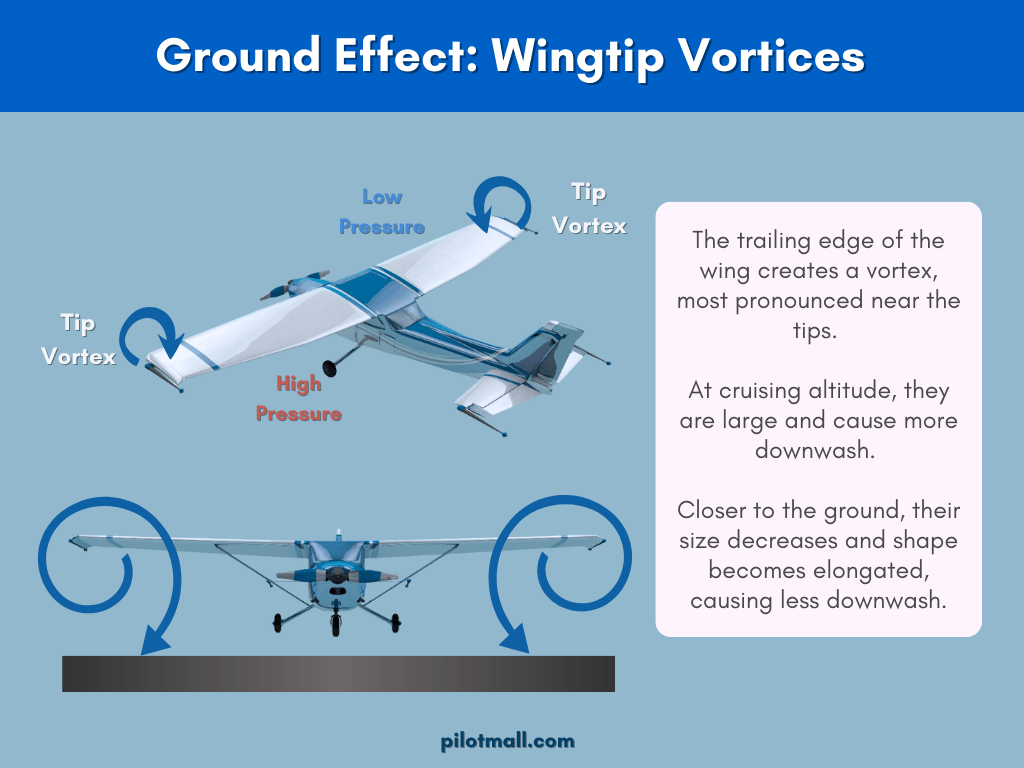
Wings generate lift by creating a pressure difference between their upper and lower surfaces. At altitude, air spills from the high-pressure area beneath the wing to the low-pressure area above, especially at the wingtips, creating wingtip vortices, which sap energy and increase induced drag.
As the aircraft descends into ground effect, the ground interrupts these airflow patterns, particularly beneath the wing and around the wingtips:
- Wingtip vortices become weaker and more elongated.
- Induced drag drops significantly.
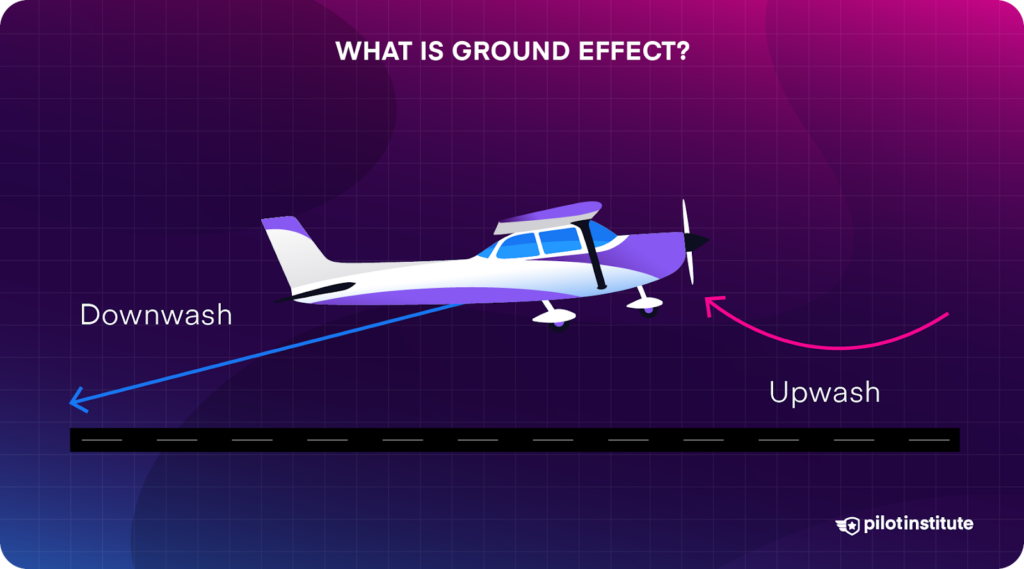
- Downwash behind the wing is reduced.
The result: the wing produces more lift with less drag, and the lift vector becomes more vertical.
Induced Drag and Downwash Reduction
Induced drag, which is highest at low airspeeds (as during takeoff and landing), is dramatically reduced in ground effect. According to ICAO Aerodynamic Theory, when an aircraft is at a height equal to half its wingspan, induced drag may decrease by up to 50%.
Relative Wind and the Lift Vector
With less air deflected downward, the relative wind becomes more aligned with the wing chord, and the angle of attack needed for a given lift is reduced. The lift vector is more vertical, further improving efficiency.
Height Thresholds and Aircraft Types
Ground effect becomes significant at altitudes below one wingspan. For a Cessna 172 (wingspan ~36 ft), ground effect is notable below 36 feet AGL, and especially pronounced below 18 feet. For airliners like a Boeing 747 (wingspan over 200 ft), ground effect can matter up to 100 feet or more.
- Low-wing aircraft experience stronger ground effect than high-wing types.
- Amphibious aircraft and floatplanes see pronounced ground effect over water.
- Helicopters encounter ground effect when hovering at less than one rotor diameter above the surface.
| Aircraft Type | Typical Ground Effect Altitude (AGL) |
|---|---|
| Small GA aircraft | < 30–40 feet |
| Business jets | < 60–100 feet |
| Large airliners | < 100–200+ feet |
| Helicopters (rotor) | < 1 rotor diameter |
Flight Symptoms and Recognition
- Takeoff: The aircraft may lift off at a lower airspeed, controls feel lighter and more sensitive, the airplane “floats” above the runway, reluctant to climb out until more speed is gained.
- Landing: A prolonged float above the runway, especially if approach speed is high. The aircraft resists settling, possibly requiring a go-around.
- Helicopters: Less power is needed to hover near the ground (IGE) than higher up (OGE).
Recognizing these symptoms allows pilots to anticipate changes in handling and performance.
Operational Impact
Takeoff Performance
Ground effect can enable early liftoff at a lower airspeed, but if the climb is attempted before reaching safe airspeed, the aircraft may be unable to leave ground effect and could stall or settle back. Pilots should:
- Wait for recommended takeoff speed before rotation.
- If airborne early, remain in ground effect to accelerate before climbing.
Landing and Float
Approaching too fast causes extended float in ground effect, using up more runway and risking an overrun. Pilots should:
- Maintain correct approach speed.
- Be ready to go around if unable to land safely within available runway.
Soft and Short Field Takeoff
On soft or short fields, pilots often deliberately use ground effect: lifting off early to reduce wheel drag, then remaining in ground effect to accelerate before climbing out safely.
Helicopter Hover: IGE vs. OGE
“IGE” (in ground effect) hover requires less power than “OGE” (out of ground effect) hover. Helicopter pilots must anticipate increased power requirements when moving out of ground effect, especially at high weights or density altitudes.
| Helicopter Condition | Power Required | Notes |
|---|---|---|
| IGE Hover | Less | More efficient near the ground |
| OGE Hover | More | Less efficient, higher drag |
Practical Scenarios
Excessive Float on Landing
A Piper Archer floats above the runway during flare due to high approach speed and ground effect. The correct response: reduce approach speed earlier or go around if safe landing is not possible.
Early Liftoff on a Soft Field
A Cessna 172 lifts off early from wet grass, using ground effect to build speed before climbing out, reducing risk of getting stuck.
Helicopter IGE Hover
A Robinson R44 hovers with less power at 2 feet than at 50 feet, illustrating the benefit of ground effect.
Common Mistakes and Prevention
- Premature Rotation: Wait for the correct takeoff speed to avoid stalling after leaving ground effect.
- High Approach Speed: Avoid excessive float and risk of runway overrun by maintaining proper speeds.
- Forcing Touchdown: Don’t force the aircraft onto the runway during float, go around if needed.
- Aircraft Differences: Know your aircraft’s ground effect characteristics.
Exam-Relevant Knowledge
Ground effect is a frequent exam topic for pilots. Expect questions about:
- How lift and drag change in ground effect.
- Heights at which ground effect becomes significant.
- Proper techniques for takeoff and landing.
- Helicopter IGE vs. OGE hover.
Sample questions:
Q: What is the aerodynamic benefit to a helicopter in ground effect?
- A: Reduced induced drag, less power required to hover.
Q: Why is early liftoff in ground effect dangerous?
- A: Aircraft may stall after leaving ground effect due to insufficient speed.
Summary Table
| Parameter | Out of Ground Effect | In Ground Effect |
|---|---|---|
| Wingtip Vortices | Strong, large | Weak, elongated |
| Downwash | Significant, rearward | Reduced, more vertical |
| Induced Drag | High | Low |
| Lift Vector | Tilted rearward | More vertical |
| Takeoff Performance | Normal rotation/climb | Early liftoff, risk of stall |
| Landing Float | Normal | Increased float, longer roll |
Key Terms
- Induced Drag: Drag from lift production, reduced in ground effect.
- Wingtip Vortices: Spirals of air at the wingtips, weakened in ground effect.
- Downwash: Downward air deflection, reduced near the ground.
- Relative Wind: Airflow direction relative to wing motion.
- Angle of Attack (AoA): Angle between wing chord and relative wind.
- Lift Vector: Direction of lift force.
- Soft/Short Field Takeoff: Uses ground effect to minimize drag and accelerate.
- IGE/OGE Hover (Helicopters): In-ground-effect hover uses less power than out-of-ground-effect.
Reference Diagrams
Practical Guidance
Recognizing Ground Effect:
- Aircraft “floats” above runway.
- Early liftoff.
- Lighter, more responsive controls.
- Helicopter requires less power near ground.
Operational Use:
- Remain in ground effect after soft/short field liftoff to build airspeed.
- Consider ground effect for emergency range extension (with caution).
- For helicopters, check power before OGE hover.
Compensation:
- Don’t rotate before reaching takeoff speed.
- Maintain correct approach speed.
- Go around if float is excessive.
Advanced Considerations
- Water operations: Ground effect is strong for amphibious aircraft just above water.
- High elevation/density altitude: Ground effect can be critical for acceleration and climb at altitude.
- Unusual attitudes/go-arounds: Be mindful of ground effect masking low airspeed, especially after bounced landings.
Real-World Examples
- WWII B-29s: Flew close to the water in ground effect to conserve fuel on long missions.
- Modern jetliners: Must account for ground effect during landing, especially at short or challenging airports.
Ground effect is a fundamental aerodynamic principle with significant operational implications. Mastery of ground effect leads to safer, more efficient, and more professional flying in both fixed-wing and rotary-wing aircraft.
Frequently Asked Questions
- What is ground effect in aviation?
- Ground effect is the increased lift and reduced induced drag experienced by an aircraft when it flies close to the ground, typically at a height less than or equal to its wingspan. This occurs because the ground interferes with the airflow around the wings, reducing the strength of wingtip vortices and downwash, making the aircraft more aerodynamically efficient near the surface.
- How does ground effect impact takeoff and landing?
- During takeoff, ground effect allows an aircraft to lift off at a lower speed, but it may not be able to climb out of ground effect unless sufficient speed is achieved. On landing, ground effect can cause the aircraft to float above the runway, increasing landing distance if approach speed is too high. Pilots must adjust technique to safely utilize or counteract ground effect.
- Which aircraft are most affected by ground effect?
- All aircraft experience ground effect, but its magnitude varies. Low-wing aircraft and those with longer wingspans tend to experience more pronounced ground effect. Helicopters also benefit from ground effect when hovering near the ground, requiring less power compared to hovering at higher altitudes (out of ground effect).
- What are the operational risks associated with ground effect?
- If not managed properly, ground effect can lead to premature liftoff on takeoff (risking stall or runway overrun), excessive float during landing (risking runway excursion), and misjudged hover capability in helicopters. Pilots must recognize symptoms and follow proper procedures to maintain safety.
- How should pilots compensate for ground effect?
- Pilots should avoid rotating before reaching recommended takeoff speed and maintain proper approach speed on landing. If excessive float is encountered, a go-around may be safer than forcing the aircraft onto the runway. Helicopter pilots must ensure sufficient power is available for out-of-ground-effect hover before ascending.
This is a reference entry. TarmacView provides drone inspection services and doesn't sell the equipment or materials described in this glossary.