What is High Intensity – Bright Light Output Setting?
High Intensity – Bright Light Output Setting in Airport Lighting
Overview
High Intensity – Bright Light Output Setting is a foundational concept in airport lighting. It refers to configuring airfield lights, such as runway, taxiway, approach, and obstacle lights, to their highest luminous intensities. This setting is essential for pilots to maintain spatial awareness and safe operations during low visibility conditions, including fog, rain, snow, and nighttime.
High intensity lighting is a regulatory requirement for runways supporting precision approaches (ILS Category II/III), and for marking obstacles within airport environments. The International Civil Aviation Organization (ICAO) and Federal Aviation Administration (FAA) mandate these systems to ensure global consistency and safety.
High Intensity Runway Lights (HIRL)
Definition & Purpose
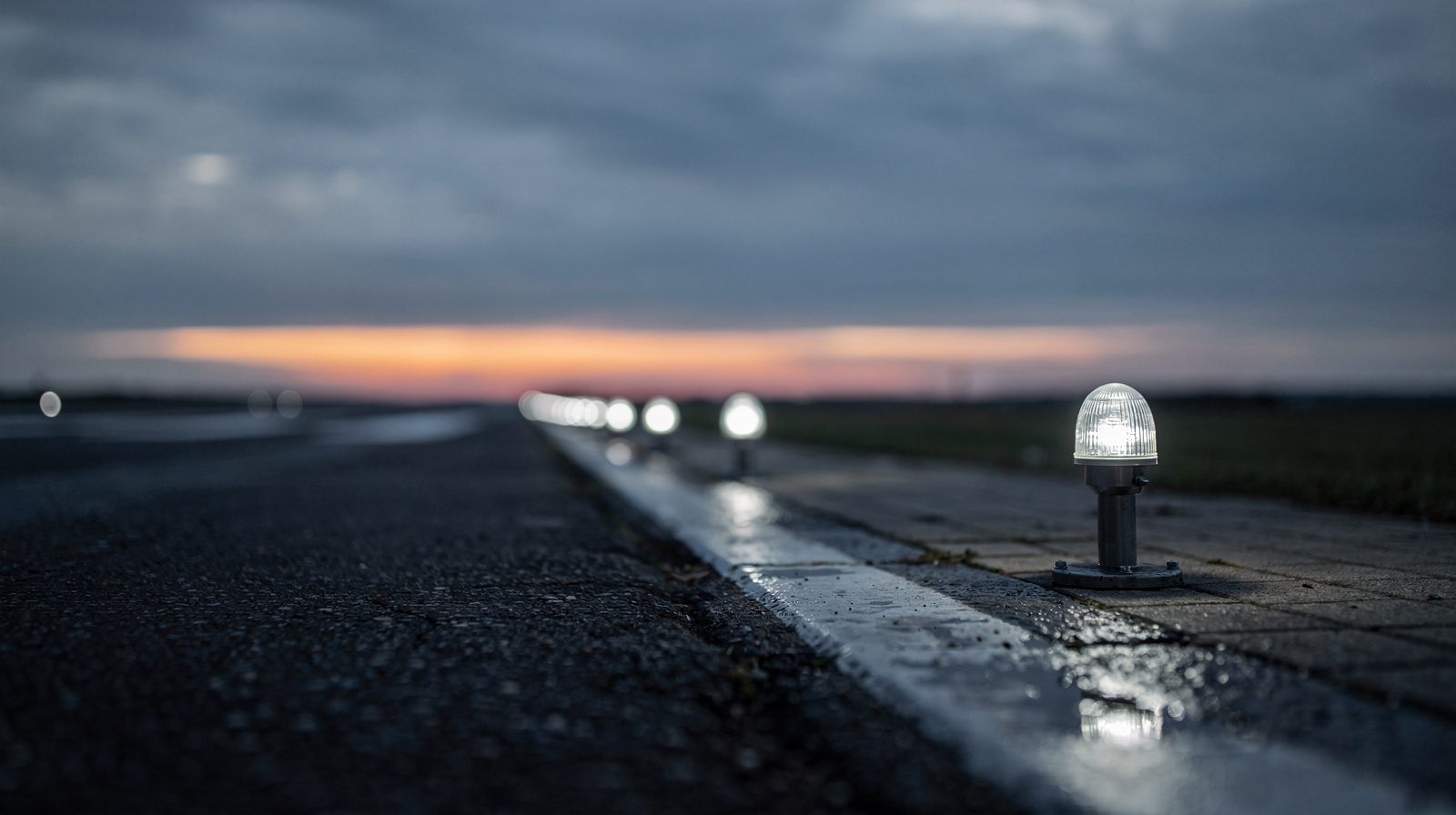
HIRL systems comprise edge-mounted lights along both sides of a runway, capable of emitting over 10,000 candelas (cd) and often exceeding 200,000 cd at peak settings. Their main function is to provide clear runway boundaries and directional guidance for pilots during approach, landing, and takeoff in suboptimal visibility.
Deployment
- Major international airports, regional hubs, and military bases.
- Required on runways designated for instrument approaches.
- Satisfy ICAO Annex 14 and FAA AC 150/5340-30 requirements.
Control & Adjustment
- Typically feature 3 or 5 intensity steps.
- Controlled from ATC towers or operational centers.
- May be integrated with automated weather sensors for dynamic adjustment.
Technical Snapshot:
| Parameter | ICAO/FAA Standard | Typical Value |
|---|---|---|
| Minimum Intensity | 10,000 cd | 10,000–200,000+ cd |
| Max Spacing | 60 m (200 ft) | 30–60 m |
| Intensity Steps | 3 or 5 | 3 or 5 |
| Color | White/Yellow | White/Yellow |
Light Intensity: Measurement & Context
Definition
Light intensity is the measurable brightness of a light source, quantified in candelas (cd). In airport applications, intensity must be high enough for visibility from several kilometers, yet regulated to prevent glare.
Use Cases
- Runway and taxiway lights
- Approach and threshold lights
- Obstacle lights on towers, buildings, and wind turbines
Measurement & Calibration
- Photometers are used during installation and maintenance.
- Automated systems provide real-time monitoring and alerts.
- Compliance with ICAO/FAA minimum and maximum thresholds is mandatory.
Sample Table:
| Lighting Type | Min Intensity (cd) | Max Intensity (cd) | Test Interval |
|---|---|---|---|
| HIRL | 10,000 | 200,000+ | Monthly/Quarterly |
| Obstacle | 100,000 | N/A | Quarterly |
Airport Lighting Systems: Types & Functions
Comprehensive System Components:
- Runway Edge (HIRL, MIRL, LIRL): Delineate runway borders.
- Taxiway Lights: Blue edge lights for surface guidance.
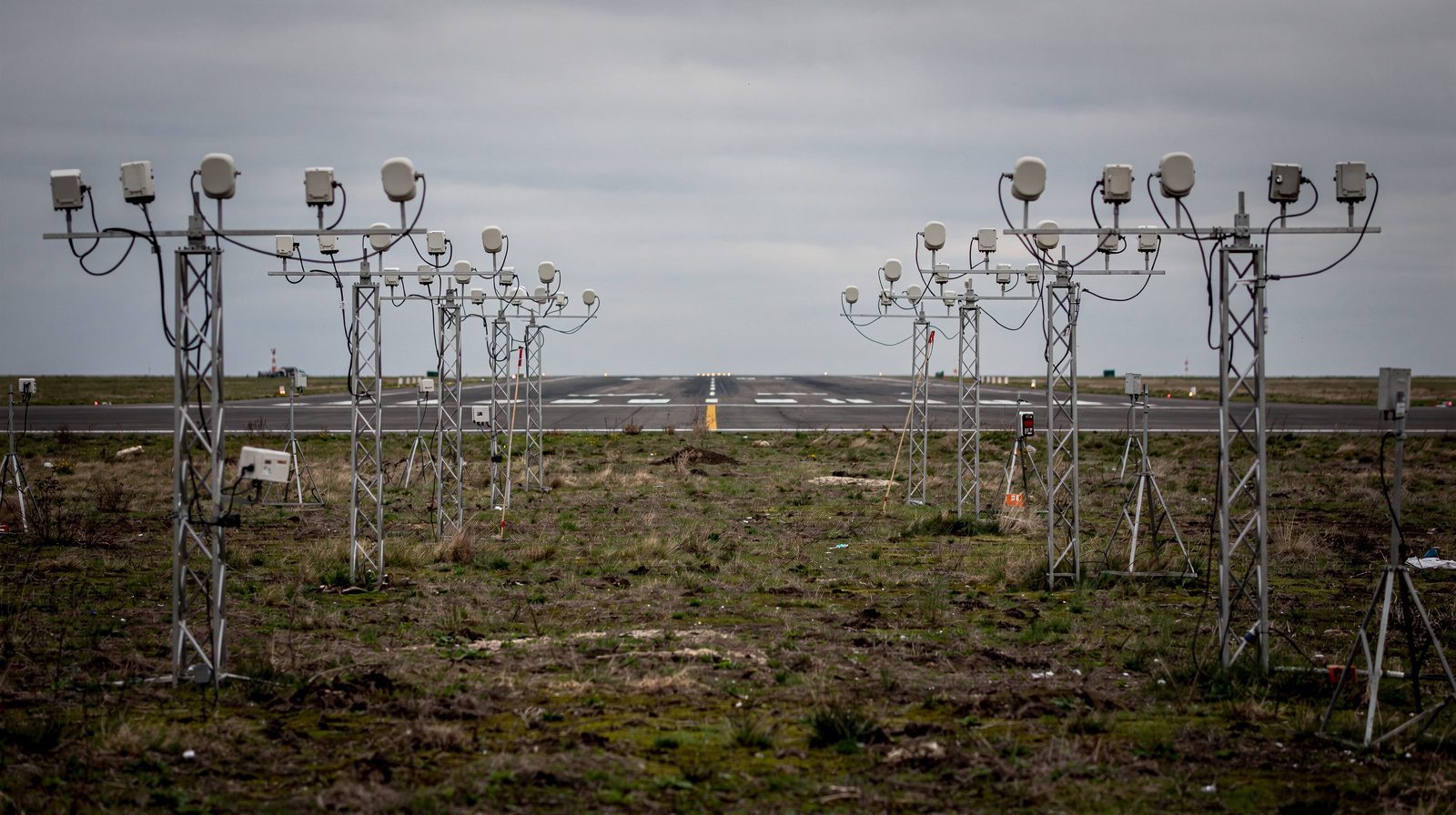
- Approach Lighting System (ALS): High intensity arrays guiding pilots to runway.
- Threshold/End Lights: Green (start) and red (end) unidirectional lights.
- Centerline/TDZL: Flush-mounted, high intensity for alignment and touchdown zone marking.
- Obstacle Lights: High intensity, often flashing, on tall structures.
Integration:
Modern lighting systems are managed via Airfield Lighting Control and Monitoring Systems (ALCMS), allowing remote, automated, and granular control of settings to match operational requirements.
Intensity Setting: Control and Adaptation
Definition
Intensity settings allow operators to adjust the brightness of airport lights to match prevailing conditions.
Operation
- Manual: Via control panels in the control tower or ops center.
- Automated: Using visibility sensors and Runway Visual Range (RVR) data.
Typical Intensity Steps:
| Step | HIRL Output (cd) |
|---|---|
| 1 | 10,000 |
| 2 | 60,000 |
| 3 | 200,000+ |
Benefits:
- Prevents unnecessary glare in clear conditions.
- Maximizes visibility during adverse weather.
Approach Lighting System (ALS)
Definition
ALS is a series of high intensity lights, often extending up to 900 meters from the runway threshold, guiding pilots on final approach.
Types:
- ALSF-1/ALSF-2: For precision approach runways.
- SSALR/SSALF: For lower category approaches.
Features:
- Sequenced flashers and steady-burning bars.
- Adjustable intensity, integrated with weather/ops systems.
Centerline and Touchdown Zone Lights (TDZL)
Definition
- Centerline Lights: Flush-mounted lights along the runway center.
- TDZL: Paired rows of white lights for the first 900 meters or runway midpoint.
Purpose:
Provide precise visual cues for alignment and touchdown, especially in low visibility.
Specs Table:
| Parameter | Centerline Lights | TDZL |
|---|---|---|
| Spacing | 15 m (50 ft) | 18 m (60 ft) |
| Length | Full runway | First 900 m |
| Color | White/Red | White |
| Intensity | 5,000–20,000 cd | 5,000–10,000 cd |
Threshold, End, and Obstacle Lights
Threshold/End Lights:
- Green lights indicate runway start (threshold).
- Red lights mark runway end.
- Operate in sync with runway lighting systems, intensity is adjustable.
Obstacle Lights:
- Very high intensity, flashing red or white.
- Mark towers, cranes, wind turbines, and tall buildings within airport zones.
- Often feature dusk-to-dawn automation and synchronized flashing.
Regulatory Standards: FAA & ICAO
Key Documents:
- ICAO Annex 14, Volume I: Aerodrome Design and Operations
- FAA AC 150/5340-30: Airport Visual Aids
- FAA Order 7210.3: Facility Operation and Administration
Requirements:
- Standardize design, intensity, color, and spacing.
- Mandate routine inspection and photometric testing.
- Require documentation and ongoing compliance.
Technological Advances
- LED Technology: Longer life, instant-on, energy savings, and precise control.
- Automation: Remote monitoring, real-time fault detection, and adaptive controls.
- Smart Systems: Integration with airport management, weather platforms, and predictive maintenance.
- Sustainability: Solar-powered and wireless solutions for remote or temporary installations.
Maintenance & Compliance
Checklist:
| Task | Frequency | Responsible Party |
|---|---|---|
| Photometric Testing | Monthly | Maintenance Team |
| Visual Inspection | Weekly | Airfield Ops |
| Fixture Cleaning | Monthly | Maintenance Team |
| Calibration | Annually | Certified Inspector |
| Documentation Update | Continuous | Record Keeper |
Importance:
Maintaining high intensity lighting within certified standards is critical for regulatory compliance and operational safety. Non-compliance can lead to fines or operational restrictions.
Operational Scenarios
- Low Visibility Approaches: Maximum intensity on HIRL, ALS, and TDZL.
- Night Operations: High intensity to maintain visual guidance.
- Adverse Weather: Increased output to penetrate fog, rain, or snow.
- Emergency Landings: All relevant systems set to highest brightness for pilot orientation.
Example:
A Category III ILS approach in dense fog requires HIRL, ALSF-2, and centerline/TDZL at full intensity, enabling pilots to identify runway features at minimum decision height.
Summary Table: High Intensity Lighting Systems
| System Type | Primary Use | Typical Intensity (cd) | Color(s) | Standard | Key Features |
|---|---|---|---|---|---|
| HIRL (Runway Edge) | Runway edge delineation | 10,000–200,000+ | White/Yellow | ICAO/FAA | 3/5-step, adjustable |
| Centerline Lights | Runway alignment | 5,000–20,000 | White/Red | ICAO/FAA | Flush-mounted |
| Threshold/End Lights | Start/end identification | 5,000–10,000 | Green/Red | ICAO/FAA | Unidirectional |
| Approach Lighting (ALS) | Final approach guidance | 10,000–200,000+ | White/Red | ICAO/FAA | Sequenced flashers |
| Obstacle Lights | Hazard marking | 100,000+ | White/Red | ICAO/FAA | Flashing, automated |
Conclusion
High Intensity – Bright Light Output Settings are critical in modern airport operations. By ensuring that lighting systems are adaptable, powerful, and compliant with strict international standards, airports maintain the highest levels of safety and efficiency for aircraft movements, even in the most challenging conditions.
For more details on upgrading or maintaining your airfield lighting, contact us for expert consultation or schedule a live demo .
References
Frequently Asked Questions
- What is a High Intensity Runway Light (HIRL)?
- A HIRL is a system of runway edge lights capable of operating at very high brightness levels, typically exceeding 10,000 candelas. These are mandatory for runways supporting precision instrument approaches, providing pilots with clear runway delineation in low visibility.
- Why are intensity settings adjustable in airport lighting systems?
- Adjustable intensity allows airport staff to match the lighting output to current weather, ambient light, and operational needs. This prevents glare during clear conditions and ensures maximum visibility during fog, rain, or night.
- How is light intensity measured and regulated at airports?
- Light intensity is measured in candelas (cd) using photometric equipment. Regulatory bodies like ICAO and FAA define minimum and maximum intensity levels, ensure periodic testing, and require airports to maintain compliance for safety.
- What are the benefits of using LED technology in high intensity airport lighting?
- LEDs offer longer life, instant-on capability, precise intensity control, reduced energy consumption, and lower maintenance costs compared to traditional lighting. They also support advanced monitoring and automation features.
- What happens if airport lighting fails to meet intensity requirements?
- Failure to maintain certified intensity may result in regulatory non-compliance, operational restrictions, or even closure of affected runways until rectified. Regular maintenance and calibration are essential to avoid these risks.
This is a reference entry. TarmacView provides drone inspection services and doesn't sell the equipment or materials described in this glossary.