What is Hot In-Place Recycling (HIR) of Asphalt Pavements?
Hot In-Place Recycling (HIR) of Asphalt Pavements
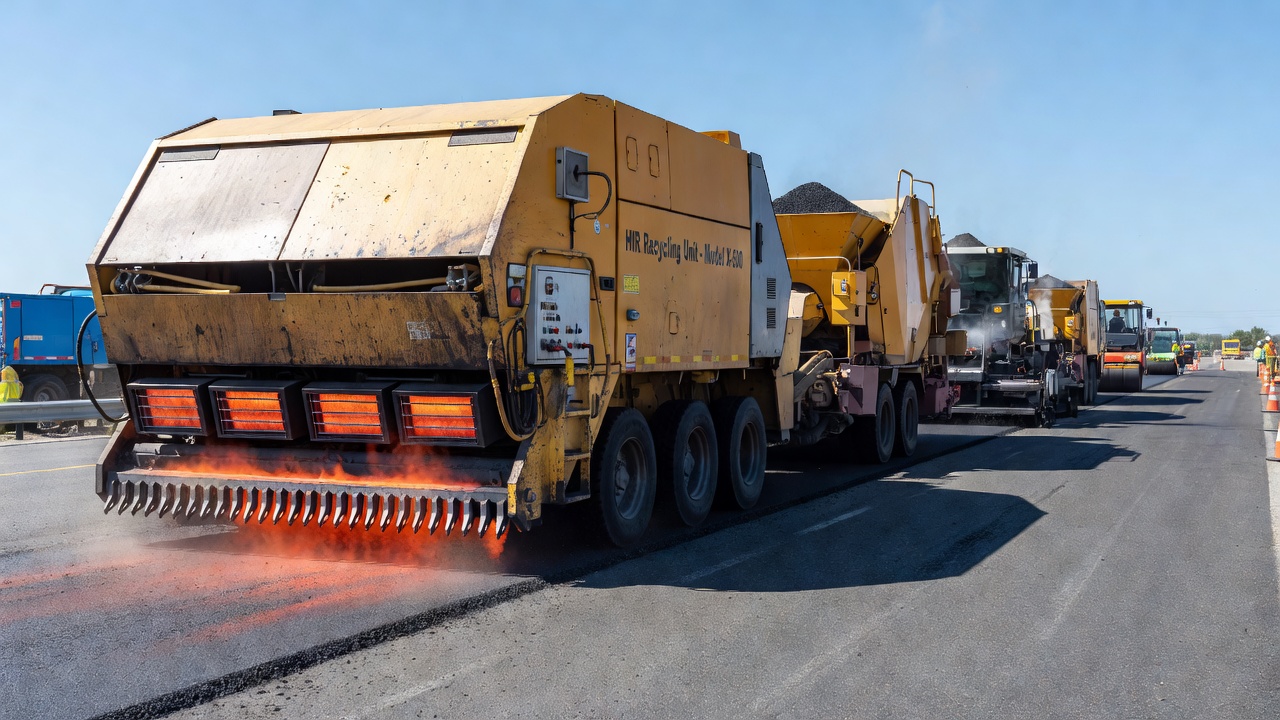
1. Definition of Hot In-Place Recycling
Hot In-Place Recycling (HIR) is defined by the Federal Highway Administration (FHWA) as “a hot process in which the existing asphalt pavement material is recycled in place. Typically, the pavement is processed to a depth of 20 to 40 mm (¾ to 1½ in). The deteriorated asphalt pavement is heated and the softened material is scarified and mixed with virgin aggregate and/or recycling agent and/or virgin asphalt mix.” HIR is a fully integrated, continuous single-pass operation that heats, scarifies, processes, mixes, re-paves, and compacts the existing pavement surface without removing material from the roadway. The process reuses 100 percent of the existing surface material on-site, eliminating the need to haul milled material away or import virgin aggregates for the recycled layer.
The Asphalt Recycling and Reclaiming Association (ARRA) classifies HIR as one of three in-place recycling methods alongside Cold In-Place Recycling (CIR) and Full-Depth Reclamation (FDR). HIR is distinguished from these methods by the application of heat to soften the existing pavement surface, enabling scarification without milling, and by its ability to produce a final wearing course that can serve as the riding surface without requiring a separate overlay. The treatment depth for HIR is limited to the upper 19 to 50 mm of the pavement, substantially shallower than CIR (50 to 125 mm) or FDR (150 to 300 mm). This depth limitation means HIR is a surface rehabilitation technique that addresses surface-level distresses but cannot correct structural deficiencies in the underlying pavement layers.
HIR delivers significant economic and environmental benefits compared to conventional mill-and-overlay reconstruction. Documented projects have demonstrated cost savings of 20 to 50 percent versus conventional methods. The Alberta Highway 3 project reported HIR costs of $2.00/m² compared to $3.21/m² for conventional HMA overlay, a 38 percent saving that translated to $14,600 per two-lane kilometer versus $41,400. The Kelowna International Airport HIR project achieved an even more dramatic saving of approximately 50 percent, $2.31 million for the full HIR runway rehabilitation versus an initial bid of $6.26 million for conventional mill-and-inlay. Beyond direct cost savings, HIR eliminates truck traffic for material hauling, reduces fuel consumption by eliminating aggregate drying and HMA production heating, lowers greenhouse gas emissions, preserves roadway geometry, and maintains bridge clearances and curb reveals, attributes that make it particularly attractive for constrained urban corridors, bridges with limited structural capacity for heavy haul trucks, and environmentally sensitive areas.
ARRA Classification of HIR Methods
The Asphalt Recycling and Reclaiming Association (ARRA) recognizes three distinct HIR processes: Surface Recycling (heater-scarification), Remixing, and Repaving. Each method is suited to specific pavement conditions, distress types, and performance requirements. The selection among these methods depends on the existing pavement’s aggregate gradation, binder properties, depth of deterioration, traffic loading, and the desired surface characteristics of the rehabilitated pavement.
The table below summarizes the key parameters distinguishing the three HIR methods:
| Parameter | Surface Recycling | Remixing | Repaving |
|---|---|---|---|
| Typical Depth | 19–38 mm (¾–1½ in) | 25–75 mm (1–3 in) | 25–50 mm (1–2 in) HIR + overlay |
| Virgin Material Added | Rejuvenator only | Rejuvenator + virgin aggregate or HMA (up to 30%) | Rejuvenator + thin HMA overlay (typically 19–38 mm) |
| Layer Function | Final wearing course | Wearing course or base for overlay | Composite wearing course |
| Screed Configuration | Single screed | Single screed | Dual screed (HIR screed + overlay screed) |
| Best For | Low-traffic roads with sound aggregate gradation | Roads needing gradation/binder modification | Higher-traffic roads needing enhanced durability |
2. Surface Recycling (Heater-Scarification)
Process Description
Surface recycling, also known as heater-scarification, is the oldest and most widely used HIR method. The process begins with heating the pavement surface using radiant heaters or hot-air furnaces mounted on self-propelled pre-heater units. The heat softens the existing asphalt surface to a depth of 19 to 38 mm (¾ to 1½ inches), making the material pliable for mechanical processing without requiring milling. Typically, two or more pre-heater units operate in sequence to gradually bring the pavement surface temperature to approximately 120–150°C (250–300°F) at the treatment depth. Gradual heating is essential to avoid burning the asphalt binder, which would cause excessive smoke emission, fume generation, and permanent damage to the binder’s engineering properties.
Once the pavement has been heated to the target temperature profile, a scarifying unit follows immediately behind the last pre-heater. The scarifier uses a bank of carbide-tipped tines or a rotary milling head that penetrates the softened surface to the specified depth, breaking up the pavement material into manageable particles without crushing the aggregate. The scarified material, now a mixture of aged asphalt binder and existing aggregate, is windrowed or left in a loose mat behind the scarifier. A rejuvenating agent is then sprayed onto the scarified material at a precisely controlled rate determined by the mix design. The rejuvenator is typically a light oil-based or emulsion-based product formulated to restore the chemical and physical properties of the aged asphalt binder.
The treated material is leveled using an auger and screed assembly that shapes the recycled mat to the specified cross-section and profile. Initial compaction is provided by the screed’s tamping mechanism, followed by final compaction using conventional rollers, typically a vibratory steel-drum roller followed by a pneumatic-tired roller. The compacted mat serves as the final wearing course and can typically be opened to traffic once the pavement temperature drops below 66°C (150°F).
Applications and Limitations
Surface recycling is best suited for pavements where the existing aggregate gradation and quality are adequate but the binder has aged and deteriorated to the point where surface distresses have developed. Typical candidate pavements exhibit raveling, light to moderate thermal cracking, and polished aggregate but have structurally sound bases and subgrades. The method can correct minor surface irregularities (ruts up to approximately 25 mm) and restore surface texture and friction.
The primary limitation of surface recycling is that no new aggregate or binder is added beyond the rejuvenating agent. If the existing pavement has an aggregate gradation that is too fine, insufficient binder content, or visible aggregate degradation, surface recycling may not produce a durable wearing course. In such cases, the remixing or repaving methods are more appropriate because they allow the addition of virgin materials to modify the recycled mixture’s properties. Surface recycling is also limited in its ability to correct deep rutting (greater than 25–30 mm) or to restore cross-slope when the existing profile has been significantly distorted by pavement deformation.
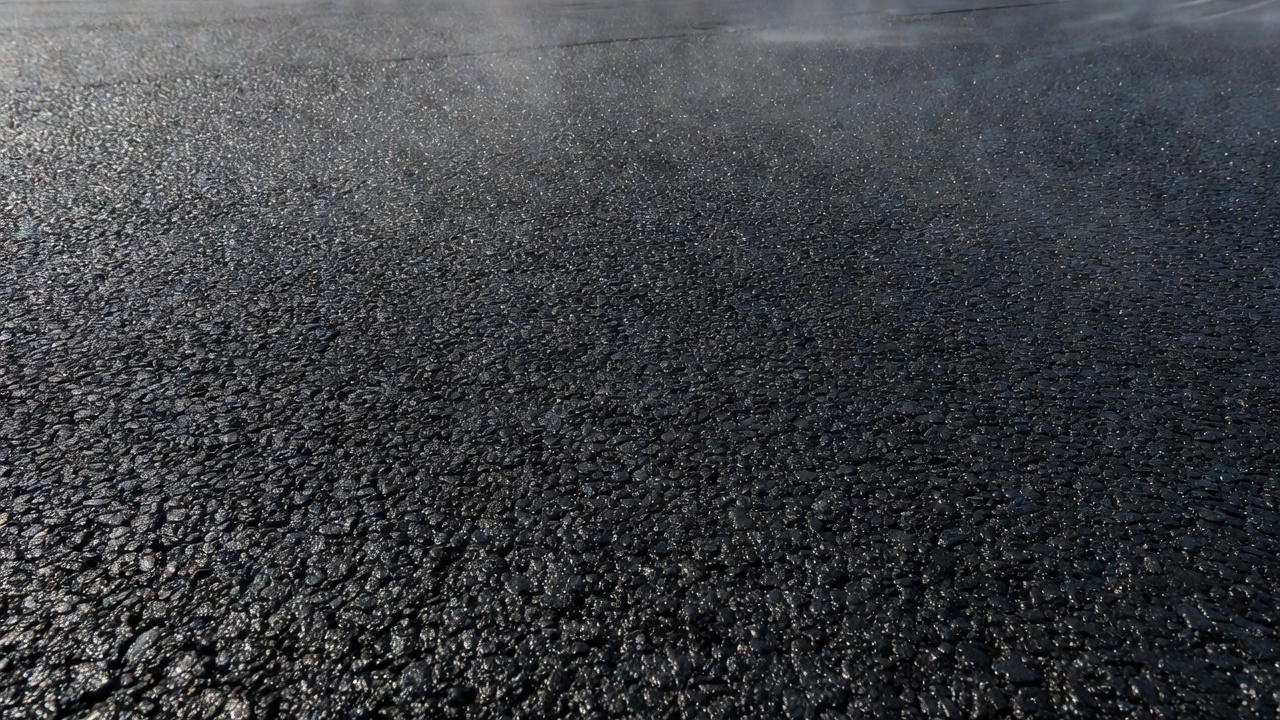
3. Remixing
Process Description
Remixing extends the surface recycling concept by incorporating virgin materials, including new aggregate, asphalt binder, and/or hot-mix asphalt, into the recycled mixture. This capability allows the engineer to modify the gradation, binder content, and binder properties of the recycled layer to meet specific mix design targets rather than simply accepting the properties of the existing pavement.
In the remixing process, the existing pavement is heated and scarified as in surface recycling. However, instead of adding only rejuvenator, the scarified material is transferred into a pugmill mixer where it is blended with measured quantities of virgin materials. The virgin aggregate is typically pre-heated to ensure it does not cool the recycled mixture below the required placement temperature. The proportion of virgin material in the total mix can range from 10 to 30 percent by weight, with the exact percentage determined by the mix design based on the existing pavement’s properties and the target properties of the recycled mix.
The remixing process can be accomplished in a single stage (one heating and mixing pass) to depths of up to 50 mm, or in multiple stages for greater depths. In multiple-stage remixing, the initial pass pre-heats and scarifies the pavement to the specified depth, and a second pass with another heater-mixer unit processes the material to the final depth, which can extend up to approximately 75 mm (3 inches). The multiple-stage approach is used when the required treatment depth exceeds what can be effectively heated and processed in a single pass.
When Remixing Is Required
Remixing is indicated when the existing pavement exhibits any of the following conditions that prevent surface recycling from producing an adequate wearing course:
Gradation deficiencies: The existing aggregate gradation may be too fine (excessive sand and fines content) to provide adequate rutting resistance for the expected traffic loading. Adding a coarse virgin aggregate corrects the gradation and establishes a more rut-resistant aggregate skeleton. Conversely, if the existing mix has excessive coarse aggregate and insufficient fines, adding a fine virgin aggregate or blend sand improves workability and compaction.
Low binder content: The existing pavement may have insufficient binder content due to original construction, oxidative loss over time, or migration of binder into the base layer. Adding virgin asphalt binder or HMA restores the total binder content to the optimum level for the recycled mixture.
Excessive binder content: When the existing pavement has very high binder content, such as pavements that have suffered from flushing or bleeding, adding virgin aggregate dilutes the total binder percentage, reducing the binder-to-aggregate ratio to an acceptable level.
High air voids: If the existing pavement has high in-place air voids (above 8–10 percent), the recycled mixture may also exhibit high air voids after compaction, leading to accelerated oxidation and moisture damage. Adding blend sand or fine virgin aggregate fills the void space and reduces the air void content of the compacted mixture.
Rutting potential: For pavements that will carry higher traffic volumes or heavier loads than the original design, adding a coarser virgin aggregate with better stone-on-stone contact improves rutting resistance. The Alberta Highway 3:16 project added 10 percent blend sand and a Cyclogen L rejuvenator at 0.3 percent by weight to achieve a recovered binder penetration of 93 dmm, transforming a brittle, cracked pavement into a flexible, rut-resistant wearing course.
Remixing produces a recycled layer that can serve as either the final wearing course (for low to moderate traffic levels) or as a base for a subsequent HMA overlay (for higher traffic levels). When an overlay is planned, the remixed layer provides a uniform, structurally sound base that distributes loads and prevents reflection of existing cracks through the new overlay.
4. Repaving
Process Description
Repaving is the most sophisticated HIR method, combining the benefits of in-place recycling with the addition of a new HMA overlay, all in a single continuous pass. The process involves heating and scarifying the existing surface as in surface recycling or remixing, placing the recycled material as the lower layer, and simultaneously placing a new HMA overlay as the upper layer. Both layers are compacted together, creating a monolithic structural section with a thermally bonded interface that eliminates the potential for interlayer delamination.
The repaving method requires a specialized paver equipped with two screed units. The first screed places and shapes the recycled HIR material. Immediately behind the first screed, the second screed places the new HMA overlay directly onto the uncompacted HIR layer. The two layers are then compacted together by the rolling train, achieving a unified pavement section where the interface between the HIR layer and the overlay is effectively “hot-bonded”, the heat from the newly placed overlay and the underlying HIR layer fuses the two layers into a single monolithic pavement thickness.
The combined thickness of the HIR layer and the overlay in repaving typically totals 50 to 75 mm, with the recycled layer contributing 25 to 50 mm and the overlay contributing 19 to 38 mm. The overlay mix can be designed with specific performance characteristics, polymer-modified binder for enhanced rutting resistance, stone mastic asphalt (SMA) for superior surface durability and friction, or open-graded friction course (OGFC) for drainage, that supplement the properties of the recycled HIR layer.
Benefits of Concurrent Compaction
The simultaneous compaction of both layers in repaving produces several structural advantages that are not achievable when an overlay is placed on a separately compacted HIR layer:
Enhanced interlayer bond: The HIR layer is at or near its placement temperature when the overlay is placed, and both layers cool together during compaction. This creates a thermal bond at the interface that is substantially stronger than the mechanical bond achieved by a tack coat applied to a cold, cured HIR surface. Research by the Florida Department of Transportation (FDOT) has shown that hot-bonded interfaces in repaving achieve bond strengths comparable to or exceeding those of monolithic HMA sections.
Reduced air voids at interface: In conventional overlay construction, the interface between the existing pavement and the overlay typically exhibits higher air voids than the interior of either layer, creating a preferred path for water infiltration and accelerated moisture damage. In repaving, the simultaneous compaction of both layers eliminates this interface air void concentration, producing a more uniform density gradient through the full pavement thickness.
Elimination of reflection cracking delay: When an overlay is placed over a cured HIR layer, the overlay must be designed to resist the reflection of any cracks that may develop in the HIR layer. In repaving, both layers are compacted while the HIR material remains hot and workable, allowing the overlay to bond intimately with the HIR material and eliminating the distinct interface that drives reflection cracking.
Improved profile control: The dual-screed configuration allows independent control of the HIR layer profile and the overlay profile, enabling precise correction of cross-slope, crown, and longitudinal grade during the recycling process.
5. HIR Equipment Train
The HIR equipment train is a self-contained, coordinated sequence of specialized machines that operate as a continuous production line. The train moves forward at a typical speed of 2.4 to 8.0 meters per minute (8 to 26 feet per minute) , processing the pavement in a single pass. The efficiency and quality of the HIR process depend critically on the proper configuration, calibration, and operation of each component in the train.
Pre-Heater Units
The HIR train typically includes a minimum of two pre-heater units operating ahead of the scarifier. These units are self-propelled, propane or diesel-fired machines equipped with either infrared radiant heaters or hot-air furnaces. The choice between radiant and hot-air heating depends on the specific equipment brand, project conditions, and environmental regulations.
Radiant heaters operate at approximately 2,000°F (1,093°C) and transfer heat to the pavement surface through infrared radiation. The radiant panels distribute heat energy at a rate exceeding 80,000 BTUs per square foot. The high surface temperature rapidly softens the top layer of the pavement, but the heat must be controlled to avoid burning the binder and producing excessive smoke. Modern radiant heaters are enclosed and vented to contain heat and reduce heat loss to the atmosphere.
Hot-air furnaces operate at approximately 1,100°F (593°C) and use forced hot air to transfer heat to the pavement. The lower operating temperature of hot-air systems reduces the risk of binder burning and is preferred in environmentally sensitive areas or where smoke emissions are regulated. Hot-air systems require higher air flow rates and longer heating times than radiant systems to achieve the same pavement temperature at depth.
The pre-heater units must be capable of heating the full lane width, typically up to 4.3 meters (14 feet), and must maintain consistent heating across the full width to ensure uniform softening of the pavement. The propane tanks for the heaters must be certified per FMCSA Section 178.345, with a maximum capacity of 1,000 gallons. Each unit must be equipped with an integrated water spray system (minimum 500-gallon tanks) for fire suppression and a wireless remote safety shut-down system.
Heater-Scarification and Mixing Units
Behind the pre-heaters, the heater-scarifier unit performs the mechanical processing of the softened pavement. The unit is self-propelled and equipped with a bank of carbide spring-loaded tines (typically 9 teeth per foot of width) or a rotary milling head. The tines penetrate the heated pavement to the specified depth, typically 19 to 38 mm (¾ to 1½ inches), and break up the material without crushing the aggregate particles. The tine spacing is typically 1.0 inch or less, and the depth is adjustable to accommodate variations in pavement thickness and surface profile.
The scarified material is processed within the machine to reduce the maximum particle size to the specified gradation. In remixing configurations, the scarified material is transferred to an on-board pugmill mixer where it is blended with metered quantities of rejuvenator and virgin materials. The mixing time in the pugmill is controlled to achieve uniform coating of all aggregate particles without excessive breakdown.
The rejuvenator spray system is integrated into the processing unit, with spray nozzles positioned to apply the rejuvenating agent to the scarified material at the rate specified by the mix design. The nozzles are selected based on the required application rate and forward speed, and the system is equipped with a self-calibrating flow meter that provides accuracy of ±5 percent of the mix design rate. The rejuvenator feed rate is positively interlocked to the forward speed of the machine, if the machine slows or stops, the rejuvenator feed automatically adjusts to maintain the correct application rate per unit area.
Screed and Compaction
The final components of the HIR train are the screed unit and the compaction rollers. The screed is a heated, augered vibratory screed with electronic grade and slope controls. It receives the processed HIR material from the mixing unit or directly from the scarifier (in surface recycling), spreads it to the specified width and thickness, and provides initial compaction, typically achieving approximately 75 to 82 percent of theoretical maximum density. The screed is equipped with a center break for adjustable crown control and shoulder break for slope control.
Compaction is performed using conventional HMA rollers following immediately behind the screed. The standard rolling sequence includes:
- Breakdown rolling: An 8 to 12 ton double-drum vibratory steel roller operating in vibratory mode, performing 2 to 4 passes. This roller achieves the majority of density gain.
- Intermediate rolling: A pneumatic-tired roller (25 ton minimum) providing kneading action that closes surface voids and achieves final density. Pneumatic rolling is critical for HIR because the recycled material, with its aged binder, may require more kneading than conventional HMA to achieve adequate particle interlock.
- Finish rolling: A static steel-drum roller to remove roller marks and produce a smooth surface texture.
The compaction pattern (number of passes, roller speed, amplitude, and frequency) is established during a control strip test section constructed at the beginning of the project. The control strip, typically 150 to 300 meters (500 to 1,000 feet) long, is used to verify the rolling sequence achieves the specified density, and the compaction procedure is documented for use during production.
6. HIR Applications
Appropriate Pavement Conditions
The success of HIR depends critically on proper project selection. According to the National Center for Asphalt Technology (NCAT) and the Florida Department of Transportation (FDOT) Literature Review on hot in-place recycling, “the success of the HIPR process is extremely dependent on the existing conditions of the pavement to be recycled.” Proper candidate selection is the single most important factor determining whether HIR will deliver the expected service life.
HIR is appropriate for pavements where the deterioration is surface-related and the underlying structure remains sound. The candidate pavement must meet the following criteria:
- Structurally sound: The pavement has adequate structural capacity for the expected traffic loading. FWD deflection testing should confirm that deflections are within acceptable limits and that the base and subgrade are not exhibiting structural distress.
- Good drainage: Subsurface drainage is adequate to prevent moisture accumulation in the underlying layers. Standing water or saturated base conditions prevent proper heat penetration during HIR and can cause premature failure of the recycled layer.
- Consistent pavement composition: The pavement is uniform in composition along the project length, without extensive patchwork, multiple overlay layers, or inconsistent mix types. Each major change in pavement composition requires adjustments to the HIR process parameters.
- Adequate air voids: The existing pavement has air voids above approximately 2 to 3 percent at the treatment depth. Pavements with very low air voids (less than 2 percent) cannot absorb the rejuvenating agent without flushing to the surface.
- Adequate binder content: The existing binder content is sufficient to provide the recycled mix with adequate binder after rejuvenation. Pavements with very low binder content may require the addition of virgin binder or HMA through the remixing process.
Distress Types Suitable for HIR
Based on FHWA Publication 98042 (Chapter 3, Table 3-1) and multiple state DOT specifications, the following pavement distresses are suitable for correction by HIR:
| Distress Type | Suitability | HIR Correction Mechanism |
|---|---|---|
| Raveling / Weathering | Excellent | Remixing and binder rejuvenation restores surface cohesion |
| Shrinkage / Thermal Cracking | Excellent | Cracks interrupted and filled by recycled material |
| Fatigue (Alligator) Cracking | Limited (if <40% of area) | Cracked surface remixed into uniform layer |
| Rutting (< 50 mm) | Excellent | Ruts filled and crown reestablished |
| Corrugation / Shoving | Excellent | Surface irregularities leveled |
| Flushing / Bleeding | Excellent | Excess binder diluted or corrected with added aggregate |
| Polished Aggregate | Excellent | New surface texture and friction restored |
Distress Types Not Suitable for HIR
| Distress Type | Reason for Unsuitability |
|---|---|
| Structural Failure | HIR is surface-only, does not add structural capacity |
| Base / Subgrade Failure | HIR cannot correct deep structural issues |
| Delamination within Top 50 mm | Delaminated layers may not bond during recycling |
| Pavements with Geotextile Fabric | Fabric wraps around milling head and tears |
| Multiple Seal Coats | Seal coats cause excessive smoke, uneven heating |
| Steel Slag Aggregate | Poor heat transfer, excessive smoke generation |
| Rubber-Modified Surfaces | Rubber sticks to equipment tires, poor processing |
| Numerous Pothole Patches | Inconsistent materials prevent uniform processing |
HIR is most effective when applied to pavements in the PCI range of 40 to 60, distressed enough to justify intervention but not so deteriorated that the pavement structure has been compromised. Below PCI 40, the extent of structural deterioration typically requires deeper treatment (CIR or FDR) or reconstruction. Above PCI 65, preventive maintenance treatments (chip seals, microsurfacing) are generally more cost-effective than HIR.
7. Rejuvenator Addition in HIR
Chemistry and Function of Rejuvenators
The asphalt binder in an aged pavement has undergone oxidative hardening, a chemical transformation in which the light aromatic oil fraction (maltenes) is converted to heavier asphaltene molecules through reaction with atmospheric oxygen. This process increases the binder’s viscosity, reduces its penetration (hardness), and diminishes its adhesive properties. The aged binder becomes brittle and loses its ability to accommodate thermal contraction and traffic-induced flexure without cracking. The binder film on aggregate surfaces becomes thin and discontinuous, leading to aggregate loss (raveling) at the pavement surface.
Rejuvenators are specially formulated chemical agents designed to reverse, to a significant degree, the effects of oxidative aging by restoring the maltene fraction of the binder. The rejuvenator penetrates the pavement surface, diffuses into the aged binder film, and re-establishes the chemical balance between maltenes and asphaltenes. The result is a binder with lower viscosity, higher penetration, improved adhesion, and increased flexibility, essentially restoring the engineering properties of the original binder.
Rejuvenators are classified under ASTM D4552, Standard Classification for Hot-Mix Recycling Agents, into six grades based on viscosity at 60°C: RA1 (lowest viscosity), RA5, RA25, RA75, RA250, and RA500 (highest viscosity). The grade selection depends on the target viscosity and penetration of the recycled binder, determined through laboratory blend design. The most commonly specified grade for HIR is RA25 or its emulsified counterpart ERA25, with the following properties:
| Test | Method | RA25 / ERA25 Requirement |
|---|---|---|
| Viscosity @ 60°C (140°F) | T201 | 901–4,500 cSt |
| Flash Point (minimum) | T48 | 215°F (102°C) |
| RTFO Viscosity Ratio (max) | T240 | 3 |
| Weight Change (max ±%) | – | 4 |
| Saybolt Furol Viscosity @ 25°C | – | 15–85 s |
| Storage Stability, 24h (max %) | T59 | 1.0 |
| Evaporation Residue (min %) | – | 65.0 |
Determination of Application Rate
The rejuvenator application rate is determined through a formal mix design process that characterizes the existing binder properties and establishes the rate required to achieve target recycled binder properties. The process follows these steps:
Step 1, Binder extraction and recovery: Core samples are taken from the existing pavement at representative locations. The asphalt binder is extracted from the RAP using a solvent extraction process (per AASHTO T164 or ASTM D2172), and the binder is recovered using the Abson method (AASHTO T170) or rotary evaporator method (ASTM D5404/D5404M).
Step 2, Binder characterization: The recovered binder is tested for penetration at 25°C (AASHTO T49) and absolute viscosity at 60°C (AASHTO T202). These tests quantify the degree of aging, a typical aged binder on a candidate HIR project may have a penetration of 20–40 dmm and a viscosity of 20,000–100,000 poises, compared to a typical virgin binder penetration of 60–100 dmm.
Step 3, Blend design: Following ASTM D4887 (Standard Practice for Preparation of Viscosity Blends for Hot Recycling of Asphalt Mixtures), a viscosity blending chart (nomograph) is used to determine the percentage of rejuvenator required to achieve the target recycled binder viscosity/penetration. The chart plots the viscosities of the aged binder and the rejuvenator on a log-log scale, and the blend viscosity is read from the line connecting the two points at the desired rejuvenator percentage. The target recycled binder penetration is typically in the range of 40–90 dmm, determined by the project’s climate and traffic requirements.
Step 4, Field verification: During HIR production, the rejuvenator application rate is continuously monitored and verified. The acceptance criterion specified in standard HIR specifications (AASHTO/Transportation.org and Highway Rehab specification) requires that the recovered penetration of the recycled binder achieve at least a 30 percent increase over the average penetration of the existing pavement cores. This requirement ensures that sufficient rejuvenator is being applied to meaningfully modify the aged binder’s properties.
Documented Rejuvenator Rates
Rejuvenator application rates from documented HIR projects provide a practical reference range:
| Project | Rejuvenator Type | Application Rate |
|---|---|---|
| Orange County, FL (1995) | Emulsified recycling agent | Geared to forward speed, applied via spinning cups |
| Edmonton, Canada (1993) | Cyclogen L | 0.15–0.2% by weight of total mix |
| Alberta Highway 3:16 | Cyclogen L | 0.3% by weight + 10% blend sand |
| MSDOT I-55 Project | Rejuvenator | 0.13 gal/yd² (0.59 L/m²) |
| Florida SR 471 | Rejuvenator | 0.13 gal/yd² (average) |
| Kelowna Airport (2012) | Recycling agent | ~0.5 L/m² (cash allowance $175K) |
The application rate must be adjusted during production based on visual observation of the recycled mix, if the mat appears dry (insufficient binder coating), the rate is increased, if flushing or bleeding appears (excess binder), the rate is reduced. The blend sand addition in remixing serves the dual purpose of improving gradation and absorbing excess binder if the rejuvenator rate is near the upper limit of the design range.
Rejuvenator Feed Control
The rejuvenator feed system on the HIR train must be automatically controlled based on three parameters: (1) forward speed of the machine, (2) width of the treatment area, and (3) depth of recycling. The feed rate is calculated by the machine’s control system using these inputs and monitored by a self-calibrating in-line flow meter. The system must maintain the specified application rate within ±5 percent of the mix design value. Any deviation outside this tolerance triggers an alarm, and production is halted until the system is recalibrated.
The rejuvenator tank is typically heated to maintain the product at its specified application temperature, typically 160–170°F (71–77°C) for RA25-grade products, ensuring consistent viscosity and flow characteristics throughout the production day.
8. HIR vs. Mill-and-Overlay vs. CIR
HIR vs. Mill-and-Overlay
Conventional mill-and-overlay involves cold planing (milling) the existing pavement to a specified depth, removing the milled material from the site, and placing new HMA in one or more lifts. Mill-and-overlay is the baseline rehabilitation method against which HIR is compared.
| Parameter | HIR | Mill-and-Overlay |
|---|---|---|
| Material Reuse | 100% of existing material reused on-site | Milled material removed, virgin material imported |
| Hauling | Minimal (rejuvenator only) | Significant (milled RAP out, virgin HMA in) |
| Truck Traffic | Negligible | 200–400 truckloads per lane-mile typical |
| Energy Consumption | 15,000–20,000 Btu/yd²-in | 30,000–50,000 Btu/yd²-in (heating + transport) |
| Cost Savings vs. M&O | 20–50% | Baseline |
| Treatment Depth | 19–50 mm | 50–150 mm (milling depth + overlay thickness) |
| Structural Improvement | Limited (surface only) | Can add significant structural section |
| Height/Grade Maintenance | Maintained (no height increase) | Height increases by overlay thickness |
| Shoulder Buildup | Not required | Required to match new pavement height |
| Traffic Disruption | Less (single-lane work, no haul trucks) | More (haul truck traffic, longer work zones) |
| Production Rate | 0.6–1.7 lane-miles/day | Comparable or higher |
The cost savings from HIR are driven primarily by the elimination of material hauling and the reduction in virgin material consumption. The Alberta Highway 3 project compared HIR at $2.00/m² ($23.97/Mg) against conventional HMA overlay at $3.21/m² ($25.67/Mg). The cost per two-lane kilometer was $14,600 for HIR versus $41,400 for conventional overlay, a saving of 65 percent that reflected both the lower unit cost and the elimination of shoulder buildup required for the overlay.
HIR vs. Cold In-Place Recycling (CIR)
Cold In-Place Recycling (CIR) is the most directly comparable in-place recycling method to HIR. Both methods reuse existing pavement materials on-site, but they differ fundamentally in temperature, treatment depth, layer function, and application.
| Parameter | HIR | CIR |
|---|---|---|
| Temperature | Heated to 120–150°C (250–300°F) | Ambient (no heat applied) |
| Treatment Depth | 19–50 mm (¾–2 in) | 75–125 mm (3–5 in) |
| Recycling Agent | Rejuvenating agent (restores aged binder) | Emulsified asphalt or foamed asphalt + additives |
| Layer Function | Wearing course (final surface) | Stabilized base course |
| Surface Course Required | Typically no (HIR is final surface) | Yes (HMA overlay, chip seal, or microsurfacing) |
| Structural Contribution | Limited (surface only) | Significant (structural base layer) |
| Fuel Consumption | High (heating required) | Low (no heating) |
| GHG Emissions | Moderate | Low (up to 90% reduction vs. reconstruction) |
| Production Rate | 0.6–1.7 lane-miles/day | 0.5–1.5 lane-miles/day |
| Best For | Surface distress, aged binder, <50 mm ruts | Structural distress, moderate-to-deep cracking |
| Traffic Suitability | Low to moderate | Low to high (with appropriate overlay) |
The fundamental difference is that HIR produces the final wearing course while CIR produces a base course that requires a surface course overlay. This distinction drives the cost comparison: HIR’s total cost includes only the recycling operation, while CIR’s cost includes both the recycling operation and the overlay. For pavements where the structural condition allows surface-only treatment, HIR is typically the lower-cost option. For pavements requiring deeper treatment to address structural issues, CIR combined with an overlay provides a more comprehensive rehabilitation.
9. Inspection of HIR Pavements
Quality assurance inspection of HIR construction requires specialized knowledge of the hot recycling process. The inspector must verify that the equipment train operates correctly, that material temperatures are maintained within specification, that the rejuvenator application rate is accurate, and that the finished pavement meets density, smoothness, and appearance requirements.
Pre-Production Inspection
Before HIR production begins, the inspector verifies:
- Mix design approval: The approved mix design is on-site, specifying the rejuvenator type, grade, and application rate, virgin material proportions (if remixing or repaving), and target recycled binder properties.
- Equipment calibration: All metering systems, rejuvenator flow meter, virgin aggregate feed, binder addition system, have been calibrated within 72 hours of production. Calibration records are reviewed and verified.
- Control strip: A test section (typically 150–300 m or 500–1,000 ft) is constructed and evaluated for compaction density, smoothness, and visual appearance. The rolling sequence established during the control strip is documented and must be followed during production.
- Surface preparation: The existing pavement surface is cleaned of loose debris, vegetation, and objectionable materials. Millings or other contaminants are removed from the surface.
- Weather conditions: Ambient temperature is above 7°C (45°F) and rising. No fog, rain, or wet pavement surface is present. Forecast conditions are checked for the duration of the planned work period.
- Traffic control: Temporary traffic control plans are implemented per safety requirements, with appropriate signage, barriers, and pilot car operations for lane closures.
During Production Inspection
During HIR production, the inspector continuously monitors:
- Pavement temperature: Temperature behind the screed is measured using an infrared thermometer or contact probe within 1.5 m (5 ft) of the screed. The target range is 135–163°C (275–325°F). Temperatures below 85–90°C (185–194°F) indicate inadequate heating and require corrective action.
- Rejuvenator application rate: Verified by in-line flow meter readings. The rate must be within ±5 percent of the mix design value. Tanker dip measurements are taken at least three times per shift as a secondary verification.
- Depth of recycling: The scarifier/mill depth is verified by probing through the uncompacted mat behind the screed. The depth must be within ±6 mm (¼ inch) of the specified depth. Depth measurements are taken at a minimum frequency of one per 150 linear meters (500 ft).
- Mat appearance: Visual inspection for uniform color and texture. The mat should appear homogeneous, with no visible segregation, tearing, uncoated aggregate, or flushing. Any areas of non-uniform appearance are marked for investigation.
- Longitudinal joints: The joint between adjacent passes is inspected for excessive material or low density. Hot joints (echelon paving) are preferred. For cold longitudinal joints, the joint face must be tack-coated.
- Compaction density: Nuclear density gauge readings are taken at a minimum frequency of one per 150 linear meters (500 ft), and the results are compared to the target density established during the control strip. Typical target density is 96–98 percent of 75-blow Marshall density or 92–96 percent of theoretical maximum density (TMD).
- Binder penetration verification: Loose mix samples are collected from the first 150 m (500 ft) of daily production for recovered penetration testing. The test determines whether the recycled binder penetration meets the minimum 30 percent increase over the existing pavement core average.
Post-Production Inspection
After HIR placement and cooling, the inspector verifies:
- Core samples: Extracted at specified intervals (typically one per 300 lane-meters) for thickness verification, in-place density determination, and recovered binder testing.
- Smoothness: Measured with a 3 m (10 ft) straightedge or profilograph. Maximum allowable deviation is typically 5–6 mm (3/16–¼ in) under a 3 m straightedge for highway projects, and 5 mm maximum irregularity on a 4.5 m straightedge for airport projects.
- Surface condition: Visual assessment for any defects, flushing, raveling, cracking, roller marks, or segregation, that developed during or after compaction.
- Friction testing: For airport or high-speed highway applications, continuous friction measurement is performed to verify that the surface meets minimum friction requirements before opening to traffic.
Common HIR Failure Modes and Corrective Actions
| Failure Mode | Cause | Corrective Action |
|---|---|---|
| Flushing / Bleeding | Excessive rejuvenator or binder content | Reduce rejuvenator rate, add blend sand or drier virgin aggregate |
| Dry Mix / Stripping | Insufficient binder, uncoated aggregate | Increase rejuvenator rate, add virgin binder in remixing |
| Low Air Voids | Excessive fines, insufficient coarse aggregate | Add blend sand or coarser virgin aggregate |
| Delamination | Inadequate heating depth, cold joint | Ensure adequate pre-heating, tack-coat cold joints |
| Non-Uniform Texture | Temperature segregation, gradation variation | Verify even heating, adjust mixing time |
| Surface Raveling | Inadequate binder rejuvenation | Increase rejuvenator rate, verify penetration recovery |
10. HIR for Airport Pavements
Kelowna International Airport Case Study
The most extensively documented airport HIR application is the Kelowna International Airport (YLW) runway rehabilitation project completed in 2012. Kelowna is Canada’s busiest single-runway airport, serving approximately 1.4 million passengers annually with a PCN Code of 54/F/C/W/T per ICAO classification. The runway pavement had developed surface distresses, raveling, thermal cracking, and minor rutting, that required rehabilitation, but the underlying pavement structure remained structurally sound.
The airport evaluated three options: (1) conventional mill-and-inlay at an estimated cost of $6,256,695, (2) cold in-place recycling with HMA overlay, and (3) hot in-place recycling with 30 percent added HMA (remixing) at an estimated cost of $2,312,100. The HIR option was selected based on its approximately 50 percent cost savings and the ability to complete the work within the available runway closure window.
The HIR project specifications required:
- Treatment depth: 50 mm (2 inches) full runway width
- Added HMA: 30 percent by weight of total mix (total compacted thickness 65 mm)
- Heating requirement: Pavement heated to an average temperature of 120°C (248°F) measured immediately behind the screed
- Compaction: 98 percent of 75-blow Marshall density
- Surface smoothness: 5 mm maximum irregularity on a 4.5 m straightedge
- Rejuvenator: Cash allowance of $175,000 for recycling agent
- Total area treated: 140,000 m²
The project was completed during the summer of 2012 and has been monitored for performance since completion. At the 17-year mark, similar HIR projects at Canadian airports, including Penticton Airport’s Taxiway A, were reported in good condition, demonstrating the long-term durability of properly designed and constructed HIR on airfield pavements.
Regulatory Status and Limitations
Under current FAA Advisory Circular AC 150/5370-10H (Standard Specifications for Construction of Airports), recycled materials including Reclaimed Asphalt Pavement (RAP) are not permitted in surface mixes, typically the top 50–75 mm (2–3 inches), for FAA-funded airport pavements, except for shoulders. This restriction applies to HIR because the recycled layer constitutes the surface course. The FAA allows up to 30 percent RAP in other mixtures (binder and base courses), but the surface course restriction effectively prohibits the use of HIR as a final wearing course on FAA-funded airfield pavements.
This regulatory limitation does not apply to airports not under FAA jurisdiction, such as Canadian airports governed by Transport Canada, or privately operated airports, or to airport pavements that are used as a base layer beneath a virgin HMA surface course. In the latter application, HIR can be used to rehabilitate the pavement structure, and a virgin HMA overlay meeting FAA specifications (Item P-401) is placed over the HIR layer.
The Airport Cooperative Research Program (ACRP) has recognized the need for comprehensive guidance on in-place recycling for airfield pavements. ACRP Problem Statement 21-506 (Expanding in-place cold recycling for flexible airfield pavement) was submitted to develop decision tools, material specifications, structural design methods, and QA processes for CIR and FDR in airfield pavement rehabilitation. The FAA’s position on HIR and other in-place recycling methods is expected to evolve as research data from demonstration projects becomes available and as sustainability pressures increase.
International Airport Applications
Beyond Kelowna, HIR has been applied to airport pavements in several international contexts. Airports in British Columbia and Alberta, Canada have used HIR for runway, taxiway, and apron rehabilitation for over 20 years. The Canadian practice typically uses the remixing method with 20–30 percent added HMA to ensure the recycled layer has adequate durability for aircraft loading. The added HMA provides fresh binder and aggregate that compensates for the aged properties of the existing pavement material.
European airports, including some in Germany and Italy, have experimented with in-place recycling methods for airside pavements, though HIR is less common than CIR for European airfield applications. The European approach typically favors deeper recycling methods that provide greater structural contribution.
Technical Considerations for Airfield HIR
Applying HIR to airport pavements introduces considerations beyond those for highway applications:
Structural demands: Aircraft wheel loads are substantially higher than highway truck loads. A Boeing 777-300ER main landing gear tire exerts a load exceeding 25 tonnes at a tire pressure above 1.4 MPa (200 psi). The HIR layer must provide adequate shear resistance under these loads, which requires careful mix design, typically using the remixing method with added coarse aggregate and polymer-modified binder to achieve the required rutting resistance.
Fuel and chemical resistance: Airport pavements, particularly apron areas, are exposed to jet fuel (kerosene), hydraulic fluids (phosphate esters), and de-icing chemicals (glycols, acetates). The rejuvenated binder in an HIR layer may be more susceptible to chemical attack than a conventional HMA binder unless the added HMA incorporates polymer-modified binder with fuel resistance. FAA P-404 fuel-resistant mix specifications should be considered for apron applications.
FOD prevention: The HIR surface must be highly resistant to raveling to prevent Foreign Object Debris that could damage jet engines. Proper compaction density (98 percent of Marshall density minimum) and adequate binder rejuvenation are essential to ensure aggregate retention under aircraft tire shear forces.
Operational constraints: Airport closures for HIR construction are time-critical. The HIR train’s production rate must be matched to the available closure window, Kelowna Airport required completion within a single construction season. Rapid-curing rejuvenators and accelerated compaction procedures may be necessary to meet tight reopening schedules.
Friction characteristics: The HIR surface must provide adequate friction for aircraft braking, meeting ICAO minimum friction values. Surface macrotexture should be verified after compaction, and remedial action (grooving, surface treatment) taken if friction levels are inadequate.
Hot In-Place Recycling is a proven, cost-effective, and sustainable pavement rehabilitation method that reuses 100 percent of existing surface material on-site through a continuous heated process. When properly designed through formal mix design procedures (ASTM D4552, ASTM D4887), constructed using the appropriate method (surface recycling, remixing, or repaving) with precisely calibrated equipment and accurate rejuvenator application, and with rigorous quality control and inspection, HIR delivers service lives of 8–15 years with cost savings of 20–50 percent compared to conventional mill-and-overlay reconstruction. The growing interest in HIR for airport pavements, demonstrated by successful projects at Canadian airports and supported by ongoing research through the ACRP, positions HIR as an increasingly important rehabilitation strategy for sustainable infrastructure management in the 21st century.
Frequently Asked Questions
- What is Hot In-Place Recycling (HIR) and how does it differ from other recycling methods?
- Hot In-Place Recycling (HIR) is a pavement rehabilitation process that heats the existing asphalt surface to 120–150°C, scarifies or mills the softened material to a depth of 19–50 mm, mixes it with a rejuvenating agent and optionally virgin aggregate or HMA, and re-paves and compacts the recycled mixture on-site. Unlike Cold In-Place Recycling (CIR), HIR applies heat and typically serves as a final wearing course without requiring a separate overlay. Unlike Full-Depth Reclamation (FDR), HIR treats only the surface asphalt layer and does not penetrate into the base. HIR reuses 100% of the existing surface material, eliminates material hauling, reduces greenhouse gas emissions, and delivers cost savings of 20–50% compared to conventional mill-and-overlay reconstruction.
- What are the three main methods of HIR?
- The Asphalt Recycling and Reclaiming Association (ARRA) recognizes three HIR methods: (1) Surface Recycling (Heater-Scarification), heating and scarifying the surface to 19–38 mm depth, adding rejuvenator, and compacting, producing a renewed wearing course, (2) Remixing, heating, scarifying, and mixing the existing material with added virgin aggregate, asphalt binder, or HMA (up to 30% of total mix by weight) to modify aggregate gradation and binder properties, typically to depths of 25–75 mm, and (3) Repaving, simultaneously placing a thin HMA overlay directly behind the HIR layer during the same pass, compacting both layers together to create a monolithic bond. The method selection depends on existing pavement condition, required depth of treatment, aggregate quality, and traffic level.
- What types of pavement distress can HIR address?
- HIR is suitable for treating surface-level pavement distresses where the underlying structure remains sound. Appropriate distresses include: raveling and weathering (primary candidate, as HIR remixes and recoats the surface), shrinkage and thermal cracking (cracks are interrupted and filled by the recycled material), rutting up to 50 mm depth (ruts are filled and crown reestablished), corrugation and shoving (leveled by the recycling process), flushing and bleeding (corrected through aggregate addition), and polished aggregate (friction restored through surface renewal). HIR is NOT suitable for structural failures, base failures, delamination within the top 50 mm, pavements with geotextile fabric, multiple seal coats, steel slag aggregate, rubber-modified surfaces, or pavements with numerous pothole patches. The success of HIR depends on the existing pavement being structurally sound with adequate drainage.
- How does the HIR equipment train operate?
- The HIR equipment train is a self-contained, continuous operation typically comprising: (1) Pre-Heater units, minimum of two units using infrared/radiant heat (approximately 2,000°F or 1,093°C) or hot air (approximately 1,100°F or 593°C) from diesel-fired furnaces, capable of heating up to 4.3 m width, (2) Heater-Scarification Train, self-propelled unit operating at 2.4–8 m/min with carbide spring-loaded tines or a rotary milling head, (3) Spray Unit, applies rejuvenating agent at the approved rate with ±5% accuracy, using self-calibrating flow meters, (4) Mill/Re-mixer Unit, dual-drum milling head(s) with automated depth control, milling up to 38 mm depth, (5) Screed Unit, heated, augered vibratory screed with electronic grade and slope controls, and (6) Compaction Unit, 8–12 ton steel vibratory roller and pneumatic-tired roller. Safety equipment includes integrated water spray systems, wireless remote shut-down, and propane tanks certified per FMCSA requirements.
- What temperature ranges are critical for HIR construction?
- Critical temperature parameters in HIR include: radiant heater temperature of approximately 2,000°F (1,093°C), hot air furnace temperature of approximately 1,100°F (593°C), pavement surface temperature between pre-heater and repaver must be at least 225°F (107°C), recycled material temperature at placement of 200°F (93°C) for surface recycling, temperature behind screed target range of 275–325°F (135–163°C), minimum temperature behind screed of 185–194°F (85–90°C) for cool-weather projects, ambient air temperature minimum of 45°F (7°C) and rising, and do not allow traffic on the HIR mat until temperature drops below 150°F (66°C). For airport projects, the Kelowna Airport specification required heating the top 50 mm of runway pavement to an average temperature of 120°C (248°F) measured immediately behind the screed. Temperature management is critical, if the mat cools below the minimum compaction temperature before adequate density is achieved, the pavement will have high air voids vulnerable to premature raveling.
- What rejuvenators are used in HIR and how are they applied?
- HIR rejuvenators are formulated to restore the chemical and physical properties of aged asphalt binder by replenishing the maltene fraction lost to oxidation. They are classified per ASTM D4552 into six grades (RA1 through RA500) based on viscosity. The most commonly specified grade is RA25 or emulsified ERA25, with a viscosity range of 901–4,500 cSt at 60°C and a flash point minimum of 215°F. Application rates from documented projects range from 0.15–0.3% by weight of total mix for Cyclogen L rejuvenator to 0.13 gal/yd² (0.59 L/m²) surface application. The rejuvenator feed rate must be automatically controlled based on forward speed, verified by self-calibrating flow meters with ±5% accuracy. Acceptance criteria require recovered penetration of the recycled binder to achieve at least a 30% increase over the average penetration of existing pavement cores. Rejuvenators work by restoring the maltene-asphaltene balance in the aged binder, reducing viscosity, and improving adhesion to aggregate particles.
- How is HIR quality control and inspection performed?
- HIR quality control covers pre-production, production, and post-production phases. Pre-production: verify mix design, equipment calibration within 72 hours of production, and construct a control strip (typically 150–300 m). Production: monitor pavement temperature behind the screed (target 275–325°F), verify rejuvenator application rate (±5% of design), measure depth of recycling (±6 mm of specified depth), perform recovered penetration testing on recycled binder (≥30% increase over existing), check compaction density (typically 98% of 75-blow Marshall), and perform continuous visual inspection for uniform homogeneous mix without flushing or segregation. Post-production: take core samples for thickness verification and density determination, perform smoothness testing (5 mm maximum irregularity on 4.5 m straightedge for airport specifications), and assess surface condition. Weather limitations require ambient air temperature above 45°F (7°C) and rising, with no HIR during fog, rain, or when pavement surface is wet. Common failure modes include flushing (excessive rejuvenator), dry mix (insufficient binder), low air voids, and delamination.
- Can HIR be used on airport pavements?
- HIR has been successfully used on airport pavements, most notably at Kelowna International Airport in Canada (2012), where full-width HIR to 50 mm depth with 30% added HMA was applied to the runway, achieving approximately 50% cost savings ($2.31M vs. $6.26M for conventional mill-and-overlay). The project required 98% of 75-blow Marshall density and surface smoothness of 5 mm maximum irregularity on a 4.5 m straightedge. Additional Canadian airport HIR projects include Penticton Airport (taxiway, 17 years in good condition) and several airports in British Columbia and Alberta. Under current FAA Advisory Circular AC 150/5370-10, recycled materials including RAP are not permitted in surface mixes for FAA-funded airport pavements (typically the top 50–75 mm) except for shoulders. HIR may therefore be used on airport pavements not under FAA jurisdiction or as a base layer beneath a virgin HMA surface course via special provision. FAA and ICAO guidance on in-place recycling for airfield pavements remains limited, with research underway through the Airport Cooperative Research Program (ACRP) to develop comprehensive guidance.