What is Hot Mix Asphalt (HMA)?
Hot Mix Asphalt (HMA) for Airport and Road Pavements
Hot Mix Asphalt (HMA) is the predominant flexible pavement material used worldwide for airport runways, taxiways, aprons, and highways. It is a precisely engineered composite material produced by heating, drying, and mixing carefully selected mineral aggregates with an asphalt binder at elevated temperatures, typically between 150°C and 180°C (300°F to 350°F), then transporting, placing, and compacting the hot mixture into dense, durable pavement layers before it cools below workable temperatures. The resulting pavement layer exhibits a unique combination of structural strength, flexibility, impermeability, and surface friction that makes it the material of choice for more than 90% of paved surfaces globally.
At airports, HMA assumes an elevated level of engineering sophistication. Aircraft impose concentrated wheel loads that far exceed typical highway truck loads, a fully loaded Boeing 777-300ER exerts single-wheel loads exceeding 25 tonnes on tire contact pressures above 1.4 MPa (200 psi). Furthermore, aircraft operate at speeds of up to 370 km/h during takeoff and landing, demanding exceptional surface smoothness and friction characteristics. Airport HMA must also resist chemical attack from jet fuel (kerosene-based), hydraulic fluids (phosphate ester-based), and de-icing chemicals (glycols and acetates). These extreme demands have driven the development of specialized airport-grade HMA formulations incorporating polymer-modified binders, performance-graded binder selection, and stringent production and placement quality control that surpass highway standards.
1. Definition and Fundamental Components
Definition
Hot Mix Asphalt (HMA) is defined as a plant-produced mixture of dried and heated mineral aggregates, uniformly coated and mixed with a heated asphalt binder, placed and compacted at elevated temperatures to form a structural pavement layer. The term “hot mix” distinguishes it from warm mix asphalt (WMA), produced at 100–140°C, and cold mix asphalt, produced and placed at ambient temperatures using emulsified or cutback binders. The elevated production temperature of HMA, typically 150°C to 180°C depending on binder grade and aggregate characteristics, ensures complete drying of aggregates, thorough binder coating of all aggregate particles, and sufficient workability during placement and compaction before the mixture cools below the minimum compaction temperature, commonly referred to as the cessation temperature (typically 80–90°C).
The HMA production temperature range is not arbitrary but is carefully selected based on the viscosity-temperature relationship of the specific asphalt binder. Per AASHTO M320 and ASTM D6373, the mixing and compaction temperature ranges are established where the binder achieves a kinematic viscosity of 0.17 ± 0.02 Pa·s for mixing and 0.28 ± 0.03 Pa·s for compaction. For unmodified penetration-grade binders, this translates to the 150–170°C range, for polymer-modified binders (PMB), these temperatures can be 10–25°C higher due to the increased viscosity imparted by the polymer network. Exceeding the maximum safe heating temperature, typically 177°C for unmodified binders, risks thermal cracking of the binder molecules and premature oxidative aging.
Aggregate Component
Mineral aggregates constitute 93–97% by weight and 80–85% by volume of HMA, making aggregate quality and gradation the dominant factor in pavement performance. Airport HMA aggregates must meet stringent requirements specified in FAA P-401 and ASTM D692/D692M:
Coarse aggregate (retained on the 4.75 mm sieve): Crushed stone, crushed gravel, or crushed blast-furnace slag with a minimum of 90% of particles having at least two fractured faces. The Los Angeles (L.A.) Abrasion loss (AASHTO T96) must not exceed 40% for surface courses, and the sodium sulfate soundness loss (AASHTO T104) is limited to 12% after five cycles. Flat and elongated particles (length-to-thickness ratio exceeding 3:1 per ASTM D4791) must not exceed 10% in the surface course.
Fine aggregate (passing the 4.75 mm sieve): Natural sand, manufactured sand from crushed stone, or a blend. Superpave consensus properties require a minimum uncompacted void content (AASHTO T304, Method A) of 45% for the fine aggregate angularity test, ensuring internal friction and rut resistance. The sand equivalent value (AASHTO T176) must be at least 45 to limit clay and deleterious fines content.
Mineral filler (passing the 0.075 mm or No. 200 sieve): Limestone dust, hydrated lime, Portland cement, or fly ash, used to stiffen the asphalt binder through the mastic effect and improve moisture resistance. The dust-to-effective-binder ratio (P0.075/Pbe) is carefully controlled between 0.6 and 1.2 in Superpave mix design to prevent either tender mixes (too low) or overly stiff, crack-prone mixes (too high).
The aggregate gradation, the distribution of particle sizes across standard sieve sizes, defines the HMA mix type. FAA P-401 specifies three gradation bands for airport HMA:
| FAA Gradation | Nominal Maximum Aggregate Size (NMAS) | Recommended Minimum Lift Thickness | Typical Application |
|---|---|---|---|
| Gradation 1 | 19.0 mm (3/4 inch) | 75 mm (3 inches) | Surface and binder courses for runways and heavy-duty taxiways |
| Gradation 2 | 12.5 mm (1/2 inch) | 50 mm (2 inches) | Surface courses for aprons, light-duty taxiways, general aviation runways |
| Gradation 3 | 9.5 mm (3/8 inch) | 37.5 mm (1.5 inches) | Leveling courses, requires FAA approval for other uses |
Asphalt Binder Component
The asphalt binder, also termed bitumen in international nomenclature, is a viscoelastic thermoplastic hydrocarbon that serves as the waterproofing and binding agent in HMA. At high temperatures (mixing/compaction), the binder behaves as a Newtonian fluid with low viscosity, enabling thorough aggregate coating. At in-service pavement temperatures (typically -30°C to 70°C globally), the binder exhibits viscoelastic behavior, providing both the stiffness to resist rutting and the flexibility to accommodate thermal contraction without cracking.
For airport HMA, binder selection follows the Superpave Performance Grading (PG) system defined in AASHTO M320. The PG designation, such as PG 76-22, indicates the binder is designed to perform satisfactorily at a maximum 7-day average pavement temperature of 76°C and a minimum pavement temperature of -22°C. FAA guidance in AC 150/5370-10H prescribes an additional grade bump, increasing the high-temperature PG by one or two grades, for airport pavements subjected to heavy, slow-moving aircraft loads. This grade bumping accounts for the extreme loading conditions unique to airports:
| Condition | High-Temperature Grade Adjustment |
|---|---|
| Base climate grade (no traffic adjustment) | PG 64-XX to PG 70-XX typical |
| Airport grade bump (+1 grade) | PG 70-XX to PG 82-XX for runways |
| Fuel-resistant grade bump (+1 to +2 grades) | PG 76-XX to PG 88-XX for aprons/fueling areas |
| PG Plus test required | For grades with upper limit ≥ 92°C (modified binder requirement) |
2. HMA Mix Types for Airport Applications
Dense-Graded HMA is the most widely used mix type for airport pavements. It features a continuously graded aggregate structure, from coarse particles down to mineral filler, that produces maximum particle interlock and minimal air void content after compaction. The dense aggregate skeleton, combined with 4.5–6.0% asphalt binder by weight of mix, yields an in-place air void content of 3–5% for surface courses and 3–7% for binder courses. FAA Gradation 1 and 2 dense-graded mixes form the backbone of runway and taxiway surface and binder layers, offering an optimized balance of structural strength, impermeability, durability, and cost.
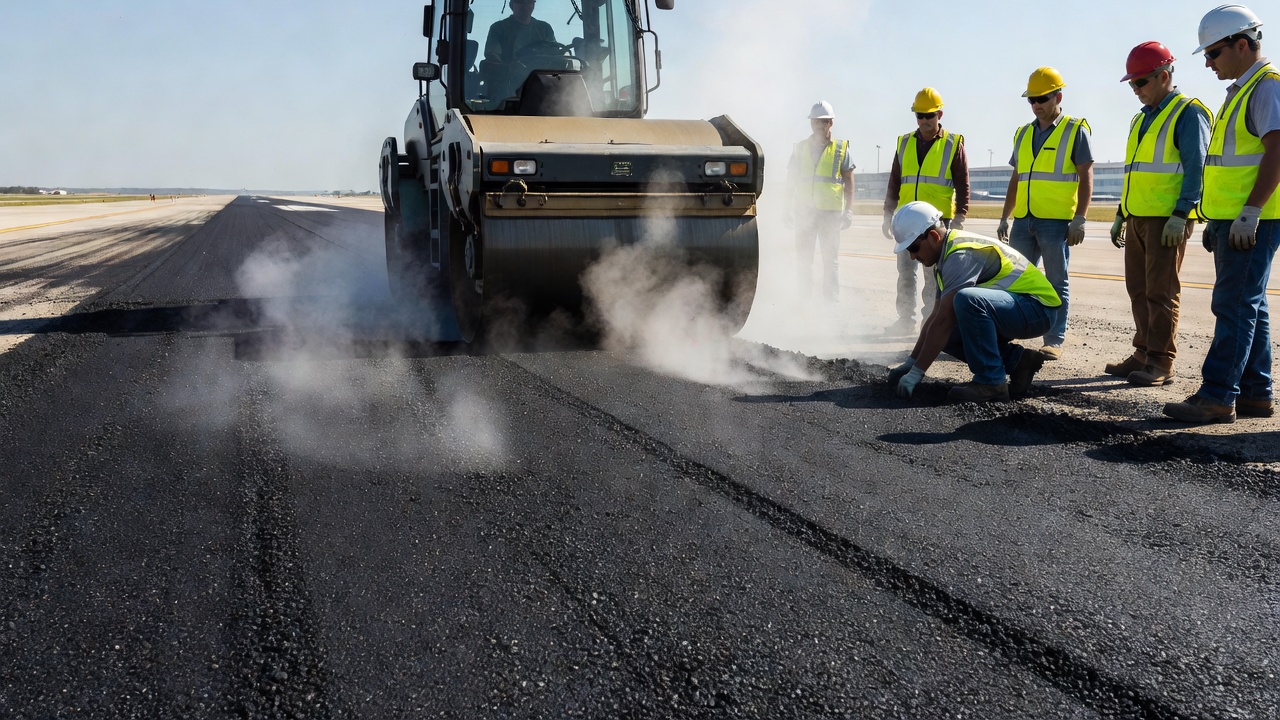
Stone Mastic Asphalt (SMA), also known as Stone Matrix Asphalt, represents a premium HMA mix type increasingly specified for airport surface courses, particularly on runways where maximum rutting resistance and surface durability are required. SMA was developed in Germany in the 1960s to resist studded tire wear and was later adopted internationally for heavy-traffic pavements. The defining characteristic of SMA is its gap-graded aggregate skeleton in which coarse aggregate particles (typically 70–80% retained on the 4.75 mm sieve) form a stone-on-stone contact network that carries the applied load through aggregate interlock rather than through the binder matrix. The voids in this coarse aggregate skeleton are filled with a rich, viscous mastic composed of fine aggregate, mineral filler, crushed sand, and a relatively high binder content (typically 6.0–7.5% by weight of mix), stabilized by cellulose or mineral fibers (0.3–0.5% by weight) that prevent binder draindown during production, transport, and placement.
The stone-on-stone skeleton of SMA provides exceptional resistance to rutting under heavy aircraft loads because load transfer occurs through direct aggregate particle contact rather than through the viscoelastic binder film, which is inherently susceptible to permanent deformation at high temperatures. The rich mastic mortar filling the inter-aggregate voids provides enhanced durability through a much thicker binder film coating on aggregate particles (typically 10–15 μm in SMA versus 5–8 μm in conventional dense-graded HMA), which slows oxidative aging and moisture damage. SMA surface macrotexture, with mean texture depths of 1.0–1.5 mm, delivers superior wet-weather skid resistance and reduced hydroplaning risk compared to dense-graded surfaces. ICAO Doc 9157 and FAA engineering briefs recognize SMA as a suitable alternative to dense-graded HMA for runway surfaces, though national aviation authority approval is typically required for mix design acceptance.
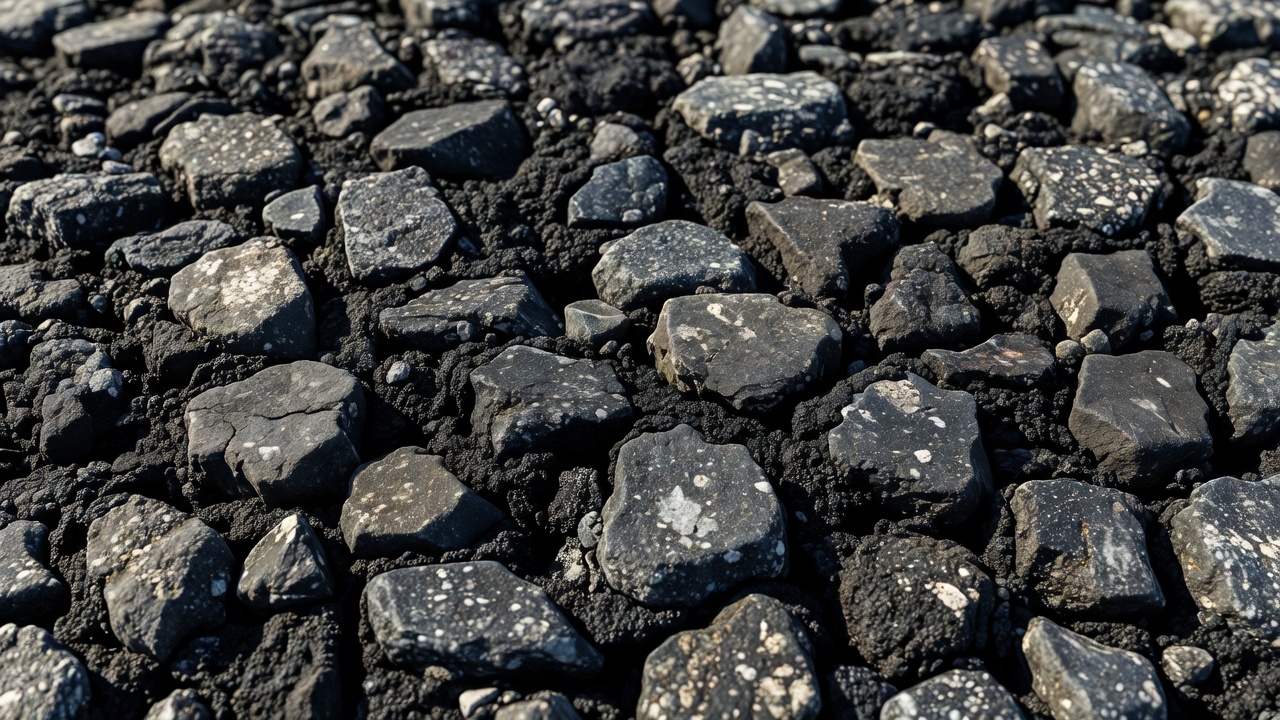
Open-Graded Friction Course (OGFC) is a specialty HMA mix characterized by an open aggregate gradation with typically 15–25% interconnected air voids after compaction, designed to function as a surface drainage layer rather than as a structural course. OGFC is produced with a high coarse aggregate content (typically 75–85% retained on 4.75 mm), minimal fine aggregate and filler, and a polymer-modified binder at 5.5–7.0% content to develop thick binder films resistant to oxidation and raveling despite the high void content. At airports, OGFC, sometimes termed Porous Friction Course (PFC), is applied as a thin surface overlay (19–38 mm thick) over an impermeable dense-graded or SMA structural layer to provide rapid surface water drainage, eliminate the hydroplaning risk from ponded water, reduce tire spray and improve pilot visibility during wet operations, and reduce tire-pavement noise. FAA P-402 addresses porous friction courses for airfields. The open void structure allows water to flow laterally through the OGFC layer to edge drains, keeping the tire-pavement contact area dry. OGFC requires regular maintenance, including high-pressure washing or vacuum sweeping, to prevent clogging of surface voids by rubber deposits, debris, or de-icing residues.
3. Airport HMA Specifications: FAA P-401 and ICAO Standards
FAA Item P-401 – Asphalt Mix Pavement, codified in Advisory Circular 150/5370-10H (Standard Specifications for Construction of Airports), is the definitive specification governing HMA for federally funded airport projects in the United States and is widely adopted internationally. P-401 defines every aspect of HMA production, placement, and acceptance for airfield pavements:
Aggregate Requirements: P-401 specifies three aggregate gradation bands (Gradation 1, 2, and 3) with specified percent-passing ranges for sieves from 25.0 mm down to 0.075 mm. Coarse aggregate must meet LA Abrasion (≤40% at 500 revolutions), soundness (≤12% sodium sulfate), and fractured-face requirements. Fine aggregate must meet liquid limit (≤25) and plasticity index (≤4) requirements, with natural sand limited to 15–20% of total aggregate to maintain angularity and rut resistance.
Binder Selection: The 2018 revision of AC 150/5370-10H updated the binder selection methodology to rely on climate-based Performance Grade (PG) selection with grade bumping for heavy aircraft loading, dispensing with the older penetration-grade and viscosity-grade tables. The spec requires PG Plus testing (elastic recovery, phase angle, or multiple stress creep recovery per AASHTO T350) for modified binders with high-temperature grades of 92°C or above.
Rutting Resistance Testing: P-401 now mandates loaded-wheel rutting testing as part of mix design approval. The default method uses the Asphalt Pavement Analyzer (APA) per AASHTO T340 at 250 psi (1,724 kPa) hose pressure and 64°C, with a maximum allowable rut depth of 10 mm at 4,000 passes. The alternative method uses the APA at 100 psi (689 kPa) hose pressure at 64°C with a rut limit of 5 mm at 8,000 passes. A second alternative method employs the Hamburg Wheel Tracking Device per AASHTO T324 at 50°C, with a maximum rut depth of 10 mm at 20,000 passes. These rutting tests directly simulate the channelized aircraft traffic pattern that produces maximum shear stress in the HMA layer.
Compaction and Density: P-401 requires compaction measured as a percent of Theoretical Maximum Density (TMD), also termed Rice density per ASTM D2041, rather than the older percent of laboratory compacted density. For surface courses, the in-place density must achieve 92–96% of TMD (corresponding to 4–8% air voids), with the optimum target typically 94–96% TMD. Binder course density requirements are 91–96% of TMD. Density acceptance uses percent-within-limits (PWL) statistical analysis based on lot-by-lot nuclear density gauge testing correlated to core densities.
Quality Control Program: The P-401 QC program is now a separate pay item (formerly incidental), and the specification requires a mandatory QC/QA workshop before construction, attended by the engineer, resident project representative (RPR), contractor, testing laboratories, and owner’s representative. The workshop must review the approved mix design, QC testing procedures and frequencies, acceptance criteria, and dispute resolution protocols. The contractor must designate a QC manager with at least 5 years of HMA quality control experience on airport projects.
ICAO Doc 9157, Aerodrome Design Manual Part 3 – Pavements, provides the international framework for flexible airport pavement materials, including HMA. Doc 9157 addresses pavement structural design methodologies based on aircraft load classification (ACN-PCN system), flexible pavement layer configurations, material specifications, and quality assurance principles. Doc 9157 Part 3 references regional material standards (ASTM, EN, AASHTO) and emphasizes performance-based specifications that focus on end-product properties, density, air voids, stiffness, rutting resistance, and friction, rather than prescriptive recipes. National civil aviation authorities adapt Doc 9157 guidance into country-specific specifications that may align with FAA P-401, European EN 13108 series standards, or national standards such as IS 15462 (India) or AS 2150 (Australia).
4. Production Process: Drum Plant and Batch Plant Operations
HMA is produced in two fundamentally different plant types, both of which are used for airport projects depending on production volume, mix complexity, and local regulatory requirements.
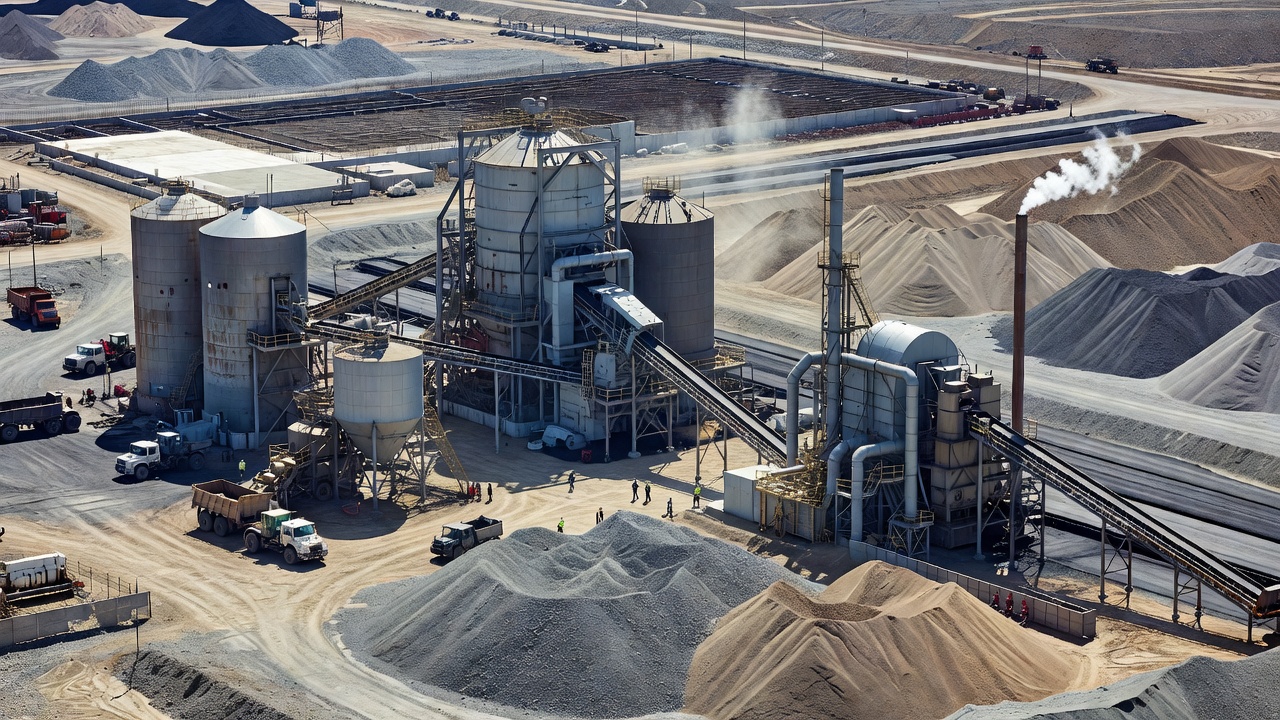
Drum Mix Plant (Continuous Plant)
In a drum mix plant, aggregate drying, heating, and mixing with asphalt binder occur simultaneously within a rotating inclined drum. Cold, moist aggregate is fed from calibrated cold-feed bins onto a conveyor belt, weighed by a belt scale, and introduced at the upper end of the drum. A burner flame at the lower end provides counter-flow or parallel-flow heating, depending on drum design. Asphalt binder is injected into the drum at a point downstream of the burner where aggregate has reached target temperature (typically mid-drum in counter-flow designs or near the lower end in parallel-flow designs), and the tumbling action of the rotating drum with internal flights produces homogeneous mixing. Recycled Asphalt Pavement (RAP), if used, is introduced at a mid-drum entry point where it is heated by the hot virgin aggregate without direct flame exposure. Mineral filler and fibers (for SMA) are metered separately.
Drum plants offer continuous production at high rates (100–600 tonnes per hour) and are well-suited for large airport projects requiring consistent, high-volume HMA output. The continuous nature eliminates batch-to-batch variability but demands precise aggregate feed-rate control and belt-scale calibration. Drum plant limitations include reduced flexibility for frequent mix changes and the requirement for a separate storage silo system to accumulate mix for load-out into trucks.
Batch Plant (Pugmill Plant)
A batch plant produces HMA in discrete batches through a sequential process. Cold aggregates are fed through cold-feed bins to a rotary dryer drum for heating and drying, then elevated to a screening tower where they are separated by vibrating screens into hot bins categorized by aggregate size fraction. Aggregates from each hot bin are proportioned by weight according to the job mix formula into a weigh hopper. Simultaneously, the asphalt binder is weighed in a separate weigh bucket. Both the weighed aggregate and binder are discharged into a twin-shaft pugmill mixer for a prescribed mixing time, typically 25–45 seconds for dense-graded mixes and 35–60 seconds for PMB mixes, to achieve uniform coating. The completed batch is discharged into a truck or surge silo.
Batch plants offer superior flexibility for airport projects requiring multiple mix types or frequent recipe changes, as each batch can be individually formulated. The hot-bin screening and reweighing process provides inherent gradation control by removing oversized particles and adjusting for aggregate breakage in the dryer. Batch plant production rates range from 50–400 tonnes per hour depending on plant size (typically classified by batch capacity: 2, 3, 4, or 5-tonne batches). For airport projects requiring high-viscosity PMB or SMA mixes, batch plants provide the extended mixing time and controlled temperature profile essential for uniform polymer distribution and fiber blending.
Plant Emission and Environmental Controls
Both plant types require baghouse dust collection systems to capture fine particulate matter from dryer exhaust. The collected mineral fines (baghouse fines) can be partially returned to the mix as mineral filler, but the proportion must be carefully controlled, excessive baghouse fines, which have a high surface area-to-volume ratio, can excessively stiffen the binder and reduce workability. FAA specifications limit the combined dust-to-binder ratio in airport HMA to ensure adequate film thickness and durability.
5. Temperature Requirements and Thermal Management
Temperature control throughout the HMA production, transport, placement, and compaction sequence is a critical factor determining final pavement quality. The temperature window for each operation is binder-specific and must be established from the binder supplier’s viscosity-temperature chart.
Production Temperature: The mixing temperature at the plant must achieve a binder viscosity of 0.17 ± 0.02 Pa·s. For typical PG 64-22 binder, this corresponds to 150–155°C, for PG 76-22 PMB, 160–170°C, and for highly modified PG 82-22 PMB, 165–180°C. Aggregate heating temperatures are typically 10–15°C above the target mix temperature to compensate for heat loss during mixing and the thermal mass of the cold binder. Careful temperature monitoring at the plant discharge prevents overheating, sustained temperatures above 177°C for unmodified binders accelerate oxidative hardening, which manifests as premature embrittlement and cracking in service.
Delivery Temperature: HMA loses temperature during truck transport at a rate dependent on ambient conditions, haul distance, and truck bed insulation. A temperature drop of 1–3°C per kilometer is typical for uncovered loads in moderate weather. For airport projects with on-site or nearby batch plants, haul distances are minimized. Insulated truck beds and tarpaulins are mandatory for hauls exceeding 30 minutes or in cold weather. The specification minimum delivery temperature to the paver is typically 10–15°C above the minimum compaction temperature.
Placement and Compaction Window: The acceptable temperature window for compaction begins at the placement temperature (typically 140–160°C, where binder viscosity is approximately 0.28 ± 0.03 Pa·s) and ends at the cessation temperature (typically 80–90°C for unmodified binders and 90–105°C for PMBs), below which the binder viscosity becomes too high for effective particle rearrangement under roller compaction. The available compaction time, the duration the mat stays within the acceptable temperature window, depends on mat thickness, ambient temperature, wind speed, base temperature, and mix temperature at placement. A 50 mm thick mat placed at 150°C on a 10°C base with 15 km/h wind may have only 12–16 minutes of compaction time, while a 75 mm mat placed at 155°C on a 30°C base may provide 25–35 minutes.
Minimum Laydown Temperature: FAA P-401 specifies minimum ambient temperatures for HMA placement: 4°C (40°F) for surface courses and 2°C (35°F) for binder and base courses, but only when the underlying surface temperature is also above the specified minimum. Paving on frozen or frost-susceptible subgrades is prohibited. Infrared thermal imaging of the mat behind the paver is increasingly used to identify temperature segregation, localized cold spots (typically >15°C below the mat average) that result in low-density zones and potential distress initiation points.
6. Placement and Compaction
Hauling and Paver Operations
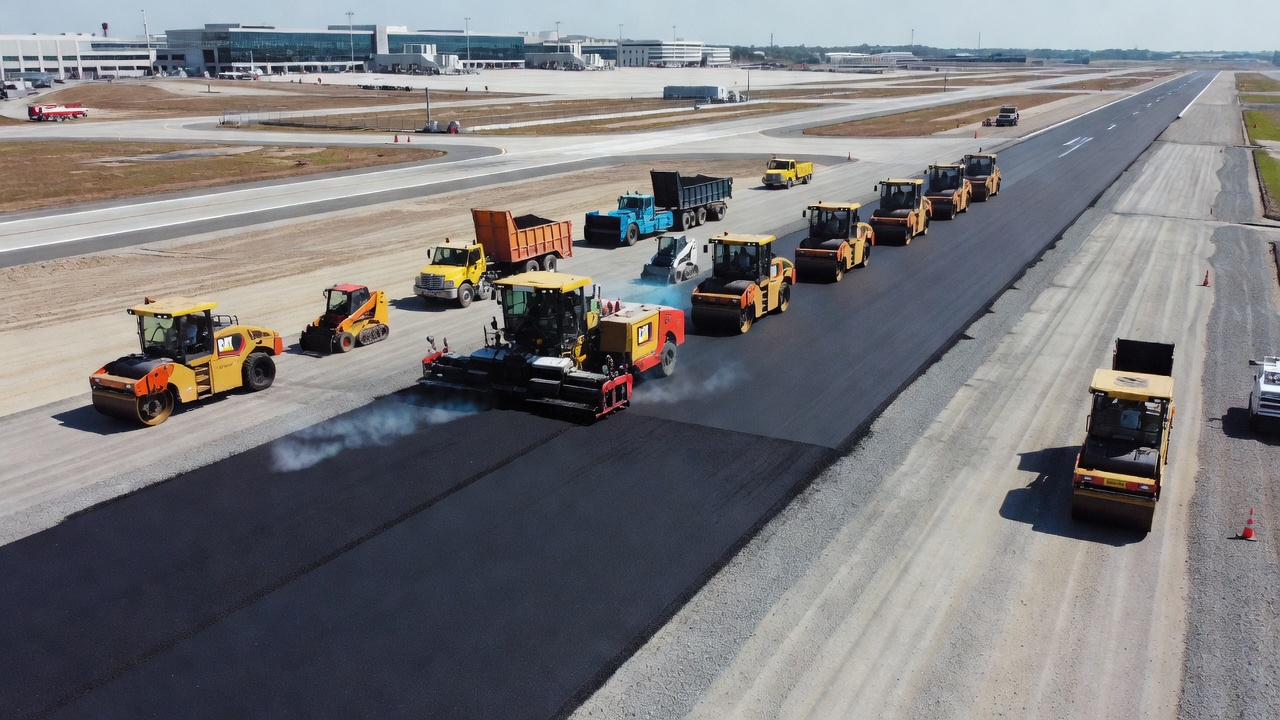
HMA is transported from the plant to the paving site in insulated end-dump trucks. At the paver, trucks discharge into the paver hopper via a live-bottom or end-dump mechanism. The paver, a self-propelled machine with a floating screed, spreads the HMA to the specified width and thickness using a material feed system (slat conveyors and augers). The screed imparts an initial level of compaction (typically 75–82% of TMD, or 18–25% air voids) and establishes the surface profile. For airport runways, pavers equipped with automatic grade and slope control systems, typically referencing a stringline for longitudinal control and using sonic or laser sensors for transverse slope, achieve the exceptional surface smoothness required for high-speed aircraft operations, deviations from a 3-meter straightedge must not exceed 3 mm per FAA P-401.
Material Transfer Vehicles (MTVs) are commonly used on airport projects to receive HMA from delivery trucks, remix it to eliminate thermal segregation, and feed it to the paver. MTVs eliminate the need for trucks to contact the paver, preventing bump-induced surface irregularities, and the remixing action homogenizes the material temperature, improving compaction uniformity.
Longitudinal Joint Construction
Longitudinal joints between adjacent paving lanes are a perennial weakness in HMA pavements, often exhibiting lower density (by 1–3% TMD) and higher permeability than the mat interior, leading to premature raveling, cracking, and moisture damage. Airport runway paving, which may span 45–60 meters in width, requires multiple longitudinal joints. FAA P-401 specifies that longitudinal joints in surface courses must be formed using the hot joint (echelon paving) method where practical, paving adjacent lanes while the first lane is still above the cessation temperature, or must be cut back and sealed if constructed as cold joints. Density at the longitudinal joint must meet the same specification as the mat interior, verified by independent nuclear density gauge testing on both sides of the joint.
Compaction Operations
Compaction is the process of reducing the air void content of the placed HMA through the application of roller passes while the mixture is at workable temperature. Compaction achieves particle interlock, develops binder cohesion between aggregate surfaces, and reduces permeability to produce a durable pavement. Three roller types are typically employed in sequence:
Breakdown Rolling: Performed immediately behind the paver using a double-drum vibratory steel-wheel roller (typically 8–12 tonnes), operating in vibratory mode. The breakdown roller achieves the majority of density gain, reducing air voids from the post-screed level (18–25%) to approximately 8–12%. Roller speed is limited to 3–5 km/h to allow the vibratory energy adequate dwell time. The roller must follow as close behind the paver as possible without causing mat shoving or cracking, typically 10–30 meters.
Intermediate Rolling: Performed after breakdown rolling using a pneumatic-tire roller (PTR) with multiple smooth tires inflated to 550–700 kPa (80–100 psi). The kneading action of the rubber tires rearranges aggregate particles, closing surface voids and achieving target density (typically 93–96% of TMD for surface courses). PTRs are effective for dense-graded mixes but are generally not used on SMA surfaces where they may pull the mastic to the surface, creating a flushed appearance and reducing macrotexture.
Finish Rolling: Performed using a static-mode double-drum steel roller to remove roller marks and provide a smooth final surface texture. Finish rolling must be completed before the mat temperature drops below the cessation temperature.
For airport applications, rollers must avoid sharp turns, sudden stops, or parking on the hot mat, all of which can produce surface defects. Compaction patterns (number of passes, roller speed, amplitude, and frequency) are established during a test strip constructed at the beginning of the project, typically a 30–60 meter section at full project width, where density is verified by nuclear gauge and cores at multiple locations to confirm the compaction procedure achieves the specified density before production paving begins.
7. Quality Control: Density, Air Voids, Binder Content, and Gradation
Quality control (QC) for airport HMA is a continuous, statistically based process that verifies the as-produced and as-placed material meets the approved job mix formula (JMF) and specification tolerances. The FAA P-401 specification establishes minimum QC testing frequencies that are typically increased for critical airport applications.
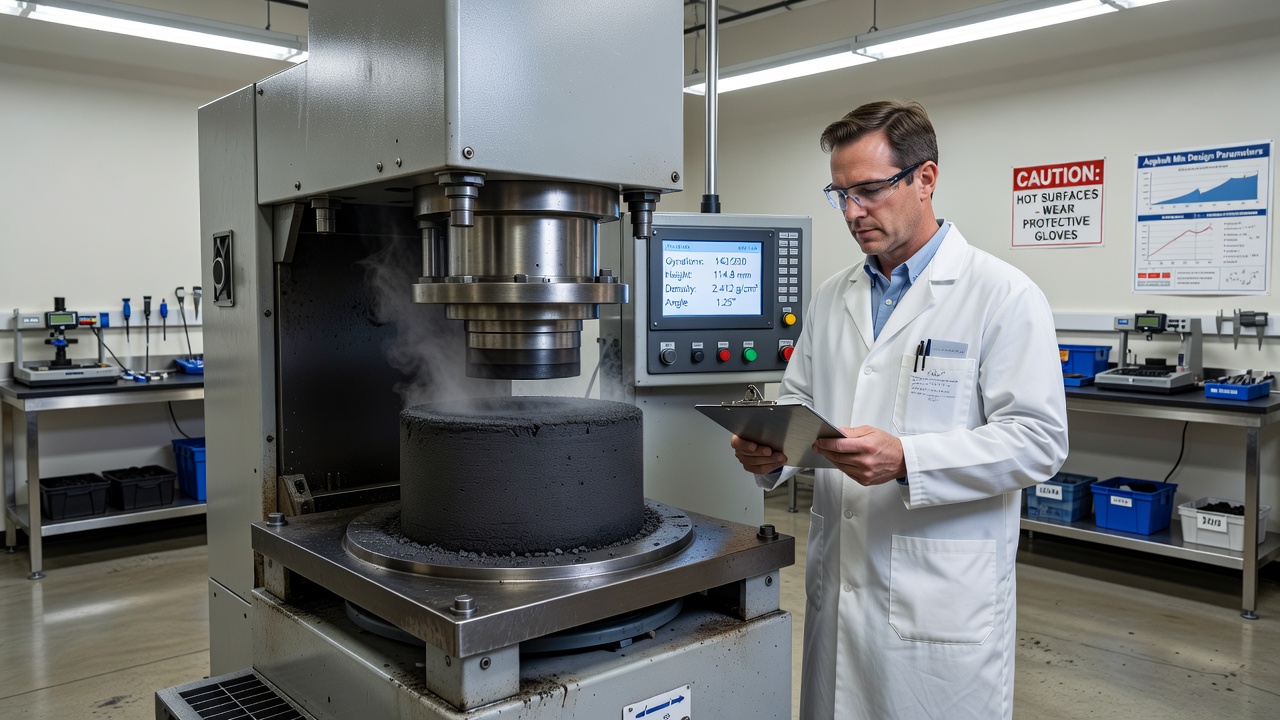
Density and Air Voids
In-place density is the primary indicator of compaction quality and directly correlates with pavement durability and fatigue life. Density is measured using a nuclear density gauge (per ASTM D2950) calibrated to core densities taken from the same locations. The calibration process requires a minimum of five paired nuclear-core readings per mix type during the test strip, and the calibration must be verified periodically during production as mix properties evolve.
In-place air voids (Va) are calculated as: Va = 100 × (1 − ρfield / ρTMD), where ρfield is the field density and ρTMD is the theoretical maximum density (Rice density per ASTM D2041). For airport HMA surface courses, the target in-place air void content is 3–5%, corresponding to 95–97% of TMD. Air voids below 2.5% risk plastic deformation (rutting) under hot-weather aircraft loading because insufficient void space exists for the binder to expand thermally without filling the aggregate skeleton and pushing particles apart. Air voids above 7–8% indicate inadequate compaction, resulting in interconnected void networks that admit water and air, accelerating oxidation, moisture damage, and raveling. The air void requirement for binder courses is typically 3–7%, and for OGFC surface courses, 15–22%.
Binder Content
Asphalt binder content, expressed as a percentage of total mix weight (Pb), is verified through extraction testing per ASTM D2172 (centrifuge, reflux, or ignition method). The ignition oven method (AASHTO T308) is now predominant, in which a sample is heated to 538°C in a furnace to burn off the binder, and the weight loss (corrected for aggregate mass loss through a calibration factor) provides the binder content. FAA P-401 allows a tolerance of ±0.4% from the JMF optimum binder content. Deviations beyond this tolerance require plant adjustments and may trigger lot rejection if persistent. For PMB mixes, binder content verification is particularly critical because polymer-modified binders achieve their performance properties within a narrow optimum content range.
Gradation
Aggregate gradation of plant-produced HMA is verified on extracted aggregate from the binder content test, using the washed sieve analysis procedure per AASHTO T27 and T11. The allowable tolerances from the JMF for individual sieve sizes vary by sieve criticality:
| Sieve Size | FAA P-401 Tolerance (from JMF) |
|---|---|
| 25.0 mm, 19.0 mm, 12.5 mm | ±6% |
| 9.5 mm, 4.75 mm | ±5% |
| 2.36 mm, 1.18 mm, 0.600 mm | ±4% |
| 0.300 mm, 0.150 mm | ±3% |
| 0.075 mm | ±2% |
Volumetric Parameters
Beyond density and air voids, Superpave mix design evaluates additional volumetric parameters that control mix performance:
Voids in the Mineral Aggregate (VMA): The volume of intergranular void space between aggregate particles, encompassing both the effective binder volume and the air void volume. VMA must be sufficient, typically ≥13–15% for 12.5 mm NMAS mixes, to accommodate the required effective binder volume plus 4% air voids. Inadequate VMA produces mixes that are sensitive to small variations in binder content.
Voids Filled with Asphalt (VFA): The percentage of VMA that is filled with effective binder. VFA must be 65–78% for airport surface courses designed for 4% air voids. Low VFA indicates a dry, lean mix prone to cracking and raveling, high VFA indicates a rich mix prone to rutting.
Dust-to-Effective-Binder Ratio (P0.075/Pbe): The mass ratio of minus-0.075 mm material to effective binder content. This ratio must be 0.6–1.2 for airport dense-graded mixes, controlling the stiffness and moisture sensitivity of the binder-filler mastic.
Acceptance and Pay Factors
FAA P-401 employs percent-within-limits (PWL) statistical analysis for acceptance. For each lot (typically one day’s production or 2,000–4,000 tonnes), test results for density, air voids, binder content, and gradation are evaluated against the specification limits. The PWL, the percentage of the lot estimated to be within specification limits, determines the pay factor:
| PWL | Pay Factor (Quality Adjustment) |
|---|---|
| ≥90% | 1.00 (100% payment) |
| 80–89% | 0.95–0.99 (adjusted payment) |
| 65–79% | 0.90–0.94 |
| <65% | Remove and Replace (R&R) at contractor’s expense |
8. HMA vs. Warm Mix Asphalt vs. Cold Mix
The distinction between HMA, Warm Mix Asphalt (WMA), and Cold Mix Asphalt lies in production temperature, binder technology, and field of application, with each serving distinct roles in airport pavement construction and maintenance.
| Parameter | Hot Mix Asphalt (HMA) | Warm Mix Asphalt (WMA) | Cold Mix Asphalt |
|---|---|---|---|
| Production Temperature | 150–180°C | 100–140°C | Ambient (10–40°C) |
| Binder Type | Neat or PMB | Neat or PMB + WMA additive/foaming | Cutback or emulsified bitumen |
| Compaction Window | 15–30 minutes | 25–45 minutes | Hours to days (curing dependent) |
| Air Void Target | 3–5% (surface) | 3–6% (surface) | 5–12% initially |
| Airport Application | Runways, taxiways, aprons (primary) | Growing acceptance, FAA EB 99A | Temporary repairs, patching, remote airfields |
| Strength Development | Immediate upon cooling | Immediate upon cooling | Progressive through curing/evaporation |
| Fuel Resistance | Excellent with PMB | Comparable to HMA with PMB | Lower, solvent-based cutbacks vulnerable |
Warm Mix Asphalt (WMA) reduces production and placement temperatures by 20–40°C through three main technologies: organic additives (Fischer-Tropsch waxes, fatty acid amides) that reduce binder viscosity above their melting point, chemical additives (surfactants, adhesion promoters) that improve aggregate coating at lower temperatures, and water-based foaming (direct water injection, zeolite minerals that release water of crystallization) that produces a temporary expansion of the binder volume. WMA offers reduced energy consumption (typically 10–30% fuel savings), lower plant emissions (30–50% reduction in CO2, SOx, and volatile organic compounds), improved worker safety through reduced fume and heat exposure, and an extended compaction window that is beneficial for night-time airport paving with limited closure durations. FAA Engineering Brief No. 99A provides guidance on WMA for airfield pavements, and WMA produced with PMB has demonstrated comparable performance to HMA in limited airport trials. The primary caution with WMA for airport applications is ensuring adequate compaction density, the lower placement temperature provides a narrower thermal margin above the cessation temperature.
Cold Mix Asphalt uses emulsified bitumen (bitumen droplets dispersed in water with an emulsifying surfactant) or cutback bitumen (bitumen dissolved in a petroleum solvent such as kerosene or naphtha) to achieve workability at ambient temperature. Cold mix is placed and compacted without heating, and strength develops progressively as the emulsion breaks (water evaporates, bitumen droplets coalesce) or the cutback solvent evaporates. Cold mix finds airport application primarily in temporary pavement repairs, remote airfield construction where HMA plants are unavailable, and emergency pavement restoration. The lower material cost and ability to stockpile cold mix for extended periods (6–12 months for properly sealed emulsified cold mix) make it valuable for maintenance operations. However, cold mix has lower initial stability, higher permeability, and reduced durability compared to HMA, and is not suitable for permanent airport runway surfaces under heavy aircraft traffic.
9. Polymer-Modified HMA for Airport Applications
Polymer-modified HMA (PMA) incorporates elastomeric or plastomeric polymers into the asphalt binder to extend the binder’s viscoelastic performance range to temperatures both higher and lower than unmodified bitumen can provide. For airport pavements, PMA has become the standard for surface courses on runways, high-traffic taxiways, and aprons, driven by the need for superior rutting resistance and chemical resistance.
Polymer Types and Mechanisms
Styrene-Butadiene-Styrene (SBS) is the predominant elastomeric polymer for airport HMA. SBS is a block copolymer consisting of polystyrene end-blocks connected by polybutadiene mid-blocks. When blended into hot bitumen at 3–7% by binder weight, the polystyrene blocks absorb compatible aromatic oil fractions from the bitumen and form rigid domains that act as physical crosslinks, while the polybutadiene segments form an elastic network throughout the binder. The resulting polymer network imparts increased elastic recovery (typically >70% per AASHTO T301 for airport-grade PMB), increased high-temperature stiffness to resist rutting, and retained flexibility at low temperatures to resist thermal cracking. The polymer network also physically blocks the penetration of hydrocarbon solvents (jet fuel, hydraulic fluid), providing the fuel resistance critical for apron and fueling-area pavements.
Reactive Ethylene Terpolymer (RET), specifically Elvaloy® RET, is an alternative polymer technology that chemically reacts with the bitumen through ester linkages, creating a permanent, non-reversible polymer-bitumen network. RET-modified binders exhibit exceptional storage stability (no phase separation), high-temperature performance, and resistance to oxidative aging. RET-modified HMA has been used on several major U.S. airport runway projects.
Crumb Rubber Modified (CRM) binder, produced by blending finely ground recycled tire rubber (typically 15–20% by binder weight) with hot bitumen, offers improved rutting resistance and fatigue life at reduced cost relative to SBS modification. However, the higher production temperatures required (180–195°C) and the potential for increased fume emissions have limited CRM adoption for airport applications in some jurisdictions.
FAA P-404: Fuel-Resistant Asphalt Mix
FAA Item P-404 defines the specification for fuel-resistant HMA used on aprons, fueling pads, hangar floors, and other aircraft parking areas where prolonged contact with jet fuel (Jet A, Jet A-1, JP-8) and aviation gasoline (AvGas) is expected. P-404 requires a highly polymer-modified binder (typically 6–8% SBS by binder weight) that resists dissolution and softening upon fuel exposure. The specification includes a fuel-resistance test in which compacted specimens are immersed in jet fuel for 24 hours at ambient temperature and must retain a minimum percentage of their original indirect tensile strength (typically >70% retained strength). Standard unmodified HMA can lose 50–80% of its structural integrity after similar fuel exposure, as the kerosene-based jet fuel dissolves the bitumen binder, softening the pavement and accelerating rutting and raveling.
Performance testing of P-404 mixes has demonstrated outstanding results: rut depths below 5 mm after 20,000 Hamburg wheel-tracking passes, indirect tensile strength retention above 80% after fuel conditioning, and fatigue life improvements of 3–5 times compared to unmodified P-401 mixes. The combination of fuel resistance and superior mechanical performance justifies the higher initial cost of P-404 (typically 25–40% premium over P-401) through extended service life and reduced maintenance on fuel-exposed pavements.
10. HMA Durability and Distress Mechanisms
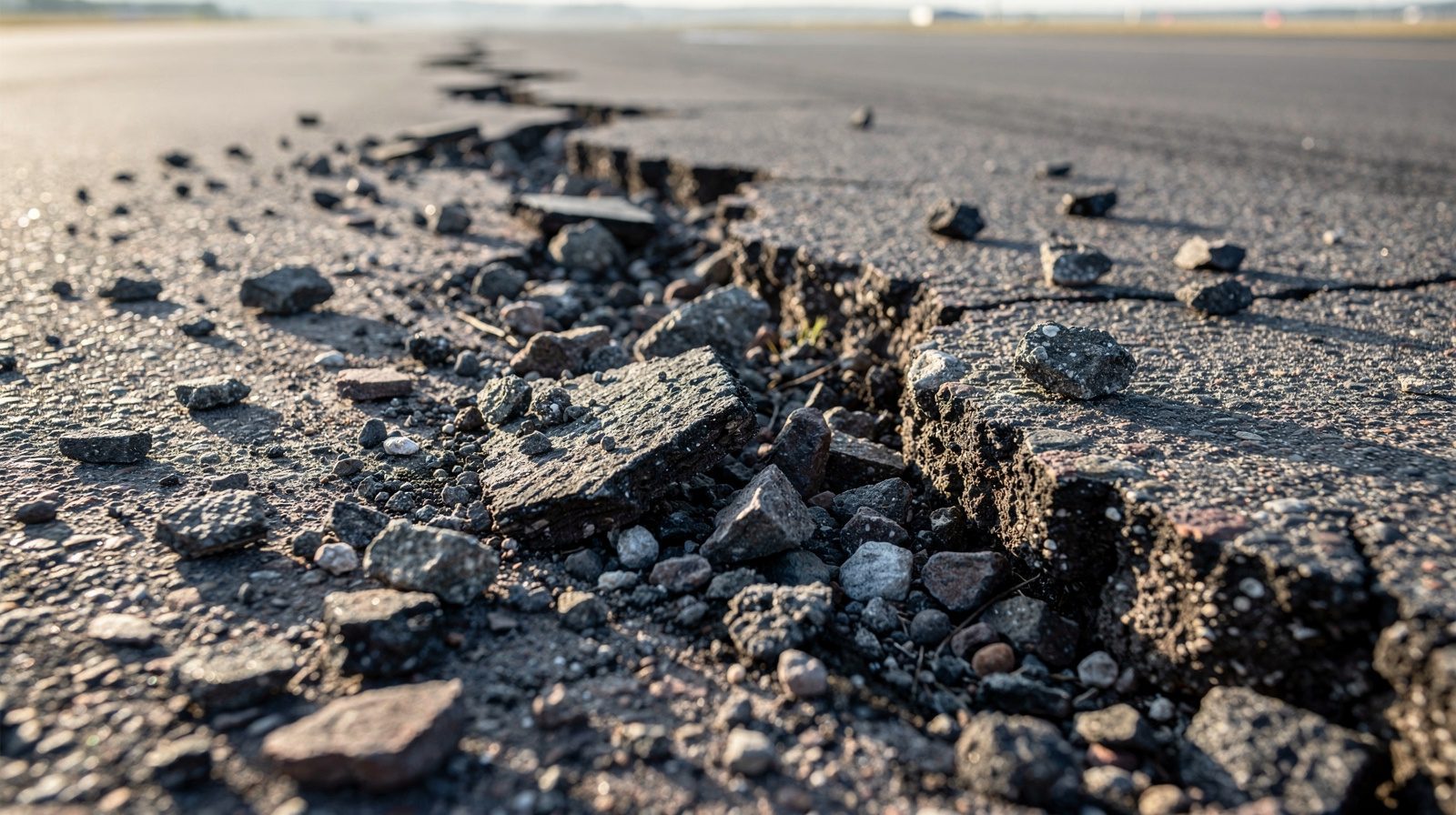
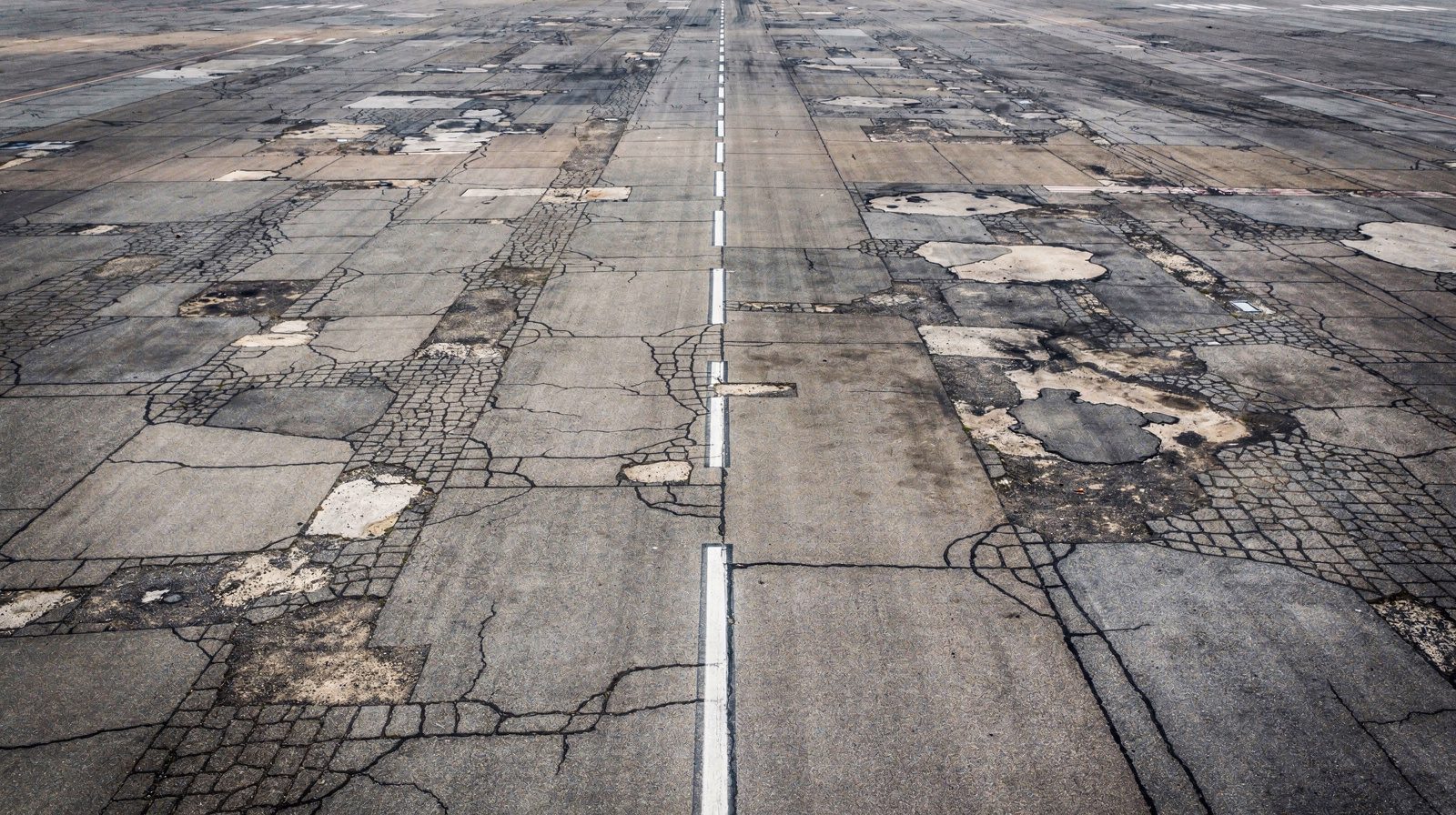
The service life of airport HMA pavements, typically 15–25 years for runway surface courses, depends on resistance to the primary distress mechanisms that degrade pavement performance over time. Understanding these distress types is essential for mix design optimization, construction quality control, and maintenance planning.
Rutting (Permanent Deformation)
Rutting is the accumulation of permanent vertical deformation in the wheel paths of aircraft traffic, caused by densification (post-construction compaction) and shear flow (lateral displacement of HMA under load). Airport rutting is particularly severe because of the channelized nature of aircraft traffic, aircraft follow nearly identical paths with narrow lateral wander, concentrating load repetitions in discrete zones. The critical condition for rutting occurs during hot weather when the HMA temperature in the upper 50–100 mm of pavement reaches 50–65°C, reducing binder viscosity by a factor of 100–1,000 relative to ambient-temperature stiffness and allowing plastic flow of the aggregate-binder matrix under aircraft tire contact pressures.
Rutting resistance is achieved through: (1) Aggregate skeleton design, a coarse, angular aggregate gradation with stone-on-stone contact (SMA principle) that transfers load through particle interlock rather than binder films. (2) High-stiffness binder, polymer-modified PG 76-XX or PG 82-XX binders that maintain complex shear modulus (G*) and elastic recovery at elevated temperatures. (3) Adequate compaction, in-place air voids of 3–5% eliminate the potential for post-construction densification under traffic. (4) Minimum VMA, ensuring sufficient effective binder volume to maintain mix cohesion without excess binder that could lubricate aggregate particles. The APA rutting test (<10 mm at 4,000 passes) directly evaluates rutting susceptibility as part of FAA P-401 mix design approval.
Fatigue Cracking
Fatigue cracking results from repeated flexural stresses induced by aircraft wheel loads, which produce tensile strains at the bottom of the HMA layer. Each load cycle contributes a microscopic amount of damage that accumulates until visible cracks initiate at the bottom of the bound layer and propagate upward (bottom-up cracking) or initiate at the surface from high localized tire contact stresses (top-down cracking). Fatigue life is exponentially related to the tensile strain level, a 25% reduction in tensile strain can yield a tenfold increase in fatigue life, underscoring the importance of adequate HMA thickness in airport pavement design.
Polymer modification improves fatigue resistance by enhancing the binder’s ability to undergo repeated strain cycles without accumulating permanent damage. PMB binders exhibit higher complex shear modulus (G·sinδ)* at intermediate temperatures (15–25°C), where fatigue is most critical, and lower loss compliance, indicating reduced energy dissipation per cycle. Adequate binder content, at or slightly above the optimum, provides thicker binder films that better accommodate strain without cracking.
Thermal Cracking
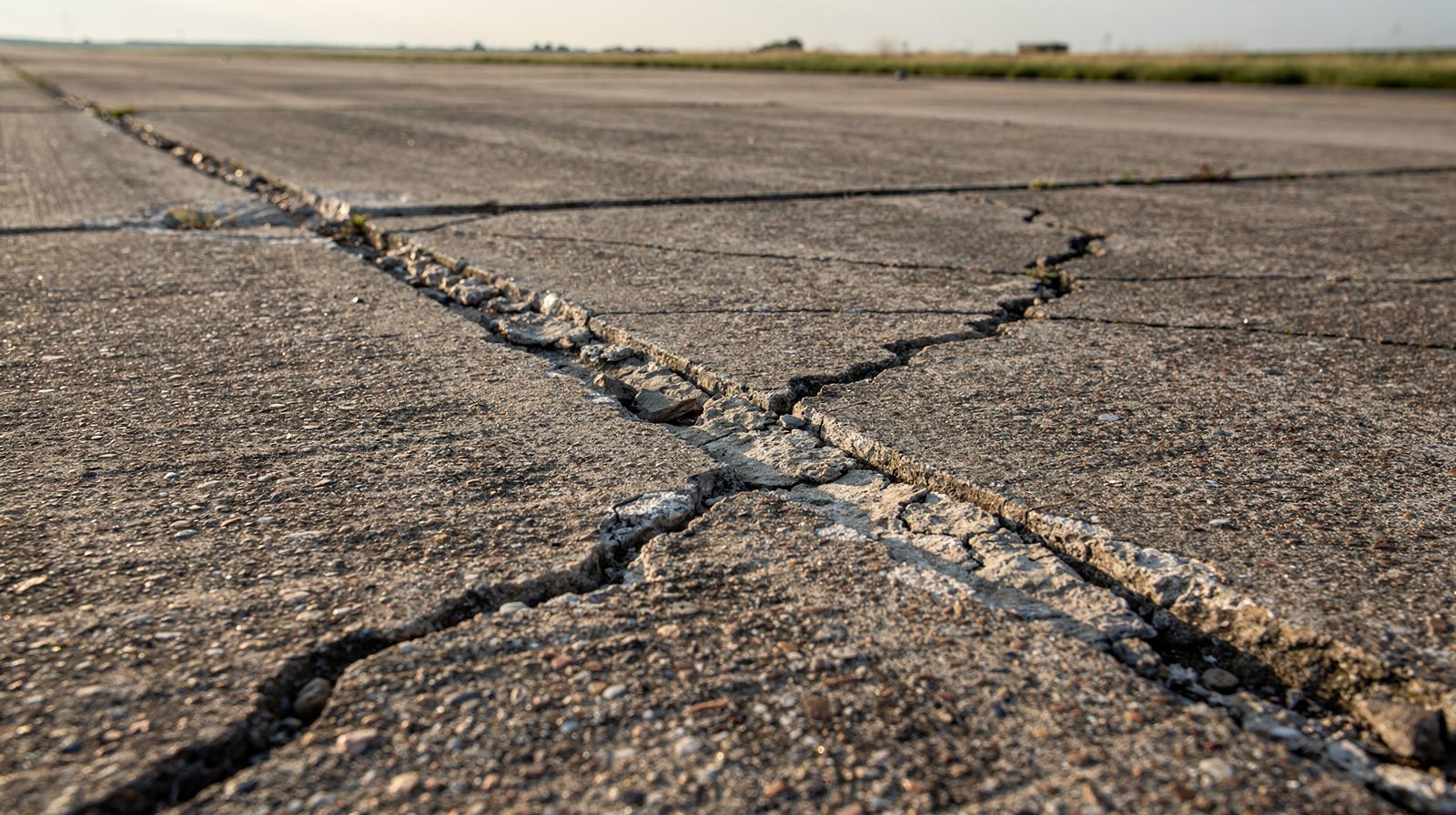
Thermal cracking occurs in cold climates when HMA contracts at low temperatures, building tensile stress within the constrained pavement layer. When the thermally induced tensile stress exceeds the tensile strength of the HMA at that temperature, transverse cracks form perpendicular to the pavement centerline, spaced at regular intervals (typically 10–30 meters apart). The Superpave low-temperature PG grade is selected to match the minimum pavement design temperature, with PG XX-22 suitable for climates reaching -22°C and PG XX-34 for arctic conditions. Polymer modification extends the low-temperature cracking resistance by maintaining binder flexibility (low creep stiffness per AASHTO T313 bending beam rheometer test) at cold temperatures.
Fuel and Chemical Attack
Jet fuel, hydraulic fluids, and de-icing chemicals degrade HMA by dissolving or plasticizing the asphalt binder. Jet fuel (kerosene fraction) is a compatible solvent for bitumen, and prolonged contact strips the binder from aggregate surfaces, reducing cohesion and exposing the aggregate skeleton to direct traffic-induced wear. Areas particularly vulnerable to fuel damage include apron parking positions (drip zones under engine nacelles and fueling ports), fueling hydrant pits, and run-up pads. The solution is P-404 fuel-resistant PMA, which uses a high-polymer-content binder network that is physically and chemically resistant to hydrocarbon solvent penetration. Supplemental protection includes fuel-resistant surface sealers (coal tar, epoxy, or methyl methacrylate based), which provide an impermeable membrane between the pavement surface and spilled fuel.
Moisture Damage
Moisture damage, or stripping, is the loss of adhesion between the asphalt binder and aggregate surface in the presence of water. Water penetrates the pavement through surface cracks, permeable mix zones, or from below through the subgrade. At the aggregate-binder interface, water competes with the binder for surface adhesion sites, and hydrophilic aggregates (those with a chemical affinity for water, such as quartzite and some granites) are particularly susceptible to stripping. Moisture damage accelerates under the hydraulic pressure of aircraft tire passage, which forces water deeper into the pavement structure and alternately compresses and releases water in surface voids (pumping action).
Moisture damage mitigation strategies include: (1) Hydrated lime addition (1–2% by aggregate weight), which chemically modifies the aggregate surface to improve binder adhesion. (2) Liquid anti-stripping agents (amines, polyamines) added to the binder. (3) AASHTO T283 (Modified Lottman) testing during mix design, requiring a minimum tensile strength ratio (TSR) of 80% for airport HMA. (4) Adequate compaction to eliminate interconnected air voids that provide water entry paths.
Surface Wear and FOD
Surface wear from aircraft tire abrasion, particularly during landing impacts and braking, progressively removes the surface binder film and polishes exposed aggregate, reducing macrotexture and skid resistance. Rubber deposits from aircraft tires build up on the runway surface in the touchdown zone, filling surface texture and reducing wet-weather friction. Runway rubber removal, using high-pressure water blasting (up to 2,500 bar), chemical solvents, or mechanical grinding, is performed on a scheduled maintenance cycle (typically every 3–12 months depending on aircraft movements) to restore surface friction to the ICAO minimum of 0.47–0.50 μ measured by continuous friction measuring equipment.
Foreign Object Debris (FOD) generation from HMA surfaces, loose aggregate particles, pavement fragments, or joint sealant, poses an engine ingestion hazard. Adequate compaction density, polymer-modified binders with good aggregate adhesion, and regular FOD inspections and sweeping are essential to minimize FOD risk from HMA pavements.
The engineering of Hot Mix Asphalt for airport pavements represents a convergence of materials science, structural mechanics, and construction quality management. From binder selection through mix design, plant production, precision placement, and statistical quality acceptance, every stage is governed by stringent specifications that reflect the extreme operational demands of modern aviation. As aircraft continue to grow in size and weight, and as airports face increasing pressure for rapid construction with minimal operational disruption, HMA technology continues to evolve, incorporating polymer chemistry advances, warm-mix sustainability, intelligent compaction, and performance-based specifications that will define the next generation of airport flexible pavement engineering.
Frequently Asked Questions
- What is Hot Mix Asphalt (HMA) and how is it different from other asphalt types?
- Hot Mix Asphalt (HMA) is a flexible pavement material produced by heating aggregate and asphalt binder to 150–180°C, mixing them into a homogeneous blend, and then placing and compacting the mixture while hot. Unlike Warm Mix Asphalt (WMA), which is produced at 100–140°C using additives or foaming, or Cold Mix Asphalt, which uses emulsified or cutback binders at ambient temperature, HMA achieves superior density, strength, and durability through high-temperature production that enables complete aggregate coating and optimal compaction.
- What are the key HMA specifications for airport pavements?
- Airport HMA is governed primarily by FAA Advisory Circular 150/5370-10H, Item P-401 (Asphalt Mix Pavement), which defines aggregate gradation bands, binder grade selection with climate-based PG grading and grade bumping for heavy aircraft loads, rutting test requirements using the Asphalt Pavement Analyzer (APA) or Hamburg device, and compaction measured as percent of theoretical maximum density (TMD). ICAO Doc 9157 (Aerodrome Design Manual, Part 3 – Pavements) provides international guidance on flexible pavement materials. Additional military specifications (UFC 3-260-02) also influence heavy-duty airport mix designs.
- Why is polymer-modified HMA used on airport runways and aprons?
- Polymer-modified HMA (PMA) incorporates styrene-butadiene-styrene (SBS) or other elastomeric polymers into the asphalt binder to dramatically improve rutting resistance under heavy, slow-moving aircraft loads, enhance fatigue cracking resistance, and provide critical resistance to jet fuel, hydraulic fluids, and de-icing chemicals. FAA P-404 specifically addresses fuel-resistant polymer-modified asphalt for apron and fueling areas where fuel spillage is common. The polymer network within the binder prevents dissolution by hydrocarbon fuels and maintains structural integrity under static aircraft loading.
- How is HMA quality control performed for airport projects?
- Airport HMA quality control includes laboratory mix design verification (Marshall or Superpave gyratory), plant production monitoring of gradation and binder content, field density testing using nuclear gauges calibrated to core densities, air void analysis (typically 3–5% for airport surface courses), rutting susceptibility testing (APA or Hamburg wheel tracking), and moisture sensitivity testing (AASHTO T283). FAA P-401 now requires a QC/QA workshop before construction and mandates that the QC program is a separate pay item. Acceptance is based on percent-within-limits statistical analysis.
- What are the common HMA distress types and durability concerns at airports?
- Primary HMA distresses in airport pavements include rutting from heavy, channelized aircraft traffic, fatigue cracking from repeated flexural stresses, thermal cracking in cold climates, fuel-induced degradation on aprons and fueling pads, raveling and FOD generation from surface wear, and moisture damage from poor drainage or inadequate compaction. Proper mix design, polymer modification, adequate compaction (minimum 92–95% of TMD), and regular maintenance including crack sealing and surface treatments are essential for achieving 15–20 year service life on airport HMA pavements.