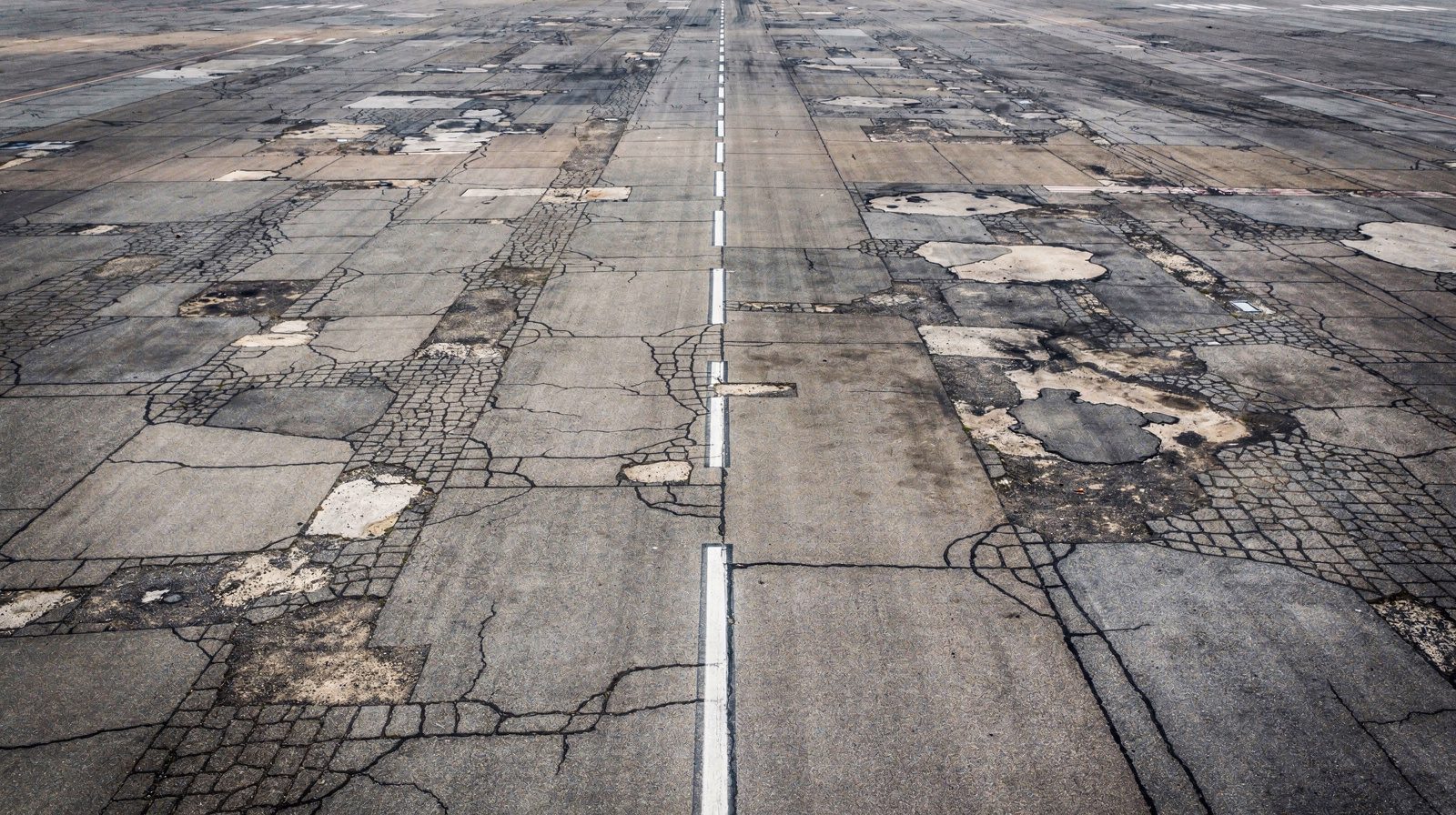
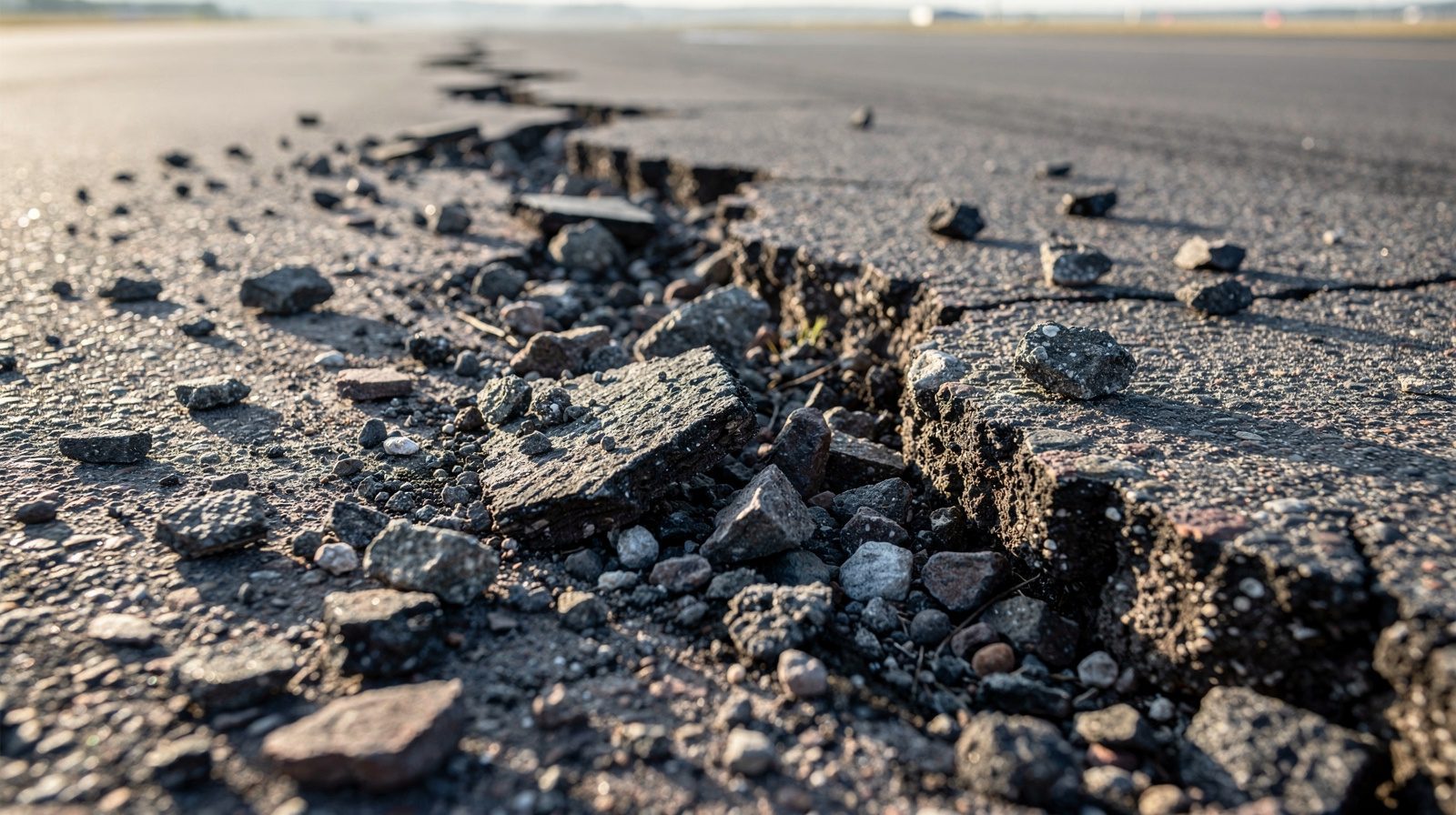
What is Hot-Pour Sealant for Pavement Cracks and Joints?
Hot-Pour Sealants for Pavement Cracks and Joints
Hot-pour sealants represent the most widely deployed category of crack treatment materials in pavement preservation programs worldwide. These thermoplastic, polymer-modified compounds are engineered to transition from a solid state at ambient temperature to a flowable liquid when heated to application temperature, typically between 350°F and 400°F (177°C to 204°C), and then return to a flexible, adhesive solid upon cooling within the crack reservoir. This phase-change behavior, combined with carefully formulated viscoelastic properties, enables hot-pour sealants to bond tenaciously to asphalt and concrete crack walls while accommodating the substantial thermal expansion and contraction cycles that pavement cracks undergo throughout seasonal temperature swings. On airport pavements, where Foreign Object Debris (FOD) prevention and water exclusion are paramount safety concerns, hot-pour sealants serve as the primary defense against moisture infiltration into the pavement structure, preventing the accelerated deterioration of base, subbase, and subgrade layers that inevitably leads to load-bearing capacity loss.
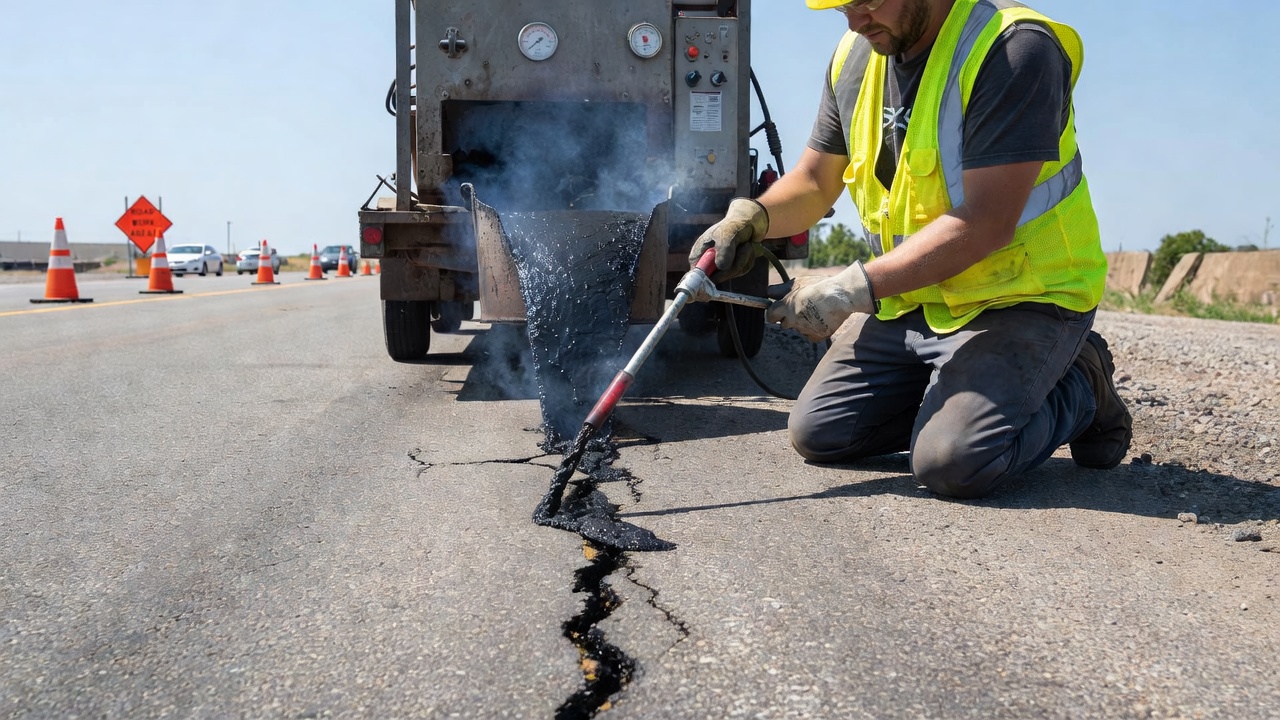
1. Definition and Fundamental Composition
A hot-pour sealant is defined as a single-component, thermoplastic, polymer-modified compound formulated specifically for sealing cracks and joints in both flexible (asphalt concrete) and rigid (Portland cement concrete) pavements. Unlike two-component cold-applied sealants that require on-site mixing, hot-pour sealants are supplied as homogeneous solid blocks, typically 30-pound (13.6 kg) rectangular blocks or pillow-shaped units, that are melted in specialized oil-jacketed melters and applied in a single operation. The term “hot-pour” derives directly from the application methodology: the material must be heated substantially above ambient temperature to achieve the workable viscosity required for pumping and pouring, typically reaching approximately 10 centipoise at 370°F (188°C).
The chemical architecture of hot-pour sealants comprises three fundamental component classes. Asphalt-based binders, typically penetration-grade or viscosity-grade bitumen selected for compatibility with the host asphalt pavement, provide the continuous phase and contribute to adhesion characteristics. Polymer modifiers constitute the performance-enhancing backbone of modern sealants, with styrene-butadiene-styrene (SBS), styrene-butadiene rubber (SBR), ethylene-vinyl acetate (EVA), and polyethylene (PE) representing the most prevalent polymer families. These polymers create a three-dimensional network within the asphalt matrix that dramatically improves elastic recovery, low-temperature flexibility, and cohesive strength compared to unmodified asphalt. Typical polymer loading ranges from 3% to 12% by weight, with higher concentrations producing lower-modulus, higher-extension materials suitable for cold-climate applications. Inert mineral fillers, including limestone dust, fly ash, and carbon black, are incorporated at 10% to 30% by weight to adjust viscosity, improve high-temperature flow resistance, enhance weathering resistance, and reduce overall material cost.
The interplay between these components determines the sealant’s fundamental performance profile. The binder phase governs adhesion to pavement substrates and provides the base viscoelastic character. The polymer network controls the elastic recovery, quantified through resilience testing, that enables the sealant to stretch and recover as cracks open and close with temperature cycles. Fillers stiffen the matrix at elevated temperatures, preventing the sealant from flowing out of vertical or inclined cracks under the combined influence of gravity and summer pavement temperatures that can exceed 140°F (60°C). This tripartite formulation strategy has evolved over five decades of pavement preservation research, most notably through the Strategic Highway Research Program (SHRP) crack treatment studies conducted in the 1990s, which established the scientific framework linking material properties to field performance.
1.1 Rubberized Asphalt Sealants
Rubberized asphalt sealants incorporate ground tire rubber (GTR), crumb rubber derived from recycled automotive and truck tires, as the primary modifying polymer, typically at loadings of 15% to 22% by weight of the asphalt binder. The production process involves blending the crumb rubber with hot asphalt at temperatures between 350°F and 400°F under high-shear mixing conditions, during which the rubber particles partially devulcanize and swell as they absorb lighter asphalt fractions. This reaction, often termed the “wet process”, produces a heterogeneous blend in which swollen rubber particles are dispersed throughout the asphalt continuous phase, creating a composite microstructure that imparts substantial elasticity.
The performance advantages of rubberized asphalt sealants include exceptional elastic recovery (typically exceeding 60% under ASTM D5329 resilience testing), excellent low-temperature flexibility to approximately -20°F (-29°C), and cost effectiveness derived from the use of recycled feedstock material. The swelling reaction that occurs during manufacture also increases the sealant’s viscosity, contributing to superior slump resistance at elevated service temperatures. Field studies conducted by the University of Texas at Austin (CTR Project 0-4061) demonstrated that rubberized asphalt sealants consistently outperformed unmodified asphalt and fiber-reinforced alternatives in both bond retention and crack sealing longevity over five-year monitoring periods. However, the heterogeneous nature of the rubber-asphalt blend can result in greater variability between production batches, and the high viscosity at application temperature necessitates robust pumping equipment. Typical softening points for rubberized formulations range from 175°F to 200°F (79°C to 93°C), with cone penetration values at 77°F (25°C) falling between 90 and 150 decimillimeters (dmm).
1.2 Polymer-Modified Sealants
Polymer-modified sealants utilize synthetic thermoplastic elastomers, predominantly SBS and SBR block copolymers, dispersed in an asphalt matrix at loadings of 3% to 10% by weight. Unlike the rubberized asphalt approach that relies on physical swelling of ground tire particles, polymer-modified formulations achieve a more homogeneous molecular-level dispersion. SBS copolymers, consisting of polystyrene end-blocks connected by polybutadiene mid-segments, are particularly effective because the polystyrene domains form physical cross-links at service temperatures that reversibly dissociate during high-temperature processing. This thermoplastic elastomer behavior provides the ideal combination of processability during application and elastic performance during service.
SBS-modified sealants deliver superior high-temperature storage stability compared to rubberized asphalt products because the polymer network is established at the molecular scale rather than through particle swelling. They exhibit sharper softening points (190°F to 220°F / 88°C to 104°C), higher resilience (70% to 85%), and greater resistance to oxidative aging due to the saturated backbone structure of the polybutadiene mid-block when hydrogenated grades are employed. These sealants typically meet the more stringent ASTM D6690 Type III and Type IV classifications, including the 200% extension requirement for Type IV low-modulus products, and are therefore specified for critical applications including airport runway crack sealing in cold regions and high-altitude airfields where temperature extremes demand maximum flexibility. Major proprietary products in this category include Crafco RoadSaver and PolyFlex, Deery SuperFlex, and W.R. Meadows HI-SPEC formulations, each employing proprietary polymer blends optimized for specific climate zones and traffic conditions.
1.3 Fiber-Reinforced Sealants
Fiber-reinforced hot-pour sealants incorporate discrete fibers, typically cellulose, mineral (basalt or glass), polyester, or polypropylene, at loadings of 3% to 7% by weight into the polymer-modified asphalt matrix. The fibers, ranging from 0.25 to 1.0 inch (6 to 25 mm) in length with aspect ratios of 20:1 to 100:1, create a three-dimensional mechanical reinforcement network within the sealant. This fibrous skeleton serves several distinct functions: it reduces slump and flow at elevated temperatures by physically resisting gravitational deformation, bridges micro-cracks that may form within the sealant itself, improves tensile strength in the uncured state during the critical cooling period, and reduces tracking under traffic by creating a tougher, more abrasion-resistant surface.
The fiber reinforcement mechanism operates through load transfer from the asphalt-polymer matrix to the higher-modulus fibers via interfacial shear, analogous to fiber-reinforced composite materials. Because the fibers have negligible thermal expansion compared to the asphalt binder phase, they also act to constrain thermal shrinkage of the sealant during cooling, reducing the development of tensile stresses at the sealant-pavement interface. However, the presence of fibers increases the sealant’s apparent viscosity at application temperature, which can complicate pumping through long-heated hoses and may require larger nozzle orifices. Fiber-reinforced sealants are particularly well-suited for overband applications, where sealant is spread 2 to 3 inches (50 to 75 mm) wide across the crack surface, because the fiber network prevents the thin overband layer from flowing or tracking under traffic. In airport pavement applications where jet blast and high-speed aircraft tire contact can displace sealant, fiber-reinforced formulations provide enhanced surface stability.
1.4 Sealant Type Selection Matrix
| Property | Rubberized Asphalt | Polymer-Modified (SBS/SBR) | Fiber-Reinforced |
|---|---|---|---|
| Primary Modifier | Ground tire rubber (15–22%) | SBS/SBR block copolymers (3–10%) | Synthetic/natural fibers (3–7%) + polymer |
| Typical ASTM D6690 Type | Types I, II | Types II, III, IV | Types I, II, III |
| Resilience at 25°C | 60–75% | 70–85% | 55–70% |
| Low-Temperature Limit | -20°F (-29°C) | -40°F (-40°C) for Type IV | -20°F (-29°C) |
| Softening Point | 175–200°F (79–93°C) | 190–220°F (88–104°C) | 180–210°F (82–99°C) |
| Application Temperature | 370–400°F (188–204°C) | 350–390°F (177–199°C) | 360–400°F (182–204°C) |
| Cost Relative Index | Low-Medium | Medium-High | Medium |
| Best Application | General highway, moderate climates | Airports, cold regions, critical pavements | Overbanding, heavy traffic areas |
2. Application Temperature and Equipment
The thermal processing requirements of hot-pour sealants are among the most operationally demanding aspects of their use and directly influence the quality and durability of the installed seal. The manufacturer-specified recommended application temperature, typically 350°F to 400°F (177°C to 204°C), represents the narrow temperature window within which the sealant achieves optimal viscosity for pumping (approximately 5 to 15 poise), adequate wetting of crack walls for bond development, and sufficient fluidity to completely fill the reservoir without leaving voids or air pockets. Operating below this range produces high-viscosity material that cannot properly wet the substrate or penetrate surface irregularities, resulting in poor adhesion. Operating above the maximum safe heating temperature, generally 400°F (204°C) for most formulations, initiates thermal degradation of the polymer network and can cause gelation, an irreversible process in which the asphalt binder oxidizes and cross-links, producing a stringy, non-flowable mass that must be immediately removed from the melter and disposed of. The visual indicators of gelation include a sudden increase in apparent viscosity, the development of a rope-like or stringy consistency when sampled, and a noticeable darkening or surface skinning of the molten material.
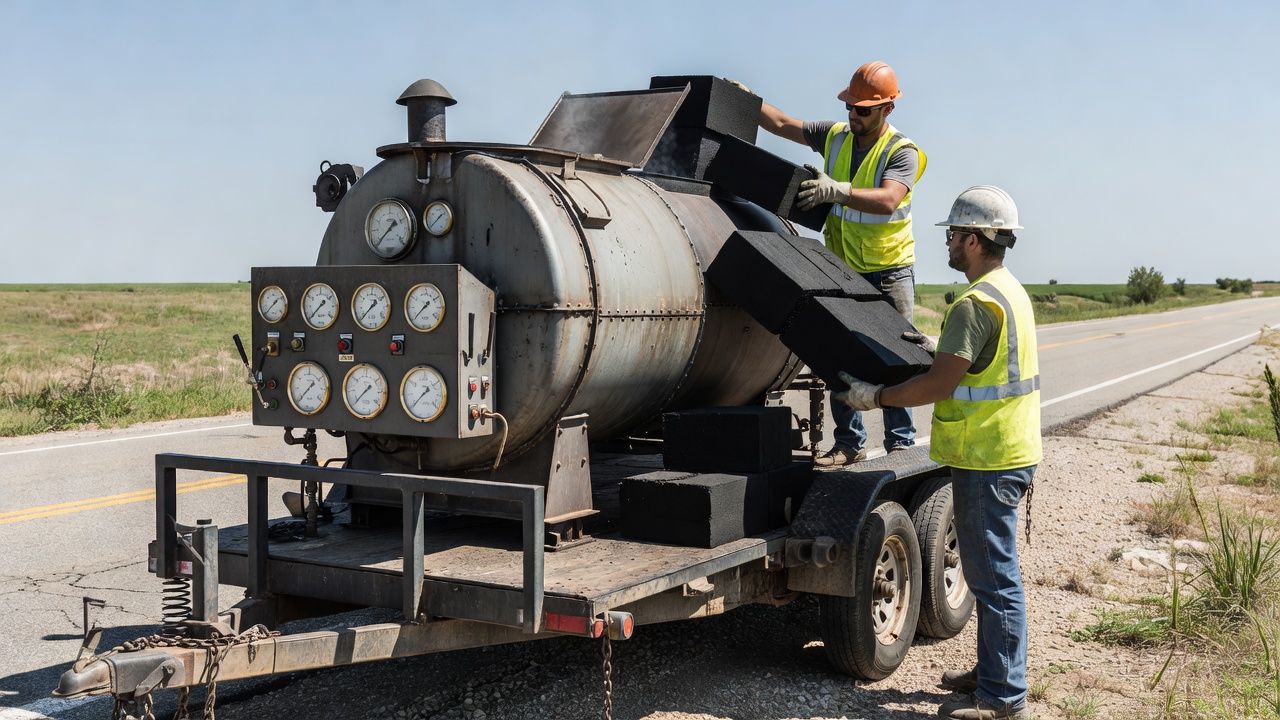
2.1 Oil-Jacketed Melter-Applicators
The standard heating equipment for hot-pour sealant is the oil-jacketed double-boiler melter-applicator, which uses a heat-transfer fluid (typically a synthetic thermal oil) circulating between an outer jacket and the inner material vat to provide indirect, uniform heating. This configuration prevents the direct flame impingement or hot-spot formation that would occur with direct-fired kettles, eliminating the risk of localized overheating and polymer degradation. The heat-transfer oil is itself heated by a diesel, propane, or electric burner and circulated by a pump through the jacket, maintaining uniform temperature distribution throughout the vat. Melters are typically sized from 60 to 400 gallons (230 to 1,500 liters) for highway applications, with larger 400- to 1,000-gallon units deployed for airport runway crack sealing operations where continuous high-volume output is required to minimize runway closure time.
Critical melter components include the mechanical agitator, a motor-driven paddle or ribbon mixer that continuously circulates the molten sealant to prevent thermal stratification and ensure homogeneous temperature and consistency throughout the vat. Agitators must be operated continuously once material has melted, but should be turned off during initial loading of solid blocks to prevent splashing of hot material. The temperature control system must independently monitor and control both the heat-transfer oil temperature and the material temperature through thermocouple probes connected to digital or analog controllers with accuracy of ±5°F (±3°C). Modern melters incorporate automated burner modulation based on material temperature feedback, preventing the temperature overshoot that can cause degradation. Heated hoses and application wands, maintained at approximately the same temperature as the melter vat through electrical resistance heating or hot-oil circulation, transport the molten sealant from the melter to the crack. These hoses, typically 15 to 25 feet (4.6 to 7.6 meters) in length, must be insulated and equipped with internal thermocouples to verify that sealant temperature is maintained throughout the delivery path.
The solid sealant blocks are loaded into the melter gradually. The recommended procedure is to place blocks on top of already-melted material (if available) or load them with the agitator off, allowing conductive heat transfer to gradually melt the blocks from the bottom and sides. Adding excessive cold material at once can cause the overall vat temperature to drop below the pumpable range, temporarily halting operations. Once the initial charge is fully melted and at temperature, fresh blocks may be added incrementally as material is consumed, maintaining a steady-state operating level. Material should only be melted for same-day use, prolonged heating at application temperature over multiple days accelerates oxidative aging, and reheating previously melted and cooled material introduces additional thermal history that degrades polymer performance.
2.2 Application Methods
Molten sealant is delivered into the prepared crack reservoir through one of two primary methods. Pump and wand systems, the standard for production crack sealing operations, use a gear or progressive-cavity pump to draw sealant from the melter and deliver it through the heated hose to a hand-held wand equipped with a trigger-controlled valve and interchangeable nozzle tips. Nozzle diameters range from 3/16 to 1/2 inch (5 to 13 mm), selected based on crack width and desired flow rate. The operator walks alongside the crack, positioning the wand tip within or just above the reservoir and controlling fill rate by trigger actuation. For crack filling operations (no routing), a V-shaped or flat sealing shoe attachment may be fitted to the wand tip to press sealant into the crack and simultaneously form a surface overband. Pour pots, insulated, manually carried containers filled from the melter, are used for smaller jobs, touch-up work, or areas inaccessible to the heated hose. Pour pots have limited working time before the sealant cools below application temperature, typically 10 to 20 minutes depending on ambient conditions and pot insulation.
After application, the sealant cools and solidifies through conductive heat transfer to the pavement substrate and convective heat loss to the atmosphere. The cooling rate depends on ambient temperature, pavement temperature, wind speed, and sealant volume. During cooling, the sealant undergoes thermal contraction of approximately 5% to 8% by volume, which can create a concave surface profile or, if cooling is too rapid, internal tensile stresses that compromise bond integrity. For this reason, sealant should be applied slightly proud of the pavement surface (approximately 1/8 inch or 3 mm above) and allowed to cool and contract to a flush or slightly recessed final profile. The sealed crack should not be opened to traffic for a minimum of 15 minutes after application to prevent tracking, material pickup, and debris intrusion into the semi-molten sealant. In cold weather or when immediate trafficking is unavoidable, blotting materials, typically fine aggregate, toilet paper, or commercial anti-tracking agents, are lightly broadcast over the fresh sealant surface to prevent tire adhesion.
2.3 Ambient Condition Constraints
Successful hot-pour sealant application is constrained by ambient and substrate conditions. The minimum ambient and pavement surface temperature for application is 40°F (4.4°C). Below this threshold, the cold pavement substrate acts as an excessive heat sink, quenching the molten sealant before it can adequately wet and bond to crack walls. The resulting weak adhesive bond is a primary cause of premature sealant failure. The maximum recommended ambient temperature is approximately 80°F (27°C) because at higher temperatures, pavement cracks are at or near their most-closed position in the annual thermal cycle. Sealant applied when cracks are fully closed will experience maximum tensile strain when cracks subsequently open during cold weather, potentially exceeding the sealant’s extensibility limit and causing cohesive failure. The optimal application seasons are spring and fall, when cracks are at approximately the mid-point of their annual opening/closing range, balancing the tensile and compressive strains the sealant will experience. Moisture is the single most detrimental factor, cracks must be absolutely dry before sealant application because any water present flashes to steam upon contact with 370°F sealant, creating voids at the sealant-substrate interface that eliminate bond. Even dampness from morning dew or high humidity condensation necessitates additional heat lance drying immediately before application.
3. Crack and Joint Preparation Procedures
The long-term performance of hot-pour sealant is governed as much by preparation quality as by material properties. The bond between sealant and pavement substrate represents the critical failure interface, field surveys consistently identify adhesive failure (debonding from crack walls) as the predominant distress mode, accounting for 70% to 85% of all sealant failures, compared to 15% to 30% for cohesive failure (rupture within the sealant itself). This statistic underscores that preparation procedures that maximize bond development are the most cost-effective investment in sealant longevity.
3.1 Routing for Crack Sealing
Crack routing is the mechanical cutting of a uniform reservoir centered on the existing crack, performed only for the crack sealing treatment (as opposed to crack filling, which omits this step). The router, either a rotary impact device with carbide-tipped cutting bits or a diamond-blade saw, removes a precise width of pavement material from both sides of the crack to a specified depth, creating a clean, uniform, rectangular channel. The industry-standard routed reservoir for working cracks is 3/4 inch wide by 3/4 inch deep (19 mm × 19 mm), though reservoir dimensions may range from 1/2 inch × 1/2 inch (13 mm × 13 mm) to 1 inch × 1 inch (25 mm × 25 mm) depending on crack width, anticipated movement, and agency specifications. The Federal Highway Administration’s Manual of Practice for crack treatment, developed from the SHRP H-106 research, specifies that routing should extend to the full pavement shoulder and that the reservoir must have clean, vertical walls, rounded or V-shaped routs resulting from worn or improperly spaced router bits must be rejected because they concentrate stress rather than distributing it.
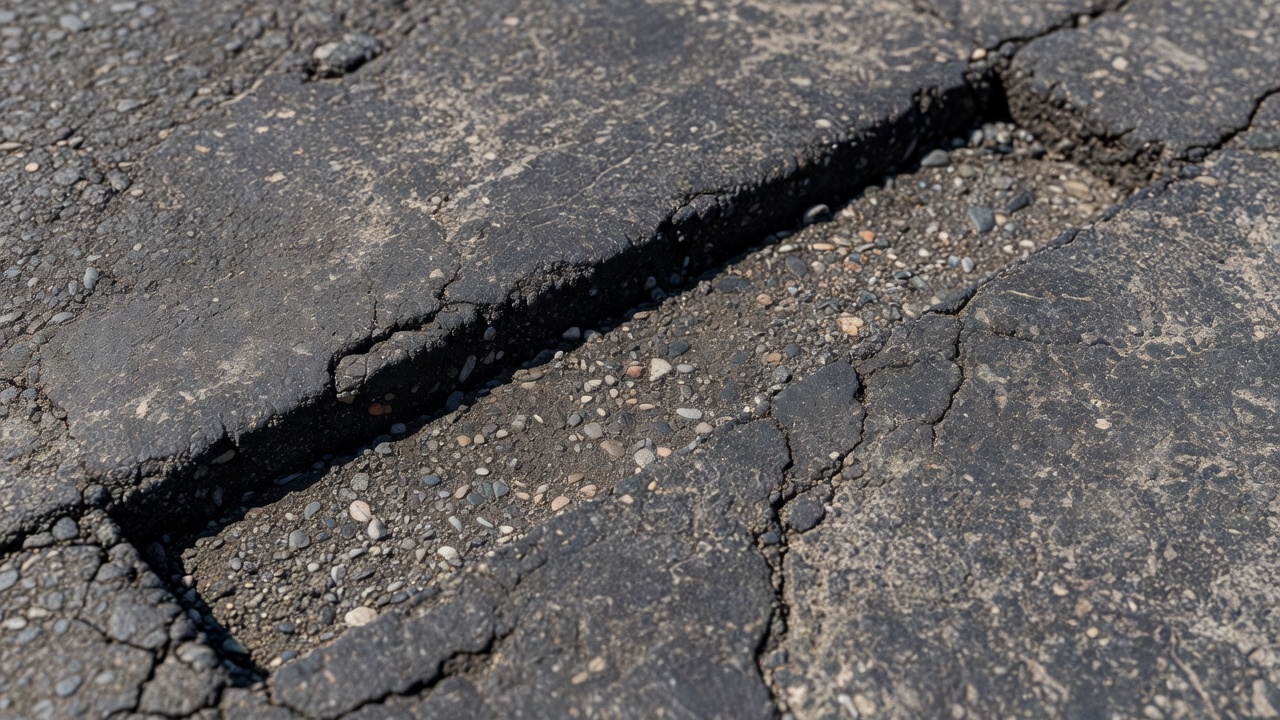
The routing operation serves four distinct functions. First, it removes aged, oxidized, and potentially debonded material from the crack faces, exposing fresh, unweathered pavement surfaces with higher surface energy and greater bonding potential. Second, it creates a standardized, predictable reservoir geometry that simplifies sealant volume estimation and ensures consistent sealant shape factor (the width-to-depth ratio that governs strain distribution). Third, it concentrates crack movement into a single, well-defined location rather than allowing it to distribute across an irregular, wandering crack path, reducing secondary cracking adjacent to the sealant. Fourth, it increases the bonded surface area, a 3/4-inch-wide rout provides approximately 50% more bond area than the typical 1/8-inch to 1/4-inch-wide natural crack, proportionally increasing the total adhesive force resisting debonding.
Three routing challenges warrant special attention during field operations. Wavy cracks that deviate significantly from a straight line can cause the router operator to inadvertently cut into intact pavement adjacent to the crack rather than following the crack path. This creates spalled pavement fragments between the rout and the actual crack that must be removed and patched. Zigzag or tortuous crack patterns, common in coarse-graded asphalt mixtures with large maximum aggregate size, are physically impossible for a router to follow accurately, and attempting to do so often produces extensive spalling along 10% to 20% of the crack length. In these cases, crack filling (without routing) may be the preferred treatment. Partially developed cracks that are visible on only a portion of the pavement surface should not be routed across the full lane width, because the crack may propagate along a different path when it fully develops, leaving the rout misaligned with the actual crack.
3.2 Cleaning
Post-routing cleaning removes the dust, debris, and loose aggregate particles generated by the cutting operation. A multi-stage cleaning protocol is essential. The first stage employs a mechanical sweeper, leaf blower, or large vacuum system to clear the pavement surface surrounding the rout, preventing surface debris from being blown back into the reservoir by traffic or wind. The second stage, performed immediately before sealant placement, uses compressed air delivered at a minimum of 100 psi (690 kPa) at the nozzle with a minimum blast flow of 150 cubic feet per minute (4.2 m³/min). The compressed air system must incorporate both oil and moisture traps in the air line, oil contamination creates a bond-breaking film on crack walls, and water droplets are counterproductive to the drying objective. Traps must be inspected for cleanliness and function before each shift and drained of accumulated oil and water regularly. The air nozzle is directed into the rout at close range (2 to 4 inches from the surface), and the operator moves along the crack at a rate that visibly removes all loose material. For wider cracks or deeper routs, multiple passes may be required, with the final pass blowing from the upwind side to prevent debris from settling back into the cleaned reservoir.
3.3 Drying and Wall Warming
Drying represents the most critical and frequently underperformed preparation step. The presence of any moisture, whether from recent rain, overnight condensation, or humidity in the pavement pores, is catastrophic for sealant bond development. When 370°F sealant contacts a water film, the water instantly vaporizes, expanding to approximately 1,600 times its liquid volume and creating a steam bubble that locally separates the sealant from the substrate. The resulting void eliminates bond over that area and creates a stress concentration point from which adhesive failure can propagate. The only reliable method for ensuring absolute dryness is the heat lance, a device that directs a high-velocity stream of propane or diesel-fired hot air (typically 2,000°F to 2,500°F / 1,090°C to 1,370°C at the nozzle exit) into the crack reservoir. The heat lance operator moves along the crack at approximately 5 to 10 feet per minute (1.5 to 3 meters per minute), with the dwell time adjusted based on ambient temperature, pavement moisture content, and crack depth to achieve complete drying.
The heat lance simultaneously serves a secondary but equally important function: warming the crack wall substrate. When molten sealant contacts cold pavement, the immediate thermal quench at the interface can prevent the molecular-level wetting that is prerequisite to strong adhesion, the sealant surface viscosity increases too rapidly to flow into microscopic surface pores and asperities. Preheating the crack walls to approximately 100°F to 150°F (38°C to 66°C) reduces the thermal gradient, extending the time during which the sealant remains sufficiently fluid to develop intimate substrate contact. The University of Illinois at Urbana-Champaign’s ICT-17-008 study, conducted under the FHWA TPF-5(225) pooled fund, demonstrated that heat lance drying and preheating improved sealant bond retention by 25% to 40% compared to compressed-air-only cleaning in controlled field trials. The optimal sequence is to apply the heat lance within minutes of sealant placement, so that the substrate retains its elevated temperature when the sealant is introduced.
4. Sealant Reservoir Design
The geometric configuration of the sealant-filled reservoir governs the mechanical response of the sealant to crack movement and is therefore a primary determinant of sealant service life. The fundamental design parameter is the shape factor, the ratio of reservoir width to reservoir depth, which controls how crack opening displacement is translated into strain within the sealant material. For a given crack opening displacement, a sealant reservoir with a high width-to-depth ratio (wide and shallow) experiences lower average tensile strain than one with a low width-to-depth ratio (narrow and deep). This relationship arises because tensile strain is distributed across the entire width of the sealant, so a wider sealant cross-section develops lower unit strain for the same total displacement. However, an excessively wide reservoir wastes material and creates a larger surface area susceptible to traffic damage and weathering.
4.1 Standard Reservoir Configurations
The reservoir configuration recommended by FHWA and adopted by most state highway agencies and airport authorities specifies a maximum depth-to-width ratio of 2:1. The typical reservoir for crack sealing is 3/4 inch wide × 3/4 inch deep (shape factor = 1.0) for working cracks with annual horizontal movement of 0.1 to 0.5 inch (2.5 to 13 mm). For wider cracks or cracks with greater anticipated movement, reservoir width may be increased to 1 inch by 3/4 inch depth (shape factor = 1.33) or 1 inch by 1 inch (shape factor = 1.0). The sealant should be installed such that the cooled surface is recessed 1/8 to 1/4 inch (3 to 6 mm) below the pavement surface for rout-and-seal applications. This recess protects the sealant from direct tire contact, which can cause abrasive wear, indentation, and eventual pull-out, and from snowplow blade impact in cold regions. For overband configurations where sealant is spread across the crack surface, a sealing shoe or squeegee attachment on the application wand spreads the material 2 to 3 inches (50 to 75 mm) wide and approximately 1/16 to 1/8 inch (1.5 to 3 mm) thick over the crack, creating an additional water-shedding membrane that protects the primary reservoir fill.
The backer rod, a compressible foam cylinder inserted into the crack before sealant application, serves two functions in reservoir design. It prevents the sealant from flowing down into and filling the crack below the designed reservoir depth (saving material and preventing three-sided adhesion that would restrict the sealant’s ability to deform), and it provides a non-adhesive bottom surface that forces the sealant to bond only to the two vertical crack walls. This two-sided adhesion configuration is essential for working cracks because it allows the sealant to elongate freely in response to crack opening without the restraint that would be imposed by bottom bonding. For cracks deeper than 1 inch (25 mm), a closed-cell polyethylene backer rod with a diameter 25% to 50% larger than the crack width is compressed and inserted to the desired sealant depth using a roller or insertion tool. The backer rod must be compatible with the sealant, non-absorptive, non-reactive, and capable of withstanding the application temperature without melting or degrading.
4.2 Treatment Selection: Crack Sealing vs. Crack Filling
The distinction between crack sealing and crack filling is fundamental to reservoir design and treatment strategy.
Crack sealing is the premium treatment reserved for working cracks, those with annual horizontal movement exceeding 0.1 inch (2.5 mm), typically transverse thermal cracks, transverse reflective cracks over PCC joints, longitudinal reflective cracks, and longitudinal cold-joint cracks. Crack sealing involves all four preparation steps: routing, cleaning, drying, and sealant installation into the prepared reservoir. The routed reservoir provides the controlled geometry and increased bond area needed to accommodate the cyclic strain of working cracks. Crack sealing is the specified treatment for airport runway and taxiway cracks where aircraft tire pressures exceeding 200 psi (1.38 MPa) and FOD prevention requirements demand the highest sealant performance.
Crack filling is appropriate for non-working cracks, those with annual horizontal movement of 0.1 inch (2.5 mm) or less, including longitudinal edge cracks, distantly spaced block cracks, and older transverse cracks that have stabilized. Crack filling omits the routing step, sealant is applied directly into the cleaned and dried natural crack. The irregular, variable-width natural crack geometry provides less predictable strain distribution, but for cracks with minimal movement, the reduced preparation cost and faster application rate justify the simpler treatment. The sealant is typically worked into the crack using a V-shaped shoe on the applicator wand, and a surface overband is often applied. Crack filling sealant should be selected with a slightly higher modulus (stiffer) than crack sealing sealant for the same climate, since the irregular reservoir imposes greater geometric stress concentration.
4.3 Material Estimation
Accurate sealant quantity estimation is critical for project budgeting and material ordering. Hot-pour sealant has a density of approximately 72.2 pounds per cubic foot (1,157 kg/m³) in its solid state, with the melted density being approximately 5% to 8% lower due to thermal expansion. The following table provides material requirements for common reservoir configurations:
| Crack/Reservoir Width | Sealant Depth | Pounds per 100 Linear Feet | Kilograms per 100 Linear Meters |
|---|---|---|---|
| 3/8 inch (10 mm) | 3/8 inch (10 mm) | 6.9 | 10.3 |
| 3/8 inch (10 mm) | 1/2 inch (13 mm) | 9.3 | 13.8 |
| 1/2 inch (13 mm) | 1/2 inch (13 mm) | 12.3 | 18.3 |
| 1/2 inch (13 mm) | 3/4 inch (19 mm) | 18.5 | 27.5 |
| 3/4 inch (19 mm) | 3/4 inch (19 mm) | 27.8 | 41.4 |
| 1 inch (25 mm) | 3/4 inch (19 mm) | 37.0 | 55.1 |
| 1 inch (25 mm) | 1 inch (25 mm) | 49.4 | 73.5 |
A standard 30-pound (13.6 kg) block of sealant provides sufficient material for approximately 108 linear feet (33 m) of 3/4-inch × 3/4-inch reservoir, or approximately 61 linear feet (19 m) of 1-inch × 1-inch reservoir. For airport-scale crack sealing projects involving thousands of linear feet, sealant is often ordered by the pallet (typically 50 to 60 blocks, or 1,500 to 1,800 pounds) or by the supersack (1,500 to 2,500 pounds of bulk granular or pelletized sealant for direct melter loading).
5. Performance Specifications: ASTM D6690
ASTM D6690, Standard Specification for Joint and Crack Sealants, Hot Applied, for Concrete and Asphalt Pavements, is the primary specification governing hot-pour sealant performance in North America. The standard classifies sealants into four types based on the climatic conditions and performance requirements, and prescribes a suite of laboratory tests that quantify the key material properties predictive of field performance.
5.1 ASTM D6690 Classification System
| ASTM Type | Climate Designation | Low-Temperature Bond Test | Extension Requirement | Additional Requirements | Legacy Standard |
|---|---|---|---|---|---|
| Type I | Moderate climates | -18°C (0°F) | 50% | – | ASTM D1190 |
| Type II | Most climates | -29°C (-20°F) | 50% | – | ASTM D3405 |
| Type III | Most climates, wet environments | -29°C (-20°F) | 50% | Water-immersed bond, aged resilience | Fed. Spec. SS-S-1401C |
| Type IV | Very cold climates | -29°C (-20°F) | 200% | Low-modulus formulation | – |
Type I sealants are specified for regions where the lowest expected pavement surface temperature does not fall below 0°F (-18°C). They represent the earliest generation of hot-pour sealants, based on the withdrawn ASTM D1190 standard, and are typically rubberized asphalt formulations with moderate polymer content. Type I sealants remain suitable for southern-tier states and mild coastal climates.
Type II sealants extend the low-temperature performance to -20°F (-29°C), covering the majority of North American climates. They incorporate higher polymer contents and more refined formulation control than Type I products. Type II is the minimum classification recommended by most state Departments of Transportation (DOTs) for general highway crack sealing.
Type III sealants meet all Type II requirements and add two additional tests: water-immersed bond testing, where bond specimens are submerged in water for 24 hours before testing to evaluate adhesion retention under wet conditions, and aged resilience testing, where the sealant is subjected to oven aging at 140°F (60°C) for 15 days before resilience measurement to simulate long-term oxidative aging. Type III specification originated from Federal Specification SS-S-1401C, which was developed for military airfield pavements where fuel and water exposure demand superior durability.
Type IV sealants are the highest-performance classification, designed for very cold climates where pavement temperatures reach -40°F (-40°C) and crack opening displacements are proportionally larger. Type IV sealants must withstand 200% extension in the low-temperature bond test, four times the deformation capacity required of Types I through III. Achieving 200% extensibility while maintaining adequate high-temperature flow resistance requires sophisticated polymer modification, typically with high SBS or SBR loadings (8% to 12%) or proprietary polymer blends. Type IV products are specified for northern-tier states, Canadian provinces, Alaska, and high-altitude airports.
5.2 Key Performance Tests
Cone Penetration (ASTM D5329): Measures the consistency or stiffness of the sealant at 77°F (25°C) by determining the depth (in tenths of a millimeter) to which a standard cone penetrates the sample under a 150-gram load for 5 seconds. Acceptable penetration range is typically 90 to 150 dmm. Lower penetration values indicate stiffer material with greater traffic resistance but potentially reduced low-temperature flexibility, higher values indicate softer material with better extensibility but greater susceptibility to tracking and debris embedment.
Resilience (ASTM D5329): Quantifies the elastic recovery of the sealant by measuring the percentage recovery of a specimen after 60 minutes of relaxation following 50% compression for 5 seconds. Minimum resilience requirement is 60% for Types I through III, Type III additionally requires resilience testing after oven aging. Resilience correlates directly with the sealant’s ability to recover from compressive strains imposed when cracks close during hot weather, preventing extrusion from the reservoir.
Flow (ASTM D5329): Evaluates resistance to deformation at elevated temperature by measuring the distance (in millimeters) a sealant specimen flows down an inclined panel after 5 hours at 140°F (60°C). Maximum allowable flow is 3 mm. This test simulates the sealant’s ability to resist slumping out of vertical or inclined cracks during summer conditions when pavement surface temperatures can exceed 140°F.
Bond (ASTM D5329): The definitive test of sealant-substrate adhesion. Sealant is cast between two Portland cement mortar blocks with a specified gap, conditioned at the test temperature for a minimum of 4 hours, and then subjected to three cycles of extension to the specified percentage (50% or 200%) at a rate of 1/8 inch per hour (3.2 mm/h). The specimen passes if no more than 3 blocks (out of 3 specimens) exhibit adhesive or cohesive failure exceeding 1/4 inch (6 mm) in depth. For Type III, additional specimens are immersed in water for 24 hours at room temperature before testing.
Asphalt Compatibility (ASTM D5329): Ensures that the sealant does not contain solvents or plasticizers that will soften, dissolve, or otherwise degrade the asphalt binder in the host pavement. A sealant specimen is placed on an asphalt pavement disc and conditioned at 140°F (60°C) for 72 hours. The asphalt beneath and around the sealant must show no evidence of softening, swelling, staining, or penetration exceeding 1/8 inch (3 mm).
5.3 Performance-Graded Sealant Specifications (AASHTO)
The AASHTO performance-graded (PG) system, developed through the FHWA TPF-5(225) pooled fund study and codified in AASHTO MP-25, represents the next generation of sealant specification. Mirroring the successful Superpave PG asphalt binder specification system, the sealant grade (SG) is designated as SG H-L, where H is the maximum service temperature in degrees Celsius (typically 46, 52, 58, 64, or 70) and L is the minimum service temperature (typically -16, -22, -28, -34, -40, or -46). For example, an SG 52-34 sealant is designed for climates with a maximum pavement temperature of 52°C (126°F) and a minimum of -34°C (-29°F). The PG system employs a suite of AASHTO provisional test methods, including bending beam rheometer (AASHTO TP 87), direct tension (AASHTO TP 88), rotational viscometer (AASHTO TP 85), and blister test for adhesion (AASHTO TP 90), that characterize sealant rheology and fracture mechanics over the full service temperature range. While not yet universally adopted, the PG system provides a more scientifically rigorous basis for climate-specific sealant selection than the ASTM D6690 type classifications.
6. Condition Rating in Pavement Inspection
During Pavement Condition Index (PCI) inspections conducted per ASTM D5340 (Standard Test Method for Airport Pavement Condition Index Surveys), the condition of crack sealant directly influences the severity ratings assigned to cracking distresses and therefore the calculated PCI value. PCI is a numerical indicator ranging from 0 (failed) to 100 (excellent) that quantifies the integrated surface condition of a pavement section based on distress type, severity, and quantity observed during visual inspection. Because cracking distresses typically account for 40% to 60% of the total deduct value in a PCI calculation, properly maintained crack sealant that prevents cracks from developing into more severe distresses has a disproportionately large impact on overall pavement condition ratings.
6.1 Flexible Pavement Crack Severity Classification
For flexible (asphalt) airport pavements, longitudinal and transverse cracking (PCI distress codes 49 and 50) are classified into three severity levels based on crack width, spalling, and whether the crack is sealed:
- Low severity: Crack width less than 1/4 inch (6 mm), with no spalling or secondary cracking, and properly sealed with sealant in good condition. Sealant that is intact and well-bonded with no more than minor weathering qualifies the crack for low severity, reducing the PCI deduct value by 2 to 5 points (depending on crack density) compared to an unsealed crack of similar width.
- Medium severity: Crack width between 1/4 and 3/4 inch (6 to 19 mm), or any crack with minor spalling (less than 3 inches / 75 mm from crack edge) or minor secondary cracking. A crack that has been sealed but exhibits partial adhesive failure along less than 25% of its length, or sealant that has oxidized and cracked but remains partially effective, is classified as medium severity. The PCI deduct value increases to 5 to 10 points.
- High severity: Crack width greater than 3/4 inch (19 mm), or any crack with severe spalling (more than 3 inches / 75 mm from crack edge) or extensive secondary cracking. A crack where sealant has completely failed, fully debonded, missing, or extruded from the reservoir over more than 50% of the crack length, qualifies as high severity even if the crack width itself is moderate. High-severity cracking deducts 8 to 20 points from PCI.
The distinction between a sealed and unsealed crack of the same width is significant: a 1/2-inch-wide crack with intact sealant rates as medium severity, while the same crack without sealant or with failed sealant may rate as high severity if spalling has developed. This differential creates a direct financial and operational incentive for timely crack sealing maintenance, the PCI threshold for major rehabilitation funding from FAA Airport Improvement Program (AIP) grants is typically 70, and maintaining sealed cracks at low or medium severity helps keep overall PCI above this threshold.
6.2 Rigid Pavement Joint Seal Damage
For rigid (concrete) airport pavements, joint seal damage (PCI distress code 62) is a dedicated distress type evaluated independently of joint spalling or faulting. Joint seal damage is quantified by the percentage of joint length exhibiting any of the following conditions: sealant debonding from joint walls (adhesive failure), sealant extrusion above or below the joint surface (cohesive extrusion or subsidence), weed growth within the joint indicating sealant breach and moisture/dirt accumulation, or hardening and cracking of the sealant material (oxidative embrittlement). Three severity levels apply:
- Low severity: Sealant in generally good condition over the entire joint length, with minor, isolated debonding or weathering affecting less than 10% of the joint. Sealant remains pliable and bonded to joint walls.
- Medium severity: Sealant exhibits moderate deterioration over 10% to 50% of the joint length, with visible debonding, minor extrusion, or hardening. The sealant’s water-exclusion function is partially compromised, creating a pathway for surface water infiltration to the subgrade.
- High severity: Sealant has failed over more than 50% of the joint length, with extensive debonding, missing sealant, weed growth, or complete loss of pliability. The joint essentially functions as an unsealed opening, permitting free water and incompressible material ingress that accelerates pumping, faulting, and base erosion.
Poorly maintained joint sealant creates a cascade of secondary distresses in rigid pavements: water infiltration through unsealed joints saturates the base and subgrade, reducing support capacity by 30% to 50%, pumping action under repeated aircraft loading ejects saturated fines through the joint, progressively eroding support, loss of support concentrates slab edge stresses, initiating corner breaks and transverse cracking, and incompressible material infiltration during warm weather prevents joint closure during cold weather, generating compressive stresses that cause spalling and blow-ups. The cost of joint resealing, typically $2 to $5 per linear foot, is orders of magnitude less than the cost of full-depth slab replacement ($200 to $500 per square yard) necessitated by untreated joint seal failure.
6.3 Inspection Frequency and Documentation
The FAA Airport Pavement Management Program (PMP), described in AC 150/5380-7, recommends full PCI inspections at a minimum of every 3 years for all AIP-funded airports, with annual walk-through inspections of critical distress types between formal PCI surveys. During walk-through inspections, maintenance personnel specifically document the linear footage of cracks requiring sealing, the condition of previously sealed cracks, and any evidence of sealant failure (debonding, extrusion, oxidation). Modern pavement management software, including PAVER, MicroPAVER, and web-based systems like Applied Pavement Technology’s PAVERweb, enables maintenance managers to track sealant condition over time and generate work orders for crack sealing when condition thresholds are reached. The standard protocol triggers crack sealing renewal when more than 25% of previously sealed crack length exhibits failure, or when new cracking appears at densities exceeding 33 linear feet per 330-foot pavement section (low crack density threshold from the SHRP crack treatment guidelines).
7. Airport Pavement Crack Sealing
Airport pavements impose requirements on crack sealing operations that extend well beyond those for highway applications, driven by the catastrophic consequences of FOD (Foreign Object Debris) ingestion by jet engines, the extreme tire pressures of modern aircraft (exceeding 200 psi for commercial jets), the chemical exposure to jet fuel and deicing fluids, and the severe operational constraints of short nighttime maintenance windows.
7.1 Regulatory Framework
FAA Advisory Circular AC 150/5380-6C, Guidelines and Procedures for Maintenance of Airport Pavements, provides the primary federal guidance for airport crack sealing in the United States. The AC categorizes crack sealing as a preventive maintenance activity and includes specific procedures in Appendix A (Procedure A1, Crack Repair of Flexible Pavement). The AC emphasizes that timely crack sealing is essential for maintaining load-carrying capacity, ride quality, friction characteristics, and FOD minimization. For projects funded through the Airport Improvement Program (AIP), crack sealing materials and methods must conform to the specifications in AC 150/5370-10, Standards for Specifying Construction of Airports, which references ASTM D6690 for hot-pour sealants. The FAA’s P-605 specification within AC 150/5370-10E covers sealing cracks in asphalt concrete pavement, while P-604 addresses joint sealing in Portland cement concrete pavement.
ICAO Doc 9157, Aerodrome Design Manual, Part 3, Pavements (Third Edition, 2022), addresses crack sealing in the context of overall pavement preservation. While the current edition of Doc 9157 focuses primarily on structural design and the ACR-PCR bearing strength reporting method, Appendix 6 provides operations and maintenance guidance including crack treatment. ICAO Annex 14, Volume I, requires that “the surface of a pavement shall be maintained in a condition that provides good friction characteristics and low rolling resistance” and that “the surface of a pavement shall be kept free from loose stones and other foreign objects that might cause damage to aircraft structures or engines”, both requirements are directly served by effective crack sealing. The international regulatory framework delegates detailed crack sealing specifications to national aviation authorities, with the FAA, UK CAA, EASA, and other bodies providing jurisdiction-specific guidance consistent with ICAO standards.
7.2 Airport-Specific Application Requirements
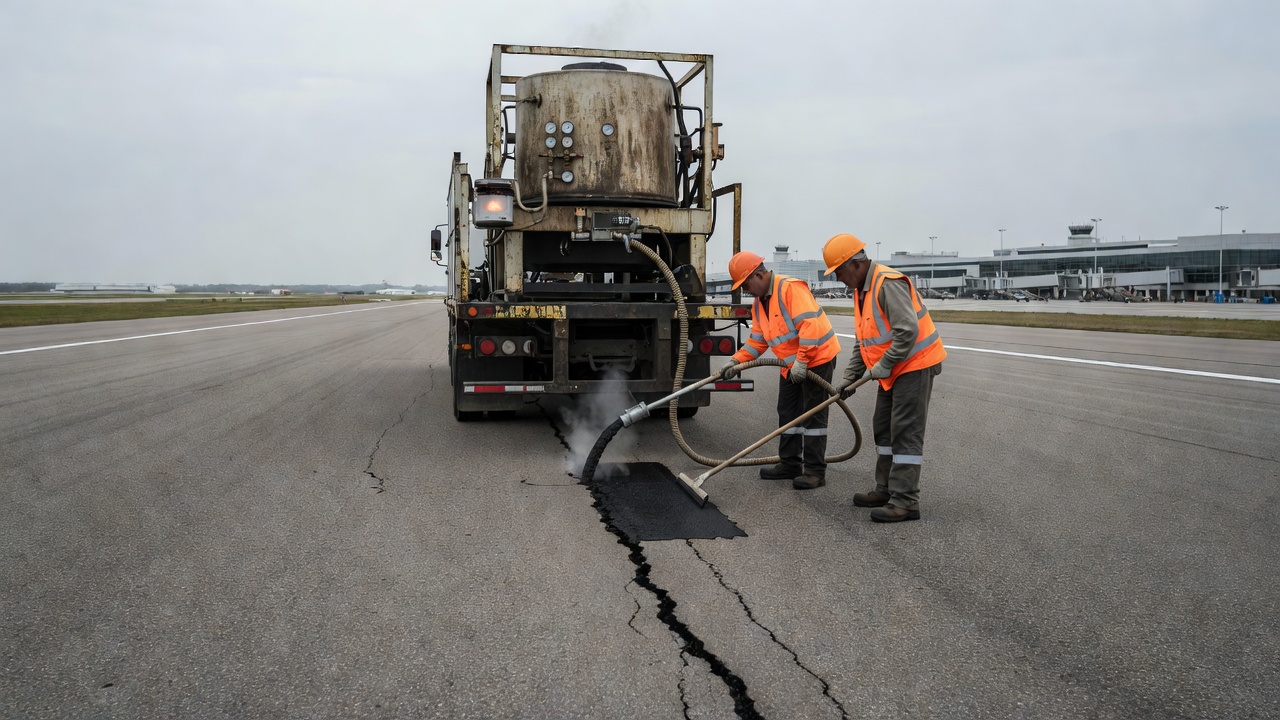
Runway closures and access constraints govern crack sealing logistics to an extent unknown in highway operations. Work on active runways typically occurs during overnight closures of 4 to 8 hours, requiring the entire operation, mobilization, routing, cleaning, drying, sealing, curing, and demobilization, to be completed and the runway returned to service before the morning departure bank. This demands high-capacity equipment (400- to 1,000-gallon melters), crews of 8 to 12 workers, and meticulous advance planning to maximize linear feet sealed per closure hour. Taxiway and apron crack sealing may be performed during daytime operations with appropriate lane closures and air traffic control coordination.
FOD prevention protocols are paramount. All equipment entering the movement area must be inspected for loose items. Routing operations generate cuttings and aggregate debris that must be immediately vacuumed, not simply blown, from the pavement surface, as compressed air can disperse particles into areas accessible to aircraft engines. Sealant application must be precise, with no drips, spills, or overbanding that could detach under aircraft tire contact or jet blast. After application, the sealed area must be inspected foot-by-foot to verify sealant adhesion and to remove any loose material. The 15-minute minimum cure time before trafficking is strictly enforced, and blotting materials are mandatory for any sealant that will be trafficked within 30 minutes.
Chemical resistance requirements exceed those for highway sealants. Airport pavements are exposed to Jet A and Jet A-1 fuel spills, hydraulic fluids (Skydrol and phosphate ester-based fluids), and deicing chemicals including potassium acetate, propylene glycol, and urea. Standard ASTM D6690 testing does not include fuel immersion resistance, so airport authorities often specify supplemental testing, typically 24-hour immersion in Jet A at room temperature followed by bond testing, or select sealant formulations known to resist hydrocarbon attack. Polymer-modified sealants with high SBS content generally provide better fuel resistance than rubberized asphalt products, as the cross-linked polymer network resists dissolution by hydrocarbon solvents.
Surface temperature extremes at airports can exceed those on highways due to the heat island effect of large paved areas and the absence of shade. Runway surface temperatures in desert or tropical regions can reach 160°F (71°C), testing the flow resistance of sealant formulations. Conversely, airports in Arctic, sub-Arctic, and high-altitude locations experience pavement surface temperatures below -40°F (-40°C), requiring Type IV sealants with extreme low-temperature flexibility. Airports in these regions typically specify sealants by performance grade (e.g., SG 58-40 or SG 52-46) rather than ASTM type alone.
8. Comparison with Cold-Applied Alternatives
The choice between hot-pour and cold-applied sealants involves trade-offs across the dimensions of performance, cost, application complexity, and safety. Cold-applied sealant categories include silicone sealants (single-component, moisture-curing), polysulfide and polyurethane sealants (single or multi-component, chemically curing), and emulsified asphalt sealants (water-based asphalt emulsions that cure by water evaporation). Each category occupies a specific performance and application niche, but none matches the combination of cost-effectiveness and field-proven longevity that hot-pour materials deliver for large-scale crack sealing operations.
8.1 Hot-Pour vs. Cold-Applied Performance Comparison
| Performance Factor | Hot-Pour Sealant | Cold-Applied Silicone | Cold-Applied Emulsion |
|---|---|---|---|
| Application Temperature | 350–400°F (177–204°C) | Ambient (40–100°F) | Ambient (50–100°F) |
| Cure Mechanism | Physical cooling (~15 min) | Moisture cure (3–7 days) | Water evaporation (1–24 hours) |
| Bond Strength (Adhesion) | Excellent, thermal bond to warm substrate | Excellent, chemical bond, primer required | Poor to fair, surface adhesion only |
| Extensibility at Low Temp | 50–200% depending on type | 100–400% movement capability | <25%, minimal flexibility |
| Service Life (Typical) | 5–8 years | 10–15 years | 1–2 years |
| UV/Ozone Resistance | Moderate (fillers help) | Excellent | Poor, embrittles rapidly |
| Fuel Resistance | Fair to good (PMB types) | Good to excellent | Poor, dissolves |
| Cost per Linear Foot | $0.50–$1.50 | $2.00–$5.00 | $0.25–$0.75 |
| Equipment Required | Oil-jacketed melter, heat lance, router, air compressor | Caulking gun or pump, primer applicator | Pour pot or wand, minimal equipment |
| Safety Hazards | Burns from hot material and equipment | Chemical exposure (curing agents) | Low hazard |
| Application Speed | 500–2,000 LF/hour (crew) | 200–500 LF/hour | 500–2,000 LF/hour |
| Best Application | Highways, airports, commercial pavements, permanent | Fuel-spill areas, PCC joints, critical infrastructure | Temporary fixes, low-traffic, limited budget |
8.2 Silicone Sealants
Silicone sealants are single-component, moisture-curing materials based on polydimethylsiloxane (PDMS) polymer chemistry. They cure by reacting with atmospheric moisture to form a flexible, rubber-like solid with exceptional elastic properties, movement capability of +100% to -50% of joint width is typical. Silicone sealants exhibit outstanding UV and ozone resistance, maintaining flexibility for 15 years or more in exposed conditions, and excellent resistance to fuels, oils, and deicing chemicals. These properties make silicone the standard sealant for Portland cement concrete pavement joints at airports, particularly in fueling aprons and maintenance areas. The FAA’s P-604 specification for joint sealing in concrete pavement references silicone sealants meeting ASTM D5893 (Standard Specification for Cold Applied, Single Component, Chemically Curing Silicone Joint Sealant for Portland Cement Concrete Pavements).
The performance premium of silicone sealants is offset by two significant disadvantages. Cost, silicone sealants are 3 to 5 times more expensive per linear foot than hot-pour materials, making them economically impractical for the thousands of linear feet of cracking on a typical runway or taxiway. Primer dependency, silicone sealants require a separate primer application to the joint walls to achieve adequate adhesion to concrete and asphalt substrates. The primer must be applied and allowed to tack-dry before sealant installation, adding a time-consuming step. Silicone sealants also have a longer cure time (3 to 7 days to full cure) that can conflict with runway reopening requirements, although surface cure is typically achieved within 1 to 2 hours. For these reasons, silicone is specified for PCC joints at airports while hot-pour remains the standard for asphalt pavement cracks and for PCC joints on highways where cost sensitivity is greater.
8.3 Emulsified Asphalt Sealants
Cold-pour emulsified asphalt sealants consist of asphalt droplets (2 to 10 microns in diameter) dispersed in water with the aid of chemical emulsifiers and stabilizers. Applied at ambient temperature as a liquid, the emulsion “breaks” upon contact with the pavement surface as water evaporates or is absorbed, leaving behind a continuous asphalt film. These products are sold in 5-gallon pails, 55-gallon drums, or 275-gallon totes, and are applied by pouring directly from the container or through a simple gravity-fed wand.
The pervasive problem with emulsified sealants is their fundamentally limited performance envelope. Upon curing, the resulting material is essentially unmodified asphalt, lacking the polymer network that gives hot-pour sealants their elasticity, and therefore exhibits minimal flexibility, poor low-temperature crack resistance, and susceptibility to softening and tracking at elevated temperatures. The University of Texas CTR Project 0-4061 field study, which monitored crack treatment performance over five years across multiple climate zones, found that emulsified cold-pour sealants achieved a median effective service life of 1 to 2 years compared to 5 to 7 years for hot-pour products. The FHWA TPF-5(225) pooled fund study produced consistent findings, demonstrating that cold-pour sealant bond failure typically initiated within the first winter season in cold climates. Despite these limitations, emulsified sealants retain a legitimate role as a temporary or emergency treatment when hot-pour equipment is not available, when crack sealing must be performed under wet conditions (some emulsions can tolerate damp substrates), or when budget constraints preclude hot-pour application as an interim measure before scheduled rehabilitation.
Frequently Asked Questions
- What is hot-pour sealant and how does it differ from cold-pour alternatives?
- Hot-pour sealant is a thermoplastic, polymer-modified material that must be heated to 350–400°F (177–204°C) in an oil-jacketed melter before being pumped or poured into pavement cracks. Upon cooling, it forms a flexible, highly adhesive seal that bonds tenaciously to crack walls. Cold-pour sealants, by contrast, are applied at ambient temperature and cure through solvent evaporation or emulsion breaking. Hot-pour sealants provide superior bond strength, flexibility across temperature extremes, and 5–8+ year service life compared to 1–2 seasons for cold-pour materials, making them the standard for permanent crack sealing on highways and airport pavements.
- What are the main types of hot-pour sealants and which ASTM D6690 type should I select?
- Hot-pour sealants are classified under ASTM D6690 into four types based on climate suitability: Type I for moderate climates (low-temperature test at -18°C), Type II for most climates (-29°C test), Type III for wet environments (-29°C test with additional water-immersed bond and aged resilience requirements), and Type IV for very cold climates (-29°C test with 200% extension, low-modulus formulation). Material formulations include rubberized asphalt (containing crumb rubber from recycled tires), polymer-modified (using SBS, SBR, or other synthetic polymers), and fiber-reinforced compounds. Selection depends on local climate zone, crack movement characteristics, and traffic loading.
- What preparation is required before applying hot-pour sealant to pavement cracks?
- Proper preparation involves four critical steps: (1) Routing, cutting a uniform rectangular reservoir (typically 3/4" × 3/4") centered on the crack using a router or diamond saw for crack sealing treatment, crack filling omits this step. (2) Cleaning, removing all dust, debris, and loose aggregate using compressed air (minimum 100 psi at nozzle, 150 cfm) with oil and moisture traps. (3) Drying, eliminating all moisture from crack walls using a heat lance or hot compressed air, which simultaneously warms sidewalls for improved adhesion. (4) Final inspection, verifying reservoir dimensions with a gauge block and confirming substrate temperature above 40°F (4.4°C) before sealant application.
- How is hot-pour sealant condition rated during airport pavement inspection?
- During Pavement Condition Index (PCI) surveys conducted per ASTM D5340, sealant condition in cracks and joints is evaluated based on several distress types. For flexible pavements, linear cracking (longitudinal and transverse) is rated by severity level (low, medium, high) based on crack width, spalling, and whether the crack is sealed or unsealed. A properly sealed crack with intact sealant in good condition reduces the severity rating. For rigid pavements, joint seal damage is a specific distress type rated by the percentage of joint length where sealant has debonded, extruded, or allowed incompressible material intrusion. Well-maintained hot-pour sealant in good condition directly improves PCI scores and extends the pavement's serviceable life by preventing water-induced base and subgrade deterioration.
- What are the critical reservoir design parameters for hot-pour sealant application?
- The sealant reservoir must be designed with a width-to-depth ratio (shape factor) that accommodates anticipated crack movement without overstressing the sealant. The standard routed reservoir for crack sealing measures 3/4 inch (19 mm) wide by 3/4 inch (19 mm) deep for working cracks with annual horizontal movement exceeding 0.1 inch (2.5 mm). The depth-to-width ratio should not exceed 2:1. For crack filling (non-working cracks), sealant is applied directly into cleaned cracks without routing. The sealant should be recessed 1/8 to 1/4 inch (3–6 mm) below the pavement surface to prevent tire contact and snowplow damage. An optional surface band 2–3 inches wide may be applied over the crack using a sealing shoe for additional protection.