What is a Joint Sealant?
Joint Sealants for Concrete Pavement Joints
Definition and Fundamental Purpose
A joint sealant is an engineered material placed into the sawn or formed joints of Portland cement concrete (PCC) pavements to serve as a barrier against the infiltration of surface water, de-icing chemicals, and incompressible materials. The joint, a deliberate discontinuity in the concrete slab created to control cracking from thermal expansion and contraction, moisture-related volume changes, and shrinkage during curing, becomes a direct pathway for water and debris to enter the underlying pavement structure. The joint sealant fills this void, maintaining a flexible seal that accommodates cyclic joint movement while preserving pavement integrity.
The primary functions of joint sealants are twofold and interdependent. First, they limit the volume of surface water entering the pavement system through joints. Water that penetrates unsealed or failed joints accumulates at the slab-base interface, causing saturation of the subbase and subgrade materials. Under repeated aircraft wheel loading, this saturated condition leads to hydraulic pumping, the forceful ejection of water and fine subgrade particles through joints and cracks. Pumping progressively erodes structural support beneath slabs, creating voids that eventually cause slab cracking, corner breaks, and joint faulting (differential vertical displacement of adjacent slabs). Research from the Long-Term Pavement Performance (LTPP) program has demonstrated that favorable drainage conditions, of which effective joint sealing is a critical component, are a common characteristic among well-performing jointed plain concrete pavements.
Second, joint sealants prevent incompressible materials, sand, stone chips, metal fragments, and other hard debris, from entering and becoming lodged in joint reservoirs. During periods of high ambient temperature, concrete slabs expand thermally, narrowing the joint opening. If incompressible material occupies the joint void, this expansion generates substantial compressive stress along the joint faces because the debris cannot be compressed. This stress concentration manifests as spalling, the cracking, breaking, or chipping of concrete along the joint edge. In extreme cases, particularly in older pavements without adequate expansion relief, the cumulative compressive force can cause pavement blow-ups, where slabs buckle and shatter upward in a sudden catastrophic failure. For airport pavements, any loose concrete fragments represent Foreign Object Debris (FOD), which poses a direct threat to aircraft engines and can cause significant damage during ingestion events.
Joint sealants also provide a tertiary function that is increasingly recognized in cold-region pavement management: limiting the intrusion of de-icing chemicals. The National Concrete Pavement Technology Center (CP Tech Center) has documented that modern de-icing techniques using sodium chloride, magnesium chloride, calcium chloride, and potassium acetate contribute to more saturated concrete conditions along joints than occur in comparable pavements not subjected to de-icing. These chemicals, when combined with freeze-thaw cycling, accelerate deterioration of the concrete matrix adjacent to the joint reservoir, a distress mechanism distinct from traditional D-cracking but similarly destructive. An intact, well-adhered sealant acts as a physical barrier against chemical infiltration, reducing the exposure duration and concentration of these aggressive solutions at the joint face.
Types of Joint Sealants
Joint sealants are broadly classified into two primary categories: formed-in-place (liquid-applied) sealants and preformed compression seals. Formed-in-place sealants are further divided into hot-poured (thermoplastic) and cold-poured (chemically curing) types. Each category possesses distinct material properties, installation requirements, performance characteristics, and economic profiles that determine its suitability for specific applications.
Hot-Pour Thermoplastic Sealants
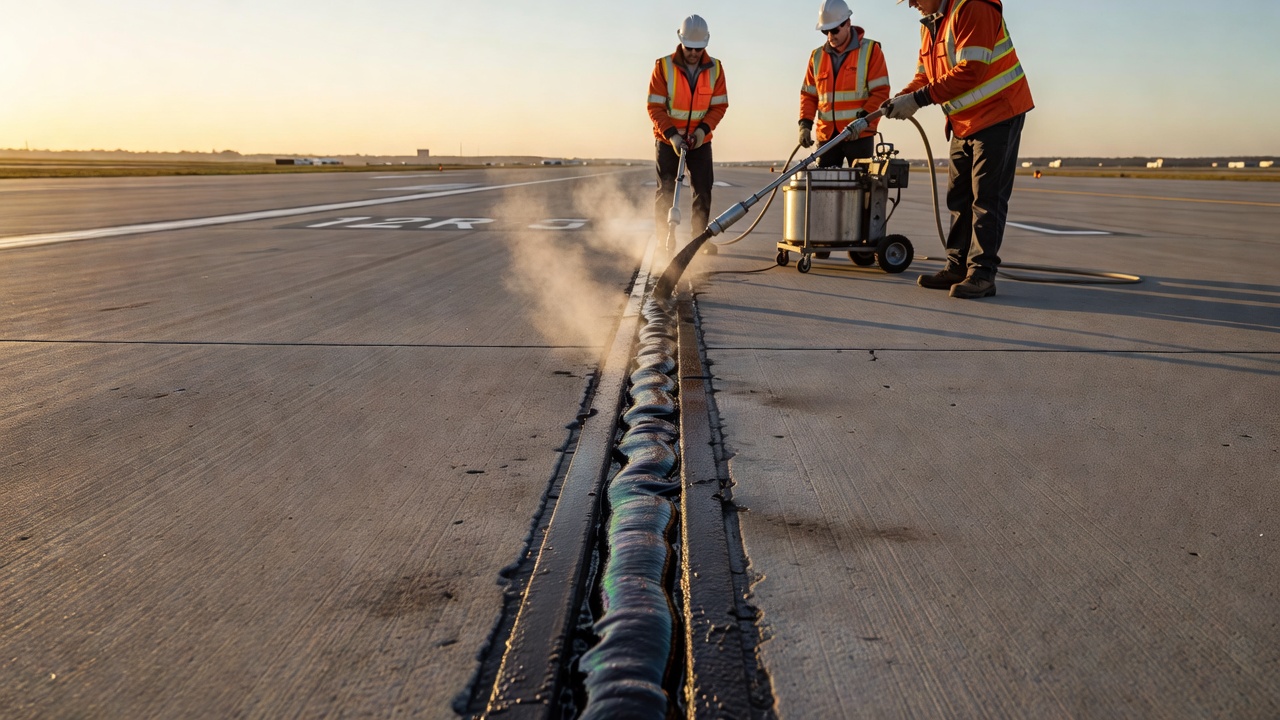
Hot-pour sealants are rubberized asphalt or polymer-modified asphalt materials that are heated to application temperature in specialized, oil-jacketed, agitated melters and poured or pumped into prepared joint reservoirs. These were historically the most widely used joint sealant type and remain common in both highway and airport applications due to their relatively low material cost, rapid curing (traffic-ready within minutes of cooling), and established field track record. The governing specification for hot-pour sealants used in non-fuel-exposed areas is ASTM D6690, Standard Specification for Joint and Crack Sealants, Hot Applied, for Concrete and Asphalt Pavements.
ASTM D6690 defines four product types based on climate severity and required performance characteristics:
| Type | Intended Service Environment | Key Distinguishing Test |
|---|---|---|
| Type I | Mild to moderate climates, winter lows above 0°F (-18°C) | Bond at 0°F, 50% extension, 3 cycles |
| Type II | Cold climates with regular subfreezing winters | Bond at -20°F (-29°C), 50% extension, 3 cycles |
| Type III | Type II conditions plus wet exposure, high-rainfall regions, or poor joint drainage | Type II bond plus water-immersed bond test and oven-aged resilience screening |
| Type IV | Very cold climates, deep frost regions, long slabs with large seasonal joint movement | Bond at -20°F, 200% extension, 3 cycles |
The performance requirements of ASTM D6690 are verified through five core laboratory tests. Cone penetration (ASTM D5329) measures sealant softness at 77°F (25°C), Types I, II, and III require a stiffer consistency for rut resistance, while Type IV permits a softer material to achieve its 200% extension capability. Flow resistance (ASTM D5329) evaluates slumping when a cured specimen is held vertically at 140°F (60°C) for five hours, with a maximum allowable flow of 3 mm for all types to prevent summer sagging. Resilience (ASTM D5329) measures the percentage rebound after compression, with a minimum of 60% required for all types to ensure the sealant recovers after wheel loading and seasonal joint closure. The bond-ductility test (ASTM D5329, mortar block specimen) is the single most field-correlated property, cycling cured sealant bonded between mortar blocks at the specified temperature and extension rate, failure is defined as any crack greater than 1/4 inch (6.4 mm) depth in the sealant or at the bond line. Asphalt compatibility ensures the sealant does not bleed into or soften surrounding asphalt pavement when used at PCC-asphalt interfaces.
Application of hot-pour sealants requires strict temperature control. Each product has a manufacturer-published Safe Heating Temperature (SHT), typically 400 to 410°F (204 to 210°C), and a Pour Temperature (PT), typically 360 to 390°F (182 to 199°C). Exceeding the SHT scorches the polymer binder and permanently degrades resilience and bond properties. The pavement surface temperature must be above 40°F (4°C) and rising at the time of application, and joint walls must be clean, dry, and frost-free. FAA Item P-605 governs sealant installation for airport pavements and specifically requires that hot-pour sealants for fueling areas comply with ASTM D7116 (fuel-resistant formulation) rather than D6690, as standard hot-pour sealants have limited chemical resistance to jet fuel and hydraulic fluids.
Cold-Applied Silicone Sealants
Silicone-based pavement joint sealants represent a fundamentally different material class from hot-pour products. These are 100% polysiloxane-polymer materials that cure through a chemical reaction with atmospheric moisture rather than through cooling. The governing specification is ASTM D5893, Standard Specification for Cold Applied, Single Component, Chemically Curing Silicone Joint Sealant for Portland Cement Concrete Pavements. Silicone sealants are supplied as single-component formulations in cartridges or bulk containers and are applied at ambient temperature without heating equipment.
The defining characteristic of silicone sealants is their ultra-low modulus of elasticity, which permits exceptional movement accommodation, typically ±50% to +100/-50% of the original joint width. This low modulus translates to very low stress transfer to the concrete-to-sealant bond line during joint movement, making silicone sealants the preferred choice for applications experiencing high-magnitude cyclic movement, such as airport runways and aprons with wide slab dimensions where seasonal thermal movement can exceed 0.25 inches (6.4 mm) per joint. Unlike hot-pour sealants, which stiffen substantially at low temperatures, silicones maintain flexibility and extensibility across an extraordinarily wide service temperature range, typically from -80°F to 400°F (-62°C to 204°C).
Five performance criteria determine silicone sealant suitability for airfield applications. Ultraviolet light resistance: silicones are inherently UV-stable due to the silicon-oxygen backbone of their polymer structure, which does not absorb damaging UV radiation and does not photo-degrade over time in the manner that carbon-based polymer sealants do. Wide service temperature range: the glass transition temperature of silicone elastomers is well below any ambient pavement temperature, ensuring they remain flexible during the coldest winters. Cyclic movement capability: silicones accommodate repeated extension-compression cycles without accumulating permanent deformation (compression set), a critical advantage over hot-pour materials, which can progressively extrude from joints under repeated compression. Jet fuel and oil resistance: while standard silicones exhibit some swelling upon initial jet fuel contact, proprietary formulations such as Pecora 300SL, Dow Corning 888 (now DOWSIL 888), and similar products demonstrate acceptable performance with swelling dissipating upon fuel evaporation and no associated bond loss. Jet blast resistance: silicone sealants recessed below the pavement surface (typically 1/4 to 3/8 inch, or 6 to 10 mm) withstand direct jet exhaust without displacement or degradation.
The FAA Engineering Brief No. 36 (and subsequent incorporation into AC 150/5370-10) recognizes silicone sealants for use in airport pavements. Several major U.S. airports, including Hartsfield-Jackson Atlanta International, Chicago O’Hare International, and Dallas/Fort Worth International, have adopted silicone sealants as their preferred joint sealing material based on documented field performance exceeding 10 to 15 years when installed in properly prepared reservoirs. Silicone sealants require a shape factor of 2:1 (depth twice the width), achieved through careful backer rod placement, contrasting with the 1:1 ratio used for hot-pour materials.
Preformed Compression Seals
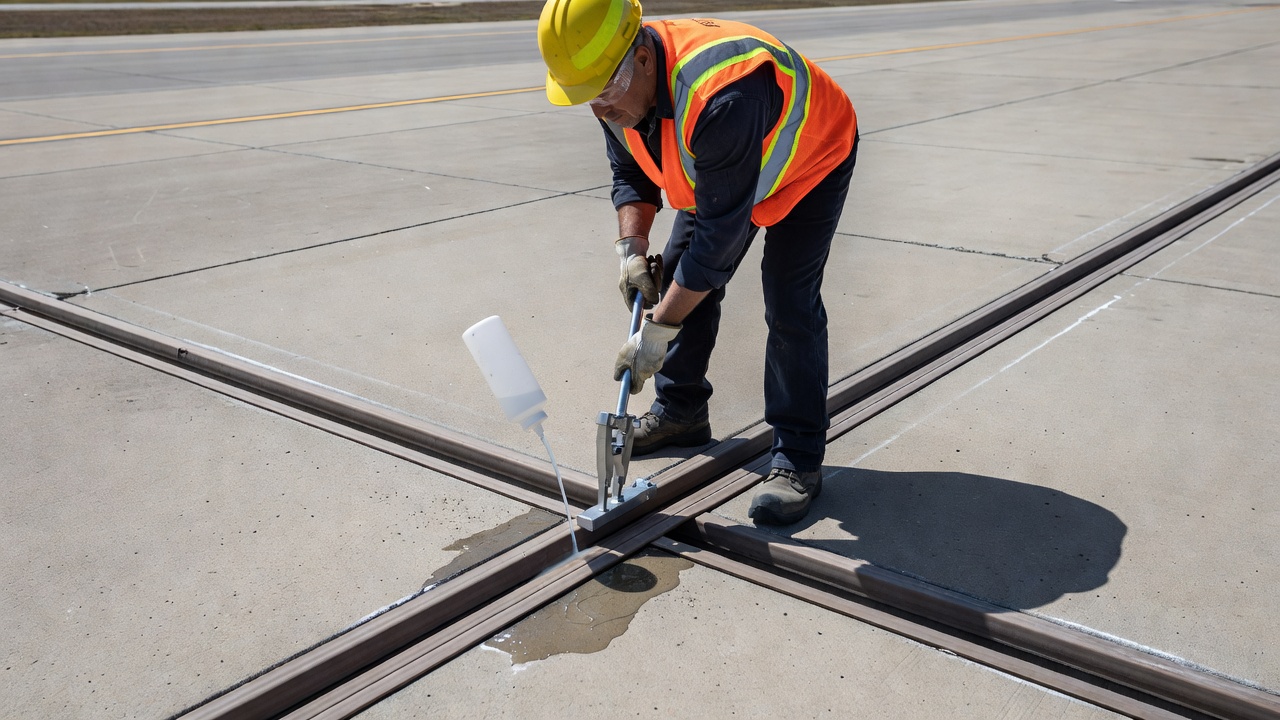
Preformed compression seals are factory-manufactured elastomeric profiles, most commonly neoprene (polychloroprene), with internal web structures that are mechanically compressed and inserted into the joint reservoir. The governing standard is ASTM D2628, Standard Specification for Preformed Polychloroprene Elastomeric Joint Seals for Concrete Pavements. Unlike formed-in-place sealants that rely on chemical adhesion to joint walls, compression seals function through continuous lateral pressure against the joint faces, maintaining a waterproof and debris-proof barrier through friction and elastic recovery.
Preformed compression seals are manufactured in a wide range of sizes corresponding to different joint widths and anticipated movement ranges. The internal web structure is engineered to provide uniform lateral pressure distribution while accommodating the specified joint movement range. When properly sized, a compression seal remains in continuous contact with the joint walls throughout the full range of thermal expansion and contraction, typically accommodating 25% to 50% of the nominal joint width in extension and compression. Leading products, such as D.S. Brown’s Delastic seals, are available in profiles handling movement ranges from 0.153 to 2.55 inches (3.9 to 64.8 mm).
Installation of preformed compression seals requires three distinct steps. The joint reservoir must be sawed or formed to the precise width specified by the seal manufacturer for the expected movement range, accuracy to within ±1/16 inch (±1.6 mm) is essential. The reservoir walls must be sandblasted or otherwise cleaned to remove laitance, curing compound residue, and debris to ensure a clean frictional interface. The seal is installed using a mechanical insertion device that simultaneously applies a lubricant-adhesive to both sides of the seal and compresses it to the required width for insertion. The lubricant-adhesive, typically a non-petroleum-based compound compatible with the neoprene material, serves the dual purpose of reducing friction during installation to prevent the seal from binding or rolling and providing a supplemental adhesive bond after curing. Importantly, the lubricant-adhesive is not the primary retention mechanism, the compression seal’s elastic recovery against the joint walls provides the long-term retention force.
Preformed compression seals offer the longest service life of any joint sealant type, typically 15 to 20 years when correctly specified and installed. This longevity, combined with zero curing time (the pavement is immediately ready for traffic), makes them particularly suitable for airport applications where closure windows are extremely limited. However, the higher initial material cost and specialized installation equipment requirements have historically limited their adoption to high-value infrastructure, major airport runways, heavily trafficked interstate highways, and critical freight corridors. Compression seals are also the preferred solution for regional airports where long-term maintenance access may be constrained and a single durable installation reduces lifecycle costs despite the higher upfront investment.
Polyurethane Sealants
Polyurethane joint sealants occupy a middle ground between hot-pour asphalt-based materials and low-modulus silicones. Governed by ASTM C920, Standard Specification for Elastomeric Joint Sealants, polyurethanes are cold-applied, chemically curing materials available in single-component (moisture-cure) and two-component formulations. Polyurethanes offer higher tensile strength and abrasion resistance than silicones, with tensile strengths typically exceeding 250 psi (1.7 MPa), while maintaining adequate extensibility for many pavement joint applications.
Polyurethane sealants are classified under ASTM C920 by Type (S for single-component, M for multi-component), Grade (P for pourable/self-leveling, NS for non-sag/gunnable), Class (based on movement capability, Class 25 indicates ±25%, Class 50 indicates +100/-50%), and Use (T for traffic-bearing surfaces, among others). For pavement joints, the typical specification is ASTM C920, Type S or M, Grade P, Class 25 or 50, Use T.
In airport pavement applications, specific polyurethane formulations exhibit superior resistance to jet fuel, hydraulic fluid, and lubricating oil compared to both silicone and hot-pour sealants. This chemical resistance, combined with rapid curing times (traffic-ready in 1 to 3 hours depending on formulation and ambient conditions), makes polyurethanes the preferred sealant for fueling aprons, hardstands, maintenance hangar floors, and other areas subject to frequent chemical exposure. The material cost of polyurethanes is generally lower than silicones but higher than hot-pour sealants.
Material Selection Criteria
Selecting the appropriate joint sealant for a given concrete pavement application requires systematic evaluation of multiple interrelated factors. The decision matrix balances initial material cost against expected service life, installation constraints against long-term maintenance access, and material properties against the specific environmental and operational demands of the facility.
Climate and temperature regime constitute the primary selection driver. The expected seasonal temperature range at the pavement surface, combined with the slab length (joint spacing), determines the maximum joint opening and closing movement that the sealant must accommodate. In northern-tier regions where winter pavement surface temperatures regularly fall below -20°F (-29°C), ASTM D6690 Type II or Type IV hot-pour sealants, silicone sealants, or preformed compression seals with adequate movement range are required. In moderate climates with milder temperature swings, Type I hot-pour sealants may provide adequate performance at lower cost. Silicone sealants maintain their flexibility across the widest temperature range of any sealant type and are therefore preferred where extreme temperature differentials occur.
Joint type and expected movement differ substantially between joint categories. Transverse contraction joints undergo the largest cyclic movement as slabs expand and contract longitudinally with temperature changes. Longitudinal joints, which are typically tied with deformed steel bars and experience minimal lateral movement, demand less extensibility from the sealant but may still require sealing to prevent water infiltration. At airports, longitudinal joints are frequently untied in apron and taxiway construction, and their movement magnitude may approach that of transverse joints. Isolation joints at structure interfaces and expansion joints in older pavement designs experience the largest total movement and demand the highest sealant extensibility.
Traffic characteristics and operational constraints directly influence material selection. High-speed highway pavements subject to rapid traffic loading may benefit from sealants with high resilience and rapid recovery after deformation. In airport environments, the slow speed of taxiing aircraft and the concentrated wheel loads of heavy aircraft create unique sealant demands, vertical deflection of joints under load can compress sealant and push it against the bottom and sides of the reservoir. Silicone’s ultra-low modulus accommodates this compression without extruding, while stiffer hot-pour materials may progressively pump out of the joint under repeated loading.
Installation window availability critically constrains material choice at operational airports. Many major commercial airports can only close pavement sections for maintenance during overnight hours, with a total work window of 4 to 6 hours. Hot-pour sealants offer the advantage of immediate traffic readiness upon cooling (typically 15 to 30 minutes), making them suitable for tight overnight closures. Silicone sealants require sufficient curing time to develop a surface skin (tack-free time of 30 minutes to 2 hours depending on humidity and temperature) before traffic can resume. Preformed compression seals require zero cure time, the pavement can be returned to service immediately upon completion of the installation. Two-component polyurethane formulations can be formulated for very rapid cure, sometimes achieving traffic readiness within one hour.
Chemical exposure at airports introduces requirements not present in highway applications. Jet fuel (Jet A, Jet A-1, JP-8), aviation gasoline (Avgas 100LL), hydraulic fluids (Skydrol phosphate ester-based fluids), de-icing fluids (Type I propylene glycol, Type IV anti-icing fluids), and lubricating oils are present at varying concentrations across the airfield. Fueling aprons experience direct fuel spillage and demand sealants with demonstrated fuel resistance per ASTM D7116 for hot-pour materials or per manufacturer-validated test methods for silicone and polyurethane products. Silicone sealants exhibit initial swelling in fuel contact with subsequent recovery upon fuel evaporation, making them generally acceptable for incidental exposure but potentially problematic for continuous immersion scenarios.
Lifecycle cost analysis should consider not only the initial material and installation cost per linear foot of joint but also the expected service life, the cost of traffic disruption during future resealing operations, and the consequences of premature sealant failure. Preformed compression seals, with their 15- to 20-year service life, often present the lowest lifecycle cost despite the highest initial investment. Silicone sealants at 8 to 15 years and hot-pour sealants at 3 to 8 years follow in economic rank. FAA pavement management guidance in AC 150/5380-6C recommends that airport operators conduct this lifecycle analysis on a project-specific basis, considering local climate, available installation contractors, and operational constraints.
Joint Preparation and Installation
The performance of any joint sealant, regardless of material type or cost, is overwhelmingly determined by the quality of joint preparation and installation. Field studies consistently demonstrate that properly installed sealants in adequately prepared reservoirs outperform premium materials installed under substandard conditions. The ACPA Technical Bulletin TB010-2018 concisely states: “There is little doubt that poorly designed or installed joint sealants will fall short of expectations and will contribute little to pavement performance.”
Reservoir Design
The joint sealant reservoir is the shaped cavity within the joint that receives the sealant material. For new construction, the reservoir is typically created by sawing a wider secondary cut above the initial crack-control saw cut after the concrete has sufficiently cured. For resealing operations, the existing sealant and any deteriorated concrete are removed, and a clean reservoir is re-established through sawing or routing.
Reservoir width is a function of the anticipated joint movement and the sealant’s movement capability. For liquid-applied sealants (hot-pour and silicone), the ACPA recommends an initial reservoir width not exceeding 3/8 inch (10 mm). For preformed compression seals, the initial reservoir width depends on the specific seal profile selected and its compression range. Wider reservoirs are required for expansion joints and isolation joints where total movement magnitude is larger. The reservoir must maintain a minimum width throughout the joint’s range of motion: when the joint closes in hot weather, the sealant must not be forced out of the joint, when it opens in cold weather, the sealant must remain bonded or in contact with both faces without rupturing.
The shape factor, defined as the ratio of sealant depth to sealant width within the reservoir, is the most critical geometric parameter for liquid-applied sealants. For hot-pour asphalt-based sealants, a shape factor of approximately 1:1 (depth equals width) is recommended. At this ratio, internal stresses within the sealant during extension are distributed in a manner that minimizes peak stress at the bond line. For silicone sealants, a shape factor of 2:1 (depth is twice the width) is the industry standard. The deeper profile relative to width reduces the strain concentration at the sealant-to-concrete interface, where adhesive failure initiates. The differing optimal shape factors between hot-pour and silicone sealants reflect their fundamentally different stress-strain behavior, the stiffer hot-pour material benefits from a more compact geometry, while the ultra-low-modulus silicone performs better with an elongated profile.
The backer rod is a compressible, closed-cell polyethylene foam cord inserted into the joint below the sealant to establish the proper sealant depth and to prevent three-sided adhesion. Three-sided adhesion, where the sealant bonds to both side walls and the bottom of the reservoir, severely restricts the sealant’s ability to deform during joint movement and concentrates stress at the bottom bond line, dramatically increasing the probability of cohesive or adhesive failure. The backer rod is typically compressed 25 to 50% from its nominal diameter during installation, ensuring it remains securely positioned and provides positive resistance against the sealant flowing past it during application. Backer rods must be compatible with the sealant chemistry, some sealants can attack certain foam formulations, causing gas evolution that creates bubbles and voids in the cured sealant.
Surface Preparation
Joint face cleanliness is the single most critical variable governing sealant bond performance. New concrete joints are contaminated with laitance, a weak, milky layer of cement paste and fine particles that rises to the surface during finishing, as well as curing compound residues, saw-cutting slurry, and atmospheric dust. Existing joints being resealed contain aged sealant residue, oil, fuel, rubber deposits, and accumulated debris. All of these contaminants function as bond breakers, preventing the intimate molecular contact between sealant and concrete required for durable adhesion.
The minimum acceptable preparation for joint sealing is sandblasting (dry abrasive blasting) of both joint walls to remove laitance and contaminants and expose sound concrete with an open-pore surface texture. For critical applications, including all airport runway and taxiway joints, the FAA specification requires sandblasting followed immediately by thorough cleaning with oil-free, moisture-free compressed air to remove all dust and debris. Joint faces must be completely dry at the time of sealant application, moisture interferes with the wetting and adhesion of hot-pour materials and prematurely initiates the cure reaction of moisture-cure silicone and polyurethane sealants at the interface rather than allowing it to occur progressively through the material thickness.
Joint preparation for resealing presents additional challenges. Old sealant must be completely removed from the joint faces, residual material in the bond area will prevent adhesion of the new sealant, creating a pre-existing failure plane. Mechanical removal methods include diamond-blade saws, routers, and specialized joint plows. After mechanical removal, sandblasting is required to clean the exposed concrete. When resealing only partially failed joints adjacent to intact sections of the same joint, creating a bond between new and old sealant of the same material type requires the old sealant face to be freshly cut and cleaned, the practical difficulty of achieving this reliably is one reason why many agencies specify complete removal and replacement of joint sealant when more than a certain threshold percentage of the joint length has failed.
Installation Procedures
Hot-pour sealant installation requires a heated, agitated, double-boiler (oil-jacketed) melter that maintains the sealant within its published pour temperature range without hot spots that could scorch the material. Direct-fired melters are not acceptable because they create localized overheating at the vessel walls. The melted sealant is dispensed through a heated, insulated hose and wand assembly, with the operator pouring or pumping the sealant into the joint reservoir in a continuous operation. The sealant should be poured slightly proud (above) the pavement surface to allow for shrinkage during cooling, this excess is typically not tooled off but allowed to cool naturally. Overbanding, applying a thin band of sealant wider than the joint onto the adjacent pavement surface, is sometimes specified for additional waterproofing but is not a substitute for proper reservoir filling and has mixed performance data regarding long-term adhesion to the pavement surface.
Silicone sealant installation is performed at ambient temperature using bulk pumping equipment or manual cartridge guns. The sealant is dispensed into the prepared, backer-rod-containing reservoir and tooled to achieve a smooth, concave surface profile recessed 1/4 to 3/8 inch (6 to 10 mm) below the pavement surface. This recession depth is specified to protect the cured sealant from direct tire contact and abrasion. Unlike hot-pour materials, silicones cannot be trafficked until the surface has cured sufficiently to resist deformation and pickup, the tack-free time is temperature and humidity dependent and is specified by the manufacturer. Most silicone sealants require a minimum of 1 to 2 hours of cure before traffic release, though full cure through the sealant depth takes 7 to 14 days depending on joint dimensions and environmental conditions.
Preformed compression seal installation uses a mechanical insertion device that feeds the seal from a continuous roll, applies the lubricant-adhesive to both sides, compresses the seal to slightly less than the joint reservoir width, and inserts it to the specified depth in a single continuous operation. The seal must not be stretched longitudinally during installation, stretching reduces the cross-section and compromises the compression force against the joint walls. At joint intersections (T-junctions and cross-joints), the longitudinal seal is installed continuously through the intersection, and the transverse seal is butted against it and sealed with a manufacturer-approved adhesive splice. Field splicing of compression seals mid-joint should be avoided but, when necessary, must use the manufacturer’s approved splicing kit and procedure, as field-vulcanized splices often represent the weakest point in the sealing system.
Joint Sealant Condition Rating
Systematic assessment of joint sealant condition is an integral component of airport pavement management programs conducted in accordance with ASTM D5340, Standard Test Method for Airport Pavement Condition Index Surveys. This standard establishes the Pavement Condition Index (PCI) methodology, which quantifies pavement surface condition on a numerical scale from 0 (failed) to 100 (excellent). Joint seal damage is one of the distress types evaluated for jointed concrete pavements, and its severity and extent directly influence the calculated PCI value.
ASTM D5340 Joint Seal Damage Definitions
The PCI methodology defines three severity levels for joint seal damage in concrete pavements:
Low Severity (L): The joint sealant is generally in good condition and performing its intended function over most of the joint length. Minor, isolated adhesive failures (separation from one joint wall) or cohesive failures (splitting within the sealant material) may be present but do not create an open pathway for water or debris infiltration. The sealant remains pliable and resilient to touch, and there is no visual evidence of joint spalling associated with sealant failure. Less than 10% of the total joint sealant length in the surveyed sample unit exhibits any form of failure.
Medium Severity (M): Moderate sealant failure is evident over a portion of the joint length. Adhesive separation from one joint wall extends over segments of the joint, or the sealant has partially pulled away from both walls in localized areas. The sealant material may exhibit surface oxidation, hardening, or loss of resilience but generally remains in place within the reservoir. Some water or incompressible material infiltration is possible through the failed sections. Between 10% and 50% of the joint sealant in the sample unit exhibits failure at this severity level. Weed growth within the joint reservoir is a visible indicator of medium-severity failure, as it demonstrates that both moisture and organic material have entered the joint.
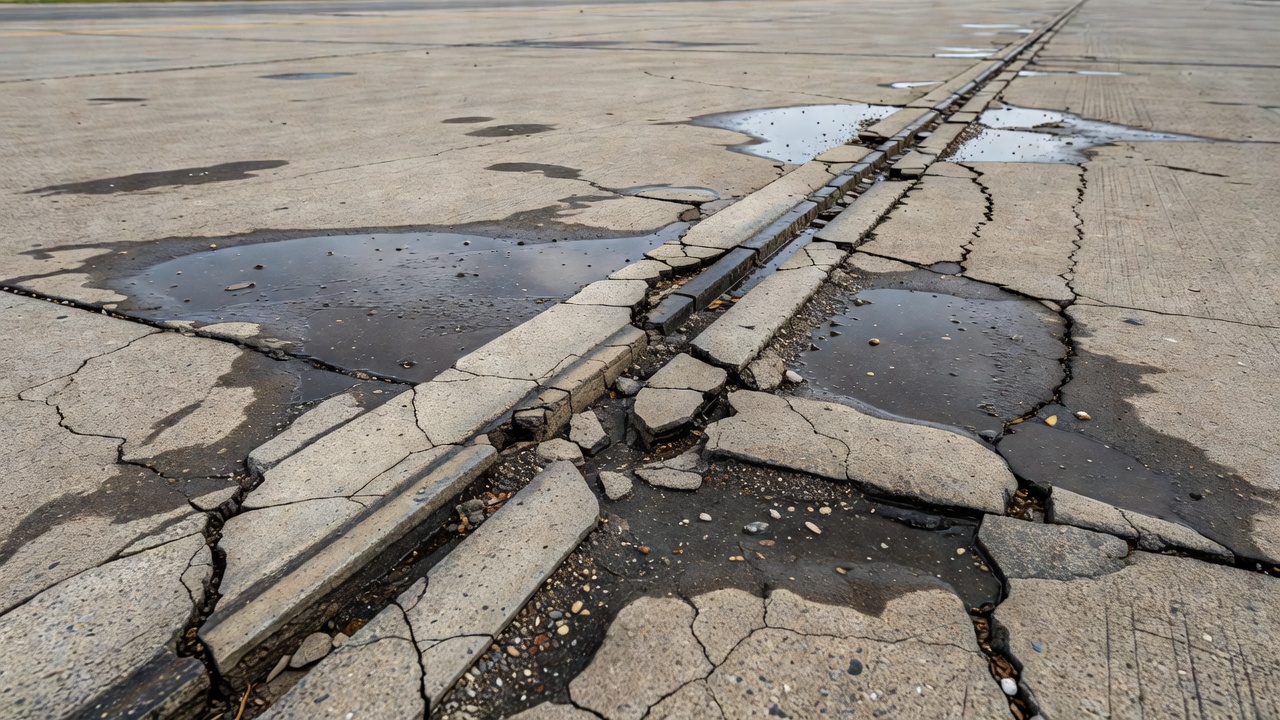
High Severity (H): The joint sealant is severely degraded or functionally absent over a significant portion of the joint length. Conditions include: complete separation from both joint walls, allowing unrestricted water and debris entry, sealant that has been extruded from the joint or is completely missing, sealant that is hardened, cracked, and non-functional, and joints where pumping of subgrade fines through the failed seal is visually evident on the adjacent pavement surface. Any condition where joint sealant failure has contributed to the development of joint spalling (cracking or chipping of the concrete along the joint edge) is automatically classified as high severity. More than 50% of the sealant in the sample unit exhibits failure, or any length of joint seal failure has resulted in secondary concrete distress.
Sealant Condition Rating in Practice
During a PCI survey, the inspector examines a statistically representative sample of pavement sample units and records both the number of joints exhibiting each severity level of sealant damage and the total number of joints in each sample unit. The percentage of affected joints determines the distress density, which is then entered into the PCI deduct value curves for joint seal damage. The total deduct value, which accounts for both severity and density, is subtracted from 100 to contribute to the overall PCI score for the pavement section.
Joint sealant condition is an early indicator of developing pavement problems. Because sealant failure precedes most moisture-related concrete distresses by several years, trending sealant condition ratings over successive PCI surveys provides a leading indicator of future maintenance requirements. A pavement section showing an increasing percentage of medium and high severity joint seal damage is likely to develop pumping, joint spalling, and faulting within 3 to 5 years if corrective resealing is not performed. The FAA’s PAVEAIR pavement management software and similar tools enable airports to track sealant condition trends and optimize the timing of joint resealing interventions to minimize lifecycle costs.
Consequences of Sealant Failure
Joint sealant failure is the initiating mechanism for a cascade of interconnected concrete pavement distresses. Understanding this progression is essential to appreciating why timely joint sealant maintenance is one of the most cost-effective pavement preservation activities available.
Pumping
Pumping is the forceful ejection of water and suspended subgrade or subbase fine particles through pavement joints and cracks under the action of repeated aircraft wheel loads. The mechanism requires three conditions to occur simultaneously: free water present at the slab-base interface, a fine-grained erodible subgrade or subbase material, and repeated heavy wheel loading that deflects the slab and pressurizes the water. Failed joint seals provide the direct pathway for surface water to reach the slab-base interface, the critical first condition.
When an aircraft wheel approaches and passes over a joint, the loaded slab deflects downward, compressing the water-saturated base material. The trapped water, now under hydrostatic pressure, is forced laterally and upward through the nearest available exit, the unsealed or failed joint. The water carries suspended fine particles from the subbase or subgrade with it. When the wheel passes and the slab rebounds, a partial vacuum is created that draws water and additional fines back under the slab from the surrounding area. With each wheel passage, more material is removed from beneath the slab, progressively enlarging a void. The ejected material is often visible on the pavement surface adjacent to the joint as a stain or deposit of fine sediment, a visual indicator of active pumping that should trigger immediate joint sealant repair and subsurface investigation.
Joint Spalling
Joint spalling is the cracking, breaking, chipping, or fragmenting of the concrete slab edge along a joint. While spalling can result from several mechanisms, including poor concrete consolidation during construction, inadequate joint sawing timing, and dowel bar misalignment, the spalling most directly related to sealant failure is caused by incompressible material intrusion. When hard debris occupies the joint and slabs expand thermally, the debris cannot compress. The resulting point loads on the joint faces exceed the tensile strength of the concrete, causing the edge to fracture. Spalls typically initiate as small chips and progressively enlarge with repeated thermal cycles and wheel loading, eventually compromising the joint’s load transfer efficiency and creating FOD.
Joint spalling severity is classified in PCI surveys by the dimensions of the spalled area and the degree of fragmentation. Low-severity spalls are shallow, typically less than 1 inch (25 mm) deep, and the fragments remain tightly in place. Medium-severity spalls extend 1 to 2 inches (25 to 50 mm) deep with some loose or missing fragments. High-severity spalls exceed 2 inches (50 mm) in depth with extensive fragmentation and potential to affect vehicle or aircraft handling. Once spalling initiates, the irregular joint face geometry makes effective resealing difficult, creating a self-reinforcing cycle where the failed seal allows continued debris entry, which causes further spalling, which makes the seal even less effective.
Faulting
Faulting is the differential vertical displacement of adjacent concrete slabs at a transverse joint or crack. It develops primarily from a loss of structural support beneath the approach slab (the slab the aircraft wheel encounters first) due to subbase erosion from pumping. As the void beneath the approach slab enlarges, repeated loading causes the slab to progressively settle. The leave slab, which experiences less loading because the wheel has already transferred across the joint, maintains its original elevation. The result is a vertical step at the joint, the approach slab is lower than the leave slab, creating an impact loading condition as each wheel traverses the fault.
Faulting is measured as the vertical elevation difference between adjacent slabs at the joint, typically using a straightedge and feeler gauge, a digital fault meter, or automated profiling equipment. The PCI methodology classifies faulting severity by height: low severity is less than 1/4 inch (6 mm), medium severity is 1/4 to 1/2 inch (6 to 13 mm), and high severity exceeds 1/2 inch (13 mm). In airport applications, even low-severity faulting is a significant concern because the high speeds of landing aircraft amplify the impact forces at faulted joints, potentially affecting aircraft control and accelerating additional pavement deterioration.
The linkage from sealant failure through pumping and erosion to faulting is direct and well-documented. Failed sealants permit water entry, water causes pumping, pumping erodes subbase support, loss of support leads to faulting. Interrupting this chain at the earliest stage, by maintaining functional joint seals, is substantially more cost-effective than correcting the downstream distresses. The FAA’s pavement maintenance guidelines (AC 150/5380-6C) explicitly identify joint sealant maintenance as a preventive measure that “preserves the pavement, retards future deterioration, and maintains or improves the functional condition of the pavement without substantially increasing structural capacity.”
Sealant Inspection Procedures
Regular inspection of joint sealant condition is the foundation of effective joint seal maintenance planning. The FAA recommends that airports conduct comprehensive joint sealant inspections as part of their annual pavement condition survey program, with supplemental inspections performed more frequently on critical pavements such as primary runways and high-traffic taxiways.
Visual Inspection
The primary inspection method is a systematic visual survey conducted by trained personnel walking the pavement surface. For each sample unit (typically 20 slabs or approximately 5,000 square feet for jointed concrete pavements), the inspector examines every joint, both transverse and longitudinal, and classifies the sealant condition according to the three PCI severity levels. The inspection focuses on specific indicators: Is the sealant bonded to both joint walls? Is there any cohesive splitting or tearing of the sealant material? Is the sealant present in the joint reservoir at the specified depth? Is there evidence of water, debris, or vegetation in the joint? Are there stains or sediment deposits on the adjacent pavement surface indicating active pumping? Has any joint spalling developed?
For detailed condition documentation, a joint sealant condition survey may record the linear footage of each severity level per joint rather than classifying the entire joint. This approach captures the reality that sealant failure is often progressive along a joint rather than uniform, a 20-foot joint may have 15 feet of intact sealant, 3 feet of medium-severity adhesive failure on one wall, and 2 feet of high-severity failure where the sealant is completely missing. Summing these lengths across all joints in a sample unit provides a precise distress density for PCI calculation.
Advanced Inspection Methods
For critical pavement sections or forensic investigations, visual inspection may be supplemented by quantitative testing. Water infiltration testing uses a falling-head permeameter or similar device to measure the rate at which water applied to the joint surface drains through the sealant. Joints with intact seals exhibit negligible infiltration rates, while joints with failed seals show substantially higher permeability. This method provides objective data to distinguish between sealants that appear marginal on visual inspection but remain functionally effective from those that have lost their water-tightness.
Adhesion testing involves cutting a small section of sealant and manually attempting to separate it from the joint wall. The force required and the failure mode (adhesive at the interface versus cohesive within the sealant) provide qualitative information about the remaining bond strength. This destructive test is typically reserved for quality control during new sealant installation verification and for forensic analysis of premature failures.
Infrared thermography can be employed to detect moisture anomalies beneath joints. Because water-saturated base materials exhibit different thermal inertia than dry materials, joints with failed seals that are allowing water infiltration may show as thermal anomalies during the diurnal heating and cooling cycle. This non-contact method can survey large pavement areas rapidly, but it requires specialized equipment and interpretation expertise, and its results must be validated with ground-truth inspection.
Joint Resealing
Joint resealing, the removal of deteriorated existing sealant and installation of new sealant material, is the primary preventive maintenance treatment for jointed concrete pavements. The decision to reseal joints should be based on condition survey data: the FAA and industry practice generally recommend resealing when more than 10% of joints in a pavement section exhibit medium- or high-severity sealant damage, or when pavement distresses attributable to sealant failure (pumping evidence, early-stage joint spalling) begin to appear.
Resealing Decision Logic
The timing of joint resealing is critical to its cost-effectiveness. Resealing too early, when the existing sealant is still largely functional, wastes the remaining service life of the current installation and unnecessarily incurs material, labor, and operational disruption costs. Resealing too late, after sealant failure has progressed to significant concrete distress, means that the resealing operation can no longer address the underlying subbase erosion and slab support loss that have already occurred, the concrete damage is irreversible through sealant replacement alone.
The optimal resealing window occurs when sealant failure has advanced sufficiently to compromise the joint’s protection function but before secondary concrete distresses have developed. This window typically corresponds to the transition from low to medium PCI severity across approximately 10% to 25% of the joints. At this point, the existing sealant in many joints has partially failed but the concrete at the joints remains sound, and effective resealing can restore full protection and arrest further deterioration. Once joint spalling, pumping evidence, or measurable faulting is observed, resealing alone is insufficient, these conditions require combined treatments including slab stabilization (undersealing), partial-depth patching of spalled areas, and then joint resealing.
Resealing Procedures
Joint resealing follows the same fundamental steps as new joint sealing, reservoir preparation, surface cleaning, backer rod placement (for liquid sealants), and sealant installation, with the additional requirement of complete old sealant removal. This removal step is frequently the most challenging and labor-intensive phase of resealing operations.
Old sealant removal methods include: mechanical plowing, where a hardened steel blade is drawn through the joint to lift and extract the sealant, routing with diamond-blade or carbide-tipped cutting tools that widen the reservoir slightly to expose fresh concrete faces, hydroblasting with high-pressure water jets for silicone and other relatively soft sealants, and, for small-scale repairs, manual cutting and scraping with hooked knives and chisels. For hot-pour sealants that have become brittle with age, routing is the preferred method because it ensures complete removal of oxidized material and exposes clean, sound concrete. The reservoir dimensions after old sealant removal should match the dimensions specified for the replacement sealant, which may differ from the original design if a different sealant type is being installed.
The choice of replacement sealant for resealing may differ from the original material based on updated performance data, changes in available products, or a revised lifecycle cost analysis. Many airports that originally used hot-pour sealants have transitioned to silicone or preformed compression seals during resealing cycles to achieve longer service life and reduced future maintenance frequency. The FAA specifically notes that when resealing operations are being performed, it is appropriate to evaluate alternative sealant materials that may provide improved long-term performance relative to the original specification.
Quality Control for Resealing
Post-installation quality control for joint resealing includes visual inspection of every joint for complete sealant coverage, proper recession depth, and absence of surface defects such as bubbling, voids, or contamination. Destructive adhesion testing on randomly selected test sections, typically one test per 1,000 linear feet (300 m) of sealed joint or one per day of production, provides verification that the specified bond strength is being achieved. Test sections are repaired by the contractor at no additional cost. Documentation of melter temperatures (for hot-pour materials), ambient conditions during installation, and sealant lot numbers provides traceability for future performance evaluation.
Airport PCC Joint Maintenance
Portland cement concrete pavements at airports demand a higher standard of joint sealant performance than highway pavements due to the severe consequences of sealant failure in the airfield environment. Loose sealant material or concrete spall fragments constitute FOD, the term for any object in an inappropriate location in the airport environment that can injure personnel or damage aircraft. Jet engines are particularly vulnerable to FOD ingestion, which can cause damage ranging from blade nicking requiring inspection to catastrophic engine failure.
FAA Regulatory Framework
The FAA’s regulatory framework for airport pavement maintenance is established in Advisory Circular 150/5380-6C, Guidelines and Procedures for Maintenance of Airport Pavements. This document, together with AC 150/5370-10, Standards for Specifying Construction of Airports (specifically Item P-605 for joint sealing), provides the technical basis for joint sealant selection, installation, and maintenance at all U.S. civil airports. For airports certificated under 14 CFR Part 139, pavement maintenance, including joint sealant condition, is an element of the Airport Certification Manual and is subject to periodic FAA inspection.
AC 150/5380-6C categorizes joint sealing as a preventive maintenance activity, one that preserves the pavement, retards future deterioration, and maintains functional condition without substantially increasing structural capacity. The Circular emphasizes that joint sealing is most effective when performed before significant concrete distress has developed and recommends annual joint sealant condition surveys as the basis for identifying maintenance needs and prioritizing work.
Operational Considerations for Airport Joint Sealing
Construction operations on active airport pavements are governed by stringent safety and operational protocols that directly affect joint sealing logistics. Work on runways typically must be completed during declared closure periods, which at many airports are limited to overnight hours between the last arrival of the day and the first departure of the following morning, commonly a 4- to 6-hour window. This constraint favors sealant materials with rapid traffic-readiness: hot-pour sealants (15 to 30 minutes to cool), fast-cure polyurethanes (1 to 2 hours), or preformed compression seals (immediate traffic). Silicone sealants require longer cure times and are best suited to taxiway or apron applications where longer closure windows are available, unless accelerated-cure formulations are used.
The work area must be clearly delineated with temporary markings and barriers, and all equipment, materials, and personnel must be removed, and the pavement inspected for FOD before the pavement is returned to service. The contractor’s quality control plan must include a comprehensive FOD prevention program that accounts for all tools, fasteners, and materials brought onto the airfield. Even small items, a bolt, a tool, a piece of cured sealant, become potentially lethal projectiles when ingested by a jet engine or propelled by jet blast.
Special Airport Sealant Requirements
Airport joint sealants must meet performance requirements beyond those specified by standard ASTM material specifications. These include:
Jet blast resistance: Sealants in runway and taxiway joint locations are subjected to the direct exhaust of jet engines during takeoff and during taxi operations where aircraft queue at holding positions. Jet exhaust temperatures can exceed 1,000°F (538°C) at close range, with exhaust velocities sufficient to displace inadequately adhered sealant. Silicone sealants recessed at the proper depth below the pavement surface have demonstrated excellent jet blast resistance in service. Hot-pour sealants can soften and become tacky at elevated temperatures, potentially picking up debris or being displaced.
Fuel and chemical resistance: Fueling aprons, fuel hydrant pits, and maintenance hardstands experience direct exposure to jet fuel, aviation gasoline, hydraulic fluids, and lubricating oils. Standard hot-pour sealants (ASTM D6690) are not fuel-resistant and can soften, swell, and lose adhesion in fuel contact. Fuel-resistant hot-pour formulations meeting ASTM D7116, certain silicone formulations with documented fuel compatibility, and polyurethane sealants are specified for these areas. The chemical resistance must be validated for the full range of fluids present at the specific airport location, for example, a military airfield handling both JP-8 and Skydrol hydraulic fluid requires sealant compatibility with both.
De-icing chemical resistance: In cold-climate airports, pavement de-icing chemicals, typically potassium acetate, sodium acetate, or propylene glycol solutions, are applied intensively during winter operations. These chemicals can accelerate the deterioration of some sealant materials and can chemically attack the concrete matrix at the joint face if sealant integrity is compromised. Silicone sealants exhibit excellent resistance to de-icing chemicals, while some hot-pour formulations may experience accelerated hardening and embrittlement with repeated exposure.
ICAO Standards
Internationally, airport pavement joint maintenance is addressed through ICAO Annex 14 (Aerodromes, Volume I, Aerodrome Design and Operations) and supplementary guidance in the ICAO Aerodrome Design Manual (Doc 9157). ICAO Annex 14, Section 10.2, requires that “the surface of a pavement shall be maintained in a condition to provide good friction characteristics, skid resistance, and low rolling resistance,” and that “the pavement shall be maintained so as to prevent the formation of loose surface material that could damage the aircraft structure or engines.” While joint sealant is not individually specified in Annex 14, the prevention of loose surface material, which includes concrete spall fragments from failed sealant joints, is directly addressed.
ICAO Doc 9157 Part 3 (Pavements) provides detailed guidance on pavement joint design, sealant selection, and maintenance practices suitable for international airport applications. The document recognizes the same primary sealant categories used in FAA practice and recommends that sealant selection consider climatic conditions, joint movement, traffic type and frequency, and chemical exposure. Doc 9157 emphasizes the importance of proper joint preparation and notes that the performance difference between sealant materials installed in well-prepared joints and those installed in poorly prepared joints exceeds the performance difference between premium and standard materials.
Summary
Joint sealants are a critical component of concrete pavement systems, serving as the primary defense against water and debris infiltration through the joints that are essential for crack control and thermal movement accommodation. The selection of sealant type, hot-pour thermoplastic, cold-applied silicone, preformed compression seal, or polyurethane, is a function of climate, joint movement, traffic loading, operational constraints, chemical exposure, and lifecycle cost. Regardless of material choice, the quality of joint preparation and installation overwhelmingly determines sealant performance and service life. Systematic inspection, condition rating under ASTM D5340, and timely resealing constitute a cost-effective preventive maintenance strategy that prevents the cascade of moisture-related distresses, pumping, spalling, and faulting, that lead to premature pavement failure. In the airport environment, the stakes are elevated by the FOD hazard posed by failed sealant and spalled concrete, making joint sealant maintenance a direct contributor to both pavement longevity and aviation safety.
For expert guidance on joint sealant selection, specification, and installation for your airport or highway pavement project, contact our pavement preservation team or schedule a consultation .
Frequently Asked Questions
- What is the primary purpose of joint sealants in concrete pavement?
- Joint sealants serve two fundamental purposes: minimizing surface water infiltration into the pavement system and preventing incompressible materials such as sand, stones, and debris from lodging in joints. Water entering through unsealed joints can cause subbase erosion, pumping, loss of structural support, and faulting. Incompressible materials obstruct thermal expansion of slabs, creating excessive pressure that leads to joint spalling and, in extreme cases, pavement blow-ups. In airfield applications, joint sealants also prevent Foreign Object Debris (FOD) that could damage aircraft engines.
- What are the main types of joint sealants used in airport pavements?
- Four principal categories of joint sealants are used in concrete airport pavements: (1) Hot-pour thermoplastic sealants conforming to ASTM D6690, which are rubberized asphalt materials heated in jacketed melters and poured into prepared joint reservoirs, (2) Cold-applied silicone sealants meeting ASTM D5893, which are single-component, chemically curing polysiloxane materials with ultra-low modulus and exceptional movement capability, (3) Preformed compression seals, typically neoprene or polychloroprene, manufactured with internal web structures and compressed into the joint, conforming to ASTM D2628, and (4) Polyurethane sealants meeting ASTM C920, valued for jet fuel resistance and rapid curing times.
- How is joint sealant performance rated during pavement condition surveys?
- Joint sealant condition is rated under the ASTM D5340 Pavement Condition Index (PCI) methodology, which defines three severity levels: Low (sealant is generally in good condition with minor adhesive or cohesive failures), Medium (moderate failure over a portion of the joint with some water or incompressible entry possible), and High (widespread sealant failure, extensive debris infiltration, or sealant entirely missing from the joint reservoir). Deduct values are assigned based on the percentage of joints exhibiting each severity level, and these are subtracted from 100 to contribute to the overall PCI score.
- What shape factor should be used for joint sealant reservoirs?
- The shape factor, the ratio of sealant depth to width within the reservoir, is critical to sealant performance. For hot-pour asphalt-based sealants, a shape factor of approximately 1:1 is recommended, meaning the sealant depth should roughly equal its width. For cold-applied silicone sealants, a shape factor of 2:1 (depth is twice the width) is recommended to minimize internal stress concentration during joint movement. The shape factor is controlled through proper reservoir sawing dimensions and the use of backer rods positioned at the correct depth. A backer rod, which is a compressible closed-cell polyethylene foam cord, prevents three-sided adhesion and establishes the proper sealant depth.
- How often should joint sealants be inspected and replaced?
- Joint sealant inspection frequency depends on pavement type and usage. For airport pavements, the FAA recommends annual joint sealant inspections as part of a comprehensive pavement management program per AC 150/5380-6C. Typical service life expectations vary by material: hot-pour sealants average 3–8 years, silicone sealants 8–15 years, and preformed compression seals 15–20 years when properly installed. However, these ranges depend heavily on climate, joint movement magnitude, traffic loading, chemical exposure, and installation quality. Joint sealant replacement should be triggered when more than 10% of joints exhibit moderate to high severity failures or when pumping or spalling distresses begin appearing at joints.