What is Lighting Control in Airport Operations?
Lighting Control and Airport Lighting Systems
Lighting control at airports is a critical aspect of airfield operations, combining advanced technology, regulatory compliance, and operational best practices to ensure safe, efficient, and reliable aircraft movement under all conditions. This glossary provides a comprehensive overview of key concepts, systems, and regulations governing lighting control in airport environments.
Aerodrome Lighting
Aerodrome lighting includes all visual aids installed at airports to support safe aircraft movement during takeoff, landing, and taxiing, especially in darkness or adverse weather. Systems comprise runway and taxiway edge lights, approach lighting, apron illumination, obstruction lights, and more. ICAO Annex 14, Volume I, defines standards for arrangement, color, intensity, and control. Modern trends feature LED adoption, smart controls, and integration with digital monitoring systems. Regular inspections are vital to prevent safety-critical outages.
Airfield Lighting
Airfield lighting focuses on visual guidance for aircraft on movement areas, runways, taxiways, aprons. Components include edge and centerline lights, stop bars, and markers. Designs adhere to ICAO and FAA standards, tailored to each airport’s operational category (CAT I, II, III). Advanced control systems, like ALCMS, allow dynamic management based on real-time needs.
Airport Lighting Control & Monitoring System (ALCMS)
ALCMS is a centralized platform allowing controllers and maintenance staff to manage all airfield lighting. It provides a graphical interface for real-time status, intensity adjustment, diagnostics, and scenario selection (e.g., low visibility, maintenance). Integration with weather and airport systems enables coordinated responses. ALCMS improves safety, efficiency, and energy management.
Approach Lighting System (ALS)
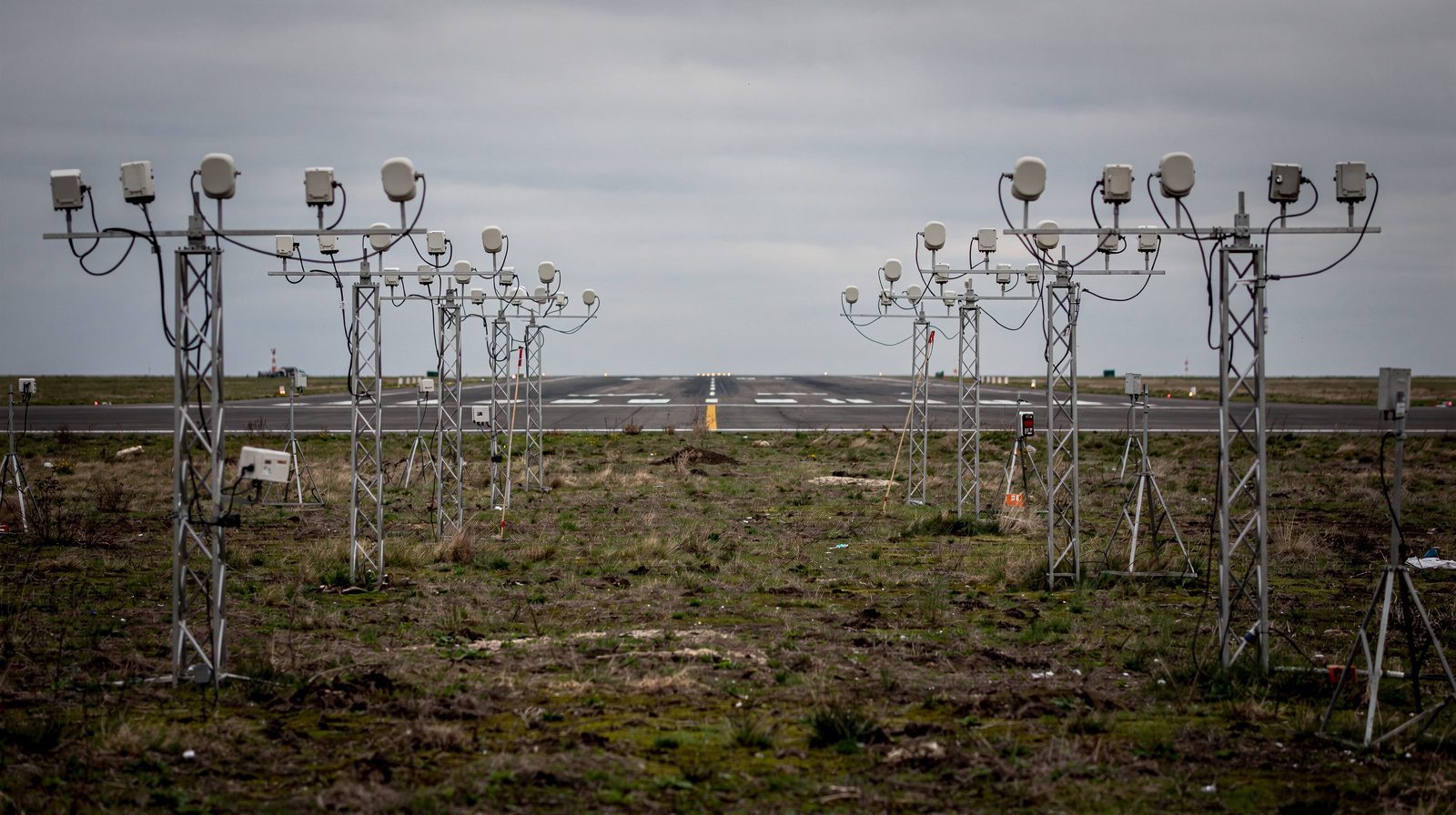
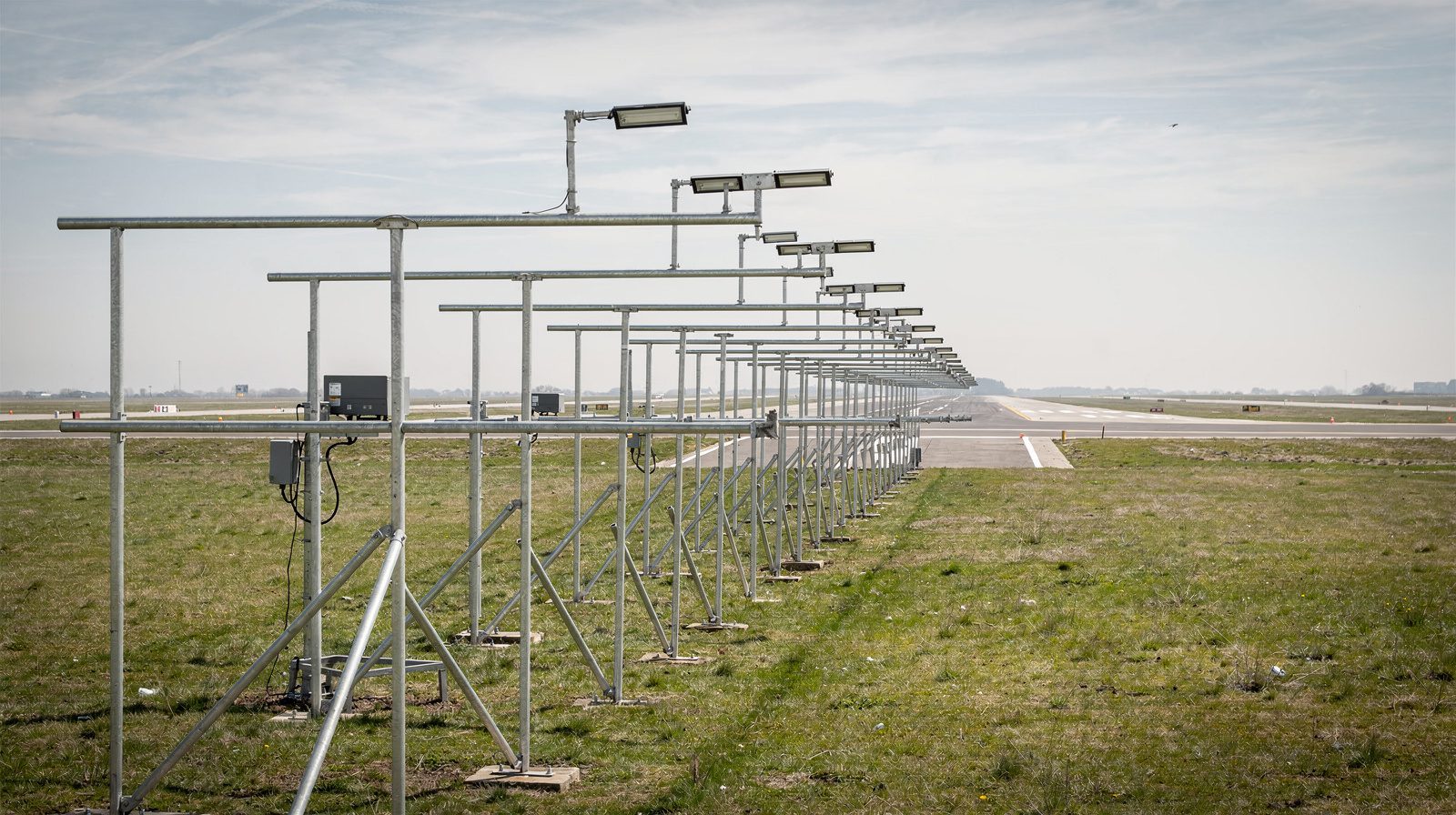
ALS is an array of lights extending from the runway into the approach area, providing essential visual references for pilots during final approach, especially in poor visibility. ALS designs (ALSF-1, ALSF-2, MALSR, ODALS) vary by runway precision category. Regulatory standards define layout, color, and intensity. ALS activation is managed through the control system, with multiple intensity levels.
ARCAL (Aircraft Radio Control of Aerodrome Lighting)
ARCAL allows pilots to activate or adjust lighting via their aircraft’s radio transmitter (typically on UNICOM/CTAF frequency). Widely used at remote or nontowered airports, ARCAL reduces energy use and light pollution by providing lighting only when needed. Types J and K offer on/off and intensity selection. Instructions are published in airport directories.
Automated Control System
Automated systems use sensors, controllers, and software to manage lighting according to ambient conditions, schedules, or flight operations. Automation ensures optimal lighting, improves efficiency, and conserves energy, while always allowing manual override for safety.
Apron Lighting
Apron lighting ensures safe, efficient ground handling at night or in low visibility. Fixtures are mounted on high masts or buildings and designed to minimize glare/spill. LED technology and zoned controls are common. Proper apron lighting reduces ground accidents and supports efficient aircraft turnaround.
Control Panel
The control panel is the interface for lighting operation, ranging from physical switches to touchscreens integrated with ALCMS. It provides access to activation, intensity adjustment, preset scenarios, and diagnostics. Security and backup control are essential features.
Current Sensing Relay
Current sensing relays monitor electrical circuits for lighting faults (lamp failures, open circuits, abnormal loads). When a deviation is detected, the relay triggers alerts for maintenance. Regular testing ensures reliability.
Demarcation Bar
A demarcation bar, usually illuminated yellow, separates a runway with a displaced threshold from adjacent surfaces. It prevents confusion during landing/takeoff. Placement and design are regulated by ICAO/FAA standards.
Displaced Threshold
A displaced threshold is a landing threshold set away from the runway’s beginning, often for obstacle clearance or pavement protection. Markings and lights clearly indicate usable areas. Details are published in charts and approach plates.
Edge Lights
Edge lights mark the boundaries of runways (white, with amber near the end) and taxiways (blue). Their intensity is adjustable for visibility conditions. Robust construction resists weather and operational wear.
FAA (Federal Aviation Administration)
The FAA regulates all aspects of civil aviation in the US, including airport lighting. It publishes standards for design, installation, operation, and maintenance (e.g., AC 150/5340-30, AC 150/5345-46, AC 150/5345-56). The Aeronautical Information Manual (AIM) provides user guidance.
Glide Path
The glide path is the ideal descent angle for landing, visually indicated by lighting systems like PAPI or VASI, and electronically by ILS. Accurate glide path lighting ensures safe, stable approaches.
Intensity Control
Lighting systems feature multiple intensity settings, allowing adaptation to visibility and operational needs. Automatic or manual selection optimizes pilot visibility while conserving energy and minimizing glare.
Light Pollution
Light pollution from airport operations can affect communities and wildlife. Solutions include LED fixtures, directional lighting, dimming, and smart controls, all aimed at minimizing excess illumination.
Maintenance and Monitoring
Routine maintenance, inspections, and monitoring are crucial for lighting reliability. Modern systems offer real-time diagnostics, fault alerts, and remote monitoring, enabling preventive action and rapid response.
Obstruction Lighting
Obstruction lights (often red or white) mark tall structures, terrain, or temporary hazards to prevent collisions. Placement and intensity are regulated to ensure visibility from all relevant approaches.
PAPI (Precision Approach Path Indicator) & VASI (Visual Approach Slope Indicator)
PAPI and VASI are visual aids that provide glide path guidance. PAPI uses a row of lights that change color based on approach angle, VASI uses two bars of lights. Both are critical for safe landings.
Pilot-Controlled Lighting (PCL)
PCL allows pilots to activate or adjust airfield lighting from the cockpit, usually by keying the aircraft’s radio on the designated frequency. This is vital for nontowered airports and after-hours operations.
Redundancy
Redundancy in lighting control includes backup power supplies, multiple control paths, and fail-safe mechanisms. It ensures uninterrupted lighting during equipment or power failures.
Regulatory Standards
Airport lighting design and operation are governed by standards from ICAO (Annex 14) and, in the US, the FAA (Advisory Circulars). These standards ensure uniformity, safety, and interoperability.
Remote Monitoring
Remote monitoring allows offsite observation and management of lighting systems, supporting diagnostics, maintenance, and rapid response to faults.
Runway Centerline Lights
White lights embedded along the runway centerline, sometimes alternating with red/amber near the end, provide alignment cues for takeoff and landing.
Sequenced Flashing Lights
Sequenced flashing lights, used in approach lighting systems, provide dynamic visual cues to pilots during approach, especially for precision runways.
Stop Bar
A stop bar is a row of red lights at taxiway/runway intersections, used to control aircraft movement and prevent runway incursions. Activated/deactivated by controllers, stop bars are critical for safety in low visibility.
Taxiway Centerline Lights
Green lights embedded along taxiway centerlines guide aircraft during ground movement, ensuring safe routing from runway to apron and vice versa.
Threshold Lights
Threshold lights mark the beginning (green) and end (red) of runways, providing clear runway limits for pilots.
Uninterruptible Power Supply (UPS)
UPS systems provide continuous power to critical lighting circuits during outages, bridging the gap before generators activate.
Visual Aids
Visual aids include all lighting and signage that support pilot navigation and situational awareness during airport operations.
Further Reading and Official Sources
- ICAO Annex 14, Volume I – Aerodromes: International standards for airport lighting design, placement, and operation.
- FAA Advisory Circulars (AC 150/5340-30, AC 150/5345-46, etc.): US-specific guidance on lighting systems.
- Aeronautical Information Manual (AIM), Chapter 2: Operational lighting use and identification.
- ADB SAFEGATE, Eaton Crouse-Hinds, OCEM Airfield Technology: Technical manuals and case studies.
- AOPA, EAA: Pilot resources for lighting system usage.
For authoritative, up-to-date information, always consult regulatory documents and manufacturer manuals.
Frequently Asked Questions
- What happens if lighting intensity is set too high or too low?
- If lighting intensity is too high, it can cause glare, reduce pilots' ability to see visual cues, and impair night vision. Excessively bright lights also waste energy and accelerate equipment wear. If intensity is too low, pilots may not see runway or taxiway boundaries, increasing the risk of navigation errors or incidents, especially in poor weather. Regulations dictate optimal settings, and modern systems often use sensors to adjust intensity automatically.
- Can all airports use Pilot-Controlled Lighting (PCL)?
- No. PCL is typically found at nontowered or remote airports. It requires specific radio receivers and relays connected to the lighting system. Large, towered airports use centrally managed lighting, controlled by air traffic controllers or designated staff. Pilots must verify PCL availability in official airport publications before relying on it.
- How do air traffic controllers manage lighting at large airports?
- Controllers use advanced Airport Lighting Control and Monitoring Systems (ALCMS) with graphical interfaces showing real-time lighting status. They can activate, deactivate, and adjust intensity, with scenarios programmed for different operational conditions. ALCMS often integrates with weather sensors and airport management systems, providing safe, efficient, and standardized lighting.
- What is the typical lifespan of airport lighting fixtures, and how often are they replaced?
- Traditional incandescent or halogen lamps last 1,000–5,000 hours, needing frequent replacement. LEDs, now standard, last 50,000+ hours, significantly reducing maintenance. Replacement frequency also depends on environmental exposure and operational hours. Airports follow manufacturer guidelines and regulatory requirements for maintenance schedules.
- How is lighting reliability ensured at airports, especially during power failures?
- Reliability is achieved via redundancy: multiple power feeds, automatic transfer switches, and backup generators or UPS for critical circuits. Faults are monitored by relays and diagnostics in control systems. Backup power activates within seconds during outages, and regular testing ensures operational readiness per regulatory standards.
- How does weather affect airport lighting control?
- Low visibility (fog, rain, snow, night) triggers increased lighting intensity or additional lighting systems. Sensors and automated controls can adjust lighting based on ambient conditions, often integrated with weather data. Maintenance is required to keep fixtures clear of snow and ice.
- Are there environmental concerns with airport lighting, and how are they addressed?
- Environmental concerns include energy use, light pollution, and wildlife impact. Airports use energy-efficient LEDs, automated dimming, and directional lighting to reduce spillover. Smart controls and scheduling further minimize unnecessary lighting. International standards provide best practices for minimizing impacts while maintaining safety.
- What is the difference between runway centerline lights and taxiway centerline lights?
- Runway centerline lights are white (sometimes alternating with red/amber near the end) and help aircraft align on runways, especially in low visibility. Taxiway centerline lights are green and guide aircraft along taxi routes. These color and placement conventions are standardized for pilot clarity.
- How are lighting faults detected and reported?
- Modern systems use current sensing relays and automated diagnostics to monitor circuits and fixtures, generating real-time alerts for faults. Logs are kept for remote review. Smaller airports rely on physical inspections and scheduled testing.
- What are the main regulatory documents for airport lighting control?
- In the US: FAA Advisory Circulars like AC 150/5340-30, AC 150/5345-46, and AC 150/5345-56, plus the Aeronautical Information Manual (AIM). Globally, ICAO Annex 14, Volume I, sets standards and recommended practices. Compliance ensures safety and uniformity.
This is a reference entry. TarmacView provides drone inspection services and doesn't sell the equipment or materials described in this glossary.