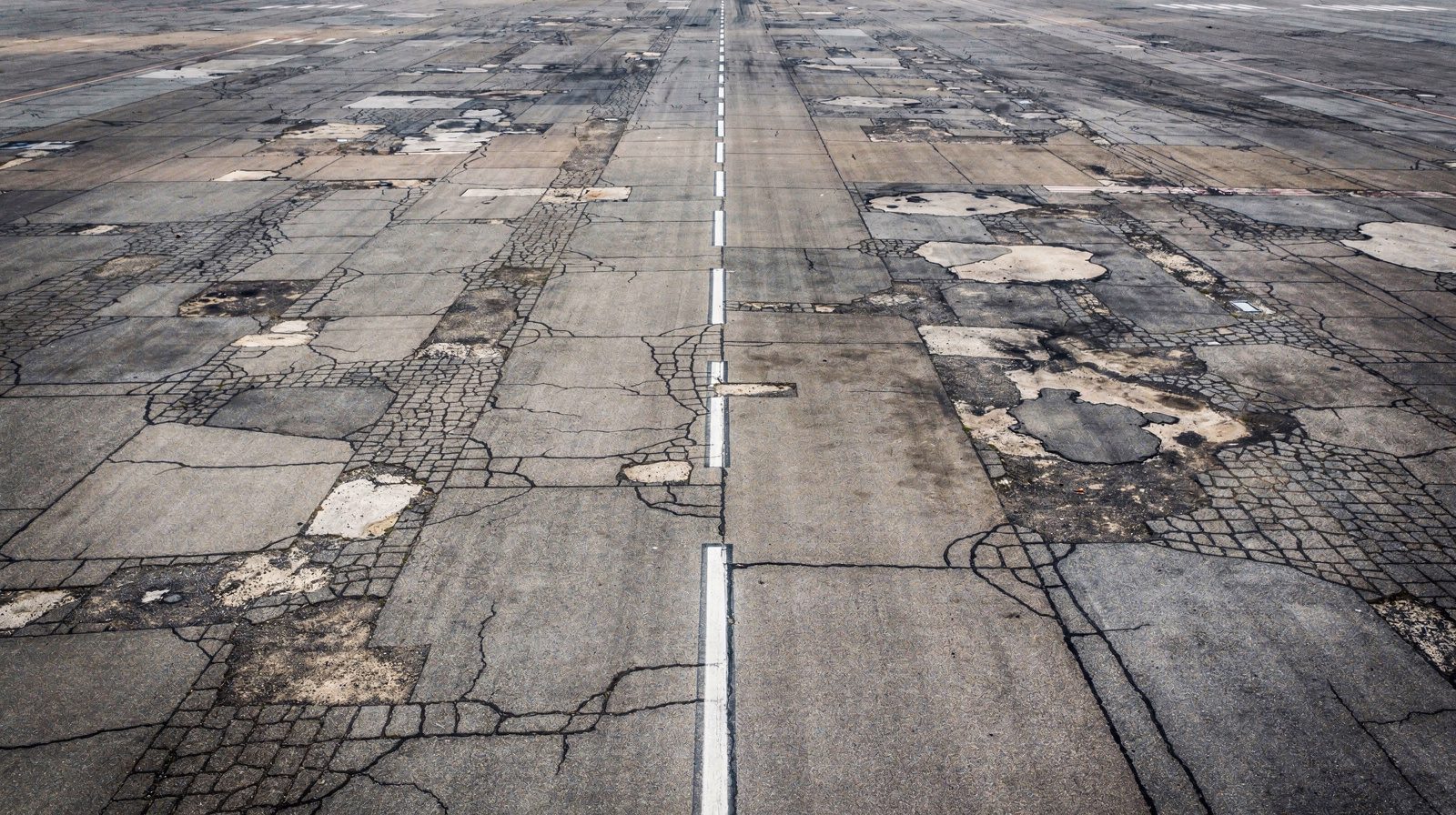
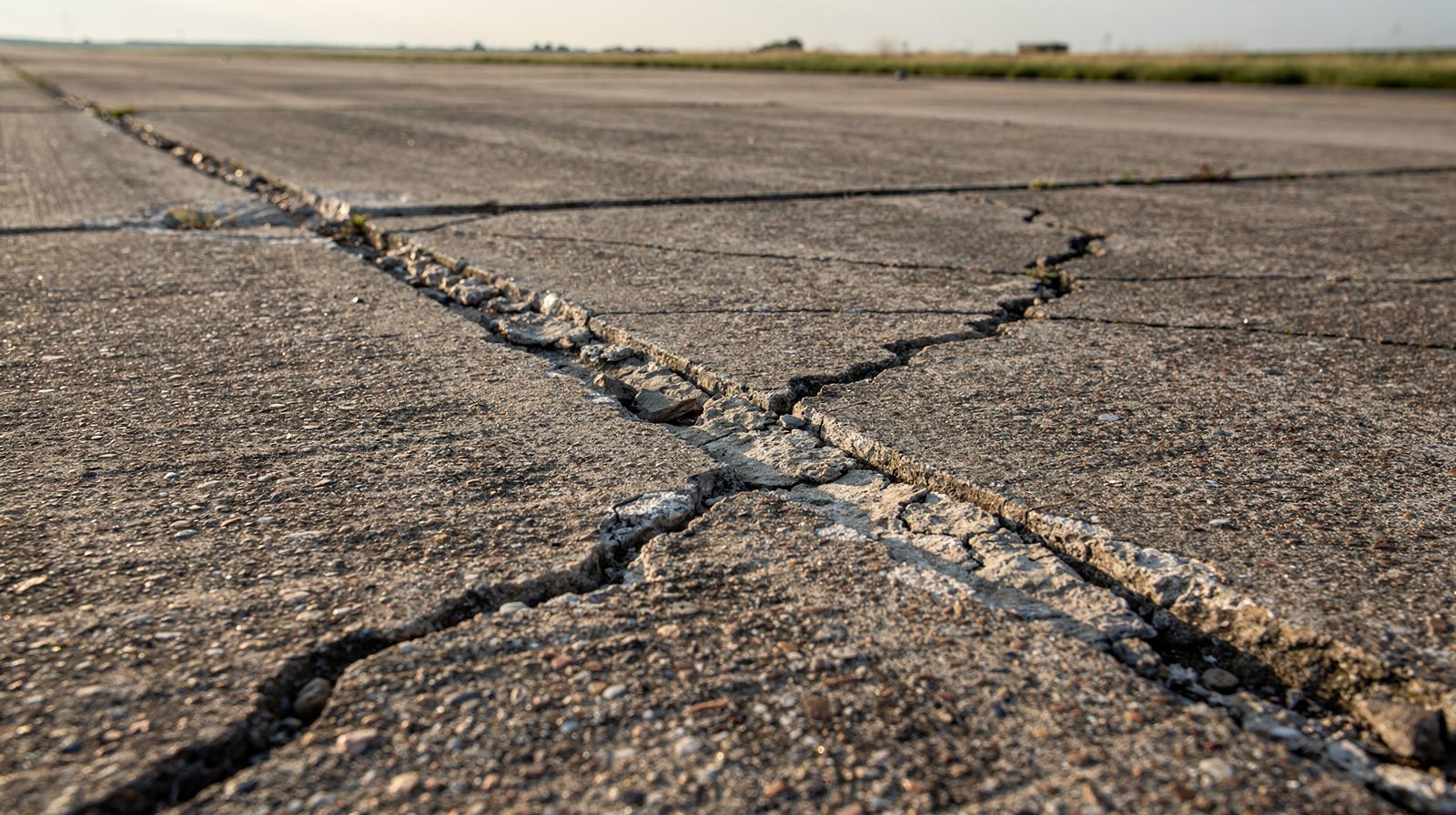
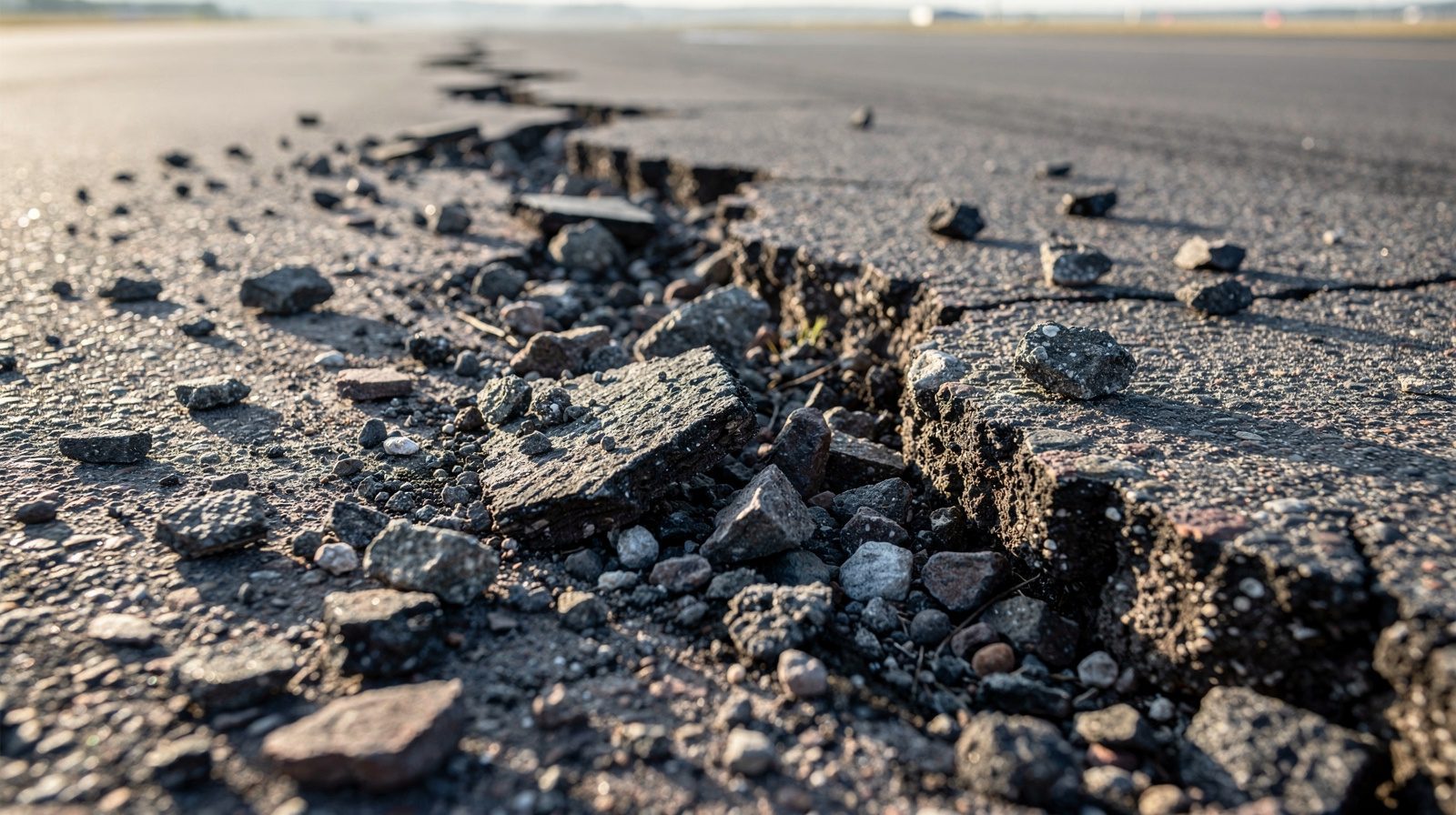
What is Patch Condition Inspection and Rating?
Patch Condition Inspection and Rating for Airfield and Highway Pavements
Definition and Importance of Patch Inspection
Patch condition inspection is the systematic evaluation of previously repaired areas on pavement surfaces to assess their current performance, identify deterioration mechanisms, and assign severity ratings for inclusion in Pavement Condition Index (PCI) calculations and maintenance management systems. According to ASTM D5340, Standard Test Method for Airport Pavement Condition Index Surveys and the PAVER distress identification manuals developed by the U.S. Army Corps of Engineers Construction Engineering Research Laboratory (ERDC-CERL), a patch is defined as an area where the original pavement has been removed and replaced by a filler material. Per the PAVER methodology, a patch is always considered a defect, regardless of how well it is performing.
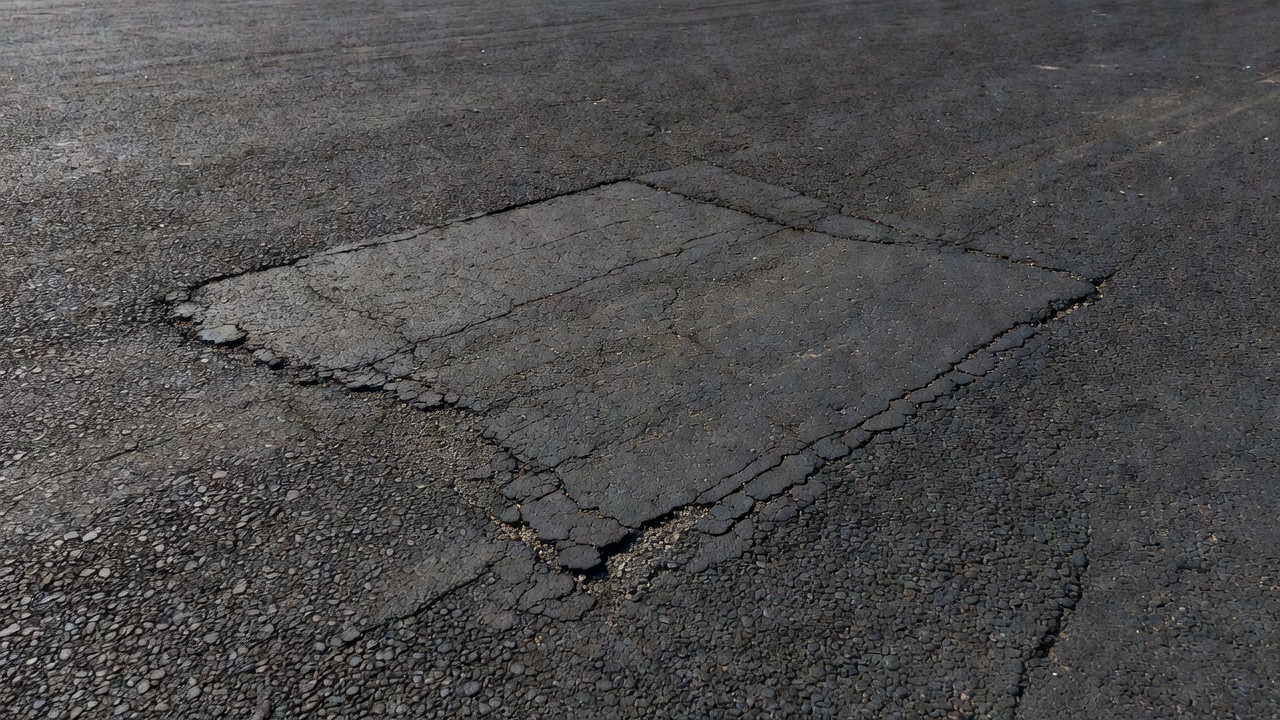
The rationale for treating all patches as defects stems from the fundamental nature of patching as a discontinuity in the pavement structure. Even a perfectly executed patch introduces a material interface where the patch material meets the original pavement, this interface represents a plane of weakness where water infiltration, differential movement, and future distress initiation are most likely to occur. The patch material itself, whether hot mix asphalt (HMA), cold mix, Portland cement concrete (PCC), or proprietary rapid-setting materials, will have different thermal expansion properties, stiffness characteristics, and aging behavior compared to the surrounding pavement. These differences create the potential for bond failure, reflective cracking, differential settlement, and material incompatibility that can compromise both the patch and the adjacent pavement.
FAA Advisory Circular 150/5380-6C, Guidelines and Procedures for Maintenance of Airport Pavements emphasizes that timely maintenance and repair of pavements, including patching, is essential for maintaining adequate load-carrying capacity, good ride quality necessary for the safe operation of aircraft, good friction characteristics under all weather conditions, and minimizing the potential for Foreign Object Debris (FOD). Patch condition surveys provide direct feedback on whether maintenance repairs are achieving their intended service life and whether underlying pavement problems remain unresolved.
The patch inspection process is a standard element of all major pavement condition survey protocols, including:
- ASTM D5340, Standard Test Method for Airport Pavement Condition Index Surveys
- UFC 3-260-16, Unified Facilities Criteria for Airfield Pavement Condition Surveys (U.S. Department of Defense)
- FHWA LTPP Distress Identification Manual, Long-Term Pavement Performance Program (Publication FHWA-HRT-13-092)
- ACI 201.1R, Guide for Conducting a Visual Inspection of Concrete in Service
- ICAO Doc 9157 Part 3, Aerodrome Design Manual: Pavements
Patch Rating Criteria for Asphalt Pavements
The PAVER Asphalt Surfaced Airfields Distress Identification Manual (PAVER distress code 50) defines patching and utility cut patches for asphalt-surfaced pavements with three severity levels based on patch condition, performance, and Foreign Object Debris (FOD) potential. These criteria are applied during visual pavement condition surveys conducted in accordance with ASTM D5340.
Low Severity Patching (L)
A low severity patch is in good condition and is performing satisfactorily, with little or no FOD potential. The patch material is intact, well-bonded to the surrounding pavement along all edges, and shows no signs of settlement, shoving, raveling, cracking, or material deterioration. The surface texture of the patch is consistent with the adjacent pavement, and there is no noticeable difference in ride quality when traversing the patch. Low severity patches do not require immediate maintenance intervention and may continue to perform adequately for several years.
Special rating modifications for low severity patches:
- Dense-graded AC patches in porous friction course (PFC) surfaces: The use of dense-graded AC patches in PFC surfaces creates a water damming effect at the patch that contributes to differential skid resistance of the surface. A low severity dense-graded patch in a PFC surface must be rated as medium severity because of the differential friction problem this creates for aircraft operations.
- Rigid repair materials on AC surfaces: The use of rigid repair materials such as PCC on asphalt surfaces is discouraged by FAA guidance. A low severity rigid patch on an AC surface must be rated as medium severity due to material incompatibility and differential response under loading.
Medium Severity Patching (M)
A medium severity patch is somewhat deteriorated and affects riding quality to some extent, with some FOD potential. The patch exhibits one or more of the following conditions: partial edge bond failure where the patch has separated from the surrounding pavement along portions of its perimeter, visible cracking in the patch material, light settlement of the patch surface relative to the surrounding pavement (typically less than 13 mm / 0.5 inches), surface raveling with aggregate loss, or a noticeable but not severe roughness when traversed. Medium severity patches should be scheduled for repair or replacement in the near-term maintenance program.
The medium severity rating is also the minimum mandatory rating for:
- Dense-graded AC patches in PFC surfaces (regardless of apparent condition)
- Rigid repair materials (PCC, proprietary rigid patches) on AC surfaces
High Severity Patching (H)
A high severity patch is badly deteriorated and affects riding quality significantly or has high FOD potential. The patch needs replacement. High severity conditions include: complete edge bond failure with gaps between patch and surrounding pavement, severe cracking of the patch material with pieces loose or dislodged, significant settlement exceeding 25 mm (1 inch) creating a tripping hazard or hydroplaning potential, shoving or lateral displacement of the patch, extensive raveling with coarse aggregate loss, or material disintegration to the extent that the patch is no longer performing its structural function. High severity patches represent an immediate safety concern for aircraft operations and should be prioritized for urgent repair.
Patch Measurement Rules
Patching is measured in square feet (square meters) of surface area. If a single patch contains areas of differing severity levels, these areas must be measured and recorded separately. For example, a 25 ft² (2.3 m²) patch may have 10 ft² (0.9 m²) of medium severity and 15 ft² (1.4 m²) of low severity, these fractions are recorded as distinct entries in the survey database. Any distress found within a patched area is not recorded separately, however, its effects are considered when determining the patch severity level. This principle prevents double-counting of distress and ensures that the patch distress captures the combined effects of all deterioration present.
A very large patch exceeding 2,500 ft² (230 m²), or a feathered-edge pavement area, may qualify as an additional sample unit or a separate pavement section rather than being recorded as a patch within the original section. This threshold recognizes that extremely large patched areas fundamentally change the character of the pavement section.
Patch Rating Criteria for Concrete Pavements
For concrete (rigid) pavements, the PAVER Concrete Surfaced Airfields Distress Identification Manual distinguishes between two categories of patch distress based on size. This differentiation reflects the different structural implications of small repairs versus large-area replacements in rigid pavement systems.
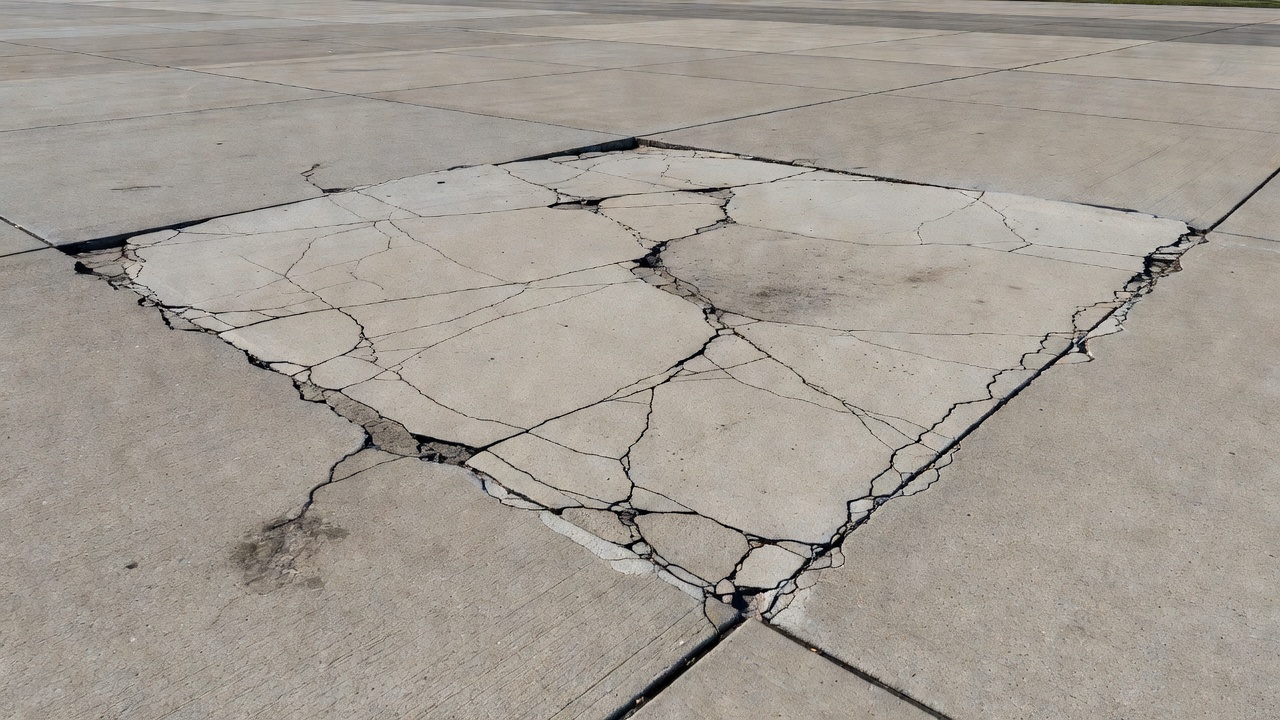
Small Patching (PAVER Distress Code 66), Area ≤ 5.5 ft² (0.5 m²)
Small patches in concrete pavements are surface repairs that do not extend through the full slab depth. These typically address spalls, popouts, or localized surface deterioration. The severity levels are:
- Low: Patch is functioning well with very little or no deterioration. No FOD potential.
- Medium: Patch has deteriorated and/or moderate spalling can be seen around the edges. Patch material can be dislodged with considerable effort, causing some FOD potential.
- High: Patch has deteriorated significantly and/or severe spalling is evident around the edges. Patch has high FOD potential and needs replacement.
Counting rule for small patches: If a slab contains one small patch, it is counted as one slab with small patching, regardless of the patch severity. If a slab contains more than one small patch, the slab is still counted as one slab with small patching, but at the highest severity level present. This slab-based counting method is unique to concrete pavement small patching and differs from the area-based measurement used for asphalt patches.
Large Patching (PAVER Distress Code 67), Area > 5.5 ft² (0.5 m²) and Utility Cuts
Large patches and utility cuts in concrete pavements represent full-depth repairs that replace a significant portion of the original slab. A utility cut is a specific type of patch created when the pavement is opened for installation or maintenance of underground utilities. Utility cuts follow the same rating criteria as standard large patches.
- Low: Patch is functioning well with very little or no deterioration. No FOD potential.
- Medium: Patch has deteriorated and/or moderate spalling can be seen around the edges. Patch material can be dislodged with considerable effort, causing some FOD potential.
- High: Patch has deteriorated to a state causing considerable roughness and/or high FOD potential. The extent of deterioration warrants replacement of the patch.
Critical rules for concrete patch counting:
- Replacement slabs are NOT considered patches. A full slab replacement (where the entire slab has been removed and repoured) is a reconstruction activity, not a patch. These are identified as separate slabs in the pavement inventory.
- Contiguous replacement slabs: If there are a significant number of contiguously located replacement slabs (generally covering more than one-quarter of the original pavement section), the replaced area should be identified as a separate pavement section rather than being recorded within the original section.
- Narrow crack patches: If a crack has been repaired by a narrow patch (100 to 250 mm / 4 to 10 inches wide), only the crack and not the patch should be recorded, at the appropriate crack severity level.
Edge Bonding Assessment
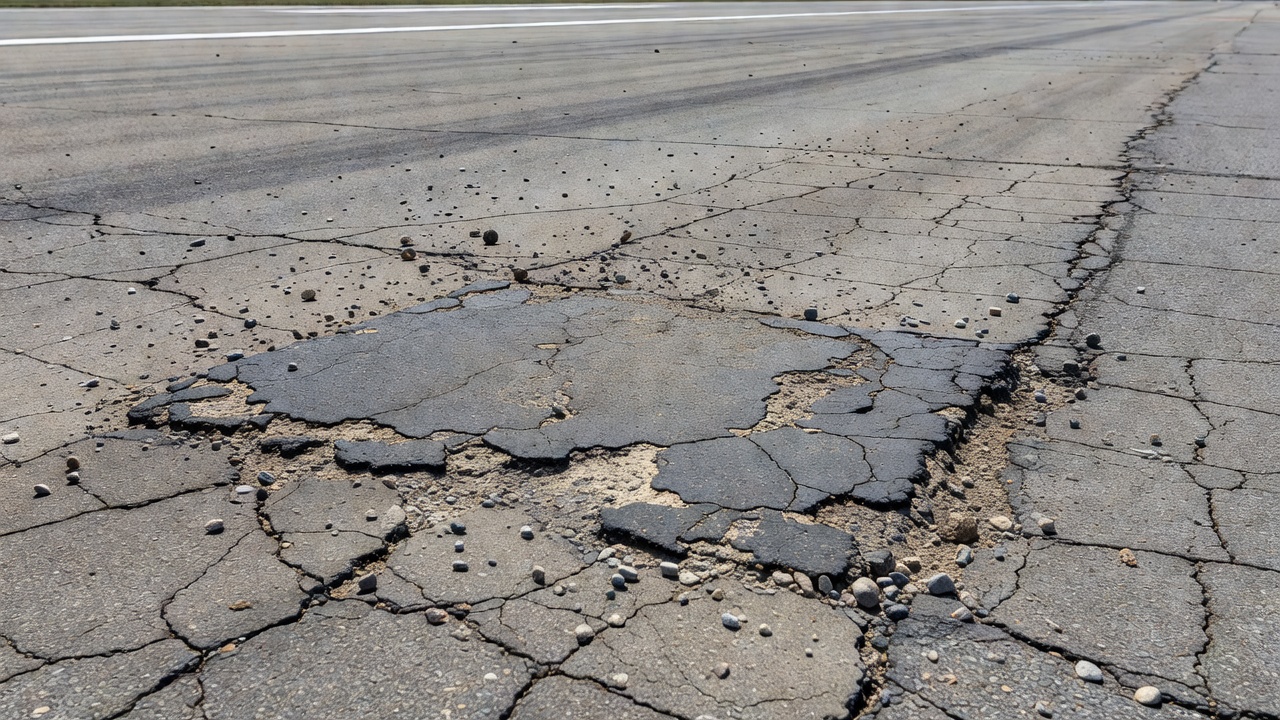
Edge bonding is the most critical parameter in patch condition evaluation. The bond between the patch material and the surrounding pavement determines whether the patch functions as an integral part of the pavement structure or as a loose insert that creates FOD hazards and water infiltration pathways.
Edge Bond Failure Modes
Debonding occurs when the patch material separates from the vertical face of the surrounding pavement along the patch perimeter. This creates a narrow gap that allows water infiltration into the pavement structure below, accelerates stripping of the tack coat or bonding layer, and enables progressive deterioration from the edge inward. Debonding is typically initiated by:
- Insufficient tack coat: Inadequate application rate or improper curing of the tack coat before patch placement.
- Contaminated bond surface: Failure to clean the vertical faces of the existing pavement before placing patch material, leaving dust, moisture, or debris that prevents adhesion.
- Thermal incompatibility: Differential thermal expansion between patch material and surrounding pavement, particularly when cold mix is used in hot weather or when PCC patches are placed in AC pavements.
- Traffic loading before adequate cure: Opening a patch to traffic before the material has achieved sufficient bond strength.
Assessment method: Edge bonding is assessed visually by examining the entire patch perimeter. A thin metal probe (such as a feeler gauge or knife blade) may be used to detect debonding gaps. The percentage of the total perimeter that has debonded is estimated, along with the maximum gap width. Per PAVER guidelines:
- Good bond (low severity): Less than 10% of the perimeter shows any separation, any gap is less than 3 mm (1/8 inch).
- Partial bond failure (medium severity): 10-50% of the perimeter shows separation, gaps range from 3 to 13 mm (1/8 to 1/2 inch).
- Complete or near-complete bond failure (high severity): More than 50% of the perimeter is debonded, or any gap exceeds 13 mm (1/2 inch), material may be loose or movable under traffic.
Edge Spalling
Edge spalling refers to the breakdown of material at the patch boundary, where either the patch material or the surrounding pavement edge fractures and fragments. This is distinct from debonding in that material is actually lost, creating a raveled edge condition. Edge spalling is rated as part of the overall patch severity and significantly increases FOD potential, particularly on airfield pavements where loose material can be ingested by aircraft engines.
Patch Settlement and Shoving
Settlement in a patched area refers to downward displacement of the patch surface below the elevation of the surrounding pavement. Shoving refers to lateral displacement or horizontal movement of the patch material, typically manifested as a bulge or ridge at the patch edge.
Settlement Assessment
Settlement is measured by placing a 3-meter (10-foot) straightedge across the patch and measuring the maximum depth of the depression relative to the surrounding pavement. The FAA airfield pavement criteria (AC 150/5380-6C) and ASTM D5340 provide the following guidance for settlement measurement:
| Severity | Runways & High-Speed Taxiways | Taxiways & Aprons |
|---|---|---|
| Low | 3 to 13 mm (1/8 to 1/2 in) | 13 to 25 mm (1/2 to 1 in) |
| Medium | 13 to 25 mm (1/2 to 1 in) | 25 to 51 mm (1 to 2 in) |
| High | > 25 mm (> 1 in) | > 51 mm (> 2 in) |
Settlement in patches is most often caused by:
- Inadequate compaction of the patch material during placement, leading to post-construction consolidation under traffic.
- Base or subgrade failure beneath the patched area, indicating that the original cause of pavement failure (such as a weakened base course, poor drainage, or subgrade soil failure) was not addressed during the repair.
- Compression of underlying materials from the weight of the patch material itself, particularly in deep patches where thick lifts were placed without adequate compaction.
- Moisture-related weakening of the subgrade beneath the patch due to water infiltration through debonded edges or adjacent cracks.
Shoving Assessment
Shoving in patches occurs when the patch material displaces laterally under traffic loading, typically in the direction of traffic. This is most common in:
- Cold mix patches that have not achieved sufficient strength or stability.
- Patches placed during cold weather where the material fails to compact properly.
- Deep patches with inadequate lateral confinement from the surrounding pavement walls.
- Patches in high-shear zones such as turning areas, brake application zones, and intersections.
Shoving severity is assessed by measuring the height differential between the shoved material and the original pavement surface. The PAVER shoving criteria (distress code 54) provide guidance: less than 19 mm (3/4 inch) height differential is low severity, 19 to 38 mm (3/4 to 1.5 inches) is medium severity, and greater than 38 mm (1.5 inches) is high severity.
Patch Material Deterioration
The patch material itself can deteriorate through several distinct mechanisms, each of which is assessed during the condition inspection.
Raveling of Patch Material
Raveling in patches refers to the progressive dislodgement of aggregate particles from the patch surface. In the PAVER methodology, raveling is defined as the loss of coarse aggregate particles from the pavement surface. For patches, raveling is evaluated using the same criteria as for general pavement raveling (distress code 52):
- Low severity: 5 to 20 missing coarse aggregate particles per square yard (square meter) of patch surface, missing aggregate clusters less than 2% of the area. Little or no FOD potential.
- Medium severity: 21 to 40 missing particles per square yard, missing clusters 2-10% of the area. Some FOD potential.
- High severity: More than 40 missing particles per square yard, missing clusters more than 10% of the area. High FOD potential.
Raveling in patches is typically caused by: inadequate compaction leaving high void content, poor aggregate-binder adhesion in the patch mix, oxidation and hardening of the binder in the patch material, or mechanical damage from snowplows, tire chains, or ground servicing equipment.
Cracking of Patch Material
Cracking in patches can take several forms:
- Thermal cracking: Transverse cracks caused by thermal contraction of the patch material, particularly when the patch material has a different coefficient of thermal expansion than the surrounding pavement.
- Reflective cracking: Cracks in the patch that reflect underlying cracks in the base pavement layer, indicating that the original crack was not properly treated before patching.
- Shrinkage cracking: Pattern cracking in cementitious patch materials (such as rapid-set concrete patches) caused by hydration shrinkage during curing.
- Fatigue cracking: Load-associated cracking in patches subjected to repeated traffic loading, typically initiating at the patch edges where stress concentrations are highest.
Cracking severity in patches follows the general crack severity criteria of the PAVER system, with crack width, spalling, and FOD potential as the primary determinants.
Oxidation and Aging of Asphalt Patches
Asphalt patch material undergoes oxidation over time as the binder reacts with atmospheric oxygen. This process causes the binder to become harder, more brittle, and less adhesive. The PAVER weathering distress (code 57) provides a framework for assessing oxidation in patches:
- Low severity: Beginning signs of aging, loss of fine aggregate matrix noticeable, edges of coarse aggregates beginning to be exposed (less than 1 mm / 0.05 inches). Color fading.
- Medium severity: Noticeable loss of fine aggregate matrix, edges of coarse aggregate exposed up to one-quarter width of the longest side.
- High severity: Edges of coarse aggregate exposed greater than one-quarter width, considerable loss of fine aggregate matrix leading to potential or actual loss of coarse aggregate.
Patch as Indicator of Underlying Problems
Patch condition is one of the most valuable diagnostic indicators in pavement evaluation. The performance of a patch provides direct feedback on whether the original cause of pavement distress was correctly identified and adequately addressed during the repair. A patch that fails prematurely or exhibits specific deterioration patterns points to unresolved problems in the underlying pavement structure.
Base and Subgrade Problems Indicated by Patch Failure
Recurrent settlement of a patch in the same location strongly indicates that the underlying base or subgrade has not been stabilized. If the original pavement failed due to a weak subgrade, poor drainage, or frost-susceptible soils, simply replacing the surface material without addressing the foundation will result in rapid patch failure. The patch will typically settle progressively under traffic, often at a rate faster than the original pavement deteriorated.
Water-related patch deterioration (pumping stains around patch edges, stripping of the patch binder, frost heave of the patch) suggests that the drainage system is either absent, inadequate, or has been compromised. In airfield pavements, per FAA AC 150/5320-6G, no other factor plays a more important role in the ability of a pavement to withstand the effects of weather and traffic than the drainage system. If patches in a section consistently show moisture-related deterioration, the drainage infrastructure should be investigated.
Structural overloading indicated by patch distress: When patches in primary traffic areas (wheel paths, runway touchdown zones, taxiway centerlines) show consistent structural distress while patches in non-traffic areas perform well, the pavement section may be experiencing loads beyond its design capacity. This is particularly relevant at airports where aircraft fleets have been upgraded to heavier models since the original pavement design.
Material Compatibility Problems
Differential deterioration between patches and surrounding pavement indicates material incompatibility. Common incompatibility issues include:
- Asphalt patches in concrete pavements: Softer asphalt patches in rigid concrete pavements can exhibit pumping, shoving, and rutting under aircraft loading, while the surrounding concrete remains intact. Per PAVER guidance, low severity rigid patches on AC surfaces must be rated as medium severity due to the differential friction problem, and the use of rigid repair materials on AC surfaces is discouraged by FAA.
- Cold mix patches in hot mix pavements: Cold mix materials typically have lower strength, higher air void content, and faster aging compared to hot mix asphalt. Patches using cold mix in hot mix pavements will generally deteriorate faster, particularly in high-traffic areas.
- High-strength patches in low-strength pavement: Patches using very high-strength rapid-set materials can create a “hard spot” in the pavement that attracts stress and causes cracking in the adjacent weaker pavement.
Recurrent Patching as a Section Subdivision Criterion
In the PCI methodology, if all patches in a section are rated as medium or high severity, the section should be evaluated for potential subdivision into separate sections with distinct condition ratings. If the patching is concentrated in one area of the section, that area may represent a fundamentally different pavement condition that should be rated independently. The ASTM D5340 standard notes that a difference in PCI of 15 or more between parts of a section, resulting in different pavement condition ratings, warrants subdivision.
Patch in PCI and Airport Condition Surveys
The Pavement Condition Index (PCI) is a numerical rating on a scale of 0 to 100 (100 being the best possible condition, 0 being failed) determined by a visual pavement survey conducted in accordance with ASTM D5340. Patch distress is one of the standard distress types included in PCI calculations for both flexible and rigid airfield pavements.
PCI Deduct Values for Patching
In the PCI methodology, each distress type and severity level has a corresponding deduct value that represents the penalty applied to the pavement condition rating. The deduct value for patching depends on both the severity level (low, medium, high) and the density of the distress (the percentage of the sample unit area affected by patching).
Asphalt pavement patching deduct values are determined using the AC Pavement Deduct Curves in ASTM D5340. The PAVER system (as amended by the Air Force Civil Engineer Center / AFCEC) provides simplified deduct value tables that can be used in lieu of the standard curves for contingency PCI surveys. Using these simplified tables, the corrected deduct value for patching is calculated based on the total deduct value (sum of individual deducts) and the number of distress types (q value) in the sample unit.
Concrete pavement patching deduct values are determined using the PCC Pavement Deduct Curves. Large patching and small patching have separate deduct curves, reflecting the different structural implications of these two distress types. A slab with small patching is counted as one slab, and the distress density is calculated as the percentage of slabs in the sample unit affected by small patching. For large patching, the area of the patch relative to the sample unit area determines the distress density.
PCI Survey Sampling for Patch Assessment
During a standard PCI survey, sample units are selected for inspection using systematic random sampling. The minimum number of sample units to be surveyed per section depends on the overall size of the pavement section and the desired confidence level. For a standard (project-level) PCI survey, enough sample units must be surveyed to achieve a 95% confidence level. For simplified (contingency) surveys, a reduced number of sample units is acceptable.
The PAVER Field Inspector software application automates the PCI calculation, allowing inspectors to record patch distress directly on a tablet computer in the field. The software calculates real-time PCI values and maintains a database of distress observations for trend analysis.
Patch and FOD Assessment in Airfield Surveys
Foreign Object Debris (FOD) potential is a critical consideration in conducting PCI surveys on airfield pavements. The PAVER distress definitions explicitly reference FOD potential as a severity level determinant for patches. Per ICAO Annex 14, Aerodromes, aerodrome operators must inspect the movement area (runways, taxiways, aprons) at least daily for FOD. Patch condition directly affects FOD potential in the following ways:
- Low severity patches: Little or no FOD potential, patch material is fully bonded and no loose particles are present.
- Medium severity patches: Some FOD potential, spalled edges or loose fragments may generate debris under aircraft loading or jet blast.
- High severity patches: High FOD potential, loose patch material can be dislodged by tire suction, propeller wash, or jet blast, creating an immediate safety hazard.
The AFCEC contingency PCI guidance emphasizes that particular attention should be given to pavement distresses that could present safety issues or cause operational limitations, such as potholes, delaminations, and improper or inadequate surface repairs.
Patch Inspection Documentation
Proper documentation of patch condition during inspection is essential for tracking pavement performance over time, justifying maintenance budgets, and developing repair priorities. The FAA Pavement Management Program (PMP) requirements (AC 150/5380-7B) specify that federally obligated airports must maintain records of all pavement inspections and maintenance activities.
Documentation Requirements
The minimum documentation requirements for patch condition inspection include:
- Date of inspection and identification of the inspection team.
- Pavement section identification (branch, section, sample unit numbers per PAVER inventory structure).
- Patch location, precise location within the sample unit, recorded on a sketch map or using GPS coordinates.
- Patch dimensions, length, width, and area in square feet (square meters).
- Patch material type, hot mix asphalt, cold mix, PCC, proprietary rapid-set material, etc.
- Severity level, low, medium, or high, with documentation of the specific criteria that support the rating.
- Deterioration type(s), edge debonding, settlement, shoving, raveling, cracking, oxidation, spalling.
- Photographs, at minimum, a close-up of the patch showing its condition and a wider context photo showing the patch within the sample unit.
- Percentage of patch area at each severity level if the patch has mixed severity zones.
- Recommended action, monitor, schedule repair, or urgent repair.
FAA PMP Record Keeping
Per FAA AC 150/5380-7B, the pavement management program records must include: inspection date, location, distress types found, and any maintenance performed or scheduled. These records must be retrievable for review. The PMP documentation should also include:
- Trend analysis: Comparison of current patch condition with previous inspection results to determine deterioration rate.
- Maintenance history: Record of all patching activities, including date, materials used, contractor, and cost.
- Patch performance tracking: Service life of patches by material type, location, and traffic exposure.
- Budget justification: Condition data used to support funding requests for patch repair programs.
Photographic Documentation Standards
Photographs of patch distress should be taken using consistent protocols to enable accurate comparison over time. Recommended photographic documentation standards include:
- Scale reference: A scale marker (such as a coin, ruler, or measuring wheel) should be included in close-up photos to provide size context.
- Lighting: Photos should be taken in consistent natural daylight conditions. Shadowed patches can obscure deterioration. Artificial lighting may be used in shaded areas.
- Identification: Each photo should include a field marker board or digital annotation identifying the pavement section, sample unit, patch number, date, and severity rating.
- Perspective: At minimum, one photo taken from above (nadir view) showing the patch within its surrounding pavement, and one close-up (45-degree angle) showing surface texture and edge condition.
Patch vs Surrounding Pavement Performance
The performance relationship between patches and the surrounding pavement provides valuable insights into overall pavement health and the effectiveness of the maintenance program.
Well-Performing Patches
When patches consistently perform well across a pavement network, this indicates:
- Effective maintenance practices: The maintenance team correctly diagnoses pavement distress, selects appropriate repair materials, and executes repairs according to proper procedures.
- Good material selection: Patch materials are compatible with the surrounding pavement and suitable for the traffic and climate conditions.
- Adequate base/subgrade conditions: The underlying pavement structure is sound, and patches are not failing due to foundation problems.
- Timely intervention: Patching is performed at the optimal time in the distress progression, before significant structural deterioration of the surrounding pavement has occurred.
In the PCI rating system, a pavement section with well-performing patches (low severity) will have a relatively low deduct value for patching, and the overall PCI may remain in the “good” (86-100) or “satisfactory” (71-85) range. The patches are noted as defects but do not significantly reduce the pavement condition rating.
Poorly Performing Patches
When patches consistently perform poorly, several conclusions may be drawn:
- Incorrect repair diagnosis: The root cause of the original pavement failure was not identified, and surface patching was applied to a problem that requires structural rehabilitation.
- Inadequate repair materials or methods: Patches were placed using materials below specification, improper placement techniques, or inadequate curing.
- Accelerated deterioration of surrounding pavement: The surrounding pavement may be deteriorating faster than expected, placing higher demands on patch performance.
- Excessive or premature patching: Frequent patching may indicate that the pavement section has reached the end of its serviceable life and requires major rehabilitation or reconstruction.
Setting Maintenance Triggers Based on Patch Condition
Patch condition data can be used to establish quantitative maintenance triggers:
| Patch Condition | Maintenance Response | Typical Timeline |
|---|---|---|
| Low severity (all patches) | Monitor at next scheduled inspection | 12-24 months |
| Medium severity (isolated) | Schedule for repair in maintenance program | 3-6 months |
| Medium severity (>20% of section) | Evaluate section for rehabilitation | 1-3 months |
| High severity (isolated) | Urgent repair priority | 1-4 weeks |
| High severity (>10% of section) | Immediate section evaluation | 1 week |
| Recurrent failure at same location | Geotechnical investigation | Before next repair |
Maintenance Decisions Based on Patch Condition
The ultimate purpose of patch condition inspection is to inform maintenance and repair decisions. FAA AC 150/5380-6C and the ACRP Report 09-11 Guidebook provide decision frameworks for selecting appropriate maintenance treatments based on patch condition.
Treatment Selection for Asphalt Patches
Low severity patches, Continue monitoring. If the patch is performing well, no immediate action is required. However, if the patch material is incompatible with the surrounding pavement (dense-graded in PFC, or rigid material in AC), the patch should be scheduled for replacement despite its apparent good condition, due to the differential friction or structural incompatibility concerns.
Medium severity patches, Surface treatment options include:
- Crack sealing of cracks in the patch to prevent water infiltration.
- Partial patch replacement if only portions of the patch have deteriorated. The deteriorated portion is removed and replaced while leaving the intact portion in place.
- Overlay if the patches are widespread and the pavement section generally has adequate structural capacity. A thin overlay (25-50 mm / 1-2 inches) can restore surface condition and ride quality.
- Fog seal or rejuvenator for patches showing oxidation but no structural deterioration. These surface treatments restore flexibility to the aged binder and extend the patch service life.
High severity patches, Full patch replacement is required. The following procedure is recommended per FAA guidance:
- Remove the deteriorated patch material to full depth (or to sound material below).
- Excavate and replace any deteriorated base material.
- Ensure proper drainage at the patch location.
- Apply tack coat to all vertical faces of the excavation.
- Place new patch material in lifts not exceeding 75 mm (3 inches) loose thickness.
- Compact each lift to specified density (typically 96-98% of maximum dry density for HMA).
- Cure the patch before opening to traffic (cool to ambient temperature for HMA, per manufacturer specification for rapid-set materials).
Treatment Selection for Concrete Patches
Low severity concrete patches, Monitor at regular intervals. Small patches that are functioning well require no immediate action. However, if the small patch is on a slab with other distresses (cracking, corner break), the overall slab condition should be evaluated for possible full-depth repair or slab replacement.
Medium severity concrete patches, Deterioration of the patch edges or surface indicates failure progression. Treatment options include:
- Edge repair of spalled patch edges using epoxy mortar or polymer concrete.
- Partial patch replacement for patches where only part of the area has deteriorated.
- Full-depth patch replacement if the patch is more than 30% deteriorated.
High severity concrete patches, Full-depth patch replacement is required. The FAA standard repair procedure for full-depth PCC patches includes:
- Saw-cut the perimeter of the patch to create clean vertical faces.
- Remove the deteriorated patch and any unsound base material.
- Install dowel bars into the adjacent slab edges (drilled and epoxied) to ensure load transfer across the patch boundaries.
- Place a bond-breaking layer if the patch extends through the full slab depth.
- Place new PCC meeting the project specification (typically Item P-501 for airport pavements).
- Cure for the specified period (typically 7-14 days for standard PCC, shorter for rapid-set materials).
- Cut new joint seals at the patch boundaries matching the existing joint pattern.
Preventive Maintenance to Reduce Patching Needs
The most effective maintenance strategy is to minimize the need for patching through proactive preventive maintenance. According to FAA AC 150/5380-6C and the ACRP guidebook, preventive maintenance actions that reduce patching requirements include:
- Timely crack sealing: Sealing cracks before water infiltration causes base deterioration that eventually requires patching.
- Surface treatments: Applying fog seals, slurry seals, or microsurfacing to protect the pavement surface from oxidation and raveling.
- Drainage maintenance: Keeping drains, underdrains, and surface drainage systems functional to prevent water-related pavement failure.
- Friction management: Monitoring and restoring pavement friction to prevent polishing that can be mistaken for other distress types and unnecessarily patched.
- Inspection and repair of utility cuts: Ensuring that utility cuts are properly backfilled, compacted, and restored to prevent them from becoming the most common single source of patching distress.
The ACRP Project 09-11 guidebook emphasizes that “the most effective means of preserving airport runways, taxiways, aprons, and other pavement areas is to implement a comprehensive maintenance program” that addresses pavement needs in the good-to-fair condition range, before the deterioration accelerates to the point where patching becomes the primary repair method.
Patch Condition as a Performance Measure
Patch condition data can be aggregated across a pavement network to serve as a key performance measure for maintenance program effectiveness. Agency-level performance measures based on patch condition include:
- Percentage of patches at low severity, target values (e.g., 80% of patches at low severity) indicate effective maintenance.
- Average patch service life, tracking how long patches last before requiring replacement provides feedback on repair quality.
- Patch density trend, the percentage of total pavement area covered by patches, tracked over time. Increasing patch density indicates that the pavement network is aging and approaching the need for systematic rehabilitation.
- Recurrent patching index, the frequency with which patches at the same location require re-repair, indicating unresolved structural or drainage problems.
The International Civil Aviation Organization (ICAO), through ICAO Annex 14, Aerodromes and the Aerodrome Design Manual (Doc 9157 Part 3), requires aerodrome operators to maintain pavements in a condition that ensures safe aircraft operations. Patch condition assessment and documentation are integral components of the aerodrome pavement management system that supports these requirements. The ICAO Global Reporting Format (GRF) for runway condition assessment, while primarily focused on surface contaminants (snow, slush, water), also recognizes that surface irregularities such as deteriorated patches affect runway condition and should be reported when they impact braking action or directional control.
In summary, patch condition inspection and rating is a critical element of comprehensive pavement management. The systematic evaluation of patches provides direct feedback on maintenance quality, identifies underlying structural problems, quantifies FOD safety risks, and generates the data needed for evidence-based maintenance planning. When performed consistently according to ASTM D5340 and FAA guidance, patch condition surveys enable pavement managers to optimize repair strategies, extend pavement service life, and ensure the safety and operational efficiency of airfield and highway pavements.
Frequently Asked Questions
- Why is a patch always considered a defect in PCI surveys?
- Per ASTM D5340 and the PAVER distress identification manuals, a patch is considered a defect regardless of how well it is performing. This is because a patch represents a discontinuity in the original pavement structure. Even a well-performing patch has different material properties, bond characteristics, and structural behavior than the surrounding undisturbed pavement. The patch edges create planes of weakness where water can infiltrate, differential movement can occur, and future distress is likely to initiate. The standard rating principle states that any distress found within a patched area is not recorded separately as a new distress, rather, its effects on the patch are considered when determining the patch severity level. The only exception is narrow patches used to repair cracks (100 to 250 mm / 4 to 10 inches wide), which are recorded as crack distress rather than patch distress.
- What are the three severity levels for patching in asphalt airfield pavement?
- Per the PAVER Asphalt Surfaced Airfields Distress Identification Manual, low severity patching means the patch is in good condition and performing satisfactorily with little or no FOD (Foreign Object Debris) potential. Medium severity patching means the patch is somewhat deteriorated and affects riding quality to some extent, with some FOD potential. High severity patching means the patch is badly deteriorated and affects riding quality significantly or has high FOD potential, and the patch needs replacement. Special rules apply: dense-graded AC patches in porous friction course surfaces should have low severity rated as medium severity due to differential friction problems, rigid repair materials (such as PCC) on AC surfaces should have low severity patches rated as medium severity. Patches larger than 2,500 ft² (230 m²) may qualify as additional sample units or separate sections.
- How does patch condition indicate underlying pavement problems?
- Patch condition serves as a proxy for underlying base and subgrade health. A patch that settles or faultes typically indicates inadequate compaction of the patch material or, more concerning, failure of the underlying base or subgrade. A patch that shoves or displaces horizontally indicates instability in the pavement layers below, often from moisture infiltration or poor drainage. Patches that ravel or deteriorate rapidly point to material compatibility issues between the patch material and the surrounding pavement. Recurrent patching in the same location is a strong indicator of an unresolved structural problem. In the PCI methodology, if all patches in a section are rated medium or high severity, the section should be evaluated for potential subdivision into separate sections with distinct condition ratings.
- What is the difference between small patching and large patching for concrete pavements?
- For concrete (rigid) airfield pavements, ASTM D5340 and the PAVER Concrete Distress Manual distinguish between small patching (PAVER distress code 66) for patches less than or equal to 5.5 ft² (0.5 m²) and large patching (PAVER distress code 67) for patches over 5.5 ft² (0.5 m²) and utility cuts. Small patches are counted on a slab-by-slab basis, a slab with one small patch is recorded as one slab with small patching regardless of severity. Large patches and utility cuts follow the same severity criteria: low means functioning well with little or no deterioration, medium means deteriorated with moderate spalling around edges and some FOD potential, high means considerable roughness and high FOD potential warranting replacement. Replacement slabs are not considered patches. If significant contiguously located replacement slabs exist (covering more than one-quarter of the original pavement section), the replaced area should be identified as a separate pavement section.
- How is patch distress documented during a PCI survey?
- During a PCI survey per ASTM D5340, patching is measured in square feet (square meters) of surface area. If a single patch has areas of differing severity levels, these areas must be measured and recorded separately. For example, a 25 ft² patch may have 10 ft² of medium severity and 15 ft² of low severity, these are recorded as separate entries. Any distress found within the patched area is not recorded independently, its effect is captured in the patch severity determination. The location of each patch is typically noted in the sample unit sketch or GPS coordinates. Photographs are taken to document the patch condition at the time of inspection. For asphalt pavements, patches at utility cuts follow the same rating criteria as standard patching. For concrete pavements, utility cuts follow large patching criteria.