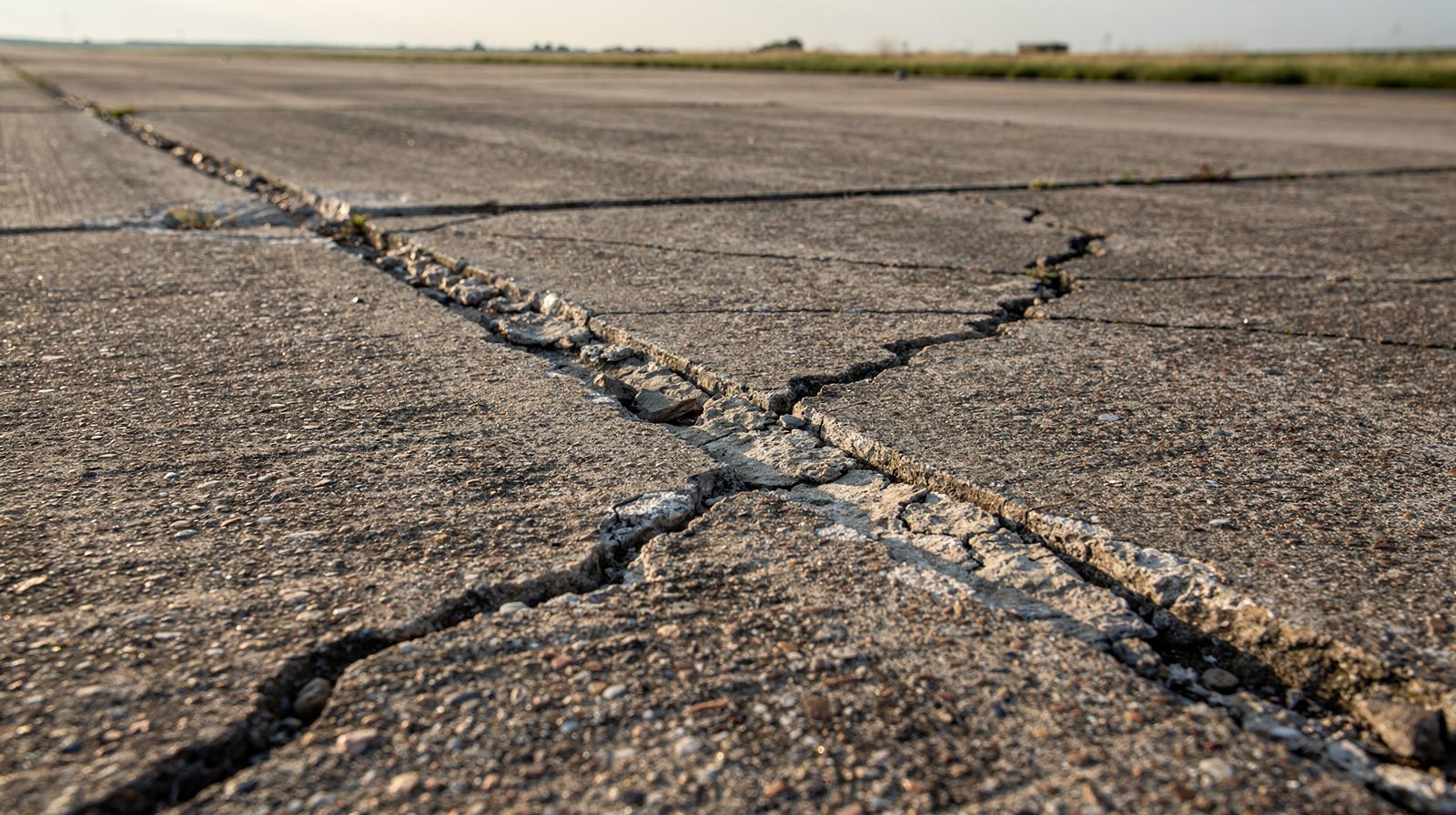
What is a Pavement Management System (PMS)?
Pavement Management System (PMS), Decision-Support for Pavement Asset Management
A Pavement Management System (PMS) is a systematic decision-support framework that enables transportation agencies and airport operators to collect, store, analyze, and report pavement condition data for the purpose of optimizing maintenance, rehabilitation, and reconstruction (MR&R) investments within available budget constraints. The American Association of State Highway and Transportation Officials (AASHTO) defines pavement management as “the effective and efficient directing of the various activities involved in providing and sustaining pavements in a condition acceptable to the traveling public at the least life cycle cost.” At its core, a PMS replaces ad hoc, reactive decision-making with a data-driven, analytical approach that answers three fundamental questions: what is the current condition of the pavement network, what will the condition be in the future under different funding scenarios, and what treatments at what locations and times will deliver the best long-term value?
Definition and Purpose
A PMS is not merely a software application, it is a comprehensive methodology that encompasses data collection protocols, database management, analytical models, decision criteria, and implementation procedures. The term entered popular use in the late 1960s and early 1970s as pavement networks expanded rapidly and simple experience-based methods proved inadequate for managing large, complex networks. Hudson, Haas, and other pavement engineering pioneers formalized the concept of a “total pavement management system” as a coordinated set of activities directed toward achieving the best value for available public funds in providing and operating smooth, safe, and economical pavements.
The five essential components of any PMS, as established by Peterson (1987), are: pavement condition surveys to measure current state, a comprehensive database housing all pavement-related information, an analysis scheme with algorithms for performance prediction and optimization, decision criteria that encode agency policies and engineering rules, and implementation procedures that translate analytical outputs into actual construction projects. Modern PMS platforms have evolved these components into integrated software suites that combine relational databases, GIS-based spatial interfaces, deterioration models, treatment optimization engines, and reporting dashboards.
The purpose of a PMS extends beyond simply cataloging pavement distresses. It provides objective evidence for budget requests, enables transparent prioritization of competing projects, quantifies the consequences of underfunding, and documents compliance with regulatory requirements. For airports receiving federal funding under the FAA Airport Improvement Program (AIP), a pavement management program is a grant assurance requirement, making PMS implementation a condition of eligibility for capital improvement grants.
PMS Architecture
The functional architecture of a modern Pavement Management System comprises several interconnected modules that transform raw field data into actionable management information. Understanding this architecture is essential for agencies evaluating PMS software or designing their own system.
Inventory Module
The inventory module is the foundational component that stores the physical and administrative characteristics of every pavement section in the network. For each section, the database records: unique identification (branch, section number), location (GIS coordinates, start/end stations), physical dimensions (length, width, area), pavement type (flexible asphalt, rigid concrete, composite), layer structure (surface course type and thickness, base type and thickness, subbase properties), construction history (original construction date, all subsequent rehabilitation and overlay dates), traffic loading (annual departures, aircraft classification, equivalent single axle loads), and functional classification (runway, taxiway, apron, helipad, access road). The inventory module also stores reference data such as unit costs for treatment alternatives, discount rates for economic analysis, and policy thresholds for minimum acceptable condition.
Condition Module
The condition module stores and processes all pavement condition data collected through field surveys. This includes Pavement Condition Index (PCI) values calculated from visual distress surveys per ASTM D5340 (for airports) or ASTM D6433 (for roads and parking lots), International Roughness Index (IRI) measurements from inertial profilometers, structural capacity data from falling weight deflectometer (FWD) testing, surface friction measurements, rutting depths, and macrotexture readings. The condition module supports data quality checks, automated PCI calculation from distress quantities, condition aggregation from sample units to sections to branches, and trend analysis showing condition changes over successive inspection cycles.
Analysis Module
The analysis module contains the analytical engines that transform condition data into decision support. This module encompasses deterioration models that predict future condition based on current state, age, traffic, and environmental factors, treatment rules that map condition states to appropriate maintenance and rehabilitation actions, and optimization algorithms that determine the optimal set of treatments and timing across the network to achieve specified objectives under budget constraints. The analysis module enables scenario comparison, evaluating the long-term consequences of different funding levels, policy choices, or treatment strategies, and produces output reports showing projected condition trajectories, backlog of deferred maintenance, and funding needs.
Reporting Module
The reporting module generates the output products that communicate PMS results to different stakeholders. For engineers and pavement managers, it produces detailed condition reports, project lists, treatment recommendations, and performance indicator dashboards. For executive management and elected officials, it generates summary reports showing overall network condition, funding gap analyses, performance trends, and the consequences of alternative budget scenarios. For regulatory compliance, it documents adherence to FAA, ICAO, or state requirements. Modern reporting modules support GIS-based mapping with color-coded condition visualization, customizable dashboards, automated report generation, and data export to standard formats.

Condition Data Collection and Rating
Pavement condition data is the lifeblood of any PMS, the quality and consistency of data inputs directly determines the reliability of analytical outputs. Condition data collection encompasses multiple measurement dimensions, each capturing a different aspect of pavement performance.
Pavement Condition Index (PCI)
The PCI is the most widely used composite condition indicator in pavement management. Developed by the U.S. Army Corps of Engineers and standardized under ASTM D5340 for airfields and ASTM D6433 for roads, the PCI rates pavement condition on a scale from 0 (failed) to 100 (excellent). The PCI methodology involves dividing pavements into branches (functional units like runways or taxiways), sections (uniform units within a branch), and sample units (inspection areas within a section). Inspectors identify, quantify, and rate the severity of each distress type present, for asphalt pavements, distress types include alligator cracking, block cracking, rutting, raveling, bleeding, corrugation, depression, shoving, and weather-related damage. For concrete pavements, distresses include corner break, divided slab, durability cracking (D-cracking), scaling, spalling, blowup, faulting, pumping, and shattered slab.
Each distress is assigned a deduct value based on its type, severity level (low, medium, high), and density (percentage of sample unit area affected). The sum of deduct values is adjusted for multiple distress interactions using a correction curve, and the PCI is calculated as 100 minus the maximum corrected deduct value. The resulting PCI is interpreted using a standard rating scale: 86–100 (excellent), 71–85 (good), 56–70 (fair), 41–55 (poor), 26–40 (very poor), 11–25 (serious), and 0–10 (failed). The PCI provides an objective, repeatable measure of structural surface condition that enables consistent comparison across different pavement sections and over successive inspection cycles.
International Roughness Index (IRI)
While the PCI measures visible surface distress, the IRI measures ride quality and surface profile smoothness. The IRI is computed from longitudinal profile measurements collected using inertial profilometers at highway speeds (typically 50–80 km/h) or walking-speed profilometers for detailed assessments. The index summarizes the accumulated suspension motion of a standard quarter-car model traveling over the measured profile, expressed in meters per kilometer (m/km) or inches per mile. Lower IRI values indicate smoother pavements, a new airport runway typically exhibits IRI below 1.0 m/km, while rough pavements may exceed 3.0 m/km. The IRI is a functional performance indicator directly relevant to user comfort, vehicle operating costs, and aircraft landing dynamics.
Structural Capacity and Surface Characteristics
Structural capacity is assessed primarily using the Falling Weight Deflectometer (FWD), which applies a dynamic impulse load simulating a heavy aircraft wheel and measures the resulting pavement surface deflection. Deflection data is analyzed using backcalculation algorithms to estimate layer moduli, assess remaining structural life, and identify weak areas requiring strengthening. Surface characteristics including friction (microtexture and macrotexture), rutting depth, and cross-slope are measured using specialized equipment, continuous friction testers, laser profilometers, and ground-penetrating radar for layer thickness verification.
| Data Type | Measurement Method | Typical Units | Purpose |
|---|---|---|---|
| PCI | Visual survey per ASTM D5340 | 0–100 scale | Structural surface condition |
| IRI | Inertial profilometer | m/km or in/mile | Ride quality / roughness |
| Structural capacity | Falling Weight Deflectometer | Microns deflection | Remaining structural life |
| Friction | Continuous friction tester | Mu value (dimensionless) | Skid resistance / safety |
| Rutting | Laser profilometer | mm depth | Surface deformation |
| Macrotexture | Laser / sand patch | mm (mean profile depth) | Surface drainage / friction |
Deterioration Modeling
Deterioration models are the predictive engines of a PMS, projecting how pavement condition will change over time under the combined effects of traffic loading, environmental exposure, and material aging. The choice of modeling approach, deterministic, probabilistic, or AI-based, has profound implications for the reliability of PMS outputs and the confidence managers can place in long-term projections.
Deterministic Models
Deterministic models predict a single condition value at any future point in time using mathematical equations fitted to historical data. The simplest form is linear regression (condition = intercept + slope × age), but real pavement deterioration is rarely linear. More sophisticated deterministic models use polynomial functions, exponential decay curves (PCI = PCI₀ × e^(−kt) where k is a deterioration rate constant), or sigmoidal (S-shaped) curves that capture the typical pavement lifecycle: slow initial deterioration, accelerating middle-phase decline, and eventual leveling near failure. The PAVER family models developed by the U.S. Army Corps of Engineers are among the most widely used deterministic models, employing family grouping to cluster pavement sections with similar construction, traffic, and environmental characteristics, then fitting a single deterioration curve to each family. Deterministic models are computationally efficient, easy to understand, and require relatively modest data. However, they cannot quantify the uncertainty inherent in pavement performance predictions and may produce misleading results for sections whose behavior deviates from the family average.
Probabilistic Models
Probabilistic models explicitly account for uncertainty by predicting the probability distribution of pavement condition at future time points. The most common approach uses Markov chains, where pavement condition is represented as a set of discrete states (e.g., PCI ranges 0–10, 11–25, 26–40, etc.) and transition probabilities define the likelihood of moving from one state to another over a time step. Transition probability matrices can be developed empirically from repeated condition surveys of the same sections, through expert elicitation when historical data is limited, or using Bayesian updating methods that combine prior knowledge with observed data. Probabilistic models produce more realistic projections than deterministic models because they acknowledge that not all pavement sections deteriorate identically. They naturally support risk-based decision-making by enabling managers to ask: what is the probability that a section will fall below the minimum acceptable condition within the next five years? The trade-off is increased data requirements for estimating transition probabilities and more complex computational implementation.
AI-Based Models
Machine learning and artificial intelligence methods represent the frontier of pavement deterioration modeling. Artificial neural networks (ANNs) can learn complex, non-linear relationships between input variables (age, traffic, layer thicknesses, climate, material properties) and observed deterioration without requiring pre-specified mathematical forms. Random forests and gradient boosting machines (e.g., XGBoost, LightGBM) offer strong predictive performance with built-in feature importance ranking, helping identify which factors most strongly drive deterioration. Support vector machines (SVMs) are effective for classification problems, such as predicting which condition state a pavement will occupy at a future time. Recent research has explored deep learning architectures including long short-term memory (LSTM) networks for time-series prediction and convolutional neural networks (CNNs) for predicting deterioration directly from surface imagery.
AI-based models can achieve higher prediction accuracy than traditional methods, particularly when large historical datasets are available and deterioration patterns are complex. They can incorporate diverse data types, numerical, categorical, image, and text. The principal limitations are data hunger (requiring large, high-quality training datasets), interpretability challenges (the “black box” problem), and the risk of overfitting to training data with poor generalization to new conditions. Hybrid approaches that combine AI prediction with probabilistic frameworks, such as Bayesian neural networks, offer a promising path forward, providing both the predictive power of deep learning and the uncertainty quantification of probabilistic methods.
Treatment Rules and Decision Trees
Once current and future pavement condition is understood, a PMS must determine what treatments to apply, where, and when. This is accomplished through treatment rules and decision trees that encode engineering judgment, agency policies, and cost-effectiveness principles into systematic selection frameworks.
Decision Tree Structure
A pavement treatment decision tree is a branching logic structure that maps condition states to treatment actions. The tree typically uses condition thresholds (e.g., PCI ranges, distress type presence, IRI values) as branching criteria, with treatment recommendations at the terminal nodes. For flexible airport pavements, a typical decision tree might specify: PCI 85–100 (do nothing or routine maintenance only), PCI 70–85 (crack sealing and slurry seal or chip seal), PCI 55–70 (structural overlay 50–75 mm), PCI 40–55 (mill and overlay, possibly with fabric interlayer), PCI 25–40 (heavy rehabilitation with partial reconstruction), and PCI below 25 (full reconstruction). Each trigger point incorporates traffic considerations, high-traffic sections may justify earlier intervention, and economic analysis to confirm that the recommended treatment is cost-effective relative to alternatives.
Treatment Categories
PMS treatment rules distinguish several categories of intervention with fundamentally different objectives. Preventive maintenance treatments (crack sealing, slurry seal, chip seal, microsurfacing) are applied to pavements in good condition (typically PCI 70–90) to slow deterioration and extend service life at relatively low cost. Corrective maintenance addresses specific localized defects (pothole patching, spall repair, joint resealing) to maintain safety and prevent rapid deterioration. Rehabilitation treatments (overlays, mill and overlay, recycling) restore structural capacity and surface characteristics to pavements that have deteriorated significantly (typically PCI 40–70). Reconstruction involves full removal and replacement of one or more pavement layers, applied to pavements that have reached the end of their service life (PCI below 40). The cost escalation from preventive maintenance to reconstruction is substantial, preventive treatments may cost $2–5/m², while reconstruction can exceed $100/m², underscoring the economic imperative of timely preventive intervention.
Agency-Specific Customization
While generic decision trees exist in the literature, effective PMS implementation requires agency-specific customization. Each airport or transportation agency has unique policies (minimum acceptable condition levels, preferred treatment types, contractor availability), economic parameters (unit costs, discount rates, traffic delay costs), and constraints (budget limits, operational restrictions, runway closure windows). Modern PMS software allows agencies to define their own decision trees through rules editors, with conditional logic that can reference any field in the pavement database. The treatment selection process can also incorporate optimization, rather than following a simple tree, the system evaluates multiple treatment alternatives for each section and selects the one that provides the best benefit-cost ratio or maximizes condition improvement for available funds.
Multi-Year Budgeting and Optimization
Perhaps the most valuable capability of a sophisticated PMS is its ability to perform multi-year budget optimization, determining the optimal sequence of treatments across the pavement network over a planning horizon of 5 to 20 years to achieve specified performance objectives at minimum lifecycle cost.
Lifecycle Cost Analysis (LCCA)
LCCA is the economic foundation of PMS optimization. For each pavement section and each feasible treatment strategy, the PMS calculates the net present value (NPV) of all agency costs (initial treatment, future maintenance and rehabilitation, inspection, and administration) and, in advanced implementations, user costs (vehicle operating costs, delay costs during construction, fuel consumption impacts). The analysis requires assumptions about treatment timing, deterioration rates between treatments (using the deterioration models), discount rate, and analysis period. The result is a comparison of the total cost of owning and operating each pavement section under alternative treatment strategies, enabling the PMS to identify the strategy that delivers the required performance at the lowest long-term cost.
Optimization Methods
Incremental benefit-cost analysis ranks projects by the ratio of benefits (usually measured as the area under the condition curve or the increase in area under the condition curve) to costs, selecting projects with the highest ratio until the budget is exhausted. This method is simple, transparent, and widely used, but it does not guarantee the globally optimal solution because it cannot account for interactions between projects or the timing of treatments across multiple years.
Linear programming (LP) and integer programming (IP) formulate the pavement management problem as a mathematical optimization with an objective function (maximize network condition, minimize cost, or minimize weighted condition deficit) and constraints (budget per year, minimum acceptable condition, production limits, crew availability). The solver simultaneously determines which sections to treat, what treatment to apply, and in what year. Genetic algorithms (GAs) use evolutionary search principles to find near-optimal solutions for large, complex problems that cannot be solved exactly by LP or IP, problems involving hundreds or thousands of pavement sections, multiple treatment types, and 10–20 year planning horizons. Dynamic programming (DP) breaks the multi-year optimization problem into sequential stages (years), solving each stage optimally given the state of the system entering that stage, and working backward to identify the optimal policy from any starting condition.
Scenario Analysis
Multi-year optimization enables powerful “what-if” scenario analysis: what will network condition look like in 10 years if funding is reduced by 20%? What is the minimum budget required to prevent any section from falling below PCI 55? What are the long-term savings of increasing preventive maintenance spending today? How does adding a new runway change the optimal maintenance strategy? PMS output reports typically show projected condition trajectories under different funding levels, the resulting backlog of deferred maintenance, and the funding gap, the difference between current spending and the amount needed to achieve target condition levels.
Airport PMS, FAA PAVEAIR and ICAO Guidance
Airport pavement management presents unique challenges compared to highway PMS: aircraft loads are far heavier and more concentrated, pavement failure can cause catastrophic accidents, operational constraints limit closure windows for inspection and maintenance, and regulatory oversight is more stringent. The FAA and ICAO have developed specific guidance and tools for airport pavement management.
FAA PAVEAIR
FAA PAVEAIR is the Federal Aviation Administration’s free, web-based airport pavement management system, accessible at faapaveair.faa.gov. Developed and maintained by the FAA Airport Technology Research and Development Branch, PAVEAIR currently contains pavement data from over 1,700 airports across the United States and its territories. The system supports the full PMS lifecycle: inventory management (entering and editing pavement network structure including branches, sections, and sample units), condition data recording (PCI calculation according to ASTM D5340 using the standard distress identification and deduct value methodology), deterioration modeling (family-based performance curves calibrated to local conditions), treatment recommendation (decision tree logic with agency-customizable trigger points), and multi-year budget analysis (projecting condition and costs under user-defined funding scenarios).
PAVEAIR’s significance extends beyond its technical capabilities. The FAA requires airports receiving federal grant funds under the AIP to implement a pavement management program as a grant assurance. PAVEAIR provides a compliant, no-cost solution that meets this requirement, eliminating the cost barrier that might otherwise prevent smaller airports from implementing systematic pavement management. The system also supports the FAA’s pavement management reporting requirements, enabling airport sponsors to generate standard reports documenting pavement condition, maintenance needs, and funding justifications for grant applications.
ICAO Guidance
The International Civil Aviation Organization addresses pavement management primarily through Annex 14, Aerodromes (Volume I, Chapter 10) and Doc 9137, Airport Services Manual, Part 2: Pavement Surface Conditions and Part 9: Airport Maintenance Practices. Annex 14 requires aerodrome operators to establish a maintenance program to ensure that pavements remain in a condition that does not adversely affect the safe operation of aircraft. While Annex 14 does not explicitly mandate a computerized PMS, it establishes performance requirements, regular inspections, condition monitoring, timely repair of surface distress, friction maintenance, and FOD prevention, that are best met through a systematic PMS approach.
ICAO Doc 9157, Aerodrome Design Manual, Part 3: Pavements provides additional guidance on pavement structural design and management concepts. The ICAO Aerodrome Certification framework requires certified aerodromes to demonstrate that they have adequate procedures and resources for pavement maintenance. In practice, aerodrome operators in ICAO member states increasingly adopt PMS tools to meet these requirements efficiently, with many using PAVEAIR or commercial systems adapted to local aircraft fleets, climatic conditions, and regulatory frameworks.
GIS Integration
Geographic Information System (GIS) integration has become a standard feature of modern Pavement Management Systems, transforming tabular condition data into spatial intelligence that enhances decision-making, communication, and analysis.
Spatial Visualization
GIS maps display the pavement network with sections color-coded by condition (typically PCI range, with green for excellent, yellow for fair, red for poor, and gray for failed). Users can zoom from network overview to individual pavement section detail, click on any section to view its complete inventory, condition history, and treatment record, and overlay multiple data layers, condition, traffic, treatment history, subgrade type, construction year, on a single map. Thematic mapping reveals spatial patterns: are sections on the east end of the airport deteriorating faster than those on the west? Which taxiway segments have the highest concentration of cracking? Are runway ends (where braking and turning loads concentrate) in worse condition than mid-field sections?
Spatial Analysis
Beyond visualization, GIS enables powerful spatial analysis capabilities within the PMS. Buffering identifies all pavement sections within a specified distance of a construction project, enabling efficient bundled contracting. Network tracing follows the logical path of aircraft movement to ensure that treatment planning considers operational impacts. Hotspot analysis statistically identifies clusters of poor-condition sections that may indicate systemic issues, drainage problems, subgrade weakness, or construction quality failures. Condition trends by zone compare deterioration rates across different airport areas, supporting targeted investigation of environmental or operational factors driving differential performance.
Field Data Collection Integration
GIS-enabled mobile applications allow inspectors to view the pavement network map on tablets or smartphones, navigate to assigned sample units, record distress data with GPS-stamped location, and photograph defects with automatic geotagging. Inspection data is uploaded in real time or synchronized upon return to the office, directly populating the PMS condition database. This workflow eliminates paper forms, reduces data entry errors, and ensures that condition data is precisely located for analysis and future re-inspection.
PMS and Drone-Based Inspection Data
The integration of unmanned aerial vehicle (UAV) or drone-based inspection with Pavement Management Systems represents one of the most significant recent advances in pavement condition assessment. Drones equipped with high-resolution cameras, LiDAR scanners, and thermal sensors can collect pavement condition data faster, more safely, and with greater detail than traditional manual surveys.
Data Collection Workflow
A drone-based pavement inspection typically follows a structured workflow. Flight planning software defines the survey area (runway, taxiway network, apron), flight altitude (typically 30–60 meters above ground level), overlap parameters (80% front overlap and 60–75% side overlap for photogrammetry), and flight path. During the mission, the drone captures overlapping imagery that is processed using Structure from Motion (SfM) photogrammetry to generate high-resolution orthomosaics (typical ground sample distance of 2–5 mm/pixel) and digital surface models (DSMs). LiDAR-equipped drones produce 3D point clouds with centimeter-level vertical accuracy, enabling precise measurement of rutting, depressions, heaving, and cross-slope.
Automated Distress Detection and Classification
Computer vision and deep learning algorithms, particularly convolutional neural networks (CNNs) and transformer-based architectures, analyze orthomosaic imagery to detect and classify pavement distresses. Models can identify cracking patterns (alligator, longitudinal, transverse, block), quantify crack width and length, detect spalling, raveling, patching, and surface deformation, and classify distress severity levels per ASTM D5340 or D6433 definitions. The output is a GIS-encoded distress map showing the type, severity, density, and location of every identified defect, which is then automatically processed to calculate section-level PCI following ASTM procedures.
Advantages and Limitations
The advantages of drone-based PMS data collection are substantial. Survey speed is dramatically faster, a complete runway can be surveyed in under 30 minutes versus several hours for a manual walking survey. Safety is improved by eliminating inspector exposure to active aircraft operations and movement area hazards. Data consistency eliminates inter-inspector variability in distress identification and severity rating. The high-resolution orthomosaic provides a permanent visual record that can be reanalyzed with future, more advanced algorithms. Limitations include weather dependency (cannot fly in rain, high winds, or low clouds), regulatory constraints (airspace authorization, beyond visual line of sight restrictions), processing time for large datasets, and the current need for manual verification of automated distress classification to ensure accuracy.
Performance Measures and Reporting
A PMS must communicate its findings effectively to diverse stakeholders, from pavement engineers to airport directors to regulatory authorities. Performance measures and reporting transform raw data and analytical outputs into meaningful information for decision-making.
Key Performance Indicators (KPIs)
The most fundamental PMS performance indicator is the average network PCI, the mean condition index across all pavement sections, weighted by area or by functional importance. While simple, this indicator masks significant variation and should be complemented by distribution metrics: the percentage of network area in good condition (PCI 71–100), fair condition (PCI 56–70), poor condition (PCI 41–55), and failed condition (PCI 0–40). The backlog of deferred maintenance measures the cost of treatments needed for all sections currently below the minimum acceptable condition threshold. The funding gap compares current annual spending to the amount required to maintain target condition levels. Remaining service life estimates the expected life of each section under current deterioration rates. Treatment effectiveness tracks the actual performance of treatments compared to model predictions, enabling continuous calibration and improvement.
Reporting Standards
The FAA requires specific pavement management reports for airports participating in the AIP. Standard reports include a Pavement Condition Report summarizing current condition by pavement type and functional use, a Project Priority List ranking rehabilitation and reconstruction projects by need and benefit-cost ratio, a Budget Needs Report showing funding requirements to achieve target condition levels and the consequences of alternative funding scenarios, and an Executive Summary communicating key findings and recommendations to non-technical decision-makers. The American Association of Airport Executives (AAAE) and the Transportation Research Board (TRB) have published additional guidance on pavement management reporting formats and performance measure definitions to support consistent benchmarking across airports.
Dashboards and Visualization
Modern PMS platforms provide interactive dashboards that consolidate KPI displays, trend charts (PCI vs. time, budget allocation over time, treatment type distribution), GIS condition maps, and project lists on a single screen. Users can filter by pavement type, branch, condition range, or treatment need, drill down from network-level summaries to individual section details, and export custom reports in PDF, Excel, or GIS format. Advanced dashboards incorporate scenario comparison charts showing projected condition under different funding assumptions and performance alerts when sections fall below critical condition thresholds.
Summary
A Pavement Management System is an essential decision-support tool for any organization responsible for managing pavement assets, whether a state highway agency, a municipal public works department, or an airport operator. By systematically collecting and analyzing condition data, predicting future deterioration, identifying cost-effective treatments, and optimizing multi-year investment strategies, a PMS enables agencies to maximize the service life of their pavement investments while minimizing total lifecycle costs. The evolution of PMS technology continues, with GIS integration, AI-based deterioration modeling, drone-assisted data collection, and cloud-based software platforms expanding the capabilities and accessibility of these systems.
For airports, the PMS is not merely a management convenience but a regulatory compliance requirement. FAA PAVEAIR provides a free, standards-compliant platform that enables airports of all sizes to meet grant assurances and manage their pavement networks effectively. The quality of PMS outputs, however, remains fundamentally dependent on the quality of its inputs, accurate, consistent, and timely condition data is the foundation upon which all analytical capabilities are built. TarmacView provides the condition data collection and analysis services that feed PMS platforms with reliable PCI, IRI, and distress data, enabling agencies to realize the full benefits of their pavement management investment.
Related Terms
- Pavement Condition Index (PCI), the primary structural condition indicator used in PMS
- International Roughness Index (IRI), ride quality measure for functional performance assessment
- Deterioration Model, predictive algorithms projecting future condition
- Lifecycle Cost Analysis (LCCA), economic evaluation of alternative treatment strategies
- Preventive Maintenance, proactive treatments applied to preserve good-condition pavements
- Corrective Maintenance, reactive repairs addressing specific defects
- Rehabilitation, structural restoration of deteriorated pavements
- Pavement Preservation, programs combining preventive maintenance and minor rehabilitation
- Falling Weight Deflectometer (FWD), structural capacity testing equipment
- Airport Pavement Management Program (PMP), FAA framework for airport PMS implementation
Frequently Asked Questions
- What is the difference between a network-level and project-level PMS?
- Network-level PMS deals with the entire pavement network for high-level planning, budgeting, and policy decisions. It uses aggregate condition data to compare alternative programs and optimize network-wide resource allocation. Project-level PMS focuses on individual pavement sections for detailed engineering decisions, selecting specific maintenance, rehabilitation, or reconstruction treatments based on detailed condition surveys, traffic, and cost data. Most agencies operate both levels hierarchically.
- What data inputs does a PMS require?
- A PMS requires pavement inventory data (section ID, length, width, layer structure, construction history), condition data (PCI from visual surveys, IRI from profilometers, structural capacity from FWD testing, rutting, macrotexture), traffic data (annual aircraft movements, aircraft classification, load spectra), maintenance history, and unit costs for treatment alternatives. The quantity and quality of data directly determines the reliability of PMS outputs.
- How does FAA PAVEAIR work?
- FAA PAVEAIR is a free, web-based airport pavement management system that enables airports to manage pavement inventory, record condition survey data (PCI per ASTM D5340), model deterioration, identify maintenance and rehabilitation needs, and generate multi-year budget projections. It currently contains data from over 1,700 airports and supports compliance with FAA grant assurances requiring pavement management programs for airports receiving federal funding.
- What are deterioration models in PMS?
- Deterioration models predict how pavement condition changes over time under traffic loads and environmental factors. Deterministic models use mathematical equations (e.g., linear regression, exponential decay) to output a single predicted condition value. Probabilistic models (e.g., Markov chains, Bayesian networks) account for uncertainty by predicting the probability distribution of condition states over time. AI-based models using neural networks and machine learning offer improved accuracy by learning complex non-linear relationships from historical data.
- How does PMS integrate with drone-based inspection data?
- Modern PMS platforms increasingly accept condition data derived from drone imagery and LiDAR. Drones collect high-resolution orthophotos and 3D point clouds from which pavement distress data (crack types, spalling, raveling) and roughness indices can be automatically extracted using computer vision algorithms. This data feeds into the PMS condition database, reducing manual inspection costs and enabling more frequent, safer surveys without disrupting airport operations.
- What is multi-year budget optimization in PMS?
- Multi-year budget optimization uses mathematical programming (linear programming, genetic algorithms, dynamic programming) to determine the optimal sequence of maintenance and rehabilitation treatments across the pavement network over a planning horizon (typically 5–20 years). The optimization minimizes total lifecycle cost while meeting target condition levels, or maximizes network condition for a given budget. It enables 'what-if' scenario analysis to compare funding levels and policy choices.
- What is the difference between PCI and IRI in PMS?
- PCI (Pavement Condition Index) measures structural surface condition through visual distress surveys according to ASTM D5340 (airports) or ASTM D6433 (roads). It rates pavement condition on a 0–100 scale based on type, severity, and density of distresses. IRI (International Roughness Index) measures ride quality/smoothness using profilometer equipment, expressed in m/km or in/mile. PCI indicates structural health and visible deterioration, IRI indicates functional performance and user comfort. Both are essential PMS inputs.
- What lifecycle cost analysis methods does PMS use?
- Lifecycle cost analysis (LCCA) in PMS compares alternative treatment strategies over the analysis period using net present value (NPV) or equivalent uniform annual cost (EUAC) methods. It considers agency costs (construction, maintenance, rehabilitation, inspection) and user costs (delay, vehicle operating costs, fuel consumption). The analysis accounts for treatment timing, deterioration rates, discount rates, and residual value at the end of the analysis period to identify the most cost-effective long-term strategy.
- What are treatment decision trees in PMS?
- Treatment decision trees are rule-based logic structures that map pavement condition states (defined by PCI ranges, distress types, IRI thresholds) to appropriate maintenance and rehabilitation treatments. For example, a flexible pavement with PCI 70–85 might trigger crack sealing and slurry seal, while PCI 40–55 might trigger mill and overlay. These rules incorporate agency policy, engineering judgment, cost-effectiveness, and historical treatment performance to ensure consistent, defensible treatment selection across the network.
- How does GIS integrate with PMS?
- GIS integration enables spatial visualization of pavement condition data, treatment history, and project locations on interactive maps. Users can color-code pavement sections by PCI range, identify sections below minimum acceptable condition, and visually prioritize projects based on location. GIS also supports spatial analysis, identifying pavement sections in the same geographic area for bundled projects, analyzing condition trends by region, and routing inspection crews efficiently.