What is Tire-Pavement Noise?
Tire-Pavement Noise Generation Mechanisms
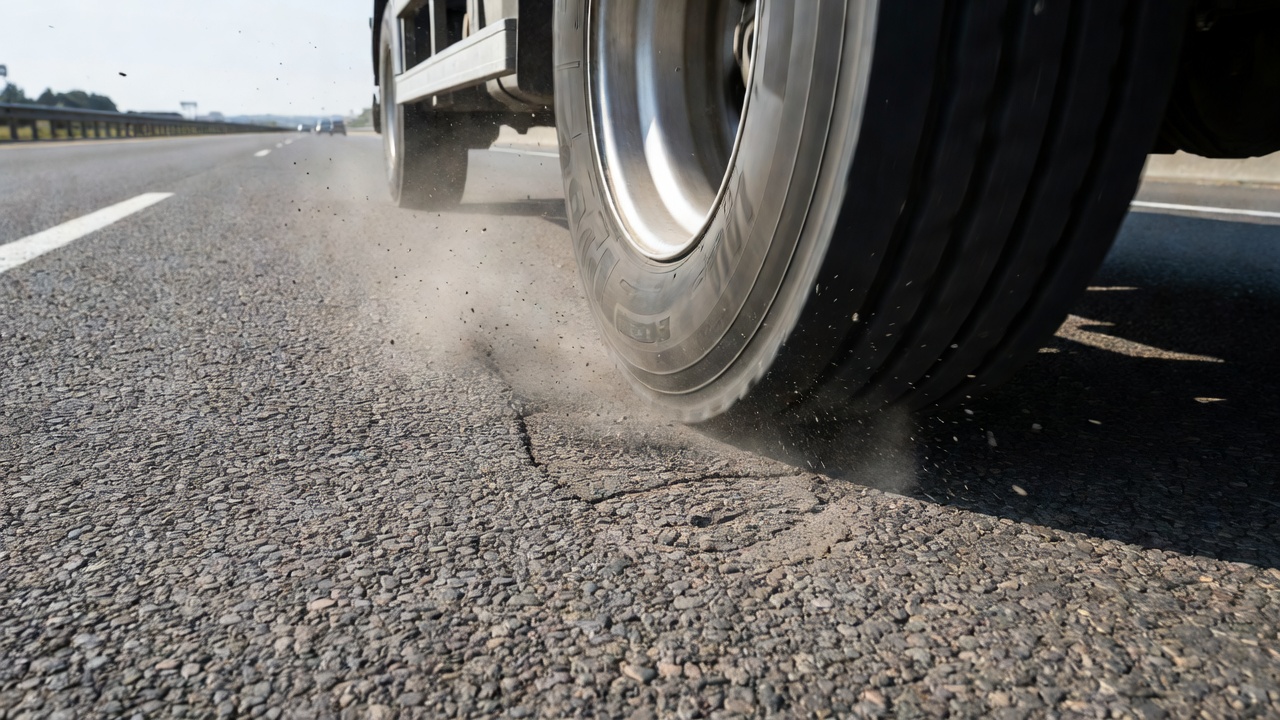
Tire-pavement noise, also termed tire-road interaction noise (TRIN), tire-road noise (TRN), or tire-pavement interaction noise (TPIN), is the acoustic energy generated at the contact interface between a rolling pneumatic tire and the pavement surface. It is acoustically incorrect to refer to “pavement noise” or “tire noise” in isolation, neither the pavement nor the tire alone produces noise, the sound is generated exclusively through their dynamic interaction during rolling contact.
The generation mechanisms fall into two fundamental categories: vibration mechanisms and aerodynamic mechanisms. These mechanisms operate simultaneously across overlapping frequency ranges and their relative contributions depend on vehicle speed, tire design, pavement texture, and environmental conditions.
Vibration Mechanisms
Tread impact occurs when the tread blocks, lugs, or ribs of the tire contact the pavement surface. Each tread element impacts the surface upon entry into the contact patch and separates upon exit. The impact forces excite vibrations in the tire tread, belt, sidewall, and carcass, which radiate sound primarily in the frequency range of 500-2000 Hz. The amplitude of tread impact noise is proportional to the texture amplitude and the square of the vehicle speed.
Texture excitation transfers the pavement surface profile (particularly macrotexture and megatexture wavelengths) into vibratory response of the tire structure. The tire tread rubber acts as a compliant filter, small-scale texture (microtexture, wavelengths below 0.5 mm) is absorbed by tire rubber deformation and does not produce significant vibration, while intermediate wavelengths (macrotexture 0.5-50 mm, megatexture 50-500 mm) directly excite tire vibrations. The relationship between texture wavelength λ and noise frequency f at vehicle speed V is given by the Doppler-like relation: f = V/λ, meaning that at 80 km/h, a macrotexture wavelength of 20 mm produces vibration at approximately 1100 Hz.
Stick-slip friction arises from relative tangential motion between tire tread rubber elements and the pavement surface within the contact patch. As the tire rotates, portions of the tread undergo slip relative to the pavement, generating frictional excitation. The stick-slip mechanism produces broadband noise content extending from low frequencies (200-500 Hz) into the mid-frequency range.
Stick-snap adhesion results from the adhesive bond formed between the tread rubber and the pavement surface under the normal load of the tire. As the tire rolls forward and the trailing edge of the contact patch lifts, these adhesive bonds break abruptly, releasing stored elastic energy as high-frequency acoustic radiation. The stick-snap mechanism predominantly contributes to noise in the 1000-4000 Hz range and is particularly pronounced on smooth, clean, dry surfaces with high rubber-surface adhesion.
Aerodynamic Mechanisms
Air pumping is the dominant aerodynamic noise mechanism. As the tire rolls forward, air trapped in the cavities formed between tread grooves and pavement surface irregularities is rapidly compressed and expelled at the leading edge of the contact patch. At the trailing edge, as the cavities open, air is abruptly sucked in to fill the partial vacuum created by the separating surfaces. This rapid displacement of air produces a characteristic broadband noise peak centered around 800-1200 Hz. The air pumping effect scales with the fourth power of speed, making it the dominant noise source at highway speeds. Pavements with high interconnected porosity are effective at suppressing air pumping because the air can escape vertically through the pavement pore structure rather than being expelled laterally.
Pipe resonance occurs in the longitudinal grooves of the tire tread pattern that form closed-end or open-ended acoustic tubes. As the tire rolls over the pavement, air in these grooves is excited into resonant oscillation at frequencies determined by the groove length and the speed of sound. Typical pipe resonance frequencies range from 500-3000 Hz depending on groove geometry. The resonance amplifies sound at specific frequencies, producing tonal components in the overall noise spectrum.
Helmholtz resonance happens in cavities formed between tire tread blocks and the pavement surface, acting as Helmholtz resonators, cavities connected to the external air through a narrow neck or opening. These resonators amplify sound at their natural frequency, which depends on cavity volume and neck geometry. Helmholtz resonance typically contributes to noise in the 500-2000 Hz range.
Air turbulence generated around the rotating tire produces broadband aerodynamic noise. The turbulent boundary layer on the tire surface and the wake behind the contact patch create pressure fluctuations that radiate as sound. Air turbulence noise becomes significant at very high speeds (above 120 km/h) but is generally secondary to vibration and air pumping mechanisms at normal traffic speeds.
Pavement Factors Influencing Noise
Pavement surface characteristics are the primary controllable factors in tire-pavement noise generation. The pavement parameters that most strongly influence noise are macrotexture, megatexture, porosity (air void content and connectivity), and acoustic absorption.
Macrotexture
Macrotexture comprises pavement surface deviations with wavelengths between 0.5 mm and 50 mm and amplitudes typically in the range of 0.2-5.0 mm, as defined in ISO 13473 and PIARC guidelines. This texture range directly coincides with the dimensions of tire tread elements and the contact patch interface, making it the most significant single pavement parameter for noise generation.
The mean profile depth (MPD) measured per ISO 13473-1 or the mean texture depth (MTD) measured per ASTM E965 (sand patch method) are the primary macrotexture indices. For dense-graded pavements, the relationship between macrotexture and noise follows a U-shaped curve: very smooth surfaces (MPD below 0.3 mm) increase noise through enhanced stick-snap adhesion, while very rough surfaces (MPD above 1.5 mm) increase noise through excessive tread impact and vibration excitation. The optimal macrotexture range for minimizing noise on dense pavements is approximately MPD of 0.5-0.8 mm.
The texture spectrum (the distribution of texture amplitude across wavelengths) is more informative than single-value indicators. The PIARC classification divides texture into four wavelength ranges: microtexture (λ < 0.5 mm), macrotexture (0.5-50 mm), megatexture (50-500 mm), and unevenness (500 mm-50 m). Each range contributes differently to noise: microtexture affects friction but is too fine to excite tire vibration, macrotexture is the primary driver of tire vibration noise, megatexture produces low-frequency noise and interior vehicle booming, unevenness affects ride quality but has minimal direct noise contribution.
Megatexture
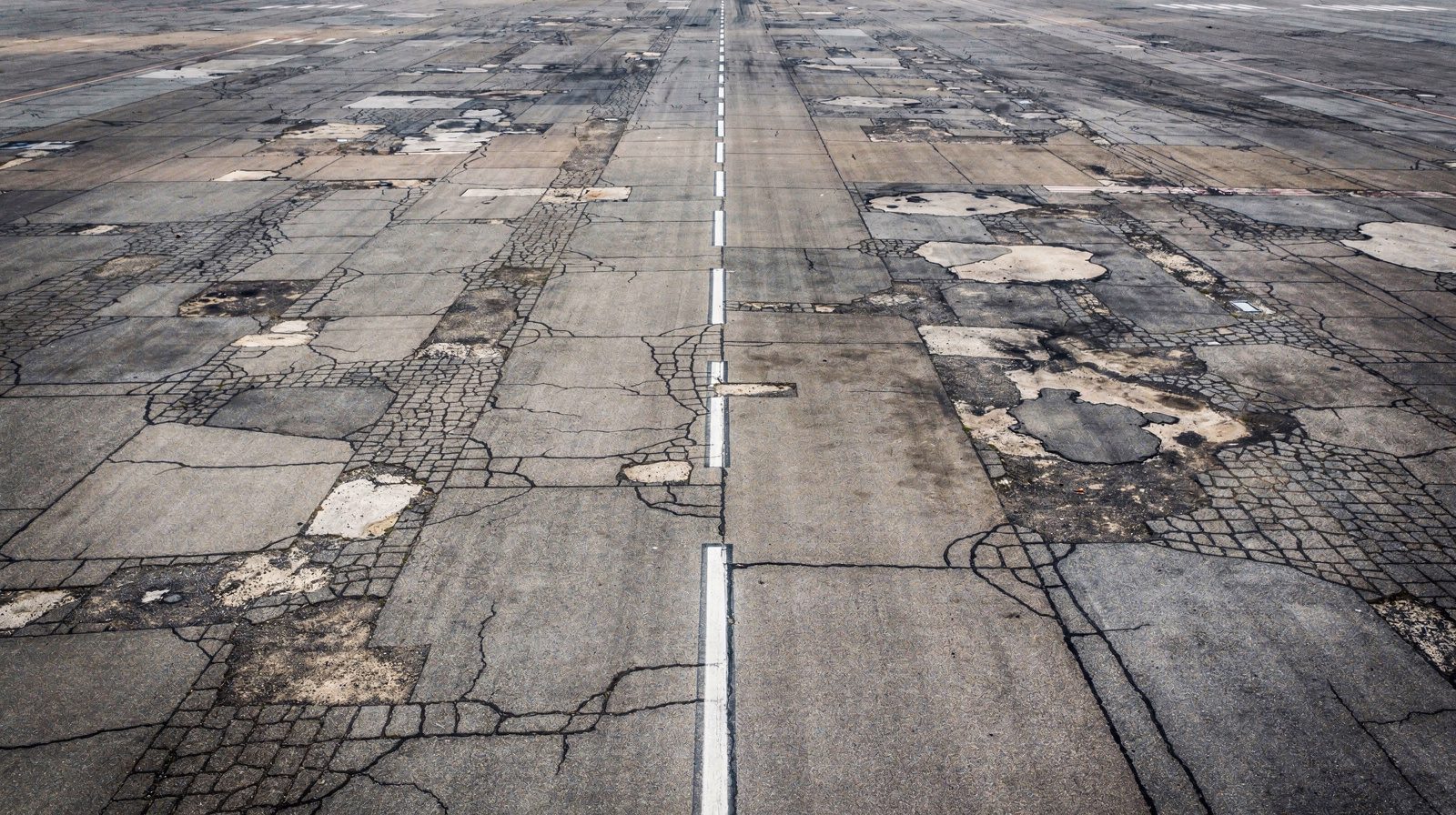
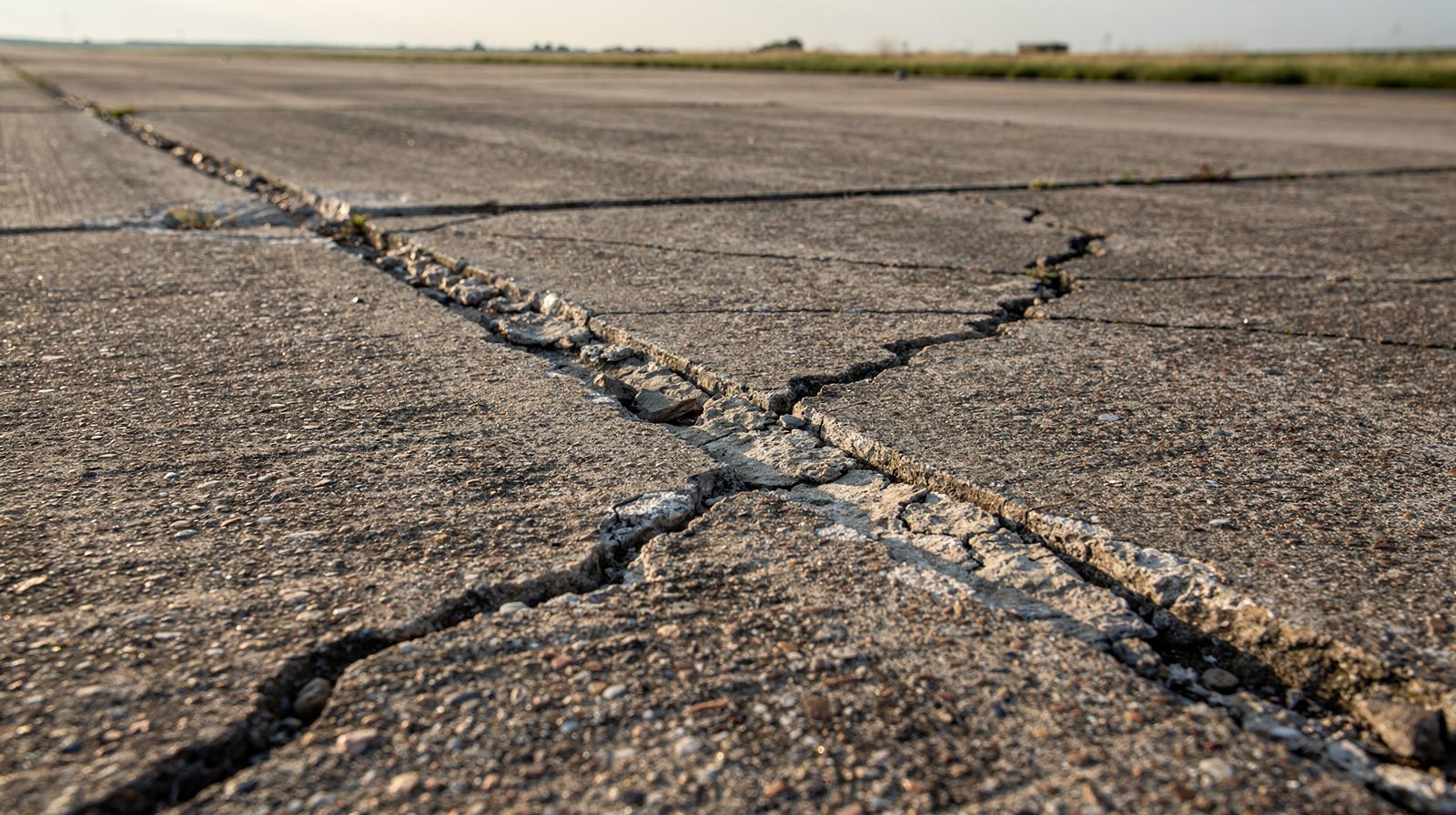
Megatexture includes surface deviations with wavelengths from 50 mm to 500 mm. This range includes larger surface features such as pavement distresses (potholes, spalls, patches, cracking), open-graded aggregate protrusions, transverse construction joints, and surface undulations. Megatexture produces low-frequency noise typically below 500 Hz, which is transmitted both as airborne sound and as structure-borne vibration through the tire, suspension, and vehicle body. Megatexture-related noise is particularly annoying to vehicle occupants because low-frequency sound is less effectively attenuated by vehicle soundproofing.
Inspection of megatexture is important for noise assessment because texture deterioration over time, raveling (aggregate loss), rutting (surface deformation), patching, and cracking, increases megatexture amplitude and correspondingly increases noise levels. A pavement that was initially quiet due to optimized macrotexture can become noisy due to progressive megatexture development.
Porosity and Air Void Content
Pavement porosity refers to the volume of interconnected air voids within the pavement mixture, expressed as a percentage of the total pavement volume. Dense-graded hot mix asphalt (HMA) typically has 3-8% air voids, while open-graded mixtures have 15-25% air voids. The interconnected void system in porous pavements provides two noise reduction mechanisms:
Sound absorption: As sound waves from the tire-pavement interface propagate into the pavement surface, they enter the porous structure and are attenuated through viscous friction and thermal damping within the tortuous pore network. Sound absorption is quantified by the sound absorption coefficient α, measured per ISO 10534 or ASTM E1050 using impedance tube methods. Porous pavements can achieve sound absorption coefficients of 0.3-0.8 in the 500-2000 Hz range, significantly reducing the reflected sound energy.
Air pumping suppression: The interconnected pore structure provides an escape path for air displaced by the rolling tire. Instead of being forcibly expelled laterally at the leading edge of the contact patch (producing loud air pumping noise), the air can flow vertically into the pavement. This mechanism is most effective for frequencies around 1000 Hz where air pumping is dominant.
The noise reduction benefit increases with air void content up to approximately 22-25%, beyond which further increases provide diminishing acoustic returns and may compromise pavement durability. Pore connectivity (rather than total porosity) is the critical parameter, isolated voids do not contribute to sound absorption or air pumping suppression.
Acoustic Absorption and Pavement Stiffness
The acoustic impedance of the pavement surface determines how much sound energy is reflected versus absorbed at the air-pavement boundary. For dense, non-porous pavements such as conventional dense-graded asphalt and Portland cement concrete, the surface is acoustically hard with a reflection coefficient near 1.0, meaning essentially all incident sound energy is reflected. Porous pavements have lower acoustic impedance, allowing sound energy to penetrate the surface.
Pavement stiffness (elastic modulus) also influences noise generation indirectly. Stiffer pavements produce less deflection under tire load, which reduces low-frequency noise from pavement flexing. However, stiffness also affects tire-pavement contact mechanics and vibration transmission. Concrete pavements are significantly stiffer than asphalt pavements (elastic modulus 30-40 GPa for concrete versus 2-5 GPa for asphalt), which influences the tire vibration response.
Tire Factors
Tire design parameters significantly influence the noise generated at the tire-pavement interface. The primary tire factors include tread pattern design, tire construction, rubber compound properties, and tire condition.
Tread Pattern Design
The tread pattern is the single most important tire factor in noise generation. Tread elements such as lugs, blocks, ribs, and grooves interact with the pavement surface to produce both vibration and aerodynamic noise. Key design parameters include:
Tread block geometry: The size, shape, spacing, and orientation of tread blocks determine the impact forces and air pumping characteristics. Larger blocks produce higher impact noise but may reduce air pumping by minimizing cavity volume. Block spacing (pitch) determines the frequency of periodic impact excitation. Variable pitch sequencing (pitch randomization) is widely used to spread impact energy across a broader frequency range, reducing tonal peaks and perceived loudness.
Groove configuration: Longitudinal grooves (circumferential channels) produce pipe resonance noise at frequencies determined by groove length. Transverse grooves (lateral channels) enhance air pumping by trapping and releasing air. The groove width, depth, and wall angle affect both noise generation and water drainage.
Sipe density: Sipes (thin slots in tread blocks) modify the stiffness of tread elements and affect the contact pressure distribution. Higher sipe density reduces tread block stiffness, which can reduce impact noise but may increase stick-slip excitation.
Tire Construction
Belt and carcass construction: The belt package (steel belts with rubber interlayers) and carcass plies determine the tire’s structural stiffness and vibrational response. Radial tires (the standard for passenger vehicles) produce different noise characteristics than bias-ply tires due to differences in belt stiffness and damping.
Sidewall design: Sidewall geometry and material affect the transmission of noise from the contact patch to the surrounding air. Stiffer sidewalls transmit more vibration energy to the air, increasing radiated noise.
Tire inflation pressure: Lower inflation pressure increases the contact patch area and reduces the effective stiffness of the tire structure, which modifies the contact mechanics and noise generation. Under-inflated tires typically produce increased low-frequency noise due to larger contact area and altered tread element loading.
Tire size and width: Wider tires produce larger contact patches and increased air displacement, potentially increasing noise levels. However, wider tires also spread the load over a larger area, reducing contact pressure and tread element impact forces.
Rubber Compound Properties
The viscoelastic properties of tread rubber compounds affect both noise generation and transmission. Hardness (measured by Shore A durometer) determines tread element stiffness, harder compounds increase impact noise but may reduce stick-snap adhesion. Damping (loss modulus) affects the transmission of vibration energy through the tire structure, higher damping reduces noise radiation but increases internal heat generation. Temperature sensitivity is significant because rubber properties change with temperature, colder temperatures increase rubber hardness, typically increasing noise levels by 1-3 dB(A) compared to warm conditions.
Noise Measurement Methods
Standardized measurement methods are essential for quantifying tire-pavement noise, classifying pavement surfaces, and verifying compliance with noise specifications. Three primary methods are internationally recognized: the Close Proximity (CPX) method, the Statistical Pass-By (SPB) method, and the On-Board Sound Intensity (OBSI) method.
Close Proximity (CPX) Method, ISO 11819-2
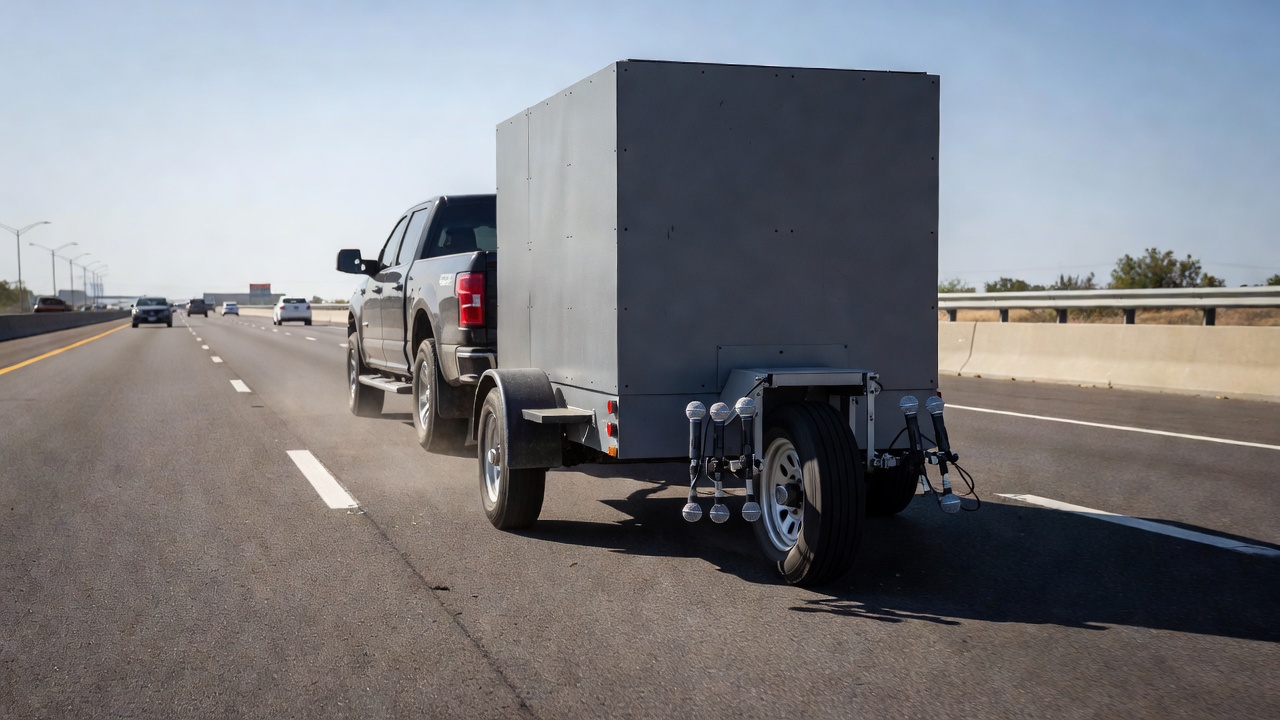
The CPX method measures tire-pavement noise at close range using microphones mounted on a dedicated measurement trailer or vehicle, positioned typically 200 mm from the tire sidewall and 100-200 mm above the road surface. The measurement setup is enclosed within an acoustic shielding housing to minimize wind noise and external sound contamination.
Standard reference tire: The CPX method specifies the use of the Standard Reference Test Tire (SRTT), the ASTM F2493 P225/60R16 or P215/70R15 tire, to ensure comparability across measurements. The SRTT has a standardized tread pattern and rubber compound to eliminate tire variability as a factor.
Measurement protocol: The CPX trailer is towed at a constant speed, typically 50, 65, 80, and 100 km/h (or other specified speeds). Sound pressure levels are recorded continuously as the vehicle traverses the pavement section. Results are reported as the CPX noise level in dB(A), averaged over the test section length (typically 100-200 m per homogeneous section).
Advantages: CPX can test long continuous sections of pavement efficiently, it isolates tire-pavement noise from other vehicle noise sources (engine, exhaust, aerodynamic), results are repeatable with standard deviation of approximately 0.5-1.0 dB(A), the method is suitable for network-level pavement noise surveys.
Limitations: The close microphone placement may not fully represent the noise heard by roadside observers (the far-field noise), only one tire size and type (SRTT) is tested, the trailer requires traffic management during testing, results are influenced by ambient temperature and require temperature correction.
Statistical Pass-By (SPB) Method, ISO 11819-1
The SPB method measures the maximum A-weighted sound pressure level generated by individual vehicles in normal traffic flow as they pass a roadside microphone positioned 7.5 m from the center of the travel lane and 1.2 m above the road surface (7.5 m from the microphone to the vehicle lane centerline for each direction of travel).
Classification by vehicle category: Vehicles are categorized into classes defined in ISO 11819-1. The measured pass-by levels are correlated with vehicle speed, and a regression line is established for each vehicle category. The regression is then used to determine the SPB index level at a reference speed (typically 80 km/h) for each vehicle category. The pavement is classified using the SPB index value.
Advantages: SPB measures the actual noise experienced by roadside residents under real traffic conditions, it captures all vehicle noise sources (including engine and exhaust contributions) that contribute to community noise exposure, the method requires no special test vehicle or traffic control.
Limitations: Results are influenced by traffic composition, speed distribution, and environmental conditions, a large number of vehicle passes (typically 100-200) is required for statistical reliability, the method cannot isolate tire-pavement noise from propulsion noise, the test section length must be at least 100 m, variations in vehicle fleet composition over time reduce comparability.
On-Board Sound Intensity (OBSI) Method, AASHTO TP 76 / ASTM E3303
The OBSI method measures the sound intensity (rather than sound pressure) at the tire-pavement interface using a p-u sound intensity probe (a pair of matched phase-aligned microphones or a microphone-particle-velocity probe) mounted on the test vehicle. The probe is positioned within 75-100 mm of the tire sidewall and 50-100 mm above the road surface.
Advantages: Sound intensity measurement is unaffected by background noise from other sources (engine, exhaust, wind, other traffic) because intensity is a vector quantity that allows discrimination of sound energy propagating from the measurement direction versus extraneous sources, OBSI can isolate the tire-pavement noise component even in noisy environments, the method provides frequency-resolved intensity spectra from 315-5000 Hz, OBSI can be performed during normal driving without traffic control.
Correlation to CPX: OBSI results are highly correlated with CPX measurements (R² typically >0.9) because both methods measure near-field tire-pavement noise. The OBSI sound intensity level in dB(A) is numerically similar to the CPX sound pressure level for the same pavement and tire combination, typically within 1-2 dB(A).
Limitations: The equipment is specialized and requires careful calibration, the probe positioning is critical and must be maintained within tight tolerances, OBSI measures near-field intensity which requires conversion for far-field noise prediction, the method is not yet as widely standardized as CPX.
Quieter Pavement Types
Several specialized pavement types have been developed to reduce tire-pavement noise. The noise reduction mechanisms differ by pavement type, as summarized below:
| Pavement Type | Typical Noise Reduction | Primary Mechanism | Typical Service Life | Typical Air Voids |
|---|---|---|---|---|
| Dense-graded HMA | Reference (0 dB) | – | 10-15 years | 3-8% |
| OGFC (12.5 mm NMAS) | 3-5 dB(A) | Absorption + air pumping suppression | 8-12 years | 15-22% |
| Fine OGFC (9.5 mm NMAS) | 4-6 dB(A) | Absorption + finer texture | 8-12 years | 15-22% |
| SMA (Stone Mastic Asphalt) | 1-3 dB(A) | Optimized macrotexture | 12-18 years | 3-6% |
| Porous Friction Course | 4-7 dB(A) | Porosity + absorption | 7-12 years | 18-25% |
| Diamond-ground concrete | 2-5 dB(A) | Longitudinal texture | 12-20 years | N/A (concrete) |
| Exposed aggregate concrete | 2-4 dB(A) | Optimized macrotexture | 15-25 years | N/A (concrete) |
Open-Graded Friction Course (OGFC)
OGFC, also known as permeable friction course (PFC) or porous asphalt, is an open-graded asphalt mixture with 15-25% air voids achieved through a gap-graded aggregate gradation with high coarse aggregate content and low fines content. OGFC is placed as a thin wearing course (typically 20-40 mm thickness) on top of a dense-graded structural layer.
Noise reduction: OGFC typically provides 3-6 dB(A) noise reduction compared to dense-graded HMA. The reduction is frequency-dependent, with maximum effectiveness in the 1000-4000 Hz range where air pumping noise is dominant. The noise reduction is equivalent to halving the traffic volume (a 3 dB reduction) or more.
Mix design: OGFC mix design follows ASTM D7064/D7064M or agency-specific standards. Key design parameters include binder type (typically polymer-modified PG 76-22 or higher), binder content (5.5-7.0%), fiber stabilization (0.3-0.4% cellulose or mineral fibers to prevent draindown), and aggregate quality (Los Angeles abrasion loss maximum 45%). Recent research has shown that increasing fines content (percent passing 75 μm sieve) to 3-6% improves durability while maintaining adequate permeability and noise reduction.
Noise deterioration: OGFC noise reduction diminishes over time due to pore clogging and raveling. Studies indicate that noise reduction benefits last approximately 5-10 years, after which noise levels may approach or exceed those of conventional dense-graded pavements. The deterioration rate depends on traffic volume, climate, aggregate quality, and maintenance practices.
Stone Mastic Asphalt (SMA)
SMA, also known as stone matrix asphalt, is a gap-graded mixture with a coarse aggregate stone-on-stone skeleton and a rich mortar binder (6-7% asphalt content, 8-12% mineral filler). SMA has lower air voids (3-6%) than OGFC but provides noise reduction through optimized macrotexture rather than porosity.
Noise reduction: SMA provides approximately 1-3 dB(A) noise reduction compared to dense-graded HMA. The reduction is more moderate than OGFC but more durable over the pavement life. SMA noise reduction is attributable to the uniform macrotexture produced by the stone-on-stone aggregate skeleton, which reduces both impact excitation and air pumping compared to conventional dense-graded surfaces.
Advantages over OGFC: SMA has significantly longer service life (12-18 years versus 8-12 years for OGFC), better resistance to raveling, and better structural performance under heavy traffic. SMA is recommended for high-stress applications such as intersections, bus stops, and heavy truck routes where OGFC durability is inadequate.
Diamond-Ground Concrete
Diamond grinding is a concrete pavement restoration technique that uses a rotating drum fitted with diamond-tipped saw blades to produce a longitudinal texture on the concrete surface. The blades cut parallel grooves (typically 2-3 mm wide and 3-6 mm deep at 3-4 mm spacing), creating a uniform, closely-spaced texture.
Noise reduction: Diamond-ground concrete reduces noise by 2-5 dB(A) compared to concrete surfaces with transverse tining (the traditional concrete texturing method). The longitudinal texture produces less periodic impact excitation than transverse tining, reducing tonal components in the noise spectrum. The groove geometry (width, depth, spacing, and lands between grooves) can be optimized for noise reduction, the Next Generation Concrete Surface (NGCS) design with closer blade spacing produces noise levels comparable to HMA.
Noise deterioration: Diamond-ground noise reduction is relatively stable over time, with gradual increases as the grooves wear from traffic polishing. The texture life depends on aggregate hardness and traffic abrasion.
Other Quiet Pavement Surfaces
Thin asphalt layers: Very thin asphalt concrete (VTAC) and ultra-thin asphalt concrete (UTAC) with maximum aggregate sizes of 6-10 mm produce fine macrotexture that reduces noise. These are typically 15-25 mm thick and can achieve 2-4 dB(A) noise reduction.
Porous concrete: Pervious concrete with 15-30% interconnected voids can provide noise reduction similar to OGFC, but its structural limitations generally restrict its use to low-speed, light-traffic applications.
Noise and Texture Deterioration Over Time
The acoustic performance of all pavement surfaces changes over time through a process of texture evolution. Understanding this deterioration is essential for pavement inspection, maintenance planning, and noise management.
Deterioration Mechanisms
Pore clogging: For porous pavements (OGFC, PFC), the interconnected void system progressively fills with dust, sand, leaves, tire wear particles, and other debris. Clogging reduces the sound absorption coefficient and suppresses the air pumping reduction mechanism. Research shows that the sound absorption coefficient of OGFC can decrease from 0.6-0.8 (new) to below 0.2 (clogged) within 3-5 years without maintenance.
Ravel progression: Raveling, the progressive loss of aggregate particles from the pavement surface, increases macrotexture and megatexture amplitudes. The random loss of aggregate creates surface irregularities that increase impact excitation and produce broadband noise increases. Raveling is the primary cause of noise increase in OGFC after the initial clogging period.
Aggregate polishing: Surface aggregates become polished under traffic, reducing microtexture but typically having a secondary effect on noise compared to macrotexture and megatexture changes.
Structural deterioration: Cracking, rutting, patching, and joint deterioration increase megatexture amplitude, producing low-frequency noise increases and structure-borne vibration.
Noise Increase Rates
Field studies of quiet pavement performance have documented typical noise increase rates:
- OGFC: Initial noise reduction of 4-6 dB(A) relative to dense-graded HMA, deteriorating at approximately 0.3-0.5 dB(A) per year. After 7-10 years, noise levels may equal or exceed dense-graded HMA.
- SMA: Initial noise reduction of 1-3 dB(A), deteriorating at approximately 0.1-0.2 dB(A) per year. SMA maintains noise benefit for 10-15 years.
- Diamond-ground concrete: Initial noise reduction of 2-5 dB(A), with slow deterioration of approximately 0.1-0.3 dB(A) per year depending on traffic.
Temperature Effects
Pavement noise increases with decreasing temperature due to increased tire rubber stiffness. The temperature effect is approximately 0.1 dB(A) per °C, meaning that noise levels measured at 0°C are approximately 3 dB(A) higher than at 30°C for the same pavement. Temperature correction is applied to standardize noise measurements to a reference temperature (typically 20°C).
Noise Specifications
Pavement noise specifications establish maximum allowable noise levels for new and existing pavements. Specifications vary by jurisdiction but generally reference one of the standardized measurement methods (CPX, SPB, or OBSI) and define thresholds for pavement acceptance.
European Specifications
Several European countries have implemented noise classification systems for pavement surfaces. The Nordic Noise Classification system (Sweden, Norway, Denmark, Finland) defines noise classes A-D based on CPX measurements at 80 km/h, with Class A requiring CPX levels below 90 dB(A) for passenger car tires.
The Netherlands has implemented a comprehensive noise specification with:
- Maximum CPX noise levels for new pavements
- Performance-based maintenance triggers when noise exceeds defined thresholds
- Quiet pavement requirement for noise-sensitive zones
- Bonus/malus financial incentives based on measured noise performance
France uses a classification system separating pavements into low-noise, intermediate, and noisy categories based on CPX measurements at 80 km/h.
United States Specifications
The FHWA Quiet Pavement Pilot Programs in California, Arizona, and Texas have established noise specifications for noise-abatement projects. California’s specification requires CPX or OBSI measurements at acceptance and at regular intervals during service life. The California Department of Transportation (Caltrans) specifies maximum OBSI levels of 98-100 dB(A) depending on pavement type.
The Arizona Department of Transportation (ADOT) Quiet Pavement Program has established specifications requiring noise reduction of 3 dB(A) or greater compared to a standard dense-graded HMA reference surface, with measurements performed using the OBSI method.
Measurement Certification
Noise measurements for specification compliance must be performed by certified operators using calibrated equipment. Temperature, wind speed (typically < 5 m/s), pavement conditions (dry), and background noise levels are all controlled to ensure valid measurements.
Inspection of Texture for Noise
Pavement texture inspection for noise assessment involves measuring the surface characteristics that correlate with acoustic performance. The inspection is performed both at pavement acceptance (to verify initial noise performance) and periodically during service life (to monitor deterioration and trigger maintenance).
Texture Measurement Methods
Mean Profile Depth (MPD): Measured per ISO 13473-1 using laser profilometers. A 100 mm profile is divided into two 50 mm segments, and the mean profile depth is calculated as the average of the highest peaks minus the mean level. MPD correlates with CPX noise level, with the optimal range for minimal noise being 0.5-0.8 mm for dense pavements.
Mean Texture Depth (MTD): Measured per ASTM E965 using the sand patch method. A known volume of sand is spread over a circular area on the pavement surface, and the diameter of the patch is measured. MTD correlates well with MPD and provides a volumetric measure of texture depth.
Texture Profile Analysis: Laser profilometers can measure texture spectra across the full wavelength range (microtexture through unevenness). The spectral analysis provides more detailed insight than single-value parameters, allowing identification of specific wavelength bands that contribute to noise.
Sound Absorption Measurement: For porous pavements, the sound absorption coefficient is measured in-situ using impedance tube methods (ISO 10534) or by analysis of drilled cores in laboratory impedance tubes. A minimum sound absorption coefficient (typically 0.3-0.5 at 1000 Hz) is specified for quiet pavement acceptance.
Correlation Between Texture and Noise
The relationship between MPD and noise follows a U-shaped curve:
- MPD < 0.3 mm: High noise due to stick-snap adhesion and increased contact area
- MPD 0.5-0.8 mm: Minimum noise for dense pavements
- MPD > 1.2 mm: Increasing noise due to tread impact excitation
For porous pavements, the relationship is more complex because sound absorption and air pumping mechanisms dominate over texture effects.
Inspection Protocol for Noise-Related Texture Changes
- Reference measurement: Initial texture and noise measurement performed within 30 days of pavement construction
- Annual monitoring: Repeat texture measurement (MPD, spectral analysis) at minimum annually, with noise measurement (CPX or OBSI) every 2-3 years
- Trend analysis: Track changes in MPD, texture spectrum, and noise level over time to identify deterioration rates
- Trigger-based maintenance: When noise level increase exceeds 2 dB(A) from reference (or absolute threshold), initiate maintenance assessment including:
- Visual inspection for raveling, clogging, and surface defects
- Permeability testing (for porous pavements) per ASTM C1701
- Core sampling for air void content verification
Airport Pavement Noise
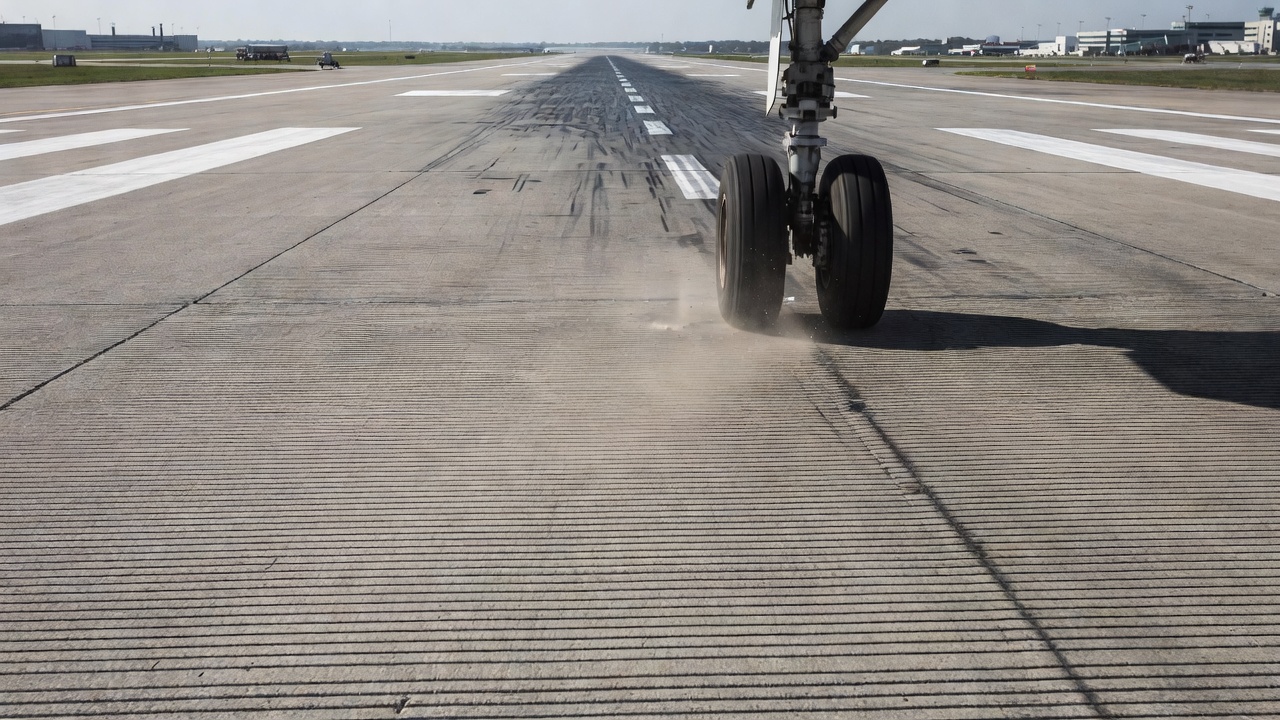
Aircraft operations generate noise from multiple sources including engines, aerodynamic flow, and tire-pavement interaction. While aircraft engine noise dominates during takeoff and climb-out, tire-pavement interaction noise becomes significant during landing rollout and taxiing operations.
Runway Surface Texture and Noise
Airport runways require specific surface texture characteristics for skid resistance and hydroplaning prevention, as specified in ICAO Annex 14 Volume I and FAA Advisory Circular 150/5320-12C.
Grooving: Runway grooving (narrow transverse or longitudinal grooves cut into the concrete or asphalt surface) is the primary method for providing macrotexture for aircraft operations at high speeds. Typical groove dimensions are 6 mm wide, 6 mm deep, spaced at 38 mm centers. Grooving effectively channels water away from the tire footprint, reducing hydroplaning risk at high speeds encountered during landing.
Noise impact of grooving: The regular, periodic pattern of runway grooves produces a tonal component in the noise spectrum at frequencies determined by groove spacing and aircraft speed. During landing at 250-270 km/h (135-145 knots), 38 mm grooves produce tonal noise at approximately 1800-2000 Hz. This tonal noise is audible in airport communities adjacent to the runway end.
Porous Friction Course (PFC) on runways: Some airports have implemented PFC overlays on runways to reduce noise and improve skid resistance. PFC provides 4-7 dB(A) noise reduction compared to grooved concrete surfaces. FAA AC 150/5320-12C provides specifications for PFC on runways including minimum thickness (38 mm), binder grade (PG 76-22 minimum), and air void content (18-22%).
ICAO Noise Certification
ICAO Annex 16 Volume I establishes aircraft noise certification standards. While these standards primarily address engine and airframe noise, the operational context includes cumulative noise exposure that encompasses all sources including tire-pavement interaction during landing. The ICAO Balanced Approach to noise management (ICAO Doc 9829) includes consideration of land-use planning, operational measures, and noise abatement procedures near airports.
Airport Pavement Inspection for Noise
Airport pavement inspection for noise-related texture deterioration follows similar principles to highway pavement inspection but with additional focus areas:
- Groove wear monitoring: Measure groove depth reduction over time (acceptable minimum per FAA is typically 3 mm)
- PFC clogging assessment: Permeability and sound absorption checks for porous friction courses on runways
- Rubber deposit removal: Aircraft tire rubber deposits on runway surfaces fill texture voids and increase noise, regular removal (typically annually or more frequently at high-traffic airports) is essential
Environmental Noise Regulations
Tire-pavement noise is regulated within the broader framework of environmental noise management, with regulations addressing noise sources (vehicles, tires, pavements), noise exposure (community noise levels), and noise mitigation (quiet pavements, noise barriers, land-use planning).
European Union Regulatory Framework
The Environmental Noise Directive (END) 2002/49/EC is the primary EU legislation for environmental noise management. The END requires:
- Strategic Noise Mapping: Member states must produce noise maps for major roads (more than 3 million vehicle passages per year), railways, airports, and urban agglomerations. Noise indicators include Lden (day-evening-night level) and Lnight (night-time level).
- Action Plans: Based on noise mapping results, member states must develop action plans to manage noise issues, including quiet pavement implementation where appropriate.
- Public Information: Noise maps and action plans must be made publicly available.
The END sets no binding noise limit values but requires member states to establish their own criteria. Typical trigger levels for noise action plans in EU countries range from 55-65 dB(A) Lden depending on land use category.
Vehicle noise limits are established under Regulation (EU) No 540/2014, which sets pass-by noise limits for new vehicle types. The regulation includes phased reduction targets with limits decreasing from 2016 to 2026. Limits for passenger cars are 70-72 dB(A) depending on power-to-weight ratio.
Tire noise labeling under Regulation (EU) 2020/740 requires tire manufacturers to label tires with their external rolling noise level in dB(A) and an EU noise class rating (A, B, or C). The regulation covers passenger car, light truck, and heavy truck tires.
World Health Organization (WHO) Guidelines
The WHO Environmental Noise Guidelines for the European Region (2018) provide evidence-based recommendations for noise exposure levels to protect public health. Key recommendations include:
- Road traffic noise: Recommended Lden below 53 dB(A) and Lnight below 45 dB(A)
- Aircraft noise: Recommended Lden below 45 dB(A) and Lnight below 40 dB(A)
These recommendations are based on systematic review of health evidence linking noise exposure to cardiovascular disease, cognitive impairment, sleep disturbance, annoyance, and tinnitus.
United States Regulatory Framework
The FHWA Noise Abatement Criteria (23 CFR 772) establish noise abatement requirements for federal-aid highway projects. Noise impacts are defined when predicted traffic noise levels approach or exceed the Noise Abatement Criteria (NAC) values:
- Category A (residential): 66 dB(A) L10h (hourly A-weighted sound level exceeded 10% of the time)
- Category B (active sports areas): 71 dB(A) L10h
- Category C (developed lands): 76 dB(A) L10h
When noise impacts are identified, FHWA requires consideration of noise abatement measures including quiet pavements, noise barriers, and traffic management.
The EPA Office of Noise Abatement and Control provides information on noise levels and health effects, though federal noise regulation for transportation sources is primarily implemented through FHWA, FAA, and NHTSA authorities.
ICAO Balanced Approach to Noise Management
ICAO Doc 9829 describes the Balanced Approach to aircraft noise management, consisting of four principal elements:
- Reduction at source (Chapter 14 aircraft noise certification standards)
- Land-use planning and management (ICAO Doc 9184, Airport Planning Manual, Part 2)
- Operational measures (preferential runways, noise abatement departure procedures, thrust reduction)
- Operating restrictions (noise-related operational limits at specific airports)
While the Balanced Approach primarily addresses aircraft engine and airframe noise, runway surface texture management (including PFC overlay and grooving) falls under operational measures and source reduction considerations.
Key Standards and References
| Standard | Description | Application |
|---|---|---|
| ISO 11819-1 | SPB method for traffic noise measurement | Pavement classification |
| ISO 11819-2 | CPX method for tire-pavement noise | Pavement classification |
| ISO 13473-1 | Texture measurement using profilometers | Texture characterization |
| AASHTO TP 76 | OBSI measurement standard | Pavement noise assessment |
| ASTM E965 | Sand patch method for MTD | Texture depth measurement |
| ASTM E3303 | OBSI method for tire-pavement noise | Noise measurement |
| FHWA 23 CFR 772 | Noise abatement criteria | US highway projects |
| EU 2002/49/EC | Environmental Noise Directive | EU noise management |
| ICAO Annex 16 Vol I | Aircraft noise certification | Aircraft/airport noise |
| WHO Guidelines 2018 | Health-based noise recommendations | Public health protection |
Frequently Asked Questions
- What causes tire-pavement noise?
- Tire-pavement noise is caused by two main categories of physical mechanisms: vibration mechanisms and aerodynamic mechanisms. Vibration mechanisms include tread impact (the impact of tire tread elements on the pavement surface), texture excitation (vibration induced by pavement macrotexture and megatexture), stick-slip friction (tangential friction forces at the tire-pavement contact patch), and stick-snap adhesion (adhesive forces breaking as the tire lifts from the surface). Aerodynamic mechanisms include air pumping (air compressed and expelled from cavities in the tread and pavement surface as the tire rolls over them), pipe resonance (air oscillation in the longitudinal grooves of the tire tread pattern), Helmholtz resonance (air in cavities acting as resonators), and air turbulence around the rolling tire. At speeds above 40-50 km/h, these tire-pavement interaction mechanisms dominate over engine and powertrain noise.
- How is pavement noise measured?
- Pavement noise is measured using three primary standardized methods. The Close Proximity (CPX) method (ISO 11819-2) uses microphones mounted on a trailer within an acoustically insulated enclosure positioned close to the tire-pavement interface, typically 200 mm from the tire sidewall and 100 mm above the road surface. The Statistical Pass-By (SPB) method (ISO 11819-1) uses a roadside microphone positioned 7.5 m from the center of the travel lane and 1.2 m above the road surface, recording the maximum pass-by noise level of individual vehicles in free-flowing traffic. The On-Board Sound Intensity (OBSI) method (AASHTO TP 76 / ASTM E3303) uses a sound intensity probe mounted near the tire-pavement interface on a test vehicle, measuring sound intensity rather than sound pressure, which allows isolation of tire-pavement noise from other vehicle noise sources.
- Which pavement types are the quietest?
- The quietest pavement types are open-graded and porous mixtures with high air void content and small nominal maximum aggregate size (NMAS). Open-Graded Friction Course (OGFC) with 15-25% air voids typically provides 3-6 dB(A) noise reduction compared to dense-graded hot mix asphalt. Porous Friction Course (PFC) offers similar benefits. Stone Mastic Asphalt (SMA) provides a moderate 1-3 dB(A) reduction. On concrete pavements, diamond grinding with specific blade configurations produces a longitudinal texture that reduces noise by 2-5 dB(A) compared to conventional transverse tining. Exposed aggregate concrete can also reduce noise. Fine-graded OGFC (9.5 mm NMAS) is generally quieter than coarser mixtures (12.5 mm NMAS). The noise reduction is frequency-dependent, with porous pavements most effective in the 1-4 kHz range where they suppress the air pumping mechanism.
- Does pavement noise increase over time?
- Yes, tire-pavement noise generally increases as pavements age, particularly for quiet pavement surfaces. For open-graded and porous pavements, noise reduction benefits diminish over 5-10 years due to several mechanisms: pore clogging by dust, sand, and debris reduces sound absorption capacity, raveling (loss of aggregate) creates a rougher texture, aggregate polishing reduces surface friction characteristics, and structural deterioration increases megatexture. Studies show that initially quiet OGFC surfaces can become louder than conventional dense-graded asphalt after 7-10 years due to raveling and texture deterioration. Regular cleaning using regenerative-air vacuum sweeping can help restore some acoustic performance by removing clogged debris from the pore structure. The rate of noise increase depends on traffic volume, climate conditions, and maintenance practices.
- What are the environmental noise regulations for pavement?
- Environmental noise regulations vary by jurisdiction. The European Union's Environmental Noise Directive (2002/49/EC) requires member states to create strategic noise maps and action plans for major roads, railways, and airports. In the United States, the FHWA provides noise abatement criteria (23 CFR 772) for highway projects, requiring consideration of noise mitigation when traffic noise levels approach or exceed 66-67 dB(A) depending on land use category. The World Health Organization (WHO) recommends that road traffic noise levels not exceed 53 dB(A) Lden (day-evening-night level) to protect public health. For vehicle and tire certification, the EU has pass-by noise limits per Regulation (EU) No 540/2014 and tire noise labeling requirements per Regulation (EU) 2020/740. ICAO Annex 16 Volume I sets aircraft noise certification standards, including Chapter 14 limits.