What is Airport Pavement?
Pavement – Prepared Surface for Aircraft Operations
Airport pavement is the foundation of airside operations, the engineered surface supporting takeoff, landing, taxiing, and parking of aircraft. These critical infrastructure components include runways, taxiways, aprons, and helipads, all meticulously designed to handle massive, concentrated aircraft loads, deliver reliable friction, and withstand harsh operational and environmental challenges.
Definition and Overview
Airport pavement is a multilayered structure, typically comprising a surface course, base, subbase, and subgrade. Each layer serves a distinct function in distributing the intense wheel loads of aircraft, facilitating drainage, and resisting wear, chemical attack, and weathering. Unlike road pavements, airport pavements must handle much heavier, more concentrated loads, along with unique demands such as:
- Maintaining exceptional smoothness for high-speed aircraft operations
- Providing high friction under all weather conditions to prevent hydroplaning
- Minimizing Foreign Object Debris (FOD), which can endanger jet engines
- Withstanding exposure to jet fuel, deicing chemicals, and hydraulic fluids
International standards (e.g., ICAO, FAA, EASA) dictate stringent design, construction, and maintenance requirements to ensure that airport pavements deliver safety, reliability, and operational efficiency over their 20–30+ year lifespan.
Functions and Importance
Airport pavements are vital for:
- Load Distribution: Dispersing concentrated aircraft wheel loads safely to prevent structural failure.
- Surface Integrity: Delivering a smooth, stable platform to avoid aircraft damage or control loss.
- Friction and Skid Resistance: Enabling safe braking and maneuvering, especially in wet or icy weather.
- Durability: Resisting cycles of loading, temperature extremes, chemical attack, and operational wear.
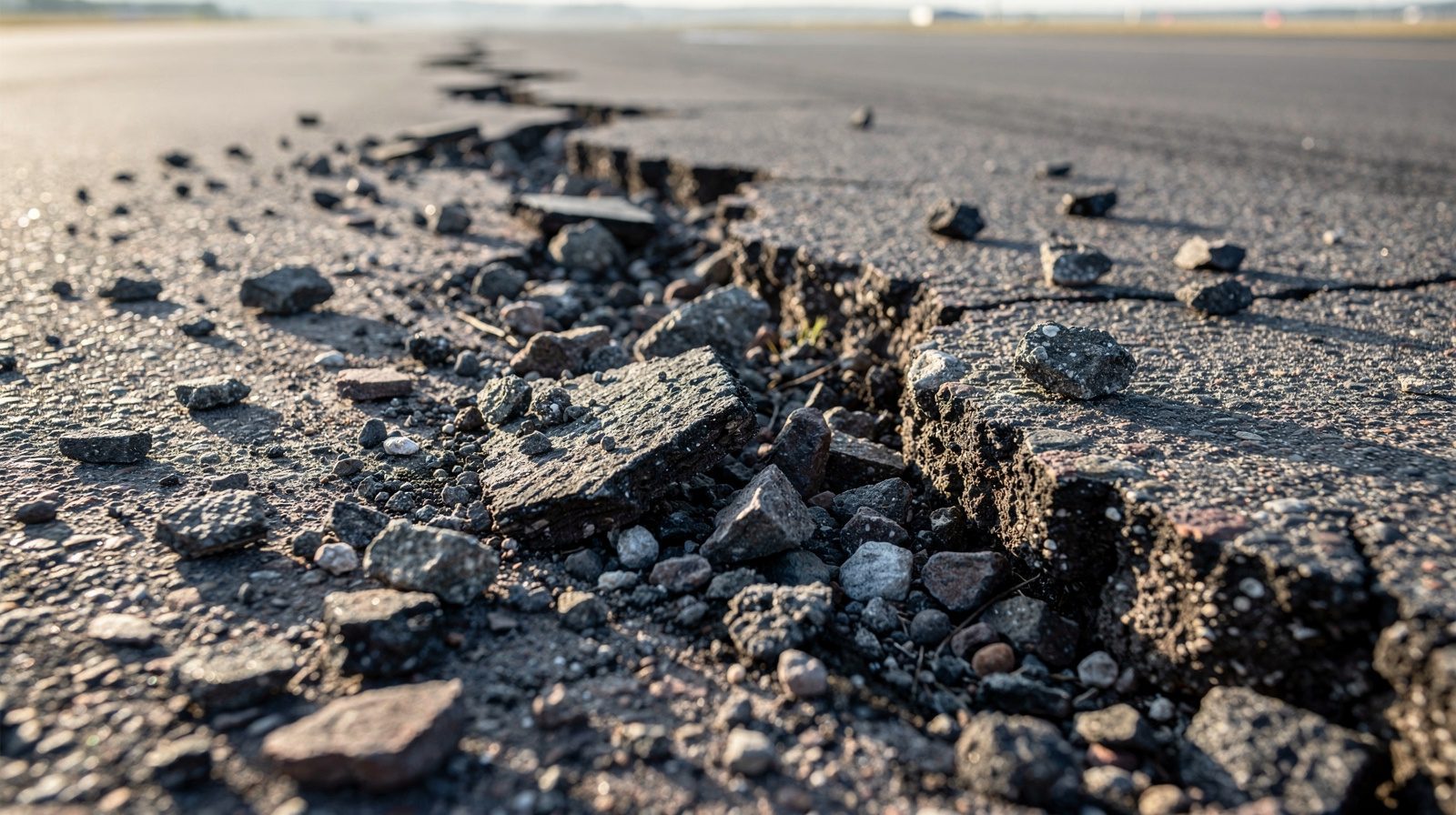
- FOD Minimization: Preventing surface breakdown that could create debris hazardous to aircraft.
- Operational Efficiency: Supporting uninterrupted, high-capacity aircraft movements with clear markings and embedded infrastructure.
A well-designed pavement ensures safety, efficiency, and longevity for airport operations.
Types of Airport Pavements
Flexible Pavements
Constructed with asphalt (Hot-Mix Asphalt, HMA) atop layers of granular or stabilized base, flexible pavements can bend under load and are adaptable to variable subgrades. They are often used for taxiways, aprons, and secondary runways due to ease of repair and phased construction. Surface grooving and polymer-modified asphalts enhance friction and durability.
Rigid Pavements
Made from Portland Cement Concrete (PCC) slabs, often reinforced, rigid pavements distribute aircraft loads over a wider area and are less prone to rutting. They are preferred for main runways and high-traffic taxiways where durability and low maintenance are crucial. Surface texturing and joint design are key to performance.
Composite Pavements
Combining both flexible and rigid elements (e.g., asphalt overlay on concrete), composite pavements are common in rehabilitation projects. They extend pavement life without full reconstruction but must address reflective cracking and layer bonding.
Specialized Pavements
Includes monoblock (interlocking concrete), Roller-Compacted Concrete (RCC), resin-modified or precast panels, tailored for rapid construction, chemical resistance, or specific operational needs.
Structural Layers
A typical airport pavement system includes:
- Surface Course: Asphalt or concrete exposed to traffic, must provide smoothness, friction, and chemical resistance.
- Base Course: Crushed aggregate or stabilized material providing structural strength.
- Subbase Course: Optional, adds load distribution and improves drainage.
- Subgrade: Prepared natural ground, its quality is crucial to overall pavement performance.
Each layer is engineered to work together for optimal load distribution, drainage, and durability.
Surface Treatments and Features
To optimize safety and performance, airport pavements incorporate:
- Grooving: Increases wet-weather friction and reduces hydroplaning risk, mandated for primary runways.
- Surface Texturing: Broom, burlap, or wire-comb finishes on concrete, porous friction courses on asphalt.
- Maintenance Seals: Chip seals and slurry seals restore surface friction and extend life.
- Markings: High-visibility, durable paints or thermoplastics for navigation and safety.
- Ironworks: Flush-mounted lighting, drainage grates, and utility covers engineered for heavy loads.
These features collectively ensure operational safety and efficiency under all conditions.
Design and Construction Considerations
Load-Bearing Capacity
Pavements are designed for the heaviest (critical) aircraft expected, using the ACN-PCN system to match aircraft loads with pavement strength. Design accounts for gear configuration, frequency, and subgrade conditions.
Standards and Specifications
Design and construction follow FAA, ICAO, and EASA standards, specifying material properties, structural methods, friction values, and environmental considerations.
- Hot-Mix Asphalt (HMA): High-density, durable, and often polymer-modified for fuel and shear resistance.
- Portland Cement Concrete (PCC): High strength, low permeability, often reinforced or fiber-modified.
Construction Methods
- Full-depth Asphalt: Layered HMA over prepared base.
- Slipform Concrete: Automated PCC placement for large areas.
- Precast Panels: Rapid replacement for repairs.
Quality control is rigorous, including material testing, compaction checks, and smoothness measurements using straightedges, profilographs, or lasers.
Operational Considerations
Friction and Braking
Runway friction is continuously monitored using specialized equipment, with corrective actions (e.g., rubber removal, surface retexturing) mandated if values fall below required thresholds.
Drainage
Proper drainage is essential to prevent water accumulation, which can lead to hydroplaning and pavement damage. Design includes sloping, subsurface drains, and permeable layers.
Markings and Lighting
Precise markings and embedded lighting fixtures support safe aircraft navigation, especially under low visibility or night operations. All ironworks must be secured and flush to prevent FOD.
Maintenance and Rehabilitation
Routine maintenance is essential for long service life:
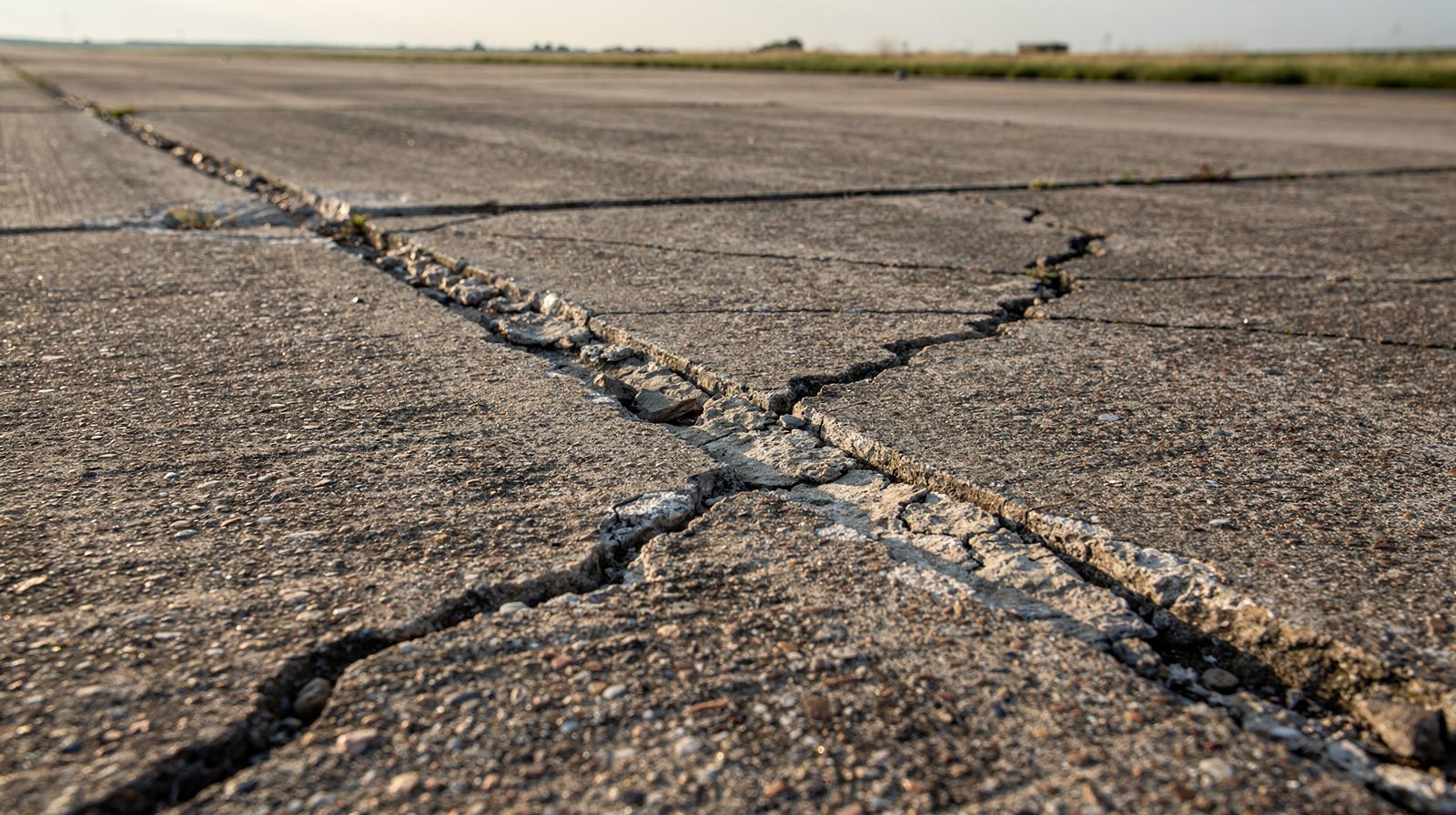
- Crack Sealing: Prevents water ingress and subgrade weakening.
- Rubber Removal: Maintains runway friction.
- Surface Overlays: Restores smoothness and structural capacity.
- FOD Inspections: Regularly check for and remove debris.
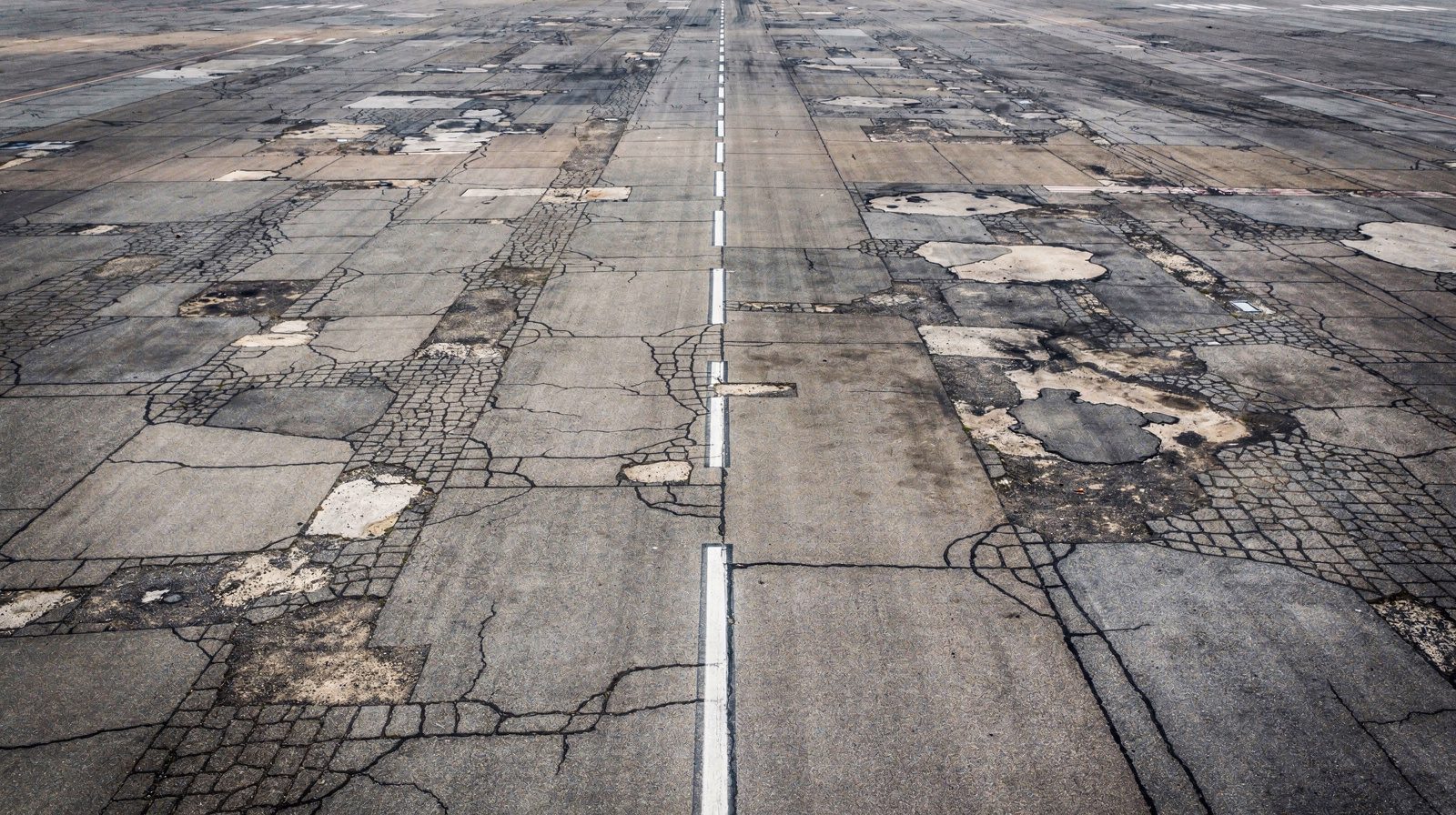
Rehabilitation strategies may include milling and resurfacing, asphalt or concrete overlays, or precast panel replacement, depending on pavement condition and operational constraints.
Sustainability and Innovation
Modern airport pavements increasingly use sustainable practices:
- Recycled Materials: Incorporation of reclaimed asphalt or concrete.
- Warm-Mix Asphalt: Lower production temperatures reduce emissions.
- Lifecycle Analysis: Designs optimize total cost and environmental impact.
- Smart Monitoring: Sensors and nondestructive testing improve maintenance planning.
Summary
Airport pavement is a cornerstone of airside infrastructure, engineered for extreme reliability, safety, and efficiency. Its design, construction, and maintenance are specialized disciplines, ensuring airports can safely accommodate the world’s largest and fastest aircraft, in all weather and operational conditions.
For consultation or to explore advanced pavement solutions, contact our experts or schedule a demo .
Related Terms
- Runway
- Taxiway
- Apron
- Friction Testing
- FOD (Foreign Object Debris)
- ACN-PCN System
- Asphalt
- Concrete
- Drainage
- Markings
Frequently Asked Questions
- What is airport pavement?
- Airport pavement is the engineered surface, such as runways, taxiways, and aprons, built to support aircraft operations on the ground. Designed to withstand heavy, repetitive loads and harsh environmental conditions, airport pavements are constructed from specialized asphalt or concrete, following strict standards for safety, friction, and durability.
- How are airport pavements different from road pavements?
- Airport pavements are designed for much higher, more concentrated loads from aircraft wheels, with stricter requirements for smoothness, friction, and resistance to fuel and chemical spills. Unlike roads, they must also minimize the risk of generating Foreign Object Debris (FOD) that could damage aircraft.
- What types of airport pavements exist?
- There are three main types: flexible (asphalt-based), rigid (concrete-based), and composite (a combination of both). Each type is chosen according to expected aircraft loads, environmental conditions, construction speed, and maintenance needs.
- Why is pavement friction important at airports?
- Friction ensures aircraft can safely brake and maintain control during landing and taxiing, especially in wet or icy conditions. Specialized surface treatments like grooving are applied to maintain high friction and reduce hydroplaning risk.
- How long do airport pavements last?
- With proper design and regular maintenance, airport pavements can last 20–30 years or more. Their lifespan depends on traffic loads, climate, materials, and maintenance practices.
This is a reference entry. TarmacView provides drone inspection services and doesn't sell the equipment or materials described in this glossary.