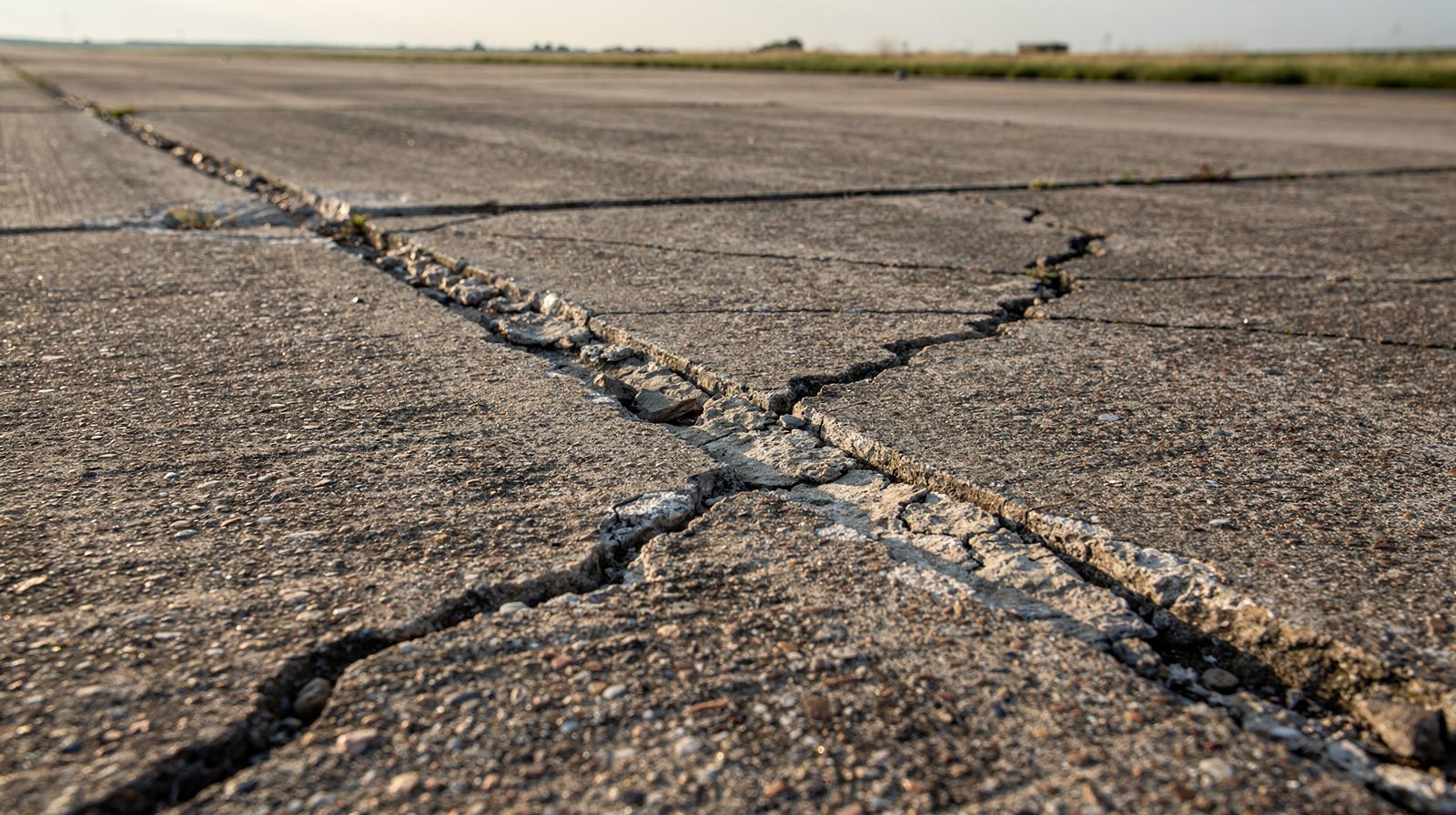
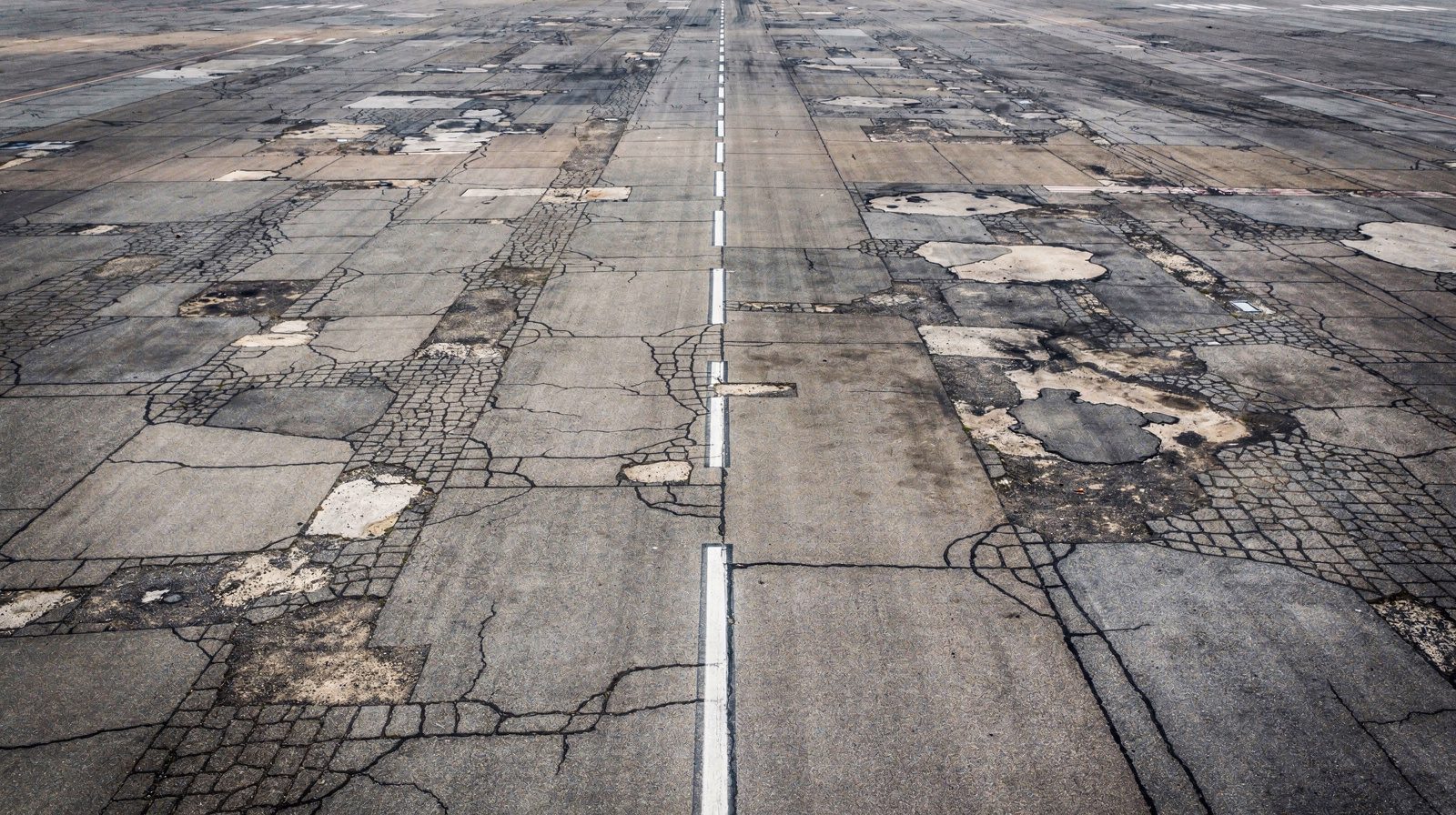
What is a PCI Proxy?
PCI Proxy, Visual Condition Grade Approximation
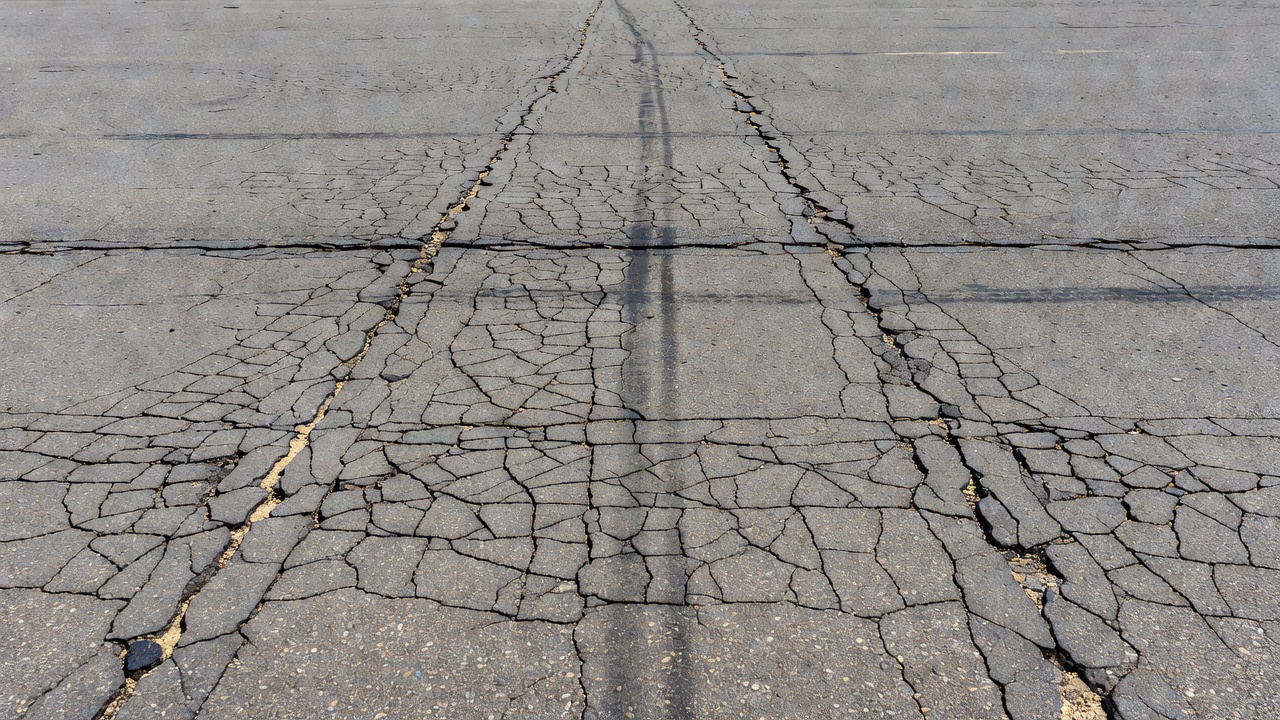
Definition and Need
A PCI Proxy (Visual Condition Grade Approximation) is an ordinal condition grade, ranging from 1 (Good) to 5 (Serious), derived from visible image features extracted from pavement surface photographs. It approximates the ASTM D6433 Pavement Condition Index (PCI) without requiring a full field distress survey, deduct value computation, or statistical sampling protocol. The proxy provides a rapid, repeatable, and transparent condition indicator that enables network-level screening, maintenance prioritization, and inspection planning while explicitly acknowledging the boundaries of what can be determined from visual images alone.
The need for a PCI Proxy arises from a fundamental tension in pavement management: the official PCI survey yields the most authoritative condition data, but it is labor-intensive, time-consuming, and expensive. ASTM D6433 requires trained and certified inspectors to physically walk each sample unit, identify up to 19 distress types for asphalt concrete surfaces, assign low/medium/high severity levels to each, measure quantities in square feet or linear feet, translate those measurements into distress densities, apply deduct value curves from the standard, and compute the final 0-to-100 PCI score. A single airport PCI survey covering runways, taxiways, and aprons can take weeks of fieldwork and tens of thousands of dollars in specialist costs. For a municipal road network spanning hundreds of lane-miles, a full PCI survey may be conducted only once every three to five years due to budget constraints.
TarmacView addresses this gap with the PCI Proxy, a transparent ordinal grade that can be computed from pavement surface images collected during routine drive-over surveys, drone overflights, or even smartphone photography. The proxy is not a replacement for the official PCI but rather a complementary screening tool that increases the frequency and coverage of condition assessment at dramatically lower cost. A network that receives a full PCI survey once every four years can obtain PCI Proxy assessments quarterly or even monthly from image data, providing early warning of deterioration trends and enabling targeted deployment of full survey resources where they are most needed.
The proxy methodology is explicitly documented, the rule tables, input parameters, and grade mapping are transparent to the user. There are no black-box algorithms. The proxy tells you precisely what it is doing and why an image received a particular grade. This transparency is essential for building trust in automated assessment and for enabling pavement engineers to calibrate the proxy against their local conditions and experience.
PCI Proxy vs Official ASTM D6433 PCI
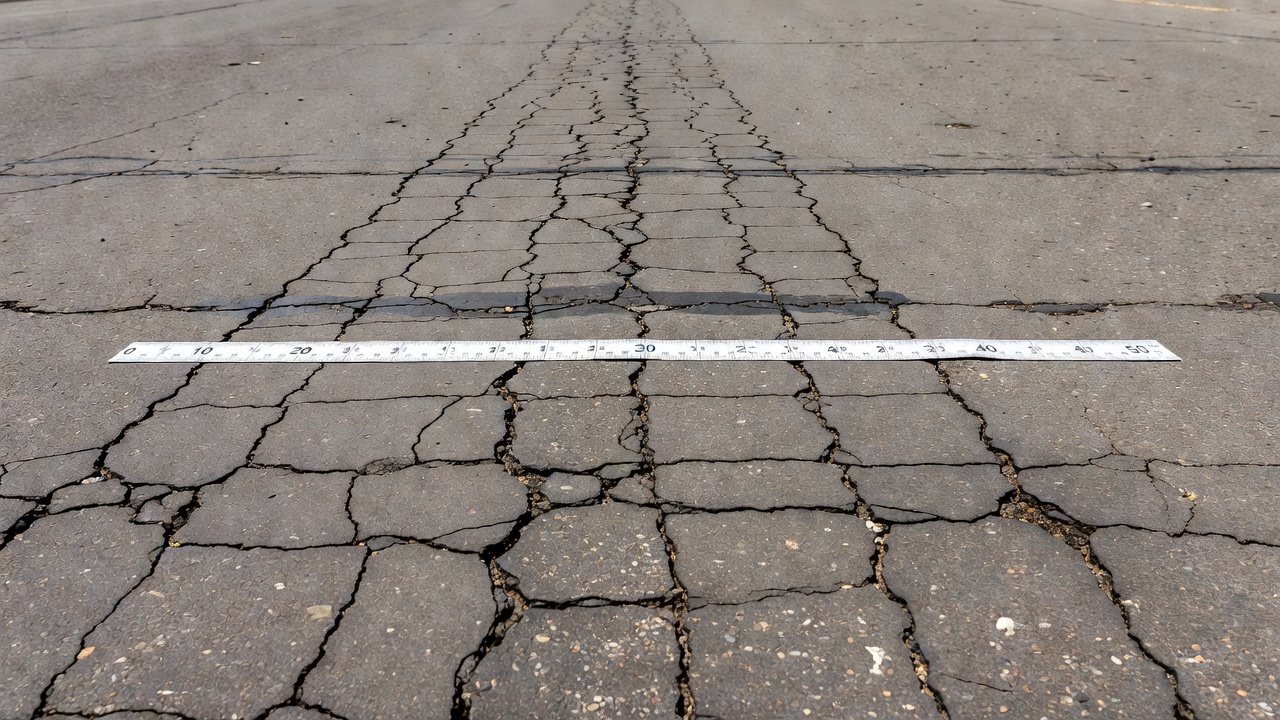
The official ASTM D6433 Pavement Condition Index is a cardinal numerical rating from 0 to 100 that quantifies the structural integrity and surface operational condition of a pavement. It is calculated through a rigorous, standardized field survey process that has been developed and refined over decades. The PCI methodology was originally developed by the U.S. Army Corps of Engineers in the 1970s for airfield pavement management and was subsequently adopted by ASTM International as a standard practice for roads, parking lots, and, through ASTM D5340, airports.
The official PCI process involves the following steps. The pavement network is divided into branches (individual roads or airfield features), sections (contiguous segments sharing the same construction history and traffic), and sample units (approximately 2,500 square feet for asphalt roads). For each sample unit, the inspector identifies all distress types present from the standard list of 19 for asphalt concrete surfaces, including fatigue (alligator) cracking, block cracking, longitudinal cracking, transverse cracking, edge cracking, reflection cracking, rutting, shoving, bleeding, polished aggregate, raveling, patching, potholes, lane-to-shoulder dropoff, water bleeding and pumping, and weathering. Each distress is assigned a severity level of Low, Medium, or High based on defined criteria. The quantity of each distress-severity combination is measured, typically in square feet of affected area for area-type distresses, linear feet for linear distresses, and count for individual defects like potholes.
Density is calculated as the quantity divided by the sample unit area expressed as a percentage. Deduct values are obtained from standardized curves published in ASTM D6433, which translate each distress type, severity, and density combination into a numerical deduction from a perfect score of 100. The total deduct value is adjusted using a correction procedure that accounts for the interaction between multiple distress types, a pavement with three simultaneous distress types has a higher combined effect than the simple sum of their individual deduct values would suggest. The final PCI score is 100 minus the maximum corrected deduct value. The score is then mapped to a descriptive rating: 86-100 (Good), 71-85 (Satisfactory), 56-70 (Fair), 41-55 (Poor), 26-40 (Very Poor), 11-25 (Serious), and 0-10 (Failed).
The PCI Proxy diverges from this methodology in several fundamental ways. First, the proxy uses an ordinal scale (1 to 5) rather than a cardinal scale (0 to 100). Ordinal grades communicate relative condition ranking, a grade 3 pavement is worse than grade 2 but not necessarily exactly halfway between grade 1 and grade 5 in any quantifiable unit. This is appropriate for a screening tool where the primary objective is prioritization rather than precision. Second, the proxy derives its grade from image-derived features, quality grade, crack geometry, and defect presence, rather than from field measurements of 19 distress types with three severity levels each. Third, the proxy uses transparent rule tables rather than deduct value curves, making the mapping from features to grade explicable and auditable.
The following table summarizes the key differences:
| Aspect | Official ASTM D6433 PCI | PCI Proxy |
|---|---|---|
| Scale | Cardinal 0–100 | Ordinal 1–5 |
| Distress Types | 19 (AC surfaces), full catalog | Quality grade, crack geometry, defect signals |
| Severity | Low, Medium, High per type | Crack width bands per AASHTO |
| Measurement | Field: sq ft, linear ft, count | Image-based: crack area %, crack width |
| Computation | Deduct value curves + correction | Transparent rule tables |
| Field Effort | High: walk sample units, 1-4 hrs/unit | Low: drive-over or drone images |
| Cost | $500-$2,000 per lane-mile | Fraction of PCI survey cost |
| Binder Content | Not measured directly | Not measured, disclaimer |
| Density | Not measured directly | Not measured, disclaimer |
| Water Damage | Not measured directly | Not measured, disclaimer |
| Structural Capacity | Not measured | Not measured |
| Best Use | Final engineering decisions | Screening, prioritization, monitoring |
Proxy Rule Tables
Condition Grade Derivation
The PCI Proxy grade is derived from a decision matrix that combines three input parameters: quality grade (assessed from image texture, surface integrity, and overall appearance), crack area percentage (the proportion of the pavement surface area affected by cracking of any type), and defect presence (binary or categorical indicators for potholes, patching, raveling, and surface deformation). The rule table defines the highest applicable grade, if an image triggers criteria for multiple grades, the worst (highest number) prevails.
The condition grade rule table is as follows:
| Proxy Grade | Description | Quality Grade | Crack Area % | Defect Signals |
|---|---|---|---|---|
| 1 | Good | High, surface intact, texture preserved, minimal oxidation visible | < 1% | No potholes, no patching, no raveling, no deformation |
| 2 | Satisfactory | Medium-High, minor surface wear, some oxidation, texture partially worn | 1% to 5% | Minor raveling only, no potholes, patches stable |
| 3 | Fair | Medium, noticeable surface deterioration, oxidation visible, texture loss | 5% to 15% | Patching present and stable, minor raveling, no potholes |
| 4 | Poor | Medium-Low, significant surface deterioration, aggregate loss, deep oxidation | 15% to 30% | Patching deteriorating, raveling moderate, potholes < 1% area |
| 5 | Serious | Low, severe surface disintegration, extensive oxidation, structural failure evident | > 30% | Potholes > 1% area, severe raveling, surface deformation |
The crack area percentage is computed as the total area occupied by all crack pixels in the image divided by the total pavement surface area in the image, expressed as a percentage. This includes all crack types, alligator, block, longitudinal, and transverse, aggregated together. Crack width information modifies the effective severity but does not change the area percentage directly, wide cracks (medium, wide, or spalled per AASHTO bands) contribute a higher effective severity weight in borderline cases.
Repair Priority Derivation
Repair priority is derived from the proxy grade using a secondary decision matrix that considers both the grade and the specific defect types present. This enables the proxy to differentiate between, for example, a Fair pavement with stable patching (plan monitoring) and a Fair pavement with developing alligator cracking (plan repair sooner). The repair priority matrix is as follows:
| Proxy Grade | Alligator Cracking | Block Cracking | Potholes | Raveling | Priority |
|---|---|---|---|---|---|
| 1 | None | None | None | None | None |
| 2 | None or hairline | None or hairline | None | Minor | Monitor |
| 3 | Hairline-narrow, < 10% area | Narrow, < 15% area | None | Moderate | Monitor |
| 3 | Narrow-medium, 10-20% area | Medium, 15-25% area | None | Moderate | Plan Repair |
| 4 | Medium-wide, > 15% area | Medium-wide, > 20% area | < 1% area | Significant | Plan Repair |
| 4 | Wide-spalled, any area | Wide, any area | < 1% area | Significant | Urgent |
| 5 | Any | Any | > 1% area | Severe | Urgent |
The four priority levels are defined as:
None: No repair indicated. The pavement is in Good to Satisfactory condition with no visible defects requiring action. Routine monitoring at the standard inspection interval is sufficient. This does not mean the pavement requires no maintenance, routine crack sealing and surface treatment may still be appropriate at scheduled intervals, but no distress-driven repair is warranted.
Monitor: Watch for deterioration progression. The pavement shows minor defects that do not yet require repair but should be tracked over time. The monitoring interval should be shorter than the standard inspection interval, typically 3 to 6 months for these sections. If the defect progression rate accelerates, the priority may be escalated to plan_repair at the next assessment.
Plan Repair: Medium-term repair needed. The pavement has defects that will require intervention within 1 to 2 years if deterioration continues at the current rate. Planning activities should begin: defining the repair scope, estimating costs, securing funding, and scheduling the work. The specific repair type (crack sealing, patching, overlay, mill-and-fill) depends on the defect types and severity.
Urgent: Immediate or near-term repair needed. The pavement has defects that present a safety concern (potholes, deep cracking) or that will rapidly worsen if not addressed. Repair should be scheduled within weeks to months, not years. Urgent does not necessarily mean emergency, potholes in a low-speed parking lot may have a less critical timeline than the same defects on a high-speed runway, but the upper bound for action should not exceed one construction season.
Inputs, Quality Grade, Crack Geometry, Defect Signals, Domain
The PCI Proxy requires four categories of input, each derived from automated image analysis:
Quality Grade
Quality grade is a holistic assessment of the pavement surface condition based on visible characteristics that are not captured by crack geometry or discrete defect detection. It evaluates the overall surface integrity, whether the surface appears intact and well-preserved or deteriorated and degraded. The quality grade considers texture preservation (is the surface texture consistent with the expected surface type?), aggregate condition (are aggregates firmly embedded or beginning to dislodge?), oxidation extent (has the binder oxidized to a gray or whitish color indicating embrittlement?), surface integrity (is the surface smooth and continuous or rough and disintegrating?), and color uniformity (are there localized areas of discoloration indicating binder loss or bleeding?).
Quality grade is assessed on a five-level scale corresponding to the proxy grades: High (grade 1 quality, surface intact), Medium-High (grade 2 quality, minor wear), Medium (grade 3 quality, noticeable deterioration), Medium-Low (grade 4 quality, significant deterioration), and Low (grade 5 quality, severe disintegration).
Crack Geometry
Crack geometry is the most information-rich input to the PCI Proxy. It encompasses three sub-parameters:
Crack area percentage, the total area of the pavement surface affected by cracking of any type, expressed as a percentage of the total pavement surface area in the image. This is the primary quantitative input. Crack area percentage is computed by pixel-level segmentation of crack regions in the image, summing all crack pixels, and dividing by the total pavement pixels. Values range from 0% (no cracking) to >30% (severe, interconnected cracking).
Crack type classification, the identification of crack patterns by type. The proxy distinguishes between alligator (fatigue) cracking (interconnected network of cracks forming small polygons, typically 0.3-1.0 m in size, indicating structural fatigue), block cracking (large interconnected rectangles or polygons, typically 1.0-10.0 m in size, indicating thermal or aging-related shrinkage), longitudinal cracking (cracks running parallel to the pavement centerline or traffic direction), transverse cracking (cracks running perpendicular to the pavement centerline or traffic direction, typically thermal in origin), and edge cracking (cracks near the pavement edge, related to edge support loss). The crack type influences the proxy interpretation because different types have different implications for pavement condition, alligator cracking indicates structural fatigue and typically warrants a worse grade than isolated transverse cracking at the same crack area percentage.
Crack width band, the assignment of crack width to AASHTO-defined bands (see Section 8). Crack width influences the effective severity of the cracking. Wide and spalled cracks indicate more advanced deterioration than hairline or narrow cracks.
Defect Signals
Defect signals detect specific pavement distresses that are not captured by crack geometry alone. These include potholes (small depressions resulting from localized structural failure, typically 0.1-1.0 m in diameter, presenting safety hazards and rapid deterioration potential), patching (areas where the original pavement has been removed and replaced, indicating previous repair activity, the quality and extent of patching is assessed, including whether patches are stable or deteriorating), raveling (the progressive loss of aggregate from the pavement surface, producing a rough, eroded texture), and surface deformation (rutting, shoving, corrugation, or depressions visible in the image). Each defect signal is quantified where possible, potholes as count per unit area or area percentage, patching as area percentage, raveling as area percentage or severity level, deformation as presence/absence and approximate severity.
Domain
The domain parameter specifies the pavement type and operational context, which influences the proxy grade expectations. The supported domains are road (highway, arterial, collector, local road, typical vehicle traffic, speeds 30-120 km/h), runway (airport runway, high-speed aircraft traffic, strict safety requirements, FAA/ICAO regulatory compliance), taxiway (airport taxiway, slower aircraft traffic, less critical than runways but still regulated), apron (airport apron or ramp, slow aircraft maneuvering, parking, loading operations), and parking lot (vehicle parking, low speeds, minimal structural requirements).
The domain affects proxy interpretation in two ways. First, the acceptable condition threshold varies by domain, a crack area percentage that triggers grade 3 (Fair) on a parking lot might trigger grade 4 (Poor) on a runway due to the higher operational criticality. Second, the repair priority urgency is weighted by domain, a grade 4 pavement on a runway receives urgent priority, while the same grade on a parking lot may receive plan_repair.
Limitations, No Binder Content, No Density, No Water Damage Progression
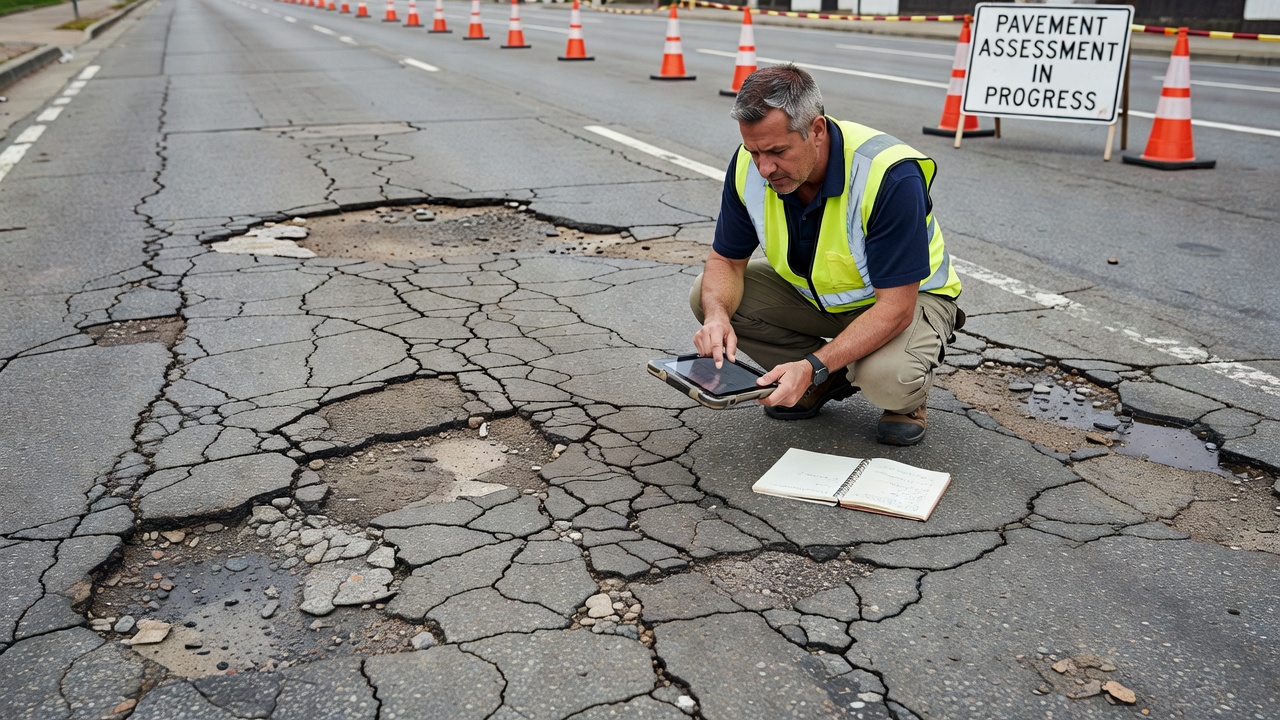
The PCI Proxy has fundamental limitations that must be understood by every user. These limitations are not deficiencies in the proxy, they are inherent boundaries of what can be determined from surface images alone. The proxy is transparent about these boundaries and does not claim to measure what it cannot.
Binder content, the proportion of asphalt binder in the asphalt concrete mix, cannot be assessed from visual images. Binder content is a laboratory-measured property determined through extraction tests (AASHTO T164, ASTM D2172) where the binder is dissolved from the aggregate using a solvent, or through ignition tests (AASHTO T308, ASTM D6307) where the binder is burned off in a furnace. Visual inspection cannot distinguish between a mix with optimum binder content (typically 5.0-6.5% by weight of mix for dense-graded asphalt) and one that is binder-rich (bleeding, rutting potential) or binder-lean (ravelling, cracking, reduced fatigue life). Surface discoloration may suggest oxidation but does not quantify residual binder properties. The proxy explicitly disclaims any measurement of binder content.
Pavement density, the in-place density of the asphalt concrete layer, typically expressed as percent of maximum theoretical density (Max Theo or Rice density) or as in-place air voids, cannot be measured from surface images. Density is a critical property for pavement performance: air voids below 3% risk bleeding and rutting, while air voids above 8% risk accelerated oxidation, moisture damage, and cracking. Density is measured using nuclear density gauges (ASTM D2950), core samples tested in the laboratory (ASTM D2726, D6752), or non-destructive electromagnetic methods. Visible surface appearance, even high-resolution photography, provides no reliable information about in-place density. The proxy explicitly disclaims any measurement of pavement density.
Water damage progression, moisture-induced damage to the asphalt-aggregate bond, known as stripping, cannot be detected from surface images. Water damage begins within the pavement structure, at the interface between asphalt binder and aggregate particles, where moisture displaces the binder and weakens the adhesive bond. This process is invisible from the surface until it has progressed to the point of surface disintegration, raveling, potholing, or cracking. By the time water damage is visible on the surface, significant structural deterioration has already occurred. Laboratory tests such as AASHTO T283 (Resistance of Compacted Asphalt Mixtures to Moisture-Induced Damage) or Hamburg Wheel Track testing are required to evaluate moisture susceptibility. Field coring is needed to confirm stripping in existing pavements. The proxy explicitly disclaims any measurement of water damage progression.
Additional limitations include: structural capacity (requires FWD or HWD deflection testing for evaluation), subgrade condition (invisible from surface images), load transfer efficiency at joints (requires FWD testing with sensors positioned across joints), layer thickness (requires Ground Penetrating Radar, coring, or construction records), and remaining service life (requires mechanistic-empirical analysis combining structural data with traffic loading). The PCI Proxy assesses only the visible surface condition, it is a functional condition indicator, not a structural evaluation tool.
Visual Proxy Descriptors, Good, Satisfactory, Fair, Poor, Serious
The five ordinal grades of the PCI Proxy are defined by detailed visual descriptors that enable consistent interpretation:
Grade 1, Good: The pavement surface appears intact and well-maintained. Surface texture is consistent with the expected surface type, dense-graded asphalt shows a uniform, dark appearance with aggregate particles fully embedded in the binder matrix. No cracking is visible to the naked eye at typical inspection distances. Individual hairline cracks (under 0.1 mm width) may be visible on close inspection but do not form any pattern or network. The surface is free of raveling, no loose aggregate particles are present. There is no visible oxidation, the surface retains a dark black or dark gray color characteristic of unoxidized asphalt binder. No potholes, patching, or surface deformation are present. The pavement is in the condition expected of a recently constructed or well-maintained surface within the first few years of service life.
Grade 2, Satisfactory: The pavement surface shows minor signs of wear consistent with normal aging. Surface texture is partially worn in wheel paths but remains acceptable. Mild oxidation is evident, the surface color has shifted from dark black to light gray, indicating the beginning of binder embrittlement. Cracking is present but limited: narrow cracks (0.1-1.0 mm) covering 1% to 5% of the surface area. Cracks are predominantly longitudinal or transverse (thermal), with no alligator cracking. Minor raveling may be present, occasional loose aggregate particles in wheel paths or at crack edges. No potholes are present. Patching, if any, is minor and in good condition with tight edges. The pavement is performing adequately and requires only routine monitoring and preventative maintenance such as crack sealing.
Grade 3, Fair: The pavement surface shows noticeable deterioration that affects appearance and may begin to affect ride quality. Oxidation is clearly visible, the surface is light gray to gray-white, indicating significant binder aging. Cracking covers 5% to 15% of the surface area. Crack widths range from narrow to medium (0.1-3.0 mm). Block cracking may be developing, forming a pattern of interconnected rectangles. Narrow alligator cracking may be present in localized areas (less than 10% of the surface). Raveling is moderate, loose aggregate is visible across the surface, and the surface feels rough to the touch. Patching may be present and is generally stable, with some edge deterioration. No potholes are present. The pavement is approaching the point where intervention will be needed within 1 to 2 years if deterioration continues.
Grade 4, Poor: The pavement surface shows significant deterioration with visible structural degradation. Oxidation is extensive, the surface is gray-white to white, indicating severely aged binder. Cracking covers 15% to 30% of the surface area. Medium to wide cracks (1.0-19.0 mm) are present. Alligator cracking is evident in multiple areas, with crack networks forming small polygons typical of fatigue failure. Block cracking is advanced. Crack edges may show some spalling, aggregate loss at crack boundaries. Raveling is significant, substantial aggregate loss has created a rough, uneven surface texture. Patching, if present, is deteriorating with open edges and cracking through the patch material. Potholes may be present but cover less than 1% of the surface area. The pavement requires rehabilitation within the current or next construction season.
Grade 5, Serious: The pavement surface shows severe deterioration with visible structural failure. Oxidation is complete, the surface is white or light gray, indicating fully aged, embrittled binder with minimal remaining cohesive properties. Cracking covers more than 30% of the surface area. Wide to spalled cracks (3.0 mm to over 19.0 mm) are prevalent, with extensive crack edge deterioration and material loss. Alligator cracking is extensive and interconnected, with individual polygons showing displacement or further cracking. Block cracking is severe with wide, spalled cracks. Potholes cover more than 1% of the surface area, with some potholes exceeding 0.3 m in diameter. Raveling is severe, the surface is disintegrating with significant aggregate loss. Surface deformation, rutting, shoving, or depressions, may be visible. The pavement requires immediate or near-term rehabilitation, continued use accelerates deterioration and may present safety concerns.
Repair Priority Derivation
Repair priority derivation extends the condition assessment from a descriptive grade to an actionable recommendation. The priority levels, none, monitor, plan_repair, urgent, are derived through a decision process that considers the proxy grade, the specific defect types present, the crack geometry characteristics, and the pavement domain.
The derivation logic follows a hierarchical rule set that assigns the highest applicable priority level. The system first checks for trigger conditions that warrant an immediate escalation, then evaluates the grade-based default priority, and finally adjusts for domain-specific criticality.
Urgent triggers, any of the following conditions automatically generate an urgent priority regardless of the base grade: potholes exceeding 1% of the surface area, any pothole on a runway or taxiway surface, wide or spalled alligator cracking on a runway, surface deformation (rutting, shoving) exceeding 25 mm depth on any pavement, or any safety-critical defect on a high-speed pavement (runway, highway).
Plan repair triggers, conditions that generate a plan_repair priority include: crack area percentage between 15% and 30% without urgent triggers, alligator cracking covering 10% to 20% of the surface, medium-width cracks on more than 20% of the surface, deteriorating patching covering more than 10% of the surface, or moderate raveling on an airport pavement.
Monitor triggers, conditions that generate a monitor priority include: crack area percentage between 1% and 15% with narrow cracks, minor raveling without potholes, stable patching covering less than 10% of the surface, or any grade 2 pavement not meeting urgent or plan_repair conditions.
None triggers, conditions that generate no repair priority include: crack area percentage below 1% with no defects, or a grade 1 pavement with no visible deterioration.
The following table summarizes the mapping from proxy characteristics to repair priority for each domain:
| Condition Grade | Defect Profile | Domain | Default Priority |
|---|---|---|---|
| 1, Good | No defects | Any | None |
| 2, Satisfactory | Minor cracks, no alligator | Road, parking | Monitor |
| 2, Satisfactory | Minor cracks, no alligator | Runway, taxiway, apron | Monitor |
| 3, Fair | Block cracking, narrow-medium | Road, parking | Monitor |
| 3, Fair | Block cracking, narrow-medium | Runway, taxiway, apron | Plan Repair |
| 3, Fair | Alligator cracking, <10% area | Any | Plan Repair |
| 4, Poor | Wide cracking, <1% potholes | Road, parking | Plan Repair |
| 4, Poor | Wide cracking, <1% potholes | Runway, taxiway | Urgent |
| 4, Poor | Alligator cracking, >15% area | Any | Urgent |
| 5, Serious | Severe cracking, >1% potholes | Any | Urgent |
| 5, Serious | Surface deformation | Any | Urgent |
AASHTO Crack Width Bands in Proxy
The PCI Proxy incorporates crack width bands derived from the AASHTO PP44 (Quantifying Cracks in Asphalt Pavement Surfaces) and AASHTO PP67 (Standard Practice for Quantifying Cracks in Asphalt Pavement Surfaces) standards, which established standardized protocols for automated crack measurement and classification. These bands are also consistent with the FHWA Long-Term Pavement Performance (LTPP) Distress Identification Manual severity classifications and the Simplified AASHTO Cracking Protocol published by Pavemetrics and adopted by many transportation agencies.
The crack width bands used in the PCI Proxy are:
| Band Name | Width Range | Visual Description | LTPP Severity Equivalent | Proxy Severity Weight |
|---|---|---|---|---|
| Hairline | < 0.1 mm | Barely visible to the naked eye, appears as a thin line requiring close inspection to detect | Below Low severity threshold | 1x (minimal impact) |
| Narrow | 0.1 to 1.0 mm | Visible as a fine line from standing height, width can be measured with a crack comparator or ruler | Low severity | 2x (moderate impact) |
| Medium | 1.0 to 3.0 mm | Clearly open and visible from several meters distance, edges are intact | Medium severity | 4x (significant impact) |
| Wide | 3.0 to 19.0 mm | Significant opening easily visible from distance, edges may show minor deterioration or spalling | High severity | 8x (major impact) |
| Spalled | > 19.0 mm | Crack edges have broken away, producing material loss and a cavity wider than the original crack, aggregate interlock is lost | High severity with spalling | 12x (critical impact) |
The width bands influence the PCI Proxy grade through a weighted crack severity factor that is applied to the crack area percentage. A crack with a width in the medium band contributes four times the effective severity impact per unit area compared to a hairline crack. This means that a pavement with 10% crack area consisting of medium-width cracks receives an effective severity similar to a pavement with 40% crack area consisting of hairline cracks. The weighting ensures that the proxy properly accounts for the increased structural and functional significance of wider cracks.
The AASHTO crack width bands are determined through automated crack width estimation performed on the pavement surface image. The process involves the following steps. First, the crack pixels are segmented from the pavement background using deep learning-based semantic segmentation (typically a U-Net or similar architecture trained on annotated pavement crack datasets). Second, a skeletonization algorithm extracts the centerline of each crack segment at single-pixel width. Third, at each point along the crack skeleton, the perpendicular distance to the crack edge on both sides is measured, producing a width estimate at each point. Fourth, the width estimates are aggregated per crack segment or per crack type to produce a representative width, typically reported as the mean, median, or 85th percentile width. Fifth, the representative width is assigned to the appropriate AASHTO crack width band. Crack width estimation using this methodology has been validated to achieve approximately 90% accuracy in controlled studies (Ibragimov et al., 2024, Sensors).
The integration of crack width bands into the PCI Proxy addresses a known limitation of simple crack area percentage metrics. Two pavements with identical crack area percentage, say 10%, can have dramatically different actual conditions if one consists entirely of hairline thermal cracks and the other consists of wide alligator cracks. The crack width weighting ensures that the proxy differentiates between these cases appropriately, assigning a worse grade to the pavement with wider, more structurally significant cracking.
Transparency and Disclaimers
The PCI Proxy is designed with transparency as a core principle. Every proxy grade is accompanied by a detailed explanation of how it was derived, including the specific input values (quality grade, crack area percentage, crack width band, defect signals), the rule table entries that were triggered, and the resulting condition grade and repair priority. This transparency enables users to:
- Validate the proxy against their own expert judgment and local knowledge
- Calibrate the proxy thresholds to match local conditions, material types, and performance expectations
- Audit the proxy outputs for consistency and reasonableness
- Debug unexpected grades by examining the contributing inputs
- Build trust in the automated assessment through full visibility into the decision process
The proxy output includes a confidence indicator that reflects the quality of the input image and the clarity of the detected features. Low-confidence assessments, where image quality is poor, lighting is inadequate, or features are ambiguous, are flagged for human review rather than being reported as definitive grades.
The following disclaimers accompany every PCI Proxy assessment:
Binder Content Disclaimer: This PCI Proxy grade is derived from visible surface features only. Asphalt binder content, binder grade, and binder aging state are not measured. Laboratory testing (extraction per AASHTO T164 or ignition per AASHTO T308) is required for binder content determination. The proxy grade should not be used as a substitute for binder testing when mix design verification or forensic investigation is needed.
Density Disclaimer: This PCI Proxy grade is derived from visible surface features only. In-place pavement density and air void content are not measured. Nuclear density gauge testing (ASTM D2950), core sampling and laboratory testing (ASTM D2726), or non-destructive electromagnetic methods are required for density determination. The proxy grade should not be used as a substitute for density testing when compaction quality assurance or acceptance testing is needed.
Water Damage Disclaimer: This PCI Proxy grade is derived from visible surface features only. Moisture-induced damage (stripping) and freeze-thaw deterioration are not measured. Laboratory moisture susceptibility testing (AASHTO T283) or field coring with visual inspection of the asphalt-aggregate bond is required for water damage assessment. The proxy grade should not be used as a substitute for moisture damage testing when evaluating pavement failure causes.
Structural Capacity Disclaimer: This PCI Proxy grade assesses visible surface condition only. Pavement structural capacity, layer stiffness, subgrade support, and remaining structural life are not measured. Falling Weight Deflectometer (FWD) or Heavy Weight Deflectometer (HWD) testing with back-calculation analysis is required for structural evaluation. The proxy grade should not be used as a substitute for structural testing when overlay design, load rating, or remaining life estimation is needed.
General Disclaimer: The PCI Proxy is a screening and prioritization tool, not a replacement for professional pavement engineering assessment. All proxy grades should be validated by field inspection before being used for final engineering decisions, budget allocation, or regulatory compliance purposes. The proxy is intended to increase the frequency and coverage of condition assessment, not to eliminate the need for qualified pavement engineers.
When Full PCI Survey is Needed
The PCI Proxy is designed for rapid screening, frequent monitoring, and network-level prioritization. However, there are specific circumstances where a full ASTM D6433 PCI survey is required, and the proxy alone is insufficient.
Regulatory compliance is the most common reason for requiring a full PCI survey. For airport pavements in the United States, FAA Advisory Circular 150/5380-7B (Airport Pavement Management Program) requires airport sponsors receiving federal assistance to conduct a full PCI survey at least once every five years for runways, taxiways, and aprons. The FAA specifies that PCI surveys must follow ASTM D6433 (or ASTM D5340 for airports) with certified inspectors. A PCI Proxy cannot substitute for this regulatory requirement, though it can supplement the required surveys by providing more frequent condition snapshots between official assessments. For military airfields, the U.S. Army Corps of Engineers Pavement Management System requirements similarly mandate full PCI surveys at specified intervals.
Major capital investment decisions, pavement rehabilitation, reconstruction, or extension projects exceeding a defined cost threshold (typically $500,000 or more), warrant a full PCI survey as part of the project development process. A full survey provides the detailed distress data needed for treatment selection, quantity estimation, and cost estimation. The deduct value analysis identifies which distress types are driving the condition score and therefore which distresses must be addressed by the selected treatment. A PCI Proxy provides a condition indicator but does not provide the distress-specific detail needed for project-level design.
Forensic investigation, determining the root cause of premature pavement failure, requires more than surface condition data. Full PCI survey data provides the distress type, severity, and density information needed to identify failure modes. Combined with coring, laboratory testing (binder content, gradation, air voids, moisture susceptibility), and structural testing (FWD), the full PCI survey contributes to a comprehensive forensic evaluation. The PCI Proxy alone cannot support forensic analysis.
Pavement design and overlay design require structural capacity data that neither the official PCI nor the PCI Proxy provides. However, the official PCI is often a required input for design procedures, the AASHTO 1993 Design Guide overlay design procedure uses PCI as an input for determining the effective structural number of the existing pavement. The PCI Proxy cannot be used for this purpose because it does not provide the cardinal-scale PCI score required by the design equations.
Disagreement between proxy assessments, when multiple images of the same pavement section produce proxy grades that differ by more than 2 ordinal grades (e.g., one image yields grade 2 and another yields grade 5), the discrepancy indicates that the section has highly variable conditions or that image quality issues are affecting the assessment. In either case, a full PCI survey is warranted to establish the true condition with confidence.
Quality assurance and acceptance testing for new pavement construction or rehabilitation projects cannot rely on the PCI Proxy. Acceptance testing requires standardized tests (density, smoothness, thickness, strength) specified in the contract documents. The PCI Proxy is designed for in-service condition assessment only.
The following decision guide summarizes when a full PCI survey is recommended:
| Condition | Recommended Action | Rationale |
|---|---|---|
| Routine network screening | PCI Proxy sufficient | Fast, low-cost, high coverage |
| Quarterly monitoring | PCI Proxy sufficient | Frequent updates without field cost |
| Regulatory compliance (FAA/USACE) | Full PCI survey required | Regulatory mandate |
| Major capital project (>$500k) | Full PCI survey recommended | Detailed data for design/cost estimation |
| Forensic investigation | Full PCI survey + lab testing | Root cause determination |
| Overlay design | Full PCI survey + FWD testing | Design input requirements |
| Proxy grade disagreement (>2 grades) | Full PCI survey recommended | Resolve uncertainty |
| Acceptance testing | Standardized acceptance tests | Contract specifications |
| Section-level prioritization | PCI Proxy + targeted field validation | Balance of speed and accuracy |
The PCI Proxy and the full PCI survey are complementary tools, not competing ones. A pavement management program that uses PCI Proxy for frequent, high-coverage screening and full PCI surveys for targeted, in-depth evaluation achieves the best balance of data quality, coverage frequency, and cost efficiency. The proxy identifies which sections are deteriorating fastest, enabling the pavement manager to deploy full survey resources where they provide the most value.
Frequently Asked Questions
- What is the difference between a PCI Proxy and an official ASTM D6433 PCI?
- The official ASTM D6433 PCI is a numerical rating from 0 to 100 calculated through a rigorous field survey process. Inspectors physically examine sample units within each pavement section, recording 19 distinct distress types for asphalt concrete surfaces, each with low, medium, and high severity levels, measuring quantities in square feet, linear feet, or counts. These measurements are converted to distress densities, and deduct values from standardized curves are subtracted from a perfect score of 100. A PCI Proxy, by contrast, derives an ordinal condition grade from visual image features only, quality grade, crack geometry, and defect presence, without field measurements of severity or density. The proxy cannot detect binder content deterioration, density loss, subgrade moisture damage, or structural capacity reduction. The official PCI is a cardinal scale suitable for engineering design calculations, while the PCI Proxy is an ordinal approximation suitable for rapid screening and prioritization.
- What inputs does the TarmacView PCI Proxy use?
- The TarmacView PCI Proxy uses three primary inputs derived from image analysis. The first is quality grade, which assesses the overall surface condition of the pavement in the image, texture preservation, aggregate condition, surface integrity. The second is crack geometry, which includes crack area percentage (the proportion of the pavement surface area affected by cracking), crack type classification (alligator, block, longitudinal, transverse), and crack width measured against AASHTO crack width bands (hairline under 0.1 mm, narrow 0.1-1.0 mm, medium 1.0-3.0 mm, wide 3.0-19.0 mm, spalled over 19.0 mm). The third is defect signals, which detect the presence and extent of potholes, patching, raveling, and surface deformation visible in the image. The domain parameter (road, taxiway, runway, apron, parking lot) adjusts the proxy threshold expectations since different pavement types have different acceptable condition levels.
- What are the limitations of a PCI Proxy?
- A PCI Proxy has several fundamental limitations that users must understand. Binder content cannot be assessed from visual images, asphalt binder oxidation and embrittlement are chemical processes that require laboratory testing (absorptance test, extraction, or penetration test). Pavement density cannot be measured visually, in-place air voids and compaction levels require nuclear density gauges, core sampling, or non-destructive testing like Ground Penetrating Radar. Water damage progression, stripping, moisture susceptibility, and freeze-thaw deterioration, cannot be detected from surface images alone, these require laboratory conditioning tests (AASHTO T283) or pavement coring. Subgrade condition is invisible from surface images. Structural capacity requires FWD or HWD deflection testing. The PCI Proxy is explicitly a visual approximation only, designed for rapid screening, not for final engineering decisions.
- How is repair priority derived from the PCI Proxy?
- Repair priority is derived from the PCI Proxy grade using a decision matrix that considers both the condition grade and the visible defect types present. The four priority levels are: none (no repair indicated, routine monitoring sufficient), monitor (watch for deterioration progression, reassess at next inspection cycle, plan_repair (medium-term repair needed, schedule within 1-2 years), and urgent (immediate or near-term repair needed, safety concern possible). For example, a Good (grade 1) pavement with no visible cracks receives a priority of none. A Fair (grade 3) pavement with medium-width block cracking receives plan_repair. A Serious (grade 5) pavement with alligator cracking and potholes receives urgent. These priorities are suggestive and should be validated with field inspection before committing resources.
- When is a full PCI survey needed instead of a PCI Proxy?
- A full ASTM D6433 PCI survey is needed instead of a PCI Proxy when binder content or oxidation state must be quantified, pavement density and in-place air voids are required for specifications, subgrade moisture damage or freeze-thaw deterioration is suspected, structural capacity evaluation is needed for overlay design or load rating, the pavement is being considered for major capital investment (>$500k), regulatory or compliance requirements mandate a full PCI survey (FAA AC 150/5380-7B for airport pavements), or the proxy grade disagreement between multiple images exceeds 2 ordinal grades on the same section. The PCI Proxy serves as a screening tool to identify sections that warrant full PCI surveys, not as a replacement for them.
- What are the AASHTO crack width bands used in the PCI Proxy?
- The PCI Proxy uses crack width bands derived from the AASHTO PP44 and PP67 standards: hairline (under 0.1 mm, barely visible to the naked eye), narrow (0.1 to 1.0 mm, visible as a fine line), medium (1.0 to 3.0 mm, clearly open, measurable), wide (3.0 to 19.0 mm, significant opening, edge deterioration possible), and spalled (over 19.0 mm, crack edges broken away, material loss). These bands are derived from the FHWA Long-Term Pavement Performance (LTPP) Distress Identification Manual severity classifications. The width band influences both the crack severity assessment and the resulting proxy grade. Wide and spalled cracks contribute more heavily to higher (worse) proxy grades than hairline or narrow cracks, reflecting the increased likelihood of water infiltration, structural degradation, and load transfer loss.