What is the Pavement Condition Index (PCI)?
Pavement Condition Index (PCI), ASTM D6433
Definition and Scale
The Pavement Condition Index (PCI) is a standardized numerical indicator that rates the surface condition of pavement on a scale from 0 to 100, where 100 represents a pavement in perfect condition with no observable distress, and 0 represents a pavement that has completely failed. Developed by the U.S. Army Corps of Engineers Construction Engineering Research Laboratory (CERL) in the 1970s, the PCI methodology was originally created to assess military airfield pavements and has since become the most widely adopted pavement condition rating system in the world, used by federal agencies, state departments of transportation, municipalities, and airport authorities across more than 50 countries.
The PCI scale is not merely a qualitative descriptor but a rigorously calculated numerical index derived from the type, severity, and quantity of surface distresses observed during a systematic visual survey. Each distress type, whether it be alligator cracking in asphalt or joint spalling in concrete, is assigned a deduct value based on its density and severity. These deduct values are then combined through a statistical correction procedure to produce a single number that reflects the collective judgment of experienced pavement engineers. The scale is continuous and unbounded in its ability to discriminate condition levels: a PCI of 73 is measurably better than a PCI of 68, and that 5-point difference has defined implications for maintenance and rehabilitation (M&R) planning.
The PCI rating scale is typically divided into seven descriptive categories, though specific thresholds may vary slightly between agencies:
| PCI Range | Rating | Typical M&R Strategy |
|---|---|---|
| 86–100 | Good | Routine monitoring only, no action required |
| 71–85 | Satisfactory | Preventive maintenance (crack sealing, surface treatments) |
| 56–70 | Fair | Rehabilitation planning, minor structural repairs |
| 41–55 | Poor | Major rehabilitation or overlay required |
| 26–40 | Very Poor | Structural reconstruction should be evaluated |
| 11–25 | Serious | Immediate reconstruction needed |
| 0–10 | Failed | Complete replacement, pavement is functionally failed |
The PCI value has a direct and well-established relationship with pavement maintenance costs. Research has shown that every dollar spent on preventive maintenance when PCI is in the 70–85 range can save four to five dollars that would otherwise be required for major rehabilitation once PCI drops below 55. This cost escalation curve is the economic foundation of pavement management systems worldwide, it is far cheaper to keep a good pavement good than to rebuild a failed one. A pavement that declines from a PCI of 80 to 60 over ten years can typically be restored with a thin overlay costing approximately $15–25 per square meter. The same pavement, if allowed to decline to a PCI of 30, will require full-depth reconstruction at costs exceeding $100–150 per square meter.
ASTM D6433-20 Standard Overview
ASTM D6433, formally titled “Standard Practice for Roads and Parking Lots Pavement Condition Index Surveys,” is the foundational document that defines the PCI methodology for non-airport pavements. The current active revision is D6433-23, which supersedes the widely referenced D6433-20 edition. This standard establishes a repeatable, objective process for quantifying road surface condition through visual examination, ensuring that different inspectors surveying the same pavement section at the same time will arrive at statistically equivalent PCI values when properly trained.
The standard organizes a pavement network into a three-level hierarchy: Branch, Section, and Sample Unit. A Branch represents a single identifiable roadway, for example, “Main Street” or “Taxiway Alpha.” Each Branch is divided into Sections, which are contiguous segments sharing the same construction history, traffic loading, pavement structure, and general condition. The Section is the reporting level for PCI, all sample unit data within a section is aggregated to produce a single representative PCI value for that section. Sample Units are the smallest inspectable areas within a Section. For asphalt concrete (AC) pavements, a standard sample unit is approximately 2,500 square feet (±1,000 sq ft), which for a typical 12-foot lane width translates to roughly 100 linear feet. For Portland cement concrete (PCC) pavements, a standard sample unit consists of 20 contiguous slabs (±8 slabs).
Statistical sampling is integral to the ASTM D6433 methodology. The standard provides a formula for determining the minimum number of sample units that must be inspected per section to achieve results at the 95% confidence level. For sections with fewer than five sample units, all units are inspected. For larger sections, the required number depends on the variability of the pavement condition, the standard uses an iterative approach where an initial sample is surveyed, the standard deviation of PCI values is calculated, and additional sample units are added if the precision requirement is not met. This sampling approach dramatically reduces inspection time while maintaining statistical validity, a critical consideration for agencies managing thousands of lane-miles of pavement.
The standard specifies 19 distress types for AC pavements and 19 for PCC pavements. Each distress type has its own family of deduct value curves, graphical relationships that map distress density (the ratio of distress quantity to sample unit area) to a deduct value, parameterized by severity level. These curves were empirically derived from expert judgment studies conducted by the U.S. Army Corps of Engineers, in which experienced pavement engineers rated hundreds of hypothetical pavement conditions. The resulting curves encode the collective professional judgment of the pavement engineering community into a reproducible mathematical framework.
PCI Calculation Method
The PCI calculation is a five-step analytical procedure that transforms raw field observations into a single condition index. Understanding each step is essential for both performing surveys and interpreting results.
Step 1: Define the Inspection Unit
The pavement network is first subdivided into Sections based on construction history, traffic patterns, and pavement structure. Within each Section, individual Sample Units are delineated. For AC pavements, each sample unit should be approximately 2,500 square feet, for PCC pavements, approximately 20 slabs. Sample units are numbered consecutively within each section, and their locations are mapped for repeatability in future surveys. The standard provides a systematic procedure for randomly selecting which sample units to inspect when less than 100% coverage is required. This randomization prevents inspector bias, for example, the tendency to select only visibly distressed areas or only areas near access points.
Step 2: Distress Identification and Quantification
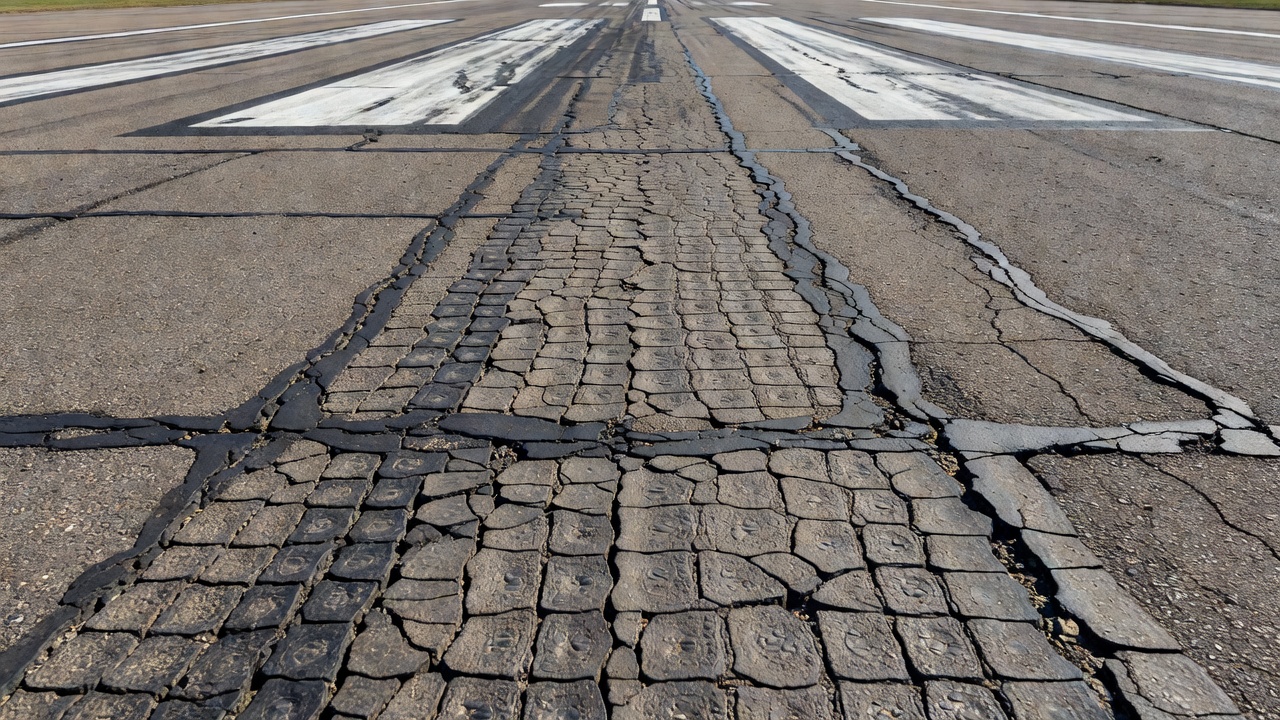
Each selected sample unit undergoes a thorough visual inspection. The inspector walks the sample unit, identifying every type of distress present and recording three attributes for each occurrence: distress type (from the standard’s catalog of defined distresses), severity level (Low, Medium, or High, based on specific criteria for each distress type), and quantity (measured in the appropriate unit, square feet for area distresses, linear feet for cracking, or count for discrete distresses like potholes and corner breaks).
Severity definitions are precise and distress-specific. For example, for alligator cracking (fatigue cracking) in AC pavements, Low severity is defined as fine, longitudinal hairline cracks running parallel to each other with no spalling, Medium severity is defined as a well-developed pattern of interconnected cracks that may be lightly spalled, and High severity is defined as a network of cracks where pieces are loose or missing and moderate to severe spalling is present. For joint spalling in PCC pavements, Low severity is spalling less than 75 mm wide with no loss of material, Medium severity includes spalling 75–150 mm wide with some loss of material, High severity includes spalling greater than 150 mm wide with significant material loss or loose fragments.
Step 3: Compute Deduct Values
For each distress observed in a sample unit, the density is calculated as:
Density (%) = (Distress Quantity / Sample Unit Area) × 100
For distresses measured in linear feet (such as longitudinal cracking), the quantity in linear feet is converted to an equivalent area basis or the standard’s linear-foot-based deduct curves are used directly. For distresses measured by count (potholes, blow-ups, corner breaks), density is expressed as count per sample unit.
Once density is computed, the inspector reads the corresponding Deduct Value (DV) from the standard’s deduct value curves. These are separate curves for AC and PCC pavements, and within each pavement type, separate curves for each distress at each severity level. A high-severity alligator crack covering 10% of a sample unit might have a deduct value of 45, while the same density at low severity might yield a deduct value of only 15. The deduct values range from 0 to 100, with higher values indicating greater impact on pavement condition.
Step 4: The Corrected Deduct Value (CDV) Procedure
This is the most analytically sophisticated step and the key to the PCI method’s robustness. If multiple distresses are present in a sample unit, one cannot simply sum all individual deduct values. Doing so would over-penalize pavements because distresses interact, once a pavement reaches a certain level of deterioration, additional distresses have diminishing marginal impact on overall condition. The Corrected Deduct Value (CDV) accounts for this interaction and ensures that the total penalty for multiple distresses never exceeds 100 (which would produce a negative PCI, a physical impossibility).
The CDV procedure works as follows:
- Count q = the number of individual deduct values greater than 5.0.
- Sum all deduct values to obtain the Total Deduct Value (TDV) .
- Using the appropriate CDV correction curve (separate curves exist for AC and PCC pavements), enter with TDV on the horizontal axis, move vertically to the curve corresponding to the q value, and read CDV from the vertical axis.
- This is an iterative process: if any individual deduct value exceeds the CDV from the first iteration, set the smallest deduct value greater than 5.0 to 5.0, reduce q by 1, and repeat the procedure. Continue iterating until the CDV is greater than or equal to the largest remaining individual deduct value, or until q = 1.
- The maximum CDV from all iterations is the final CDV for that sample unit.
This iterative approach ensures that the influence of individual high-severity distresses is never lost through statistical averaging. A single deep pothole in an otherwise perfect pavement will still produce a meaningful PCI reduction.
Step 5: Compute PCI
The final step is straightforward:
PCI = 100 − CDV(max)
For an individual sample unit, the PCI is 100 minus its maximum corrected deduct value. The Section PCI is the arithmetic mean (or area-weighted mean) of all sample unit PCIs within that section. Sections with PCI values below a predetermined threshold, commonly 70 for airport pavements, are flagged for programmed maintenance.
Worked Example
Consider an AC sample unit of 2,500 square feet with the following distresses: Medium-severity alligator cracking covering 150 sq ft (density = 6%, DV = 28), Low-severity longitudinal cracking measuring 40 linear feet (DV = 8), and High-severity patching covering 50 sq ft (density = 2%, DV = 18). The TDV = 28 + 8 + 18 = 54. With q = 3 (all three DVs exceed 5), the CDV correction curve for AC with q=3 and TDV=54 yields a CDV of approximately 38. Since the largest individual DV (28) is less than 38, no iteration is needed. PCI = 100 − 38 = 62, placing this sample unit in the Fair category.
Distress Types by Pavement Type
Understanding the specific distress types defined in the standard is fundamental to accurate PCI surveys. ASTM D6433 defines 19 distress types for each pavement category. The following tables present the complete catalogs.
Asphalt Concrete (AC) Pavement Distress Types
| Code | Distress Type | Measurement Unit | Severity Levels |
|---|---|---|---|
| AC-01 | Alligator (Fatigue) Cracking | Square Feet | L / M / H |
| AC-02 | Bleeding | Square Feet | L / M / H |
| AC-03 | Block Cracking | Square Feet | L / M / H |
| AC-04 | Bumps and Sags | Linear Feet | L / M / H |
| AC-05 | Corrugation | Square Feet | L / M / H |
| AC-06 | Depression | Square Feet | L / M / H |
| AC-07 | Edge Cracking | Linear Feet | L / M / H |
| AC-08 | Joint Reflection Cracking | Linear Feet | L / M / H |
| AC-09 | Lane/Shoulder Drop-off | Linear Feet | L / M / H |
| AC-10 | Longitudinal & Transverse Cracking | Linear Feet | L / M / H |
| AC-11 | Patching & Utility Cut Patching | Square Feet | L / M / H |
| AC-12 | Polished Aggregate | Square Feet | No severity grading |
| AC-13 | Potholes | Count (each) | L / M / H |
| AC-14 | Railroad Crossing | Square Feet | L / M / H |
| AC-15 | Rutting | Square Feet | L / M / H |
| AC-16 | Shoving | Square Feet | L / M / H |
| AC-17 | Slippage Cracking | Square Feet | L / M / H |
| AC-18 | Swell | Square Feet | L / M / H |
| AC-19 | Weathering and Raveling | Square Feet | L / M / H |
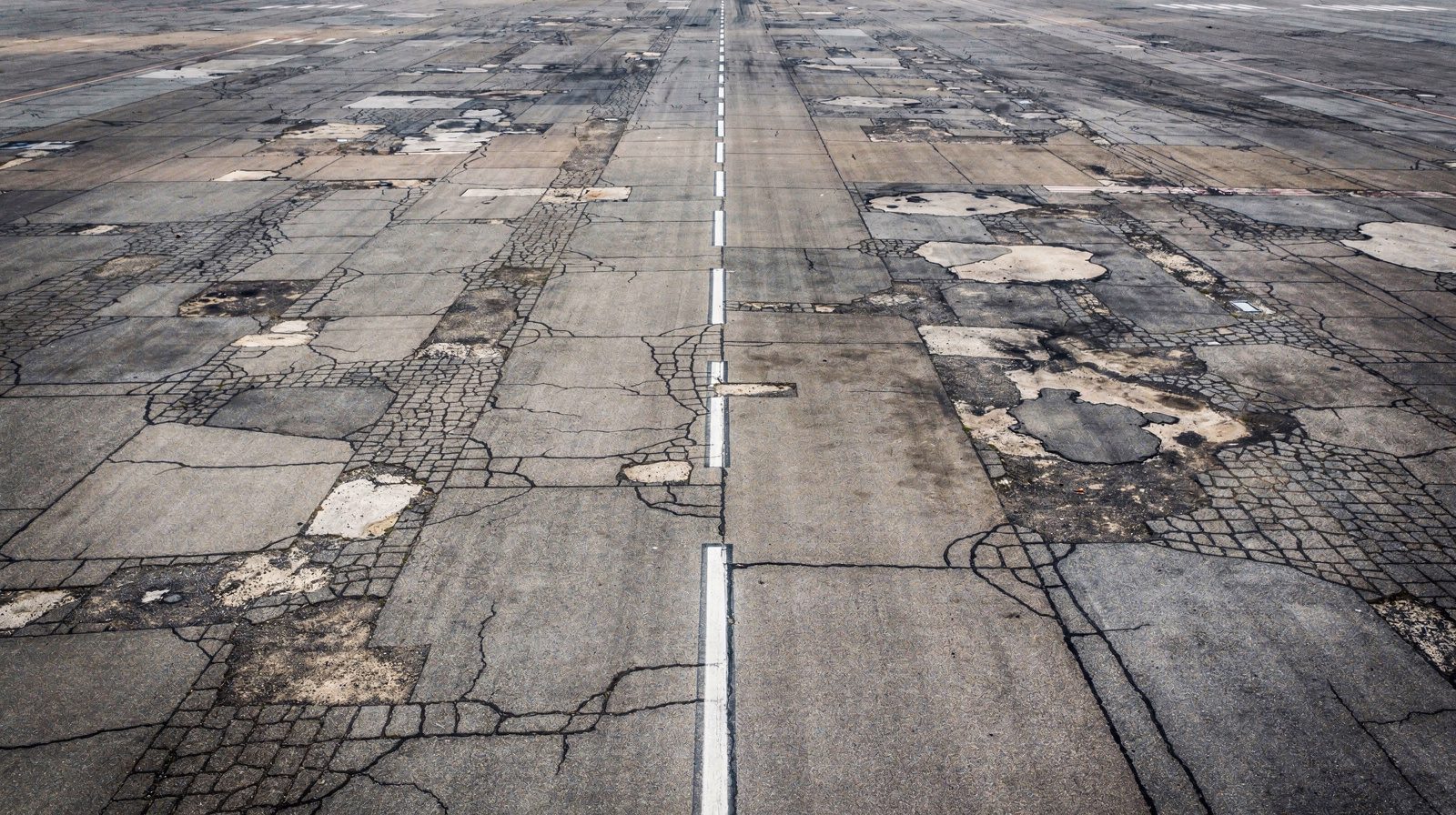
Alligator cracking (AC-01) is one of the most structurally significant distresses. It occurs when repeated traffic loading causes fatigue failure in the asphalt layer, producing a characteristic pattern of interconnected cracks resembling alligator skin. This distress indicates that the pavement structure has reached the end of its fatigue life and requires structural rehabilitation, typically full-depth patching or overlay, rather than surface treatment alone. At low severity, the cracks are not spalled and run parallel in faint lines. At medium severity, a distinct interconnected pattern emerges with light spalling. At high severity, pieces of the surface are loose or missing, creating a FOD risk on airfields.
Rutting (AC-15) is measured as the cross-sectional depression in the wheel path relative to the surrounding pavement surface. It is a critical distress for airport pavements because rut depths exceeding approximately 13 mm (0.5 inches) can trap water and create hydroplaning risk for landing aircraft. Rutting severity is defined by depth: Low is 6–13 mm, Medium is 13–25 mm, and High exceeds 25 mm.
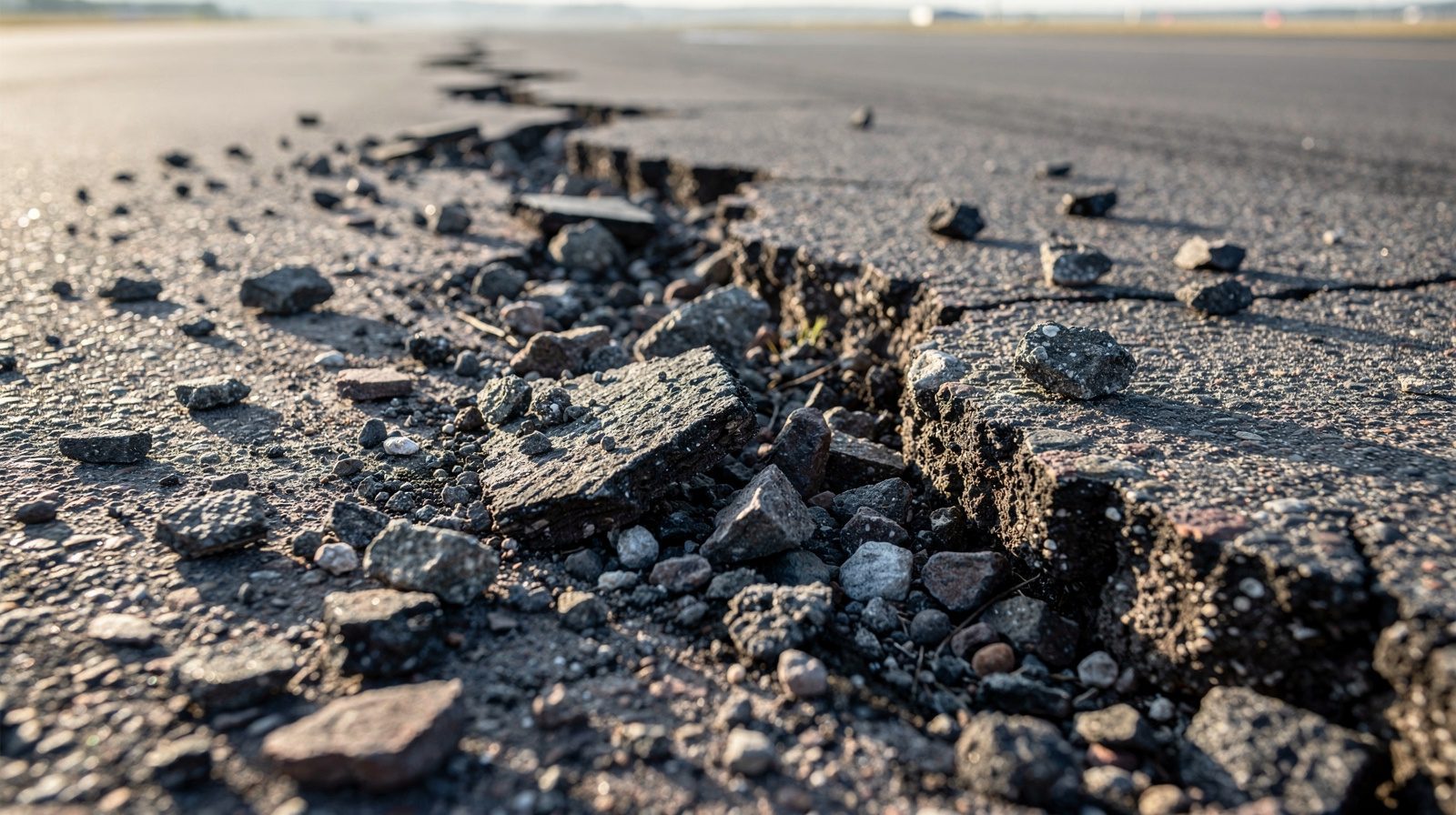
Weathering and raveling (AC-19) represents the progressive loss of surface aggregate and binder due to oxidation, environmental exposure, and traffic abrasion. In airport environments, jet blast can accelerate raveling near runway ends and holding positions. The loss of surface material creates a rough texture that can evolve into potholes and contributes directly to FOD generation.
Portland Cement Concrete (PCC) Pavement Distress Types
| Code | Distress Type | Measurement Unit | Severity Levels |
|---|---|---|---|
| PCC-01 | Blow-ups | Count | L / M / H |
| PCC-02 | Corner Break | Count | L / M / H |
| PCC-03 | Divided Slab | Count | L / M / H |
| PCC-04 | Durability (“D”) Cracking | Count of affected slabs | L / M / H |
| PCC-05 | Faulting | Linear Feet | L / M / H |
| PCC-06 | Joint Seal Damage | Per sample unit | L / M / H |
| PCC-07 | Lane/Shoulder Drop-off | Linear Feet | L / M / H |
| PCC-08 | Linear Cracking | Linear Feet | L / M / H |
| PCC-09 | Patching, Large & Utility Cuts | Square Feet | L / M / H |
| PCC-10 | Patching, Small | Square Feet | L / M / H |
| PCC-11 | Polished Aggregate | Square Feet | No severity grading |
| PCC-12 | Popouts | Square Feet | No severity grading |
| PCC-13 | Pumping | Count | No severity grading |
| PCC-14 | Punchouts | Count | L / M / H |
| PCC-15 | Railroad Crossing | Square Feet | L / M / H |
| PCC-16 | Scaling / Map Cracking / Crazing | Square Feet | L / M / H |
| PCC-17 | Shrinkage Cracks | Square Feet | No severity grading |
| PCC-18 | Spalling, Corner | Count | L / M / H |
| PCC-19 | Spalling, Joint | Count | L / M / H |
Corner breaks (PCC-02) are cracks that intersect the slab corners at approximately 45 degrees, extending vertically through the full slab thickness. They are structural distresses typically caused by excessive loading, loss of foundation support, or thermal curling stresses. On airfield pavements, corner breaks in the touchdown zone are particularly hazardous because loose concrete fragments create severe FOD risk.
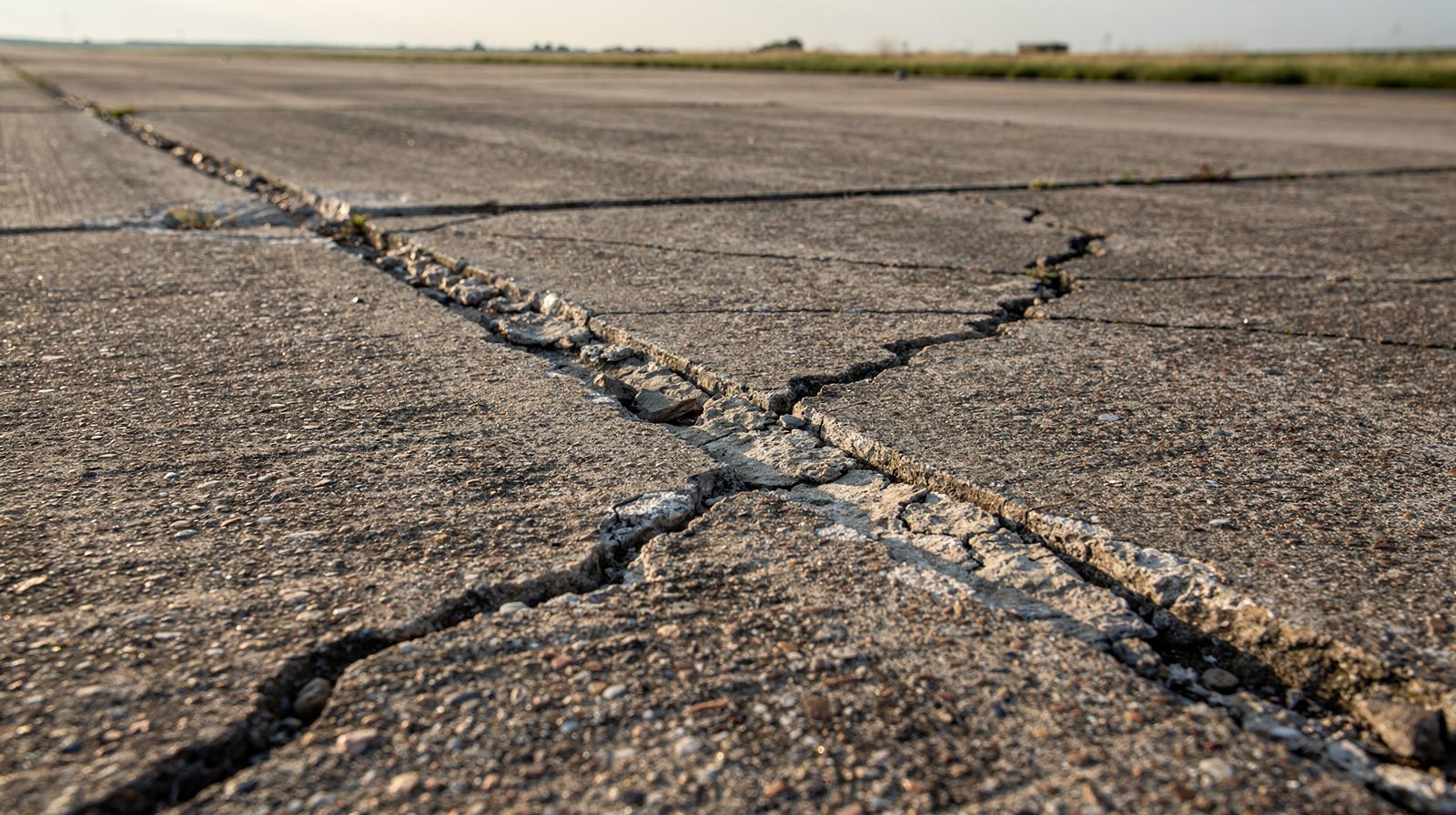
Joint spalling (PCC-19) is the cracking, breaking, or chipping of concrete along joint edges. It occurs within approximately 0.6 meters of the joint and does not extend vertically through the entire slab. Common causes include incompressible material in joints (debris infiltration), excessive joint movement, and poor concrete quality at joint faces. In airport environments, fuel and deicing chemical exposure can accelerate joint deterioration.
Faulting (PCC-05) is a difference in elevation across a joint or crack. It is typically caused by pumping of fine subgrade material from beneath the slab combined with traffic loading that deposits material under the adjacent slab. Faulting exceeding approximately 6 mm creates a ride quality issue and can impact aircraft directional control during taxiing. Low severity is 3–6 mm, Medium is 6–13 mm, and High exceeds 13 mm.
PCI in Airport Pavements
The application of PCI methodology to airport pavements involves specific adaptations that reflect the unique operational environment, geometry, and safety requirements of airfields. Three key documents govern airport PCI implementation.
ASTM D5340, Airport Pavement Condition Index Surveys
ASTM D5340 (current edition D5340-24) is the dedicated airport pavement standard that parallels D6433 for roads. It covers the determination of airport pavement condition through visual surveys of asphalt-surfaced and concrete-surfaced pavements, including porous friction courses. The standard was developed by the U.S. Army Corps of Engineers through funding provided by the U.S. Air Force and has been verified and adopted by the FAA and U.S. Naval Facilities Engineering Command.
Several key adaptations distinguish ASTM D5340 from D6433. The sample unit definitions are adjusted for airport geometries: rather than the road-oriented lane-width-by-100-foot approach, airport sample units are typically defined as contiguous slabs (for PCC) or rectangular areas aligned with runway and taxiway centerlines. The standard explicitly addresses the need to conduct surveys during limited time windows when runways and taxiways are not in active use, requiring coordination with airport operations and air traffic control. Distress types relevant to airport-specific deterioration mechanisms, such as jet blast erosion near runway thresholds and fuel spill damage at apron fuel pits, are incorporated into the distress catalog.
The standard also addresses the relationship between PCI and other critical pavement performance parameters. It explicitly states that PCI provides a measure of surface condition that correlates with structural integrity and surface operational condition (localized roughness and safety), but that PCI cannot directly measure structural capacity, skid resistance, or roughness. These must be evaluated through complementary testing methods, heavy weight deflectometer (HWD) for structural capacity, continuous friction measurement equipment (CFME) for skid resistance, and profilographs for roughness.
ICAO Doc 9157, Airport Services Manual Part 7
ICAO Doc 9157, Part 7 (Airport Pavement Maintenance Management) provides international guidance on applying PCI-based pavement management to airports worldwide. Published by the International Civil Aviation Organization, this document adapts the ASTM methodology for global application, recognizing that not all ICAO member states have access to the same inspection resources or technology.
Part 7 establishes a framework for Airport Pavement Management Systems (APMS) that uses PCI as the primary condition indicator. It recommends that airports conduct full PCI surveys at intervals of three to five years, with more frequent surveys for pavements approaching critical PCI thresholds. The document provides guidance on distress identification and severity classification consistent with ASTM standards but includes distress types common in tropical and arctic climates that may not be prominent in the temperate-climate data on which the original U.S. standards were based. Between those full surveys, a lighter runway pavement check flown by drone images the whole surface at one resolution and reports what changed since the previous pass, leaving the condition rating itself to the next assessment.
A critical contribution of Doc 9157 is the establishment of PCI-based trigger levels for maintenance intervention. While acknowledging that specific thresholds should be calibrated to local conditions, the document provides a general framework:
| PCI Range | Recommended Action Level |
|---|---|
| 86–100 | No action required, routine inspection only |
| 71–85 | Preventive maintenance initiated |
| 56–70 | Corrective maintenance, rehabilitation planning |
| 41–55 | Major rehabilitation prioritized |
| ≤ 40 | Immediate structural evaluation, reconstruction |
The document emphasizes that PCI surveys must be integrated with other condition data, friction measurements, structural testing, and roughness profiles, to create a comprehensive pavement condition picture. PCI alone, while powerful, provides only a surface-condition perspective and cannot substitute for structural evaluation when load-related distress is suspected.
FAA AC 150/5380-7B, Airport Pavement Management Program
FAA Advisory Circular 150/5380-7B provides the regulatory framework for pavement management at U.S. airports that receive federal funding. It establishes requirements for PCI surveys as part of an Airport Pavement Management Program (PMP) and specifies minimum survey frequencies and reporting standards that must be met for grant eligibility.
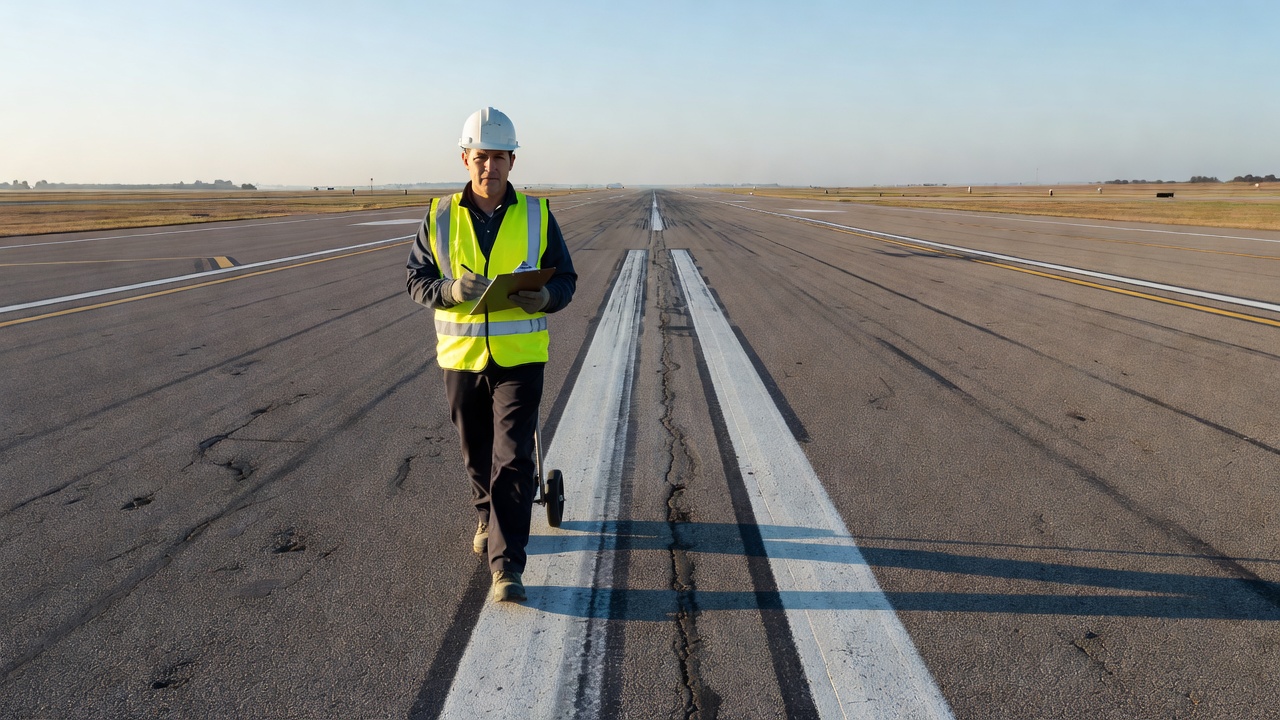
The AC defines three levels of pavement inspection. Level 1 is a walk-through survey that identifies obvious distress and safety hazards, it is typically performed daily by operations staff. Level 2 is a driving survey that provides a general condition overview and is performed annually. Level 3 is the detailed PCI survey, which involves a comprehensive walking inspection of every distress type in every sample unit. The circular requires a detailed inspection at least annually, and permits that interval to be extended to three years where the survey is carried out in accordance with ASTM D5340.
For airports that use the MicroPAVER pavement management software (developed by the U.S. Army Corps of Engineers and adopted by the FAA), the AC provides specific guidance on data formatting, distress coding, and PCI reporting. MicroPAVER implements the full ASTM D5340 methodology and adds predictive modeling capabilities that project future PCI based on historical deterioration trends, enabling airports to forecast maintenance needs and budget requirements up to ten years in advance.
The FAA also provides PCI survey training and certification through its Airport Technology Research & Development Branch. Certified inspectors must demonstrate proficiency in distress identification, severity classification, and quantity measurement across both AC and PCC pavement types before being qualified to perform surveys that are accepted for FAA reporting purposes.
AI-Based PCI Proxy Assessment
Traditional PCI surveys, while standardized and authoritative, are labor-intensive, require significant inspector training, expose personnel to airside hazards, and can only be performed during limited operational windows. A complete Level 3 survey of a major airport can require weeks of work and cost hundreds of thousands of dollars. These constraints have driven intense research and development into automated, AI-based PCI assessment using computer vision, drone imagery, and machine learning.
The technological approach involves several integrated components. First, high-resolution imagery is collected, typically using unmanned aerial vehicles (UAVs) equipped with nadir-mounted cameras flying pre-programmed grid patterns at altitudes of 30–60 meters, or using vehicle-mounted camera arrays driven at highway or airfield operating speeds. These platforms capture overlapping images with ground sampling distances (GSD) of 1–5 mm per pixel, sufficient to resolve hairline cracks as narrow as 2–3 mm.
Second, deep learning models perform semantic segmentation on the imagery to identify and classify each pixel as belonging to a specific distress type or as non-distressed pavement. Modern architectures based on convolutional neural networks (CNNs), including U-Net, DeepLab, and transformer-based models, achieve distress classification accuracies exceeding 90% when trained on adequately diverse datasets. Key challenges include the extreme class imbalance (distress typically occupies less than 5% of pavement surface area), the visual similarity between certain distress types (e.g., sealed cracks vs. unsealed cracks), and the need for models that generalize across different pavement materials, lighting conditions, and surface textures.
Third, the pixel-level distress maps are spatially aggregated within sample unit boundaries defined by the airport’s pavement management system. For each sample unit, the area of each distress type at each severity level is computed, and distress densities are calculated. These densities feed into a computational implementation of the ASTM deduct value curves and CDV procedure, producing an AI-generated PCI proxy for each sample unit and section.
Recent research has validated this approach at operational airports. A 2025 study published in the journal Sensors demonstrated an end-to-end framework for UAV-based runway inspection at Zadar Airport in Croatia, where the entire 2,500-meter runway was surveyed and AI-detected distresses were aggregated using a PCI-inspired methodology. The system produced georeferenced condition maps that correlated with manual survey results while reducing inspection time by over 80%. A complementary 2025 MDPI study proposed an integrated UAV and mobile mapping approach that achieved automated PCI computation with root-mean-square errors below 5 PCI points relative to manual surveys.
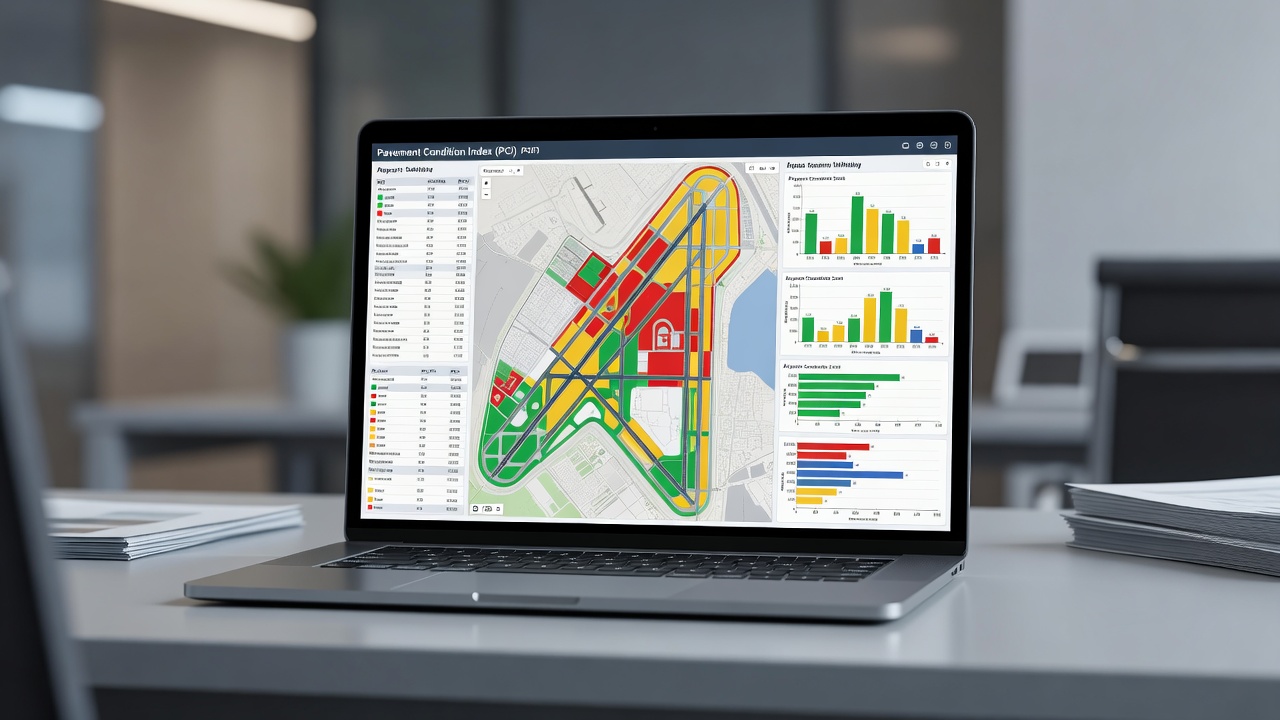
TarmacView’s approach to AI-based pavement condition assessment extends this methodology by applying computer vision models trained specifically on airport pavement distresses. Rather than attempting to replicate the full ASTM D5340 deduct value calculation (which requires severity classification that remains challenging for AI), TarmacView produces a visual proxy grade that correlates with PCI while being derived entirely from automated image analysis. This proxy enables continuous, low-cost condition monitoring at frequencies far exceeding what is practical with manual surveys, weekly or even daily assessments versus triennial inspections, allowing airport operators to detect deterioration trends months or years earlier than would otherwise be possible.
Limitations of Visual-Only PCI
The PCI methodology, despite its widespread adoption and proven utility, carries inherent limitations that must be understood for proper interpretation and application. These limitations are acknowledged in the standards themselves and in the broader pavement engineering literature.
Subjectivity and inspector variability is the most persistent challenge. Even with rigorous training and certification programs, different inspectors surveying the same pavement section may produce PCI values that differ by 5 to 10 points. This variability arises from subtle differences in distress identification (is that a low-severity alligator crack or medium-severity block cracking?), severity classification (where exactly is the boundary between low and medium?), and quantity estimation. The statistical precision claims of the standard, typically ±5 PCI points at the 95% confidence level, assume inspectors who are well-calibrated against reference standards, a condition that is difficult to maintain in practice. Studies comparing PCI survey results from different inspection teams have found inter-rater reliability coefficients ranging from 0.75 to 0.92, indicating that while the method is generally repeatable, significant judgment differences can occur.
PCI measures surface condition only. The standard explicitly states that PCI cannot measure structural capacity, skid resistance, or roughness. A pavement with a PCI of 90 may still have inadequate structural capacity for the aircraft it serves if the pavement was designed to a lower standard than current traffic demands. Conversely, a pavement with a PCI of 55 may retain sufficient structural capacity but present only surface-level distress. This limitation means that PCI-based maintenance decisions must be supplemented with structural evaluation, typically using falling weight deflectometer (FWD) or heavy weight deflectometer (HWD) testing, when load-related distresses are present or when traffic levels have changed since original construction.
Low-severity distress underestimation occurs because deduct values for low-severity distresses are small, and when they are among many distresses in a sample unit, the CDV iterative procedure may effectively eliminate their contribution. This can produce a PCI that overstates the true condition, particularly for pavements in the early stages of deterioration where preventive maintenance would be most cost-effective. A pavement with widespread low-severity cracking may receive a PCI in the mid-80s, technically “Good”, even though it is on the cusp of rapid deterioration that could be arrested with timely crack sealing.
The 100-point scale is not uniformly sensitive across its entire range. Changes in PCI from 100 to 85 typically involve minor, cosmetic distresses with little structural significance. Changes from 55 to 40, covering the same 15-point span, represent dramatic deterioration that may require entirely different treatment strategies. This non-linearity can complicate financial modeling and communication with non-engineering stakeholders who may interpret the numeric scale as linear.
Operational constraints at airports introduce additional limitations. PCI surveys require closing or restricting access to runway and taxiway sections, which must be coordinated with air traffic control and may only be possible during nighttime or low-traffic periods. This limits the time available for thorough inspection and can pressure inspectors to work faster than ideal. Weather constraints, surveys cannot be performed in rain, snow, or low-light conditions that obscure distress visibility, further compress available survey windows.
Comparison with Other Indices
PCI is one of several pavement condition indices used internationally. Understanding how it relates to and differs from other indices is essential for interpreting condition data from multiple sources.
Present Serviceability Index (PSI)
The Present Serviceability Index (PSI) was developed during the AASHO Road Test (1958–1960) and is the original pavement condition rating methodology. PSI ranges from 0 to 5, with 5 representing a perfect pavement and 0 representing an impassable pavement. Unlike PCI, which is based entirely on objective distress measurements, PSI was derived from a panel of raters who drove over test sections and assigned subjective ratings. The AASHO researchers then developed regression equations that predicted the raters’ scores from physical measurements of slope variance (roughness), rut depth, cracking, and patching.
The PSI equation for flexible pavements is:
PSI = 5.03 − 1.91 × log(1 + SV) − 1.38 × RD² − 0.01 × √(C + P)
Where SV is slope variance (a roughness measure), RD is rut depth in inches, C is cracking area in square feet per 1,000 square feet, and P is patching area in square feet per 1,000 square feet.
PSI and PCI are fundamentally different in philosophy. PSI is a user-perception-based index that heavily weights ride quality (roughness contributes approximately 70% of the PSI variance), while PCI is a distress-based index that focuses on what the pavement looks like rather than how it rides. A smooth pavement with extensive sealed cracks may have a high PSI (good ride) but a lower PCI (significant distress). Conversely, a rough but uncracked pavement may score better on PCI than on PSI. Research has established correlation equations between PSI and PCI, though the relationship varies significantly by pavement type, climate, and traffic. A typical R² for PCI-PSI correlation is approximately 0.65–0.75, indicating a moderate but not strong relationship.
International Roughness Index (IRI)
The International Roughness Index (IRI) is a standardized roughness measurement defined by the World Bank in the 1980s to enable consistent pavement condition comparisons across countries. IRI is computed from a measured longitudinal road profile by simulating the response of a standardized “quarter-car” mathematical model traveling at 80 km/h. It is expressed in units of meters per kilometer (m/km) or inches per mile (in/mi), with lower values indicating smoother pavements.
Unlike PCI, IRI is a single-parameter index that measures only longitudinal roughness. It provides no information about cracking, rutting, surface texture, or material integrity. IRI is completely objective, it is calculated algorithmically from profilometer data with no subjective judgment involved, making it highly repeatable and suitable for network-level monitoring. This objectivity comes at the cost of completeness: a pavement with deep alligator cracking that has not yet created roughness will have a low (good) IRI despite being structurally compromised.
IRI and PCI complement each other well in comprehensive pavement management. PCI identifies structural and surface deterioration, while IRI quantifies the user experience. In airport applications, IRI is less commonly used than in highway applications because aircraft ride quality is influenced by different roughness wavelengths than those to which road vehicles are sensitive. Boeing’s bump index and other aircraft-specific roughness criteria are more relevant to airport pavement evaluation than the automotive-based IRI.
Pavement Condition Rating (PCR)
The Pavement Condition Rating (PCR) is a simplified condition index used by some agencies, typically on a scale of 0–100 or 1–5, that combines multiple distress observations through weighted averaging rather than the deduct value approach. PCR is less standardized than PCI, with individual agencies defining their own distress catalogs, severity criteria, and weighting schemes. The FAA has historically used PCR alongside PCI in its National Airport Pavement Management System, though PCI remains the primary metric for federally funded airports.
Comparative Summary
| Feature | PCI (ASTM D6433/D5340) | PSI (AASHO) | IRI (World Bank) | PCR (Agency-Specific) |
|---|---|---|---|---|
| Scale | 0–100 | 0–5 | 0–∞ m/km | Varies (typically 0–100) |
| Basis | Visual distress survey | User panel + measurements | Profile measurement | Weighted distress |
| Parameters | 19 distress types per pavement | Roughness, rut, crack, patch | Longitudinal profile only | Agency-defined |
| Objectivity | Moderate (inspector dependent) | Low (subjective base) | High (algorithmic) | Varies |
| Structural insight | Indirect (surface condition) | Indirect | None (roughness only) | Varies |
| Primary use | Maintenance planning, PMSs | Design, historical reference | Network monitoring | Simplified reporting |
| Airport adoption | Primary standard (FAA, ICAO) | Not used | Limited | Secondary metric |
The key insight is that no single index provides complete pavement condition information. PCI excels at detailed, actionable condition assessment for maintenance planning but requires significant resources. IRI provides rapid, objective network-level screening but misses structural distress. PSI bridges user experience and physical measurement but lacks the distress-type granularity needed for treatment selection. The most effective pavement management programs integrate multiple indices, using automated roughness measurement for annual screening and PCI surveys for detailed condition characterization at multi-year intervals.
Conclusion
The Pavement Condition Index (PCI) remains the definitive standard for quantifying pavement surface condition in both road and airport applications. Its methodology, codified in ASTM D6433 for roads and ASTM D5340 for airports, transforms the complexity of pavement distress into a single, actionable number that drives maintenance planning, budget allocation, and asset management decisions worldwide. Through the systematic processes of distress identification, density calculation, deduct value assignment, and corrected deduct value iteration, PCI provides an objective and repeatable basis for comparing pavement condition across an entire network.
The integration of PCI into ICAO Doc 9157 and FAA AC 150/5380-7B establishes it as the primary condition metric for airport pavement management. The emergence of AI-based proxy assessment techniques, including computer vision analysis of UAV and vehicle-mounted imagery, promises to dramatically reduce the cost and increase the frequency of condition assessment, enabling airports to move from triennial PCI surveys to continuous condition monitoring. These automated approaches, while not yet fully replacing the rigor of ASTM-compliant manual surveys, provide a practical complement that enables earlier detection of deterioration trends and more responsive maintenance planning.
Understanding both the power and the limitations of PCI, its surface-only perspective, its inherent subjectivity, its non-linear sensitivity across the rating scale, is essential for airport operators, pavement engineers, and maintenance planners who rely on this index for decisions affecting safety, operational continuity, and infrastructure investment.
For airports seeking to modernize their pavement condition assessment program with automated, AI-driven inspection technology, contact our team or schedule a demonstration .
Frequently Asked Questions
- What is the Pavement Condition Index (PCI)?
- The Pavement Condition Index (PCI) is a numerical rating from 0 to 100 that quantifies the surface condition of a pavement section. A PCI of 100 represents a pavement in perfect condition with no observable distress, while a PCI of 0 indicates a completely failed pavement. PCI is calculated by surveying visible distress types (cracking, rutting, patching, etc.), recording their severity (low, medium, high) and extent, then applying standardized deduct value curves per ASTM D6433 (roads) or ASTM D5340 (airports).
- How is PCI calculated?
- PCI is calculated in five steps: (1) The pavement network is divided into sample units, (2) Each sample unit is visually inspected and all distress types, severity levels, and quantities are recorded, (3) For each distress, density is computed and a deduct value is read from standard curves, (4) Deduct values are combined using the corrected deduct value (CDV) iterative procedure that accounts for the interaction of multiple distress types, (5) PCI = 100 minus the maximum CDV. The CDV correction prevents over-penalizing pavements that have many distress types.
- What is the difference between ASTM D6433 and ASTM D5340?
- ASTM D6433 is the standard for roads and parking lots, while ASTM D5340 is specifically for airport pavements. The fundamental PCI methodology is the same in both, but ASTM D5340 includes additional distress types relevant to airports (such as jet blast erosion and fuel spill damage), uses different sample unit definitions suited for runway/taxiway geometry, and incorporates airport-specific inspection protocols aligned with FAA and ICAO requirements. The PCI rating scale and CDV calculation procedure remain consistent between both standards.
- What PCI rating requires maintenance action?
- The PCI scale is divided into condition categories: Good (86–100) requires only routine monitoring, Satisfactory (71–85) triggers preventive maintenance, Fair (56–70) indicates need for rehabilitation planning, Poor (41–55) demands urgent repairs, Very Poor (26–40) signals reconstruction should be considered, Serious (11–25) and Failed (0–10) require immediate major rehabilitation or complete replacement. Most airport pavement management programs set a minimum acceptable PCI threshold, commonly around 70, below which programmed maintenance is triggered.
- Can PCI be determined automatically using AI or drones?
- Yes, AI-based proxy PCI assessment is an emerging approach that uses computer vision and machine learning to detect pavement distress from drone or vehicle-mounted camera imagery. Deep learning models perform pixel-level semantic segmentation to identify crack types, surface deformations, and other distresses. The detected distress is then aggregated within sample-unit boundaries, and distress density is calculated to estimate a PCI value. Recent research at airports including Zadar Airport has validated UAV-based PCI assessment frameworks, demonstrating correlation with manual survey results while dramatically reducing inspection time and improving repeatability.