What Is Pervious Concrete?
What Is Pervious Concrete?
Pervious concrete, also referred to as permeable concrete, porous concrete, gap-graded concrete, no-fines concrete, or enhanced porosity concrete (EPC), is a specialized Portland cement concrete pavement material defined by the American Concrete Institute (ACI) in ACI 522R as a mixture of hydraulic cement, coarse aggregate of smaller size, admixtures, and water, with little or no fine aggregate (sand). The defining characteristic of pervious concrete is a system of highly permeable, interconnected voids that promote the rapid drainage of water, typically comprising 15% to 35% of the total material volume.
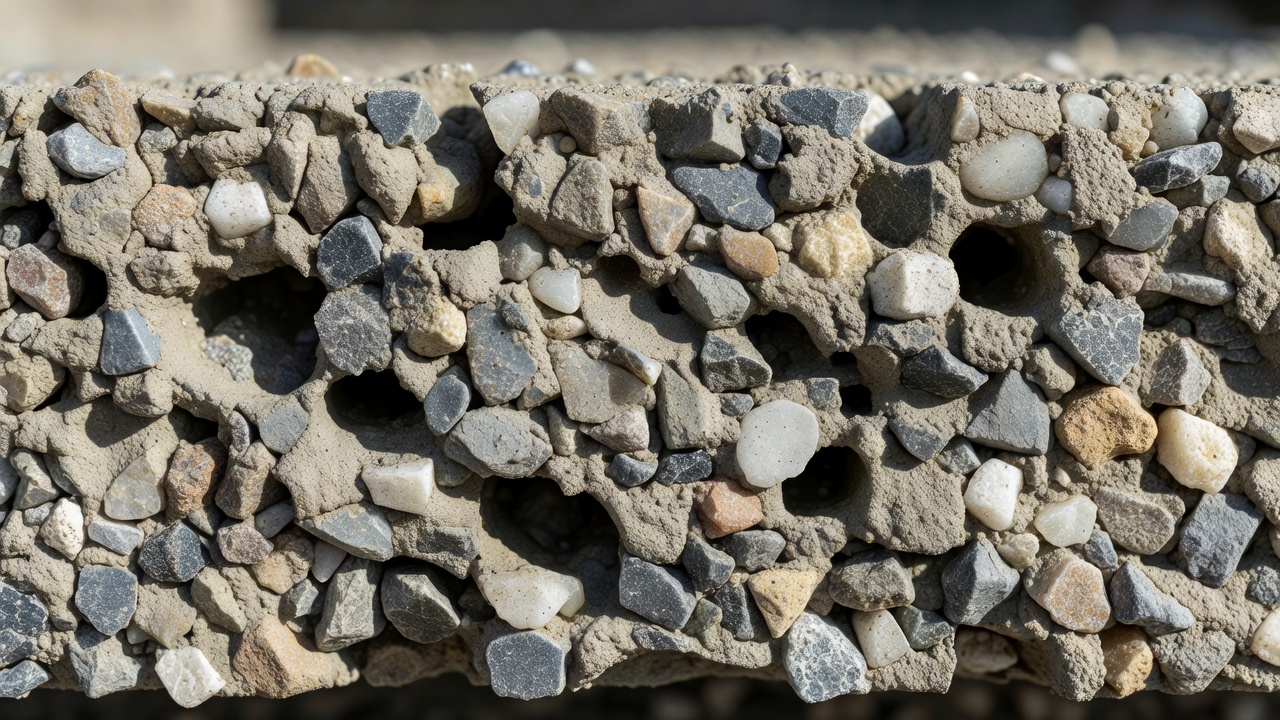
The fundamental engineering principle behind pervious concrete is the deliberate elimination of fine aggregate particles from the aggregate gradation. In conventional dense-graded concrete, aggregate particles span a continuous range of sizes from coarse gravel down to fine sand, the smaller particles fill the spaces between larger particles, producing a dense, tightly-packed structure with minimal void space. In pervious concrete, the aggregate is gap-graded or limited to a single nominal size, which means the interstitial spaces between coarse aggregate particles remain unfilled. The cement paste is proportioned to only coat and bind the aggregate particles at their contact points, not to fill the void space between them. This produces a hard, stable pavement with an internal network of connected channels through which water can freely flow.
This distinguishes pervious concrete fundamentally from conventional concrete in nearly every material property. The unit weight of pervious concrete is approximately 100 to 125 pounds per cubic foot (1,600 to 2,000 kg/m³), compared to 145 to 150 lb/ft³ for conventional concrete, a reduction of roughly 15% to 30% attributable to the void content. The material exhibits zero slump as measured by ASTM C143, it is a stiff, damp material that cannot be placed using conventional concrete handling methods. The compressive strength typically ranges from 2,500 to 4,000 psi (17 to 28 MPa), compared to 4,000 to 6,000 psi for conventional concrete, with flexural strengths of 150 to 550 psi (1.0 to 3.8 MPa). The lower strength is an acceptable trade-off for the material’s intended use in light-duty paving applications where structural loads are moderate but drainage performance is paramount.
The void content in pervious concrete is not the same as entrained air in conventional concrete. Entrained air in conventional concrete consists of microscopic, intentionally introduced air bubbles, typically 0.002 to 0.02 inches (0.05 to 0.5 mm) in diameter, that are isolated from each other and provide freeze-thaw protection through pressure relief. These bubbles constitute only 4% to 8% of the paste volume and do not connect to form drainage pathways. In pervious concrete, the voids are structural gaps between aggregate particles, typically 0.08 to 0.4 inches (2 to 10 mm) in diameter, that are fully interconnected, creating a continuous three-dimensional drainage network from the pavement surface to the subbase.
Mix Design
The mix design of pervious concrete follows fundamentally different principles from conventional concrete proportioning. The target is not maximum density and strength, but rather a controlled balance between void content (for permeability), paste coating thickness (for durability and raveling resistance), and compressive strength (for structural adequacy). The governing standards include ACI 522.1-13 (Specification for Pervious Concrete Pavement), ASTM C1688 (Density and Void Content of Freshly Mixed Pervious Concrete), and the NRMCA Pervious Concrete Mixture Proportioning methodology.
Aggregate Selection
Pervious concrete uses single-sized or narrowly graded coarse aggregate conforming to ASTM C33. The most commonly specified gradations are:
| ASTM Gradation | Size Range | Typical Applications |
|---|---|---|
| No. 67 | 3/4 in. to No. 4 (19 mm to 4.75 mm) | Parking lots, heavy pedestrian |
| No. 7 | 1/2 in. to No. 8 (12.5 mm to 2.36 mm) | General pavement |
| No. 8 | 3/8 in. to No. 16 (9.5 mm to 1.18 mm) | Pedestrian, thin overlays |
| No. 89 | 3/8 in. to No. 50 (9.5 mm to 0.30 mm) | Decorative, light traffic |
The aggregate-to-cement ratio typically ranges from 4:1 to 5:1 by mass, producing aggregate contents of approximately 2,000 to 2,500 pounds per cubic yard (1,190 to 1,480 kg/m³). The ideal aggregate void content in the loose or rodded condition should be in the high 30s to low 40s percent, as measured by ASTM C29. Both rounded (gravel) and crushed (angular) aggregates can be used, though crushed aggregates provide better interlock at the cost of requiring more compaction effort.
Cementitious Materials
Cement content in pervious concrete typically ranges from 450 to 700 pounds per cubic yard (267 to 416 kg/m³), with the NRMCA recommending 450 to 550 lb/yd³ as the most desirable range for balancing workability and durability. Excessively high cement contents, above 600 lb/yd³, combined with very low water-to-cement ratios (0.25 to 0.28) create a condition known as dead cement, where a significant portion of the cement remains unhydrated, producing weakened paste that reduces raveling resistance.
Supplementary cementitious materials (SCMs) are commonly used to improve workability, reduce heat of hydration, and enhance durability:
- Fly ash: Up to 25% to 30% replacement by mass, improves workability and reduces water demand
- Ground granulated blast-furnace slag (GGBFS): Up to 50% replacement, improves strength and sulfate resistance
- Silica fume: 5% to 10% replacement, significantly improves abrasion resistance and bond strength, though it increases the need for high-range water reducers
Water-to-Cement Ratio
The water-to-cementitious materials ratio (w/cm) for pervious concrete is a critical parameter with a narrow acceptable window of 0.27 to 0.36 per ACI 522R. The NRMCA further narrows this to 0.34 to 0.41 for optimal workability and cement hydration:
| w/cm Ratio | Effect |
|---|---|
| Below 0.27 | Balling of mix, poor compaction, unhydrated cement, reduced strength |
| 0.27 to 0.34 | Acceptable range, requires high-range water reducers for workability |
| 0.34 to 0.41 | Optimal range per NRMCA, produces wet metallic sheen on aggregate |
| Above 0.40 | Paste runoff, voids become sealed, reduced permeability |
The correct water content produces a characteristic wet, metallic sheen on the aggregate particles without runoff of the paste. A practical field test, the handful test, involves forming a ball of the mixture in the gloved hand: the ball should hold its shape without crumbling, yet when released, the individual aggregate particles should remain discernible rather than being embedded in a paste matrix.
Admixtures
Pervious concrete requires a tailored admixture package to achieve acceptable placement characteristics and durability:
High-range water reducers (HRWR), Type A or Type F per ASTM C494, are used to improve workability at the low w/cm ratios required. However, caution is needed because excessive superplasticization can cause the paste to drain down from the aggregate and collect at the bottom of the pavement section, sealing the lower voids and reducing permeability.
Viscosity-modifying admixtures (VMA) help maintain the paste coating on the aggregate surface and prevent drain-down during placement and compaction. These are particularly important in hot weather when the mixture’s rheology changes rapidly.
Hydration stabilizers, also called set retarders or hydration-control admixtures, are strongly recommended for pervious concrete. The high void content exposes a large surface area of paste to the air, accelerating moisture loss and shortening the working time. Hydration stabilizers can extend the working window from approximately 30 minutes to 2+ hours, which is critical given that pervious concrete cannot be pumped and requires direct discharge from the truck.
Air-entraining admixtures (AEA) are required for pervious concrete in freeze-thaw environments. However, a unique challenge is that the air content cannot be directly measured or verified using standard concrete air-content test methods (ASTM C231 pressure method or ASTM C173 volumetric method) because the large structural voids cause erroneous readings. Air content in the paste fraction of pervious concrete is best evaluated using ASTM C457 (microscopic air-void analysis of hardened concrete) on extracted cores.
Paste Volume Proportioning
The NRMCA mixture proportioning method for pervious concrete calculates the required paste volume using this relationship:
Vp = Vac + CI − Vvoid
Where:
- Vp = paste volume (percent of mixture volume)
- Vac = aggregate void content in the loose or rodded condition (percent)
- CI = compaction index (typically 1% to 8%, depending on compaction effort)
- Vvoid = target air void content for the hardened pavement (typically 15% to 25%)
This approach ensures that the paste volume is sufficient to coat all aggregate particles and provide durable bonding at contact points, while leaving the target void volume open for water transmission.
Laboratory Testing and Quality Control
| Test Standard | Purpose | Target Value |
|---|---|---|
| ASTM C1688 | Fresh density and void content | Unit weight ±5 lb/ft³ of target |
| ASTM C1754 | Hardened density and void content (cores) | Target void % ±2% |
| ASTM C39 | Compressive strength (cylinders) | 2,500-4,000 psi |
| ASTM C78 | Flexural strength (beams) | 150-550 psi |
| ASTM C1701 | Field infiltration rate | 200-500 in/hr (new construction) |
ASTM C1688 is the primary quality-control test and replaces the slump test for pervious concrete. The test involves consolidating a known volume of fresh concrete in a standard container using a specific compaction procedure (typically 20 drops of a standard tamping rod in three layers), then weighing the filled container to determine the fresh density. This density is compared to the theoretical maximum density (calculated from known specific gravities and proportions) to determine the fresh void content.
Placement and Compaction
Pervious concrete placement requires specialized construction procedures that differ significantly from conventional concrete paving. The material is zero-slump, cannot be pumped, and has a limited working window that demands precise coordination between mixing, delivery, and placement operations.
Subgrade and Base Preparation
The subgrade must be prepared to provide adequate support and drainage. Typical requirements include:
- Compaction to 90% to 95% of AASHTO T-180 maximum dry density
- Moistening immediately before concrete placement (without standing water) to prevent the subgrade from wicking moisture from the pervious concrete
- Stone reservoir layer of 4 to 24 inches (100 to 600 mm) of open-graded No. 57 stone provides both drainage storage and a stable working platform
- Geotextile separator placed between the reservoir stone and the subgrade to prevent soil migration while allowing water to pass
Placement Procedures
Pervious concrete is placed using fixed-form construction methods. The forms are set to a height that allows the strike-off to be positioned approximately 0.5 to 0.75 inches (12 to 20 mm) above the final pavement elevation, accounting for the reduction in thickness that occurs during compaction.
The material must be discharged directly from the mixer truck into the placement area and spread using rakes or shovels. Because pervious concrete cannot be pumped, the mixer truck must have direct access to all areas of the pavement. For large projects, multiple access points or a paving train may be required.
Mechanical or manual vibrating screeds are used for initial consolidation and striking off to grade. However, the vibration frequency must be reduced compared to conventional concrete to avoid over-compaction of the top surface, which can seal the surface voids and dramatically reduce permeability. Laser screeds can be used but require careful adjustment of vibration settings.
Compaction
Compaction is the most critical step in pervious concrete construction and is performed using steel rollers typically 3 to 6 feet (1 to 2 m) wide, operated in non-vibratory mode. The roller consolidates the concrete to the final grade (form height) and ensures adequate contact between aggregate particles for strength development.
Typical compaction requirements include:
- 2 to 4 passes of the roller over the entire surface
- Compaction completed within 15 minutes of placement
- Edge compaction using a 1×1 foot (300×300 mm) steel hand tamper or float along forms and joints
- Finish rolling to achieve a uniform surface appearance without overworking the material
The compaction process must be carefully controlled: insufficient compaction reduces strength and increases raveling potential, while excessive compaction can collapse the void structure and reduce permeability below design targets.
Curing
Curing is arguably the most critical and most frequently neglected step in pervious concrete construction. Because pervious concrete does not bleed, water does not rise to the surface as it does in conventional concrete, the material is highly susceptible to plastic shrinkage cracking within the first hours after placement. The exposed surface area of the voids accelerates moisture evaporation from the paste.
The required curing sequence is:
- Fog misting applied immediately after compaction and jointing to saturate the surface air
- 6-mil (0.15 mm) polyethylene plastic sheeting placed directly on the pavement surface within 20 minutes of compaction
- Anchoring of the plastic sheeting at edges and seams, using sandbags or weighted objects, never sand or dirt that could contaminate the surface
- Minimum 7 days of continuous wet curing under the plastic, extended to 10 to 14 days in cold weather or when using SCMs
Liquid membrane-forming curing compounds are not recommended for pervious concrete. Research by Kevern et al. (2009) demonstrated that membrane curing compounds reduce surface evaporation but do nothing to prevent internal moisture loss through the open void structure. Only physical moisture barriers, polyethylene sheeting or wet burlap covered with plastic, provide adequate curing.
Jointing
Control joints in pervious concrete are typically installed using a rolling joint tool, similar to a pizza cutter with a cutting blade, that creates a weakened plane approximately 25% of the slab thickness deep. Joint spacing is typically 20 feet (6 m), though some installations have successfully used spacings up to 45 feet without uncontrolled cracking.
Saw-cutting is strongly discouraged for pervious concrete joints because:
- The water used in sawing carries cement slurry into the open voids, sealing them
- The saw blade creates raveling at the joint edges due to the open aggregate structure
- Replacement of joint sealant is difficult because the void structure prevents clean bonding
Some pervious concrete installations omit control joints entirely, accepting that random cracking will occur. Because the pavement is typically underlain by a flexible stone reservoir, differential movement at cracks is minimal, and the structural and functional impacts are generally acceptable.
Weather Limitations
Pervious concrete cannot be placed on frozen, muddy, or saturated subgrade. Rain during placement is particularly problematic because water droplets impact the exposed paste surface, creating surface sealing and pitting. High ambient temperatures (above 85°F / 30°C), low humidity, and high winds accelerate moisture evaporation and require adjustments to the mixture (hydration stabilizers) and placement procedures (faster operations, immediate curing).
Permeability and Infiltration Rate
The permeability of pervious concrete is measured by the infiltration rate, the velocity at which water passes vertically through the pavement under a given hydraulic head. This property is governed by ASTM C1701/C1701M, Standard Test Method for Infiltration Rate of In Situ Pervious Concrete.
Typical Infiltration Rates
Newly placed pervious concrete with a properly designed and compacted void structure exhibits infiltration rates in the range of:
| Void Content | Typical Infiltration Rate | Equivalent Hydraulic Conductivity |
|---|---|---|
| 15% | 100-200 in/hr (0.07-0.14 cm/s) | 2.5-5.1 m/hr |
| 20% | 200-400 in/hr (0.14-0.28 cm/s) | 5.1-10.2 m/hr |
| 25% | 400-800 in/hr (0.28-0.56 cm/s) | 10.2-20.3 m/hr |
| 30% | 800-1,500 in/hr (0.56-1.06 cm/s) | 20.3-38.1 m/hr |
The commonly cited design infiltration rate for pervious concrete is 200 to 500 inches per hour (0.14 to 0.35 cm/s). These rates are orders of magnitude higher than natural rainfall intensities, even a 100-year, 1-hour storm event in most regions produces rainfall intensities of only 2 to 6 inches per hour, meaning the surface infiltration capacity of pervious concrete virtually never limits the hydrologic performance. The actual system performance is governed by the subbase storage volume and the subgrade infiltration rate.
ASTM C1701 Testing Protocol
The ASTM C1701 field test involves the following procedure:
- A 12-inch (300 mm) diameter infiltration ring is sealed to the pavement surface using plumbers’ putty or other non-hardening sealant
- An 18-inch (455 mm) outer ring is also sealed to confine lateral flow
- Pre-wetting: 8 pounds (3.6 kg) of water is poured into the inner ring and allowed to fully infiltrate
- After pre-wetting, a measured mass of water (typically 10 to 40 lb / 4.5 to 18 kg, depending on expected infiltration rate) is poured into the inner ring
- The time for complete infiltration is recorded with a stopwatch
- The infiltration rate is calculated as:
I = (K × M) / (D² × t)
Where:
- I = infiltration rate (inches per hour)
- K = 126,870 (constant for units)
- M = mass of water (pounds)
- D = inner ring diameter (inches)
- t = time for infiltration (seconds)
Factors Affecting Permeability
The permeability of pervious concrete is not solely a function of total void content, the connectivity of the void network is equally or more important. Two specimens with identical total void content can have dramatically different permeabilities if one has well-connected pores and the other has isolated voids. Factors that influence void connectivity include:
- Aggregate angularity: Angular crushed aggregates create more tortuous but better-connected pore networks than rounded gravel
- Compaction method: Roller compaction produces more uniform void distribution than vibratory compaction
- Paste rheology: Higher-viscosity paste maintains better coating on aggregate without dripping into voids
- Aggregate size distribution: Narrower gradations produce more uniform and better-connected void networks
Clogging as Primary Distress
Clogging, the progressive accumulation of sediment, organic debris, and fine particles within the interconnected void system, is the primary distress mechanism for pervious concrete. Unlike conventional concrete pavements, where structural distresses (cracking, spalling, joint deterioration) dominate the failure modes, pervious concrete most commonly fails functionally long before it fails structurally.
Clogging Mechanisms
Three distinct mechanisms contribute to the clogging of pervious concrete:
Surface deposition, Windblown soil, dust, and sand from adjacent unpaved areas, agricultural fields, or construction sites accumulate on the pavement surface. Rainfall then transports these particles into the surface voids. Coarse sand particles (0.5 to 1.0 mm) that are larger than the surface pore throats form a surface seal, a thin, low-permeability layer that prevents water entry while the deeper void structure remains open.
Depth filtration, Medium and fine sand particles (0.075 to 0.5 mm) enter the surface voids and are transported downward through the pore network. These particles are trapped at pore throats, the constrictions between adjacent aggregate particles where the pore diameter is smallest. This creates a clogging front that progresses from the surface downward. The concentration of trapped sediment decreases exponentially with depth, with 60% to 80% of clogging material typically found in the top 0.5 to 1.0 inches (12 to 25 mm) of the pavement.
Clay adhesion, Clay particles (smaller than 0.002 mm) pose the most severe clogging challenge. When wet, clay particles can pass relatively freely through the pore network. However, when the pavement dries between rainfall events, the clay particles adhere strongly to the rough, tortuous pore walls through a combination of van der Waals forces, capillary suction, and mechanical interlocking. Research by Rao et al. (2022) demonstrated that after clay clogging and subsequent drying, the normalized permeability dropped to 0.154 of the initial value, and pressure washing achieved only 4.91% permeability recovery, confirming that dried clay is extremely difficult to remove from pervious concrete pores.
Sources of Clogging Material
| Source | Typical Material | Particle Size |
|---|---|---|
| Adjacent bare soil | Silt, clay, fine sand | <0.075 to 0.5 mm |
| Landscaping mulch | Organic fines | Variable |
| Winter sand applications | Medium to coarse sand | 0.5 to 2.0 mm |
| Vehicle tire wear | Rubber particles | 0.01 to 0.5 mm |
| Atmospheric deposition | Dust, pollen | <0.01 to 0.1 mm |
| Leaf litter decomposition | Organic debris, biofilm | Variable |
| Construction site runoff | Silt, clay | <0.002 to 0.075 mm |
Quantified Impact of Clogging
Research has documented extreme reductions in infiltration capacity due to clogging:
- Haselbach (2010) reported that clay-clogged pervious concrete exhibited infiltration rates of 70 mm/hr (2.8 in/hr) compared to 6,100 mm/hr (240 in/hr) for the same unclogged material, a 98.85% reduction
- Rao et al. (2022) found that after clay clogging with a single drying cycle, the most contaminated zone was 24 to 72 mm (1 to 3 inches) below the surface, with the lowest-permeability layer at approximately 48 mm (1.9 inches) depth
- Field surveys of pervious concrete parking lots 5 to 10 years old commonly report that 30% to 60% of test locations have infiltration rates below 10 in/hr, the typical threshold for functional failure
Inspection for Clogging and Permeability Loss
The inspection of pervious concrete focuses on functional performance assessment, measuring the material’s ability to transmit water, rather than the structural condition evaluation that dominates conventional concrete inspection.
Field Infiltration Testing, ASTM C1701
The primary inspection method is ASTM C1701 infiltration testing, which should be performed:
- Immediately after construction to establish baseline permeability
- Annually thereafter to track the rate of permeability loss
- After major storm events in areas with high sediment loading
- Before and after maintenance to evaluate restoration effectiveness
A minimum of three test locations per pavement section is recommended, with additional testing at:
- Low points where water naturally concentrates
- Pavement edges adjacent to unpaved areas
- Wheel paths where traffic compaction may affect void structure
- Inlet and outlet areas of the stormwater management system
Visual Inspection Indicators
Visual inspection provides rapid qualitative assessment of clogging conditions:
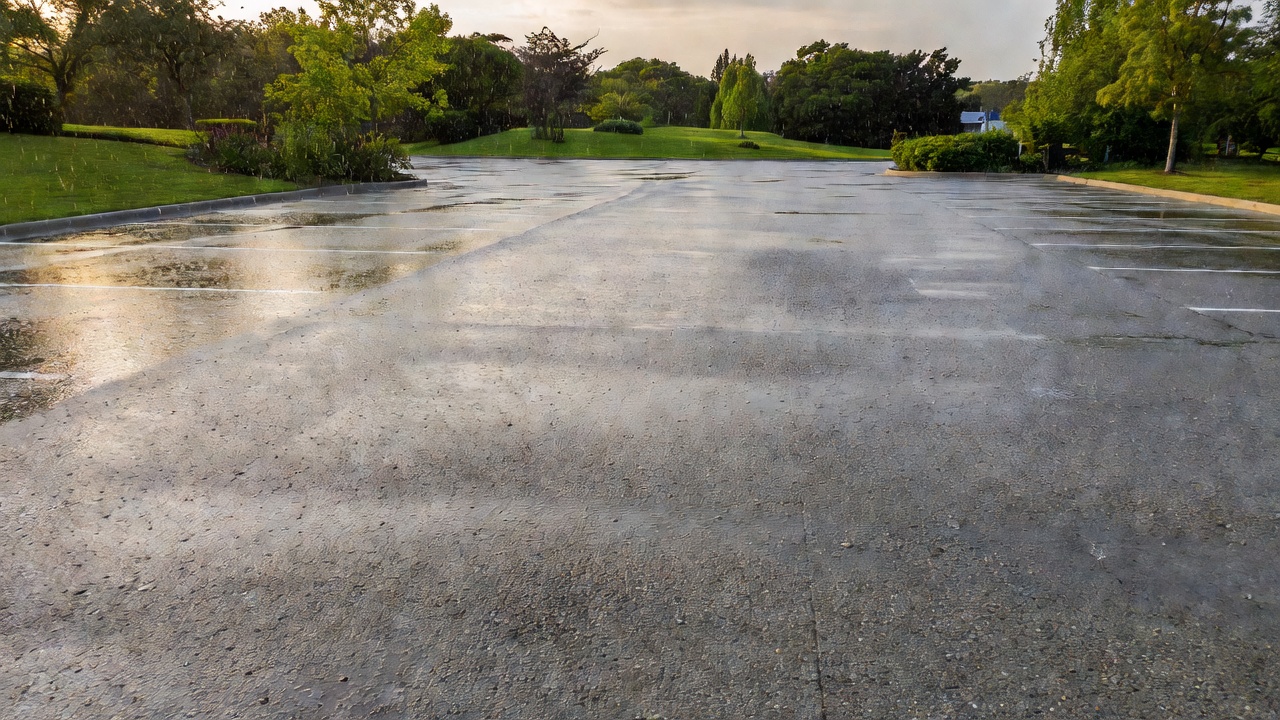
Surface ponding, Water remaining on the pavement surface more than 30 minutes after rainfall cessation is the most direct indicator of clogging. Ponding may be localized (indicating isolated clogged areas) or widespread (indicating system-wide permeability loss).
Surface discoloration, Accumulation of fine sediment appears as a dusty or muddy discoloration, particularly along pavement edges, at low points, and in wheel paths. Dark staining indicates organic accumulation or biofilm formation.
Vegetation growth, Moss, algae, or weeds growing on the pavement surface indicate persistent moisture retention and organic accumulation, both of which reduce permeability. In the Pacific Northwest, green, slick surfaces from moss growth are a key indicator of clogged pervious concrete.
Loss of visible surface texture, The distinct, rough surface texture of pervious concrete becomes smooth and sealed-looking as sediment fills the surface voids. A surface that appears similar to conventional concrete likely has significant clogging.
Advanced Inspection Methods
When field testing indicates significant performance degradation, the following advanced methods can quantify the extent and depth of clogging:
Core extraction and laboratory analysis, Cores 4 to 6 inches (100 to 150 mm) in diameter are extracted per ASTM C42 and tested for:
- Hardened density and void content (ASTM C1754)
- Laboratory falling-head permeability (hydraulic conductivity in cm/s)
- X-ray computed tomography (CT) for three-dimensional visualization of pore structure and sediment distribution
Sectional core analysis, Cores are horizontally sectioned into wafers 0.25 to 0.5 inches (6 to 12 mm) thick, and each wafer is individually tested for permeability and sediment content. This method reveals the vertical distribution of clogging material and identifies whether clogging is surface-only or full-depth.
Maintenance
Effective maintenance of pervious concrete requires a proactive, preventative approach rather than reactive restoration. The most critical principle, confirmed by extensive research, is that maintenance must be performed before deep, irreversible clogging occurs.
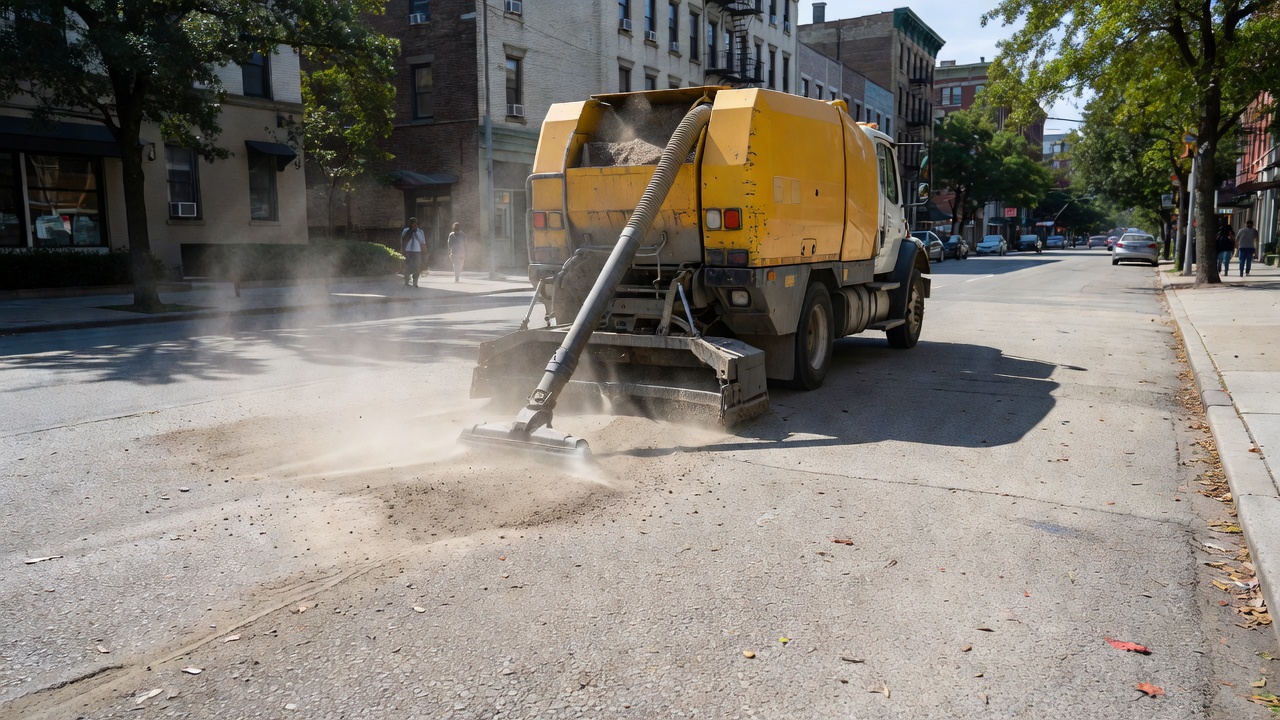
Preventative Maintenance, Vacuum Sweeping
Regenerative-air vacuum sweeping is the most effective large-area maintenance method for pervious concrete. Unlike mechanical broom sweepers, which redistribute fine material without removing it, regenerative-air sweepers use a high-velocity air stream (500 to 700 ft/s at the nozzle) to lift sediment from surface pores combined with a vacuum system to capture it.
| Parameter | Specification |
|---|---|
| Sweeper type | Regenerative-air or vacuum-assisted |
| Operating speed | 3 to 5 mph (5 to 8 km/h) |
| Air velocity at nozzle | Minimum 500 ft/s (150 m/s) |
| Frequency | Minimum annually, quarterly in high-sediment areas |
| Passes | Two passes in each direction for heavily loaded sections |
Properly performed vacuum sweeping can restore 80% to 90% of original permeability when the pavement is not deeply clogged. The FHWA recommends focusing on the first 50 to 100 feet (15 to 30 m) of pavement from unpaved access points, where sediment loading is typically highest.
Remedial Maintenance, Pressure Washing with Vacuum Recovery
For pavements where vacuum sweeping alone is insufficient, high-pressure water washing at 2,000 to 4,000 psi (14 to 28 MPa) with simultaneous vacuum recovery of the wash water is the most effective deep-cleaning method. The rotating nozzle system directs water into the pavement pores at a downward angle, dislodging embedded sediment, while the vacuum system recovers the sediment-laden water before it can re-enter the pore structure.
Critical operational requirements:
- Vacuum recovery must capture at least 90% of the applied water to prevent sediment redistribution
- Multiple passes (2 to 4) are typically required for moderately clogged pavement
- Pressure washing must be performed BEFORE clay dries, dried clay adhesion reduces recovery effectiveness by more than 90%
The pressure washing method is most effective at the near-surface, where the scouring force of the water jet is greatest. The effectiveness diminishes with depth because the aggregate skeleton blocks direct water access to deeper pores.
Restoration of Severely Clogged Pavement
When infiltration rates fall below approximately 10% of the as-constructed value, more aggressive restoration may be required:
- Milling and replacement of the top 1.0 to 1.5 inches (25 to 37 mm) of the pervious concrete layer, followed by application of a new pervious concrete overlay, the most reliable restoration method but at approximately 30% to 50% of full replacement cost
- Drilling vertical relief holes of 0.5 to 1.0 inch (12 to 25 mm) diameter on a 3 to 4 foot (1 to 1.2 m) grid through the clogged surface layer to provide direct drainage pathways to the underlying stone base
- Chemical cleaning using biodegradable enzymatic cleaners or hydrogen peroxide-based treatments to break down organic biofilms, a developing technology requiring further research
Prohibited Maintenance Actions
The following actions must never be performed on pervious concrete:
- Application of sand, cinders, or traction materials for ice control, these immediately clog the void structure
- Sealcoating, slurry sealing, or chip sealing, these are designed to seal surfaces and would destroy the pavement’s drainage function
- Storage of soil, mulch, or landscaping materials on the pavement surface
- Dry-shake or acid-stain coloring, these methods introduce fine particles that seal surface voids
Freeze-Thaw in Pervious Concrete
The freeze-thaw durability of pervious concrete has been a subject of significant research and debate since the material gained widespread use in the 1990s. The key concern is that water retained in the pore structure expands upon freezing by approximately 9%, and if the concrete is critically saturated (voids filled with water to more than 91% of total void volume), the expansion generates internal pressures that can exceed the tensile strength of the thin cement paste coating, causing cracking, scaling, and raveling.
Conditions Leading to Freeze-Thaw Damage
Properly designed and maintained pervious concrete does not remain saturated because water drains freely through the interconnected voids. Freeze-thaw damage occurs when:
- Severe clogging traps water in the voids, preventing drainage
- Prolonged subfreezing temperatures (more than 30 consecutive days below freezing) prevent drainage from the base reservoir
- High water table rises to within 3 feet (1 m) of the pavement surface
- Inadequate subbase depth provides insufficient storage volume for meltwater
- Impervious subgrade (clay soils) prevents vertical drainage of stored water
Proven Freeze-Thaw Protection Strategies
Research by Schaefer et al. (2006) and Kevern et al. (2008) at Iowa State University, supported by the NRMCA and the Portland Cement Association, established three proven strategies for freeze-thaw durability:
Air-entrained paste, Air-entraining admixtures create microscopic air bubbles in the cement paste (spacing factor below 0.01 inches / 0.25 mm) that relieve hydraulic pressure during freezing. While the total air content of the pervious concrete cannot be measured by conventional test methods (because the structural voids dominate the reading), the air-void system in the paste fraction can be verified by ASTM C457 on hardened specimens.
Addition of fine aggregate, Including 5% to 7% sand by weight of total aggregate has been shown to significantly improve freeze-thaw durability. In laboratory testing, mixtures with 7% sand and air entrainment achieved only 2% mass loss after 300 freeze-thaw cycles, well within acceptable limits. The sand improves the density and strength of the paste fraction without substantially reducing permeability.
Thick, drainable aggregate base, The stone reservoir beneath the pervious concrete must be deep enough to store water below the frost penetration depth. The NRMCA classifies freeze-thaw zones as follows:
| Freeze-Thaw Zone | Characteristics | Recommended Base Depth |
|---|---|---|
| Dry Freeze | 15+ cycles/year, little winter precipitation | 4-8 inches (100-200 mm) |
| Hard Dry Freeze | Dry freeze + ground frozen continuously | 4-8 inches (100-200 mm) |
| Wet Freeze | 15+ cycles/year, winter precipitation | 4-8 inches (100-200 mm) |
| Hard Wet Freeze | Wet freeze + ground frozen continuously | 8-24 inches (200-600 mm) with underdrain |
Documented Field Performance
Multiple long-term field installations have demonstrated successful freeze-thaw performance:
- Penn State Visitor Center sidewalk (State College, PA): Hard wet freeze zone, 121 freeze-thaw cycles per year, 90 consecutive days below freezing, good performance after 5 winters with only an 8-inch aggregate base
- Gallup, New Mexico parking lot: Hard dry freeze zone, 212 freeze-thaw cycles per year, 62 consecutive days below freezing, good performance after 13 years with no drainage pipes or special freeze-thaw provisions
- Salt Lake City, Utah: Wet freeze zone, good freeze-thaw performance with air entrainment and adequate base drainage
Pervious concrete is not recommended in freeze-thaw environments where the water table rises to within 3 feet (1 m) of the pavement surface, as the constant moisture supply prevents the pavement from draining between freeze events.
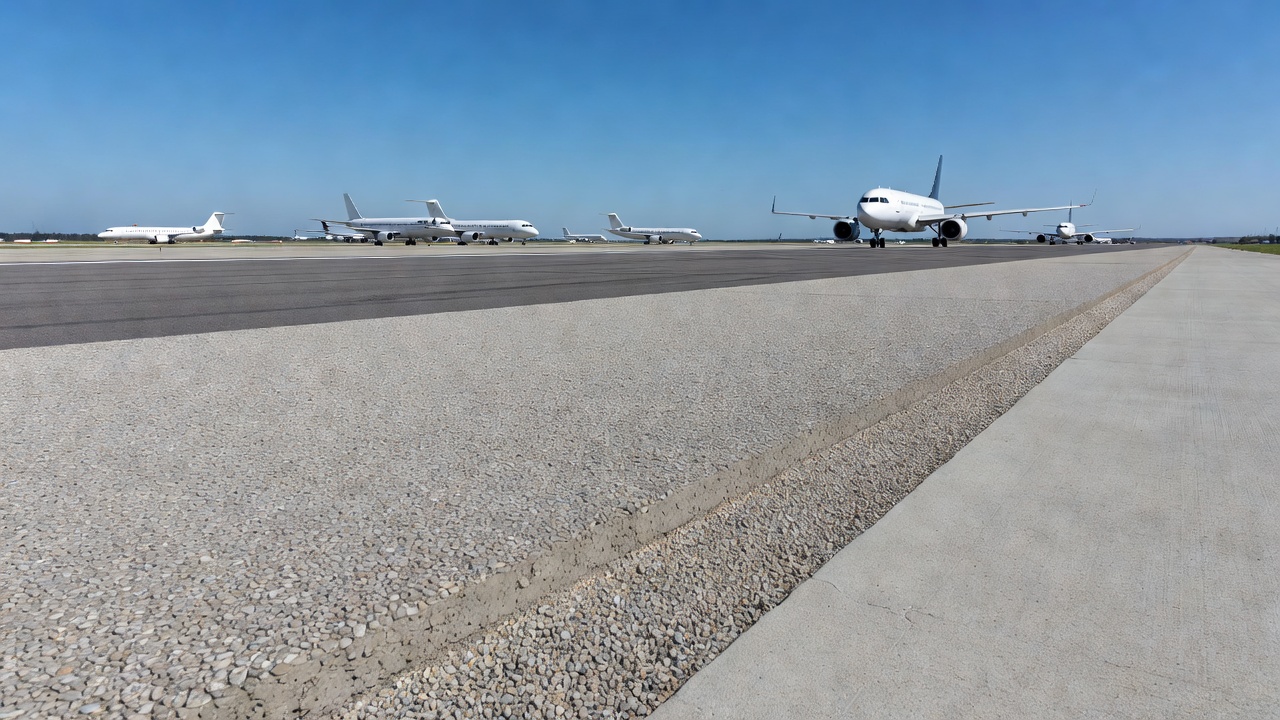
Airport Applications
Pervious concrete has specific applications at airports, primarily in low-traffic areas where aircraft loading is light and the benefits of rapid stormwater drainage are significant.
ICAO and FAA Regulatory Context
ICAO Annex 14, Volume I, Chapter 3 establishes Standards and Recommended Practices (SARPs) requiring that runway surfaces provide good friction characteristics when wet. While pervious concrete is not explicitly mentioned in ICAO Annex 14, the drainage principles it embodies, rapid removal of surface water to maintain tire-pavement contact, directly support compliance with these requirements.
ICAO Doc 9157 (Aerodrome Design Manual, Part 3, Pavements, 3rd edition, 2022) provides detailed guidance on pavement design and evaluation for airports. The manual addresses subsurface drainage, permeable base courses, and the importance of preventing water accumulation in pavement structures, all areas where pervious concrete can make a direct contribution.
FAA Advisory Circular 150/5320-6G (Airport Pavement Design and Evaluation, June 2021) is the primary FAA guidance document for airport pavement design in the United States. While the AC does not currently include specific design provisions for pervious concrete as a structural surface course, the FAA’s guidance on pavement drainage, edge drains, and open-graded base courses in Chapter 6 (Drainage and Subdrainage) establishes the design framework applicable to pervious concrete systems.
Approved Airport Applications
| Application | Typical Configuration | Aircraft Loading |
|---|---|---|
| Pavement shoulders | 4-6 in. pervious concrete over 6-12 in. reservoir stone | Minimal, emergency only |
| General aviation aprons | 6 in. pervious concrete over 12-24 in. reservoir stone | Design Group I-II aircraft |
| Fire station aprons | 6 in. pervious concrete over 12 in. reservoir stone | Emergency vehicles only |
| Service roads | 5-6 in. pervious concrete over 8-12 in. reservoir stone | Light service vehicles |
| Employee parking lots | 5-6 in. pervious concrete over 8-12 in. reservoir stone | Automobiles only |
| Drainage channels | 4-6 in. pervious concrete lining | No structural load |
Structural Design Considerations for Aircraft Loading
Pervious concrete’s compressive strength of 2,500 to 4,000 psi limits its application to aircraft with single-wheel loads below approximately 12,500 pounds (55.6 kN), equivalent to FAA Airport Design Group I and small Group II aircraft (general aviation aircraft, business jets, and small turboprops).
For applications involving heavier aircraft, pervious concrete can be used as a permeable base course beneath a conventional rigid pavement surface. In this configuration, the pervious concrete layer, typically 6 to 10 inches (150 to 250 mm) thick, provides both structural support and subsurface drainage, allowing stormwater to be collected and conveyed within the pavement structure rather than flowing across the surface. The FAA AC 150/5320-6G addresses this concept in its discussion of pavement subdrainage and permeable base courses.
Hydrological Benefits for Airports
The application of pervious concrete at airports provides specific hydrological benefits:
- Elimination of surface ponding on shoulders and aprons, reducing bird attraction (standing water attracts birds, a critical wildlife hazard for aircraft operations)
- Reduction of hydroplaning potential on low-speed taxiways and aprons where aircraft maneuver at speeds below the dynamic hydroplaning threshold
- Reduced demand on stormwater management systems, airport stormwater permits under the National Pollutant Discharge Elimination System (NPDES) often require treatment of runoff from industrial activities, pervious concrete provides in-situ treatment through natural filtration
- Groundwater recharge in airport settings where impervious coverage from runways, taxiways, and aprons can exceed 70% of the total airport area
Sustainability Benefits
Pervious concrete provides significant sustainability benefits across multiple environmental dimensions, making it a recognized green infrastructure practice under the US Environmental Protection Agency’s (EPA) stormwater management framework.
Stormwater Runoff Reduction
The most immediate sustainability benefit of pervious concrete is its ability to reduce stormwater runoff. The EPA recognizes pervious concrete as a Best Management Practice (BMP) for stormwater management under the NPDES permitting program. Research has documented that effective pervious concrete systems can reduce surface runoff by up to 80% or more compared to conventional impervious surfaces (Ferguson, 2005).
The pervious concrete system captures the first flush, the initial, most polluted portion of rainfall, and infiltrates it into the subgrade, preventing the transport of accumulated pollutants from the pavement surface to receiving waters. This first-flush capture is particularly effective for parking lots, where vehicle-deposited contaminants (oil, grease, heavy metals) are most concentrated at the beginning of a rainfall event.
Groundwater Recharge
By allowing stormwater to infiltrate the subgrade, pervious concrete returns precipitation to the natural hydrologic cycle. Developed impervious surfaces typically return only 10% to 30% of annual precipitation to groundwater, with the remainder becoming surface runoff. Pervious concrete systems with high subgrade infiltration rates can return 80% to 100% of annual precipitation to the groundwater table, maintaining baseflow in streams and replenishing aquifer supplies.
Water Quality Treatment
As stormwater percolates through the pervious concrete and the underlying subgrade, natural physical, chemical, and biological processes remove pollutants:
| Pollutant | Removal Efficiency | Mechanism |
|---|---|---|
| Total Suspended Solids (TSS) | 80-90% | Filtration through pavement and subgrade |
| Total Phosphorus | 50-70% | Adsorption to soil particles |
| Total Nitrogen | 30-50% | Biological uptake, denitrification |
| Copper, Zinc, Lead | 70-95% | Adsorption, precipitation |
| Oil and Grease | 80-90% | Biological degradation, filtration |
| Pathogens | 60-90% | Filtration, UV exposure, die-off |
The water quality treatment provided by pervious concrete systems can help airport and municipal operators meet Total Maximum Daily Load (TMDL) requirements for impaired waterways.
Urban Heat Island Mitigation
Pervious concrete reduces the urban heat island effect through three mechanisms:
- Higher albedo (solar reflectance), the lighter-colored cement surface reflects more solar radiation than dark asphalt pavements, reducing heat absorption
- Evaporative cooling, water percolating through the pavement evaporates from the surface and void structure, absorbing latent heat and lowering surface temperature
- Convective airflow, the open pore structure allows air to circulate through the pavement, removing stored heat
Studies have documented that pervious concrete surfaces can be 5°F to 15°F (3°C to 8°C) cooler than conventional asphalt surfaces under identical solar loading conditions.
LEED Credit Contributions
The US Green Building Council’s LEED (Leadership in Energy and Environmental Design) rating system recognizes pervious concrete through multiple credits:
| LEED Credit | Description | Contribution |
|---|---|---|
| SS Credit 6.1 | Stormwater Design, Quantity Control | Reduces runoff rate and volume |
| SS Credit 6.2 | Stormwater Design, Quality Control | Filters pollutants through natural treatment |
| SS Credit 7.1 | Heat Island Effect, Non-Roof | Light-colored surface with high reflectance |
| WE Credit 1 | Water Efficient Landscaping | Subbase reservoir stores stormwater for irrigation use |
| MR Credits 4-5 | Recycled Content and Regional Materials | SCMs count as recycled content, local aggregate sourcing |
| ID Credit 1 | Innovation in Design | Integrated stormwater management approach |
Reduced Drainage Infrastructure
Pervious concrete systems can reduce or eliminate the need for conventional stormwater management infrastructure including storm sewers, catch basins, retention ponds, detention basins, curb and gutter systems, and associated piping. This infrastructure reduction provides multiple benefits:
- Cost savings at the system level, despite the higher unit cost of pervious concrete compared to conventional concrete (typically 15% to 25% higher), the elimination of drainage infrastructure often results in net construction cost savings of 5% to 20%
- Land use efficiency, detention and retention ponds are eliminated, allowing maximum use of the site for parking, buildings, or green space
- Reduced embodied carbon, the avoided concrete, steel, and plastic pipe for drainage infrastructure offsets the carbon footprint of the pervious concrete pavement
Noise Reduction
The open void structure of pervious concrete absorbs sound at the tire-pavement interface, reducing traffic noise by 2 to 4 dB(A) compared to conventional concrete pavements. This noise reduction is particularly beneficial for airport applications where apron and service road traffic contributes to ambient noise levels.
Standards and References
The following standards and reference documents govern the design, construction, testing, and maintenance of pervious concrete:
Primary Standards
| Standard | Title | Application |
|---|---|---|
| ACI 522R-23 | Pervious Concrete (Report) | Comprehensive guide to materials, design, construction |
| ACI 522.1-13 | Specification for Pervious Concrete Pavement | Construction specification requirements |
| ASTM C1688/C1688M | Density and Void Content of Freshly Mixed Pervious Concrete | Primary QC test for fresh concrete |
| ASTM C1701/C1701M | Infiltration Rate of In Situ Pervious Concrete | Field permeability testing |
| ASTM C1754/C1754M | Density and Void Content of Hardened Pervious Concrete | Core acceptance testing |
| ASTM C42/C42M | Obtaining and Testing Drilled Cores | Core sampling methodology |
| ASTM C33/C33M | Concrete Aggregates | Aggregate gradation specifications |
| ASTM C494/C494M | Chemical Admixtures for Concrete | HRWR, retarder specifications |
| ASTM C457 | Air-Void Analysis of Hardened Concrete | Freeze-thaw air content verification |
Industry Guidance Documents
| Document | Author | Title |
|---|---|---|
| PIP 1 | NRMCA | Specifying Pervious Concrete |
| PIP 3 | NRMCA | Acceptance Testing of Pervious Concrete |
| PIP 4 | NRMCA | Mix Design of Pervious Concrete |
| PIP 5 | NRMCA | Construction of Pervious Concrete Pavements |
| HIF-13-006 | FHWA | Pervious Concrete, Materials, Properties, and Construction |
| BMP Fact Sheet | US EPA | Pervious Concrete Pavement |
Airport-Specific References
| Document | Title | Application |
|---|---|---|
| ICAO Annex 14 Vol. I | Aerodrome Design and Operations | Runway surface requirements |
| ICAO Doc 9157 Part 3 | Aerodrome Design Manual, Pavements | Pavement design and drainage |
| FAA AC 150/5320-6G | Airport Pavement Design and Evaluation | Structural design for airfields |
| FAA AC 150/5320-12C | Skid-Resistant Airport Pavement Surfaces | Surface friction requirements |
Research References
- Schaefer, V.R., Wang, K., Suleiman, M.T., and Kevern, J.T. (2006). Mix Design Development for Pervious Concrete in Cold Weather Climates. Iowa State University / NRMCA / PCA
- Kevern, J.T., Schaefer, V.R., and Wang, K. (2008). Evaluation of Pervious Concrete Workability Using the Modified ASTM C1688 Test. Journal of ASTM International
- Haselbach, L.M. (2010). Potential for Clay Clogging of Pervious Concrete Under Extreme Conditions. Journal of Hydrologic Engineering, ASCE
- Rao, R., Fu, Z., Colarusso, P., and others (2022). Clogging and Maintenance of Pervious Concrete: A Laboratory Study. Peer-reviewed Materials and Construction Research
- Tennis, P.D., Leming, M.L., and Akers, D.J. (2004). Pervious Concrete Pavements. PCA Special Engineering Publication EB302 / NRMCA Publication 2PE004
Frequently Asked Questions
- How is pervious concrete different from conventional concrete?
- Pervious concrete contains 15-35% interconnected air voids created by eliminating or severely limiting fine aggregate, allowing water to drain vertically through the pavement at rates of 200-500 inches per hour. Conventional concrete has less than 3-5% air content and is essentially impermeable, relying on surface cross-slope for drainage. Pervious concrete uses zero-slump mixtures with water-to-cement ratios of 0.27 to 0.36, single-sized coarse aggregate (typically ASTM C33 No. 67, No. 7, or No. 8), and high-range water reducers and hydration stabilizers. Conventional concrete uses well-graded aggregates, has measurable slump (2-6 inches), and higher compressive strength (4,000-6,000 psi versus 2,500-4,000 psi for pervious).
- How is pervious concrete tested for permeability in the field?
- Field permeability of pervious concrete is measured using ASTM C1701, the Standard Test Method for Infiltration Rate of In Situ Pervious Concrete. This test uses a 12-inch (300 mm) diameter double-ring infiltrometer sealed to the pavement surface. After pre-wetting the test area with 8 pounds (3.6 kg) of water, a measured mass of water is poured into the inner ring and the time for complete infiltration is recorded. The infiltration rate is calculated as I = (K × M) / (D² × t), where I is in inches per hour. Typical newly placed pervious concrete exhibits infiltration rates of 200 to 500 inches per hour. Testing should be performed immediately after construction to establish a baseline, then repeated at identical locations periodically to track the rate of clogging.
- What causes pervious concrete to clog?
- Clogging is caused by sediment particles, sand, silt, clay, and organic matter, carried by stormwater runoff or deposited from the atmosphere that accumulate in the interconnected void system. Sand particles larger than the pore throat diameter cause surface clogging by forming a seal on top of the pavement, while medium sand (0.25-0.50 mm) penetrates and clogs the full depth of the void structure. Clay particles are the most problematic because they can pass through the pores when wet but, upon drying, adhere strongly to the rough pore walls, reducing permeability by up to 99% in some documented cases. Leaf litter, grass clippings, and organic debris contribute by forming biofilms that trap other sediment. Adjacent bare soil, landscaping, construction sites, and winter sand applications are major sources of clogging material.
- What maintenance does pervious concrete require?
- The primary maintenance is regenerative-air vacuum sweeping performed at least annually, more frequently in high-sediment environments. This removes accumulated sediment from the surface pores before it becomes deeply embedded. For moderately clogged pavement, high-pressure washing at 2,000-4,000 psi with simultaneous vacuum recovery of the wash water is effective at restoring permeability. Critical finding from research: pressure washing must be performed before clay dries, as dried clay becomes extremely difficult to remove, recovery ratios drop to less than 5% after drying. A combination approach of routine vacuum sweeping (preventative) and periodic pressure washing with vacuum recovery (remedial every 1-3 years) provides the most cost-effective long-term maintenance program.
- Is pervious concrete suitable for freeze-thaw climates?
- Yes, when properly designed with three key strategies: (1) air-entrained paste with microscopic air bubbles in the cement paste fraction (spacing factor below 0.01 inches), (2) a thick, drainable aggregate base of 8 to 24 inches (200-600 mm) in hard wet freeze zones to store water below the frost line, and (3) addition of 5-7% fine aggregate to the mix, which has been shown to improve freeze-thaw durability, achieving only 2% mass loss after 300 freeze-thaw cycles in laboratory testing. Research from Iowa State University (Schaefer et al., 2006, Kevern et al., 2008) demonstrated that properly designed pervious concrete with 7% sand and air entrainment performs well in freeze-thaw conditions. The critical requirement is that the pavement system must drain freely, clogging that traps water in the voids is the primary cause of freeze-thaw damage.
- What are the sustainability benefits of pervious concrete?
- Pervious concrete provides multiple sustainability benefits: stormwater runoff reduction of up to 80% compared to impervious surfaces, groundwater recharge through natural infiltration, water quality treatment removing up to 90% of total suspended solids and significant heavy metals through natural filtration in the subgrade, urban heat island mitigation as the lighter-colored surface reflects more solar radiation and evaporative cooling from percolating water reduces surface temperatures by 5-15°F compared to asphalt, and reduced need for stormwater drainage infrastructure such as pipes, catch basins, and retention ponds. Pervious concrete contributes to LEED credits including SS Credit 6.1 (Stormwater Quantity Control), SS Credit 6.2 (Stormwater Quality Control), and SS Credit 7.1 (Heat Island Effect, Non-Roof). The use of supplementary cementitious materials like fly ash and slag further reduces the carbon footprint.
- Can pervious concrete be used at airports?
- Pervious concrete is used at airports for pavement shoulders, general aviation aprons, fire station aprons, service roads, employee parking lots, and drainage areas where aircraft loading is light. Typical compressive strengths of 2,500-4,000 psi limit pervious concrete to low-traffic aircraft loadings (FAA Design Group I-II aircraft, single-wheel loads below ~12,500 lb). ICAO Annex 14 requires airport surfaces to provide good friction characteristics when wet, and pervious concrete's rapid drainage eliminates surface water film that contributes to hydroplaning. ICAO Doc 9157 (Aerodrome Design Manual Part 3) addresses pavement drainage principles relevant to permeable pavement systems. For heavier aircraft loads, pervious concrete can be used as a permeable base course beneath conventional rigid pavement to provide both structural support and subsurface drainage.
- What is the typical compressive strength of pervious concrete?
- Pervious concrete typically achieves compressive strengths of 2,500 to 4,000 psi (17 to 28 MPa), with flexural strengths of 150 to 550 psi (1.0 to 3.8 MPa). The strength is inversely related to void content, higher void content increases permeability but reduces strength. A typical pervious concrete pavement designed for 15-20% voids will achieve approximately 2,500-3,000 psi compressive strength. The material obtains its structural capacity primarily through the stone-on-stone interlock of the coarse aggregate skeleton rather than through the cement paste, which is minimized to only coat the aggregate particles. Conventional concrete of similar thickness typically achieves 4,000-6,000 psi, but pervious concrete's reduced strength is acceptable for its intended applications, parking lots, low-volume roads, and lightweight traffic areas, where structural demands are moderate.
- What aggregate sizes are used in pervious concrete?
- Pervious concrete uses single-sized or narrowly graded coarse aggregate, with the most common gradations being ASTM C33 No. 67 (aggregate passing 3/4 inch and retained on No. 4 sieve), No. 7 (passing 1/2 inch, retained on No. 8), No. 8 (passing 3/8 inch, retained on No. 16), and No. 89 (passing 3/8 inch, retained on No. 50). The nominal maximum aggregate size typically ranges from 3/8 to 3/4 inch (9.5 to 19 mm). The selection of aggregate size affects both the void content and the surface texture: larger aggregate produces higher void content and a coarser surface but can make compaction more difficult, while smaller aggregate produces a smoother surface suitable for pedestrian traffic but may have slightly lower permeability. Fine aggregate (sand) is typically limited to 0-7% by weight of total aggregate, depending on whether the pavement will be exposed to freeze-thaw conditions.
- How long does pervious concrete take to cure before use?
- Pervious concrete requires a minimum of 7 days of wet curing before opening to any traffic, whether pedestrian or vehicular. The curing process is critical because pervious concrete does not bleed (water does not rise to the surface as it does in conventional concrete), making it highly susceptible to plastic shrinkage cracking. Curing must begin within 20 minutes of placement, compaction, and jointing. The recommended method is immediate fog misting followed by covering with 6-mil (0.15 mm) polyethylene plastic sheeting, which should remain in place for the full 7-day curing period. Liquid membrane curing compounds are not recommended because they prevent surface evaporation but do not prevent internal moisture loss. In cold weather or when supplementary cementitious materials are used, longer curing periods of 10-14 days may be necessary to achieve adequate strength development.