What is Pilot Controlled Lighting (PCL)?
Pilot Controlled Lighting (PCL): Lighting Activated by Pilot Radio Transmission
Definition
Pilot Controlled Lighting (PCL) is an airport lighting control system that empowers pilots to remotely activate and adjust runway and taxiway lights by transmitting a series of radio pulses from their aircraft. This system is essential at nontowered airports or at controlled airports during times when air traffic control (ATC) is not on duty, allowing for safe night and low-visibility operations without the need for on-site personnel.
PCL is also known as Pilot Activated Lighting (PAL), Pilot Activated Lighting Control (PALC), ARCAL (Aircraft Radio Control of Aerodrome Lighting, commonly used in Canada), L-854 (FAA equipment code), and Remote Lighting Control. Regulatory authorities such as the FAA and ICAO set strict standards for PCL reliability, electromagnetic compatibility, and safety.
By clicking the aircraft’s microphone a specified number of times on a designated radio frequency, pilots can activate and adjust the brightness of airfield lights. A timer ensures the lights remain on for a set period, typically 15 minutes, after which they automatically turn off unless reactivated. This system balances operational autonomy, energy savings, and airfield safety.
How Pilot Controlled Lighting (PCL) Works
PCL systems operate via a straightforward but robust process. The airport’s PCL radio receiver continuously monitors a specific VHF frequency, usually the airport’s UNICOM or CTAF. When a pilot approaches and needs lighting, they:
- Tune to the PCL frequency published in the airport directory or Chart Supplement.
- Key the microphone the required number of times (3, 5, or 7) within five seconds. Each click triggers a pulse detected by the receiver, which ignores voice transmissions and only responds to these pulses.
- System decodes the clicks and triggers relays to activate the lights at the chosen intensity:
- 3 clicks: Low
- 5 clicks: Medium
- 7 clicks: High
A timer (typically 15 minutes) starts after activation. Lights will remain on for the duration, after which they automatically extinguish unless the pilot repeats the activation sequence.
Key Features:
- Failsafe design: Systems default to high intensity or remain on in case of failure.
- Redundancy: Backup power and self-diagnostics ensure reliability.
- Filtering: Electromagnetic interference is minimized for robust operation even in high radio traffic.
Modern systems may include remote monitoring, web-based diagnostics, and programmable controllers for customized lighting configurations.
Operational Procedures
Step-by-Step Usage
- Pre-flight: Verify the correct PCL frequency in the airport directory or Chart Supplement.
- Approach: Within 5 NM and below 3,000 feet AGL, tune to the published frequency.
- Activate Lighting: Key the microphone the specified number of times (3/5/7) within five seconds.
- Adjust Intensity: Repeat the process with a different number of clicks if needed.
- Reset Timer: Any valid activation resets the timer to maximum duration.
- Landing and Taxi: Lights remain on for the timer duration, re-key if needed.
Tip: Always check NOTAMs for system outages or special instructions, and review the airport’s lighting notes for specific configuration details.
Intensity Control
PCL allows pilots to set lighting intensity to suit conditions:
- 3 clicks: Low intensity (clear nights, rural areas, night vision preservation)
- 5 clicks: Medium intensity (moderate visibility)
- 7 clicks: High intensity (fog, poor weather, complex approaches)
Each intensity command also resets the timer. Some advanced PCL systems allow for individual control of runway, taxiway, and approach lights with different sequences.
Timer Reset and Expiry
- Timer: Lights stay on for a preset (usually 15 minutes) after each activation.
- Reset: Any valid click sequence resets the timer.
- Expiry indication: Some systems briefly flash or dim lights before shutoff as a warning.
Safety Note: Always reactivate lights before a late approach or long taxi to avoid sudden darkness.
Components of a PCL System
- Radio Receiver: Listens for activation pulses on the published frequency.
- Decoder: Interprets the number/timing of clicks and triggers relays.
- Relays/Contactors: Switch lighting circuits on/off and set intensity.
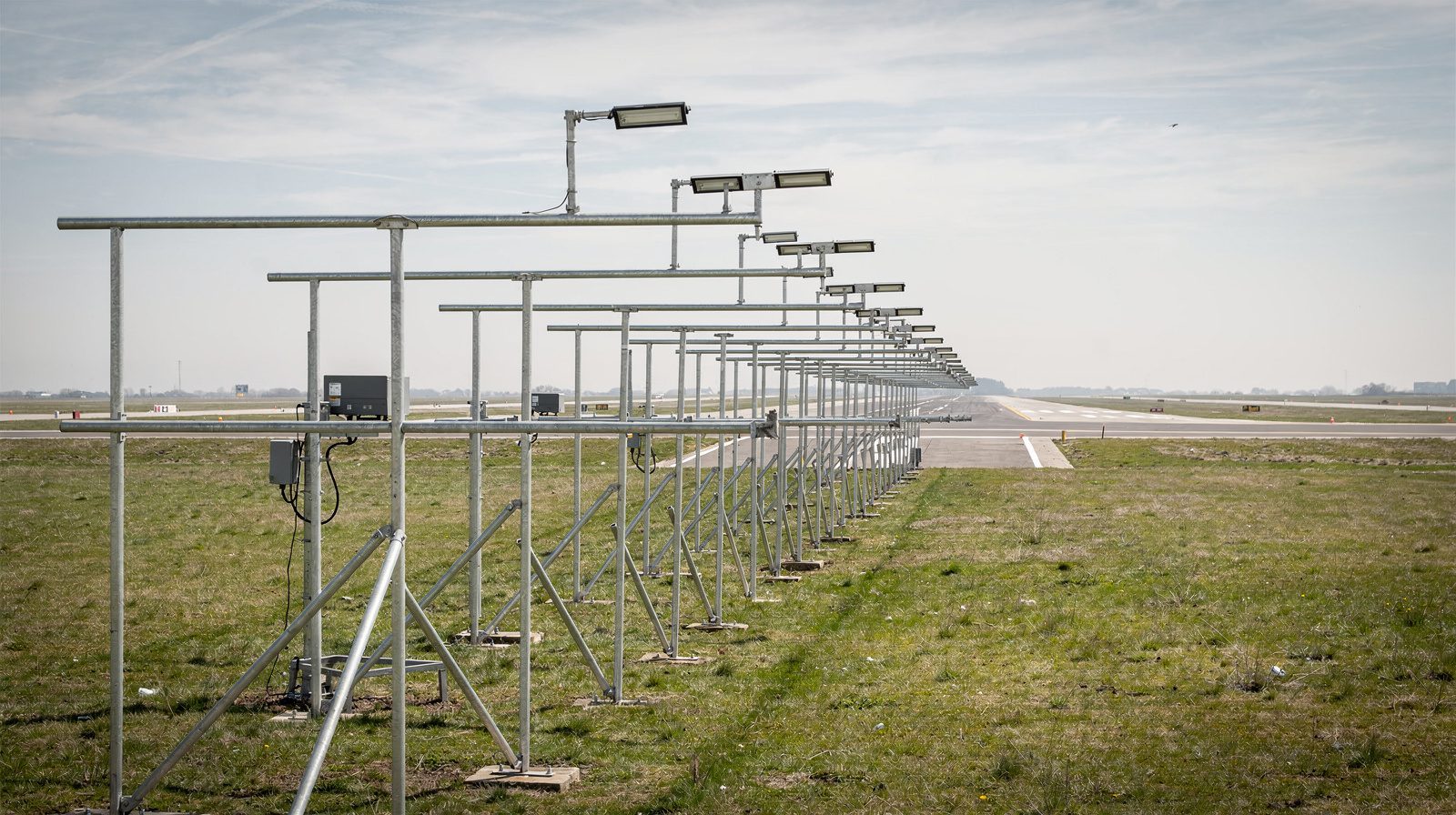
- Lighting Fixtures: Runway edge, taxiway, approach, REIL, PAPI/VASI, beacon, and sometimes apron/heliport lights.
- Control Interface: For local testing, diagnostics, and maintenance.
- Power Supply/Backup: Surge-protected mains, battery backup, or generator.
- Antenna: High-gain, omnidirectional, placed for optimal field coverage.
Advanced features may include remote monitoring, SNMP integration, and programmable logic for custom lighting groups.
Types of Airport Lighting Controlled by PCL
- Runway Edge Lights: Define runway boundaries for takeoff and landing.
- Taxiway Lights: Guide aircraft safely between runway and ramp.
- Approach Lighting Systems (ALS): Aid visual transition from instrument approach.
- REILs: Strobe lights marking runway ends.
- PAPI/VASI: Visual glidepath indicators.
- Airport Beacon: Identifies airport location, sometimes on PCL.
- Heliport Lighting: For helicopter pads/operations.
- Apron/Perimeter Lighting: Rare, but possible at large airports.

Examples and Use Cases
Night Approach at a Nontowered Airport
A pilot approaches a rural, nontowered airport after sunset. Tuning to the PCL frequency and keying the mic seven times, the runway and taxiway lights illuminate, allowing a safe landing and taxi without ground personnel.
Adjusting Lighting for Night Vision
On a dark, rural night, a pilot finds the default high-intensity lights too bright. By keying the mic three times, the pilot reduces intensity to protect night vision while maintaining safety.
On-field Testing and Maintenance
Airport staff use a handheld radio to activate each lighting circuit remotely, verifying PCL system response and diagnosing faults without needing to access the lighting control vault.
Diverse Use Cases
- General aviation: Safe night ops at small, unmanned fields.
- Emergency response: Quick airfield activation for medevac or disaster relief.
- Energy savings: Lights only on when needed, minimizing costs.
- Training: Flexible lighting for student pilots at regional airports.
Regulatory and Technical Standards
- FAA: AC 150/5345-49 (L-854), Chart Supplement for published frequencies.
- ICAO: Annex 14, standards for PCL design and operation.
- Canada: ARCAL (Type J or K), with details in the Canada Flight Supplement.
Advantages and Limitations
Advantages:
- Enables safe night operations without staff.
- Energy and cost efficient.
- Simple, robust, and pilot-friendly.
- Reduces light pollution.
Limitations:
- Not available at all airports.
- Requires proper radio procedures.
- Timer-based, lights may go out unexpectedly if not reset.
- Some systems may not control all lighting types.
Summary
Pilot Controlled Lighting (PCL) transforms the safety and efficiency of night and low-visibility operations at nontowered or unmanned airports. By giving pilots direct, reliable control over airfield lighting via simple radio transmissions, PCL delivers operational autonomy, cost savings, and enhanced safety, making it a cornerstone technology in general aviation and regional airport management.
For more information on implementing or upgrading PCL systems, or to explore the latest in airfield lighting technology, contact our experts or schedule a demo .
Frequently Asked Questions
- How does Pilot Controlled Lighting (PCL) work?
- PCL works by allowing pilots to key their microphone a certain number of times (typically 3, 5, or 7) on a specific radio frequency, which is detected by a receiver at the airport. The system decodes the clicks and activates runway, taxiway, and approach lights at the requested intensity. The lights remain on for a set period (usually 15 minutes) and can be reactivated or adjusted as needed.
- What types of lights can be controlled by PCL?
- PCL can control runway edge lights, taxiway lights, approach lighting systems, REILs (runway end identifier lights), PAPI/VASI indicators, and sometimes airport beacons or heliport lighting, depending on the airport’s configuration.
- What frequencies are used for PCL activation?
- The activation frequency for PCL is typically the airport’s published UNICOM or CTAF frequency. Pilots should consult the airport’s entry in the Chart Supplement or equivalent publication for the exact frequency.
- How long do the lights stay on after activation?
- After a valid activation, lights stay on for a preset timer, usually 15 minutes. Pilots can reset the timer by repeating the activation sequence before the lights turn off.
- Is PCL available at all airports?
- No, PCL is primarily used at nontowered or regionally-staffed airports, especially those without 24-hour personnel. Not all airports offer PCL, availability is listed in official airport directories.
This is a reference entry. TarmacView provides drone inspection services and doesn't sell the equipment or materials described in this glossary.