What is a Precision Marking Runway (PMR)?
PMR – Precision Marking Runway – Airport Markings Glossary
Introduction to PMR and Airport Markings
Airport runway markings form a vital visual language in aviation, using standardized lines, symbols, numerals, and colors to communicate operational information to pilots and ground crews. These markings are strictly defined by the International Civil Aviation Organization (ICAO) and national authorities like the FAA, ensuring safety and consistency worldwide. Markings are designed for maximum visibility in all conditions, day, night, and low visibility, guiding pilots for safe alignment, taxiing, and adherence to air traffic control (ATC) instructions.
A Precision Marking Runway (PMR) represents the highest standard, specifically engineered for precision instrument approaches supported by systems such as the Instrument Landing System (ILS), Ground-Based Augmentation System (GBAS), or equivalent. PMR markings enable pilots to transition from instrument to visual flying at critical approach and landing moments, particularly in poor weather or low visibility. Their comprehensive suite, including centerline, threshold, aiming point, touchdown zone, and side stripes, is vital for commercial, cargo, military, and general aviation operations alike.
This glossary delves into each PMR marking type, their functions, and the regulatory framework, drawing from ICAO, FAA, and operational best practices.
PMR (Precision Marking Runway): Definition & Overview
A Precision Marking Runway (PMR) is a runway equipped with the full complement of white markings required to support precision instrument approaches. These runways accommodate aircraft approaches with both lateral and vertical guidance (ILS Cat I/II/III, GLS, LPV). Markings are mandated by ICAO Annex 14 and FAA AC 150/5340-1M, including runway designator, centerline, threshold, aiming point, touchdown zone, and side stripes.
PMR markings are critical for safe operations, especially in low visibility, enabling pilots to judge distance, alignment, and touchdown points with high precision. They also support ATC procedures and airport certification. PMRs are standard at major international airports but are applicable anywhere precision approaches are supported.
Summary of PMR Marking Elements:
| Marking Element | Visual Runway | Non-Precision | Precision (PMR) |
|---|---|---|---|
| Runway Designator | ✓ | ✓ | ✓ |
| Centerline | ✓ | ✓ | ✓ |
| Threshold Markings | (optional) | ✓ | ✓ |
| Aiming Point | (optional) | ✓ | ✓ |
| Touchdown Zone | ✓ | ||
| Side Stripes | ✓ |
Types of Runway Markings
Runway Designators (Numbers, L/R/C)
Large white numerals at each runway threshold indicate the magnetic heading of the centerline, rounded to the nearest 10 degrees and truncated to two digits. Parallel runways add L (Left), C (Center), or R (Right) for distinction (e.g., 09L, 09C, 09R). ICAO requires numbers at least 3 meters high, positioned symmetrically. Magnetic drift may require periodic renumbering. Pilots cross-check designators with flight plans and ATC clearance to avoid confusion, especially at airports with parallel runways.
Runway Centerline Markings
A dashed white line down the runway’s full length, with each stripe typically 30 meters long and 20 meters between, provides primary alignment for takeoff, landing, and rollout. The pattern aids depth perception and distance estimation, especially in low visibility. Centerlines are meticulously maintained on PMRs to prevent fading, supporting precise alignment even during crosswinds or on wide runways.
Threshold Markings
Parallel white stripes at the runway’s landing threshold indicate the start of landing-available pavement. The number of stripes depends on runway width (8 for 30m, 12 for 45m). These high-contrast stripes help pilots visually locate the landing zone, especially in low visibility or at night, and are positioned for maximum distance viewing.
Displaced Threshold
A displaced threshold is a section at the approach end not available for landing but usable for takeoff and taxi. White arrows lead to a solid threshold bar, marking where landings may begin. Displaced thresholds accommodate obstacles, pavement strength, or noise abatement. Pilots must consult charts and NOTAMs for LDA and TORA, as landing before the threshold is prohibited.
Aiming Point Markings
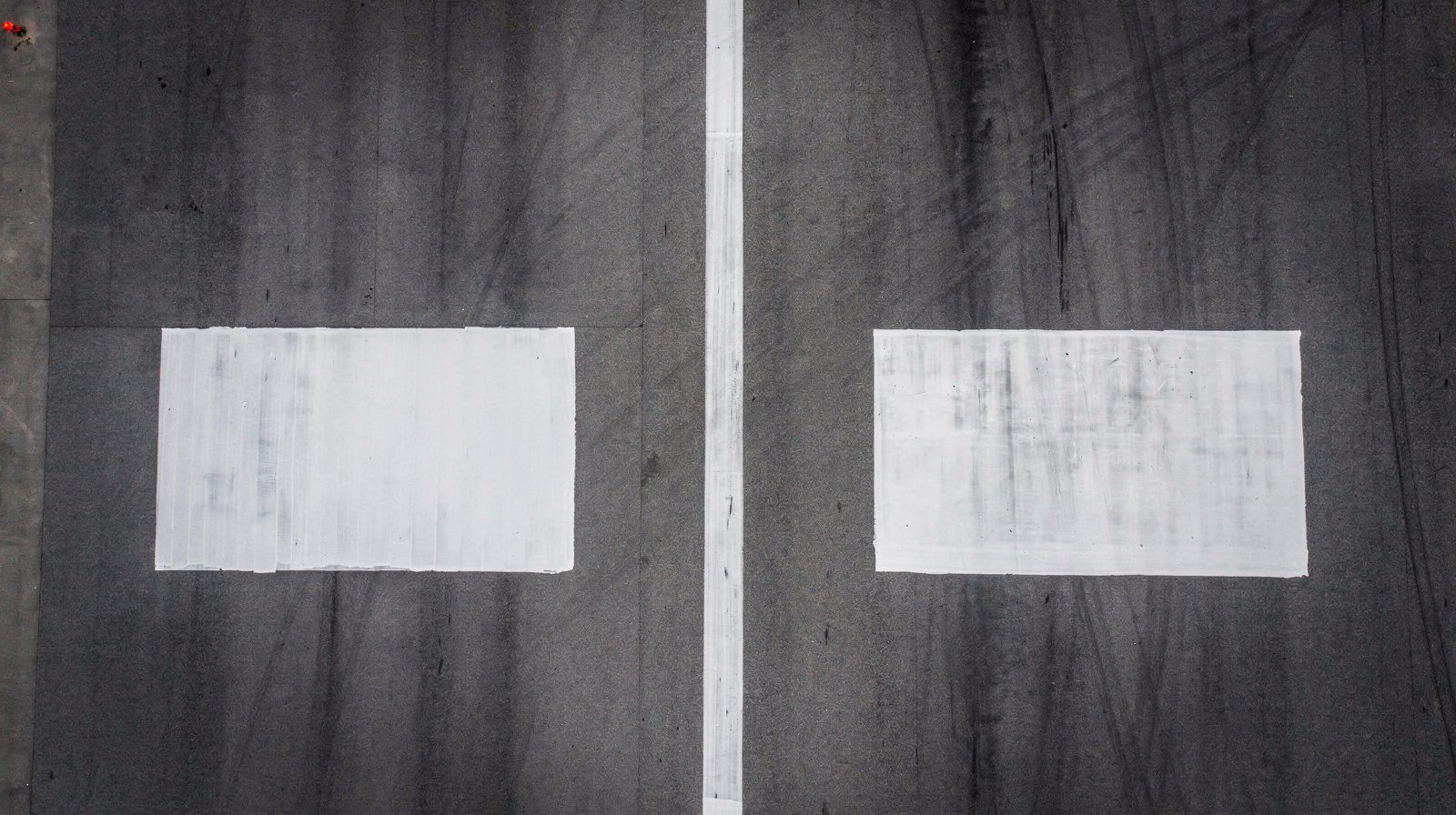
Two broad white rectangles, typically 300 meters from the threshold, are the primary visual target for a stabilized approach. Each bar is 30 meters by 3 meters, providing a clear aiming reference so pilots land at the optimal spot, maximizing runway use and safety. They are aligned with ILS reference points for consistency between visual and instrument guidance.
Touchdown Zone Markings
Pairs of white bars begin 150 meters from the threshold and repeat at 150-meter intervals up to 900 meters, unique to PMRs. These indicate the ideal touchdown area and assist in landing performance assessment. Each bar is about 22.5 meters long and 1.8 meters wide. Their presence is required for runways supporting precision approaches.
Side Stripe Markings
Continuous white lines along runway edges define lateral boundaries, critical for alignment on wide pavements or in low visibility. Side stripes are about 0.3 meters wide and extend the entire runway length. Their maintenance is rigorously enforced, as incomplete stripes can lead to excursions onto non-load-bearing areas.
Shoulder Markings
Yellow diagonal stripes or chevrons on pavement adjacent to the runway indicate areas not intended for aircraft use. These areas may lack structural integrity or be reserved for drainage. Avoidance is critical to prevent aircraft or pavement damage.
Blast Pads, Stopways, and Overrun Areas
Marked with large yellow chevrons, these are not for normal operations but are designed for jet blast, erosion prevention, or aborted takeoff margins. Blast pads are not load-bearing, stopways can support an aircraft during an aborted takeoff. Both are clearly marked and must not be used for taxi, takeoff, or landing.
Runway Safety Area (RSA)
A graded, obstacle-free zone surrounding the runway, the RSA isn’t marked but is depicted in airport diagrams. It must support rescue vehicles and minimize aircraft damage in excursions, with strict maintenance and compliance standards.
Markings for Closed or STOL Runways
Closed runways are marked with large yellow “X"s. For permanent closure, the X is repeated and the surface blocked or removed. STOL (Short Takeoff and Landing) runways have unique markings (e.g., “STOL” at the approach end), indicating specialized operational requirements.
Taxiway and Non-Runway Markings
Taxiway Centerline and Edge Markings
Taxiway centerlines are solid yellow, guiding aircraft between runway and ramp. Edge markings, also yellow, use double solid lines for pavement edges and solid/dashed where crossing is permitted. The yellow/white distinction prevents dangerous runway incursions.
Holding Position Markings
Yellow lines (two solid, two dashed) across taxiways mark where aircraft must stop before a runway. Solid lines face the holding side. Additional markings (e.g., “ILS” or “CAT II/III”) appear at protected areas during low visibility. Compliance is critical to prevent incursions.
Surface Painted Holding Position Signs
Red backgrounds with white text, painted on taxiways near holding lines, supplement vertical signs for clarity, especially in low visibility or complex intersections.
Other Airfield Markings
Additional markings include geographic position symbols (for location reporting), vehicle roadway markings, and apron safety lines, all supporting safe, efficient airport operations.
Regulatory Standards and Maintenance
PMR marking standards are detailed in ICAO Annex 14 and FAA AC 150/5340-1M, with strict requirements for dimensions, colors, reflectivity, and maintenance. Airports must inspect, repaint, and verify markings regularly, as faded or obscured markings can compromise safety and certification.
Operational Insights and Best Practices
- Routine Inspections: Frequent checks for wear, contamination, and fading are essential.
- High-Contrast Materials: Use of reflective, weather-resistant paint enhances visibility.
- Pilot Training: Ongoing education ensures pilots recognize and interpret all markings, especially at unfamiliar airports.
- NOTAMs and Charts: Pilots must review current NOTAMs and airport diagrams for information on displaced thresholds, closures, or marking changes.
Conclusion
Precision Marking Runways are a cornerstone of modern aviation safety, supporting precision instrument approaches and ensuring pilots have the visual guidance needed in every weather and lighting condition. Adhering to PMR standards is not just regulatory, it is vital for operational safety, efficiency, and international interoperability.
For more on runway marking standards, refer to ICAO Annex 14, FAA AC 150/5340-1M, and your national civil aviation authority’s current documents.
See Also
If you have questions or need a detailed consultation on PMR implementation, contact our experts or schedule a demo !
Frequently Asked Questions
- What is a Precision Marking Runway (PMR)?
- A PMR is a runway that features the complete set of high-visibility white markings required for precision instrument approaches, including centerline, threshold, aiming point, touchdown zone, and side stripes. These markings are mandated by international (ICAO) and national (FAA) standards and are essential for safe aircraft operations during low-visibility conditions.
- Why are PMR markings important for aviation safety?
- PMR markings provide clear, standardized visual guidance for pilots during approach, landing, and rollout, especially in poor visibility. They help ensure precise alignment, correct touchdown location, and proper use of the runway surface, reducing the risk of runway excursions and accidents.
- Which airports require PMR standards?
- Airports that support precision instrument approaches (ILS Cat I/II/III, GLS, LPV) are required to have PMR-standard markings. This includes most major international airports and any aerodrome certified for precision approaches.
- How do PMR markings differ from non-precision or visual runway markings?
- Unlike visual or non-precision runways, PMRs include additional elements such as touchdown zone and side stripe markings. These provide extra visual cues required for the higher safety margins associated with precision approaches.
- What maintenance is required for PMR markings?
- PMR markings must be regularly inspected and maintained to ensure high visibility and integrity. Faded, damaged, or obscured markings can compromise safety and must be restored promptly to meet regulatory requirements.
This is a reference entry. TarmacView provides drone inspection services and doesn't sell the equipment or materials described in this glossary.