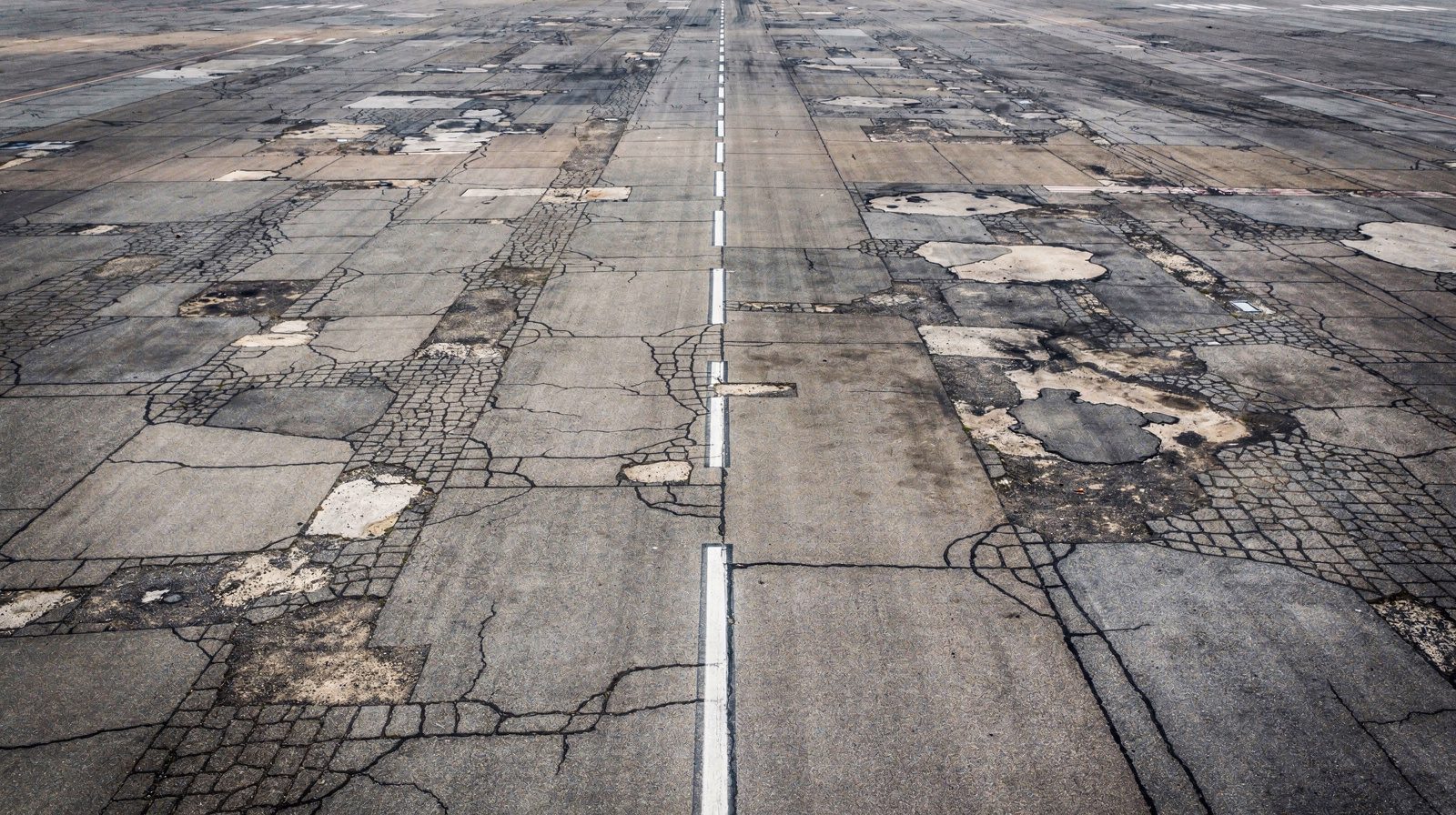
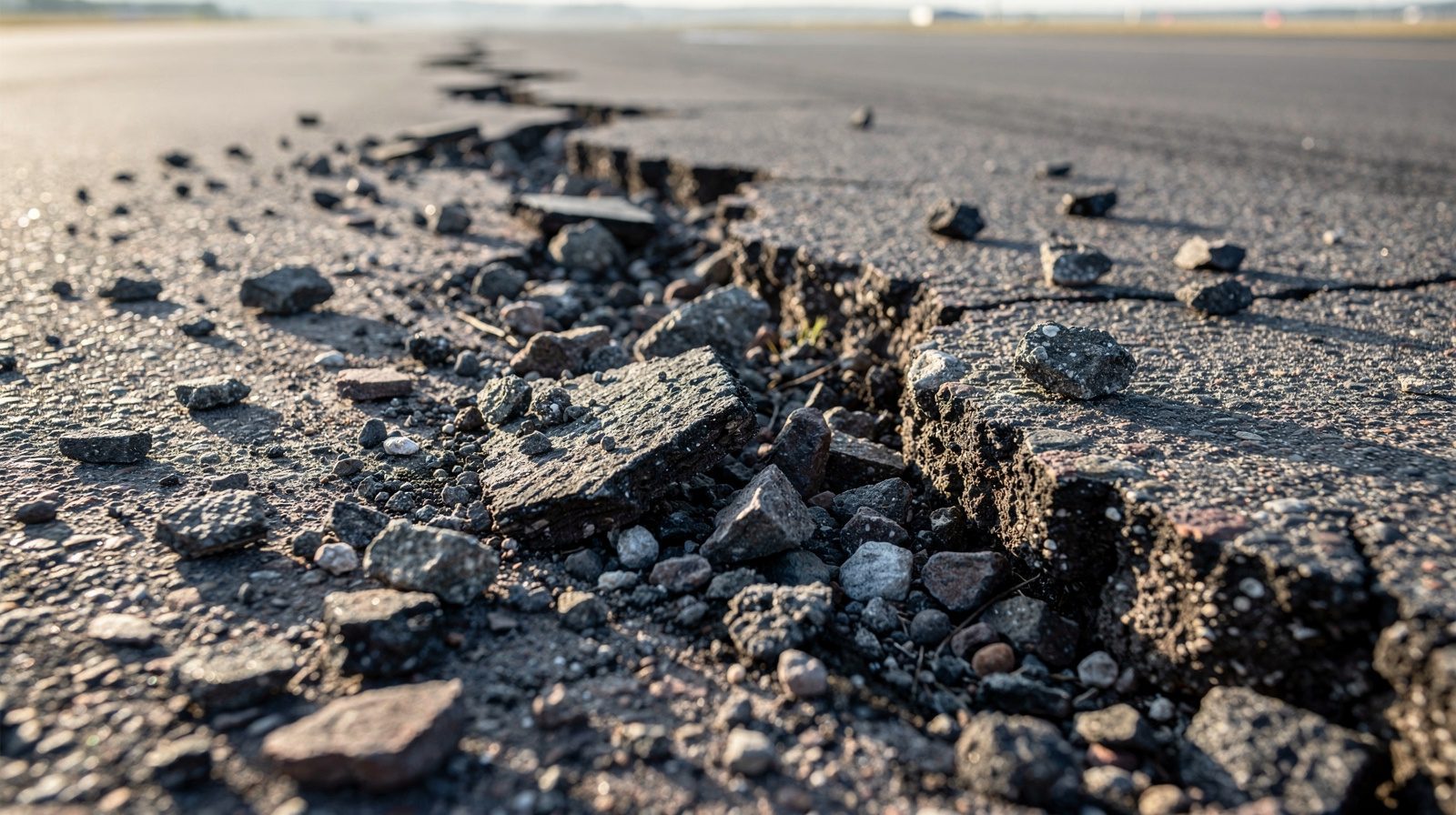
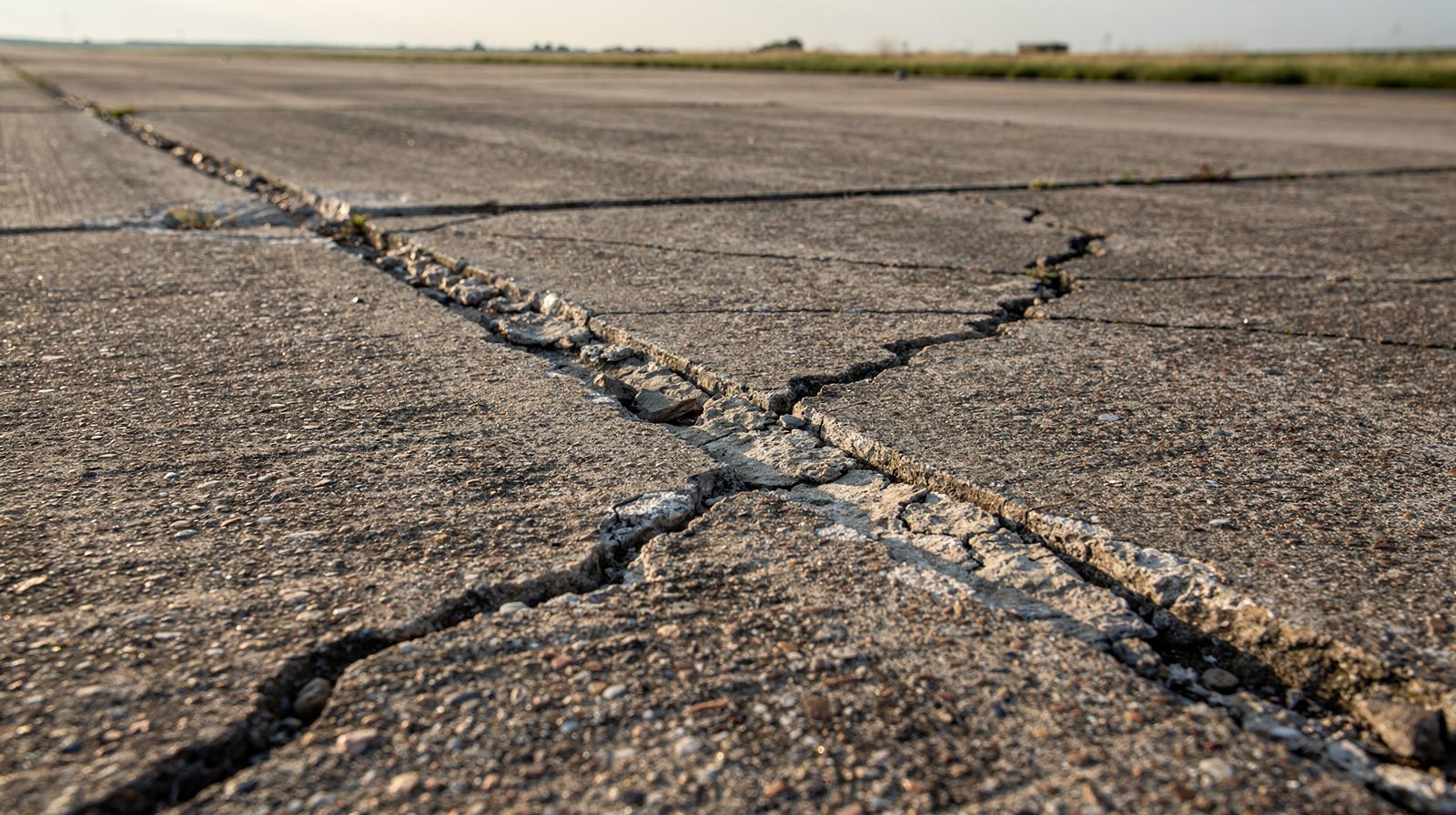
What is Polished Aggregate?
Polished Aggregate: Definition, Causes, Measurement, and Remediation
Polished aggregate is a surface distress condition affecting asphalt and concrete pavements where the coarse aggregate particles exposed at the wearing surface become progressively smooth and glossy under the mechanical action of traffic. This polishing process degrades the pavement’s microtexture, the fine-scale surface roughness at the aggregate level, and directly reduces the skid resistance available for vehicle braking and directional control. In airport operations, polished aggregate on runway surfaces is a significant safety concern because diminished friction increases stopping distances and elevates the risk of hydroplaning during wet weather operations.
The term “polished aggregate” is used across multiple pavement management frameworks including the FHWA Long-Term Pavement Performance (LTPP) Distress Identification Manual, the ASTM standard classification of pavement condition, and the ICAO and FAA airport pavement maintenance guidance. Although it is classified as a surface defect rather than a structural failure, its consequences for operational safety are profound. Understanding polished aggregate requires examining its physical manifestation, the mechanisms by which it develops, how it is measured in both field and laboratory settings, and the techniques available to detect and remediate it.
Definition and Visual Appearance
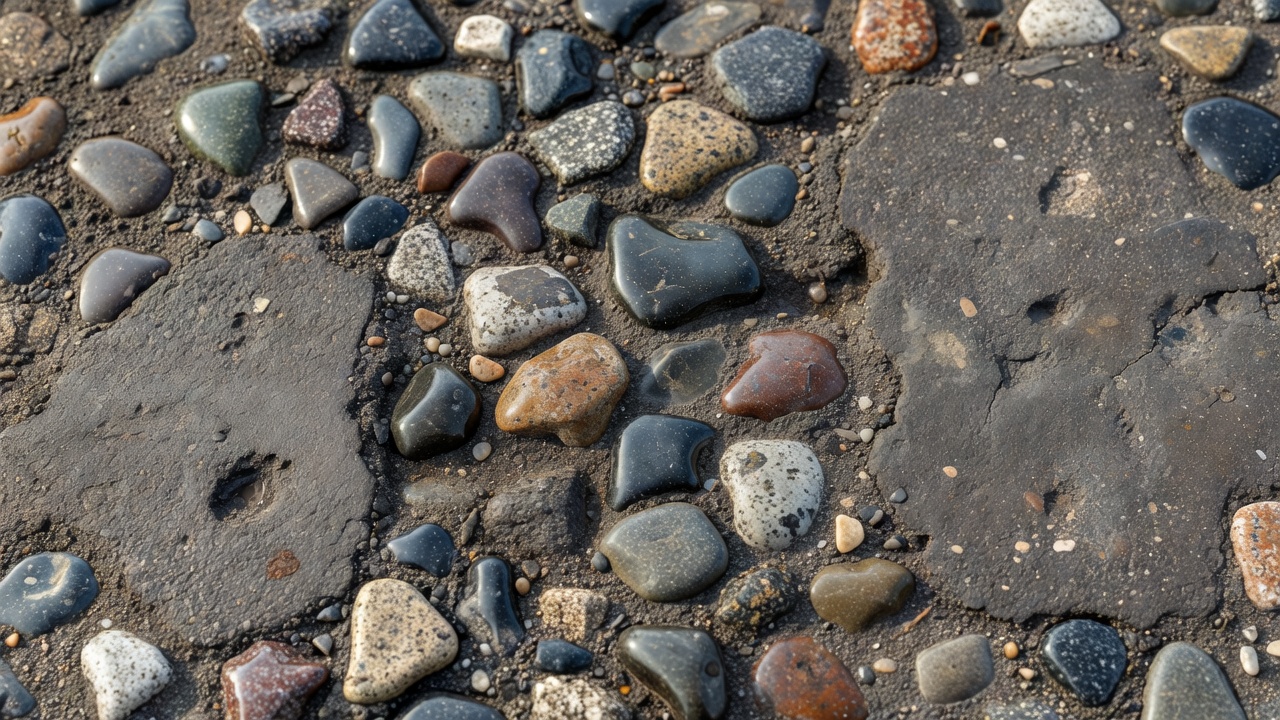
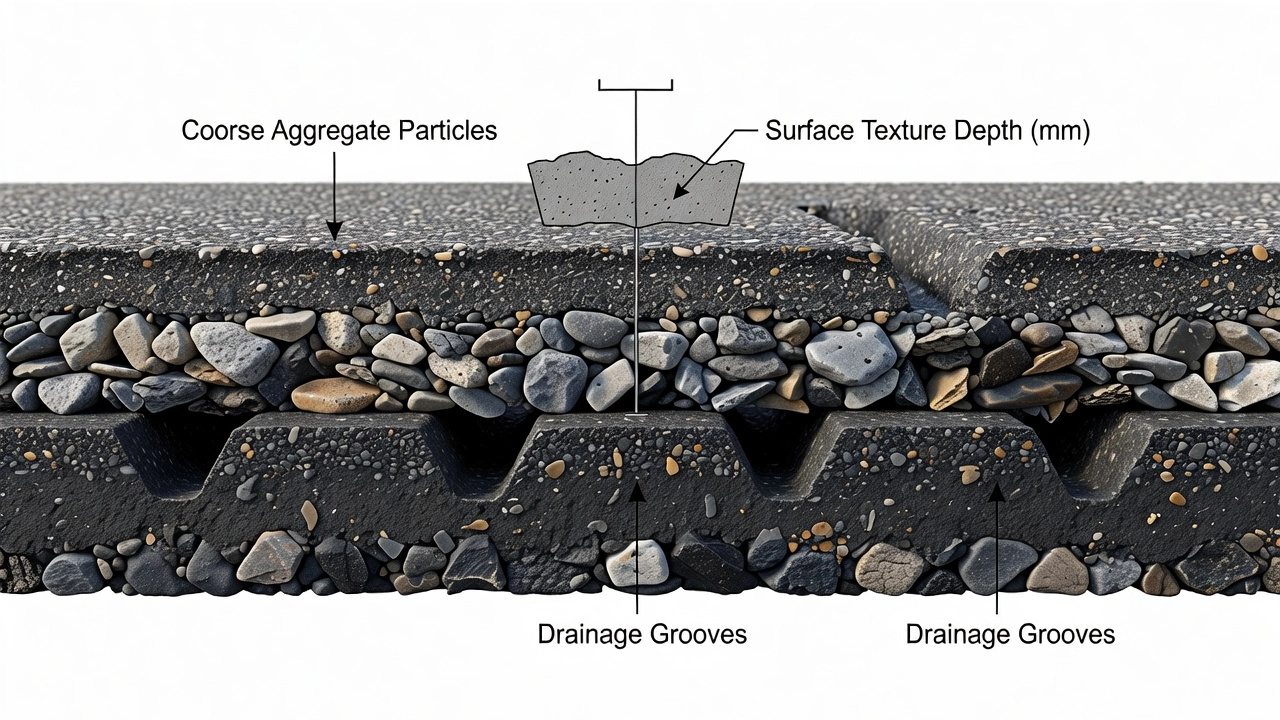
Polished aggregate is present when close examination of a pavement surface reveals that the portion of coarse aggregate particles extending above the asphalt binder or cement matrix is either very small or entirely lacking in rough, angular edges. The exposed aggregate faces appear worn, smooth, and often exhibit a shiny or glossy sheen, particularly when the surface is wet. The surface may feel smooth to the touch, lacking the abrasive quality characteristic of a newly constructed pavement with good microtexture.
Under the FHWA LTPP Distress Identification Manual (Fourth Revised Edition, FHWA-RD-03-031), polished aggregate is formally defined as distress type number 12 within the Surface Defects category of asphalt concrete-surfaced pavements. The manual states: “Polished aggregate should not be rated on test sections that have received a preventive maintenance treatment that has covered the original pavement surface.” This qualification is important because surface treatments such as chip seals, slurry seals, or overlays can mask the underlying condition of the original aggregate.
The visual appearance of polished aggregate can be deceptive. A pavement surface that appears rough at the macroscopic level may still have highly polished aggregate particles with inadequate microtexture. Conversely, a surface that appears smooth may retain adequate microtexture if the aggregate mineralogy provides natural roughness at the microscopic scale. The FAA Advisory Circular AC 150/5320-12C specifically notes: “Textural appearances, however, can be deceiving. A rough looking surface could provide adequate drainage channels for the water to escape, but the fine aggregate in the pavement may consist of rounded or uncrushed mineral grains that are subject to polishing by traffic, thereby causing the pavement surface to become slippery when wet.”
The Washington State Department of Transportation Pavement Inspection Manual (IDEA system) describes polished aggregate with the following guidance: “No degrees of severity are defined. However, the degree of polishing should be clearly evident in the sample unit in that the aggregate surface should be smooth to the touch.” This binary classification, present or not present, differs from many other pavement distresses that have defined low, moderate, and high severity levels.
| Property | Typical Appearance |
|---|---|
| Aggregate surface texture | Smooth, glossy, or shiny |
| Surface feel | Slippery to the touch, lacks abrasiveness |
| Wet appearance | Pronounced glossiness, reflective sheen |
| Aggregate edges | Rounded, worn, lacking angularity |
| Surrounding matrix | Asphalt binder may be worn away exposing aggregate |
| Extent | Usually confined to wheel paths in early stages |
Causes of Aggregate Polishing
The primary cause of aggregate polishing is repeated mechanical wear from traffic loading. Each pass of a vehicle or aircraft tire applies shear forces and abrasion to the exposed aggregate particles at the pavement surface. Over thousands to millions of load applications, the microscopic asperities on aggregate surfaces are progressively worn down, transforming rough, angular particles into smooth, rounded surfaces.
Traffic Wear Mechanisms
The polishing action of traffic is a function of both the number of load applications and the magnitude of the contact stresses. Heavy vehicles and aircraft generate higher tire-pavement contact pressures, accelerating the rate of polishing. In airport environments, the touchdown zone of runways experiences the most severe polishing because aircraft tires are under maximum load and often at or near zero slip during the moment of initial contact. The runway touchdown zone is therefore the most common location for polished aggregate to develop.
The Polished Stone Value (PSV) test, standardized in BS 812 Part 114, simulates this traffic polishing action in the laboratory. The test uses an Accelerated Polishing Machine that subjects aggregate specimens to a rubber-tired wheel loaded to 725 Newtons, rotating at 320 revolutions per minute. The polishing process occurs in two three-hour phases: first with corn emery to simulate abrasion, then with emery flour to simulate polishing. This accelerated test condenses years of traffic polishing into a six-hour laboratory procedure.
Aggregate Mineralogy
Not all aggregates polish at the same rate. The mineral composition and texture of aggregate particles are the dominant factors determining polishing resistance. Key petrological characteristics include:
Hardness differential is the most important predictor of polishing resistance. Rocks composed of minerals with widely different hardness values tend to resist polishing because softer minerals wear away preferentially, leaving harder minerals protruding to maintain surface roughness. The classic example is calcined bauxite, which has a PSV exceeding 75 and is used for high-friction surface treatments on critical roadway and runway locations.
Conversely, rocks consisting of minerals having nearly the same hardness wear uniformly and tend to have low resistance to polishing. Limestones and flints fall into this category, typically yielding PSV values below 50.
The gritstone group (sandstones with siliceous cement) exhibits excellent polishing resistance, with PSV values consistently above 65. Basalts, granites, and quartzites yield intermediate results, typically in the PSV range of 50 to 65. Within each rock group, wide variations exist depending on the specific mineral assemblage. Research has shown that resistance to polishing in igneous rocks is higher when minerals of different hardness are present, when the groundmass is foliated or fluxioned, and when fractures or cracked minerals exist within the particles.
| Aggregate Type | Typical PSV Range | Polishing Resistance |
|---|---|---|
| Calcined bauxite | 70–80+ | Excellent |
| Gritstone (siliceous sandstone) | 65–75 | Very good |
| Granite | 55–65 | Good to moderate |
| Basalt | 50–65 | Variable (mineralogy-dependent) |
| Quartzite | 55–62 | Moderate |
| Limestone | 40–50 | Poor |
| Flint/gravel | 35–50 | Poor |
Studded Tire Wear
The use of studded tires, particularly in Nordic countries and North American regions with extended winter seasons, dramatically accelerates aggregate polishing. Metal or ceramic studs embedded in winter tires act as grinding tools on the pavement surface, removing material from aggregate particles at rates many times higher than conventional tire wear. In regions where studded tires are permitted, pavement wear rates can be 10 to 100 times greater than in regions without studded tires, leading to rapid development of polished aggregate conditions.
Environmental Factors
Environmental exposure also contributes to aggregate polishing. Fine abrasive particles (dust, sand, and debris) carried by wind or deposited on the pavement surface act as polishing agents between the tire and the surface. Water runoff can transport abrasive material across the pavement, particularly at locations where surface drainage concentrates flow. Chemical attack from deicing fluids, jet fuel spills, and hydraulic fluids can soften the asphalt binder, accelerating the loss of binder that holds aggregates in place and exposing fresh aggregate surfaces to traffic wear prematurely.
FHWA LTPP Classification
The FHWA LTPP Distress Identification Manual (DIM) provides the standard framework for classifying polished aggregate in pavement distress surveys. The DIM was developed to support the Long-Term Pavement Performance program, a 20-plus year study of in-service pavement performance across North America. The manual establishes consistent terminology, measurement protocols, and classification criteria for all pavement distress types, enabling meaningful comparison of pavement condition across different sites and over time.
Classification Category
Within the LTPP DIM, polished aggregate is classified under Category D: Surface Defects, alongside bleeding (type 11) and raveling (type 13). These three distresses share the characteristic that they affect the surface properties of the pavement without necessarily compromising structural integrity. The surface defects category is one of five major distress categories for asphalt concrete-surfaced pavements:
| Category | Distress Types |
|---|---|
| A. Cracking | Fatigue cracking, block cracking, edge cracking, longitudinal cracking, reflection cracking, transverse cracking |
| B. Patching and Potholes | Patch/patch deterioration, potholes |
| C. Surface Deformation | Rutting, shoving |
| D. Surface Defects | Bleeding, Polished Aggregate, Raveling |
| E. Miscellaneous | Lane-to-shoulder dropoff, water bleeding and pumping |
Measurement Protocol
Polished aggregate is measured in square meters (m²) of affected area. Unlike many other distress types in the LTPP DIM, polished aggregate has no defined severity levels. The surveyor records only the total area of pavement surface where the condition is clearly evident. The absence of severity levels reflects the difficulty of objectively quantifying the degree of polishing in field surveys and the binary nature of the condition, either the aggregate is polished to a degree that affects skid resistance, or it is not.
The measurement protocol requires that polished aggregate be recorded only on the original pavement surface, not on sections that have received preventive maintenance treatments that cover the original surface. This distinction is critical because surface treatments can temporarily mask polishing while the underlying aggregate condition continues to deteriorate.
Comparison with Other Defect Classification Systems
The ASTM D6433 Standard Practice for Roads and Parking Lots Pavement Condition Index Surveys (PCI) classifies polished aggregate similarly, measuring it as an area-based distress with no severity levels. The ASTM D5340 Standard Test Method for Airport Pavement Condition Index Surveys extends this approach to airport pavements, again classifying polished aggregate as a surface defect with area measurement.
In the PCI methodology, polished aggregate deduct values are applied based on the density (percentage of total area affected) of the condition. Even though no severity levels exist, the extent of polishing directly influences the overall PCI score and the recommended maintenance response. A pavement section with more than 25% of its surface area affected by polished aggregate typically receives a significant deduction from the overall condition index.
Relationship Between Polished Aggregate and Skid Resistance
The fundamental safety consequence of polished aggregate is the reduction of pavement skid resistance. Understanding this relationship requires examining the two-scale texture model of pavement surfaces: microtexture and macrotexture.
Microtexture and Its Role in Friction
Microtexture refers to the fine-scale roughness of individual aggregate particles at the microscopic level, the texture that is felt rather than seen, comparable to the feel of fine sandpaper. Microtexture is the primary contributor to skid resistance at low speeds (below 50 km/h for road vehicles, and at touchdown and rollout speeds for aircraft). The microtexture of aggregate particles allows tire rubber to deform around the microscopic asperities, generating friction through hysteresis and adhesion.
When aggregate becomes polished, microtexture is progressively lost. The microscopic peaks and valleys that once provided surface roughness become flattened. The result is a dramatic reduction in the coefficient of friction, particularly on wet pavements where water acts as a lubricant between the tire and the smooth aggregate surface.
The FAA AC 150/5320-12C defines microtexture as “the fine scale roughness contributed by small individual aggregate particles on pavement surfaces which are not readily discernible to the eye but are apparent to the touch.” The advisory circular further states: “Good microtexture provides a degree of ‘sharpness’ necessary for the tire to break through the residual water film that remains after the bulk water has run off.”
Macrotexture and Drainage
Macrotexture is the larger-scale surface roughness, the visible texture of the pavement surface created by the arrangement of aggregate particles and the voids between them. Macrotexture is the primary contributor to skid resistance at high speeds by providing pathways for water to escape from beneath the tire, reducing hydroplaning risk.
Polished aggregate primarily affects microtexture, not macrotexture. A pavement can retain adequate macrotexture (visible surface roughness and drainage channels) while having severely polished aggregate particles. This is why visual inspection alone is insufficient for assessing skid resistance, a rough-looking pavement may still be dangerously slippery if the aggregate particles themselves are polished.
Friction Measurement and the International Friction Index
The International Friction Index (IFI), standardized in ASTM E1960, provides a harmonized framework for reporting pavement friction that accounts for both microtexture and macrotexture. The IFI combines friction measurements (typically from the Dynamic Friction Tester or British Pendulum Tester) with macrotexture measurements (typically mean profile depth, MPD) to produce a standardized friction number at 60 km/h, designated as F60.
The IFI model uses the relationship:
[ F(S) = F60 \times e^{(S-60)/S_p} ]
Where:
- (F(S)) is the friction number at slip speed S
- (F60) is the friction number at 60 km/h
- (S_p) is the speed constant derived from macrotexture (MPD)
Polished aggregate affects the F60 component by reducing microtexture, while macrotexture (and thus (S_p)) remains relatively unchanged. The IFI framework therefore allows engineers to isolate the contribution of aggregate polishing to overall friction reduction.
| Texture Component | Scale | Visual Detection | Affected by Polishing | Primary Safety Role |
|---|---|---|---|---|
| Microtexture | 0.001–0.5 mm | Not visible (felt) | Yes | Low-speed friction, wet film penetration |
| Macrotexture | 0.5–50 mm | Visible | No | High-speed drainage, hydroplaning resistance |
| Megatexture | 50–500 mm | Visible | No | Noise, rolling resistance |
| Roughness/Irregularity | >500 mm | Visible | No | Ride quality, dynamic loading |
Measurement of Polished Aggregate
Two categories of measurement exist for evaluating polished aggregate: field measurement of skid resistance on in-service pavements, and laboratory measurement of aggregate polishing resistance prior to construction.
British Pendulum Tester (BPT)
The British Pendulum Tester (BPT), standardized in ASTM E303, is the most widely used device for measuring the microtexture and skid resistance of pavement surfaces in the field. The BPT is a dynamic pendulum impact-type tester that measures the energy loss when a rubber slider edge traverses a pavement surface under controlled conditions.
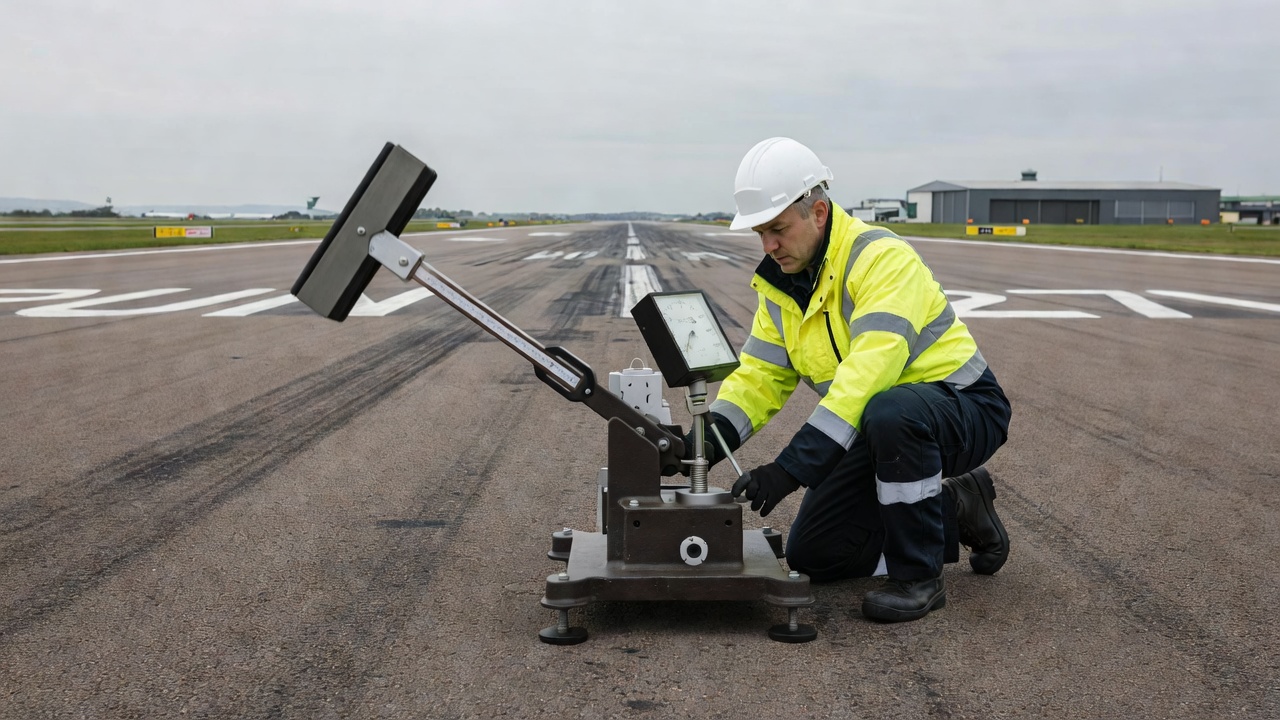
The test procedure involves:
- Leveling the BPT on the test surface
- Releasing the pendulum from a horizontal position
- The spring-loaded rubber slider traverses a 126 mm test path
- The distance the pendulum travels after contact is determined by surface friction
- Results are reported as British Pendulum Number (BPN)
The BPT is particularly sensitive to microtexture and is therefore the appropriate field device for assessing the friction consequences of polished aggregate. BPN values below 45 on road pavements and below 55 on runway pavements typically indicate inadequate microtexture requiring remedial action. However, the BPT measures at speeds equivalent to approximately 10 km/h, meaning it does not capture the speed-dependent effects of macrotexture on high-speed friction.
Temperature corrections must be applied to BPN measurements, as test results vary with rubber slider temperature. The standard correction, based on British Standard 7976, adjusts the measured BPN to a reference temperature of 20°C using established correction factors.
Dynamic Friction Tester (DFT)
The Dynamic Friction Tester (DFT), standardized in ASTM E1911, provides a more comprehensive friction measurement across a range of slip speeds. The DFT uses a spinning disk equipped with three rubber sliders that is brought into contact with a wetted pavement surface. The torque required to maintain rotation is measured as the disk slows from high speed to rest, generating a continuous friction-versus-speed curve.
The DFT is particularly useful for evaluating polished aggregate because it measures friction at multiple speeds, enabling separation of microtexture and macrotexture contributions. The DFT20 value (friction number at 20 km/h) is used in the IFI calculation as the primary friction input, while the speed-dependent friction decay rate provides information about macrotexture effectiveness.
Research at the NASA Wallops Flight Facility has shown good correlation between BPN and DFT measurements on airport pavement surfaces, with the BPT providing a reliable surrogate for low-speed friction where the DFT is not available.
Polished Stone Value (PSV) Test
The Polished Stone Value (PSV) test, standardized in BS 812 Part 114, is the definitive laboratory test for assessing aggregate polishing resistance. The test is used during pavement design to select aggregates that will maintain adequate skid resistance under anticipated traffic conditions.
The PSV test procedure involves:
- Preparing 35–50 representative aggregate chippings mounted in curved resin specimens
- Clamping 14 specimens (including 2 control specimens) around the periphery of the Accelerated Polishing Machine road wheel
- First polishing phase: 3 hours with corn emery abrasive
- Second polishing phase: 3 hours with emery flour
- Friction measurement using a modified British Pendulum Tester with a narrow slider and shortened test path
- Results adjusted using control specimen values and reported as PSV
The PSV test yields values typically ranging from 30 (highly polish-susceptible limestone) to 80+ (highly polish-resistant calcined bauxite). In the United Kingdom, the Highways Agency specifies minimum PSV values for road surfacing materials based on traffic volume and site geometry. For example, a motorway with annual average daily traffic exceeding 75,000 vehicles per lane requires aggregates with a PSV of at least 68.
The UK’s Transport Research Laboratory (TRL) has published extensive guidance on the relationship between PSV and in-service skid resistance. The fundamental relationship is:
[ Skid\ Resistance = f(PSV, Traffic, Age, Environmental\ factors) ]
Higher PSV aggregates maintain higher in-service skid resistance for longer periods, but the rate of friction loss over time is also influenced by traffic volume, tire type, and environmental exposure.
Sand Patch Method for Macrotexture
The sand patch method (ASTM E965) measures pavement macrotexture depth, which complements microtexture measurements for comprehensive friction assessment. A known volume of sand or glass beads is spread in a circle on the pavement surface, and the diameter of the circle is measured. The mean texture depth (MTD) is calculated as:
[ MTD = \frac{4V}{\pi D^2} ]
Where:
- (V) is the volume of material (typically 25,000 mm³)
- (D) is the average diameter of the circular patch in millimeters
While the sand patch method does not directly measure polishing, it provides context for interpreting friction measurements. A pavement with both polished aggregate (low microtexture) and low macrotexture presents the most severe safety risk, particularly at high speeds.
Polished Aggregate in Airport Runways
Airport runways present unique considerations for polished aggregate management due to the operational speed range of aircraft, the absence of anti-lock braking systems on some types of aircraft braking systems relative to early technology, and the regulatory framework governing runway surface conditions.
Regulatory Requirements
The FAA Advisory Circular AC 150/5320-12C, Measurement, Construction, and Maintenance of Skid-Resistant Airport Pavement Surfaces, provides comprehensive guidance for managing pavement friction on airport runways. The AC identifies aggregate polishing as one of several conditions that can lead to friction deterioration below acceptable levels.
The AC requires airports with turbojet aircraft operations to conduct friction surveys using Continuous Friction Measuring Equipment (CFME) at defined frequencies based on annual departures:
| Annual Departures | Minimum Friction Survey Frequency |
|---|---|
| More than 30,000 | Quarterly |
| 15,000–30,000 | Semi-annually |
| 5,000–15,000 | Annually |
| Less than 5,000 | Every 2 years |
The ICAO Annex 14 and ICAO Doc 9137 Part 2 similarly require airport operators to maintain runway surfaces with adequate friction characteristics and to conduct friction measurements at intervals not exceeding one year for runways used by turbojet aircraft.
ICAO Friction Level Classification
The ICAO framework classifies runway friction into three levels:
| Friction Level | Maintenance Action Required |
|---|---|
| Level 1 (maintenance planning level) | Friction below this level indicates that pavement surface friction is below the desired level for new or rehabilitated surfaces. Planning for restoration should begin. |
| Level 2 (minimum friction level) | Friction below this level requires corrective action to restore friction within a defined timeframe. |
| Level 3 (operational minimum) | Friction below this level requires immediate corrective action or operational restriction to ensure safety. |
Polished aggregate is one of the most common causes of friction falling below Level 1 and Level 2 thresholds on mature runway pavements.
Touchdown Zone Considerations
The runway touchdown zone, typically the first 500 to 1,000 meters from the threshold, is the most critical area for polished aggregate management. This is where aircraft tires initially contact the pavement at maximum vertical load and where braking begins. The combination of high tire contact pressures and the accumulation of rubber deposits from landing aircraft creates conditions that accelerate aggregate polishing.
Rubber contamination further complicates the situation. As tire rubber deposits accumulate on the runway surface, they fill the macrotexture voids and can completely cover the aggregate particles. The FAA AC 150/5320-12C states: “Heavy rubber deposits can completely cover the pavement surface texture thereby causing loss of aircraft braking capability and directional control when runways are wet.” The interaction between rubber contamination and aggregate polishing means that friction restoration often requires both rubber removal and surface texture restoration.
Airport Pavement Design Considerations
For new runway construction or major rehabilitation, the selection of polish-resistant aggregates is a critical design decision. The FAA AC recommends the use of aggregates with good microtextural properties and appropriate polishing resistance. The advisory circular notes that aggregates crushed from hard, durable rock sources generally exhibit better friction retention than uncrushed gravel or rounded aggregates.
Porous Friction Course (PFC) overlays, also known as open-graded friction courses, are recommended by both the FAA and ICAO for runway surfaces. PFC provides excellent macrotexture for water drainage while the aggregate selection provides the necessary microtexture for friction. The FAA Technical Center study demonstrated that “a high level of friction was maintained on PFC overlays for the entire runway length.”
Detection of Polished Aggregate Using Imaging and AI
Recent advances in computer vision and machine learning have enabled automated detection of polished aggregate from pavement surface images. This technology offers significant advantages over manual inspection, including consistent classification, quantitative texture analysis, and the ability to survey large pavement areas efficiently.
Gray Level Co-occurrence Matrix (GLCM) Analysis
Research published in Scientific Reports (Fakhri et al., 2025) demonstrated a framework for detecting polished asphalt pavement surfaces using texture-based image analysis combined with interpretable machine learning. The study analyzed 12,480 pavement images using 24 texture features derived from the Gray Level Co-occurrence Matrix (GLCM), which captures the directional spatial patterns of surface roughness.
GLCM features relevant to polished aggregate detection include:
- Contrast: Measures local variations in pixel intensity, higher in rough (unpolished) surfaces
- Correlation: Measures linear dependencies between pixel pairs, changes as surface texture homogenizes
- Energy: Measures textural uniformity, increases as polished surfaces become more uniform
- Homogeneity: Measures the closeness of element distribution in the GLCM, higher for polished surfaces
The study found that a Backpropagation Neural Network (BPNN) achieved 96.1% classification accuracy for detecting polished surfaces using GLCM features alone. This accuracy is comparable to deep learning approaches while requiring significantly less computational resources and providing interpretable results.
Deep Learning Approaches
Convolutional Neural Networks (CNNs), particularly ResNet50 architectures, achieved 98.7% classification accuracy in the same study. However, the researchers noted that “its high computational cost limits practical deployment” for routine pavement monitoring. The GLCM-ML approach was recommended as “an interpretable, efficient, and physics-aware tool for pavement condition monitoring.”
SHAP Interpretability
The study employed SHapley Additive exPlanations (SHAP) to interpret model predictions and provide physical insight into the texture features driving polishing classification. SHAP analysis revealed that GLCM contrast and homogeneity were the most influential features for distinguishing polished from unpolished pavement surfaces, consistent with the physical understanding that polishing reduces surface texture variation and increases uniformity.
Integration with Pavement Management Systems
The automated detection of polished aggregate from pavement images enables integration with Pavement Management Systems (PMS) for condition-based maintenance planning. By combining image-based texture analysis with friction measurements (BPN or DFT), airport operators can identify polished aggregate areas, quantify their extent, and prioritize remediation actions based on safety risk.
TarmacView applies these computer vision and AI techniques to detect polished aggregate from runway surface imagery collected during routine pavement inspections, providing airport operators with data-driven insights for friction management.
Remediation of Polished Aggregate
When polished aggregate has developed to the extent that pavement skid resistance falls below acceptable levels, several remediation options are available. The choice of remediation depends on the extent of polishing, pavement type, traffic conditions, and budget constraints.
Runway Grooving
Runway grooving is the most common remediation for polished aggregate on airport runways. The FAA AC 150/5320-12C specifies mandatory standards for runway grooving, including groove dimensions of 6 mm (±1.5 mm) width, 6 mm (±1.5 mm) depth, and 38 mm center-to-center spacing. Grooves are cut transversely across the runway (perpendicular to the direction of traffic) to provide drainage paths for water to escape from beneath aircraft tires.
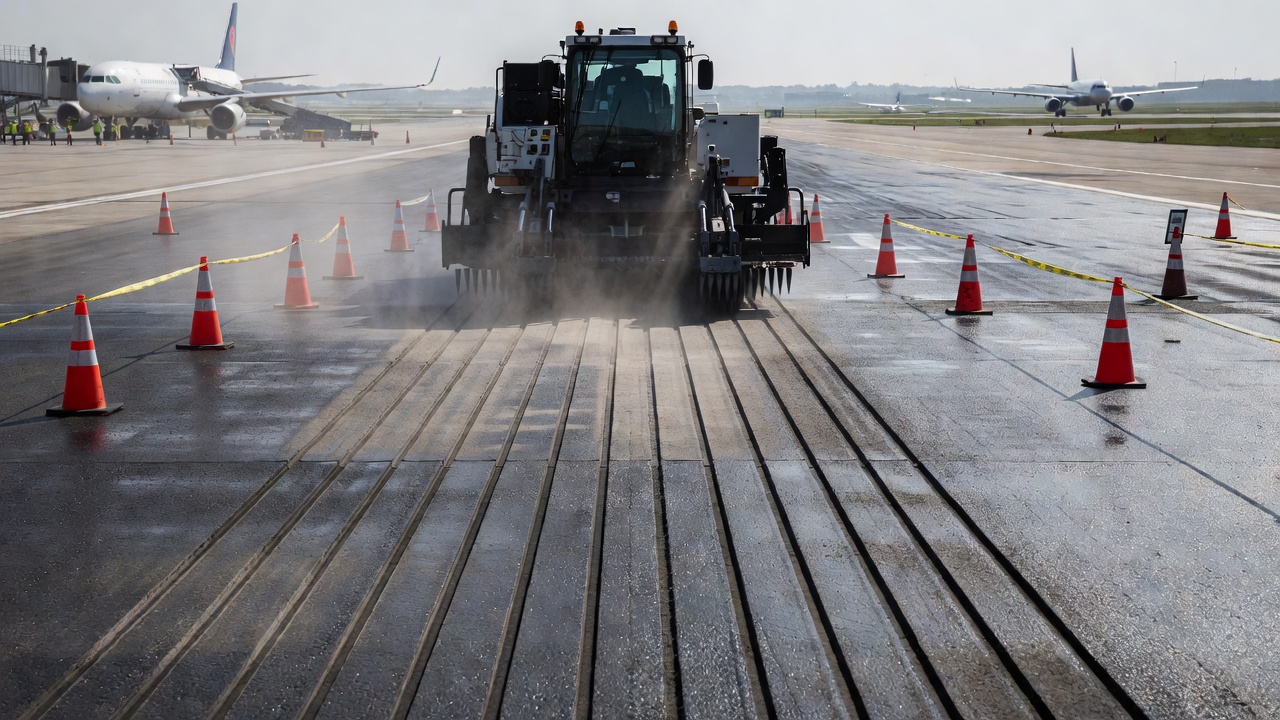
It is important to note that grooving primarily improves macrotexture and drainage. It does not restore the microtexture of polished aggregate particles. Therefore, grooving is most effective on pavements where polishing is moderate and adequate microtexture remains. On severely polished pavements where aggregate particles are completely smooth, grooving alone may not restore friction to acceptable levels.
Surface Treatments
Several surface treatment options can restore friction to polished pavements:
Chip seals involve applying a layer of asphalt binder followed by embedding a layer of high-PSV aggregate chips. The chips provide new aggregate surfaces with fresh microtexture. Chip seals are cost-effective for large areas but may not be suitable for high-speed runway operations due to potential aggregate loss (flying chips).
Slurry seals and microsurfacing are thin surface treatments that apply a mixture of emulsified asphalt, mineral aggregate, and additives. These treatments provide a new wearing surface with controlled aggregate grading for friction. Microsurfacing can be applied in thicknesses of 6–15 mm and can restore skid resistance on polished pavements.
Porous Friction Course (PFC) overlays are the preferred treatment for runways, providing both macrotexture (through open-graded mix design) and microtexture (through aggregate selection). PFC overlays are typically 25–50 mm thick and are designed to allow water to drain through the pavement structure, reducing the risk of hydroplaning.
High Friction Surface Treatment (HFST) uses calcined bauxite aggregate bonded to the existing pavement surface with a resin or polymer-modified binder. HFST can achieve PSV values exceeding 75 and is used at critical locations such as runway thresholds, high-speed exit taxiways, and areas where geometric constraints limit stopping distance.
Diamond Grinding and Milling
For Portland cement concrete pavements, diamond grinding can restore surface texture by removing a thin layer of the surface (typically 3–6 mm) to expose fresh aggregate. The grinding process creates a textured surface with longitudinal grooves that restore both microtexture and macrotexture.
For asphalt pavements, cold milling can remove the polished surface layer to a depth of 25–50 mm. The milled surface provides macrotexture from the cutting tool pattern, but the exposed aggregate may still be polished if the milling depth does not reach unpolished material. Milling is typically followed by an overlay.
Full Overlay or Reconstruction
When polishing is extensive and the pavement structure requires strengthening, a full overlay or reconstruction may be necessary. For runway overlays, the FAA requires that the overlay material meet specified friction requirements, including aggregate PSV, texturing, and initial friction values. Reconstruction provides the opportunity to select polish-resistant aggregates and design the pavement for optimal friction performance over its service life.
Prevention Through Aggregate Selection
The most effective strategy for managing polished aggregate is prevention through careful aggregate selection during initial construction or overlay design. Key considerations include:
| Selection Criteria | Recommended Practice |
|---|---|
| PSV minimum | Select aggregates with PSV ≥ 55 for general use, ≥ 65 for critical areas |
| Mineral hardness differential | Prefer rocks with minerals of varying hardness |
| Crushed faces | Require 100% crushed faces for all coarse aggregate |
| Los Angeles abrasion | Maximum 30% loss per ASTM C131/C535 |
| Soundness | Maximum 10–15% loss per ASTM C88 (sodium sulfate) |
The FAA AC 150/5320-12C and ICAO Doc 9137 provide detailed guidance on aggregate selection for skid-resistant airport pavement surfaces. The fundamental principle is that friction properties should be designed into the pavement during construction rather than restored through maintenance after polishing has developed.
Conclusion
Polished aggregate is a pavement surface defect that develops through the progressive wear of exposed aggregate particles under traffic loading, resulting in loss of microtexture and reduced skid resistance. The condition is classified as a surface defect in the FHWA LTPP Distress Identification Manual, measured by affected area without defined severity levels. Its impact on runway friction safety is significant, particularly in wet conditions where the combination of smooth aggregate surfaces and water lubrication can dramatically reduce braking capability and increase hydroplaning risk.
Detection of polished aggregate has evolved from manual visual-tactile inspection to quantitative friction measurement using the British Pendulum Tester and Dynamic Friction Tester, and most recently to automated image-based analysis using machine learning and texture feature extraction. These modern detection methods enable consistent, objective assessment of polishing extent and support data-driven pavement management decisions.
Remediation options range from groove cutting and surface treatments to full overlay replacement, with the optimal approach depending on the severity and extent of polishing, pavement type, and operational requirements. Prevention through careful aggregate selection during design and construction remains the most cost-effective strategy for managing polished aggregate over the pavement lifecycle.
For airport operators, regular friction surveys, proactive rubber removal, and timely surface treatment are essential for maintaining safe runway surfaces in the presence of progressive aggregate polishing. The integration of AI-powered texture analysis with traditional friction measurement provides a comprehensive approach to managing this critical pavement condition.
Frequently Asked Questions
- What is polished aggregate in pavement surfaces?
- Polished aggregate is a surface defect where the coarse aggregate particles exposed on a pavement surface become smooth and glossy due to repeated traffic wear. This loss of surface roughness (microtexture) significantly reduces the pavement's skid resistance, increasing the risk of vehicle skidding, especially in wet conditions. It is classified as a surface defect in FHWA LTPP and measured by affected area in square meters.
- What causes aggregate polishing on roads and runways?
- Polishing is caused by the mechanical polishing action of vehicle or aircraft tires repeatedly abrading the exposed aggregate particles over time. Key factors include aggregate mineralogy (soft or homogeneous minerals polish faster), traffic volume and loading, use of studded tires, and environmental wear. Aggregates with minerals of varying hardness resist polishing better than those with uniformly hard minerals.
- How is polished aggregate measured and classified?
- Under FHWA LTPP protocols, polished aggregate is measured as the total affected area in square meters with no severity levels defined. The condition must be clearly evident, the aggregate surface should be smooth to the touch. Laboratory measurement uses the Polished Stone Value (PSV) test per BS 812, while field skid resistance is measured using the British Pendulum Tester (BPN) or Dynamic Friction Tester (DFT).
- How does polished aggregate affect runway safety?
- Polished aggregate reduces microtexture, which is the fine-scale roughness essential for tire-pavement friction at low speeds and for breaking through residual water films at high speeds. This degradation increases stopping distances, raises hydroplaning risk, and reduces directional control. FAA Advisory Circular 150/5320-12C identifies aggregate polishing as a condition requiring friction restoration measures such as grooving or surface treatment.
- Can polished aggregate be detected using AI and imaging?
- Yes. Recent research demonstrates that polished asphalt surfaces can be detected using Gray Level Co-occurrence Matrix (GLCM) texture analysis combined with machine learning. Models such as Backpropagation Neural Networks achieve 96.1% classification accuracy on pavement images. Convolutional Neural Networks (ResNet50) reach 98.7% accuracy but require more computational resources, making GLCM-ML approaches more practical for field deployment.
- What remediation methods exist for polished aggregate?
- Remediation includes runway grooving (cutting transverse channels for water drainage), surface treatments such as chip seals, slurry seals, or porous friction course overlays, and high-friction surface treatments using calcined bauxite. For minor areas, diamond grinding or milling can restore texture. In severe cases, full overlay or reconstruction with polish-resistant aggregates is necessary.