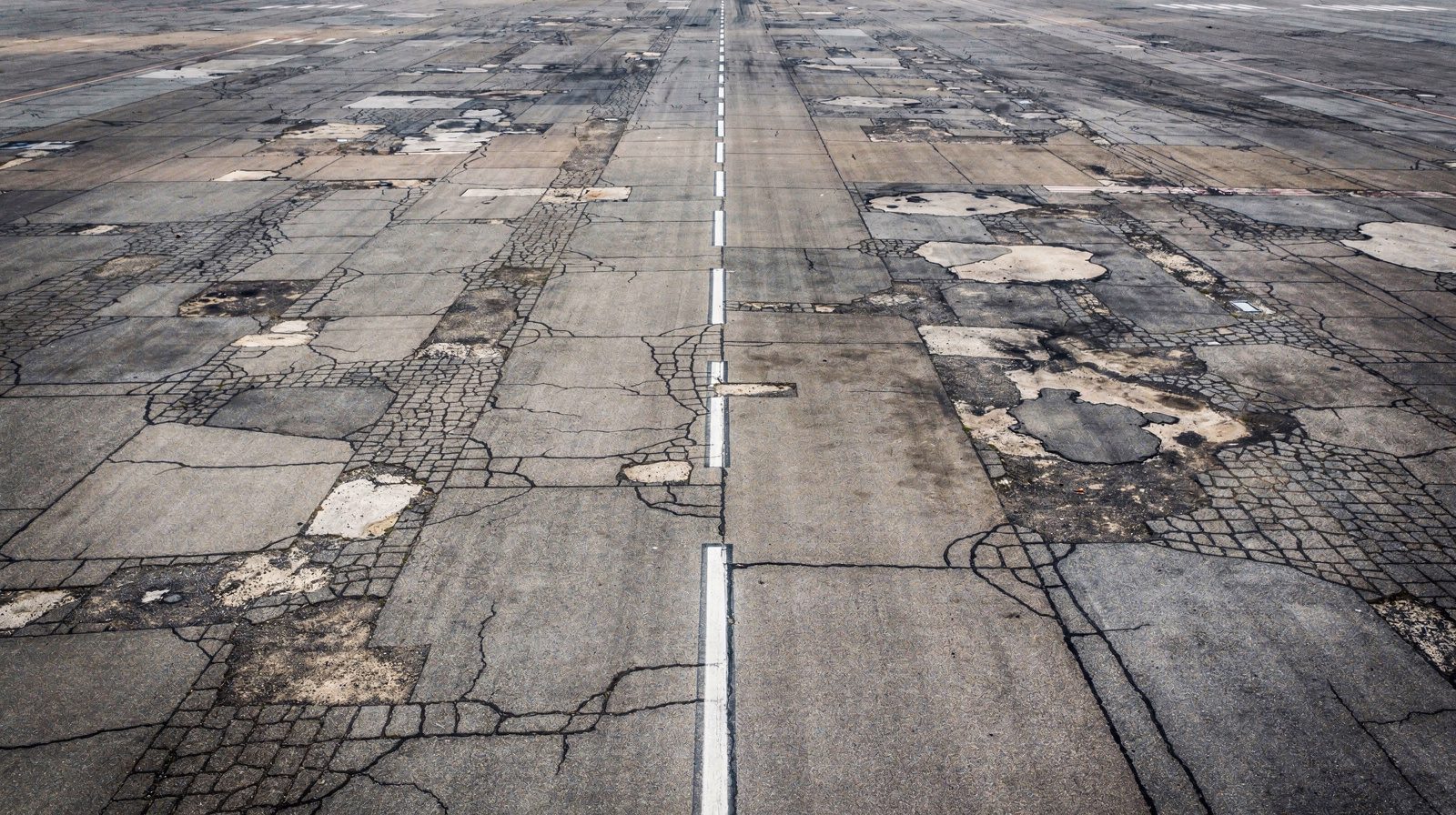
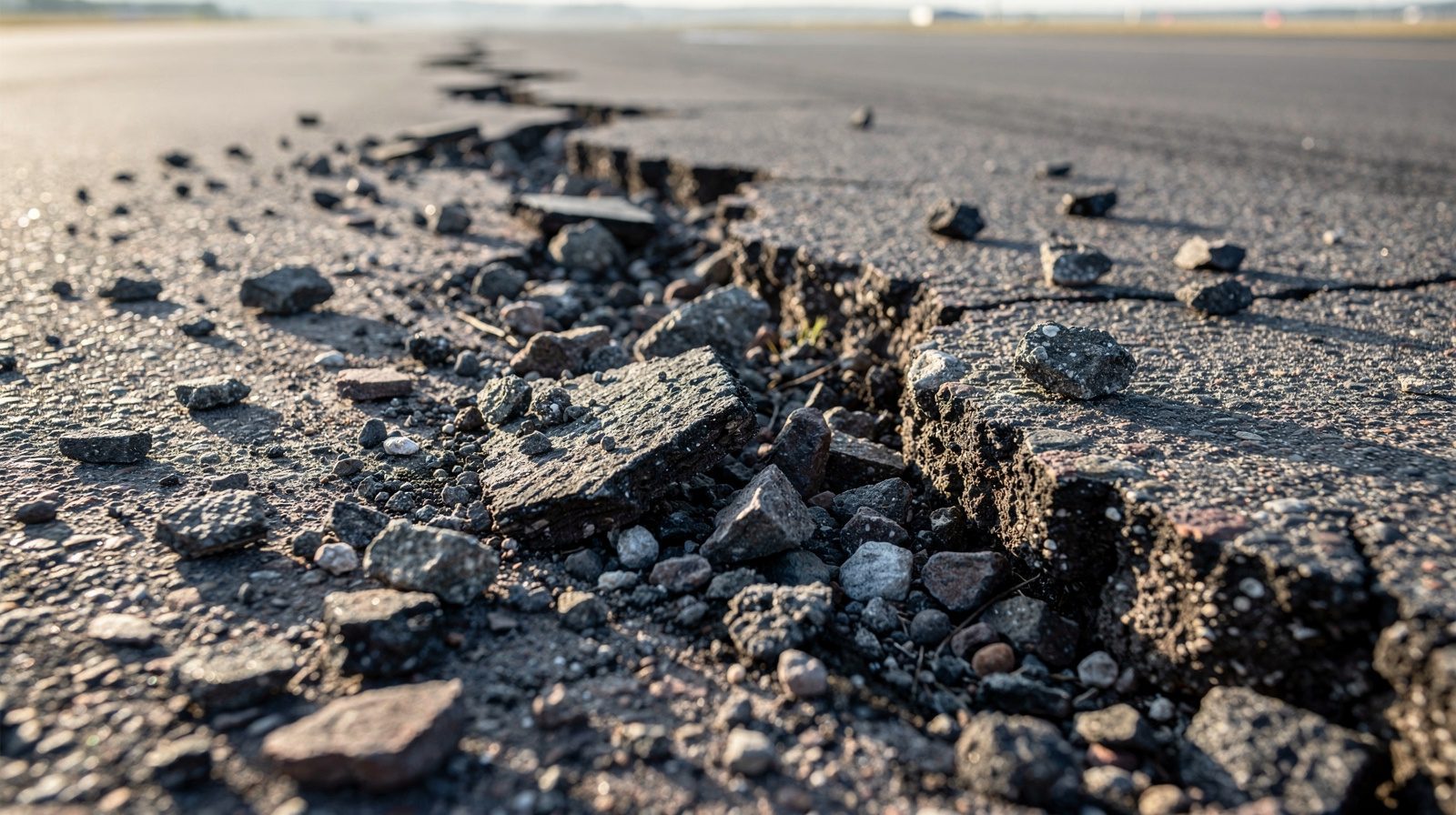
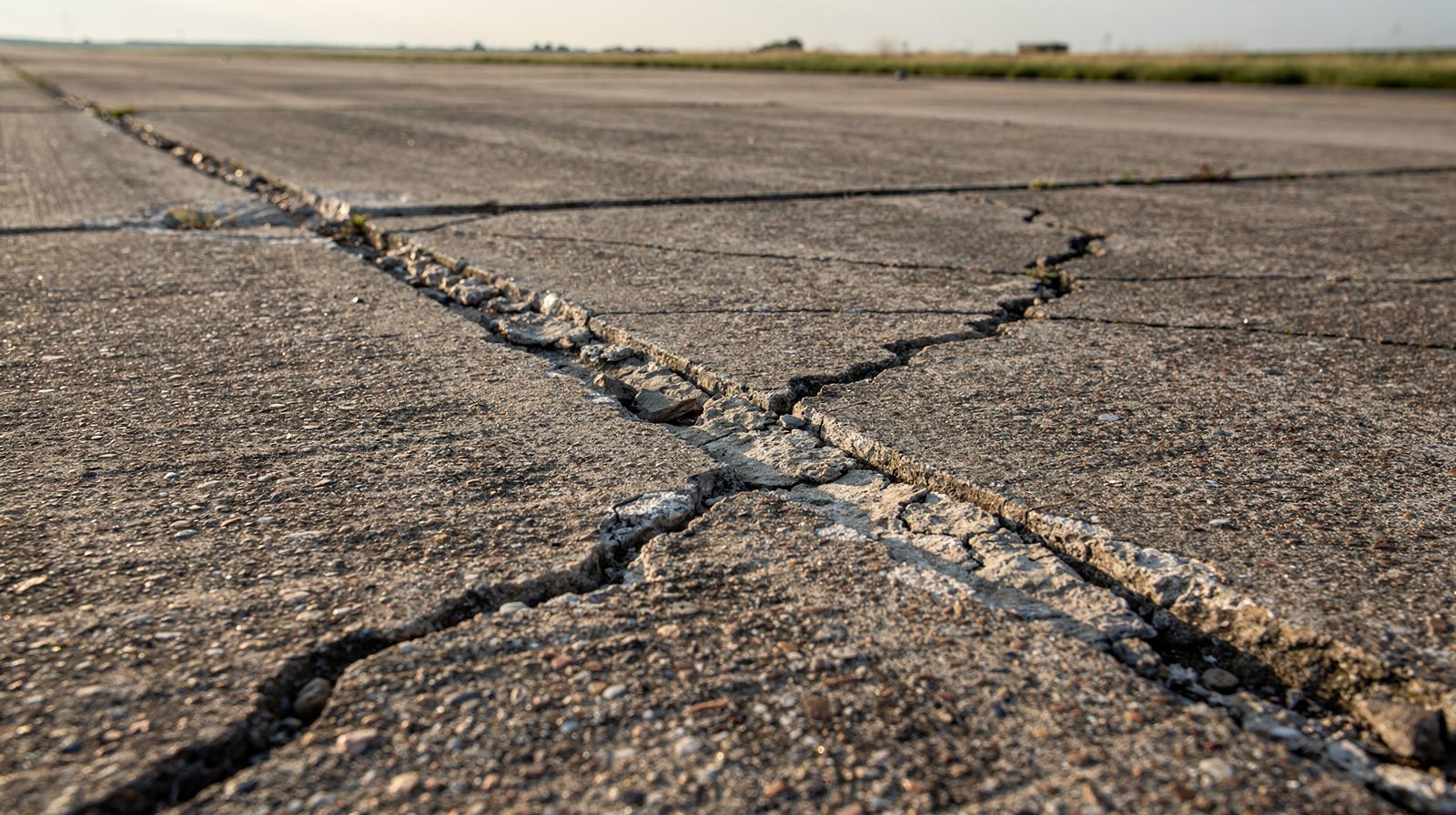
What is a Popout in Concrete Pavement?
What is a Popout in Concrete Pavement?
A popout (also called an aggregate popout, surface popout, chert popout, or pop-out) is a small, typically conical depression formed in the surface of a Portland Cement Concrete (PCC) pavement when a near-surface aggregate particle or foreign contaminant expands due to moisture absorption, freeze-thaw action, or chemical reaction and is forcibly expelled from the pavement surface. Popouts are classified under ASTM D5340 (Standard Test Method for Airport Pavement Condition Index Surveys) as a disintegration-type distress, one of the three major categories of PCC pavement distress alongside cracking and distortion.
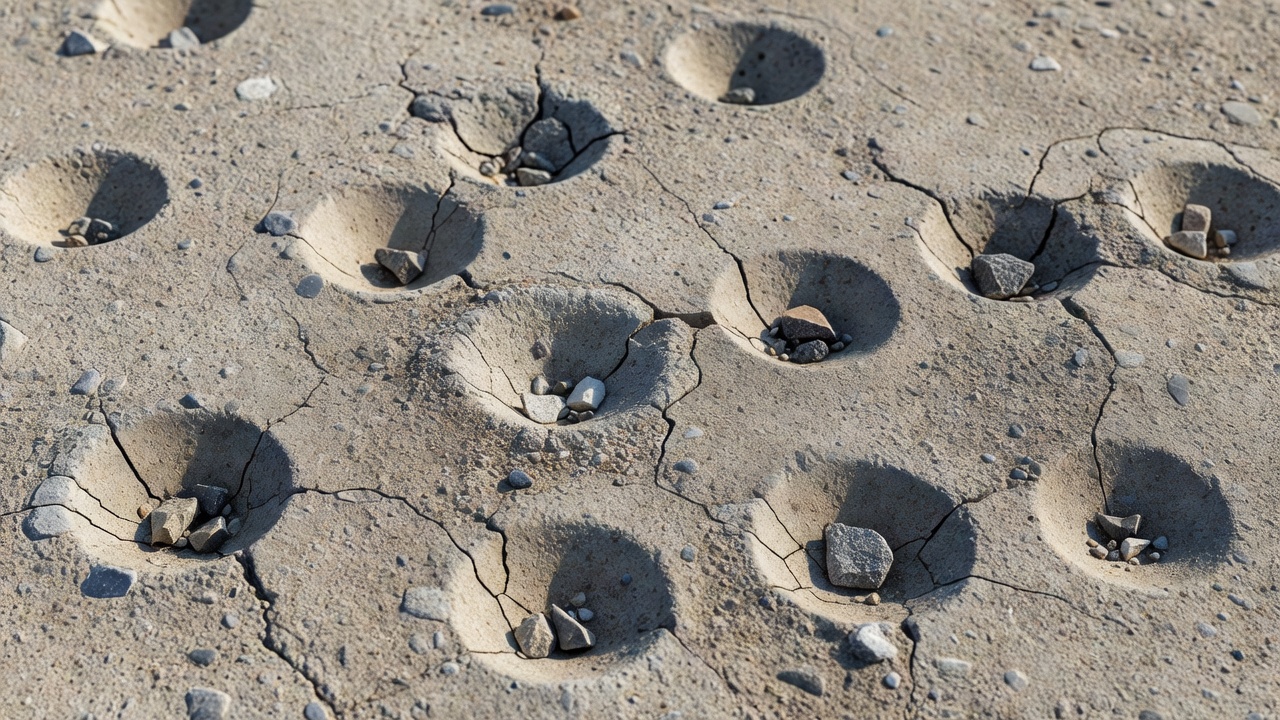
The FAA Advisory Circular 150/5380-6B (Guidelines and Procedures for Maintenance of Airport Pavements) defines a popout as “a small piece of pavement that breaks loose from the concrete surface.” The FAA PASER manual for concrete airfield pavements (AC 150/5320-17A Appendix B) describes popouts more precisely: “Individual pieces of large aggregate may pop out of the surface. This is often caused by chert or other absorbent aggregates that deteriorate under freeze-thaw conditions.”
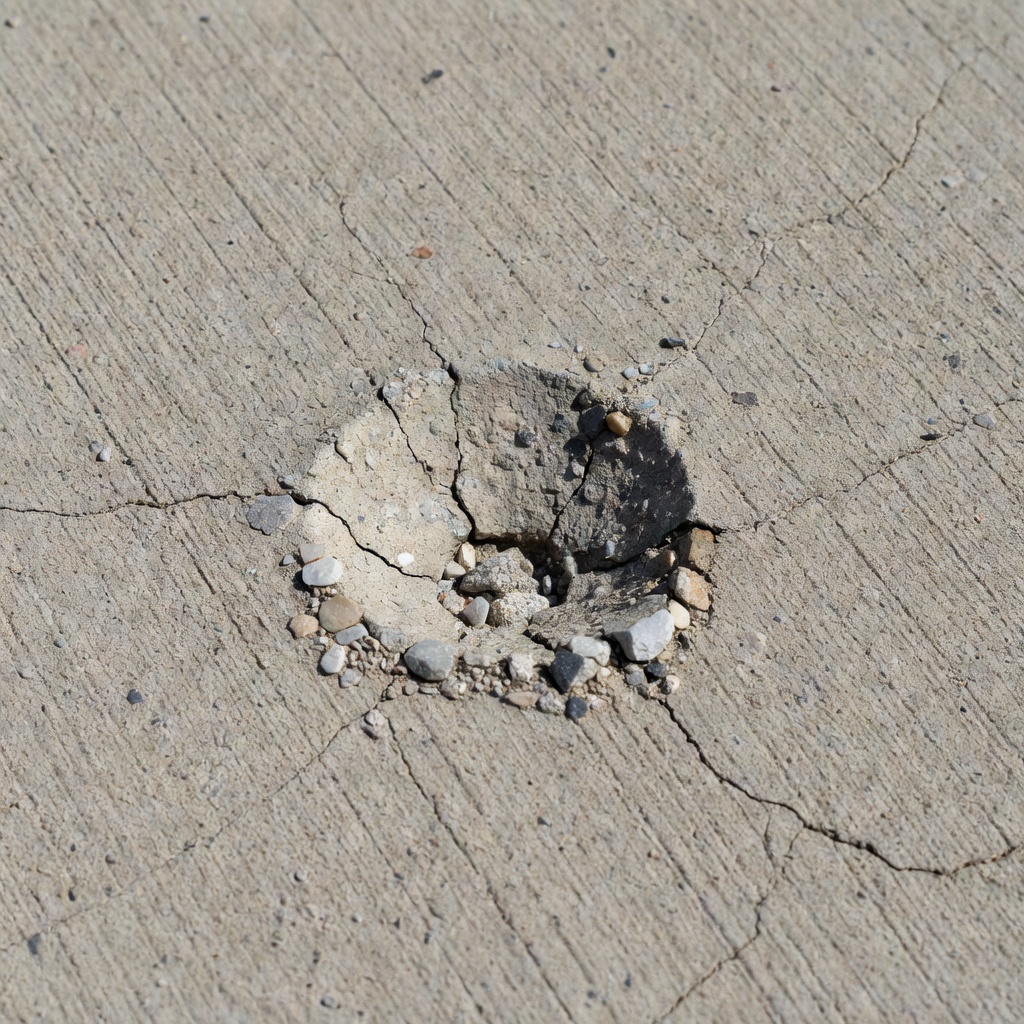
Popouts typically measure 25 to 50 mm (1 to 2 inches) in diameter and 10 to 25 mm (3/8 to 1 inch) in depth. The depression is characteristically cone-shaped with the apex of the cone pointing downward into the pavement, reflecting the fracture propagation path that follows the weakest plane radiating from the expanding particle. Fractured remnants of the unsound aggregate particle are typically visible within the crater. The conical fracture surface distinguishes popouts from other surface depressions such as spalls, which have more irregular geometry.
The FHWA Tech Brief HIF-15-013 (Materials-Related Distress: Aggregates) notes that popouts are specifically associated with low-density chert aggregate particles, which are limited by ASTM C 33 (Standard Specification for Concrete Aggregates) because of their propensity to cause popouts at the surface of slabs on grade. While a single isolated popout is typically cosmetic and does not affect pavement serviceability, numerous popouts concentrated in wheel path areas can roughen the surface, reduce friction characteristics, and generate Foreign Object Debris (FOD) that poses ingestion and tire damage risks to aircraft operating on airfield pavements.
Appearance and Identification
The visual identification of popouts during pavement condition surveys follows specific criteria established by ASTM D5340 and the FAA PASER system. A trained pavement inspector identifies popouts through the following characteristic features:
Physical appearance. The popout appears as a small, roughly circular or oval crater on the pavement surface. The crater walls slope inward toward a central low point, forming a cone shape. The interior surface of the crater shows fractured aggregate material, typically lighter in color than the surrounding concrete matrix, representing the broken remnants of the original aggregate particle. The crater rim is generally sharp and well-defined, though it may show some minor spalling at the margin if the popout occurred some time ago and has been subjected to traffic abrasion.
Size range. The FAA PASER manual identifies popouts as typically 25 to 50 mm in diameter, though some can range from as small as 10 mm (from fine aggregate popouts) to as large as 100 mm (from very large coarse aggregate particles or clusters of reactive material). The depth is generally proportional to the diameter, ranging from approximately one-third to one-half of the crater diameter.
Distribution pattern. Popouts can occur in three distinct distribution patterns:
| Distribution Pattern | Description | Typical Cause |
|---|---|---|
| Random isolated | Single popouts scattered across the pavement surface with no apparent spatial correlation | Occasional unsound aggregate particles in an otherwise sound aggregate supply |
| Clustered | Multiple popouts concentrated in specific areas, sometimes following wheel path locations | Contaminated aggregate stockpile or localized zone of poor-quality material |
| Widespread uniform | Popouts distributed relatively uniformly across the entire pavement surface | Systematic aggregate quality issue, the entire aggregate source contains excessive unsound particles |
Associated distress features. In some cases, popouts may be accompanied by dark discoloration around the crater, particularly when the popout is caused by alkali-silica reaction (ASR) where reaction gel exudes from the fractured aggregate. A fine cracking pattern (map cracking) may develop around popouts in ASR-affected concrete. When popouts result from freeze-thaw deterioration of the aggregate, the surrounding concrete may show evidence of D-cracking at joints and cracks in more advanced cases.
Confirmation through coring. Definitive identification of popouts and determination of the causative mechanism often requires extraction of a concrete core through a representative popout feature. Laboratory examination of the core (per ASTM C 856, Standard Practice for Petrographic Examination of Hardened Concrete) reveals:
- The unsound aggregate particle remnants still partially embedded in the concrete matrix below the crater floor
- The fracture pattern through the aggregate and surrounding cement paste
- Evidence of the failure mechanism (freeze-thaw damage, ASR gel, clay swelling, etc.)
- The depth of deterioration below the crater floor
- The condition of aggregate particles at greater depths within the slab
The Concrete Pavement Distress Assessment and Solutions Guide (Iowa State University, 2019) recommends that popout severity be rated on three levels: Low (isolated popouts, less than 5 per square meter), Medium (frequent popouts, 5 to 15 per square meter, crater depth less than 15 mm), and High (numerous popouts exceeding 15 per square meter, crater depth greater than 15 mm, or debris generation observed).
Causes of Popouts
Popouts are caused by the expansion of near-surface aggregate particles or contaminants that are unsound, porous, or chemically reactive within the concrete matrix. The expansion generates tensile stresses in the cement paste surrounding the particle, which eventually exceed the tensile strength of the concrete, causing fracture and expulsion of the particle. The causative materials and mechanisms are diverse.
Porous Chert Aggregate
Chert is a siliceous sedimentary rock composed of microcrystalline or cryptocrystalline quartz, often occurring as nodules or lenses within limestone deposits. Certain varieties of chert are highly porous and absorbent, with absorption values exceeding 5 percent by weight, well above the 1 to 2 percent absorption typical of sound concrete aggregates. The National Cooperative Highway Research Program (NCHRP) Report 12 (Identification of Aggregates Causing Poor Concrete Performance When Frozen) documented that chert particles with high porosity are among the most deleterious aggregate components in concrete exposed to freeze-thaw conditions.
The mechanism by which chert causes popouts involves progressive moisture absorption. When a porous chert particle is located within 25 mm of the pavement surface, it is exposed to cyclic wetting and drying from rainfall, snowmelt, condensation, and surface runoff. During wet periods, the chert particle absorbs water into its pore structure through capillary action. When temperatures drop below freezing, the absorbed water expands by approximately 9 percent in volume as it transitions to ice. The expansion pressure within the confined pore structure of the chert particle generates tensile stresses that radiate outward into the surrounding cement paste matrix.
The University of Kentucky freeze-thaw research program found that chert particles with pore sizes in the intermediate range (0.04 to 0.20 μm) are the least durable because surface tension between water and pore surfaces limits the movement of water out of the aggregate during freezing, preventing relief of hydraulic pressure. The critical degree of saturation for chert-induced popouts, the moisture content threshold above which freezing causes particle fracture, is typically approximately 80 to 85 percent of the particle’s total pore volume.
ASTM C 33 limits the allowable content of low-density chert (particles with a specific gravity of less than 2.40) in concrete aggregates to a maximum of 3 percent by mass for concrete exposed to weathering (Table 4). Some state highway agencies impose even more stringent limits. The Iowa Department of Transportation, for example, limits low-density chert to a maximum of 1.5 percent in coarse aggregates for concrete pavements due to the documented relationship between chert content and popout frequency observed on Iowa’s highway network.
Clay Lumps and Friable Particles
Clay lumps and friable particles are contaminant materials in concrete aggregates that consist of clay minerals (kaolinite, illite, montmorillonite, or mixed-layer clays) or weakly cemented sedimentary materials. These particles are particularly problematic because clay minerals expand significantly when wetted, montmorillonite clays can undergo volume increases of 100 to 300 percent upon moisture absorption, and contract upon drying. This cyclic expansion and contraction near the concrete surface generates internal stresses that fracture the surrounding paste and eject the particle.
ASTM C 33 limits clay lumps and friable particles in coarse aggregate to a maximum of 3 percent by mass for concrete exposed to weathering. For fine aggregate, the limit is 3 percent. The FHWA Tech Brief HIF-15-013 states: “Clay lumps and friable particles are controlled because excess amounts will significantly increase the water demand of the mixture due to their high specific surface area and exacerbate expansion in the presence of water. They may also tend to reduce flexural strengths.”
Detection of clay lumps in aggregate production requires careful visual inspection at the quarry or processing plant. Some clay lumps are difficult to differentiate from sound aggregate particles until they are wetted and begin to soften or disintegrate. The ASTM C 142 test method (Standard Test Method for Clay Lumps and Friable Particles in Aggregates) involves immersing a sample of the aggregate in water for 24 hours and then mechanically agitating it to break down soft particles, which are then washed through a series of sieves to quantify the clay lump content.
Lime Particles and Unsound Limestone
Unsound limestone particles, particularly those containing significant proportions of dolomite (calcium magnesium carbonate), can cause popouts through two distinct mechanisms.
The first mechanism involves the hydration of free lime (calcium oxide, CaO) particles present as contaminants in some crushed limestone aggregates. Free lime particles, when exposed to moisture in the concrete or from environmental sources, hydrate to form calcium hydroxide [Ca(OH)₂], a reaction that is accompanied by a volume increase of approximately 30 to 40 percent. The expansive force generated by this hydration reaction within a confined near-surface particle causes the overlying concrete to fracture in tension, forming the characteristic conical popout.
The second mechanism involves dolomitic limestone aggregates that undergo the dedolomitization reaction, an alkali-carbonate reaction similar in concept to alkali-silica reaction but involving dolomite rather than silica. The reaction produces brucite [Mg(OH)₂] and calcite [CaCO₃], with accompanying expansion that can cause popouts at the surface. This mechanism is less common than chert-induced popouts but has been documented in pavements constructed with certain limestone sources in the midwestern United States and Ontario, Canada.
Freeze-Thaw Deterioration of Aggregate
The freeze-thaw deterioration of concrete aggregates is the most widespread cause of popouts in pavements located in cold-climate regions. The fundamental mechanism involves the absorption of water into the pore structure of the aggregate particle, followed by freezing of that water when temperatures drop below 0 °C. The factors governing freeze-thaw popout susceptibility are well established:
| Aggregate Property | Favorable (Durable) | Unfavorable (Popout-Prone) |
|---|---|---|
| Absorption | Less than 1.5% | Greater than 3% |
| Pore size distribution | Predominantly larger than 0.2 μm or smaller than 0.04 μm | Predominantly 0.04–0.20 μm (intermediate) |
| Saturation limit | Greater than 91% | Less than 85% |
| Specific gravity | Greater than 2.60 | Less than 2.40 |
| Sulfate soundness loss | Less than 10% (ASTM C 88, 5 cycles) | Greater than 18% |
The Iowa Pore Index test was developed specifically to relate freeze-thaw durability with the relative size and abundance of capillary pores in aggregate particles. The test measures the volume of water forced into a sample under high pressure over a 15-minute period. Aggregates with high Iowa Pore Index values (greater than 80 mL per 1000 g sample) are considered susceptible to freeze-thaw deterioration and popout formation.
ScienceDirect research on freeze-thaw durability of concrete aggregates summarizes: “Freezing and thawing of concrete can cause cracking parallel to the exposed surface, surface ‘pop-outs’, ‘durability cracking’ (or ‘D-cracking’), surface scaling, and general disintegration.” The relationship between the three freeze-thaw distress types, popouts, D-cracking, and scaling, is one of scale and location within the pavement structure. Popouts affect near-surface aggregate particles, D-cracking affects aggregate particles throughout the slab depth (particularly in the lower portion), and scaling affects the cement paste matrix rather than the aggregate.
Other Contributing Materials
Coal and lignite particles present in concrete aggregates can cause popouts when they absorb water and swell. ASTM C 33 limits coal and lignite content in fine aggregate to a maximum of 1.0 percent by mass for concrete surface finishes. The FHWA Tech Brief notes that “coal and lignite are undesirable because of their effect on water demand and the risk of popouts and staining.”
Pyrite (iron sulfide) particles in aggregates can oxidize in the presence of moisture and oxygen to form sulfuric acid and iron hydroxide, a reaction accompanied by significant volume expansion (up to 200 percent in extreme cases). The expansion causes localized fracturing of the surrounding concrete and expulsion of the particle. Pyrite-induced popouts are relatively rare but have been documented in pavements using aggregates from certain geological formations in the Appalachian region.
Organic contaminants such as wood fragments, roots, or vegetable matter can decompose within the concrete, leaving voids that weaken the surface zone and facilitating aggregate loss. These contaminants are controlled by ASTM C 33 limits on organic impurities in fine aggregate (ASTM C 40 colorimetric test).
Popout Mechanism
The physical mechanism by which a popout forms involves a sequence of discrete events that occur over time as the causative particle expands and the surrounding concrete matrix resists the expansion forces.
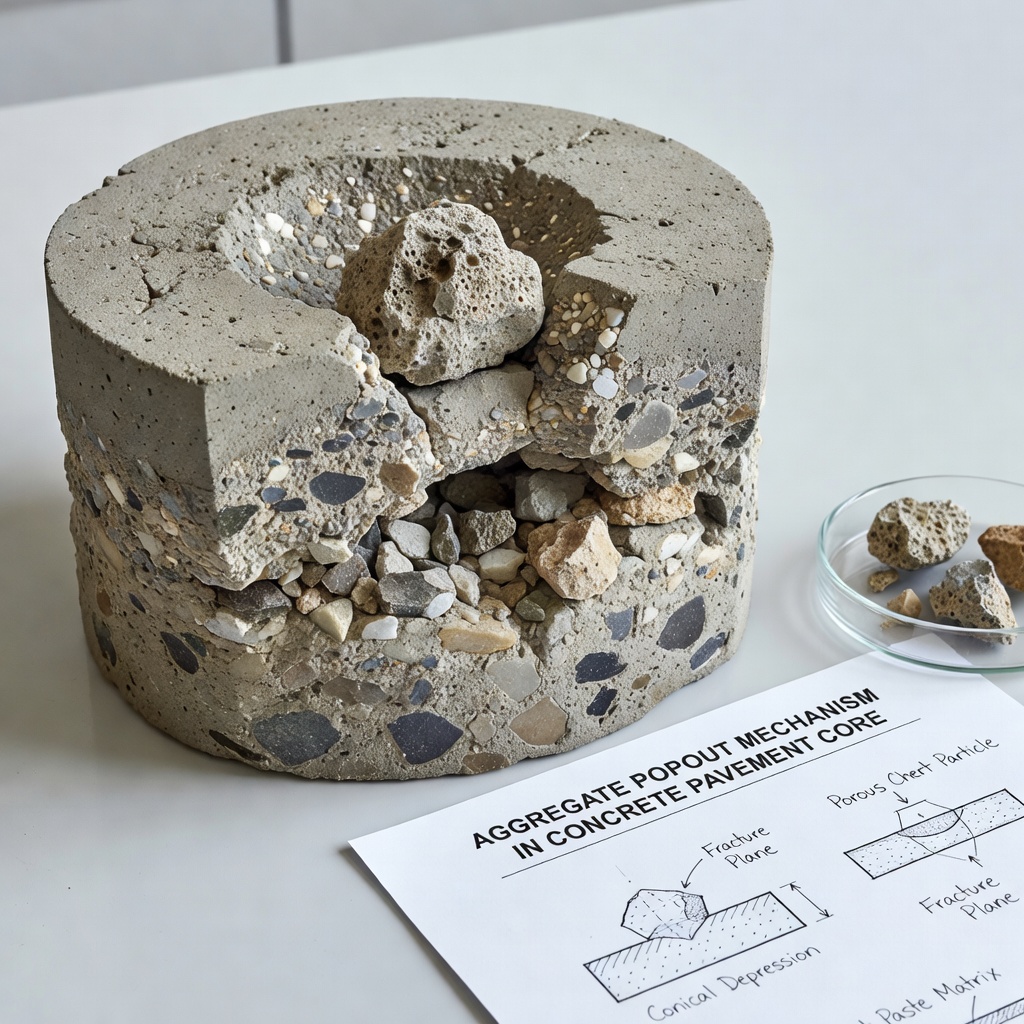
Stage 1, Moisture ingress. The unsound aggregate particle, located within approximately 25 mm of the pavement surface, absorbs moisture from precipitation, condensation, or capillary rise from the subgrade. Porous aggregates with interconnected pore networks absorb moisture more rapidly and to a higher degree of saturation than dense, well-cemented aggregates. The rate of moisture ingress depends on the permeability of the overlying cement paste, a dense, well-cured concrete surface with low permeability slows moisture migration to the aggregate, while a porous, poorly cured surface accelerates it.
Stage 2, Onset of expansion. When the moisture content of the aggregate particle reaches a critical threshold, approximately 80 to 85 percent of saturation for freeze-thaw mechanisms, or upon initial wetting for clay swelling mechanisms, the particle begins to expand. In freeze-thaw popouts, the expansion is triggered when temperature drops below 0 °C and the absorbed water freezes. In clay-related popouts, expansion begins immediately upon moisture absorption and continues as the clay mineral structure adsorbs water molecules between its lattice layers.
Stage 3, Stress generation. The expanding aggregate particle is constrained by the surrounding cement paste matrix. The expansion generates radial tensile stresses in the paste surrounding the particle. The magnitude of the tensile stress is governed by:
σₜ = P × (r / r₀)
where σₜ is the radial tensile stress at distance r from the particle center, P is the expansion pressure generated by the particle, and r₀ is the radius of the particle. The maximum tensile stress occurs at the interface between the particle and the cement paste, immediately adjacent to the particle surface.
For freeze-thaw popouts, the expansion pressure generated by ice formation is determined by the volume of water that freezes and the degree of confinement. In a fully saturated pore system, the 9 percent volumetric expansion of water upon freezing generates pressures of 10 to 30 MPa (1,500 to 4,500 psi) within the constrained pore structure, pressures well in excess of the tensile strength of concrete (typically 2 to 5 MPa or 300 to 700 psi).
Stage 4, Fracture initiation. When the radial tensile stress exceeds the tensile strength of the cement paste, a fracture initiates at the aggregate-paste interface at the point of maximum stress concentration. This fracture typically occurs on the side of the particle closest to the pavement surface, where the cover depth (the thickness of cement paste above the particle) is minimal and provides the least resistance to upward propagation.
Stage 5, Fracture propagation. The initial fracture propagates upward toward the pavement surface along a conical fracture plane, a geometry that results from the combination of tensile stress distribution and the path of least resistance through the thinnest section of overlying material. The conical shape reflects the fundamental mechanics of brittle fracture under constrained expansion: the fracture propagates at approximately a 45-degree angle from the vertical axis, creating the characteristic cone morphology.
Stage 6, Expulsion. When the fracture reaches the pavement surface, the overlying plug of concrete material, consisting of the fractured aggregate particle fragments and the covering cement paste, is forcibly ejected from the surface, leaving the conical crater. The ejected material may remain partially attached at the crater perimeter or may be completely dislodged and removed by traffic, wind, or water action.
Stage 7, Post-popout condition. After expulsion, the crater floor consists of the remaining lower portion of the fractured aggregate particle still embedded in the concrete matrix below. This remnant material may continue to deteriorate through continued exposure to moisture and freezing, potentially leading to enlargement of the crater over successive freeze-thaw cycles. In ASR-affected popouts, the exposed aggregate surface may continue to react with alkali hydroxides from the surrounding paste, producing additional gel that exudes into the crater.
The entire mechanism, from initial moisture ingress to final expulsion, can occur within a single freeze-thaw cycle for the most susceptible aggregates (e.g., highly porous chert particles at critical saturation), or may develop over multiple seasonal cycles for less susceptible materials.
Popout vs Scaling
The distinction between popouts and scaling is critical for accurate pavement condition assessment and appropriate maintenance response. While both are classified as surface disintegration defects in PCC pavements, they have fundamentally different mechanisms, appearances, causes, and implications.
Popouts are localized, point-source defects caused by the expansion and expulsion of individual aggregate particles or contaminants. The defect is characterized by a conical crater with fractured aggregate remnants visible at the bottom. The surrounding concrete surface between popouts remains sound and intact. Popouts indicate a problem with aggregate quality, the presence of unsound, porous, or chemically reactive particles in the concrete mix, but do not necessarily indicate a problem with the cement paste matrix or the overall concrete quality.
Scaling, by contrast, is a widespread surface deterioration characterized by the progressive loss of the surface mortar layer over a large area. The FAA PASER manual describes scaling as “surface deterioration that causes loss of fine aggregate and mortar. More extensive scaling can result in loss of large aggregate.” Scaling produces a general roughening and pitting of the surface, with exposed aggregate particles that are sound and intact, they have not fractured or expanded, but rather the mortar matrix holding them has degraded and released them.
| Characteristic | Popout | Scaling |
|---|---|---|
| Extent | Localized, isolated | Widespread, general |
| Shape | Conical crater | Irregular, planar loss of surface |
| Depth | 10–25 mm (limited) | Variable, may extend deep into slab |
| Aggregate condition | Fractured, unsound | Sound, intact |
| Primary cause | Aggregate quality (chert, clay, etc.) | Paste quality (lack of air entrainment, deicing salts, improper finishing) |
| Indication | Problem with specific aggregate particles | Problem with cement paste durability |
| Serviceability impact | Minor (usually cosmetic) | Can be severe (structural section loss) |
| Repair approach | Usually none required, partial depth patch if extensive | Grinding, partial depth patch, overlay, or slab replacement |
| Progression | Generally non-progressive after particle expulsion | Progressive, continues to worsen over time |
The Concrete Pavement Distress Assessment and Solutions Guide (Iowa State University, 2019) provides clear differentiation guidance: “Popouts are distinguished from surface scaling by the presence of a conical fracture through the aggregate particle. Scaling surfaces show aggregate particles that are intact and exposed by the loss of surrounding mortar, not fractured by internal expansion.”
The CMC Concrete technical reference on surface distress further distinguishes three related but distinct surface conditions: scaling (loss of the original finished surface causing exposures of underlying mortar and aggregate), mortar lift-off (loss of the thin surface mortar cover over near-surface aggregate particles that remain sound), and aggregate popout (the unsound aggregate itself fractures and is expelled). In mortar lift-off, the exposed aggregate particles are sound, only the overlying mortar was lost. In popouts, the aggregate itself is unsound, having expanded and fractured.
This distinction has direct implications for pavement management decisions. A pavement with scattered popouts but otherwise sound concrete typically requires no corrective action beyond monitoring. A pavement with active scaling requires investigation into the cause (lack of air entrainment, deicing salt damage, finishing issues) and likely intervention to prevent progression to more severe deterioration.
Effects on Surface
While isolated popouts are generally cosmetic and do not significantly affect pavement performance, extensive popout development across a pavement surface can have measurable effects on surface characteristics and operational safety.
Effect on Surface Friction
The relationship between popouts and surface friction (skid resistance) is complex and depends on the density, distribution, and morphology of popout craters. In small numbers, popouts may have no measurable effect on friction. In larger numbers, the effects can be either beneficial or detrimental depending on context.
Positive effect: Popout craters create micro-texture and macro-texture on the pavement surface by exposing fractured aggregate surfaces (which have higher micro-texture than polished worn surfaces) and by creating small depressions that contribute to macro-texture. Research on concrete pavement friction has shown that surfaces with controlled texture features in the 0.5 to 5 mm depth range can provide improved friction characteristics compared to smooth or polished surfaces. The small craters create additional edge discontinuities that help break the water film during wet conditions, potentially reducing hydroplaning risk at aircraft operating speeds.
Negative effect: In extreme cases where popouts are so numerous that the surface becomes pockmarked or honeycombed, the loss of surface area in contact with vehicle tires can reduce effective friction. The Iowa State guide notes that “popouts alone do not usually affect pavement serviceability,” but this assumes a moderate density of popouts. When popout density exceeds approximately 20 to 30 per square meter, the surface begins to lose sufficient contact area for effective tire-pavement interaction.
The FAA Advisory Circular 150/5320-12C (Measurement, Construction, and Maintenance of Skid-Resistant Airport Pavement Surfaces) requires that runway surfaces maintain minimum friction levels as measured by continuous friction measuring equipment (CFME). While popouts are not specifically addressed in the friction criteria, extensive surface deterioration from any cause that results in measured friction values below the minimum friction level (MFL) or planning friction level (PFL) for the runway category requires remedial action.
Effect on Appearance and Ride Quality
Popouts create a visual surface imperfection that, while predominantly cosmetic, can affect the perception of pavement quality by airport operators and regulatory inspectors. A pavement surface with widespread popouts may be rated lower in the FAA PASER condition rating system even if the underlying structural capacity is unaffected. The PASER system assigns ratings from 5 (Excellent) to 1 (Failed), and a pavement with extensive popouts would typically be rated at the lower end of the scale for surface condition.
Ride quality as measured by the International Roughness Index (IRI) is generally unaffected by popouts because the depressions are small and the aircraft tire footprint is large enough to bridge across individual craters without significant vertical displacement. The IRI for airport pavements is measured using inertial profilers per ASTM E1926, and the short-wavelength features of popouts (25 to 50 mm diameter) are filtered out by the profile analysis algorithms that focus on wavelengths of 1.3 to 30 meters.
Foreign Object Debris (FOD) Risk
The most significant operational concern associated with concrete popouts on airfield pavements is the generation of Foreign Object Debris (FOD) . When a popout occurs, the ejected material, consisting of the fractured aggregate particle fragments and the overlying plug of cement paste, remains on the pavement surface as loose debris.
The FAA Advisory Circular 150/5380-6C states: “Popouts alone do not usually affect pavement serviceability. However, damage to aircraft from the debris may occur.” This is the critical distinction between popouts on highway pavements (where FOD is a minimal concern for automotive traffic) and popouts on airport pavements (where loose debris of any size poses a potential ingestion hazard for aircraft engines and a tire damage risk).
The risk level depends on the size, quantity, and location of popout debris:
- Size: Popout debris fragments typically range from 10 to 50 mm in their largest dimension, well within the size range that can cause engine ingestion damage (FOD hazards are defined for particles as small as 2 mm for high-bypass turbofan engines) and tire cuts.
- Quantity: A pavement section with high popout density can produce hundreds of loose fragments per square meter, creating a continuous FOD source that requires frequent inspection and removal.
- Location: Popouts in the runway touchdown zone (the first 900 meters of the runway from the threshold) and taxiway centerline areas present the highest risk because these are the areas of most intensive aircraft tire contact.
The ICAO Annex 14, Volume I, Section 9.4 requires that the surface of all paved runways, taxiways, and aprons be maintained in a condition to provide good friction characteristics and low rolling resistance, free of any defect that could adversely affect the safe operation of aircraft. Loose debris from popout activity constitutes a defect under this requirement.
The FAA Advisory Circular 150/5210-24A on FOD management explicitly identifies pavement-derived debris as a FOD source requiring active management. The AC recommends:
- Routine FOD inspections following the airport’s FOD management plan
- Prompt removal of observed debris from movement areas
- Root cause analysis for recurring FOD sources
- Corrective action to address the source of debris generation
Popout in Airport Pavements
Airport concrete pavements are subject to specific conditions that influence popout formation and management differently from highway or industrial pavements.
Thicker pavement sections. Airport PCC pavements are typically 300 to 450 mm thick for heavy-duty airfields, compared to 200 to 280 mm for highway pavements. However, the popout mechanism affects only the near-surface zone (top 25 mm), so slab thickness does not directly influence popout susceptibility. The thicker slab does mean that popout material quality is the same throughout the slab depth, a single core can determine whether the popout-causing aggregate is present throughout the mix or was a localized contaminant at the surface.
Aircraft tire pressures. Aircraft operating on airfield pavements exert tire pressures ranging from 1.0 to 1.6 MPa (150 to 230 psi) , significantly higher than typical highway truck tire pressures of approximately 0.7 MPa (100 psi). The higher contact stress at the pavement surface can accelerate the mechanical removal of partially detached popout material and can mascerate the surface around popout craters, enlarging the affected area through secondary spalling at the crater perimeter.
FOD sensitivity. As discussed above, the FOD sensitivity of airfield pavements elevates the operational significance of popouts beyond what would be considered acceptable on highways. The FAA Airport Pavement Management Program (PMP) requires that airports document and track surface distresses, including popouts, as part of their Pavement Condition Index (PCI) surveys.
PASER rating impact. The FAA PASER system for concrete airfield pavements (AC 150/5320-17A) includes popouts as a distress type to be documented during field surveys. The PASER manual illustrates popouts with photographs showing: “Several pop-outs in a new slab” (low severity) and “Extensive pop-outs of large aggregate from surface” (high severity). The manual notes that for severe areas, “a patch, overlay or slab replacement may be necessary.”
Deicing chemical interaction. Airport pavements in cold climates are exposed to aircraft deicing fluids (typically propylene glycol-based) and pavement deicing chemicals (sodium acetate, potassium acetate, urea). While deicing chemicals primarily affect scaling of the cement paste rather than aggregate popout, the increased surface saturation from deicing operations can elevate the moisture content of near-surface aggregate particles, potentially accelerating the freeze-thaw popout mechanism.
Operational constraints. Runway closures for popout-related maintenance must be carefully coordinated with airport operations to minimize disruption. Unlike highway pavements where lane closures can be implemented with relative flexibility, runway closures require NOTAM (Notice to Air Missions) issuance, airline coordination, and scheduling during periods of minimum traffic demand. The FAA AC 150/5370-2 (Operational Safety on Airports During Construction) provides guidance on maintaining safe operations during pavement maintenance activities.
Detection of Popouts
Detection and documentation of concrete popouts on airfield pavements is performed through visual pavement condition surveys conducted in accordance with ASTM D5340 methodology.
Visual inspection procedures. The pavement inspector walks the pavement surface and visually identifies areas with popout activity. The inspection is typically performed at a walking pace, scanning the pavement surface at an angle that maximizes the visibility of surface depressions. Crews of two to three inspectors working parallel passes can survey an entire runway width in a single pass.
Documentation per ASTM D5340. During a formal Pavement Condition Index (PCI) survey, the inspector:
- Divides the pavement into sample units based on defined area criteria (runway sample units are typically 20 slabs ± 8 for PCC pavements)
- Inspects each sample unit and identifies all distress types present
- Measures distress severity and quantity, popout density is recorded as the number of popouts per sample unit area
- Calculates the deduct value, a numerical value representing the reduction in pavement condition attributable to the distress, based on density-severity curves in ASTM D5340
- Computes PCI, subtracts total deduct values from 100 (perfect condition) to obtain the sample unit PCI
Severity levels for popouts per ASTM D5340:
| Severity Level | Description | Typical Density Impact on PCI |
|---|---|---|
| Low | Popouts less than 25 mm diameter, isolated, no loose debris | Minimal reduction (1-5 points at high density) |
| Medium | Popouts 25-50 mm diameter, moderate density, some loose fragments | Moderate reduction (5-15 points at high density) |
| High | Popouts greater than 50 mm diameter, high density, active debris generation | Significant reduction (15-30 points at high density) |
Advanced detection methods. Emerging technologies for automated popout detection include:
- High-resolution pavement imaging (line-scan cameras mounted on survey vehicles at 1 to 3 mm pixel resolution)
- Laser profilometry detection of surface depression features through continuous profile measurement
- Machine learning classification of surface images to identify and quantify popout features automatically
- Unmanned aerial vehicle (UAV) survey for rapid initial assessment of large pavement areas
The Concrete Pavement Distress Assessment and Solutions Guide recommends that threshold values be established for popout density that trigger investigation of the causative aggregate and consideration of maintenance action. For airport pavements, a threshold of 10 popouts per square meter in the wheel path area is typically considered the point at which FOD risk and friction effects warrant a maintenance response.
Prevention of Popouts
Prevention of concrete popouts is achieved primarily through quality control of concrete aggregates during material selection, mix design, and construction.
Aggregate Soundness Testing
The ASTM C 88 (Standard Test Method for Soundness of Aggregates by Use of Sodium Sulfate or Magnesium Sulfate) test evaluates aggregate resistance to disintegration by subjecting samples to repeated cycles of immersion in a saturated salt solution followed by oven drying. The salt crystallizes within the pore structure of unsound particles, generating internal expansive forces analogous to freeze-thaw action. The weight loss after a specified number of cycles (typically 5 cycles for coarse aggregate) is the soundness loss value:
- Coarse aggregate for concrete exposed to weathering: maximum 12% loss (sodium sulfate) or 18% loss (magnesium sulfate)
- Fine aggregate for concrete exposed to weathering: maximum 10% loss (sodium sulfate) or 15% loss (magnesium sulfate)
The ASTM C 666 (Standard Test Method for Resistance of Concrete to Rapid Freezing and Thawing) tests the freeze-thaw durability of concrete specimens made with the proposed aggregate, providing a durability factor (DF) . A DF of less than 60 after 300 cycles indicates poor freeze-thaw performance.
Petrographic examination per ASTM C 295 (Standard Guide for Petrographic Examination of Aggregates for Concrete) provides qualitative assessment of aggregate quality, identifying the presence and proportion of deleterious materials including chert, clay lumps, friable particles, coal, lignite, and reactive silica minerals.
Aggregate Quality Specifications
ASTM C 33 provides the primary specification framework for concrete aggregate quality in the United States. The relevant limits for popout prevention are:
| Contaminant | Maximum Limit in Coarse Aggregate | Maximum Limit in Fine Aggregate |
|---|---|---|
| Clay lumps and friable particles | 3.0% | 3.0% |
| Coal and lignite (surface finish concrete) | 0.5% | 1.0% |
| Material finer than 75 μm (No. 200 sieve) | 1.0% (concrete subject to abrasion) | 3.0% (concrete subject to abrasion) |
| Low-density chert (specific gravity < 2.40) | 3.0% | – |
| Other deleterious materials | 5.0% total | 5.0% total |
The FHWA Tech Brief HIF-15-013 emphasizes that these limits are minimum requirements and that “some agencies use an approach based on historical performance and ledge inspection at the quarry” to ensure aggregate quality. The Iowa DOT protocol uses the Iowa Pore Index test combined with elemental analysis and X-ray diffraction (XRD) to characterize aggregate mineralogy, placing materials on a limestone/dolomite spectrum to predict freeze-thaw performance.
Concrete Mix Design for Popout Resistance
Beyond aggregate selection, concrete mix design parameters influence popout resistance through the quality of the cement paste matrix that encapsulates near-surface aggregate particles:
- Water-cementitious materials ratio (w/cm): A maximum w/cm of 0.45 is recommended for concrete exposed to freeze-thaw conditions. Lower w/cm produces a denser, less permeable cement paste that reduces moisture ingress to near-surface aggregate particles.
- Air entrainment: Proper air entrainment (total air content of 4.5 to 6.5 percent for 19 mm nominal maximum aggregate size) with an air void spacing factor of maximum 0.008 inches (0.20 mm) per ASTM C 457 provides freeze-thaw protection to the cement paste, reducing the risk of paste deterioration that could expose aggregate particles to increased moisture access.
- Curing: Adequate curing (minimum 7 days for concrete pavements in accordance with ACI 308) develops a dense, impermeable surface mortar layer that helps seal the surface around near-surface aggregate particles, reducing moisture ingress to the particles and providing mechanical confinement that resists popout ejection forces.
Construction Practices
- Proper consolidation of concrete during placement ensures dense encapsulation of aggregate particles with cement paste, reducing the void space around particles that could facilitate moisture access and popout initiation.
- Avoidance of over-finishing, excessive finishing of the concrete surface can bring excess water and fines to the surface, creating a weak, porous surface mortar layer that provides inadequate confinement for near-surface aggregate particles. The Iowa State guide notes that finishing operations with excess water at the surface increase the risk of mortar lift-off and subsequent aggregate exposure to moisture.
- Timely saw-cutting, proper timing of joint saw-cutting prevents uncontrolled cracking that could provide preferential moisture pathways to near-surface aggregate particles adjacent to joints.
Repair of Popouts
Popouts are typically considered cosmetic defects that do not require individual repair. The FAA Advisory Circular 150/5380-6B states that “pop-outs alone do not usually affect pavement serviceability,” and the standard approach is monitoring and no immediate action for isolated low-severity popouts.
The maintenance decision depends on the severity, extent, and location of the popout activity:
No repair (monitoring only): Isolated popouts with low density (fewer than 5 per square meter) in non-critical pavement areas (apron perimeter, taxiway shoulders) require no corrective action. The airport should document the condition and monitor for progression during routine pavement inspections.
Partial depth patching: For pavement sections with medium to high popout density (exceeding 10 per square meter) or popouts located in critical areas such as the runway touchdown zone, partial depth patching may be warranted. The FAA AC 150/5380-6B provides a Typical Popout Spall Repair Detail (Appendix C, Figure C-7) that specifies:
- Remove loose and deteriorated concrete within the affected area to a depth of approximately 25 to 50 mm
- Saw-cut the perimeter of the repair area to create clean, vertical edges
- Clean the repair cavity with abrasive blasting or high-pressure water
- Apply a bonding agent to the prepared surface
- Place a high-quality, rapid-setting patching material (typically a polymer-modified Portland cement mortar or a proprietary rapid-set concrete patching compound)
- Finish to match the surrounding pavement surface texture
- Cure per manufacturer recommendations
The FAA AC 150/5370-10 (Standards for Specifying Construction of Airports) Item P-501 (Portland Cement Concrete Pavement) provides specification requirements for patching materials used on airfield pavements.
Diamond grinding: For pavements with extensive, widespread popouts that affect surface texture uniformity, diamond grinding of the entire affected area can remove the deteriorated surface zone and expose sound concrete below. The FAA AC 150/5380-6B indicates that “grinding may remove poor quality surface concrete.” Diamond grinding is performed using a self-propelled grinding machine equipped with a diamond-tipped cutting head that removes approximately 3 to 6 mm of the concrete surface, creating a uniform textured surface with improved friction characteristics.
Thin bonded overlay: For severe cases where popout density is very high (exceeding 20 per square meter) and the deteriorated surface zone extends to depths greater than 25 mm, a thin bonded concrete overlay (typically 50 to 100 mm thick) may be applied. The overlay is bonded to the prepared existing concrete surface using a specialized bonding agent and provides a new surface layer with controlled aggregate quality.
Slab replacement: Full slab replacement is reserved for the most extreme cases where the popout problem is so widespread that the concrete mix is fundamentally unsound, and the remaining pavement has insufficient service life to justify patch or overlay intervention. The replacement slab should use aggregate from a source with proven performance and appropriate soundness testing.
The FAA AC 150/5380-6C provides a Quick Guide for Maintenance and Repair of Common Rigid Pavement Surface Problems (Table 6-2) that identifies popouts under “Disintegration” distress and provides the following maintenance guidance:
| Severity | Recommended Action | Priority |
|---|---|---|
| Low (isolated) | Monitor, no action required | Routine |
| Medium (frequent) | Partial depth patch affected areas | Scheduled |
| High (extensive, debris generation) | Diamond grind, or partial depth patch, or thin bonded overlay | Urgent (if FOD risk) |
Summary
Popouts in concrete pavement surfaces are small, conical depressions formed by the expansion and expulsion of unsound near-surface aggregate particles or contaminants. Typically 25 to 50 mm in diameter and 10 to 25 mm deep, popouts are classified as a disintegration-type distress under ASTM D5340. The primary causes include porous chert aggregate that absorbs moisture and fractures during freeze-thaw cycles, clay lumps that swell upon wetting, lime particles that hydrate with expansive volume change, and other deleterious materials such as coal, lignite, or pyrite.
The popout mechanism follows a distinct sequence: moisture ingress into the unsound particle, particle expansion from freezing or hydration, generation of radial tensile stresses in the surrounding cement paste, fracture initiation at the aggregate-paste interface, conical fracture propagation to the surface, and expulsion of the particle and overlying material. The conical crater morphology is characteristic and distinguishes popouts from scaling, which involves widespread loss of surface mortar from paste deterioration rather than aggregate expansion.
On airport pavements, popouts are primarily a FOD hazard concern rather than a structural issue. The FAA AC 150/5380-6B and AC 150/5320-17A (PASER manual) provide classification, documentation, and maintenance guidance. The FAA PASER manual notes that “pop-outs alone do not usually affect pavement serviceability. However, damage to aircraft from the debris may occur.” For severe areas, patching, grinding, overlay, or slab replacement may be necessary.
Prevention relies on aggregate quality control, testing coarse aggregates for soundness per ASTM C 88, limiting low-density chert content per ASTM C 33, controlling clay lumps and friable particles, and using air-entrained concrete with low water-cementitious material ratios. These measures ensure that near-surface aggregate particles are sound, properly encapsulated by dense cement paste, and resistant to the moisture absorption and expansion that drives the popout mechanism.
For airport operators, the combination of routine PCI surveys per ASTM D5340, FOD management per AC 150/5210-24A, and timely maintenance response per AC 150/5380-6C provides a comprehensive framework for managing popout-related surface conditions on airfield pavements, ensuring compliance with ICAO Annex 14 requirements for safe movement area surfaces.
Frequently Asked Questions
- What is a popout in concrete pavement?
- A popout is a small conical depression in a concrete pavement surface where a near-surface aggregate particle or foreign contaminant has expanded due to moisture absorption, freeze-thaw action, or chemical reaction and has been expelled from the surface. Popouts typically measure 25 to 50 mm in diameter and 10 to 25 mm in depth. The FAA Advisory Circular 150/5380-6B defines a popout as a small piece of pavement that breaks loose from the concrete surface. Popouts are classified as a disintegration-type distress under ASTM D5340. The FAA PASER manual for concrete airfield pavements describes popouts as individual pieces of large aggregate that may pop out of the surface, often caused by chert or other absorbent aggregates that deteriorate under freeze-thaw conditions.
- What causes popouts in concrete pavement?
- Popouts are caused by the expansion of near-surface aggregate particles or contaminants that are unsound, porous, or chemically reactive. The primary causes include: (1) porous chert aggregate that absorbs moisture and expands during freeze-thaw cycles, (2) clay lumps and friable particles that swell when wetted, (3) lime particles or unsound limestone that hydrate and expand, (4) coal or lignite particles that absorb water and swell, (5) alkali-silica reaction (ASR) of reactive aggregate near the surface, (6) pyrite or iron sulfide particles that oxidize and expand, and (7) frost-susceptible aggregate particles that exceed critical saturation. The FHWA Tech Brief HIF-15-013 identifies low-density chert as a primary popout-causing material and ASTM C 33 limits its content in concrete aggregates.
- What is the difference between a popout and scaling in concrete?
- Popouts and scaling are distinct concrete surface defects with different mechanisms and appearances. A popout is a localized, isolated conical depression caused by the expansion and expulsion of a single aggregate particle or contaminant near the surface. The depression is cone-shaped with the apex pointing downward, and fractured aggregate remnants are typically visible in the crater. Scaling, by contrast, is a widespread loss of the surface mortar layer over a large area, exposing fine and then coarse aggregate progressively. Scaling results from freeze-thaw damage of the cement paste itself due to inadequate air entrainment, improper finishing, or deicing salt attack. Popouts affect individual particles while scaling affects the entire surface mortar matrix. The FAA PASER manual treats them as separate distress categories.
- How are popouts repaired in concrete pavement?
- Popouts are typically considered cosmetic defects that do not require individual repair. The FAA Advisory Circular 150/5380-6B indicates that popouts alone do not usually affect pavement serviceability. For isolated popouts, no repair is necessary. For pavements with numerous popouts that affect surface texture or present a FOD risk, the FAA recommends: (1) partial depth patching of severely affected areas using a high-quality Portland cement concrete or rapid-setting patching material, (2) diamond grinding of the surface to remove surface irregularities and expose sound aggregate, (3) application of a thin bonded overlay in severe cases, or (4) slab replacement when the problem is widespread and the concrete has insufficient service life remaining. The FAA AC 150/5380-6B Appendix C includes a typical popout spall repair detail.
- How can concrete popouts be prevented?
- Popout prevention primarily involves quality control of concrete aggregates. Key prevention measures include: (1) testing coarse aggregates for soundness using ASTM C 88 (sodium or magnesium sulfate soundness test), (2) limiting low-density chert content per ASTM C 33 requirements, (3) controlling clay lump and friable particle content in aggregates, (4) using air-entrained concrete with adequate air void spacing factor (maximum 0.008 inches per ASTM C 457), (5) performing freeze-thaw durability testing of aggregate sources, (6) avoiding or beneficiating aggregates with known poor field performance, (7) maintaining low water-cementitious materials ratio (maximum 0.45) to reduce concrete permeability, and (8) ensuring adequate concrete curing to develop a dense, impermeable surface mortar layer that properly encapsulates near-surface aggregate particles.
- How do popouts affect airport pavement operations?
- On airport pavements, isolated popouts are typically cosmetic and do not affect aircraft operations. However, numerous popouts concentrated in wheel path areas can: (1) roughen the pavement surface, potentially affecting friction characteristics measured by continuous friction measuring equipment (CFME) per ASTM E274 or ICAO Aerodrome Design Manual Part 2, (2) generate loose aggregate fragments that become Foreign Object Debris (FOD), creating ingestion hazards for aircraft engines and tire damage risks, (3) trap water and reduce surface drainage efficiency, and (4) indicate broader material quality issues in the concrete mix that may lead to more severe deterioration. The FAA AC 150/5380-6C requires airport operators to monitor and manage surface defects as part of their pavement management program, with movement area pavements maintained free of FOD hazards.