What is a Preformed Compression Seal?
Preformed Compression Seals for Pavement Joints
Definition and Material
A preformed compression seal is a factory-manufactured elastomeric extrusion designed to be inserted in a compressed state into prepared concrete pavement joints, where it expands against the joint sidewalls to form a durable, waterproof closure. Unlike liquid or field-molded sealants that are poured or pumped into the joint and rely on chemical adhesion to bond with the concrete, preformed compression seals function through sustained mechanical lateral pressure, the seal actively pushes outward against both faces of the joint throughout its entire service life.
The standard material for preformed compression seals is polychloroprene, commonly known by the generic trade name neoprene. This synthetic rubber was first developed by DuPont in 1930 and has been the material of choice for pavement joint seals since their introduction in the early 1960s. Neoprene is specified in ASTM D2628, the governing standard for preformed compression seals in concrete pavements, because of its exceptional combination of mechanical and chemical properties. It delivers high tensile strength (minimum 2,000 psi per ASTM D2628), excellent elongation at break (minimum 250%), and critically, outstanding resistance to compression set. Compression set measures the permanent deformation a material retains after being compressed for an extended period, low compression set values (typically below 35% after 70 hours at 212°F per ASTM D395 Method B for neoprene compounds meeting ASTM D2628) mean the seal continues to exert outward force against the joint walls year after year rather than relaxing and losing its seal.
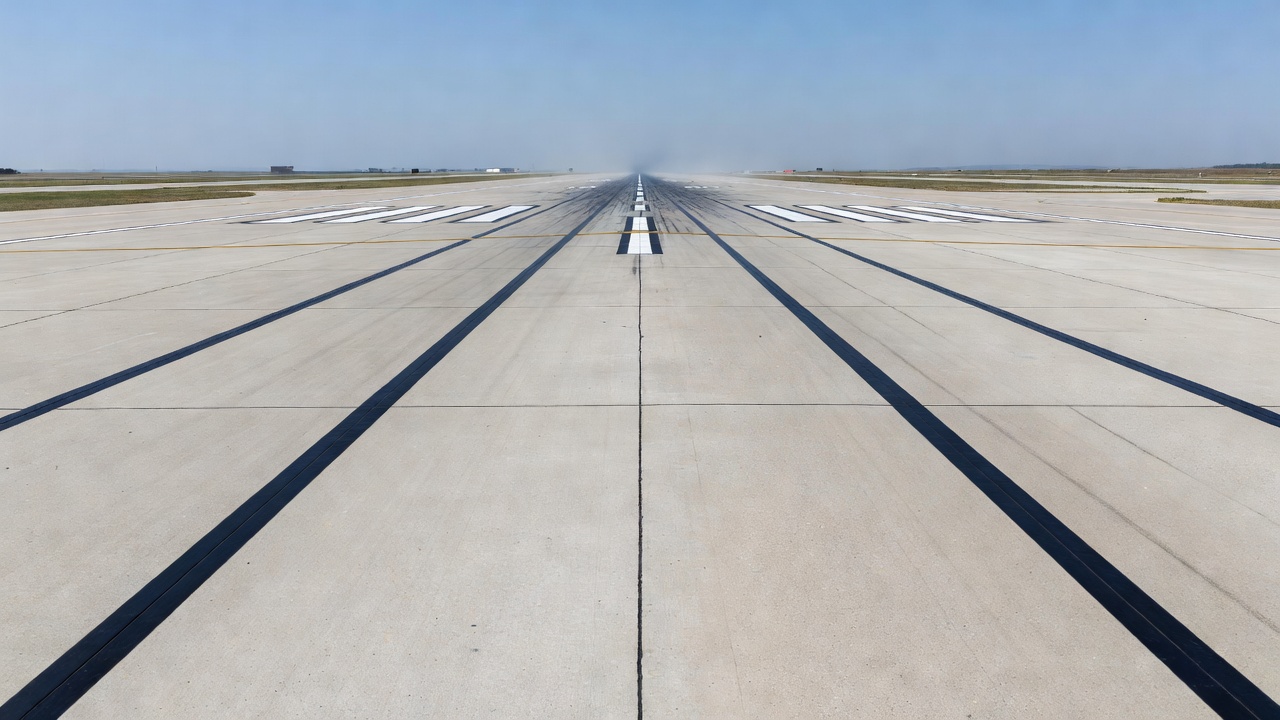
The physical form of a preformed compression seal is a rectangular or nearly rectangular extrusion with a complex internal structure. The external faces that contact the concrete joint walls are typically smooth or lightly textured, while the interior of the extrusion contains a series of interconnected webs and voids forming an internal cellular baffle system. The modern industry standard is the six-cell design, which emerged through research and field experience in the mid-1990s as the configuration providing optimal balance of outward force, flexibility to follow joint movement, and resistance to vertical displacement under traffic. Earlier designs with four cells or simpler internal geometries proved less durable under repeated heavy aircraft and truck loading. The internal cells create what is essentially a honeycomb of neoprene that acts as a series of tiny springs, when the seal is compressed laterally during installation, every web within the extrusion deforms elastically and continuously attempts to return to its original shape, generating the sustained outward pressure that maintains the waterproof seal.
The external chemical and environmental resistance of polychloroprene is essential for pavement applications. Neoprene resists degradation from ozone, a particularly aggressive atmospheric oxidant that attacks most natural and synthetic rubbers, as well as ultraviolet radiation from sunlight. It is highly resistant to jet fuel (Jet A, Jet A-1, JP-8), aviation gasoline, hydraulic fluids (including phosphate ester Skydrol), de-icing and anti-icing chemicals (potassium acetate, propylene glycol, sodium formate), engine oils, and the general range of petroleum-derived products encountered on airfield and highway pavements. The material’s service temperature range of approximately -40°F to 180°F (-40°C to 82°C) covers the full spectrum of climatic conditions from Arctic winter to desert summer. Hardness is typically specified at 55 ± 5 durometer (Shore A) per ASTM D2628, providing sufficient rigidity to resist stone and debris intrusion while remaining flexible enough to follow joint movement cycles.
How Compression Seals Work
The operating principle of a preformed compression seal distinguishes it fundamentally from every other pavement joint sealing technology. A compression seal is installed with its lateral dimension mechanically reduced, typically by 40% to 60%, and inserted into a saw-cut joint reservoir that is narrower than the seal’s relaxed width. Once the installation tool releases the seal within the joint, the elastomer expands laterally until it contacts both concrete faces. At this point, the seal is partially compressed between the joint walls and exerts a continuous outward force against them. This outward force is the sole mechanism of waterproofing, the seal physically blocks water, incompressible debris, and chemicals from entering the joint by maintaining intimate contact pressure between the neoprene faces and the concrete joint walls.
The seal must perform across the full annual range of joint movement. Concrete pavements expand in summer heat and contract in winter cold. For a typical 20-foot (6.1-meter) slab length with a thermal coefficient of approximately 5.5 × 10⁻⁶ in/in/°F for Portland cement concrete, a temperature swing of 100°F (56°C) produces approximately 0.13 inches (3.3 mm) of length change. Joints open wider in cold weather and close in hot weather. A properly sized compression seal must maintain between 20% and 50% compression at all pavement temperatures. At 50% compression, the seal delivers its maximum outward force, at 20% compression, when the joint is at its widest, typically in the coldest weather, the seal must still exert sufficient force to maintain a waterproof contact with the joint faces. If the joint opens beyond the point where compression drops below approximately 15%, the seal can lose contact and allow water entry. Conversely, if the joint closes to the point where compression exceeds approximately 55-60%, the seal may buckle upward or be extruded from the joint by the excessive compressive forces.
The internal web structure of the seal governs this performance. In a six-cell design, the interior webs buckle in a controlled manner when compressed, distributing the compressive force across the full height of the seal. This prevents stress concentrations that could lead to localized collapse of the internal structure. The webs also provide vertical stiffness, resisting the tendency of traffic loads to push the seal deeper into the joint or pull it upward through suction effects from passing tires. The top surface of the seal sits below the pavement surface, typically 0.25 to 0.50 inch (6 to 13 mm), in a recessed position that protects it from direct tire contact while still providing a path for surface water to flow across the joint without pooling.
Unlike liquid sealants that must stretch and deform as the joint opens and closes, a mechanism that induces tensile stresses at the bond line between sealant and concrete, compression seals remain in compression throughout all movement cycles. The seal never pulls on the joint edges. This compressive-only stress regime is the key reason compression seals dramatically reduce joint spalling compared to adhesive-dependent sealants. Liquid sealants transfer movement-induced tensile forces into the concrete at the bond line, and these tensile forces can initiate and propagate micro-cracks that eventually spall the top edges of the joint. Compression seals apply only compressive force to the concrete, which the concrete resists without distress.
Installation Process
The installation of preformed compression seals follows a defined sequence that requires specialized equipment, precise joint preparation, and attention to ambient conditions. Each step directly affects the seal’s long-term performance.
Joint Cleaning and Preparation. After saw-cutting the joint reservoir to the specified width and depth, discussed in detail in the sizing section below, the joint faces must be thoroughly cleaned. New concrete joints should be abrasive-blasted (sandblasted or shot-blasted) to remove laitance, the weak cement paste layer that forms on saw-cut surfaces. Existing joints being resealed require removal of all old sealant material, followed by light abrasive blasting or high-pressure water blasting to produce clean, sound concrete surfaces. Any spalled, loose, or deteriorated concrete must be removed and repaired before seal installation. The joint must be completely dry, free of standing water, dust, oil, and debris. Compressed air is typically used as the final cleaning step, blowing the joint reservoir clear of all particulate matter.
Lubricant-Adhesive Application. A neoprene-based lubricant-adhesive conforming to ASTM D2835 is applied to both faces of the joint immediately before seal insertion. The term “lubricant-adhesive” accurately describes the dual role of this material. As a lubricant, it reduces friction during insertion, allowing the compressed seal to slide into the joint without binding, tearing, or abrading against the concrete surfaces. As an adhesive, it fills microscopic surface irregularities in the joint face and provides a supplementary bond that enhances the mechanical compression seal. The material is a solvent-based neoprene cement that is brushed or sprayed onto both joint faces in a thin, uniform coat. It remains tacky during the installation window and cures through solvent evaporation over approximately 20 to 30 minutes at ambient temperatures above 50°F (10°C). Installation must not proceed if the lubricant-adhesive has dried beyond its tacky state before the seal is inserted.
Mechanical Insertion. The seal is installed using a purpose-built compression tool, known commercially by trade names such as the Delastall Kompressor (D.S. Brown), that grips the seal, compresses it laterally to the required width, and feeds it into the joint at the correct depth. The tool typically consists of a set of rollers or guides that progressively squeeze the seal as it passes through, combined with a depth-control shoe or wheel that rides on the pavement surface and positions the seal at the specified recess depth. The installation tool may be hand-operated for small projects or self-propelled for production work on highways and runways. The seal is fed from continuous coils or reels and is installed as a single continuous length for each joint segment.
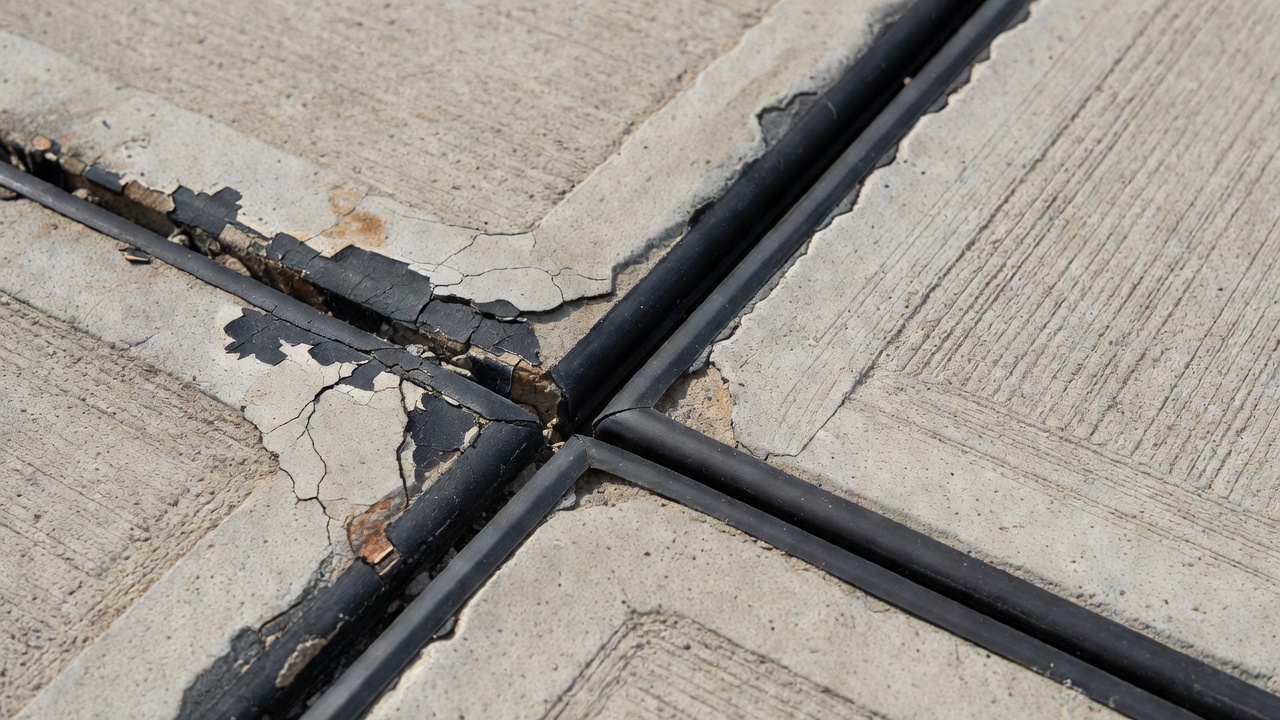
A critical installation parameter is stretch control. The seal must not be stretched longitudinally during installation. Stretching reduces the cross-section of the extrusion, which in turn reduces the lateral compression force and compromises the seal. Industry practice limits stretch to less than 4% of the relaxed length. The installation tool is designed to feed the seal into the joint without tension, and installers must ensure that the seal reel or coil pays out freely without resistance.
Joint Intersection Treatment. At locations where transverse joints intersect longitudinal joints, a specific sequence is followed. The longitudinal seal is installed first through the intersection and allowed to cure for approximately 20 minutes. It is then carefully cut at the exact center of the transverse joint using a sharp knife. The transverse seal is then installed as a continuous length through the intersection, butting against the cut ends of the longitudinal seal. This sequence ensures that the transverse seal, which typically experiences greater movement, runs uninterrupted, while the longitudinal seal is properly terminated at the intersection.
Field Splicing. When two lengths of seal must be joined within a continuous joint, the splice is made using a cyanoacrylate adhesive (superglue formulation specifically designed for neoprene). The adhesive is applied to the internal webs of both seal ends, and the ends are pressed together to create a neoprene-to-neoprene bond with a minimum strength of 400 psi (2.76 MPa). Butt splices should be made at locations away from wheel paths where possible, and splices should be inspected after curing to confirm bond integrity.
Sizing and Joint Preparation
Correct sizing of the joint reservoir and selection of the appropriate seal cross-section are the most critical design decisions affecting compression seal performance. A seal that is too narrow for the joint will fail to maintain compression during cold-weather joint opening. A seal that is too wide may buckle during hot-weather joint closing or may be impossible to install without damage.
Joint Reservoir Width. The saw-cut width for the seal reservoir is determined by the structural joint width of the pavement plus considerations for expected movement range. For new construction, the typical reservoir width for highway and airfield contraction joints ranges from 0.25 to 0.50 inch (6 to 13 mm). The seal is then selected from the manufacturer’s sizing table based on the reservoir width and the calculated range of joint movement. Manufacturer tables correlate joint width at installation temperature, expected movement range, and the appropriate seal model number. As a general rule, the installed seal should be compressed between 30% and 50% at the temperature of installation. For example, a joint reservoir saw-cut to 0.375 inch (9.5 mm) wide might receive a seal with a relaxed (uncompressed) width of 0.75 to 0.875 inch (19 to 22 mm), providing approximately 50% compression at the time of installation.
Joint Reservoir Depth. The depth of the saw-cut reservoir must accommodate the full height of the compressed seal plus the required recess below the pavement surface. Typical compression seals for highway and airport use have a height of 1.0 to 1.5 inches (25 to 38 mm). Adding the surface recess of 0.25 to 0.50 inch (6 to 13 mm) yields a total reservoir depth of 1.375 to 2.0 inches (35 to 50 mm). The saw-cut depth must be uniform along the entire joint length, variations in depth cause variations in seal recess, which can expose the seal to tire contact in shallow areas or create debris-trapping depressions in deep areas.
Edge Chamfering. After saw-cutting, the top edges of the joint should receive a small chamfer, typically 0.125 to 0.25 inch (3 to 6 mm) at 45 degrees, using a narrow grinding wheel or specialized chamfering tool. This chamfer eliminates the sharp 90-degree edge at the top of the saw cut, which is highly vulnerable to spalling under traffic. The chamfer creates a more durable edge profile and provides a slight bevel that guides surface water away from the seal.
Width-to-Depth Ratio. The joint reservoir must maintain an appropriate width-to-depth ratio, generally not exceeding 1:1. A joint that is wide relative to its depth produces high strain in the sealant (for liquid sealants) or insufficient confinement (for compression seals). For compression seals specifically, the reservoir walls must be parallel and vertical. Tapered or irregular joint faces prevent the seal from making uniform contact and create leakage paths. The saw-cut faces must also extend deep enough that the seal contacts freshly cut concrete below any surface spalling or rounding at the pavement surface.
Advantages: No Adhesive, Long Life, Simple Installation
Preformed compression seals offer a distinct set of operational and performance advantages compared to all other pavement joint sealing technologies. These advantages have made them the standard choice for critical infrastructure, particularly airport runways and taxiways, interstate highways, and major bridge decks, where joint failure has severe operational and safety consequences.
No Reliance on Adhesion. The single most fundamental advantage of compression seals is that they function independently of adhesive bond strength. Liquid sealants, both cold-applied silicone and hot-pour types, must achieve and maintain a chemical bond to the concrete joint faces. This bond is vulnerable to numerous failure mechanisms: moisture during installation prevents proper adhesion, dust and laitance on the joint face create weak boundary layers, tensile stresses from joint opening progressively fatigue the bond line, and chemical attack from fuels and de-icers can debond the sealant from the concrete. Compression seals sidestep all of these failure modes entirely. The seal is held in place by its own mechanical outward force, not by a chemical bond. Even if the lubricant-adhesive degrades over time, the seal continues to function through compression alone. Field studies of compression seal installations that have been in service for 25+ years confirm that the primary waterproofing mechanism, mechanical compression, persists long after any supplementary adhesive bond has aged away.
Extended Service Life. The 15-to-30-year service life of properly installed compression seals is approximately three times longer than that of silicone sealants (5-10 years) and four to five times longer than hot-pour sealants (3-8 years). This longevity differential has been validated through decades of pavement management data. The AASHTO Pavement ME Design software (formerly MEPDG) uniquely recognizes compression seals as a joint sealing category that positively contributes to predicted pavement performance life, while liquid sealants are modeled only as a maintenance item with no structural benefit. The extended service life translates directly to lower lifecycle cost. Although compression seals have a higher material cost per linear foot than liquid sealants, typically 2 to 3 times the initial material expense, the dramatically reduced frequency of replacement makes them the most cost-effective option over a 30-year pavement design life when factoring in traffic control, joint preparation, labor, and disposal costs for each replacement cycle.
Weather-Independent Installation. Liquid sealants are notoriously sensitive to installation conditions. Silicone sealants require dry joint faces and often mandate minimum pavement temperatures (typically above 40°F/4°C) for proper curing. Hot-pour sealants require the joint to be completely dry and the pour temperature to be precisely controlled, too hot and the sealant thermally degrades, too cool and it fails to wet the joint faces. Compression seals can be installed in conditions where liquid sealants cannot: damp (but not wet) joints, cold weather, and even light precipitation. The lubricant-adhesive does require a minimum temperature, typically above 35°F (2°C) for proper solvent evaporation, but this is less restrictive than the combined temperature and moisture requirements for liquid alternatives.
Zero Cure Time. Compression seals require no heating, no mixing, no on-site compounding, and no curing period. Once the seal is installed in the joint, it is immediately functional. The pavement can be opened to traffic as soon as the installation crew clears the lane, there is no waiting period for the sealant to cool, cure, or develop strength. This is a significant operational advantage for airport applications, where runway and taxiway closures are measured in hours and any extension of closure time has direct operational and financial consequences. An airport runway joint sealing project using compression seals can typically progress at 3,000 to 5,000 linear feet per shift with a crew of 4 to 6 workers using powered installation equipment.
Resistance to Chemical Attack. The polychloroprene compound used in ASTM D2628 compression seals is specifically formulated to resist the chemical environment of airfield and highway pavements. Jet fuel, which rapidly degrades many sealant types, particularly asphalt-based hot-pour sealants which can be partially dissolved by fuel spills, has no effect on cured neoprene. De-icing fluids (potassium acetate, sodium acetate, sodium formate, propylene glycol, urea), which are used in large quantities on airport pavements and can chemically attack some silicone formulations, are similarly resisted. Hydraulic fluids including the aggressive phosphate ester-based Skydrol used in large aircraft do not soften or swell the neoprene compound.
Reduced Joint Spalling. Because compression seals exert only compressive force on the joint walls, they do not contribute to the tensile-stress-induced spalling mechanism that afflicts liquid sealants. When a liquid sealant bonds to both faces of a joint and the joint opens in cold weather, the sealant stretches and pulls on the concrete edges. Over thousands of thermal cycles, this repeated tensile loading initiates fatigue micro-cracking at the joint edge, eventually causing sliver spalls, thin pieces of concrete that break away from the top corners of the joint. These spalls widen the joint opening, further stressing the sealant, and create Foreign Object Debris (FOD) that is a critical hazard on airfields. Field surveys consistently show lower rates of joint-edge spalling in pavements sealed with compression seals compared to those sealed with adhesive-dependent liquid sealants.
Performance and Durability
The long-term performance of preformed compression seals depends on the interaction of material properties, installation quality, joint movement characteristics, and environmental exposure. When all factors are favorable, service lives exceeding 25 years are routinely documented. When any factor is compromised, performance degrades predictably through well-understood failure modes.
Compression Set and Relaxation. The most important long-term material property governing seal performance is resistance to compression set. Over years of continuous compression between the joint walls, all elastomeric materials undergo some degree of permanent deformation, they “take a set” and lose a portion of their outward force. ASTM D2628 limits compression set to a maximum of 35% when tested per ASTM D395 Method B (70 hours at 212°F/100°C). High-quality production seals typically achieve values below 25%. This means that after years of service, the seal retains 65-75% or more of its original outward force. At this retained force level, the seal continues to maintain adequate contact pressure against the joint walls. However, if the seal was undersized at installation, operating at the low end of the 20-50% compression range, even modest compression set can eventually drop the compressive force below the threshold needed for waterproofing.
Traffic-Induced Degradation. Under repetitive heavy vehicle and aircraft loading, the pavement slabs deflect vertically at joints, causing differential movement that works the seal. Compression seals resist this pumping action through their internal web structure, which provides vertical stiffness to counteract the tendency of the seal to be pushed down into the joint or pulled upward. However, if the joint reservoir is cut too wide, allowing the seal to operate at less than 20% compression, the reduced confinement permits vertical movement of the seal within the joint. Once the seal begins moving vertically, debris and water can bypass it, and the seal may eventually work its way out of the joint entirely.
Weathering and Environmental Attack. Polychloroprene has inherently good weathering resistance, but it is not immune to long-term environmental degradation. Over decades of UV exposure, the exposed top surface of the seal (visible in the recessed joint) may develop surface oxidation and minor cracking. This surface degradation is typically cosmetic and does not affect the functional portion of the seal that is protected within the joint. Ozone attack, which causes deep cracking in unprotected natural rubber and some synthetic elastomers, is resisted by the antiozonant compounds incorporated into the neoprene formulation. In areas with exceptionally high atmospheric ozone concentrations, such as heavily polluted urban environments, surface degradation may be accelerated, but the bulk properties of the seal within the joint remain unaffected.
Debris Intrusion and Incompressibles. One of the most common functional failure modes for compression seals is the accumulation of incompressible materials, sand, fine gravel, pavement detritus, between the top of the seal and the pavement surface. These materials, packed into the joint recess by traffic, prevent the seal from expanding upward when the joint closes in warm weather. Instead of the seal expanding into the recess as designed, the confined incompressible material forces the seal downward or creates internal stress concentrations that can buckle the internal webs. Proper recess depth (0.25-0.50 inch) and periodic cleaning of the joint recess, typically coincident with pavement sweeping operations, prevent this failure mode.
Condition Assessment in Inspection
Systematic inspection of compression seal joints is an integral component of pavement management programs for both highway agencies and airport operators. Condition assessment follows established protocols that classify seal condition into defined rating categories, enabling data-driven maintenance and replacement decisions.
Visual Inspection Criteria. The inspector examines each joint or a statistically representative sample of joints for specific distress indicators. The primary distress types for compression seals, as defined in both ASTM D6433 (Standard Practice for Roads and Parking Lots Pavement Condition Index Surveys) and the FAA PAVEAIR pavement management system, include:
Seal Loss or Extrusion. The seal has been partially or completely dislodged from the joint. This is the most severe distress category because it represents a complete loss of joint sealing function at that location. Seal loss typically begins at isolated points, often at joint intersections or where the seal was damaged during installation, and may propagate along the joint if not addressed. The condition is rated by the percentage of the joint length affected.
Seal Debonding. The seal has separated from one or both joint walls, creating a visible gap between the neoprene face and the concrete. Debonding indicates that compression has dropped below the threshold needed for waterproofing. Typically caused by undersizing, excessive compression set, or joint widening beyond the seal’s design range due to concrete shrinkage or thermal effects.
Longitudinal Cracking or Tearing. The top surface of the seal shows cracks running parallel to the joint, indicating ozone or UV surface attack, or tears perpendicular to the joint axis caused by mechanical damage during installation or by debris impact. Surface cracking alone may not warrant replacement if the seal remains compressed and waterproof, but it signals advancing material degradation.
Incompressible Debris Accumulation. The joint recess above the seal is packed with sand, stone chips, or other debris that prevents seal expansion. This condition is rated by the depth of debris accumulation relative to the seal recess depth. Joints more than 50% filled with incompressibles require cleaning, if the seal has been damaged by the packed debris, replacement may be necessary.
Joint Spalling Adjacent to Seal. Spalling of the concrete edges at the joint indicates that the seal has not prevented water and debris intrusion, leading to incompressible-related spalling, or that excessive joint movement has overstressed the concrete. Spalls wider than approximately 1 inch (25 mm) typically prevent the seal from maintaining compression, as the effective joint width at the spall location exceeds the seal’s design range.
Condition Rating Systems. Most agencies use a three or four-level condition rating:
| Rating | Description | Action Required |
|---|---|---|
| Good | Seal intact, fully compressed, no visible gaps, recess clean and at correct depth, no adjacent spalling | Routine monitoring |
| Fair | Minor surface weathering, slight debris in recess (<25% depth), hairline gap at one face affecting <10% of joint length | Schedule cleaning and monitor |
| Poor | Partial debonding, moderate debris, surface cracks, small adjacent spalls (<1 inch) | Plan replacement within 1-2 years |
| Failed | Loss of seal, extrusion, full-depth debonding, large spalls, water pumping evidence at joint | Immediate replacement required |
For airfield pavements, the FAA’s PAVEAIR system incorporates joint seal condition into the overall Pavement Condition Index (PCI) calculation for rigid pavements. Each joint seal distress type carries a defined deduct value that reduces the PCI score. Airports use PCI trends to program seal replacement projects, typically targeting a PCI threshold below which the rate of pavement deterioration accelerates due to water infiltration through failed joints.
Inspection Frequency. Highway agencies typically inspect joint seals as part of biennial pavement condition surveys. Airports operating under Part 139 (FAA) or equivalent international regulations conduct more frequent inspections, typically quarterly for primary runways and taxiways, with specific attention to joint seal condition as a FOD prevention measure. After significant weather events (heavy rain, freeze-thaw cycles, extreme heat), supplemental inspections focus on joints that may have been stressed beyond normal operating conditions.
Airport Applications
Airport concrete pavements represent the most demanding application for preformed compression seals and the environment where their performance advantages produce the greatest operational benefit. Runway and taxiway joint sealing must satisfy requirements that go beyond those for highway pavements in several critical respects.
FOD Prevention Imperative. The absolute requirement to eliminate Foreign Object Debris from aircraft operating areas makes joint seal integrity a safety-critical function. A failed joint seal allows water to enter the pavement structure, leading to subgrade softening, loss of support, and eventual spalling of the joint edges. Even a small concrete spall, a piece of concrete the size of a coin, ingested into a jet engine can cause damage measured in millions of dollars. Failed seal material that extrudes from the joint and lies loose on the pavement surface presents a similar ingestion hazard. Compression seals, with their zero-reliance on adhesion and their compressive stress regime that minimizes spalling, provide the most FOD-resistant joint sealing solution available.
Fuel and Chemical Resistance. Aircraft fueling operations, particularly at apron and taxiway holding positions, expose joint seals to Jet A/A-1 fuel spillage on a daily basis. Hot-pour asphalt-based sealants are partially soluble in jet fuel and soften and degrade when repeatedly exposed. Silicone sealants resist fuel but are susceptible to softening from the phosphate ester hydraulic fluids used in large aircraft systems. Neoprene compression seals per ASTM D2628 resist the full spectrum of airfield chemicals, fuels, hydraulic fluids, engine oils, de-icing and anti-icing formulations, and runway rubber removal chemicals, without measurable softening, swelling, or degradation.
FAA and ICAO Regulatory Framework. The governing FAA specification for airfield pavement joints is FAA P-604, contained within Advisory Circular AC 150/5370-10 (Standard Specifications for Construction of Airports). P-604 references ASTM D2628 for compression seal material requirements and specifies installation procedures including joint cleaning, lubricant-adhesive application, and depth control. The U.S. Army Corps of Engineers specification CRD-C 548 provides an alternative but equivalent standard used for military airfields under Unified Facilities Criteria UFC 3-260-02 (Pavement Design for Airfields).
ICAO addresses joint sealing indirectly through Doc 9157 Part 3 (Aerodrome Design Manual, Pavements, 3rd Edition, 2022). The current edition moved detailed joint construction guidance to Appendix 6, while Chapter 4 defers pavement design and joint detailing to individual State practices, referencing the United States (FAA), France (STAC), and the United Kingdom as the primary State practice references. ICAO Annex 14, Volume I contains high-level surface condition requirements that mandate pavement joints be maintained free of harmful irregularities and FOD, establishing the operational requirement that joint seals must satisfy but not prescribing the specific seal technology.
Installation on Operational Airfields. Airport joint sealing projects must be executed within the constraints of available runway and taxiway closure windows. Compression seals are particularly well-suited to this environment because of their rapid installation rate and zero cure time. A typical night-time runway closure window of 6 to 8 hours allows a production crew to seal 2,000 to 4,000 linear feet of joints, sufficient to complete the transverse joints in one runway segment. The runway is returned to service immediately upon completion of the shift with fully functional seals. Liquid sealants, by contrast, require cure time that may extend beyond the available closure window, or they may be vulnerable to jet blast and fuel spillage before full cure is achieved.
Case Example: Lubbock Preston Smith International Airport. A representative application involved the replacement of failed liquid-pour sealants that had degraded from water intrusion, debris accumulation, and jet fuel exposure. The project involved widening existing joints to a uniform width using a saw-cutting operation, adding a 0.25-inch chamfer to the joint edges, cleaning all joint faces by abrasive blasting, and installing D.S. Brown Delastic neoprene compression seals throughout the affected taxiway and apron areas. The result was a joint sealing system with projected service life exceeding 20 years, improved surface drainage characteristics (the recessed seal profile channels water across the joint rather than pooling it), and dramatically reduced maintenance requirements compared to the replaced liquid sealant system.
Comparison with Silicone and Hot-Pour Sealants
Selecting the appropriate joint sealing technology for a concrete pavement project requires an objective comparison of the three primary options: preformed compression seals, cold-applied silicone sealants, and hot-pour thermoplastic sealants. Each has a defined set of performance characteristics, cost profiles, and application suitability criteria.
Silicone Sealants are single-component or multi-component elastomeric materials that cure through moisture-activated crosslinking after being pumped into the prepared joint. The cured silicone forms a rubber-like solid that bonds chemically to the joint faces. Silicone offers excellent elongation capability (often 200-400%) allowing it to stretch with joint movement without tearing. However, this elongation comes at a cost: the tensile force transmitted to the concrete bond line increases with stretch, contributing to the adhesive/cohesive failure cycle. Silicone is also moisture-sensitive during installation, any moisture on the joint face prevents proper adhesion, and requires the joint faces to be primed in most applications. Service life in pavements typically ranges from 5 to 10 years, with failure commonly manifesting as adhesive debonding from one or both joint faces.
Hot-Pour Sealants are thermoplastic materials, typically polymer-modified asphalt or coal tar formulations, that are heated to 350-400°F (175-205°C) in specialized melters and poured into the joint in liquid form, where they cool and solidify. They are the lowest initial-cost option and have been the most widely used pavement joint sealant for decades. However, hot-pour sealants have significant limitations. Their performance is highly temperature-dependent: at low temperatures they become brittle and lose adhesion, at high temperatures they soften and can be tracked out of the joint by traffic. They are susceptible to degradation from fuels and solvents. Their elongation capacity is limited (typically 25-50%), meaning they cannot accommodate large joint movements without failing. Service life is the shortest of the three options at 3 to 8 years. Replacement is labor-intensive because the old material must be completely removed from the joint faces, hot-pour sealants do not bond well to previously sealed surfaces.
Comparison Matrix:
| Attribute | Preformed Compression Seal | Silicone Sealant | Hot-Pour Sealant |
|---|---|---|---|
| Sealing mechanism | Mechanical compression | Chemical adhesion | Chemical adhesion |
| Typical material cost (relative) | 2.5-3.5× | 1.5-2.5× | 1.0× (baseline) |
| Service life | 15-30 years | 5-10 years | 3-8 years |
| Lifecycle cost (30-year) | Lowest | Medium | Highest |
| Joint movement capacity | 20-50% compression range | 25-50% extension | 10-25% extension |
| Installation temperature limits | Above 35°F (2°C) | Above 40°F (4°C), dry | Above 40°F (4°C), dry joint |
| Cure time before traffic | None (immediate) | 1-24 hours (moisture-dependent) | 30-60 minutes (cooling) |
| Fuel resistance | Excellent | Good to excellent | Poor to fair |
| Joint wall stress mode | Compressive only | Tensile | Tensile |
| Spalling contribution | Minimal | Moderate | Moderate to high |
| Resealing difficulty | Low (remove, clean, install new) | High (complete removal required) | High (complete removal required) |
| Weather during installation | Damp-tolerant | Must be dry | Must be dry |
| AASHTO Pavement ME recognition | Extends pavement life | No structural benefit | No structural benefit |
Selection Guidance. Preformed compression seals are the preferred choice for: airport runways, taxiways, and aprons, major interstate highways with high traffic volumes, concrete pavements in regions with large annual temperature swings, locations where construction closure time is severely limited, and any pavement where the cost of joint failure, in terms of FOD risk, water damage to the pavement structure, or traffic disruption, is high relative to the incremental material cost of the seal. Silicone sealants are appropriate for: moderate-traffic pavements where compression seal cost is not justified, bridge joints where the seal must accommodate unusually large movements, and applications requiring a seal that can be color-matched to the surrounding pavement. Hot-pour sealants remain viable for: low-traffic rural roads, temporary construction joints, and applications where budget constraints override lifecycle cost considerations.
Installation Cost Context. The installed cost of compression seals includes the seal material (priced per linear foot based on cross-section), the lubricant-adhesive, the amortized cost of specialized installation equipment, and labor. For a typical highway or airfield project, the installed cost of compression seals is approximately $1.50 to $3.00 per linear foot above the cost of silicone and $2.00 to $4.00 above hot-pour. On a 10,000-linear-foot project, roughly the transverse joint length for one runway segment, this represents a premium of $15,000 to $40,000 over liquid alternatives. Against a pavement replacement cost of $5 to $15 million per runway (or $2 to $5 million per lane-mile for interstate highway reconstruction), and considering that compression seals may need one replacement in 30 years versus 3-5 replacements for liquid sealants, the lifecycle cost advantage decisively favors compression seals for all but the most budget-constrained projects.
Standards and Specifications Summary
| Standard | Title | Scope |
|---|---|---|
| ASTM D2628 | Standard Specification for Preformed Polychloroprene Elastomeric Joint Seals for Concrete Pavements | Material properties, physical requirements, test methods for compression seals |
| ASTM D2835 | Standard Specification for Lubricant for Installation of Preformed Compression Seals in Concrete Pavements | Lubricant-adhesive material requirements and test methods |
| ASTM D3542 | Standard Specification for Preformed Polychloroprene Elastomeric Joint Seals for Bridges | Similar to D2628 but for bridge expansion joint applications |
| ASTM D6433 | Standard Practice for Roads and Parking Lots Pavement Condition Index Surveys | Distress identification and PCI calculation including joint seal condition |
| FAA P-604 | Joint Sealing, Preformed Compression Seals (within AC 150/5370-10) | Airfield-specific installation and material requirements |
| CRD-C 548 | U.S. Army Corps of Engineers Specification for Compression Joint Seals | Military airfield application standard |
| UFC 3-260-02 | Pavement Design for Airfields | Unified Facilities Criteria referencing compression seal specifications |
| AASHTO M220 | Preformed Polychloroprene Elastomeric Joint Seals for Concrete Pavements | AASHTO equivalent of ASTM D2628 |
| ICAO Doc 9157 Part 3 | Aerodrome Design Manual, Pavements | Defers to State practices (FAA for U.S.) for joint seal specifications |
| ICAO Annex 14 Vol. I | Aerodrome Design and Operations | High-level requirement that joints be maintained free of harmful irregularities |
Frequently Asked Questions
- What is a preformed compression seal made of?
- Preformed compression seals are manufactured from polychloroprene (neoprene) synthetic rubber conforming to ASTM D2628. This elastomer is specifically formulated for outstanding resistance to ozone, ultraviolet radiation, weathering, petroleum-based fluids including jet fuel and hydraulic oils, and temperature extremes from -40°F to 180°F (-40°C to 82°C). The seal features an internal cellular web structure, typically a six-cell design, that provides the continuous outward compressive force against the joint walls.
- How long do preformed compression seals last?
- Preformed compression seals typically deliver 15 to 30 years of service life when properly sized and installed. This is significantly longer than liquid sealants such as silicone (5-10 years) or hot-pour sealants (3-8 years). AASHTO Pavement ME Design software recognizes compression seals as the only joint sealant type that demonstrably extends pavement performance life, making them the lowest lifecycle-cost option despite higher initial material expense.
- Do preformed compression seals require adhesive to work?
- No. Preformed compression seals function primarily through mechanical compression, the seal is installed in a compressed state and continuously pushes outward against the joint walls to maintain a waterproof barrier. While a lubricant-adhesive conforming to ASTM D2835 is used during installation, its primary purpose is to reduce friction during insertion and fill minor surface irregularities in the joint face. The seal does not depend on adhesive bond strength for long-term performance, unlike silicone and hot-pour sealants that rely entirely on adhesion.
- What joint widths can preformed compression seals accommodate?
- Preformed compression seals are manufactured for joint widths typically ranging from 0.5 inch (13 mm) to 4 inches (100 mm), depending on the manufacturer and product line. The seal must be sized to maintain 20% to 50% compression at all pavement temperatures. For example, a seal specified for a 1-inch joint might have a nominal uncompressed width of 1.5 to 2 inches. Manufacturer sizing tables correlate expected joint movement ranges with the appropriate seal model and dimensions. Proper sizing is critical, an undersized seal loses compression and leaks, an oversized seal may buckle or be extruded from the joint.
- What standards govern preformed compression seals for airport pavements?
- The primary standard is ASTM D2628 (Standard Specification for Preformed Polychloroprene Elastomeric Joint Seals for Concrete Pavements). For airport applications, FAA specification P-604 within AC 150/5370-10 governs joint seal materials and installation. The U.S. Army Corps of Engineers specification CRD-C 548 also applies. ICAO Doc 9157 Part 3 (Aerodrome Design Manual, Pavements) references State practices that include these standards for joint sealing in airfield concrete pavements.