What is Radius?
Radius – In-Depth Circle Terminology and Applications
The radius (symbol: r) is the foundational measurement in circle geometry, defined as the constant distance from the center of the circle to any point on its circumference. This seemingly simple concept unlocks the calculation of virtually every other property of circles and spheres and underpins countless real-world applications, from engineering and navigation to airspace management and design standards in aviation.
Fundamental Definitions and Relationships
Radius: The Core of a Circle
A circle is the set of all points in a plane that are at a constant distance, called the radius, from a fixed point, the center. If O is the center and A is any point on the circle, OA is the radius. All radii in a circle are congruent, and the radius is measured in units of length (meters, feet, nautical miles, etc.) consistent with application requirements.
Mathematically:
- If center is at (h, k):
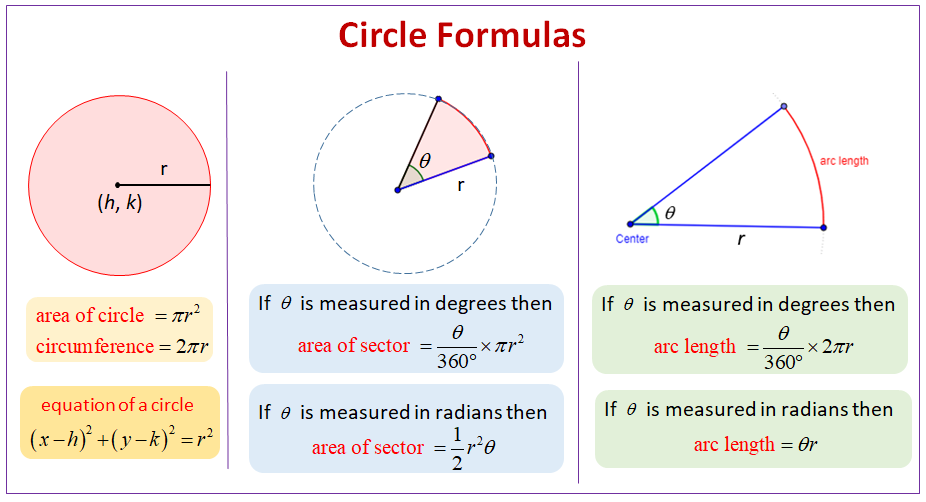
(x – h)² + (y – k)² = r²
Diameter
The diameter is the longest distance across the circle, passing through the center. It is always twice the radius:
- d = 2r
The diameter is used interchangeably with the radius in many formulas.
Circumference
The circumference is the perimeter of the circle:
- C = 2πr or C = πd
Circumference is key in mapping, engineering, and navigation.
Area
The area enclosed by the circle is:
- A = πr²
Area scales with the square of the radius, so small changes in radius lead to significant area changes.
Extended Circle Terminology
Chord
A chord connects two points on the circumference without passing through the center (unless it is a diameter). Its length is determined by how close it is to the center:
- Chord length = 2√(r² – d²) (where d is the distance from center to chord)
Arc
An arc is a continuous part of the circle’s circumference between two points. Its length (l) is:
- l = rθ (θ in radians)
- l = (θ/360) × 2πr (θ in degrees)
Sector
A sector is the region enclosed by two radii and the arc between them. Its area is:
- A = (θ/360) × πr² (degrees)
- A = ½ r²θ (radians)
Segment
A segment is the area bounded by a chord and its enclosing arc. Its area is the sector’s area minus the triangle formed by the chord and radii.
Tangent
A tangent is a straight line that touches the circle at one point, perpendicular to the radius at that point.
Annulus
An annulus is the area between two concentric circles, with area:
- A = π(R² – r²)
Advanced Concepts and Applications
Radius of Curvature
For a perfect circle, the radius of curvature is equal to the radius at every point. For a general curve, it is the radius of the best-fitting circle at a given point:
- R = 1/κ, where κ is curvature.
Radius in Spherical Geometry
For a sphere, the radius is the distance from the center to any point on the surface. Example: Earth’s mean radius ≈ 6,371 km, vital for global navigation and aviation calculations.
Radius Vector
In polar coordinates, a point is described by (r, θ), with r as the radius and θ as the angle from a reference direction. The radius vector defines both distance and direction.
Scaling Laws
- Area scales with radius squared: doubling r quadruples area.
- Circumference scales linearly with r.
Aviation and ICAO Applications
MOCA Radius
The Minimum Obstacle Clearance Area (MOCA) radius is a critical aviation safety metric, defining the area around a fix or waypoint that must be free of obstacles per ICAO standards. The MOCA radius is determined by aircraft performance, navigation precision, and procedural requirements.
DME Arc
A DME arc procedure instructs pilots to fly a path maintaining a constant DME distance (i.e., radius) from a ground station. This enables efficient navigation around obstacles or airspace constraints.
Protected Airspace Radius
Protected airspace around navigation aids, runways, or fixes is defined by a specified radius, ensuring aircraft remain within safely cleared zones even under navigation errors or wind drift.
Nautical Mile (NM) and Statute Mile (SM)
- Nautical Mile (NM): 1,852 meters (standard for aviation and maritime navigation)
- Statute Mile (SM): 1,609.344 meters
Lateral distances in ICAO and aviation are almost always specified in NM.
ICAO and Cartographic Standards
ICAO documents (e.g., PANS-OPS, Annex 14) and aviation charts define many protected areas, holding patterns, and approach procedures using circular radii. Consistency in units and understanding of radius-based calculations are central to procedure design, obstacle clearance, and airspace safety.
Mathematical and Engineering Use Cases
- Circle Equation:
Defines all points at radius r from center (h, k). - Design:
Circular holding pads, helipads, taxiway turns, radar coverage. - Mechanical Engineering:
Gears, wheels, washers, and cam profiles.
Visualizations
Summary Table: Key Circle Properties
| Property | Formula | Units |
|---|---|---|
| Radius (r) | – | length |
| Diameter (d) | 2r | length |
| Circumference (C) | 2πr or πd | length |
| Area (A) | πr² | area |
| Arc Length (l) | rθ (radians), (θ/360)×2πr | length |
| Sector Area | ½r²θ (radians), (θ/360)πr² | area |
| Annulus Area | π(R² – r²) | area |
Real-World Relevance
Understanding the radius and its related geometric concepts is essential in:
- Aviation: Safe airspace design, procedure construction, obstacle clearance, navigation.
- Engineering: Construction, mechanical design, urban planning.
- Mathematics: Geometry, trigonometry, calculus, analytic geometry.
Further Reading and Resources
- ICAO Doc 8168 (PANS-OPS): icao.int
- Euclidean Geometry Textbooks
- Skybrary: skybrary.aero
- Online calculators and geometric drawing tools
Conclusion
The radius is more than a geometric abstraction: it’s a building block for safety, efficiency, and precision in aviation, engineering, and mathematics. Whether defining the boundaries of protected airspace, calculating the area for a construction project, or setting up a navigation procedure, understanding radius-based calculations is essential for professionals and students alike.
Frequently Asked Questions
- What is the radius of a circle?
- The radius of a circle is the straight-line distance from the center to any point on the circumference. It is a constant value for a given circle, and is half the length of the diameter. The radius is fundamental for calculating other properties such as area and circumference.
- How is the radius used in aviation?
- In aviation, the radius is critical for defining protected airspace zones, holding patterns, DME arcs, and obstacle clearance areas. ICAO procedures specify radii for various safety margins, ensuring aircraft remain clear of terrain and obstacles during different phases of flight.
- What is the formula to calculate the area of a circle using the radius?
- The area of a circle is calculated using the formula A = πr², where r is the radius. This formula shows that the area increases with the square of the radius.
- What tools are used to measure or calculate the radius?
- Rulers, calipers, and compasses are commonly used to measure the radius in physical objects. In technical applications, the radius can also be calculated from known values such as diameter, area, or circumference using mathematical formulas.
- What is a MOCA radius in aviation?
- MOCA stands for Minimum Obstacle Clearance Area. The MOCA radius is the prescribed distance around a navigation fix or waypoint in which obstacle clearance criteria must be met, ensuring aircraft safety in instrument procedures as defined by ICAO.
- How does the radius relate to the diameter and circumference?
- The diameter of a circle is always twice the radius (d = 2r), and the circumference is 2π times the radius (C = 2πr). Knowing the radius allows easy calculation of these other properties.
- What is a DME arc and how is radius involved?
- A DME arc is a flight path where an aircraft maintains a constant distance (the arc’s radius) from a ground-based DME station. The pilot uses navigation equipment to keep the aircraft at the specified radius throughout the arc.
- Can the concept of radius be applied to spheres?
- Yes, in three-dimensional geometry, the radius of a sphere is the distance from its center to any point on its surface. This is fundamental for calculations involving volume, surface area, and navigation over the Earth's surface in aviation.
This is a reference entry. TarmacView provides drone inspection services and doesn't sell the equipment or materials described in this glossary.