What is Reactive Powder Concrete (RPC) / Ultra-High Performance Concrete?
Reactive Powder Concrete (RPC), also known as Ultra-High Performance Concrete (UHPC), represents a fundamental advancement in cement-based materials technology. Developed in the early 1990s by Pierre Richard and Marcel Cheyrezy at the French engineering firm Bouygues, RPC was designed to overcome the inherent limitations of conventional concrete by achieving an exceptionally dense, homogeneous microstructure through optimized granular packing and extremely low water content. The term “reactive powder” refers to the finely ground constituents, cement, silica fume, and ground quartz, whose high surface area and chemical reactivity drive the formation of a dense calcium-silicate-hydrate (C-S-H) matrix with minimal capillary porosity. The FHWA defines UHPC as “a cementitious composite material composed of an optimized gradation of granular constituents, a water-to-cementitious materials ratio less than 0.25, and a high percentage of discontinuous internal fiber reinforcement,” with compressive strength greater than 150 MPa (21.7 ksi) and sustained post-cracking tensile strength greater than 5 MPa (0.72 ksi).
Definition and Distinction from Conventional High-Performance Concrete
The term Reactive Powder Concrete specifically describes a subset of UHPC whose composition relies on the chemical and physical reactivity of very fine particles, cement (average diameter ~15 µm), crushed quartz (~10 µm), and silica fume (0.1–0.5 µm), to produce a matrix with minimal internal defects. This contrasts with conventional High-Performance Concrete (HPC), which retains coarse aggregate (typically 10–20 mm maximum size), uses water/cement ratios between 0.30 and 0.40, and achieves compressive strengths in the 50–100 MPa range. The critical distinction lies in the design philosophy: HPC improves upon conventional concrete through reduced w/c ratio and chemical admixtures but retains a two-phase composite structure (aggregate + paste) where the interfacial transition zone (ITZ) between aggregate and paste remains the weakest link. RPC eliminates this weakness entirely by removing coarse aggregate and maximizing the packing density of the granular skeleton.
Per FHWA-HRT-06-103, the typical UHPC composition contains Portland cement at approximately 712 kg/m³ (28.5% by weight), fine sand (150–600 µm) at 1,020 kg/m³ (40.8%), silica fume at 231 kg/m³ (9.3%), ground quartz at 211 kg/m³ (8.4%), superplasticizer at 30.7 kg/m³ (1.2%), accelerator at 30.0 kg/m³ (1.2%), steel fibers at 156 kg/m³ (6.2%), and water at just 109 kg/m³ (4.4%). The water-to-binder ratio of approximately 0.15–0.22 is roughly half that of conventional HPC and one-third that of normal concrete. The European standard EN 1992-1-1 does not cover UHPC, necessitating project-specific specifications. The French Association of Civil Engineering (AFGC) published the first national UHPC design recommendations in 2002, revised in 2013, which served as the basis for many international provisions.
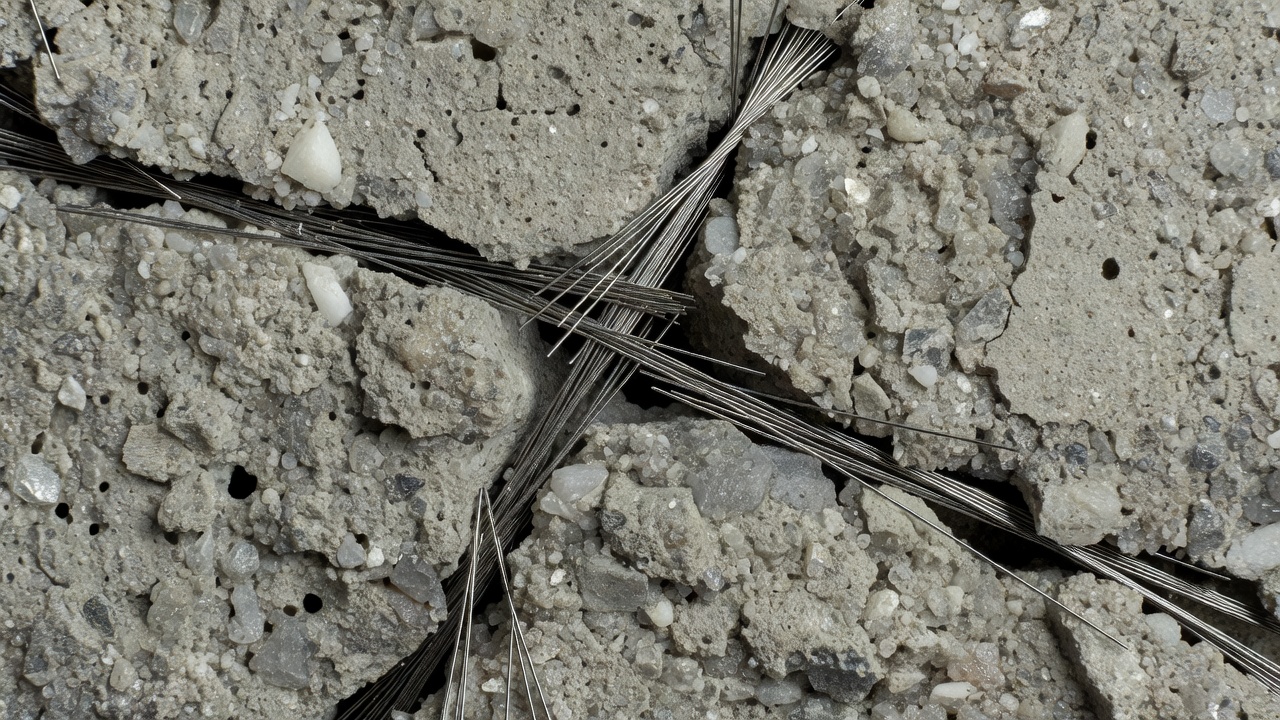
The post-cracking tensile behavior represents perhaps the most significant mechanical distinction. Conventional concrete exhibits brittle tensile failure with sudden loss of load capacity after cracking. UHPC with properly oriented steel fibers at 2–6% by volume shows strain-hardening behavior: after first cracking, tensile stress continues to increase as fibers bridge multiple fine cracks (multi-microcracking), reaching a peak tensile strength of 8–15 MPa before softening. This behavior is classified as “tensile strain-hardening” as defined by ACI 239 and enables UHPC to be designed without conventional shear reinforcement in many applications. The fib Model Code 2010 introduced a classification system for UHPC based on tensile performance.
Composition and Material Constituents
The composition of RPC is precisely engineered through particle packing theory to achieve maximum density. The fundamental particle size hierarchy begins with fine sand (150–600 µm) as the largest granular component, followed by Portland cement (~15 µm), ground quartz (~10 µm), and silica fume (0.1–0.5 µm). This four-tier gradation allows each finer fraction to fill the interstitial voids between larger particles, producing an ultra-dense matrix with porosity below 2–4%, compared to 10–15% for conventional concrete.
Portland Cement constitutes 28–32% by weight of the dry mix, typically Type I or Type III cement with low C₃A content to control heat of hydration and ensure compatibility with high superplasticizer dosages. The high cement content (700–800 kg/m³) is necessary to provide sufficient binder for the large surface area of fine particles. Silica Fume (condensed silica fume or microsilica) at 20–25% by weight of cement provides three critical functions: (1) pozzolanic reaction with calcium hydroxide to form additional C-S-H, (2) filler effect that densifies the ITZ between paste and fine aggregate, and (3) rheological modification that improves the flowability of the low-water mixture when combined with superplasticizers. Per FHWA research, the silica fume content of 231 kg/m³ in typical UHPC represents approximately 32% of the cement weight among the highest in any concrete type.
Ground Quartz (silica flour) with particle sizes of 5–15 µm provides unreacted micro-filler that further densifies the matrix and serves as nucleation sites for hydration products. Some formulations substitute finely ground limestone or slag for quartz to reduce cost while maintaining packing efficiency. Research by Velichko and Vatin (2022) demonstrated that using bimodal clinker components and granulated blast-furnace slag at specific surface areas of 423 m²/kg can achieve optimized packing with reduced cement consumption while maintaining compressive strengths above 160 MPa at 28 days.
Steel Fibers are the key to UHPC’s ductile behavior. Straight high-strength steel wire fibers, typically 0.2 mm diameter by 12.7 mm length (aspect ratio 65), with specified minimum tensile strength of 2,600 MPa (377 ksi) are used at 2–6% by volume (155–235 kg/m³). Per FHWA-HRT-06-103, the fibers have an average yield strength of 3,160 MPa and elastic modulus of 205 GPa. The fiber volume fraction controls both the magnitude of post-cracking tensile strength and the strain-hardening response. Research by Stiel, Karihaloo, and Fehling demonstrated that fiber orientation, which aligns parallel to the direction of flow during casting, has no effect on compressive strength but can reduce flexural strength by a factor of three when fibers are oriented perpendicular to principal tensile stresses.
Superplasticizers (high-range water reducers) are essential at dosages of 1.2–3.0% by weight of cement. Modern polycarboxylate ether (PCE) superplasticizers, such as Glenium 430, provide the water reduction (40–50%) necessary for w/b ratios of 0.15–0.22 while maintaining self-consolidating rheology. Without these advanced chemical admixtures, unavailable before the 1990s, RPC could not achieve its characteristic low water content and high flowability simultaneously.
Mechanical Properties
RPC exhibits mechanical properties that fundamentally redefine structural concrete design. Compressive strength ranges from 150 to 230 MPa for commercially available UHPC products, with laboratory formulations achieving up to 810 MPa under optimized heat and pressure curing. The FHWA reports typical UHPC compressive strengths of 180–225 MPa for proprietary products. The compressive stress-strain behavior shows a nearly linear ascending branch up to about 70–80% of peak stress, followed by gradual non-linear softening, more similar to high-strength steel than to conventional concrete, which exhibits a more pronounced non-linear ascending branch. The modulus of elasticity (E) ranges from 50–60 GPa, approximately 1.5–2.0 times that of normal concrete, calculated using modified expressions such as E = 3,500√f’c (in MPa) for UHPC, though FHWA data indicates values of 55–58.5 GPa for typical mixes.
Tensile properties differentiate UHPC from all other concrete types. The direct tensile strength of UHPC without fibers (matrix alone) is 6–10 MPa. With optimal fiber content and orientation, the sustained post-cracking tensile strength ranges from 5–15 MPa, and the material exhibits strain-hardening with tensile strains at peak load of 0.003–0.005, an order of magnitude greater than conventional concrete. This behavior is characterized through flexural testing (ASTM C1609 / C1856) and direct tension tests (ASTM C1583-modified). The equivalent flexural strength of UHPC ranges from 40–50 MPa according to FHWA manufacturer data. The fracture energy, the energy required to propagate a crack, is 20,000–40,000 J/m² for UHPC compared to 100–200 J/m² for conventional concrete, representing a two-order-of-magnitude increase in toughness.
Shear strength is dramatically enhanced because fibers transmit tensile forces across inclined cracks. Lim, Karihaloo, and others demonstrated that UHPC beams without stirrups achieve shear strengths of 10–20 MPa, equivalent to reinforced concrete beams with substantial transverse reinforcement. This property enables the elimination of shear reinforcement in UHPC girders, as demonstrated in the Mars Hill Bridge (Iowa) and Route 624 Bridge (Virginia), where the first UHPC I-girders in the U.S. were constructed without any shear stirrups, a radical departure from conventional prestressed concrete design where stirrup spacing governs shear capacity.
Durability Performance
The durability of RPC exceeds that of any other cement-based material due to its discontinuous pore structure, near-zero capillary porosity, and dense C-S-H matrix. The water permeability of UHPC is 10⁻¹³ to 10⁻¹⁴ m/s, effectively impermeable. The chloride ion diffusion coefficient measured per NT BUILD 492 is 1.9 × 10⁻¹⁴ m²/s, approximately 100–1,000 times lower than conventional concrete (10⁻¹¹ to 10⁻¹² m²/s). This makes UHPC essentially immune to chloride-induced reinforcement corrosion, even in marine environments and bridge decks exposed to deicing salts. The carbonation penetration depth after accelerated testing is less than 0.5 mm, versus 10–30 mm for conventional concrete after equivalent exposure.
Freeze-thaw resistance per ASTM C666 is effectively 100% relative dynamic modulus after 300 cycles with zero mass loss. Per FHWA data on Ductal UHPC, the freeze-thaw RDM (relative dynamic modulus) is 100%. Salt scaling resistance per ASTM C672 is less than 0.012 kg/m² mass loss, categorically surpassing even air-entrained conventional concrete. The sulfate resistance of UHPC is exceptional because the dense matrix prevents sulfate ion ingress, and the low C₃A cement further minimizes ettringite formation. Alkali-silica reaction (ASR) risk is mitigated because the elimination of reactive coarse aggregate and the dense matrix limit moisture availability, though the high cement content warrants petrographic verification per ASTM C856.
The absence of a continuous pore network means UHPC does not exhibit drying shrinkage in the conventional sense. FHWA data indicates post-cure shrinkage is zero microstrain, and creep coefficient ranges from 0.2–0.5, compared to 1.5–3.0 for conventional concrete. These properties ensure long-term dimensional stability and sustained prestress retention in prestressed UHPC members.
| Property | UHPC/RPC | Conventional Concrete |
|---|---|---|
| Compressive Strength (MPa) | 150–225 | 20–40 |
| Modulus of Elasticity (GPa) | 55–60 | 25–35 |
| Flexural Strength (MPa) | 40–50 | 4–6 |
| Chloride Diffusion (m²/s) | 1.9×10⁻¹⁴ | 10⁻¹¹–10⁻¹² |
| Freeze-Thaw RDM | 100% | 80–95% (with air entrainment) |
| Salt Scaling (kg/m²) | <0.012 | 0.5–5.0 |
| Creep Coefficient | 0.2–0.5 | 1.5–3.0 |
| Density (kg/m³) | 2,440–2,550 | 2,200–2,400 |
UHPC Applications in Bridge Infrastructure
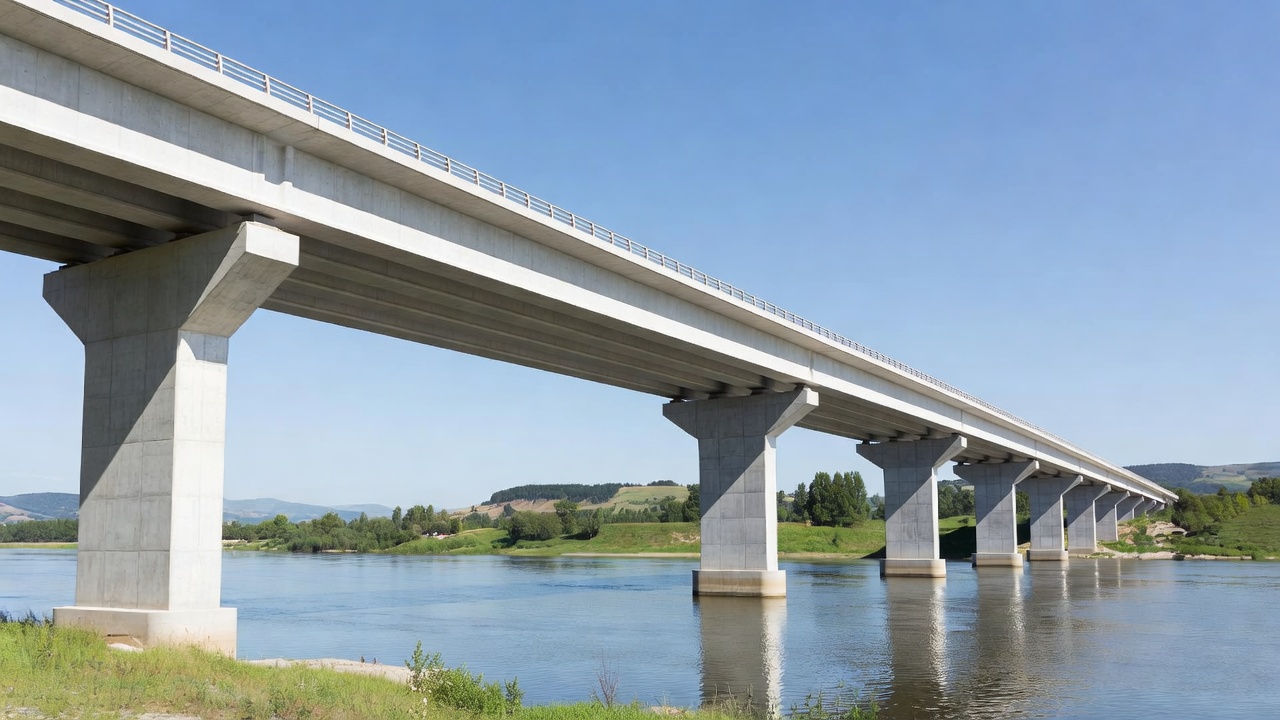
UHPC has found its most extensive application in bridge construction worldwide. Per FHWA-HRT-13-060, more than 50 bridges in North America and numerous structures in Europe, Asia, and Australia have incorporated UHPC since the first highway bridge application in 1997 (Sherbrooke Pedestrian Bridge, Canada). The primary applications fall into several distinct categories.
Field-Cast Closure Pours and Connections represent the single largest application category. UHPC is used to create deck-level connections between prefabricated concrete elements, typically in 6–8 inch (150–200 mm) wide grout pockets or joint gaps. The material’s self-consolidating properties allow it to flow into tight spaces around projecting reinforcement, and its short development length, approximately 12–16 bar diameters for rebar embedment in UHPC versus 30–40 diameters in conventional concrete, enables compact connection details. The New York State Department of Transportation has used field-cast UHPC connections extensively since 2009, including longitudinal joints between deck-bulb-tee girders (Route 31, Lyons, NY), transverse joints between full-depth precast deck panels (Route 23, Oneonta, NY, Ramapo River Bridge), and shear connector pockets (I-690, Syracuse, NY). Ontario’s Ministry of Transportation has deployed field-cast UHPC in over 30 bridges for longitudinal and transverse joints, shear connector pockets, and curbs, representing the most extensive single-agency UHPC deployment in North America.
Full Precast Girders were the first UHPC bridge application in the United States. The Mars Hill Bridge (Wapello County, IA, 2006) used three 110-foot (33.5 m) precast prestressed modified 45-inch (1.14 m) Iowa bulb-tee beams without shear reinforcement. The Route 624 Bridge (Richmond County, VA, 2008) used five 81.5-foot (24.8 m) bulb-tee girders with specified compressive strengths of 83 MPa at release and 159 MPa for design. The Jakway Park Bridge (Buchanan County, IA, 2008) introduced the pi-girder shape, a UHPC-optimized cross-section similar to a double-tee with external bottom flanges, 33 inches deep, spanning 51 feet 4 inches (15.6 m). These applications demonstrated that UHPC girder sections could be 40–60% lighter than equivalent conventional prestressed girders.
Precast Waffle Slab Deck Panels were deployed at Little Cedar Creek (Wapello County, IA, 2011) using 14 waffle panels 15 ft × 8 ft × 8 inches deep, with waffle squares only 2.5 inches thick. The high compressive and flexural strength of UHPC allowed the slab to span 8 feet between girder supports with a total depth less than half that of a conventional concrete deck of equivalent span. All connections between adjacent panels and between panels and precast beams were made with field-cast UHPC.
Thin-Bonded Overlays for deteriorated bridge decks are an emerging application. UHPC overlays 30–50 mm thick can be bonded to existing deck surfaces to provide a low-permeability wearing surface with extended service life. The high bond strength (typically >2 MPa per slant shear testing) and near-zero permeability eliminate the need for membrane waterproofing systems.
UHPC in Airport Structures
The application of UHPC in airport infrastructure is an emerging field with significant potential. Research published in Case Studies in Construction Materials (2024) has investigated advanced concrete materials specifically for airport pavement systems. The ACPA Engineering Manual for Airport Pavement Construction identifies performance requirements including flexural strength (typically 4.5–6.5 MPa for conventional PCC), freeze-thaw resistance, and chemical resistance to jet fuel and deicing fluids, all areas where UHPC offers transformative improvements.
Potential airport applications include thin-bonded overlays on existing rigid airfield pavements to extend service life with minimal construction depth penalty, critical for maintaining pavement grades and clearances at existing airports. The UHPC flexural strength of 40–50 MPa enables overlay thicknesses of 50–100 mm compared to 250–400 mm for conventional concrete overlays. Precast UHPC slab systems for rapid runway repair leverage the material’s high early strength (52–74 MPa at 2 days per Velichko and Vatin’s research) and self-consolidating properties for accelerated construction during overnight runway closures. Heavy-duty apron areas subject to jet blast, fuel spillage, and concentrated aircraft loading benefit from UHPC’s abrasion resistance, chemical resistance, and fatigue performance.
The discontinuous pore structure of UHPC provides resistance to deicing chemical penetration, particularly relevant for airport pavements in cold climates where chloride-based deicers accelerate conventional concrete deterioration. The FAA’s Airport Pavement Design and Construction guidance (AC 150/5320-6F) addresses pavement materials, and while UHPC-specific guidance is not yet incorporated, demonstration projects are evaluating the material under aircraft loading conditions. The fiber reinforcement provides additional resistance to reflective cracking over existing pavement joints, a common failure mode in concrete overlays.
Inspection of UHPC Elements
The inspection of UHPC elements requires fundamentally different expectations and methods compared to conventional concrete. The tensile behavior and crack mechanisms of UHPC produce distress patterns that would be misinterpreted as serious problems in conventional concrete but may be structurally insignificant in UHPC, and vice versa.
Cracking behavior differs fundamentally. In conventional concrete, cracks wider than 0.3 mm are typically considered structurally significant and require monitoring or repair. In UHPC, multiple fine cracks (0.05–0.1 mm) may form under service loads as part of the intended tensile strain-hardening behavior. These cracks are bridged by steel fibers that continue to carry tensile stress, and the crack widths remain stable without widening over time. The FHWA has observed that “the tensile cracking behavior of prestressed UHPC girders has been observed to be significantly different than would be expected in normal concrete girders” (FHWA-HRT-06-115). Inspection criteria for crack width limits must be established specifically for UHPC, not extrapolated from conventional concrete standards.
Fiber distribution and orientation are critical quality metrics that cannot be assessed from the surface alone. Poor fiber dispersion resulting from inadequate mixing or improper casting procedures may produce fiber balls (nests of entangled fibers creating weak zones), fiber segregation (gradient of fiber content through the depth of a section), or preferential alignment perpendicular to principal tensile stresses. Inspection techniques include: examining cut or cored surfaces for fiber count (acceptable distribution shows 40–60 fibers/cm² for typical 2% volume fraction), ultrasonic pulse velocity testing for uniformity, and ground penetrating radar for detecting variability in fiber content. Coring UHPC requires diamond-tipped core bits with substantial water cooling, conventional coring equipment may overheat and fail.
Surface distress observations include: rust staining from steel fibers exposed at the surface (cosmetic only, does not indicate corrosion risk for internal fibers), surface blistering or delamination from improper curing (UHPC requires wet curing or membrane curing for 7 days minimum, with heat curing at 90°C preferred for optimal properties), and honeycombing from inadequate consolidation (though rare due to self-consolidating properties). Chain drag and hammer sounding remain applicable but require experience: UHPC produces a higher-pitched, more metallic sound than conventional concrete due to its higher density and stiffness.
UHPC Construction Quality
The production and placement of UHPC require specialized procedures that differ significantly from conventional concreting operations. FHWA-HRT-11-038 provides practical guidance on UHPC field operations.
Mixing requires approximately two to four times the energy input of conventional concrete. The high binder content and low water content generate significant heat during mixing, procedures must ensure the concrete does not overheat, potentially causing flash set or thermal cracking. Solutions include using a high-energy counter-current mixer, cooling constituent materials, partially or fully replacing mix water with ice, and staged mixing sequences (dry blend of powders for 2–3 minutes, addition of water and superplasticizer, mixing 6–8 minutes, addition of fibers, final mixing 2–4 minutes). UHPC can be mixed in conventional pan mixers, drum mixers, and ready-mix trucks if these procedures are followed.
Placement leverages the material’s self-consolidating properties (slump flow typically 500–700 mm per ASTM C1437). However, the flow behavior is thixotropic, viscosity decreases under shear stress but increases at rest. The casting direction determines fiber orientation: fibers align parallel to the flow direction, which must coincide with the direction of principal tensile stress for optimal structural performance. Placement should be continuous to avoid cold joints, if a placement is interrupted, the surface must be prepared with high-pressure water jetting to ensure bond.
Curing is critical for achieving UHPC’s mechanical and durability properties. Standard UHPC curing involves: initial wet curing for 24–48 hours covered with wet burlap and plastic sheeting to prevent plastic shrinkage cracking, followed by heat treatment at 90°C (steam curing or wet heat) for 48 hours where specified, and subsequent air drying to complete the pozzolanic reaction of silica fume. The FHWA reports that UHPC achieves approximately 70% of its specified compressive strength after initial curing and 100% after heat treatment. Without heat treatment, ultimate compressive strength may be reduced by 20–30% and the chloride diffusion coefficient may increase by an order of magnitude.
UHPC versus Conventional Concrete
The comparison between UHPC and conventional concrete reveals trade-offs that inform design decisions.
Material Cost: UHPC material costs are $800–$2,000/m³ (for proprietary products such as Ductal, CARDIFRC, and BCV) versus $100–$200/m³ for conventional ready-mix concrete. This 5–20x cost premium reflects the high cement content, silica fume, steel fibers, and specialized admixtures. However, total project cost must be evaluated on a life-cycle basis. UHPC structural elements require 50–70% less material volume, eliminate mild reinforcement (shear stirrups, secondary reinforcement), eliminate the need for corrosion protection systems, reduce foundation loads and sizes, require no joint maintenance, provide service life of 75–100+ years versus 30–50 years for conventional concrete, and eliminate the need for future deck overlays or replacement.
Structural Efficiency: UHPC girders weigh 40–60% less than equivalent conventional prestressed girders while providing equal or greater load capacity. This reduces transportation costs, crane capacity requirements, and substructure demands. The elimination of shear reinforcement simplifies fabrication and reduces labor costs by 20–30%. The reduced section depth allows longer spans or increased vertical clearance.
Durability: UHPC’s chloride diffusion coefficient is 100–1,000 times lower, effectively eliminating corrosion risk for embedded reinforcement. Freeze-thaw resistance models predict service life exceeding 100 years in the most severe exposure environments. The near-zero permeability eliminates ASR moisture requirements and prevents sulfate attack.
Complexity: UHPC requires specialized mix design expertise, high-performance mixing equipment, knowledge of fiber orientation effects on structural performance, heat curing facilities or protocols for field curing, specialized inspection criteria and methods, and repair techniques that differ from conventional concrete. Repair of in-service UHPC, while rarely needed, requires UHPC-compatible repair materials because conventional repair mortars will not bond adequately and may fail due to stiffness mismatch.
Standards and Code Provisions
The development of UHPC standards has lagged behind material development, but several jurisdictions have published design guidance. In the United States, the FHWA has published:
- FHWA-HRT-06-103: Material Property Characterization of Ultra-High Performance Concrete (2006), the foundational material characterization study covering compressive, tensile, flexural, and durability properties.
- FHWA-HRT-11-038: Ultra-High Performance Concrete TechNote (2011), practical guide for UHPC definition, applications, mixing, and casting.
- FHWA-HRT-13-060: Ultra-High Performance Concrete: A State-of-the-Art Report for the Bridge Community (2013), comprehensive compendium of global UHPC applications, material properties, and structural behavior.
- AASHTO Design Guidance for UHPC Structures: First structural design guide specifically for UHPC, providing provisions for flexure, shear, and serviceability for bridge and ancillary structures.
- ASTM C1856 / C1856M: Standard Test Method for Determining the Compressive Strength of Ultra-High Performance Concrete, specifies 3×6-inch cylinders with modifications to loading rate and platen configuration.
In Europe, the French AFGC/SETRA recommendations (2002, revised 2013) provide the most comprehensive design provisions. The German DAfStb guideline for UHPC was published in 2013. The Swiss SIA 2052 standard (2016) for UHPC covers material specification, structural design, and execution. The Japanese Society of Civil Engineers published JSCE recommendations for UHPC in 2004, revised 2013. The fib Model Code 2010 (updated in fib MC2020) introduced a classification framework for UHPC defines classes based on compressive strength and tensile performance. ISO technical committee ISO/TC 71/SC 1 is developing international standards for UHPC testing and classification. The AASHTO “Guide Specifications for Design of Ultra-High Performance Concrete Structures” provides a critical pathway for U.S. bridge engineers to design UHPC members under AASHTO LRFD framework until full code adoption occurs.
Future Directions and Non-Proprietary UHPC
Current research focuses on developing non-proprietary UHPC formulations using locally available materials to reduce cost and increase accessibility. Research programs at the University of Michigan, Georgia Institute of Technology, and elsewhere have demonstrated UHPC using local aggregates, slag, fly ash, and limestone filler with compressive strengths of 130–160 MPa at competitive material costs ($400–$800/m³). The use of alternative fibers, PVA (polyvinyl alcohol), basalt, and hybrid fiber systems, is being explored to reduce reliance on high-cost steel fibers. The adoption of UHPC for sustainable construction leverages the material’s reduced material volume, elimination of corrosion maintenance, and extended service life to reduce the 100-year embodied carbon footprint by 40–60% compared to conventional concrete structures, despite the higher initial carbon footprint of its cement-intensive composition.
Frequently Asked Questions
- What is Reactive Powder Concrete (RPC)?
- Reactive Powder Concrete (RPC) is an ultra-high performance cementitious composite developed in the 1990s. It achieves compressive strengths exceeding 150 MPa through an extremely low water/binder ratio (0.15–0.25), elimination of coarse aggregate, optimized particle packing using cement, silica fume, quartz powder, and fine sand, plus steel fiber reinforcement for ductility. RPC is synonymous with Ultra-High Performance Concrete (UHPC) and offers exceptional durability with near-zero permeability.
- How does RPC/UHPC differ from conventional concrete?
- RPC differs fundamentally from conventional concrete in composition, mechanical properties, and performance. Conventional concrete uses coarse aggregate (up to 20–40 mm), a water/cement ratio of 0.40–0.60, and achieves compressive strengths of 20–40 MPa. RPC eliminates coarse aggregate entirely, uses a water/binder ratio below 0.25, incorporates high volumes of silica fume (up to 25% by weight of cement), includes steel fibers at 2–6% by volume, and undergoes heat curing. RPC attains compressive strengths above 150 MPa versus 20–40 MPa for conventional concrete, and offers tensile strengths of 8–15 MPa with fibers versus 2–5 MPa for conventional concrete. Durability metrics are orders of magnitude better: chloride ion diffusion in RPC is 1.9×10⁻¹⁴ m²/s versus approximately 10⁻¹² m²/s for conventional concrete, and freeze-thaw scaling loss is below 0.012 kg/m² compared to degrading conventional concrete.
- What are the main applications of UHPC in bridges?
- Ultra-High Performance Concrete is used in bridges primarily for field-cast closure pours and connections between prefabricated elements, full precast bridge girders (I-girders, bulb-tees, pi-girders), waffle slab bridge decks, thin-bonded overlays on deteriorated decks, shear connector pockets, seismic retrofit of substructures, and repair of damaged concrete elements. Since 2006, over 50 bridges in North America have used UHPC, including the first UHPC bridge in the United States (Mars Hill Bridge, Iowa, 2006) and extensive applications in Ontario, Canada where UHPC joints connect precast box beams and curbs. The short development length of reinforcement in UHPC (approximately 12–16 bar diameters versus 30–40 diameters in conventional concrete) enables simplified connection details.
- How is UHPC inspected differently from conventional concrete?
- Inspection of UHPC elements requires understanding fundamentally different distress modes. UHPC does not exhibit the same cracking patterns as conventional concrete. Due to fiber reinforcement, UHPC can carry tensile stress after cracking, and cracks remain tightly closed (typically <0.1 mm width) through fiber bridging action. Inspection should focus on: fiber orientation and distribution quality (visible on cut or failed surfaces), surface discoloration indicating improper curing, delamination or spalling caused by improper fiber dispersion, and rust staining from exposed steel fibers at the surface. Hammer sounding and chain drag methods remain applicable but require experience distinguishing UHPC's higher-pitched response. Coring UHPC is extremely difficult and requires diamond-tipped coring bits. Chloride penetration testing via resistivity is more informative than traditional rapid chloride permeability (RCP) testing.
- What standards apply to UHPC in the United States?
- In the United States, the Federal Highway Administration (FHWA) has published extensive research on UHPC material characterization and structural behavior, including FHWA-HRT-06-103, FHWA-HRT-11-038, and FHWA-HRT-13-060. The American Association of State Highway and Transportation Officials (AASHTO) issued the 'AASHTO Design Guidance for UHPC Structures' to provide structural design requirements. AASHTO has also published 'Guide Specifications for Design of Ultra-High Performance Concrete Structures.' The American Concrete Institute (ACI) Committee 239 addresses UHPC. ASTM C1856 provides standard test methods for UHPC compressive strength determination using 3×6-inch cylinders. The FHWA also developed the 'UHPC Connection Details for Accelerated Bridge Construction' guide for field-cast joint applications.
- What is the cost comparison between UHPC and conventional concrete?
- UHPC material costs are approximately 5–20 times higher than conventional concrete on a per-cubic-meter basis, typically ranging from $800–$2,000/m³ compared to $100–$200/m³ for conventional concrete. However, total project costs can be competitive because UHPC sections are significantly thinner (reducing material volume by 50–70%), eliminating mild steel reinforcement (shear stirrups and secondary steel), reducing self-weight and foundation costs, extending service life to 100+ years versus 30–50 years for conventional concrete, and minimizing maintenance and repair costs. For field-cast connection applications, the higher material cost is offset by simplified detailing, reduced labor, faster construction, and elimination of future joint maintenance. Life-cycle cost analyses consistently show UHPC is economically competitive for infrastructure where durability and long service life are critical.
- Can UHPC be used in airport pavement?
- Yes, UHPC is being explored for airport pavement applications. Research published in journals such as Case Studies in Construction Materials (2024) has investigated developing advanced concrete materials for airport pavement using UHPC. The material's high flexural strength (40–50 MPa) and exceptional durability make it suitable for thin overlays on existing rigid airport pavements, precast slab systems for rapid runway repair, and heavy-duty apron areas subject to jet blast and fuel spillage. The discontinuous pore structure of UHPC provides resistance to deicing chemicals and jet fuel penetration. The FAA Airport Pavement Design & Construction guidance addresses high-performance pavement materials, and UHPC research programs are evaluating its performance under aircraft loading conditions. Full-scale implementation remains limited compared to bridge applications.