What is Reclaimed Asphalt Pavement (RAP)?
Definition and Sustainability Benefits
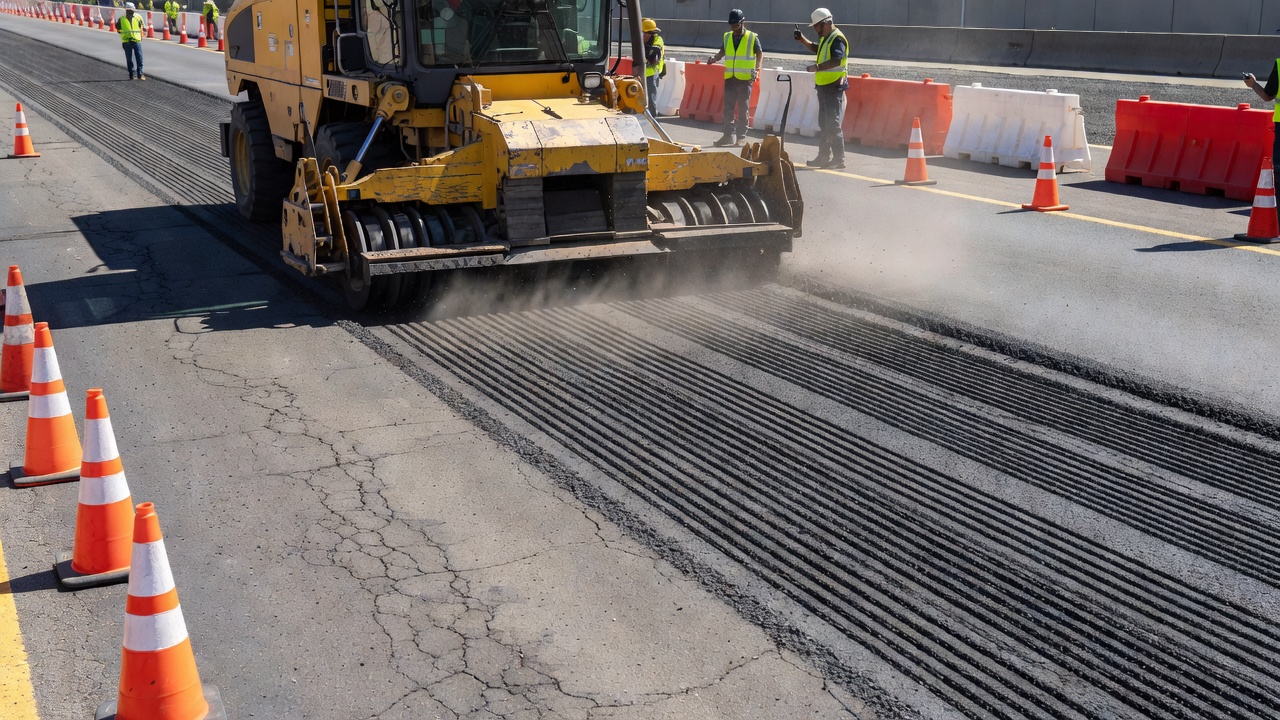
Reclaimed Asphalt Pavement (RAP) is the term for removed and/or reprocessed pavement materials containing aged asphalt binder and aggregates. RAP is generated when existing asphalt pavements are milled during rehabilitation, demolished during reconstruction, or pulverized during full-depth reclamation operations. It is the most recycled material in the United States, over 99% of all reclaimed asphalt pavement is returned to productive use, and it is the most recycled material by both tonnage and percentage, surpassing paper, glass, plastic, and metals combined.
According to the National Asphalt Pavement Association (NAPA) 2023 Industry Survey (IS 138), a total of 96.1 million tons of RAP were used in new asphalt pavement mixtures that year, representing an aggregate replacement rate exceeding 22% nationally. This RAP usage saved an estimated $4.5 billion compared to constructing the same pavements with 100% virgin materials. The national average RAP content in asphalt mixtures has increased steadily from approximately 12% in 2007 to approximately 22% in 2023, driven by agency specification changes, rising virgin binder costs (which exceeded $600 per ton in some markets in 2022-2023), and sustainability mandates.
The sustainability benefits of RAP usage are well-documented through lifecycle assessment (LCA) studies. A comprehensive LCA by the University of California Pavement Research Center (UCPRC) found that replacing virgin materials with 30-40% RAP reduces greenhouse gas emissions (GHG) by approximately 20-35% compared to virgin mixes, with the reductions coming primarily from avoided binder production (the most energy-intensive and carbon-emitting component of asphalt production) and avoided aggregate extraction. The FHWA Sustainable Pavements Program recognizes RAP usage as one of the most effective strategies for reducing the carbon footprint of asphalt pavements.
The U.S. Environmental Protection Agency (EPA) and FHWA jointly recognize that RAP diversion from landfills saves approximately 20-25 million cubic yards of landfill space annually. Beyond direct material savings, RAP usage reduces energy consumption by approximately 20% in mix production (from avoided virgin aggregate drying and heating, binder fraction heating, and reduced material transportation distances when RAP is sourced locally). For every 10% increase in RAP content, approximately 1.5 tons of CO₂ equivalent per lane-mile of pavement are avoided in production-phase emissions, based on typical pavement cross-sections of 4 to 8 inches of asphalt.
RAP Production
RAP production encompasses the complete sequence of operations from pavement removal through final material processing at the plant. Each step in the production chain affects the quality and uniformity of the final RAP material.
Milling (Cold Planing)
Cold planing, also called asphalt milling, is the most common method of RAP generation. A self-propelled milling machine with a rotating drum equipped with carbide-tipped cutting teeth removes the existing pavement surface to a specified depth. Typical milling depths range from 1.5 inches (38 mm) for surface course removal to 6 inches (150 mm) for full-depth milling. The cutting drum rotates upward in the direction of travel and the cut material is conveyed up a discharge conveyor into a waiting dump truck.
The milling process produces RAP particles ranging from fine dust to approximately 2 inches (50 mm). The particle size distribution depends on cutting tooth spacing, drum rotation speed, forward travel speed, and the condition of the existing pavement. Full-lane milling machines with 12 to 14 foot cutting widths are standard for highway work, while smaller half-lane or utility machines are used for urban streets and confined areas. The FHWA Technical Advisory T 5040.37 provides guidance on cold planing specifications including depth tolerance (± 0.25 inches), longitudinal and transverse profile tolerances, and surface texture requirements. Milled surfaces must be clean, free of loose particles, and uniform in depth to ensure proper bonding of the overlay.
Milling produces approximately 1 ton of RAP per 12 square feet per inch of depth (approximately 1 ton per 11.1 square meters per 25 mm of depth). A full-lane milling operation removing 4 inches of asphalt from a mile-long highway segment generates approximately 8,000 to 10,000 tons of RAP. Interstate milling operations typically achieve production rates of 300 to 600 tons per hour depending on pavement hardness, milling depth, and machine power.
Crushing and Screening
Milled RAP delivered to the plant requires further size reduction and classification before use. The crushing stage reduces oversized particles that typically consist of pavement chunks that did not fully break down during milling or were created during stockpile loading. Impact crushers are preferred for RAP because the impact action separates the aged binder from aggregates along natural fracture planes without excessive fines generation. Jaw crushers are used when maximum size reduction is needed but produce a higher percentage of minus 200 material. Cone crushers are generally avoided for RAP due to binder buildup on crushing surfaces (packing) that reduces efficiency.
Screening uses vibratory multi-deck screens to separate RAP into size fractions. Typical screen configurations include a top deck with 50 mm (2 inch) openings to remove oversized material for recirculation to the crusher, an intermediate deck with 12.5 mm (1/2 inch) or 9.5 mm (3/8 inch) openings for fractionated RAP, and a bottom deck with 4.75 mm (No. 4) openings. Fractionated RAP, RAP separated into coarse and fine fractions, allows more precise control over the final mix gradation and reduces variability in the fine fraction binder content. The NCHRP Report 752 documents that fractionated RAP reduces coefficient of variation (COV) of binder content from 15-20% (unfractionated) to 5-10% (fractionated).
Processed RAP per AASHTO MP 31 (Standard Specification for RAP) must meet the following requirements:
- Maximum particle size: 50 mm (2 inches) for HMA, 37.5 mm (1.5 inches) for surface courses
- Deleterious materials: less than 1% by weight (non-bituminous materials such as soil, brick, concrete)
- Oversized particles: less than 5% retained on the maximum sieve size
- Moisture content: less than 5% at the time of mixing (per most agency specifications)
Stockpiling
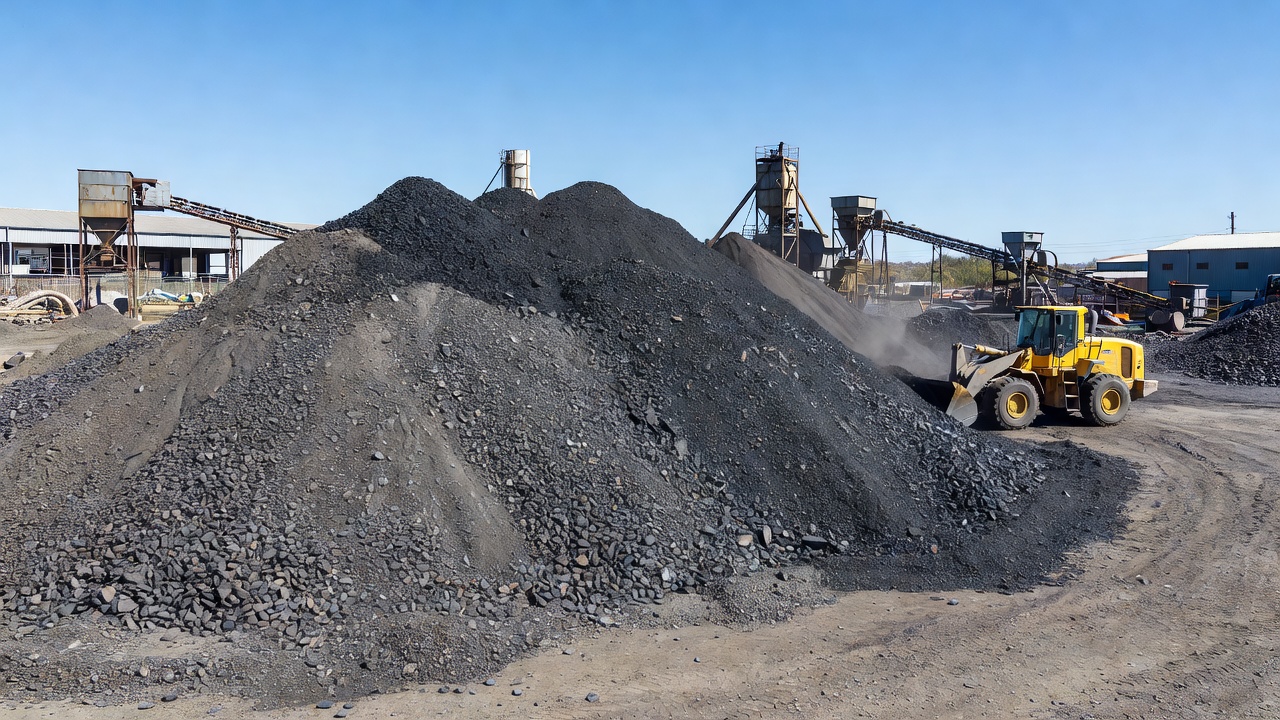
RAP stockpile management directly affects mix quality consistency. RAP must be stockpiled by source and/or binder content grade to minimize variability within individual production runs. Per NAPA IS 138 (Best Practices for RAP Management), recommended stockpile procedures include:
Dedicated impervious surface, RAP stockpiles must be placed on paved, graded surfaces with drainage to prevent contamination with subgrade soil. A concrete or asphalt pad with positive drainage to a sediment basin is standard. Segregation prevention, RAP is stockpiled using layering (placing material in lifts of 3-4 feet maximum and compacting with loaders between lifts) rather than conical stockpiling, which causes coarse material to roll to the outside. Moisture management, Stockpiles are covered or placed under roof when possible, as excessive moisture (above 5%) requires additional drum energy for drying and can cause production rate reductions of 10-20% per percentage point of moisture increase. Inventory management, Stockpile quantities are tracked by source, binder content (typically 4.0-6.5% for milled RAP, 3.0-5.0% for RAP that includes base layers), and aggregate gradation. Stockpile testing frequency typically follows AASHTO R 47 with minimum one test per 2,000 tons for binder content and gradation.
RAP Characterization
Accurate characterization of RAP properties is essential for mix design. The three primary characterization parameters are asphalt binder content, aggregate gradation, and RAP binder properties (penetration, viscosity, performance grade).
Asphalt Binder Content Determination
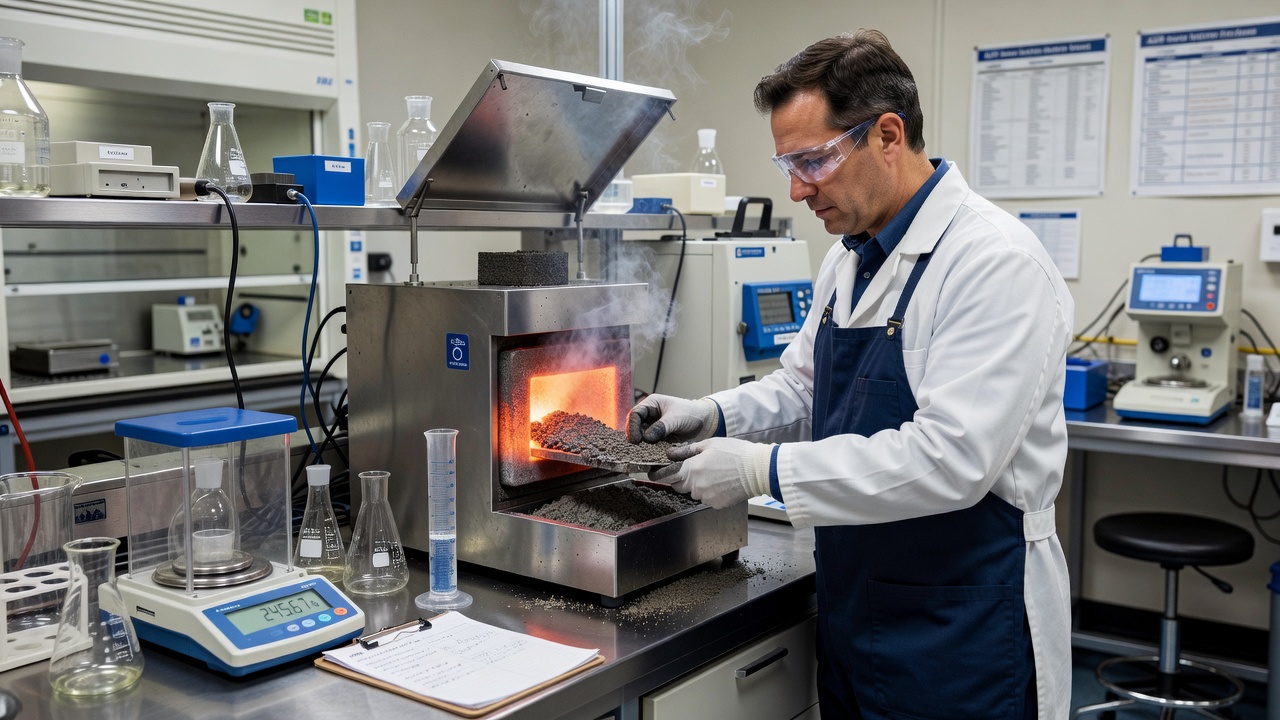
Binder content of RAP is determined using the ignition oven method per ASTM D6307 / AASHTO T 308. A representative sample of RAP (typically 1,200 to 2,000 grams) is placed in a furnace at 540°C (1000°F). The asphalt binder is burned off by the heat, leaving the mineral aggregate. The binder content is calculated as the mass loss divided by the initial sample mass, corrected for aggregate ignition loss using a correction factor established by testing the specific aggregate. For RAP containing hydrated lime or other mineral fillers that may be affected by ignition, the correction factor must be developed for the specific RAP source. The ignition oven method has a precision of ±0.11% for single-operator and ±0.27% for multi-laboratory as specified in ASTM D6307.
Solvent extraction per ASTM D2172 / AASHTO T 164 (Method A or B) using n-propyl bromide (nPB) or dichloromethane is an alternative method for determining binder content. The solvent extraction method is generally more accurate for binder content determination when binder recovery for further testing is needed, but it presents environmental and worker safety concerns with solvent handling. Solvent extraction is optional under AASHTO T 164 when the ignition oven is not calibrated for the specific aggregate type.
Aggregate Gradation
After binder content determination, whether from ignition oven (aggregate retained) or solvent extraction (extracted aggregate), the aggregate gradation of the RAP is determined per ASTM C136 / AASHTO T 27 (Sieve Analysis of Fine and Coarse Aggregates). The full sieve analysis from 50 mm (2 inch) down to 0.075 mm (No. 200) is conducted. The fineness modulus of RAP aggregate ranges from 4.0 to 6.0 depending on the original pavement mix design and milling/crushing process.
The RAP aggregate gradation is used in the Superpave mix design method (AASHTO M 323 / AASHTO R 35) to determine the combined aggregate blend meeting the specific control points and restricted zone requirements for the design traffic level. The RAP aggregate typically has a higher percentage of material passing the No. 200 sieve (6-12%) compared to virgin aggregate, due to the presence of mineral filler from the original mix and fines generated during milling and crushing.
RAP Binder Properties
The aged binder in RAP, herein called RAP binder, is significantly stiffer than virgin binder due to oxidative aging during the service life of the original pavement. The aging process causes volatilization of light molecular weight fractions (aromatic oils and resins) with a corresponding increase in asphaltene content. Typical RAP binder properties versus virgin binder:
| Property | Virgin PG 64-22 | Typical RAP Binder | Test Method |
|---|---|---|---|
| Penetration (25°C, 0.1 mm) | 60-100 | 10-80 | ASTM D5 / AASHTO T 49 |
| Absolute Viscosity (60°C, Poises) | 1,000-2,500 | 4,000-25,000 | ASTM D2171 / AASHTO T 201 |
| Kinematic Viscosity (135°C, cSt) | 300-500 | 600-4,000 | ASTM D2170 / AASHTO T 201 |
| Softening Point (°C) | 45-55 | 55-85 | ASTM D36 / AASHTO T 53 |
| PG High Temp (True Grade) | 64-70 | 70-90+ | AASHTO M 320 / T 315 |
| PG Low Temp (True Grade) | -22 to -28 | -10 to -22 | AASHTO M 320 / T 313 |
RAP binder is extracted and recovered from the RAP aggregate using solvent extraction (ASTM D2172 / AASHTO T 164) followed by either the Abson method (ASTM D1856 / AASHTO T 170) using distillation to recover the binder from solvent, or the rotary evaporator method (ASTM D5404 / AASHTO T 319) which uses vacuum distillation at controlled temperature.
The performance grade (PG) of the recovered RAP binder is determined per AASHTO M 320 using the dynamic shear rheometer (DSR) for high-temperature stiffness (G*/sinδ), the rolling thin film oven (RTFO) for short-term aging simulation, the pressure aging vessel (PAV) for long-term aging simulation, and the bending beam rheometer (BBR) for low-temperature stiffness (m-value and creep stiffness). DSR testing follows AASHTO T 315 with a 25-mm plate for high-temperature testing and 8-mm plate for intermediate-temperature fatigue testing. BBR testing follows AASHTO T 313 at the specified low test temperature (typically -6°C, -12°C, or -18°C).
The typical crossover temperature (where tan δ = 1) for RAP binder is 5-15°C higher than virgin binder, reflecting the greater stiffness and reduced relaxation capability of the aged material. The Glover-Rowe parameter (G* × cos²δ / sinδ at 15°C and 0.005 rad/s), which correlates with cracking resistance, typically increases from approximately 300 kPa for virgin binder to 1,000-5,000 kPa for severely aged RAP binder, with values above 5,000 kPa indicating a high cracking risk.
Binder Blending Charts
Binder blending charts are the primary engineering tool for designing asphalt mixtures containing RAP. The blending chart establishes the relationship between the virgin binder grade, the RAP binder grade, the percentage of RAP binder in the total binder system (the RAP binder replacement ratio), and the resulting blended binder grade.
Blending Approach
When RAP is added to an asphalt mixture, the aged RAP binder combines with the virgin binder to form a composite binder system. Two blending models are recognized in practice:
Full blending assumes that the RAP binder and virgin binder fully mix and behave as a single homogeneous binder. This model, used for mix design purposes, assumes the RAP binder contributes to the film coating of all aggregate particles, effectively reducing the binder content contribution needed from virgin binder.
Black rock theory assumes that the RAP aggregate behaves as a black-colored aggregate with the RAP binder having negligible blending contribution to the overall binder system. This conservative model was historically used for high-RAP mixes but has been largely superseded by the full blending model with the recognition that some blending always occurs. Research by NCHRP Project 9-12 demonstrated that partial blending (20-70% of RAP binder is active, depending on mixing temperature and time) occurs in practice, but the full blending assumption provides acceptable performance predictions for mix design.
Blending Chart Construction
The blending chart uses the log Penetration (Pen) blending rule and/or the log-log Viscosity blending rule:
Penetration Blending Rule (ASTM D4886 / NCHRP methodology): log(Pen_blend) = a × log(Pen_virgin) + (1-a) × log(Pen_RAP)
Where a = proportion of virgin binder by weight of total binder and Pen is penetration at 25°C (0.1 mm).
Viscosity Blending Rule (log-log scale): log(log(η_blend)) = P × log(log(η_RAP)) + (1-P) × log(log(η_virgin))
Where η = absolute viscosity at 60°C (Poises) and P = proportion of RAP binder by weight of total binder.
For Performance Grade (PG), the Superpave system’s approach, the blended PG is determined using the following relationships:
High-temperature grade blending (Continuous Grade): Continuous PG_H = (1-P) × PG_H_virgin + P × PG_H_RAP
Where PG_H is the true high-temperature grade determined from DSR G*/sinδ = 1.00 kPa (unaged) or 2.20 kPa (RTFO-aged).
Low-temperature grade blending (Continuous Grade): Continuous PG_L = (1-P) × PG_L_virgin + P × PG_L_RAP
Where PG_L is the true low-temperature grade determined from BBR S(60s) ≤ 300 MPa and m-value ≥ 0.300 at test temperature + 10°C.
Practical Application
The blending chart is used to determine the appropriate virgin binder grade for a given RAP content. Per AASHTO M 323 (Superpave Volumetric Mix Design) and AASHTO PP 105 (Plant-Produced RAP Mixtures) , the Tiered Approach specifies:
| RAP Content Tier | RAP Percentage | Virgin Binder Grade Adjustment | Blending Chart Required |
|---|---|---|---|
| Tier 1 | < 15% | No change, use same PG as virgin mix | No |
| Tier 2 | 15% to 25% | One grade softer (e.g., PG 58-28 instead of PG 64-22) | No (tabulated values) |
| Tier 3 | > 25% to 50% | Determined by blending chart | Yes |
The one grade softer approach in Tier 2 compensates for the stiffening effect of RAP binder. For example, if the target mixture is PG 64-22, the virgin binder in a 20% RAP mix would be specified as PG 58-28. The resulting blended binder, approximately 70% PG 58-28 + 30% PG 76-16 (typical RAP binder), produces a blended PG of approximately PG 64-22, matching the target.
For Tier 3 (above 25% RAP), the blending chart is used to determine the exact virgin binder grade required to achieve the target blended binder grade. The designer selects the virgin binder grade that, when blended at the specified RAP binder replacement ratio, meets the target PG high and low temperatures.
Maximum RAP Percentages and Tiered Approach
Maximum allowable RAP content is governed by agency specifications and varies by pavement layer, traffic level, and climatic region.
AASHTO Specification Framework
AASHTO M 323 (Standard Specification for Superpave Volumetric Mix Design) establishes the tiered approach described above. The specification defines maximum RAP content limits based on traffic level (ESALs, Equivalent Single Axle Loads):
| Traffic Level (million ESALs) | Max RAP in Surface Course | Max RAP in Base/Intermediate |
|---|---|---|
| < 0.3 (Low volume) | 40% | 50% |
| 0.3 to 3 (Medium) | 30% | 40% |
| 3 to 10 (Moderate) | 25% | 35% |
| 10 to 30 (Heavy) | 20% | 30% |
| > 30 (Very Heavy) | 15% | 25% |
These limits apply to Tier 3 (blending chart) mixes. For Tier 1 (<15%) and Tier 2 (15-25%), the limits are governed by the binder grade adjustment requirements rather than explicit maximums. AASHTO PP 105 provides additional guidance on RAP mixtures including requirements for fractionated RAP at higher RAP contents.
State DOT Practices
Individual state DOTs have adopted varying RAP specifications. California (Caltrans) allows up to 25% RAP in surface courses and 40% in base courses using the one-grade softer approach. Florida (FDOT) permits up to 30% RAP in structural courses with approved mix design and 20% in friction courses. Texas (TxDOT) allows 20% RAP in Type A (coarse) and Type B (fine) surface mixes without virgin binder grade change and up to 35% with binder grade adjustment. New York (NYSDOT) permits up to 30% RAP in binder and base courses and 20% in surface courses using the tiered approach.
The Transportation Research Board (TRB) through NCHRP Project 9-58 documented that 23 states in 2020 allowed RAP content of 25% or greater in at least one pavement layer, and 14 states had successfully placed pavement sections with RAP content exceeding 40%. The FHWA Every Day Counts (EDC-5) initiative on Recycled Materials promoted increased RAP usage through demonstrated successful projects in 48 states.
FAA Airfield Pavement Specifications
FAA Advisory Circular AC 150/5370-10H (Standards for Specifying Construction of Airports) governs RAP usage in airfield pavements. The standard P-401 Plant Mix Bituminous Pavements and P-403 Plant Mix Bituminous Base Courses include specific RAP provisions based on the Airport Asphalt Pavement Technology Program (AAPTP) Project 05-06 research.
For P-401 surface courses, RAP is limited to a maximum of 20% by weight of total aggregate. The virgin binder grade must remain the same as specified for the project (no one-grade softer approach is allowed for airfield surfaces). The aged RAP binder from the P-401 mix must not raise the blended binder high-temperature grade more than 6°C (10.8°F) above the specified grade, a requirement that effectively limits RAP content based on the binder stiffness of the specific RAP source. The blended binder must meet the specified PG grade for the airport’s aircraft classification number (ACN) and traffic level.
For P-403 base courses, RAP content up to 30% is permitted with blending chart analysis. Airports serving aircraft with gross weights above 60,000 pounds (commercial service and cargo operations) require more restrictive RAP limits than general aviation airports. The FAAs rationale for lower allowable RAP in airfield pavements compared to highways includes the higher tire pressures of aircraft (up to 220 psi), the concentrated gear loads, and the safety-critical nature of runway surfaces where pavement debris from cracking or raveling poses foreign object debris (FOD) hazards.
ICAO Guidance
The International Civil Aviation Organization (ICAO), through ICAO Document 9157 (Aerodrome Design Manual, Part 3, Pavements), provides guidance on the use of recycled materials in airfield pavements. ICAO recommends that recycled material usage be evaluated on a case-by-case basis with consideration of pavement classification number (PCN), aircraft traffic volume, and climatic conditions. ICAO recognizes RAP as an acceptable material for airfield pavement construction subject to national civil aviation authority approval and demonstration of equivalent performance to virgin mixes through appropriate testing.
High-RAP Mix Performance
High-RAP mixes (RAP content exceeding 25%) exhibit different performance characteristics compared to virgin mixes in several key distress categories.
Stiffness and Modulus
The dynamic modulus (|E|)* of high-RAP mixes measured per AASHTO T 378 (WürkVägen dynamic modulus test) is typically 15-40% higher than virgin mixes at intermediate test temperatures (21.1°C / 70°F) and loading frequencies (10 Hz). The increased stiffness comes directly from the aged RAP binder and provides improved rutting resistance, a benefit particularly valuable for heavy-traffic pavements and high-temperature regions. The flow number test per AASHTO TP 79 (confined repeated load permanent deformation test) typically shows 30-60% higher flow number values for 30% RAP mixes compared to virgin mixes, indicating superior resistance to permanent deformation.
However, the increased stiffness presents trade-offs. Higher modulus reduces the relaxation capability of the mix, the ability to dissipate thermally induced tensile stresses without cracking. The creep compliance measured per AASHTO T 322 (Indirect Tensile Creep Test) at low temperatures (0°C to -20°C) is 10-20% lower for high-RAP mixes, meaning the mix is less able to accommodate thermal contraction without exceeding the tensile strength.
Cracking Resistance
Three primary cracking modes are affected by RAP content:
Thermal (low-temperature) cracking, The thermal stress restrained specimen test (TSRST) per AASHTO TP 10 and the bending beam rheometer (BBR) mixture test AASHTO TP 125 demonstrate that high-RAP mixes crack at 3-6°C higher temperatures than virgin mixes. The critical cracking temperature (T_cr) from TSRST testing typically shifts from approximately -32°C for virgin PG 64-22 mix to -26°C for 30% RAP mix using one-grade softer virgin binder. The single-edge notched beam (SENB) test per AASHTO TP 105 shows fracture energy reductions of 20-40% for high-RAP mixes compared to virgin.
Fatigue cracking, The flexural beam fatigue test per AASHTO T 321 shows that high-RAP mixes (30-40%) have 20-50% shorter fatigue life at equivalent strain levels compared to virgin mixes, depending on RAP binder stiffness and the effectiveness of blending. However, the higher modulus of high-RAP mixes means that at equivalent structural pavement thickness, the tensile strain at the bottom of the asphalt layer is lower for high-RAP mixes, partially offsetting the reduced fatigue life at equivalent strain. The NCHRP Project 9-57A research found that properly designed high-RAP mixes (up to 40%) with appropriate binder grade selection and rejuvenator use achieved comparable fatigue performance to virgin mixes in the field.
Reflection cracking, High-RAP overlays on cracked pavements exhibit reduced resistance to reflection cracking because of the stiffer mix’s reduced ability to accommodate flexural movement at crack locations. The overlay tester (OT) per Texas Test Method Tex-248-F and AASHTO TP 107 is used to evaluate reflection cracking resistance, with high-RAP mixes typically failing at 30-50% fewer cycles than virgin mixes.
Durability and Moisture Susceptibility
Moisture damage resistance in high-RAP mixes is evaluated using the modified Lottman test (AASHTO T 283, Resistance of Compacted Asphalt Mixtures to Moisture-Induced Damage). The test measures the tensile strength ratio (TSR), the ratio of conditioned (wet and freeze-thaw cycled) to unconditioned tensile strength. The minimum TSR per AASHTO M 323 is 0.80 (80%). High-RAP mixes can exhibit lower TSR values than virgin mixes if the RAP fines coat the virgin aggregate particles, preventing the virgin binder from properly adhering. Hydrated lime at 1-1.5% by weight of total aggregate or liquid anti-strip agents (typically 0.25-0.75% by weight of virgin binder) are commonly used to mitigate moisture damage in high-RAP mixes.
Durability, measured through dust-to-binder ratio (percentage passing No. 200 sieve to effective binder content, limited to 0.6-1.2 per AASHTO M 323), is a particular concern with RAP mixes because RAP contributes both fine material and aged binder. The FHWA-HIF-16-013 (RAP and RAS Specifications) recommends increasing the design asphalt content by 0.1-0.3% for high-RAP mixes to ensure adequate binder film thickness surrounding aggregate particles.
LTPP Field Performance
The Long-Term Pavement Performance (LTPP) Specific Pavement Studies (SPS-10) program evaluated the in-service performance of RAP mixes at 22 test sections across 10 states between 2002 and 2019. Key findings include:
- 30% RAP mixes performed equivalently to virgin control mixes across rutting, cracking, and ride quality over monitoring periods of up to 17 years.
- Sections designed with the one-grade softer binder approach showed better thermal cracking resistance than those using the same grade binder.
- Variability in RAP source quality was the primary factor affecting performance differences between sections, with consistent RAP sources producing more predictable performance.
- The fracture energy approach (using SCB or IDEAL-CT testing) was identified as the most reliable laboratory predictor of field cracking performance for high-RAP mixes.
Rejuvenators and Recycling Agents
Rejuvenators, also called recycling agents or modifiers, are chemical additives designed to restore the rheological properties of aged RAP binder by replenishing the light molecular weight fractions lost during oxidative aging.
Aging Chemistry
Asphalt binder aging involves two primary mechanisms. Oxidative aging occurs when atmospheric oxygen reacts with the binder components (primarily aromatic and polar aromatic fractions) to form carbonyl and sulfoxide functional groups, with corresponding increases in molecular weight and asphaltene content. The Huber-Heithaus method (or Iatroscan TLC-FID, thin-layer chromatography with flame ionization detection) quantifies the SARAs fractions: Saturates, Aromatics, Resins, and Asphaltenes. RAP binder typically shows a shift from approximately 10% aromatics/5% asphaltenes (virgin) to 5% aromatics/20% asphaltenes (aged). Physical hardening (steric hardening), a reversible time-dependent stiffening at low temperatures, is accelerated in aged binders and contributes to thermal cracking susceptibility.
Rejuvenator Types and Mechanisms
Rejuvenators restore binder properties through three mechanisms: dissolution of asphaltene agglomerates, dispersion of asphaltene structures within the maltene phase, and replenishment of aromatic fractions to restore the maltene-to-asphaltene ratio. Common rejuvenator categories:
| Rejuvenator Type | Chemical Composition | Typical Viscosity (60°C) | Application Rate (% of RAP binder) |
|---|---|---|---|
| Paraffinic oils | Refined petroleum mineral oils, low aromatics | 100-500 cSt | 3-8% |
| Aromatic extracts | High-polar aromatic content (60-85%), high solvent power | 100-2,000 Poises | 4-10% |
| Naphthenic oils | Cyclic aliphatic hydrocarbons, moderate solvency | 200-800 cSt | 4-8% |
| Tall oil derivatives | Fatty acids, rosin acids from pine pulp processing | 300-1,000 cSt | 5-12% |
| Triglyceride bio-oils | Soybean, canola, or waste cooking oil esters | 50-200 cSt | 4-10% |
| Polymer-modified rejuvenators | Engineered polymers + base oil | 500-2,000 cSt | 5-8% |
The AASHTO MP 25 (Standard Specification for Rejuvenators) and AASHTO PP 87 (Practice for Rejuvenators in Asphalt Mixtures) establish standard requirements including:
- Flash point: minimum 220°C per ASTM D92
- Viscosity at 60°C: within ±50% of the specified target
- Specific gravity: per ASTM D70 (pycnometer method)
- Compatibility with the RAP binder: per AASHTO T 102 (spot test)
Dosage Determination
Rejuvenator dosage is determined through blending chart analysis where the rejuvenator is treated as a component of the virgin binder fraction. The target is to achieve the specified PG grade for the total blended binder system (RAP binder + virgin binder + rejuvenator).
The McMillan-McLeod method uses the log Penetration blending rule where the target penetration of the rejuvenated RAP binder is set equal to the virgin binder penetration specification. The dosage is calculated as:
log(P_target) = (1-R) × log(P_RAP) + R × log(P_rejuv)
Where R = percentage of rejuvenator by weight of RAP binder and P = penetration values.
The Iatroscan SARAs analysis approach targets a specific colloidal instability index (CI), defined as (asphaltenes + saturates) / (aromatics + resins), for the rejuvenated blend. A CI value between 0.20 and 0.40 is associated with stable, sol-type binder structure, while values above 0.50 indicate gel-type structure associated with cracking susceptibility.
Application Methods
Rejuvenators are applied through two primary methods. Pre-blending involves mixing the rejuvenator with the virgin binder before introduction to the mixture. This provides intimate mixing but requires dedicated storage and metering equipment. Direct injection at the RAP feed point or drum mixing zone allows more precise dosage control per ton of RAP and avoids heating the entire virgin binder supply. The injected rejuvenator is typically heated to 60-100°C to reduce viscosity for uniform spray distribution.
Production temperature is a critical factor, RAP must be heated to at least 100°C (212°F) when rejuvenator is added to ensure the rejuvenator penetrates the aged binder film. Mixing time of 15-30 seconds after rejuvenator addition is typically specified. Cold RAP (below 80°C) in the mixing zone will not effectively uptake rejuvenator, leading to uneven distribution and ineffectiveness.
Performance Verification
Acceptance testing for rejuvenated RAP mixes includes:
- PG grade verification of the extracted and recovered binder blend meeting the target PG grade per AASHTO M 320
- SCB (Semi-Circular Bend) fracture energy per AASHTO TP 124 with a minimum fracture energy (G_f) of 400 J/m² at 25°C for high-RAP mixes with rejuvenators
- IDEAL-CT (Indirect Tensile Cracking Test) per ASTM D8225 with a minimum CT_index of 40 for 25°C testing
- DSR fatigue parameter (G × sinδ)* per AASHTO T 315 with maximum 5,000 kPa at intermediate PG temperature
RAP in Airport Pavements
The use of RAP in airfield pavements follows more restrictive specifications than highway applications due to the unique loading and safety requirements of aircraft operations.
Regulatory Framework
The FAA Advisory Circular AC 150/5370-10H (2022), which supersedes earlier versions, provides the current specification framework. RAP is permitted in P-401 (asphalt surface) and P-403 (asphalt base) mixtures under the following provisions:
P-401 (Surface Course):
- Maximum RAP content: 20% by weight of total aggregate
- Virgin binder grade: same as specified for the project (no softening)
- The blended binder high-temperature PG must not exceed the specified PG by more than 6°C
- RAP must be processed to 100% passing 37.5 mm (1.5 inch) sieve
- RAP binder content must be determined and documented for each 500 tons of RAP used
- Mix design RAP content must be within ±1% of actual plant production RAP content
P-403 (Base Course):
- Maximum RAP content: 30% with blending chart analysis
- Same binder grade retention requirement
- Additional SCB fracture energy testing at intermediate temperature may be specified
AAPTP Research Foundation
The Airport Asphalt Pavement Technology Program (AAPTP) Project 05-06, funded by the FAA, conducted the definitive research on RAP in airfield pavements. The research evaluated RAP content levels of 0%, 15%, 30%, and 45% using binders typical of North American airports (PG 64-22, PG 70-22, PG 76-22). Key findings:
- 15% RAP with no binder change produced equivalent mechanical properties to virgin mixes
- 30% RAP required one grade softer binder or rejuvenator to maintain equivalent cracking resistance
- 45% RAP was not recommended for surface courses due to significantly reduced fatigue life and cracking resistance
- For heavy aircraft (gross weight above 300,000 lbs such as B747 and B777), 15% RAP was the maximum recommended content without specific binder modification
ICAO Guidance
ICAO Document 9157 (Aerodrome Design Manual, Part 3, Pavements, 3rd Edition, 2021) provides the international framework for recycled materials in airfield pavements. ICAO recommends:
- Recycling strategies be evaluated as part of the pavement management system (PMS)
- RAP usage requires demonstration of equivalent structural capacity through mechanistic-empirical (M-E) pavement analysis
- RAP content limits be established by the national civil aviation authority based on local conditions (tropical, temperate, or cold-climate airports)
- Annual monitoring of RAP pavement sections through FWD (falling weight deflectometer) testing and visual condition surveys
- For Code E and F airports (B777, B747, A380 operations), RAP in surface courses should not exceed 15% unless supported by specific project-level testing
Inspection of RAP-Containing Pavements
Inspection of pavements containing RAP follows the standard QC/QA framework for asphalt pavements with additional verification specific to RAP content, uniformity, and performance.
Pre-Construction Inspection
Mix design review, The inspector reviews the approved mix design including RAP source information, binder content (from ignition oven per AASHTO T 308), RAP aggregate gradation (AASHTO T 27), recovered RAP binder PG grade (AASHTO M 320), virgin binder grade selection (tiered approach per AASHTO M 323), blending chart documentation (for Tier 3 mixes), and rejuvenator dosage calculations (if applicable). The mix design must show compliance with volumetric requirements (air voids, VMA, VFA, dust-to-binder ratio) and moisture sensitivity (TSR ≥ 80% per AASHTO T 283).
RAP stockpile inspection, Stockpiles are inspected for uniformity, contamination (soil, debris, non-bituminous materials), segregation (coarse material at pile edges), and moisture content. The NAPA-recommended stockpile sampling frequency is one test per 2,000 tons minimum for binder content and gradation. Stockpile age is noted, RAP stored for over 12 months may experience additional binder aging.
Plant Production Inspection
RAP feed system, The RAP feed system (cold-feed bin, conveyor, weigh bridge) is calibrated and inspected for accuracy. The RAP feed rate tolerance is typically ±2% of the design RAP percentage. The RAP conveyor must be equipped with a variable speed drive for precise metering. Plant pugmill mixing time must be verified, RAP requires longer mixing times (40-60 seconds compared to 30-45 seconds for virgin mixes) to achieve adequate blending of the rejuvenator or virgin binder with the aged RAP binder.
Temperature monitoring, RAP temperature at the mixing zone is critical. RAP entering the drum at 100-130°C (212-266°F) ensures the aged binder surface softens sufficiently for blending. Superheated virgin aggregate in the drum (200-260°C / 400-500°F) transfers heat to the RAP through conduction. RAP temperatures above 160°C (320°F) in the mixing zone can cause excessive oxidation and fume emissions (blue smoke). Drum exhaust gas temperature above 300°C (570°F) indicates heat loss and reduced efficiency. The stack plume opacity is monitored for compliance with air quality permits (typically 20% opacity or less per EPA Method 9).
Placement and Compaction Inspection
Mat temperature at placement follows the mix specific requirements. For high-RAP mixes, target compaction temperature is typically 135-155°C (275-311°F) for initial breakdown rolling, 120-140°C (248-284°F) for intermediate rolling, and above 90°C (194°F) for finish rolling. The compaction temperature window is narrower for high-RAP mixes because of the stiffer binder’s faster cooling rate.
Roller patterns are established by test strip construction per AASHTO R 98. Typical patterns for high-RAP mixes use a heavier breakdown roller (10-12 ton steel drum) with vibratory mode for initial compaction, followed by a pneumatic tire roller (20-30 ton) for intermediate compaction, and a finish steel drum for surface texture. Roller speed is maintained at 2-3 mph (3-5 km/h) for vibratory rolling and 3-5 mph (5-8 km/h) for static rolling. The number of roller passes (typically 6-10 total passes) must achieve the target density of 92-97% of theoretical maximum specific gravity (G_mm) per the mix design.
Joint construction for RAP mixes requires special attention. Longitudinal joints between lanes must be hot-joined by overlapping the new mat onto the previously placed lane by 1-2 inches before rolling. Transverse (construction) joints are formed by cutting back the previous days mat to full depth, coating the vertical face with tack coat (0.05-0.15 gal/sy of SS-1h or CSS-1h emulsion), and overlapping the new material by 0.5-1 inch before rolling.
Core Testing
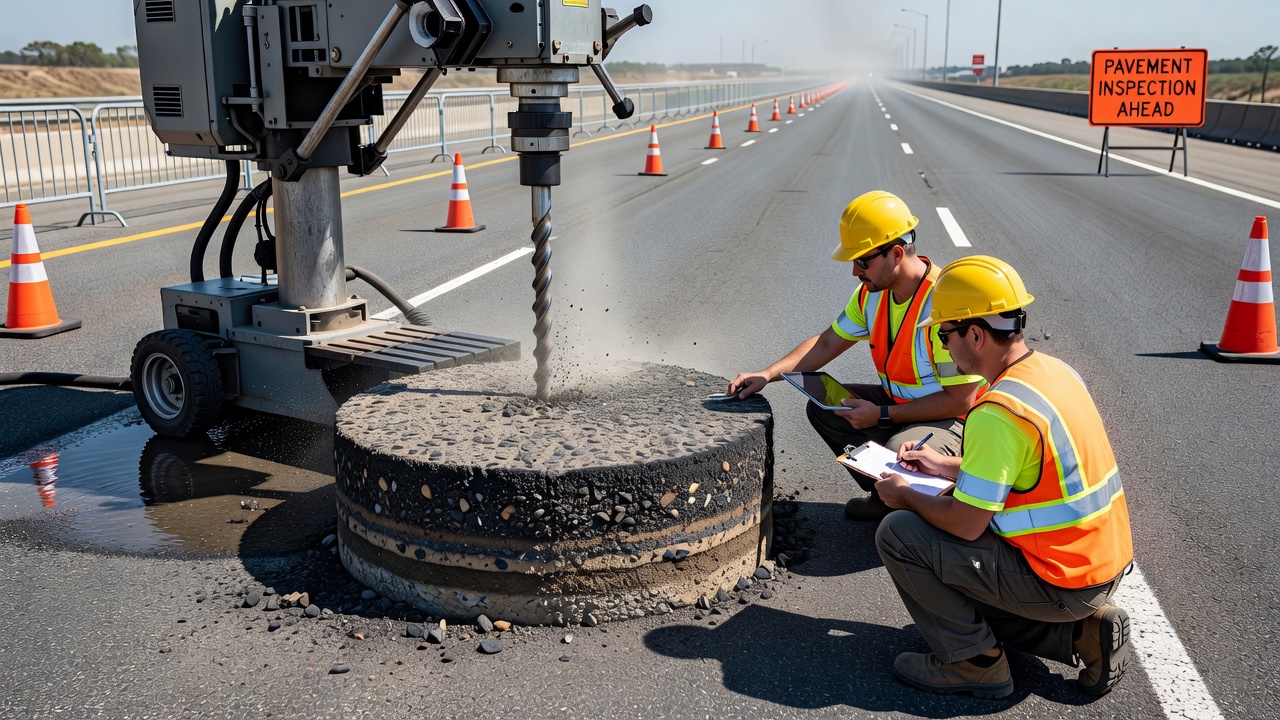
Quality control cores are extracted at a minimum frequency of one core per 500 tons of mix placed, with a minimum of 4-6 cores per project. Core testing includes:
- Density per AASHTO T 166 (Bulk Specific Gravity) or AASHTO T 275 (Paraffin-Coated Method) for porous mixes
- Air voids per AASHTO T 269, target 4% ±1% for surface courses
- Voids in mineral aggregate (VMA), minimum values specified by AASHTO M 323 based on nominal maximum aggregate size
- Voids filled with asphalt (VFA), 65-78% for intermediate traffic levels
- Thickness measurement with ±0.25 inch tolerance
Binder content verification on produced mix samples is conducted per AASHTO T 308 (ignition oven) at a minimum of one test per 500 tons. The measured binder content must be within ±0.3% of the mix design target binder content.
Performance testing for high-RAP mixes may include:
- Dynamic modulus (|E*|) per AASHTO T 378, verification against modulus predicted in the mix design
- SCB fracture energy at 25°C per AASHTO TP 124, minimum G_f of 400 J/m² for intermediate-temperature cracking resistance
- IDEAL-CT (Indirect Tensile Cracking Test) at 25°C per ASTM D8225, minimum CT_index of 40 for surface courses
- Hamburg wheel track testing per AASHTO T 324 for moisture damage and rutting resistance, typically 10,000 passes at 50°C with ≤12.5 mm rut depth
Lifecycle Assessment
Lifecycle assessment (LCA) quantifies the environmental impacts of RAP pavements compared to virgin alternatives across all phases from material extraction through end-of-life.
ISO Framework
LCA of pavement materials follows ISO 14040/14044 standards and the methodology developed by the FHWA Sustainable Pavements Program through the Pavement LCA Framework (FHWA-HIF-15-001, 2016). The framework defines five lifecycle phases: Material Production (A1-A3), Construction (A4-A5), Use (B1-B7) , Maintenance and Rehabilitation (B8-B10) , and End-of-Life (C1-C4) . A sixth Module D (Benefits Beyond System Boundary) accounts for avoided impacts from material recycling.
Material Production Phase (A1-A3)
The material production phase shows the greatest environmental benefit from RAP usage. The production of virgin asphalt binder (crude oil extraction, transportation, refining) contributes approximately 30-50% of the total cradle-to-gate GWP (Global Warming Potential) of virgin asphalt mixtures, measured as 150-250 kg CO₂e per ton of mixture. Virgin aggregate production (quarrying, crushing, screening) contributes approximately 5-10 kg CO₂e per ton.
RAP usage avoids both the binder production and aggregate extraction impacts. A well-to-wheel LCA by the Asphalt Pavement Alliance (APA) found that a 30% RAP mix reduces material production phase GWP by 22-25% compared to virgin mix. RAP processing (milling, crushing, screening, stockpiling) adds approximately 2-4 kg CO₂e per ton, a small fraction of the 40-60 kg CO₂e per ton avoided in virgin binder production.
Per NAPA/FP2 2023 lifecycle inventory data, the environmental impacts of RAP versus virgin materials per ton:
| Impact Category | Virgin Mix | 30% RAP Mix | 50% RAP Mix |
|---|---|---|---|
| Global Warming Potential (kg CO₂e) | 60-90 | 45-70 | 35-55 |
| Energy Demand (MJ) | 600-900 | 450-700 | 350-550 |
| Water Consumption (L) | 50-100 | 35-80 | 25-60 |
| Particulate Matter (g PM2.5e) | 15-30 | 12-25 | 8-20 |
Use Phase Considerations
The use phase includes pavement-vehicle interaction (PVI), the rolling resistance effect of pavement texture, stiffness, and roughness on vehicle fuel consumption. The FHWA Pavement LCA Framework and MIT Concrete Sustainability Hub research indicate that stiffer pavements (such as those with high RAP content) provide marginally lower rolling resistance and fuel consumption. However, the difference is small, approximately 0.5-1.0% reduction in fuel consumption for high-modulus RAP pavements compared to conventional pavements at equivalent roughness.
Carbonation of exposed aggregate in RAP mixes has been studied but is not yet incorporated into standard LCA practice. The exposed aggregate particles in pervious or porous asphalt surfaces may absorb atmospheric CO₂ over the service life, providing a carbon uptake of approximately 5-15 kg CO₂e per ton of RAP aggregate over a 20-year period, based on initial research by the University of California Pavement Research Center (UCPRC) .
End-of-Life Phase
At the end of service life, RAP-containing pavements can themselves be removed and recycled into new mixtures, creating a closed-loop recycling system. This recycling potential is accounted for in ISO Module D (Benefits Beyond System Boundary). Unlike virgin pavements, RAP pavements already contain recycled material, but the recycling process at end-of-life is the same, milling, crushing, and reuse.
Agency LCA Requirements
Several agencies now require LCA for pavement projects:
- Caltrans requires environmental product declarations (EPDs) for asphalt mixtures on projects exceeding 10,000 tons (2023 specification)
- Florida DOT incorporates LCA into the project evaluation criteria for sustainable pavements
- Washington State DOT uses LCA in the pavement type selection process
- Minnesota DOT conducted LCA demonstrating that 40% RAP base courses reduce life-cycle GWP by 35% compared to virgin base courses over a 50-year analysis period
The transportation climate impact index (TCII), a composite metric incorporating GWP, energy demand, water consumption, and the three R’s (reduce, reuse, recycle), is being developed under the AASHTO Committee on Environment and Sustainability (CES) and the AASHTO Standing Committee on Highways (SCOH) to standardize pavement sustainability evaluation across agencies.
Frequently Asked Questions
- What is Reclaimed Asphalt Pavement (RAP)?
- Reclaimed Asphalt Pavement (RAP) is the material generated when existing asphalt pavements are removed during rehabilitation or reconstruction. It consists of the aged asphalt binder and aggregates from the original pavement layers. RAP is processed by milling, crushing, and screening into a granular material suitable for reuse in new asphalt mixtures. According to NAPA, 96.1 million tons of RAP were used in new asphalt pavement mixtures in the United States in 2023, saving an estimated $4.5 billion compared to using all virgin materials.
- How is RAP processed for reuse?
- RAP processing involves three primary steps: milling or removal of the existing pavement using cold planing equipment that produces RAP particles typically 1/4 to 1/2 inch in size, crushing in impact crushers or jaw crushers to reduce oversized material, and screening through multiple deck screens to produce a consistent gradation. RAP is stockpiled by source and/or binder content grade to ensure quality control. Per AASHTO MP 31, processed RAP must pass a maximum screen size of 50 mm (2 inches) for use in HMA and maintain a moisture content below 5% at the time of mixing.
- What are the maximum RAP percentages allowed in asphalt mixes?
- Maximum RAP percentages vary by agency and pavement layer. AASHTO M 323 tiered approach specifies three levels: less than 15% RAP (no binder grade change required), 15-25% RAP (one grade softer virgin binder recommended), and greater than 25% RAP (requires blending chart analysis). For FAA airfield pavements per AC 150/5370-10H, RAP is limited to 20% in P-401 surface courses and P-403 base courses with the same PG binder grade as virgin mix. State DOTs commonly allow 25-30% RAP in base layers and 15-20% in surface layers. High-RAP mixes exceeding 40% require rejuvenators or recycling agents to restore aged binder properties.
- What is RAP binder blending?
- RAP binder blending is the process of combining the aged, stiff asphalt binder from RAP with virgin binder and/or rejuvenator to achieve target performance grade properties in the final mixture. The blending determines the effective binder grade of the combined binder system. A blending chart, constructed per ASTM D4886 or AASHTO R 35 methodology, plots the properties of virgin binder, RAP binder (extracted and recovered), and target blended binder on a log-log scale. The blending chart uses the log Penetration Rule (log Pen = a + b × log Viscosity) or the Viscosity Blending Rule (log log Viscosity blend = P × log log Viscosity RAP + (1-P) × log log Viscosity Virgin) where P is the blending ratio.
- What are rejuvenators in RAP mixes?
- Rejuvenators, also called recycling agents, are chemical additives designed to restore the rheological properties of aged RAP binder. They work by replenishing the light molecular weight fractions (maltenes) that are lost during asphalt aging. Common rejuvenator types include paraffinic oils (aromatic content less than 5%), aromatic extracts (high polar aromatic content, 100-2000 Poise viscosity at 60°C), naphthenic oils, tall oil derivatives, triglyceride-based bio-oils, and engineered polymer-modified rejuvenators. Rejuvenator dosage rates typically range from 2% to 12% by weight of RAP binder depending on RAP binder stiffness, target binder grade, and rejuvenator type. Excessive rejuvenator can produce overly soft binder prone to rutting, while insufficient dosage fails to restore cracking resistance.
- What are the performance concerns with high-RAP mixes?
- High-RAP mixes (greater than 25% RAP) exhibit increased stiffness and modulus from the aged binder, which improves rutting resistance but reduces cracking resistance. Key performance concerns include: thermal cracking from increased stiffness at low temperatures (PG low-temperature grade may shift 3-6°C higher), fatigue cracking from reduced binder ductility, moisture damage susceptibility if RAP fines coat aggregates and prevent virgin binder adhesion, workability issues during construction due to stiffer mix, and variability from inconsistent RAP sources. The LTPP SPS-10 study evaluated 22 test sections across 10 states and found that 30% RAP mixes performed equivalently to virgin mixes across multiple performance measures over up to 17 years of monitoring.
- How is RAP content verified during construction?
- RAP content during construction is verified through plant production records and laboratory testing. Asphalt plant batch tickets or continuous mix plant production data document the percentage of RAP by weight of total aggregate. QC/QA testing includes: ignition oven testing (ASTM D6307 / AASHTO T 308) to measure actual asphalt binder content of the produced mix and verify correct RAP contribution, gradation analysis of extracted aggregate, binder extraction and recovery using the Abson method (ASTM D1856 / AASHTO T 170) or rotary evaporator (ASTM D5404 / AASHTO T 319) for performance grade verification, and moisture content testing of RAP stockpiles. Field verification includes coring the completed pavement and testing core density, air voids, and binder content.
- What are the sustainability benefits of using RAP?
- RAP usage delivers substantial environmental and economic benefits. According to NAPA's 2023 survey, RAP use in the US saved 96.1 million tons of virgin aggregate and reduced asphalt binder consumption by approximately 4.8 million tons. Lifecycle assessment studies show greenhouse gas emission reductions of 20-35% for high-RAP mixes compared to virgin mixes. Energy savings are approximately 20% from reduced material extraction, transportation, and processing. The US EPA and FHWA recognize RAP as the most recycled material in the country by both tonnage and percentage. For every 10% RAP content increase, approximately 1.5 tons of CO2 equivalent per lane-mile of pavement are avoided in production emissions.
- What inspections are required for RAP-containing pavements?
- Inspection of RAP-containing pavements follows the same QC/QA protocols as virgin asphalt pavements with additional verification of RAP content and uniformity. Key inspection activities include: verification of RAP stockpile management (separation by source, moisture control, contamination prevention), review of mix design and blending chart documentation, plant inspection for RAP feed system calibration, temperature monitoring (RAP is typically heated to 100-130°C in the drum mixer to prevent binder stripping), and fume emissions control, placement inspection (mat temperature, compaction rolling patterns, joint construction), core testing for density, air voids, VMA (voids in mineral aggregate), and VFA (voids filled with asphalt), and coring after cooling to verify thickness and compaction. For high-RAP mixes, additional testing for stiffness (dynamic modulus, AASHTO T 378) and cracking resistance (SCB test, AASHTO TP 124 or IDEAL-CT, ASTM D8225) may be specified.