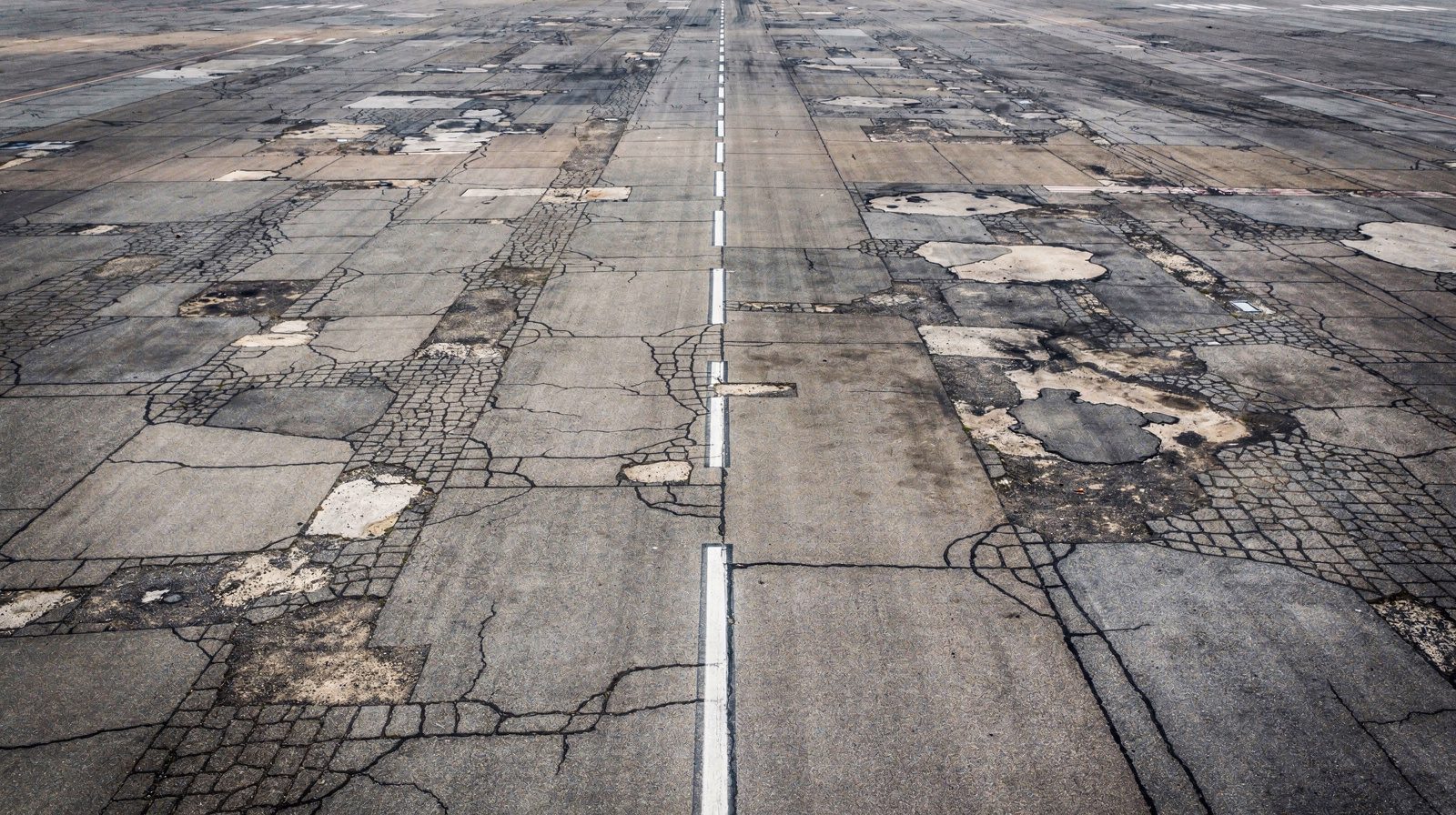
What is a Seal Coat in Pavement Preservation?
Seal Coat, Thin Bituminous Surface Treatment for Pavement Preservation
A seal coat is a thin bituminous surface treatment applied to an existing asphalt pavement to provide a protective barrier against environmental degradation, restore surface friction, and extend the functional service life of the pavement. The Asphalt Institute formally defines a seal coat as “a thin surface treatment used to improve the surface texture and protect an asphalt surface.” This definition captures the dual purpose of seal coats: they protect the underlying pavement from moisture infiltration, oxidation, and UV radiation, while simultaneously improving the surface characteristics, friction, appearance, and water-shedding ability, that support safe and efficient traffic operations.
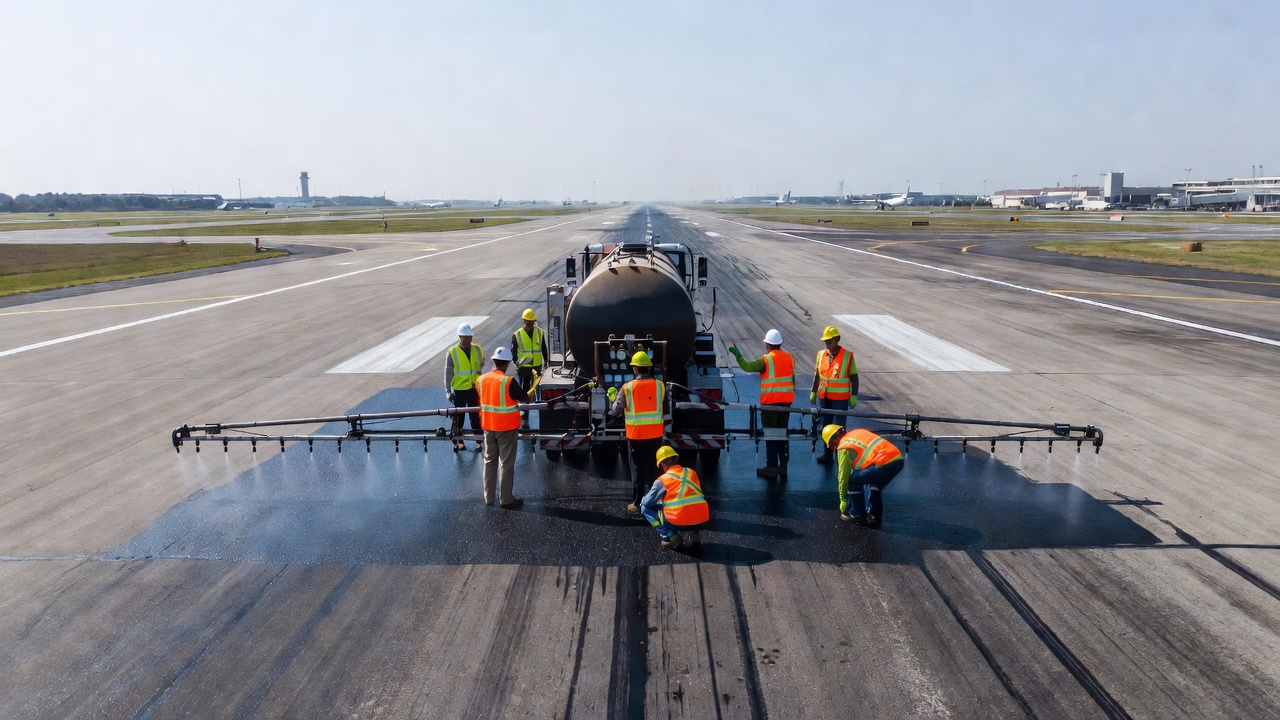
Seal coats are fundamentally distinct from structural overlays in that they do not add structural capacity to the pavement system. A properly designed seal coat has a thickness measured in millimetres, typically 3 to 15 mm depending on the type, compared to hot-mix asphalt overlays that range from 40 to 150 mm. The seal coat functions entirely at the pavement surface, sealing cracks narrower than approximately 6 mm, preventing water from penetrating the pavement structure, and protecting the asphalt binder from the oxidative and photolytic aging that occurs at the exposed surface. Seal coats are classified under the broader category of pavement preservation treatments, defined by the Federal Highway Administration (FHWA) as “a proactive approach to maintaining and extending the life of existing pavements through cost-effective treatments applied at the optimal time.”
The dominant binder material for modern seal coats is asphalt emulsion, a dispersion of microscopic asphalt particles in water, stabilized by emulsifying agents (surfactants). Emulsions offer significant advantages over cutback asphalts (which require petroleum solvents) and hot paving-grade asphalt cements (which require high application temperatures): they can be applied at ambient or slightly elevated temperatures (50°C to 85°C), they emit virtually no volatile organic compounds during application, they can be applied to damp pavement surfaces without adhesion loss, and they offer excellent workability and uniform coverage. The three fundamental categories of asphalt binders used in seal coats are comprehensively detailed in the USDA Forest Service publication Asphalt Seal Coat Treatments (Yamada, 1999) and in the TxDOT Seal Coat and Surface Treatment Manual (revised September 2024), which together provide the most authoritative guidance on seal coat material selection, design methods, and quality control.
Seal Coat Types, Comprehensive Classification
The range of seal coat types available to pavement engineers spans a spectrum of complexity, cost, and performance capability. The choice among these types depends on the existing pavement condition, traffic volume and composition, climate, available construction window, budget, and the specific functional deficiencies that the treatment is intended to address. The Asphalt Institute and the Pavement Preservation and Recycling Alliance (PPRA) recognize eight principal seal coat types. Each is described below with its material composition, application method, performance characteristics, and typical service life.
Fog Seal, A fog seal is the lightest and simplest seal coat type, consisting of a single application of diluted asphalt emulsion sprayed uniformly onto the pavement surface. The emulsion is typically diluted with water at a ratio of 1:1 to 1:3 (emulsion to water) to achieve a low-viscosity fluid that can penetrate surface voids and minor cracks. The diluted emulsion is applied at a rate of 0.2 to 0.7 liters per square meter of undiluted emulsion equivalent. Fog seals serve three primary functions: they seal the pavement surface against water infiltration, they coat and re-adhere loose fine aggregate particles (reducing early-stage raveling), and they restore the dark black appearance of the pavement, improving contrast with pavement markings. A fog seal is not a skid treatment, in fact, a fog seal can temporarily reduce surface friction until the emulsion cures and traffic wear exposes the underlying aggregate texture. Fog seals are best suited to low-volume roads, parking lots, and airfield pavements where the primary need is surface protection rather than friction restoration. The service life of a fog seal ranges from 2 to 4 years, depending on traffic volume and environmental exposure. The key limitation is that a fog seal does not add aggregate to the surface, if the existing pavement surface texture is inadequate, a fog seal alone will not improve it.
Rejuvenating Fog Seal, A rejuvenating fog seal is a specialized variant that incorporates chemical rejuvenating agents, typically maltene-rich petroleum oils, bio-based oils, or proprietary rejuvenator compounds, into the diluted asphalt emulsion. These rejuvenating agents penetrate the aged pavement surface and diffuse into the oxidized binder, restoring the chemical balance between asphaltenes and maltenes that shifts as the binder ages. The rejuvenation process softens the brittle surface binder, restoring flexibility and adhesive capability. A rejuvenating fog seal is significantly more effective than a conventional fog seal for pavements exhibiting surface oxidation, fine hairline cracking, and beginning raveling. Research conducted at the National Center for Asphalt Technology (NCAT) has demonstrated that rejuvenating fog seals can reduce the rate of oxidative binder aging by 30% to 50% compared to untreated surfaces. The application rate, curing time, and cost are generally higher than for conventional fog seals, but the extended service life (3 to 5 years) and the genuine restoration of binder properties make rejuvenating fog seals a cost-effective treatment for pavements in the early stages of oxidative deterioration.
Sand Seal, A sand seal consists of a sprayed application of asphalt emulsion followed immediately by a covering of clean, dry sand or very fine aggregate (typically passing the No. 4 sieve, 4.75 mm). The sand is broadcast uniformly over the wet emulsion at a rate of 5 to 10 kg per square meter, and the surface is rolled with a pneumatic-tire roller to seat the sand particles into the binder. After rolling, excess sand is swept from the surface. Sand seals serve to enrich weathered, porous pavement surfaces, fill very fine cracks and surface voids, and provide a modest improvement in skid resistance. The sand layer also protects the emulsion film from tracking by traffic during the initial curing period. Sand seals are appropriate for low-volume roads, shoulders, and pedestrian areas. Service life is typically 3 to 5 years. The primary disadvantage is that the sand cover can be scuffed away under heavy traffic, leaving the underlying emulsion exposed and potentially slick.
Scrub Seal, A scrub seal is a specialized treatment in which the asphalt emulsion is mechanically worked into the pavement surface using a drag broom or rotating brush immediately behind the distributor truck. The brooming action forces the emulsion into cracks, joints, and surface voids, providing deeper penetration and better adhesion than a simple spray application. After scrubbing, a sand or fine aggregate cover is applied and rolled. Scrub seals are particularly effective on pavements with extensive fine cracking (alligator cracking at low severity) because the broomed emulsion fills and seals cracks that would otherwise be bridged rather than filled by a conventional fog seal. The scrub seal method, developed and refined in the western United States, has been documented in USDA Forest Service publications as an effective means of “eliminating or reducing crack-sealing costs”, the broomed emulsion effectively seals cracks up to 6 mm wide without requiring separate crack filling operations. Service life ranges from 3 to 6 years depending on traffic and surface condition.
Chip Seal, A chip seal (also called a seal coat or surface treatment in some regions) is a two-stage process: an application of asphalt binder (either hot asphalt cement, cutback asphalt, or asphalt emulsion) is sprayed onto the pavement surface at a controlled rate, followed immediately by a uniform layer of crushed aggregate chips that are spread, rolled, and embedded into the binder. The aggregate chips, typically 4.75 mm to 12.5 mm in nominal maximum size, provide a new wearing surface with excellent skid resistance, while the binder layer seals the pavement against moisture intrusion. Chip seals are the most widely used seal coat type for highway and road applications globally, accounting for the largest lane-kilometers of surface treatment of any preventive maintenance method.
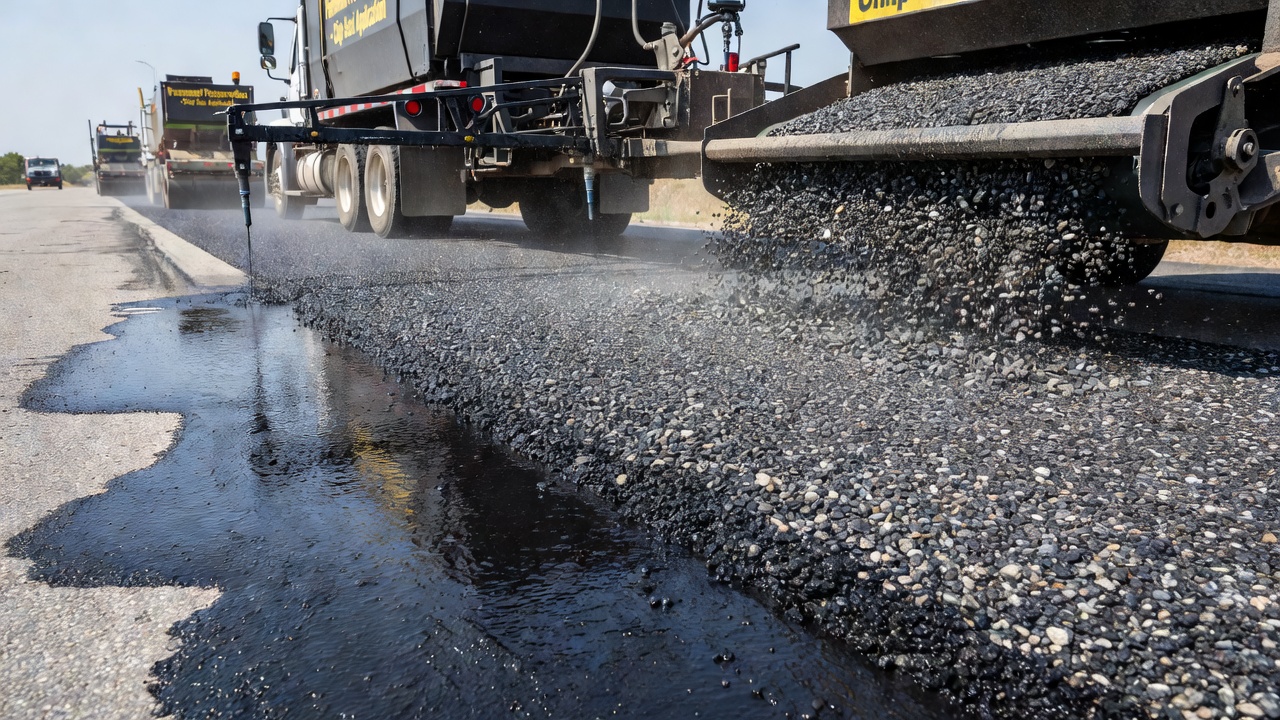
The aggregate embedment depth, the percentage of each chip’s height that is embedded into the binder after rolling, is the critical quality parameter for chip seal performance. Standard specifications require that aggregate embedment be within the range of 50% to 70% of the chip height after rolling. Embedment less than 50% results in aggregate loss (raveling of the chip seal), while embedment greater than 70% risks the binder riding up over the chip tops, causing flushing and reduced friction. The McLeod design method (detailed in TxDOT’s Seal Coat and Surface Treatment Manual and the basic reference McLeod, N.W., “A General Method of Design for Seal Coats and Surface Treatments,” Proceedings of AAPT, 1969) provides the engineering basis for determining binder and aggregate application rates based on aggregate gradation, shape, specific gravity, and traffic level. Single chip seals serve 5 to 8 years, double chip seals (two layers of binder and aggregate) serve 8 to 12 years.
Multiple Chip Seals, For pavements requiring greater durability or where the existing surface is heavily cracked, multiple layers of chip seal can be applied sequentially. A double chip seal applies a larger aggregate in the first layer and a smaller aggregate in the second layer, filling the voids and producing a denser, more durable surface. Triple chip seals are used in the most demanding applications. The Sandwich Seal is a variant where aggregate is placed first, followed by binder, followed by a second, smaller aggregate, essentially reversing the chip seal sequence for the first layer. Multiple chip seals are commonly used on low-volume roads where structural overlays are not cost-justified and on forest service and rural roads where materials availability and construction accessibility limit options.
Slurry Seal, A slurry seal is a cold-mixed combination of emulsified asphalt, well-graded fine aggregate, mineral filler (typically Portland cement or hydrated lime), and water, mixed in a specialized continuous-flow mixing machine (a slurry seal machine) and spread on the pavement surface in a thin layer, typically 3 to 8 mm thick. The mixture has the consistency of a thick liquid or thin mortar and is spread using a squeegee box that strikes off the slurry to a controlled thickness and width. Slurry seals fill minor surface cracks, restore a uniform surface texture, and restore friction values on pavements where the aggregate has become polished. Slurry seals are not appropriate for filling ruts deeper than approximately 6 mm or for correcting structural deficiencies.
The International Slurry Surfacing Association (ISSA) classifies slurry seals by aggregate gradation: Type I (fine, 4.75 mm maximum aggregate size) for parking lots and light traffic, Type II (6.25 mm maximum) for residential streets and low-volume roads, and Type III (9.5 mm maximum) for higher-volume roads requiring greater durability. Slurry seals typically provide a service life of 4 to 7 years. The key advantage of slurry seals over chip seals is the absence of loose aggregate, there is no chip loss or windshield damage risk, making slurry seals suitable for urban streets and airport pavements where loose stone hazards are unacceptable. The primary disadvantage is the need for specialized mixing and placement equipment and the sensitivity of the curing process to weather conditions (ambient temperature above 10°C and no rain forecast for 24 hours).
Microsurfacing, Microsurfacing is a polymer-modified version of slurry seal that represents the most technologically advanced seal coat type. The material consists of polymer-modified emulsified asphalt (typically SBS or SBR latex at 3% to 5% by weight of binder), crushed dense-graded aggregate, mineral filler, water, and chemical additives (set control agents) that control the curing rate. The polymer modification provides superior adhesion, flexibility, and durability compared to conventional slurry seal, allowing thicker single-pass applications (up to 20 mm) and faster traffic return times. Microsurfacing can be applied in layers of 6 to 20 mm thickness, making it suitable for restoring surface profile, filling ruts up to 40 mm deep (when applied in multiple layers), and providing a structurally competent wearing surface.
The rapid-setting chemistry of microsurfacing is a defining characteristic: the material breaks (separates into asphalt and water phases) within 10 to 30 minutes of placement, and traffic can typically be permitted within 1 to 4 hours under favorable weather conditions. This rapid return to service is a critical advantage for high-traffic roads and airfield pavements where closure windows are limited. Microsurfacing has demonstrated service lives of 6 to 10 years on properly selected pavements. The ISSA specification A143 (Recommended Performance Guidelines for Micro-Surfacing) provides comprehensive material, mix design, and construction quality control requirements. Microsurfacing is the preferred slurry-type treatment for airport pavements due to its polymer enhancement, rapid curing, and superior rut-filling capability.
Cape Seal, A cape seal is a two-layer composite treatment in which a chip seal is placed first (providing a waterproof, stress-relieving membrane), followed after a curing period of 2 to 7 days by a slurry seal or microsurfacing layer. The chip seal layer seals cracks and provides flexibility, while the slurry/microsurfacing layer provides a smooth, dense, wear-resistant surface with excellent friction characteristics. The cape seal combines the crack-bridging capability of a chip seal with the smoothness and FOD-free operation of a slurry seal, making it particularly suitable for pavements with moderate cracking where a chip seal alone would be too rough and a slurry seal alone would not bridge cracks effectively.
The cape seal originated in South Africa (hence the name, referencing the Cape of Good Hope region) and has been adapted for use in the United States, Australia, and Europe. The Minnestoa Department of Transportation (MnDOT) and the Texas DOT have developed specific cape seal specifications. The total thickness of a cape seal ranges from 10 to 25 mm, and the combined service life is typically 8 to 12 years. Cape seals are more expensive than either chip seals or slurry seals alone but provide superior performance on pavements with moderate structural cracking that are not candidates for overlay but require more than a single surface treatment.
Material Selection for Seal Coats
The selection of binder and aggregate materials for a seal coat project is governed by the pavement condition, traffic level, climate, aggregate availability, contractor capability, and project budget. Material selection decisions must be grounded in laboratory testing and field experience to ensure that the selected combination of binder and aggregate will perform acceptably under the specific conditions of the project.
| Seal Coat Type | Binder Type | Binder Application Rate | Aggregate Type | Aggregate Size | Typical Thickness |
|---|---|---|---|---|---|
| Fog Seal | Diluted emulsion (SS-1, CSS-1, CQS-1) | 0.2–0.7 L/m² (undiluted basis) | None | N/A | 0.5–2 mm film |
| Sand Seal | Emulsion (SS-1, CSS-1) | 0.7–1.5 L/m² | Clean sand | Passing No. 4 (4.75 mm) | 3–6 mm |
| Chip Seal | Hot AC, cutback MC, emulsion | 1.0–2.5 L/m² | Crushed aggregate | 4.75–12.5 mm NMAS | 6–15 mm |
| Slurry Seal | Emulsion (SS-1, SS-1h) | 10–25 kg/m² total mix | Fine aggregate | 4.75–9.5 mm NMAS | 3–8 mm |
| Microsurfacing | Polymer-modified emulsion | 15–35 kg/m² total mix | Crushed aggregate | 4.75–9.5 mm NMAS | 6–20 mm |
| Cape Seal | Emulsion + polymer emulsion | Per component design | Aggregate + fine agg. | 4.75–12.5 mm chip + slurry | 10–25 mm |
Asphalt Emulsion, Emulsified asphalt is the most common binder for seal coats. The key selection parameters are: emulsion type (anionic or cationic), setting rate (rapid-set RS, medium-set MS, slow-set SS), and viscosity grade. Cationic emulsions (denoted by the prefix “C,” e.g., CSS-1, CRS-2) are preferred for most applications because the positive charge of the cationic emulsion is attracted to the negative charge of most aggregate surfaces, promoting rapid and strong adhesion. Rapid-setting emulsions (CRS-2, CRS-2P) cure quickly and resist wash-off by rain, making them the standard choice for chip seals. Slow-setting emulsions (SS-1, CSS-1) provide longer working time and deeper penetration, making them suitable for fog seals, sand seals, and slurry seals. The residual asphalt content of emulsions used for seal coats is typically 60% to 67% by mass.
Cutback Asphalt, Cutback asphalts are asphalt cements dissolved in petroleum solvents (naphtha, kerosene, or heavy oil). Medium-curing (MC) cutbacks such as MC-30 and MC-70 are used for prime coats and some seal coat applications. The solvent evaporates after application, leaving the asphalt cement on the pavement surface. Cutbacks offer better penetration into aged, porous pavements than emulsions and can be applied at lower temperatures than hot asphalt cement. However, their use has declined substantially due to environmental concerns, the solvent evaporation releases volatile organic compounds (VOCs) into the atmosphere, and many jurisdictions now restrict or prohibit cutback use. The energy cost of solvent production and the fire hazard associated with solvent storage and handling are additional disadvantages.
Paving-Grade Asphalt Cement, Hot asphalt cement (performance-graded PG binder, typically PG 64-22, PG 70-22, or PG 76-22) is used for chip seals where maximum adhesion and durability are required. The binder is heated to 150°C to 180°C and sprayed onto the pavement surface. Hot-applied chip seals develop the strongest bond between binder and aggregate because there are no emulsifying agents or solvents that can interfere with adhesion. The primary disadvantages are the high energy cost of heating the binder, the need for specialized heated distributor trucks, and the safety hazard associated with hot binder. Hot-applied chip seals are common on high-traffic highways and are specified under some state DOT standard specifications.
Polymer Modification, Polymer modification of asphalt binders for seal coats has become standard practice for high-performance applications. The most common polymers are: Styrene-Butadiene-Styrene (SBS) block copolymer, which provides elastic recovery and improved high-temperature rut resistance, Styrene-Butadiene Rubber (SBR) latex, which improves low-temperature flexibility and adhesion, and natural rubber latex, which improves binder cohesion and chip retention. Polymer modification at 3% to 5% by weight of binder increases the performance grade by one to two grades, improves adhesion to aggregate, and enhances the durability and fatigue resistance of the seal coat. The FAA Item P-623 specification for airport spray seal coats requires a minimum of 3% polymer by weight of asphalt binder.
Aggregate Selection for Chip Seals and Slurry Seals, Aggregate quality is as important as binder quality for seal coat performance. The key aggregate properties specified in standard seal coat specifications include:
Gradation: The aggregate must be single-sized or narrowly graded to ensure uniform embedment into the binder and consistent surface texture. Gap-graded or well-graded aggregates do not perform well in chip seals because the fine particles fill the binder layer and prevent proper embedment of the larger particles.
Los Angeles Abrasion Loss: Maximum 35% at 500 revolutions (ASTM C131). Aggregates with higher abrasion loss degrade under traffic, generating dust and losing skid resistance.
Fractured Faces: Minimum 75% of particles with at least one mechanically fractured face (ASTM D5821). Angular, fractured aggregate provides better interlock and embedment than rounded aggregate.
Flakiness Index: Maximum 25% (BS EN 933-3 or equivalent). Flat and elongated particles lie flat in the binder rather than standing on edge, reducing embedment depth and increasing the risk of aggregate loss.
Soundness: Maximum 15% loss using sodium sulfate soundness test (ASTM C88). Aggregates that degrade under freeze-thaw cycling will fail prematurely in the seal coat.
Precoated Aggregate, For chip seals, precoated aggregate (aggregate coated with a thin layer of asphalt binder at the crushing plant) provides improved adhesion between the aggregate and the field-applied binder. The precoating eliminates dust from the aggregate surface, provides a chemical compatibility layer, and darkens the aggregate to match the binder color. The precoating rate is typically 0.5% to 1.5% by weight of aggregate. TxDOT specifications require precoated aggregate for chip seal applications on high-speed, high-volume roadways.
Application Methods and Quality Control
Seal coat application success depends on precise control of material application rates, proper surface preparation, favorable environmental conditions, and skilled equipment operation. The quality of the completed seal coat is determined in the first minutes after placement, errors in binder application rate, aggregate spreading delay, or rolling pattern cannot be corrected after the material sets.
Surface Preparation
The existing pavement surface must be clean, dry (for hot asphalt and cutback binders) or damp (for emulsion binders), and free of loose material, vegetation, oil spots, and other contaminants. Cleaning operations include: power sweeping to remove loose debris, dirt, and dust, compressed air blowing along cracks, joints, and pavement edges to remove accumulated fines, vegetation removal from cracks and pavement edges using approved herbicides or mechanical methods, and oil spot treatment, petroleum-contaminated areas must be cleaned and primed with a compatible material or removed by milling and patching.
Crack sealing must be performed before seal coat application for cracks wider than 3 to 6 mm. The crack sealant must be allowed to cure fully, typically 24 to 48 hours depending on the sealant type, before the seal coat is applied. Crack sealant that has not fully cured can be picked up by the emulsion or binder, causing adhesion failure at the seal coat-pavement interface. Cracks narrower than 3 mm will typically be sealed by the seal coat binder without requiring pre-treatment.
Environmental Conditions
The ambient and pavement surface temperature at the time of application must be within the range specified for the particular binder. General requirements include: ambient air temperature, minimum 10°C (50°F) and rising for emulsion applications, minimum 15°C (60°F) for hot asphalt cement applications, pavement surface temperature, minimum 15°C (60°F) for emulsions, minimum 20°C (68°F) for hot asphalt, weather, no rain forecast for 24 hours after application, relative humidity below 80% for emulsion applications (high humidity retards water evaporation from emulsions), and wind speeds below 30 km/h to prevent drift and overspray of the binder.
Binder Application
The asphalt distributor truck is the critical piece of equipment for seal coat application. Modern distributors are equipped with: a heated, insulated tank with agitation system to maintain uniform binder temperature and consistency, a computerized metering system that controls the binder application rate based on travel speed, pump output, and spray bar width, a full-circulation spray bar with individually adjustable nozzle tips that provide uniform spray pattern across the full width, and a tachometer and temperature recording system for quality control documentation.
The binder application rate is determined by the design method (McLeod method for chip seals, manufacturer recommendations for slurry seals, or standard specifications for fog seals). The application rate must be verified by the calibration strip test, a pre-construction test in which the distributor sprays a measured quantity of binder onto a tared plastic sheet or collection pan placed on the pavement, and the actual application rate is calculated gravimetrically. The measured rate must be within ±5% of the target rate. Spray bar nozzle height is set to produce a double or triple overlap of spray patterns from adjacent nozzles, ensuring uniform transverse distribution. Streaking, visible longitudinal bands of varying binder thickness, is a common application defect caused by clogged or misaligned nozzles, incorrect spray bar height, or pump surging.
Aggregate Application (Chip Seals)
For chip seals, aggregate must be applied within 30 seconds of binder application, before the binder cools (hot asphalt) or breaks (emulsion). Aggregate spreaders (self-propelled or towed) must be calibrated to achieve the specified aggregate application rate, typically 8 to 15 kg/m² depending on aggregate size and design. The aggregate must be applied uniformly with complete coverage, no visible binder should remain uncovered. Any deficient areas must be hand-spread immediately.
Rolling begins immediately after aggregate spreading using pneumatic-tire rollers (preferred for chip seals because the flexible tires seat the aggregate without crushing it). A minimum of three to four roller passes is required. The rolling pattern must cover the entire width, including edges and joints. Rolling speed should be limited to 5 to 8 km/h to avoid dislodging the aggregate. After rolling, any excess loose aggregate is removed by sweeping, typically the morning after construction for emulsion chip seals, or within 24 hours for hot-applied seals. Traffic is then permitted, initially at reduced speeds (40 km/h or 25 mph) for 24 to 48 hours to allow the aggregate to seat fully under traffic.
Quality Control Testing
Standard quality control tests for seal coat construction include:
| Test | Method | Frequency | Acceptance Criteria |
|---|---|---|---|
| Binder application rate | Calibration strip (gravimetric) | Per project start, per shift, per material change | Target ±5% |
| Aggregate application rate | Pan collection (catch pans) | Per 300 m of application | Target ±10% |
| Aggregate embedment | Visual embedment test (sampled chips) | Per 500 m of application | 50%–70% of chip height |
| Emulsion temperature | Infrared thermometer or tank gauge | Continuous | As specified (50–85°C typical) |
| Binder viscosity | Saybolt Furol viscometer (ASTM D88) | Per delivery lot | Per specification |
| Binder residue content | Evaporation test (ASTM D6934) | Per delivery lot | Per specification (typically 60–67%) |
Performance and Service Life
The service life of a seal coat depends on the type of treatment, the condition of the existing pavement at the time of application, traffic volume and loading, climate, and construction quality. The typical service life ranges cited in the literature and by state DOTs are:
Fog Seal: 2 to 4 years. The thin binder film wears away under traffic and UV exposure. Reapplication may be possible after 2 to 3 years.
Chip Seal (Single): 5 to 8 years. Aggregate loss and binder oxidation are the primary failure modes. Double chip seals achieve 8 to 12 years.
Slurry Seal: 4 to 7 years. Surface wear and binder aging limit service life. Polymer modification extends life toward the upper range.
Microsurfacing: 6 to 10 years. The polymer-modified binder provides superior durability. Rut filling capability extends the functional life where profile correction is needed.
Cape Seal: 8 to 12 years. The composite structure provides the longest service life of any seal coat type.
The critical factors that determine whether a seal coat achieves or exceeds its expected service life include: the structural condition of the pavement at the time of application (seal coats applied to pavements with existing structural distress will fail rapidly), the quality of construction (application rate accuracy, aggregate embedment, curing conditions), traffic volume (higher traffic accelerates wear), and climate (UV radiation, temperature extremes, and precipitation accelerate binder aging). The University of Pittsburgh IRISE study Asphalt Pavement Seal Coats: Best Practices and Experience (Dave et al., January 2025) reports that seal coats applied to pavements in fair-to-good condition (PCI 60–80) achieve 80% to 100% of their design service life, while seal coats applied to pavements in poor condition (PCI below 50) achieve only 20% to 40% of design life.
Seal Coat Condition Assessment
Seal coat condition assessment during pavement inspection focuses on identifying the specific distresses and failure modes that affect surface treatments. While some distresses (cracking, rutting) are common to both seal coats and structural asphalt pavements, seal coats exhibit several unique distress mechanisms that require specialized inspection protocols.
Aggregate Loss (Raveling of the Seal Coat), This is the most common failure mode for chip seals and the most visible indicator of seal coat deterioration. Aggregate loss occurs when the bond between the aggregate chip and the binder fails, causing individual chips to be dislodged by traffic or weather. The TxDOT classification for seal coat raveling rates the distress as low, medium, or high based on the percentage of aggregate loss per unit area. Low-severity raveling involves less than 20% aggregate loss, medium-severity involves 20% to 50% loss, high-severity involves more than 50% aggregate loss with the underlying binder layer beginning to fail.
Flushing (Bleeding), Flushing is the migration of excess binder to the pavement surface, forming a smooth, shiny film that reduces skid resistance. It occurs when the binder application rate was too high, the aggregate embedment was too deep, or the binder softened under high temperatures and rose through the aggregate structure. Flushing is rated by the percentage of surface area affected and the reduction in surface texture. Severe flushing creates a hazardous, low-friction surface condition that requires immediate corrective treatment (typically a light application of sand or fine aggregate to absorb the excess binder).
Streaking, Longitudinal bands of visible binder variation across the pavement width, caused by non-uniform spray bar operation. Streaking indicates poor distributor calibration, clogged nozzles, or incorrect spray bar height. It is recorded during construction quality control and is an acceptance-testable defect, if streaking exceeds specification limits, the contractor may be required to adjust or replace the spray bar and re-treat the affected area.
Poor Adhesion or Bond, Delamination or peeling of the seal coat from the underlying pavement surface. This failure occurs when the existing pavement surface was not properly cleaned, the binder was applied at too low a temperature, or moisture was trapped between the old surface and the new seal coat. Poor adhesion is identified by the presence of loose, peeling seal coat fragments and by the sound of hollow areas when tapped with a hammer.
Reflective Cracking, Cracks in the existing pavement that propagate through the seal coat, appearing as matching crack patterns in the new surface. Seal coats do not prevent reflective cracking, they may delay it by 1 to 3 years depending on the crack-bridging capability of the treatment (chip seals bridge cracks better than slurry seals or fog seals). Reflective cracking in seal coats is rated by crack width, density, and extent.
Wear and Polishing, The gradual abrasion of aggregate particle surfaces under traffic, reducing the macrotexture and microtexture that provide skid resistance. Polished aggregate is identified by smooth, shiny aggregate surfaces without the sharp edges present in new material. Wear is the progressive thinning of the seal coat layer under traffic.
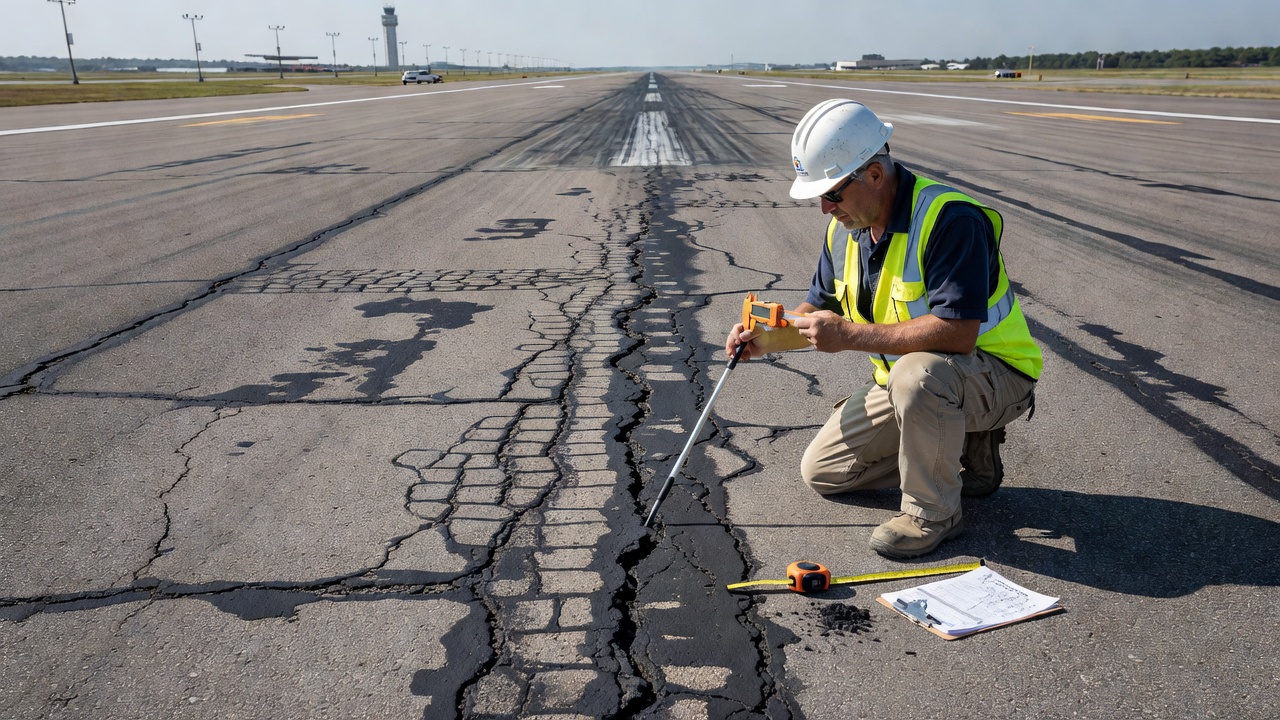
The Pavement Condition Index (PCI) methodology (ASTM D6433 for roads and parking lots, ASTM D5340 for airport pavements) provides a standardized framework for assessing seal coat condition. Under the PCI system, each distress type is assigned a deduct value based on its severity (low, medium, high) and extent (measured in square meters or linear meters). The sum of deduct values is subtracted from 100 to obtain the PCI score. A pavement with a sound, functional seal coat will typically have a PCI of 70 to 90, as the seal coat deteriorates and underlying distresses begin to appear, the PCI drops into the 50 to 70 range, signaling the need for resurfacing or a new seal coat.
The FAA Pavement Distress Assessment (PDA) system, described in AC 150/5380-7 Airport Pavement Management Program, provides a standardized inspection protocol for airport pavements that includes seal coat specific distresses. The PDA system uses the same distress types as the PCI method but provides additional guidance for airfield-specific inspection considerations, including FOD risk assessment, friction degradation, and the interaction between seal coat condition and grooved runway surfaces.
Airport Pavement Seal Coat Applications
Seal coats on airport pavements are subject to more stringent material specifications, application requirements, and condition assessment protocols than seal coats on roadways. The FAA addresses seal coat applications through two primary regulatory documents: Advisory Circular AC 150/5380-6C (Guidelines and Procedures for Maintenance of Airport Pavements) and Item P-623 in AC 150/5370-10 (Standards for Specifying Construction of Airports).
FAA Item P-623, Emulsified Asphalt Spray Seal Coat
Item P-623 is the FAA’s standard specification for polymer-modified emulsified asphalt spray seal coats on airport pavements. Key provisions include:
Applicability: P-623 is approved for use on all pavements except runways serving airplanes 30,000 lbs (5,670 kg) or less, and any pavements on which aircraft do not operate including shoulders, overruns, roads, and parking areas. The Engineer, with FAA concurrence, may specify P-623 for airports serving airplanes less than 60,000 lbs (27,216 kg) except for runways and acute-angled exit taxiways. This restriction reflects the FAA’s conservative approach to seal coat use on high-speed, high-criticality runway surfaces where the risk of reduced friction or FOD generation is unacceptable.
Pavement Candidate Requirements: The existing pavement must be in fair or better condition as defined by ASTM D5340 or the PASER (Pavement Surface Evaluation and Rating) manual (AC 150/5320-17). The pavement must have a Pavement Condition Index of 60 or greater and a Structural Condition Index deduct value of less than 10. These thresholds ensure that the seal coat is applied to a structurally sound pavement where it can provide its intended protective function.
Material Requirements: The seal coat material must be a polymer-modified asphalt emulsion with a minimum of 3% polymer by weight of asphalt binder. The emulsion must meet specified properties for density (9.0 to 12.0 lb/gal), residue by evaporation (44% minimum, 56% maximum), water content, ash content of residue (40% maximum), uniformity, wet film continuity, heat resistance, water resistance, flash point, and flexibility. The FAA polymer modification requirement is more stringent than most highway specifications and reflects the higher performance demands of airfield pavements.
Application Requirements: The application may be performed as a two-coat (minimum 0.30 gal/yd² total) or three-coat (0.30 to 0.55 gal/yd² total) system. Individual coat application rates range from 0.08 to 0.20 gal/yd² per coat. The Engineer selects the application rate based on local pavement conditions including surface texture, porosity, and age. Tack coat may be required between coats. The seal coat must be applied to a clean, dry pavement surface at ambient temperatures above 10°C (50°F).
ICAO Guidance
The International Civil Aviation Organization (ICAO) addresses pavement surface treatments in Annex 14, Aerodrome Design and Operations, Volume I, and in the Aerodrome Design Manual (Doc 9157), Part 3, Pavements. While ICAO does not prescribe specific seal coat material specifications, it requires that: “The surface of a paved runway shall be maintained in a condition so as to provide good friction characteristics and low rolling resistance.” This functional requirement, combined with ICAO’s guidance on pavement condition monitoring through Pavement Condition Index surveys (typically conducted at 3- to 5-year intervals), establishes the framework within which seal coats are evaluated and applied at international airports.
The ICAO Airport Services Manual (Doc 9137), Part 2, Pavement Surface Conditions provides detailed guidance on friction measurement, surface texture assessment, and the relationship between surface treatment condition and aircraft operational safety. The manual recommends that friction measurements using Continuous Friction Measuring Equipment (CFME) be conducted on runways at least annually, and that corrective action, which may include seal coat application, be taken when friction levels fall below defined minimum thresholds.
Airport-Specific Application Considerations
Seal coat application on airfields presents unique challenges not encountered in highway applications. Airport seal coats must: cure rapidly enough to allow aircraft operations to resume within available closure windows (typically 4 to 8 hours for nighttime closures), provide friction levels meeting or exceeding ICAO minimum requirements immediately upon return to service, generate zero FOD, no loose aggregate, no peeling seal coat fragments, no tracking, resist chemical attack from jet fuel, hydraulic fluid, and de-icing chemicals, and not interfere with runway grooving or pavement marking adhesion.
For these reasons, microsurfacing is the preferred slurry-type seal coat for airport applications, and fog seals (polymer-modified) are the preferred spray-type treatment. Chip seals are generally not recommended for active runway surfaces due to the FOD risk from loose aggregate. When chip seals are used on airfields, they are restricted to low-speed taxiways, shoulders, overruns, and non-aeronautical pavements. The FAA’s P-623 specification explicitly excludes runways from its applicability, reinforcing this conservative position.
Condition Triggers for Airport Seal Coat Application
The FAA recommends seal coat application on airport pavements when the following condition thresholds are met: PCI between 60 and 80 (pavement in fair to good condition), surface oxidation evident (graying of the asphalt surface), minor raveling (loss of fines, fine aggregate), fine cracking (cracks less than 3 mm wide) covering less than 20% of the surface, and no structural distress (alligator cracking, rutting, base failures). Seal coat application should not be performed when PCI is below 60 (structural repairs needed first), when rut depth exceeds 13 mm (0.5 in), when fatigue cracking is extensive in the wheel paths, or when drainage deficiencies will cause water ponding on the treated surface.
Differences from Structural Overlay
Seal coats and structural overlays serve fundamentally different purposes in pavement management, and understanding the distinction is essential for selecting the appropriate treatment for a given pavement condition.
| Characteristic | Seal Coat | Structural Overlay |
|---|---|---|
| Thickness | 3–25 mm | 40–150 mm |
| Structural Contribution | None, surface treatment only | Adds structural capacity (10–40% increase) |
| Material | Emulsion, cutback, or thin HMA | Hot-mix asphalt (HMA) |
| Existing Pavement Requirement | PCI 60+, structurally sound | Structurally adequate or repaired |
| Corrects Rutting | Up to 6 mm (slurry), up to 40 mm (microsurfacing multi-layer) | Unlimited (with leveling course) |
| Corrects Fatigue Cracking | No | Yes (with adequate thickness) |
| Corrects Base Failures | No | No, requires base repair first |
| Service Life | 3–12 years | 10–20 years |
| Relative Cost | 20–40% of overlay cost | 100% (baseline) |
| Traffic Closure | Hours (same day) | Days to weeks |
| Design Method | Empirical (McLeod, Kearby) | Mechanistic-empirical (layered elastic) |
The fundamental difference is that a seal coat protects the existing pavement without adding load-carrying capacity, while an overlay strengthens the pavement structure by adding thickness and stiffness. A seal coat is analogous to painting a house, it protects the surface from the elements but does not change the structural integrity of the walls. An overlay is analogous to adding insulation and new siding, it improves both the appearance and the thermal/structural performance of the building envelope.
The TxDOT Seal Coat and Surface Treatment Manual states definitively: “Areas that show load-associated cracking may require base repair prior to a seal coat or overlay. A thick asphalt concrete overlay or reconstruction may be the only alternative for pavements with extensive structural failure.” This guidance reflects the fundamental principle that seal coats are appropriate only for pavements where the deterioration is limited to the surface layer, where the pavement is structurally sound but functionally deficient.
Inspection and Maintenance Triggers for Seal Coat Application
The decision to apply a seal coat, and the selection of the specific seal coat type, should be based on objective pavement condition data collected through systematic inspection. The following guidelines establish threshold conditions that trigger seal coat consideration.
Condition Triggers
A pavement is a candidate for seal coat when: the Pavement Condition Index (PCI) is between 60 and 80 for airports (70 to 85 for highways), pavements in this range have surface deterioration but no significant structural damage, surface oxidation is evident, the asphalt has grayed from its original black color, indicating binder aging and reduced flexibility, fine cracking (cracks less than 6 mm wide) is present but covers less than 20% to 30% of the surface, minor raveling, loss of fines and small aggregate particles is beginning but coarse aggregate remains firmly embedded, skid resistance has declined, friction measurements (for airports) or ride quality observations (for highways) indicate surface degradation, and water infiltration is occurring, existing cracks and surface voids are allowing water to penetrate the pavement structure, as evidenced by moisture staining or pumping at cracks.
Condition Contraindications
A pavement is not a candidate for seal coat when: structural cracking (alligator or fatigue cracking) covers more than 5% to 10% of the surface area, rutting exceeds 13 mm depth (0.5 in), deeper ruts require structural repair or microsurfacing in multiple layers, pavement deformation (shoving, settlement, corrugation) is present, base or subgrade failures are evident through deflection, pumping, or extensive cracking, poor drainage conditions cause water to pond on the pavement surface, which will accelerate seal coat deterioration, or PCI is below 50, pavements in this condition require structural repair before any surface treatment will be effective.
Pre-Treatment Repairs
Before seal coat application, the following pre-treatment repairs must be completed: crack sealing for all cracks wider than 3 mm, pothole patching using hot or cold mix, localized base repair where base failures are evident, drainage corrections to ensure positive water flow away from the pavement surface, milling or leveling if rutting, shoving, or surface irregularities exceed acceptable limits, and cleaning to remove all loose material, vegetation, oil, and contaminants from the pavement surface.
Application Timing and Frequency
The optimal timing for seal coat application is when the pavement first shows signs of surface deterioration but before structural damage develops. For a typical asphalt pavement with a 20-year design life, the optimal seal coat application window is between Year 4 and Year 10, depending on traffic, climate, and construction quality. A well-timed first seal coat at Year 5 to 7, followed by a second application at Year 10 to 14, can extend the pavement’s functional life by 8 to 15 years before structural overlay or reconstruction becomes necessary. The FHWA’s Long-Term Pavement Performance (LTPP) program has documented that pavements receiving timely preventive maintenance treatments including seal coats achieve 30% to 50% longer service life than pavements maintained only through reactive repairs.
Related Terms
Fog Seal, A light application of diluted asphalt emulsion for surface sealing and oxidation protection.
Chip Seal, A two-stage surface treatment with binder and embedded aggregate for skid resistance and waterproofing.
Slurry Seal, A cold-mixed emulsion and fine aggregate surface treatment for texture restoration.
Microsurfacing, A polymer-modified slurry seal with rapid curing and rut-filling capability.
Cape Seal, A composite treatment combining chip seal and slurry seal for crack-bridging and surface smoothness.
Crack Sealing, The application of sealant to individual pavement cracks, typically performed before seal coat application.
Asphalt Emulsion, A dispersion of asphalt particles in water, stabilized by emulsifying agents, used as the binder in most seal coats.
Pavement Preservation, The proactive application of cost-effective treatments at the optimal time to extend pavement service life.
Rejuvenator, A chemical treatment that restores the chemical and physical properties of aged asphalt binder.
Frequently Asked Questions
- What is a seal coat and why is it applied to pavement?
- A seal coat is a thin bituminous surface treatment applied to existing asphalt pavement to provide a protective barrier against environmental degradation. It seals the surface against water infiltration, shields the pavement from oxidation and UV damage, restores surface friction, and improves appearance. Seal coats are classified as preventive maintenance treatments, they are applied to structurally sound pavements to delay the need for more costly rehabilitation. The Asphalt Institute defines a seal coat as 'a thin surface treatment used to improve the surface texture and protect an asphalt surface.'
- What are the different types of seal coats?
- The main types of seal coats are: (1) Fog seal, a light application of diluted asphalt emulsion that seals surface voids and fines, (2) Chip seal, asphalt binder followed by embedded aggregate layer for skid resistance, (3) Slurry seal, a mixture of emulsified asphalt, fine aggregate, mineral filler, and water, (4) Microsurfacing, polymer-modified slurry seal that allows thicker application and faster traffic return, (5) Cape seal, chip seal covered by slurry seal or microsurfacing for a smooth, waterproof surface, (6) Sand seal, emulsion followed by sand cover for minor surface enrichment, and (7) Scrub seal, emulsion broomed into cracks before aggregate application.
- How long does a seal coat last and when should it be applied?
- Seal coat service life depends on the type, traffic volume, and environmental conditions. Fog seals typically last 2 to 4 years, chip seals 5 to 8 years, slurry seals 4 to 7 years, and microsurfacing 6 to 10 years. The optimal application window is when the pavement is in fair to good condition with a Pavement Condition Index (PCI) of 60 to 80. Applying seal coats too early wastes material on pavement that does not need protection, applying too late fails because structural deterioration has already begun. Crack sealing should generally precede seal coat application for cracks wider than 3 mm.
- What are the FAA requirements for seal coats on airport pavements?
- The FAA addresses seal coats primarily through Item P-623 (Emulsified Asphalt Spray Seal Coat) in AC 150/5370-10 and AC 150/5380-6C. P-623 is approved for use on all pavements except runways serving airplanes over 30,000 lbs, and may be specified for airports serving airplanes less than 60,000 lbs except on runways and acute-angled exit taxiways. The pavement candidate must have a PCI of 60 or greater and a structural condition index deduct value of less than 10. The seal coat must be polymer-modified with a minimum of 3% polymer by weight of asphalt binder.
- How is a seal coat different from a structural overlay?
- A seal coat is a thin surface treatment (typically less than 25 mm thick) that adds no structural capacity to the pavement, it protects the surface and extends functional life. A structural overlay is a thicker layer (typically 40 to 150 mm of hot-mix asphalt) that adds structural strength to the pavement, increasing its load-bearing capacity. Seal coats cost 20% to 40% of an overlay but do not correct base failures, rutting deeper than 13 mm, or extensive fatigue cracking. Overlays cost more but address structural deficiencies. The choice between seal coat and overlay depends on the type, severity, and extent of existing pavement distress.
- What materials are used in seal coat applications?
- Seal coat binders include: emulsified asphalt (anionic or cationic, rapid-setting or slow-setting), cutback asphalt (medium-curing MC-30 or MC-70, slow-curing SC), and paving-grade asphalt cement. Asphalt emulsion is the predominant choice due to its environmental advantages, lower application temperature, and compatibility with various aggregates. Polymer modification (SBS, SBR, latex) improves durability, chip retention, and temperature resistance. Aggregates for chip seals and slurry seals must meet specification for gradation, Los Angeles abrasion (max 35% loss), fractured faces (min 75% one face), and flakiness index (max 25%).
- What pavement conditions disqualify a pavement from seal coat treatment?
- Seal coats should not be applied to pavements with: structural failures (alligator cracking, base failures, subgrade rutting), rutting deeper than 13 mm (0.5 in), extensive fatigue cracking in the wheel paths, poor drainage conditions where water will pond on the sealed surface, active bleeding or flushing, or a PCI below 60. Seal coats are surface treatments only and will not correct problems beneath the pavement. Any base or subgrade deterioration must be repaired before seal coat application. The pavement must be structurally sound with deterioration limited to the surface layer.
- How is seal coat condition assessed during pavement inspection?
- Seal coat condition is assessed by identifying and measuring distresses specific to surface treatments including: aggregate loss (raveling), flushing or bleeding (excess binder rising to the surface), streaking (non-uniform binder application), poor adhesion or bond between the seal coat and underlying pavement, cracking reflecting from the existing pavement, and wear or polishing of the aggregate. Standard pavement condition surveys per ASTM D5340 (airports) or ASTM D6433 (roads) document the extent and severity of these distresses. The PDA (Pavement Distress Assessment) system used by FAA and many state DOTs provides standardized rating protocols.