What is Seasonal Monitoring of Pavement Response?
Seasonal Monitoring of Pavement Response
Seasonal monitoring of pavement response is the systematic measurement and analysis of how pavement structural properties and surface condition change across the annual cycle of freezing, thawing, moisture variation, and temperature swings. The fundamental premise is that temperature and moisture within pavement layers are not static, they vary dramatically with seasons, and these variations directly control how a pavement responds to traffic loads, how quickly it deteriorates, and what condition it appears to be in at any given point in time.
The parameters that change seasonally include Falling Weight Deflectometer (FWD) deflections, backcalculated layer moduli, surface crack widths, roughness indices, rut depth, and subsurface moisture content. Understanding these variations is essential for three reasons: it allows engineers to link pavement response data obtained at random points in time to critical design conditions, it validates models for relationships between environmental conditions and in-situ structural properties, and it expands fundamental knowledge of the magnitude and impact of seasonal changes on pavement performance. Without seasonal monitoring, a pavement evaluated in early spring may appear structurally deficient while the same pavement tested in late summer may appear fully adequate, yet neither snapshot alone tells the full story.
Purpose of Seasonal Monitoring
The primary purpose of seasonal monitoring is to capture and quantify the temporal variation in pavement structural properties caused by environmental factors. Temperature and moisture changes within pavement structures, both within a single day and over the course of a full year, have a significant impact on the structural characteristics of pavement layers, thereby affecting the response of the pavement to traffic loads and ultimately the service life of the pavement. Prior to comprehensive monitoring programs like the LTPP Seasonal Monitoring Program, the magnitude and relationship of these effects were not well understood, making them difficult to address with any degree of accuracy or confidence in pavement design and evaluation.
FHWA research has demonstrated that temperature alone explains approximately 88% of the variation in FWD deflections measured on asphalt pavements. For backcalculated asphalt moduli, temperature explains nearly 98% of the observed variation at a given location. At freezing temperatures, the resilient modulus of soils containing moisture can be 20 to 120 times greater than in unfrozen conditions, an enormous range that has profound implications for structural capacity assessment. The remaining variation is attributed to moisture effects, freeze-thaw cycling, and random measurement error.
From a practical standpoint, seasonal monitoring serves several specific objectives. It enables agencies to determine appropriate seasonal load restriction periods for thin pavements during spring thaw. It provides the data necessary to develop and validate seasonal adjustment factors for FWD deflections and backcalculated moduli. It supports the calibration of mechanistic-empirical pavement design models such as the Enhanced Integrated Climatic Model (EICM) used in the AASHTO Mechanistic-Empirical Pavement Design Guide (MEPDG). And critically, it informs inspection timing decisions so that condition assessments are comparable across surveys and representative of the pavement’s true performance state.
Spring Thaw Weakening Mechanism
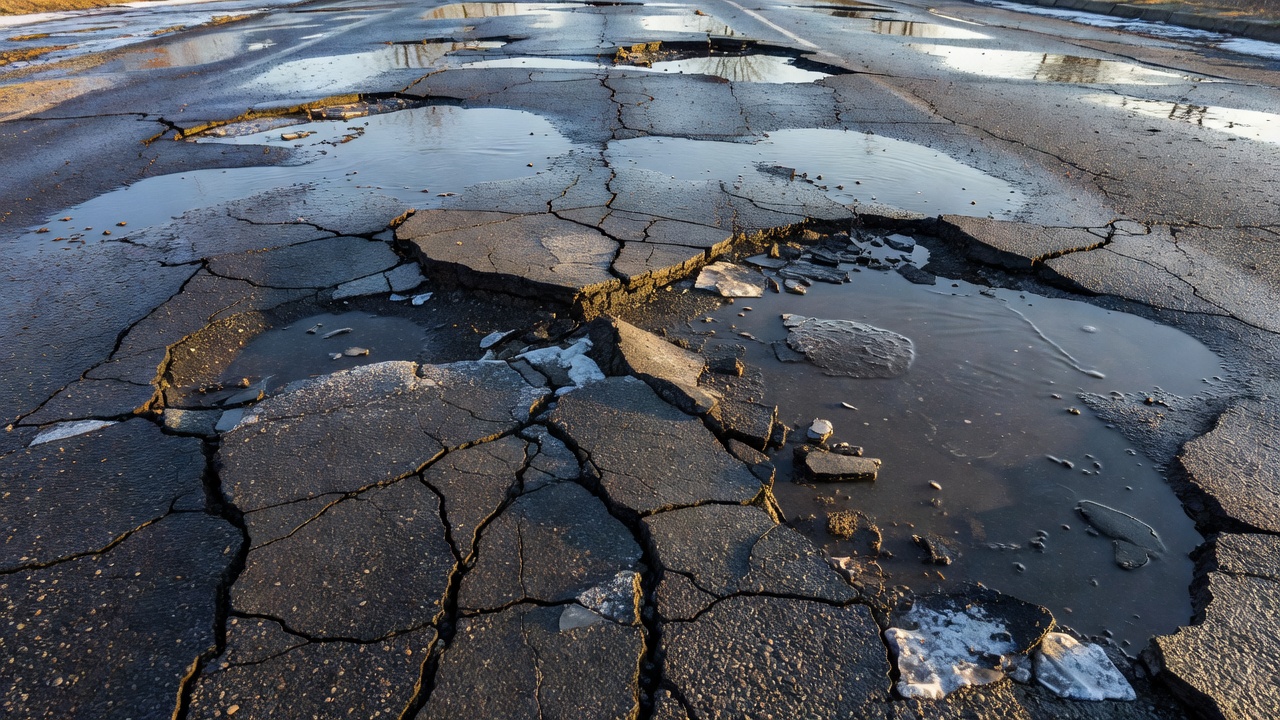
Spring thaw weakening is the most critical seasonal phenomenon affecting pavement structural capacity in cold regions. It occurs when ice lenses that formed in the subgrade during winter melt, releasing large quantities of water that become trapped above the still-frozen lower subgrade. The result is a saturated, weakened subgrade layer with dramatically reduced load-bearing capacity, often the weakest condition the pavement will experience all year.
Frost Heave Mechanics
The process begins with frost heave, which requires three simultaneous conditions: frost-susceptible soils (generally those with 10% or more passing the 0.075 mm sieve, or 3% or more passing the 0.02 mm sieve), ground temperatures below 0°C, and the presence of water. When these conditions are met, ice crystals form within the larger voids between soil particles and extend to form continuous ice lenses. These lenses grow through capillary rise and thicken in the direction of heat transfer, from the cold surface downward. As water freezes, a negative pore pressure develops, a phenomenon called cryosuction, which draws water upward from lower unfrozen soil toward the frozen front. Over time, ice lenses can grow to significant thickness, causing the overlying soil and pavement layers to heave upward. The expansion pressure of freezing water can exceed 220 MPa, which is sufficient to lift and crack overlying pavement structures.
The Five Stages of Thaw Weakening
Spring thaw weakening progresses through five distinct stages. In the first stage, the pavement is fully frozen, with the subgrade frozen down to the maximum frost depth. The pavement structure is at its stiffest, and load-carrying capacity is artificially high. In the second stage, air temperature rises above 0°C, and the pavement warms from the surface downward. The upper subgrade begins to thaw while the lower subgrade remains frozen, creating an impermeable barrier. In the third stage, the critical thaw weakening phase, water from melted ice lenses becomes trapped in the thawed subgrade above the still-frozen zone. Only slow lateral drainage is possible because vertical drainage is blocked by the frozen layer below. The thawed subgrade becomes saturated and severely weakened with reduced bearing capacity. In the fourth stage, if air temperature drops again, the saturated upper subgrade re-freezes and expands, further loosening soil particles in a process called dilation. This ratcheting effect progressively degrades the soil structure. In the fifth and final stage, after one or more freeze-thaw cycles, the thawed saturated upper subgrade is further weakened by dilation damage, and the pavement becomes highly susceptible to damage from traffic loading.
Quantitative field measurements from Swedish road studies have documented the severity of these effects. Base course and subbase stiffness decreased by approximately 50% during spring thaw compared to summer and autumn values. Subgrade stiffness decreased by approximately 20%. FWD testing revealed that the pavement deflection basin more than doubled during the peak thaw period. Spring thaw is the time of year when the pavement’s lifetime is most substantially reduced compared to other seasons, heavy truck loads during this period can cause permanent deformation equivalent to many months of normal summer traffic.
LTPP Seasonal Monitoring Program
The Long-Term Pavement Performance (LTPP) Seasonal Monitoring Program (SMP) was the most comprehensive field study ever undertaken to quantify seasonal effects on pavement structural response. Initiated within the broader LTPP study managed by the Federal Highway Administration, the SMP was designed to obtain a fundamental understanding of the magnitude and impact of temporal variations in pavement response and material properties due to the separate and combined effects of temperature, moisture, and frost and thaw variations.
Program Structure and Scope
The SMP selected 64 test sections from the General Pavement Study (GPS) and Specific Pavement Study (SPS) experiments. Of these, 41 sections were instrumented for frost penetration monitoring and distributed across a wide range of climatic zones, including Arizona, Colorado, Connecticut, Idaho, Indiana, Kansas, Maine, Maryland, Massachusetts, Minnesota, Montana, Nebraska, Nevada, New Hampshire, New Jersey, New York, Ohio, Pennsylvania, South Dakota, Utah, Vermont, Wyoming, and the Canadian provinces of Manitoba, Ontario, Quebec, and Saskatchewan. Testing was conducted on half of the sections for one year, then on the other half the following year, providing a rich dataset spanning diverse climates, pavement types, and subgrade conditions.
Instrumentation and Measurements
Each SMP site was instrumented with a comprehensive suite of sensors. Thermistor probes were installed at multiple depths to measure pavement temperature gradients from the surface through the subgrade. Time Domain Reflectometry (TDR) probes measured the moisture content of unbound base, subbase, and subgrade materials. Electrical resistivity probes tracked the location of the freezing front as it penetrated and receded through the pavement structure. Piezometers monitored the depth of the groundwater table. Tipping-bucket rain gauges recorded precipitation events. Surface elevation measurements captured frost heave and thaw settlement.
The testing protocol included FWD deflection testing at increased frequency compared to routine LTPP sites, with tighter sensor spacing on a portion of each test section to capture the full deflection basin shape. Longitudinal profile measurements tracked seasonal roughness changes. Distress surveys were conducted more frequently to capture the progression of cracking, rutting, and other surface deterioration in relation to seasonal events.
Key Findings
The SMP generated several critical findings that continue to inform pavement engineering practice. Frost penetration data was used to develop the LTPP computed parameter tables, specifically SMP_FREEZE_STATE, SMP_FROST_PRESENCE, and SMP_FROST_PENETRATION, which provide standardized measures of freezing condition across sites. The data enabled validation of the thermodynamic models that form the foundation of the Enhanced Integrated Climatic Model within the MEPDG. The BELLS temperature prediction models, BELLS2 for shaded testing (more than 3 minutes of shading) and BELLS3 for routine testing (approximately 30 seconds of shading), were developed directly from SMP thermistor data and remain the standard method for estimating pavement temperature at depth from surface temperature measurements.
The SMP data also supported the development of moisture and frost penetration prediction models, the evaluation of seasonal load restriction policies, and the quantification of the relationship between laboratory resilient modulus (Mr) and backcalculated modulus (E) values. SMP data collection activities were terminated effective October 31, 2004, but the dataset continues to be analyzed and applied in pavement research and practice worldwide.
Seasonal Modulus Variation
The resilient modulus of pavement materials, both asphalt concrete and unbound layers, undergoes dramatic changes across the annual seasonal cycle. Understanding the magnitude and timing of these variations is fundamental to interpreting FWD data, designing pavements for realistic conditions, and managing pavement networks effectively.
Subgrade Modulus Variation
The Asphalt Institute’s DAMA program, used in the MS-1 flexible pavement design procedure, provides quantitative monthly subgrade modulus values that illustrate the full range of seasonal variation. For a site with a mean annual air temperature (MAAT) of 7°C and a normal unfrozen subgrade resilient modulus (Mr) of 4,500 psi, the monthly values show an extraordinary range. In January and February, as frost penetrates, the modulus rises to 15,900 psi and 27,300 psi respectively. By March and April, maximum frost penetration drives the modulus to 38,700 psi and 50,000 psi, more than 11 times the normal summer value. Then in May, as the subgrade thaws, the modulus plummets to just 900 psi, a staggering 98% reduction from the April peak and only 20% of the normal unfrozen value. Gradual recovery follows through June (1,620 psi), July (2,340 psi), August (3,060 psi), and September (3,780 psi), with the modulus returning to the normal 4,500 psi by October.
The ratio between peak frozen modulus (50,000 psi) and minimum thaw-weakened modulus (900 psi) is approximately 56:1, meaning the same subgrade has 56 times the load-carrying capacity when frozen versus when fully thawed. This has profound implications: a pavement that appears structurally adequate when tested in late winter may appear severely deficient when tested in late spring. For sites with higher average temperatures, the pattern shifts but the amplitude remains dramatic. At MAAT of 15.5°C, the April frozen peak still reaches 50,000 psi, but the May thaw minimum is 1,350 psi, and recovery is faster, reaching normal by September.
Granular Base Layer Variation
Unbound granular base and subbase layers also exhibit substantial seasonal modulus variation, though the pattern differs from subgrade because these layers are closer to the surface and respond more quickly to temperature changes. For a site with MAAT of 7°C and a normal k1 value (the modulus number in the k-θ model) of 8,000, the winter values show a moderate increase to 16,000–24,000 psi during frozen conditions. However, the spring thaw drop is severe, the May value falls to just 2,000 psi, only 8.3% of the April frozen value. This dramatic reduction occurs because the base and subbase layers thaw first and are directly exposed to meltwater from the surface, remaining saturated until drainage can occur.
Impact on Structural Number
The seasonal variation in layer moduli directly affects the pavement’s structural number (SN) in flexible pavement design. When the effective roadbed soil resilient modulus drops during spring thaw from a summer value of 5,000 psi to a thaw-weakened value of 1,000 psi, the relative damage factor more than triples. In AASHTO 1993 design procedure, this is accounted for by computing a damage-weighted average modulus across all months, the effective roadbed soil resilient modulus, rather than using a single annual value. The equation relating relative damage to modulus is Relative Damage = 1.18 × 10⁸ × Mr⁻²·³², where Mr is in psi. This power relationship means that small reductions in modulus produce disproportionate increases in damage.
Temperature Correction for FWD on Asphalt
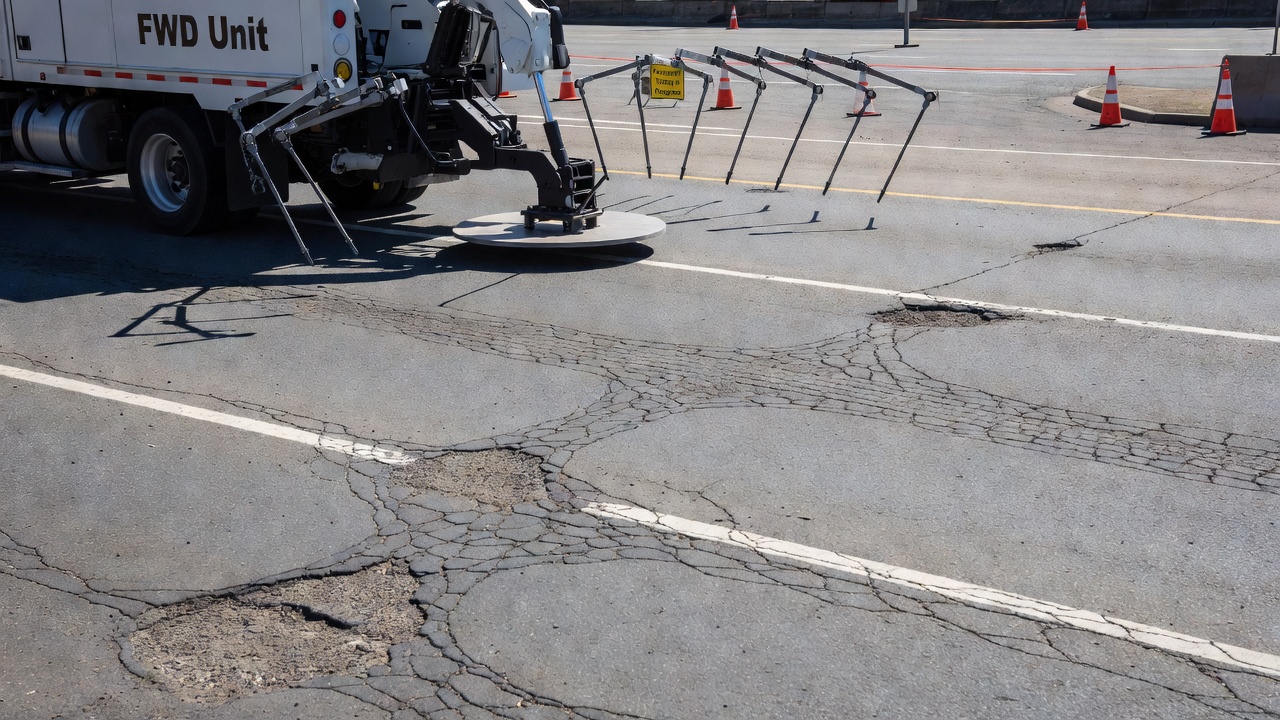
Because asphalt concrete is a viscoelastic material whose stiffness varies enormously with temperature, Falling Weight Deflectometer measurements on asphalt pavements must be corrected to a standard reference temperature for meaningful comparisons. The stiffness of the asphalt layer controls the amount of bending, or deflection, that occurs in a pavement when a load is applied. At high temperatures, asphalt softens and the deflection basin becomes larger and deeper. At low temperatures, asphalt stiffens and deflections are smaller. A pavement tested at 10°C will produce deflections that are perhaps half those of the same pavement tested at 40°C, leading to dramatically different backcalculated moduli and structural capacity assessments if uncorrected.
Temperature correction for FWD data involves two distinct steps: first, estimating the pavement temperature at the mid-depth of the asphalt layer, and second, applying a correction factor to adjust the measured deflection or backcalculated modulus to a reference temperature.
BELLS Temperature Prediction Models
The BELLS models were developed from LTPP SMP thermistor data and are the most widely used method for estimating in-depth pavement temperature from surface measurements. Two versions are used depending on testing conditions. BELLS2 is used when the pavement has been shaded for more than three minutes, as is typical in formal LTPP protocol testing. BELLS3 is used for routine operational testing where the pavement is shaded for only about 30 seconds before the measurement.
Both models require four inputs: the pavement surface temperature measured by infrared thermometer (°C), the time of day expressed on a 24-hour clock, the depth below the pavement surface (mm), and the average air temperature of the previous day (°C). The models incorporate sinusoidal functions that use an 18-hour asphalt concrete temperature rise-and-fall cycle, not the 24-hour solar cycle, because the thermal properties of asphalt produce a characteristic diurnal temperature pattern with a flat minimum period between 05:00 and 11:00 hours.
The BELLS2 equation is: Td = 2.78 + 0.912 × IR + {log(d) − 1.25}{−0.428 × IR + 0.553 × (1-day) + 2.63 × sin(hr18 − 15.5)} + 0.027 × IR × sin(hr18 − 13.5), where Td is the pavement temperature at depth d (°C), IR is the surface temperature (°C), d is depth (mm), 1-day is the average air temperature of the previous day (°C), and hr18 is the time of day expressed using the 18-hour AC temperature cycle.
Asphalt Temperature Adjustment Factor
Once the mid-depth pavement temperature is estimated, the Asphalt Temperature Adjustment Factor (ATAF) is applied to backcalculated moduli. The formula is: ATAF = 10^[slope × (Tr − Tm)], where Tr is the reference temperature (°C), Tm is the measured mid-depth temperature (°C), and slope is a mix-specific parameter typically ranging from −0.015 to −0.030. The default slope value when no mix data is available is −0.021.
For example, if FWD testing produces a backcalculated asphalt modulus of 9,770 MPa at a measured mid-depth temperature of 10°C, and the reference temperature is 21°C, the ATAF = 10^[−0.021 × (21 − 10)] = 10^(−0.231) = 0.587. The adjusted modulus is 9,770 × 0.587 = 5,740 MPa, a reduction of more than 40% due solely to temperature correction. FWD testing guidance from the National Academies recommends conducting tests at moderate asphalt temperatures between 65°F and 105°F (18°C to 41°C) to minimize the magnitude of required corrections.
Seasonal Adjustment Factors in AASHTO Design
The incorporation of seasonal effects into pavement design procedures has evolved significantly over the past four decades. Early AASHTO procedures used a regional factor, a single empirical multiplier applied to design structural capacity, but this approach did not directly address the month-by-month variation in pavement layer properties.
The 1993 AASHTO Guide Breakthrough
The 1986 AASHTO Guide was a watershed in relation to the treatment of environmental effects in pavement design. For the first time, a widely used design methodology incorporated explicit consideration of site-specific seasonal variations in subgrade stiffness through the concept of the effective roadbed soil resilient modulus. This approach, carried forward into the 1993 AASHTO Guide, fundamentally changed how engineers account for seasons in pavement design.
The effective roadbed soil resilient modulus is computed as a damage-weighted average of monthly modulus values over a 12-month period. The procedure involves four steps. First, for each month of the year, the representative roadbed soil resilient modulus is determined based on seasonal moisture and frost conditions at the site. Second, the relative damage factor (uf) for each monthly modulus is determined from the equation Relative Damage = 1.18 × 10⁸ × Mr⁻²·³². Third, the monthly relative damage values are summed and divided by 12 to obtain the average relative damage for the year. Fourth, the average relative damage is used to read the corresponding effective roadbed soil resilient modulus from the design chart.
In a typical example from FHWA documentation, the summation of monthly relative damage values across 12 months is 3.72, yielding an average relative damage of 0.31. The effective roadbed soil resilient modulus corresponding to this average is approximately 5,000 psi. This means that the design is based not on the spring thaw minimum of perhaps 1,000 psi, nor on the frozen winter maximum of 40,000 psi, but on a weighted average that represents the cumulative damage the pavement experiences across all seasons.
Limitations of the 1993 Approach
The 1993 Guide had two important limitations. It made no explicit provision for consideration of seasonal variations in the overlying pavement layers, only the subgrade was treated seasonally. And incomplete knowledge of the magnitude and duration of subgrade modulus fluctuations made it difficult for agencies to take full advantage of the seasonal design procedure. The absence of broadly applicable quantitative guidance for base, subbase, and subgrade seasonal design values constrained the practical implementation of the approach.
MEPDG Seasonal Treatment
The Mechanistic-Empirical Pavement Design Guide (MEPDG), adopted as AASHTOWare Pavement ME Design, represents a fundamentally more sophisticated approach to seasonal effects. The design period is divided into discrete time increments, from four seasons to 12 months to hourly intervals, with pavement structure and loading conditions treated as constant within each increment. Cumulative damage concepts sum the damage across all increments over the entire design life. The Enhanced Integrated Climatic Model (EICM) simulates hourly temperature and moisture conditions throughout the pavement profile based on historical climate data, directly using the understanding of seasonal variation gained from LTPP SMP and similar monitoring programs.
Seasonal Effects on Crack Width
Crack width in asphalt and concrete pavements varies significantly with season due to thermal expansion and contraction of the pavement materials. This variation has direct implications for crack inspection, measurement, and sealing operations, and must be accounted for in any program that uses crack width as a condition indicator or treatment trigger.
Thermal Contraction and Expansion Mechanics
All pavement materials expand when heated and contract when cooled. The coefficient of thermal expansion for asphalt concrete is approximately 2 to 3 × 10⁻⁵ per °C. For a 10-meter-long pavement section, a temperature change of 50°C, typical of the difference between a summer afternoon and a winter morning, produces approximately 10 to 15 mm of linear contraction or expansion. This cumulative movement is concentrated at crack locations, causing visible changes in crack width.
In winter, when the pavement is fully contracted, crack widths reach their maximum. This is also the time when thermal tensile stresses within the pavement are highest, and if these stresses exceed the tensile strength of the asphalt mixture, new transverse cracks can form. The existing cracks open wider as the pavement contracts around them. In summer, the pavement expands, and crack widths narrow significantly or may even close completely at the surface. The thermal-induced strain ratio between cold and warm seasons has been documented at 1.4 to 2.0 times following the same pavement temperature change, meaning a crack that measures 3 mm in January may measure only 1.5 mm in July.
Implications for Crack Sealing
The seasonal variation in crack width creates a practical challenge for crack sealing programs. If cracks are sealed in summer when they are at their narrowest, the amount of sealant placed may be insufficient to accommodate winter expansion, the sealant may pull away from the crack walls or fail in adhesion when the crack widens. Conversely, if cracks are sealed in winter when they are at their widest, the excess sealant may be squeezed out of the crack or form a bump on the surface when the pavement expands in summer, creating a potential FOD hazard and an undesirable surface irregularity.
The optimum window for crack sealing is spring or fall, when temperatures are moderate and crack widths are intermediate. At these times, the sealant can be placed at a width that remains functional through both summer compression and winter tension. Additionally, sealant materials perform best within their specified application temperature range, most hot-applied sealants require pavement temperatures above 10°C for proper adhesion, while cold-applied sealants have their own temperature windows. If a heat lance is used when cracks contain ice, the moisture can wick to the sidewalls and adversely affect adhesion, as documented by Minnesota DOT research.
Inspection Timing Implications
The season in which a pavement inspection is conducted directly affects the measured condition in ways that must be understood and accounted for in network-level management systems and project-level evaluations. Inspecting the same pavement in different seasons can produce condition indices that differ by enough to change a pavement’s ranking within a network or its eligibility for a particular treatment.
Asphalt Pavement Inspections
For asphalt pavements, spring thaw (late winter to early spring) reveals the worst structural condition. FWD deflections are largest because the subgrade is at its weakest, often 3 to 5 times greater than summer deflections. Cracks are at their widest due to maximum thermal contraction. Roughness, as measured by the International Roughness Index (IRI), is elevated by 0.3 to 0.5 m/km compared to summer values. Rut depth may appear larger because the weakened subgrade cannot resist traffic-induced deformation. Potholes form most rapidly during this period. Conversely, late summer shows the best condition, the subgrade is driest and stiffest, cracks are at minimum width, and surface distresses may appear less severe.
Concrete Pavement Inspections
For Portland cement concrete (PCC) pavements, the worst condition is generally in winter. Frost heave causes differential slab movement and faulting. Joints open widest due to concrete contraction, reducing load transfer efficiency across joints and increasing the potential for pumping and faulting under traffic. Curling and warping are most severe because the temperature differential between the top and bottom of the slab is largest, the top cools faster at night, curling the slab edges upward and creating gaps beneath the slab. Freeze-thaw damage to the concrete matrix may become visible as surface scaling or D-cracking.
Consequences for Decision-Making
The season of inspection has direct consequences for management decisions. An agency that sets crack sealing triggers based on crack width must specify the season of measurement, a crack that triggers treatment in January at 3 mm wide would fall well below the same threshold in July at 1.5 mm. An agency that uses IRI thresholds for rehabilitation may find that a pavement section exceeds the threshold in spring but falls below it in summer, leading to inconsistent project selection depending on survey timing. For structural evaluations using FWD, testing in spring without correction will systematically overestimate the structural deficiency, while testing in winter frozen conditions will systematically underestimate it.
The best practice for network-level surveys is to conduct them at the same time each year, ensuring comparable year-over-year data. For project-level structural evaluation, testing in spring provides the worst-case assessment, while testing at any other season requires temperature correction and careful interpretation of subgrade condition. AASHTO R 33 and ASTM D4694 recommend FWD testing at moderate temperatures between 18°C and 41°C to minimize required corrections.

Drone Inspection Across Seasons
Unmanned Aerial Vehicles (UAVs) equipped with high-resolution RGB cameras, thermal infrared sensors, and multispectral imaging capabilities are increasingly used for pavement inspection across all seasons. Drones offer the ability to survey large pavement areas rapidly, access difficult-to-reach sections, and collect data with consistent geometric and radiometric quality. However, the effectiveness of drone-based inspection depends heavily on the season in which the survey is conducted.
Winter Drone Inspections
Winter offers unique advantages for drone-based pavement inspection. Thermal infrared imaging is particularly effective in cold conditions because the temperature differential between sound pavement and moisture-laden or delaminated areas is more pronounced. Areas of trapped moisture from ice melt or frost heave appear as distinct thermal anomalies on the pavement surface. Even thin cracks in asphalt pavement can be detected in infrared thermal images at a distance of several meters, enabling UAV-based thermal crack mapping that would be difficult in summer when temperature differentials are minimal.
Frost heave detection is another winter application. Drones equipped with thermal cameras can identify areas of differential frost heave by detecting temperature anomalies associated with subsurface ice lens formation. This allows early identification of zones at risk of thaw weakening damage before visible surface distress develops. The cold temperatures also maximize crack opening, making thermal contrast between the crack, often filled with ice or dark debris, and the pavement surface more visible.
Summer Drone Inspections
Summer provides optimal conditions for high-resolution visual surveys. Bright, consistent lighting enables photogrammetric crack detection and measurement at high resolution. Surface distresses such as potholes, rutting, raveling, and bleeding are most visible in dry conditions. AI and machine learning models for automated distress classification perform best with high-contrast RGB imagery captured in summer lighting. The combination of thermal and RGB data fused from a single drone flight provides comprehensive condition assessment, thermal data reveals subsurface moisture and delamination while visual data captures surface cracking and deterioration.
Spring Thaw Drone Inspections
The spring thaw period is critical for drone-based structural assessment. Thermal drones flown during freeze-thaw transitions can identify zones where thaw water is accumulating by detecting the thermal signature of saturated pavement areas. These zones are at the highest risk of structural failure under traffic loading, and drone surveys can provide early warning before visible surface distress develops. This allows targeted ground investigations and proactive load restriction decisions. The ability to conduct rapid, repeatable surveys across large networks makes drones particularly valuable during the short and unpredictable spring thaw window.
Climate Change and Seasonal Shift
Climate change is altering the seasonal patterns that pavement engineers have relied on for design and management. Warmer winters, shifting frost zones, changing precipitation patterns, and more erratic freeze-thaw cycles are transforming the environmental conditions that pavements experience, with direct implications for seasonal monitoring, design inputs, and inspection timing.
Changing Freeze-Thaw Patterns
Research published in ScienceDirect (2024) has documented that warmer winter weather results in fewer freeze-thaw cycles at shallow pavement levels on an annual basis, while remaining more erratic at deeper sub-pavement locations. Surface pavement layers experience fewer events, but deeper subgrade layers may experience unexpected freeze-thaw events as the frost line becomes less predictable. The timing and duration of frozen periods is becoming less consistent, making it more difficult to predict when spring thaw weakening will occur and how long it will last.
Shifting Frost Zones
The freezing index, measured in degree-Celsius days below 0°C, defines three climatic regions in the continental United States: no-freeze zones with a freezing index below 50, moderate-freeze zones between 50 and 400, and deep-freeze zones above 400. As climate change drives average temperatures upward, these zones are shifting northward. Areas near the southern boundary of the moderate-freeze zone that historically experienced multiple freeze-thaw cycles are now experiencing fewer events or no freeze at all. Conversely, areas near the northern boundary of the moderate-freeze zone that previously experienced sustained winter freezing are now experiencing more freeze-thaw cycles as winter temperatures oscillate around the freezing point.
In permafrost regions of northern Canada, Alaska, and Russia, permafrost degradation is a critical concern. Ground that was permanently frozen is now experiencing seasonal thaw, exposing subgrade soils and road foundations to freeze-thaw cycling for the first time. This represents a fundamentally new design condition that historical experience does not address.
Implications for Pavement Management
The shifting seasonal patterns have direct implications for pavement management. Seasonal load restriction programs that have been calibrated to historical thaw timing may need recalibration as the spring thaw period shifts earlier. Asphalt binder grade selection (Performance Grade or PG) must adapt to changing temperature extremes, warmer winters may allow use of softer binders to reduce thermal cracking, but more erratic freeze-thaw conditions may require improved intermediate-temperature performance. Crack sealing programs may need to adjust their schedule as the optimal temperature window moves within the calendar year.
The MEPDG’s Enhanced Integrated Climatic Model, which uses historical climate data to simulate hourly pavement conditions, must be updated to reflect changing long-term climate trends rather than relying solely on the past 30 years of data. Agencies developing pavement management systems should consider that the seasonal adjustment factors derived from historical LTPP SMP data may require revision as the underlying climate patterns continue to shift.
Seasonal Monitoring as a Climate Adaptation Tool
As climate change introduces greater uncertainty into pavement performance prediction, the importance of ongoing seasonal monitoring increases. Continuous or periodic monitoring of FWD deflections, temperature profiles, moisture conditions, and frost penetration provides direct measurement of how seasonal patterns are changing at specific sites. This data enables agencies to update their seasonal adjustment factors, recalibrate their pavement design inputs, and adjust their inspection scheduling in response to observed shifts. The investment in seasonal monitoring infrastructure, even at a limited number of representative sites, provides essential data for adapting pavement management to a changing climate.
Summary
Seasonal monitoring of pavement response provides the fundamental understanding needed to interpret pavement condition data correctly, design pavements for realistic environmental conditions, and manage pavement networks effectively across the annual climatic cycle. The key quantitative findings from decades of research are summarized below.
| Parameter | Magnitude | Source |
|---|---|---|
| Frozen subgrade resilient modulus vs. unfrozen | 20 to 120× greater | National Academies (2024) |
| Subgrade modulus reduction during spring thaw | ~80% reduction (peak to minimum) | Asphalt Institute DAMA |
| Base course modulus reduction during spring thaw | ~50% reduction | Swedish field study |
| Asphalt modulus variation explained by temperature | ~98% | FHWA LTPP |
| FWD deflection variation explained by temperature | ~88% | FHWA LTPP |
| Frozen-to-thawed modulus ratio (subgrade) | Up to 56:1 | Asphalt Institute DAMA |
| LTPP SMP test sections | 64 sites | FHWA |
| Default ATAF slope (temperature correction) | −0.021 | FHWA-RD-98-085 |
| Recommended FWD testing temperature range | 18°C to 41°C (65–105°F) | AASHTO R 33 |
| Thermal contraction per 50°C drop (10 m section) | 10–15 mm | Material properties |
The understanding gained from seasonal monitoring programs like LTPP SMP, combined with modern tools such as drone-based thermal inspection and the Enhanced Integrated Climatic Model, enables pavement engineers to account for the full range of seasonal variation in their work. As climate change continues to alter freeze-thaw patterns and shift frost zones, the importance of sustained seasonal monitoring will only increase.
For more information about implementing seasonal monitoring programs or optimizing your pavement inspection timing, contact our experts or schedule a demo.
Frequently Asked Questions
- What is seasonal monitoring of pavement response?
- Seasonal monitoring is the continuous or periodic measurement of pavement structural properties, FWD deflections, backcalculated moduli, surface distress, and roughness, across the annual freeze-thaw cycle. It captures how frozen subgrade, spring thaw weakening, and summer drying affect pavement load-carrying capacity, enabling engineers to apply seasonal adjustment factors in design and evaluation.
- Why does pavement structural response change with seasons?
- Pavement structural response changes because temperature and moisture in pavement layers vary dramatically across the year. In winter, frozen subgrade can be 20 to 120 times stiffer than unfrozen. During spring thaw, melting ice saturates the subgrade, reducing its resilient modulus by up to 80%. In summer, drying restores stiffness. These changes cause FWD deflections to vary by 200–500% between seasons.
- What is the LTPP Seasonal Monitoring Program?
- The LTPP Seasonal Monitoring Program (SMP) was a major field study that instrumented 64 pavement test sections across North America with thermistors, time-domain reflectometry moisture sensors, electrical resistivity probes, and piezometers. It measured FWD deflections, temperature gradients, moisture content, frost penetration, and surface distress at high frequency to quantify seasonal effects on pavement response.
- How do seasonal factors affect pavement design?
- In AASHTO 1993 design, the effective roadbed soil resilient modulus is computed as a damage-weighted average of monthly modulus values, accounting for seasonal freezing and thawing. Modern MEPDG uses the Enhanced Integrated Climatic Model (EICM) to simulate hourly temperature and moisture conditions across the pavement life, enabling true mechanistic-empirical seasonal design.
- When should pavement inspections be conducted for accurate condition assessment?
- For comparable year-over-year data, surveys should be conducted at the same time each year. Spring thaw (late winter/early spring) reveals the worst structural condition, largest deflections, widest cracks, weakest subgrade. Late summer shows the best condition. FWD testing should ideally be performed at moderate asphalt temperatures (18–41°C) to minimize the need for temperature corrections.